Archives for category: International

The return to power of the Taliban in Afghanistan is very bad news for girls and women. For twenty years, they were able to go to school and university and to pursue a career. All that personal freedom comes to an end under Taliban rule. The New York Times wrote about their fate here.

KABUL, Afghanistan — The director of a girls’ school in Kabul desperately wants to learn details of the Taliban’s plan for girls’ education. But she can’t attend the weekly Taliban committee meetings on education. They are for men only.

“They say, ‘You should send a male representative,’” the director, Aqila, said inside the Sayed Ul-Shuhada High School, which was shattered in May by a terrorist bombing that killed scores of girls.

But Aqila and other Afghan educators don’t need to attend meetings to comprehend the harsh new reality of education under Taliban rule. The emerging government has made clear that it intends to severely restrict the educational freedoms enjoyed by many women and girls the past 20 years.

The only question is just how draconian the new system will be, and what type of Islamic-based education will be imposed on both boys and girls. Just as they did when they ruled most of Afghanistan in the late 1990s, the Taliban seem intent on ruling not strictly by decree, but by inference and intimidation.

When schools reopened Saturday for grades seven through 12, only male students were told to report for their studies. The Taliban said nothing about girls in those grades, so they stayed home, their families anxious and uncertain about their future. Both boys and girls in grades one through six have been attending schools, with students segregated by gender in the higher three grades.

When the Taliban were in charge from 1996 to 2001, they barred women and girls from school. After the U.S.-led invasion toppled Taliban rule in late 2001, female students began attending schools and universities as opportunities blossomed. Women were able to study for careers in business and government, and in professions such as medicine and law.

By 2018, the female literacy rate in Afghanistan reached 30 percent, according to a new UNESCO report.

But the Taliban swept back into Kabul and seized power on Aug. 15, and since then they have said they will impose their severe interpretation of Shariah law.

The new government has said that some form of education for girls and women will be permitted, but those parameters have not been clearly defined by Taliban officials.

The Taliban also have indicated that men will no longer be permitted to teach girls or women, exacerbating an already severe teacher shortage. This, combined with constraints in paying teachers’ salaries and the cutoff of international aid, could have “immediate and serious” outcomes for education in Afghanistan, the UNESCO report warned.

Female students will be required to wear an “Islamic hijab,” but with the definition left open to interpretation. At a pro-Taliban women’s gathering last week, many women wore niqabs, a garment that covers a woman’s hair, nose and mouth, leaving only the eyes exposed.

“We are working on a mechanism to provide transportation and other facilities that are required for a safer and better educational environment,” Zabihullah Mujahid, Taliban spokesman and the acting deputy minister of information and culture, said Monday, adding that classes for girls in grades seven and above would resume soon.

“There are countries in the region that have committed to help us in our education sector,” he said. “This will help us in providing better education to everyone.”

While many girls and women in Kabul have embraced Western standards of women’s rights and opportunities, Afghanistan remains a deeply conservative society. In the countryside, even if all women do not necessarily welcome Taliban rule, many are accustomed to customs that kept them at home to cook, clean and raise children even before the Taliban took power in the 1990s.

The acting minister of higher education last week said that women could continue to study in universities and graduate programs, as long they were in gender-segregated classrooms, but on Friday, the new government sent an ominous signal of its intentions. The Ministry of Women’s Affairs compound was converted into offices for the religious morality police, who brutally enforced the militants’ interpretation of Shariah law two decades ago. The building now houses the Ministry of Invitation, Guidance and Promotion of Virtue and Prevention of Vice.

Female teachers, administrators and students have been bracing for austere new restrictions. Many say they have begun wearing niqabs and preparing classrooms to accommodate classes strictly segregated by gender. (Many schools also taught boys-only and girls-only classes under the U.S.-backed government.)…

For female students, the sudden end to their academic freedoms has been both traumatizing and paralyzing. Many say the joy and anticipation they once felt when entering classrooms has been lost, replaced by fear and a surpassing sense of futility.

Zayba, 17, survived a devastating bombing at her school in May, for which no group took responsibility, though similar attacks have been attributed to the Islamic State-affiliated group operating in Afghanistan.

Zayba stopped attending school after the Taliban takeover, which she said had robbed her of all motivation. “I like to study at home,” she said. “I am trying to, but I cannot, because I don’t see any future for myself with this regime….”


Jeanne Diestch, a former Democratic state senator in New Hampshire, recently wrote about the attention showered on the state’s new voucher program by Republican conservatives like Mike Pompeo, a likely Presidential candidate, and Betsy DeVos. Republicans took control of the New Hampshire legislature until 2020; its Governor, Chris Sununu, is a Republican, and he appointed the state’s commissioner of education, Frank Edelblut, who homeschooled his children. Republicans wasted no time in passing a sweeping voucher bill.

US Conservatives Eyeing NH Vouchers

Diestch wrote in her newsletter:


Why the GOP hates the world’s top education models

When a former Secretary of Education and a future Presidential candidate come to New Hampshire for the rollout of a new state educational policy, you know something important is afoot. The candidate, Mike Pompeo, stated at the event that US schools are falling behind because we have a “public-school monopoly”; adopting NH’s “Education Freedom Accounts” [EFAs] would allow the “free market” to correct this problem. This change is so important to conservatives that the Koch-founded Americans for Prosperity is handing out supportive pamphlets door-to-door in Bedford. So let’s look at three questions:

  1. Why do conservatives want the free market to control education rather than local public-school districts?
  2. Why are so many outside the state so interested in a change inside New Hampshire?
  3. How will all this impact us, the people of the state?

WHY DO CONSERVATIVES WANT FREE-MARKET EDUCATION?
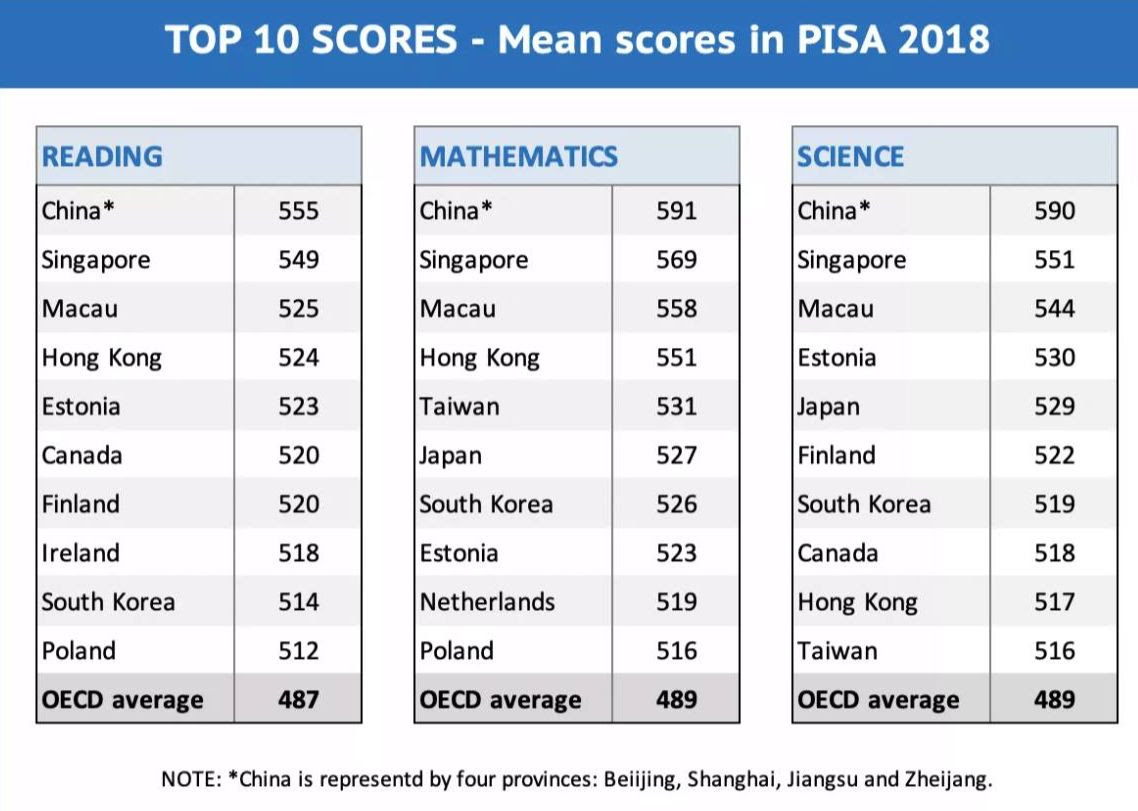
Nations with top education scores all rely on public schools. If the US followed their examples:

  • Teachers would be highly educated, well-paid and respected. In Finland, for example, acceptance for an education degree can be more competitive than medical school.
  • Schools would have shorter vacations, but also shorter school days. In China, elementary students take 90-minute lunch breaks. In Singapore, teachers use the additional time for planning lessons and collaborating on how to improve students’ performance.
  • After the regular school day, learning would continue at home or in tutoring sessions, especially for secondary students. Parents’ role in most successful nations is to ensure children do their three hours or so of assigned homework.

All these top-scoring countries rely on
public-education systems.

(Note that China is not really first; it only submits scores from 4 wealthy provinces.)Why don’t conservatives want to follow these successful models? More school days with highly qualified educators cost more. Companies want to sell high-margin educational software, supported by low-paid trainees, rather than pay education professionals’ salaries. New Hampshire’s EFAs potentially shift millions from public-school teachers and administrators to corporations seeking shareholder profits. In addition, church-based schools are seeking their share of EFAs. Then there is the fact that more-educated people tend to vote Democratic.

WHY SO MANY EYES ARE WATCHING NH EFAS
That is why so many outside New Hampshire are focused on EFAs here. National and international commercial and religious interests will be contributing to Mr. Pompeo and other conservative candidates. Donors hope that if a highly ranked state like New Hampshire can be convinced to hand their taxpayer dollars to unsupervised scholarship funds (see inset below), the rest of the nation will follow.EFAs hide spending detail from taxpayers

EFAs move millions in taxpayer funds from local school board oversight to an independent contractor. The contractor only has to report three things to the Department of Revenue
Administration: amount spent on administration, total number of scholarships, and average scholarship size. The state has no knowledge of who receives how much.
— NH RSA 77 G:5(g)HOW EFAS WILL CHANGE NH
EFAs impact far more than students. When EFAs substitute a $4600 payment for a year of public-school education, someone has to make up the difference. A religious school might charge only $2000 more per year in tuition, but how many low-income households can afford $2000 per child? The upshot is that poor neighborhoods will still need to rely on public schools, but those schools will have fewer per-student dollars to support them. Property taxpayers will have to make up the difference or close schools. The hit will be especially severe in Coos County, where thousands of educators comprise a significant segment of employees. When those schools are forced to close, most educators will move out, worsening Coos towns already dwindling populations and decreasing property values. Our most diverse populations in Manchester and Nashua are also more likely to suffer from the shift in funding caused by EFAs because they have lower incomes. In southern New Hampshire, the census showed that population did increase due to in-state migration. But what families will want to move into a state whose public schools are foundering? The answer is, those families for whom $4600 is enough to send their children to low-tuition religious schools, those families who can already afford expensive private school but would like taxpayers to subsidize them, and those families who want taxpayer funding for parent-guided home education programs. These differ from the workers attracted over the last decade to New Hampshire for its highly rated public schools. How will this affect companies struggling to find employees? No one knows, but the answer will certainly impact our economy.
EFAs will also impact New Hampshire society. Communities forced to close their schools will become less cohesive. Children educated only alongside others with similar backgrounds will have less understanding of the world and their place in it. They will be less able to succeed in the diverse demographics that will make up our nation’s future.
Perhaps conservatives have decided not to follow successful models for improving public education because they do not want the public to be educated. They would prefer people who let corporations and the wealthy take advantage of them, who have been taught to villainize a government that protects public interests.

Chris Lubienski has done comparative studies of public and private schools for years. In this latest study, he notes the paradox that choice schools tend to become standardized over time, betraying the claim that they would meet the differing needs and interests of students.

DOCUMENT RESUME
ED 439 519 EA 030 327
AUTHOR Lubienski, Chris
TITLE Diversification and Duplication in Charter Schools
PUBTYPE EDRS PRICE
Ontario,Canada,April14-18,19). InformationAnalyses(070) Speches/MetingPapers(150)
DESCRIPTORS
MF01/PCO2 Plus Postage. *CharterSchols;Diversity(Institutional);Educational
IDENTIFIERS
ABSTRACT
Change; *Educational Economics; Elementary Secondary Education;ForeignCountries;FreEnterpriseSystem; Privatization;School Choice Grant Maintained Schols (GreatBritain);*MarketSystems Aproach
Grant-MaintainedSchols:AnExplorationinthePolitical
EconomyofScholChoice. PUBDATE 19-04-0


NOTE


47p.;Paper presented at the Annual Conference of the Comparative and International Education Society (Toronto.)


This paper examines the political economy of charter schools to understand the tendencies toward standardization and emulation that these schools exhibit. It draws on the developed model of grant-maintained schools in the United Kingdom as an example of the market model’s evolution in mass education. It analyzes the promise of such approaches to explore reformers’ underlying assumptions and thus offers a window into perspectives that have driven these prolific reforms. The paper contrasts the emerging evidence with the public promises of reformers and contrasts these with the disappointing lack of diversification of options for education consumers. It states that widespread and controversial reforms in education across the globe entailed the introduction of market mechanisms of consumer choice and competition among providers in mass education. The text explores the promise of choice plans and charter schools, the effects of competition, and the reaction to uniformity. It concludes that there is a standardizing tendency inherent in markets that both accompanies and counteracts the potential for diversification that competitive markets can generate. The paper claims that market-oriented reformers generally ignore the constraining properties of competitive markets in their discussion of the potential effects of competition in education. (Containsaproximately25references.)(RJM)


Reproductions supplied by EDRS are the best that can be made from the original document.

I recently posted a long article by Michael Fullan that proposed a new paradigm for education reform. I found Fullan’s dismissal of the status quo persuasive, as well as his description of a forward-looking approach.

Laura Chapman, inveterate researcher and loyal reader, reviewed Fullan’s recent work and was disappointed with what she found:

If ever any paper needed close reading this is it, especially Fullan’s discussion of the 6C’s, 21st Century Skills, and vague references to some ancillary research in California and Australia.

I am working on learning more about at least one of Fullan’s California projects. Unfortunately there are no peer-reviewed summary of accomplishments.

Here is a link if you also want to see what assessment looked like in one Fullan project, a three-year $10 million effort to improve the performance of English Learners including long-term English Learners, funded by the California School Boards Association and several non-profits.  https://michaelfullan.ca/wp-content/uploads/2017/11/The-Coherence-Framework-in-Action.pdf

You will see that the main measures of accomplishment are expressed as percentages, and that these percentages changed over the three-year project.

100% of Long-Term English Learners will access new curriculum supported with adequate technology, instructional materials, and assessments.

5% annual increase in English Learner language proficiency.

3% annual increase in English Learner A-G completion. (A-G refers to courses required for admission to either the California State University or University of California systems with a grade of C or better).

50% increase in Long-Term English Learner students reporting they feel positively connected to the school environment and experience success.

Year-to-year changes in these percentages appear to be framed as if evidence for continuous improvement.

This brief suggests that more detail can be found in specific pages of Fullan’s 2016 book: The Taking Action Guide to Building Coherence in Schools, Districts, and Systems. You have to buy or borrow the book to see the details.

Although some of the Fullan’s paper is appealing, it also represents another proposal for managing learning as if there are no redeeming features in our public schools and the principle of democratic governance for these.

It is worth noting that Joanne Quinn, a frequent collaborator with Fullan, has an MBA in Marketing and Human Resource Management. According to LinkedIn for 16 years she has been President of Quinn Consultants in Toronto. She also served for ten years as the Superintendent of Education for four schools in a district with 65,000 students.

Fullan is think-big thinker: “This paper is intended to provide a comprehensive solution to what ails the current public school system and its place in societal development – a system that is failing badly in the face of ever complex fundamental challenges to our survival, let alone our thriving as a species.”

I am uncomfortable with anyone who claims to have a “comprehensive solution” to the current public school system (including the USA) and who fails to address the fiscal and policy constraints that have been imposed on that system for decades along with a pattern of denial that planet earth and human survival is at risk.

If you want a better and brief jargon-free article on doable reforms, find “Twenty Years of Failing Schools” in The Progressive, February/March issue (pages 50-51. This article includes specific suggestions for the Biden administration and the new Secretary of Education. The author is Diane Ravitch.

In this post, Pasi Sahlberg and William Doyle respond to a recent article that pitted civil rights groups against advocates for the Finnish model of education. They found the dichotomy puzzling. They wrote this article for this blog.

They write:

Two decades ago, Finland made big news in international education circles. Against all odds it became a top-performer in OECD’s first PISA (Programme for International Student Assessment) study that compared 15-year-olds’ knowledge and skills in reading, mathematical and scientific literacies. Since about 2010 education experts and pundits in the United States have debated whether there is anything at all that American school systems could learn from that small Nordic nation’s school system. Ten years on and these debates still go on.


In their March 15, 2021 essay “Finland Meets Civil Rights”, Professor Jal Mehta and co-author Krista Galleberg make good points, including “we can draw on Finnish lessons while making them more relevant to our complex, multi-racial, and systemically inequitable context”, and “build shared responsibility instead of finger pointing, policies based in trust instead of distrust, and schools where Black and Brown students thrive instead of merely survive.”


But in framing their argument, Mehta and Gallebergmake the curious claim that “Since the beginning of the No Child Left Behind era, there has been a schism between what you might think of as the ‘Finland folks’ and much of the civil rights community, particularly its policy and legal advocates.”


We are aware of no such schism. We are curious to know which civil rights advocates would oppose the key foundations of the Finnish education system that are adaptable to the American context – such as comprehensive healthservices for every child and mother from birth, teachers trained and respected as professionals, free healthy school lunches for all, regular play and physical activity as part of every schools’ workplan, smaller class sizes, early indidualized special education support throughout schooling, equitable funding of schools, universal early childhood education and care as a basic right of every child, and highly collaborative schools that strive to integrate students of different capabilities and backgrounds.


According to Mehta and Galleberg, “accountability in the U.S. has historically been promoted by civil rights advocates and bemoaned by the Finland folks.” In fact, the opposite is true in Finland, which places the highest national emphasis on accountability– based on trust and constant productive dialogue between highly professional teachers, children, parents and policymakers. Moreover, Mehta and Galleberg also fail to explain to their readers that in Finland all schools and teachers operate under professional responsibility that expands far beyond the typical punitive,vertical accountability mechanisms that are typical in U.S. education administration.


What Finland does not is waste time or money on so-called “test-based accountability,” or basing its school system on the low-quality, expensive and ineffective governing metric of the universal standardized testing of children, as the United States has done under Presidents Bush, Obama and Trump, and seems to be continuing under President Biden, despite his clear campaign promise to stop it. Instead, the performance of Finland’s education system is monitored by multiple measures that include state-led sample-based standardized student assessments and locally managed school self-evaluations and peer reviews.


 The verdict is in on test-based accountability – it doesn’t work. Twenty years of it has achieved little to no sustained improvement in reading and math outcomes or in reducing achievement gaps in the United States, which were its main objectives. Today, the main driving forces behind “doubling down” on this failure are not civil rights organizations but under-informed philanthropists, politicians and business leaders.

We also find claims by Mehta and Galleberg that “Even today, educational reforms in Finland are framed as part of the country’s national defense plan” and “Excellent education for all is part of the nation’s response to Russian aggression” strange and without factual basis. It is a mistake to believe that Finland’s education policies are designed primarily to serve economic or national security interests. Furthermore, arguing that “Educational equity is therefore not treated as a national security imperative in the United States as it is in Finland” is simply not true. Promoting equity and social justice through education in all Nordic countries is based on human rights imperatives before anything else, certainly something that any civil rights advocate in the United States would wholeheartedly support.


The main lesson of Finland for any nation is that it is possible – and indeed necessary – to strive for both excellence and equity for all students. According to recent data from the OECD, Finland achieves both the highest efficiency of all the developed world’s education systems as measured by hours of study and learning outcomes, and the least performance variation between schools. “The neighborhood school is the best school” is a mantra often heard in Finland, and it is a reality that is widely achieved.


 Finland has deliberately designed its education system, from primary school to higher education, on the values and principles of equal rights to education. Finland upgraded the teaching profession in the 1980s to serve that purpose, so that each and every child would have a great public school in their neighborhood.

In the context of civil rights, Finland is the ultimate American school system.

The landmark Brown v. Board of Education U.S. Supreme Court case of 1954 declared racial segregation in public schools to be unconstitutional, but it also stipulated in its order that public education “is a right which must be made available to all on equal terms.” That simple, beautiful phrase is settled national policy in the United States, but it has never been fully honored.
 

Those words should be symbolically carved onto the entranceways of every school, legislature and education ministry on Earth.

In Finland, they already are.

Pasi Sahlberg is a Finnish educator who has researched and examined education policies in Finland and the United States. His book “Finnish Lessons: What can the world learn from Educational change in Finland”published by Teachers College Press won the 2013 Grawemeyer Award issued by the University of Louisville for an idea that has potential to change the world. He is currently Professor of Education Policy at the UNSWSydney.


William Doyle has served as a Fulbright Scholar in Finland, as a lecturer at Finland’s largest teacher training university, and as an advisor to the Ministry of Education and Culture of Finland. In the last three years he has been a public school father in New York City and Tokyo, and currently in Helsinki, where he lives with his family.


Sahlberg and Doyle are co-authors of “Let the Children Play: For the learning, well-being, and life success of every child” (2019), published by Oxford University Press.

The BBC reports that the British Psychological Society warns that policymakers should emphasize children’s well-being rather than “catching up” with academics. They are concerned that children are facing too much pressure as the adults make decisions about what to do next. All schools in England are expected to open by March 8.

Dr Dan O’Hare, co-chair of the BPS division of educational and child psychology, said it was “absolutely understandable” that parents are concerned children have “been missing out on many aspects of their formal education” – but warned against setting expectations too high.

“The notion that children need to catch up or are ‘behind’ at school due to the pandemic reinforces the idea that children have ‘one shot’ at their education and puts them under even more pressure to perform academically after what has been a challenging and unprecedented time for everyone,” he told the PA News agency.

This is a wonderful and well-deserved tribute to Angela Merkel, who recently stepped down as leader of Germany and (for now) leader of the western world (Trump abdicated that position). Angela Dorothea Merkel has been Chancellor of Germany since 2005. She served as Leader of the Opposition from 2002 to 2005 and as Leader of the Christian Democratic Union from 2000 to 2018. A member of the Christian Democratic Union, Merkel is the first female chancellor of Germany. (Not sure why the post says 18 years; she was Chancellor for 16 years.) She was born in Hamburg (in West Germany) but moved as an infant to East Germany when her father, a Lutheran clergyman, had a pastorate there. She earned a Ph.D. in quantum chemistry, then worked in research until the democratic revolution of 1989, when she became involved in political life. The story below about her domestic life reminds me of what Harry S Truman said, when a reporter asked what he would do when he got home to Independence, Missouri. He said he would carry the empty luggage to the attic.

The Financial Times reports on a new phenomenon: educators around the world see the pandemic as an opportunity to break free of standardized exams.

Tony Stack, a Canadian educator, was developing a new way to assess children even before coronavirus. The decision to scrap end-of-year assessments after the pandemic struck presented the chance to put the “deep learning” approach into practice. “It offered an opportunity for an authentic learning experience, outside some of the constraints of an exam,” said Mr Stack, director of education for Newfoundland and Labrador province. This alternative model, used in 1,300 schools across eight countries, that prioritises skills and independent thinking “set a way forward for a more ethical approach to assessment,” he explained. “Skills that students need to learn through the pandemic cannot be assessed in a single test,” he added.

Most viewed the abrupt cancellation of exams in countries around the world as a regrettable loss that would diminish learning and life chances for a cohort of young people. A vocal group of educators also saw an opportunity to call time on the traditional exams system they say is unjust and outdated. “The pandemic has exacerbated all these problems that were already there with exams,” said Bill Lucas, director of the Centre for Real-World Learning at the UK’s Winchester university.

He believes traditional assessments unfairly standardises children of different abilities, fail to capture essential skills and put young people off through its rote-learning, one-size-fits-all approach. “Survey after survey says creativity, critical-thinking and communications are what we need. Exams don’t assess those things,” Mr Lucas said. “Covid has forced us to ask the question: ‘do we want to go back to where we were or do we want to stop and think?’” Rethinking Assessment, the advocacy group he co-founded to push for change, has attracted support from teachers, trade union leaders, policymakers and academics. Among them is Sarah-Jayne Blakemore, a Cambridge university neuroscientist who argues that exams such as the GCSEs taken by 16 year-olds in England exaggerate stress and anxiety at a time when teenagers’ brains are still evolving. “We need to reassess whether high intensity, high stakes, national exams such as GCSEs are still the optimal way to assess the academic achievements of a developing young person,” she wrote late last year.

https://www.ft.com/content/9d64e479-182c-4dbd-96fe-0c26272a5875

He believes traditional assessments unfairly standardises children of different abilities, fail to capture essential skills and put young people off through its rote-learning, one-size-fits-all approach. “Survey after survey says creativity, critical-thinking and communications are what we need. Exams don’t assess those things,” Mr Lucas said. “Covid has forced us to ask the question: ‘do we want to go back to where we were or do we want to stop and think?’” Rethinking Assessment, the advocacy group he co-founded to push for change, has attracted support from teachers, trade union leaders, policymakers and academics. Among them is Sarah-Jayne Blakemore, a Cambridge university neuroscientist who argues that exams such as the GCSEs taken by 16 year-olds in England exaggerate stress and anxiety at a time when teenagers’ brains are still evolving. “We need to reassess whether high intensity, high stakes, national exams such as GCSEs are still the optimal way to assess the academic achievements of a developing young person,” she wrote late last year.

John Thompson writes below about the ongoing confusion about whether it is safe to reopen schools. Trump and DeVos demanded that schools reopen without the resources to reopen safely. Now, the debate continues, with a mixture of science, hope, and fear. I am not a public health expert, and I offer no advice. But common sense suggests that teachers should be vaccinated first, along with other essential workers. Teaching in a room with a large group of students all day long, it seems to me, is materially different than shopping in a store where one enters and leaves within 15-20 minutes. If we expect teachers to be frontline workers, they should get the vaccinations and PPE equipment they need.

He writes:

Today we’re in a situation in regard to reopening schools that is similar and different to that of the first six months of the Covid pandemic. Then, it seemed likely that schools could reopen by the fall semester as long as we respected public health evidence, and set smart priorities, such as reopening schools not bars. But Trump and his acolytes politicized the pandemic, even leading the way to super-spreadings by holding crowded political and motorcycle rallies, as well as pushing the premature reopenings of indoor dining and partying.

I’m afraid, however, that we’re also in a situation similar to last November when it should have been obvious that the holidays were coming, bringing super-spreads. Rarely do we face school reopening issues that lead to obvious conclusions. However, it would have been crazy to reopen schools as Thanksgiving approached, prompting the surge which would feed the super-surges of Christmas and New Years. Even so, true believers in the claim that educators were being too cautious often continued to ramp up the blame game. In “When Trump Was Right and Many Democrats Wrong” (Nov 18), Nick Kristof criticized Democrats for failing to learn from Europeans who had safely kept their schools open.

Ironically, Kristof’s editorial was published 6 days after Spiegel International’s “Reevaluating Children’s Role in the Pandemic.” It explained in great detail that “a large study from Austria shows that SARS-CoV-2 infects just as many schoolchildren as it does teachers. Other surveys indicate that while young children may show no symptoms, they are quite efficient at spreading the virus.”  

Spiegel explained, “‘Schools are not islands of serenity,’ says study leader Michael Wagner, a professor of microbiology at the University of Vienna. Leaving them open is ‘a significant risk.’” Moreover, “‘Children reflect the infection levels they are surrounded by,’ says microbiologist Wagner. But because they are so often asymptomatic, they are ‘severely undertested,’ leading him to believe that there are a rather significant number of unreported cases.”

In fairness, even if Kristof had read about and contemplated the new situation in Europe, he could not have known that it would foreshadow the most important pandemic challenge we face today. But he no longer has an excuse for sticking with his simplistic attacks on teachers.

As the super-spread that took off in November subsides, and given the fact that President Biden has replaced Trump, it could be argued that we should be able to safely reopen schools over the next 100 days. As was true in the summer and the fall, new scientific research keeps producing evidence that schools can operate safely in person, especially in places where masking, social distancing, and public health guidelines are respected when dealing with community transmissions. Recent studies documented successes in North Carolina, Wisconsin, and European schools. Research keeps confirming that schools for the youngest children are the least likely to spread the virus. And a recent JAMA study concludes “there has been little evidence that schools have contributed meaningfully to increased community transmission.”

On the other hand, the path JAMA describes toward “return primarily or fully to in-person instructional delivery” also requires “steps to reduce community transmission and limiting school-related activities such as indoor sports practice or competition that could increase transmission risk.” For instance, it cites a recent wrestling tournament where, “Among the 130 tournament participants, 38 (30%) had laboratory-confirmed SARS-CoV-2 infection diagnosed, but less than half the participants were tested. At least 446 contacts of these cases have been identified.” These and secondary transmissions are still being studied.

Sadly, we’re also seeing a repeat of the politicization of public health which contributed so much to the super-spreads that made it impossible for so many urban districts to reopen in the fall. One of the worst examples is Derek Thompson’s article published online with the title, “Open Schools, Already.” Thompson began with an oversimplified characterization of the Center for Disease Control’s call to reopen schools “as soon as possible,” and asserted, “the CDC seems to be shouting: Enough! To which, I would add: What took you so long”?

I always follow the links in these reports, and almost always I find a story more complicated than anticipated. But, these reports tend to start with the conclusion about whether schools can reopen safely, followed by a number of disclaimers and warnings. Thompson turned out to be one of the most extreme examples of a respected reporter misrepresenting the complexities documented in the sources he cited. 

Rather than get into the weeds of methodology, before addressing Thompson’s misleading arguments, I’ll just mention a few more differences between today’s questions and those of the summer and fall. New research estimates that 59 percent of transmissions, not 35 percent as previously estimated, are by asymptomatic persons. Moreover, we now have evidence that teens are more likely to spread the virus than originally thought. And a new study of infections in Florida and China shows that children may be more likely to be asymptomatic, and they may be 60% more likely than adults over 60 to spread the infection. 

These findings, combined with the lack of testing and contact tracing in many places, call into question the previously understandable conclusions by some that schools aren’t major contributors to community transmission.

Also, there are new reasons to worry about the unknown, but potentially serious, harm done by Covid to asymptomatic persons.   

Getting back to Thompson’s article as a case study in misrepresenting complex science, North Carolina and Wisconsin offer just two of many examples of studies of small samples of committed school systems that are not representative of many other districts. In “Incidence and Secondary Transmission of SARS-CoV-2 Infections in Schools,” Duke University researchers found that infections were rare in “35 North Carolina schools that offered in-person teaching for at least some of the 9 weeks, with only 17 staying open to students for the entire quarter.” 

The researchers acknowledged that the sample of schools “may select for school districts that enforce adherence to preventative measures, emphasize transparency, and cooperate with peers.” These characteristics “are likely associated with greater adherence to masking, reduced secondary transmission, and lower risks.” And, when two districts faced reduced compliance with masking and distancing, a nonprofit stepped in to reinforce those policies.

In response to my questions on methodology, co-author Daniel Benjamin volunteered that the key to success:

Is that there is 99% mask compliance for every person in the mainstream curriculum that steps on school property. It’s the mitigation strategies—distancing, masking, hand hygiene that are crucially important. If a school district does not do these things, they will likely make the pandemic worse by being open. This is why we don’t advise “you should open” or “you should go remote”…. It’s all about the public health measures.

And while we’re reading more optimistic reports by reliable researchers like JAMA and the CDC, let’s not forget their qualifying statements, such as the CDC’s summary of Wisconsin infections from Sept 3 to Nov16. Schools were the 4th largest source of infections, following long term care and corrections facilities, and colleges; an estimated 14% of infections were linked to schools.

These are just a few of the new pieces of evidence that schools may not be super-spreaders, but they are spreaders. But, how fast do we want to reopen those spreaders as the virus variant comes to the United States? The New York Times cites the CDC and other institutions that predict the more contagious U.K. variant will be predominant by March. If so, will it make sense to not reclose the schools that contribute to spread, even if they don’t drive the increase in infections?  

The reopening of schools in 100 days is a reasonable goal, but decisions on the pace of reopenings and when it is necessary to reclose schools, should not be politicized. My sense, however, is that more of the press, and public health and education advocates are now discussing politics more, and complicated science relatively less. For instance, there has been a steady increase in charter school advocates implicitly or explicitly blaming shutdowns on unions. Robert Pondiscio’s “How Anger Over Covid Closures Can Fuel the School Choice Movement” is just one recent example.

At the same time, more journalists are focusing on the differences between statements by some of Biden’s public health experts, and his apparently more balanced approach, as well that of teachers and unions, than the nuances of medical science conclusions. Moreover,, the Washington Post explains, “CDC researchers looked to Europe’s experience in the fall to inform their conclusion that ‘there has been (emphasis mine) little evidence that schools have contributed meaningfully to increased community transmission.’”

But new research from Europe leads towards a new conclusion, articulated by Celso Cunha, director of the medical microbiology unit at Nova University of Lisbon’s Institute of Hygiene and Tropical Medicine, “By themselves, schools are not the main problem, but it makes sense to close them when the numbers are so high that anything can have an impact on the health system as a whole,” 

The Wall Street Journal also reports:

A consensus is emerging in Europe that children are a considerable factor in the spread of Covid-19—and more countries are shutting schools for the first time since the spring.

Closures have been announced recently in the U.K., Germany, Ireland, Austria, Denmark and the Netherlands on concerns about a more infectious variant of the virus first detected in the U.K. and rising case counts despite lockdowns. …

The Journal quoted the director of the University of Geneva’s Institute of Global Health, “In the second wave we acquired much more evidence that schoolchildren are almost equally, if not more infected by SARS-CoV-2 than others.”

And as Spiegel reported in November, Europeans have had to ask, “Might children, in fact, be mini-superspreaders running around without so much as a sore throat as they pass the virus on to classmates, parents and siblings?”

I sure can’t anticipate the answer to that question, but unless we can discuss it in a non-ideological manner, we might fail at both the reopening of schools within 100 days, and contribute to a resurgence of Covid. 
This article was written by Swedish teacher Filippa Mannerheim and translated by retired Swedish educator Sara Hjelm. It appeared in the Swedish publication EXPRESSEN.

Mannerheim expresses her outrage at the corruption and inequity that have flowed from the Swedish policy of privatization. Her articles are a warning to those of us in the United States, as many states are now considering legislation to copy the Swedish free-market model, allowing anyone–including for-profit enterprises–to supply educational services to student.

Politicians let schools sink into a swamp of corruption 

Published 8 Feb 2021 

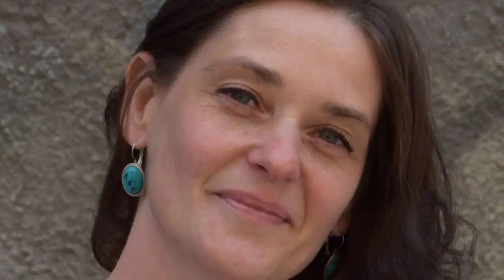
High school teacher Filippa Mannerheim. 
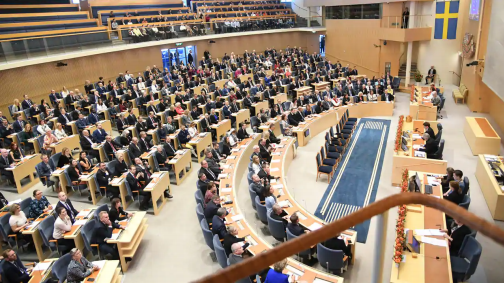
The Swedish Parliament. 

Photo: OLLE SPORRONG

Teacher Filippa Mannerheim sparked a great debate with her indictment against Swedish parliamentary politicians about the market school. 

All parties – except M and KD have responded – and Mannerheim is now writing her closing remarks. 

This is a cultural article, where writers can express personal opinions and make assessments of works of art. 

DEBT DEBATE. 

There was once a farmer who was terribly hard of hearing, something he was ashamed of. One day, while standing carving on an ax handle, he saw the surveyor coming walking on the road. “First he probably asks what I do and then I answer ‘Ax handle'”, the old man thought. Then he asks if he can borrow my mare and then I say: “The riders have ridden her back off”. And when he asks about my old echo, I answer “She is completely ruined and holds neither weather nor water.”  

– Good day! said the surveyor.  

“Ax shaft,” replied the old man.  

This story my father read to me when I was a child and I remember that we laughed a lot at the old man’s determined but damned answers. That the saga is now revived within me again, after 40 years, is no coincidence.  

After reading the six (non) answers from our parliamentary parties after my article “I accuse…!”, I am saddened by school policy. What is positive is that our Riksdag politicians have answers to all my questions. What is negative is that their answers rarely have to do with the questions.  

The Center Party proudly claims (after three months of reflection, while their formulations have gone back and forth between communicators and party leadership), that they at least want to increase freedom of choice and transparency in Swedish schools, but then make proposals that lead to the exact opposite – slippery as eels in their struggle to defend the corporations’ dividends. The Liberals write an answer so full of empty phrases that I have already forgotten what the message was. I think there was something about teachers being very important. 

The Social Democrats and the Green Party agree with me in substance but unfortunately can do nothing, “very boring, really.” The Western Party is outraged, the Sweden Democrats, as usual, blame the immigrants and the 

Moderates and Christian Democrats don’t bother to even put together an answer. Probably they have none.  

– Swedish schools are in deep crisis! Politicians, you must act! 

– Good day, ax handle, little friend. 

What exactly is politics for our politicians? I ask myself. Is it a polished, trembling index finger in the air, or is it a sincere description of the problem and a long-term and well-thought-out vision of what Sweden can become, based on knowledge, a sense of responsibility and an honest will to improve our society?  

Who knows? Not me anyway.  

In another fairy tale I recently read with my 

students, HC Andersen lets the little child 

shout the obvious: “The emperor is naked!” 

Many of us are shouting now, but without our 

rulers hearing us.  

Photo: CSABA BENE PERLENBERG / 

But this is not a fairytale. This is 2021 in a  small but extreme country in the north, where the majority of our parliamentary parties have made it clear to us voters that the Swedish school market, with its destructive consequences, will remain. The limited companies’ expansion at the expense of the municipal school, the unfair school choice system, the extreme and skewed construction of school fees that are running Swedish schools at the bottom, grade inflation, a rejected principle of openness and an increasingly segregated school system – all this we must continue to live with.  

This was not what we thought of the free school reform!  

Nevertheless, the majority of our political parties are determined to continue on the path that has led Swedish, tax-financed schools deeper and deeper into the dunes of corruption. The partners’ profits are too important to be legislated away. At the same time, meaningless messages are drummed out to voters as pale, Orwellian mantras: “All schools must be good!” “Free schools are good!”  

– Good day, ax handle.  

The fact remains: We are the only country in the world with this school model. No party, neither right-wing nor left-wing parties in the rest of the world, pushes the idea of ​​free establishment for commercial companies, an almost unlimited profit, lack of democratic transparency about how tax money is used and free for profit companies to choose and reject which children to teach. The Swedish school system is rigged.  

Several bourgeois opinion leaders and leading writers have happily begun to raise their voices against the market school. Even the Liberals have very recently expressed concern about venture capitalists as school owners. It gives a certain hope. But the fact that an overwhelming majority of our parliamentary parties cannot unanimously express that they are prepared to take responsibility and do something about the problems is nothing but outrageous. They simply do not want to stop being the only country in the world that prioritizes foreign venture capitalists over the country’s children.  

But Swedish schools are not the private property of politicians or limited companies to milk money and power out of. The schools belongs to us. The Swedish people. We pay for the party.  

In the 2022 election, we voters have the opportunity to use our votes wisely with the socially important school issue in focus. If we vote for a party that does not want to change the school system but only pretends to poke at it for the sake of visibility, the system will remain. And it will leave huge traces in our Swedish society.  

Parliamentary politician: I have nothing more to add in the matter. 

My accusation remains.  

By Filippa Mannerheim 

Filippa Mannerheim is a high school teacher of Swedish and history, as well as a writer and school debater.