About a dozen years ago, I heard from Ted Dintersmith. I didn’t know anything about him other than that he was a venture capitalist who was interested in education reform. My hackles went up, because the term “venture capitalist who was interested in education reform” immediately conjured up images of Democrats for Education Reform,” a faux group that is dedicated to charter schools, Teach for America, evaluating teachers by student test scores, and union-busting.
When I thought about the people in this category, I thought about very wealthy men like Ravenal Boykin Curry IV, Whitney Tilson, John Perry, Ken Griffin, Jeff Yass, Daniel Loeb, Arthur Rock, Joel Greenblatt, Bruce Rauner, and Paul Tudor Jones. They are financiers who have committed millions to the cause of privatizing public schools. They are united in their contempt for public schools, teachers, and unions.
So I was wary of Ted and suspicious of his motives. And I pushed him aside, thinking he was part of the cabal of know-it-all entrepreneurs with a zeal to reform (privatize) public schools.
So, I now publicly admit that I was wrong. Ted has traveled the country, visiting schools and listening. He knows how hard teachers work, and he admires them. He has teamed up with some savvy people, like Tony Wagner and the late Sir Ken Robinson, to produce films and write books.
When I recently read his latest article, I realized that I had completely misjudged Ted. He doesn’t want to destroy public schools or privatize them. He wants to make them better. He wants students to love school and learn what they need to know to make informed choices.
He has seen some good charter schools (as I have), but he knows that a few hundred charter schools won’t lead to the transformation of tens of thousands of public schools. And–my thought–to the extent that charter schools defund public schools, they create more problems, more inequities.
So, I hereby apologize to Ted Dintersmith for prejudging him and for lumping him with the Billionaire Boys Club, those who see school transformation as a hobby.
When you read this post you will see that he doesn’t have all the answers, but he is asking the right question.
He writes:
About these notes: Always Monday. Always short. Always free. Always about civil society’s future. At times, interesting. If this was forwarded to you, subscribe here.
First, thanks for your feedback on my recent posts. My goal of late is to explore the various factors causing America to unravel. Toward a systems model of the forces undermining America’s democracy, moral compass, and social cohesion. Today, education.
For five decades, U.S. education policy has been driven by two goals: test scores and college. The No Child Left Behind Act in 2002. Then in 2010, Common Core. Obama’s rallying cry: “By 2020, the United States will once again lead the world in college completion.” Our all-consuming education focus. With massive collateral damage.
Let’s start with the funnel. While the college path works out well for some, most end up on the wrong side of education’s Bell Curve. Over half go directly to career, lacking a hirable skill and often with gutted self-esteem. Of those heading off to college, half don’t finish. Of those who graduate, half don’t get any kind of dream job. A system that’s produced some 43 million adults burdened by $1.8 trillion of student loan debt.
With a boost from Harvard-educated JFK, America grew to equate a prestigious college degree with human worth. This equivalence worked its way into news stories, movies, television shows, commercials . . . and labor markets. Prestige employers (that’s you, Goldman Sachs and McKinsey) made an elite college degree the essential hiring criterion. Less glamorous companies (that’s you, Sherwin-Williams) made a college degree mandatory for promotions. Rich families push their kids from the womb toward an Ivy+ degree. Poor families want the same for their kids. University research teams (that’s you, Georgetown) produce skewed studies touting a massive $1.2 million earnings lift for college grads. The Federal government opens the spigot for readily-obtained, impossible-to-shake student loans.
We’d like to think that America’s education system levels the playing field, but it does the opposite. The SCOTUS 1973 San Antonio Independent School District v. Rodriguez says it’s just fine for U.S. public schools to be largely funded by local property taxes. Rich kids are showered with resources’; poor kids show up to school hungry. Test scores point to an education ‘achievement gap’ that gets pinned on our teachers – not America’s staggering income inequality. The system’s winners feed elite colleges that educate more students from the richest 1% of families than from the bottom 50%. For more, read Paul Tough’s book The Inequality Machine.
With college placements as the measure of success, America’s K12 schools became college-ready test-prep institutions. Pit kids in dog-eat-dog competitions: class rank, SAT scores, AP scores, college placement. A barrage of state- and Federally-mandated multiple-choice exams that rank kids, teachers, schools, districts, and states. Clear marching orders for K12 schools – train kids to perform well on multiple-choice exams and get them off to some college.
To this day, America relies on two numbers to define the education quality of a school, district, state, nation, and human. Math and reading scores. That’s it. Don’t believe me? Just note what journalists write and what policymakers cite. We’ve pushed generations of young Americans to get those damn test scores up. No worries if we short-change career-based learning, civics, history, and art. No worries if we disenage kids and demoralize teachers. No worries if a relentless focus on rote learning crushes a child’s curiosity, creativity, joy, and agency. No worries if kids get the soul-sucking message that what matters in life is outcompeting others on pointless tasks. Education priorities that encapsulate the classic definition of insanity – doing the same thing over and over, expecting different results.
So many reforms, so little change
During their formative K12 years, America’s kids take more than 100 standardized exams. These cost-minimizing exams are expressly designed to be graded by a computer. And if a computer can grade a task, it can do that task. In every sense, we push kids to develop rote skills that machines handle flawlessly. Already, AI aces every assignment and exam required to graduate magna cum laude from Harvard. Reading exams call for regurgitating what’s put in front of you – perfect training for conspiracy-absorbing adults. Math exams are tied to esoteric micro-procedures (e.g., factoring polynomials) that adults never use. Yet we chase these scores, for decades, making no progress, ignoring Goodhart’s Law: “Any measure that becomes a target ceases to be a good measure.”
There you have it. America’s colossal education botch. Train kids to perform rote tasks. Crush out the essential human traits of curiosity, audacity, creativity, agency, and joy. Standardize what’s taught and tested to produce data that ranks and sorts — rather than helping each child develop their distinctive human potential. Most get a chronic ‘you lack proficiency’ message in a system that heaps advantage on the affluent. Botched priorities, paving the way to our current nightmare. A populace unable and unwilling to critically analyze the torrent of lies coming from the White House. A populace that holds its nose to vote for a convicted felon who rails on the ‘educated elite.’ A boiling cauldron of resentment, corruption, and anti-science vitriol. As to how this has worked out, read David Brooks’ fascinating How the Ivy League Broke America.
I don’t offer these views on education casually. For the past fifteen years, I’ve immersed myself in this world. I’ve visited hundreds of schools, and convened thousands of conversations, all across America. I celebrate the bright spots in my books (What School Could Be: Insights and Inspiration from Teachers Across America) and films (Most Likely to Succeed and Multiple Choice). But I’ve seen the failure. Failure caused by an obsolete system and failed accountability measures. Our classroom teachers are heroes. It’s not easy to fight the system, but many do. Give special thanks to the teachers in your life, who persevere despite being shortchanged on pay, respect, and trust. They endure in an entrenched system that has churned out generations of young adults ill-prepared for career, citizenship, and life. A system sowing the seeds for democracy’s collapse.
Three Bold Ideas
Career-Based Learning for All: My recent film Multiple Choice showcases a mainstream public school district that immerses all high-school kids in career-based learning across a range of skills (e.g., carpentry, welding, healthcare, cybersecurity, digital media, AI). Better for the career-bound and, a bit surprisingly, better for the college-bound. The key is making career-based learning essential for all kids, not just ‘those’ kids who don’t resonate with academic curriculum.
Finland: America can learn much from Finland. Their remarkable education progress resulted from a budget crisis that forced them to choose between data and educator excellence. They dumped all standardized tests and focused on developing outstanding classroom teachers – better training, more pay, loads of respect. Finnish kids spend comparatively little time on ‘school’; even high-schoolers have just six hours of class time and homework during the school week. Lots of time for play and exploration. A well-educated populace. For more, read Pasi Sahlberg’s Finnish Lessons.
Accountability: Base accountability on a child’s growing ability to create and carry out initiatives that help make their world better. Portfolios of purpose, not a checklist of counterproductive numbers. Check out New York’s Performance Standards Consortium or read Tony Wagner’s Mastery.
Bonus Idea: Long talked about, America would be well-served if every high school graduate engaged in public service — lifting up their community while developing important skills. Those going on to college bring maturity and real-world experience to years often wasted on beer pong. Those eschewing the college path are off and running with purpose and skills. Young Americans across all demographics in a melting pot that bridges our current demographic and political divides.
The biggest lie about American school kids is that most are “below grade level.” This lie is repeated so often by prominent figures that it is widely believed. But it’s not true. Those who believe it are wrong. Those who repeat it, knowing it’s not true, are liars.
The source of the lie and the confusion is clear: the achievement levels in which NAEP scores are reported. The levels are “advanced,” “proficient,” “basic,” and “below basic.” When the media write about the latest release of NAEP scores, they frequently treat “proficient” as “grade level.”
But “proficient” is NOT “grade level.” It represents solid achievement, a rigorous aspirational goal. “Proficient” is equivalent to a solid A.
Every NAEP report on test scores says clearly in a footnote that “proficiency” is not the same as grade level. For example: “NAEP Proficient does not signify meeting grade-level expectations.” Yet the media and prominent commentators who should know better repeat the lie that most students are below grade level. The fact is that most students will never reach the high bar of “proficient.”
In 2023, as Bruce Lesley points out, Biden’s Secretary of Education–Miguel Cardona–testified to a Congressional committee that only one-third of American students were reading “at grade level.” I was flabbergasted. I couldn’t believe he said something so outrageous. I called Dr. Peggy Carr, who at that time was the Commissioner of Education Statistics. She was as surprised as I was that Secretary Cardona repeated the erroneous statistic. I asked Dr. Carr whether she had ever briefed him on understanding NAEP results; she had not.
I gave her an idea. Propose a change in name for “proficiency.” Change the name to “mastery.” No one would claim that “mastery” was the same as “grade level.” She liked the idea and promised to take it to the board. Whether she did, I don’t know. But nothing changed.
Bruce Lesley wrote this open letter to the National Assessment Governing Board, which oversees NAEP testing. Lesley is president of First Focus on Children and its partner organization First Focus Campaign for Children, bipartisan advocacy organizations dedicated to making children a priority in federal, state, and international policy. He has led both organizations since 2006 and 2009, respectively, building them into recognized national voices on child health, education, early childhood, economic security, budget and tax policy, immigration, children’s rights, and more recently, international child policy.
He wrote:
To the National Assessment Governing Board, the National Center for Education Statistics, and the leadership of the National Assessment of Educational Progress:
Every institution whose work affects children should begin with one question: “Is this good for children?”
By that standard, the National Assessment of Educational Progress (NAEP) has some important issues that deserve to be resolved. First and foremost, your achievement-level labels — “Basic,” “Proficient,” and “Advanced” — are being weaponized against the very children NAEP exists to serve, and you know it, because your own staff has been saying so for twenty-five years.
To be clear, this open letter is not a claim that NAEP’s underlying data is necessarily wrong, and it is not an argument against NAEP. The argument and request is narrower: you have a real and critically important ethical responsibility to correct the public misuse of your own data. NAEP should defend its credibility against those currently diminishing it.
This Week’s House Mark-Up Provides Another Example
On July 15, 2026, the House Education and Workforce Committee marked up a ten-bill package to facilitate the dismantling of the U.S. Department of Education.
In his opening statement, Chairman Tim Walberg (R-MI) argued that “too many children can’t read or do math at grade level,” and used that claim as a central justification for several of the bills. That claim is false.
Chairman Walberg was drawing on NAEP data — the statistic that roughly two-thirds of American fourth-graders do not score “Proficient” in reading, which is wrongly cited as evidence of failing to meet grade-level reading levels. For some, this is done out of confusion and, for others, to promote a political agenda to undermine public schools. In reality, NAEP proficient is aspirational and reflects a standard that is well above grade level.
Unfortunately, during the markup, multiple members of Congress repeated the same error. But again, NAEP Proficient is not grade level. It has never been grade level.
When the public, the press, the administration, and Congress repeatedly miscite this fact, the National Assessment Governing Board (NAGB) must do much more to clarify and correct misstatements about what it means.
The problem is two fold. One part of the problem is that “proficient” is used on many state and local assessments to mean “at grade level,” or what once upon a time would have been called a gentleman’s C; this leads to some honest confusion for some folks. The other part of the problem is folks who are invested in the narrative that public schools are failing and who benefit from the confusion surrounding the term.
Greene adds:
And every time NAEP scores are released, education journalists write piece after piece explaining “proficient” all over again, usually in the wake of some prominent person decrying the large number of students not “at grade level.”
That confusion is NAGB’s responsibility to address, and it has deserved attention for years, but all the more NOW.
This Is Not a Partisan Problem
Chairman Walberg and his colleagues’ misstatements are only the most recent officials to make this mistake (whether unintentionally out of confusion or internationally), and the pattern runs through both political parties.
Secretary Miguel Cardona, testifying before Congress in April 2023 under the Biden Administration, told lawmakers directly that only one-third of students were reading “on Grade level,” treating a NAEP proficiency figure as if it were a grade-level statistic, in nearly identical language.
And Secretary Linda McMahon, in the current Trump Administration, has used more careful wording — noting that nearly 70% of eighth graders are “not proficient” in reading — but has paired that technically accurate phrase with language implying total system failure. A Snopes piece by Rae Deng described this claim as lacking its own level of reading comprehension because, again, it completely mischaracterizes what NAEP’s “proficient” standard means.
Outside advocacy groups have been considerably less careful than any of them.
Corey DeAngelis, a leading advocate for school privatization, vouchers, and against public education, has cited NAEP proficiency figures directly, without qualification, as evidence that public schools are a system-wide “disgrace.”
Greene captures these types of political misuse of NAEP data in this Substack post.
This confusion is intentional by people arguing for both the dismantling of public education and federal investments in children.
Unfortunately, NAGB’s silence has allowed that rhetorical usefulness to go unchecked under Republican and Democratic administrations alike, and it is being used right now, this week, on Capitol Hill to justify eliminating the very agency that funds and safeguards the data NAGB produces.
NAGB’s Own Experts Have Been Saying This for Years
In 2001, Mary Lynne Bourque and Susan Loomis — a staff member and a board member of the National Assessment Governing Board itself — wrote plainly that the Proficient achievement level “does not refer to ‘at grade’ performance,” and that performance at Proficient is not the same as being “proficient” in a subject as any ordinary person would use that word.
Chester “Checker” Finn, Jr., who chaired the panel that adopted the achievement levels in 1992, has been candid that the levels were designed to be aspirational — a description of where students should ideally arrive, not a diagnosis of where most currently stand.
NCES itself has attached a caution to NAEP score reports for years: the Proficient level “does not represent grade level proficiency as determined by other assessment standards.”
If NAEP’s own architects and NAGB’s own website already say this, it is past time to be diligent in correcting the record when people misuse and misstate what it means. It is also on NAGB to stop publishing results in a format that predictably, foreseeably, and repeatedly gets misread as a verdict on grade-level performance, especially when you can see exactly how that misreading gets used again and again.
The clearest confirmation of all of this comes from NCES’s own data. Researchers Gina Cervetti and Kathleen Hinchman mapped every state’s definition of fourth-grade “grade-level” reading proficiency directly onto the NAEP scale and found that, as of the most recent analysis, nearly every state’s own standard for grade-level reading lines up with NAEP’s Basic level, not NAEP’s Proficient level. That means the honest translation of the data runs the opposite direction from how Chairman Walberg and others use it: by the states’ own definitions of grade level, roughly two-thirds of American fourth graders are reading at or above grade level, not below it.
Cervetti and Hinchman are also blunt about what actually is a crisis in the data: not a reading crisis, but an equity crisis. In 2022, only 48% of students eligible for free or reduced-price lunch scored at or above NAEP Basic, compared with 76% of students who were not eligible — a 28-point gap that has persisted, largely unchanged, for decades.
That is a story about generational wealth and unequal access to housing, healthcare, and school resources, not a story about failing classrooms, and NAEP’s own framing continues to let people tell the wrong story with your numbers.
What Education Writers and Researchers Have Been Saying
Diane Ravitch, who served seven years on the National Assessment Governing Board under President Clinton, has called out the confusion between NAEP Proficient and grade level as one of the most damaging and persistent falsehoods in American education discourse, noting that NAEP itself explicitly warns against the equivalence you continue to permit others to make.
Greene has argued that cut scores like “Proficient” function as scaled, curved judgments dressed up as fixed standards — noting that if every child scored above a cut, the establishment reaction would be to declare the cut too easy, not to celebrate the achievement. That is not how a genuine, fixed criterion is supposed to behave, and it is worth NAGB’s honest reckoning.
Mark Weber, a New Jersey teacher and education researcher, has done careful public work mapping state proficiency standards onto the NAEP scale, and his conclusion undercuts a favorite talking point of your critics-turned-allies in this fight: there is no empirical evidence that closing the so-called “honesty gap” between state and NAEP proficiency rates does anything to improve student achievement. If setting state cut scores to match yours were actually the lever for better outcomes, we would expect to see it in the data. We do not. That matters because it means the standard is being imported into state accountability systems on faith, not evidence — exactly the kind of unsupported claim NAGB should be correcting rather than allowing to spread.
The Brookings Institution’s Brown Center on Education Policy has been making this same case for nearly two decades. Tom Loveless, the Brown Center’s longtime director, authored a 2007 report concluding bluntly that NAEP’s cut scores were set too high.
His 2016 Brookings piece, “The NAEP Proficiency Myth,” went further, noting that the achievement levels came under critical review from the U.S. Government Accountability Office, the National Academy of Sciences, and the National Academy of Education shortly after they were adopted — with the National Academy of Sciences review concluding the achievement levels were fundamentally flawed.
Loveless adds:
Advocates of the NAEP proficient standard want it to be for all students. That is ridiculous. Another way to think about it: proficient for today’s eighth graders reflects approximately what the average twelfth grader knew in mathematics in 1990. Someday the average eighth grader may be able to do that level of mathematics. But it won’t be soon, and it won’t be every student.
That is not a stray outside critique. That is respectable experts in the field, writing for decades, about the very categories NASB is still using today without correction.
One Point Should Not Separate “Failing” from “Successful”
NAGB also owes the public an honest accounting of what a cut score actually is. A cut score is a single point on a continuous scale, chosen somewhat arbitrarily by a panel, above which a child is declared “Proficient” and below which the same child, one point lower, is declared “Basic,” which is actually grade level.
Two children who are functionally indistinguishable in what they know and can do are sorted into entirely different public categories — one used as evidence that a school, a state, or a federal agency is failing, the other treated as evidence of success — because of a single point set by a committee, not because of any meaningful difference in the children themselves.
That is not a rounding error. It is the mechanism by which your data gets converted into political ammunition.
If NAGB cannot explain, in terms parents can understand, why the child who scores one point below the line is a different kind of learner than the child one point above it, then the line is doing rhetorical work the data was never built to support.
As the psychiatrist and educator William Glasser warned schools decades ago, chasing a point or two of movement on a test score is precisely the wrong institutional goal — and yet that is the goal NAEP’s cut scores hand every state, district, and school in the country by default.
Researcher Andrew Ho makes a similar point. He has identified proficiency cut scores as arbitrary markers, set through what he calls an “overwrought, judgmental, and ultimately political process,” not derived from any fixed line in human learning.
Ho has also documented a specific illusion that follows from that arbitrariness: because a large cluster of students always sits near the middle of the score distribution, a cut score placed close to that cluster will make small, ordinary shifts in performance look like dramatic gains or losses, purely as an artifact of how many students happen to sit right at the line — not because anything real changed in how much they learned. A researcher with no stake in the politics of this issue is describing the identical mechanism that turns your data into a rhetorical weapon: the closer the line sits to where children actually cluster, the more your data will appear to swing wildly for reasons that have nothing to do with children’s learning.
Criterion-Referenced in Name, Arbitrary in Practice
NAEP describes itself as a criterion-referenced assessment, distinct from norm-referenced tests like the SAT that simply rank students against one another. That distinction matters, and I want to represent it accurately rather than overstate it — NAEP does not “grade on a curve” in the way the SAT’s percentile scoring does.
However, the practical effect on families is not so different as the label suggests. NAEP’s cut scores were set by hand-picked panels making judgment calls about what students “should” know, not derived from an external, agreed-upon standard of competence, and independent evaluators — including a National Academies review in 2017 — have called for stronger evidence connecting NAEP performance levels to any real-world outcome at all.
A test that is criterion-referenced in name but whose criteria were set arbitrarily, and whose results still track family income and race as tightly as any norm-referenced test on the market, produces the same practical harm as the norming bias critics have long raised: it tells us more about a child’s zip code than about a fixed, meaningful standard of what that child knows.
Notably, NAGB has conceded the point this year. The 2026 NAEP reading framework — administered to students for the first time this spring — now explicitly disaggregates racial and ethnic subgroup results by socioeconomic status, on the premise, well documented for decades, that apparent racial differences in test scores largely track socioeconomic differences. That is a welcome and overdue acknowledgment.
But it is also, in effect, NAGB admitting in 2026 what critics have argued for years: that the results have been measuring wealth and family circumstance as much as they measure “proficiency,” all along. If that acknowledgment is real, it should extend backward, to how NAGB talks about every score ever published, not just forward, to a single new breakdown in the data tables.
The Test Itself Is Not Neutral
Even setting the cut scores aside, the content of the test carries its own bias, and NAEP’s own commissioned reviewers have said so. The NAEP Validity Studies Panel — a technical review body NCES itself created and funds — published an analysis by Gerunda Hughes in 2023 documenting that the statistical methods used to build NAEP-style test items can systematically disadvantage the very students the test is supposed to serve fairly.
When an item is answered correctly by nearly every student, it gets treated as a poor “discriminator” between high and low performers and is typically cut from the test in favor of harder items, even though that easy item may represent exactly the content that should be mastered.
In his book, Au cites researchers Kidder and Rosner, who examined more than 300,000 SAT test-takers and the pool of trial questions used to build future exams and found that some trial questions were answered correctly by Black students, or by Latino students, more often than by White students. Those questions were then discarded — not because they were poor measures of the content, but because they failed to reproduce the racial score gap the rest of the test already produced. A question only “counted” as valid if high-scoring test-takers, who are disproportionately White, tended to get it right in pretesting.
My mother has verified the same process when she was asked to be on a panel to evaluate whether the item questions were “fair”. The publishers of the Texas State assessment at the time ran through the questions and kept throwing out questions as biased toward Black or Hispanic children if they scored the same or close to the scores of White children.
In contrast, questions in which there was a substantial gap in favor of White students were not flagged – thus, “norming” the disparity in test score outcomes into subsequent tests. Although my mother repeatedly objected, she was overruled throughout the day and, not surprisingly, never asked back to be a reviewer.
The result, as Au describes it, is a self-reinforcing loop: item selection is calibrated to match existing racial score gaps, which locks those same gaps into every future version of the test, all without anyone ever explicitly considering race in the selection criteria.
NAEP is a different test administered by a different organization, and I am not asserting that NAEP’s item-selection process has been documented to work in the same way. But NAEP uses the same category of item statistics that made this outcome possible on the SAT, and NAGB’s own validity panel has already flagged the risk. Given what is now documented on a test as consequential as the SAT, NAGB owes the public a direct, public answer to a direct question: has anyone checked whether NAEP’s item-selection process does the same thing?
There is also cultural and geographic bias. As the son of an English teacher and a math teacher, it should be no surprise that I did fairly well on standardized tests throughout my life. But I vividly recall a reading passage from the PSAT that focused on nautical issues and the definition of a “flotilla.”
Having grown up in El Paso, Texas, a city located hundreds of miles from any coastline, the passage and vocabulary word were unfamiliar to any of us taking the test in the desert borderlands. On the other hand, we would crush a passage referring to “tortillas.” NAEP’s own reviewers have a name for this: cultural validity, the idea that a test cannot cleanly separate what a child knows from what a child has been exposed to.
Research that NAEP’s own validity panel cites has found that when students are allowed to choose among reading passages on different topics, rather than being assigned a single passage that may be unfamiliar or uninteresting to them, some groups of students — including Black eighth graders and Hispanic twelfth graders in the panel’s own cited study — score much higher. That is evidence that some of what NAEP currently measures is exposure and familiarity, not just reading ability, and it argues for reform in how passages and vocabulary are chosen, not just in how results are labeled.
Again, the validity panel’s report contains proof that this is a design choice, not a fact of nature. In 1972, the psychologist Robert Williams built a test called the Black Intelligence Test of Cultural Hegemony, using vocabulary and content drawn from Black American culture instead of the dominant culture’s frame of reference. When Black and White teenagers took it, Black students substantially outscored White students by substantial margins.
Nothing about the underlying children changed between that test and the SAT. What changed was whose knowledge and cultural fluency the test happened to be built around.
That single fact should end, permanently, any claim that a test’s outcomes reveal some fixed truth about which children “can” or “cannot” read, think, or reason. What these tests reliably measure is often which cultural and economic frame of reference a child was raised in, and how well that frame matches the one test-makers chose to build around — which is another way of describing accumulated wealth, school funding, and generational inequity, not a verdict on a child’s mind.
That is real, and policies that address school finance inequity, child poverty, childhood hunger, and adverse childhood experiences (ACEs) deserve real policy attention. These issues would undoubtedly do more to improve educational outcomes in this country rather than privatization of public schools or the elimination of the Department of Education.
Claims that two-thirds of American children cannot read at grade level are simply false, and their interpretation by policymakers and advocates is harming children. There is an old warning that was popularized by author Mark Twain but attributable to British Prime Minister Benjamin Disraeli about three kinds of falsehood — “lies, damned lies, and statistics.”
In this case, even a true number, presented without its context, can mislead more effectively than an outright fabrication. NAEP’s “proficiency” level is an aspirational one, but the grade-level story built on top of it is doing real harm. NAGB is a position to explain the difference, and the public is not, until you tell them.
The Damage Is Not Abstract: What Gets Tested Is What Gets Taught
This is not a technical quibble.
Every time “below Proficient” gets reported to the public as “can’t read” or “can’t do math,” it becomes ammunition for defunding public schools and for portraying millions of children — disproportionately low-income children and children of color — as failures because of a label your board itself has said should not be read that way.
It also reshapes what happens inside the classroom. When reading and math scores on tests built around NAEP cut points become the metric by which schools, teachers, and even state superintendents are judged, instructional time follows the incentive:
Short, decontextualized passages crowd out real books — my children were taught how to write a brief constructive response (BCR) before they were even taught what a paragraph was.
Science, government, history, the arts, and physical education are pushed to the margins of the elementary school day because they are not tested and therefore not rewarded.
Children end up narrower, not better educated, in the very subjects that make them informed citizens — and NAEP’s own cut-score architecture is a direct contributor to that narrowing, whether or not that was your intent.
NAGB tried a partial fix in 2018, adding the word “NAEP” before each level — “NAEP Proficient” rather than “Proficient” — so people would stop equating your terms with generic ones.
James Harvey, executive director of the National Superintendents Roundtable, was right to call that gesture insufficient at the time. Harvey said:
…the American people should understand that the misleading term “proficient” sets a performance benchmark beyond the reach of most students in the world.
Harvey argued “proficient” should be changed to something like “high” to avoid being “fooled.”
His point has been proven many times, including this week when a sitting congressional committee chairman, citing NAEP-adjacent data to justify eliminating a federal agency, still used the word “grade level” as if it meant what NAEP’s Proficient level does not mean.
The Perverse Incentive NAEP Has Inspired: Grade Retention As Score Manipulation
The clearest evidence that NAEP’s cut scores create perverse incentives and “manufactured” crises, rather than honest information, is what states have started doing in response to them: holding back third-graders who miss an early-literacy cut score, in order to produce a fourth-grade NAEP cohort that looks better on paper.
Education professor and researcher Paul Thomas has documented this closely in states such as Mississippi, where fourth-grade reading gains celebrated as a “Mississippi miracle” tracked closely with a mandatory third-grade retention policy.
A child who is nine years old competing against classmates who are eight will predictably score higher on a test built around the same content; that is a fact about test administration, not about literacy. Furthermore, those same “gains” have been shown to fade by eighth grade, once the retained cohort catches up in age to its peers without having genuinely caught up in learning.
This is worth NAGB’s own honest reckoning, not because the research on retention is unanimous — reasonable analysts, including some closely tied to NAEP’s own governing board, dispute how much of Mississippi’s gain is genuine instructional improvement versus retention’s effect on cohort composition — but because NAEP’s achievement levels are the mechanism creating the incentive either way.
States are not retaining eight-year-olds because it is good for those children. They are retaining them because a single cut score on a single test has been elevated to a measure of whether a state’s education policy is working. The cost of that incentive falls on children: retained students who show a short-term score bump can, over time, experience the opposite of what was intended — greater disengagement, higher rates of dropping out before graduation, and the well-documented psychological toll of being told, at eight or nine years old, that they failed.
William Glasser spent much of his career, in Schools Without Failure, and later in The Quality School, explaining exactly why this backfires. He argued that standardized testing reduces learning to disconnected, memorized facts at the expense of critical thinking and real application — and that the “right answer, wrong answer” format of a multiple-choice test teaches children that education is a hunt for a single predetermined answer rather than a process of genuine understanding.
In the schools Glasser held up as models, closed-book tests were replaced with open-book, collaborative assessments that actually resembled the problems students would face outside school. His deeper claim, grounded in what he called Choice Theory, is that people — including children — are driven by needs for freedom, power, and simple enjoyment in their work, and that using test scores to rank, shame, or coerce students destroys the very motivation that produces quality work in the first place.
Labels matter. When children repeatedly hear that two-thirds of them “cannot read at grade level,” many internalize failure that is not supported by the evidence. Parents lose confidence in neighborhood schools. Teachers become demoralized. Policymakers propose increasingly radical structural changes to fix a crisis that has been inaccurately described.
Glasser also warned explicitly against making small, arbitrary numerical gains — his example was raising a test score by a point or two — the primary institutional goal of a school, insisting instead on building a genuine culture of quality. That is precisely the trap a single-point NAEP cut score sets for states, and it is the trap third-grade retention policies walk students directly into.
That is the opposite of what an assessment meant to serve children should produce, and it deserves your acknowledgment, not your silence.
What We Are Asking You To Do, Now
Issue a direct, public correction each time a federal official misstates NAEP Proficient as “grade level,” the way you would correct any other material misuse of your data. Silence is not neutrality; it is acquiescence in the misuse.
Publish, prominently and alongside every score release, the state-by-state mapping showing that “grade level” as states themselves define it corresponds to NAEP Basic, not NAEP Proficient — the analysis your own data already supports and that outside researchers have had to do on your behalf.
Publish a plain-language document — “What NAEP Proficient Does, and Does Not, Mean” — and require it alongside every score release, every webpage, every press briefing, and every congressional testimony that cites NAEP data. Most of this letter’s argument could be prevented by a single page NAGB.
Stop using “Basic,” “Proficient,” and “Advanced” as headline labels without their NAEP qualifier in every release, chart, and public statement — not as a footnote, but as a mandatory part of the label itself, displayed with the same prominence as the number.
Retire “Basic,” “Proficient,” and “Advanced” altogether in favor of terms that do not already carry a plain-English meaning your data does not support. If the words themselves are the problem, changing a modifier in front of them has not been enough.
Extend the honesty of the 2026 reading framework’s socioeconomic disaggregation backward, not just forward. If you now accept that racial gaps in your data are substantially explained by family socioeconomic status, say so plainly every time a racial achievement gap is reported, and stop letting that gap be cited as evidence of school failure without that context.
Commission and publish the external validity evidence the National Academies asked for in 2017 — a transparent accounting of what your cut scores do and do not predict, so the public can evaluate the standard rather than take your word for its meaning.
Publicly acknowledge the perverse incentive your cut scores have created for third-grade retention policies, and commission independent, longitudinal research — tracking students well past eighth grade, through high school graduation — before any state is permitted to point to NAEP gains as proof that retaining eight-year-olds is good policy.
Act on your own validity panel’s 2023 findings, and answer the question the SAT evidence now raises. Publicly disclose whether NAEP’s item-selection process has ever been audited for the same self-reinforcing bias documented on the SAT — where trial questions that marginalized students answered correctly were discarded for failing to reproduce the existing score gap — and commit to an independent audit if it has not. Explain how tests are “normed” from one year to the next and made comparable in a manner that is understandable to the public.
Kids can’t wait for another year of this same correction being offered and ignored, or for another cohort of eight-year-olds to be held back so a state’s chart can look better. NAGB has the power to end the confusion your own board identified more than two decades ago. Please do so. Kids deserve it.
Carol Burris, executive director of the Network for Public Education, writes here about Arkansas’s ongoing efforts to destroy its public schools. Under Governor Sarah Huckabee Sanders, the state has jumped into privatization.
Burris writes:
Arkansas sits eighth from the bottom on our 2026 report card’s rating of the states. And it is likely to fall further in the coming years as its legislature and Governor’s hostility toward public education grows, and its allegiance shifts further from its public schools to privatized alternatives.
Arkansas’s first charter law (1995) allowed only conversion charters — a way for districts to experiment, in keeping with the original vision. Four years later, the legislature authorized start-up open-enrollment charters, capped at twelve. In 2005, it raised the cap to twenty-four and lengthened authorization terms. In 2011, it added an escalator that bumped the cap by five every time the number of schools came within two of the limit, thus creating a cap in name only.
The move away from charters as a source of district innovation came in 2013, when the Arkansas Quality Charter Schools Act created the Charter Authorizing Panel as the primary authorizer, handling authorization, renewal, revision, and revocation, and gave the authority to a politically appointed commissioner. Over time, authorization periods grew from three years to twenty.
When Governor Hutchinson appointed Johnny Key commissioner in 2015 (even though Key did not meet the state’s educational experience requirements), the number of charter schools in Arkansas almost doubled.
The real embrace of privatization, though, came with Act 237, the LEARNS Act.
That Act:
Eliminated the statewide cap on charter schools.
Created a revolving facilities loan fund for charter schools.
Created “transformation contracts” that hand district governance over to charter management organizations.
All of this despite the Division of Elementary and Secondary Education’s (DESE) own 2024 report that 46% of open-enrollment and conversion charters scored D or F, against 32% of public schools overall.
But the LEARNS Act did not stop there. It absorbed Arkansas’s modest voucher program into Education Freedom Accounts, at first with caps, but as of this year, all caps were lifted and universal eligibility kicked in.
Even though $277.4 million was appropriated, spending ballooned to over $326 million, with the legislature increasing funding to $379 million for 2026-27. Nearly 40% of the takers were homeschoolers or microschoolers. The state now funds unregulated and unsupervised education.
Not that there are sufficient safeguards on the private school sector taking voucher students. According to an investigation published this week by ProPublica, about 120 new private schools have opened in Arkansas in the three years since the state began handing families roughly $7,000 a year for tuition. Bill Kopsky of the Arkansas Public Policy Panel calls it “this whole new industry of pop-up, subprime private schools that have almost no regulation.”
Before LEARNS passed, Education Secretary Jacob Oliva promised there would be “accountability for the schools that participate.” What his Department actually gave itself was the power to run random financial audits, to make schools report tuition and fees, and to require schools to test students with an exam of their own choosing. Nothing about quality was included. Pressed to tighten the rules this spring, the Department declined again, and instead fiddled with what parents may buy — no more travel sports teams. Even that drew objections that it was too much government interference.
And what does the money buy? ProPublica found a school where students were put to menial labor and violence, whose owner was convicted of permitting child abuse, a felony. Shockingly, the school remains eligible for state money after a temporary stop.
The LEARNS Act also removed protections for teachers by repealing the Teacher Fair Dismissal Act and the Public School Employee Fair Hearing Act, leaving employees only notice of a termination recommendation and a hearing before the board, while displacing seniority and tenure as the basis for teacher dismissal.
It did raise the minimum teacher salary to $50,000. However, it is not surprising that our report card noted that Arkansas has a high rate of underqualified teachers, losing maximum points in that category. It is still in the lower 40% of states based on average teacher salaries adjusted by cost of living.
When it comes to funding its public schools, Arkansas hovered near the bottom, losing all possible points in three categories: funding, funding equity, and funding by ability to pay.
The state seems well on its way to competing with Florida and Arizona for last place.
If you are a long-time reader of this blog, you know that I have a strong friendship with and great respect for the Rev. Charles Foster Johnson, executive director of Pastors for Texas Children. Charlie comes to every conference of the Network for Public Education and is a strong advocate for public schools and the 5.4 million children who attend them. He believes deeply in separation of church and state, as do the 2,000 faith leaders in Texas who are part of Pastors for Texas Children. PTC was deeply involved in the voucher battle, on the side of public schools and church-state separation.
PTC has encouraged the creation of similar groups in other states. One of these groups is in North Carolina. I received this notice and thought some of you might want to participate in their zoom conversation about “Christian nationalism.”
People of Faith for Public Schools
Dear Advocates,
Though it’s still summer, our advocacy doesn’t stop! Have you been hearing about “Christian nationalism” but maybe don’t know quite what it is or why it matters to public education advocacy?
How To End Christian Nationalism Zoom Book Discussion
Pastors for NC Children and Christians Against Christian Nationalism-North Carolina are co-sponsoring a 2 part zoom book discussion of Amanda Tyler’s “How To End Christian Nationalism”.
It will take place on Thursday, July 23 and Thursday, July 30 from 7-8:30pm. July 23 will look at the Introduction and Steps 1-4. July 30 will look at Steps 5-8 and the Conclusion. While we hope you read the book, you are invited to join in even if you haven’t. The discussion will include discussing the steps and how it intersects with our own experiences and life. The discussion will be led by Executive Director Rev. Suzanne Parker Miller.
Thank you to everyone who has made a donation to PNCC’s ministry. WE ARE SO GRATEFUL! Would you consider becoming a monthly donor or make a one time contribution to our goal? Could your church include PNCC in their mission giving? THANK YOU!
Last night, Trump delivered a prime-time speech complaining about election security and blaming other countries–China and Venezuela–for trying to mess with our elections. Almost every word out of his mouth was a lie, with the exception of “a” and “the.”
He has long complained that the 2020 election was “rigged,” forgetting the inconvenient fact that he was President at the time. His lawyers sued to overturn the election results in 60 different cases, and lost repeatedly, even twice in the U.S. Supreme Cout that he stacked. The plain fact was that his lawyers presented no evidence of vote rigging. Even judges he appointed ruled against him.
CBS, now controlled by friends of Trump, reviewed his speech last night and demolished his false claims. Even CBS!
Nicole Sganga of CBS News pointed out that Trump officials fired thousands of federal employees whose job was to assure election security.
She wrote:
Election security has been one of President Trump’s primary preoccupations for years — lately, he’s been pressing Republicans in Congress to pass a voting regulation bill and he delivered a live primetime speech on the topic Thursday night. And yet, since the beginning of his second administration, the government has cut thousands of workers who were tasked with ensuring secure elections in the U.S.
At the Cybersecurity and Infrastructure Security Agency, the government’s top cyber defense body protecting U.S. election systems, nearly 1,000 CISA personnel — or nearly one-third of the agency’s workforce — had left or been removed from active service by mid-2025.
Some were terminated, while others resigned or took administrative leave. Others had contracts that were not renewed or their programs were shut down. Altogether, staffing lingered at around 2,500, down from approximately 3,400 a year earlier. Those numbers were reflected in the Trump administration’s budget proposals. The request for the 2025 fiscal year sent by the Biden administration sought about $3 billion for CISA. The fiscal-year 2026 budget proposal sought approximately $2.4 billion and estimated a staff of 2,649 positions.
CISA was established in 2018, during the first Trump administration and received broad bipartisan support, investment and praise. But after President Trump lost the 2020 election, and the director of the agency, Chris Krebs, described the election as “the most secure in American history,” the president criticized what he called Krebs’ “highly inaccurate” comment and fired him.
Soon after Mr. Trump took office for his second administration, in February 2025, 17 CISA election-security employees were placed on administrative leave. CISA’s broader election-security activities were also subjected to an internal review.
CISA subsequently ended federal support for the Elections Infrastructure Information Sharing and Analysis Center. Its core function is to help state and local election offices protect their systems from cyber threats.
The agency also reduced, then ultimately ended, its cooperative arrangement with the Multi-State Information Sharing and Analysis Center, which provides resources for cybersecurity, like monitoring for threats and vulnerabilities to networks, to state and local governments.
CISA said the cuts would save approximately $10 million annually, eliminate duplication and redirect resources to mission-critical work. But as a result, states have been forced to rely on their own information-technology agencies, fusion centers, private vendors and informal interstate relationships for services that used to come from the federal government.
In May, Democratic Sen. Mark Warner, the vice chairman of the Senate Select Committee on Intelligence, acknowledged the cuts had left them vulnerable when he formally asked DHS to justify reports that CISA was no longer providing states and localities with election-security support.
In the House, state officials asked Congress to restore or extend federal cybersecurity programs and grants, telling lawmakers that state and local entities were facing escalating threats but lack the personnel and resources available to the federal government or major private companies.
FBI, Justice Department and ODNI cuts putting elections at risk
While CISA is the major agency securing U.S. elections, there are other groups and task forces across the government working to ensure the integrity of elections that have also been slashed.
The Trump administration disbanded the FBI’s Foreign Influence Task Force, with Attorney General Pam Bondi dissolving the unit on Feb. 5, 2025, her first day in office. The task force — which was created during Mr. Trump’s first administration in the wake of Russia’s 2016 election-interference operation — was charged with investigating covert foreign-influence activity, including campaigns targeting U.S. elections. At the time, Bondi said ending the task force would free resources for more pressing priorities and reduce the risk of politicized or abusive enforcement.
At the Justice Department’s Civil Rights Division, senior career attorneys responsible for voting-rights enforcement were also reassigned as part of a broader shake-up, and the Justice Department also withdrew from several voting-rights cases while redirecting the Voting Section toward voter-roll maintenance and suspected fraud.
At the Office of the Director of National Intelligence, then-Director Tulsi Gabbard announced a restructuring that would reduce ODNI’s workforce by more than 40% and gutted the Foreign Malign Influence Center. FMIC had previously served as the intelligence community’s central hub for integrating intelligence on foreign efforts to manipulate American political attitudes and housed the Election Threats Executive. At the time, ODNI claimed the center duplicated work.
In April 2025, Secretary of State Marco Rubio shut down the Counter Foreign Information Manipulation and Interference office, a successor to the Global Engagement Center whose work included countering Russian, Chinese and Iranian information operations that could affect American political debate.
Most recently, the Trump administration removed all remaining members of the bipartisan U.S. Election Assistance Commission. On July 9, the White House fired its two Democratic commissioners, while its remaining Republican commissioner resigned, leaving the four-seat commission with no active leadership.
Historically, the EAC has been a national election clearinghouse, accrediting voting-system testing laboratories, certifying voting systems and distributing federal election grants — all while maintaining the national mail voter-registration form. The White House said the president was able to remove commissioners who are not aligned with his election-security objectives.
Public Citizen, a nonpartisan public-interest organization, reviewed the cost of Elon Musk’s slash-and-burn cost-cutting techniques. Public Citizen found that at least $11 billion was wasted by hasty firing of civil servants, most of whom were paid for not working and many of whom were rehired because they were needed.
Douglas S. Pasternak wrote:
The Trump administration has paid federal employees at least $11 billion – and likely much more – not to work.
This total reflects only the lower end of estimated costs for the Deferred Resignation Program (DRP) – inspired by Elon Musk in the Office of Personnel Management’s (OPM’s) infamous “Fork in the Road” email,[1] and it does not look at other federal efforts to reduce the number of federal workers.[2]
Nor does the total include the enormous social cost of leaving major government functions unfulfilled.
A Devastated Workforce
Since Donald Trump took office in January 2025, the federal workforce has declined by 278,282 individuals and 139,628 of those federal employees took part in the administration’s Deferred Resignation Program (DRP).[3]
The Deferred Resignation Program was initiated on January 28, 2025, with what came to be known as the “Fork in the Road” email, and those that participated were paid but exempted from work through September 30, 2025.[4] However, if you were eligible to retire by December 31, 2025, you could remain in the program and continue to get paid from October 1, 2025 until December 31, 2025, when you needed to separate from federal service.[5] A second DRP offer, known as DRP 2.0, began in April 2025 and paid employees through September 30, 2025, unless they planned to retire by the end of the year and could then be paid up until December 31, 2025, when they separated from federal service. The result was that nearly 140,000 federal workers were paid not to work for weeks or, in most cases, months.
Based on OPM data, Public Citizen estimates that paying federal employees in the DRP not to work cost between $11.1 billion and $15.1 billion through March 2026, the last month OPM posted publicly available data. The variables and assumptions Public Citizen made in estimating the range of costs due to the Deferred Resignation Program are detailed in our methodology section and two charts included at the end of this report.[6]
To put the cost spent on requiring federal employees to stay home and not to work prior to separating from federal service into perspective, the chart below shows several examples of what $11.1 billion could have been used to purchase, rather than paying employees not to work.
Table 1: What $11.1 Billion Could Purchase
ACTIVITY UNIT COST: WHAT $11.1 BILLION COULD PURCHASE
Annual in-state tuition for more than 928,000 students
Public Citizen’s analysis of OPM data concluded:
The Trump administration paid nearly 140,000 federal employees who took part in the Deferred Resignation Program at least $11 billion to stop working for the American public and to stay home or take vacation until they separated from federal service.[16]
More than 106,000 federal employees separated from federal service in September 2025 under the Deferred Resignation Program, and an additional 24,000 employees in the DRP left federal service by the end of December 2025.[17]
As a result of the DRP, the Department of Defense lost more than 48,000 civilian employees last year, the Department of Treasury lost 23,000 federal employees, and the Department of Agriculture more than 14,500 employees.[18]
Several federal court cases ruled that some of the Trump administration’s layoffs were illegal and demanded that terminated employees at the Departments of Agriculture, Commerce, Energy, Interior, Labor, and other agencies return to work. However, there are a multitude of ongoing court cases and some of those initial court decisions have been overruled in federal appeals courts.[19]
At least 10 federal agencies were forced to rehire employees that had chosen to take part in the Deferred Resignation Program because they realized these employees were essential to the agency’s Congressionally mandated work on behalf of all Americans.
The costs of paying federal workers not to work will continue to rise. Since the beginning of 2026, several agencies have offered new rounds of the Deferred Resignation Program permitting federal employees to stop working, but to stay on the federal payroll through September 2026, adding even more to the burgeoning financial cost of this billion-dollar resignation program.
Although the DRP was supposed to officially conclude in the first half of FY2026 (April 2026), the Department of Interior, for instance, recently extended its program offering federal employees who stopped working by April 29, 2026, to be placed on paid administrative leave through September 2026.[20] Those costs are not included in Public Citizen’s calculations because the data is not yet available from OPM.
Other agencies and federal departments are also following suit and beginning a new round of staff cuts under the Deferred Resignation Program. The Department of Treasury’s Office of Financial Research, which has already shed half of its workforce since last year now intends to offer more employees the chance to enroll in the DRP beginning in mid-May 2026 and remain on paid leave through September 2026 before departing the agency, according to a report in Government Executive.[21] In February 2026, the U.S. Agency for Global Media also offered its staff a similar offer as long as employees accepted the termination offer by March 9, 2026.[22]
The costs of this exercise in downsizing continue to mount, and are replete with examples of poor planning, mismanagement, and financial inefficiencies and waste. The total costs of these terminations also include more than simply paying workers to stop working, they have had ripple effects throughout the government and on the American public.
Fired, Rehired, and Just Plain Bungled
Nothing about the Trump administration’s mass layoffs has advanced “efficiency.”
In many cases, the Trump administration rescinded the terminations and resignations of federal employees in the DRP and other programs in what appears to be systemic incompetence because the administration did not seem to understand the value or critical role of these employees in keeping the departments and offices they had worked for running. The Department of Labor,[23] Internal Revenue Service (IRS),[24] Food and Drug Administration (FDA),[25] Department of Agriculture,[26] the Department of Health and Human Services (HHS),[27] Center for Disease Control and Prevention (CDC),[28] Defense Information Services Agency (DISA),[29] the National Oceanic and Atmospheric Administration (NOAA),[30] the General Services Administration (GSA),[31] and the National Institute for Occupational Safety and Health (NIOSH),[32] all rehired workers who had been terminated or resigned after the agencies realized their critical missteps in arbitrarily dismissing tens of thousands of essential federal employees, after OPM told federal workers that if they took part in the Deferred Resignation Program they could stay home, relax, or travel to their “dream destination” while receiving their federal salaries and benefits.[33]
The Government Accountability Office (GAO) has conducted several analyses focused on the Department of Education, General Services Administration, and Internal Revenue Service related to the administration’s mass firings and resignations, including the Deferred Resignation Program, that clearly shows the process was neither strategic, smart, nor financially efficient.[34]
It’s no exaggeration to say that the 14th Amendment is the foundation of modern civil rights law and that the 14th Amendment today is under attack by reactionary forces. Historian Heather Cox Richardson provides here a history of the 14th Amendment, which many–perhaps most–Americans don’t know.
I wish she had written a few paragraphs on the subject of birthright citizenship, which is the current target of Trump and his henchman Stephen Miller. The Supreme Court recently upheld birthright citizenship but by only a slender margin. The dissenters said that the plain language of the Fourteenth Amendment was intended to apply only to formerly enslaved Black Americans.
Justice Katanji Brown Jackson eviscerated that claim in a brilliant 20-page commentary. This is the full decision in Trump v. Barbara. Justice Jackson’s scathing response to Justice Clarence Thomas begins on p. 32. She argues that birthright citizenship was always intended to apply universally, not just to Black Americans who were formerly enslaved. Read it. You will be glad you did.
Today marks the anniversary of a dramatic reworking of the U.S. constitutional order.
On July 9, 1868, Americans changed the U.S. Constitution for the fourteenth time, adapting our foundational document to construct a new nation that brought the principles of the Declaration of Independence to life. They required the federal government to protect the equal rights of all American men.
In 1865 the Thirteenth Amendment to the Constitution had prohibited slavery on the basis of race, but it did not prevent the establishment of a system in which Black Americans continued to be unequal. Backed by President Andrew Johnson, who had taken over the presidency after actor John Wilkes Booth murdered President Abraham Lincoln, white southern Democrats had done their best to push their Black neighbors back into subservience. So long as southern states had abolished enslavement, repudiated Confederate debts, and nullified the ordinances of secession, Johnson was happy to readmit them to full standing in the Union, still led by the very men who had organized the Confederacy and made war on the United States.
Northern Republican lawmakers refused to accept this caricature of freedom. There was no way they were going to rebuild southern society on the same blueprint as existed before the Civil War, especially since the upcoming 1870 census would count Black Americans as whole persons for the first time in the nation’s history, giving southern states more power in Congress and the Electoral College after the war than they had had before it. Having just fought a war to destroy the South’s ideology, they were not going to let it regrow in peacetime.
Congress rejected Johnson’s plan for Reconstruction.
But then congressmen had to come up with their own. After months of hearings and debate, they proposed amending the Constitution to settle the outstanding questions of the war. Chief among these was how to protect the rights of Black Americans in states where they could neither vote nor testify in court or sit on a jury to protect their own interests.
Congress’s solution was the Fourteenth Amendment.
It took on the infamous 1857 Dred Scott v. Sandford decision declaring that Black men “are not included, and were not intended to be included, under the word ‘citizens’ in the Constitution, and can therefore claim none of the rights and privileges which that instrument provides for and secures to citizens.”
The Fourteenth Amendment provides that “[a]ll persons born or naturalized in the United States and subject to the jurisdiction thereof, are citizens of the United States and of the State wherein they reside.”
The amendment also addressed the Dred Scott decision in another profound way. In 1857, southerners and Democrats who were adamantly opposed to federal power controlled the Supreme Court. They backed states’ rights. So the Dred Scott decision did more than read Black Americans out of our history: it dramatically circumscribed Congress’s power.
The Dred Scott decision declared that democracy was created at the state level, by those people in a state who were allowed to vote. In 1857 this meant white men, almost exclusively. If those people voted to do something widely unpopular—like adopting human enslavement, for example—they had the right to do so. People like Abraham Lincoln pointed out that such domination by states would eventually mean that an unpopular minority could take over the national government, forcing their ideas on everyone else, but defenders of states’ rights stood firm.
The Fourteenth Amendment overturned that idea, recognizing the federal government’s power to protect individuals even if their state legislatures passed discriminatory laws. “No State shall make or enforce any law which shall abridge the privileges or immunities of citizens of the United States; nor shall any State deprive any person of life, liberty, or property, without due process of law; nor deny to any person within its jurisdiction the equal protection of the laws,” it said. And it went on to say that “Congress shall have power to enforce, by appropriate legislation, the provisions of this article.”
The principles behind the Fourteenth Amendment were behind the 1870 creation of the Department of Justice, whose first job was to bring down Ku Klux Klan terrorists in the South.
Those same principles took on profound national significance in the post–World War II era, when the Supreme Court began to use the equal protection clause and the due process clause of the Fourteenth Amendment aggressively to apply the protections in the Bill of Rights to the states.
The civil rights decisions of the 1950s, 1960s, and 1970s, including the 1954 Brown v. Board of Education decision outlawing segregation in public schools, come from this doctrine. Under it, the federal government took up the mantle of protecting the rights of individual Americans in the states from the whims of state legislatures.
Opponents of these new civil rights protections quickly began to object that such decisions were “legislating from the bench,” rather than permitting state legislatures to make their own laws. They began to call for “originalism,” the idea that the Constitution should be interpreted only as the Framers had intended when they wrote it, an argument that focused on the creation of law at the state level. Famously, in 1987, President Ronald Reagan nominated Robert Bork, an originalist who had called for the rollback of the Supreme Court’s civil rights decisions, for a seat on that court.
Reacting to that nomination, Senator Ted Kennedy (D-MA) recognized the importance of the Fourteenth Amendment to equality: “Robert Bork’s America is a land in which women would be forced into back-alley abortions, Blacks would sit at segregated lunch counters, rogue police could break down citizens’ doors in midnight raids, schoolchildren could not be taught about evolution, writers and artists could be censored at the whim of the Government, and the doors of the Federal courts would be shut on the fingers of millions of citizens for whom the judiciary is—and is often the only—protector of the individual rights that are the heart of our democracy….”
At the time, Bork’s supporters expressed outrage at what they insisted was Kennedy’s smear campaign, for surely the right-wing attack on the protections of the Fourteenth Amendment would never so completely undermine modern society.
In North Carolina, as in every other state that offers vouchers, the overwhelming majority of students who claim them were already enrolled in private schools. Before they are enacted, there are lots of claims about helping poor kids “escape failing public schools,” helping kids with disabilities, offering opportunity to go to a better school.
It’s all malarkey.
About 1,125,000 children attend school in Tennessee. About 12.7% of students are enrolled in private schools. Unconstrained by federal law, private schools do not have to accept students with disabilities or others they don’t want. They do not have to administer the same state tests as public tests
The real effect of vouchers–and perhaps its intent–is to subsidize the tuition of kids in private schools, even when the families are rich.
T. Keung Hui of the News & Observer in North Carolina reported:
Nearly three-quarters of North Carolina’s private school students are now getting a taxpayer-funded voucher to help pay for their tuition costs, according to an analysis of state data.
The data indicates that 74.2% of North Carolina’s 143,998 private school students received an Opportunity Scholarship during the 2025-26 school year. Only a quarter of the state’s private school students were receiving a voucher two years ago, before the program was sharply expanded by state lawmakers.
“It is discouraging to see the continued growth in the unaccountable private school sector, where tax dollars fund schools that discriminate, lack transparency, are not required to publicly reveal student achievement data, and in some cases, limit admission to church members,” Heather Koons, director of research and communications for Public Schools First NC, said in an interview Wednesday…
The state has been giving Opportunity Scholarships to help families cover private school costs since 2014. The program was initially promoted by Republican lawmakers as a way to help low-income families pay for private schools to escape low-performing public schools.
But starting in the 2024-25 school year, lawmakers significantly expanded the Opportunity Scholarship program by increasing funding and opening eligibility to all families. The voucher program has tripled in size from 32,549 students in the 2023-24 school year to 106,863 students as of June 2026.
Most of the expansion has come from existing private school families applying for a voucher for the first time. Many private schools encouraged or in some cases required families to apply for an Opportunity Scholarship.
The voucher expansion has allowed some private schools to raise tuition, reduce the amount they spend on financial assistance and embark on expansion programs.
In 2023-24, the cost of vouchers was $185.6 million. In 2025-26, the cost of vouchers will be $589 million. By 2032, the legislators have pledged to spend $825 million. This is money that will diverted away from the state’s public schools, which accept everyone, and enroll the vast majority of the state’s students.
Why not put that public money into public schools, which enroll nearly 90% of the state’s students? Reduce class sizes, pay teachers more, make sure every school has a full curriculum.
When Governor Greg Abbott sold his voucher program, he talked about helping the poorest kids escape public schools and choose better private schools; he talked about enabling those with disabilities go to private schools. He talked about spreading opportunity through school choice.
Some moderate Republicans and rural Republicans supported their community public schools, and they repeatedly voted down Abbott’s vouchers. So Abbott used the millions of dollars contributed by Pennsylvania billionaire to replace them with conservatives who backed vouchers.
But now the data are in on which students are getting vouchers. Three-quarters of them are private school students. This is similar to what happened in other states. Vouchers are not about helping public school students; the reality is that they subsidize kids who never attended public schools.
Maryam Ahmed of The Dallas Morning News reported:
As Texas’ $1 billion school choice program approaches rollout this fall, preliminary data shows most of the program’s applicants were already enrolled in private schools, fewer applications came from families in poorer districts, and less that 30 students with special needs got the top award amount of $30,000.
The Dallas Morning News analyzed data from the Texas Comptroller of Public Accounts, which runs the Texas Education Freedom Account program.
The first year of TEFA has exposed key challenges voucher programs have faced nationwide: insufficient funding for some families to make the move to expensive private schools, difficulties for special education students finding private schools that can support their needs, and minimal benefits for lower-income and rural families.
Since similar data are reported in every state that has no income limits, it’s reasonable to conclude that the transfer of public money to kids in religious and private schools is a feature of school choice, not a bug.
Out of 5.4 million students enrolled in Texas public schools, 275,000 applied for vouchers. The legislation, passed last year, offers students $10,474 while disabled students can receive up to $30,000. Homeschooled students can get $2,000. Median private school tuition is about $9,400, not including books and transportation. Elite private schools charge much more.
Now we learn that the purpose of the voucher program was to “ease the burden” on families already paying for private school, not to help kids in public school:
TEFA spokesperson Travis Pillow said the program’s goal is not to “lure away” public school students but make private school affordable across the board. Many families with children in private school make major sacrifices to keep them there, Pillow said, and TEFA eases that burden….
Out of 5.45 million public school students in Texas, only about 68,000 even applied for TEFA — barely one percent. Half of those students were awarded funds, as of June 16 records provided to The Dallas Morning News, but more could drop out of the program if they can’t find a school to fit their needs.
But even a small drop in public school enrollment leads to budget cuts.
In Texas, public school districts receive a $6,215 allotment per student from the state, meaning fewer public school students directly translates to less funding…
About one in four of the voucher awards went to students with disabilities but only 20 in the entire state received the top award of $25,000-$30,000. However, private schools are not bound by federal law and may deny admission to students with disabilities. It is anticipated that many who received vouchers may return to their public school, where they are guaranteed admission and services.
If the state’s public education budget becomes strained, said Daniel DeMatthews, an educational policy professor at the University of Texas at Austin, lower-income and rural districts would likely be hit hardest.
The Network for Public Education publishes an annual ranking of states in relation to their support for their public schools. This year, for the third year in a row, Nebraska topped all other states in the ranking of states. The legislature, led by Republicans, wants school choice, including vouchers. The legislature allocated $10 million for a voucher program. The public voted by 57%-43% in 2024 to repeal the voucher program. The majority of the public wants good public schools.
Carol Burris writes:
Since our state-by-state report card, Public Schooling in America, began, Nebraska has consistently ranked among the top states for its support of public education. This year, it rose from fifth place to first.
Nebraska is one of only two states — the other being Kentucky — with no charter schools and no state voucher program. Both states’ legislatures passed voucher laws, but in Nebraska, voters overturned it by referendum. In Kentucky, the courts struck down both the charter and voucher laws, and voters went on to defeat an attempt to amend the state constitution to allow them.
Beyond the absence of privatization, Nebraska earned high marks for creating a positive climate for teaching and learning. It has fewer underqualified teachers than most states and a high teacher-attractiveness rating. It also has one of the best student-to-counselor ratios in the nation. It bans corporal punishment, and it is one of only two states that place homeschooling restrictions on families under investigation by Child Protective Services. Unlike most states, Nebraska requires families to provide annual notification when they homeschool.
Even at the top, Nebraska has room to improve. On public school funding, it landed in the middle of the pack. The state distributes what it spends equitably, but given its ability to pay, it can afford to invest more.
Nebraska also, unfortunately, opted into the federal voucher program, and it remains to be seen how much funding Scholarship Granting Organizations will direct to the state’s private and/or public schools. For now, however, Nebraskans’ commitment to their public schools has made the state a beacon of hope.
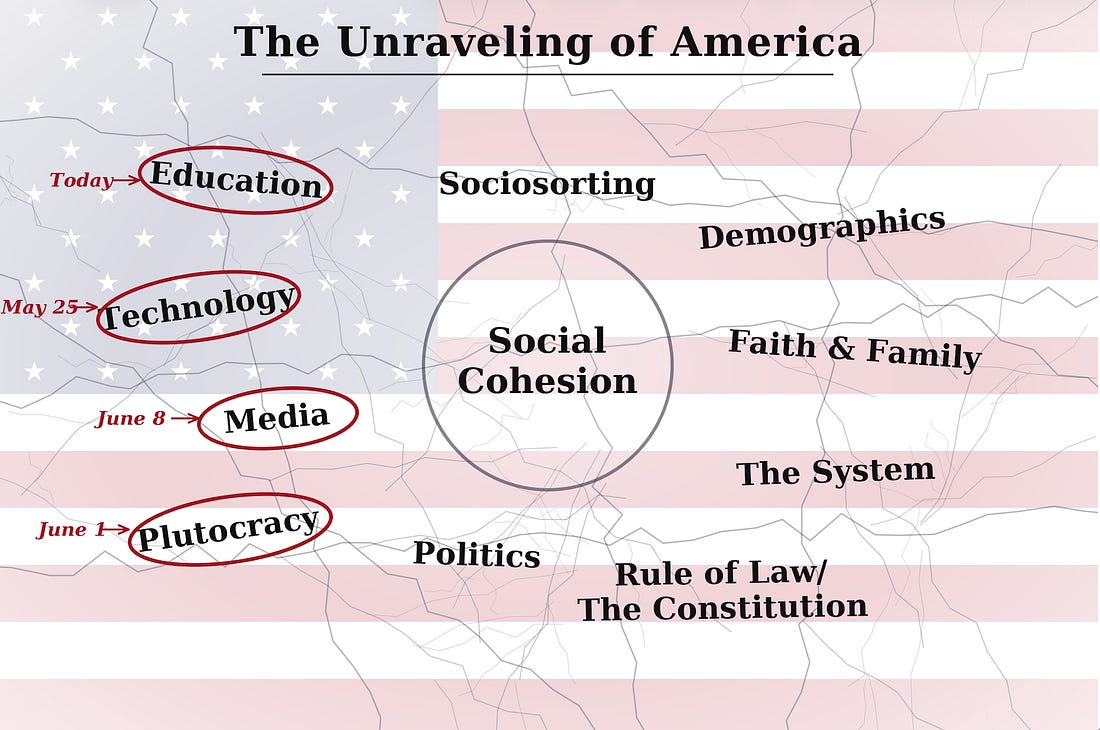
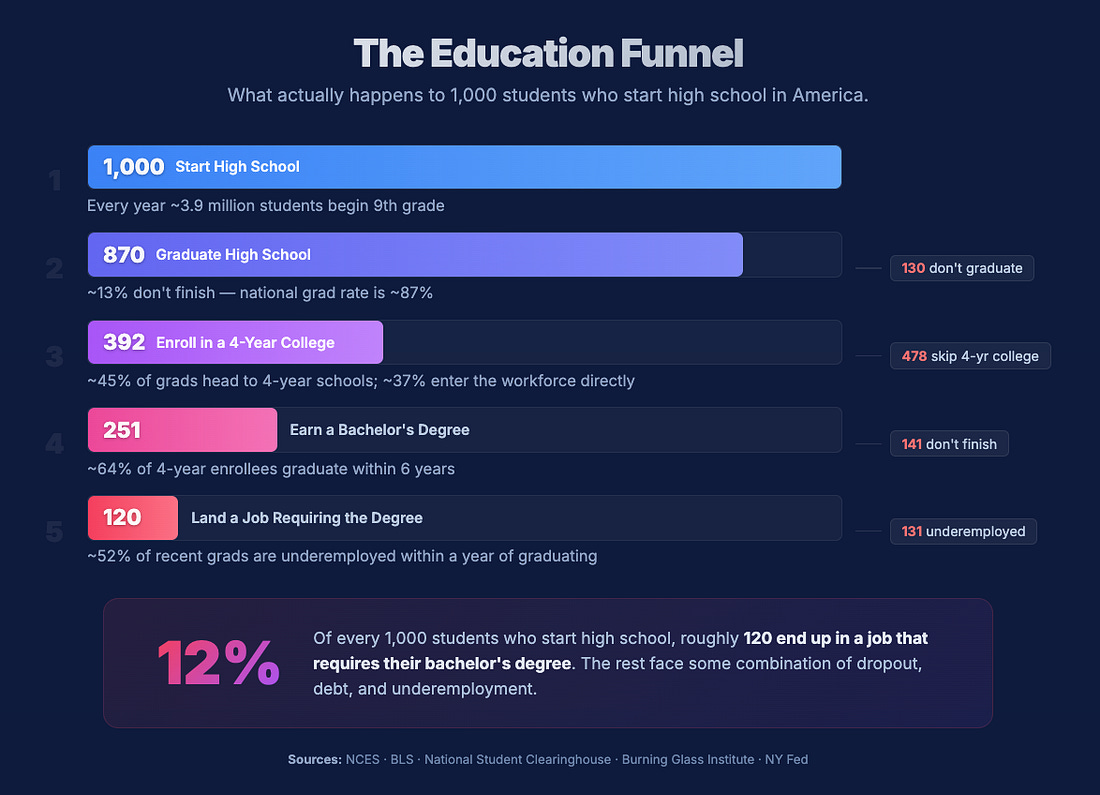
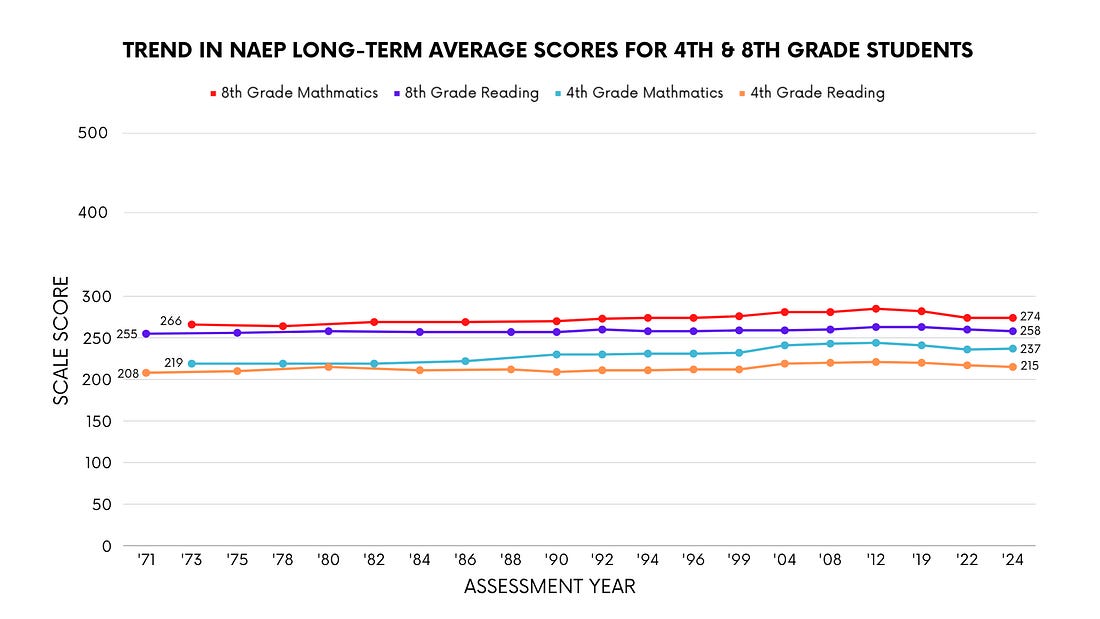
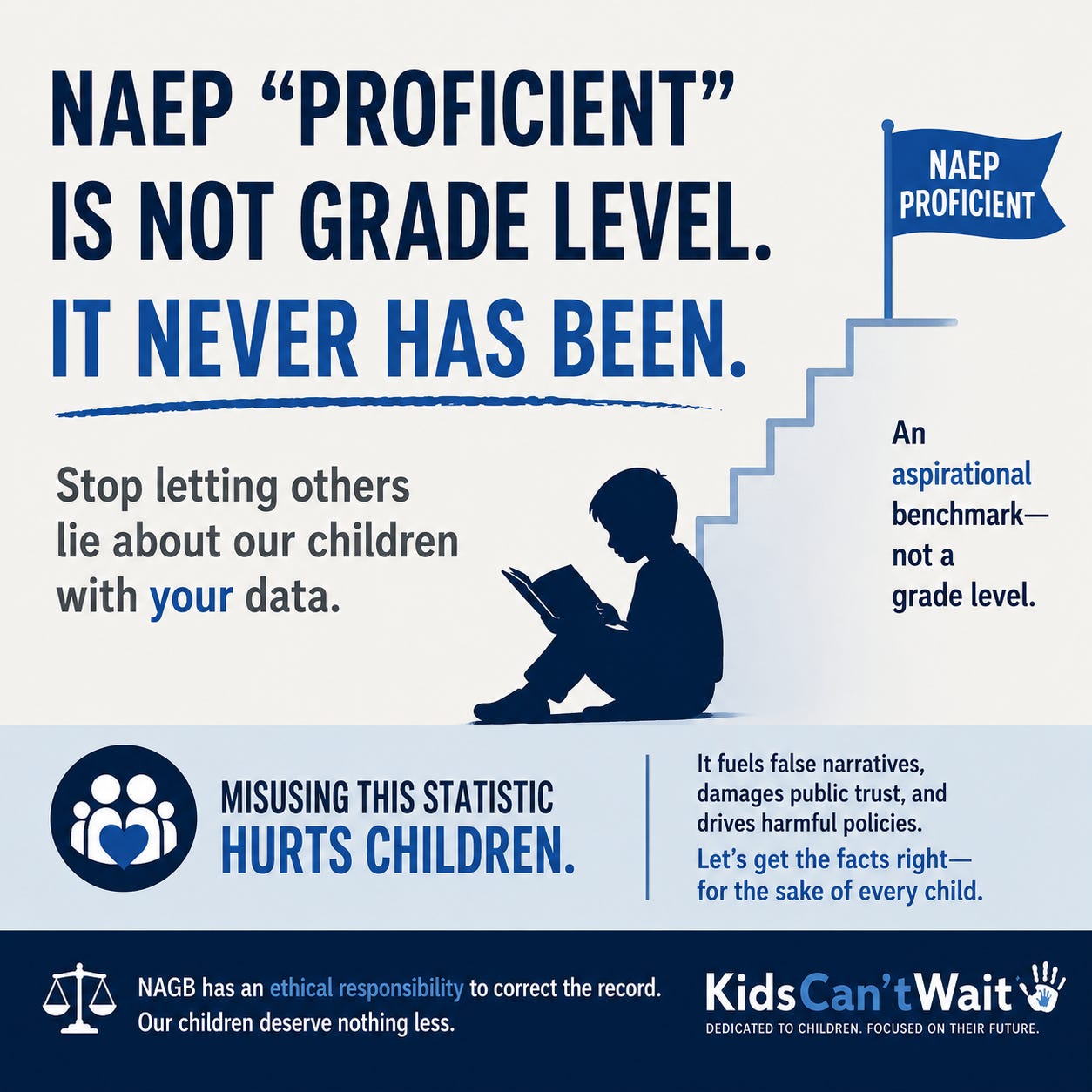
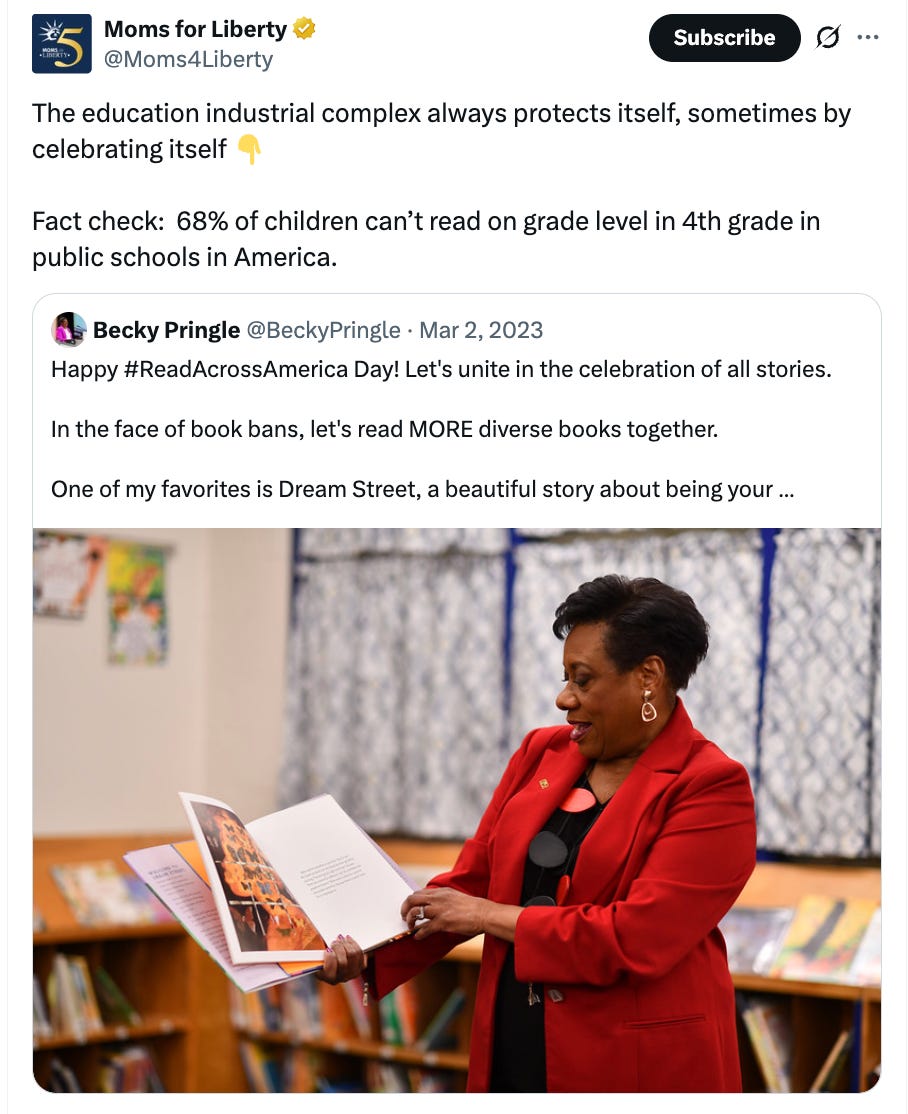
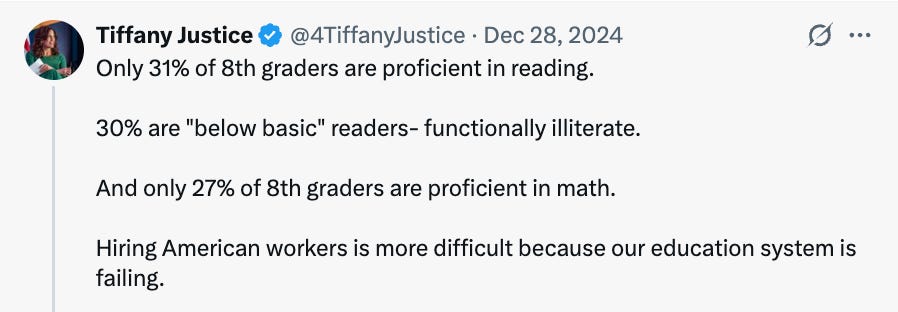
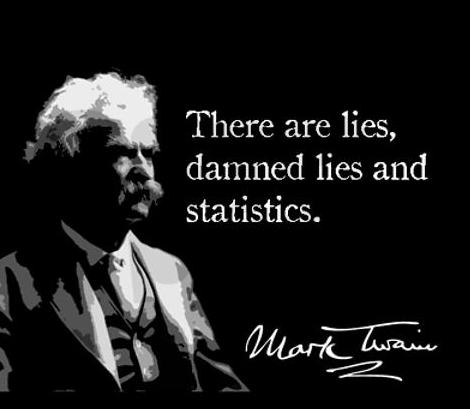
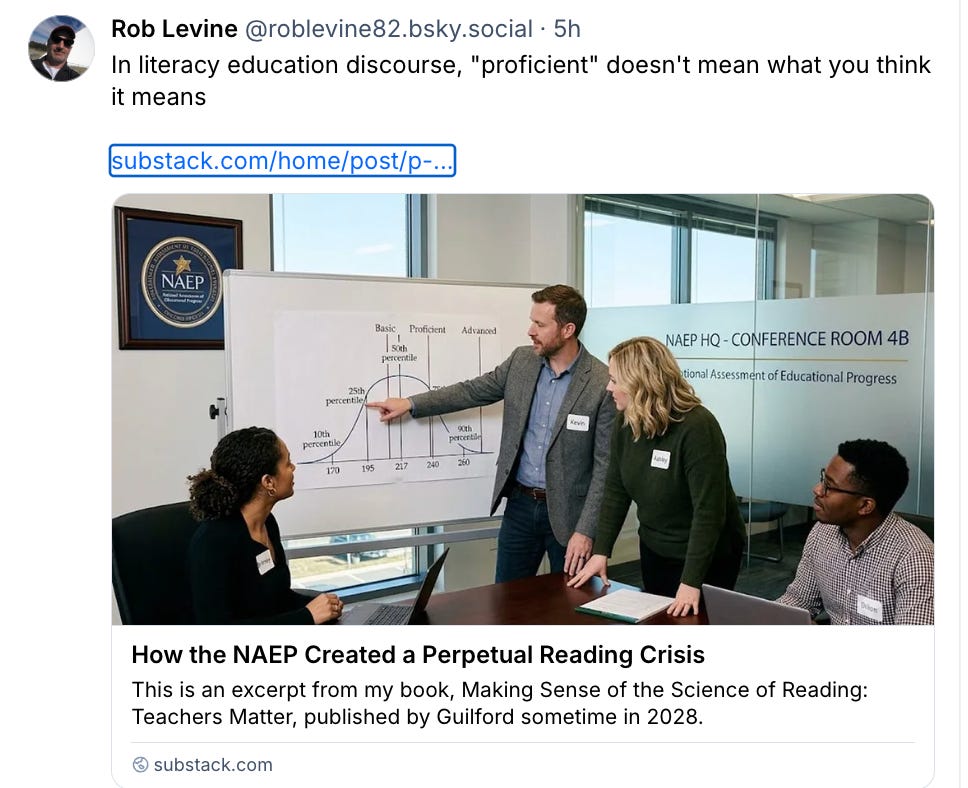

 Diane Ravitch's blog