Archives for category: Democrats

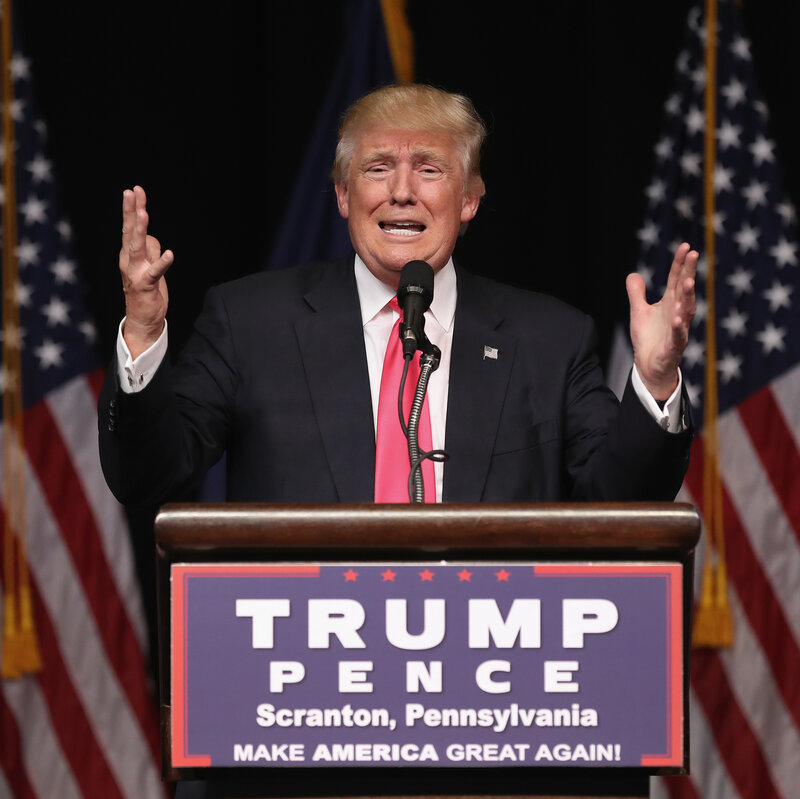
In a little-noticed maneuver in the 2016 Presidential campaign, the Trump team watered down the Republican Party’s platform on military aid to Ukraine. Trump’s campaign director, Paul Manafort, had previously earned millions of dollars as a political consultant to the pro-Russian president of Ukraine and as an advisor to one of Putin’s oligarchs, Oleg Deripaska.

Let it be noted too that the Obama administration sat on its hands when Russia invaded Crimea in 2014 and seized control of a large chunk of Ukraine.

NPR reported in 2016:

One of the questions raised over the course of this year’s presidential race is about how a President Trump would deal with Russian president Vladimir Putin.

One reason to wonder: the Republican Party platform’s new language on policy towards Ukraine.

When Republican Party leaders drafted the platform prior to their convention in Cleveland last month, they had relatively little input from the campaign of then-presumptive nominee Donald Trump on most issues — except when it came to a future Republican administration’s stance on Ukraine.

It started when platform committee member Diana Denman tried to insert language calling for the U.S. to provide lethal defensive weapons to the Ukrainian government, which is fighting a separatist insurrection backed by Russia. Denman says she had no idea she was “going into a fire fight,” calling it “an interesting exchange, to say the least.”

Denman is a long time GOP activist from Texas. When she presented her proposal during a platform subcommittee meeting last month, “two gentleman,” whom Denman said were part of the Trump campaign, came over, looked at the language, and asked that it be set aside for further review.

Why Would Vladimir Putin Want To Leak The DNC Emails?

She says after further discussion the pair “had to make some calls and clear it.” She says they found the language was still too strong.

Trump Says He Was Being 'Sarcastic' In Asking Russia To 'Find' Clinton's Emails

POLITICS 

Trump Says He Was Being ‘Sarcastic’ In Asking Russia To ‘Find’ Clinton’s Emails

The Trump campaign convinced the platform committee to change Denman’s proposal. It went from calling on the U.S. to provide Ukraine “lethal defensive weapons” to the more benign phrase “appropriate assistance.”

It’s more than semantics. Many Republicans have been demanding the Obama administration provide a more robust response to Russia’s incursions in Ukraine.

Denman “was steam rolled,” said Melinda Haring of the Atlantic Council, a Washington, DC, think tank, who believes the language the Trump campaign approved is weaker. And she says “it’s anyone’s guess” what Trump would do regarding Ukraine and Russia, and that perhaps he might not even back “appropriate assistance.”

Haring was referring to Trumps appearance on ABC’s This Week with George Stephanopoulos last month, when Trump said Vladimir Putin is “not going to go into Ukraine, OK? Just so you understand, he’s not going to go into Ukraine.”

My personal view: I hope Congress passes and the President signs a rational and fair immigration bill. Every one who enters the country should enter legally. Once they are admitted, they should be able to get work permits. If they are seeking asylum, their case should be heard by an immigration judge in a matter of weeks or months, not years. I am not an expert on the subject, just a citizen expressing her views.

Catherine Rampell of the Washington Post asks an interesting question: What if the common wisdom about the costs and benefits of immigration is wrong? We have heard incessantly about the dangers of immigration, about “rapists and murderers,” about all the negatives, but we have also seen a rise in child labor, which may be a replacement for immigrant workers.

Rampell writes:

As the economy has improved and consumers have begun recognizing that improvement, Republicans have pivoted to attacking President Biden on a different policy weakness: immigration. After all, virtually everyone — Democrats included — seems to agree the issue is a serious problem.

But what if that premise is wrong? Voters and political strategists have treated our country’s ability to draw immigrants from around the world as a curse; it could be a blessing, if only we could get out of our own way.

Consider a few numbers: Last week, the nonpartisan Congressional Budget Office released updated 10-year economic and budget forecasts. The numbers look significantly better than they did a year earlier, and immigration is a key reason.

The CBO has now factored in a previously unexpected surge in immigration that began in 2022, which the agency assumes will persist for several years. These immigrants are more likely to work than their native-born counterparts, largely because immigrants skew younger. This infusion of working-age immigrants will more than offset the expected retirement of the aging, native-born population.

This will in turn lead to better economic growth. As CBO Director Phill Swagel wrote in a note accompanying the forecasts: As a result of these immigration-driven revisions to the size of the labor force, “we estimate that, from 2023 to 2034, GDP will be greater by about $7 trillion and revenues will be greater by about $1 trillion than they would have been otherwise.”

Got that? The surprise increase in immigration has led a multitrillion-dollar windfall for both the overall economy and federal tax coffers.

The CBO is hardly the only observer that has highlighted the benefits of the recent influx of foreign-born workers.

As I reported in 2021, “missing” immigrant workers — initially because of pandemic-driven border closures and later because of backlogged immigration agencies — contributed to labor shortages and supply-chain problems. But since then, work-permit approvals and other bureaucratic processes have accelerated. Federal Reserve officialsnoted that this normalization of immigration numbers boosted job growth and helped unwind supply-chain kinks.

Over the long term, Federal Reserve Chair Jerome H. Powell recently said on CBS News’s “60 Minutes,” “the U.S. economy has benefited from immigration. And, frankly, just in the last year a big part of the story of the labor market coming back into better balance is immigration returning to levels that were more typical of the pre-pandemic era.”

A rise in the number of people ready and willing to work is not the only economic benefit. Immigrants are also associated with other positive growth effects, including higher entrepreneurship rates and disproportionate contributions to science, research and innovation.

Consider, too, the national security, humanitarian and religious arguments for providing refuge to persecuted people around the world.

None of this is to diminish the near-term stresses on the U.S. economy that come from poorly managed flows of immigration. These challenges clearly exist, both at the southwest border and in cities such as New York and Chicago, where busloads of asylum seekers are ending up (by choice or otherwise). Absent more resources to manage these inflows and expedite processing either to authorize migrants to work in the United States or to return them to their home countries, this strain will continue.

But there are ways to harness the energies and talents of the “tempest-tost” and patch our tattered immigration system. Some of those tools were built into the bipartisan Senate border bill, which now appears dead.

Instead, GOP lawmakers scaremonger about the foreign-born, characterizing immigration as an invasion. As Rep. Mike Collins (R-Ga.) dog-whistled last week, “Import the 3rd world. Become the 3rd world.”

Alas, the faction working to turn the United States into a developing country is not immigrants but Collins’s own party. It’s Republicans, after all, who have supported the degradation of the rule of law; the return of a would-be dictator; the gutting of public education and health-care systems; the rollback of clean-water standards and other environmental rules; and the relaxation of child labor laws (in lieu of letting immigrants fill open jobs, of course).

America has historically drawn hard-working immigrants from around the world precisely because its people and economy have more often been shielded from such “Third World”-like instability, which Republican politicians now invite in.

Ronald Reagan, the erstwhile leader of the conservative movement, often spoke poignantly of this phenomenon. In one of his last speeches as president, he described the riches that draw immigrants to our shores and how immigrants in turn redouble those riches:

Thanks to each wave of new arrivals to this land of opportunity, we’re a nation forever young, forever bursting with energy and new ideas, and always on the cutting edge, always leading the world to the next frontier. This quality is vital to our future as a nation. If we ever closed the door to new Americans, our leadership in the world would soon be lost.— https://www.reaganlibrary.gov/archives/speech/remarks-presentation-ceremony-presidential-medal-freedom-5

Reagan’s words reflected the poetry of immigration. Since then, the prose — as we’ve seen in the economic numbers, among other metrics — has been pretty compelling, too.

Catherine Rampell is an opinion columnist at The Washington Post. She frequently covers economics, public policy, immigration and politics, with a special emphasis on data-driven journalism. She is also an economic and political commentator for CNN, a special correspondent for the PBS NewsHour and a contributor to Marketplace. She serves on the advisory board for the Journal of Economic Perspectives. Before joining The Post, she wrote about economics and theater for the New York Times. Rampell received the 2021 Online Journalism Award for Commentary and the 2010 Weidenbaum Center Award for Evidence-Based Journalism, and she is a six-time Gerald Loeb Award finalist. She grew up in Florida and graduated Phi Beta Kappa from Princeton University.

Honors and Awards: Weidenbaum Center Award for Evidence-Based Journalism, 2010; Gerald Loeb Award, Finalist, 2011; Gerald Loeb Award, Finalist, 2012; Gerald Loeb Award, Finalist, 2018; Gerald Loeb Award, Finalist, 2019; Gerald Loeb Award, Finalist, 2020; Gerald Loeb Award, Finalist, 2021; Online Journalism Award, 2021

Jess Piper is an educator, a blogger, and a farmer in rural Missouri. In this post, she describes an extremist in the state legislature who wants to defund public libraries, Planned Parenthood, and public schools.

Now Rep. Cody Smith, chair of the House Budget Committee, is running for State Treasurer, and no Democrat is running against him. He can flourish as an extremist because he is unopposed.

She writes:

Uncontested seats are undemocratic. This is the story of one of those seats:

Last year, Missouri Representative Cody Smith, the House Budget Committee Chairman, proposed a motion to defund public libraries in the state? Why? Because lawmakers were trying to pass a bill to ban “pornography” in libraries. The bill would actually limit classic books and literature that may be offensive to some, but is literature none the less. 

So, the ACLU, the Missouri Association of School Librarians, and the Missouri Library Association sued the state. In retaliation, Rep Smith moved to strip public libraries from the state budget. To defund public libraries. He failed…

Now he’s going after Planned Parenthood, which no longer provides abortion services, but does offer women’s health services, like screening for breast cancer.

He also is promoting a universal school voucher program that would subsidize every student currently enrolled in private and religious schools. The cost might be as much as $1 billion a year.

Here is the worst part, friends. He’s running for State Treasurer…against two other Republicans. Not one Democrat has filed to run as of today.

We. Can’t. Win. When. We. Don’t. Run.

Representative Smith also ran unopposed in 2022. He just walked right into the Capitol and wrote bills to defund public libraries, public schools, and Planned Parenthood. He has been made near-invincible by the power to not have to answer to constituents. If he has no fear of opposition, he can be as extreme as his donors would like. And, that seems to be exactly what he’s doing.

Last year, 40% of Missouri House seats went unopposed. We let 66 Reps win by default, and friends, this is undemocratic. Most of these seats are in rural parts of the state…Rep Cody Smith is from Carthage, population 15K. Cody faced no opposition, won without any contest, and then wrote bills that could harm millions of folks in our state.

I work with Blue Missouri for this reason—I believe in running everywhere. Even in rural races. Even in places we know won’t flip for a few cycles. Robert Hubbell wrote about our organization a few days ago after hearing about what we are doing in Missouri…here it is. 

Run Everywhere. Contest every damn seat.

So many statehouse races have gone uncontested and unsupported. Democrats in these districts, especially rural Dems like those in my community feel abandoned, ignored…forgotten. Meanwhile, GOP nominees get free passes to the Capitol to do the business of extremist donors.

It doesn’t have to be this way. 

We can show up for Missouri’s Democrats, making sure no Democrat gets left behind. No Missouri voter is left without a choice. No Republican gets a free ride.

That’s the plan to deal with folks like Representative Smith. We take back our state seat by seat. We contest every single one of them on every ballot across the entire state.

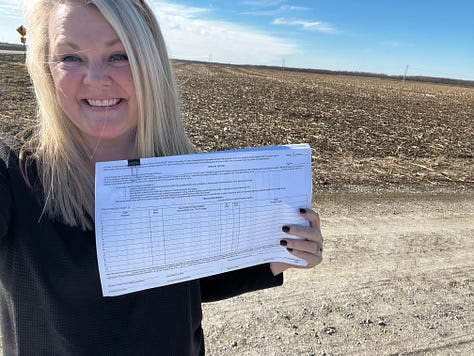
Jess Piper is a Democratic activist in rural Missouri. She is a fierce advocate for rural communities and public schools. She lives on a farm where she and her husband raise hogs and chickens. She blogs, she makes videos for TikTok, she tweets, she hosts a podcast called Dirt Road Democrats and is executive director of Blue Missouri. She taught American literature for 16 years. She often writes about the absurdity of vouchers and school choice. In this post, she goes to towns in her district to gather signatures to restore abortion rights in Missouri..

I live at the tippy top of NWMO on a small 7 acre farm in a 125 year old farmhouse with a few dogs, a couple cows, a gaggle of kids and grandkids, and a miniature donkey. Everyone perks up when I mention the donkey…he’s 36 inches high and his name is Augustus.

I drive across the state often these days and I am usually headed to a small town and this week was no different—I visited Chillicothe (the home of sliced bread), Carrolton, and Marceline and you’ll never guess why. I was getting rural folks and their Bible groups to sign the petition to restore abortion rights in Missouri.

Dirt Road organizing.

Missouri is in the process of putting abortion on the ballot and I have the petition—I have to tell you it’s kind of hard to get a petition, so I was excited to get them and also overwhelmed. I have to get this out to rural folks, and it’s not as easy as it would seem. 

First, there is the opposition to the petition—the Missouri Right to Life (Right to force others to gestate and deliver) has a literal snitch line to report folks accepting signatures. Now, I have no idea what they plan to do if they find us accepting signatures. I was raised to take care of myself and they shouldn’t mess with me, and I’m not the least bit intimidated, but I don’t want them to harass other rural folks who are signing quietly.

Second, folks have written off my congressional district—even some progressives who need signatures on a ballot initiative. They assume that we are too red to get enough signatures, so what’s the point, right? I’ll tell you the point: it creates excitement and solidarity in rural spaces. It acts to uplift us living in among MAGA extremists. It gives us hope.

Chillicothe was my first stop, and it is a pretty big town at over 9K folks. Chilli is also known for having a “patriot” group who have been successful in putting their extremists on the local health board — they also regularly object to school library books. Folks were on long text chains to get others to the event. I was able to gather about 30 signatures on a Tuesday at 9am. 

I was directing folks to the petition and how to fill it in correctly. One woman filled it out, stood up, and started texting. She told me, “I’m reminding my Bible group to come sign.” 

Wait…what?

The second place I drove was Carrolton, with a population of about 3,400. Still not tiny, but small. I sat in the basement of the library for almost 2 hours with…wait for it…a local pastor. A woman pastor. She signed the petition and then stayed the length of the signing event and visited with every single person who came in. Several folks attended her church or a neighboring church. 

Are you seeing a theme here?

My last stop of the day was in Marceline, population 2,100. I sat in the fire station with a local Dem organizer and we accepted signatures a few feet from the active train crossing. I met with a local candidate running for state house and again, folks signed, stood up, texted friends and relatives and their church community, and then headed back out to their farms and rural life.

This is why I organize in rural spaces across the state. This is why I drive 5 or 6 or 10 hours to meet with rural folks. They matter—we matter.

When we cede ground because it’s too red, because it’s too evangelical, because it’s too far of a drive, we create a self-fulfilling prophecy. It’s become more red, more uncontested. When we tell rural folks that their votes and signatures don’t matter because there aren’t enough of them, they agree and stop showing up. When we say Democrats and progressives support everyone, yet fail to have a presence in rural spaces, they notice…they know it’s a lie.

We can’t win Missouri if we avoid rural parts of the state. Missouri is 1/3 rural…33% of the state is outstate. 

I’m here and so are thousands of my friends. If state-level organizers will remember us, we can bring sanity back to the entire state.

Dirt Road Democrats are here.

~Jess

Thom Hartmann scores a bulls-eye again with this article.

The American people want the borders to be secure; they want a controlled flow of legal immigrants. It’s up to Congress to establish adequate border security, screening, judges, and border patrol. The Republicans have refused to send additional funds to Ukraine or Israel without a plan for the border. In the Senate, the two parties were close to reaching agreement on a bipartisan deal for the border.

But then, after his victory in New Hampshire, Trump stepped in and told them to kill the almost final agreement. He wants the issue of immigration and border security alive and unresolved for his fall campaign. Terrified of the Wrath of Trump, Senate Republicans fell meekly into line.

Hartmann writes here about previous Republican presidential candidates and presidents who have cynically put their political self-interest above the national interest:

Once again, America and the world are watching with horror as a Republican candidate for president — just to win an election — manipulates world affairs in a way that will cause widespread death and destruction while damaging the interests and reputation of America.

There’s a long tradition of Republicans running for president committing what can best called treason, or at least criminal manipulation of international affairs, to advantage themselves and hurt incumbent Democratic presidents.

Yesterday, Mitch McConnell let the proverbial cat out of the bag. A bipartisan group of senators had been working on a bill to provide funding to Ukraine and Israel, with money for the southern border, and when it looked like they were going to produce something that would actually pass the House and Senate, Donald Trump inserted himself, telling the Republicans they should kill the bill.

Trump apparently wants to run on chaos at the border, and solving the problem as this legislation is intended to do would take that issue away from him. But he’s also explicitly opposed to any further US aid to Ukraine. This is a treasonous twofer, putting Trump’s election above the interests of the United States and world peace.

Trump, of course, knows that if it weren’t for Putin’s intervention in the 2016 election, he never would have been president. And he desperately needs a repeat to hold onto his fortune and stay out of jail: he’s in a far greater bind now than when he first ran for president as a hustle to get GE to pay him more for his TV show.

His 2016 Campaign Manager Paul Manafort, after all, admitted that during that election he was handing secret internal campaign polling and strategy information off to Russian intelligence, so they could successfully use it to micro-target vulnerable voters via Facebook, an effort that reached 26 million targeted Americans in 6 swing states.

Now, Trump wants Putin’s help again for 2024. He knows that Putin can do things from overseas, including using deepfakes and posing as Americans to spread explicit lies on social media, that would send people to prison for election interference if done here in the US.

Putin’s number one goal, of course, is to seize control of Ukraine while destabilizing western democracies. So, Trump, wanting Putin’s help, is now trying to deliver Ukraine to Putin by killing US aid.

This pattern of Republican presidential candidates criminally intervening in foreign policy just to win elections started in 1968 and has been a feature — not a bug — of every Republican president who succeeded in taking the White House since: it’s time to seriously discuss the five-decade-long problem we have with treasonous and illegitimate GOP presidents.

It started in 1968, when President Lyndon Johnson was desperately trying to end the Vietnam war. It had turned into both a personal and political nightmare for him, and his vice president, Hubert Humphrey, who was running for President in the election that year against a “reinvented” Richard Nixon.

Johnson spent most of late 1967 and early 1968 working back-channels to North and South Vietnam, and by the summer of 1968 had a tentative agreement from both for what promised to be a lasting peace deal they’d both sign that that fall.

But Richard Nixon knew that if he could block that peace deal, it would kill VP Hubert Humphrey’s chances of winning the 1968 election. So, Nixon sent envoys from his campaign to talk to South Vietnamese leaders to encourage them not to attend upcoming peace talks in Paris.

Nixon promised South Vietnam’s corrupt politicians that he’d give them a personally richer deal when he was President than LBJ could give them then.

The FBI had been wiretapping South Vietnam’s US agents and told LBJ about Nixon’s effort to prolong the Vietnam War. Thus, just three days before the 1968 election, President Johnson phoned the Republican Senate leader, Everett Dirksen, (you can listen to the entire conversation here):

President Johnson: Some of our folks, including some of the old China lobby, are going to the Vietnamese embassy and saying please notify the [South Vietnamese] president that if he’ll hold out ’til November 2nd they could get a better deal. Now, I’m reading their hand. I don’t want to get this in the campaign. And they oughtn’t to be doin’ this, Everett. This is treason.

Sen. Dirksen: I know.

Those tapes were only released by the LBJ library in the past decade, and that’s Richard Nixon who Lyndon Johnson was accusing of treason.

At that point, for President Johnson, it was no longer about getting Humphrey elected. By then Nixon’s plan had already worked and Humphrey was being wiped out in the polls because the war was ongoing.

Instead, Johnson was desperately trying to salvage the peace talks to stop the death and carnage as soon as possible. He literally couldn’t sleep.

In a phone call to Nixon himself just before the election, LBJ begged him to stop sabotaging the peace process, noting that he was almost certainly going to win the election and inherit the war anyway. Instead, Nixon publicly said LBJ’s efforts were “in shambles.”

But South Vietnam had taken Nixon’s deal and boycotted the peace talks, the war continued, and Nixon won the White House thanks to it.

An additional twenty-two thousand American soldiers, and an additional million-plus Vietnamese died because of Nixon’s 1968 treason, and he left it to Jerry Ford to end the war and evacuate American soldiers.

Nixon was never held to account for that treason, and when the LBJ library released the tapes and documentation long after his and LBJ’s deaths it was barely noticed by the American press.

Gerald Ford, who succeeded Nixon, was never elected to the White House (he was appointed to replace VP Spiro Agnew, after Agnew was indicted for decades of taking bribes), and thus would never have been President had it not been for Richard Nixon’s treason. He pardoned Nixon.

Next up was Ronald Reagan.

During the Carter/Reagan election battle of 1980, then-President Carter had reached a deal with newly-elected Iranian President Abdolhassan Bani-Sadr to release the fifty-two hostages held by students at the American Embassy in Tehran.

Bani-Sadr was a moderate and, as he explained in an editorial for The Christian Science Monitor, successfully ran for President of Iran that summer on the popular position of releasing the hostages:

“I openly opposed the hostage-taking throughout the election campaign…. I won the election with over 76 percent of the vote…. Other candidates also were openly against hostage-taking, and overall, 96 percent of votes in that election were given to candidates who were against it [hostage-taking].”

Carter was confident that with Bani-Sadr’s help, he could end the embarrassing hostage crisis that had been a thorn in his political side ever since it began in November of 1979.

But behind Carter’s back, the Reagan campaign worked out a deal with the leader of Iran’s radical faction — Supreme Leader Ayatollah Khomeini — to keep the hostages in captivity until after the 1980 Presidential election. Khomeini needed spare parts for American weapons systems the Shah had purchased for Iran, and Reagan was happy to promise them.

This is the story that was finally confirmed just last year with The New York Times’ reporting that we now know how the deal was conveyed to the Ayatollah and by whom, including the lieutenant governor of Texas.

This was the second modern-day act of treason by a Republican wanting to become president.

The Reagan campaign’s secret negotiations with Khomeini — the so-called “Iran/Contra October Surprise” — sabotaged President Carter’s and Iranian President Bani-Sadr’s attempts to free the hostages.

As President Bani-Sadr told The Christian Science Monitor in March of 2013:

“After arriving in France [in 1981], I told a BBC reporter that I had left Iran to expose the symbiotic relationship between Khomeinism and Reaganism.

“Ayatollah Khomeini and Ronald Reagan had organized a clandestine negotiation, later known as the ‘October Surprise,’ which prevented the attempts by myself and then-US President Jimmy Carter to free the hostages before the 1980 US presidential election took place. The fact that they were not released tipped the results of the election in favor of Reagan.”

And Reagan’s treason — just like Nixon’s treason — worked perfectly.

The Iran hostage crisis continued and torpedoed Jimmy Carter’s re-election hopes. And the same day Reagan took the oath of office — to the minute, as Reagan put his hand on the bible, by way of Iran’s acknowledging the deal — the American hostages in Iran were released.

Keeping his side of the deal, Reagan began selling the Iranians weapons and spare parts in 1981, and continued until he was busted for it in 1986, producing the so-called “Iran/Contra” scandal.

But, like Nixon, Reagan was never held to account for the criminal and treasonous actions that brought him to office. Which is one reason Bush Jr. and Trump believed they could get away with anything.

After Reagan — Bush senior was elected — but like Jerry Ford — Bush was really only President because he served as Vice President under Reagan. And, of course, the naked racism of his Willie Horton ads helped boost him into office.

The criminal investigation into Iran/Contra came to a head with independent prosecutor Lawrence Walsh subpoenaing President George HW Bush after having already obtained convictions for Weinberger, Ollie North and others.

And Walsh was now looking into actual criminal activity by Bush himself in support of the Iran/Contra October Surprise.

Bush’s attorney general, Bill Barr, suggested he pardon them all to kill the investigation and protect himself, which Bush did.

The screaming headline across the New York Times front page on December 25, 1992, said it all: “BUSH PARDONS 6 IN IRAN AFFAIR, AVERTING A WEINBERGER TRIAL; PROSECUTOR ASSAILS ‘COVER-UP’”

And if the October Surprise hadn’t hoodwinked voters in 1980, you can bet Bush senior would never have been elected in 1988. That’s four illegitimate Republican presidents.

Which brings us to George W. Bush, the man who was given the White House by five right-wing justices on the Supreme Court.

In the Bush v. Gore Supreme Court decision in 2000 that stopped the Florida recount — and thus handed George W. Bush the presidency — Justice Antonin Scalia wrote in his opinion:

“The counting of votes … does in my view threaten irreparable harm to petitioner [George W. Bush], and to the country, by casting a cloud upon what he [Bush] claims to be the legitimacy of his election.”

Apparently, denying the presidency to Al Gore, the guy who actually won the most votes in Florida and won the popular vote nationwide by over a half-million, did not constitute “irreparable harm” to Scalia or the media.

And apparently it wasn’t important that Scalia’s son worked for a law firm that was defending George W. Bush before the high court (with no Scalia recusal).

Just like it wasn’t important to mention that Justice Clarence Thomas’s wife worked on the Bush transition team — before the Supreme Court shut down the recount in Florida — and was busily accepting resumes from people who would serve in the Bush White House if her husband stopped the recount in Florida…which he did. (No Thomas recusal, either.)

More than a year after the election a consortium of newspapers including The Washington Post, The New York Times, and USA Today did their own recount of the vote in Florida — manually counting every vote in a process that took almost a year — and concluded that Al Gore did indeed win the presidency in 2000.

As the November 12th, 2001 article in The New York Times read:

“If all the ballots had been reviewed under any of seven single standards and combined with the results of an examination of overvotes, Mr. Gore would have won.”

That little bit of info was slipped into the seventeenth paragraph of the Times story so that it would attract as little attention as possible because the 9/11 attacks had happened just weeks earlier and journalists feared that burdening Americans with the plain truth that George W. Bush actually lost the election would further hurt a nation already in crisis.

To compound the crime, Bush could only have gotten as close to Gore in the election as he did because his brother, Florida Governor Jeb Bush, had ordered his Secretary of State, Kathrine Harris, to purge at least 57,000 mostly-Black voters from the state’s voter rolls just before the election. Thousands of African Americans showed up to vote and were turned away from the polls in that election in Florida that Bush “won” by fewer than 600 votes.

The simple reality is that Al Gore won Florida in 2000, won the national popular vote by a half-million, and five Republicans on the Supreme Court denied him the presidency.

Florida Governor and George W. Bush’s brother Jeb had his Secretary of State, Kathryn Harris, throw thousands of African Americans off the voting rolls just before the election but then — when the votes had come in and it was clear former Vice President Al Gore had still won — she invented a brand new category of ballots for the 2000 election: “Spoiled.”

As The New York Times reported a year after the 2000 election when the consortium of newspapers they were part of finally recounted all the ballots:

“While 35,176 voters wrote in Bush’s name after punching the hole for him, 80,775 wrote in Gore’s name while punching the hole for Gore. [Florida Secretary of State] Katherine Harris decided that these were ‘spoiled’ ballots because they were both punched and written upon and ordered that none of them should be counted.

“Many were from African American districts, where older and often broken machines were distributed, causing voters to write onto their ballots so their intent would be unambiguous.”

George W. Bush “won” the election by 537 votes in Florida, because the statewide recount — which would have revealed Harris’s crime and counted the “spoiled” ballots, handing the election to Gore (who’d won the popular vote by over a half-million nationwide) — was stopped when George HW Bush appointee Clarence Thomas became the deciding vote on the Supreme Court to block the recount order from the Florida Supreme Court.

Harris’ decision to not count the 45,599 more votes for Gore than Bush was completely arbitrary: there was no legal category and no legal precedent, outside of the old Confederate states simply refusing to count the votes of Black people, to justify it.

The intent of the voters was unambiguous. And the 5 Republicans on the Supreme Court jumped in to block the recount ordered by the Florida Supreme Court (in violation of the 10th Amendment) just in time to prevent those “spoiled” votes from being counted, cementing Bush’s illegitimate presidency.

So, for the third time in 4 decades, Republicans took the White House under illegitimate electoral circumstances. Even President Carter was shocked by the brazenness of that one. And Jeb Bush and the GOP were never held to account for that crime against democracy.

To get re-elected in 2004, Bush used an old trick: become a “wartime president.” In 1999, when George W. Bush decided he was going to run for president in the 2000 election, his parents hired Mickey Herskowitz to write the first draft of Bush’s autobiography, A Charge To Keep.

Although Bush had gone AWOL for about a year during the Vietnam war and was thus apparently no fan of combat, he’d concluded (from watching his father’s “little 3-day war” with Iraq) that being a “wartime president” was the most consistently surefire way to get reelected and have a two-term presidency.

“I’ll tell you, he was thinking about invading Iraq in 1999,” Herskowitz told reporter Russ Baker in 2004.

“One of the things [Bush] said to me,” Herskowitz said, “is: ‘One of the keys to being seen as a great leader is to be seen as a commander-in-chief. My father had all this political capital built up when he drove the Iraqis out of (Kuwait) and he wasted it.

“[Bush] said, ‘If I have a chance to invade Iraq, if I had that much capital, I’m not going to waste it. I’m going to get everything passed I want to get passed and I’m going to have a successful presidency.’”

Bush lying us into that war was an act of treason against America that cost 900,000 Iraqi lives, over 7,000 American lives (on the battlefield: veterans are still committing suicide daily), and over $8 trillion added to the national debt.

But it did what it was supposed to do: it got Bush re-elected in 2004.

Which brings us to this year’s election.

In 2016, Trump ally Kris Kobach and Republican Secretaries of State across the nation used Interstate Crosscheck to purge millions of legitimate voters — most people of color — from the voting rolls just in time for the Clinton/Trump election.

Meanwhile, Russian oligarchs and the Russian state, and possibly pro-Trump groups or nations in the Middle East, are alleged to have funded a widespread program to flood social media with pro-Trump, anti-Clinton messages from accounts posing as Americans, as documented by Robert Mueller’s investigation.

It was so blatant that it provoked the U.S. Intelligence Community’s assessment of their similar actions during the 2020 election (done while Trump was still president but released in March, 2021) pretty much declaring Trump a “Russian asset.”

It was a repeat, in many ways (albeit unsuccessful this time) of the Russian efforts in 2016. Then, as mentioned, Republican campaign data on the 2016 election, including which states needed a little help via phony influencers on Facebook and other social media, was not only given to Konstantin Kilimnik by Paul Manafort, but Kilimnik transferred it to Russian intelligence.

And now Trump is trying to exacerbate a crisis on our southern border and screw Ukraine in a way that will lead to mass causalities and disrupt the international order — all to give Putin what he wants — the same way Nixon used Vietnam, Reagan used Iran, and Bush used Iraq, just to win a damn election.

While we can’t rewrite history, at least we can try to prevent it from being repeated. Call your members of Congress — your representative and both your senators — and let them know if you agree that Ukraine aid and resolving the issue at the southern border shouldn’t be held hostage to Trump’s need for Putin’s help and approval.

The number for the congressional switchboard is: 202-224-3121.

It’s way past time that America ceased to be the dog wagged by the tail of corrupt Republicans who want to be president.

The latest jobs report was released a few days ago, and economists were astonished. The economy added 353,000 jobs in the past month, and unemployment remained low at 3.7%. This should be good news for Biden, But consumers are still concerned about inflation, which hits them in their pocketbook.

President Biden came into office in the midst of a global pandemic. Supply chains were disrupted, and prices were soaring in response. After the chaos of the Trump years, Biden set about hiring seasoned Cabinet officers and a strong economic team. Although the experts predicted that the instability of the COVID years would be followed by a deep recession, that’s not what happened. Throughout Biden’s term, unemployment remained low; the stock market reached historic records; manufacturing revived; and the U.S. economy outperformed nations in Europe and Asia. Yet public opinion polls showed a different picture: Consumers knew that the price of gasoline and grocery store staples went up and didn’t go down. Biden got no credit for the healthy economy because of the price of eggs, cereal, and other staples.

The Economist magazine reviewed the situation and wrote about Biden as an “Octogenarian Radical.”

Joe Biden’s opponents focus on his age as something that makes him doddering, confused and ultimately unfit for office. So the great paradox of the 81-year-old’s first term is that he has presided over perhaps the most energetic American government in nearly half a century. He unleashed a surge in spending that briefly slashed the childhood poverty rate in half. He breathed life into a beleaguered union movement. And he produced an industrial policy that aims to reshape the American economy.

Image

There is plenty to debate about the merits of all of this. A steep rise in federal spending has aggravated the country’s worrying fiscal trajectory. Subsidies for companies to invest in America have angered allies and may yet end up going to waste. But there is no denying that many of these policies are already having an impact. Just look at the boom in factory construction: even accounting for inflation, investment in manufacturing facilities has more than doubled under Mr Biden, soaring to its highest on record.

What would he do in a second term? Mr Biden’s re-election motto—“we can finish the job”—sounds more like a home contractor’s pledge than the rhetoric of a political firebrand. Yet to hear it from the president’s current and former advisers, Bidenomics amounts to little short of an economic revolution for America. It would be a revolution shaped by faith in government and a mistrust of markets.

Image

Five elements stand out. The first is a desire to boost workers, mostly through unions. The second is more social spending, especially on early-childhood education. Third is tougher competition policy to restrain big business. Fourth, a wave of investment intended to make America both greener and more productive. Last, Mr Biden wants to tax large firms and the wealthy to pay for much of this.

As with any president, Mr Biden’s agenda thus far has been limited by Congress. The five elements were all present in the $3.5trn “Build Back Better” bill that Democrats in the House of Representatives backed in 2021, only to run smack into a split Senate. The result is that the most prominent part of existing Bidenomics has been the investment element, comprising three pieces of legislation focused on infrastructure, semiconductors and green tech. Signing three big spending bills into law nevertheless counts as a productive presidential term. They add up to a $2trn push to reshape the American economy.

If Mr Biden returns to the White House for a second term but Republicans retain control of the House or gain the Senate, or potentially both, advisers say that his focus would be on defending his legislative accomplishments. Although Republicans would be unable to overturn his investment packages if they did not hold the presidency, they could chip away at them.

Take the semiconductor law. Along with some $50bn for the chips industry, it also included nearly $200bn in funding for research and development of cutting-edge technologies, from advanced materials to quantum computing. But that giant slug of cash was only authorised, not appropriated, meaning it is up to Congress to pass budgets to provide the promised amount. So far it is falling well short: in the current fiscal year, it is on track to give $19bn to three federal research agencies, including the National Science Foundation, which is nearly 30% less than the authorised level, according to estimates by Matt Hourihan of the Federation of American Scientists, a lobby group. If Congress refuses to work with Mr Biden, these shortfalls will grow.

The funding directed at infrastructure and semiconductors is more secure, but much of it will run out by 2028, before the end of a second term. Without Republican support for funding, the investment kick-started over the past couple of years may ease off. High-cost producers will struggle to survive. Critics may see no reason to devote so much treasure to manufacturing when a modern economy based on professional, technical and scientific services already generates plenty of well-paying jobs.

But Mr Biden will have some leverage if Republicans try to water down his policies. Many of the big tax cuts passed during Donald Trump’s presidency expire at the end of 2025. Republicans want to renew them, to avoid income-tax rates jumping up. So one possibility is that Mr Biden could fashion a deal in which he agrees to an extension of many of the tax cuts in exchange for Republicans in Congress backing some of his priorities, including his industrial subsidies—never mind that such an agreement would be fiscally reckless.

The White House is also hoping that Mr Biden’s investment programmes will develop momentum of their own. “We are very pleasantly surprised by the extent to which private capital has flowed in the direction of our incentives,” says Jared Bernstein, chair of the president’s Council of Economic Advisers. Much of the money is going to red states, spawning constituencies of businesses and local politicians who would object to cuts. Meanwhile, there is, in principle, bipartisan support for federal spending on science and technology as a way of safeguarding America’s competitive edge over China. That is why a few dozen Republicans in the House and Senate, albeit a minority, voted for the semiconductor package. Given this constellation of interests and leverage, the industrial policies that defined Bidenomics in the president’s first term would probably survive his second term, albeit in somewhat more limited form.

But what if Mr Biden is less constrained? To really understand the potential scope of Bidenomics, it is worth asking what the president would do if the Democrats end up controlling both houses of Congress. Once they come down from their elation at such an outcome, the team around Mr Biden would know that they have a limited window—probably just two years, until the next set of midterm elections—to get anything of note done.

For starters they would turn to the social policies left on the Build Back Better cutting-room floor. These include free pre-school for three- and four-year-olds, generous child-care subsidies, spending on elderly care, an expanded tax credit for families with children and paid parental leave. Janet Yellen, the treasury secretary, has described this agenda as “modern supply-side economics”. She argues that investments in education would make American workers more productive, while investments in care would free up people, especially women, to work, leading to a bigger labour force. But it would also be costly, running to at least $100bn a year of additional spending—adding half a percentage point to the annual federal deficit (which hit 7.5% of gdp in 2023). And implementation would be challenging. For instance, funding for child care would fuel demand for it, which in turn would exacerbate a chronic shortage of caregivers.

Mr Biden’s desire to strengthen unions would also receive fresh impetus. The president describes himself as the most pro-union president in American history—a claim that may well be true. In his first term support for unions was expressed most clearly through words and symbolic actions: when he joined striking auto workers near Detroit in September, he became the first president to walk a picket line. Mr Biden would have liked to have done more. He had at first wanted to make many industrial subsidies contingent on companies hiring unionised workers, a requirement that did not make it into law. The labour movement’s big hope for a second Biden term is passage of the pro Act, which would boost collective bargaining by, among other things, making it harder for firms to intervene in union votes. That would represent a gamble: the flexibility of America’s labour market is a source of resilience for the economy, which has been good to workers in recent years.

The flipside of Mr Biden craving approbation as a pro-union president is that he has also come to be seen as anti-business. Members of his cabinet bridle at this charge, noting that corporate profits have soared and that entrepreneurs have created a record number of businesses during his first term. Yet the single biggest reason why Bidenomics has got a bad rap has been his competition agenda, led by Lina Khan of the Federal Trade Commission (ftc). Although her efforts to cut down corporate giants have spluttered, with failed lawsuits against Meta and Microsoft, she is not done. The ftc has introduced new merger-review guidelines that require regulators to scrutinise just about any deal that makes big companies bigger, which could produce even more contentious competition policy. Excessive scrutiny of deals would also use up regulators’ scarce resources and poison the atmosphere for big business. An alternative focus, on relaxing land-use restrictions and loosening up occupation licensing, would provide a much healthier boost to competition.

Captain of Industry

At the same time, Mr Biden may double down on the manufacturing policies of his first term. The $50bn or so of incentives for the semiconductor industry has been a start, but it is small relative to how much investment is required for large chip plants. Advisers talk of a follow-on funding package. There would also be a desire to craft new legislation to smooth out bumps in the implementation of industrial policy. Todd Tucker of the Roosevelt Institute, a left-leaning think-tank, advocates a national development bank, creating a reservoir of cash that could be channelled to deserving projects.

How to pay for it all? Mr Biden has long made clear that he wishes to raise taxes on the rich, in particular on households earning over $400,000 a year and on businesses. The president’s advisers argue that he truly believes in fiscal discipline. His budget for the current fiscal year would, for instance, cut the deficit by $3trn over a decade, or by 1% of gdp a year, according to the Committee for a Responsible Federal Budget (crfb), a non-profit outfit. That, however, is predicated on Democrats exercising restraint as tax receipts increase—something that is hard to imagine, says Maya MacGuineas of the crfb….

Most of the action, then, would be in the domestic arena—the battleground for everything from child-care spending to semiconductor subsidies. Supporters argue that these policies would make America more equal, propel its industry and tilt the playing-field towards workers and away from bosses. To many others, they look like a lurch back to bigger government, with an outdated focus on both manufacturing and unions, which may strain ties with allies. Mr Biden was a most unlikely radical in his first term. If the polls head his way, he may go further yet in a second. 7

The highly respected Quinnipiac Poll reported a new poll a few hours ago that shows Biden opening a 6-point lead over Trump. The poll also shows Haley beating Biden. When the third party candidates are added, Biden’s lead over Trump declines from six points to two.

At this early date, the polls don’t mean much, but Biden has consistently had low favorability ratings, and the drumbeat of polls favoring Trump worried Democrats. This poll reverses the negativity. At least for now.

Biden polls especially well among women and independents. The picture gets muddier when third-party candidates are factored in.

As signs point to the 2024 presidential election being a repeat of the 2020 race between President Joe Biden and former President Donald Trump, Biden holds a lead over Trump 50 – 44 percent among registered voters in a hypothetical general election matchup, according to a Quinnipiac (KWIN-uh-pea-ack) University national poll of registered voters released today.

In Quinnipiac University’s December 20, 2023 poll, the same hypothetical 2024 general election matchup was ‘too close to call’ as President Biden received 47 percent support and former President Trump received 46 percent support.

In today’s poll, Democrats (96 – 2 percent) and independents (52 – 40 percent) support Biden, while Republicans (91 – 7 percent) support Trump.

The gender gap is widening.

Women 58 – 36 percent support Biden, up from December when it was 53 – 41 percent.

Men 53 – 42 percent support Trump, largely unchanged from December when it was 51 – 41 percent.

“The gender demographic tells a story to keep an eye on. Propelled by female voters in just the past few weeks, the head-to-head tie with Trump morphs into a modest lead for Biden,” said Quinnipiac University Polling Analyst Tim Malloy.

In a five-person hypothetical 2024 general election matchup that includes independent and Green Party candidates, Biden receives 39 percent support, Trump receives 37 percent support, independent candidate Robert F. Kennedy, Jr. receives 14 percent support, independent candidate Cornel West receives 3 percent support, and Green Party candidate Jill Stein receives 2 percent support.

Among independents in the five-person hypothetical 2024 general election matchup, Biden receives 35 percent support, Trump receives 27 percent support, Kennedy receives 24 percent support, West receives 5 percent support, and Stein receives 5 percent support.

As Thom Hartmann pointed out in a post recently, if no candidate wins a majority of electoral votes, the election shifts to the House of Representatives, where each state has one vote. If there are more Republican states than Democratic states, Trump would win. Thanks to the third-party candidates. It would not be surprising if Trump funders added cash to third-party candidates.

The Republican-dominated Homeland Security Committee voted 18-15 to impeach Alejandro Mayorkas, the Secretary of Homeland Security. The standard for impeachment is high, but Republicans want to humiliate the Biden administration by impeaching a Cabinet Secretary for the first time in 150 years.

Given the Republicans’ slim majority, they will need almost every Republican vote to impeach Mayorkas.

The Democratic majority in the Senate will certainly defeat anything this absurd from the House.

The G.O.P. was plowing forward without producing evidence that Mr. Mayorkas committed a crime or acts of corruption, arguing instead that the Biden administration border policies he implemented ran afoul of the law. Legal scholars, including prominent conservatives, have argued that the effort is a perversion of the constitutional power of impeachment, and Democrats remained solidly opposed…

“Neither of the impeachment charges the committee will consider today are a high crime or misdemeanor,” said Representative Bennie Thompson of Mississippi, the panel’s most senior Democrat. He added that House Republicans “don’t want progress. They don’t want solutions. They want a political issue.”

At least one House Republican is skeptical.

“I’m a ‘lean no’ at this point,” Representative Ken Buck, Republican of Colorado, said in an interview on Tuesday, adding that he feared that impeaching Mr. Mayorkas would damage Congress institutionally and be “moving in the wrong direction.”

“To say that someone was incompetent — we wouldn’t have anybody in Congress, if the standard was competence,” Mr. Buck added.

Writing in The New Republic, Michael Tomasky describes how the rightwing has deftly invested in buying up media properties, even those that lose money. They play the long game, Tomasky argues, while Democrats and liberals ignore the reality of media control. Sinclair has been so successful in rural areas that Democratic candidates don’t have a chance. He wonders whether Democratic big wheels will ever catch in.

I subscribe to The New Republic. So should you.

He writes:

You have no doubt seen the incredibly depressing news about the incredibly depressing purchase of The Baltimore Sun by the incredibly depressing David Smith, chairman of Sinclair Broadcast Group, the right-wing media empire best known for gobbling up local television news operations and forcing local anchors to spout toxic Big Brother gibberish like this.

The Sun was once a great newspaper. I remember reading, once upon a time, that it had sprung more foreign correspondents into action across the planet than any American newspaper save The New York Times and The Washington Post. It had eight foreign bureaus at one point, all of which were shuttered by the Tribune Company by 2006. But the Sun’s real triumphs came in covering its gritty, organic city. And even well after its glory days, it still won Pulitzers—as recently as 2020, for taking down corrupt Mayor Catherine Pugh, who served a stretch in prison thanks to the paper.

Smith wasted no time in showing his cards during his first meeting with the staff Wednesday. He was asked about a comment he made to New York magazine back in 2018, when he said, “Print media is so left wing as to be meaningless dribble.” (“Dribble”? Let’s hope he won’t be on the copy desk.) Did he feel that way about the Sun specifically? “In many ways, yes,” Smith said, adding that he wants the paper to emulate the local Fox affiliate, which is owned … by Sinclair.

But this column isn’t about the Sun and Smith. In fact, I applaud Smith and Sinclair in one, and only one, respect. They get it. They understand how important media ownership is. They are hardly alone among right-wing megawealthy types. Of course there’s Rupert Murdoch, but there are more. There’s the late Reverend Sun Myung Moon, who, after he got rich from his Unification Church, sprouted media properties, most notably The Washington Times, still owned by the church’s News World Communications (once upon a quaint old time, it was shocking that the conservative newspaper in the nation’s capital was started by a cult). And Philip Anschutz, whose Clarity Media Group started the tabloid newspaper The Washington Examiner in 2005. These days, the list includes Elon Musk with X/Twitter, Peter Thiel and Senator J.D. Vance with Rumble (a right-wing YouTube alternative), Ye with his attempted purchase of the now-defunct Parler, and, of course, Donald Trump, with Truth Social. They all understand what Viktor Orbán told the Conservative Political Action Conference in 2022: “Have your own media.” Shows like Tucker Carlson’s old Fox show, the Hungarian strongman said, “should be broadcast day and night….”

The right-wing media is now the agenda-setting media in this country, and it’s only getting bigger and more influential every year.

And how have the country’s politically engaged liberal billionaires responded to this? By doing roughly nothing.

I’ve been in the trenches of this fight for many years. Back in the George W. Bush era, the late Rob Stein, a Democratic insider and good friend of mine, mapped for the first time the conservative infrastructure in a PowerPoint presentation that became such a hot ticket in Washington liberal circles that The New York Times Magazine did a story about it. He showed, from looking over conservative groups’ 990s (because they were mostly all nonprofits), how much was spent on policy development, how much on field operations, how much on youth training, and how much on media. I don’t remember the numbers, but the media figure was high.

Much of this spending was coordinated. Murdoch’s empire didn’t count, because his properties were for-profit, as was The Washington Times. But a lot of the nonprofit spending was directed by a handful of anointed movement leaders, and they made certain that a big chunk of money was spent on media.

I used to try to argue, whenever I was lucky enough to get the ear of one of our side’s rich people for five minutes, that we needed to build an avowedly liberal media infrastructure. I was told that they just weren’t that interested. They had other priorities. They were concerned with the issues. They weren’t prepared to lose all that money, and for what?

For what? Ask Viktor Orbán. He knows. Ask Rupert. Why has he held onto the New York Post? News Corp., the parent company, makes a profit. But the Post loses kajillions. Nobody knows how much, but here’s an estimate from 12 years ago that put the paper’s losses at $60 to $120 million a year.

So why does he keep it? Because it’s worth every penny. It gives him power. The Post’s editors know how to use its front page and its news pages to shape discourse. Where did last fall’s New York crime scare come from, the one that had Westchesterites convinced they dare not set foot in the city, and which elected all those Republican members of Congress? From the Post, that’s where.

I used to be told sometimes, “Yes, but we have The New York Times, The Washington Post …” Really? No, not really. Sure, they endorse Democrats mostly. And sure, much of their social and cultural coverage proceeds from liberal assumptions. They, and almost all of the mainstream media, will not write a story today suggesting, for example, that undocumented immigrants across America should be rounded up en masse and deported. This has been a hard-won reality forged by many activists and intellectuals over many years, and it is a good thing.

But it isn’t capital-P Politics. On capital-PPolitics, The New York Times and The Washington Post often let liberals down. I was having these arguments, as I said, back when Dubya was president, and he and his vassals were ginning up their phony case for invading Iraq. Which newspaper published the infamous “aluminum tubes” story charging that Saddam Hussein was seeking material that could only be used in nuclear centrifuges? The Times, on its front page on a crucial Sunday in the fall of 2002, as Bush officials spent the day fanning out onto the political chat shows touting the article.

It was false. Eventually, the Times itself debunked the story—but in 2004, well after the war had started. And as for the Post, that liberal paper’s editorial page was one of the most important promoters of the Iraq invasion in all of American media. (Speaking of the unreliability of liberal media outlets at that time, it would be evasive of me not to mention The New Republic’s own fervent support of the war, but that wasn’t me; I was helming The American Prospect at the time, and we opposed it.)

I used to say to people: What we need is a full-throated liberal tabloid in Washington—a Washington version of the New York Post that would use its front pages and its news columns to promote embarrassing stories and scandals about Bush administration officials, evangelical grifters, and other prominent right-wingers. It would be agenda-setting. It would have some juicy gossip columns and a great sports section because a tabloid newspaper has to. And most of all, it would have done the vital work of connecting liberal values to a proletarian tabloid sensibility.

Everyone I mentioned this to laughed in my face, and maybe you are too. But Phil Anschutz didn’t laugh. He started a conservative tabloid right around the same time I was saying our side should start a liberal one. And what’s happened? I suppose he’s lost money, although I don’t really know. But The Washington Examineris a respected property (it gave up on print in 2013, but that was fine; by then it was an established presence). I see its people on cable news, and it has produced some legit stars like Tim Alberta. It has influence, I assume its reporters have Hill press credentials, and I don’t see anybody laughing at it…

And now let’s return our thoughts to Sinclair. How different would things be out there in America if, 15 or 20 years ago, some rich liberal or consortium of liberals had had the wisdom to make a massive investment in local news? There were efforts along these lines, and sometimes they came to something. But they were small. What if, instead of right-wing Sinclair, some liberal company backed by a group of billionaires had bought up local TV stations or radio stations or newspapers all across the country?

Again, we can’t know, but we know this much: Support for Democrats has shriveled in rural America to near nonexistence, such that it is now next to impossible to imagine Democrats being elected to public office at nearly any level in about two-thirds of the country. It’s a tragedy. And it happened for one main reason: Right-wing media took over in these places and convinced people who live in them that liberals are all God-hating superwoke snowflakes who are nevertheless also capable of destroying civilization, and our side didn’t fight it. At all. If someone had formed a liberal Sinclair 20 years ago to gain reach into rural and small-town America, that story would be very different today…

What will the result be 20 years from now? Will we be raising a generation of children in two-thirds of the country who believe that fossil fuels are great and trees cause pollution, that slavery wasn’t the cause of the Civil War, that tax cuts always raise revenue, and that the “Democrat” Party stole the 2020 election? Yes, we will. And it will happen because too many people on the liberal side refused to grasp what Murdoch, Anschutz, Smith, and Viktor Orbán see so clearly. Have your own media.

Heather Cox Richardson touches on some of the high points of Biden’s three years in office. If he had enjoyed a solid majority in both Houses of Congress, he would have surpassed Franklin D. Roosevelt and Lyndon B. Johnson in constructing a fair society where everyone has a chance to lead a decent life. Trump celebrated Infrastructure Week yearly but did nothing. Trump said he had a healthcare plan that was better than Obamacare, but we never saw it.

Despite stubborn opposition from Republicans, Biden was able to deliver.

She writes:

One day short of his first 100 days in the White House, on April 28, 2021, President Joe Biden spoke to a joint session of Congress, where he outlined an ambitious vision for the nation. In a time of rising autocrats who believed democracy was failing, he asked, could the United States demonstrate that democracy is still vital?

“Can our democracy deliver on its promise that all of us, created equal in the image of God, have a chance to lead lives of dignity, respect, and possibility? Can our democracy deliver…to the most pressing needs of our people? Can our democracy overcome the lies, anger, hate, and fears that have pulled us apart?”

America’s adversaries were betting that the U.S. was so full of anger and division that it could not. “But they are wrong,” Biden said. “You know it; I know it. But we have to prove them wrong.”

“We have to prove democracy still works—that our government still works and we can deliver for our people.”

In that speech, Biden outlined a plan to begin investing in the nation again as well as to rebuild the country’s neglected infrastructure. “Throughout our history,” he noted, “public investment and infrastructure has literally transformed America—our attitudes, as well as our opportunities.”

In the first two years of his administration, when Democrats controlled both chambers of Congress, lawmakers set out to do what Biden asked. They passed the $1.9 trillion American Rescue Plan to help restart the nation’s economy after the pandemic-induced crash; the $1.2 trillion Infrastructure Investment and Jobs Act (better known as the Bipartisan Infrastructure Law) to repair roads, bridges, and waterlines, extend broadband, and build infrastructure for electric vehicles; the roughly $280 billion CHIPS and Science Act to promote scientific research and manufacturing of semiconductors; and the Inflation Reduction Act, which sought to curb inflation by lowering prescription drug prices, promoting domestic renewable energy production, and investing in measures to combat climate change.

This was a dramatic shift from the previous 40 years of U.S. policy, when lawmakers maintained that slashing the government would stimulate economic growth, and pundits widely predicted that the Democrats’ policies would create a recession.

But in 2023, with the results of the investment in the United States falling into place, it is clear that those policies justified Biden’s faith in them. The U.S. economy is stronger than that of any other country in the Group of Seven (G7)—a political and economic forum consisting of Canada, France, Germany, Italy, Japan, the United Kingdom, and the United States, along with the European Union—with higher growth and faster drops in inflation than any other G7 country over the past three years.

Heather Long of the Washington Post said yesterday there was only one word for the U.S. economy in 2023, and that word is “miracle.”

Rather than cooling over the course of the year, growth accelerated to an astonishing 4.9% annualized rate in the third quarter of the year while inflation cooled from 6.4% to 3.1% and the economy added more than 2.5 million jobs. The S&P 500, which is a stock market index of 500 of the largest companies listed on U.S. stock exchanges, ended this year up 24%. The Nasdaq composite index, which focuses on technology stocks, gained more than 40%. Noah Berlatsky, writing for Public Noticeyesterday, pointed out that new businesses are starting up at a near-record pace, and that holiday sales this year were up 3.1%.

Unemployment has remained below 4% for 22 months in a row for the first time since the late 1960s. That low unemployment has enabled labor to make significant gains, with unionized workers in the automobile industry, UPS, Hollywood, railroads, and service industries winning higher wages and other benefits. Real wages have risen faster than inflation, especially for those at the bottom of the economy, whose wages have risen by 4.5% after inflation between 2020 and 2023.

Meanwhile, perhaps as a reflection of better economic conditions in the wake of the pandemic, the nation has had a record drop in homicides and other categories of violent crime. The only crime that has risen in 2023 is vehicle theft.

While Biden has focused on making the economy deliver for ordinary Americans, Vice President Kamala Harris has emphasized protecting the right of all Americans to be treated equally before the law.

In April 2023, when the Republican-dominated Tennessee legislature expelled two young Black legislators, Justin Jones and Justin J. Pearson, for participating in a call for gun safety legislation after a mass shooting at a school in Nashville, Harris traveled to Nashville’s historically Black Fisk University to support them and their cause.

In the wake of the 2022 Dobbs v. Jackson Women’s Health Supreme Court decision overturning the 1973 Roe v. Wade decision that recognized the constitutional right to abortion, Harris became the administration’s most vocal advocate for abortion rights. “How dare they?” she demanded. “How dare they tell a woman what she can and cannot do with her own body?… How dare they try to stop her from determining her own future? How dare they try to deny women their rights and their freedoms?” She brought together civil rights leaders and reproductive rights advocates to work together to defend Americans’ civil and human rights.

In fall 2023, Harris traveled around the nation’s colleges to urge students to unite behind issues that disproportionately affect younger Americans: “reproductive freedom, common sense gun safety laws, climate action, voting rights, LGBTQ+ equality, and teaching America’s full history.”

“Opening doors of opportunity, guaranteeing some more fairness and justice—that’s the essence of America,” Biden said when he spoke to Congress in April 2021. “That’s democracy in action.”