The team of young vandals assembled by Elon Musk have been given free rein to fire anyone and break contracts for any reason or no reason. They spend a few hours in a Department or agency and decide on the spur of the moment whose career to terminate, without regard to experience or knowledge. What will be left of our government when Musk and his kiddies put down their chainsaw?
In one agency that was shuttered, the team is fighting back. This is their story:
March 1, 2025
A letter to the American People:
For over 11 years, 18F has been proudly serving you to make government technology work better. We are non-partisan civil servants. 18F has worked on hundreds of projects, all designed to make government technology not just efficient but effective, and to save money for American taxpayers.
However, all employees at 18F – a group that the Trump Administration GSA Technology Transformation Services Director called “the gold standard” of civic tech – were terminated today at midnight ET.
18F was doing exactly the type of work that DOGE claims to want – yet we were eliminated.
When former Tesla engineer Thomas Shedd took the position of TTS director and met with TTS including 18F on February 3, 2025, he acknowledged that the group is the “gold standard” of civic technologists and that “you guys have been doing this far longer than I’ve been even aware that your group exists.” He repeatedly emphasized the importance of the work, and the value of the talent that the teams bring to government.
Despite that skill and knowledge, at midnight ET on March 1, the entirety of 18F received notice that our positions had been eliminated.
The letter said that 18F “has been identified as part of this phase of GSA’s Reduction in Force (RIF) as non-critical”.
“This decision was made with explicit direction from the top levels of leadership within both the Administration and GSA,” Shedd said in an email shortly after we were given notice.
This was a surprise to all 18F staff and our agency partners. Just yesterday we were working on important projects, including improving access to weather data with NOAA, making it easier and faster to get a passport with the Department of State, supporting free tax filing with the IRS, and other critical projects with organizations at the federal and state levels.
All 18F’s support on that work has now abruptly come to a halt. Since the entire staff was also placed on administrative leave, we have been locked out of our computers, and have no chance to assist in an orderly transition in our work. We don’t even have access to our personal employment data. We’re supposed to return our equipment, but can’t use our email to find out how or where.
Dismantling 18F follows the gutting of the original US Digital Service. These cuts are just the most recent in a series of a sledgehammer approach to the critical US teams supporting IT infrastructure.
Before today’s RIF, DOGE members and GSA political appointees demanded and took access to IT systems that hold sensitive information. They ignored security precautions. Some who pushed back on this questionable behavior resigned rather than grant access. Others were met with reprisals like being booted from work communication channels.
We’re not done yet.
We’re still absorbing what has happened. We’re wrestling with what it will mean for ourselves and our families, as well as the impact on our partners and the American people.
But we came to the government to fix things. And we’re not done with this work yet.
Robert Hubbell is a blogger with a huge following. He has that following because he is well-informed, reasonable and optimistic about the power of democracy. In the absence of any coordinated response from the Democratic Party, protests are occurring spontaneously and locally. At Tesla showrooms, where people are picketing. At town hall meetings, which Republicans have suspended. And in other public settings, where people are expressing their anger and frustration about the dismantling of their government.
It is a tough time to be an ordinary American who believes in democracy, the rule of law, and the value of good government. From the cheap seats, it appears that all three are under a brutal assault from Trump and Musk designed to weaken America as a global force for good. In a bizarre twist worthy of The Twilight Zone, Trump and Musk’s campaign of destruction seems carefully crafted to benefit the world’s worst dictator and sworn enemy of American democracy, Vladimir Putin, a goal that is warmly embraced by a party that only a decade ago wrapped itself in patriotism and pro-democracy foreign policy.
But America’s political and media classes seem oddly unconcerned and detached from reality. True, Democrats in Congress express concern—but in the same way, they express concern about policy fights over revisions to the tax code. (To be fair, a handful of notable exceptions are out on a limb without the support of their party.) Our Democratic leaders use their minority status in Congress to justify their strange quiescence—an explanation that accepts defeat as the status quo.
The media is a husk of its former self. Firebrands and self-styled crusaders who took Biden to task for every inconsequential verbal slip now report on grotesque lies and unprecedented betrayals by Trump with the ennui of a weatherman predicting increasing darkness in the late afternoon and early evening.
What is wrong with these people?…
Is the failure of Democratic leaders a lack of ability? Of desire? Or the triumph of personal ambition regarding 2028 presidential politics over their willingness to serve as a leader of the loyal opposition in our nation’s hour of need?
The silence is deafening. There is a grand disconnect. I had no answer for Americans abroad wondering why the deep pool of talented politicians in the Democratic Party was missing in action at a moment of crisis for their beloved country. But I was able to assure them that the grassroots movement is responding to the call without waiting for politicians to lead the way.
Organic protests are spreading across the US, including protests targeting Tesla dealerships. See News24, ‘We are taking action’: 9 people arrested at Tesla dealership as anti-Musk protests break out in US. (“Throngs of protesters also descended on the electric vehicle maker’s showrooms in Jacksonville, Florida; Tucson, Arizona, and other cities, blocking traffic, chanting and waving signs . . . .”)
Like the Civil Rights Era in the 20th Century and the anti-war movement of the 1960s, we are experiencing a moment in our history where the people drag their leaders kicking and screaming into the future—at which point those reluctant leaders will take credit for victory. So be it. We must stop asking, “Where are our leaders?” and start doing the work until they show up to join us on the front lines.
The pattern behind Trump’s embrace of Putin in Friday’s Oval Office meeting
On Friday, Trump ended 80 years of alliance between Western nations by attacking and dishonoring the leader of the European nation on the frontlines of the effort to halt Russian expansionism. As Trump berated President Zelensky, Trump characterized himself and Vladimir Putin as “co-victims” of the US investigation into Russia’s interference in the 2016 election.
The next day, Elon Musk agreed with a tweet asserting that the US should leave NATO and the UN.
When European leaders met on Sunday in a pre-planned security conference in London, Russia’s former president Dmitry Medvedev condemned the meeting as an “anti-Trump Russophobic coven [of witches].” Medvedev speaks for Putin.
On Sunday, the NYTimes reported that the US Department of Defense has unilaterally ceased cyber operations against Russia, hobbling the US’s ability to understand Russia’s true intentions at a critical juncture in world politics.
Late last week, The Guardian reported that the US no longer views Russian cyberattacks against the US as a priority. See The Guardian, Trump administration retreats in fight against Russian cyber threats. There is no indication that Russia has stopped cyberattacks against the US or that it has “de-prioritized” American cyberattacks on Russia.
In the span of 72-hours, Trump effectively surrendered to Russia in a cyberwar that has been waged continuously for decades. Trump’s disgraceful actions in the Oval Office on Friday must be viewed in the broader context of Trump’s embrace of Russia.
The media is failing to tell that broader story by trivializing a foreign relations debacle into a “Will he, or won’t he?” story about Trump’s ludicrous demand for Zelensky to “apologize.” See BBCr eport, Laura Kuenssberg, asking Zelensky if he would “express[] some regret to President Trump after your heated confrontation at the White House on Friday.”
The unit that was disbanded was known as “18F.” Its job was to make public-facing websites of the federal government more user-friendly and functional—things like making it easier to complete and file your tax returns for free on the IRS website.
[The terminations were] a surprise to all 18F staff and our agency partners. Just yesterday we were working on important projects, including improving access to weather data with NOAA, making it easier and faster to get a passport with the Department of State, supporting free tax filing with the IRS, and other critical projects with organizations at the federal and state levels.
All 18F’s support on that work has now abruptly come to a halt. Since the entire staff was also placed on administrative leave, we have been locked out of our computers, and have no chance to assist in an orderly transition in our work. . . .
Before today’s RIF, DOGE members and GSA political appointees demanded and took access to IT systems that hold sensitive information. They ignored security precautions. Some who pushed back on this questionable behavior resigned rather than grant access.
The chaos-termination of the 18F computer group is being repeated across the federal government. Doge has apparently targeted 50% of the Social Security Administration staff—a move that will hurt service levels for seniors who depend on SSA payments to meet basic living expenses.
These cuts are painful and will cause chaos. That chaos and pain will spur a backlash against Republicans that should allow Democrats to take back the House (and possibly the Senate) in 2026 if only the Democratic Party can get its act together—PRONTO! We need a daily news conference with effective messaging by dynamic, charismatic leaders who are not Chuck Schumer!…
Concluding Thoughts
Apologies that this newsletter is more like a rant and less like my usual call to action. But I am reflecting the frustration and anger that I am hearing from readers (both in person and in the Comment section). There seems to be a disconnect that is exacerbating an already mind-boggling situation.
The good news is that everyone seems to “get it”—other than politicians and the media. As I noted, they will be dragged along with the tide of history—a tide whose course we will determine by our actions.
It is up to us to save democracy—a situation that does not distinguish this moment from the thousands of perilous moments that have brought us to this point.
I acknowledge that we are living through an extraordinarily difficult moment. Our most important task is to not quit. If all we do is endure and keep hope alive, that will be enough. That is what Winston Churchill did during the darkest hours of WWII. If we can do the same, we will see victory in 2026 and 2028.
But we can do more—much more. The tide is turning. Republicans are retreating from their constituents. Spontaneous protests are spreading across America. It is happening. Be part of the movement in whatever way you can. No effort is wasted. No gesture is meaningless. No voice is unheard. Everything matters—now more than ever.
Peter Green explores one of the strangest paradoxes of our time: how can people be “pro-life” and also oppose any gun control? Guns kill people. Guns kill thousands of people every year. Consistency would demand that a person who is pro-life would also want to regulate the sale of guns.
But no. Among the most zealous pro-life governors is Ron DeSantis of Florida. He doesn’t want any woman to get an abortion, regardless of the peril to her life or the fetus. But when it comes to guns, DeSantis wants everyone to have at least one.
Green writes:
This week in his State of the State speech, Ron DeSantis announced that it was time to get over the Marjorie Stoneman Douglas High School shooting–that would be the one in Parkland in which a 19-year-old killed 17 and injured 17 others in the deadliest mass shooting at a high school in US history.
After that shooting, the state put in place a piddly excuse for an attempt to make such horrors less likely, but even that is too much for DeSantis, who specifically wants to get rid of language raising the age to purchase a shotgun or rifle from 18 to 21 and also the red flag law that lets family members or law enforcement petition the court to remove someone’s firearms id they are risk to themselves of others. You know– like maybe a 19 year old with a long history of racism and fascination with mass shootings. “We need to be a strong Second Amendment state. I know many of you agree, so let’s get some positive reform done for the people in this state of Florida,” DeSantis was quoted by the Florida Phoenix.
Also, he’d like to have open carry in the state.
Because nothing is more important than an American’s God-given right to shoot other people. Because we should go to any length to “protect” a fetus, but once it’s a live child, its life is less important than someone’s right to fire off a couple of rounds at anyone that bugs them. Because this is one more way politicians can show that for all their talk, they don’t particular care about young humans.
On the right column of the blogspot version of this blog, I have had one image parked for years. It’s not complicated
I would say that it’s the least we could do, but of course the least we can do is nothing, and Ron DeSantis would like us to get back to doing that.
The only bright spot here is that the legislature doesn’t seem to have his back on this. Good. DeSantis should be ashamed that he can’t even produce a bad argument for his favored policies other than complaining that Florida has “lagged on this issue.” What a bummer– imagine all the people who are going to some other state because it’s easier to shoot people there.
In this post, historian Heather Cox Richardson reminds us of the struggle to secure voting rights for Black Americans, as she commemorates the anniversary of “Bloody Sunday.” For most people, these stories are history. For me, because I am old, they are memories. in my lifetime, Black voters across the South were disenfranchised. People who advocated for civil rights, the right to vote, and racial equality put their lives at risk in the South. The KKK was active. Black churches were bombed. Civil rights leader Medger Evers was murdered while standing in his driveway.
The struggle for equal rights was violent and bloody. Yet today, we are told by our President and his allies that we shouldn’t talk about these parts of the past. It’s not patriotic. It’s “woke.” It’s DEI. It’s divisive. Let’s not talk about race anymore. Let’s all be colorblind. That’s what Dr. King wanted, wasn’t it? Cue the quote about being judged by “the content of their character, not the color of their skin.” No, that’s not what he wanted. He spoke hopefully about a future where no one was disadvantaged by the color of their skin. Where everyone had the same and equal rights. Where racism and prejudice no longer existed.
But that’s not the society we live in today. We live in a society where people of color and women are openly disparaged by the President as “DEI hires.” When race and gender are no longer reasons to belittle and demean people, then we can judge everyone by the content of their character. But that day has not arrived.
Black Americans outnumbered white Americans among the 29,500 people who lived in Selma, Alabama, in the 1960s, but the city’s voting rolls were 99% white. So in 1963, Black organizers in the Dallas County Voters League launched a drive to get Black voters in Selma registered. The Student Nonviolent Coordinating Committee, a prominent civil rights organization, joined them.
In 1964, Congress passed the Civil Rights Act, but the measure did not adequately address the problem of voter suppression. In Selma a judge had stopped the voter registration protests by issuing an injunction prohibiting public gatherings of more than two people.
To call attention to the crisis in her city, Amelia Boynton, a member of the Dallas County Voters League acting with a group of local activists, traveled to Birmingham to invite Reverend Martin Luther King Jr. to the city. King had become a household name after delivering his “I Have a Dream” speech at the 1963 March on Washington, and his presence would bring national attention to Selma’s struggle.
King and other prominent members of the Southern Christian Leadership Conference arrived in January to push the voter registration drive. For seven weeks, Black residents tried to register to vote. County Sheriff James Clark arrested almost 2,000 of them on a variety of charges, including contempt of court and parading without a permit. A federal court ordered Clark not to interfere with orderly registration, so he forced Black applicants to stand in line for hours before taking a “literacy” test. Not a single person passed.
Then on February 18, white police officers, including local police, sheriff’s deputies, and Alabama state troopers, beat and shot an unarmed 26-year-old, Jimmie Lee Jackson, who was marching for voting rights at a demonstration in his hometown of Marion, Alabama, about 25 miles northwest of Selma. Jackson had run into a restaurant for shelter along with his mother when the police started rioting, but they chased him and shot him in the restaurant’s kitchen.
Jackson died eight days later, on February 26.
The leaders of the Southern Christian Leadership Conference in Selma decided to defuse the community’s anger by planning a long march—54 miles—from Selma to the state capitol at Montgomery to draw attention to the murder and voter suppression. Expecting violence, the Student Nonviolent Coordinating Committee voted not to participate, but its chair, John Lewis, asked their permission to go along on his own. They agreed.
On March 7, 1965, sixty years ago today, the marchers set out. As they crossed the Edmund Pettus Bridge, named for a Confederate brigadier general, Grand Dragon of the Alabama Ku Klux Klan, and U.S. senator who stood against Black rights, state troopers and other law enforcement officers met the unarmed marchers with billy clubs, bullwhips, and tear gas. They fractured John Lewis’s skull and beat Amelia Boynton unconscious. A newspaper photograph of the 54-year-old Boynton, seemingly dead in the arms of another marcher, illustrated the depravity of those determined to stop Black voting.
Images of “Bloody Sunday” on the national news mesmerized the nation, and supporters began to converge on Selma. King, who had been in Atlanta when the marchers first set off, returned to the fray.
Two days later, the marchers set out again. Once again, the troopers and police met them at the end of the Edmund Pettus Bridge, but this time, King led the marchers in prayer and then took them back to Selma. That night, a white mob beat to death a Unitarian Universalist minister, James Reeb, who had come from Massachusetts to join the marchers.
On March 15, President Lyndon B. Johnson addressed a nationally televised joint session of Congress to ask for the passage of a national voting rights act. “Their cause must be our cause too,” he said. “[A]ll of us…must overcome the crippling legacy of bigotry and injustice. And we shall overcome.” Two days later, he submitted to Congress proposed voting rights legislation.
The marchers remained determined to complete their trip to Montgomery, but Alabama’s governor, George Wallace, refused to protect them. So President Johnson stepped in. When the marchers set off for a third time on March 21, 1,900 members of the nationalized Alabama National Guard, FBI agents, and federal marshals protected them. Covering about ten miles a day, they camped in the yards of well-wishers until they arrived at the Alabama State Capitol on March 25. Their ranks had grown as they walked until they numbered about 25,000 people.
On the steps of the capitol, speaking under a Confederate flag, Dr. King said: “The end we seek is a society at peace with itself, a society that can live with its conscience. And that will be a day not of the white man, not of the black man. That will be the day of man as man.”
That night, Viola Liuzzo, a 39-year-old mother of five who had arrived from Michigan to help after Bloody Sunday, was murdered by four Ku Klux Klan members who tailed her as she ferried demonstrators out of the city.
On August 6, Dr. King and Mrs. Boynton were guests of honor as President Johnson signed the Voting Rights Act of 1965. Recalling “the outrage of Selma,” Johnson said: “This right to vote is the basic right without which all others are meaningless. It gives people, people as individuals, control over their own destinies.”
The Voting Rights Act authorized federal supervision of voter registration in districts where African Americans were historically underrepresented. Johnson promised that the government would strike down “regulations, or laws, or tests to deny the right to vote.” He called the right to vote “the most powerful instrument ever devised by man for breaking down injustice and destroying the terrible walls which imprison men because they are different from other men,” and pledged that “we will not delay, or we will not hesitate, or we will not turn aside until Americans of every race and color and origin in this country have the same right as all others to share in the process of democracy.”
As recently as 2006, Congress reauthorized the Voting Rights Act by a bipartisan vote. By 2008 there was very little difference in voter participation between white Americans and Americans of color. In that year, voters elected the nation’s first Black president, Barack Obama, and they reelected him in 2012. And then, in 2013, the Supreme Court’s Shelby County v. Holder decision struck down the part of the Voting Rights Act that required jurisdictions with a history of racial discrimination in voting to get approval from the federal government before changing their voting rules. This requirement was known as “preclearance.”
The Shelby County v. Holder decision opened the door, once again, for voter suppression. A 2024 study by the Brennan Center of nearly a billion vote records over 14 years showed that the racial voting gap is growing almost twice as fast in places that used to be covered by the preclearance requirement. Another recent study showed that in Alabama, the gap between white and Black voter turnout in the 2024 election was the highest since at least 2008. If nonwhite voters in Alabama had voted at the same rate as white voters, more than 200,000 additional ballots would have been cast.
Democrats have tried since 2021 to pass a voting rights act but have been stymied by Republicans, who oppose such protections. On March 5, 2025, Representative Terri Sewall (D-AL) reintroduced the John R. Lewis Voting Rights Advancement Act, which would help restore the terms of the Voting Rights Act, and make preclearance national.
The measure is named after John Lewis, the Student Nonviolent Coordinating Committee leader whose skull law enforcement officers fractured on the Edmund Pettus Bridge. Lewis went on from his days in the Civil Rights Movement to serve 17 terms as a representative from Georgia. Until he died in 2020, Lewis bore the scars of March 7, 1965: Bloody Sunday.
Heather Cox Richardson sums up the dizzying events of the past few days. It’s hard to keep track of the array of court orders, overturned, affirmed, or Elon Musk emails, warning government employees to answer or resign, or tariffs, announced, then paused, then announced, then paused again. Is Trump’s intent to dazzle us with nonstop dung?
Trump has disrupted the Western alliance, having made common cause with Putin in his unprovoked and brutal war on Ukraine. Trump is destabilizing not only our alliances with other nations but our government as well. He has approved of draconian cuts to every department, ordered by Elon Musk or his team of kids. The determination to cut 80,000 jobs at the Veterans Administration, most held by veterans, may be a wake-up call for Republicans.
This country is in desperate trouble. When will Republicans in Congress stand up for the Constitutionand stop the madness?
She writes:
This morning, Ted Hesson and Kristina Cooke of Reuters reported that the Trump administration is preparing to deport the 240,000 Ukrainians who fled Russia’s attacks on Ukraine and have temporary legal status in the United States. Foreign affairs journalist Olga Nesterova reminded Americans that “these people had to be completely financially independent, pay tax, pay all fees (around $2K) and have an affidavit from an American person to even come here.”
“This has nothing to do with strategic necessity or geopolitics,” Russia specialist Tom Nichols posted. “This is just cruelty to show [Russian president Vladimir] Putin he has a new American ally.”
The Trump administration’s turn away from traditional European alliances and toward Russia will have profound effects on U.S. standing in the world. Edward Wong and Mark Mazzetti reported in the New York Times today that senior officials in the State Department are making plans to close a dozen consulates, mostly in Western Europe, including consulates in Florence, Italy; Strasbourg, France; Hamburg, Germany; and Ponta Delgada, Portugal, as well as a consulate in Brazil and another in Turkey.
In late February, Nahal Toosi reported in Politicothat President Donald Trump wants to “radically shrink” the State Department and to change its mission from diplomacy and soft power initiatives that advance democracy and human rights to focusing on transactional agreements with other governments and promoting foreign investment in the U.S.
Elon Musk and the “Department of Government Efficiency” have taken on the process of cutting the State Department budget by as much as 20%, and cutting at least some of the department’s 80,000 employees. As part of that project, DOGE’s Edward Coristine, known publicly as “Big Balls,” is embedded at the State Department.
As the U.S. retreats from its engagement with the world, China has been working to forge greater ties. China now has more global diplomatic posts than the U.S. and plays a stronger role in international organizations. Already in 2025, about 700 employees, including 450 career diplomats, have resigned from the State Department, a number that normally would reflect a year’s resignations.
Shutting embassies will hamper not just the process of fostering goodwill, but also U.S. intelligence, as embassies house officers who monitor terrorism, infectious disease, trade, commerce, militaries, and government, including those from the intelligence community. U.S. intelligence has always been formidable, but the administration appears to be weakening it.
As predicted, Trump’s turn of the U.S. toward Russia also means that allies are concerned he or members of his administration will share classified intelligence with Russia, thus exposing the identities of their operatives. They are considering new protocols for sharing information with the United States. The Five Eyes alliance between Australia, Canada, New Zealand, the United Kingdom and the U.S. has been formidable since World War II and has been key to countering first the Soviet Union and then Russia. Allied governments are now considering withholding information about sources or analyses from the U.S.
Their concern is likely heightened by the return to Trump’s personal possession of the boxes of documents containing classified information the FBI recovered in August 2022 from Mar-a-Lago. Trump took those boxes back from the Department of Justice and flew them back to Mar-a-Lago on February 28.
A CBS News/YouGov poll from February 26–28 showed that only 4% of the American people sided with Russia in its ongoing war with Ukraine.
The unpopularity of the new administration’s policies is starting to show. National Republican Congressional Committee chair Richard Hudson (R-NC) told House Republicans on Tuesday to stop holding town halls after several such events have turned raucous as attendees complained about the course of the Trump administration. Trump has blamed paid “troublemakers” for the agitation, and claimed the disruptions are part of the Democrats’ “game.” “[B]ut just like our big LANDSLIDE ELECTION,” he posted on social media, “it’s not going to work for them!”
More Americans voted for someone other than Trump than voted for him.
Even aside from the angry protests, DOGE is running into trouble. In his speech before a joint session of Congress on Tuesday, Trump referred to DOGE and said it “is headed by Elon Musk, who is in the gallery tonight.” In a filing in a lawsuit against DOGE and Musk, the White House declared that Musk is neither in charge of DOGE nor an employee of it. When pressed, the White House claimed on February 26 that the acting administrator of DOGE is staffer Amy Gleason. Immediately after Trump’s statement, the plaintiffs in that case asked permission to add Trump’s statement to their lawsuit.
Musk has claimed to have found billions of dollars of waste or fraud in the government, and Trump and the White House have touted those statements. But their claims to have found massive savings have been full of errors, and most of their claims have been disproved. DOGE has already had to retract five of its seven biggest claims. As for “savings,” the government spent about $710 billion in the first month of Trump’s term, compared with about $630 billion during the same timeframe last year.
Instead of showing great savings, DOGE’s claims reveal just how poorly Musk and his team understand the work of the federal government. After forcing employees out of their positions, they have had to hire back individuals who are, in fact, crucial to the nation, including the people guarding the U.S. nuclear stockpile. In his Tuesday speech, Trump claimed that the DOGE team had found “$8 million for making mice transgender,” and added: “This is real.”
Except it’s not. The mice in question were not “transgender”; they were “transgenic,” which means they are genetically altered for use in scientific experiments to learn more about human health. For comparison, S.V. Date noted in HuffPost that in just his first month in office, Trump spent about $10.7 million in taxpayer money playing golf.
Josh Marshall of Talking Points Memo pointed out today that people reporting on the individual cuts to U.S. scientific and health-related grants are missing the larger picture: “DOGE and Donald Trump are trying to shut down advanced medical research, especially cancer research, in the United States…. They’re shutting down medicine/disease research in the federal government and the government-run and funded ecosystem of funding for most research throughout the United States. It’s not hyperbole. That’s happening.”
Republicans are starting to express some concern about Musk and DOGE. As soon as Trump took office, Musk and his DOGE team took over the Office of Personnel Management, and by February 14 they had begun a massive purge of federal workers. As protests of the cuts began, Trump urged Musk on February 22 to be “more aggressive” in cutting the government, prompting Musk to demand that all federal employees explain what they had accomplished in the past week under threat of firing. That request sparked a struggle in the executive branch as cabinet officers told the employees in their departments to ignore Musk. Then, on February 27, U.S. District Judge William Alsup found that the firings were likely illegal and temporarily halted them.
On Tuesday, Senate majority leader John Thune (R-SD) weighed in on the conflict when he told CNN that the power to hire and fire employees properly belongs to Cabinet secretaries.
Yesterday, Musk met with Republican— but no Democratic— members of Congress. Senators reportedly asked Musk—an unelected bureaucrat whose actions are likely illegal—to tell them more about what’s going on. According to Liz Goodwin, Marianna Sotomayor, and Theodoric Meyer of the Washington Post, Musk gave some of the senators his phone number and said he wanted to set up a direct line for them when they have questions, allowing them to get a near-instant response to their concerns.” Senator Lindsey Graham (R-SC) told reporters that Musk told the senators he would “create a system where members of Congress can call some central group” to get cuts they dislike reversed.
This whole exchange is bonkers. The Constitution gives Congress alone the power to make appropriations and pass the laws that decide how money is spent. Josh Marshall asks: “How on earth are we in this position where members of Congress, the ones who write the budget, appropriate and assign the money, now have to go hat in hand to beg for changes or even information from the guy who actually seems to be running the government?”
Later, Musk met with House Republicans and offered to set up a similar way for the members of the House Oversight DOGE Subcommittee to reach him. When representatives complained about the random cuts that were so upsetting constituents. Musk defended DOGE’s mistakes by saying that he “can’t bat a thousand all the time.”
This morning, U.S. District Judge John McConnell Jr. ruled in favor of a group of state attorneys general from 22 Democratic states and the District of Columbia, saying that Trump does not have the authority to freeze funding appropriated by Congress. McConnell wrote that the spending freeze “fundamentally undermines the distinct constitutional roles of each branch of our government.” As Joyce White Vance explained in Civil Discourse, McConnell issued a preliminary injunction that will stay in place until the case, called New York v. Trump, works its way through the courts. The injunction applies only in the states that sued, though, leaving Republican-dominated states out in the cold.
Today, Trump convened his cabinet and, with Musk present, told the secretaries that they, and not Musk, are in charge of their departments. Dasha Burns and Kyle Cheney of Politicoreported that Trump told the secretaries that Musk only has the power to make recommendations, not to make staffing or policy decisions.
Trump is also apparently feeling pressure over his tariffs of 25% on goods from Canada and Mexico and an additional 10% on imports from China that went into effect on Tuesday, which economists warned would create inflation and cut economic growth. Today, Trump first said he would exempt car and truck parts from the tariffs, then expanded exemptions to include goods covered by the U.S.-Mexico-Canada trade agreement (USMCA) Trump signed in his first term. Administration officials say other tariffs will go into effect at different times in the future.
The stock market has dropped dramatically over the past three days owing to both the tariffs and the uncertainty over their implementation. But Trump denied his abrupt change had anything to do with the stock market.
“I’m not even looking at the market,” Trump said, “because long term, the United States will be very strong with what’s happening.”
Ruth Ben-Ghiat is a professor of history at New York University and a specialist in autocracy.
She wrote recently on her blog Lucid about some of the ways that Trump is helping Putin achieved his goal of reassembling the whole USSR. Many years ago, Putin said that the collapse of the USSR was “the greatest geopolitical disaster of the 20th century.” some might have said it was World War I or Wotkd War II. Not Putin, veteran KGB agent.
Ben-Ghiat wrote:
To understand the nature and scope of this momentous shift, it helps to think like an autocrat. For this kind of leader, democratic America, with its robust economy, far-reaching infrastructure of foreign aid, immensely powerful military, and checks on foreign malign influence and corruption initiatives, is a huge problem.
Trump’s path back to power so he could take care of this distressing situation was eased by Chinese, Iranian, and Russian disinformation campaigns, which, together with U.S. Republican propaganda, helped to discredit and weaken American democracy in the eyes of the American public. Trump’s ceaseless efforts to praise foreign strongmen and his delegitimization of democratic institutions, from elections to the free press to the judiciary, also had this aim.
Trump had long ago internalized a view of geopolitics that sees democracies, and American democracy in particular, as hostile actors who deny the rights of autocracies to expand their influence in the world. When Trump suggests that President Joe Biden’s support of Ukraine’s bid to join NATO provoked Russia’s invasion, he justifies the Kremlin’s aggressions as a legitimate response to democratic meddling.
Now that Trump is back in the White House, focused on the destruction of American democracy, we can expect public collaboration with Russia to take several forms. Trump and his enablers in and outside of the GOP will produce a steady stream of performances and propaganda meant for two audiences: autocrats, especially Putin, and the millions of Americans who still need to be indoctrinated to see the world in ways that benefit Trump and his Kremlin ally.
The novel co-presidency of Trump and Elon Musk has provided a one-two punch approach to quickly launch the other two ways the U.S. will collaborate with Russia. First, by erasing or dialing back America’s global soft and hard power footprint in the world. This could mean reducing military spaces abroad that are now deterrents to autocratic aggression, or using such spaces as launching pads for pro-autocratic military engagements that the US may one day participate in.
It also means ending or scaling back humanitarian assistance programs that have created goodwill for America among global populations. Musk has jump-started this latter action by destroying USAID. The goal is to create a vacuum of American power and influence in the world that China, Russia, Turkey and other autocracies can fill.
The second form of collaboration entails the removal of barriers to the free flow of Russian influence inside America. This was supposed to be a priority of Trump’s first administration. Just months after his inauguration, Trump hosted Russian Foreign Minister Sergey Lavrov and Russian Ambassador to the U.S. Sergei Kislyak in the Oval Office, with only a Russian state photographer from TASS present. This told the world that the White House would be a Russian-friendly space with Trump in power, with Kremlin views of politics and the world amplified by Washington.
President Trump with Russian Foreign Minister Sergei Lavrov and Russian Ambassador to the U.S. Sergey Kislyak in the Oval Office, May 10, 2017. Alexander Shcherbak/TASS/via Getty Images.
Then came the Russia investigation —a supreme annoyance made possible by the existence of democracy in America. During the recent meeting with Zelensky, Trump evoked the difficulties this investigation created for Russian capture of the United States, tellingly mentioning the toll it took on Putin–and just as tellingly, alluding to the pressures this obstruction of Putin’s plans placed on him as an ally with responsibilities to fulfill. His statement resembles the “self-criticism” Communist operatives were required to engage in when they displeased the regime.
“Let me tell you. Putin went through a hell of a lot with me,” Trump said. “He had to suffer through the Russia hoax…He went through a hell of a lot with me. He went through a phony witch hunt…It was a phony Democrat scam. He had to go through it. And he did go through it.”
This false start, and the heightened expectations for Trump to perform this time, are likely why Trump & Co. have acted so aggressively. In his first weeks in power, Trump signed orders to disband TaskForce KleptoCapture, which targeted Russian oligarchs, disband the FBI’s Foreign Influence Taskforce, and relax enforcement of the Foreign Agents Registration Act. Meanwhile, Defense Secretary Pete Hegseth has ordered U.S. Cyber Command to stand down from all planning against Russia, including digital actions.
The appointment of Tulsi Gabbard, who has a history of taking positions that defend Russian interests, as Director of National Intelligence, is another indication of the will to dismantle obstructions to Russian influence inside America. The walls of the national security fortress are coming down.
In 2018, before the Trump-Putin summit in Helsinki, Trump said that he saw Russia as more of a “competitor” than an “enemy.” Seven years later, that competitor has become an ally. Whatever forms Russia-U.S. collaboration will take, more Americans will come to understand that the man they elected to “save the country” is far more interested in solving Putin’s problems than in governing America. That means wrecking American democracy at home and dismantling American power abroad.
If your head is spinning, you are not alone. Trump issues an executive order, one court overturns it, another restores, another court overturns it. Musk sends a mass email to hundreds of thousands of civil servants, telling them they must respond with a list of five things they did in the past week; their failure to respond will be treated as a resignation. The heads of some agencies tell their employees to ignore Elon’s email. The email is withdrawn. Then the email is distributed again.
If you work for the federal government, this is madness, not good for morale.
Russell Vought, primary author of Project 2025, is now director of the Office of Management and Budget, the nerve center of the federal government. He is a Christian nationalist. He said recently:
“We want the bureaucrats to be traumatically affected,” Vought said in a video revealed by ProPublica and the research group Documented in October. “When they wake up in the morning, we want them to not want to go to work, because they are increasingly viewed as the villains. We want their funding to be shut down … We want to put them in trauma.”
What’s going on? Chaos. Disruption. A calculated effort to make the government less efficient. Why? I don’t know but I have suspicions.
In recent days, the Trump administration issued a list of more than 400 properties that were for sale. The list included the headquarters of several Departments in D.C.
On Tuesday, the Trump administration identified more than 440 federal properties that could be sold off, a list that included high-profile buildings like the headquarters of the F.B.I., Justice Department and the Department of Health and Human Services.
By Wednesday morning, the entire inventory had been taken down, replaced by an agency web page that said the list of properties was “coming soon.”
The General Services Administration, an agency that manages the federal real estate portfolio, had already revised the list at least once. In the hours after it was published, about 100 properties, including many in the Washington, D.C., area, were removed.
The changes stirred up confusion over the Trump administration’s plan to offload a vast amount of federal property. Officials at the General Services Administration said the “disposal” of the buildings could help save hundreds of millions of dollars and ensure that taxpayers do not have to pay for “underutilized federal office space.” But the list swiftly came under criticism by Democratic lawmakers and some former federal officials who worried about the potential impact on government services across the country.
A spokeswoman for the agency said on Wednesday that officials have received an “overwhelming amount of interest” since releasing the list, and they expect to republish it in the near future after they evaluate initial input. The spokeswoman stressed that it will be continuously reviewed and updated.
The original version of the list included offices of several cabinet-level departments and other large spaces used by the Agriculture Department and the Nuclear Regulatory Commission. Those were among the buildings removed when the list was whittled down to 320 properties. Still included for possible sale in that version: buildings used by the Centers for Medicare and Medicaid Services, as well as field offices for the Social Security Administration in areas like western Pennsylvania and Saginaw, Mich.
Federal buildings that were about a million square feet were marked for possible sale in Los Angeles, Atlanta, St. Louis, Cleveland, Memphis and Kansas City, Mo. In New York City, the properties included offices for the U.S. Mission to the United Nations, along with two downtown buildings that house offices for federal prosecutors with the Southern District of New York and the Internal Revenue Service.
Though the properties are not formally listed on the market, a spokeswoman for the General Services Administration said Tuesday that the agency would consider and evaluate all serious offers.
ProPublica estimated the number of children who will die–of starvation or lack of medical care–because DOGE closed down USAID. The deaths of hundreds of thousands of children, in addition to their families, are the direct result of the shuttering foreign aid. These lives don’t matter to Trump and Musk; they are not white. Musk is a well-known pro-catalyst; he thinks women must have more babies. He himself now has 14 children, by different mothers. But he seems to care only about white babies.
Here is a portion of their report:
For weeks, some of the federal government’s foremost authorities on global health have repeatedly warned Secretary of State Marco Rubio and other leaders about the coming death toll if they carried out the Trump administration’s plan to end nearly all U.S. foreign aid around the world.
In their clearest accounting yet, top officials have estimated the casualties: One million children will not be treated for severe acute malnutrition. Up to 166,000 people will die from malaria. New cases of tuberculosis will go up by 30%. Two hundred thousand more children will be paralyzed by polio over the next decade.
Instead of acting on the repeated warnings, top administration officials, including the State Department’s director of foreign assistance, Peter Marocco, thwarted their own experts’ efforts to keep the U.S. Agency for International Development’s most vital programs up and running, according to internal memos and estimates compiled by global health leaders at the agency and obtained by ProPublica.
President Donald Trump’s political appointees, along with billionaire Elon Musk’s Department of Government Efficiency, pressed ahead with their plan to dismantle USAID by ignoring and impeding staff who tried to protect lifesaving operations — even as the administration publicly insisted that those programs remained online — according to the memos and interviews with government officials.
During exchanges outlined in one of the memos, a DOGE engineer emailed staff and said they were not allowed to review the programs they were canceling. At another point, USAID’s then-deputy chief of staff, Joel Borkert, told agency personnel to take a “draconian” approach to approving waivers.
The explosive memos — which include summaries of email exchanges and top-level meetings inside USAID, as well as internal agency research — were sent by Nicholas Enrich, acting assistant administrator for global health. ProPublica also obtained detailed breakdowns of lifesaving programs managed by the bureau and the projected impact of cutting them. Enrich was placed on leave Sunday.
Enrich told The New York Times he released the memos, which multiple other officials contributed to, after learning he was being placed on leave, as thousands of others at the agency have been. The memos were circulated to the staff and obtained by ProPublica.
The documents identify several key senior policymakers behind the scenes while also puncturing the administration’s claims of a careful, deliberative review of USAID programming. The records also represent the government’s most explicit concerns to date memorialized by a senior official from inside Trump’s administration.
The State Department, USAID and Elon Musk did not respond to questions about this story. Rubio and Marocco did not respond to a request for an interview.
Since the inauguration, Rubio, Musk and Marocco have taken dramatic steps to incapacitate USAID, the largest foreign aid donor in the world, by firing its employees and halting operations. The global health bureau was one of the first parts of the agency targeted for mass layoffs.
Then, last week, they abruptly cancelled 10,000 foreign aid projects, which account for 90% of USAID’s humanitarian operations and about half of the State Department’s. Lifesaving programs that were still operating around the world were forced to close down immediately.
How do you sleep at night, when you know that your actions were responsible for the deaths of hundreds of thousands of children? And their parents?
The New York Times story that was linked in the story gave more details:
The Trump administration’s decision to withdraw foreign aid and dismantle the U.S. Agency for International Development is likely to cause enormous human suffering, according to estimates by the agency itself. Among them:
up to 18 million additional cases of malaria per year, and as many as 166,000 additional deaths;
200,000 children paralyzed with polio annually, and hundreds of millions of infections;
one million children not treated for severe acute malnutrition, which is often fatal, each year;
more than 28,000 new cases of such infectious diseases as Ebola and Marburg every year.
Those stark projections were laid out in a series of memos by Nicholas Enrich, acting assistant administrator for global health at U.S.A.I.D., which were obtained by The New York Times. Mr. Enrich was placed on administrative leave on Sunday.
This was the opening of Enrich’s bold memo, as reprinted in the New York Times:
Takeaway: The temporary pause on foreign aid and delays in approving lifesaving humanitarian assistance (LHA) for global health will lead to increased death and disability, accelerate global disease spread, contribute to destabilizing fragile regions, and heightened security risks-directly endangering American national security, economic stability, and public health. If the pause leads to permanent contract terminations, the $7.7B in resources appropriated by Congress are no longer be used to support these lifesaving global health programs, which could potentially result in wasted resources. The impacts on mortality and morbidity are summarized in the tables below. While the Foreign Assistance Review is set to take place in the coming weeks, it is important to recognize that a mechanism-by-mechanism approach may overlook the broader impact of these programs across global health program areas. This includes missed opportunities to enhance efficiency and cost-effectiveness within LHA program areas.
Marco Rubio, how do you feel about the deaths of so many people? Does it trouble you? Can you look in the mirror in the morning without seeing a murderer reflected back to you?
We know that Trump and Musk don’t care. What about you, Mr. Rubio?
I didn’t watch Trump last night. The combination of his face, his voice, and his lies is intolerable. I get nausea and a headache. And my soul hurts. I have always loved this country. I am a patriot. And he is destroying it.
With a modesty we have come to expect of him, President Donald Trump informed Congress on Tuesday night that he had already ushered in “the greatest and most successful era in the history of our country.” He told the assembled lawmakers that he “accomplished more in 43 days than most administrations accomplished in four or eight years.”
Armed with a portfolio of fabricated statistics, Trump judged that “the first month of our presidency is the most successful in the history of our nation — and what makes it even more impressive is that you know who No. 2 is? George Washington.”
Republican lawmakers laughed, whooped and cheered.
Usually, such talk from Trump is just bravado. But let us give credit where it is due: Trump has made history. In fact, it’s not much of an exaggeration to say that, over the course of the last five days, he has set the United States back 100 years.
Trump on Monday implemented the largest tariff increase since 1930, abruptly reversing an era of liberalized trade that has prevailed since the end of the Second World War. He launched this trade war just three days after dealing an equally severe blow to the postwar security order that has maintained prosperity and freedom for 80 years. Trump’s ambush of Ukrainian President Volodymyr Zelensky in the Oval Office, followed by the cessation of U.S. military aid to the outgunned ally, has left allies reeling and Moscow exulting. The Kremlin’s spokesman proclaimed that Trump is “rapidly changing all foreign policy configurations” in a way that “largely aligns with our vision.”
And our erstwhile friends? “The United States launched a trade war against Canada, its closest partner and ally, their closest friend,” Canadian Prime Minister Justin Trudeau said on Tuesday. “At the same time, they’re talking about working positively with Russia, appeasing Vladimir Putin: a lying, murderous dictator. Make that make sense.”
It only makes sense if, against all evidence, you believe, as Trump apparently does, that Americans were better off 95 years ago than they are today.
We’re apparently going to have to re-learn that lesson the hard way. The blizzard of executive orders that Trump has issued, though constitutionally alarming, can be rescinded by a future president. Elon Musk’s wanton sabotage of federal agencies and the federal workforce, though hugely damaging, can be repaired over time. But there is no easy fix for Trump’s smashing of the security and trade arrangements that have kept us safe and free for generations. “We’re certainly not in the postwar world anymore,” Douglas Irwin, a Dartmouth College economist and fellow at the Peterson Institute for International Economics, tells me. He calculates that Trump’s hike in tariffs is the largest since the Smoot-Hawley Tariff Act of 1930 accelerated the nation’s slide into the Great Depression. And Trump’s current tariffs, which in Irwin’s calculation affect imports worth about 4.8 percent of gross domestic product, will have an even greater impact on the economy than did Smoot-Hawley, which affected imports worth 1.4 percent of GDP, and the McKinley administration’s tariffs during the 1890s, which affected imports worth 2.7 percent of GDP (and which also were followed by a prolonged depression).
Irwin figures the current tariffs “are likely to be much more disruptive” than those historical cases because the U.S. economy is much more dependent now on “intermediate goods” — meaning materials such as auto parts, needed by American businesses to make finished goods. Trump has brought the average tariff on total imports to 10 percent, a level not seen since 1943, in Irwin’s analysis.
Late Tuesday, after stocks plunged for a second day, Commerce Secretary Howard Lutnick appeared to signal a retreat, saying the administration would “probably” announce Wednesday that it was meeting Canada and Mexico “in the middle some way.” Yet even if Trump were quickly to abandon the trade war he just launched, the effects will probably be long-lasting, because he has upended the gradual liberalization of trade that has been underway since 1932.
Trump, in imposing 25 percent tariffs on Canada and Mexico, has violated the spirit, if not the letter, of the U.S.-Mexico-Canada Agreement he negotiated during his first term. “So, going forward, what country would ever sign a trade agreement with the United States knowing that we can find some sort of excuse that’s outside the agreement to raise the tariffs?” Irwin asks. Instead, he expects a return of the “corrupt process” that existed before the 1930s in which tariffs remain on the books and businesses try to curry favor (in this case, with Trump) to win exemptions.
Inevitably, the retaliation has already begun. Canada is imposing 25 percent tariffs on $155 billion of American goods — and the premier of Ontario, vowing to “go back twice as hard” at the United States, is slapping a 25 percent tariff on electricity going to the United States, while threatening to cut the lights off entirely. China is imposing tariffs of up to 15 percent on U.S. imports and banning some exports. Mexican President Claudia Sheinbaum, calling Trump’s justification for the tariffs “offensive, defamatory and groundless,” has said she would announce her country’s retaliation plans this weekend.
And Trump keeps escalating. After Trudeau said on Tuesday that Trump wants “a total collapse of the Canadian economy, because that will make it easier to annex us,” Trump mocked “Governor Trudeau” on social media and vowed that “when he puts on a Retaliatory Tariff on the U.S., our Reciprocal Tariff will immediately increase by a like amount!”
The Dow Jones Industrial Average shed more than 1,300 points. Inflation forecasts are increasing (the free-trading Peterson Institute says Trump’s tariffs will cost the typical American household $1,200 per year). Retailers such as Target and Best Buy are warning about higher prices. The Atlanta Fed’s model of real GDP growth, which a month ago saw 2.3 percent growth in the first quarter, now sees a contraction in the first quarter of 2.8 percent. And Trump is threatening to hit more countries with more tariffs, on metals, cars, farm products and more, in the coming weeks.
During his first term, Trump tweeted that “trade wars are good, and easy to win” — but he had the good sense not to test this in a major way. Now, we all get to experience what actually happens when we launch one.
Trump’s moves to dismantle the trade architecture of the last century is all the more destabilizing because he is simultaneously moving to knock down the alliances that maintained security for most of that same period. As The Post’s Francesca Ebel reported from Moscow, Putin’s government sees Trump’s humiliation of Zelensky as a “huge gift” that furthered Russia’s ambitions of dividing the West. Former Russian president Dmitry Medvedev called it a “proper slap down” of “the insolent pig” Zelensky. Hungary’s repressive leader, Viktor Orban, also celebrated: “Thank you, Mr. President!”
And while Trump blames the victim for Russia’s full-scale invasion of Ukraine, China is growing bolder in its desire to take Taiwan. Hong Kong’s South China Morning Post quoted analysts calling the Trump-Zelensky rift part of a “systemic reordering” of geopolitics in which “Beijing was positioned to capitalize on the ‘rapid disintegration of the West’ that legitimizes ‘Beijing’s vision for a post-American world order.’”
As the authoritarians celebrate, freedom’s defenders weep. Lech Walesa, the celebrated champion of Polish democracy, joined other former political prisoners in a letter to Trump expressing “horror and disgust” at the American president’s treatment of Zelensky, saying they were “terrified by the fact that the atmosphere in the Oval Office during this conversation reminded us of the one we remember well from interrogations by the Security Service and from courtrooms in communist courts.”
Democratic leaders across Europe, and across the world, spoke up in defense of Ukraine. “We must never confuse aggressor and victim in this terrible war,” wrote incoming German chancellor Friedrich Merz. Now, these democratic leaders must contemplate rebuilding what Trump has destroyed. “Today,” European Commission Vice President Kaja Kallas wrote on the day of Trump’s betrayal of Ukraine, “it became clear that the free world needs a new leader.” In the House chamber on Tuesday night, there was little sign of the United States that until now has led the free world.
Republicans, once the party of free trade, applauded Trump’s vows to impose tariffs — or additional tariffs — on Canada, Mexico, the European Union, China, India, Brazil and South Korea. “We’ve been ripped off by nearly every country on Earth, and we will not let that happen any longer,” he said. As for the pain his trade policies are already causing, he said: “There’ll be a little disturbance, but we’re okay with that. It won’t be much.” Trump spoke — repeatedly — about his election victory, about the “radical left lunatics” who prosecuted him, and about his culture-war battles against transgender Americans and against “diversity, equity and inclusion.” With taunts and nonsense claims (more than 1 million people over age 150 receiving Social Security!), he goaded the Democrats, who answered him with messages (“False,” “No Kings Live Here”) on signs and on T-shirts. When Al Green, a 77-year-old Democratic lawmaker from Texas, waved his walking cane and shouted at Trump that he had “no mandate to cut Medicaid,” Republican leaders, who allowed members of their party to shout “bulls—” at President Joe Biden from the House floor, called in the sergeant at arms to evict him. It took nearly an hour for Trump to talk about trade. He didn’t get to Ukraine until nearly an hour and 20 minutes into his speech, and then it was to level the false claim that Ukraine had taken $350 billion from the United States, “like taking candy from a baby,” while Europe spent only $100 billion on Ukraine — dramatically overstating the U.S. contribution and understating Europe’s. “Do you want to keep it going for another five years?” he said, looking at the Democrats. “Pocahontas says yes,” Trump added, referring contemptuously to Sen. Elizabeth Warren (D-Massachusetts). At this, Vice President JD Vance chortled — and the Republican side, once the home of proud internationalists, responded with derision, cheers and applause. And so collapses the architecture of freedom and prosperity: with a lie, a taunt and a guffaw.
This article appeared in The New York Review of Books. As daily newspapers have shrunk or abandoned their book reviewing, the NYRB stands out as the nation’s leading journal of literature, the arts, and politics. It takes books seriously. This is an essay-review about the history of vouchers. I reviewed Josh Cowen’s outstanding book The Privateers, about the cabal that engineered the expansion of vouchers. I hope you will consider subscribing to the New York Review of Books and reading Josh Cowen’s important book.
For decades, the term “school choice”—and the programs it signifies, which divert public money to private schools—was widely and rightly dismissed as racist. Now it’s the law in thirty-three states.
Minnijean Brown, Thelma Mothershed, and Melba Pattillo, three of the first Black students to attend Little Rock Central High School, with Arkansas NAACP president Daisy Bates (third from left), 1957
Donald Trump promised that he will make public funds available to private as well as religious schools in every state, and this is what his party wants, too. Over the past quarter-century, Republicans have assailed America’s public schools by supporting vouchers, which divert money from public education systems to subsidize tuition at private and religious schools.
But most voters today do not favor vouchers. In fact, since 1967 no state referendum on vouchers has ever passed. In 2024 three states had referenda on the ballot, and vouchers were again defeated. Voters in two of those three states, Kentucky and Nebraska, cast ballots overwhelmingly for Trump—and in both states public funding for private schools was decisively rejected. The story of how Republican politicians have twisted this widespread popular opposition to vouchers into pervasive education policy across the country is one that requires a deeper historical view.
This opposition to public funding for private schools changed on May 17, 1954, when the Supreme Court ruled, in the Brown v. Board of Education decision, that de jure racial segregation in public schools was unconstitutional. The Court’s decision had little to do with school funding, but it set off a frantic search among white elected officials in the South to find, or create, a legal mechanism through which to protect racial segregation. The overwhelming majority of southern whites considered the prospect of racial integration repugnant, and their elected officials were determined to block it.
Until the mid-1950s most Americans believed that the government should not underwrite the cost of private and religious schooling. Catholic organizations had periodically sought public subsidies for their schools on grounds of fairness; as taxpayers, they said their schools were entitled to receive the same funds as public schools. But they were repeatedly rebuffed by Congress, the courts, and state legislatures; most state constitutions explicitly prohibited the use of public funds for religious school tuition.
Southern governors and legislators found the rationale and language they sought in the writings of Milton Friedman, a prominent libertarian economist at the University of Chicago, who in 1955 published an essay called “The Role of Government in Education.” The paper argued in favor of parents’ rights to choose any school they wanted, as well as educational freedom, the right for a child not to attend a neighborhood school—music to the ears of segregationists. Friedman said that the government should finance schools but should not be expected to administer them. He recommended that government distribute money—in the form of what he called vouchers—to parents for each of their school-age children, and that parents should be free to spend this allotment at any institution, whether its operations were for-profit or nonprofit, religious or secular, so long as the school met certain minimum educational standards defined by the local government.
If Black parents wanted their children to attend a segregated Black school, Friedman said, or if white parents wanted their children to attend a segregated white school, or if parents wanted their children to attend an integrated school—all should be equally free to do so. Competitive private enterprise and parental choice, he asserted, would promote a “healthy variety of schools” while making teachers’ salaries “responsive to market forces.” He predicted that private schools would “spring up to meet the demand.”
Southern governors used Friedman’s rhetoric and arguments to fight the implementation of the Brown decision. They adopted his endorsement of “freedom of choice” as well as his belief that private schools would provide a better education than “government schools”; indeed, advocates of vouchers began to refer to “public schools” as “government schools,” a term of derision that continues to appear in our ongoing debates about “school choice” today. As the historian Nancy MacLean demonstrated in “How Milton Friedman Exploited White Supremacy to Privatize Education,” a 2021 paper posted by the Institute for New Economic Thinking, Friedman taught southern leaders that the best way to protect Jim Crow schools was to use “race-neutral arguments” and to “embrace both an anti-government stance and a positive rubric of liberty, competition, and market choice.” As a result, seven states—Alabama, Mississippi, Louisiana, Virginia, North Carolina, South Carolina, and Georgia—enacted laws to subsidize the private school tuition of families fleeing the prospect of desegregated public schools.
In the following decades, existing private schools for white students expanded, and new private schools opened—“white flight academies” or “segregation academies”—to enroll students whose parents opposed racial integration. Often the enrollment of a single Black student in a previously all-white public school was enough to spur an exodus of white families. This happened in New Orleans in 1960 when six-year-old Ruby Bridges enrolled at the William Frantz Elementary School. She had to be escorted into the school each day by federal marshals, on the direct orders of the federal judge J. Skelly Wright. Each day Ruby withstood the screaming of angry white parents at the schoolhouse doors. And Ruby was the only child in her classroom; only a handful of white students remained in the school.
As late as 1965, less than 3 percent of Black children in the South attended schools with white children. Until then southern states engaged in a strategy of “massive resistance” to school integration, blocking the implementation of the Brown decision by providing “tuition tax credits” (a form of vouchers) so that white students could go to all-white private schools, by intimidating Black students so that they would not apply to attend white public schools, or by closing public schools altogether.
Virginia was at the forefront of this “massive resistance.” In 1959 its general assembly repealed the compulsory school attendance law and allowed localities to close their public schools. Prince Edward County was ordered by two courts to integrate its schools but chose instead to shutter its entire public school system. Officials provided tuition grants (vouchers) for white students to attend all-white private schools but made no such arrangements for Black children. Some Black families organized makeshift schools, but for five years there were no public schools for Black students in Prince Edward County. It wasn’t until 1968 that the Supreme Court outlawed Virginia’s tuition grants to private all-white schools.
After the passage of the Civil Rights Act in 1964 and the Elementary and Secondary Education Act in 1965, which made federal funding available to public schools, the federal government had the legal and financial tools to end resistance to integration. Federal courts across the South struck down laws authorizing public funding for vouchers and private schools, as well as any other state laws intended to block racial desegregation. The US Office of Education informed school districts across the South that they would not receive federal funding unless they desegregated promptly. Because of this well-known history, the term “school choice” was so closely associated with resistance to the Brown decision that it was widely and rightly dismissed as racist. It fell into disrepute for decades.
Now, seventy years after Brown, vouchers have not only been rehabilitated, since the 1990s they have been enacted in various forms in thirty-three states and the District of Columbia. Some of these programs are euphemistically called “education scholarships” or “tuition tax credits” or “education savings accounts,” but the fundamental principle is the same in all of them: public money pays for private school, even—in fact, most often—for religious schools. Republican-controlled legislatures in states such as Florida and Arizona enacted voucher programs that started small (in 1999 and 2011, respectively), intending to “save poor kids trapped in failing public schools” or supposedly only for children with disabilities. Over time these programs expanded, increasing the number of eligible students. Now both states have removed all limits, and every student, regardless of family income, is eligible for a tuition subsidy, at a cost to taxpayers that is expected to rise to $1 billion a year in Arizona and $4 billion in Florida.
Josh Cowen, a professor of education policy at Michigan State University, explains this remarkable turnaround of voucher policy in his superb book The Privateers: How Billiionaires Created a Culture War and Sold School Vouchers. Cowen has researched vouchers for most of his career. He worked with teams of academics who received millions of dollars in federal and philanthropic funds to study the results of voucher programs in different cities and states. Like many of his fellow researchers, he hoped that vouchers would provide better education for low-income students. But three years ago he published an article in The Hechinger Report, a nonpartisan education journal, in which he bluntly declared that vouchers were a failure.
Cowen explained that his initial enthusiasm for vouchers cooled as the evaluations were released. He participated in a study of Milwaukee’s vouchers from 2005 to 2010 that concluded that “there was very little difference on test scores” between students in public schools and carefully matched students in voucher schools. Furthermore, when low-income and Black students left voucher schools and returned to public schools, their academic performance in reading and math improved. At the same time that the Milwaukee study ended, a new report showed “shockingly bad early test score results for students in the Louisiana voucher program in the years following Hurricane Katrina.” Those poor results persisted and were replicated by studies in Ohio and Indiana.
The Privateers tells the story of how and why public policy on funding private and religious schools changed. As the consistent failure of state referenda shows, vouchers were never a popular idea; it was the politicians’ dependence on big campaign donors that made school choice a staple of Republican rhetoric. The widespread adoption of vouchers, Cowen explains, was basically a policy coup staged by billionaires who were libertarians or religious zealots or both. Cowen explains
how a small band of interconnected and insular groups of conservative advocates, tightly networked to some of the wealthiest and most influential players in right-wing US politics, invented a rationale for school privatization largely from nothing and out of nowhere.
He describes the agenda of that “network of scholars, lawyers, donors, and activists” as religious nationalism.
The main organizations in this movement to break down the wall of separation between church and state were two right-wing philanthropies, the John M. Olin Foundation and the Lynde and Harry Bradley Foundation, which funded both the Harvard professor of government Paul Peterson and the libertarian lawyer Clint Bolick. The Bradley Foundation, based in Milwaukee, supported the creation of the nation’s first publicly funded voucher program in that city in 1990 and played a crucial part in funding the three pillars of the voucher movement: research, policy advocacy, and litigation. Peterson became the point person for voucher research and advocacy; he also mentored a cohort of graduate students at Harvard who became the nation’s most prominent evaluators of voucher projects.
Bolick, who ran the libertarian Institute for Justice (funded by the billionaire Koch brothers), oversaw litigation and appeared on behalf of the Milwaukee and Cleveland voucher programs in state and federal courts. When more money was needed for research or litigation, members of a secretive right-wing group called the Council for National Policy were available to help; the CNPincluded the Koch brothers and the DeVos family, who used their fortune from the multilevel marketing company Amway to fund conservative candidates and think tanks and deployed their philanthropy to advance public funding of religious schools. Reviewing the players and their strategy, Cowen concludes that “there is nothing in education policymaking today that comes close to the conservative political apparatus accessed by and…even driving, at times, the creation of evidence on behalf of school vouchers.”
In 1990 the political scientists John Chubb and Terry Moe published Politics, Markets, and America’s Schools, in which they asserted that school choice would heal American education; the book was funded by the Olin and Bradley Foundations. Many seemed to have forgotten the racist origins of school choice. Chubb and Moe argued that small-d democratic politics was a handicap for public schools because it kept them in the grip of vested interests, like teachers’ unions and associations of school superintendents. The result of this stasis, they claimed, was poor academic performance. They maintained that “reformers would do well to entertain the notion that choice is a panacea.” School choice “all by itself,” they claimed, could transform American education. The book was a sensation in the education world because it offered a simple solution to complex problems and, of course, gave ideological and scholarly weight to the growing movement for charter schools and vouchers.
That same year, the Milwaukee voucher program started at the behest of the local Black leaders Howard Fuller, a militant social worker who became Milwaukee’s school superintendent, and Polly Williams, a state legislator. Fuller and Williams were disappointed by the academic performance of Black students in public schools. The Bradley Foundation, which was eager to see a demonstration of the success of vouchers in its hometown, quickly provided funding. The Milwaukee Parental Choice Program began as a project that enrolled 341 low-income students in seven private schools. By 1994 it had increased to 830 students in twelve schools.
The legislation authorizing the voucher program required that the students take a state test and that the results be evaluated by an independent researcher. The state superintendent, who opposed vouchers, appointed John Witte, a professor from the University of Wisconsin, to conduct the evaluation. When Witte eventually concluded that the program had minimal impact on students’ academic outcomes or attendance and that voucher recipients returned to public schools at high rates, voucher advocates denounced him as biased. Cowen says that Witte was fair and that his study was accurate.
The loudest voice deploring the negative evaluation of the Milwaukee voucher program was that of Peterson, who wrote a letter to TheNew York Times eviscerating the Witte study for minimizing the academic gains of the students and the importance of parental satisfaction. Cowen points out that Peterson was a political scientist with minimal experience in statistical evaluation. Peterson worked with his then graduate student Jay P. Greene on a study, funded by the Bradley and Olin Foundations, of the Milwaukee program. They concluded that, contrary to the state evaluation, vouchers produced significant academic benefits. The voucher system produced these positive results, they wrote, despite legislative burdens such as income limitations and the exclusion of religious schools.
Peterson and Greene’s favorable review persuaded the Republican-controlled Wisconsin legislature to renew and expand the voucher program in 1995 by including religious schools and increasing the number of participants to 15,000. The inclusion of religious schools led to a court battle that voucher advocates eventually won, litigated by Bolick and the high-powered lawyer Kenneth Starr, who later became famous for his part in the investigation of President Bill Clinton. The Bradley Foundation underwrote his firm’s fee of $300,000 for one month of work, Cowen writes.
Meanwhile the voucher push shifted to Ohio, where the Republican governor wanted Cleveland to be a model for the nation. The program was designed for low-income students, but—unlike in Milwaukee—it did not exclude religious schools; nearly all of the fifty-two participating schools were Catholic. The official evaluator, the Indiana University professor Kim Metcalf, found “few overall differences in student achievement,” but once again Peterson and Greene dismissed the official evaluation and produced their own report—this time funded by the Walton Family Foundation in addition to the Olin Foundation—which showed “large gains” for voucher students. Cowen notes that Peterson’s work was typically reported in newspaper editorials (usually the pro-voucher Wall Street Journal), not in peer-reviewed scholarly journals.
Cowen points out that Peterson’s research findings were more clearly directed toward the Supreme Court than toward other scholars: he filed an affidavit on behalf of the Cleveland program in the crucial 2002 case Zelman v. Simmons-Harris, which concerned the legality of public funding of religious schools. The Court decided 5–4 in favor of including religious schools in the voucher program—a significant reversal of numerous decisions upholding the separation of church and state. Justice Sandra Day O’Connor cited Peterson and Greene’s work in her concurring opinion.
Since that Supreme Court decision, vouchers have been sold to the public as a way to “save poor kids from failing schools.” School choice has been described as “the civil rights issue of our time” by Betsy DeVos, Ted Cruz, and Donald Trump. Republican elected officials adopted school choice as party dogma, and state after state enacted laws authorizing vouchers, despite a distinct lack of public support. Voters in Utah rejected vouchers in 2007, voters in Florida rejected vouchers in 2012, and voters in Arizona rejected vouchers in 2018, but the Republican leaders in all three states ignored the referenda and continued to expand voucher programs. Republican legislatures and state courts have also ignored explicit provisions in state constitutions that forbid the public funding of religious schools, claiming that the voucher goes to the parents, not to the religious schools where they pay for tuition. Where there’s a will, partisans find a way.
Voucher advocates continually promised academic gains, especially for the poorest students, but after 2010, as the voucher programs grew in scale, the academic results turned sharply negative. Cowen realized that poor kids were actually harmed by using them. Low-income students did not use vouchers to enroll in elite private schools, which mostly did not accept these students—either because they were behind academically or because the voucher was worth far less than the school’s tuition—but to enroll in religious schools whose teachers were uncertified or in pop-up private schools created to capture the government money. When the outcomes were disappointing, the right-wing foundations and Republican officials promoting vouchers moved the goalposts: test scores didn’t matter, they said, but graduation rates and parental satisfaction did. When the test scores and the graduation rates were surpassed by local public schools, the pro-voucher foundations, elected officials, and researchers shifted to a different rationale, one that was “always the underlying goal,” Cowen argues: to satisfy the “values” of parents. Just as segregationists in the 1950s invoked “the right of parents” to avoid integration, voucher advocates in the twenty-first century believe that parents “have the express right to use public dollars to self-segregate.”And these advocates claim that parents have the right to receive taxpayer support for their children to attend religious schools; denying them that “right,” they argue, infringes on religious freedom.
Cowen describes how he came to this understanding. From 2013 to 2016 two teams of researchers—one from MIT and another from the Walton-funded Department of Educational Reform at the University of Arkansas—reached the same dire conclusions about vouchers in Louisiana: they “caused unprecedented large, negative impacts on student achievement.” The Louisiana voucher students were mostly Black and low-income. They entered voucher schools at the fiftieth percentile in math; after a year in private school, they dropped to the twenty-sixth percentile. They improved in the second year but remained behind their peers in public schools. This was solid evidence from two separate groups of researchers “that voucher interventions actually caused damage” to the poor students they were supposed to help. Voucher advocates insisted that the experiment needed more time and that it was overregulated by the state.
The bad results kept rolling in: from Indiana, where independent evaluators documented negative outcomes in 2015; from Ohio in 2016, in a study funded by a conservative think tank; and from Washington, D.C., where evaluators found poor results in 2017 and 2018. Cowen concludes that
no explanation then or now has fully explained the learning loss displayed in locations so different as Louisiana, Indiana, Washington, and Ohio as does the simplest one: that for all of Milton Friedman’s purported brilliance, and for all the millions of dollars pumped into the effort by Betsy DeVos, Charles Koch, and the Bradley Foundation, the idea simply did not work. The bigger and more recent the voucher program is, the worse the results have been.
Republican-led states simply ignored the evidence that low-income students who used vouchers fell behind their peers in public schools, and they continued to enact the policies, thanks to large contributions from right-wing billionaires to the campaigns of like-minded state officials. Furthermore, several of the Republican-dominated states removed income restrictions and other limitations, thus abandoning the rhetoric of “saving poor kids from failing schools.” A dozen states currently have “universal” voucher programs, meaning that any family may apply for a voucher, without regard to their income. Tennessee enacted universal vouchers only weeks ago. Other states are likely to follow their lead.
Cowen reports that, with or without income restrictions, the majority of applicants to voucher programs were not trying to leave public schools; they were already attending private schools. This is the case in every state with vouchers. Right now between 65 and 80 percent of students who claim vouchers are using them to pay the tuition of private schools where they were already enrolled. Vouchers are also used in many states to pay the expenses of parents who teach their children at home. In Arizona, according to reports in The Arizona Republic and ProPublica, parents have used their “education savings accounts” to buy trampolines, swing sets, expensive Lego sets, horseback riding lessons, kayaks, trips to Disney World, chicken coops, skiing trips, cowboy roping lessons, and ice-skating lessons. Republican governor Doug Ducey led the campaign to make public funds available to all students in the state. His successor, Katie Hobbs, a Democrat, predicted in 2023 that the state’s voucher program could cost nearly $1 billion, with over 53 percent of all new funding paying for 8 percent of Arizona’s students.
Just as troubling to Cowen as the academic results of the voucher project is the publicly funded discrimination that these schools make possible. Right-wing rage in response to the pandemic enabled the eruption of the so-called culture wars over masking, vaccines, and teaching about race and sexuality in schools, as well as the presence of these topics in library books. In 2022 Christopher Rufo, the right-wing provocateur who first raised an alarm about “critical race theory” in public schools (few public school teachers had ever heard of the term; it refers to a course usually taught in law schools, if at all), called on conservatives in a speech at Hillsdale College to promote universal distrust in public schools in order to arrive at “universal school choice.” This distrust was fueled by right-wing groups, which made wild accusations about teachers allegedly “grooming” their students to be gay or Marxist, and about the curriculum allegedly turning students against their own country.
Vouchers appeal to those who want to escape lessons about racism, diversity, or gender equality. Religious and private schools that receive publicly funded vouchers are not bound by civil rights laws, and many openly bar the admission of LGBTQ+ students and the hiring of LGBTQ+ staff. Some bar students with disabilities. Some religious schools accept only students who are members of their own religion.
Trump issued an executive order on January 29 titled “Expanding Educational Freedom and Opportunities for Families,” which called for the diversion of federal funds to underwrite tuition at private and religious schools. He claimed that “rigorous research demonstrates that well-designed education-freedom programs improve student achievement and cause nearby public schools to improve their performance,” which according to Josh Cowen’s book The Privateers is not true. Trump issued the order on the same day as the release of the latest national test scores by the National Assessment of Educational Progress. Florida, which has a robust voucher program, experienced a sharp decline in its scores, the state’s lowest in twenty years on this test.
Cowen considers the manipulation of culture-war issues like race and gender to be a feature of vouchers, not a bug. Groups like Moms for Liberty and Parents Defending Freedom use the clarion call of “parents’ rights” to condemn the discussion of race and LGBTQ+ issues, as well as access to books about these subjects, in public schools. Such groups want to censor what is taught to all children, even those whose parents disagree with them and want their children to learn about race, gender, and sexuality. Imagine teachers in a segregated Black school being told by the state that they cannot teach accurate Black history. Why should those parents have no rights?
Cowen writes that the learning loss of poor children who used vouchers was larger than the learning loss caused by the pandemic, and at this point the evidence against their efficacy is overwhelming. Yet more states adopted vouchers in 2022 and 2023 than in any previous legislative sessions. Texas is the only large Republican-controlled state that has not enacted legislation to implement them, owing to the combined opposition of parent groups, Democrats, religious leaders who believe in the separation of church and state, and rural Republicans defending their district’s only public school. Yet Governor Greg Abbott has said that vouchers are his highest priority. He received millions of dollars from billionaires to defeat many of the rural Republicans who opposed vouchers. The issue will soon come to a vote in the legislature.
The reality is that when states offer charter schools and vouchers, public schools lose. Each time students leave for private alternatives, public schools must reduce their teaching staff, increase class sizes, and cut back on curricular offerings. States cannot afford to pay for three different school systems. Is the goal to eliminate public schools? That argument seems inherent to some who share Friedman-style thinking.
What does Cowen recommend?
Fund public schools. It really is that simple…. The more money we spend on schools, the better off children are, not simply academically, but in later-life outcomes like higher wages and fewer encounters with the criminal justice system.
Wealthy parents spend amply to educate their children—to make sure that they have certified teachers, small classes, a well-supplied library, and a curriculum that includes the arts and sciences as well as physical education and time for play. And, of course, wealthy children never go without food or medical care. We should give the same to all children.

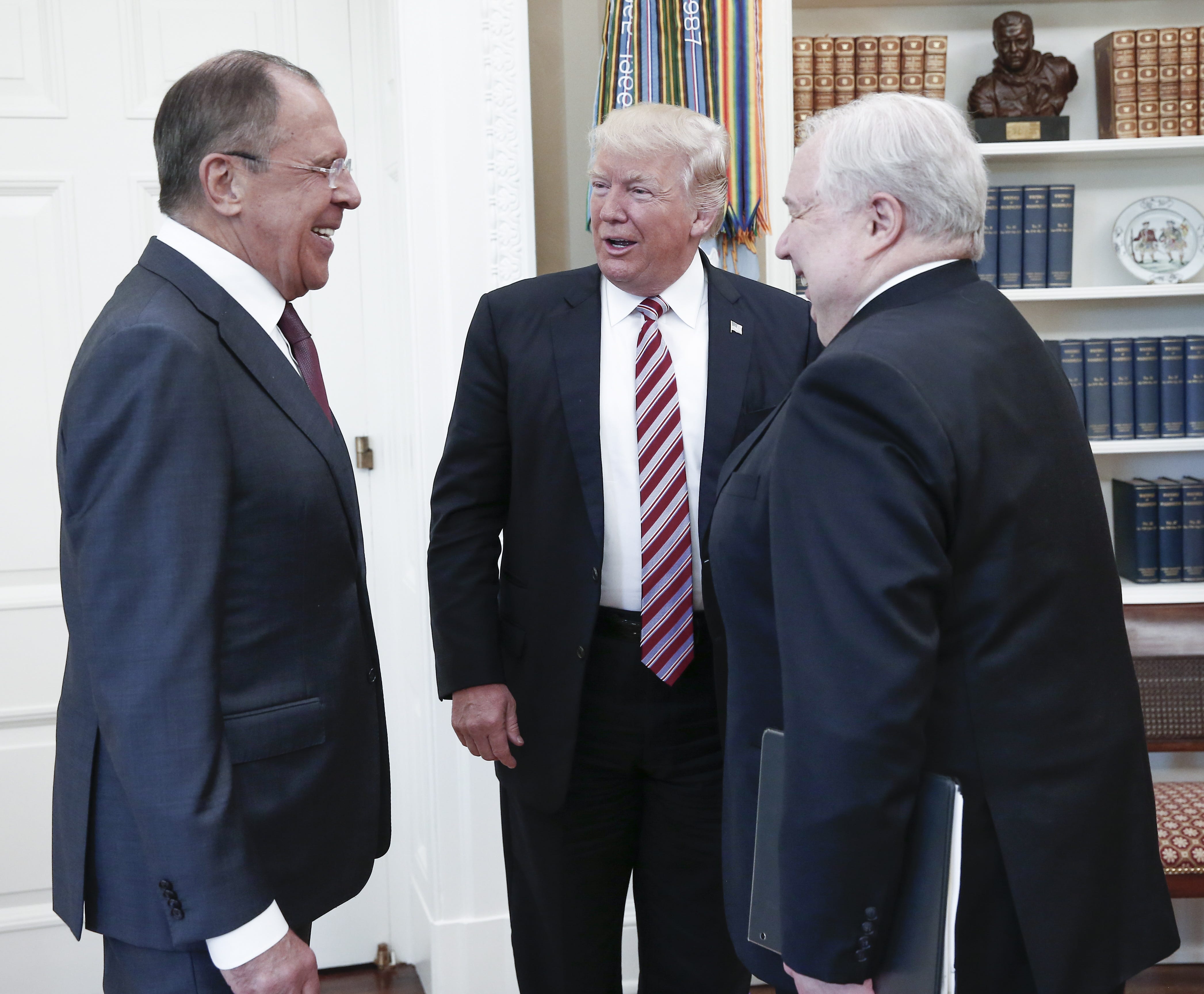
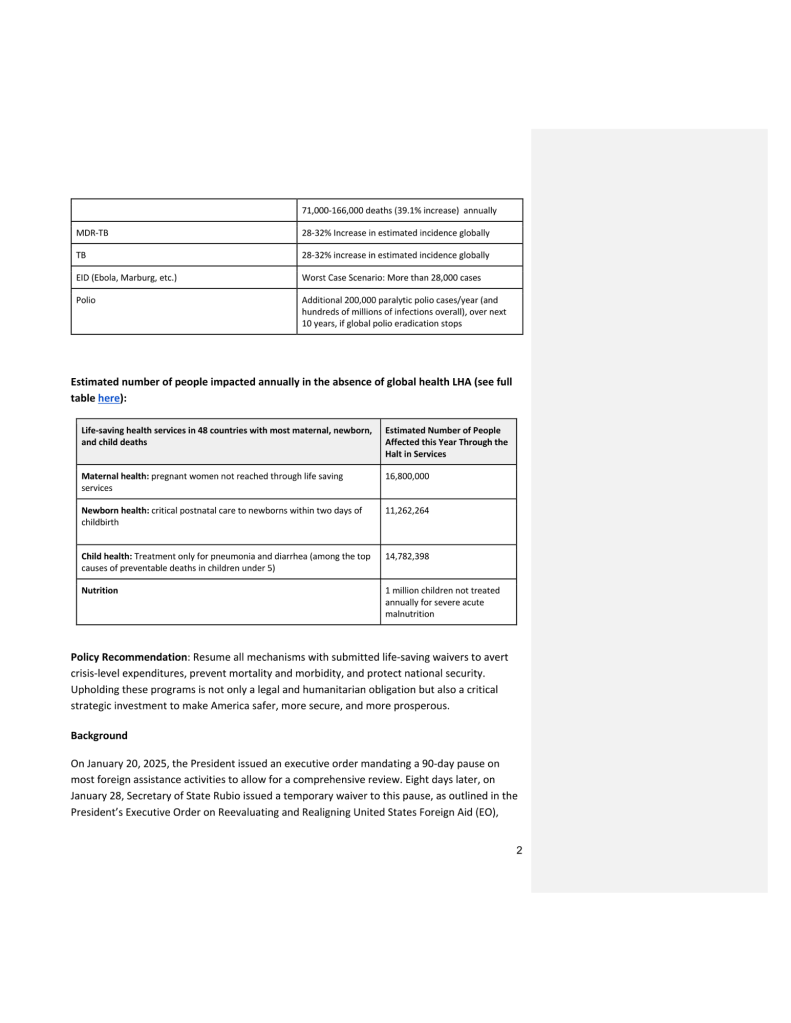


 Diane Ravitch's blog