Archives for category: Creativity

I received the following notice from Dr. Angela Valenzuela of the University of Texas. She has written extensively about diversity, exclusion, inclusion, equity, and history. Her original letter was sent to executives at the American Educational Research Association. She shared it with me, and I am sharing it with you.

As I am sure everybody knows, we are in the throes of a major fight here in Texas over DEI, academic freedom, CRT in higher education, tenure, and so much more and these folks are loaded with hubris—like they can just roll right over us. That’s what DeSantis is demonstrating. So I and others have been working for close to a year now in trying to unite our communities. We are doing this through an organization we’ve named, Black Brown Dialogues on Policy and now, so that we don’t become Florida by uniting as black and brown humanity. Intersectional. Intergenerational. Civil rights, Gen Z inclusive, white allies—and all people of good conscience. This is the Beloved Community, El Pueblo Amado.I just love how it sounds in Spanish.

There’s more that unites than divides us. We’ll have the program up soon, as well, on our website.

Next Saturday, March 11, BBDP is organizing a Virtual Town Hall on DEI and Ethnic Studies and all are welcome to attend:

MEDIA ADVISORY: Black Brown Dialogues on Policy hosts Virtual Town Hall—Sat. March 11, 2023 from 10:00 AM—4:30PM CST

We get going at 10AM CST and you can view it and post questions from our Facebook page:https://www.facebook.com/TeamBlackBrown

We hope to have the Virtual Town Hall program up on our website soon.

AERA luminaries Drs. Francesca Lopez, Christine Sleeter, Kevin Kumashiro and Stella Flores are part of the program. Texas legislators and two Gen Z panels, too.

Media industry professionals are producing it and we are using this Virtual Town Hall as an informational opportunity and organizing tool through which to, on the one hand, pass Ethnic Studies legislation (HB 45), and on the other, defeat terrible bills like those listed below.

HB 45 is about Ethnic Studies. It doesn’t make ES a requirement. Rather, it creates a pathway to a high school diploma through the taking of either Mexican American or African American Studies, courses that are currently electives in state policy at the high school level. Native American Studies and Asian American Studies were “passed,” along with the other two courses in 2018. I and so many others were involved in its passage. And the SBOE has waited for a more conservative board to get in to decide whether and when to align Native American Studies and Asian American Studies to state standards. They’re foot dragging. What we need is a law, or HB 45.

Check out these horrible bills.

The specific bills represent an attack on DEI in higher education: House Bill 1006, House Bill 1607, and House Bill 1046. I heard there was one more, too. We can’t keep up. But these are sufficiently draconian to be concerned.

House Bill 1006 seeks to “prohibit: (A) the funding, promotion, sponsorship, or support of: (i) any office of diversity, equity, and inclusion; and (ii) any office that funds, promotes, sponsors, or supports an initiative or formulation of diversity, equity, and inclusion beyond what is necessary to uphold the equal protection of the lawsunder the Fourteenth Amendment to the United States Constitution.”

House Bill 1607 is the higher education analogue to Senate Bill 3 last legislative session that some have dubbed the “Texas anti-CRT” bill, House Bill 1006.

HB 1046 seeks to prohibit what they’re calling “political tests” in higher education utilized in hiring decisions or in student admissions as a condition of employment, promotion, or admission, to identify a commitment to or make a statement of personal belief supporting any specific partisan, political, or ideological set of beliefs, including an ideology or movement that promotes the differential treatment of any individual or group based on race or ethnicity.

It will really make a difference if folks from all over the country attend to convey solidarity with our cause. Public statements, letters to Governor Greg Abbott and the Lt. Governor Dan Patrick in defense of Ethnic Studies, CRT, and DEI are also much appreciated.

I’m sure I missed some folks, so apologies if I left you out. We have a lot on our plates at the moment.

Hasta pronto! Buenas noches. May all have a blessed week.

Peace / paz,

Angela Valenzuela, Ph.D.

Co-founder and convener

Black Brown Dialogues on Policy

I haven’t been to the Metropolitan Opera in years, due to the pandemic. In the past, I went once or twice a year. It’s a great treat.

In early January, Mary and I took our 16-year-old grandson to see Aida. He had never seen an opera. What a thrill for him and us.

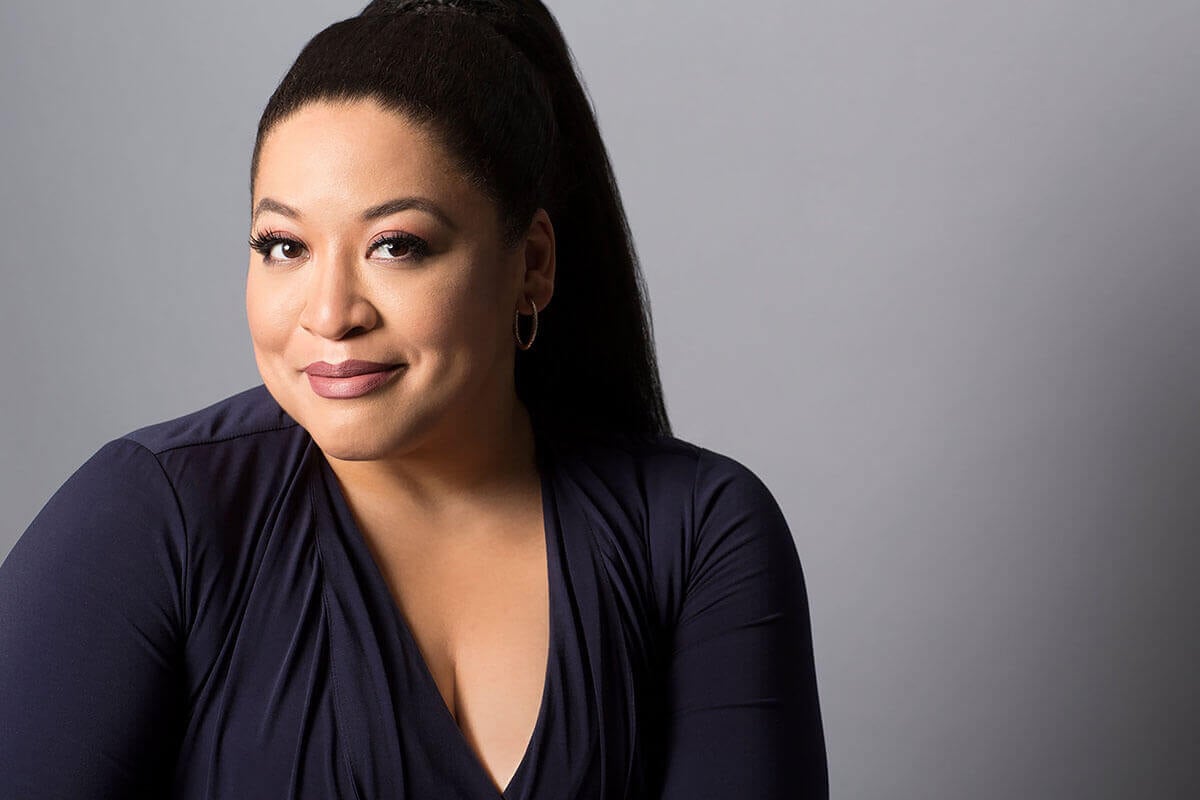
The role of Aida was performed by Michelle Bradley. She is a newcomer but is already a huge star on the international opera circuit. She is African American. She was born in Versailles, Kentucky, a town of 10,000 or fewer people. She graduated from Woodford County High School, then graduated from Kentucky State University, then studied vocal performance at Bowling Green State University.

The town of Versailles, small as it is, used to have three high schools. One of them was for Blacks only, even though the town’s Black population is tiny, about 6%. After the Brown decision, the three merged, and the Woodford County High School opened in 1963.

The publication of the San Francisco Opera interviewed the phenomenal new star:

At school, she was the girl with the crooked teeth, the one the other kids teased and taunted. To spare herself the bullying, she kept her mouth shut.

Michelle Bradley

“I didn’t talk at all until I got home,” soprano Michelle Bradley explains. “I was getting picked on a lot at school. And so I just stopped talking. Until I could get braces, I just didn’t talk in public.”

But in the afternoons, before her parents returned from work, Bradley would retreat into her sanctuary: her bedroom’s walk-in closet. There, with the door closed, Bradley would sing, without fear that anyone would hear her or judge her.

One day, though, her singing would no longer be a secret. One day, it would grace stages around the world, making her one of today’s most buzzed-about up-and-coming opera stars.

Growing up in Versailles, Kentucky, Bradley remembers her mother received free CDs in the mail, with songs from Aretha Franklin, Diana Ross, and The Clark Sisters, a gospel group from Detroit. Bradley loved them all. But there was one singer who inspired her the most: superstar Whitney Houston.

“She was my idol. That’s who I was trying to be as a little girl,” Bradley says.

In those early years, she would tally the ways she and Houston were alike—they shared a birth month, a Zodiac sign—just to feel a little closer to the superstar. And when the movie The Bodyguard came out, with Houston in the starring role, Bradley watched it over and over.

But trying to sing big, powerful ballads like Houston did in a closet made discretion difficult. Bradley had three brothers, two older and one younger. And like many a pesky sibling, Bradley’s younger brother was all too eager to spill the beans on his sister’s secret hobby.

“Mom, Dad, Tammy likes to sing in the closet! Tammy likes to sing in the closet,” she remembers him shouting, using the name she’s called at home.

Even with her parents, Bradley only spoke when spoken to. She was shy. Her parents could hardly believe she had a secret pastime singing. They called her into the living room and asked her to perform something. Naturally, Bradley chose a Houston song: “I Love the Lord” from The Preacher’s Wife.

“After that, my parents had me up singing at church services and everything else,” Bradley says. “It just started from there.”

Bradley had shown musical talent even from a young age. At Kmart, while her mother did the shopping, an 8-year-old Bradley would park herself in the aisle with all the musical equipment: “That was back when they had all the keyboards sitting out and had them all plugged up. Ooh, that was fun!”

She had no problem finding the keys to play the theme songs for kids’ shows like Sesame Street and Fraggle Rock. “I really don’t know how I did it,” Bradley says. “I loved my little cartoons, and so I would hear that and then I could sing it or play it. I just needed to hear it, and I had it.”

Neither of Bradley’s parents had studied music, but both loved to sing. They had met during the civil rights movement in the 1960s, two of the first Black students to integrate their Kentucky high school. Bradley’s father passed her mother a note that read, “I want to be your man.” They sang together in church choirs ever since they started dating.

It was with their help that Bradley started to overcome her shyness. Her father, a police officer, was a deacon at Polk Memorial Baptist Church. Her mother continued to sing in the church choir. Bradley started by learning to play services with the church pianist. By high school, she could carry a whole service.

And when, at age 14 or 15, she started singing in public, Bradley’s parents were always there, cheering her on. “Honestly, that’s who I would focus on when I was singing. I would look at them if I got nervous. So that helped me a lot. They helped me a lot.”

Soon, Bradley had the confidence to sing at school pep rallies and Christmas parties. “When I started doing that, when I started singing at school, people stopped picking on me. I was going from, ‘Hey, a crooked-tooth girl’ to ‘Hey, can you come sing for us?’”

It was the start of something great. Bradley would go on to graduate from the Metropolitan Opera’s prestigious Lindemann Young Artist Development Program. Her voice won her awards galore—from the Leonie Rysanek Award to the grand prize at the Marilyn Horne Song Competition—and she toured Europe, performing in great opera houses from Berlin to Vienna to Paris and beyond.

Now, she’s taking the U.S. by storm. This past fall, she starred as the heroine Liù in the Metropolitan Opera’s Turandot, and in March, she makes her debut with the Lyric Opera of Chicago as the title character in Tosca. Then, she joins San Francisco Opera for its Centennial Season, making her inaugural appearance in the company’s Dialogues of the Carmelites.

Bradley frequently visits Houston, because that’s where her voice teacher, Lois Alba, lives. When the pandemic closed down everything, including opera, she stayed with her family in Versailles for eight or nine months. She practiced at Kentucky State and the local church.

During that time, she got requests to sing virtually. She found that the best acoustics in the house was in the bathroom. So she would get dressed up in her regalia and sing at an angle that didn’t show the toilet.

When she was in high school, she thought she might one day be a music teacher or choir director. But in her freshman year at Kentucky State, her voice teacher, AndrewSmith, told her she had the voice to sing opera and encouraged her. She “just fell in love with it.” He showed her Turandot on a VHS, the first opera ever for her and she was immediately transfixed. Mr. Smith also gave her a CD of Leontyne Price, and Michelle was star struck.

It was like when I was a little girl listening to Whitney Houston, except this was an opera singer. I heard that voice and I don’t know what inside me said, “That’s me. I can do that.” But hearing one of the greatest voices of our time, I said, “I can do that too.” I still, to this day, don’t know where that came from. Or maybe I do know where it came from. But that was really my first thought: that I can do this. I can sound like that. It’s like I found a home.

From Versailles, Kentucky, to the Metropolitan Opera!

What a remarkable story, and what a wonderful voice!

Liz Meitl is a public school teacher in Kansas. She usually testifies against vouchers and other forms of privatization, but she suddenly realized what she could do if the Kansas legislature passes a voucher bill. She would open a completely unregulated school to do what the rightwingers fear most!

She wrote in The Kansas Reflector:


Liz Meitl

Liz Meitl testifies Feb. 6, 2023, before the House K-12 Education Budget Committee regarding legislation that would create vouchers for unregulated, unaccreddited private schools. GOP education proposals could allow for schools to turn into indoctrination mills, Meitl writes. (Kansas Reflector screen capture from Kansas Legislature YouTube channel)

Two years ago I wrote an opinion piece for the Kansas Reflector in which I argued that the Legislature should be celebrating Kansas public schools, rather than trying to tear them apart through voucher plans.

In the two years since, the fight has been ongoing, with no break in the Legislature’s efforts to destroy public education. This year’s session has brought us a tidal wave of proposed legislation that would divert hundreds of millions of dollars from public schools to private schools.

The legislation has shifted, though. Now it’s not just for low-income students, or for already established private schools.

The new legislation allows any kid to access the funds, and it allows anybody to set up a school. And so I have had an entirely serious change of heart. I am in no way taking a ridiculous idea to its logical extreme, so just put that out of your mind right now.

Let me explain.

Bills in the House and Senate that would allow families to use state money to send their kids to private schools — specifically House Bill 2218 — represent an enormous opportunity for Kansas educators. This legislation will allow Kansas to be a beacon to the rest of the country. Just as the world watched on Aug. 2nd as Kansans defeated the anti-choice agenda, the world can now watch as our liberal, woke educators are freed from the bonds of bureaucratic oversight and local, state and federal regulations.

Other educators, like me, will jump at the chance to open our own micro-schools and enact our own curricular agendas. We will be able to recruit the students we want to teach. We will no longer be asked to serve all students equitably, but instead we can create small, insular communities of learners, focused on the topics we feel are most valuable.

This is an enormous opportunity for all Kansas teachers who are tired of being subject to democratically elected school boards’ rules and out-of-touch federal lawmakers’ regulations.

When I think about opening my own school, I can’t help but be thrilled at the potential freedom. I will have the opportunity to teach English classes rooted in critical race theory. I know many legislators think we teach CRT now, but really there is so much oversight and collaboration that I am hamstrung and forced to teach lessons based on “pedagogical research” and “student data.”

This legislation will allow me to teach what many of the conservatives assumed I most want to teach: a leftist agenda focused on my Marxist, atheist ideology.

I can create a social studies class anchored in the history of white people as oppressors and colonizers. I can develop a rich, interdisciplinary course of study in which we study the benefits of recreational marijuana and psilocybin, and we can take scientific field trips to grow houses and dispensaries. My math classes will focus on the benefits of a socialist economy, and I will do my best to cultivate highly educated, intrinsically motivated radicals.

Further, work with my students will be based on a feelings-first curriculum. Their social and emotional well-being will drive instruction. I recognize legislators’ intent, that parents need to choose educational environments, so I will invite parents to provide tokens of comfort from home and I will use them to decorate our classroom.

Without the burden of state-mandated assessments weighing me down, and free from any governmental oversight, I will have the bandwidth to focus on supporting students’ identities. That will be especially rewarding for me and my LGBTQIA students.

In addition to the curricular and practical freedoms offered, this legislation creates an enormous financial opportunity. I know, without a doubt, that I can recruit 21 students to attend my little school. I have a big basement, and the materials will come from my own head (and heart), so I will have almost no overhead.

This means that I will make somewhere around $100,000 annually, based on current base state aid per student. This is substantially more than I earn now, and I will be responsible for many fewer students. It is clearly a financial windfall for any motivated adult.

In conclusion, these bills are a giant win for Kansas educators and youths. I can’t believe I didn’t see it before.

The total lack of oversight and regulation, combined with the financial incentives, create an almost irresistible opportunity for those of us with an agenda for our state’s future. Teachers’ dedication to Kansas’s public schools and serving every student will certainly mean almost nothing when we consider the possibilities offered via this legislation.

#############

Liz Meitl is a public school teacher in USD 500, and her two children attend Kansas public schools. Through its opinion section, Kansas Reflector works to amplify the voices of people who are affected by public policies or excluded from public debate. Find information, including how to submit your own commentary, here.

Andy Beshear was elected Governor of Kentucky in 2019 against Matt Bevin, a hard-right Republican who supported charters and vouchers and fought to reorganize teachers’ pension fund. Beshear, who was State Attorney General, successfully blocked Bevin’s efforts to harm teachers’ pensions.

Andy Beshear is the son of a Kentucky Governor, Steve Beshear (Governor from 2007-2015), and a graduate of Henry Clay High School in Lexington. Andy ran on a program championing public schools. He chose a teacher, Jacqueline Coleman, as his running mate.

Beshear narrowly beat Bevin, and he and Coleman are the only elected Democrats at the state level (remember, Mitch McConnell and Rand Paul are Kentucky’s Senators).

He is running for re-election this year. He leads the polls over all his GOP competitors. His favorability rating is about 60%.

Last year, the legislature passed a bill to authorize charter schools. Governor Beshear vetoed it.

Please listen to his message when he vetoed it.

This is how Democrats win election. By speaking to the 85-90% of people whose children are in public schools and to the 90% who graduated public schools. They want better schools. They like their schools and their teachers. Andy Beshear knows it.

One of my personal heroes is Yong Zhao, a Chinese-American scholar from whom I have learned much about education. I first met him through his writings, which are informative and provocative. Over the years, I met Yong at conferences, and we became friends. Not long after Anthony Cody and I created the Network for Public Education, we invited Yong to be the keynote speaker at our annual meeting in Chicago. He was a sensation. He had no prepared speech, but he did have a computer loaded with images. As he flashed from one image to another, he told a coherent story that was both based in scholarship, personal, and uproariously funny. When I created a lecture series at Wellesley College, I invited him to speak, and he again gave an informal talk that was illuminating, authoritative, and delivered with grace and humor.

I reviewed one of his books—demystifying the myth of Chinese super-schools—in the New York Review of Books.

I recently learned that Yong Zhao collaborated with Bill McDiarmid of the University of North Carolina to tell the story of Yong’s life. I remember his telling jokes about his impoverished childhood in a rural village and the unlikely trajectory of his life. He explained with a smile that he was too small and scrawny to plow the fields with a water Buffalo, so he was allowed to go to school instead. If you read the excerpt from the new book, you will see that this was no joke.

This is a column in Valerie Strauss’s blog, The Answer Sheet, at the Washington Post. She excerpted a part of a new book about Yong’s life.

Valerie Strauss wrote:

This is an excerpt of a new book, “Improbable Probabilities,” about and co-written by Yong Zhao, whose unlikely story starts in a village in China during the disastrous 1966-76 Cultural Revolution and takes him to a renowned career in academia. An internationally known scholar, author and speaker, Yong’s research and work has focused on how globalization and technology affect education. He has also been a prominent critic of school reform efforts in the United States that rely on high-stakes standardized tests and look to China — whose students excel on these tests — as a model. He has written for The Answer Sheet over the past decade on this and other topics.


In telling Yong’s story and why he consistently challenges conventional wisdom in education, Yong and co-author G. Williamson McDiarmid look at what factors are needed for success and how “forces outside human control play an essential role in the unfolding of human life.” I am publishing this because I think it offers valuable insights into what leads to success in school and in life.


Yong has written some 30 books, which education historian Diane Ravitch once said were “saturated with remarkable scholarship and learning,” and he has done extensive work in creating schools that promote global competence and language-learning computer games. He is now professor of education at the University of Kansas, as well as professor of educational leadership at the Melbourne Graduate School of Education in Australia.

Yong has taught at other schools, including the University of Oregon, where he was presidential chair and director of the Institute for Global and Online Education in the College of Education, and a professor in the Department of Educational Measurement, Policy, and Leadership. He was previously university distinguished professor in the College of Education at Michigan State University, where he was founding director of the Office of Teaching and Technology and the U.S.-China Center for Research on Educational Excellence, and executive director of the Confucius Institute. He is an elected member of the National Academy of Education and elected fellow of the International Academy for Education.

McDiarmid is dean and alumni distinguished professor emeritus at the University of North Carolina at Chapel Hill, and distinguished chair of education at East China Normal University in Shanghai.


This is part of the introduction of the book:


Too often, the lives of people who have climbed out of dire circumstances and subsequently left their mark on the world are portrayed as miracles of the human spirit or valorized as the main character of a rags-to-riches tale. Such narratives perpetuate the idea that only extraordinary individuals succeed against overwhelming odds; they focus on the individual qualities that led to a person’s success while downplaying the circumstances that contributed to their success. Even less often is chance or luck assigned a major role in these success stories.

In 2018, scholars Alessandro Pluchino, Alessio Emanuele Biondo, and Andrea Rapisarda set out to investigate the “largely dominant meritocratic paradigm of highly competitive Western cultures [that] is rooted on the belief that success is due mainly, if not exclusively, to personal qualities such as talent, intelligence, skills, smartness, efforts, willfulness, hard work or risk taking.”[i] They conclude that, while talent contributes to a person’s success, it’s not the most talented people who are most successful; mediocre people who get lucky often surpass talented people.[ii]

So, what’s really going on? Evolutionary biologist Richard Lewontin suggests that forces outside human control play an essential role in the unfolding of human life; if we wish to understand living things, we must see that genes, organisms, and environments (Lewontin’s triple helix) are not separate entities.[iii]. Observers may attribute individuals’ successes to their genes or to their environment – or the interactions of these factors. Lewontin argues that a critical third strand must be included if we are to understand how people’s lives unfold: chance.[iv] The American myth of rugged individualism (the belief that humans succeed against heavy odds solely through their individual talent, determination, and intelligence) obscures the role that the interaction of genes, environment, and chance play in shaping a person’s path to success or failure.

In what follows in this chapter, we examine the roles that these three factors played in determining Yong’s improbable path. We start with the role that chance events play in all aspects of our daily lives. We then describe some of the chance occurrences that helped shape Yong’s life. We consider how Yong’s unfavorable environment offered him, paradoxically, opportunities to develop his interests and abilities. We also examine the role that Yong’s personality traits may have played in his taking advantage of those opportunities. We conclude with an overview of the book.

Chance Encounters

Rags-to-riches and rugged individualism narratives ignore the fact that contingencies play a determinative role in individual success. Challenging these myths, Historian John Fea writes about the role contingency plays in events and people’s lives:

Contingency is . . . at odds with other potential ways of explaining human behavior in the past. Fatalism, determinism, and providentialism are philosophical or religious systems that teach that human behavior is controlled by forces—fate, the order of the universe, God—that are outside the control of humans. . .. [I]t is undeniable that we are all products of the macrolevel cultural or structural contexts that have shaped the world into which we have been born. Karl Marx suggested that human action is always held in check by “the circumstances directly encountered, given, and transmitted from the past.” It is unlikely that any proponent of contingency would deny that human behavior is shaped by larger cultural forces, but in the end, historians are in the business of explaining why people—as active human agents—have behaved in the past in the way that they did.[v]

Fea uses the example of the Union army’s victory at the Battle of Antietam during the U.S. Civil War that turned the conflict in favor of the Union (at the cost of 6,200 casualties).[vi] Prior to the battle, a copy of General Robert E. Lee’s battle plans fell into the hands of the Union command purely by chance. Fea quotes fellow historian James McPherson, who wrote that the “odds against the occurrence of such a chain of events must have been a million to one . . . yet it happened.”[vii]

Many of us are uncomfortable with the idea that chance occurrences have significantly shaped the world in which we live. We prefer to believe that there is a grand plan, that “everything happens for a reason.” The idea that success is not simply a function of our hard work and talent and that chance plays a significant role in how our lives unfold challenges both culturally imbedded beliefs as well as our sense of control over our destinies. Sociologist Duncan J. Watts points out that:People observe unusually successful outcomes and consider them as the necessary product of hard work and talent, while they mainly emerge from a complex and interwoven sequence of steps, each depending on precedent ones: if any of them had been different, an entire career or life trajectory would almost surely differ too.[viii]

Let’s examine some of the chance events that, had they turned out differently, would have changed the course of Yong’s life. Of particular interest are random circumstances, events, or encounters that could have been debilitating yet, somehow , moved Yong down the path to success.

• Historical moment:

Yong was born between two events that killed millions of Chinese—the Great Leap Forward and the Great Cultural Revolution (see the Preface). Social chaos, political uncertainty, internecine conflict, and continuing depravations characterized this period. A boy born in an obscure village to the lowest class of peasants, Yong was in a vulnerable position. If he had been born earlier, he might have died of starvation, malnutrition, or disease. If he had been born later, he might not have had the opportunities that opened to him as a member of the lowest peasant class under the reforms of Chinese communist leader Deng Xiaoping (page XX).

• Family:

Yong had the good fortune to be born into a family that placed no expectations on him, loved him, and allowed him to pursue his own path. Although illiterate, the family saw the value of schooling for Yong, especially as his poor health and corporal weakness made him ill-suited for manual labor. They supported him in whatever way they could as he worked his way up the educational system and allowed Yong to decide for himself how to live his life. If he had been born into another family, Yong might have faced familial expectations for what he should do and what he should become, which was common among his peers. He might also have been subjected to the physical and verbal abuse that undoubtedly left many children with physical and emotional scars.

• Schooling: Despite woeful conditions, Yong managed to succeed in school when no one else from his village did. He benefitted from a few teachers who recognized his potential and found ways to help him. He also benefitted from Mao’s educational reforms, which opened more opportunities for learning and brought experienced teachers to rural China (page XX). If he had not had the teachers that he had, gained access to Mao’s reformed school system, and learned English instead of Russian (the required second language until the early 1960s), his path might have been very different.

• Higher education: Because his university career was delayed for a year due to his small stature, Yong qualified for a newly created English teacher-training program at the Sichuan Foreign Language Institute (SFLI), the flagship university for foreign language education and information in southwest China. The program covered student tuition and fees and offered access to a much wider world, including a bookstore that sold English-language books, journals, and magazines. Yong’s success in computer and pedagogy courses earned him a spot on a research team, where he taught himself coding and statistics and wrote a program to analyze the survey data. If Yong had not been malnourished, he might have entered higher education the year before the English-teacher training program was created. If he had not been able to take and succeed in courses in computing and pedagogy, he might not have come to the attention of his professors or earned a spot on the research team.

This is, of course, a highly condensed account of a few of the chance events and contingencies Yong experienced in the first 25 years of his life. Each of us could chronicle our life in a similar way, identifying myriad random events, occurrences, encounters, and people that nudged us this way and that.Along the way, chance events shape our environment to create unforeseen opportunities. Do we recognize opportunities? Do we take advantage of them? Let’s examine some of the factors in Yong’s environment that influenced his ability to capitalize on opportunities and embark on a path to success.

Environmental Factors

Yong’s life illustrates how random events create unique and unforeseen paths. Changes in our environment present us with opportunities. Changes cause disequilibria that people, if they are ready, can exploit. What factors in Yong’s environment shaped him throughout his life?

• Yong’s father’s influence: Yong’s father was the most influential person in his early life. He was loving and caring toward Yong, allowed him the freedom to explore his interests and passions, and modeled an entrepreneurial approach to embracing opportunities rather than settling for the status quo.

• Village life: Life in Yong’s village was almost exclusively focused on survival. As members of the peasant class, villagers were fully occupied with feeding, clothing, and sheltering themselves just as their ancestors had done for thousands of years. Given this survivalist mentality, villagers did not judge how Yong spent his time, his chosen career path, or his adherence to social norms.

• Positive teacher relationships: Yong had teachers who noticed his unique academic gifts and sought to encourage and mentor him, opening doors for him into higher education.• Chinese education: Historically, the Chinese have seen education as a means toa career (preferably as a government official), prizing obedience to authority and rote memorization over all else. Student autonomy and critical thinking were typically punished. thus perpetuating a culture of student apathy, acquiescence to authority, and conformity. As a result, Yong’s penchant for creative thinking, risk-taking, innovation, and love of learning for its own sake made him an outlier who was unusually attuned to opportunities that others missed.

• Global perspective: As an adult, Yong traveled widely, developing friendships and collaborations with people from many different countries, As a result, he recognizes that no single culture or ethnicity can claim to be the bearers of “the truth” and that contributions to solving global problems can come from anyone.

Every person, even siblings in the same family, encounters a different set of environmental factors shape who they are and offer various opportunities. This is an experience common to everyone. The difference is that some people recognize opportunities while others don’t. Some people jump at the chance to walk through an open door while others hold back or turn away. Why was Yong able to recognize and take advantage of opportunities when many around him did not? Part of the answer to this may lie with his personality traits.

Influence of Personality

Research on the recognition of opportunities has focused almost entirely on entrepreneurial opportunities and the characteristics of those who seize on what appear to be promising opportunities. Most of the factors that researchers have identified and explored, such as social capital and prior knowledge of a given business sector, seem unhelpful in understanding Yong’s ability to recognize opportunities.[ix]

However, one vein of research—focused on the psychological and cognitive factors that help explain the phenomenon—may help us understand Yong’s eye for opportunity. Researchers have found that personality traits play a vital role in a person’s ability to recognize and capitalize on opportunities.[x], [xi], [xii]

Researcher Scott Shane and colleagues conclude: “Genetic factors account for a large part of the variance in opportunity recognition by influencing the probability that people will be open to experiences.”[xiii] This research speaks to Lewontin’s formulation, supporting the idea that genes interact with both the environment and chance. Is it possible that certain personality traits could tip the scales, could increase the probability that some people are more likely than others to encounter promising opportunities?

Researcher Richard Wiseman became curious about this very question. Why do some people seem to be luckier than others?[xiv] Speculating that luck might not be totally random, he conducted several studies to learn more about what lucky people have in common and why they differ from those less lucky. When he studied the underlying dimensions of personality that psychologists had identified as universal, he found that luckier people shared four of the “Big 5” personality traits: extroversion, neuroticism, optimism, and openness.[xv] How did these traits seem to play out in Yong’s life?

• Extroversion: Evidence of Yong’s extroversion includes his wide circle of friends across the globe and the numerous (over 100 annually) invitations he receives to speak to business, educational, and governmental audiences. This speaks not only to the value others find in his ideas but also to his inherent likeability and the genuine pleasure he takes in meeting and talking with others, especially those whose backgrounds differ from his own.

• Optimism: Despite the harsh conditions of his upbringing, Yong consistently expects good fortune.[xvi] He has an unflagging belief that if a door closes or an opportunity doesn’t pan out, something else will emerge.

• Neuroticism: Wiseman notes that lucky people have “a relaxed attitude toward life.”[xvii] The less anxious we are, the less absorbed we are in worrying about what others think of us, the more attention we can focus on our environment and, therefore, the more likely we are to see opportunities. Despite his full schedule, Yong seems relaxed whatever the situation. This is rooted, in part, in his wealth of experiences. Across his life, he has faced many adversities, and yet, he has not only survived but thrived.

• Openness: Being open to new experiences or embracing a sense of adventure means that when opportunities do arise, lucky people tend to seize them. Research suggests that openness is moderately associated with intelligence and creativity.[xviii] Because Yong remains open to new and novel experiences, he embraces and thrives on an unconventional life of adventure and innovation.

The story of our lives is a complex fabric of many factors. As Lewontin observes, not only do our genes and environment intertwine, but chance plays a major part in how that fabric is woven.[xix][MB1] This is clear in Yong’s life in the unique environmental factors that shaped his experiences, the chance encounters and events that opened unforeseen opportunities, and the inherent qualities and predispositions that allowed him to capitalize on them.

Book Overview

In this book, we strive to understand Yong’s success by exploring the complex interplay of genes, environment, and chance. Each chapter examines a phase of Yong’s life through this lens, containing a brief vignette from that time, relevant historical factors, an account of events that characterized that period of his life, and reflections on the implications for education.

In chapter 1, readers meet the boy from Sichuan Province: five-year-old Yong tagging along behind his father, the primary influence in his early life. Adults in Yong’s rural village are concerned with feeding, clothing, and sheltering their families, which leaves Yong free of social expectations. As Yong uses his free time to devise entrepreneurial ventures around the village, he capitalizes on unlikely assets—his curiosity, penchant for rule-breaking, and rebellious nature—to follow his instincts toward what would become a scholarly life.

Chapter 2 describes how Yong teaches himself to read and enters school amid the upheaval of China’s Cultural Revolution. Educational reforms after the establishment of the People’s Republican of China (PRC) in 1949 allow Yong unprecedented access to school in rural China, as well as teachers who recognize his intellectual interests and gifts. Believing education to be the means to a career only, the Chinese have long valued diligent and compliant students. Relentlessly curious, questioning, and innovative, Yong is an outlier. This doesn’t prevent him for mastering the knowledge and skills needed to succeed in school and pass the extremely stringent university entrance exam — not once but twice. His facility with languages earns him entry into the Sichuan Foreign Language Institute (SFLI) at a time when English-language teachers were in high demand.

Chapter 3 follows Yong during his time at SFLI where he indulges his wide range of academic interests in the library and at a local bookstore. He also cultivates friendships with foreign faculty, opening opportunities to improve his English and learn more about the world beyond China. His success in his classes impresses his professors who ask him to accompany a visiting scholar from Beijing to SFLI in Chongqing. From the visiting scholar, Yong learns about the potential of desktop computers to run data analysis software. Asked to join an international team conducting research on English-language learners, Yong sees an opportunity to develop a program to analyze the survey data. He teaches himself statistics and programming to create the first data analysis program for PCs in China.

In chapter 4, Yong joins a team of faculty who have volunteered to teach English in a remote Sichuan Province. Designated as the deputy team leader, Yong learns valuable leadership lessons and tests his capacity for managing a group. One of his fellow volunteers, Xi, catches his eye, and they begin dating. During a visit back to SFLI, Yong’s roommate convinces him to travel to the newly created Special Economic Zone on Hainan Island. There, Yong and a partner create a successful translation business. Despite his success in Hainan, Yong finds himself missing the scholarly life and returns to SFLI to resume teaching and publishing.

Chapter 5 chronicles how Communist Leader Deng Xiaoping’s economic reforms open China to Western culture and, in the late 1980s, spark debate on college campuses around the country. Eager to join the conversation, Yong opens his apartment as “ salon” for faculty and students to gather and discuss the future of the country. As the tragic events of June 4, 1989, unfold in Tiananmen Square, the momentum Yong and others had felt building dies abruptly, leaving him despondent and aware that he needs to seek opportunities elsewhere. A visit from a U.S. professor to SFLI results in a friendship that, in turn, leads to an invitation to spend time at Linfield College in Oregon.

In chapter 6, Yong embarks on his first trip to the United States, an experience that expands his view of the world, education, and emerging technologies. During his time at Linfield, Yong teaches, makes friends, explores the world of the just emerging World Wide Web, and realizes that becoming a college professor will allow him to pursue the life he wants for himself and his family, which now includes a son, Yechen in addition to Xi, his wife. Yong decides to pursue a graduate degree and gains admittance to the doctoral program at the University of Illinois at Urbana-Champaign. Yong completes his master’s in one year, welcomes his young family to the U.S., and leaves an unsatisfactory job at Willamette University on Oregon for a more promising opportunity.

Chapter 7 begins with Yong, Xi, and Yechen making a home at Hamilton College in New York, where Yong is part of a collaborative project between Hamilton and Colgate to enable students to take courses offered by both institutions. His successes earns him a tenure-line position at Michigan State University in Lansing, Michigan, where he works on a project to increase student engagement via online learning. He also creates an online submission platform for the America Educational Research Association annual meeting. Success in these projects as well as his outstanding publications record and award-winning teaching earns him the title of University Distinguished Professor. Although thought by some as only an educational technology specialist, his interests and scholarship have expanded to include pedagogy, assessment, policy, globalization, and other issues.

In chapter 8, we attempt to explain the central ideas and themes that run through Yong’s prolific scholarly output. Over his career, he has engaged several of the seminal questions in education such as: What kind of educational model best serves students? What are the consequences of schooling as a mechanism of state control? What are the pernicious effects of high-stakes assessment? How does personalized education benefit students? How can technology best serve education? How can promoting global thinking help us solve the world’s most pressing problems?

The epilogue provides a brief review of Bill’s life and how he came to collaborate with Yong on this book. He describes the events that have shaped a worldview that is remarkable similar to Yong’s.

[i] Pluchino, A., Biondo, A. E., & Rapisarda, A. (2018). Talent versus luck: the role of randomness in success and failure. Advances in Complex Systems, 21(3.4). https://doi.org/10.1142/S0219525918500145%5Bii%5D Plucjinco et al. (2018).[iii] Lewontin, R. (2001). The triple helix: Gene, organism, and environment. Harvard University Press, p. 38.[iv] Lewontin, R. (2001). 38.[v] Fea, J. (2020). What is historical contingency? https://currentpub.com/2020/08/18/what-is-historical-contingency.%5Bvi%5D Fea, J. (2020).[vii] Fea, J. (2020).[viii] Watts, D. J. (2011). Everything is obvious: once you know the answer. Crown Business. 8.][ix] George, N., Parida, V. Lahti, T., & Wincent, J. (2014). A systematic literature review of entrepreneurial opportunity recognition: insights on influencing factors. International Entrepreneurship and Management Journal, 12(2). 309–350. DOI 10.1007/s11365-014-0347-y.[x] Baron, R. (2006). Opportunity recognition as pattern recognition: how entrepreneurs “connect the dots” to identify new business opportunities. Academy of Management Perspectives, 20(1), 104–119.[xi] Heinonen, J., Hytti, U. & Stenholm, P. (2011). The role of creativity in opportunity search and business idea creation. Education + Training (53: 8/9), pp. 659-672. DOI 10.1108/00400911111185008[xii] Shane, S., Nicolaou, N., Cherkas, L., & Spector, T. D. (2010). Do openness to experience and recognizing opportunities have the same genetic source? Human Resource Management, 49(2), 291–303.[xiii] Shane et al. (2010)), 299.[xiv] Wiseman, R. (2003). The luck factor. Arrow Books.[xv] Soto, C. J. (2018). Big five personality traits. In M. H. Bornstein, M. E. Arterberry, K. L. Fingerman, & J. E. Lansford (Eds.), The SAGE encyclopedia of lifespan human development (pp. 240-241). Sage.[xvi] Wiseman, R. (2003). The luck factor. Arrow Books, 96.[xvii] Wiseman, R. (2003), 48.[xviii] Jauk, E., Benedek, M., Dunst, B., & Neubauer, A. C. (2013). The relationship between intelligence and creativity: New support for the threshold hypothesis by means of empirical breakpoint detection. Intelligence, 41(4), 212–221. https://doi.org/10.1016/j.intell.2013.03.003%5Bxix%5D Lewontin, R. (2001), 38.[MB1]I added a citation for Lewontin. Is this sufficient?

Perhaps you remember the tragic murders of a dozen members of the staff of the French satiric magazine “Charlie Hebdo.” Knowing that Muslims oppose any visual detection of their Prophet Mohammed, the magazine printed an issue with several cartoons about Mohammed, all making fun of the taboo. Two brothers, who were Muslims and terrorists, burst into their offices and gunned down 23 people, murdering 12.

The story was widely reported but very few newspapers or magazines dared to reprint the offending images for fear of inspiring more terrorism.

Recently an adjunct professor at Hamline University in Minnesota, showed two respectful historical images of Mohammed. She warned her students in advance. One Muslim student complained, who happened to be president of the Muslim Students Association, and the professor was fired.

The story by Sarah Cascone in Artnet shows the two images, which are respectful, even devotional.

In a controversial move, an adjunct professor at Hamline University in St. Paul, Minnesota, has lost her job after showing her class Medieval paintings depicting the Prophet Muhammad, founder of the Islamic religion.

The school’s decision not to renew the professor’s contract for the current semester has sparked debates over free speech, including a Change.org petition in support of the teacher, signed by at least 2,500 scholars and students of Islamic studies and art history, and a condemnation from PEN America of the “egregious violation” of academic freedom.

But there is also a tradition of painting Muhammad, often in miniature, especially in Persia, Turkey, and India. Examples can be found in the collections of museums such as the Louvre, the Metropolitan Museum of Art, and the Asian Art Museum of San Francisco. It was a selection of two of those artworks shown to the class that cost the professor her job.

Though it is not mentioned in the Koran, many Muslims believe it is idolatrous to show Muhammad’s face. Most mosques instead are decorated with geometric designs and calligraphy featuring passages from the Koran, and Islamic figurative art is now rare.

The teacher, identified by the Art Newspaper as Erika Lopez Prater, is said to have displayed the images during on online lecture on October 6, 2022. There was a two-minute content warning prior to the artworks’ appearance, to allow students to opt out of viewing the potentially offensive imagery should they feel it was against their faith.

A day later, Vimeo Patel of The New York Times reported the controversy in greater detail. The story included the offending images, as well as one that belongs to Omar Safi, a Duke University Professor of Asians and Middle Eastern Studies, who said he regularly shows images of the Prophet in his classes.

Erika López Prater, an adjunct professor at Hamline University, said she knew many Muslims have deeply held religious beliefs that prohibit depictions of the Prophet Muhammad. So last semester for a global art history class, she took many precautions before showing a 14th-century painting of Islam’s founder.

In the syllabus, she warned that images of holy figures, including the Prophet Muhammad and the Buddha, would be shown in the course. She asked students to contact her with any concerns, and she said no one did.

In class, she prepped students, telling them that in a few minutes, the painting would be displayed, in case anyone wanted to leave.

Then Dr. López Prater showed the image — and lost her teaching gig.

Officials at Hamline, a small, private university in St. Paul, Minn., with about 1,800 undergraduates, had tried to douse what they feared would become a runaway fire. Instead they ended up with what they had tried to avoid: a national controversy, which pitted advocates of academic liberty and free speech against Muslims who believe that showing the image of Prophet Muhammad is always sacrilegious.

After Dr. López Prater showed the image, a senior in the class complained to the administration. Other Muslim students, not in the course, supported the student, saying the class was an attack on their religion. They demanded that officials take action.

Officials told Dr. López Prater that her services next semester were no longer needed. In emails to students and faculty, they said that the incident was clearly Islamophobic. Hamline’s president, Fayneese S. Miller, co-signed an email that said respect for the Muslim students “should have superseded academic freedom.” At a town hall, an invited Muslim speaker compared showing the images to teaching that Hitler was good.

Free speech supporters started their own campaign. An Islamic art historian wrote an essay defending Dr. López Prater and started a petition demanding the university’s board investigate the matter. It had more than 2,800 signatures. Free speech groups and publications issued blistering critiques; PEN America called it“one of the most egregious violations of academic freedom in recent memory.” And Muslims themselves debated whether the action was Islamophobic….

University officials and administrators all declined interviews. But Dr. Miller, the school’s president, defended the decision in a statement.

“To look upon an image of the Prophet Muhammad, for many Muslims, is against their faith,” Dr. Miller’s statement said, adding, “It was important that our Muslim students, as well as all other students, feel safe, supported and respected both in and out of our classrooms…”

The painting shown in Dr. López Prater’s class is in one of the earliest Islamic illustrated histories of the world, “A Compendium of Chronicles,” written during the 14th century by Rashid-al-Din (1247-1318).

Shown regularly in art history classes, the painting shows a winged and crowned Angel Gabriel pointing at the Prophet Muhammad and delivering to him the first Quranic revelation. Muslims believe that the Quran comprises the words of Allah dictated to the Prophet Muhammad through the Angel Gabriel.

The image is “a masterpiece of Persian manuscript painting,” said Christiane Gruber, a professor of Islamic art at the University of Michigan. It is housed at the University of Edinburgh; similar paintings have been on display at places like the Metropolitan Museum of Art. And a sculpture of the prophet is at the Supreme Court.

Dr. Gruber said that showing Islamic art and depictions of the Prophet Muhammad have become more common in academia, because of a push to “decolonize the canon” — that is, expand curriculum beyond a Western model.

Dr. Gruber, who wrote the essay in New Lines Magazine defending Dr. López Prater, said that studying Islamic art without the Compendium of Chronicles image “would be like not teaching Michaelangelo’s David.”

What a shame that Dr. Prater does not have tenure. This unfortunate case demonstrates the value of tenure. Most professors in higher education work foe low wages as adjunct faculty. It saves their university money, but it deprives them of protection from marauding politicians like Ron DeSantis and over-zealous students, as is the situation at Hamline, a good small private university that has unnecessarily damaged its reputation by not protecting academic freedom.

Start the New Year right with constructive, common sense ideas from Nancy Bailey. Nancy is a retired teacher with more knowledge in the smallest digit of her smallest finger than the average “reformer.” Unlike the reform sloganeers, she truly puts children first.

Nancy starts with a few sensible suggestions of things you can do, then proceeds to identify what matters most in building good schools that meet the needs of children.

She opens:

As we approach 2023, let’s make this the year to unite for the common good to reestablish and promote public education for all our children.

A public school system relies on a country that values education for all its children no matter family religious beliefs, the color of one’s skin, gender identity, sexual orientation, or disability. Americans collectively fund public education because those schools belong to us. They reflect the never-ending societal changes that make us better people.

In your community, look to see how you can serve the students in your public school. Get to know your local schools and their difficulties by attending school boards. Seek to support not break down the school.

  • Volunteer to help a teacher
  • Tutor a child
  • Attend a school function like a school play or sports event
  • Ask what skills you might have that could be useful for the school or children
  • Be a part of career day and explain your work
  • See if you can support sports, the band, or other extracurricular activities
  • Seek to shore up your local school by helping fund a school initiative if possible
  • Attend school board meetings seeking to show support
  • Brainstorm ways you and others can get behind your public schools

We care about everybody’s child through public education. We know that the annoying teen next door may grow up to discover a cure for diseases, or they could be the plumber who fixes our pipes during a winter freeze. As a nation, we believe that all our children matter, not just for what they will someday do for us, but because they are our children!

There are many reasons for Americans from both political parties to hold hands regarding their public schools because we all want our children to get the best education possible.

Open the link to read her list of the necessities of a good school.

If crazy extremists are showing up at your local school board meetings, participate and protect your local schools. Consider running for the board yourself.

Arthur Camins, a retired science educator, poses a question that everyone should answer.

He asks: What if our basic needs were met, as they are in some other countries?

He writes:

Step back from the day-to-day slog to meet your pressing needs. Put aside the daily onslaught of depressing bad news. Take a deep breath to take five away from the insecurity of its all.

Imagine what life would be like if the needs of you, your family, friends, and community were met. What if you didn’t have to worry about any of it?

Step back from the day-to-day slog to meet your pressing needs.  Put aside the daily onslaught of depressing bad news. Take a deep breath to take five away from the insecurity of its all.

Imagine what life would be like if the needs of you, your family, friends, and community were met. What if you didn’t have to worry about any of it?

What would it change if ….

  • the cost of high-quality health care was not an issue for anyone?
  • no one had to choose between going to work and taking care of themselves and their families when sick?
  • a decent place to live was assured to everyone?
  • all schools got the same resources as upper middle-class schools?
  • public post-secondary education was free to all?
  • paying for food, clothing, and care were not an issue for any seniors?
  • all work was respected and was paid with a living wage?
  • clean energy was assured in the near future for our children and grandchildren?

What if we were not alone in dealing with all of it?

Pie in the sky? It’s not possible? Not so, fast. A lot of folks in a lot of other countries get some, most, or all these needs met. In the U.S. none of it is assured.

It’s not just that. Unmet needs fester, driving insecurity, toxic resentment, and helplessness.

Shifting that dynamic is all about organizing to shift who has voice and power. It is all about a shift perspective from, “I wish I had that,” to “That is my right!” And then, “We demand it.”

To achieving it, we need to know what we are up against. A recent example: Dismissing the voices of workers, Congress just preemptively stepped in to settle a private labor dispute ahead of a potential strike–undermining the only leverage unions have, withholding their labor–without even stipulating the modest demand for seven paid sick days. Railroad owners won. Railroad workers lost. Elected Democratic and Republican lawmakers regularly prioritize the voice and power of corporations and the wealthy over that of workers and their families.

Another: With a writ of certiorari, the Supreme Court appears to be preemptively poised to take up a case that may block President Biden’s modest student-debt relief program ahead of the customary wait for lower court rulings. Lenders will win. Students will lose.

The list of such examples is just too long. Why? Campaign contributions, surely. But not only.

Please open the link and read on.

Donna Mace recently died, unexpectedly, and the public schools of the United States and Florida lost a dear friend.

Sandy Stenoff wrote this tribute to Donna, who taught elementary school students for 35 years, then became an outspoken activist for public schools and against the overuse of standardized testing. Of course, she was a BAT.

She concluded:

Donna Mace made the world a better place by being a force for good. She was a class act, approaching life’s challenges with courage, grace, humility, humor, and optimism, We all benefited from Donna’s wisdom, gained from her experience as a lifelong educator and a life well lived. She really was the best of us.

To the Mace family: Our thoughts are with you now and we send you love, gratitude, and a wish that your fondest memories will bring you peace and comfort.

I am sadened that we have lost Donna Mace. Many were inspired by her and will follow in her footsteps, never abandoning the struggle to do what is right for children. I hereby add her name to the honor roll, a list of distinguished fighters for public schools and children.

David Herman is a high school teacher. He wrote an essay in The Atlantic that asks whether the English essay is obsolete, replaced by a computer that does it better. The machine may write a well-worded essay, but we should not forget the warning from MIT Professor Les Perelman, who has studied writing machines extensively. The computers don’t have any knowledge. They don’t know any history. They ignore factual errors. Here is one of his critiques of the SAT essay, titled “Mass-Market Writing Assessments as Bullshit.” Or there is this nonsensical essay that he wrote for a machine. Is ChatGPT superior to the SAT machine reader? I will ask Dr. Perelman.

Teenagers have always found ways around doing the hard work of actual learning. CliffsNotes date back to the 1950s, “No Fear Shakespeare” puts the playwright into modern English, YouTube offers literary analysis and historical explication from numerous amateurs and professionals, and so on. For as long as those shortcuts have existed, however, one big part of education has remained inescapable: writing. Barring outright plagiarism, students have always arrived at that moment when they’re on their own with a blank page, staring down a blinking cursor, the essay waiting to be written.

Now that might be about to change. The arrival of OpenAI’s ChatGPT, a program that generates sophisticated text in response to any prompt you can imagine, may signal the end of writing assignments altogether—and maybe even the end of writing as a gatekeeper, a metric for intelligence, a teachable skill.

If you’re looking for historical analogues, this would be like the printing press, the steam drill, and the light bulb having a baby, and that baby having access to the entire corpus of human knowledge and understanding. My life—and the lives of thousands of other teachers and professors, tutors and administrators—is about to drastically change.

I teach a variety of humanities classes (literature, philosophy, religion, history) at a small independent high school in the San Francisco Bay Area. My classes tend to have about 15 students, their ages ranging from 16 to 18. This semester I am lucky enough to be teaching writers like James Baldwin, Gloria Anzaldúa, Herman Melville, Mohsin Hamid, Virginia Held. I recognize that it’s a privilege to have relatively small classes that can explore material like this at all. But at the end of the day, kids are always kids. I’m sure you will be absolutely shocked to hear that not all teenagers are, in fact, so interested in having their mind lit on fire by Anzaldúa’s radical ideas about transcending binaries, or Ishmael’s metaphysics in Moby-Dick.

To those students, I have always said: You may not be interested in poetry or civics, but no matter what you end up doing with your life, a basic competence in writing is an absolutely essential skill—whether it’s for college admissions, writing a cover letter when applying for a job, or just writing an email to your boss.

I’ve also long held, for those who are interested in writing, that you need to learn the basic rules of good writing before you can start breaking them—that, like Picasso, you have to learn how to reliably fulfill an audience’s expectations before you get to start putting eyeballs in people’s ears and things.I don’t know if either of those things is true anymore. It’s no longer obvious to me that my teenagers actually will need to develop this basic skill, or if the logic still holds that the fundamentals are necessary for experimentation.

Let me be candid (with apologies to all of my current and former students): What GPT can produce right now is better than the large majority of writing seen by your average teacher or professor. Over the past few days, I’ve given it a number of different prompts. And even if the bot’s results don’t exactly give you goosebumps, they do a more-than-adequate job of fulfilling a task.

Herman goes on, adding examples of essays that the writing machine produced.

What do you think?