In an interview with The New York Times, President Trump explained his hostility towards the civil rights laws meant to end discrimination against racial minorities and women and to expand opportunities for them in the workplace and in education.
He believes that civil rights protections have hurt white men. That is the rationale for his aggressive campaign to purge policies of DEI (diversity, equity, and inclusion) from all institutions receiving federal funding.
Trump is indifferent to the long history of slavery, racism, Jim Crow laws, bigotry, and segregation that harmed minorities, especially African Americans. He is equally indifferent to the long history of sexism and misogny that restricted the careers of women.
Erica Green reports:
President Trump said in an interview that he believed civil rights-era protections resulted in white people being “very badly treated,” his strongest indication that the concept of “reverse discrimination” is driving his aggressive crusade against diversity policies.
Speaking to The New York Times on Wednesday, Mr. Trump echoed grievances amplified by Vice President JD Vance and other top officials who in recent weeks have urged white men to file federal complaints with the Equal Employment Opportunity Commission.
When asked whether protections that began in the 1960s, spurred by the passage of the Civil Rights Act, had resulted in discrimination against white men, Mr. Trump said he believed “a lot of people were very badly treated.”
“White people were very badly treated, where they did extremely well and they were not invited to go into a university to college,” he said, an apparent reference to affirmative action in college admissions. “So I would say in that way, I think it was unfair in certain cases.”
He added: “I think it was also, at the same time, it accomplished some very wonderful things, but it also hurt a lot of people — people that deserve to go to a college or deserve to get a job were unable to get a job. So it was, it was a reverse discrimination.”
Trump’s approach is calibrated to appeal to white men who blame their grievances on laws that protect racial minorities and women.
Carrying out Mr. Trump’s agenda is the Equal Employment Opportunity Commission, which was formed in 1965 under the Civil Rights Act. The commission’s chair, Andrea Lucas, issued a striking video message last month underlining the agency’s new posture.
“Are you a white male who has experienced discrimination at work based on your race or sex?” Ms. Lucas said in the video posted on X. “You may have a claim to recover money under federal civil rights laws. Contact the E.E.O.C. as soon as possible. Time limits are typically strict for filing a claim.”
“The E.E.O.C. is committed to identifying, attacking, and eliminating ALL forms of race and sex discrimination — including against white male applicants and employees,” she said.
In the video, Ms. Lucas pointed white men to the commission’s F.A.Q. on “D.E.I.-related discrimination,” which notes that D.E.I. “a broad term that is not defined” in the Civil Rights Act.
The Equal Employment Opportunity Commission is the nation’s primary litigator of workplace discrimination, and for decades has been a resource for minorities, women and other groups who have historically faced discrimination. But Ms. Lucas has endeavored to make it one of Mr. Trump’s most powerful tools against D.E.I., with a particular focus on remedying perceived harms against white men.
Trump has combatted DEI in universities by threatening to cut off the funding of institutions that implement affirmative action for students and faculty and that have programs to encourage minorities.
ProPublica published this article by Megan O’Matz and Jennifer Smith Richards in October, but I somehow missed it. It’s still relevant because it nails the personnel that Trump and wrestling entrepreneur Linda MacMahon installed at the U.S. Department of Education. The common thread among them: they want to privatize public schools, and they want to emphasize the Christian mission of schools.
It starts:
The department is not behaving like an agency that is simply winding down. Even as McMahon has shrunk the Department of Education, she’s operated in what she calls “a parallel universe” to radically shift how children will learn for years to come. The department’s actions and policies reflect a disdain for public schools and a desire to dismantle that system in favor of a range of other options — private, Christian and virtual schools or homeschooling.
Over just eight months, department officials have opened a $500 million tap for charter schools, a huge outlay for an option that often draws children from traditional public schools. They have repeatedly urged states to spend federal money for poor and at-risk students at private schools and businesses. And they have threatened penalties for public schools that offer programs to address historic inequities for Black or Hispanic students….
To carry out her vision, McMahon has brought on at least 20 political appointees from ultraconservative think tanks and advocacy groups eager to de-emphasize public schools, which have educated students for roughly 200 years.
Among them is top adviser Lindsey Burke, a longtime policy director at The Heritage Foundation and the lead author of the education section in Project 2025’s controversial agenda for the Trump administration.
In analyzing dozens of hours of audio and video footage of public and private speaking events for McMahon’s appointees, as well as their writings, ProPublica found that a recurring theme is the desire to enable more families to leave public schools. This includes expanding programs that provide payment — in the form of debit cards, which Burke has likened to an “Amazon gift card” — to parents to cobble together customized educational plans for their children. Instead of relying on public schools, parents would use their allotted tax dollars on a range of costs: private school tuition, online learning, tutors, transportation and music lessons.
Although more than 80% of American students attend public schools, Burke predicted that within five years, a majority would be enrolled in private choice options. The impact of their policies, she believes, will lead to the closure of many public schools.
Accountability, once a watchword for conservatives, won’t be needed in the future that McMahon and Burke are building.
As tax dollars are reallocated from public school districts and families abandon those schools to learn at home or in private settings, the new department officials see little need for oversight. Instead, they would let the marketplace determine what’s working using tools such as Yelp-like reviews from parents. Burke has said she is against “any sort of regulation….
Advocates for public schools consider them fundamental to American democracy. Providing public schools is a requirement in every state constitution.
Families in small and rural communities tend to rely more heavily on public education. They are less likely than families in cities to have private and charter schools nearby. And unlike private schools, public school districts don’t charge tuition. Public schools enroll local students regardless of academic or physical ability, race, gender or family income; private schools can selectively admit students.
Karma Quick-Panwala, a leader at the Disability Rights Education and Defense Fund, which advocates for disabled students, said she wants to be optimistic. “But,” she added, “I’m very fearful that we are headed towards a less inclusive, less diverse and more segregated public school setting.”
McMahon has welcomedeaders of extremist rightwing groups into the Department, like Moms for Liberty and Parents Defending Education.
Little attention was paid to the conservative education activists in the front row [at McMahon’s confirmation hearings] from Moms for Liberty, which has protested school curricula and orchestrated book bans nationwide; Defending Education (formerly Parents Defending Education), which has sued districts to fight what it calls liberal indoctrination; and the America First Policy Institute, co-founded by McMahon after the first Trump administration.
Now two people who once served at Defending Education have been named to posts in the Education Department, and leaders from Moms for Liberty have joined McMahon for roundtables and other official events. In addition, at least nine people from the America First Policy Institute have been hired in the department.
AFPI’s sweeping education priorities include advocating for school vouchers and embedding biblical principles in schools. It released a policy paper in 2023, titled “Biblical Foundations,” that sets out the organization’s objective to end the separation of church and state and “plant Jesus in every space.”
The paper rejects the idea that society has a collective responsibility to educate all children equally and argues that “the Bible makes it clear that it is parents alone who shoulder the responsibility for their children.” It frames public schooling as failing, with low test scores and “far-left social experiments, such as gender fluidity…”
AFPI and the other two nonprofit groups sprang up only after the 2020 election. Together they drew in tens of millions of dollars through a well-coordinated right-wing network that had spent decades advocating for school choice and injecting Christianity into schools.
Ultrawealthy supporters include right-wing billionaire Richard Uihlein, who, through a super PAC, gave $336,000 to Moms for Liberty’s super PAC from October 2023 through July 2024.
Defending Education and AFPI received backing from some of the same prominent conservative foundations and trusts, including ones linked to libertarian-minded billionaire Charles Koch and to conservative legal activist Leonard Leo, an architect of the effort to strip liberal influence from the courts, politics and schools.
Maurice T. Cunningham, a now-retired associate professor of political science at the University of Massachusetts, studied the origins and connections of parents’ rights groups, finding in 2023 that the funders — a small set of billionaires and Christian nationalists — had similar goals.
The groups want “to undermine teachers unions, protect their wealthy donors from having to contribute their fair share in taxes to strengthen public schools, and provide profit opportunities through school privatization,” he concluded. The groups say they are merely trying to advocate for parents and for school choice. They didn’t discuss their relationship with donors when contacted by ProPublica.
These groups and their supporters now have access to the top levers of government, either through official roles in the agency or through the administration’s adoption of their views.
Tiffany Justice, one of the co-founders of Moms for Liberty, is optimistic about the plans of MacMahon:
Asked what percentage of children she imagines should be in public schools going forward, Justice, who is now with The Heritage Foundation’s political advocacy arm, told ProPublica: “I hope zero. I hope to get to zero….”
McMahon’s tenure also has been marked by an embrace of religion in schools. She signaled that priority when she appointed Meg Kilgannon to a top post in her office.
Kilgannon had worked in the department as director of a faith initiative during the first Trump term and once was part of the Family Research Council, an evangelical think tank that opposes abortion and LGBTQ+ rights.
She has encouraged conservative Christians to become involved in what she’s described as “a spiritual war” over children and what they’re being taught in public schools.
This is an important development. Our nation needs at least two sensible political parties. A two-party system with vigorous third parties is healthy for our democracy.
When one of our two major parties is captured by an extremists cult, it’s a very bad sign. When that cult revels in cutting ties with our historic allies, in brutalizing immigrants and even citizens who look like immigrants (brown skin color), in sending troops to American cities, in killing people on boats that might or might not be transporting drugs instead interdicting them, in abandoning civil rights laws, and in treating the president as a king to be obeyed and worshipped, that cult is not a normal participant in American politics because it is not bound by the Constitution.
Thus, in my opinion, it is very good news that sane conservatives are abandoning the Heritage Foundation–whose leader was the architect of Project 2025–and joining forces with Mike Pence.
Pence is a conservative through and through, and I disagree with him on most issues. But in 2020, he refused Trump’s direct order to join the insurrection by refusing to certify Biden’s election. Pence certified Biden’s election and was reviled by MAGA for following the Constitution, not Trump. They chanted “Hang Mike Pence” on January 6, 2021, and even built a scaffold outside the U.S. Capitol. Trump shrugged with indifference, and the mob searched for Pence.
More than a dozen staffers at The Heritage Foundation are leaving the conservative think tank to join a nonprofit led by former Vice President Mike Pence as the embattled organization continues to reel from ongoing turmoil.
Advancing American Freedom — founded by Pence in 2021 “to defend liberty and advance policies that build a stronger America” — announced Monday that three senior officials who led the legal, economic and data teams at Heritage would be joining the group next year, along with several members of their teams.
This is good news for the conservative Republican Party and good news for our democracy. Genuine conservatives can’t abide the extremism of MAGA.
I’ll be watching to see what Liz Cheney and Adam Kinzinger do in the future.
Jan Resseger is a determined and purposeful writer.
On Tuesday, Part 1 of this post explored the Trump Administration’s seizure of the Congressional “power of the purse” as part of a strategy to accomplish the President’s goal of shutting down the U.S. Department of Education by firing hundreds of the Department’s staff who administer and oversee enormous grant programs like Title I and special education programs funded by the 1975 Individuals with Disabilities Education Act, along with many other essential programs that protect students’ rights and fulfill the Department’s mission of ensuring that children across all the states can equitably have a quality public school education. Part 1 also examined how the U.S. Supreme Court has shunted many of the legal challenges filed against Trump administration onto a “shadow docket” of temporary decisions with a long wait for a hearing on their merits and a final ruling by the Supreme Court on their legality.
Today, Part 2 will examine three primary examples of what appear to be the Trump administration’s shameless violation of the core Constitutional principles we have long valued for protecting the rights of children and their teachers in our nation’s system of K-12 public schools.
The First Amendment Protection of Freedom of Speech — Beginning in February and continuing through the year, the Trump administration has been pressuring colleges and universities and K-12 public schools to adopt its own interpretation of the Civil Rights Act of 1964 and the administration’s idiosyncratic interpretation of a 2023 Supreme Court decision in Students for Fair Admissions v. Harvard. While most experts believe that Students for Fair Admissions was a narrowly tailored decision to eliminate affirmative in college admissions, the Trump administration has alleged it also bans all “diversity, equity, and inclusion” programming and policy in K-12 public schools and in higher education.
In August, the NY TimesDana Goldstein ideology the Trump administration has been trying to impose on educational institutions and teachers: “While there is no single definition of D.E.I., the Trump administration has indicated that it considers many common K-12 racial equity efforts to fall under the category and to be illegal. Those include directing tutoring toward struggling students of specific races, such as Black boys; teaching lessons on concepts such as white privilege; and trying to recruit a more racially diverse set of teachers. The administration has also warned colleges that they may not establish scholarship programs or prizes that are intended for students of specific races, or require students to participate in ‘racially charged’ orientation programs… The administration has also argued that because the Supreme Court overturned affirmative action in college admissions in 2023, all racially conscious education programs are illegal.”
Can the Trump administration impose its ideology on educational institutions and get teachers punished or fired if they cover unpleasant parts of our nation’s history? Many experts call this a violation of the First Amendment’s protection of free speech. To define how the First Amendment protects the freedom of speech in educational institutions, Yale Law School professor Justin Driver quotes the words of Supreme Court Justice Robert Jackson in the 1943 Supreme Court decision in West Virginia State Board of Education v. Barnette: “If there is any fixed star in our constitutional constellation, it is that no official, high or petty, can prescribe what shall be orthodox in politics, nationalism, religion, or any other matters of opinion or force citizens to confess by word or act their faith therein.” (Justin Driver, The Schoolhouse Gate, pp. 65-66)
The Vagueness Doctrine — In addition to the violation of the right to freedom of speech, there is another serious legal problem in the Trump administration’s efforts to scrub “diversity, equity, and inclusion” from K-12 public schools and from the policies of the nation’s universities. Writing for the NY Times, Matthew Purdy explored how the Trump administration’s vague rules, mandates and executive orders are designed to frighten people into complying:
“Federal District Court judges across the country and across the political spectrum… (have faulted) the administration for using broadly cast executive orders and policies to justify ‘arbitrary and capricious’ actions. Many of these judges have explicitly invoked something called the vagueness doctrine, a concept that for centuries has been foundational to American law. The notion is simple: Unless laws are clearly stated, citizens cannot know precisely what is and is not permitted, handing authorities the power to arbitrarily decide who is in violation of a law or rule. Vagueness has long been seen as a clear divide between democracies run by laws and autocracies run by strongmen….”
The Cornell Law School Legal Information Institute explains how the vagueness doctrine protects due process of law: “Vagueness doctrine rests on the due process clauses of the Fifth and Fourteenth Amendments of the U.S. Constitution. The Supreme Court stated in Winters v New York, that U.S. citizens should not have to speculate the meaning of a law due to its vagueness, the law should be clear on its face.”
Purdy adds that many of Trump’s educational executive orders and the rules being imposed by Linda McMahon’s Department of Education ought to be declared void for vagueness. Without being sure precisely what steps are required, universities have settled with the administration by making financial deals to protect their research funding; public school administrators have changed bathroom policies for trans students; and teachers have felt afraid to teach honestly about our nation’s history. Purdy describes “Valerie Wolfson, the 2024 New Hampshire history teacher of the year… whose post-Civil War curriculum includes Reconstruction, the rise of the K.K.K. and the Jim Crow era. ‘I do not know how I could discuss them without creating a risk of being accused of presenting a narrative of the United States as racist,’ she says… None of Donald Trump’s edicts have deployed vagueness as effectively as his attack on D.E.I. … The line between what is and isn’t allowed may be vague, but the penalty for crossing it is certain. The version cooked up by the Department of Education’s Office for Civil Rights is a textbook case… The message—and the threat—from the Department of Education was received loud and clear across the country.” (This blog covered Purdy’s article in more detail.)
Birthright Citizenship — One of President Trump’s executive orders stands out in its utter contradiction of the language of the Fourteenth Amendment. In an executive order last January, the President ended birthright citizenship. Birthright citizenship does not, thank goodness, deny any child’s right to public education because a 1982 Supreme Court decision in Plyler v. Doe does protect the right for every child residing in the United States to a free public education. However without the protection of birthright citizenship, children in this country are denied the protection of virtually all other rights.
In February a Federal District Court judge temporarily stayed Trump’s executive order banning birthright citizenship; the case was appealed; and later on June 27, the U.S. Supreme Court released a final decision. However the Supreme Court Justices twisted the meaning of the case without addressing the core issue of birthright citizenship itself. Instead the justices turned the decision into a ruling on procedure—declaring that local Federal District Courts cannot block the imposition of federal policy nationwide.
For Scotus Blog, Amy Howe explains how today’s Supreme Court abrogated its responsibility by ignoring the core issue in the birthright citizenship case: “(O)n July 23, a divided panel of the U.S. Court of Appeals for the 9th Circuit (had) ruled that the executive order ‘is invalid because it contradicts the plain language of the Fourteenth Amendment’s grant of citizenship to ‘all persons born in the United States and subject to the jurisdiction thereof ‘.”
Responding to the decision of the appeals court, U.S. Solicitor General D. John Sauer failed to ask the justices to fast-track its petition, urging the Supreme Court to review the ruling. Howe adds: “Although Sauer had the option to ask the court to fast-track its petition, he chose not to. Accordingly, if the justices decide to take the case… it will likely schedule oral arguments for sometime in 2026 and reach a decision at the end of the… term—most likely in late June or early July.”
All three of these serious Constitutional principles remain at issue today in Trump’s attempt to deny the rights of educators and undermine the protection of students’ rights.
Disciplining ourselves to name and and understand what appear to be troubling legal violations by the Trump administration is an important step toward building the political will for reform.
This is a gift article, meaning that non-subscribers may open the link.
Traditionally, the Department of Justice is independent of the administration in power.
Trump has broken down all the guardrails that protected the Department from political interference.
Trump selected Pam Bondi as Attorney General to carry out his wishes. He selected his personal defense attorneys as Bondi’s top assistants. Hundreds of career officials were fired. Thousands have left. The ethics officer was fired, because he insisted that the Department abide by ethics rules. The pardons attorney was fired, because Trump wanted to give pardons to friends, like actor Mel Gibson, who wanted his gun rights restored despite his history of domestic violence.
The Justice Department is now completely under the personal control of Trump. It is an instrument of his whims.
In one example, the Department of Justice sued a prestigious law firm for discriminating against white men, even though the law firm is 97% white. Why? The firm has represented Democrats.
The agency responsible for investigating domestic terrorism has been gutted. Civil rights enforcement has turned to attacking racial inequities and defending aggrieved white men.
The New York Times is the one major newspaper that has not bowed to Trump or capitulated to his threats. We sometimes criticize the Times for its efforts to be “on the one hand, on the other,” but this is not one of those articles.
This is a straightforward demonstration of the politicization and gutting of a bedrock protector of our democracy.
This article documents the early stages of fascism.
The website Government Executivereports on the draconian cuts that Trump imposed on federal agencies. These cuts were made without regard to the contribution, experience, or value of employees. Some agencies were destroyed, such as foreign aid. Foreign aid always had bipartisan support, yet Republicans in Congress remained silent as Trump and his sidekick Elon Musk cancelled programs that saved lives.
The devastating cuts in highly qualified career civil servants will be felt for many years. Their loss will not make the federal government more efficient. Understaffing will make it less effective. You will notice that a particular target of job cuts was any office engaged in civil rights protections.
In his confirmation hearings to be director of the Office of Management and Budget, one of the most powerful jobs in the federal government, Russell Vought made clear that he wanted to cripple the workforce.
He said:
“We want the bureaucrats to be traumatically affected. When they wake up in the morning, we want them to not want to go to work … because they are increasingly viewed as the villains.”
“We want to put them in trauma.”
Russell Vought organized Project 2025 while working at the rightwing Heritage Foundaion. He is not only a libertarian who wants to disembowel the “deep state,” he describes himself as a Christian nationalist. Vought’s goal–and Trump’s as well–is not to streamline the federal government but to gut it.
The Supreme Court earlier this year has allowed the Trump administration to resume mass reductions in force, though large swaths of the federal government are once again blocked from issuing layoffs under a new court order.
Many agencies have sent out RIF notices in the previous 10 months, with a new wave commencing during the government shutdown. These layoffs are separate from the mass firings of probationary employees in the early months of the administration, which led to the removal of at least 25,000 workers. See our tracker of those firings here.
An executive order and subsequent guidance in February from the Office of Management and Budget and the Office of Personnel Management called for the “maximum elimination” of federal agency functions not required by law. As a starting point for the cuts, OMB and OPM said, agencies should focus on employees whose jobs are not required in statute and who face furloughs in government shutdowns—typically around one-third of the federal workforce, or 700,000 employees.
Several agencies have eliminated offices wholesale and slashed their regional offices across the country. The administration laid off around 4,000 people on Oct. 10 across seven agencies. The cuts followed through on a threat from President Trump and Office of Management and Budget Director Russ Vought to inflict pain on the federal workforce as a consequence of the government shutdown.
Those RIFs, and forthcoming cuts Trump and Vought have promised, are now largely paused under a temporary restraining order issued by a federal judge in California. Her order now extends to agency components with employees in the American Federation of Government Employees; the American Federation of State, County and Municipal Employees; the International Federation of Professional and Technical Engineers; the National Federation of Federal Employees; the National Association of Government Employees; the National Treasury Employees Union; and the Service Employees International Union.
Here are the departments and agencies where Government Executive has confirmed RIFs have taken place or are about to occur. In some cases, the plans are in flux and subject to change. We will update as we learn more. More in-depth reporting is linked where available.
Agriculture Department: USDA is planning to dramatically slash its headquarters workforce through relocations into new regional hubs and, potentially, layoffs. Most employees will be given the option to either take a reassignment to one of the new hubs the department is standing up or separate from federal service. As the department cuts leases and functions across the country, regional staff will also be impacted, though some will have the opportunity to relocate to the new hubs. USDA will offload one of its two Washington headquarters buildings and consolidate dozens of additional sites. All told, 2,600 Washington-based are expected to be relocated. The department has shed 15,000 employees through its separation incentives.
Commerce Department: Commerce was originally seeking to cut its workforce by 20%, or nearly 10,000 employees, by using attrition, incentives and other measures to get to that level without RIFs. In October, however, Commerce sent RIF notices to 600 employees, including those at the Patent and Trademark Office, Census Bureau and Minority Business Development Agency. Those cuts are currently paused pending the temporary restraining order.
Consumer Financial Protection Bureau: CFPB first issued RIFs for approximately 1,500 personnel, roughly 88% of its workforce on April 17, while announcing 50% cuts to its inspection operations of financial services companies. Employees were told they would be locked out by 6 p.m. on April 18 and would be separated from federal service by June 16, barring qualifications for other available positions. A federal judge on April 18 paused the RIFs at CFPB, which led to the layoff notices being officially rescinded. An appeals court subsequently ruled that the RIFs could proceed, but paused their implementation while a union sought an en banc hearing before the entire appellate panel.
Defense Department: Defense said it would use RIFs or use other incentives to drive 5% to 8% of its civilian workforce, or as many as 61,000 employees, out of government. The department announced in September it successfully hit that target using various incentives.
Education Department: Education has laid off one-thirds of its workforce, or about 1,300 employees. The notices went out on March 11 and the department closed its offices on March 12 for the day. Education previously offered buyouts of up to $25,000 to most of its employees, who had until March 3 at 11:59 p.m. to accept the offer. About 300 employees accepted those and combined with other voluntary separations, Education’s total workforce was set to be about half the size it was before Trump took office. In October, Education sent layoff notices to an additional 465 employees, which are currently paused pending the temporary restraining order.
Environmental Protection Agency: Staff in the Office of Environmental Justice and External Civil Rights and Regional Environmental Justice Divisions on April 21 were informed that a RIF will take effect on July 31.
The RIFs began to take shape in March when Administrator Lee Zeldin moved to eliminate the environmental justice office and divisions as well as the Office of Inclusive Excellence. Prior to their shutterings, EPA said it had put about 170 employees in those offices on administrative leave.
In July, EPA announced it was eliminating its Office of Research and Development, leading to a RIF of potentially hundreds of employees. All told, the agency said it has slashed its workforce from 16,155 when Trump took office to 12,448. In October, the agency said it would lay off another 30 employees, which are currently paused pending the temporary restraining order.
Federal Trade Commission:FTC dismissed around a dozen employees on Feb. 28, impacting its Bureau of Competition, Bureau of Consumer Protection, Office of Public Affairs and Office of Technology.
General Services Administration: GSA has sent RIF notices to some employees in its Office of Human Resources Management and Office of Customer Experience and, initially, issued severe cuts to its Public Building Service.
On March 3, GSA began widespread RIFs focused on its Public Buildings Service. Many regions across the country were impacted. The agency subsequently canceled most of those layoffs, however, and brought the employees back to work.
Health and Human Services Department: HHS has eliminated 20,000 jobs from its workforce of 82,000, the department announced earlier this year. It sent RIF notices to 10,000 employees and used attrition for the remaining 10,000. As part of those initial layoffs, the Food and Drug Administration shed 3,500 employees, the Centers for Disease Control and Prevention cut about 2,400 employees and NIH has sent RIF notices to more than 1,200 workers. The Centers for Medicare and Medicaid Services laid off 300 staff.
Eliminated offices included those tracking cancer rates among firefighters, providing veterinary care caring for lab animals, managing the nation’s network of health centers that provide care to 31 million Americans, training new drug reviewers, collecting data on opioid on abuse and leading teams researching infectious diseases, among many others. Following the Supreme Court decision, HHS proceeded removing most of those impacted by RIFs on July 14. Employees at CDC, FDA’s tobacco office and Head Start remain on the rolls due to an injunction in a separate case brought by a group of states.
HHS, primarily at CDC, has brought back some employees deemed essential to carry out mission-critical functions.
The department’s Office of Small and Disadvantaged Business Utilization laid off at least 25 people at HHS headquarters and different components such as the Center for Medicare and Medicaid Services, the Food and Drug Administration, the National Institutes of Health, and the Center for Disease Control and Prevention on April 7. The cuts leave only executive director Shannon Jackson remaining in the office.
HHS shuttered six regional offices in its Office of General Counsel, bringing the agency from 10 OGC offices down to four. Those will be located in Philadelphia, Atlanta, Kansas City, Mo., and Denver. Impacted staff—about 200 of the 300 in the regional offices—were laid off, according to two employees affected by the changes and informed of the department’s plans.
In October, HHS laid off around another 1,000 employees. The haphazard nature of the RIFs led to the Centers for Disease Control and Prevention to reverse more than half of the original 1,300 notices it originally sent. Additional cuts were made at the Substance Abuse and Mental Health Services Administration, Health Resources and Services Administration, Office of the Assistant Secretary for Health and Administration for Strategic Preparedness and Response. Those cuts are currently paused pending the temporary restraining order.
Homeland Security Department: DHS officials issued RIF notices to all employees in its Office of Civil Rights and Civil Liberties, as well as its Office of the Citizenship and Immigration Services Ombudsman and Office of the Immigration Detention Ombudsman on March 21. The roughly 150 people in the CRCL office have been placed on administrative leave, pending their terminations, as have the approximately 40 employees at CIS Ombudsman and more than 120 employees at OIDO. The department’s Office of Intelligence and Analysis was planning to reduce its staffing by around 75%, cutting its workforce from some 1,000 full-time employees to 275, but as of July 10, those plans have been paused.
In October, DHS initiated RIFs for 176 employees at its Cybersecurity and Infrastructure Security Agency. A spokesperson said the cuts, currently paused by the TRO, would be “getting CISA back on mission” after the Biden administration led it astray.
Housing and Urban Development Department: HUD has issued RIF notices to all employees in the Office of Field Policy and Management at the General Schedule-13 level and below, according to a memo obtained by Government Executive. The employees were set to be terminated May 18. In October, HUD sent RIF notices to 442 employees in its Office of Community Planning and Development, the regional offices of its Office of Federal Housing and Equal Opportunity and its Public and Indian Housing office. Those cuts are currently paused pending the temporary restraining order.
Interior Department: DOI is planning sweeping reductions to its administrative and support function workforce and has consolidated related offices away from component agencies. Interior has folded areas such as IT, communications, finance, human resources and contracting into the central part of the department, rather than components such as the Bureau of Land Management, Fish and Wildlife Service, National Park Service and others maintaining their own cadres of staff to provide those services. That will be followed by widespread and significant reductions in force to employees in those offices, leading in some cases to 50% cuts to the relevant workforces. The consolidations began in early May and RIFs were expected to follow in the coming weeks, but those actions were held up in federal court. Thousands of layoffs were expected.
In October, Interior laid out with specificity where 2,000 RIFs were planned across its bureaus. Significantly more cuts were expected, though those details remained under wraps. Most of those cuts are currently paused pending the TRO, though Interior left the door open to proceeding with some of the cuts not impacted by the court’s order.
Labor Department: DOL had planned layoffs at the Office of Federal Contract Compliance Programs, but on Aug. 12, it reversed those reduction in force notices. A department spokesperson said that DOL reduced its total workforce by 20% through voluntary separation initiatives and attrition.
NASA: NASA began sending RIF notices to employees on March 10. In an email to staff, acting Administrator Janet Petro told staff it was a “phased reduction in force,” meaning more layoffs are expected in the coming days and weeks. She called the cuts “difficult adjustments” impacting “valued members of our team,” but said the agency was viewing the changes as “an opportunity to reshape our workforce.” NASA has so far laid off only around 20 employees by closing the Office of Technology, Policy and Strategy, the Office of the Chief Scientist and employees working on diversity issues. NASA’s RIF and reorganization plan is still forthcoming, Petro said, though senior officials have told employees they are hopeful to avoid additional layoffs even as they pursue significant workforce reductions.
Office of Personnel Management: OPM, which is spearheading the workforce reduction effort across government, has sent RIF notices to at least its Office of Procurement Operations and communications staff. Around 80 people were let go. In late February, OPM virtually eliminated its Human Capital Data Management and Modernization office. Several dozen employees received RIF notices and only 10 were spared. OPM has also laid off employees from its privacy and Freedom of Information Act office. OPM has also eliminated its Chief Technology Office. The agency also issued RIFs to the entirety of its Congressional, Legislative & Intergovernmental Affairs office staff on April 16.
Peace Corps: The Peace Corps is expected shed 50% of its domestic staff in mid-May, according to two employees briefed on the plans. Some offices will see as many as three-quarters of its staff laid off. The agency has around 900 U.S.-based direct hire positions, though given the existing vacancies around 300 cuts are expected to occur between RIFs and incentivized departures. Employees said recruiting efforts, training programs, support functions and security and health services for for deployed volunteers will also struggle to continue, employees said.
Small Business Administration: SBA Administrator Kelly Loeffler told employees in March the agency would shed 2,700 of its 6,500 employees. In April, it issued RIF notices to large number of employees in its COVID-19 loan servicing center. It subsequently laid off employees in the customer service center for disaster victims. One impacted employee said impacted communities will now either get rushed off the phone or not get assisted at all, while also facing longer wait times. “The ones being hurt by these cuts are the ones that truly do need assistance,” the employee said.
Social Security Administration: SSA has shuttered two offices—its Office of Transformation and Office of Civil Rights—and initially placed those workers on administration leave. SSA’s former acting Administrator Leland Dudek has said he planned to lay off 7,000 employees in total, according to three employees familiar with the plans.
State Department: After much delay, the State Department on July 11 laid off around 1,350 employees through a mass RIF. All told, State is expected to shed around 3,000 workers as part of its reorganization that will see more than 300 offices eliminated or consolidated. Around 1,100 civil service staff and 250 foreign service officers were be impacted. Impacted offices included the Bureau of Cyberspace and Policy, Bureau of Education and Cultural Affairs, Bureau of International Organization Affairs, Bureau of Energy Resources, Bureau of Economic and Business Affairs, Bureau of Democracy, Human Rights and Labor, Multilateral Trade Affairs office, Office of Agriculture Policy and others. All employees at the refugee resettlement office and the refugee processing center were subject to RIFs.
Transportation Department: Secretary Sean Duffy said in a department town hall that reductions in force would take place at the end of May, though that timeline was pushed back by original the court injunction. The number of employees who will be laid off depends on how many workers participate in the second round of the deferred resignation program. Those cuts have yet to materialize.
Around April 8, the Bureau of Fiscal Service began notifying employees who service bonds for investors that they would be shuttering their offices and outsourcing that work. Hundreds of employees were part of the reductions.
In October, Treasury sent RIF notices to 1,446 employees. Much those were focused on the Internal Revenue Service and the Community Development Financial Institutions Fund, though the cuts are paused pending the resolution of the temporary restraining order.
U.S. Agency for International Development: In the midst of a court battle, nearly all staffers at USAID were laid off under reduction in force procedures on either July 1 or Sept. 2. The Trump administration is seeking to largely fold the agency into the State Department, which will hire a few hundred of the thousands of affected employees.
Veterans Affairs Department: VA initially suggested it would slash its workforce to fiscal 2019 levels, which would mark a reduction of more than 80,000 employees. RIFs were expected to begin this summer. VA Secretary Doug Collins announced in July, however, that the department would no longer pursue widespread layoffs and instead cut the department by 30,000 employeesthrough attrition and separation incentives. Since 2019, VA has gone on a hiring spree to accommodate the millions of veterans newly eligible for care and benefits.
Small agencies set for elimination: Trump has signed an executive order to eliminate to the extent allowed by law seven small agencies. The Federal Mediation and Conciliation Service has sent RIF notices to virtually all of its staff, as has much of the U.S. Agency for Global Media. The Institute of Museum and Library Services subsequently followed suit, as did the National Endowment for the Humanities. The Commerce Department is preparing for RIFs within its Minority Business Development Agency. Trump’s order also called for the elimination of the Woodrow Wilson International Center for Scholars in the Smithsonian Institution, the U.S. Interagency Council on Homelessness and the Treasury Department’s Community Development Financial Institutions Fund. Many of those actions are currently being litigated in federal court.
The Trump administration, enabled by complicit Republicans in Congress, has betrayed our Constitution repeatedly.
Such as, sending troops to peaceful cities, against the wishes of their elected officials.
Allowing masked ICE agents to snatch people from their homes, their workplaces, and the streets without a warrant.
Allowing ICE agents to use unnecessary force.
Taking “the power of the purse” away from Congress, whose Republican majority has willingly abandoned its Constitutional role.
Establishing tariffs based on Trump’s whims, not only disrupting the global economic order, but hurting American farmers and increasing inflation for all Americans.
Enriching himself and his family by making real estate deals with foreign powers, selling crypto to receive tribute of billions of dollars, selling Trump merchandise, and accepting a gift of a $400 million jet plane from a foreign power (an act forbidden as an emolument by the Constitution).
Politicizing the Justice Departnent as a personal Trump vendetta campaign against those his enemies.
Purging veteran career civil servants who won’t bend their knee to Trump.
Twisting civil rights enforcement to be the opposite of the law’s intent. Instead of protecting people of color and other minorities who have suffered from generations of discrimination, civil rights protection now applies to whites, who allegedly suffer whenever any institution tries to help minorities advance (DEI).
Firing any government lawyers who were assigned to investigate his criminal activities.
The list goes on and on.
Trump acts as if he is a king. The U.S. Supreme Court, dominated by six conservatives, have granted him “absolute immunity” from prosecution for anything he does as President. Nothing in the U.S. Constitution allows this grant of royal power.
And that is why we must show to express the wishes of the people: NO KINGS!
Long ago, back in the 1990s, the idea of vouchers was proposed as a brand new idea. Its advocates said that vouchers would “save poor kids trapped in failing public schools.” They presented themselves as champions of poor and needy kids and predicted that vouchers would change the lives of these children for the better. Eminent figures proclaimed that school choice was “the civil rights issue” of our time.
Of course, as many writers have explained, vouchers were not a brand new idea. They were popular among segregationists after the 1954 Brown decision. Several Southern states passed voucher laws in that era that were eventually knocked down by federal courts as a ploy to maintain all-white schools.
Trump’s first Secretary of Education Betsy DeVos –never considered a leader of civil rights–championed vouchers. So does Trump’s current Secretary of Education Linda McMahon.
But guess who’s getting vouchers? Not the poor kids. Not the neediest kids. Mostly the kids who were already enrolled in religious and private schools.
The story is the same in every state but accentuated in states where every student can claim a voucher, regardless of family income, as in Florida and Arizona.
Now the numbers are available in Arkansas: 88% of students who use vouchers never attended public schools.
On Oct. 3, the Arkansas Department of Education released its annual report on school vouchers (or as the state calls them, “Educational Freedom Accounts”). The voucher program, which was created by Gov. Sarah Sanders’ Arkansas LEARNS Act in 2023, gives public money to private school and homeschool families to pay the cost of tuition, fees, supplies and other expenses.
Among the takeaways of the new report: Just one of every eight voucher participants in Year 2 of the program was enrolled in a public school the year before. (Year 2 was the 2024-25 school year; we’re currently in Year 3.)
This matters because Sanders and other school choice supporters often frame vouchers as a lifeline for poor families to escape failing public schools. Opponents of voucher programs say the money tends to mostly go to existing private school and homeschool families.
Greg Olear implores us not to allow Trump’s militarized violence against our fellow citizens to become normalized. Trump and Kristi Noem have organized a lawless army of thugs to terrorize us on the streets, in our workplaces, in our homes. This is not normal!
I’m excerpting his long article. Open the link and read it.
He writes:
I. #FTK, Origin Story: The ICE Gestapo Invades Chicago
I first heard about the ICE Gestapo’s military-style raid on the five-story apartment building on Chicago’s South Shore at 9:21 am on October 2, the morning after it happened. A concerned Chicago resident was kind enough to send me an email, alerting me to this disturbing development. He wrote:
ICE Agents Rappel From Black Hawk Helicopters Into Chicago for Major Raid
Trump has officially started “using” our own cities as “training grounds for the US Military.”
Federal agents rappelled from a Black Hawk helicopter onto the rooftops of Chicago residential buildings, launching a sweeping immigration enforcement operation targeting suspected Tren de Aragua gang members, according to NewsNation.
The FBI confirmed on Tuesday morning that they were helping U.S. Border Patrol, under the direction of Attorney General Pam Bondi.
It was hardly a “surprise raid”. This was for show—for intimidation—for TERROR. A large helicopter makes a LOT of noise—and many people ran. But those who stayed, because they had no reason to fear authorities, were given the criminal treatment instead.
My first instinct was to not believe it. I mean, Black Hawk helicopters? Over Chicago? In the middle of the night? Surely this must be one of those “fake news” stories designed to “trigger” the libs—a prank originating from some troll farm in Minsk. It can’tbe authentic, I assured myself. No no no.
Even after I searched the headline he’d sent, and found the story in Newsweek, I remained skeptical; that magazine is not what it used to be. But the second part of the email contained a lot more detail—way too much to invent. I verified the story, which came from ABC7, the local news affiliate in Chicago:
“My building is shaking. So, I’m like, ‘What is that?’ Then I look out the window, it’s a Blackhawk helicopter,” witness Dr. Alii Muhammad told ABC7 News.
Building resident Alicia Brooks said, “As I got to my unit to stick my key in the door, I was grabbed by an officer. And, I said, ‘What’s going on? What’s going on?’ He never actually told me. He said I was being detained.”
Neighbors like Eboni Watson say they ducked for cover as they heard several flash bangs.
“They was terrified. The kids was crying. People was screaming. They looked very distraught. I was out there crying when I seen the little girl come around the corner, because they was bringing the kids down, too, had them zip tied to each other,” Watson said. “That’s all I kept asking. What is the morality? Where’s the human? One of them literally laughed. He was standing right here. He said, ‘f*** them kids.’”
I sat at my laptop, dumbfounded, as both my blood and my coffee went cold. I knew it was real, but couldn’t quite believe it was real. So many horrific things have happened since January 20th that I’ve lost count, but nothing so far has affected me quite like this. I mean, “Fuck them kids?”
Watson said trucks and military-style vans were used to separate parents from their children. Other neighbors said agents destroyed property to get in the building.
Marlee Sanders said, “They had the Black people in one van, and the immigrants in another van.” Her boyfriend was taken in the raid. Officials have not released the number of arrests there were made, but witnesses estimate 30 to 40 people were taken.
ABC7 spoke to Pertissue Fisher, a woman who lives in the building. She said ICE agents took everyone in the building, including her, and asked questions later.
“They just treated us like we were nothing,” Fisher said.
Fisher said she came out to the hallway of her apartment complex on the corner of 75th and South Shore Drive in her nightgown around 10 p.m. Monday only to find armed ICE agents yelling “Police.”
“It was scary, because I had never had a gun in my face,” Fisher said. “They asked my name and my date of birth and asked me, did I have any warrants? And I told them, ‘No,’ I didn’t.”
Fisher said she was handcuffed before being released around 3 a.m., and she was told that if anyone had any kind of warrant out for them, even if it was unrelated to immigration, they would not be released.
Destruction was left behind inside the apartment complex, with doors blown off their hinges and holes left in the wall.
“They had a big, 15-inch chainsaw with round blade on it, cutting this fence down,” said witness Darrell Ballard. “We’re under siege. We’re being invaded by our own military.”
When I ran a Google search,1 I found that no one else seemed to have picked up the story. The big legacy-media outlets were yammering about God knows what, none of it remotely as important as this illegal operation.
Make no mistake: The ICE Gestapo raid was nothing less than an act of state-sanctioned terror—a loud-and-clear announcement that democracy, as we knew it, was officially over.
And still—still—I didn’t want to believe it.
But it really happened. Not only did it really happen, the Department of Homeland Security, which oversees ICE, didn’t even have the common decency to deny it. On the contrary, DHS produced a slick video clip bragging about it, making it seem cinematic, heroic, cool—like a video game come to life. Dog-killing fascist Kristi Noem, who tweeted out the abominable thing, was clearly proud of this. Her post was ominous:
“Chicago,” she wrote, “we’re here for you.”
Here are some screenshots of the raid, which I encourage you to look at carefully:
It was all true: the Black Hawk helicopters, the dudes in military gear rappelling down, the mass arrests, the doors being broken down, the zip-ties, the public humiliation. In the video, DHS shows the faces of the men the ICE agents arrested, which no doubt will help their defense attorneys (assuming they are granted access to defense attorneys—no longer a safe assumption with Stephen Miller in charge).
But the damage has already been done.
I mean, little children were among those herded out of the apartments. Some of those children had theirhands zip-tied, too—by grown men decked out in enough military gear to occupy Fallujah.
And when a woman—an American citizen, not in any way affiliated with a gang, guilty of nothing more than living in Chicago, a city Trump hates because Obama’s from there—called out the ICE agents on their egregious lack of humanity, she was given the dismissive three-word response:
Fuck them kids.
The Trump regime has crossed yet another Rubicon. Now, the government can break down the front door of your house, drag you out of bed, zip-tie your hands behind your back, herd you into a van, and leave you there for hours and hours, without cause, without Miranda rights, without charge.
This is not fear-mongering. This is not speculation about what the Trump regime might do. This is happening. This has already happened. Here, in America. Nine months into the Trump Redux, and right on schedule, the fascist baby has been born.
Reading about this expression of brutal state tyranny, I was reminded of a passage in Defying Hitler, the Sebastian Haffner memoir about 1933 Germany:
The internal process was repressive terror: cold, calculated, official orders, directed by the state and carried out under the full protection of the police and the armed forces. It did not take place in the excitement following a victorious battle or danger successfully overcome — nothing of the kind had happened. Nor was it an act of revenge for atrocities committed by the other side — there had been none. What happened was a nightmarish reversal of normal circumstances: robbers and murderers acting as the police force, enjoying the full panoply of state power, their victims treated as criminals, proscribed and condemned to death in advance.
What we are seeing in Chicago the past 24 hours is a mere prelude. The official numbers of agents is nothing compared to the prisoners private contractors are releasing to kidnap, disappear and kill their fellow Americans. This suggests the covered faces are less about protecting the contractors and more about hiding from the public that prisoners are being used for this. Armed and set loose upon their fellow denizens on our streets.
This has yet to be confirmed by other news sources—but are other news sources, all of them owned by MAGA oligarchs, even interested at this point?
Plus, I mean, does it seem implausible? It’s clear ICE is staffed by poorly-trained, undisciplined, out-of-shape dipshits who barely know how to use their weapons. These losers have to come from somewhere.
But back to 1933 Germany. Haffner continues:
An example that became public knowledge because of its scale occurred some months later in the Cöpenick area of Berlin, where a Social Democratic trade unionist defended himself, with the help of his sons, against an SA patrol that broke into his home at night to “arrest” him. In obvious self-defense he shot two SA men. As a result, he and his sons were overcome by a larger troop of SA men and hanged in a shed in the yard that same night. The next day, the SA patrols appeared in Cöpenick, in disciplined order, entered the homes of every known Social Democrat, and killed them on the spot. The exact number of deaths was never made public.
Reading about masked men breaking down doors in the middle of the night and terrorizing an entire apartment complex, the Nazi-executed Social Democratic trade unionist is what sprung to mind.
Then they came for the trade unionists And I did not speak out Because I was not a trade unionist
This is the path we’re headed down—and it is paved with the skulls of the dead.
Fuck them kids.
It occurred to me that those three words perfectly sum up the priorities of Donald Trump and the soulless ghouls running his administration: RFK, Jr., Stephen Miller, Kristi Noem, Russ Vought, and so on. Indeed, FUCK THEM KIDS might as well be Trump’s 2028 campaign slogan.
Those three words will, I hope, be (figuratively) seared onto the forehead of every member of this MAGA Nazi administration, like Aldo Raine carving up swastikas in Inglorious Basterds.
Herd immunity means that enough people in a group or area have achieved immunity (protection) against a virus or other infectious agent to make it very difficult for the infection to spread. Immunity happens in multiple ways: through natural infection, vaccination or passive transfer. Vaccination is the best way.
Every person who has immunity makes it harder for the infection to spread to other people. If you’re vaccinated, it’ll be harder for the virus to use you to infect other people or to mutate into a new variant. Higher numbers of immune people are needed to stop the spread if a virus is very infectious.
To achieve herd immunity, studies show, 95 percent of a given population must be vaccinated. But since Trump’s first term, vax rates have been declining.
“During the 2024-2025 school year, vaccination coverage among kindergartners in the U.S. decreased for all reported vaccines from the year before,” reads a report by the CDC, “ranging from 92.1% for diphtheria, tetanus, and acellular pertussis vaccine (DTaP) to 92.5% for measles, mumps, and rubella vaccine (MMR) and polio vaccine.”
Ninety-two seems like a high number—but it’s not high enough for herd immunity. In many communities, especially in rural areas and in red states, where MAGA disinformation is most effective, communities are no longer protected from the scourge of long-conquered childhood diseases.
And that was before Trump put the deranged, whale-beheading gourd husk known as RFK, Jr. in charge of the country’s public health policy.
Bobby is an antivaxxer. He’s already contributed to the 2019 measles outbreak in Samoa, where 83 people, most of them young children, died (in a country with a population of 200,000 people), when he traveled there and stoked antivax hysteria, with his prestigious Kennedy name and his noxious Kremlin talking points.
In a related story, Donald and Bobby have Made Measles Great Again. Per the CDC:
As of September 30, 2025, there have been a total of 1,544 confirmed measles cases reported in the United States. Among these, 1,523 measles cases were reported by 42 jurisdictions: Alabama, Alaska, Arizona, Arkansas, California, Colorado, Florida, Georgia, Hawaii, Idaho, Illinois, Indiana, Iowa, Kansas, Kentucky, Louisiana, Maryland, Michigan, Minnesota, Missouri, Montana, Nebraska, New Jersey, New Mexico, New York City, New York State, North Dakota, Ohio, Oklahoma, Oregon, Pennsylvania, Rhode Island, South Carolina, South Dakota, Tennessee, Texas, Utah, Vermont, Virginia, Washington, Wisconsin, and Wyoming. A total of 21 measles cases were reported among international visitors to the U.S.
There have been 42 outbreaks reported in 2025, and 86% of confirmed cases (1,333 of 1,544) are outbreak-associated. For comparison, 16 outbreaks were reported during 2024 and 69% of cases (198 of 285) were outbreak-associated.
These outbreaks will only get worse, as the federal government continues to adopt antivax positions. South Carolina is only the latest state to have a measles outbreak.
This is a lot of data, I realize. A lot of statistics and numbers. But all you really need to know is this: In 2000, the World Health Organization declared that measles was eliminated in the United States—because of the success of the vaccines. Twenty-five years later, little children are once again dying of it.
In the post at 9 a.m. today, two scholars of racism and equity explained that Trump’s scrubbing of museums, national parks, and other federal facilities is an attempt to capture control of the culture and erase the place of Blacks, women, and anyone else who is not a straight white male.
But, as scholar Julian Vasquez Heilig writes here, Trump and his commissariat cannot control the popular culture. In time, we can hope, his mean-spirited efforts to revise history will become a bad joke, a cruel joke, a stupid joke. He and all those who carry out his orders will become a public laughing stock.
Vasquez Heilig writes on his blog Cloaking Inequity:
The Super Bowl has always been more than football. It is a ritual, a spectacle, a national performance. It’s where America tells the world who it thinks it is, and who it wants to be. Which is why the announcement that Bad Bunny will host the halftime show is far more significant than a musical lineup change. It’s a cultural earthquake.
I remember the first time I heard Bad Bunny. It was December 6, 2019, at La Concha Hotel in San Juan. In the downstairs lounge, the beat of reggaetón was shaking the walls, and I pulled out Shazam to figure out what it was. The song was Vete. The room was electric, filled with Puerto Ricans singing every word in Spanish, unapologetically themselves. That night, it hit me: Bad Bunny was not just making music in San Juan, he was celebrating culture. He wasn’t crossing over into the mainstream by adapting; he was dragging the mainstream toward him. He refused to translate, refused to dilute, and now he is everywhere—on playlists, on charts, SNL, in crowded places from San Juan to New York to Madrid.
That’s why his Super Bowl moment matters so much. It is not just a performance, it is the culmination of a global movement that began in places like that basement lounge in Puerto Rico. What felt local then is now universal. Bad Bunny’s rise shows how culture flows upward, from the margins to the center, from overlooked communities to the biggest stage in the world. For millions of us, this is affirmation. For the right wing, it is destabilization. Because when the halftime show belongs to Bad Bunny, it proves that America is no longer just what they imagine it to be. It is bigger, louder, and more diverse than great again nostalgia can contain.
Jay-Z, Kendrick Lamar, and the New Halftime Era
The NFL’s halftime choices haven’t shifted by accident. When the league came under fire for its treatment of Colin Kaepernick and broader criticisms about racial injustice, it needed credibility. Enter Jay-Z and Roc Nation. The NFL tapped him to advise and help curate halftime shows.
The results have been undeniable. Kendrick Lamar’s halftime performance last year was a watershed moment—unapologetically Black, politically charged, and culturally defining. That performance sparked widespread discussion, and even a blog post I wrote about it entitled “TV Off”: What Kendrick Lamar Was Really Saying at the Super Bowl drew more than 100,000 readers in just a few days. Clearly, the hunger to talk about representation and ownership of the halftime stage is real.
Now with Bad Bunny taking the baton, the NFL is making another cultural statement, whether it fully realizes it or not (I think it does). The league’s biggest platform is no longer reserved for the safe, predictable acts of yesterday. It’s becoming a stage where hip hop, reggaeton, and the voices of communities once marginalized are front and center.
Bad Bunny and the Right’s Panic
For decades, the halftime show was dominated by choices that reinforced a narrow image of America: classic rock icons, country stars, or pop acts who wouldn’t ruffle feathers but had wardrobe malfunctions. Bad Bunny shatters that mold. His performance won’t be a side act, it is the show. Spanish won’t be a novelty; it will be central.
This is exactly why the right wing panics. To them, football Sundays and Super Bowls have long been “their” cultural territory. They’ve wrapped the game in patriotic rituals, military flyovers, and moments of silence for conservative heroes. When someone like Bad Bunny steps into the spotlight, it disrupts their monopoly. It forces a new definition of America—one that is multilingual, multicultural, and undeniably Latino. That’s what makes his halftime role so radical: after focusing on the Black experience with Kendrick, this year signals that Latino identity is no longer peripheral. It’s woven into the fabric of America’s biggest stage.
Why ICE Wants to Loom Over the Moment
It might sound absurd that ICE wants to connect itself to the Super Bowl halftime show, but immigration enforcement has always thrived in the shadows of visibility. When Latino joy and success are celebrated so publicly, ICE apparently feels the need to remind America of its terrorizing power.
Bad Bunny performing at the Super Bowl is a triumph of belonging. But ICE’s assaults, raids, arrests, kangaroo courts, and deportations are constant reminders that belonging is conditional on politics. While millions watch a Puerto Rican superstar, ICE agents are throwing mothers and journalists to the ground, spraying pepper liquid into the eyes of Americans who dare to ask questions, arresting elected politicians at the behest of Washington politicians after turning off their body cameras, and authorized by the Supreme Court to detain people simply for looking Latino and poor.
The contradiction is sharp: on the world’s stage, Latino identity is being widely celebrated; on America’s streets, it’s criminalized. ICE doesn’t need to show up at the stadium—it already shows up in our daily life. Its existence ensures that even at moments of cultural triumph, there’s a purposeful shadow of fear and terroristic threats.
Danica Patrick’s Tone-Deaf Criticism
And then, inevitably, a silly critic emerges from the sidelines. This time it’s Danica Patrick, who dismissed Bad Bunny’s hosting role. Her comments were more than unhelpful, they were stupid.
Patrick should know better. She carved her own career by getting along in a male-dominated sport, where every step forward was a battle for representation. She knows the symbolic weight of breaking barriers. For her to turn around and mock or diminish Bad Bunny’s presence is hypocritical at best, willfully ignorant at worst.
Bad Bunny isn’t there to tick a diversity box, he’s there because he is one of the most influential artists alive— maybe THE most. The incredible success of his shows that he did for his most recent album this past summer ONLY in Puerto Rico is proof that the center of American culture is shifting. Criticizing that isn’t just a matter of taste. It’s a refusal to accept reality.
The Lions, Charlie Kirk, and Who Gets Tribute
The battle over cultural ownership in America doesn’t stop at the Super Bowl. It plays out every Sunday on the NFL field. When conservative commentator Charlie Kirk was assassinated, the league encouraged teams to hold moments of silence in his honor. Most complied. But the Detroit Lions, along with a few other teams, did not.
That decision matters. It was a quiet but deliberate act of boundary-setting, a refusal to let every NFL broadcast become a political ritual sanctifying right-wing political ideology. By declining the tribute, the Lions reminded us that not every form of patriotism must come prepackaged with conservative allegiance. It wasn’t loud or defiant. It was subtle and deeply symbolic. Sometimes resistance isn’t what you do, it’s what you decline to perform and participate.
The Lions’ restraint connects to the same cultural realignment symbolized by Bad Bunny’s Super Bowl performance. Both moments reject the idea that American culture belongs to a single tribe. They push back against the notion that sports, music, or patriotism must orbit one political pole. They insist, instead, that culture belongs to everyone, not just the loudest or the angriest voices claiming to defend it.
The Double Standard of Protest
Of course, this tension between culture, power, and dissent has long been visible in the NFL. When Colin Kaepernick knelt during the national anthem to protest police brutality, he was branded a traitor by many of the same voices now demanding “respect” for Charlie Kirk. His silent, dignified act of conscience was recast as an attack on America itself.
The outrage was never really about the flag. It was about control. It was about who is allowed to define what counts as “patriotic.” Kaepernick’s kneeling was an act of moral courage, but it exposed how fragile America’s cultural gatekeepers truly are when confronted with truth. They could not tolerate a protest that revealed their own comfort with injustice and brutality.
Meanwhile, state violence continues daily without the same moral outrage from the right-wing. ICE officers violently throw mothers and journalists to the ground without cause. They pepper-spray citizens in their eyeballs for daring to ask questions in a conversation. They arrest and detain American citizens in raids not for crimes but for looking poor, brown, or foreign. These acts have not provoked right-wing primetime outrage or public boycotts. Their hypocrisy is staggering.
A man kneeling quietly for justice was vilified. Agents brutalizing families are ignored. The problem has never been the method of protest, it has always been their morality. Silence in the face of injustice is acceptable; silence against injustice is not. The Lions’ quiet refusal and Kaepernick’s quiet protest share something profound: both disrupted the script of cultural obedience. Both reminded us that resistance isn’t always loud. Sometimes it’s the refusal to play along.
The Supreme Court’s Enabling Role
And looming behind all of this is the judiciary. Recent Supreme Court rulings have expanded law enforcement’s power, narrowing protections under the Fourth Amendment and giving politicians more leeway to persecute immigrants using federal data. Justice Brett Kavanaugh has been the lead in the right-wing judicial majorities that have handed law enforcement broad authority to stop, question, and detain anyone with minimal cause. Its new rulings have created the legal cover that now makes racial profiling essentially legal.
Racial profiling has happen illegally before and the new legal result empowered by the Supreme Court is the same: citizens living under suspicion, families living in fear, communities targeted not for what they’ve done but for how they look. The Supreme Court has enabled ICE brutality in the same way NFL owners enabled the blackballing of dissent, by creating structures that justify exclusion and violence while insisting neutrality.
The Bigger Picture: Who Owns the Stage?
So what do Bad Bunny, Kendrick Lamar, Jay-Z, Danica Patrick, ICE, the Lions, Charlie Kirk, and Brett Kavanaugh all have in common? They are all part of the “fight, fight, fight” (see new Trump $1 coin) over who gets to define American culture.
The right wing has long claimed the NFL as its territory: its rituals, its tributes, its symbols of patriotism. But culture evolves. It cannot be contained. From Detroit to San Juan to Los Angeles, new voices are shaping the narrative. Bad Bunny’s halftime show, Kendrick’s explosive performance, and even the Lions’ silent refusal all tell the same story: football does not belong exclusively to one political ideology. Neither does America.
The real question is whether we are willing to see that America’s identity is bigger than its old rituals. Are we willing to admit that inclusion is not a threat but a fact? Because culture doesn’t wait for permission. It claims the stage. And this year, that stage will belong to Bad Bunny.
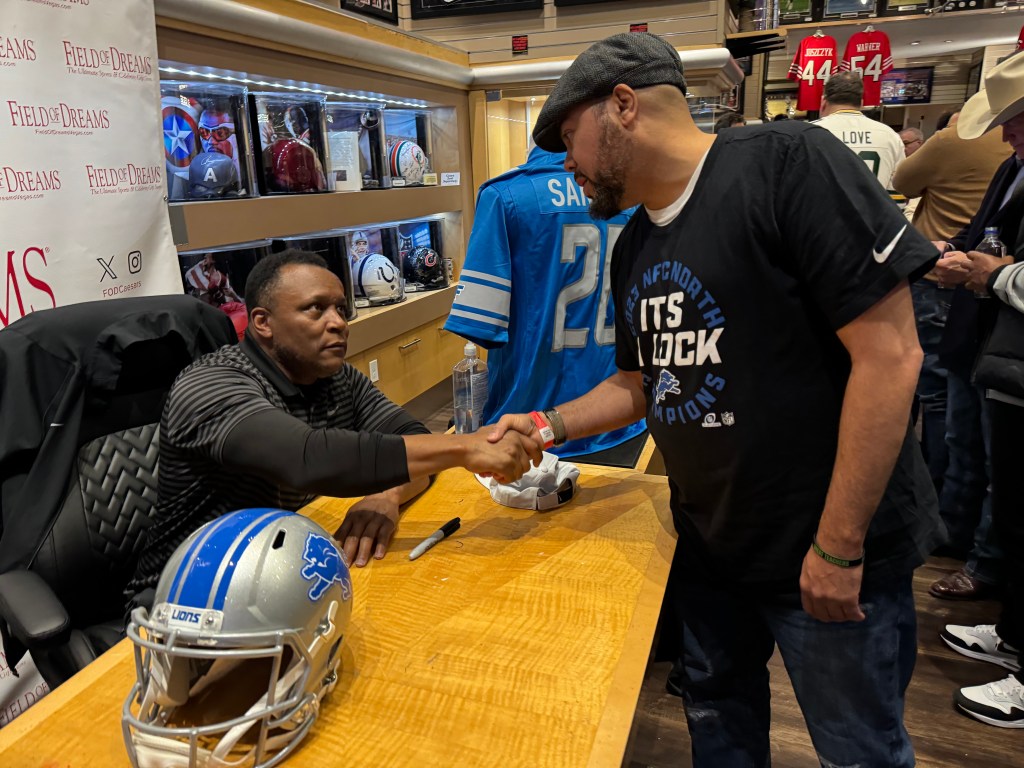
Julian Vasquez Heilig is a professor, writer, and a legit lifelong Detroit Lions fan since 1981. He attended the NFC Championship in San Jose two years ago to support his Cardiac Cats and last year’s playoff loss to the Washington Commanders at Ford Field. He was also at the official Lions partners party during the NFL Draft in Detroit, where he met Robert Porcher and Jason Hanson. Over the years he’s spotted Billy Sims in Times Square, endured the heartbreak of the Lions’ 0–16 season, and treasures his personally autographed Barry Sanders helmet. Beyond education and equity, Julian dabbles in writing about sports, culture, and society.




 Diane Ravitch's blog