Archives for category: Chicago

Day 2 of CTU strike will bring educators, allies to City Hall at 1:30 pm

Some movement at bargaining table Thursday, but no agreement on special ed needs, classroom overcrowding, salary floor for low-wage teaching assistants, staffing shortages.

CHICAGO—Educators and frontline staff will hit the picket lines for a second day today, as rank and file union members attempt to bargain a fair contract for 25,000 CTU teachers, clinicians, teaching assistants and support staff. While some progress was made at the bargaining table Thursday, the union and CPS ramain far apart on efforts to reign in exploding class sizes and find a path to remedying dire shortages of school nurses, social workers, special education teachers and other critical staff.

Late this afternoon, CPS refused to discuss a proposal on special education needs with the expert special education teachers and clinicians at the table who had crafted the proposal, because not every CTU officer was present. The CTU’s 40+ member rank and file bargaining team must sign off on any tentative agreement to be sent to members for approval.

Today’s schedule: Thursday, Oct. 17


  • 1:30 p.m.: Mass rally and march, City Hall, 121 N. LaSalle St. with CTU rank and file, grassroots community groups, CTU officers, elected officials, allies.

Fast facts:

  • The State’s new equity-based school funding formula is sending a billion-plus additional dollars each year to CPS to reduce sizes of chronically overcrowded classes, support students in poverty and increase services to special education students and English language learners.
  • CPS passed the largest budget in its history this year: $7.7 billion. Yet CPS cut the amount of dollars it is spending in school communities this year.
  • Juarez High School in Pilsen, which enrolls over 1,300 overwhelmingly low-income Latinx students, saw its school budget cut this year by $840,000, costing the school nine teaching and staff positions.
  • CPS cut the budgets of more than 200 CPS schools by at least $100,000, and cut the budgets of more than 40 schools by more than half a million dollars for this school year.
  • CTU educators are fighting for better wages, smaller class sizes, adequate staffing, and educational justice for students and their families. They want the additional state revenue CPS receives to increase equity to go to school communities and student needs.
  • Almost half of CPS’ students are Latinx. Yet the district has acute shortages of ELL teachers—teachers for English language learners—and is severely short of bilingual social workers. Bilingual education services are chronically short of both educators and resources—a key issue at the bargaining table.
  • CPS is desperately short of school nurses, social workers, librarians, special education teachers, ELL teachers and more. CPS has staffing ratios three to five times higher than those recommended by national professional organizations and best practices. Fewer than 115 school nurses serve over 500 schools. Most schools have a nurse only one day a week.
  • One out of four schools has a librarian—and that number falls to barely one in ten for Black-majority schools. A decade ago, most schools had a librarian.
  • CPS is desperately short of social workers and special education teachers, even as CPS is under the oversight of a state monitor for shortchanging its diverse learners.
  • This year, more than 1,300 CPS classes are overcrowded under CPS’ own high class caps, up from more than a thousand overcrowded classrooms last year.
  • Almost 25% of elementary students attend overcrowded classes, with some kindergarten classes topping 40 students. Roughly 35% of high school students are enrolled in overcrowded classes; at schools like Simeon, virtually every core class is overcrowded, with math, social studies and world language classes topping 39 students.
  • The CTU’s school clerks and teaching assistants earn wages as low as $28,000/year—so low the children of two-thirds qualify for free and reduced lunch under federal poverty guidelines. Over 1,100 cannot afford to rent a two-bedroom apartment at prevailing rent rates in ANY zip code in the city. In year 5 of the mayor’s proposed contract, most of those workers would still be earning poverty wages. And in the last ten years, NO CTU member’s wages have kept pace with the inflation rate.
  • Candidate Lightfoot ran on a platform calling for equity and educational justice—including a nurse, a social worker and a librarian in every school—all proposals her negotiating team has rejected at the table. She also ran in support of an elected, representative school board—but moved to stall that legislation in the Illinois Senate after she was elected.
  • CPS has said it has budgeted to improve staffing shortages, but refuses to put those commitments in writing in an enforceable contract. The union wants those promises in writing, in an enforceable contract—the only way we have to hold CPS and the 5th floor to their promises.


 

Mike Klonsky just posted this as he was leaving to bring coffee and donuts to striking teachers, including his daughter.

I hope this strike has a good outcome for both the teachers and the new mayor. She is not Rahm Emanuel. She inherited the debt for Rahm’s two terms of hostility to the city’s public schools and their teachers.

Mike included this quote:

Yesterday, the parent group, Raise Your Hand, issued a statement on the strike which made a lot of sense.

Please remember to be good to each other out there. At the end of this contract negotiation, we are all parts of school communities that are part of a larger community, the Chicago Public Schools. Our children need all of us working together.


The Chicago Teachers Union announced that it would begin a strike on Thursday.

Mayor Lori Lightfoot is paying the price for years of neglect under Mayor Rahm Emanuel and Mayor Richard Daley.

Teachers in Chicago announced Wednesday evening that they would go on strike, forcing the cancellation of classes for more than 300,000 public school students in the nation’s third-largest district starting Thursday.

The strike threatened to upend life in the city, as parents raced to make arrangements for child care and as city officials began to activate a contingency plan for supervising and feeding students in school buildings.

The strike in Chicago is the latest in a string of more than a dozen major walkouts by teachers across the country since early last year. It is an important early test for Mayor Lori Lightfoot, who was elected this year after a campaign in which she called for more nurses and social workers in the city’s schools — some of the very changes Chicago’s teachers are seeking now.

The city and the Chicago Teachers Union, which represents more than 20,000 educators, had been in tense contract negotiations for months, and there had been signs of progress in recent days. But as a midnight deadline approached on Wednesday with no deal, Ms. Lightfoot canceled Thursday classes and both sides signaled that a walkout was inevitable.

The split between the city and the union stretches beyond traditional debates over pay and benefits, though representatives for each side disputed details of what had been offered during negotiations and what the exact points of contention were now.

The city said that it has offered teachers pay raises totaling 16 percent over a five-year contract, while union leaders have called for increases of 15 percent over a shorter three-year term. More pressing, union leaders say, are their calls for a promise — in writing — of smaller class sizes, more paid time to prepare lessons and the hiring of more school nurses, social workers, librarians and counselors. Other issues, including affordable housing provisions and protections for immigrant students, have also been raised.

The strike is the first for Chicago’s school system since 2012, when teachers walked out for seven days as part of a defining battle with the city’s previous administration.

About 7,500 school support employees represented by a different union also rejected a contract offer and planned to go on strike Thursday. Those workers include security officers, bus aides, custodians and special education classroom assistants.


Chicago Teachers Union

NEWS ADVISORY:
For Immediate Release| ctulocal1.org

CONTACT: Chris Geovanis, 312-329-6250, 312-446-4939 (m), ChrisGeovanis@ctulocal1.org

  • 7:00 a.m., Thurs. Oct. 10: Sharkey, charter teachers to announce strike date
    Passages charter school, 1643 W. Bryn Mawr Ave., Chicago

CTU president to join charter teachers as Passages announces strike date

CEO for lone CPS-funded charter earns equal to CPS CEO who oversees 500+ schools, as management undermines special ed, English language supports and sanctuary for immigrant/refugee students.

CHICAGO—After months of fruitless negotiations, CTU bargaining team members at Passages Charter School will announce a strike date at 7:00 a.m. this Thursday, October 10 at the school, located at 1643 W. Bryn Mawr. They’ll be joined by CTU President Jesse Sharkey, as tens of thousands of CTU members in CPS district-run schools brace for a possible strike next week.

Passages’ students speak dozens of languages, and come from across Mexico, Central and South America, Asia and the African continent. Close to 70 percent are low-income. Over half are Black, Latinx or other children of color. Almost four in ten have limited English skills, and the school has one of the highest percentages of refugee students in CPS.

Yet charter holder Asian Human Services, which owns and runs the school, continues to refuse to even bargain over, let alone agree to, sanctuary language to protect the school’s immigrant and refugee students.

“Last year, every union charter school we bargained with agreed to sanctuary language,” said CTU-ACTS Chair Chris Baehrend. “The CTU has even reached a tentative agreement with CPS around sanctuary language in district-run schools. But Asian Human Services, which has a mission of helping refugees and immigrants, refuses to even bargain with us over this critical issue. Many of our students come from immigrant and refugee families. They need these protections—especially in the era of Trump and with the huge carve-outs that remain in Rahm Emanuel’s ‘Welcoming City’ sanctuary ordinance.”

Staffing is also a critical issue. The school’s chronic shortage of teachers and paraprofessionals for English language learners and special education students is approaching a crisis level for students, creating high and destabilizing turn-over and harsh working conditions for remaining educators. Those educators voted unanimously to authorize a strike on September 23.

According to IRS data for the charter holder, Asian Human Services, CEO Craig Maki made $247,725 plus $16,000 in additional compensation for the latest year available. Yet Passages pays teachers at the school 28% less than their colleagues at CPS district-run schools.

# # #

The Chicago Teachers Union represents nearly 25,000 teachers and educational support personnel working in schools funded by City of Chicago School District 299, and by extension, the nearly 400,000 students and families they serve. The CTU is an affiliate of the American Federation of Teachers and the Illinois Federation of Teachers and is the third-largest teachers local in the United States. For more information, please visit the CTU website at www.ctulocal1.org.


Jan Resseger reviews fifteen years of corporate education reform led by Arne Duncan and Rahm Emanuel and finds failure, disruption, and racism.

It started in 2004 when Arne launched his Renaissance 2010 initiative, pledging to close 100 “failing schools” and replace them, in large part with charter schools. Rahm continued it by closing 49 schools on a single day.

Resseger relies on the brilliant analysis of the school closings by Eve Ewing, where she showed the pain inflicted on black families and communities by the closings.

Corporate school reform in Chicago, while claiming to be neutral and based on data, has always operated with racist implications. Ewing provides the numbers: “Of the students who would be affected by the closures, 88 percent were black; 90 percent of the schools were majority black, and 71 percent had mostly black teachers—a big deal in a country where 84 percent of public school teachers are white.”(Ghosts in the Schoolyard, p. 5).

Resseger then turns to a new study by Stephanie Farmer of Roosevelt University, which found that the city’s school-based budgeting disadvantaged the poorest schools, where black children were concentrated.

A new report from Roosevelt University sociologist, Stephanie Farmer now documents that Student Based Budgeting Concentrates Low Budget Schools in Chicago’s Black Neighborhoods.

Farmer explains: “In 2014, Chicago Public Schools (CPS) adopted a system-wide Student Based Budgeting model for determining individual school budgets… Our findings show that CPS’ putatively color-blind Student Based Budgeting reproduces racial inequality by concentrating low-budget public schools almost exclusively in Chicago’s Black neighborhoods…  Since the 1990s, the Chicago Board of Education (CBOE) has adopted various reforms to make Chicago Public Schools work more like a business than a public good.  CBOE’s school choice reform of the early 2000s created a marketplace of schools by closing neighborhood public schools to make way for new types of schools, many of which were privatized charter schools.”

There is a rumor in Washington that Rahm wants to be Secretary of Education in the next Democratic Administration. Nothing in his record qualifies him for the job. He failed. Arne Duncan failed. The nation is living  with the consequences of their failed ideas, which were inherited from George W. Bush, Rod Paige, Sandy Kreisler, and Margaret Spellings.


If you live anywhere near Wellesley College in Wellesley, Massachusetts, I hope you will join me to hear Eve Ewing speak on October 17 at Jewett Arts Center at 7:30 pm.

She is speaking in an annual lecture series that I established a few years ago to bring some of the most important voices in education today to the campus.

Eve Ewing is one of them.

Ewing is an amazing woman who wrote a fabulous book called Ghosts in the Schoolyard: Racism and School Closings on Chicago’s South Side.

I reviewed the book here.

She was teaching in one of the 49 schools that Rahm Emanuel closed on a single day, an incredibly cruel, arrogant, and heartless act.

She then went on to earn her doctorate and is now a college professor.

The media writes about “failing schools” in Chicago, but Ewing understands that schools are part of a community’s historic identity. Her writing captures the pain that people feel when their identity is torn away from them by  politicians and faceless bureaucrats.

If you can read The New York Times online, you will enjoy this article about Ewing. 

Some excerpts:

Dr. Ewing, 32, can be a hard woman to slow down, keep track of, or sum up. To keep it simple, you could just say she’s a sociologist at the University of Chicago’s School of Social Service Administration…

But that would leave out the seemingly million other things she is doing.

In the past year, she has also published an acclaimed book of poetry; collaborated on a play about the poet Gwendolyn Brooks; and co-hosted the Chicago Poetry Block Party, a community festival she helped create. She also sold a middle-grade novel, coming in 2020; signed up as a consulting producer on W. Kamau Bell’s CNN series, “United Shades of America”; and began hosting a new podcast, “Bughouse Square,” inspired by the archives of another Chicago gadfly, Studs Terkel.

And then there’s her gig with Marvel Comics. In August, Dr. Ewing caused minor pandemonium on the internet when she announced that she had been hired to write “Ironheart,” the first solo title featuring its character Riri Williams, black girl genius from Chicago.

It’s tempting to see Dr. Ewing, who holds a doctorate from Harvard, as a real-life, grown-up version of Riri, a prodigy who builds her own Iron Man suit in her M.I.T. dorm room, without the benefit of Tony Stark’s millions….

Her poetry collection, “Electric Arches,” an Afro-futurist exploration of black girlhood, unfolds against the real and fantastical geography of Chicago, and includes plenty of homespun superpower technology. There are flying bikes, freedom-fighting space invaders, and,“The Device,” a machine created by “a hive mind of black nerds” that allows communication with the ancestors. (Publishers Weekly called it “a stunning debut.”)

In “Ghosts in the Schoolyard,” published by the University of Chicago Press, Dr. Ewing uses the more staid tools of social science to dive deep into one of the most contentious episodes in the city’s recent history: the 2013 school closure plan that ultimately resulted in the shuttering of 49 public schools, most of them in African-American neighborhoods.

It’s a scholarly book, and also an unabashedly personal one. It focuses on Bronzeville, the storied African-American neighborhood on the South Side, where Dr. Ewing, as she notes in an impassioned introduction, taught middle school for three years after graduating from the University of Chicago.

She looks at the history of discriminatory housing and education policies that gave rise to intensely segregated, unequal, often overcrowded schools, which then suffered steeply declining enrollments after the public housing towers that once dominated the neighborhood were demolished.

I am excited to meet Eve Ewing. She is one of the heroes of the Resistance in my new book Slaying Goliath.  Because of her book, Rahm Emanuel will be remembered not as a “reformer” but as a disrupter who cruelly destroyed schools, communities, and the lives of children and families. Eve Ewing gets the last word.

Come to Wellesley on October 17 to hear her speak.

You will be glad you did.


NEWS RELEASE:
For Immediate Release
| ctulocal1.org

CONTACT: Ronnie Reese 312-329-6235, RonnieReese@ctulocal1.org

Ninety-four percent of CTU members vote to authorize strike for schools Chicago’s students deserve

Chicago Teachers Union House of Delegates governing body will set strike date at Wednesday, Oct. 2, meeting.

CHICAGO, September 26, 2019—The Chicago Teachers Union this evening released totals of the Sept. 24-26 strike authorization vote. The CTU Rules and Election Committee reported that as of 9:30 p.m., the Union passed the 75 percent threshold of members voting “yes.” Ninety-four percent of teachers, clinicians, PSRPs, nurses, librarians voted to authorize a strike to win the schools Chicago’s students deserve.

The vote stands as a mandate from CTU members for Chicago Public Schools to uphold promises of equity and educational justice made by Mayor Lori Lightfoot, and that those promises must be in writing in an enforceable contract. This is the only way to hold the district to its word after decades of austerity, budget cuts, understaffing, school closings and privatization.

The CTU House of Delegates will convene for its next scheduled meeting on Wednesday, Oct. 2, to set a strike date. The earliest the Union could strike is Oct. 7. The work stoppage would be the third since 2011 and the first under Lightfoot.

“Our school communities are desperately short of nurses, social workers, psychologists, counselors and other support staff, even as our students struggle with high levels of trauma driven by poverty and neighborhood violence,” CTU President Jesse Sharkey said. “This vote represents a true mandate for change.”

“And all of our members vote, not just 30 percent of the electorate,” Sharkey said.

Facebook live stream

Bargaining Update

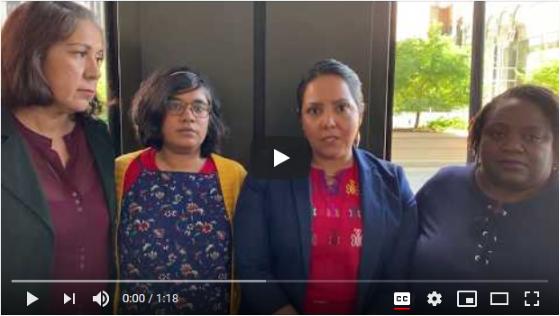
Rank-and-file members met with the district today to negotiate over early childhood and bilingual education provisions. They were sorely disappointed at the non-engagement from the other side. Watch their explanation in this video:

###

The Chicago Teachers Union represents nearly 25,000 teachers and educational support personnel working in schools funded by City of Chicago School District 299, and by extension, the nearly 400,000 students and families they serve. The CTU is an affiliate of the American Federation of Teachers and the Illinois Federation of Teachers and is the third-largest teachers local in the United States. For more information please visit the CTU website at www.ctulocal1.org.


Mike Klonsky writes here about the advice of former Duncan aide Peter Cunningham to Chicago: When trying to revive devastated black communities, bring in “new people.”

Klonsky begins:

Just when you think we’ve heard the last from the disastrous duo of Arne Duncan and Peter Cunningham, they become media go-to guys on (of all things) gun violence and community development.

Remember, this was the pair that ran the Chicago Public Schools and the U.S. Dept. of Education for years, promoting austerity, mass school closings, privatization and uncapped expansion of privately-run charter schools in black communities. Their policies helped lead to the devastation of urban school districts and contributed to school re-segregation and the push-out of thousands of black and poor families from cities like Chicago.

Why media would turn to them for meaningful solutions to the problems they helped create is beyond me. But here we are.

Cunningham’s Sun-Times commentary yesterday (To revive declining South and West Side neighborhoods, import people) was the most egregious. The headline says it all. Now that 300,000 African-Americans have been pushed out of Chicago over the past few decades, Cunningham sees their replacement with thousands of “new, middle-class people” as the city’s salvation.

How unoriginal. I have referred to it as the whitenization of the cities. But it’s deeper than that.

Read on.


Mike Klonsky, veteran activist in Chicago, reports that Governor J.B. Pritzker signed a bill abolishing the state Charter School Commission.

As Mike says, “We count our victories one by one,” and this is a big one. It spells the end to the reckless charter expansion encouraged by Republican Governor Bruce Rauner and Democratic Mayor of Chicago Rahm Emanuel, concentrated in Chicago. Rauner and Rahm believed in the magic of privatization.

No doubt about it, the glow is off the charter school hoax. The bloom is off the rose, or as we said in years past in New York City, the bloom is off the berg.

Since 2011, when the Commission was established and signed into law by former Gov. Pat Quinn (yes a Democrat), I’ve worked with several struggling school districts around the state when they’ve had to go before the Commission to plead their case. Together we built a research base which was used to debunk the false claims of the charter operators in an effort to stop invasions by powerful, charter school networks. In some cases we were successful and others we weren’t.

I found the decisions by commission members to be be completely arbitrary and biased. Keep in mind that the commission was originally the dream of the American Legislative Exchange Council (ALEC) and that the money for the commission’s original staffing and other expenses came from the pro-charter Walton Foundation. The Commission has been riddled with conflicts of interest from the start.

Commission members have been generally charter-friendly political appointees chosen by the governor and approved by the Illinois State Board of Education (ISBE). In the eight years prior to Pritzker’s election, commission members were handpicked by Rauner, a right-wing governor hellbent on starving and ultimately taking over local school systems, including CPS, using charters and school vouchers as weapons.

But Rauner wasn’t the only problem. You might remember when the Commission, acting under pressure from House Speaker Mike Madigan, reversed CPS’s rejection of Concept (Gulen) charter schools’ application at a time when the FBI was investigating Concept’s operations. Records show that the Commission’s Springfield lobbyist, Liz Brown-Reeves, a former Madigan aide, accompanied him on his Gulen sponsored trip to Turkey in 2012….

Currently, there are 140 charter schools in Illinois, 126 of which operate within Chicago Public Schools diverting money, students and teachers away from regular CPS schools. So far there is no evidence that these charters outperform the CPS schools they are trying to replace. In the CPS budget for next year, the district expects to receive $4 million less funding than expected from the state this past school year because “diversions to schools approved by the Illinois State Charter School Commission (SCSC) were higher than expected.”

The power to overrule the decisions of local districts now goes to the state board, which is appointed by the governor.

Jan Resseger reminded me of this moving paragraph in Eve Ewing’s profound book Ghosts in the Schoolyard: Racism and School Closings on Chicago’s South Side:


Understanding these tropes of death and mourning as they pertain not to the people we love, but to the places where we loved them, has a particular gravity during a time when the deaths of black people at the hands of the state—through such mechanisms as police violence and mass incarceration—are receiving renewed attention. As the people of Bronzeville understand, the death of a school and the death of a person at the barrel of a gun are not the same thing, but they also are the same thing. The people of Bronzeville understand that a school is more than a school. A school is the site of a history and a pillar of black pride in a racist city. A school is a safe place to be. A school is a place where you find family. A school is a home. So when they come for your schools, they’re coming for you. And after you’re gone, they’d prefer you be forgotten. (Ghosts in the Schoolyard, pp. 155-156)

I am pleased to announce that Eve Ewing has been chosen to speak this fall in the annual Diane Silvers Ravitch Lecture Series at Wellesley College.  The event is open to the public and admission is free.