Archives for category: Charter Schools


Valerie Strauss is not surprised yet disappointed that Betsy DeVos kicked off her “back to school tour” at a religious school in Milwaukee, flaunting her contempt for the vast majority of students who attend public schools. By doing so, she showed her agenda: privatization of public schools and transfer of public money to religious schools.

https://www.washingtonpost.com/education/2019/09/16/where-betsy-devos-started-her-back-to-school-tour-says-it-all-about-her-agenda/

It is ironic that she chose Milwaukee to demonstrate the benefits of school choice. Milwaukee has had choice for three decades: charters, vouchers, and a shrinking public school sector.

All three sectors are faring poorly. On the National Assessment of Educational Progress, Milwaukee is one of the lowest performing cities in the nation.  Students in religious schools, charters, and public schools are doing poorly.

Competition raised no boats. Milwaukee demonstrates the failure of school choice.

Betsy DeVos either doesn’t know or doesn’t care.


Cory Booker was recently interviewed by the Washington Post, and he was asked about his past support for vouchers and his friendship with Betsy DeVos. 

He insisted that he turned against vouchers in 2006, and he barely remembered any connection to DeVos. When someone asked if he had flown to Michigan in 2000 at the request of Dick and Betsy DeVos to support their voucher referendum, he at first denied it, then when shown a tape, he said he didn’t remember it.

He opposed DeVos’ nomination to be Secretary of Education in 2017.

DeVos’s allies are stunned by what they call his turnabout. They view Booker’s effort to distance himself from her and her agenda as a betrayal. 

Now that it is politically inconvenient, he has distanced himself from the issue and those who helped launch his political career,” said William E. Oberndorf, who was chairman of the American Education Reform Council when DeVos and Booker were on the board. “Cory once told me that his father used to say to him, ‘Never forget the girl who brought you to the dance.’ I can only conclude that Cory not only forgot one of the girls who brought him to the dance, he missed his . . . moment to stand up for an issue he always said he believed in.” 

Booker’s advocacy for vouchers won him the financial support of conservative Republicans who were delighted to see a black Democratic Mayor supporting their cause.

Booker’s political career took off as a parade of wealthy philanthropists, hedge fund managers and others who supported DeVos’s “school choice” viewpoint poured money into his campaigns and pet projects. 

In 2000, with their voucher referendum on the ballot, the DeVos family invited Booker to debate the legislative director of the ACLU. She kept a tape of the debate and shared it with the Post. The voucher proposal went down to a crushing defeat by 3-1.

In September 2000, Booker delivered a blistering pro-voucher speech to the Manhattan Institute, a conservative policy group. 

Booker’s 2006 race for mayor of Newark won the support of many conservative Republicans. He proposed tuition tax credits (a form of voucher) and went all-in for charters.

When he ran for the Senate in 2014 in a special election, he was helped by Jared Kushner and Ivanka Trump, who held a fundraiser for him.

As recently as May 2016, Booker appeared again before the group that DeVos chaired, the American Federation for Children. After DeVos delivered a speech defending herself against attacks from Democrats, Oberndorf warmly introduced Booker, praising his commitment to school choice.

Booker spoke proudly about the growing number of students in Newark’s charter schools, saying, “This mission of this organization is the mission of our nation. . . . I have been involved with this organization for 10 years and I have seen the sacred honor of those here.” 

As Booker finished his speech, the audience gave him a standing ovation. To DeVos and her allies, it seemed that Booker was still firmly in the fold, according to Oberndorf. 

But a year later, he opposed DeVos’ nomination.

Booker’s vote shattered his career-long alliance with DeVos and stunned her supporters. 

“Cory gained a great deal of political support thanks to his association with Betsy and other supporters,” said Mitchell, the president of the American Education Reform Council when Booker and DeVos were board members. “His abandonment of school choice and of Betsy makes it clear that his professed commitment to the issue and his friendship with her were fueled by political ambition, not principle.” 

Betsy helped to fund his political career. But it was no longer convenient to be her friend.


Eric Blanc asks in Jacobin why Elizabeth Warren does not have a plan for K-12 schooling. She has expressed various positions on education but her overall policy about testing, charter schools, and accountability are murky at best. He questions how different they are from the Bush-Obama strategies.

Blanc recently wrote a comprehensive book about the wave of teachers’ strikes of 2018-19 called Red State Revolt: The Teachers’ Strike Wave and Working-Class Politics. During the strikes, he traveled the nation to talk to strike leaders and striking teachers to understand what was at stake.

He writes:

Elizabeth Warren has a commendably progressive platform on most issues. But her past approach to public education has been closer to that of free-market reformers than most people realize.

The Massachusetts senator’s track record on education has received little scrutiny. Not only was Warren until recently a proponent of market-driven education reform and so-called teacher accountability, but her current platform silences, staff appointments, and political equivocations raise questions about her commitment to reversing the billionaire-funded onslaught against public schools…

There are good reasons to doubt that a Warren presidency would reverse the policies of privatization and education reform that have decimated American’s school system since the 1990s. For someone whose campaign motto is “Warren has a plan for that,” it’s noteworthythat she has not yet issued any plan for K-12 schools — in contrast with Bernie Sanders’ ambitious Thurgood Marshall Plan for Public Education.

Much of what we do know about Warren’s past and present education proposals, as well as the composition of her staff, should be a cause for concern for teachers, students, and parents.

If Warren wants the support of public school teachers and parents, she must issue a plan that clarifies her plans on testing and privatization.

She needs to be crystal clear about whether she would eliminate the federal mandate for annual testing in grades 3-8, a leftover from George W. Bush’s No Child Left Behind, which has been an expensive dud. The testing has enriched the testing industry but had no effect on student scores.

Warren needs to take a stand on the federal Charter Schools Program, which is Betsy DeVos’ slush fund for corporate charter chain that are already amply funded by billionaires.


Terri Michal is an elected school board member in Birmingham. Betsy DeVos recently gave $25 million to Alabama from the federal Charter Schools Program, which she uses as her personal slush fund.

Federal Grants and Surplus Property: DeVos’s Solution to Help the Students of Birmingham, AL.

By Terri Michal

In Alabama we have a Legislature that appears to be perfectly fine creating legislation that targets our black and brown high poverty students in Birmingham.

We have education organizations and foundations that work against the very schools they are contracted to support.

We have a State Superintendent that is condoning the targeting of our students.

We have a real estate executive that in 2015 actively worked, unbeknownst to Birmingham City Schools (BCS), to get our charter school law passed while at the same time holding a contract to sell surplus properties for the school system. This information was just recently exposed. They are still under contract with BCS.  

Now, thanks to an old organization, the Alabama Coalition for Public Charter Schools, renamed New Schools for Alabama, we can add Betsy DeVos to that dogpile. Like the cherry on top of a sundae, Betsy DeVos is the final piece needed to serve up Birmingham City Public Schools to the power-hungry politicians and the gluttonous corporations they work for.

So, what was it exactly that DeVos did to make their charter school dreams come true? She awarded New Schools for Alabama a $25 million-dollar grant to open 15 charter schools, a majority of which no doubt will be in Birmingham.

However, New Schools wasn’t the only one that got a gift, I did too.  What was it? The Federal grant application that New Schools filed in an effort to receive that CSP Grant. It brought together, in one document, the entire cast of characters that’sworking to undermine public education in Birmingham, Alabama.

When I began reading it, I didn’t really know what I was looking for.

But the first thing that jumped out at me was the fact that they had no problem saying they were targeting Birmingham, along with 3 other districts. Now, finally, for all of those in this city who refuse to believe we are targets for privatization, it’s right there in the application in black and white. I guess we can now put that ‘conspiracy theory’ to rest.

Second, I noticed the people and organizations that wrote letters in support of New Schools for Alabama and the grant that would be undermining our public schools; Alabama Sen. Del Marsh (R), U.S. Sen. Doug Jones (D), State Superintendent Eric Mackey, the Mike and Gillian Goodrich Foundation, the Daniel Foundation, and A+ Education Partnership, just to mention a few.

Third, and possibly the most disturbing, was the fact that the Executive Director of NSFA, Tyler Barnett, used data gathered from our voucher law, the Alabama Accountability Act, to justify targeting our black and brown students for charter schools.  Here’s what he said:

Of Alabama’s 76 state-designated failing schools—meaning, the bottom 6% of schools in academic achievement—72 had at least a 90% poverty rate.  And of the 38,420 students in those failing schools, 96% are Black or Hispanic.

Ninety Six percent are Black or Hispanic!! How in the world can Mr. Barnett, or anyone else for that matter, take this data andthen twist it to blame the schools and/or the students for ‘failing’? Especially knowing the same Sen. Del Marsh that wrote the recommendation letter for this grant was also responsible for bringing us the Accountability Act.  Just as they are targeting our students for charter schools, the Accountability Act targets our black and brown students and labels their schools as failing.

This data is garbage, the only purpose it serves is to strengthen the systemic racism that exists in public education in Alabama. If you are thinking to yourself, ‘it’s the poverty’, it’s not.  Approx. half of our public-school students that live in poverty in Alabama are white.

Finally, the most surprising thing I found was this, in reference to what our charter school law says about acquiring real estate:

Already, this law has been exercised by a charter applicant in Birmingham City Schools, which sold a historic but underutilized school building in the fall of 2018 so that an emerging charter network could restore the building for school use.

Wait, what?  I am a board member for BCS, I would like to think that I’d know if we sold a building for charter school use.We did attempt to sell one property last fall, but the sale fell through in February, a month after the NSFA Federal Grant Application was submitted.

If we were to believe that the information in this federal application were true, and why wouldn’t we, the reason I didn’t know the surplus property was going to be a charter school is, more than likely, because of three little words that come after the buyer’s name on our real estate sale agreement, ‘and/or assigns’.What these three words do is allow the person buying the property to assign the sale to a third party.  So, if it says John Smith and/or assigns, then maybe John Smith is buying it, and maybe he’s just making a quick buck for his services and passing the sale on to a third party.  As a BCS school board member, I don’t really KNOW who’s buying our property.

One bit of information I left out; New Schools for Alabama is still legally the Alabama Coalition for Public Charter Schools(ACPS). This coalition’s sole purpose was to get the charter school law passed in Alabama.  Once it did that, the organization went dormant.

Now they have rebranded themselves with a new name, a new board and a new purpose.  Part of their new purpose is to help prospective charter schools buy and/or lease property. (Surprise!!)

In light of this very generous offering from our public-school hating Secretary of Education, I decided it was time to revisit the old board of ACPCS, just to refresh my memory.  

Right away I came across the name of J. Michael Carpenter.  I can tell you, I was more than a little surprised to find out that it was the same J. Michael Carpenter that founded Bloc Global,the real estate company that Birmingham City Schools has had under contract to sell surplus properties since 2011. Could this be how NSFA knew that we sold property to be utilized as a charter school?

So, let me explain this again in very simple terms.  As a Birmingham City Schools Board member I discovered that the real estate company that we have under contract to sell  our surplus property was, in part,  founded by and currently still under the direction of, the very same person that sat on the board of the coalition that is  responsible for helping write our charter school law and lobbying for its passage. Legally that coalition (ACPCS) is the same entity doing business as New Schools for Alabama. NSFA wrote the CSP Grant Application that stated the BCS board sold property in the fall of 2018 to someone for charter school use.

 Is your head spinning? Well so is mine. I knew none of this information until recently. I’m very concerned and upset that as an elected member of the BCS board I had to spend days doing research to uncover all of this myself.  

Yet, I know this is how things work in Betsy’s world.  The world of charter schools is one big land grab full of backroom deals and shell games. Now, with this new information and the $25 million dollar grant it appears the final piece of the charter school puzzle is in place in Birmingham.

Land???  Check.

All it took to make American education “great again” was two-and-a-half years of Donald Trump and Betsy DeVos.

So saith Betsy DeVos to the Mackinac Republican Leadership Conference in Michigan. 

DeVos vigorously defended charter schools, especially in Detroit, even though most Detroit charters underperform Detroit public schools and are run as profit-making businesses.

DeVos opened Saturday’s program at the Mackinac Republican Leadership Conference by celebrating her mission to spread education freedom across the country. The Michigan native slammed teacher unions and Democratic primary candidates for offering a vision for the education system that will produce worse outcomes for students and cost taxpayers trillions of dollars.

DeVos said she is solely focused on doing what’s best for students, though she has been a frequent target of Democrats running to oppose President Donald Trump in 2020. She said Democrats who criticize the proliferation of charter schools ignores their results and falsely claim they are the “enemy of the people.”

“You’ll hear repeatedly that public charter schools are bad,” DeVos told Republicans Saturday. “The truth is they are the best thing to ever happen to Detroit students.”


Steven Miller of the Texas Monitor reports on the perks for charter executives in Texas.

https://texasmonitor.org/charter-schools-fly-below-the-radar-on-spending-and-transparency-rules/

If you are a charter bigwig or spouse, you can fly first class, a privilege not available to public school employees.

Charter executives are exempt from the rules that apply to public schools. Yet they deign to call themselves “public schools” without surrendering their perks.

Miller writes:

“It’s a treat to fly at the front of the plane, where seats are bigger and fares are roughly double the cost of a coach seat. But for the state’s most prolific charter school operator, first-class air travel is allowed. In addition, the company will pay for the travel of employee spouses, family members and “companions” of executives as well.

“That’s just one of many illustrations of the different rules that apply to charter schools in Texas compared to public schools, where funding for even the most basic needs always seems in short supply.

“IDEA Public Schools, based in Weslaco, has allowed the first-class travel perk for six years. That includes footing the bill for the commute of chief financial officer Wyatt Truscheit, who moved from Mission, Texas, to the Los Angeles area in 2013 and comes to Texas every other week, according to tax records. IDEA also pays for Truscheit’s housing while he works in South Texas.

“IDEA received $319 million in state funding and $71 million in federal money in 2018 to operate its 61 campuses around the state. With its schools in Louisiana, IDEA runs 96 locations in all.

“As a 501c3 nonprofit corporation, IDEA is also allowed to make loans to employees and board members and to do business with relatives of employees.

“In 2015, IDEA bought property from board member and developer Mike Rhodes for $1.7 million. Board member David Earl also received money for serving as counsel for Rhodes in the land deal.”

The charters can engage in business with board members and their families. They do not have to hold open meetings. They are private schools that get public money but operate like private enterprises. Some gig.

Once again, we are reminded that charter schools are a Republican cause, and their champion is Betsy DeVos.

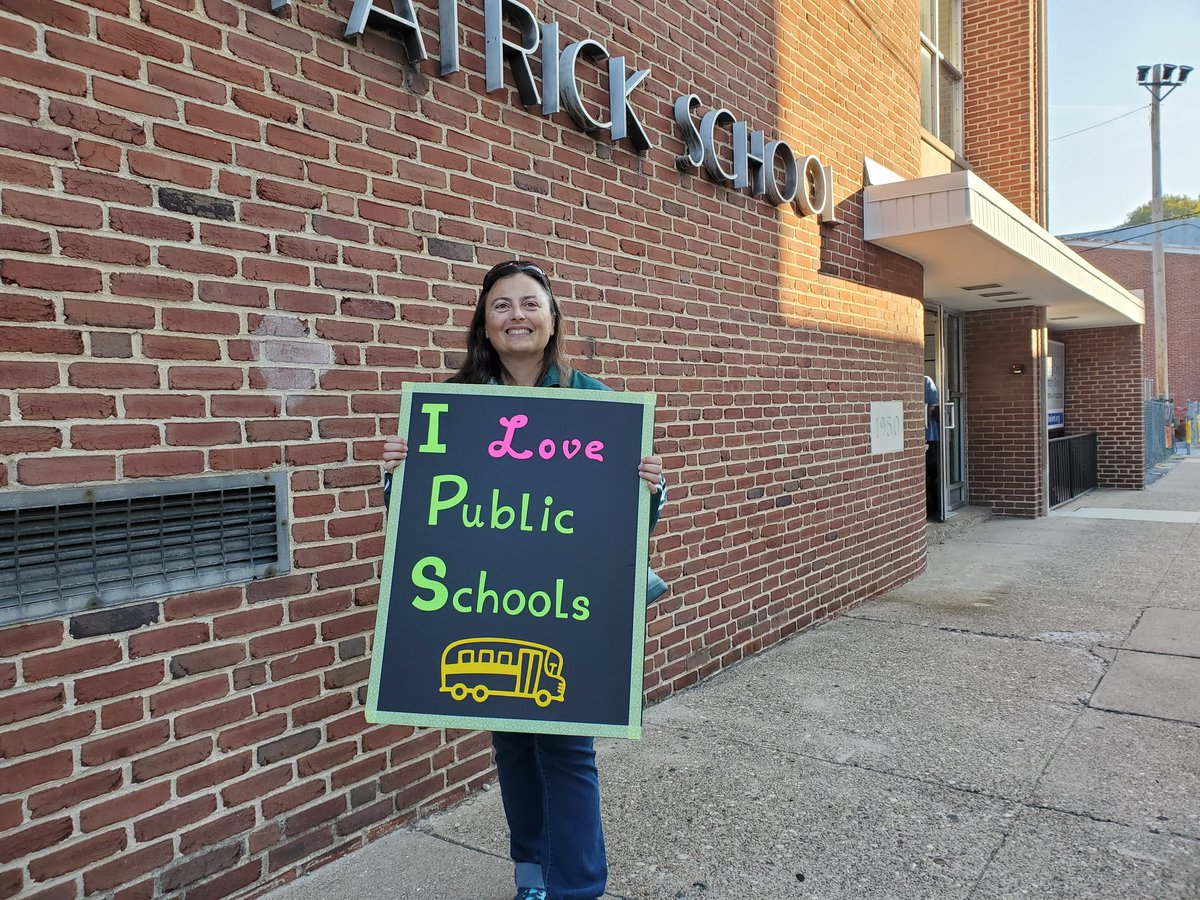
Mike Turzai, Republican Speaker of the House in Pennsylvania, was on his way to a meeting with Betsy DeVos when he encountered some public school teachers, who were picketing with signs saying they loved their public schools.

Turzai found this deeply offensive, and he proceeded to lambaste the teachers as a “special interest group” defending a “monopoly.”

In the video, Turzai praised charter schools, which receive government funding but operate independently of the public school system, saying that in charter schools. “you have to care about each child, not about the monopoly.” He then claimed that the public school advocates were part of a monopoly 

What you care about is a monopoly and special interests,” said Turzai, whose district encompasses the North Hills municipalities of McCandless, Pine, Marshall, Bradford Woods, and Franklin Park. 

One of the advocates then said, “I am little offended from that,” to which Turzai responded, pointing to the posters they were holding, “Oh, I am offended by your posters.”

One poster read “I love public schools.” The other read “Public Money for Public Schools.”

We ♥ our teachers.

Sincerely,
All of Pennsylvania

View image on Twitter

Steven Singer has written recently about the origins of charter schools. He insists that Albert Shanker, president of the AFT, was not their father.

The real fathers of this first big step towards privatization, he writes, were Ted Kolderie and Joe Nathan of Minnesota, who wrote the nation’s first charter school law and opened the door wide for entrepreneurs, grifters, and attacks on unions.

Singer is a flame-thrower in this post, because he has come to see that behind the “progressive” facade of charters lurks Betsy DeVos, the Walton Family, the Koch brothers, ALEC, and a galaxy of public school haters.

He begins:

If bad ideas can be said to have fathers, then charter schools have two.

And I’m not talking about greed and racism.

No, I mean two flesh and blood men who did more than any others to give this terrible idea life – Minnesota ideologues Ted Kolderie, 89, and Joe Nathan, 71.

In my article “Charter Schools Were Never a Good Idea. They Were a Corporate Plot All Along,” I wrote about Kolderie’s role but neglected to mention Nathan’s.

And of the two men, Nathan has actually commented on this blog.

He flamed on your humble narrator when I dared to say that charter schools and voucher schools are virtually identical.

I guess he didn’t like me connecting “liberal” charters with “conservative” vouchers. And in the years since, with Trump’s universally hated Billionaire Education Secretary Betsy Devos assuming the face of both regressive policies, he was right to fear the public relations nightmare for his brainchild, the charter school.

It’s kind of amazing that these two white men tried to convince scores of minorities that giving up self-governance of their children’s schools is in their own best interests, that children of color don’t need the same services white kids routinely get at their neighborhood public schools and that letting appointed bureaucrats decide whether your child actually gets to enroll in their school is somehow school choice!

But now that Nathan and Kolderie’s progeny policy initiative is waning in popularity, the NAACP and Black Lives Matter are calling for moratoriums on new charters and even progressive politicians are calling for legislative oversight, it’s important that people know exactly who is responsible for this monster.

And more than anyone else, that’s Kolderie and Nathan.

Over the last three decades, Nathan has made a career of sabotaging authentic public schools while pushing for school privatization.

He is director of the Center for School Change, a Minneapolis charter school cheerleading organization, that’s received at least $1,317,813 in grants to undermine neighborhood schools and replace them with fly-by-night privatized monstrosities.

He’s written extensively in newspapers around the country and nationwide magazines and Websites like the Huffington Post.

Read it all. Joe Nathan has frequently commented on this blog, defending charters as just a different kind of public school. I disagree vigorously because it is obvious by now that charters have become vehicles for busting unions (more than 90% are non-union), charters are more segregated than public schools (especially in Minnesota, where there are charters specifically for children of different ethnic and racial groups), and they remove democratic control in communities of color. The proliferation of corporate charter chains adds to their reputation as destroyers of democracy.

Bottom line is that Walton money, Koch money, DeVos money is not meant to advance public education but to eliminate it.

There is a reason that the Democratic candidates for president are distancing themselves from the charter idea. They understand that they can’t support the DeVos agenda. Betsy did us all a favor by removing the mask.

William J. Gumbert has posted a series of analyses of charter school performance and demographics in Texas, based on public data compiled by the state. This is a summary of earlier posts. You may recall from an earlier post about Houston that the state commissioner of education is threatening to take control of the Houston Independent School District because of the persistently low rest scores of one school, Wheatley High School. Please check out its demographics in the chart below.


By:  William J. Gumbert


Ever since the “A Nation at Risk: The Imperative for Educational Reform” report was released in 1983, corporate education reformers and privately funded, “public policy” organizations have promoted the “privatization of public schools”.  In 1995, the Texas Legislature gave in to the political rhetoric and authorized privately-operated charters (“charters”) to open and independently operate public schools with taxpayer funding.  As a result, taxpayers are funding a “dual education system” that consists of locally governed, community-based school districts and State approved charters.

Charters promised to improve student results by transferring the control of public schools to private organizations that had more autonomy to expend taxpayer funding without community oversight.  However, charters have not fulfilled their promise.  Despite the State funneling over $22.5 billion of taxpayer funding to privately-operated charters over the last 24 years, charters have not to produced better student outcomes than community-based school districts.   Most recently, 86.2% of community-based school districts received an “A” or “B” rating pursuant to the State’s 2019 Academic Accountability Ratings.  In comparison, only 58.6% of charters received an “A” or “B” rating. In addition, almost 1 of every 5 charters received a “D” or “F” rating from the State.

Despite the Perception – Charters Serve a Different Student Population:   Charter advocates have consistently promoted that charters serve a higher percentage of “economically-disadvantaged” and “minority” students from underserved communities.  But charters have also routinely stated that their student populations closely correlate with the school districts they choose to operate within. In this regard, Houston ISD and Dallas ISD collectively have over 75,000 students enrolled in State approved charters and both districts serve student populations that are at least 80% “economically-disadvantaged” and “minority”.   Thus, it is fair to say that both charters and school districts serve a high percentage of “economically-disadvantaged” and “minority” students.  However, the similarities in the types of students served by charters and school districts stop here.

The reality is that charters “underserve” many of the student subgroups that the “No Child Left Behind Act” identified as having potential achievement, opportunity or learning gaps in comparison to their peers.  The Texas Education Agency (“TEA”) tracks the performance of student subgroups in Texas public schools and while “economically-disadvantaged” and “minority” students are identified as subgroups, so are “at risk”, “special education”, “disciplinary” and “mobile” students.

With the needs of each student being unique, it is important to emphasize that a student can be included in more than one subgroup.   For example, a student can be identified solely as “economically-disadvantaged” or a student can be “economically-disadvantaged”, “at risk” and “mobile”.  The more subgroups that are applicable to a student, the more challenging it becomes to ensure that student is successful.   I highlight that “challenging” is not referenced as an excuse for schools to have low student performance, but rather to recognize the additional time, effort, care and resources that are required to help certain students overcome adverse circumstances and obtain a quality education.

A review of the student subgroups reported by TEA shows that privately-operated charters enroll a significantly lower percentage of “at risk”, “disciplinary placement” and “special education’ students than community-based school districts.  TEA data also demonstrates that charters enroll students with significantly lower “student mobility”.   Why?  It is hard to definitively say. But these types of students have proven to be more costly to serve, require the most effort to achieve good “test scores” and are the least likely to continue on the “road to college”.  It may also be that charters do not actively recruit students in these subgroups.  Either way, here are the facts.

 “At Risk” Students:  Students identified as “at risk” of dropping out are performing below academic standards and/or are confronting other challenges.  TEA’s definition of “at risk” includes a student that:

  • Did not perform satisfactorily on a readiness or assessment instrument;
  • Has a grade below 70 in 2 or more subjects in the foundation curriculum for the preceding or current school year;
  • Is of limited English proficiency;
  • Was not advanced from one grade level to the next for one or more school years; and
  • Has been placed in an alternative education program in the preceding or current school year.

As shown below, despite having a large presence in each of the 5 urban school districts listed below, some of the largest charters enroll 19.3% fewer “at risk” students.   In other words, for every 1,000- seat school campus, the school districts serve 193 more students that have been identified as “at risk” of dropping out.   While it may be surprising to some, the listed charters also serve a lower percentage of “at risk” students than the statewide average.


Privately-Operated Charter “At Risk”

Students

School District “At Risk”

Students

IDEA Public Schools 45.9% Houston ISD 71.7%
Harmony School of Excellence – Houston 43.5% Dallas ISD 63.2%
KIPP, Inc. – Houston 46.7% Austin ISD 51.3%
Uplift Education 54.8% San Antonio ISD 73.5%
YES Prep. 50.2% Fort Worth ISD 77.8%
Average – 5 Charters 48.2% Average – 5 School Districts 67.5%
5 Charters: Avg. Per 1,000 Seat Campus 482 Students 5 Districts:  Avg. Per 1,000 Seat Campus 675 Students
                                                                   State Average:   50.8% or 508 Students  


Disciplinary Placements:  TEA data shows that 73,713 students have been identified as “Disciplinary Placements” in public schools.  These are students that have previously had behavioral issues or been placed in a District Alternative Education Program (“DAEP”).  By law, privately-operated charters can exclude enrollment to this student subgroup and most charters do. In fact, charter proponents have previously stated that many charters are not prepared and could not afford to serve these students.  As such, the responsibility to deploy the educational services and resources needed to serve “disciplinary” students resides mostly with school districts.  Once again, despite having a large presence in the same 5 school districts, the same charters served only 11 “disciplinary” students and the school districts welcomed 6,532 “disciplinary” students.

Privately-Operated Charter Discipline

Students

School District Discipline

Students

IDEA Public Schools 0 Houston ISD 1,996
Harmony School of Excellence – Houston 0 Dallas ISD 1,843
KIPP, Inc. – Houston 0 Austin ISD 1,140
Uplift Education 0 San Antonio ISD 879
YES Prep. 11 Fort Worth ISD 674
  Total – 5 Charters 11   Total – 5 School Districts 6,532


 Special Education:  Students identified with physical or learning disabilities comprise an average of 9.1% of all students in Texas public schools.  But at the same charters listed below, only 6.2% of students are identified by TEA as “students with disabilities”.   The enrollment gap for “student with disabilities” among certain charters and school districts can be alarming, especially since it is permitted to occur with the State’s blessing.  For example, IDEA Public Schools is rapidly expanding in Austin ISD, but Austin ISD welcomes more than double the percentage of “students with disabilities”.   For every campus with 1,000 students, IDEA only serves 52 students with “special needs” and Austin ISD serves 109 students with “special needs”.  If Austin ISD served the same percentage of “students with disabilities” as IDEA, it would serve an estimated 4,500 fewer students with “special needs”.

Privately-Operated Charter Special Education Students School District Special Education Students
IDEA Public Schools 5.2% Houston ISD 7.1%
Harmony School of Excellence – Houston 6.3% Dallas ISD 8.2%
KIPP, Inc. – Houston 6.3% Austin ISD 10.9%
Uplift Education 7.0% San Antonio ISD 10.3%
YES Prep. 6.1% Fort Worth ISD 8.3%
Average – 5 Charters 6.2% Average – 5 School Districts 9.0%
  State Average: 9.1%  


Student Mobility:  TEA defines “student mobility” as the percentage of students that were enrolled at a campus for less than 83% of the school year.  In other words, the “student mobility” rate refers to the volume of students that were not consistently enrolled in a charter/school district throughout a school year.  With an inconsistent learning environment, students that regularly change schools are faced with unique social and educational challenges in comparison to other students.  For example, Education Week has reported that: “various studies have found student mobility – and particularly multiple moves – associated with lower school engagement, poorer grades in reading (particularly in math), and a higher risk of dropping out of high school”.

As summarized below, the “student mobility” rate of the listed school districts is a challenging 20.3%, while the “student mobility” rate of the charters is only 6.3%.   As such, for every 1,000-seat campus, the school districts must meet the unique challenges of educating 203 “mobile” students during a school year.  In comparison, the charter campus has a much more stable population with only 63 “mobile” students.


Privately-Operated Charter Student

Mobility Rate

School District Student

Mobility Rate

IDEA Public Schools 7.0% Houston ISD 19.2%
Harmony School of Excellence – Houston 10.0% Dallas ISD 19.9%
KIPP, Inc. – Houston 4.5% Austin ISD 17.9%
Uplift Education 5.5% San Antonio ISD 23.6%
YES Prep. 4.4% Fort Worth ISD 21.1%
Average – 5 Charters 6.3% Average – 5 School Districts 20.3%
5 Charters:  Avg. Per 1,000 Seat Campus 63 Students 5 Districts:  Avg. Per 1,000 Seat Campus 203 Students
                                                                   State Average: 16.0% or 160 Students  

Comparison of Campuses Located Within 3 Miles of Each Other:  While each student subgroup presents unique challenges, schools that are primarily comprised of students in multiple subgroups have the most challenges to consistently achieve high student performance. In this regard, it is not a coincidence that many school district campuses labeled as “low performing” by the State are comprised of students included in multiple subgroups.

The table below further illustrates the disparities of the student populations enrolled at State approved charters and school districts by comparing the student populations of 7 charter campuses that are located within 3 miles of a school district campus.   In each comparison, the charter campus competing for students with a nearby school district campus served fewer “at risk”, “disciplinary”, “special education” and “mobile” students.  It most cases, the differences were substantial.  On average, for each 1,000-seat campus, the comparisons revealed that the charter campuses served:

  • 325 fewer “at risk” students;
  • 65 fewer “special education” students;
  • 199 fewer “mobile” students; and
  • No charter campus enrolled a student with a “discipline placement”.
Campus “At Risk” Discipline

Placement

Special Education Student Mobility
Wheatley H.S.     (Houston ISD) 88.1% 36 19.0% 31.2%
YES Prep. – 5th Ward 51.1% None 7.6% 4.4%
Travis H.S.         (Austin ISD) 77.1% 46 14.2% 30.3%
IDEA Allan College Prep. 53.7% None 10.4% 8.6%
Morningside M.S.   (Fort Worth ISD) 88.0% 2 14.1% 25.9%
Uplift Mighty M.S. 67.8% None 10.7% 2.9%
Sharpstown H.S.    (Houston ISD) 90.2% 39 9.7% 30.9%
KIPP Sharpstown College Prep. 52.2% None 5.4% 4.4%
Douglass Elem.      (SAISD) 78.5% 6 9.6% 28.7%
IDEA Carver Academy 17.4% None 5.1% 9.5%
Andress H.S.         (El Paso ISD) 66.3% 51 21.1% 18.0%
Harmony School of Excel. – El Paso 49.4% 0 8.5% 12.1%
Carter H.S.          (Dallas ISD) 70.7% 20 11.8% 24.0%
Uplift Hampton Prep.  H.S. 39.5% None 6.4% 7.6%
Average –  7 School District Campuses 79.8% 26 14.2% 27.0%
Average –  7 Charter Campuses 47.3% None 7.7% 7.1%
Average Charter Difference Per 1,000 Seat Campus 325 Fewer Students 65 Fewer Students 199 Fewer Students


Conclusion:  The “A Nation at Risk” report started the false narrative that our public schools were failing and the attack on school districts has continued ever since.  These strategic attacks have served to fuel the “privatization of public education agenda” of corporate reformers and society-controlling billionaires that persuaded the Legislature to provide privately-operated charters with the freedom to expand in local communities with taxpayer funding.

The State has provided privately-operated charters with many educational advantages to produce better student outcomes than community-based school districts.  These advantages include less taxpayer oversight; greater instructional, staffing and enrollment flexibility; and the ability to stop serving students by closing campuses.  Privately-operated charters are also permitted to underserve certain student subgroups that have been identified as having potential achievement, opportunity or learning gaps, such as “at risk”, “disciplinary”, “special education” and “mobile” students.

With all the educational advantages afforded to State approved charters, common sense tells us that charters should be outperforming school districts by a wide margin.  But despite these advantages and 24 years of experimentation, the State’s 2019 Academic Accountability Ratings document that privately-operated charters continue to produce lower student outcomes than locally governed school districts!

It is time for the State to apologize to school district teachers, support staffs, administrators and Boards of Trustees across the State and admit that “privatization” was a misguided experiment.   It is time for the Legislature to apologize to taxpayers for increasing the costs of public education by diverting over $22.5 billion of taxpayer funding to privately-operated charters that have failed to consistently improve student outcomes in local communities.  It is time to implement education policies that are based upon the facts, not political charades or charter advertisements.  The future of young Texans is counting on it!


DISCLOSURES:  The author is a voluntary advocate for public education and this material solely reflects the opinions of the author.  The author has not been compensated in any manner for the preparation of this material.  The material is based upon information provided by the Texas Education Agency, TXSchools.gov and other publicly available information.  While the author believes these sources to be reliable, the author has not independently verified the information.  All readers are encouraged to complete their own review and make their own independent conclusions.


The federal Charter Schools Program handed out $440 Million this year. Betsy DeVos uses this money as her personal slush fund to reward corporate charter chains like KIPP ($89 million), IDEA (over $200 million in two years), and Success Academy ($10 million). Originally, it was meant to launch start-up charters, but DeVos has turned it into a free-flowing spigot for some of the nation’s richest charter chains.

Last March, the Network for Public Education published its study of the ineptness of the Charter Schools Program, revealing that at least one-third of the charters it funded had either never opened or had closed soon after opening. About one billion dollars was wasted by this federal program.

Despite the program’s manifest incompetence and failure, Betsy DeVos asked Congressional appropriators to increase its funding to $500 million a year, so she could more efficiently undermine public schools across the nation.

House Democrats responded by cutting the Charter Schools Program to $400 Million ($400 million too much), but $100 million less than DeVos asked for.

Senate Republicans want to increase the funding for the destructive Charter Schools Program to $460 million, giving DeVos a boost of $20 million. The Senate Republicans added a special appropriation of $7.5 million for charter schools in rural districts. Is there a need for charter schools in rural districts that may have only one elementary school and one high school?

The best remedy for the federal Charter Schools Program would be to eliminate it altogether.

Charter schools are amply funded by the Walton Family Foundation, the Gates Foundation, Reed Hastings, Eli Broad, Michael Bloomberg, the Koch foundation’s, hedge fund managers, and a bevy of other billionaires on Wall Street and in Silicon Valley.