Curt Cardine, a veteran school administrator and researcher, has written frequently about Arizona Republicans’ efforts to privatize education.
Pathway Making Community Connections (MC2) Asset Management and Educational Consulting
Curtis J. Cardine MS Organizational Management, Leadership and Change
3873 E Cavalry Ct.
Gilbert, AZ 85297
603-209-0009 cjcardine@yahoo.com
Legislative Alert:
Recently the legislature requested the data on in-district “choices” and open enrollment data from districts other than the one that the child resides in.
The current way these placements from outside of your districts are “paid for” is that the child’s state dollars follow the child to their new district. This, of course, is not what it cost the receiving district to take on the out of district placement. This new “look” at how many parents take advantage of district choices is the prelude to an attempt to change how “choices” are funded.
I have been involved with the concept of school choice since my undergraduate days at University of Massachusetts at Salem. At that time I had the privilege of attending presentations by Dr. Ray Budd, the originator of the term, “Charter School” (UMass Amherst in 1973). Dr. Budd’s vision was locally controlled charters started by certified teachers with financial oversight by local school boards.
My district in NH was one of the ten school districts chosen to receive federal funding for five years for Public School Choice. At that time the federal government put up $180 M to fund “choice” of which $20 M went to school districts. The Department of Education managed this program for 5 years. The bias built into the first level of funding in 1999 was toward “Public privately owned, charter schools”.
Modifications of Dr. Budd’s vision by the charter industry and state legislatures have included:
• Private firms finances monitored by the school district, (California is an example)
• State Boards for Charter Schools or University oversight of finances and academic performance (Arizona Model)
In order to accommodate the ‘choice” of parents the first step in establishing “choice” was to create Open Enrollment. Arizona did this prior to initiating choice. The other first step was to declare the state to be a “Right to Work” state (first enacted in 1946 during the height of the effort by the federal government to fund other types of schools with federal funding).
As you know these steps preceded the establishment of privately owned charter schools in 1994. The antithesis of Dr. Budd’s model.
Through the efforts of “the Conservative Caucus” (state and national level) and ALEC (The American Legislative Exchange Council) and locally by the AZ Chamber of Commerce, The Goldwater Institute, and the Charter School Association charters, (followed by various scholarships, and now universal vouchers) have grown exponentially in this state.
Critical Analysis of this latest move by the “Conservative Caucus” and AZ Legislature
Why gather this data now?
This latest request for data on district choice is the next step in attempting to declare that district borders are not relevant. The data, which was recently shared in an AZ Administrator’s Association online presentation by Dr. Anabel, will show how many parents are choosing different schools than the one within their local schools’ boundaries and out of their district.
The “backpacks full of cash” theory of financing the myth of “choice” has always thought of local taxes as a method of funding ‘choice’. There has always been pushback to allowing this funding to “follow the child” whether it was to a charter or a private school.
It is the considered opinion of this researcher and experienced administrator that the next funding that the “choice” advocates will go after is through a state property tax replacing local and county taxes for education. This will be another blow for local control of education.
This new form of taxation for “all choices” needs to be fought from day one, i.e. before the legislature attempts to change things.
The lesson from the latest round of “universal vouchers” is indicative of the high cost to the state for this ‘choice” for people who were in private school already and paying, as they should, for their child’s education. The addition of home schooling to the voucher program and de-facto always in place at charter schools with online programs is creating an economic issue that this change in taxes will claim it is compensating for.
The state’s self-induced economic issue will be used to advocate for this change in taxation for “all choices”.
If you are receiving this notice it is because you have dealt with Pathway MC2 currently or in the recent past. Please feel free to share this with your colleagues.
Thank you for your time.
Curtis J. Cardine
Please feel free to contact me using the address and phone data in the header.
Arizona is a typical voucher state. The program started small, then grew almost every year. Vouchers for the students with special needs, vouchers for the poor, vouchers for children of the military, on and on.
Parents and teachers put a referendum on the ballot in 2019, much to the consternation of the Koch machine; the public overwhelmingly rejected vouchers. The vote was 65-35 against vouchers.
The legislature, buoyed by money from DeVos and Koch, ignored the referendum and expanded vouchers to the ultimate. Now Arizona has a universal voucher program. Every student in the state, whatever their family income, can claim a voucher. But the state is now worrying whether the cost of vouchers will plunge Arizona into bankruptcy. The Staye Superintendent, a hard-right Republican, says there’s no problem.
Currently, 75% of those who claimed vouchers never attended public school. They are the biggest drain on the budget.
Mary Jo Pitzl of the Arizona Republic writes:
Backers of Arizona’s universal school voucher program have widely touted it as a money saver for the state. But for most potential participants, the program adds to the state’s costs, a new analysis shows.
The analysis from the Arizona Association of School Business Officials broke down the different categories of students eligible for the Empowerment Scholarship Account program and showed savings come only when charter school students transfer into the program.
In every other situation — whether the student comes from a public school district, a private school, a homeschool or micro school environment — there is an extra cost to taxpayers for the ESA voucher, the analysis shows. The costs can range from $425 if a student leaves a district public school to $7,148 if the student already attends a private school or home school.
The idea that vouchers save the state money is based on a law that makes each universal voucher worth 90% of what the state pays for a child in a public school, presumably resulting in a 10% savings. The more children who leave the public school system for a voucher, the theory goes, the greater the savings to the education budget.
But the 90% equation isn’t so simple. That percentage is pegged to what the state pays for students in public charter schools, which is higher than for students in public district schools. For example, the basic state aid for a K-8 student in a district public school is $6,339, while it’s $7,515 in the charter system.
At 90% of the charter rate, the average ESA scholarship for an elementary-aged student this past year was $6,764. That saves the state $751 for charter students, but it adds $325 in costs for the state for each public school student who moves to the voucher program.
For high school students, the figures are higher: A $1,380 savings to the budget if a charter student transfers, but a $543 loss per each student who leaves a district public school.
Charter schools account for a minority of students in Arizona’s public school system: 19% in the last school year, according to figures from the Arizona Department of Education.
Voucher expenses are markedly more if a student was never in the public school system, or if a student transfers from one of the two dozen public school districts that get no basic state education aid, such as the Scottsdale Unified School District or Cave Creek Unified School District, because they have wealthy property-tax bases.
In both those cases, the $6,764 for an elementary school voucher (or $7,532 for a high-school voucher) is drawn entirely from the state’s general fund, creating a new education expense…
In the ESA program’s first year, those in private schools or from home-schooling environments are widely believed to have fueled most of the program’s four-fold growth to more than 61,000 students. With the families of these students eligible for state aid when previously they were paying out of pocket, lawmakers had to allocate an extra $376 million from the general fund to cover the higher-than-expected growth of the universal voucher program in its inaugural year.
In late May, state schools superintendent Tom Horne released a report estimating enrollment would climb much higher, hitting 100,000 students by June 2024, at an overall cost of $900 million.
Most of that enrollment growth will come from the district public schools, he predicted at the May news conference, arguing it will save the state money because of the 90% formula….
As the universal voucher program enters its second year, supporters and critics alike are watching to see what enrollment trends emerge and how they will affect state spending….
Some see the state barreling toward a budget crisis, given the onset of the flat income tax, which caused state revenues to drop dramatically in May. Others are less concerned, noting the ESA program takes only a fraction of the state’s K-12 budget.
Lawmakers have repeatedly noted they are obligated by the Constitution to fund education. But if there isn’t enough money to do that and keep the rest of state government running, hard choices could lay ahead.
Now here is a surprising turn of events. The billionaire funders of charter schools see them as a way to crush teachers’ unions. More than 90% of charters nationwide are non-union. Teachers in them have no rights and there is high teacher attrition.
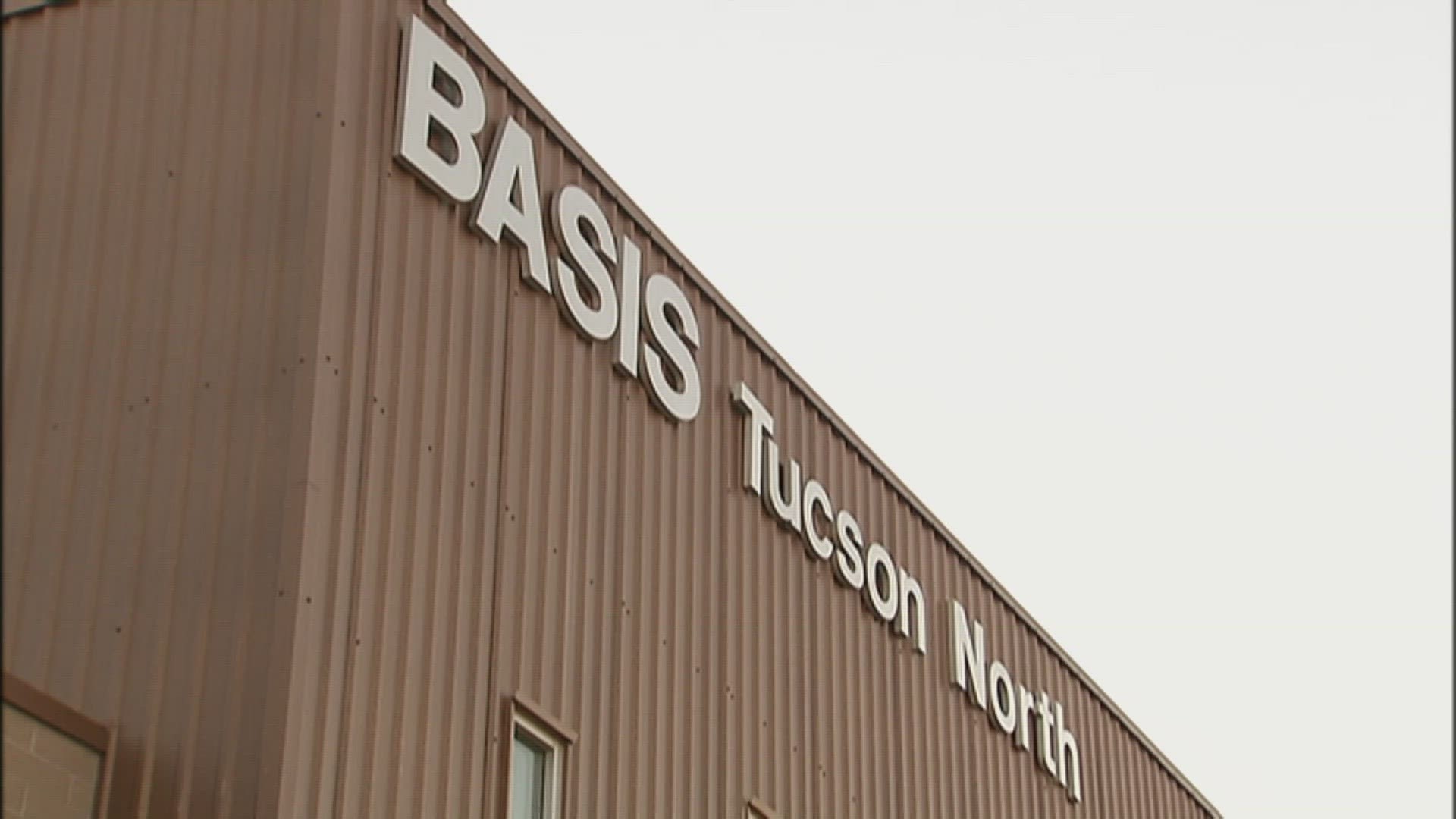
But teachers at BASIS in Tucson voted to unionize, the first to do so in Arizona. BASIS is owned by its founders, Michael and Olga Block, and operates for profit. Anyone may apply but all students must pass multiple AP exams to graduate. The BASIS schools do not reflect the demography of the state. They have small numbers of Hispanic Americans and Native Americans, and large proportions of whites and Asian Americans. They are regularly ranked among the “best” high schools by US News.
Channel 12, KPNX IN Tucson reported:
A Tucson charter school recently voted to become the first unionized charter school in the state.
Author: William Pitts
TUCSON, Ariz. — A Tucson charter school has become the first charter school in Arizona to unionize.
BASIS Tucson North teachers voted Wednesday to form a teacher’s union.
The union will be represented by the American Federation of Teachers.
It’s the first time a charter school in Arizona has voted to form a union to negotiate with the owners of the school.
“We are managed by a private company with opaque finances,” teacher and union organizer Trudi Connolly said. “We completely believe that they have the ability to make more money available to the individual schools that they, in theory, manage.”
BASIS is a multistate charter school company that began in Arizona. It’s privately owned and for-profit. Connolly said she believes the company could do better by its teachers.
As for whether other Arizona charter schools could follow their lead, Connolly said she believes others, including other BASIS schools, might organize.
“We feel that if we can do this, others will see that they can too,” Connolly added.
Arizona has a Democratic Governor, Katie Hobbs, who beat election denier Kari Lake, by a small margin. Each house of the legislature has a small Republican majority, by one vote only. Yet the Republicans have decided to copy the zany extremist initiatives of Ron DeSantis of Florida. Some Republicans think it’s a risky bet.
From criminalizing drag shows to legalizing guns on college campuses, Republican lawmakers at the Arizona Capitol are proceeding like it’s a normal year for them, pushing forward with proposals that appeal to the furthest-right voters in the state.
They’re advancing election bills based on conspiracy theories and pushing back at critics, even silencing speakers for using the phrase “conspiracy theory.” Some proposed laws that were rejected in past years due to Republican opposition have made it further this year, even as they have less chance of becoming law.
Republicans expect Democratic Gov. Katie Hobbs to veto what they believe are good bills, hoping their commitment to far-right conservative values will help them in next year’s election.
It’s a risky strategy if they want to avoid seeing the Legislature flip to Democrats next year, according to some observers on both sides of the aisle.
“The party right now is tone-deaf,” said former Sen. Paul Boyer, a Republican from Glendale who served in the Legislature for five terms but didn’t run for reelection last year after some constituents and GOP peers pilloried him for failing to embrace election denialism. “They haven’t figured out that if they keep this up, we’re going to get massacred.”
Arizona lawmakers are seeking to reach deep into classroom operations with proposals to require the recitation of the Pledge of Allegiance, to designate which students can use which bathrooms and, once again, to limit how race and ethnicity are taught.
Those are in addition to proposals that would require gun safety training at schools and mandate that instructional materials and teacher lesson plans get posted online. Another bill would have the state Department of Education create a list of books banned from classroom use.
To some, these bills, among others, are a replay of recent legislative sessions, where the public school system became the turf for battles over hot-button cultural issues.
That ignores the changed political reality at the Capitol, with the arrival of a Democratic governor after more than a decade of unified GOP control, said Marisol Garcia, president of the Arizona Education Association.
If the GOP actually cares about these issues, why don’t they put the same requirements on voucher schools? It appears that if you want to escape the GOP mandates, the way to do it to open a private school, where you are free to teach about race and gender, free of testing, free of any accountability.
The Texas Observer published a warning to the Texas legislature: Take a close look at the Arizona voucher programs. Don’t go there. Vouchers subsidize private school students while defunding the public schools that still enroll the vast majority of the state’s students.
Like many other typical teenagers, James’ favorite periods in school are P.E. and lunch. During our phone call, he turned the tables on me, politely asking about my children and work. A 15-year-old student who was born with a tumor and has autism, James actively seeks engagement with others, especially his peers. But for two years, he learned at home in isolation. Arizona’s voucher educational savings account program, called the Empowerment Scholarship Account (ESA), granted him $40,000 of public funds to pay private school tuition. But even with that money, private school after private school denied him admission.
“They first demanded all his files, his IEPs [Individualized Education Plan for students with special needs], but before they would grant an interview, they would give some excuse why his needs could not be met there,” James’ mom Pamela Lang said. “Some gave interviews and tours, and James would get excited. But then they would decline admittance saying they could not accommodate him.”
After every single Phoenix, Arizona Catholic school and a slew of secular private schools rejected James, Lang was finally able to find a school to address his needs. But now, she fears there won’t be enough state funds in the future to afford its costly tuition.
What started in Arizona in 2011 as a $2.5 million state voucher program for students with special needs has now ballooned to a universal voucher program for all of the state’s students, public or private.
“The state said the voucher was for kids with disabilities but it was just a way in to open the door,” Lang said. “Every single year since the state got the ESA, they just kept expanding it to more and more people, and now, it’s for everybody. We’re just hoping kids with disabilities aren’t going to have nothing left for them.”
In the first quarter of this school year, Arizona already blew through $300 million, awarding 80 percent of the funds predominantly to wealthy students already enrolled in private schools. This will leave a projected $4 million debt in the state’s education budget at the end of the 2022-2023 school year, a debt that public school advocates fear will deplete public school funds further.
Critics say Arizona used vouchers for special needs students as a trojan horse for school privateers to divest, divert, and dismantle the state’s public education system, which now ranks in the bottom three among all U.S. states for per-pupil spending, teacher retention, and teacher pay.
Texas lawmakers are now poised to follow Arizona’s lead. But parents in Arizona are warning Texans to take heed. Their stories are a cautionary tale for our state, which plans during this legislative session to use special needs students to usher in multiple voucher programs.
Arizona’s voucher programs—and the Texas proposals—include both a universal education savings account and a tax-credit scholarship program, both of which would divert public education money from state coffers to enrich private schools, corporations, and wealthy families.
DIVEST
The country’s first public school education savings account started in Arizona in 2011. The ESA directly appropriates public education money and deposits it into an individual savings account or debit card for parents to use for private school tuition, tutoring, homeschooling, or therapy.
In its first year, $2.5 million of Arizona’s ESA money was directed toward students with special needs. But in subsequent years, expenditures and eligibility for the ESA program expanded to include children attending public schools that received a D or F rating, children in military families, in foster care, and on Native American reservations. Then in 2017, legislators attempted to pass universal vouchers for all students. The proposal was beaten back twice by public school advocates but passed in 2022.
Since its inception, Arizona’s ESA program has stripped more than $963 million from public school funds.
Texas House Bill 557, filed by Representative Cody Vasut, is a universal voucher program from the get-go. It would enable an unlimited number of students to receive reimbursements for up to $10,000 in private school tuition, the full per-pupil allotment in Texas. If all 309,000 private school students in Texas decided to apply for a voucher under this bill, public schools could lose $3 billion in state funding after one year alone. The impact could bankrupt a system in Texas which already ranks in the bottom 10 states in per-pupil funding.
Beth Lewis, director of Save our Schools Arizona, warns Texans that such a voucher program never gives back as much as it robs from public education.
“They sell it under the guise that the money’s following the child,” Lewis said. “But if you were already in a private school or a homeschool situation, that money’s not following you. It’s never been allocated to you. So in reality, it’s a subtraction from a student in the public school. Then, you’re never going to have an equitable system where every kid can access quality education.”
Besides the education savings account program, Arizona has a second type of voucher program that directly funnels public money to private schools—the tax credit scholarship program.
Open the link and read the rest of this important article. Vouchers are a reverse Robin Hood program: they take from everyone to pay the tuition of students already enrolled in private schools. As Professor Josh Cowennof Michigan State University has shown, kids who leave public schools to use vouchers fall behind their peers who remained in public school.
Linda Lyon, former president of the Arizona School Boards Association, writes in her blog “Restore Reason” about the newly elected State Superintendent of Public Instruction Tom Horne, who held the same office from 2003 to 2013.
He intends, she says, to stop “critical race theory” and “social-emotional learning.” He seems to think that “diversity, equity, and inclusion” are nothing more than left wing propganda. He’s a get-tough guy who will crack down on students and teachers.
She writes:
You’ve heard it said that an old dog can’t learn new tricks. AZ Superintendent of Public Instruction Tom Horne is the living embodiment of this saying. His campaign gave us a preview that he was not going to change his ways. After all, he didn’t tout plans to improve our public schools (he was vying for the position overseeing “public” instruction after all), but rather, posted countless campaign signs shouting, “STOP CRITICAL RACE THEORY”. Never mind that actual CRT, (which rests on the premise that racial bias – intentional or not – is baked into U.S. laws and institutions), is not taught in elementary or secondary schools, but at the university level, most often in law schools. For Republicans, however, the term became synonymous with being “woke” and their focus on “owning the libs” carried Horne back to his old office.
This isn’t a new fight for Horne. After his recent election, MSNBC called him,
a pioneer in the right-wing crusade against school teachings centered on nonwhite people and social inequality.
As evidence, MSNBC cited his fight against “ethnic studies” which led to a ban on such instruction in Arizona schools in 2010. He also banned bilingual education services that same year which the Justice Department found illegal. The ban on ethnic studies held until 2017, when a federal judge overturned it, finding that it had an,
invidious discriminatory racial purpose, and a politically partisan purpose.
At 77, it is no surprise Horne hasn’t changed his spots. After all, it mostly works for him as evidenced by his previous elections to serve as State Superintendent from 2003 to 2011, as well as his election to a term as AZ Attorney General. Now, he’s swept into office on his STOP CRT broom, promising to,
He’s off to a running start, canceling previously approved diversity presentations at the education conference hosted by his department and wrapping up today. Michaela Rose Classen, an education consultant originally scheduled to speak, expressed worry to the AZ Daily Star about excising social-emotional learning from schools saying,
When students enter the classroom, I think the assumption by some folks is that they just enter ready to learn. But there are different levels of experiences and often trauma that students are bringing into the classroom with them,’ Claussen said. ‘And they’re not quite developed yet emotionally, like we are as adults, to leave it at the door. So we have to really be cautious about how are we paying attention to student needs.
Horne doesn’t believe this type of learning has any place in the classroom. A 2022 Pew Research Poll, however, showed that about two-thirds of parents believe it is important their children’s school teaches social-emotional skills. These skills, in a nutshell, are:
Self-Management – managing emotions and behaviors to achieve one’s goals
Self-Awareness – recognizing one’s emotions and values as well as one’s strengths and challenges
Responsible Decision Making – making ethical, constructive choices about personal and social behavior
Relationship Skills – forming positive relationships, working in teams, dealing effectively with conflict
Social Awareness – Showing understanding and empathy
As a school board member in my 11th year of service, I can unequivocally say that many of our students need help with social-emotional skills. Should parents and communities teach these skills? YES, ABSOLUTELY!! But, in many cases, this isn’t happening and the global pandemic exacerbated difficulties with students trying to learn and interact with friends remotely. In fact, I’m guessing most would agree that our society in general needs help with these skills more than ever.
Horne, no doubt, thinks our kids just need to “man up” and stick to learning “readin’, writin’, and ‘rithmatic” with his stated focus on improving academics and increasing test scores. Unfortunately, the narrowing of curriculum and “teaching to the test” are making our students less prepared for the real world. And speaking of that, I noted he allowed presentations on suicide prevention at the education conference. Does he not understand the relationship social-emotional learning has on student mental health relating to not only suicide prevention but also the mass shootings plaguing our schools?
Another of Horne’s first acts was to eliminate the Diversity, Equity, and Inclusion Department at ADE, stating that in the context of CRT “equity has come to mean equal outcomes by racial groups”. That may be how sees it, but Google’s Dictionary defines equity as “the quality of being fair and impartial”. Doesn’t this mean we recognize not every child is born with the same opportunities to succeed and we should do what we can to make the opportunities available for those who are willing to apply themselves?
There will no doubt be many battles to fight with Horne, (with his “politically partisan purpose”), leading Arizona’s public schools. The inefficiency of jerking our teachers and students around with policy reversals is frustrating. But it is the potential for setting back another generation of our students that really worries me. As the slogan for the United Negro College Fund states, “A mind is a terrible thing to waste.”
Republicans thrive on culture war issues, like anything to do with race, sexuality, masks, or life-saving vaccines. One of their favorites lately is the threat posed by drag queens.
Why? These issues distract their base from stuff like climate, gun violence, and economic inequality. It’s the modern-day equivalent of bread and circus, without the bread.
In Florida, Governor Ron DeSantis has repeatedly warned about the danger of drag queens and threatened to close down their performances. In Arizona, several GOP legislators plan to introduce legislation to limit or ban drag queen shows. Newly elected Governor Katie Hobbs has made clear that she will veto any legislation that targets drag queens. In case you don’t know, drag queens are men who dress up as women and perform. Most drag queens are gay men, but some (like Dame Edna of Broadway fame) are not. Nor were Tony Curtis and Jack Lemmon, who pretended to be women in the classic comedy “Some Like It Hot.”
To listen to some Republican politicians, you might think that drag queens were a dangerous threat that must be addressed sternly. This is foolishness.
They should do something that addresses real problems, like climate change, gun violence, crime, or mental health. Or their own threats to cut the funding of Social Security and Medicare. They won’t. You can be sure of that.
Drag queens don’t hurt anybody, except perhaps the men who are insecure about their masculinity.
Linda Lyon is a retired naval officer and past president of the Arizona School Boards Asociatuon, as well as her local school board. Her blog is called Restore Reason, and she writes here about the struggle to save public schools from antagonists who prefer to save money and who are antagonistic to anything that serves the public good.
Those of you’ve who’ve been around awhile will remember lobbyist Grover Norquist, who founded Americans for Tax Reform in 1985. This was during the Reagan years, when government was seen as a drag on the free market. Norquist is probably best known for this quote in 2001: “I don’t want to abolish government. I simply want to reduce it to the size where I can drag it into the bathroom and drown it in the bathtub”
It has been obvious for many years that Arizona Republican lawmakers want to drown our district schools since the budget for K-12 education makes up almost 44% of the state budget. But then, the predominant responsibilities of the AZ state government are to provide for the public safety and public education, so…it stands to figure that education would comprise a large portion of the budget.
If you’ve listened to the AZ Republican lawmaker talking points over the last few years, you’d tend to believe that public education has been showered with funding. The truth however is quite another story. In fact, adjusting for inflation, K-12 funding per public school student hasn’t increased in 21 years and leaves us still 48th in the nation. In 2001, districts were provided $8,824 per student and now, only $8,770. The high-water mark in 2007 of $10,182 per student was under Democratic Governor Janet Napolitano. This was actually $1,412 more than in 2022.
You see, pretty much all the GOP has been doing over the last few years is to reinstate funding they took away to begin with. And to add insult to injury, they’ve been chipping away at the amount available to district schools by continuous expansion of privatization options.
Guess you’d have to be living under a rock to have missed the battle over vouchers (Empowerment Scholarship Accounts) during the past decade. ESAs were enacted in 2011 and GOP lawmakers have been steadily expanding these vouchers over the years. In 2022, (I’m really cutting to the chase here), they were finally successful in enacting a universal expansion. Not only are students no longer required to have previously attended a district school to qualify for a voucher, but there are no guardrails or cap and no transparency or accountability for private schools. And, only two months into the new law, AZ DOE had received nearly 30,000 filings for the vouchers, totaling an immediate hit to the state fund of $210M. The Joint Legislative Budget Committee only budgeted $33M for the program for the 2022-23 school year, but some now estimate the bill could approach as much as $500M.
Student Tuition Organizations (STOs) are another vehicle to poke holes in the district funding life raft. They allow tax payers to take a dollar-for-dollar reduction in their state taxes when they give to an approved STO which provides scholarship funding to children attending grades K-12 at qualified private schools in Arizona. These STOs basically serve as a pass-through for tax credit donations to private schools while keeping 10 percent for themselves. STOs have also seen tremendous expansion over the years with the individual tax credit amount now at $1,306 which is over six times that which taxpayers can give to district schools. There are also two types of tax credits corporations can take and the combined cap for those is now up to $141M.
Just introduced last week by Representative Livingston, is HB 2014 which seeks to expand the aggregate dollar amount of STO tax credits from $6M in 2021-22 to $10M in 2022-23, to $15M in 2023-24, and to $20M in 2024-25. It also would eliminate the need for recipients of a corporate, low-income scholarship to have attended a district school prior to receiving the scholarship. Keep in mind that removing the requirement to have first attended a district school prior to receiving STO or ESA monies, accommodates students already in private school or being homeschooled, at their parent’s expense. In fact, that was the case for 80% of the filings for the universal expansion last year. And, when a student taking an ESA or STO scholarship was never in a district school, there is zero reduction in cost to that district school and ultimately, taxpayers.
These schemes are chipping away at the foundation of our district (community) schools so that eventually, they can be “drowned in the bathtub”. This is not by accident, but rather, by design. There are those in the Legislature, who do not believe in equal opportunity to learn and thrive, but rather, in survival of the fittest. And, they are hell-bent on deciding who the “fittest” are. Privatizing public education primarily serves those who “have” at the expense of those who “have not”. This continued war on public education will continue to weaken our communities and our democracy as it solidifies power and influence with those at the very top.
Vouchers were originally sold as a way to “save” poor children of color from failing schools. We now know that this claim is not true. Poor kids who use vouchers typically fall behind their peers in public school. In state after state, vouchers are subsidizing students who are already enrolled in private schools and never attended public schools. The funding of vouchers takes money away from the public schools attended by most students, meaning larger classes, fewer resources.
Nearly Half of Universal Voucher Applicants are from Wealthier Communities
Total State Private School Subsidies Reach $600M
Dave Wells, Research Director
Curt Cardine, Research Fellow
Distribution of Universal ESAs vs. Distribution of Students
Key Findings:
45% of universal Empowerment Scholarship Account (ESA) applicants come from the wealthiest quarter of students in the state. Their families live in zip codes where the median household income is $80,000 or more, more than 30% greater than the state’s median income.
32% of universal ESA applicants are from families with a median income less than $60,000, which comprise just over half the students in the state.
80% of universal ESA applicants are not in public school, meaning these students are already attending private schools, being home schooled, or just entering schooling. At a cost of about $7,000 per voucher this equates to potential new cost to the state of $177 million.
Arizona will spend more than $600 million on private school subsidies—universal ESAs and Student Tuition Organization Scholarships—in the 2022-23 school year.
Only 3.5% of all applicants came from zip codes that had a district high school or 2 K-8 district schools with a D or F grade. No zip codes with a median income above $80,000 had a district high school or 2 K-8 district schools receiving a D or F grade.
There will be an increased risk of fraud with lax oversight to ensure that families don’t double dip by using both ESA and STO scholarship funds.
Now that the October 15, 2022 deadline to apply has passed, the Grand Canyon Institute (GCI) has analyzed the zip code distribution of applications for the new universal Empowerment Scholarship Account (ESA) voucher program that Gov. Ducey signed into law in July. GCI’s analysis finds that the program’s primary beneficiaries are students from wealthier families, similar to its previous analysis before the deadline, and that 92.5% of those students have access to well-performing schools.
Zip codes were provided by the Arizona Dept. of Education for universal voucher applicants. The total number of universal voucher applicants numbered 31,750. From that number GCI deducted 69 that were either out of state or had left the zip code blank. This report updates an earlier GCI analysis published on October 6. In September, GCI evaluated details of the program, including the inability to measure academic impacts of the program due to the absence of accountability measures in the legislation. Academic impacts were also part of a 2018 GCI report regarding Arizona’s private school subsidy programs.
GCI compared the distribution of applications to both the median household income as well as the distribution of K-12 students in the zip codes of applicants using data from the 2020 American Community Survey by the U.S. Bureau of the Census.
As noted in the graphs below, about 45% of all applications come from parents or guardians residing in zip codes that have a median household income of $80,000 or more, more than 30% greater than the state’s median household income.($61,529) These represent the wealthiest quarter of students in the state (gold and silver parts of the graphs). This is similar to GCI’s October analysis.
By contrast, parents or guardians in zip codes with a median household income less than $60,000 which comprise just over half the students in the state, represent not quite one-third of all applications (blue section). This is also similar to GCI’s October analysis.
Gov. Ducey in his press release after signing the universal voucher expansion noted, “This is a monumental moment for all of Arizona’s students. Our kids will no longer be locked in under-performing schools.” GCI examined this claim by identifying zip codes that either contained a district high school with a D or F grade OR had at least two K-8 district schools with a D or F grade. One school with a D or F grade hardly speaks poorly for a zip code. For instance, one Kyrene District elementary school in 85284 (South Tempe) received a “D,” but that is not indicative of the very highly rated schools in that relatively affluent zip code. Zip codes typically have many schools, so even in the D or F zip codes, most schools (district or charter) did not receive a D or F. Consequently, GCI’s D or F zip code identifier understates school grades within those zip codes.
GCI found only 3.5% of all applicants came from zip codes that had a high school or 2 K-8 schools with a D or F grade. No zip codes with a median income above $80,000 had a high school or 2 K-8 schools receiving a D or F grade.
These results belie the claim that the program was primarily designed for average and lower income families. Rather, similar to the flat tax passed by the legislature, the primary beneficiaries of this government policy are wealthier families.
Total Private School Subsidies $600 Million
($180 Million from Universal ESAs)
Arizona has extensive subsidy programs for private schools. Dollar-for-dollar tax credit donations to private Student Tuition Organizations amounted to $250 million in FY2021 from individuals and corporations. In addition, the existing ESA program which serves a large number of students with disabilities was on track to cost the state at least $190 million plus administrative costs for FY2023 based on program growth. Collectively private school subsidies likely cost at least $440 million since tax credit data was less current.
Universal voucher access looks to add up to $180 million to that number taking the total cost of private school subsidies to in excess of $600 million dollars.
The Arizona Department of Education reports that about 80% of universal ESA applicants are not in public school, meaning these students are already attending private schools, being home schooled, or just entering schooling. At a cost of about $7,000 per voucher this equates to a cost of $177 million.
The remaining 20% of applicants are currently attending public district or charter schools. The voucher formula provides 90% of the state’s per pupil funding formula for charter schools plus charter additional assistance. While students moving from charters to private schools represent a net savings of about $700, vouchers to students who attended district schools represent a net cost to the state’s general fund. The voucher exceeds what the state is currently paying because district additional assistance is significantly less than charter additional assistance. Charter additional assistance is between $2,000 and 2,300 per pupil while district additional assistance is between $500 and $550. The difference exceeds the 10% overall reduction from charter payments for vouchers. In addition, students moving from wealthier district schools cost the state even more. Under the state’s education equalization formula their districts rely primarily on local property taxes, not state funding.
Movement from charter schools is more likely to occur, from GCI’s past analysis. However, the loss from district movement is significantly more, such that it’s likely to be an overall net cost to the state.
An unknown number of these students may already be using the STO private school scholarship program, so some parents may switch to ESAs which would reduce the net cost to the state. Likewise, not every applicant may qualify.
The estimated total cost of up to $180 million is significantly higher than the $33.4 million projected by the Joint Legislative Budget Committee for FY2023. The 31,7500 applicants are more than five times what the Joint Legislative Budget Committee projected of about 5,800 applicants in the first year of the program. The JLBC estimate though was very rough and saw the program doubling in year two.
STO scholarship award amounts are likely to increase in order for them to stay more competitive with the universal ESAs and because the number of of STO scholarship applicants may decline. Keep in mind, STO scholarships are administered by privately-run organizations that can take up to 10% of tax credit donations to cover administrative costs. Universal ESAs represent competition for their business. Some past STO scholarship awardees may switch to the universal ESA program, which could reduce contributions to STOs (it was common for STO donors to contribute on behalf of a particular recipient), but since the tax credit costs contributors nothing, they may persist.
Many of the new applicants are likely homeschooled students, which the JLBC had estimated at 38,000 who are now eligible for state funding.
Risk of Misuse Rises Significantly
Two potential issues arise with universal vouchers that might fall under the general category of fraud-whether pursued civilly or more likely with internal enforcement-relates to violations of the ESA contract. These occur if an ESA recipient were to misspend monies or double dip by receiving an STO scholarship simultaneously in violation of the ESA contract. Since ESAs go through the Department of Education, students are well tracked. An audit process is designed to prevent misspent dollars.
As GCI noted in September, already a number of permitted ESA expenses are questionable. But with a wider program that expands to homeschool, such oversight may be more challenging. Parents or guardians accepting ESAs sign a contract where they also agree not to accept an STO scholarship. However, the state does not track recipients of STO scholarships outside broad aggregate reporting to the Arizona Department of Revenue. It has been evident for a number of years that many parents or guardians seek and receive scholarships from multiple STOs, such that in 2019-2020 about 90,000 scholarships were awarded to around 50,000 private school students who were not receiving an ESA voucher (see diagram above). While some parents or guardians may not currently be in compliance with this restriction, the narrower scope of ESA eligibility limited that opportunity. However, with universal vouchers, the potential that a parent or guardian might attempt to double dip from both the ESA and STO scholarship programs rises significantly and an effective mechanism to catch when that occurs does not appear to exist.
For more information, contact: Dave Wells, Research Director dwells@azgci.org, 602.595.1025, Ext. 2
The Grand Canyon Institute (GCI) is a nonpartisan, nonprofit organization dedicated to informing and improving public policy in Arizona through evidence-based, independent, objective, nonpartisan research. GCI makes a good faith effort to ensure that findings are reliable, accurate, and based on reputable sources. While publications reflect the view of the institute, they may not reflect the view of individual members of the board.SUPPORT US