Karen Attiah was the editor at The Washington Post for Saudi dissident Jamal Khashoggi. She recently left the Post, objecting to its obeisance to Trump.
Trump’s warm welcome for Saudi Arabia’s leader, Crown Prince Mohammad bin Salman, outraged her, as it outraged everyone who remembered what happened to Khashoggi.
Khashoggi was a journalist, author, and dissident in Saudi Arabia. He fled Saudi Arabia in September 2017 and settled in the U.S. He was hired by Karen Attiah to write an opinion column for The Washington Post. On October 2, 2018, Khashoggi went to the Saudi Consulate in Istanbul, Turkey, to get a marriage license. Fifteen Saudi security personnel were waiting for him. They strangled him, and a surgeon in their group dismembered his body. It was never recovered. The CIA later determined that he was killed by direct order of Crown Prince MBS.
Since 2018, MBS has been in disrepute in the West. A few days ago, MBS was an honored guest at the White House. Trump spread a red carpet, praised him lavishly, and commended his record on human rights. He was almost as obsequious to MBS as he is to Putin.
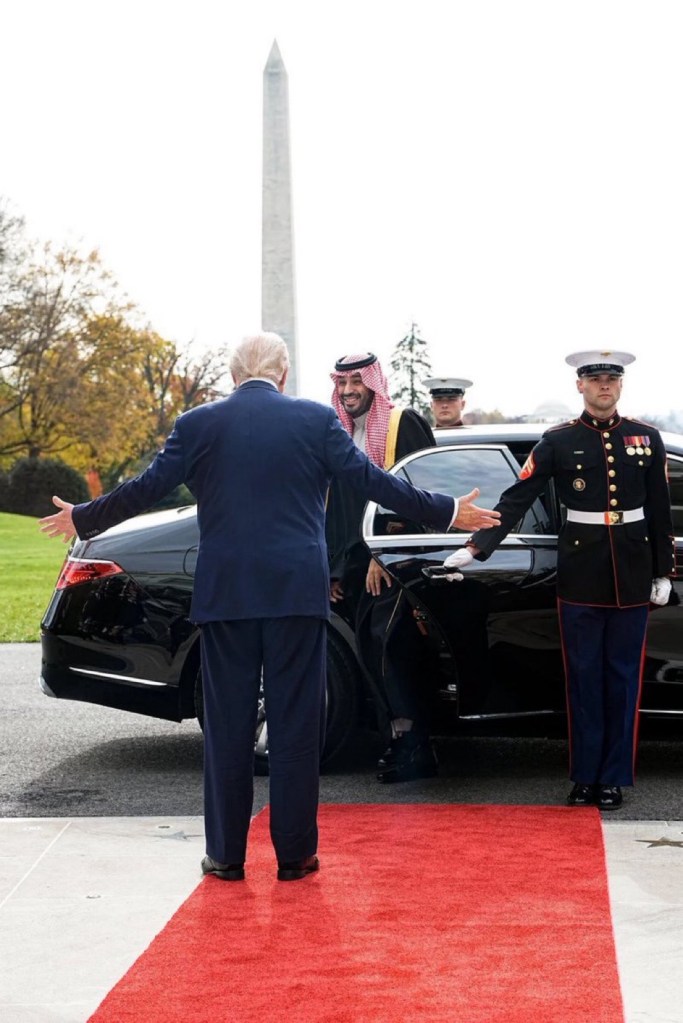
When a reporter asked about Khashoggi, Trump angrily said that the victim was “controversial” and “some people didn’t like him,” and reporters should not ask such disrespectful questions.
Trump cannot plead ignorance about what happened. He was President in 2018, when Khashoggi was murdered.
If you are on BlueSky, you might want to read Karen Attiah’s reaction to Trump’s defense of MBS.
In one of her comments, she wrote:
I will never forget having to edit Jamal’s final, posthumous piece for the Washington Post, after he was murdered.
He was calling for free expression in the Arab world. You can read it here :
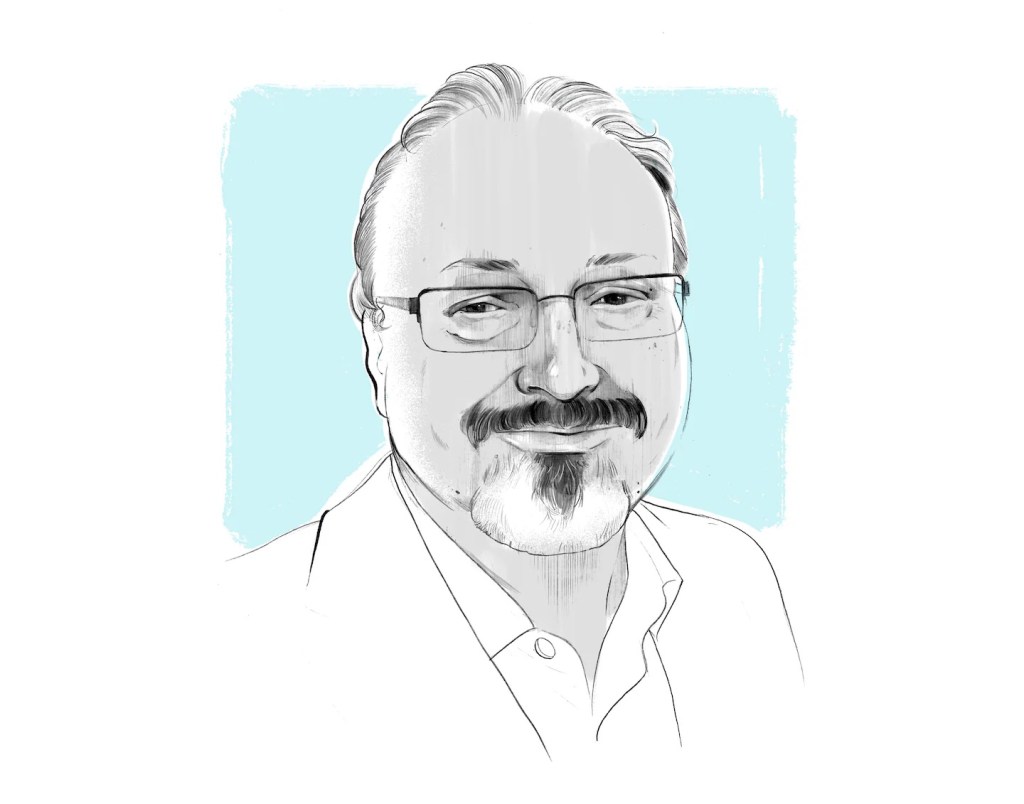
A note from Karen Attiah, Global Opinions editor
I received this column from Jamal Khashoggi’s translator and assistant the day after Jamal was reported missing in Istanbul. The Post held off publishing it because we hoped Jamal would come back to us so that he and I could edit it together. Now I have to accept: That is not going to happen. This is the last piece of his I will edit for The Post. This column perfectly captures his commitment and passion for freedom in the Arab world. A freedom he apparently gave his life for. I will be forever grateful he chose The Post as his final journalistic home one year ago and gave us the chance to work together.
I was recently online looking at the 2018 “Freedom in the World” report published by Freedom House and came to a grave realization. There is only one country in the Arab world that has been classified as “free.”
That nation is Tunisia. Jordan, Morocco and Kuwait come second, with a classification of “partly free.” The rest of the countries in the Arab world are classified as “not free.”
As a result, Arabs living in these countries are either uninformed or misinformed. They are unable to adequately address, much less publicly discuss, matters that affect the region and their day-to-day lives. A state-run narrative dominates the public psyche, and while many do not believe it, a large majority of the population falls victim to this false narrative. Sadly, this situation is unlikely to change.
The Arab world was ripe with hope during the spring of 2011. Journalists, academics and the general population were brimming with expectations of a bright and free Arab society within their respective countries. They expected to be emancipated from the hegemony of their governments and the consistent interventions and censorship of information. These expectations were quickly shattered; these societies either fell back to the old status quo or faced even harsher conditions than before.
My dear friend, the prominent Saudi writer Saleh al-Shehi, wrote one of the most famous columns ever published in the Saudi press. He unfortunately is now serving an unwarranted five-year prison sentence for supposed comments contrary to the Saudi establishment. The Egyptian government’s seizure of the entire print run of a newspaper, al-Masry al Youm, did not enrage or provoke a reaction from colleagues. These actions no longer carry the consequence of a backlash from the international community. Instead, these actions may trigger condemnation quickly followed by silence.
As a result, Arab governments have been given free rein to continue silencing the media at an increasing rate. There was a time when journalists believed the Internet would liberate information from the censorship and control associated with print media. But these governments, whose very existence relies on the control of information, have aggressively blocked the Internet. They have also arrested local reporters and pressured advertisers to harm the revenue of specific publications.
There are a few oases that continue to embody the spirit of the Arab Spring. Qatar’s government continues to support international news coverage, in contrast to its neighbors’ efforts to uphold the control of information to support the “old Arab order.” Even in Tunisia and Kuwait, where the press is considered at least “partly free,” the media focuses on domestic issues but not issues faced by the greater Arab world. They are hesitant to provide a platform for journalists from Saudi Arabia, Egypt and Yemen. Even Lebanon, the Arab world’s crown jewel when it comes to press freedom, has fallen victim to the polarization and influence of pro-Iran Hezbollah.
Who attended the White House dinner for Mohammed bin Salman November 19, 2025
The Arab world is facing its own version of an Iron Curtain, imposed not by external actors but through domestic forces vying for power. During the Cold War, Radio Free Europe, which grew over the years into a critical institution, played an important role in fostering and sustaining the hope of freedom. Arabs need something similar. In 1967, the New York Times and The Post took joint ownership of the International Herald Tribune newspaper, which went on to become a platform for voices from around the world.
My publication, The Post, has taken the initiative to translate many of my pieces and publish them in Arabic. For that, I am grateful. Arabs need to read in their own language so they can understand and discuss the various aspects and complications of democracy in the United States and the West. If an Egyptian reads an article exposing the actual cost of a construction project in Washington, then he or she would be able to better understand the implications of similar projects in his or her community.
The Arab world needs a modern version of the old transnational media so citizens can be informed about global events. More important, we need to provide a platform for Arab voices. We suffer from poverty, mismanagement and poor education. Through the creation of an independent international forum, isolated from the influence of nationalist governments spreading hate through propaganda, ordinary people in the Arab world would be able to address the structural problems their societies face.

 Diane Ravitch's blog
https://apnews.com/article/biden-saudi-crown-prince-mohammed-handshake-g20-c33e0f9bd2c6aff967a9d3d61529d9bd
LikeLike
Karen Attiah argues that reviving transnational Arab media is needed for strengthening democracy in the Middle East. I agree — but I also think we have to confront the fact that U.S. foreign policy has often undermined democracy in the region. One of the most pivotal examples is the 1953 coup against Mohammad Mossadegh, carried out by the CIA and MI6. This happened while pan-Arab newspapers and radio were very active, and both agencies used transnational media to plant propaganda and sell the coup.
So yes, independent media matter — but so does ending our own government’s habit of putting the interests of wealthy men over democratic principles abroad. Some people claim the U.S. intelligence community has been reformed and no longer manipulates information to serve economic or geopolitical goals, but I don’t buy it. The messaging may change from administration to administration, but the underlying power structure is still there.
Trump’s interaction with the Saudi Crown Prince was pathetic, but Biden’s wasn’t much different. Biden did raise the issue of Khashoggi’s murder, but Biden’s fist bump with the prince made it clear that economics and security deals still take precedence over human rights. As long as oil prices and trade agreements drive policy, democracy becomes an afterthought.
LikeLike
“I shook that hand.” He didn’t say, “I shook his hand.” His wannabe dictator comment was not just about the White House greeting this man, it was his pride touching that hand – the one that figuratively pulled the trigger. Perhaps they traded stories of the president’s bombing alleged drug runners in fishing boats.
The pattern of his infamous statements and fawning that have been cited for years in this blog continue right up to the four posts today.
The Crown Prince visit. (And, did you see the WH dinner attendees)
The ongoing suspicious bowing to Putin and latest revelation from a 2019 phone conversation.
Propping up RFKjr’s outrageous pronouncements probably still because “he’s a Kennedy.”
Preceded by these and dozens of others over the past 10 years.
“There’s very fine people on both sides” …
“…they let you do it.”
The pardons of the January 6 “hostages” as he referred to them because they were victims of “a grave national injustice”
And, once again, Congress is getting played like a fiddle falling for the “he cares about the victims” go ahead and vote on the email release proclamation knowing full well that another incompetent in his circle will claim “ongoing investigation” and block any release.
November 2026 and November 28 cannot come fast enough.
LikeLike
Saleh al-Shehi – I can’t figure out whether he is alive or dead.
LikeLike