Archives for the month of: March, 2025

I am a historian of education. I started the blog in 2012 to draw attention to the nefarious push for privatization. The privatization movement was and is well-funded by billionaires and highly coordinated. Its leaders attacked public schools as “failing,” they railed against teachers, and they advocated for charter schools. And of course, they hate unions. They pushed the idea that “school choice” would inevitably lead to better education, as parents would of course choose the best schools. Competition would produce better schools.

But the idea they really pushed was that schools are a consumer choice, not a public good. Charter schools were a step on the road to vouchers. Vouchers completely destroy the fundamental idea that public schools are a civic responsibility that all of us pay for because all of us benefit, whether or not we have children in public schools.

I wrote three books to spread the word about the hoax of the privatization movement. It directed public money to Walmart-style chains, grifters and entrepreneurs.

But since the re-election of grifter Trump, I have written far more about Trump than about education.

You deserve an explanation.

Trump is a threat to our democracy.

He has turned control of the government over to Elon Musk, a man lacking in understanding of government and lacking in empathy. Musk is ransacking every part of the federal government, ruthlessly firing civil servants and cutting contracts but leaving untouched the billions he receives every year.

Trump has upended the world by insulting our allies and praising authoritarians.

He attacks NATO and the EU. He scorns Ukraine, which was ruthlessly invaded by Russia. He sides with Putin. He opens a tariff war with our neighbors.

I have lived a long life and I have never been more afraid for the survival of the country I love than I am now. We are led by fools and scoundrels.

Trump and Musk are trying to dismantle the federal government. The damage they are inflicting will take years to repair. Valuable agencies like USAID and the Department of Education have been closed without bothering to get approval from Congress. Thousands of civil servants have been fired with no due process or evaluation of their significance.

And we are only two months into his term.

The survival of our public schools depends on the survival of our society.

Trump hates public schools. He wants to fund vouchers everywhere so that children may be indoctrinated in religious schools, so that parents can be paid for home schooling, so that rich parents can be subsidized.

We are in a terrible place.

Trump is a puppet of Putin. He has never said anything critical of Putin, although he is fast to insult everyone else. Why? What does Putin have over Trump?

He has appointed the least qualified people to head every department, with the possible exception of Marco Rubio, who has abandoned his core beliefs to serve Trump.

Of course, I am worried about the survival of public schools.

I’m even more concerned about the survival of our democracy.

Dana Milbank warns about Trump’s determination to stamp out a free press. The most salient fact about Trump is his narcissism. He demands obeisance, praise, respect, admiration, even groveling. He despises criticism. That’s why he is determined to intimidate journalists and media moguls.

If he can’t intimidate them, he sues them, expecting to intimidate them with financial disaster (he sued CBS for $10 billion for allegedly editing an interview on “60 Minutes”to help Kamala Harris in the election, even though he can’t demonstrate any harm he suffered since he won the election). Milbank does not mention his publisher Jeff Bezos’ obsequious attempts to please Trump by spiking the Washington Post’s editorial endorsement of Kamala Harris and by clamping down on the content of opinion columns, limiting them to praise of “personal liberties” and “free markets.”

The appearance of Milbank’s column is proof that Milbank has not kowtowed to Bezos’ edict, although he does fail to mention that Amazon, also owned by Bezos, paid Melania Trump $40 million to produce a film about her life.

Maybe his last line is a pleas to his boss Bezos, the second richest man in the world.

Milbank writes:

President Donald Trump’s Oval Office ambush of Ukraine’s Volodymyr Zelensky last week was rightly seen as a disaster for freedom in the world. But it also showcased a disaster for freedom at home: the administration’s attempts to extinguish the free press.

Barred by the White House from entering the room that day were the Associated Press and Reuters, venerable news agencies that have covered American presidents for decades. In their place: a correspondent from Russian state media, Tass’s Dmitry Kirsanov. The White House removed Kirsanov from the event in progress, claiming he was not “approved” to be there — asking us to believe that, in an astonishing security lapse, a Russian government propagandist had infiltrated the Oval Office without its knowledge.

Also brought into the room by the White House (which reversed more than a century of practice by seizing from journalists the authority to decide which reporters will be in the press “pool” that has access to Trump): Brian Glenn, correspondent for the MAGA outlet Real America’s Voice and boyfriend of Rep. Marjorie Taylor Greene (R-Georgia). He accused Zelensky of “not respecting the office,” asking: “Why don’t you wear a suit?”

Then there was the correspondent from another MAGA outlet, One America News. He told Trump that foreign leaders had “praised your courage and conviction” and asked him “what gave you the moral courage” to start talks with Russian dictator Vladimir Putin about Ukraine, “something that previous leaders lacked the conviction to do.”

“I love this guy,” Trump replied. Upon learning he was from One America News, Trump said: “Well, that’s why I like him. One America News does a great job. That’s very — I like the question. I think it’s a very good question.”

This is the result when the government decides who can cover the president: a sycophantic circus.

The First Amendment tells us that “Congress shall make no law … abridging the freedom of speech, or of the press.”


But Trump tells us otherwise. “Who knows, maybe we will create some NICE NEW LAW!!!” he posted on Truth Social last week, suggesting he wanted to make it illegal for journalists to use anonymous or off-the-record sources, an essential part of newsgathering because it protects people from retaliation. “They are made up, defamatory fiction, and a big price should be paid for this blatant dishonesty,” Trump wrote.
Thomas Jefferson wrote, “Our liberty depends on the freedom of the press, and that cannot be limited without being lost.” But Trump has launched a multipronged attack on our most essential freedom, with precious little pushback:

• His ferociously partisan chairman of the Federal Communications Commission has launched or threatened investigations into ABC, NBC, CBS, PBS, NPR, a website that rates media credibility and radio stations with ties to progressive billionaire George Soros.
• Trump’s acting U.S. attorney for the District of Columbia has threatened to prosecute “anyone who impedes” the work of Elon Musk and his team — a threat widely understood to include journalists.
• Trump himself has kept up a barrage of lawsuits against ABC, CBS, the Des Moines Register (over an inaccurate poll), the Pulitzer Prize board and others, and corporate owners have felt pressured to settle lawsuits they would otherwise win to avoid Trump’s retribution.
• The administration has cut off funds to pro-democracy media outlets in places such as Cuba, Iran and Ukraine, and it is cutting off the editorial independence of Voice of America.
• The president has spread lies about American news organizations, such as Politico and the New York Times receiving USAID funds as a “‘PAYOFF’ FOR CREATING GOOD STORIES ABOUT THE DEMOCRATS” in “THE BIGGEST SCANDAL OF THEM ALL,” and he has ordered government agencies to cancel subscriptions to news outlets.
• Trump on Feb. 23 called NBC and “MSDNC” “an illegal arm of the Democrat Party” that “should be forced to pay vast sums of money for the damage they’ve done to our Country.” He also called for my colleague Eugene Robinson to be “fired immediately” because he didn’t like one of Robinson’s columns that was critical of Republicans.
• Musk last month called for journalists at “60 Minutes” to be given “a long prison sentence” because of their (routine) editing of a Kamala Harris interview during the election. He also said a Wall Street Journal reporter who exposed racist rants by one of Musk’s employees should be “fired immediately.”
• And, of course, there’s the aforementioned White House takeover of the press pool and its banishment of the AP from the Oval Office, Air Force One and similar settings because it still refers to the Gulf of Mexico as the Gulf of Mexico. Trump wants to call it the Gulf of America, but the gulf doesn’t belong exclusively, or even mostly, to the United States, and the rest of the world still uses its traditional name — which is why the AP (and The Post) still uses its traditional name. Posters in the White House briefing room declared “VICTORY” over the AP, which Musk now calls “Associated Propaganda.”

As Rebecca Hamilton, an American University law professor, put it in Just Security last month, it all amounts to “a wholesale effort by Trump and his allies to eviscerate the free press in order to construct an information ecosystem dominated and controlled by those who espouse his views.”

Among Trump’s possible next steps: prosecuting journalists, as some in the administration have threatened. “It is essential that we understand how serious this threat is, because it is much harder to bring things back after they’ve already been finished,” Hamilton tells me. “And so it is worth fighting every single attack on press freedom, even if each attack individually seems like it could be a minor issue.”

The systematic assault on the press is part of a broader crackdown on the civil liberties of those who disagree with Trump. FBI Director Kash Patel has vowed to prosecute Trump’s opponents and critics, and Ed Martin, the D.C. prosecutor, has sent “letters of inquiry” to Rep. Robert Garcia (D-California) and Senate Minority Leader Chuck Schumer, suggesting they were “threatening” Musk (in Garcia’s case) and Supreme Court justices (in Schumer’s case, based on five-year-old remarks he said at the time were not intended as threats). Trump’s border adviser, Tom Homan, has asked the Justice Department to investigate Rep. Alexandria Ocasio-Cortez (D-New York) over her advice to migrants.

More broadly, the administration’s attempts to ban anything that it considers to be “diversity, equity and inclusion” were blocked by a federal judge on First Amendment grounds, because the executive orders force grant recipients to certify that they do not promote DEI. Other agencies have cracked down on expression, including the Pentagon and Veterans Affairs, where the display of gay pride flags has been banned in offices and cubicles.

The efforts are at times clumsy: The day after Wired published an article titled “The Young, Inexperienced Engineers Aiding Elon Musk’s Government Takeover,” Martin sent a public letter to Musk that read like a phishing email from a non-native English speaker. “Anyone imperiling others violating our laws,” proclaimed one sentence in its entirety. “Any threats, confrontations, or other actions in any way that impact their work may break numerous laws,” read another. “We will not act like the previous administration who looked the other way as the Antifa and BLM rioters as well as thugs with guns trashed our capital city. We will protect DOGE and other workers no matter what.”

That’s not the sort of language one typically sees coming from the Justice Department — but these are not normal times. ABC News’s parent company, Disney, paid $15 million to Trump in December to settle a defamation lawsuit — a decision that appeared to be based not on the legal merits but on fear of Trump’s vengeance. Meta in January agreed to pay Trump $25 million to settle a 2021 lawsuit over Trump’s suspended Facebook and Instagram accounts. CBS News parent Paramount Global is now in settlement talks over the “60 Minutes” editing. Even so, FCC Chairman Brendan Carr, a Project 2025 author, joined the attack on CBS, demanding that it hand over the “full, unedited transcript and camera feeds.” Hanging over Paramount if it doesn’t settle Trump’s (frivolous) lawsuit: The FCC could block its planned merger with Skydance.

This is on top of Carr’s probes of NBC parent Comcast (for its supposed DEI practices) and NPR and PBS (for their underwriting practices). Upon arriving, he reinstated complaints of political bias against ABC, CBS and NBC affiliates while declining to reinstate a similar complaint against a Fox affiliate. And he’s probing KCBS radio in San Francisco for its coverage of an immigration enforcement operation. (Not to be outdone, Georgia’s Greene is using her House Oversight subcommittee chairmanship to call the head of NPR to testify about its “blatantly ideological and partisan coverage.”)

Trump’s choice to run Voice of America, failed Arizona gubernatorial and Senate candidate Kari Lake, has vowed to purge the organization of “Trump derangement syndrome.” Last week, VOA suspended veteran journalist Steven Herman over his social media activity, the New York Times reported. A few weeks ago, Trump adviser Richard Grenell called Herman “treasonous” for quoting on social media the president of a democracy advocacy group saying the elimination of the U.S. Agency for International Development “makes Americans less safe at home and abroad.”

The attempted elimination of USAID by the administration has unquestionably hurt efforts to establish a free press in repressive countries. Reporters Without Borders said the sudden freeze of foreign aid programs “has left media organizations around the world in chaos, gravely hampering access to reliable news in zones of serious interest to the United States.” For example, Cubanet, a thorn in the side of Cuba’s regime and an ally of dissidents, was informed that its $1.8 million, three-year grant had been canceled.

So it goes across the Gulf of America, as Trump has decreed it must be called. Unlike, say, restoring the name Mount McKinley in Denali National Park, this is not something Trump can do on his own. Yet the White House said the AP was “lying” by using the name the rest of the world uses. The AP, in its lawsuit seeking reinstatement at the White House, argued that “the Constitution does not allow the government to control speech” and that Americans “have the right to choose their own words and not be retaliated against by the government.” But so far, a judge has rejected the AP’s request.

The gulf tempest may be just an excuse to punish news organizations. The White House is moving to evict some outlets from their seats in the briefing room to make room for MAGA-friendly ones. The Pentagon seized office space that had gone to outlets such as the Times, NPR, NBC and Politico, giving the space to right-wing outlets such as Breitbart, One America News and the New York Post. (It also gave space to liberal HuffPost, which had not requested it.)

This comes on top of the White House’s more egregious move to take control of the press pool, the rotating group of reporters allowed to be in the room with the president. As the White House Correspondents’ Association protested, this means “the government will choose the journalists who cover the president.”

Much of this was proposed in the Project 2025 blueprint, which, despite Trump’s denials during the campaign, has turned out to be a road map for the new administration. It suggested the White House find an “alternative” to the WHCA, take away some of the media’s space in the White House, seize editorial control over VOA and defund public broadcasting, among other things — and variations of all of these policies are underway.

Ominously, Project 2025 also called for rescinding guidance issued by the Biden administration that prevented prosecutors from seizing journalists’ records during leak investigations. The Justice Department “should use all of the tools at its disposal to investigate leaks,” Project 2025 proposed. This, First Amendment advocates fear, implies use of the 1917 Espionage Act to prosecute reporters if they don’t reveal their sources — in effect criminalizing journalism.

Complicating the response by the press to these assaults: Much of American media is owned by corporations and billionaires whose interests are not always aligned with those of a free press. Hamilton, the law professor, calls for “strategic litigation” by media outlets against the administration to push back against the assaults. She says journalists need to “continue to write without self-censoring.” And she says “the public also needs to understand the true value to democracy of having a free press, because if you lose that, then you lose one of the key foundations of accountability in a democracy.”

That’s a lot to ask. But it’s going to take all three — courageous media ownership, fearless journalism and an engaged readership — if the free press is going to survive the Trump presidency.
Carol Kocivar is former President of the California State PTA. She has worked as an attorney, journalist, and ombudsperson and is the parent to two children who graduated from the San Francisco public schools

She posts on Substack, where this appeared.

She writes:

Scary as this may seem, it is time to talk with your children about how our democracy is threatened.

I know.  I know. Those are strong words.  I certainly am not suggesting that we ask first graders whether the president should have more power than the Congress or the Supreme Court.
But I am looking at this through the lens of history– with the knowledge that Hitler and Mussolini strengthened their hold through the indoctrination of youth.

Our children are not born with democracy in their DNA.  It is our responsibility to ensure that each generation has the knowledge and skills to support and preserve our democracy.

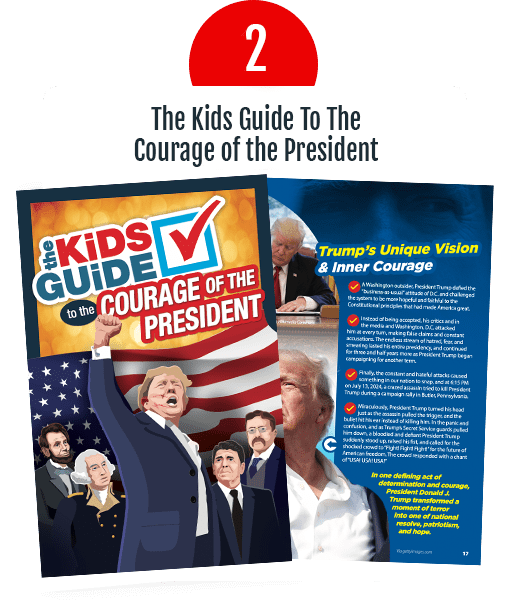
Political outreach to children is already underway. Below is an example of a Kid’s Guide on the internet. 

“With the triumphant return of President Trump to the White House, Americans everywhere are celebrating his return and what it means for our nation. And, as our kids are the future of our country, it’s important for them to understand how Trump will make America great again. That’s why we created The Kids Guide to President Trump, and right now we’re giving it away for FREE!”


Kids are taught about the Constitution in school
In elementary school, students should already have some basic knowledge about how our government is supposed to work. By the time they have completed the 8th grade, they should know the basics of our constitutional democracy. 
For example, the California History/ Social Science frameworks provides that 8th graders should be taught about separation of powers, checks and balances, the nature and purpose of majority rule, and the ways in which the American idea of constitutionalism preserves individual rights.

  • They should know, for example, that the president is not a king.  
  • They should know that the Congress passes laws, not the president.  
  • They should know that the President and his staff cannot refuse to follow court orders.
  • They should know the president does not have the right to refuse to implement spending decisions of Congress.
  • They should know their rights include freedom of speech.

What can parents do?

In age appropriate language, discuss current events with them.   I was going to say discuss it at the dinner table but you probably have a better shot at their attention as you drive to and from sports events.

Seek out incidents that challenge the basic principles of our democracy and discuss them.

What do they think? How does that square with what they know about the constitution?

Explain why you think it is important that they understand what is happening in the country.

Discuss money for schools.  Does their public school need more or less money?  What do they think about cutting funding for their school? 

Talk about the importance of voting.  Can voting change public policy?

Ask what would help them become more involved in issues that affect their school? Their community? Their country?

It’s up to us to preserve democracy for our children.

New York Times foreign affairs columnist Thomas Friedman smells a rat in the bilateral talks between Trump and Putin about the war in Ukraine. He’s been watching both of them for years, and he knows they are both lying. Putin is using Trump for his own ends. Trump wants to please Putin.

He writes:

Ever since President Trump returned to office and began trying to make good on his boast about ending the Ukraine war in days, thanks to his relationship with Russian President Vladimir Putin, I’ve had this gnawing concern that something was lost in translation in the bromance between Vlad and Don.

When the interpreter tells Trump that Putin says he’s ready to do anything for “peace” in Ukraine, I’m pretty sure what Putin really said was he’s ready to do anything for a “piece” of Ukraine.

You know those homophones — they can really get you in a lot of trouble if you’re not listening carefully. Or if you’re only hearing what you want to hear.

The Times reported that in his two-and-a-half-hour phone call with Trump on Tuesday, Putin agreed to halt strikes on Ukrainian energy infrastructure, according to the Kremlin, but Putin made clear that he would not agree to the general 30-day cease-fire that the United States and Ukraine had agreed upon and proposed to Russia.

The Kremlin also said that Putin’s “key condition” for ending the conflict was a “complete cessation” of foreign military and intelligence assistance to Kyiv — in other words, stripping Ukraine naked of any ability to resist a full Russian takeover of Ukraine. More proof, if anyone needed it, that Putin is not, as Trump foolishly believed, looking for peace with Ukraine; he’s looking to own Ukraine.

All that said, you will pardon me, but I do not trust a single word that Trump and Putin say about their private conversations on Ukraine — including the words “and” and “the,” as the writer Mary McCarthy famously said about the veracity of her rival Lillian Hellman. Because something has not smelled right from the start with this whole Trump-Putin deal-making on Ukraine.

I just have too many unanswered questions. Let me count the ways.

For starters, it took Secretary of State Henry Kissinger over a month of intense shuttle diplomacy to produce the disengagement agreements between Israel and Egypt and Israel and Syria that ended the 1973 war — and all of those parties wanted a deal. Are you telling me that two meetings between Trump’s pal Steve Witkoff and Putin in Moscow and a couple of phone calls between Putin and Trump are enough to end the Russian invasion of Ukraine on reasonable terms for Kyiv?

Trump couldn’t sell a hotel that quickly — unless he was giving it away.

Wait, wait — unless he was giving it away. …

Lord, I hope that is not what we’re watching here. Message to President Trump and Vice President JD Vance: If you sell out Ukraine to Putin, you will forever carry a mark of Cain on your foreheads as traitors to a core value that has animated U.S. foreign policy for 250 years — the defense of liberty against tyranny.

Our nation has never so brazenly sold out a country struggling to be free, which we and our allies had been supporting for three years. If Trump and Vance do that, the mark of Cain will never wash off. They will go down in history as “Neville Trump” and “Benedict Vance.” Likewise Secretary of State Marco Rubio, Defense Secretary Pete Hegseth and national security adviser Michael Waltz.

Why else am I suspicious? Because Trump keeps saying that all he wants to do is end “the killing” in Ukraine. I am with that. But the easiest and quickest way to end the killing would be for the side that started the killing, the side whose army invaded Ukraine for utterly fabricated reasons, to get out of Ukraine. Presto — killing over.

Putin needs to enlist Trump’s help only if he wants something more than an end to the killing. I get that Ukraine will have to cede something to Putin. The question is how much. I also get that the only way for Putin to get the extra-large slice that he wants and the postwar restrictions that he wants imposed on Ukraine — without more warfighting — is by enlisting Trump to get them for him.

Why else am I suspicious? Because Trump has left all our European allies on the sidelines when he negotiates with Putin. Excuse me, but our European allies have contributed billions of dollars in military equipment, economic aid and refugee assistance to Ukraine — more combined than the United States, which Trump lies about — and they have made clear that they are now ready to do even more to prevent Putin from overrunning Ukraine and coming for them next.

So why would Trump enter negotiations with Putin and not bring our best leverage — our allies — with him? And why would he visibly turn U.S. military and intelligence aid to Ukraine off and then on — after shamefully calling Ukrainian President Volodymyr Zelensky “a dictator”?

Sorry, that doesn’t smell right to me, either. What made Kissinger and Secretary of State James Baker particularly effective negotiators is that they knew how to leverage our allies to amplify U.S. power. Trump foolishly gives the back of his hand to our allies, while extending an open hand to Putin. That’s how you give up leverage.

Leveraging allies — the biggest asset that we have that Putin does not — “is what smart statecraft is all about,” Dennis Ross, the longtime Middle East adviser to U.S. presidents, told me.

“The key to good statecraft is knowing how to use the leverage that you have — how to marry your means to your objectives. The irony is that Trump believes in leverage — but has not used all the means that he has” in Ukraine, said Ross, the author of the timely, and just published, “Statecraft 2.0: What America Needs to Lead in a Multipolar World.”

What also smells wrong to me is that Trump appears to have no clue why Putin is so nice to him. As a Russian foreign policy analyst in Moscow put it to me recently: “Trump does not get that Putin is merely manipulating him to score Putin’s principal goal: diminish the U.S. international position, destroy its network of security alliances — most importantly in Europe — and destabilize the U.S. internally, thus making the world safe for Putin and Xi.”

Trump refuses to understand, this analyst added, that Putin and Chinese President Xi Jinping both want to see America boxed in to the Western Hemisphere rather than messing around with either of them in Europe or Asia/Pacific — and they see Trump as their pawn to deliver that.

Finally, and pretty much summing up all of the above, it smells to me that Trump has never made clear what concessions, sacrifices and guarantees he is demanding from Russia to get a peace deal on Ukraine. And who goes into a negotiation without a very clear, unwavering bottom line in terms of core American interests?

There are sustainable ways to end a war and keep it ended and there are unsustainable ways. It all depends on the bottom line — and if our bottom line departs fundamentally from that of Ukraine’s and our allies’, I don’t think they are going to just roll over for the Trump-Putin bromance.

Putin wants a Ukraine with a government that is basically the same as his neighboring vassal Belarus, not a Ukraine that is independent like neighboring Poland — a free-market democracy anchored in the European Union.

What kind of Ukraine does Trump want? The Belorussian version or the Polish version?

I have absolutely no doubt which one is in Ukraine’s interest, America’s interest and our European allies’ interest. The thing that gnaws at me is that I don’t know what Donald Trump thinks is in his personal interest — and that is all that matters now in Trump’s Washington.

Until it’s clear that Trump’s bottom line is what should be America’s bottom line — no formal surrendering of Ukrainian territory to Putin, but simply a cease-fire; no membership for Ukraine in NATO, but membership in the European Union; and an international peacekeeping force on the ground, backed up with intelligence and material support from the U.S. — color me very, very skeptical of every word Trump and Putin say on Ukraine — including “and” and “the.”

It is clear to Friedman that Trump sides with Putin. But why? Why is he eager to satisfy Putin? Why does he behave like the wimpy little brother when he talks to Putin?

Tesla is in trouble for two reasons: first, Elon Musk entered politics and alienated half the nation’s voters. He didn’t just endorse Trump, he created the slash-and-burn DOGE, which is firing government workers en masse without cause. More people are trading in Teslas than any other brand. Protests are taking place at Tesla showrooms. Teslas are being vandalized by people angry at Musk and his destruction of federal agencies.

Second, a Chinese auto manufacturer recently announced that its electric car can be fully recharged in five minutes, as compared to the hours it takes to recharge a Tesla.

Instead of redesigning our government, Musk should have stuck to building better cars.

Liam Denning wrote about Musk’s woes at Bloomberg News:

Sometimes a chart is just a chart. Sometimes, when you’re looking at Tesla Inc. and BYD Co. Ltd. in early 2025, it’s a striking squiggly metaphor.

Tesla, the biggest US electric-vehicle maker, has shocked the world this year with its overt politicization and slumping sales and stock price. BYD, its great Chinese rival, just shocked the world by announcing its newest model can recharge in five minutes. The symbolism, capturing the lead that China has taken in EVs compared with a US still fighting with itself about the relative wokeness of EVs, could hardly be clearer.

At a Supercharger, you’ll typically be able to add 150 to 200 miles of range to a Tesla in less than 30 minutes—sometimes more, sometimes less. With a typical home EV charger, you can completely recharge a Tesla’s battery overnight, adding roughly 25 to 40 miles of range per hour that it’s plugged in.

Which do you prefer: a battery that recharges in five minutes or one that requires 30 minutes or even hours?

Two years ago, two friends were driving to their weekend getaway in Orient, Long Island, in New York. Both were doctors. One was a noted pulmonologist who had saved my life in 1998 when I had a dangerous pulmonary embolism. His wife was a surgeon in an emergency room at a public hospital, who saved lives every day. They were driving a Ford Explorer.

It was late, about 11:30 pm on a Friday night. They were close to their home, and the highway was nearly deserted.

For reasons that no one knows, they collided with a new Tesla, driven by a man who was showing it to his friend, a visitor. The Tesla exploded. The local fire department arrived soon after. Their poured water on the two burning cars, but the water could not douse the Tesla’s lithium battery. The fire burned out hours later. The four people in the two cars burned to death.

Since then, I have read about electric bicycles with lithium batteries that exploded spontaneously. They should never be stowed indoors.

Then I googled “Tesla exploding,” and I saw a pattern. Beware. Safety matters most.

A protest letter is circulating among Jewish faculty and students in response to the Trump administration’s attacks on American universities. The specific complaint is that the attacks are cloaked as an effort to “fight anti-Semitism.” The first assault was the federal government’s suspension of $400 million in research grants to Columbia Unicersity on the grounds that the university has failed to root out and punish anti-Semitism. More than 500 Jewish academics have signed a petition denouncing this action as a fraud.

Trump’s war on higher education is not intended to curb anti-Semitism. If anything, it will encourage anti-Semitism by making Jews responsible for the hostile behavior of the Trump administration. Make no mistake: this president responded to an anti-Semitic riot in Charlottesville by saying that there were “very fine people on both sides.” The marchers chanted “Jews will not replace us.” Trump rallies have attracted people wearing swastikas and festooned with Nazi paraphernalia. Trump has attracted the allegiance of Nazis and neo-Nazis. His co-president, Elon Musk, gave the Nazi salute at Trump’s inauguration–not once but twice; right hand on heart, then arm thrust out. Musk has encouraged the rise of car-right and neo-Nazi parties in Europe.

Most Jewish scholars support everything Trump opposes: freedom of the press, academic freedom, freedom to teach, freedom to learn, freedom of speech, and freedom to study diversity, equity, and inclusion in all its forms.

I gladly signed the petition #398). The Trump administration is boldly trying to control the curriculum of higher education and boldly asserting control of intellectual freedom at both public and private universities. Not in my name.

If Trump wants to tamp down anti-Semitism, he could start by denouncing the Nazis and neo-Nazis who are in his MAGA movement. Clean his own Augean stables.

If you wish to add your name, use this link.

Open letter in response to federal funding cuts at Columbia

On March 7th, the Trump administration announced the immediate cancellation of approximately $400 million in federal grants and contracts to Columbia University. This includes funding from the Department of Justice, the Department of Education, and the Department of Health and Human Services, which suggests cuts to funding for scholarship and research in law, education, and healthcare. The university was told that these funds were being withheld because they had not done enough to suppress antisemitism, and the same rationale has been since used to propose further cuts to other universities and colleges across the U.S. In other words, the federal government claims it is taking these extraordinary measures in order to protect Jewish students from discrimination.

We are Jewish faculty, scholars, and students at U.S. universities — representative of the community that this administration purports to be protecting from antisemitism on campuses. Let us be clear: These actions do not protect us.

There are many issues on which we, as a group, disagree. We have diverse views on Israel and Gaza, on American politics, and on the Trump administration. We have diverse views on the administration of Columbia University, and on the way it has responded to protests. What unites us is that we refuse to let our Jewish identities be used as a pretext for destroying institutions that have long made America great – American universities and the research and knowledge they produce.

Together, we say: Not on our behalf. Harming U.S. Universities does not protect Jewish people. Cutting funding for research does not protect Jewish people. Punishing researchers and scholars does not protect Jewish people. These actions do, however, limit opportunities for students and scholars – within the Jewish community and beyond – to receive training, conduct research, and engage in free expression.

In fact, harming universities makes everyone less safe, including Jews. History teaches us that the loss of individual rights and freedoms for any group often begins with silencing scientists and scholars, people who devote their lives to the pursuit of knowledge — a pursuit that is core to Jewish culture. Moreover, destroying universities in the name of Jews risks making Jews in particular less safe by setting them up to be scapegoats. Once it becomes clear how much knowledge, and how much human potential, has been lost in the name of combating antisemitism, Jews may be blamed.

U.S. universities have partnered with the U.S. government since 1941, when university research began receiving federal funding and was integral to winning the Second World War. By expanding this partnership after the war, the U.S. has created the best research infrastructure in the world, which has, in turn, enabled the most scientific and technological progress in human history. Do not dismantle this partnership, especially not on the pretense of protecting Jewish people.

Jay Kuo is a lawyer , blogger, and author who here explains a very important court ruling that finally, at last, challenged the constitutionality of Musk and his DOGE vandals. They have gone through agency after agency, copying personal data, firing employees without any knowledge of their role, and generally wreaking havoc.

Anyone with the barest knowledge of the Constitution knows that the power of the purse belongs to Congress, not the President and certainly not to the President’s biggest campaign donor and his team of young hackers. If they know even more about the Constutution, they know that no one can shut down an agency or Department that was authorized by Congress except Congress itself.

One judge said stop.

Jay Kuo explains the decision and why it is important. The post appeared on Wednesday March 19.

He writes:

There are a lot of lawsuits and a lot of moving parts. But best I can tell, yesterday’s ruling from Judge Theodore Chuang of the federal district of Maryland was the first time any judge has directly addressed the illegality of Musk’s appointment as head of DOGE and then ordered his actions unwound.

Specifically, Judge Chuang, in a 68-page preliminary injunction, blasted the illegal appointment of Musk, ruled the ensuing shutdown of USAID by DOGE illegal, and barred Musk and DOGE from any further work at USAID.

A lot has happened since Musk first took the reins at DOGE, so to understand the impact of this order—specifically what it does and does not do within USAID and how it might have ripple effects in other cases—it’s useful to go back in time to the beginning of February, when Musk and DOGE first started taking a chainsaw to the federal government.

“Fed to the woodchipper”

In early February, DOGE workers arrived at USAID and sought access to the agency’s systems. Because USAID operates in many foreign countries, intelligence reports and assessments are commonly generated around its work. When DOGE members attempted to gain access to classified files, two security officials with the agency attempted to stop them. In response to the officials’ frankly heroic actions, they were placed on leave by the administration.

That was one of the first signs things were going to get very bad, very quickly. Musk even bragged online that over that weekend he and DOGE had “fed USAID into the wood chipper.”

DOGE proceeded to cut off email and computer access to USAID workers. Then, as CBS News summarized, hundreds of USAID officials were placed on administrative leave, the agency’s website went dark, email accounts were deactivated, and USAID’s Washington, D.C., headquarters were occupied by U.S. Customs and Border Protection.

Secretary of State Marco Rubio quickly named himself acting director of USAID and then proceeded to cancel 83 percent of its contracts. This left nonprofits around the world unable to continue their life saving work. The New York Times estimated that USAID’s shutdown would lead to hundreds of thousands, or even millions, of deaths worldwide from disease.

Dozens of USAID staffers sued, arguing that Musk’s and DOGE’s actions were wholly unauthorized because Musk was never appointed and confirmed by the Senate, as required under the Constitution. They further argued that only Congress, not the executive branch, has the authority to shutter an agency established by statute rather than by executive order.

An “end-run around the Appointments Clause”

One of the most important parts of Judge Chuang’s ruling confirms that the administration tried to have it both ways with Musk.

On the one hand, there Musk was, with DOGE members already inside of an agency, bragging about how he had destroyed it in the course of a weekend. Musk made public statements and posts claiming he had firm control over DOGE, and Trump even praised Musk for this in his joint address to Congress.

Per the New York Times,

The judge noted that Mr. Musk, during a cabinet meeting he attended at the White House last month, acknowledged that his team had accidentally slashed funding for Ebola prevention administered [by USAID]. He also cited numerous instances in which Mr. Trump and Mr. Musk have both spoken publicly about their reliance on Mr. Musk’s team to effectuate goals like eliminating billions in federal contracts.

In addition to the “wood chipper” post, Judge Chuang noted that Musk wrote in February that it was time for USAID to “die” and that his team was in the process of shutting the agency down.

On the other hand, the government tried to argue that Musk was only serving in some kind of advisory rather than official role. Government attorneys have argued in many cases that Musk does not have formal authority to make government decisions, and therefore he didn’t need to have been formally appointed by Trump and officially confirmed by the Senate.

When pressed as to who was actually in charge of DOGE then, the White House claimed last month that a woman named Amy Gleason, who worked for DOGE’s predecessor, was its acting administrator.

That’s so very odd, because as Kyle Cheney of Politico noted with a journalistic eagle eye, in a recent court filing in another matter the administration revealed that Gleason was actually hired by Health and Human Services as an “expert/consultant” on March 4. That’s just a few days after the White House insisted she was the acting administrator of DOGE.

The fact is, the government has been DOGE-ing the truth for weeks about who was really in charge. Everyone knew and bragged that it was Elon Musk, but that actually created a legal problem because of the pesky Appointments Clause. So they apparently filed false affidavits with the courts to try and backfill the position with someone who was never in charge of it, and then they got caught.

Judge Chuang wrote this while ruling for the plaintiffs on their Appointments Clause claim:

To deny plaintiffs’ Appointments Clause claim solely on the basis that, on paper, Musk has no formal legal authority relating to the decisions at issue, even if he is actually exercising significant authority on governmental matters, would open the door to an end-run around the Appointments Clause.

If a president could escape Appointments Clause scrutiny by having advisors go beyond the traditional role of White House advisors who communicate the president’s priority to agency heads and instead exercise significant authority throughout the federal government so as to bypass duly appointed officers, the Appointments Clause would be reduced to nothing more than a technical formality.

Judge Chuang further noted that Musk appears to have been involved in the closure of the Consumer Financial Protection Bureau headquarters and that he and DOGE “have taken other unilateral actions without any apparent authorization from agency officials,” including firing staff at the Department of Agriculture and National Nuclear Security Administration.

“Under these circumstances, the evidence presently favors the conclusion that contrary to defendants’ sweeping claim that Musk acted only as an advisor, Musk made the decisions to shutdown USAID’s headquarters and website even though he ‘lacked the authority to make that decision,’” Chuang wrote, throwing arguments made by the Trump administration right back at them.

Musk’s “unilateral, drastic actions”

Plaintiffs also claimed that the executive branch had acted outside of its authority in seeking to shut down an agency established by congressional statute. Judge Chuang agreed.

“There is no statute that authorizes the Executive Branch to shut down USAID,” Judge Chuang wrote, noting that only Congress has the constitutional authority to eliminate agencies it has created.

“Where Congress has prescribed the existence of USAID in statute pursuant to its legislative powers under Article I, the president’s Article II power to take care that the laws are faithfully executed does not provide authority for the unilateral, drastic actions taken to dismantle the agency,” Chuang wrote.

He concluded, “The public interest is specifically harmed by defendants’ actions, which have usurped the authority of the public’s elected representatives in Congress to make decisions on whether, when and how to eliminate a federal government agency, and of officers of the United States duly appointed under the Constitution to exercise the authority entrusted to them.”

But… he can’t truly undo the damage

The judge was stark in his assessment of the fatal injuries Musk and DOGE have inflicted upon USAID. He noted that because of the firings, the freezing of funds, the locking out of staff access to computers and communications, and the shuttering of the building itself, USAID is no longer capable of performing as required by statute.

“Taken together, these facts support the conclusion that USAID has been effectively eliminated,” Chuang wrote.

And while he ordered DOGE to reinstate email access to all employees and to submit a plan to allow them to reoccupy the building, he acknowledged that it wouldn’t be long before someone with actual authority could allow DOGE back in. That’s because even though something may have been illegal and unauthorized at the time it was done, someone with the proper constitutional and legal authority can in theory come back later and ratify those actions.

That effectively means that Secretary of State Marco Rubio, who is Senate-confirmed and now the acting director of USAID, is still free in a couple of weeks to order the permanent closure of the main facility in Washington, as he had planned. And even though another judge has ordered $2 billion in USAID’s frozen foreign aid funds released, and there might even be enough employees now available to make that happen, once that work is done USAID might still functionally cease to exist.

So is this an empty victory?

If USAID employees get to return to the building and access their emails and computer systems, only to be kicked out of it later and likely fired all over again, isn’t this just a hollow win?

The ruling may not save USAID from its fate, especially with an administration so bent on eliminating it entirely and the power to ratify DOGE’s activities after the fact. But thinking ahead a bit, this ruling could still throw significant sand in the gears of DOGE going forward.

If Elon Musk is, as Judge Chuang has ruled, the effective head of DOGE, and his position and consequential actions as an effective agency head requires him to have been formally appointed by Trump and confirmed by the Senate, then this will help other litigants in other cases put an immediate stop to what DOGE is doing currently. That could gum things up for Musk, who would suddenly lack the power to slash and burn the government using just his team of hackers.

Instead, the agencies and departments themselves would have to order all of the cuts, cancellations and terminations. And there may be far more statutory limits and processes governing what they as agencies can do. Further, plaintiffs are likely far more accustomed to challenging a familiar foe like a big government agency than an inter-agency, non-transparent wrecking crew like DOGE.

We will have to wait and see how this plays out. But I imagine Judge Chuang’s decision is going to start showing up as a big red stop sign in every case challenging the authority of DOGE to have done what it did and to keep doing what it’s doing.

Politico reports that Republican members of Congress are competing to honor Trump as the incredible remarkable president that he is: right now.

This is a summary. Open the link to read the adulation heaped on Trump and historians’ reactions.

PLAYBOOK: Members of the Republican-controlled Congress have filed a rush of bills seeking to honor President Donald Trump while he is still in office — a multifront effort that has no precedent in congressional history and underscores the lengths that some House Republicans are willing to go to both curry favor with the president and to demonstrate their support, POLITICO’s Ben Jacobs and Gregory Svirnovskiy write this morning.

A look at the bills: In total, there are five such bills introduced in the House over the past two months, which would: put Trump’s face on the $100 bill, create a new $250 bill with Trump’s face adorning it, make Trump’s birthday (June 14) a federal holiday, rename Dulles Airport in Trump’s honor and carve Trump’s face on Mount Rushmore. While the Republicans crafting these bills say they are well-earned recognition, some scholars of American history view them through a darker lens: “This is exactly what the American Revolution was fought to prevent,” said Princeton’s Sean Wilentz.

Donald Trump is not only a sociopath, he is a sadist. He enjoys insulting people, humiliating them, and inflicting suffering.

Robert Kuttner of the Economic Policy Institute–the rare think-tank that sides with working people and unions–wrote about how Trump ruins people’s lives without losing sleep, without any expression of remorse or compassion.

He writes:

The other day, Adrian Walker in The Boston Globe reported the story of Mike Slater, who survived four tours of duty as a U.S. Army infantryman in Iraq and Afghanistan. After suffering PTSD and being rehabilitated by the VA, he began working at the Veterans Center in Springfield, Massachusetts, serving other vets. Last month, as a thank you from his country, Slater was notified by email that his job was terminated, courtesy of orders from DOGE.

We can look forward to hundreds of thousands of these stories. At USAID, people who have devoted their careers to alleviating human disease and starvation are being fired by text message and asked to clean out their desks on two days’ notice.

Soon, there will likely be far more cruelty and suffering, as needy people lose health coverage under a diminished Medicaid, as more families are broken up by ICE raids, and more immigrant workers stop earning a paycheck for fear of being arrested and deported.

It’s not surprising that Trump’s signature is cruelty. This is an entertainer, after all, who got famous with the line “You’re fired!” Trump has always identified with the winners. Suffering people, in Trump’s sick psyche, are losers.

But that was reality TV. This is reality.

In reality TV terms, the ultimate celebrity apprentice winner is Elon Musk, who is rivaling even Trump in the human damage he is doing.

Other Republican presidents have presided over human suffering. Ronald Reagan knocked millions of needy people off the welfare rolls and cut a host of social programs that were preserving a measure of dignity for low-income Americans.

But Reagan disguised the cruelty with his sheer niceness and bogus policy rationalizations that these cutbacks were for people’s own good by compelling them to get a work ethic.

Trump, by contrast, revels in cruelty. His pleasure in sheer cruelty was on display last Friday as he did his best to humiliate Volodymyr Zelensky. The fact that Russia’s invasion of Ukraine has resulted in immense human suffering was nowhere on Trump’s radar. Trump’s closing comment was “This is going to be great television.”

When he considers Gaza, Trump doesn’t see the deaths, the human displacements, and the mutilated children. He sees underdeveloped real estate.

When someone crosses Trump, that person must not only be fired, but annihilated. Trump said in a post on Truth Social that Gen. Mark Milley, Trump’s former chair of the Joint Chiefs of Staff, deserved execution.

It’s not exactly news that Trump is a sociopath. The definition of a sociopath is someone who lacks any capacity for human compassion or remorse. Trump goes beyond even that, to sheer sadism.

BUT MOST AMERICANS ARE NOT SOCIOPATHS, much less sadists. Most Americans are kind to their neighbors, support charities, identify compassionately with human suffering. So why isn’t there a much greater outcry against Trump’s delight in cruelty?

It’s a more complex question than it first seems.

For starters, as the Nazi era demonstrated, when the government relies on fear and it is others who are suffering, it’s too easy to avert your eyes. To paraphrase the famous warning of Pastor Martin Niemöller, they came for the immigrants but I am not an immigrant. They are firing civil servants but I am not a civil servant.

Where is the Christian right? Jesus of Nazareth not only taught compassion but lived it. And he preached against the hypocrisy that was rampant among the religious leaders of his day. But the religions established in his name have often been citadels of hypocrisy.

Trump is purely transactional. The religious leaders and their followers who support Trump based on his views on abortion, but ignore his dissolute life, are purely transactional as well. Jesus wept.

There is also the problem of resentment and lack of solidarity. Politico interviewed Trump voters in South Texas. One woman, named Nelda Cruz, was asked about the coming cuts in Medicaid. “I don’t qualify for Medicaid, so fine with me,” she said. “Now they’re going to feel how I feel.”

A fearful, angry, and divided people can become inured to meanness. I would like to believe America is better than that. Trump may yet meet his downfall. But it would be so much more heartening if the cause were not the price of eggs but a mass revulsion against Trump’s sadistic cruelty.