Archives for the month of: April, 2022

The subject of vouchers—public money for religious and private schools—has been proposed in every legislative session since 1995. Vouchers have gone down to defeat every time.

Dr. Charles Luke of Pastors for Texas Children wonders whether the voucher lobby—led by Lt. Gov. Dan Patrick—wants another showdown. How many times do you have to fail before you get the message?

Dr. Luke writes:

Vouchers have never fared well in Texas, failing each legislative session since 1995. Conversations with a variety of state legislators and Austin-based politicos indicate that while, vouchers will likely pass the Senate in the next legislative session in 2023, it is still unlikely that they will pass the House. In the regular session of the 87th Texas Legislature, the Texas House of Representatives voted overwhelmingly to prohibit state funds from being used on school voucher programs.

On top of vouchers consistently failing in the Texas Legislature, three other states have recently voted against vouchers. Oklahoma, Georgia, and Utah recently rejected private school vouchers aimed at providing state dollars to private schools.

In Oklahoma, a voucher bill that would have provided $128.5 million taxpayer dollars for private schools failed in the Senate by a narrow margin in March of this year. Senate Bill 1647, called the Oklahoma Empowerment Act, was defeated by a 24-22 vote against the bill. The bill, authored by Senate Pro Tem Greg Treat was also supported by Governor Kevin Stitt who pledged to sign the bill if it passed. Had the bill passed the Senate, it likely would have failed in the House as Speaker Charles McCall had said he would not give the bill a hearing.

Opponents of the bill cited multiple problems. Rev. Clark Frailey, the Lead Pastor of Coffee Creek Church in Edmond and the Executive Director of Pastors for Oklahoma Kids said, “In Oklahoma, there are many reasons to oppose private school vouchers that are funded by taking resources away from public schools. There are religious liberty problems, constitutional issues, and practical implications for parents. In this session, it was made quite clear by parents in rural, urban, and suburban Oklahoma communities that they want well-resourced schools in their own communities. They are not interested in being forced to transit hours a day just to have access to good schools.”

Likewise, Georgia Senators refused to pass a voucher bill supported by their Senate Pro Tem, Butch Miller. Senate Bill 601, which would have given private schools up to $6,000 per student, failed by a vote of 29-20. While supporters of the bill argued that it would give some parents more educational options, opponents pointed out that the voucher would likely be used by wealthier parents that are able to supplement tuition from their disposable income. “If you were really going to try to allow lower income families to exercise school choice, this bill would be means-tested,” said Sen. Elena Parent, an Atlanta Democrat. “Instead, it’s going to be used a lot more by individuals who already have the means.”

In February, Utah lawmakers overwhelmingly rejected a $36 million voucher bill which would have provided leveled funding for private schools based on the parents’ income. House Bill 331 was struck down by a vote of 22-53. Critics noted that, even at the highest funding level, the amount of the voucher would not have covered private school tuition for many schools in Utah. Others questioned the accountability of private schools’ use of public taxpayer dollars, pointing out that private schools are not held to the same transparency standards as public schools. “I don’t see strong accountability measures here,” said Rep. Joel Briscoe of Salt Lake City. “There’s very minimal accountability measures here and then with an opportunity to opt out.”

All the issues cited in these cases have been raised in Texas for nearly 30 years since vouchers were first proposed in the Texas Legislature.

Vouchers do not typically provide enough money to cover private school tuition, so they are often used by parents wealthy enough to send their children to private schools already. They normally do not cover transportation costs so poor parents who are often working more than one job may not be able to get their kids to a private school, even if they could afford to supplement the voucher. Many private schools are religious in nature. Should taxpayer funds be used to provide a religious education in violation of the Establishment Clause of the First Amendment?

Finally, vouchers are a redistribution of taxpayer funds to private citizens that divert funds from the common good of public education. Is it even right or just that such a thing occurs?

While some state leaders and voucher proponents claim that Texas citizens want vouchers, a recent poll has shown that parents overwhelmingly approve of Texas public schools and that 80% of them would keep their kids in their current school even if other options were available.
Mercedes Schneider writes here about an outrageous financial scam in Wisconsin and Minnesota that was inflicted on members of the Hmong community.

The Securities and Exchange Commission announced charges against a Hmong woman who had made extravagant promises to investors, then defrauded them.

On April 13, 2022, the Securities and Exchange Commission (SEC) filed charges against Wisconsin resident, Kay Yang, for “conduct[ing] a fraudulent investment scheme targeting members of the Hmong-American communities in Wisconsin and Minnesota.”

Schneider goes into the details, and she points out that the same financial advisor counseled a Hmong charter school to invest the school’s endowment in a risky fund. Unfortunately, they took her advice, although the school leaders violated Minnesota law by making a risky investment with the school’s funds.

There is another twist in Yang’s story, one that the April 13, 2022, Twin Cities Pioneer Press captures as it alludes to Yang as “having ties to a St. Paul (MN) charter school board”:

Kay Yang has been described in a separate legal matter as a “close personal friend” of Christianna Hang, founder and former superintendent of Hmong College Prep Academy, one of Minnesota’s largest charter schools.

Hang was looking to invest some of the school’s money in May 2019 when Yang referred her to Woodstock Capital LLC, a hedge fund based in London.

That fall, Hang wired Woodstock $5 million in school funds, in violation of state statutes that limit what schools may invest in. Eighteen months later, just $700,000 remained.

The school now is suing Woodstock, alleging its investment either was stolen or badly mismanaged.

Woodstock called the loss a matter of bad timing, saying the coronavirus pandemic made it “possibly the worst time in recent world history for investments such as those made by hedge funds in general.”

Hang and her husband, chief operating officer Pao Yang, resigned from the school at the end of last year with a combined $350,000 in separation payments.

No criminal or civil enforcement charges have been filed in the charter school matter.

The school gambled away its $5 million

Wow.

Through her foolishness, Hang lost $4.3Mof the $5M of HCPA’s money.

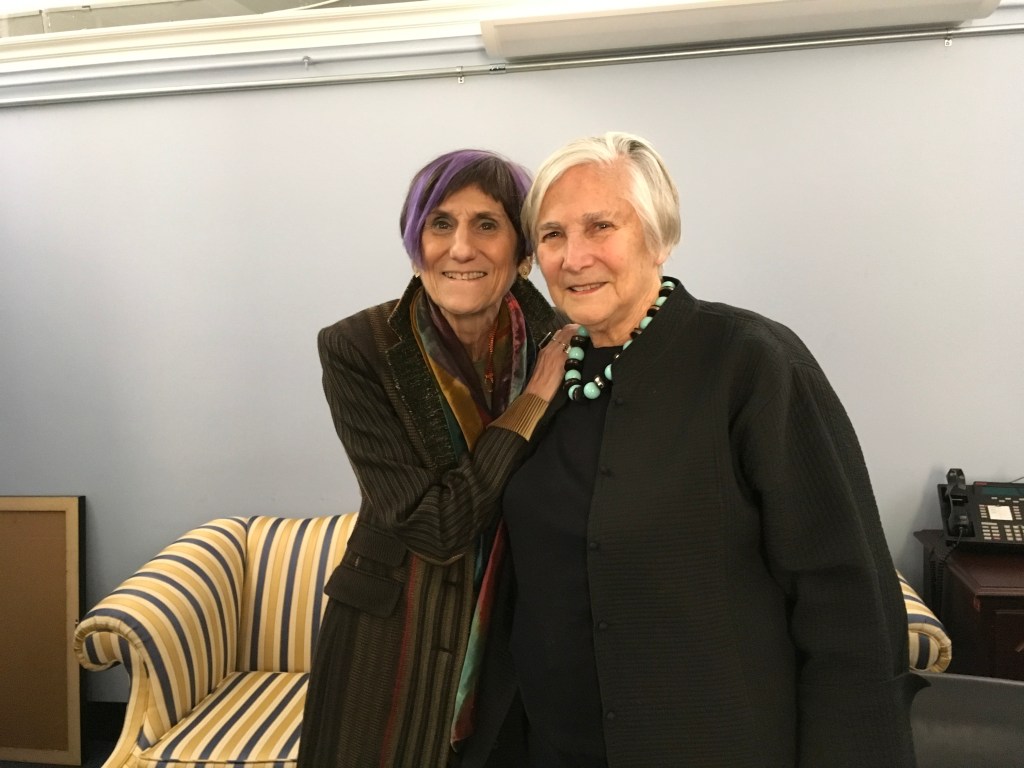
Have you lost faith in our elected officials? Let me introduce you to my personal hero. Rosa DeLauro. I have met with her several times, and she was always attentive and thoughtful. I love her values, and I love her too. It’s a very small tribute to this great woman, but I take this opportunity to add her to the blog’s honor roll for standing up forcefully to the bullying of the charter lobby.

Congresswoman Rosa DeLauro is one of the most powerful members of Congress. She is a Democrat from Connecticut. She is an outstanding liberal who fights for children and working people.

Please read her bio.

Rosa DeLauro is the Congresswoman from Connecticut’s Third Congressional District, which stretches from the Long Island Sound and New Haven, to the Naugatuck Valley and Waterbury. Rosa serves as the Chair of the House Appropriations Committee and sits on the Democratic Steering and Policy Committee, and she is the Chair of the Labor, Health and Human Services, and Education Appropriations Subcommittee, where she oversees our nation’s investments in education, health, and employment.

At the core of Rosa’s work is her fight for America’s working families. Rosa believes that we must raise the nation’s minimum wage, give all employees access to paid sick days, allow employees to take paid family and medical leave, and ensure equal pay for equal work. Every day, Rosa fights for legislation that would give all working families an opportunity to succeed.

Rosa believes that our first priority must be to strengthen the economy and create good middle class jobs. She supports tax cuts for working and middle class families, fought to expand the Child Tax Credit to provide tax relief to millions of families, and introduced the Young Child Tax Credit to give families with young children an economic lift.

Rosa has also fought to stop trade agreements that lower wages and ships jobs overseas, while also protecting the rights of employees and unions. She believes that we need to grow our economy by making smart innovative investments in our infrastructure, which is why she introduced legislation to create a National Infrastructure bank.

Rosa is a leader in fighting to improve and expand federal support for child nutrition and for modernizing our food safety system. She believes that the U.S. should have one agency assigned the responsibility for food safety, rather than the 15 different agencies that lay claim to different parts of our food system. Rosa fights against special interests, like tobacco and e-cigarettes, which seek to skirt our public health and safety rules.

As the Chair dealing with appropriations for Labor, Health, Human Services, and Education, Rosa is determined to increase support for education and make college more affordable for more American students and their families. She is also fighting to protect the Affordable Care Act so that all Americans have access to affordable care. Rosa strongly believes in the power of biomedical research and she is working to increase funding so that we can make lifesaving breakthroughs in science and medicine.

Rosa believes that we have a moral obligation to our nation’s veterans and their families, and her concern for these heroes extends to both their physical and mental well-being. Rosa supports a transformation in how the Department of Veterans Affairs is funded, including advanced appropriations for health services, to ensure its fiscal soundness; and she successfully championed legislation to guarantee that troops deploying to combat theaters get the mental health screening they need both before and after deployment, as well as championed legislation that now provides assistance to today’s Post-9/11 veterans choosing to pursue on-the-job training and apprenticeship programs.

Rosa belongs to 62 House caucus groups and is the co-chair of the Baby Caucus, the Long Island Sound Caucus, and the Food Safety Caucus.

Soon after earning degrees from Marymount College and Columbia University, Rosa followed her parents’ footsteps into public service, serving as the first Executive Director of EMILY’s List, a national organization dedicated to increasing the number of women in elected office; Executive Director of Countdown ’87, the national campaign that successfully stopped U.S. military aid to the Nicaraguan Contras; and as Chief of Staff to U.S. Senator Christopher Dodd. In 1990, Rosa was elected to the House of Representatives, and she has served as the Congresswoman from Connecticut’s Third Congressional District ever since.

Rosa is married to Stanley Greenberg. Their children—Anna, Kathryn, and Jonathan Greenberg—all are grown and pursuing careers. Rosa and Stan have six grandchildren, Rigby, Teo, Sadie, Jasper, Paola and Gus.

Download Congresswoman DeLauro’s Biography

Download Congresswoman DeLauro’s Official Photo

Congresswoman Rosa DeLauro and I in 2018: My hero.

Congresswoman Rosa DeLauro of Connecticut is one of the most important members of the U.S. House of Representatives. She is chair of the House Appropriations Committee.

She sent the following letter to Education Secretary Miguel Cardona, endorsing the Department’s proposed reform of the federal Charter School Program and criticizing the charter lobby for spreading lies:

Dear Secretary Cardona,

In July 2021, House Democrats passed the fiscal year 2022 Labor, Health and Human Services, Education, and Related Agencies appropriations bill which included a landmark provision prohibiting federal funding to charter schools run by for-profit education management organizations (EMOs). Under these management relationships, charters accept federal funds only to have their schools run by low-quality, for-profit companies rife with conflicts of interest. The provision was designed to safeguard our critical federal investments in education and protect us all from the financial risks posed by for-profit charter schools.

Predictably, the for-profit charter EMOs were not pleased with this legislative development. In response, their national trade organization led a well-funded misinformation campaign incorrectly claiming that the provision would prevent federal funds from going to any charter school that uses a contractor for any discrete service. These unserious efforts and false claims were advanced by their national trade organization to shift outrage and attention away from the risky, low-quality for-profit charter schools they represent.

Their national trade organization is employing similar tactics through the exaggerations and misrepresentations they are spreading in opposition to the Department’s reasonable proposed regulations for the fiscal year 2022 Charter Schools Program (CSP) competitions. Rather than accommodate the bad faith efforts of a trade organization that advocates for for-profit EMOs, the Department should move forward with its strong proposals to improve accountability and transparency for the CSP program.

For-profit EMOs

The Department has long recognized the particular risks posed by for-profit EMOs. In response to a 2016 audit, the Department conceded to the Inspector General, “ED is well aware of the challenges and risks posed by CMOs and, in particular, EMOs, that enter into contracts to manage the day-to-day operations of charter schools that receive Federal funds. We recognize that the proliferation of charter schools with these relationships has introduced potential risks with respect to conflicts of interest, related-party transactions, and fiscal accountability, particularly in regard to the use of federal funds.”

Such EMO-related conflicts are on clear display in the example of AmeriSchools in Arizona. Four AmeriSchools charter schools were chartered by Reginald Barr. His late wife Sandra was the president of the schools’ board. The schools pay the EMO Edventure to manage all activities and programs; Sixty Five Plus to lease their building; and One Employment Plus to pay school employee salaries. All three for-profit companies are owned by the Barrs. Ownership of One Employment Plus is also shared by the Barrs’ daughter, Deborah LeBlanc, who also sits on the schools’ board.

In addition, for-profit charter schools, including those run by for-profit EMOs, deliver concerning outcomes for students. A 2017 report from Stanford University’s Center for Research on Education Outcomes compared student performance at non-profit charters, for-profit charters, and traditional public schools and found that for-profit charters perform worse in reading, and significantly worse in math, than non-profit charters. In addition, the report found that for-profit charters perform worse in math than traditional public schools.

In light of these serious concerns, I am pleased that the proposed rule includes a clear requirement that a charter school receiving CSP funding cannot contract with a for-profit EMO; however, when considering the complicated web of for-profit conflicts in the AmeriSchools example, I recommend a modest edit to the proposed language:

  1. Each charter school receiving CSP funding must provide an assurance that it has not and will not enter into a contract with a for-profit management organization, including a non-profit management organization operated by or on behalf of a for-profit entity, under which the management organization and its related entitiesexercise(s) full or substantial administrative control over the charter school and, thereby, the CSP project.

Community Impact Analysis

The Department’s proposed requirement for CSP recipients to provide a community impact analysis will generate essential information to assist the Department’s grantmaking decisions. The language, which requires “descriptions of the community support and unmet demand for the charter school, including any over-enrollment of existing public schools or other information that demonstrates demand for the charter school…,” will generate helpful information for the Department and the public. I strongly urge you to retain this specific language in the final rule.

In addition, the Department’s proposed language aimed at determining whether a proposed charter school will increase racial or socio-economic segregation or isolation in the schools that the students currently attend is vitally important. I strongly urge the Department to retain this language to guarantee that CSP grants do not inadvertently exacerbate inequities in our public education system.

Charter School and Traditional Public School or District Collaborations That Benefit Students and Families

I strongly agree with the Department’s goal to support more CSP grants that strengthen both charter schools as well as the local public school system by establishing a new competitive preference priority (CPP). I am encouraged by the potential for CSP grants to support charters and districts through collaborations around curricula, teacher and school leader development, transportation, and other areas of shared interest. For this vision of collaboration to succeed within CSP, I urge the Department to include this priority as a CPP in the fiscal year 2022 CMO and Developer Grants competitions.

I applaud the Department for its efforts to introduce greater accountability and transparency in the CSP program. Further, I urge the Department to disregard bad faith arguments from self-interested organizations that misrepresent these important proposals. Thank you for your attention to this matter.

Sincerely,

Rosa L. DeLauro

Chair

House Appropriations Committee

# # #

delauro.house.gov

Carol Burris, executive director of the Network for Public Education, wrote about the letter that Congresswoman Rosa DeLauro of Connecticut sent to Secretary of Education Cardona. Congresswoman DeLauro is chair of the powerful House Appropriations Committee:

Congresswoman Rosa DeLauro, Chair of the House Appropriations Committee, issued a blistering reproach of how “the national trade organization representing for-profit EMO’s is running a well-funded misinformation campaign” to stop the proposed regulations of the U.S. Department of Education to provide more accountability and transparency in the federal Charter Schools Program (CSP).

Although Chairwoman DeLauro does not mention the National Alliance of Public Charter Schools (NAPCS) by name, that organization has been leading the campaign telling President Biden and Secretary Cardona to #backoff. “In 2019, the NACPS Hall of Fame winner was Fernando Zulueta, the founder and owner of the largest for-profit chain in the United States, Academica. Zulueta served on their board for years,” according to Carol Burris, the Executive Director of the Network for Public Education. NPE issued a report last year on the for-profit charter industry, entitled “Chartered for Profit: The Hidden World of Charter Schools Operated for Financial Gain.”


Burris continues, “The campaign of misinformation waged by NACPS at defeating sensible reforms in CSP regulations has been relentless. Wild and untruthful claims made include that the Department does not believe rural charter schools and culturally affirming charter schools should exist, that public school districts would need to approve new charter schools, and that the regulations would override state law. Each of these outrageous false claims are intended to do one thing–frighten parents who send their children to charter schools to oppose the regulations in order to ensure that for-profit run charters and white flight charters can still get CSP funding.”

According to the Chair’s press release, which you can find here, this is not the first time that the same organization has used misinformation in order to protect the for-profit charter industry. The “trade organization” , presumably the National Alliance for Public Charter Schools, led a similar campaign of misinformation last summer, according to Chair DeLauro.

In July 2021, House Democrats passed the fiscal year 2022 Labor, Health and Human Services, Education, and Related Agencies appropriations bill which included a landmark provision prohibiting federal funding to charter schools run by for-profit education management organizations (EMOs),” wrote Chair DeLauro. “Predictably, the for-profit charter EMOs were not pleased with this legislative development. In response, their national trade organization led a well-funded misinformation campaign incorrectly claiming that the provision would prevent federal funds from going to any charter school that uses a contractor for any discrete service.”

Chair DeLauro goes on in the release to praise the Education Department’s CSP reforms. “I applaud the Department for its efforts to introduce greater accountability and transparency in the CSP program. Further, I urge the Department to disregard bad faith arguments from self-interested organizations that misrepresent these important proposals.”

The National Alliance for Public Charter Schools received a CSP grant of nearly 2.4 million dollars in 2018, as did other charter school trade and lobby organizations who are joining the #BackOff campaign.


Ian Mackey, a Democratic state representative whose district includes St. Louis, gave a blistering speech in the Missouri legislature that scorched a Republican colleague who proposed a bill to ban trans athletes from all school sports. Mackey knew the bill would pass easily in the overwhelmingly Republican legislature. And it did. But as a matter of conscience, he spoke out against it.

Mackey’s impassioned speech has been viewed more than 2 million times on social media. He knows that the Republicans are acting not to solve a problem, but to express hatred for a tiny, powerless, frightened minority.

Republicans assume that if they ignite culture wars against gays, blacks, immigrants, and women who seek an abortion, they won’t need to come up with any policies that address actual problems, like an unfair tax system that benefits billionaires, climate change, or helping public schools. They can keep yammering about ”socialism” and ”the radical left” while doing their best to strangle any meaningful policy changes that improve people’s lives, other than their donors.

There is a sort of hysteria about transgender people that has gripped the minds of (mostly) Republican legislators. They claim that teachers are “grooming” children to be gay or transgender. We used to think of the word “groom” to refer to a male who was getting married and the word “grooming” as a description of one’s manner of dress (“good grooming” or “bad grooming”). Now the word has a sinister connotation, as rightwing zealots like Christopher Rufo and Moms for Liberty accuse the nation’s teachers of conspiring to turn their students gay or transgender.

The Williams Institute at the School of Law at UCLA developed an estimate of the number of transgender people in the U.S. population. The estimate is that transgender people are 0.06%, or about 1.4 million people. Unless my math is off, that is six people out of every 10,000 people identify as transgender.

I have not seen any evidence that children were turned gay or transgender because of what their teachers did in school. It seems to be a decision that is never taken easily or lightly because there is so much social opprobrium attached to being transgender.

The issue has been dormant until recently, when a transgender woman (formerly male) swimmer won national competitions. So, now, the issue has become a matter of “protecting women’s sports.” No one worries about a transgender man (formerly female) competing in men’s sports, but they believe that a transgender woman has biological advantages that make the competition unfair.

I won’t share my views because frankly I am conflicted. The only thing I can say with conviction is that a problem that affects a very tiny number of people has been cynically turned into a culture war issue.

Today is the world-famous Boston Marathon. It is a good time to remember Kathrine Switzer.

Kathrine Switzer was the first woman to enter the Boston Marathon, in 1967. She applied to run by using her initials instead of her first name.

For the previous 70 years, the famous marathon was open to male athletes only.

She ran with her coach and her boyfriend alongside her. They were both students at Syracuse University.

When race officials realized there was a woman running, they tried to drag her out of the race and rip the numbers off her back.

Her boyfriend pushed the older men out of the way, so that Kathrine could continue.

She was asked by the press, “Are you a suffragette? Are you a crusader?”

She said, “No, I am just trying to run.”

Three major religious events converge this weekend: Easter, Passover, and Ramadan.

To readers who celebrate these holy days, I send good wishes.

To those who are non-religious, I also send good wishes.

To everyone, I send my personal hope that we can share a world without war, a world of kindness, a world of plenty, a world in which we can share the bounty of a healthy earth, and a world in which everyone is respected.

Above all, in this moment, I hope that Mr. V. Putin stops his war against Ukraine. Please end the killing and destruction.

Let us together seek Peace, Joy, Freedom, Democracy, and Justice. Not just for ourselves but for everyone.

The Washington Post reports on the fierce battle for Mariupol, which has been under siege for weeks:

As Russia appears poised to capture Mariupol more than six weeks into the invasion, the governor of Ukraine’s Donetsk region said Friday that while Ukrainian troops remain in control of the strategic port city, Mariupol “has been wiped off the face of the earth” by Russian forces.

Pavlo Kyrylenko, the governor, told CNN that troops are still “courageously defending Mariupol” against the Russian forces that have bombarded the city on the Sea of Azov, leaving it in ruins.

“The enemy cannot seize Mariupol. The enemy may seize the land that Mariupol used to stand on, but the city of Mariupol is no more,” Kyrylenko said. “The city of Mariupol has been wiped off the face of the earth by the Russian Federation, by those who will never be able to restore it.”

This is barbarism.