In his blog, Uncommon Sense, Steve Ruis examines the hypocrisy of abortion advocates, who insist that everyone must be subject to their religious beliefs. They claim that they believe in the sanctity of life, yet many don’t oppose the death penalty.
Many love school choice yet oppose a woman’s choice about her body. Anti-vaxxers carry signs saying “My body, my choice,” yet fight to prevent women from having a choice about their bodies, even in cases of rape and incest.
For many years, we have had a policy of respect for all religions, so long as their precepts don’t harm anyone else or themselves. If your religion forbids abortion, don’t get one. If your religion is silent on the subject, your decision should not be made by others.
The sad thing about the “pro-life” movement is that they care passionately about the unborn, but are frequently indifferent to the well-being of the born.
Peter Montgomery, writing at Right Wing Watch, lays out some of the behind-the-scenes work going on among some right wing groups.
The right-wing campaign to stifle teaching and discussion about racism in U.S. history and institutions is fearmongering about critical race theory to mobilize right-wing activists and conservative voters to take over local school boards.
The Leadership Institute, which has trained generations of right-wing activists, is promoting a 20-hour online course to train conservatives how to run for their local school boards in order to “stop the teaching of Critical Race Theory before it destroys the fabric of our nation.” Critical race theory is an academic analytical framework for exploring the existence and impact of systemic racism. Over the past year, the term has been aggressively deployed as a right-wing culture-war weapon that is being used to smear educators and social justice activists. Campaigns against efforts to examine racism in school settings are often combined with attacks on other initiatives to promote inclusion, such as anti-discrimination policies based on sexual orientation and gender identity.
Right Wing Watch previously reported that Intercessors for America and the Center for Renewing America, the latter run by former Trump administration official Russ Vought, are distributing a toolkit that encourages conservatives to “reclaim” their schools by taking over local school boards through campaigns focused on opposition to critical race theory. The Leadership Institute, with its new course, appears to be following their lead.
An email promoting an online presentation about the Leadership Institute’s new training sessions, which begin on Aug. 9, declares that “conservatives are preparing a school board takeover and you can get involved.” The presentation was made by the Leadership Institute’s director of international trainings Ron Nehring, a protégé of anti-tax activist Grover Norquist who ran as a Republican candidate for Lt. Gov. of California in 2014 and served as a spokesman for Sen. Ted Cruz’s 2016 presidential campaign.
“The left has spent many years and vast funding to stack local school boards,” the Leadership Institute’s website claims. “America’s children suffer the effects of this liberal domination every day.” The group adds, “Patriotic Americans must take back the schools.”
Ethan DeWitt of the New Hampshire Bulletin and NPR reported on the partisan divide surrounding vouchers. Republicans budgeted for 28 students but expect between 1,000-5,000 to enroll. Democrats worry that the cost of vouchers will spin out of control.
Both should worry that the evidence base for the efficacy of vouchers shows high attrition rates and meager or negative academic results. Furthermore, the voucher advocates repeat the big lie that a state grant of $5,000 will give poor kids the same opportunities as rich kids, whose families pay far more for private schools.
During a two-hour event sponsored by the conservative advocacy organization Club for Growth, DeVos and Pompeo applauded New Hampshire’s initiative. And they framed the effort to allow public money to help students attend private schools as essential to closing the country’s achievement gap when compared to other developed countries.
“The same chance”? Not so. Saying it doesn’t make it so.
Representative Mel Myers, Democrat and ranking member of the NH House Education Committee, sent me the following comment:
You have to remember that this voucher policy was slipped into the budget with no public hearing on this bill version. Our House Education Committee heard a similar bill which was tabled after a rigorous challenge on the part of the Democratic members of the committee. During the remote hearing, over 1000 signed up and over 800 were in opposition. Our Governor Chris Sununu and Commissioner of Education Frank Edelblut continue their agenda to dismantle NH education which has always ranked in the top five in the nation.
Jeanne Diestch, a former Democratic state senator in New Hampshire, recently wrote about the attention showered on the state’s new voucher program by Republican conservatives like Mike Pompeo, a likely Presidential candidate, and Betsy DeVos. Republicans took control of the New Hampshire legislature until 2020; its Governor, Chris Sununu, is a Republican, and he appointed the state’s commissioner of education, Frank Edelblut, who homeschooled his children. Republicans wasted no time in passing a sweeping voucher bill.
US Conservatives Eyeing NH Vouchers
Diestch wrote in her newsletter:
Why the GOP hates the world’s top education models
When a former Secretary of Education and a future Presidential candidate come to New Hampshire for the rollout of a new state educational policy, you know something important is afoot. The candidate, Mike Pompeo, stated at the event that US schools are falling behind because we have a “public-school monopoly”; adopting NH’s “Education Freedom Accounts” [EFAs] would allow the “free market” to correct this problem. This change is so important to conservatives that the Koch-founded Americans for Prosperity is handing out supportive pamphlets door-to-door in Bedford. So let’s look at three questions:
Why do conservatives want the free market to control education rather than local public-school districts?
Why are so many outside the state so interested in a change inside New Hampshire?
How will all this impact us, the people of the state?
WHY DO CONSERVATIVES WANT FREE-MARKET EDUCATION? Nations with top education scores all rely on public schools. If the US followed their examples:
Teachers would be highly educated, well-paid and respected. In Finland, for example, acceptance for an education degree can be more competitive than medical school.
Schools would have shorter vacations, but also shorter school days. In China, elementary students take 90-minute lunch breaks. In Singapore, teachers use the additional time for planning lessons and collaborating on how to improve students’ performance.
After the regular school day, learning would continue at home or in tutoring sessions, especially for secondary students. Parents’ role in most successful nations is to ensure children do their three hours or so of assigned homework.
All these top-scoring countries rely on public-education systems. (Note that China is not really first; it only submits scores from 4 wealthy provinces.)Why don’t conservatives want to follow these successful models? More school days with highly qualified educators cost more. Companies want to sell high-margin educational software, supported by low-paid trainees, rather than pay education professionals’ salaries. New Hampshire’s EFAs potentially shift millions from public-school teachers and administrators to corporations seeking shareholder profits. In addition, church-based schools are seeking their share of EFAs. Then there is the fact that more-educated people tend to vote Democratic.
WHY SO MANY EYES ARE WATCHING NH EFAS That is why so many outside New Hampshire are focused on EFAs here. National and international commercial and religious interests will be contributing to Mr. Pompeo and other conservative candidates. Donors hope that if a highly ranked state like New Hampshire can be convinced to hand their taxpayer dollars to unsupervised scholarship funds (see inset below), the rest of the nation will follow.EFAs hide spending detail from taxpayers
EFAs move millions in taxpayer funds from local school board oversight to an independent contractor. The contractor only has to report three things to the Department of Revenue Administration: amount spent on administration, total number of scholarships, and average scholarship size. The state has no knowledge of who receives how much. — NH RSA 77 G:5(g)HOW EFAS WILL CHANGE NH EFAs impact far more than students. When EFAs substitute a $4600 payment for a year of public-school education, someone has to make up the difference. A religious school might charge only $2000 more per year in tuition, but how many low-income households can afford $2000 per child? The upshot is that poor neighborhoods will still need to rely on public schools, but those schools will have fewer per-student dollars to support them. Property taxpayers will have to make up the difference or close schools. The hit will be especially severe in Coos County, where thousands of educators comprise a significant segment of employees. When those schools are forced to close, most educators will move out, worsening Coos towns already dwindling populations and decreasing property values. Our most diverse populations in Manchester and Nashua are also more likely to suffer from the shift in funding caused by EFAs because they have lower incomes. In southern New Hampshire, the census showed that population did increase due to in-state migration. But what families will want to move into a state whose public schools are foundering? The answer is, those families for whom $4600 is enough to send their children to low-tuition religious schools, those families who can already afford expensive private school but would like taxpayers to subsidize them, and those families who want taxpayer funding for parent-guided home education programs. These differ from the workers attracted over the last decade to New Hampshire for its highly rated public schools. How will this affect companies struggling to find employees? No one knows, but the answer will certainly impact our economy. EFAs will also impact New Hampshire society. Communities forced to close their schools will become less cohesive. Children educated only alongside others with similar backgrounds will have less understanding of the world and their place in it. They will be less able to succeed in the diverse demographics that will make up our nation’s future. Perhaps conservatives have decided not to follow successful models for improving public education because they do not want the public to be educated. They would prefer people who let corporations and the wealthy take advantage of them, who have been taught to villainize a government that protects public interests.
Dana Milbank is a regular opinion writer for The Washington Post. As a native Texan, who still has strong emotional ties to the state, I found his analysis to be deeply upsetting. Since the Supreme Court’s decision not to overturn the Texas abortion ban, I can no longer buy anything from Texas, including Tito’s, my favorite vodka. When the anti-vaxxers show up at school board meetings proclaiming “My body, my choice,” I wonder why they don’t feel the same about women’s reproductive rights.
Texas this week showed us what a post-democracy America would look like. Thanks to a series of actions by the Texas legislature and governor, we now see exactly what the Trumpified Republican Party wants: to take us to an America where women cannot get abortions, even in cases of rape and incest; an America where almost everybody can openly carry a gun in public, without license, without permit, without safety training and without fingerprinting; and an America where law-abiding Black and Latino citizens are disproportionately denied the right to vote. This is where Texas and other red states are going, or have already gone. It is where the rest of America will go, unless those targeted by these new laws — women, people of color and all small “d” democrats — rise up.
On Wednesday, a Texas law went into effect that bans abortions later than six weeks, after the Supreme Court let pass a request to block the statute. Because 85 to 90 percent of women get abortions after six weeks, it amounts to a near-total ban. Already on the books in Texas is a “trigger” law that automatically bans all abortions, even in cases of rape and incest, if the Supreme Court overturns Roe v. Wade. At least 10 other states have done likewise.
Also Wednesday, a new law went into effect in Texas, over the objections of law enforcement, allowing all Texans otherwise allowed to own guns to carry them in public, without a license and without training. Now, 20 states have blessed such “permitless carry.”
And on Tuesday, the Texas legislature passed the final version of the Republican voting bill that bans drive-through and 24-hour voting, both used disproportionately by voters of color; imposes new limits on voting by mail, blocks election officials from distributing mail-ballot applications unless specifically requested; gives partisan poll watchers more leeway to influence vote counting; and places new rules and paperwork requirements that deter people from helping others to vote or to register. At least 17 states have adopted similar restrictions.
All three of these actions are deeply antidemocratic. Texans overwhelmingly object to permitless carry. Fully 57 percent of Texas voters oppose such a law and only 36 percent support it, according to a June poll by the University of Texas and the Texas Tribune. The partnership’s April poll found that, by 46 percent to 20 percent, Texans want stricter gun laws — and support for tougher laws is 54 percent among women, 55 percent among Latinos and 65 percent among Black voters.
Texans also oppose banning all abortions if Roe is overturned, with 53 percent against a ban and 37 percent for one. Women oppose the ban, 58 percent to 33 percent. A narrow plurality (46 percent to 44 percent) oppose the six-week ban, too.
Furthermore, pluralities of Texans opposed the ban on drive-through voting and restrictions on early voting hours. The drive-through ban was particularly objectionable to Black voters (52 percent opposed to 30 percent in the April poll) and Latino voters (44 percent to 36 percent), as were the limits on early voting hours, opposed 52 percent to 28 percent among Black voters and 46 percent to 31 percent among Latino voters.
And that’s the whole point of such voter-suppression laws. Texas became a “majority minority” state more than 15 years ago — and the country as a whole will follow in about two decades. But White voters still dominate the electorate. Latinos are about 40 percent of the Texas population, but only 20 to 25 percent of the electorate. Texas legislators aren’t answering to the people but rather to the White, male voters that put the Republicans in power. The new voting law, by suppressing non-White votes, aims to keep White voters dominant. As demographics turn more and more against Republicans in Texas, their antidemocratic actions will only get worse.
Bad things happen when leaders don’t reflect the will of the people. This is happening already in Texas and some other red states. It will be happening more nationally if Republicans get their way.
New York State mandated mask-wearing in school. Six students arrived at school in Islip without masks. They were directed to a separate room. Their parents showed up promptly and called the police. This is a story that is repeated, in various ways, in districts across the nation, as parents debate and fight over whether their children should follow public health guidelines.
This is the question: why don’t these parents object too vaccines for measles, mumps, rubella, polio, smallpox, and other contagious diseases?
On Thursday morning, six Islip Middle School students came to school without masks. When staff asked them to put masks on, as required by current New York State health rules, the students refused. They were escorted to a room with a security guard when, according to the Suffolk County Police Department, a parent of one of the students called police, who arrived at 9:50 a.m…
Islip Superintendent Dennis O’Hara issued a statement about the incident: “The safety and well-being of our students and staff continues to be a top priority,” he said.
In a Facebook group called “Moms for Liberty—Suffolk County,” parents against school masks compared the district’s actions to “segregation.”
Carol Burris dug into federal charter school grants and was appalled by what she discovered in North Carolina.
The Charter Schools Program Funds White Flight Schools in North Carolina We were appalled when we saw the list of charter schools funded by federal money through the CSP. The U.S Department of Education awarded a grant to the North Carolina Department of Public Instruction that passed the money on to white flight charters to expand. Awards were given to schools that do not participate in the federal lunch program nor provide transportation, as well as schools that require parents to volunteer or make donations. One of the schools even uses corporal punishment. Eleven of the schools are or will be run by for-profits.
The Network for Public Education and more than 60 other national and local organizations wrote a letter to Secretary Cardona asking him to investigate and call back the grant issued by Betsy De Vos. We also filed a complaint with the Office of the Inspector General on irregularities we found.
Our complaints are under review. This blatant abuse of federal tax dollars, increasing segregation in the North Carolina public school system, cannot stand.
Mike Klonsky writes about the public schools that were closed by former Mayor Rahm Emanuel (recently appointed as Ambassador to Japan). Emanuel ordered the closure of 50 schools in one day, something never done before by anyone. The reason given was “underutilization.”
Now, in the midst of the pandemic, Chicago public schools are overcrowded.
Klonsky writes:
Back in 2016, there was a plan to turn Dett into a center for women and girls or an artist incubator but potential buyers for the building backed out. So CPS was stuck with it. Neighborhood students were instead assigned to nearby Herbert or enrolled in charter schools.
Today students are back in school in Chicago with classrooms packed to overcapacity. Many schools are overcrowded with some kindergarten classrooms stuffed with more than 30 children, a horrifying thought in the middle of this deadly pandemic when there’s not yet a vaccine available for young children.
The lack of available classroom space forced the board to roll back its distancing requirement from six feet to three feet “wherever possible” with unmasked kids often eating together, shoulder-to-shoulder in school lunchrooms. In the high schools, we’re seeing images of students, many unvaxed, packed together in crowded hallways between classes.
I can’t even imagine being a short-handed teacher, trying to keep up with 32 or so kinders, keeping them masked and at least three feet apart, all the while trying to do some great teaching. And yet, like so many heroic doctors, nurses, and front-line medical staff, teachers are giving it their best shots. But I doubt this mode is sustainable.
CPS is operating in crisis mode in a churning sea of divisive state politics, racial segregation and inequities, all exacerbated by the resurgent Delta variant.
Schooling in a pandemic and preparation for post-pandemic schooling offers a chance for school planners and educators to take a more holistic approach and to try and undo the damage done by the mass closing of schools a decade ago. The idea that we still have boarded-up school buildings and schools in some neighborhoods with excess classroom space, while in others, students are dangerously jammed together, is mind-boggling.
Bruce Baker of Rutgers University is one of the nation’s foremost experts on school funding and spending. He reports here on the differences between charter schools and public schools. Back in the late 1980s, when the charter idea was first promoted, it’s advocates claimed that charters would be more accountable, would produce higher test scores, and would cost less. We now know—30 years later—that none of these promises were realized.
Baker writes:
Many of us are frequently bombarded with claims that district schools have a huge revenue and spending advantage over charter schools, and those claims are almost always cited to the same series of junk comparisons produced by the University of Arkansas Department of Education Reform. The authors of those reports would have everyone else believe that no other research has even been produced on the topic. Time and time again, the same authors have engaged in a circle of self-citation and reiteration of bogus findings from the same bogus and painfully amateur analyses – analyses that first and foremost fail to appropriately assign or attribute revenues allocated to the relevant children served, and second and equally problematic, fail to compare schools providing services of similar scope, to similar populations. I will provide a follow up post which explains the correct methods for making such comparisons. But first, what do real studies, performed by competent researchers find?
Baker (yeah… that’s me, so some self-citation here), Libby, and Wiley (2015), in a peer-reviewed article, find that in Houston, the average charter school spent about $424 less than predicted and NYC charter schools were spending $2,000 more than predicted given their population characteristics.[i] That is, using models to compare otherwise similar schools, spending gaps vary by context, with modest spending gaps disadvantaging charter schools in Houston, but with charters holding a significant spending advantage inNew York City.
More recently, Knight and Toenjes (2020), in a study of Texas charter schools, found “after accounting for differences in accounting structures and cost factors, charter schools receive significantly more state and local funding compared to traditional public schools with similar structural characteristics and student demographics.”[ii]
In a study completed on behalf of the Maryland Department of Education, authors from the American Institutes for Research (AIR) found:[iii]
“in all districts except Frederick, the predicted expense is less than the actual charter expense, indicating that average spending would be less for these charter schools if they followed the spending patterns of traditional schools in their district.”
That is, when modeled by regression analysis, given a variety of student and school characteristics, charter schools were spending more than expected (meaning, more than otherwise similar TPS).
Authors from AIR arrived at similar findings using similar methods in a study completed as part of the Getting Down to Facts project in California:[iv]
“The conditional analyses, accounting for student needs and grade configuration, show that average traditional and charter spending within our sample were not substantially different in 2014-15 and 2015-16. In 2016-17, Aspire schools were expected to spend $1,000 or more than traditional schools in both LAUSD and OUSD when controlling for student needs and grade configuration (Exhibit B). When special education spending was excluded, Aspire and Green Dot schools in Los Angeles spent more than otherwise similar traditional schools in Los Angeles.”
So, yes, the squishy bottom line in all of this is that it depends on the context, and also may depend on the charter operator within that context, depending on the types of children they serve as well as their access to supplemental resources. It is certainly NOT the case that charter schools are systematically shorted large amounts of funding compared to their district school counterparts serving otherwise similar populations in regular elementary, middle and secondary schools. The studies above include estimates of funding differentials in at least some of the same locations for which the University of Arkansas studies proclaim vast disparities.
The authors of these studies have been informed more than once, with detailed explanation as to why their methods are wrong and their findings incorrect, and with reference to studies, like those above which actually apply relevant, appropriate and standard methods. Instead of making any attempts to provide more accurate methods, or simply cease reporting, these same authors have made more and more egregious errors (see their latest on special education funding) leading to similarly erroneous – politically convenient – conclusions.
It’s either complete incompetence, or intentional deceit – or perhaps a little of both (see next post on correct methods for evaluating charter/district school – or any between school spending variations).
Carol Burris, executive director of the Network for Public Education, reports the heartening news that support for school choice has declined in the latest poll by EdNext. EdNext is a pro-choice journal funded by the Hoover Institution and of there pro-choice organizations and individuals.
Support for Charters and Vouchers Has Dropped
Despite the myth that the pandemic resulted in an increased appetite for privatized alternatives to public schools, the opposite is true, according to a new poll just published by EdNext. Support for both charter schools and vouchers is down by substantial amounts. Only 33% of all Democrats now support charter schools–that’s an all-time low. Less than half of all Americans (41%) now support them. Your constant advocacy for public schools and against privatized alternatives is paying off.
Democrats are beginning to see the pattern in the rug: Whatever is being pushed by Betsy DeVos, Charles Koch, the Walton family, and every rightwing foundation is not in the public interest.
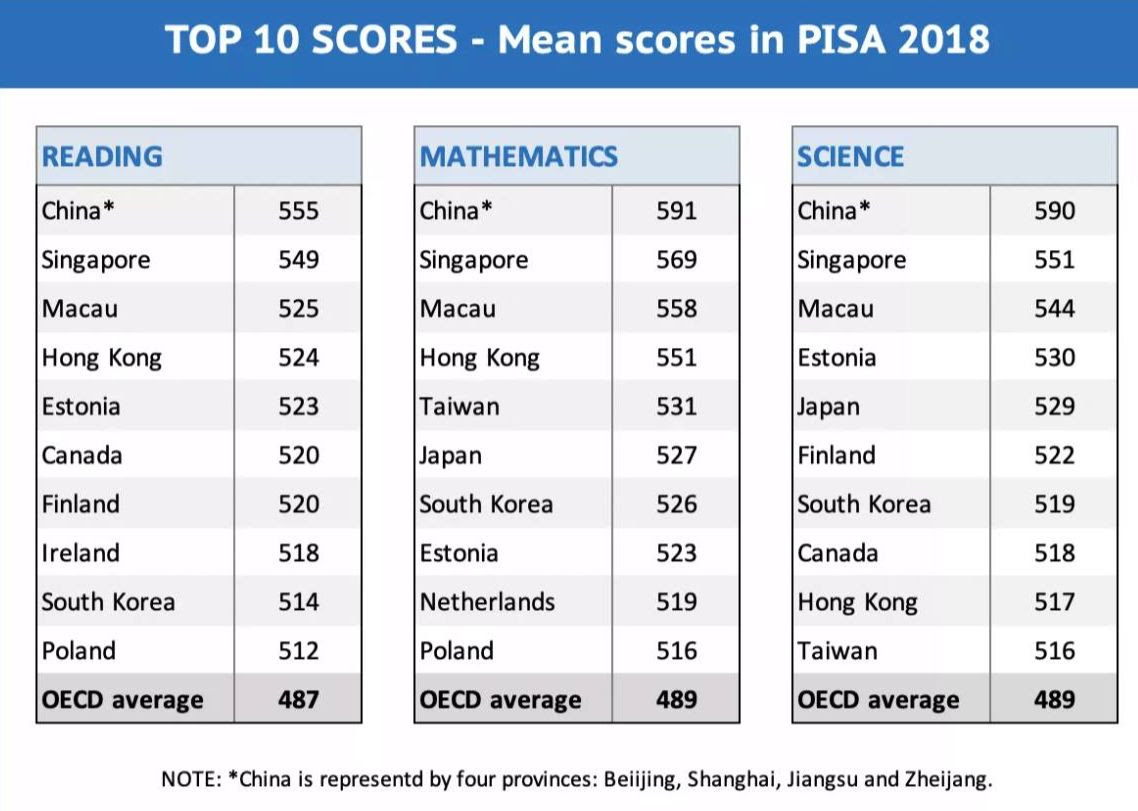 Why don’t conservatives want to follow these successful models? More school days with highly qualified educators cost more. Companies want to sell high-margin educational software, supported by low-paid trainees, rather than pay education professionals’ salaries. New Hampshire’s EFAs potentially shift millions from public-school teachers and administrators to corporations seeking shareholder profits. In addition, church-based schools are seeking their share of EFAs. Then there is the fact that more-educated people tend to vote Democratic.
 Diane Ravitch's blog