One week today, I will participate in a statewide Zoom meeting with education activists in Texas, hosted by Pastors for Texas Children.

It is a fundraising event for the important work of Pastors for Texas Children, which is a great friend to the five million children who attend public schools in Texas. PTC has been a powerful force in the effort by parents and civil groups to block vouchers in Texas. They have done this by reminding people that separation of church and state is the best protection of religious liberty and that we all have a civic duty to support our community public schools and make them better for all children. PTC, in addition, has helped to organize similar organizations in other states where public schools are under assault by privatizers.

This is a wonderful story of a public school whose students succeeded against the odds thanks to a dedicated and creative leader. Will Bill Gates or Laurene Powell Jobs come calling?

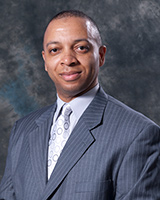
Philadelphia School Leader Named NASSP National Principal of the Year

Richard Gordon of Paul Robeson High School for Human Services announced as 2021 honoree during National Principals Month

FOR IMMEDIATE RELEASE

Contact: Bob Farrace, NASSP, 703-860-7252, farraceb@nassp.org

Reston, VA—Richard Gordon, principal of Paul Robeson High School for Human Services in Philadelphia, PA, has been named the National Association of Secondary School Principals (NASSP) 2021 National Principal of the Year. The surprise announcement, part of the 2020 celebration of National Principals Month, took place during a virtual meeting of Philadelphia principals earlier today.

Gordon won the award for successfully leading Robeson High School from the brink of closure to what is now considered Philadelphia’s premiere high school.

“Any school turnaround is hard, and it takes a special leader to sustain it,” said NASSP President Robert Motley in his presentation of the award. “But Mr. Gordon led Robeson High School’s turnaround under extraordinary political and social pressures, and at no point did he lose focus on the students. Under Mr. Gordon’s leadership, Robeson High School models what personalization was always meant to be. Personalization begins not at the data or at test targets, but at the person–with all their interests, needs, traumas, and dreams. His leadership makes that happen.”

In 2013 Gordon assumed the reins of Robeson High School, a school in a converted garage in the poverty-stricken area of West Philadelphia that was slated for closure. By 2019, Gordon’s led Robeson off the Pennsylvania High Needs/Academically Low Performing List and onto the list of High Progress Schools with a graduation rate of 95 percent. At the heart of Gordon’s success is the school motto “Build Your Own Brand,” which is realized by his meeting with each of the school’s 315 students to build an educational pathway around their interests. To help students reach their goals, Gordon established countless business, community, and dual-enrollment partnerships specific to student needs. In one illustrative case of a student who dreamed of working on the NASCAR circuit, Gordon leveraged partnerships to secure the student an internship with the nationally renowned all-female Philadelphia mechanic shop Girls Auto Clinic. They plugged him into the NASCAR circuit in the Pocono Mountains, and he drove in his first professional NASCAR-sponsored race this past summer. This case is the norm, as all students are connected to mentors and a business coach to define actionable steps for achieving their desired outcomes.

“Richard doesn’t see obstacles, only opportunities,” commented Kerensa Wing, the 2020 National Principal of the Year who served on the committee that selected Gordon. “His passion for working with kids and helping them succeed is impressive.”

Finding opportunities is a hallmark of Gordon’s leadership. When two Black men were falsely arrested at a West Philadelphia Starbucks in an incident that made national headlines and resulted in a financial settlement with Starbucks and the City of Philadelphia, the men dedicated $200,000 for seed money to launch Project Elevate through their Action Not Words Foundation. Gordon convinced the men and city leaders to select Robeson for the pilot program to equip the most vulnerable Philadelphians with the financial tools, resources, and access needed to break the cycle of generational poverty. Through this partnership, student entrepreneurs are learning how to write and execute business plans to launch businesses in their communities.

Yet, Gordon recognized early that achievement was possible only on a foundation of student safety and wellness. To that end, he created the Safe Corridors Program, a collaboration between Robeson and the University City District (a partnership of the business community, universities, community-based organizations, Philadelphia police, University of Pennsylvania Security Officers, and West Philadelphia residents) to provide extra supervision for students traveling to and from school. Partnerships with mental health therapy programs provide trauma supports for students and build a trauma-informed school environment. Truancy rates have dropped precipitously to near 10% (-22.6%), suspension rates fell below 5%, and bullying has been eliminated, with zero reports in the past 5 years– transforming the school into a safe harbor and making Robeson one of the safest schools in Philadelphia.

Gordon holds a bachelor’s degree from Lincoln University, and master’s degrees from both Coppin State University and Lehigh University.

School District of Philadelphia Superintendent William R. Hite, Jr., Ed.D. said Gordon’s commitment to serving children and families is the driving force behind his success at Robeson.

“From the moment he arrived at the District, Principal Gordon’s enthusiasm for creating a positive learning and instructional environment has yielded wonderful results,” Hite said. “We are thrilled to see him receive this recognition and look forward to even greater success for his students and the entire school community.”

“The PA Principals Association is proud that one of our very own school leaders has been named NASSP’s Principal of the Year,” said Paul Healey, the groups’s executive director, who identified Gordon as the 2020 Pennsylvania Principal of the Year. “Richard Gordon exemplifies the qualities of an effective principal and demonstrates his leadership skills, passion, dedication, and an outstanding commitment to his students and school community on a daily basis.  We are proud of his accomplishments and join in the well deserved congratulations from across PA and the nation.”

The NASSP Principal of the Year (POY) program recognizes outstanding middle level and high school principals who have succeeded in providing high-quality learning opportunities for students as well as demonstrating exemplary contributions to the profession. Each year, NASSP honors State Principals of the Year from each of the 50 states, the District of Columbia, the U.S. Department of State Office of Overseas Schools, and the U.S. Department of Defense Education Activity. Out of these exceptional school leaders, three are selected as finalists and one is ultimately selected for the National Principal of the Year award. The 2021 finalists include Adam Clemons of Piedmont High School in Piedmont, AL; and Michelle Kefford, formerly of Charles Flanagan High School in Pembroke Pines, FL, now principal of Marjorie Stoneman Douglas High School in Parkland, FL.

Gordon is one of only three principals from Pennsylvania ever to receive this national distinction, along with Kevin McHugh of the Pennsbury School District in 2002 and Michael Pladus of the Interboro School District in 1999.

For more information on the POY program, please visit www.nassp.org/poy.

About NASSP

The National Association of Secondary School Principals (NASSP) is the leading organization of and voice for principals and other school leaders across the United States. NASSP seeks to transform education through school leadership, recognizing that the fulfillment of each student’s potential relies on great leaders in every school committed to the success of each student. Reflecting its long-standing commitment to student leadership development, NASSP administers the National Honor Society, National Junior Honor Society, National Elementary Honor Society, and National Student Council.

Remember that Trump promised to “drain the swamp”? He said it again and again. Maybe he did drain the swamp, but he created another one: his swamp. The New York Times reported on Trump’s swamp. The story has many wonderful graphics, which I am unable to reproduce. I am posting only the beginning of the story, which goes into detail about Trump’s own swamp of money, influence, and power. Subscribe to the Times to finish reading and to see the graphics.

IT WAS SPRINGTIME at President Trump’s Mar-a-Lago club, and the favor-seekers were swarming.

In a gold-adorned ballroom filled with Republican donors, an Indian-born industrialist from Illinois pressed Mr. Trump to tweetabout easing immigration rules for highly skilled workers and their children.

“He gave a million dollars,” the president told his guests approvingly, according to a recording of the April 2018 event.

Later that month, in the club’s dining room, the president wandered over to one of its newer members, an Australian cardboard magnate who had brought along a reporter to flaunt his access. Mr. Trump thanked him for taking out a newspaper ad hailing his role in the construction of an Ohio paper mill and box factory, whose grand opening the president would attend.

And in early March, a Tennessee real estate developer who had donated lavishly to the inauguration, and wanted billions in loans from the new administration, met the president at the club and asked him for help.

Mr. Trump waved over his personal lawyer, Michael D. Cohen. “Get it done,” the president said, describing the developer as “a very important guy,” Mr. Cohen recalled in an interview.

Campaigning for president as a Washington outsider, Mr. Trump electrified rallies with his vows to “drain the swamp.”

But Mr. Trump did not merely fail to end Washington’s insider culture of lobbying and favor-seeking.

He reinvented it, turning his own hotels and resorts into the Beltway’s new back rooms, where public and private business mix and special interests reign.

As president-elect, he had pledged to step back from the Trump Organization and recuse himself from his private company’s operation. As president, he built a system of direct presidential influence-peddling unrivaled in modern American politics.

Federal tax-return data for Mr. Trump and his business empire, which was disclosed by The New York Times last month, showed that even as he leveraged his image as a successful businessman to win the presidency, large swaths of his real estate holdings were under financial stress, racking up losses over the preceding decades.

But once Mr. Trump was in the White House, his family business discovered a lucrative new revenue stream: people who wanted something from the president. An investigation by The Times found over 200 companies, special-interest groups and foreign governments that patronized Mr. Trump’s properties while reaping benefits from him and his administration. Nearly a quarter of those patrons have not been previously reported.

The tax records — along with membership rosters for Mar-a-Lago and the president’s golf club in Bedminster, N.J., as well as other sources — reveal how much money this new line of business was worth.

Just 60 customers with interests at stake before the Trump administration brought his family business nearly $12 million during the first two years of his presidency, The Times found. Almost all saw their interests advanced, in some fashion, by Mr. Trump or his government.

It has long been known that Mr. Trump conducted official business at his properties, and those seeking help from his administration were not shy about advertising their access to the president’s realm. The Times’s compilation reflects a review of hundreds of social media posts by his patrons, many of whom enthusiastically documented their visits to Mr. Trump’s properties, as well as an array of published news articles.

But interviews with nearly 250 business executives, club members, lobbyists, Trump property employees and current or former administration officials provide a comprehensive account of how well Mr. Trump’s customers fared with his government — and how the president profited from his reinvented swamp.

In response to detailed questions about this article, a White House spokesman, Judd Deere, issued a brief statement saying that Mr. Trump had “turned over the day-to-day responsibilities of the very successful business he built” to his two adult sons. “The president has kept his promise every day to the American people to fight for them, drain the swamp and always put America first,” he added.

Patrons at the properties ranged widely: foreign politicians and Florida sugar barons, a Chinese billionaire and a Serbian prince, clean-energy enthusiasts and their adversaries in the petroleum industry, avowed small-government activists and contractors seeking billions from ever-fattening federal budgets. Mr. Trump’s administration delivered them funding and laws and land. He handed them appointments to task forces and ambassadorships, victories as weighty as a presidential directive and as ephemeral as a presidential tweet.

Some of Mr. Trump’s patrons lost out to better-favored interests, to the chaos of his White House or to the president’s own fleeting attention span. Others are still pushing for last-minute victories. Many said in interviews that any favorable outcome from the administration was incidental to their patronage.

But whether they won or lost, Mr. Trump benefited financially. They paid his family business for golf outings and steak dinners, for huge corporate retreats and black-tie galas.

More than 70 advocacy groups, businesses and foreign governments threw events at the president’s properties that were previously held elsewhere, or created new events that drove dollars into Mr. Trump’s business. Religious organizations did both, booking more than two dozen prayer meetings, banquets and tours, capitalizing on the president’s popularity with white evangelicals to bolster their own fund-raising and clout. Until the pandemic, one well-connected lawyer hosted a monthly mixer, known as Trump First Tuesdays, attended by the president’s acolytes.
Jennifer Rubin is a columnist for the Washington Post. I believe she was chosen to express a conservative view but she was quickly repelled by Trump and Trumpism. In this column, she explains how a Democratic Congress can protect progressive policies—by doing their job.

The prospect of Republican senators marching lock-step to confirm a justice — picked precisely because of her hostility to the Affordable Care Act and legal abortion — should help Democrats boost their already commanding position in Senate races. Only by retaking the Senate can a Democratic-led Congress prevent conservative rule by the judiciary.

Come to think of it, wasn’t an overly powerful Supreme Court something Republicans used to worry about? Back when Roe v. Wade was decided, they argued that the political branches of government should determine such issues; now they seek refuge in an uber-conservative Supreme Court out of step with a large majority of Americans on everything from guns to abortion to health care.

If Democrats do go on to win the White House and have comfortable majorities in both chambers, they can begin to defang a Supreme Court that has been stocked with rigid ideologues. Much has been made of the Democratic threat of “court packing” (was it “court stripping” when Republicans decided that eight justices were enough rather than consider the nomination of Judge Merrick Garland?); however, the threat of adding justices to the bench may have its intended effect in curbing the court’s quest to overturn decades of precedent. It is the last card to be played, not the first.

Instead, the first step Congress should take is — get ready! — to legislate. It can pass a federal statute (likely to require the demise of the filibuster if it cannot be accomplished in a reconciliation bill) to codify Roe (which draws more than 60 percent support) and, if lawmakers see fit, stripping out the Hyde Amendment that limits federally funded abortions to cases of rape, incest or cases in which the life of the mother is at risk. In other words, the federal government can decide not only to protect the right to seek an abortion but also to make abortions more accessible to poor women. We can argue whether that is a good or bad policy, but no one can argue that Congress has no prerogative to address the issue. Nor can anyone say that Congress can’t, say, pass a Defense of All Marriages Act, which would secure same-sex marriages.

Congress can also “fix” the Affordable Care Act, which it intends to expand anyway, should the Supreme Court strike the law down on the basis that the tax justification that Chief Justice John G. Roberts Jr. used to uphold the law vanished when the individual mandate fell out.

Call this the Ruth Bader Ginsburg approach. When the Supreme Court refused to extend the statute of limitations in wage discrimination lawsuits, her dissent in Ledbetter v. Goodyearinvited Congress to amend the statue. It did. Much of the anti-democratic, precedent-busting work of a hyperpartisan Supreme Court can be undone by a unified Congress and White House.

Congress can also use its constitutional power to limit the jurisdiction of the court’s appellate power and to limit the terms of justices. If the Supreme Court is to be a partisan outfit, then give it less to do and make each seat less valuable.

Conservatives are rushing through a rock-ribbed conservative with little regard for precedent for one reason: They are watching their electoral majority slip away — and, “worse,” they know their prospects of a comeback are diminishing, given that the electorate is looking more and more like America and that voting is not being suppressed. A court that zigzags its way through the Constitution depending on the policy preferences of the presidents who appointed them is not a court that will engender respect. It is one that needs to be cut down to size.

Christopher Leonard, the author of Kochland, wrote an opinion article for The New York Times in which he explains that the big winner in the nomination and likely confirmation of Judge Amy Coney Barrett is Charles Koch. Koch has invested for decades in his libertarian project of freeing corporations from regulations and mandates. Koch is also a major supporter of school vouchers. Barrett was recommended to Trump by the conservative Federalist Society, which Koch funds.

Leonard begins:

Charles Koch has activated his political network to support Judge Amy Coney Barrett’s nomination, and to tip the scales on her nomination battle in the U.S. Senate. While much of the commentary about Judge Barrett’s nomination has focused on the real prospect that Roe v. Wade may be undermined or overturned, Mr. Koch has other concerns. Judge Barrett’s nomination is the latest battleground in his decades-long war to reshape American society in a way that ensures that corporations can operate with untrammeled freedom. It may be a pivotal one.

Since the early 1970s, Mr. Koch has sought to dismantle most federal regulatory institutions, and the federal courts have been central to that battle. In 1974, Mr. Koch gave a blistering speech to a libertarian think tank, called the Institute for Humane Studies, in which he outlined his vision of the American regulatory state, and the strategy he would employ over the ensuing decades to realize that vision. On the list of government interventions he condemned were “confiscatory taxation, wage and price controls, commodity allocations programs, trade barriers, restrictions on foreign investments, so-called equal opportunity requirements, safety and health regulations, land use controls, licensing laws, outright government ownership of businesses and industries.” As if that list were not exhaustive enough, he added “… and many more interventions.” In short, Charles Koch believes that an unregulated free market is the only sustainable structure for human society.

To achieve his goal, Mr. Koch has built an influence network with three arms: a phalanx of lobbyists; a constellation of think tanks and university programs; and Americans For Prosperity, a grass-roots army of political activists. And shaping the U.S. judiciary has been part of Mr. Koch’s strategy from the beginning. In that 1974 speech, he recommended strategy of “strategically planned litigation” to test the regulatory authority of government agencies. Such lawsuits could make their way to the Supreme Court, where justices could set precedent. In the 1990s, he focused on lower-level judges, funding a legal institute that paid for judges to attend junkets at a Utah ski resort and Florida beachfront properties; the judges attended seminars on the importance of market forces in society and were warned against consideration of “junk science” — like specific methods to measure the effects of pollution — that plaintiffs used to prove corporate malfeasance.

Mr. Koch also sought to influence the judiciary at the federal level. Between 1997 and 2017, the Koch brothers gave more than $6 million to the Federalist Society, a nonprofit institute that recruits libertarian and conservative judges for the federal judiciary, according to a tally by the activist group Greenpeace.

Mr. Koch’s efforts on the Supreme Court intensified after Donald Trump’s election, when a Republican-controlled Senate opened the way to install judges who could tip the court’s ideological balance. Americans for Prosperity undertook national campaigns to support President Trump’s previous Supreme Court nominees, Neil Gorsuch and Brett Kavanaugh. A.F.P. said the Kavanaugh campaign alone — fliers, digital ads and staff for phone banking and door knocking — ran into “seven figures.” Now, Americans for Prosperity is doing the same for Judge Barrett. A.F.P. activists are pressuring U.S. senators in several states, with a particular eye toward vulnerable Democrats like West Virginia’s Joe Manchin. The group is also working in Alaska, where Republican Lisa Murkowski has given mixed signals about whether she is willing to vote on Judge Barrett’s nomination before the next president is elected.

Bill Phillis, founder of the Ohio Coalition for Equity and Adequacy of School Funding explains here where the funding comes from for vouchers: public schools pay from their budgets. The cost this year is nearly $350 million, deducted from the public schools that enroll nearly 90% of the state’s children. A study funded by the conservative Thomas B. Fordham Institute showed that vouchers are ineffective and that children who use them fall behind their peers in public schools. Yet the Leislature wants to increase the funding for vouchers. Why invest in failure?

Deductions from school districts to voucher schools increased from $42,355,792 in FY 2008 to $349,304,605 in FY 2021


In 13 years, voucher deductions have increased each year except for FY 2011 to FY 2012 wherein there was a decrease of 9%. The percentage increase during the period from FY 2008 to FY 2020 has fluctuated between 7.2% and 86%. See the table below:


2008 to 2009  34%

2009 to 2010  22.8%

2010 to 2011 13.2%

2011 to 2012 -9%

2012 to 2013 86%

2013 to 2014 15.3%

2014 to 2015 15%

2015 to 2016 12%

2016 to 2017 9.1%

2017 to 2018 11.8%

2018 to 2019 7.20%

2019 to 2020 23.3%

2020 to 2021 0%

If the HB 166 EdChoice voucher expansion goes into effect next year, there will be a dramatic surge in voucher deductions.


The voucher advocates have powerful winds behind their sails. They will surge forward until state officials cave in to their demands—a voucher for every student.


No school district will be spared; hence, it is imperative that every district join the EdChoice voucher lawsuit.

The Network for Public Education Action is delighted to endorse the following candidates for election to the United States Senate:

Mark Kelly-Arizona

Jon Ossoff-Georgia

Theresa Greenfield-Iowa

Barbara Bollier-Kansas

Amy McGrath-Kentucky

Sara Gideon-Maine

Steve Bullock-Montana

Cal Cunningham-North Carolina

Jaime Harrison-South Carolina

We endorse these nine candidates as friends of public education. We are not able to send them money, but we urge friends of public education in their states to donate to their campaigns and vote for them.

The St. Louis Post-Dispatch reported that the PAC called American Federation for Children, started by Betsy DeVos, is supporting pro-charter Republican candidates in Missouri. We frequently get comments from charter advocates who insist that charters are progressive but it is hard to sustain that idea when the money to expand them comes from plutocrats like DeVos and the Waltons.

JEFFERSON CITY — A political action committee supporting state Sen. Andrew Koenig accepted $50,000 last week from a Washington, D.C., group that supports expanding charter schools, according to state ethics commission records.

Including the contribution to Koenig, the American Federation for Children, formerly chaired by U.S. Education Secretary Betsy DeVos, has poured $670,000 into Missouri races this year after legislators have continued to block efforts to allow more charter school options in the state.

By comparison, the group spent $200,000 in Missouri in all of 2018, the year of the last general election.

While proponents view charters as innovative alternatives to public schools, critics say the operations drain money from local districts. The issue is one of the most hotly contested in the Legislature, with a coalition of Republicans and Democrats scuttling recent expansion efforts.

Koenig is locked in a tight reelection race against state Rep. Deb Lavender, D-Kirkwood, in a legislative district that includes all or parts of Ballwin, Chesterfield, Kirkwood, Sunset Hills, Valley Park and other municipalities.

The 15th Senate District also includes some of the highest-rated public school districts in the state, covering all or parts of the Kirkwood, Lindbergh, Valley Park, Rockwood, Parkway, Mehlville and Hancock Place school districts.

Currently, charter schools only operate in St. Louis and Kansas City. A proposal this year would have allowed the schools to operate in any charter county — St. Louis, Jefferson, St. Charles and Jackson counties — or in any city with more than 30,000 residents.

XQ, you may recall, is the organization created by billionaire Laurene Powell Jobs to “reinvent” high schools. Thus far, it has paid out many millions of dollars but produced no results. Perhaps you remember one evening a few years ago when XQ bought time on all three networks to showcase celebrities extolling its ambitions. Arne Duncan is a senior advisor at the Emerson Collective, Ms. Jobs’ group.

Now the Emerson Collective has hired Ursulina Ramirez, who was chief operating officer at the New York City Department of Education.

Chalkbeat reports:

XQ has been increasingly partnering directly with governments to launch new schools, and it appears Ramirez will be part of that effort, drawing on her leadership experience within the nation’s largest school system. Her title at XQ is “head of systems strategy,” according to its website.

Ramirez was a special assistant to Mayor de Blasio before he became mayor. She is not an educator, but that should not be an impediment to building out Ms. Jobs’ vision for an innovative high school.

There are many reasons to be concerned about the spread of school choice via charters and vouchers. One is that it reduces the funding available for the public schools that enroll the vast majority of students. Most states are barely willing to finance their public schools, so now they divvy up the funds to support choice schools. Makes no sense. Another is that proponents of choice claim that their schools “will save poor kids from failing public schools,” but we now know that this is a false promise. Neither charters nor vouchers get better test scores than public schools, except for the charters that have selective admission and high attrition. Choice schools are free to choose their students and to push out the ones they don’t want, sending them back to public schools, which now have even less funding. Voucher schools.

Stephen Ruis writes a summary of the problems with choice on his blog, “Class Warfare.”

Here is a sample:

I cannot fathom a scenario in which school competition benefits the students most. We have seen charter school after charter school close business, some do this before they have officially opened. In business this is acceptable, but in educating the youths of our community, this is unacceptable. Those students are required, by law, to be educated. The money spent to educate those students at the closing charter schools is gone. But those students will be lined up for admission at the public schools the very next day and they cannot be turned away . . . no “Sorry, you have already spent your allocation of public education money, you will have to wait until next year to continue your education.” Imagine having been sold a lemon of a car and then dumping that and lining up at a government office for free public transportation. Is that happening anywhere? Does anyone actually want that kind of “education insurance”?

The charter school movement is sucking the funds out of our public schools systems. They are enabled in this effort by supportive politicians which make up supportive laws just for them . . . and these politicians receive “campaign donations,” aka bribes, from the charter operators to do this, often using public funds they were given for other purposes. (Any public school system doing that would result in people in jail.) The charter operators claim to offer “school choice” . . . but do they? Testing shows that charter schools are little different from public schools in educational outcomes. They differ solely in their ability to go out of business, which they do at alarming rates. So, what kind of choice is this? It is a bogus choice. It is like a restaurant making extravagant claims about the quality of their food, so you go and find out that their food is awful. The restaurant doesn’t care because they already have your money and they aren’t dependent upon repeat business. This is the Achilles heel of the “competition” argument. Modern marketing allows people to be hoodwinked into buying what they are selling. When they don’t deliver, you have no recourse. And, they are not dependent upon you being a repeat customer.

There is a word for this kind of business, several actually: scam, con, Ponzi scheme, etc.