The media focused its attention on Virginia, where the gubernatorial race was centered on education issues, especially whether parents had a right to control what their children read. A parent led a crusade against Toni Morrison’s Pulitzer Prize winning Beloved for years. The Republican winner, Glenn Youngkin, featured Mrs. Murphy’s decade-old campaign against Beloved in a TV ad. So, many journalists see the Virginia election as a repudiation of “critical race theory” or teaching the horrible facts about human enslavement.

But the North Carolina-based News & Observer published a story that went national via the Associated Press with a different slant. And according to some of the readers here, the anti-CRT, anti-masking folks lost in their districts.

Groups that oppose face masks and vaccines frequently lost. No clear national trend has emerged so far, but parents who want safe schools without censorship of high-quality literature have to organize to keep their schools boards free of extremism and bigotry.

Here is an excerpt:

In Wisconsin, four members of the Mequon-Thiensville School Board held off a recall challenge that cost anti-critical race theory backers nearly $50,000.

In Minnesota, three conservative candidates failed to win a seat on the board in Wayzata. They ran on a “Vote for Three!” platform that denounces “harmful ideologies like CRT,” political indoctrination and “controversial medical mandates.”

In Connecticut, a slate of five five candidates opposed to critical race theory lost the board of education race in the Guilford school system, where a racial reckoning began years ago, first with an episode in which a student wore blackface to a home football game, followed by a fraught debate over the elimination of its mascot, the Indians. Parents for Guilford Students, which backed the losing candidates, posted on Facebook: “Our five republican candidates lost the BOE election.” But, the post said, “those that lost the most are the dear children of Guilford.”

In Colorado, early results showed anti-mask candidate Schumé Navarro trailing in her bid for a seat on the Cherry Creek School District. The mother of three went to court last month to win the right to attend a district candidate event without a face mask, arguing that she cannot wear one because of abuse she suffered as a child. “The environment and the culture that it’s creating is just stealing from our kids,” she said of masks.

However, the fight against diversity education resonated in the school board race in the Carroll Independent School District in Southlake, Texas, where Andrew Yeager won on Tuesday night. He was backed by a political action committee that opposes a diversity and equality plan created after a video of students chanting a racial slur began circulating online three years ago. A temporary restraining order has blocked the plan.

1776 Action, a group inspired by former President Donald Trump’s now-disbanded 1776 Commission that played down America’s role in slavery, urged candidates to sign a pledge calling for the restoration of “honest, patriotic education.” At least 300 candidates and elected officials did so, said Adam Waldeck, the group’s president. Waldeck said his group also sent out mailers and targeted text messages in races in Johnston, Iowa, where three candidates have signed the pledge, and in West Chester, Pennsylvania, where law enforcement was called to investigate threats against school board President Chris McCune. The backlash stems from his ordering the removal from a July meeting of a parent who kept demanding information about critical race theory after her two-minute time limit had ended. McCune, who is on track to retain his seat, wrote in a letter to the Daily Local News newspaper in Pennsylvania that it is his duty to “maintain order” and insisted that the district doesn’t even teach critical race theory.

Read more at: https://www.newsobserver.com/news/article255471366.html#storylink=cpy
Glenn Youngkin, the Republican who won the race for governor in Virginia, centered his campaign on education, specifically on his insistence that parents should have the right to determine what their children learn and on his promise to ban “critical race theory” in the state’s public schools.

The second part of the promise should be easy, because Virginia public schools do not teach “critical race theory.”

Youngkin ran a commercial on his behalf that showed a mother complaining that her son was compelled to read Toni Morrison’s Beloved, which upset him.

What the mother did not say was that her son was a senior in an AP English class where he should have been expected to read the work of a Nobel-Prize winning author.

What the mother did not say was that her son’s discomforting experience occurred a decade ago.

What the mother did not say was that her son went on to have a successful career in the federal government.

A recent article by an African American columnist at the Washington Post contrasts this young man’s experience of Beloved with her own. She too was deeply disturbed by the book.

“Having read it, I can confirm that “Beloved” is an intense, at times frightening book.

“Toni Morrison’s Pulitzer Prize-winning novel has sex, violence, mention of bestiality. It centers on the story of a mother who kills her own child, desperate to ensure the infant won’t have to experience the horrors of slavery as she did. It’s visceral, and haunting, and deeply sad.

“But then again, imagine how enslaved people must have felt to live it.

“This exercise in empathy is, presumably, what is meant to be taught in an Advanced Placement English Literature course for 17- and 18-year-olds — which is where it was situated in the Virginia curriculum when Laura Murphy, the Fairfax County mother prominently featured in a viral campaign ad for Republican gubernatorial candidate Glenn Youngkin, began to complain about it.

“In the ad, Murphy describes being horrified by the “explicit material” after looking at her child’s reading assignment. And indeed, in 2013, her son — who was by then a 19-year-old college freshman — told The Post that the book was “gross” and hard for him to handle. “I gave up on it,” he said.

“His mother tried to have the novel banned from county schools. Having escaped the hardship of thinking about slavery, the younger Murphy went on to clerk in the Office of the White House Counsel during the Trump administration and is now a lawyer for the National Republican Congressional Committee.

“I was also asked to read “Beloved” in a high school English class, also in Virginia — Richmond, to be precise. It was a hard read. You felt bad. It was also an illuminating corrective, studied against the Virginia backdrop of Robert E. Lee worship, Stonewall Jackson fetishization, and the plantations where enslaved people, we heard in our history classes, worked mostly happily for noble, caring masters.

“The novel taught me the power of literature, how words could transmit deep emotion. It did keep me up at night, because I was grappling with the pain of another person, wondering how someone could get to such a place, how people could do these things to one another. The gory details of the book fled my mind in the ensuing years. But the feeling — I never forgot it.”

Isn’t that what great literature is supposed to do?

So, now we know that Mrs. Murphy’s son couldn’t bear to read Beloved, but it didn’t cause him any harm. Other students, however, learned from it, experienced it, and treasured their experience.

Bruce Lesley, child advocate, explains in this article in Medium why a democratic society needs public schools. It’s an excellent article and it reviews the current attacks on public schools and even their right to exist. Did you know that one candidate for U.S. Senate has called for the abolition of public schools; he thinks every child should attend a religious school. Does every parent want their child enrolled in a religious school? Are there enough religious schools to admit 50 million children? A generation ago, a proposal this absurd would have turned him into a laughing-stock.
But these days, ridiculous ideas are in the mainstream, polluting civic discourse.

Lesley’s article returns the discussion of education to reason, a rare quality in these troubled times.

Lesley explains why individual parents should not control what happens in school:

For example, imagine an elementary school of 450 students where 15 parents oppose the teaching of evolution, 19 parents believe the earth is flat, 28 are Holocaust deniers, 22 oppose white children learning about slavery, 7 believe in racial segregation, 21 believe in the concept of a school without walls, 49 demand the use of corporal punishment, 18 want to ban Harry Potter books from the school library, 26 want to ban any books that mention the Trail of Tears, 62 believe that parents should be allowed to overrule a physician’s decision that a child with a concussion should refrain from participating in sports, 87 oppose keeping their kids out of school when they have the flu, 9 believe that a child with cancer might be contagious, 29 believe that kids who are vaccinated should be the ones who quarantine, 72 support “tracking” in all subject areas, 32 believe students should not be taught how to spell the word “isolation” and “quarantine”because they are too “scary of words,” 104 don’t like the school neighborhood boundaries, 38 don’t like the bus routes, 71 parents want a vegan-only lunchroom, 4 demand same-sex classrooms, 5 oppose textbooks and want their children only reading from the Bible, and it can go on and on. The vast majority of parents do not agree with any of these things, and yet, parental rights extremists would insist schools must accommodate them, even if they are completely false, undermine the purpose of education, threaten the safety of children, or promote discrimination.

How can a school operate if every parent can decide every aspect of the education of their child, as some are demanding? It cannot.

The parents who want control of every aspect of their child’s education are homeschoolers.

Marty Levine recalls the famous saying by Dr. Martin Luther King Jr. that the arc of the moral universe bends towards justice. He read a new book about police killings of Black men and wonders if Dr. King was overly optimistic. Consider this to be a validation of critical race theory.

He begins:

In 1968, shortly before he was murdered, Dr. Martin Luther King, Jr, was still giving us hope that we would overcome. Speaking at the National Cathedral, he said we needed to keep not become despondent when things seem to be stuck because “the arc of the moral universe is long, but it bends toward justice.”

I am now wondering if he was correct.

I’m reading “America on Fire”,  a recently published book looking at police and community violence written by Elizabeth Hinton, a Yale Associate Professor of History & African American Studies and Law. Spurred to write by the series of police murders of Black men and women and the protests and violence that arose in response, Professor Hinton has found a history of a national failure to learn and unwillingness to confront reality. Time after time police violence was the match that set off violent uprisings in Black communities which had been marginalized and systematically kept in poverty and neglect. Time after time she found we said we knew that we needed to invest in people and communities. And time after time, she found, that we ignored these lessons and turned our resources to defending the built-in bias, expanding our police forces, and expanding our prison systems.

Hinton’s conclusion, formed after she analyzed more than 2,200 separate community outbreaks between 1964 (Harlem, New York) and  2001 (Cincinnati, Ohio) was that the conflict is more than just a symptom of racism and poverty. “They happened when police seemed to be there for no reason, or when the police intervened in matters that could be resolved internally (disputes among friends and family). Rebellions began when the police enforced laws that would almost never be applied in white neighborhoods (laws against gathering in groups of a certain size or acting like a “suspicious person”). Likewise, they erupted when police failed to extend to residents the common courtesies afforded to whites (allowing white teenagers to drink in a park but arresting Mexican American teens for the same behavior).”

Those in power were interested in protecting their power and the status quo rather than bringing the changes they promised. They listened to the voices of the hurting communities, said pious words about their now seeing the pain of those left out of the American Dream, vowed to take on the underlying and systemic problems that had been ignored, and then did little beyond strengthening the police.

Alternet recapitulates a Boston Globe investigation of a new phenomen: drivers who use their car as a weapon to drive into protestors.

Three Republican-led states have passed laws to protect the drivers who ran into protestors: Iowa, Oklahoma, and Florida.

On Monday, the Boston Globe reported on a “Back the Blue Act” signed by Iowa’s Republican governor, Kim Reynolds. The bill took the side of drivers who run over protesters. In June of 2020, the driver of Reynold’s state-issued Chevrolet Suburban struck a Des Moines Black Liberation Movement protester who was urging the governor to restore voting rights.

Thirteen other states are considering “hit and kill” legislation.

You can read the Boston Globe investigation here, but be advised that it is probably behind a pay wall.

There have been many reports in the media of teachers quitting their classrooms because of stress. This may be the hope of the groups funded by Charles Koch and other rightwingers, who would like to destroy public education and open new opportunities for private and charter schools.

Here is some sound advice from a retired teacher about how to restore teachers’ morale. Jennifer González writes in her blog about the basic problems and offers ways to solve them.

Here is what she says are fake answers to the problems:

PART 4: THINGS THAT ARE NOT THE SOLUTION

Before we talk about the things that will really make conditions better for teachers, here’s a list of things that won’t:

  • Jeans day or other clothing-related “rewards.”For the love of Pete, we are pulling out of a global pandemic. Just let your teachers wear jeans whenever they want.
  • Donuts, bagels, pizzas, etc. Food is always appreciated and enjoyed, so there’s no need to stop offering it; just know that it does nothing to fix the bigger problem.
  • Surface talk about self-care without any structural changes. Encouraging teachers to meditate, do yoga, practice mindfulness, take bubble baths, get mani-pedis—none of that addresses the real problem. In fact, more than one teacher has pointed out how insulting it is to have leaders give lip service to self-care while upholding conditions that chip away at mental health.
  • Surface-level invitations for teacher input. If a teacher is invited to participate in a focus group, complete a survey, or otherwise give input into school decisions, their input should actually carry weight. If a decision has already been made for all intents and purposes, or the teacher input has no impact on the outcome, then the teacher’s time has been wasted.
  • Unpredictable or short bursts of free time. When it comes to doing challenging cognitive work, “free time” is not the sum of its parts. Five minutes here, another seven there and another 20 there is not the same as knowing you have a full hour of protected, uninterrupted time. Although it’s nice to randomly end a meeting 10 minutes early or show up in a teacher’s class to give them a surprise bathroom break, teachers can’t really make the most of this kind of free time. What they need is longer blocks that they know about in advance so they can plan for them and make good use of the time.
  • Pep talks. Telling a room full of teachers that they are doing a great job will likely go in one ear and out the other of those who are worn out and demoralized.

That’s her list of what teachers don’t need. Read the post to learn what she believes will help teachers. She breaks it down into Time, Trust, and Safety.

Do you agree?

Kevin Ohlandt is a blogger in Delaware. In a recent post on his blog ”Exceptional Delaware,” he reported on the testimony of a teacher who was nearing the brink of his endurance for teaching conditions.

Ohlandt wrote:

Last night, a teacher named Steve Fackenthall gave public comment to the Red Clay Consolidated School District’s Board of Education. It echoed what most American teachers are going through these days. Teachers are mentally drained and have been since Covid turned the world upside down in the early months of 2020. It is having a tremendous effect on the American teachers. Many teachers have left the profession due to severe burnout and not enough support from their district offices. 

This can only trickle down to the American students. Some want to say teachers are lazy, overpaid, get summers off, and only care about their union. Based on my experience with teachers this couldn’t be further from the truth. Most teachers deeply care about their students and want them to be successful. The sad truth is that a lot of pressure has been put on teachers to provide not only education to children, but also social-emotional supports. 

My name is Steven Fackenthall, music teacher at Richey Elementary and Vice-President of the Red Clay Education Association. Tonight I speak to you about the extraordinary high levels of teacher fatigue and stress that is being experienced by our educators.

It’s only October 20th, yet it feels like it should be June any time now. We. Are. Tired. Our educators are drowning. To give more insight, I’d like to share with you thoughts from our educators. I’m extremely disappointed that TEACHER MENTAL HEALTH HAS NOT BEEN MENTIONED BY DISTRICT LEADERS ONCE, other than a link to the Employee Assistance Program. There have been no check-ins to see how we are managing as we are also returning following and continue during a pandemic… along with the absence of support or concern for our well being, we are being told to accelerate learning while we know many students are way behind where even the lowest students are in a typical year. 

From an elementary school teacher. There is, even more than normal, a lack of understanding of what it’s like in the classroom right now. It’s one thing to read and talk about how COVID has affected our kids, but those working office jobs within the district need to take our word on more things or come visit classrooms more often to really understand what is happening. 

I have been a Red Clay employee for 15 years and I feel hopeless. I’m sad for our students and am completely discouraged as a teacher. The general consensus is that NOBODY cares. 

I need pacing guidelines relaxed as I have kids coming back from mandatory quarantines and need to catch up. ELA expects us to get through all 4 units this year, which we never have. 

I need the micromanaging from the district to stop and just have the ability to teach and give my kids what they need. I used to love teaching but after this past year, I am seriously considering leaving. Although I love my kids, everything else about teaching is driving me over the edge, why isn’t the district listening to us? We need more support, we need more time to plan, grade and help our students, I cannot keep up these 60-70 hours a week. 

I was in tears by 11 am and apparently I was the 3rd teacher of the day to do so. I was in the bathroom sobbing saying I can’t do this. I need a different job. This isn’t’ sustainable. These words are saddening. 

These words are heartbreaking. And only a fraction of the responses I received. Red Clay board, if we are truly to respect the tireless work educators put forward for their students, then we must think about the conditions we place on them and how to improve that experience. We. Must. Do. Better. Our working conditions are our students’ learning conditions.

Ohlandt added:

District administrators need to stop worrying about “learning loss” and concentrate on the well-being of teachers and students. Teachers need to teach and students need to learn. Let them do it. Let them do the job you hired them to do. Stop with the Department of Education mandates and pressure and let your school be a school, not a bureaucracy. 

At the end of the day, if you burn out your teachers, who will teach the children? Computers? We all know how that works. We learned that lesson last year. Nothing against teachers but we learned that teaching on a screen does not work for the majority of American students.

God bless Steve Fackenthall and all the teachers in America. They are the guardians of our kids for a significant period of time before they plunge into adulthood. They deserve our respect and our admiration.

Bob Shepherd wrote this essay about reading instruction in 2019. It has aged well. It is a long discussion about the futility of the “reading wars.” Shepherd explains how useless and counterproductive the current emphasis on “reading strategies” is. It is well worth your time to sit down and read it through.

When I was a child in Houston many, many moons ago, my public school had recess every day. It was unstructured play, and it was an integral part of the school day, like art, reading, writing, math, and music. We took tests that our teachers wrote and graded, but no standardized tests. That was long ago.

Twenty years ago, Congress passed the No Child Left Behind act based on the belief that standardized testing had produced a ”Texas miracle” that was raising test scores and closing achievement gaps. There actually was no Texas miracle, but the law was passed, requiring that every child must take tests in reading and math every year and promising that every child would score ”proficient” by 2014. Every child was tested every year, and every child continues to be tested every year, but universal proficiency is nowhere to be found. Sadly, failure has not daunted the belief systems of those who value standardized testing.

In the relentless drive for higher test scores, states invested billions of dollars in test prep, interim assessments, and data-driven accountability. Testing took up not only money but time. Some districts eliminated the arts. Many eliminated recess.

Now, it seems, it requires a state law to restore what should never have been taken away from children: the right to play.

Does your school have recess? In Illinois, parents activists pressed for a law guaranteeing The Right to Play. They won.

The state of Illinois passed The Right to Play act this year.

The law resulted from the strong advocacy work of Illinois Families for Public Schools.

THE RIGHT TO PLAY EVERY DAY: PUBLIC ACT 102-0357

“Play is often talked about as if it were a relief from serious learning. But for children play is serious learning. Play is really the work of childhood.” –Fred Rogers

With the passage of SB654, the Right to Play Every Day bill, an initiative of IL Families for Public Schools, all students in kindergarten through 5th grade in IL public schools must have 30 minutes of daily play time. Time must be in increments of at least 15 minutes and can’t be taken away for punishment.

Play is fundamental to the human experience. The Convention on the Rights of the Child, ratified by 190 nations, recognizes play as a basic right for children.

Play is a crucial component of education and development, enhancing a child’s social, physical and emotional health along with academic achievement and abilities. Play is learning.

MORE RESOURCES: WHY WE NEED PLAY IN SCHOOL

BOOKS

ARTICLES

PODCASTS

Pasi Sahlberg, William Doyle, and other researchers: Thank you for defending the rights of children!

Bill Phillis is a retired state deputy commissioner of education who is dedicated to the preservation and improvement of public schools in Ohio. He has dedicated his retirement years to publicizing the harm that vouchers and charters do to public schools. He founded the Ohio Coalition for Equity and Adequacy. The Ohio State Constitution guarantees a uniform system of public schools, a commitment that the Republicans who control the state have repeatedly violated with impunity.

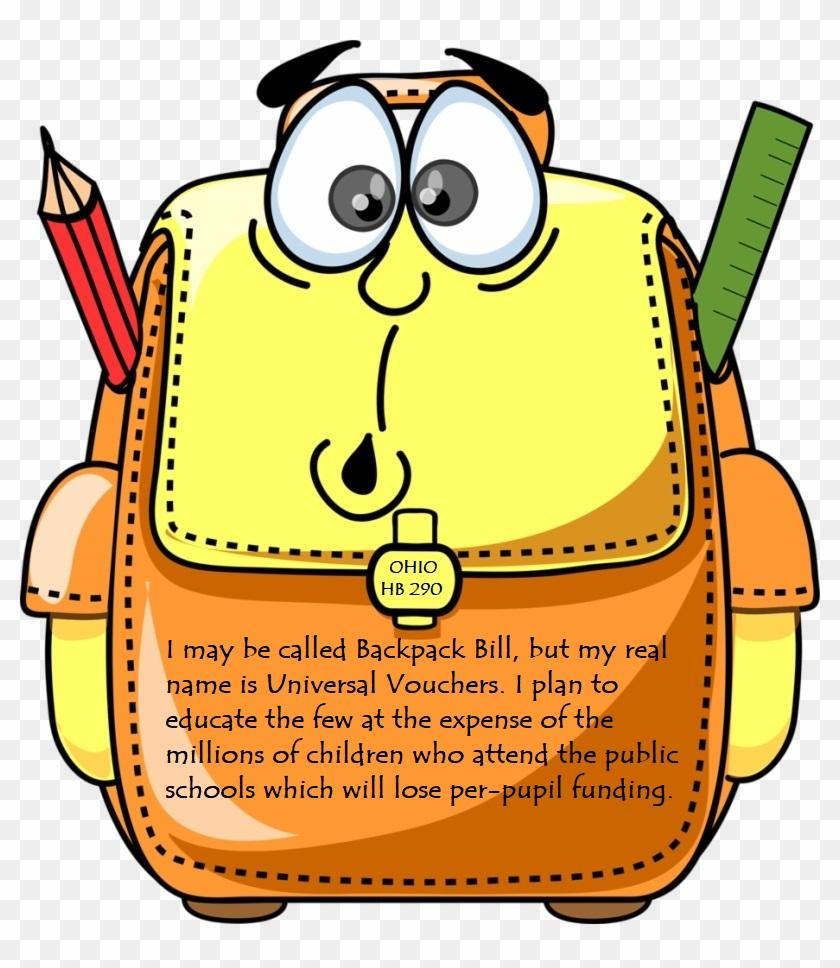
The latest gambit from the Republican privatizers called “the backpack bill,” symbolizing the idea that each child has a “backpack full of cash” to spend in any way their family chooses. They really need to see the wonderful documentary “Backpack Full of Cash.” You can rent the documentary and show it in your community.

Phillis writes:

THE OHIO UNIVERSAL VOUCHER CAMPAIGNERS USE CRITICAL RACE THEORY TO ENTICE FOLKS TO SUPPORT HB290 (UNIVERSAL VOUCHERS) IN A SLICK MAILER


The HB290 crusaders have produced and sent a fundraising mailer signed by one Aaron Baer to an undisclosed list of folks. The seven-page letter warns recipients that public schools are indoctrinating our children into radical anti-Christian ideology, “Critical Race Theory, and trans advocacy”. “They are being trained to hate America”, the letter says. They evidently combed through the classrooms of Ohio and found 4 students whose teachers were doing something that hinted at support for CRT or other controversial issues. They didn’t mention the 100,000 plus public school educators that are working selflessly to grow upstanding citizens.
The author of the letter makes such revealing statements as:

  • “…many of Ohio’s public schools have been failing our students for more than a generation.”
  • “…I initiated the Backpack Bill (HB290)…” (A couple legislators who sponsored the bill indicate they initiated the bill.)
  • “…The Backpack Bill ensures every Ohio student can have access to high quality education…”
  • The P.S. to the letter includes the statement, “Ohio students are trapped in failing public schools…”

The Backpack voucher campaigners are perpetuating the myth of the “failing public school monopoly” as a key plank in their campaign platform.

Public school advocates, who believe HB290 is too extreme to pass, need to wake up.

Follow the link to read the 8 Lies About Private School Vouchershttps://vouchershurtohio.com/8-lies-about-private-school-vouchers/

Like us on Facebook: https://www.facebook.com/OhioEandA


Photo Credit: Jeanne Melvin


The No Child Left Behind Act Has Put The Nation At RiskVouchers Hurt Ohio

William L. Phillis | Ohio Coalition for Equity & Adequacy of School Funding | 614.228.6540 |ohioeanda@sbcglobal.net| http://ohiocoalition.orgSign up for our newsletter!