The faculty senate of the University of Florida voted to reject Nebraska Senator Ben Sasse as the new president. Sasse was the sole finalist. The decision will be made by the university’s board of trusteees.

The University of Florida’s Faculty Senate on Thursday voted to support a no-confidence resolution against Nebraska GOP Sen. Ben Sasse, who was the sole finalist to be the next UF president.

“The Senate held an emergency meeting on the resolution, which questioned Sasse’s qualifications and a search committee’s decision to name him as the only finalist for the job. Senators voted 67-15 to pass the measure, after some criticized the search process and past statements made by Sasse on issues such as LGBTQ rights,” The Gainsville Sun reported.

Students have also protested the highly controversial search process which resulted in Sasse being the only finalist.

“The UF board of trustees is scheduled to consider Sasse for the position Tuesday,” the newspaper reported. “The Nebraska Republican is currently serving his second term in the Senate and was previously president of Midland University, a 1,400-student Lutheran school in Nebraska.”

The University of Florida has over 50,000 students.

“Sasse was announced Oct. 6 as the sole finalist for the UF presidency, after a search process that was conducted largely in secret,” the newspaper reported. “UF stated that its search committee reached out to more than 700 people and focused on a dozen candidates, including nine sitting presidents at major research universities.”

The Network for Public Education Action endorses Rebekah Jones, who is running for Congress against Matt Gaetz.

Vote for a woman of integrity: Rebekah Jones, District 1, Florida.

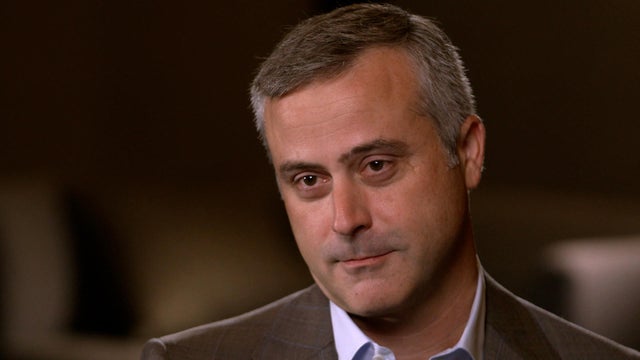
Anderson Cooper interviewed John Poulos, the CEO of Dominion Voting Systems on 60 Minutes about the attacks on the integrity of his company’s voting machines by 2020 election deniers.

Despite a rash of unsubstantiated claims lobbed against his company, the CEO of Dominion Voting Systems, John Poulos, has remained largely silent. That changed Sunday night on 60 Minutes when Poulos sat down with Anderson Cooper, saying irreparable damage has been done to his company and his employees.

“People have been put into danger. Their families have been put into danger. Their lives have been upended and all because of lies,” Poulos said. “It was a very clear calculation that they knew they were lies. And they were repeating them and endorsing them.”

“It’s important to you people admit what they said was wrong?” Cooper asked.

“It’s important to me. It’s important to all the people whose families have been impacted by this. Anderson, my kids still are not allowed to get any package from the front door until we verify that it’s actually from a trusted sender,” Poulos said.

Days after the 2020 presidential election, lawyers supporting then-President Donald Trump, including Sidney Powell and Rudy Giuliani, began spreading unsubstantiated claims that Dominion Voting Systems, an American company, had rigged the election. They said Dominion was backed by Venezuela and that its machines and software switched millions of votes from Donald Trump to Joe Biden.

They never showed any evidence, but that didn’t stop pro-Trump attorneys from making baseless claims, or conservative news networks from giving them plenty of airtime.

Poulos went through a number of their claims with Cooper, dismissing each one…

President Trump first mentioned Dominion in a tweet on November 12, 2020, and recorded a video a few weeks later, posted on Facebook, in which he said: “We have a company that’s very suspect. Its name is Dominion. With the turn of a dial or the change of a chip, you could press a button for Trump and the vote goes to Biden. What kind of a system is this? We have to go to paper. Maybe it takes longer. But the only secure system is paper.”

“We do have paper ballots,” Poulos said. “What the machines do is they count those paper ballots– in a way that makes it very easy for people to verify after the fact through the means of audits and recounts.”

dominionscreengrabs02.jpg
  John Poulos

Dominion makes two types of machines. One is called a ballot marker. It’s a touch screen device that a voter can use to mark their choices and then print the ballot. The second machine is a scanner that reads that paper ballot, counts the vote and immediately stores the ballot securely.

Poulos demonstrated on air how the voting machines work. He explained that his company has no relationship to Venezuela. He has sued various lawyers and FOX News for more than $10 billion. Judges have thus far refused to dismiss the lawsuits.

I hope that those who spread these lies and undermined faith in the integrity of our elections are fined for their deceit and unethical behavior, hopefully to the same extent as the other Big-time liar, Alex Jones.

Apparently Trump lawyers are already planning to claim that the 2022 elections were rigged, if their candidates lose.

There are three things that privatizers hate: public schools, democracy, and teachers’ unions.

In New Hampshire, the privatizers are on the move.

Jacob Goodwin writes about them in The Progressive:

New Hampshire has a proud tradition of public schools, one that, in some towns, dates back to single-room school houses of early America when students would take horse-drawn sleighs to school in the winter. Our schools—and towns, for that matter—are known for operating largely under “local control,” meaning that school boards are made up of parents and community members and are designed to act as sentinels of democracy, tasked with uplifting the highest civic ideals and aspirations.

Historically, the state has had a limited role in determining how schools are run. Consequently, New Hampshire has provided a minimal amount of school funding. While the concept of local control can be both empowering and a burden of responsibility, students and teachers cannot carry out their important work without adequate funding.

Recently, school privatizers seized curricula as a new front in their pressure campaign against teachers, determined to further squeeze public schools financially. Lacking widespread public support, New Hampshire’s legislature restricted classroom conversations about race and gender in 2021—enacting a law which drew ire for its disproportionate penalties and vague requirements. The confusing act prompted the New Hampshire Department of Justice to issue a statement of guidance, confirming the harsh penalties and doing little to protect teachers from potentially career-ending false accusations. The law has placed additional costs on districts in terms of teacher retention and recruitment, compounding staffing shortages in the profession.

Privatizers advance their damaging agenda by undermining the public confidence in schools. Each teacher that leaves due to the relentless attacks is one less trusted adult for children. And the loss of experienced professionals is a way of further loosening communal ties. Traditional, deliberative decision making of small-town New England is rooted in neighborly relational knowledge, but this is now being undercut. Privatizers only see profits by cutting costs, not the most important thing in schools—the people.

Nationwide, attacking teachers and neighborhood schools has become part of a broader strategy to divert taxpayer money away from public accountability. Profiteering and mismanagement scandals in states like Florida and Pennsylvania warn of the danger of moving decision-making from parent volunteers in the auditorium to executives in corporate board rooms.

Despite the odds, teachers are speaking up for their community schools and mounting legal challenges to unjust laws that seek to erode the essential public good of education. On September 14, the presiding federal judge declared that he would rule on the state’s motion to dismiss a suit brought by a coalition including the state’s largest teachers union within sixty to ninety days. But while the speech-chilling law remains in place, teachers fear stifled classroom discussions and even loss of licensure. And the forces of privatization have continued to stretch the civic fabric of our communities through swiftly changing our state with little public input or oversight.

After failing to pass a stand-alone voucher bill in previous legislative sessions, the state Commissioner of Education shepherded a significant voucher bill through the state legislature and into the budget. He promised that the measure would be limited and require a budget of $130,000 in the first year. In October 2021, however, the voucher law was already costing New Hampshire taxpayers $6.9 million…

Distracting the public from the actual needs of over 90 percent of students who attend public schools is part of the coordinated strategy against local control in New Hampshire. The refusal to address funding adequacy, meaningful mental health support for students, and building maintenance are among the major issues that are seldom addressed.

In Tampa, a teacher was fired for teaching false claims to students, but was then hired by a charter school. She was not an exception. Public schools have standards for teachers. Charter schools sometimes do.

Parents said Kimberly Gonzalez was upsetting their children by saying Eve was a man, Adam was gay and God was as real as Santa Claus.

Gonzalez denied making these statements. She kept her job teaching science at Progress Village Middle School in Tampa.

A year later, the concerns escalated. Children said they were told that the Holocaust basically did not happen, that Jewish people wanted World War II, and that the Auschwitz death camp was like a country club with soccer and a cinema. A parent received a link to an antisemitic conspiracy site through Gonzalez’s district messaging server.

Gonzalez told Hillsborough County school officials she wanted her students to think critically about what they learned in school. They opted not to renew her contract. After an argument about sick pay, in which she accused them of “enslaving” her, she left.

She soon found work at Bell Creek Academy, a charter school in Riverview.

Teachers at Florida charter schools, which are publicly funded but independently managed, must hold state credentials in most cases. But when they have a disciplinary history at the organizations they left, it’s unclear how extensively charter schools review them.

The Tampa Bay Times examined 14 such cases in Hillsborough County, often delving deeper into teachers’ backgrounds than the charters did when they hired them.

Peter Greene wants to save time for all organizations that react to the latest NAEP scores. His press release works whether scores are up, down, or flat.

He writes:

It’s time once again to greet the release of another set of data from the NAEP testing machine, which means everyone is warming up their Hot Take generator. But if, like me, you’re getting tired of writing a response to the latest NAEPery, here’s a handy news release that will let you mad lib your way to NAEPy wisdom.


The new scores from the National Assessment of Education Progress (NAEP), known as The Nation’s Report Card, have been released, providing important data about [insert your preferred education policy area]. The recent crisis in [select your favorite policy-adjacent crisis] has clearly created a burgeoning issue of [select whatever Bad Thing you feel will most scare your audience in the direction of your preferred policy].

Says [head of your organization], “The new scores provide important evidence that now is the time for [insert whatever policy action your group always supports]. Clearly the [rise/drop/stagnation] in scores among [whichever subgroup cherry picking best suits your point] proves exactly what we have been arguing for [however long you’ve been at this.]”

[Insert paragraph of data carefully selected and crunched for your purposes. Add a graph if you like. People really dig graphs.]

“This is a clear indication,” says [your favorite go-to education expert], “that it is long past time to [do that thing your organization has been trying to get people to do for years]. Clearly [our preferred solution] is needed.” [Insert further sales pitch here as needed.]

You can expand on this if you wish, but make sure that you definitely do not–

* provide context for the data that you include

* offer perspective from NAEP’s many critics

* absolutely never ever reference the fact that the NAEP folks are extraordinarily clear that folks should not try to suggest a causal relationship between scores and anything else.

As always, the main lesson of NAEP is that contrary to the expectations of so many policy wonks, cold hard data does not actually solve a thing.

The NAEP remains a data-rich Rorschach test that tells us far more about the people interpreting the data than it does about the people from whom the data was collected. Button up your overcoat, prepare for greater-than-usual pearl-clutching and solution-pitching from all the folks who still think the pandemic shutdown is a great opportunity to do [whatever it is they have already been trying to do].

Two women are competing to be Governor of Arizona. Katie Hobbs, the current Secretary of State, is the Democratic candidate. Kari Lake, a former talk show host, is the Republican candidate, endorsed by Trump.

The differences between them on education are stark. Hobbs would roll back the recently passed universal voucher plan. Lake is an enthusiastic supporter of charters and vouchers.

Both pledged to raise teacher pay, but Lake would tie raises to test scores.

If Lake is elected, she would impose extremist ideas that would undermine education in the state. She promises privatization and censorship. If she is elected, she will destroy public schools.

The Arizona Republic described their views:

In the coming year, Arizona schools face key challenges.

A newly minted school voucher program will steer millions of taxpayer dollars to lightly regulated private schools. A major staff shortage has left schools across the state scrambling for teachers, bus drivers and kitchen staff. Total public school spending is nearing a limit that could force massive budget cuts if the Legislature doesn’t act.

The governor has significant sway in shaping the future of education in Arizona. They can propose priorities for legislative action, choose bills to sign, call special legislative sessions, appoint members to the State Board of Education and issue executive orders.

Arizona’s candidates for governor offer voters a stark choice on education policy.

Democrat Katie Hobbs supports repealing the new universal school voucher program and putting more public dollars into public schools. Republican Kari Lake wants all education funding tied to students, not schools, which could send even more public money to private schools.

Here’s what else we know about where they would try to lead Arizona’s education system if elected.

Funding schools, public and private

At the core of Lake’s education plan is a proposal to allow families to decide where state money allocated for their children’s education will go. The funding that would typically go to their local district public school to support their children’s education could be spent at a public district school, a public charter school, a private school, or for “alternative learning arrangements, such as neighborhood pods.”

“Parents and students can mix and match the best educational opportunities available to them,” Lake said on her campaign website. “As parents, you decide where you want your kid to go to school, send them there, and their state funding will follow them. No waitlists, no applications, no hurdles or hoops to jump through, period.”

While district schools usually are expected to welcome any student zoned to the school, some charter schools reach capacity and institute waitlists. Private schools routinely require families to apply for a spot.

That “backpack funding” approach would significantly shift how public school funding works in Arizona. Currently, public schools get a mix of funding from federal, state, and local sources. State funding depends on the number of students in a school and students’ specific needs. High-performing schools can also get additional funding, and many schools qualify for grant funding or other special financial support.

The recently expanded education voucher program shifted the funding dynamic by allowing any family with a school-age child in Arizona — regardless of whether they previously attended a public school — to apply for about $7,000 in public education funding to put toward education-related endeavors, including private schools, tutors and homeschooling.

If elected, Hobbs said she would work to roll back universal vouchers.

On school funding, Hobbs said she wants to direct more of Arizona’s budget surplus, $5 billion in fiscal year 2023, to education. Right now, Arizona ranks near the bottom nationally in per-pupil spending, which educators said accounts for crumbling classrooms, outdated books and low-paid staff.

Hobbs also wants to ensure Arizona schools receive matching federal dollars for early childhood education. “To say that increased funding of schools does not result in better student success is willful ignorance of the needs of Arizona children and families,” said Hobbs’ plan.https://www.usatodaynetworkservice.com/tangstatic/html/pphx/sf-q1a2z37a5af424.min.html

Both would increase teacher pay

Both Lake and Hobbs said they want to increase the number of new teachers and retain current teachers by boosting pay. But they have different ideas about how to go about it.

Hobbs’ promises to support educators and tackle the teacher shortage are at the forefront of her platform. Among her positions are increasing educator annual salaries by an average of $14,000, expanding a state program that subsidizes tuition for college students studying education, promoting mentorship programs and ensuring teachers can access affordable healthcare.

Much of Hobbs’ plan relies on existing systems for low-cost teacher training, including the Arizona Teacher Residency at Northern Arizona University and the Arizona Teachers Academy, a scholarship program that subsidizes tuition at public, in-state higher education institutions. Hobbs said she would also work to convince the Legislature that more base funding for schools is needed.

Lake challenged the connection between more money for schools and higher student achievement. She said Arizona teachers deserve better pay, but any raises should be performance-based. She blamed stagnating teacher salaries on administrators taking ever-larger earnings. “Government-run school leaders appear to be deliberately keeping teacher pay low so they can be used as sympathetic figureheads in a quest for additional funds,” Lake said.

An Arizona Auditor General analysis of instructional spending in the 2021 fiscal year found that the percentage of money spent on instructional spending had fallen to 55.3% from its peak of 58.6% in 2004. While administrative spending is part of what districts spend their non-classroom dollars on, those costs also include food service and transportation.

Instead, Lake said she would provide bonuses for educators whose students perform well and show improvement. She would fund that through Proposition 301, an education sales tax first approved in 2000 and renewed in 2018. “We cannot trust school districts to direct allocated funds to teachers,” she said, explaining her support for performance-related raises. “I want our best teachers to be recognized and to be the highest paid in the country.”

Differences on school spending cap

The aggregate expenditure limit is a constitutional cap put in place in the 1980s on how much all Arizona district-run schools can spend. Last year, schools hit the limit, and the Legislature temporarily lifted the cap. This year, schools are on track to hit it again, and if lawmakers don’t act, school districts will collectively have to cut billions from their budgets.

Hobbs wants to eliminate the constitutional limit. “Each year our school districts are held hostage by political gamesmanship,” she said.

A constitutional fix could take various forms. The Legislature could increase the spending ceiling or exempt from the limit the money that comes in from the Proposition 301 sales tax. An end to the limit altogether would require a public referendum.

Lake did not respond to The Republic’s questions about her education plan, including a question about her position on the spending limit. In a social media statement earlier this year, Lake was critical of efforts to lift the cap. In a February tweet, as lawmakers voted on a bill to temporarily lift the spending cap, Lake encouraged her followers to vote in favor of legislators who did not support raising the aggregate expenditure limit….

Banning ideas, how to teach U.S. history

Lake wants to prohibit several ideas from being discussed in schools.

She’d like to strengthen Arizona’s ban on a college-level theory that teaches people of different races experience aspects of U.S. society differently, restrict teaching systems that aim to improve interpersonal skills and decision-making, and eliminate diversity, equity and inclusion programs. Lake said on the campaign trail that she would consider putting cameras into classrooms to keep these programs from being taught.

Lake also said she would align state standards to the Hillsdale 1776 curriculum, a history and civics program of study created by a conservative private college in Michigan that has been criticized as taking a too rosy view of the U.S. past.

In response to a question from The Republic, Hobbs’ campaign said she opposed using the Hillsdale 1776 curriculum in Arizona schools because it did not offer a comprehensive understanding of civics and history. It would “ultimately be a disservice to Arizona children,” the campaign statement said.

Hobbs’ education plan doesn’t take an explicit position on the teaching of race and history or other political questions that have riled both the Legislature and some Arizona school boards.

Lake pledged to replace the Arizona state test with the National Assessment of Educational Progress, a federal test that is not available for use by schools or states.

The New York Times reported that Supreme Court Justice Samuel Alito assured Senator Ted Kennedy that he would not overturn Roe v. Wade. He said repeatedly that he respects precedent and considered Roe to be settled law. Seventeen years later, Justice Alito wrote the scathing opinion overturning Roe v. Wade and asserting that it was wrong from the start.

How should Americans react when they learn that at least three of the 6 justices who voted to overturn Roe are liars?

Senator Edward M. Kennedy looked skeptically at the federal judge. It was Nov. 15, 2005, and Samuel A. Alito Jr., who was seeking Senate confirmation for his nomination to the Supreme Court, had just assured Mr. Kennedy in a meeting in his Senate office that he respected the legal precedent of Roe v. Wade, the 1973 court decision that legalized abortion.

“I am a believer in precedents,” Judge Alito said, in a recollection the senator recorded and had transcribed in his diary. “People would find I adhere to that.”

In the same conversation, the judge edged further in his assurances on Roe than he did in public. “I recognize there is a right to privacy,” he said, referring to the constitutional foundation of the decision. “I think it’s settled.”

But Mr. Kennedy, a Massachusetts Democrat and longtime supporter of abortion rights, remained dubious that November day that he could trust the conservative judge not to overturn the ruling. He brought up a memo that Judge Alito had written as a lawyer in the Reagan administration Justice Department in 1985, which boasted of his opposition to Roe.

Judge Alito assured Mr. Kennedy that he should not put much stock in the memo. He had been seeking a promotion and wrote what he thought his bosses wanted to hear. “I was a younger person,” Judge Alito said. “I’ve matured a lot.”

The answer did not assuage Mr. Kennedy, who went on to vote against Judge Alito’s confirmation. If the judge could configure his beliefs to get that 1985 promotion, Mr. Kennedy asked in a notation in his diary, how might he dissemble to clinch a lifetime appointment to the nation’s highest court?

Justice Alito wrote the majority opinion this past June in Dobbs v. Jackson Women’s Health Organization, the momentous Supreme Court decision that put aside 50 years of precedent and overturned Roe. Respect for longstanding precedent “does not compel unending adherence to Roe’s abuse of judicial authority,” he wrote. “Roe was egregiously wrong from the start.”

The National Assessment of Educational Progress released its report on student progress in math and reading for grades 4 and 8. As expected, scores plummeted due to the many disruptions in students’ lives during the pandemic. Schools closed, then opened. Some never closed. Some were online. Some were both in-person and online. Some students lost family members to the COVID. Some students had COVID. Some teachers died or got COVID. Many cities and towns closed down. There was not a right way or a wrong way. There were many people trying to figure out what was the right thing to do. It’s still not clear, although I personally think that vaccines and masks saved many lives and reduced the seriousness of the disease for those who got it.

Leonie Haimson reviewed the results here. She provides links to other cities and states.

The Commissioner of the National Center for Education Statistics, Peggy Carr, said this:

“There’s nothing in this data that tells us that there is a measurable difference in the performance between states and districts based solely on how long schools were closed,” NCES Commissioner Peggy Carr said.

I knew Peggy Carr when I served in the US Department of Education in the early 1990s. She is a career official and a straight-talker.

The New York Times reported that the largest private Hasidic Jewish school in the state of New York—the Central United Talmudical Academy— admitted in federal court that it had stolen millions of dollars from government programs. The school enrolls 2,000 boys and is located in the Williamsburg section of Brooklyn. The leaders of the school acknowledged that they had taken money intended for “school lunches, technology and child care” They created no-show jobs for some employees and paid others in cash, so they could receive welfare. The school will pay $5 million in fines in addition to more than $3 million that it has paid for restitution. .

State law requires all private schools to provide an education comparable to what is in public schools. In 2015, New York City’s education department said it would investigate complaints about the quality of secular education in schools in the Hasidic Jewish community.

The school will be overseen by an independent monitor for the next three years.

The Central United Talmudical Academy, an all-boys private religious school, factored prominently in a New York Times investigation last month that found that Hasidic boys’ schools across the state had received hundreds of millions of dollars in government funding while denying their students a basic secular education.

The Williamsburg school received about $10 million in government funding in the year before the pandemic, according to a Times analysis. Its leaders, who are affiliated with the Satmar group of Hasidic Judaism, also operate several other schools in the state.

There are more than 100 Hasidic boys’ schools in Brooklyn and the lower Hudson Valley, and they have received a total of more than $1 billion in taxpayer money over the past four years, The Times found. They focus on providing religious instruction, with most offering little instruction in English reading and math and almost no classes in history, science or civics.

In general, many Hasidic boys’ schools score lower on state standardized tests than any other schools in the state, public or private.

In 2019, The Times reported, the Central United Talmudical Academy agreed to give state standardized tests in reading and math to more than 1,000 students. Every one of them failed.