Michelle H. Davis writes a lively blog about Texas politics, called LoneStarLeft.
In this post, she writes about the claque of Republican women in the legislature who regularly step forward to sell out the freedom and rights of women. Michelle compares them to the wives of Gilead in Margaret Atwood’s prophetic The Handmaid’s Tale. She names them and names the Democrat who is running against them.
She writes:
The Handmaid’s Tale by Margaret Atwood, both in its book form and TV adaptation, narrates the plight of women in a dystopian world that eerily mirrors potential realities. Set in Gilead, a nation born from the collapse of America due to the rise of far-right extremists, the society is a strict patriarchy, stripping women of any rights. Women are categorized into distinct roles within this regime.
Handmaids, identified for their fertility, are allocated to Commanders and their spouses for forced impregnation and childbirth, with their offspring subsequently removed from their care. Marthas serve as domestic workers and laborers. Aunts enforce discipline among the Handmaids. As for the wives, they actively participate by holding the Handmaids down during the acts of rape by their husbands.
Republican women in the Texas House play similar roles to the wives of Gilead. These are the women who author and push bills to strip the women in Texas of bodily autonomy. This is why they are the Gilead Wives Club because if it were Gilead, they undoubtedly would hold other women down as they were raped, similarly to how they use their time in the Legislature to oppress and violate the women of Texas.
The Gilead Wives Club is the woman responsible for getting abortions banned in Texas.
The Gilead Wives Club is the woman responsible for the high maternal mortality in Texas.
The Gilead Wives Club is the woman responsible for blocking insurance access to women in Texas.
Republican men in the Texas House use these women to push all the bills that harm women.
That’s how it’s been for the last two legislative sessions. I believe it’s an optics thing. Perhaps the Republican men feel as if oppression against women should come from other women to make the debates easier as they make it through the House. And the women of the Gilead Wives Club happily comply…
Valoree Swanson – the HBIC.
Representative Valoree Swanson (HD150-Harris County) is the puppet master of these ladies. She’s the Regina George, the Tony Soprano, the Cersei Lannister of these women. She should be the number one target to vote because the entire club would fall apart without her.
Most women who follow her around like little puppy dogs do so because they aren’t smart enough to handle the legislative process independently. Swanson directs them on legislation and what to say during debates.
Taking out Valoree Swanson would completely cripple Republican women in the Texas House.
Running against Swanson is Democrat Marisela “MJ” Jimenez.
Jimenez became a US citizen in 2005 after pledging to support and defend the Constitution. She’s received endorsements from the Texas Gulf Coast Area Labor Federation and the Climate Cabinet.
You can find out more about MJ Jimenez on her website or Twitter.
Michelle goes on to describe the other members of the Gilead Wives’ Club and the Democrats running against them.
The Texas Education Agency, under Republican control, took over the entire Houston Independent School district last year because one high school—with disproportionate numbers of at-risk students—had low test scores for several years in a row. Even though that school, Wheatley High School, was showing marked signs of progress, State Commissioner Mike Morath, fired the elected school board and hired Mike Miles as superintendent with expansive powers and selected a hand-picked “board of managers.”
Morath, a software executive, was appointed by Governor Gregg Abbott, who surely enjoys punishing a mostly Black and Hispanic district that did not vote for him. Of course, Morath must know that state takeovers seldom lead to improvement. This is especially the case in a hostile takeover, like this one.
Houston Democrats are waking up and taking action. At last. How can they allow Gregg Abbott to do a hostile takeover of HISD and install a man with a grandiose sense of his own importance, a man who previously failed in Dallas? Given the Republican super-majority in the state and Abbott’s vengeful nature, there’s probably not much that can change his stranglehold over Houston’s public school students and teachers. But it’s always good to protest and make noise.
The lawmakers asked in a letter sent Friday that the House Committee on Public Education host a hearing to address reports of “unqualified, non-degree holding teachers” working in classrooms and a lack of accommodations for students with disabilities. They also requested independent research proving the benefits of state-appointed Superintendent Mike Miles’ New Education System.
The request comes after the state takeover of HISD in March 2023 and the Texas Education Agency’s appointment of the Superintendent and nine members of the Board of Managers. Due to the takeover, the nine lawmakers who signed the letter said it is “imperative that the state assume full responsibility for HISD students and hold the board of managers accountable”
“As their duly elected State Representatives, we must hold a hearing to learn more about these concerning reports and efforts to subvert state laws and requirements,” the letter states.
Reps. Christina Morales, Ann Johnson, Jarvis Johnson, Penny Morales Shaw, Mary Ann Perez, Jon Rosentahl, Shawn Thierry, Hubert Vo and Gene Wu all signed the letter, which was addressed to Speaker of the Texas House Dade Phelan and the House education committee. Phelan and TEA did not immediately respond to a request for comment on the letter.
“Teacher reports and parent concerns are uncovering troubling developments at our schools,” Morales wrote in a statement. “The community can no longer vote on who represents us on the school board, so we as the state representatives must hold the appointed board accountable.”
In a response to the letter, HISD said it was going to stay focused on “the critical work of serving students and families,” and it had already seen positive impacts for kids after implementing reforms.
“HISD has invited dozens of elected and community leaders into our schools to see the work happening first-hand,” the district wrote. “We are pleased to share our progress with any other leaders who want to better understand what’s happening in the schools.”
Miles has implemented the New Education System program, a controversial model that includes standardized curriculum, the conversion of libraries to Team Centers and courses focused on critical thinking and the “Science of Reading,” at 85 schools this year. The campuses also have longer hours, timed lessons, higher pay for educators and additional staff who support teachers.
“Teachers have expressed that some of our most at-risk students are not receiving the services and support that they legally have the right to receive,” lawmakers wrote. “They have also shared with us that their students feel discouraged and constantly berated by the continuous assessments and instructional method prescribed in the New Education System.”
According to the letter, the district has circumvented the law requiring teachers to obtain a bachelor’s degree, a certification and other requirements to work in a classroom by assigning certified teachers as the teacher of record for more than one classroom.
“These efforts are not only detrimental to the continued learning and development of our students, but also a violation of state law,” lawmakers said.
The Democratic lawmakers also said the district has shared plans with teachers and administrators to address a teacher shortage by hiring community college students as teacher apprentices and learning coaches.
Under the NES model, teacher apprentices work with teachers to plan and implement lesson plans, provide instruction and support classroom management, and they can serve as the teacher when the primary instructor is absent. Learning coaches provide support to teachers by supervising students, making copies, grading papers and completing paperwork.
Michelle Davis writes a blog called TurnLeftTexas. Texas used to elect Democrats. Texas used to elect Democrats like Lyndon B. Johnson, Ralph Yarborough, and Ann Richards. Now the state is ruby red. What happened?
I’ve often said Texas Democrats are a whole other breed. We have to be, after the decades of abuse we’ve suffered from the opposing party. For those who watch the legislative sessions and follow our lawmakers on social media, we know that Texas Democrats have been David, staring down Goliath.
They say that Texas is the right-wing sandbox, the place where far-right institutions spend millions to test their fascist-aligned ideas. Radical legislation like the abortion ban, the DEI ban, or the ban on gender-affirming care are all being rolled out in Texas as testing grounds so that right-wing institutions can take these radical policies nationwide.
Texas Democrats never get enough credit for the work they put in while in Austin. Texas Democratic Lawmakers are literally on the front lines of democracy, fighting to block awful GOP policies and keep Texans from harm. Whether calling points of order, filibustering, or breaking quorum, Texans know that we can rely on most Texas Democrats to stand tall with a heart and a spine.
With so much at stake in this election cycle, you must ask yourself, “Is it enough?”
Of course, it isn’t “all Democrats.” Too often, from too many districts in all corners of the states, people are saying that they live in blue areas, have a Democrat as representation, and are telling people that their elected official isn’t showing up.
Some elected Democrats are doing great; they show up and have a high turnout for elections. Again, this isn’t “all Democrats,” but the occurrences of Democrats not showing up in Texas are widespread.
It shouldn’t surprise you that people talk. Precinct chairs talk to grassroots organizers, political clubs talk to the city council, and commissioners’ court talks to various political candidates. If you aren’t showing up to your local Democratic events, engaging with your local grassroots organizers, and communicating with your local precinct chairs, you’re not doing enough.
The political chatter from South Texas to North Texas, from East to West, is that not enough elected Democrats are doing enough to turn out the vote when they are in safe blue districts. And they aren’t doing enough to help other Democrats get elected.
Why is there voter apathy in Texas?
This is an important question that many intelligent people are spending a lot of money on trying to change. I think it’s a complex issue that includes generations of voter oppression, lack of infrastructure, and lack of engagement, among other things.
One thing Beto O’Rourke always used to say was, “There’s no one coming in to save us.”
He was right. Texas is royally screwed as long as Republicans are leading the charge. No one is going to save us from that other than ourselves. We are the ones we’ve been waiting for. We have the numbers on our side and must convince them of them.
You know who I mean when I say “them.”
It will take all of us, and if you have already been elected in a safe blue district and you have no opponent, it will take you, too. It will take helping your neighboring districts and getting your own voters to show up.
Of all people, Texas Democrats know how far-right the Republicans have moved in recent years. You know the threats we face.
Too much is at stake.
If Democrats in Texas do not make gains this year, the first thing Texans may lose is our right to vote. We already saw several of the ALEC-backed authoritative legislation that came through the 88th Legislature and how Republicans have already tested the waters on stripping Texans of their rights to vote. Banning specific poll locations, like on college campuses, or massive data purges on the voting rolls are all real possibilities if Republicans can’t be stopped.
What about our rights to freedom of expression and privacy? The GOP has already banned certain forms of art in Texas. Why do you think they’ll stop there?
Republicans passed a bill to give protesters at least 10 years if they are protesting a pipeline. The rights to freedom of assembly are at risk.
We already have an abortion ban and travel restrictions on women; IVF and birth control are next.
The civil rights of all marginalized groups are at risk.
We change this by changing the culture of not voting.
We need to do many things to change the culture of not voting. Still, as Democrats who have already been elected, you serve as a leader in your community. It would be best to actively work to foster a culture of engagement, participation, and voting within your communities. Your role isn’t just legislating but inspiring, educating, and actively participating in the democratic process.
Your presence in the community should be a constant, not just during election cycles. Attend local events, hold town halls, and visit schools and community centers to discuss the issues that matter most to your constituents. Your visibility and accessibility can bridge the gap between the electorate and the political process, making democracy feel more tangible and immediate to the people you serve.
Knowledge is power, and too many people feel disconnected from the political process because they don’t understand how it affects their daily lives. Lead educational initiatives that demystify the legislative process, explain the importance of local elections, and highlight the impact of specific policies on the community. Work with schools, universities, and community groups to develop programs that engage young people and first-time voters early.
Grassroots movements and community organizations are the lifeblood of democratic engagement. Support these groups with endorsements by actively participating in their events, sharing their successes, and facilitating connections that can amplify their impact. Empower these organizations with resources and platforms to reach a wider audience.
As an elected Democrat, you have a unique opportunity and responsibility to lead the charge in changing the culture around voting and civic engagement.
By being accessible, engaging in education, and supporting grassroots movements, you can inspire a wave of active, informed participation that strengthens the foundations of our democracy. Remember, leadership is not just about holding a position; it’s about the action you take and the example you set for others to follow.
To change Texas, it’s going to take all of us. We believe in you and need your help.
Since the state put Mike Mikes (ex-military, Broadie, briefly Superintendent of Dallas ISD) in charge of the Houston Independent School District, Miles has cemented his reputation as a leader who issues orders and doesn’t listen to critics. It’s his way or Mr get out. Many teachers and principals have left rather than comply with his scripted curriculum and mandates.
But, says the Houston Chronicle editorial board, he actually listened and put on hold his intention to fire dozens of principals, including some from Houston’s best schools. It’s worth pausing to remember that the state took control of the entire district because one high school (disproportionately enrolling students with disabilities, ELLs, and high needs) posted low test scores for several consecutive years. Rather than focus on helping that school, the state placed the entire district under the thumb of an autocrat and know-it-all.
Miles is testing out the proposition that the way to “fix” education is by standardization, mandates, data, rigid worship of test scores, and one-man control.
The editorial says:
Late this week, the state-appointed superintendent of Houston ISD did something many thought impossible: he listened.
It took several protests, community outcry and some three hours of overwhelmingly negative public comment during Thursday’s school board meeting, but Mike Miles seems to have heard the message.
The uproar began with the leaked release of a list of 117 principals the district said weren’t performing well enough yet to secure their spot for next year. Several of the principals at top-rated schools were on the list.Parents and students from those campuses showed up in force. Early Friday morning, with the meeting still plodding along, Miles announced that he and the board of managers changed course and said they wouldn’t make any adverse employment decisions this year based off of these proficiency screenings, which broadly measure student achievement with a variety of test data, quality of instruction gathered during spot observations and professionalism judged by a rubric that includes how well principals reinforce “district culture and philosophy.” But, he made clear, he would still usethe more comprehensive principal evaluation system approved last fall to make those decisions at the end of the school year.
Miles told us the next day he’d already gotten some emails from anxious community members “saying thank you” for the decision late last week.
“I’m proud of the board who worked so hard to listen,” Miles added.
We’re glad to see Miles pay attention to optics for once. No matter how good his intentions, his reforms won’t succeed long-term without community buy-in. That said, we’re struggling to see how Miles changed his overarching approach on principal evaluations.
Miles never planned to can those 117 principals — in fact, he expected the overwhelming majority of them would return — based on the proficiency screenings but the handful who were already deemed unsatisfactory don’t seem to suddenly be in a different position as best we can tell. Miles insisted those few failing principals not getting asked back didn’t just fail the proficiency screening and that the decision to let them go was based on other input.
“We were looking at all the data for them,” he told us.
And the principals who were told they need to improve, aren’t really in a different position either.
In practice, then, very little seems to have changed for the campus leaders who will still be judged on some of the same metrics, including spot reviews by the district’s so-called independent review teams. Instead, he said the decision was meant to allay some community confusion and ease some anxiety about principal turnover, something he’d been trying to combat since the leaked list was published by the Chronicle ahead of spring break on March 8.
“People have made it a bigger deal than it is,” Miles insisted when he met with the editorial board Wednesday ahead of the school board meeting. “You keep your job if you’re an effective principal,” he said, adding that he expects the majority, at least 80 percent, of the principals to return next year.
What Miles didn’t seem to grasp until he heard from a whole new set of angry parents — not the “usual suspects” who have protested the state takeover from the outset — was how nonsensical his list appeared.
Some of the schools aren’t just top-ranked in the district but in the country. Carnegie. HSPVA. T.H. Rogers. If people had doubts before about Miles’ priorities and evaluation criteria, the inclusion of these high-achieving campuses heightened them. It’s possible a high-performing school can still have a weak leader, just as it’s possible that a low-performing school can have a great one. But the list begged the question.
“You start to wonder what he is evaluating,” a parent with a student at Carnegie told us outside the State of the District event Thursday. She said the school’s principal, long-time veteran Ramon Moss, is an integral piece of the school’s success.
“He’ll be the first to tell you that the success of the school is due to the teachers and students and community even though his leadership is a big reason why the community is there,” she said.
Miles has declined to talk about specific campuses and what landed them on the list. So while this decision might relieve some momentary angst, it doesn’t address the lingering doubts aboutwhether the district’s measures of quality instruction and effectivenessare so narrow they fail to recognize the best educators, a concern that extends well beyond the star campuses.
This principal evaluation chaos is just the latest example of a breakdown of communication and trust.
We don’t disagree with the idea of evaluations or consistent standards across the district. It’s entirely possible that an overall A rating at a campus masks concerning disparities. Or that high-achieving campuses don’t show a ton of growth on standardized tests over the course of a school year.
What concerns us about the entire saga of the principal list is how, whether it’s intentional or not, Miles contributes to fear and uncertainty. He hasn’t effectively communicated his vision to the public or to the people tasked with carrying it out, despite his copious slideshows and sincere efforts to clear up the confusion over principals with follow-up press conferences, statements and even interviews with this board.
Last week,Miles and team showed greater sensitivity to the environment. It’s a good start. But they should make more effort to respond to the substance of the criticisms and not just the volume of them.
Between January 2017 and January 2021, Trump stacked the federal courts with rightwing ideologues. Three were added to the U.S. Supreme Court. Many more were approved for federal District Courts and Appellate Courts. We are now seeing the results of putting extremists in charge of consequential decisions. Women’s reproductive rights, a 50-year-old precedent, were overruled and left to the states. Some have imposed bans that prevent abortions even in cases of rape, incest, and to protect the life of the mother.
In the current instance, the U.S. Supreme Court gave Texas approval to implement Senate Bill 4, a state law that takes precedence over federal law in regulating the international border with Mexico. For at least a century, federal courts have ruled that federal law governs international borders.
To complicate matters, the Fifth Circuit Court of Appeals has issued a stay on implementation of SB 4. Decades ago, the Fifth Circuit was one of the most liberal appeals courts, and it took the lead in enforcing desegregation. It is now one of the most conservative courts.
The law’s fate is yet another flash point in the nation’s polarized debate over immigration, which Republican candidate and former president Donald Trump has made a central theme of his campaign against Biden. Whatever the 5th Circuit decides, the status of the law is likely to end up back before the Supreme Court. The high court’s order Tuesday afternoon set off a fast-moving round of legal maneuvering in the lower court that has kept the law’s status in limbo.
The Supreme Court urged the 5th Circuit to decide quickly whether the law would remain in effect while litigation continues, and hours later a three-judge panel said it would convene a hearing by Zoom on Wednesday morning. Then, in a highly unusual move, just after 11 p.m. Tuesday, two of the judges on the 5th Circuit panel blocked enforcement of the law in advance of the Wednesday hearing.
The brief order did not explain the reasoning of the two judges — Priscilla Richman, a nominee of George W. Bush, and Irma Carrillo Ramirez, a Biden nominee. The dissenting judge — Andrew Oldham, a Trump nominee — said only that he would have allowed the law to remain in effect before Wednesday’s hearing.
“It’s Ping-Pong,” Efrén C. Olivares, director of strategic litigation and advocacy at the Southern Poverty Law Center, said in a phone interview, describing the back-and-forth rulings.
Olivares said it is unclear whether the three-judge panel will rule immediately, since a preliminary injunction from a lower court remains in place, and the state law is not in effect. Texas conceivably could ask the full circuit court to review the panel’s decision blocking the law temporarily, he said, but he noted that is uncommon.
The law makes it a state crime for migrants to illegally cross the border and gives Texas officials the ability to carry out their own deportations to Mexico.
How they will do so remains unclear. The Mexican government said Tuesday that it would not accept anyone sent back by Texas and condemned the law as “encouraging the separation of families, discrimination and racial profiling that violate the human rights of the migrant community.”
Mexico President Andres Manuel Lopez Obrador on Wednesday referred to the Texas law as Draconian.
“It disrespects human rights, it’s a completely dehumanizing law, it’s anti-Christian, unjust, it violates precepts and norms of human co-existence, Lopez Obrador said. “It doesn’t just violate international law but [the teachings of] the Bible. I say this because those who are applying these unjust, inhumane measures go to church, they forget that the Bible talks about treating the foreigner well, and of course, loving your neighbor.”
The Texas law was passed last year as part of Republican Gov. Greg Abbott’s push to expand the state’s role in immigration enforcement — historically the purview of the federal government and its jurisdiction over international borders.
The Supreme Court’s decision drew dissent from the three liberal justices, two of whom said the majority was inviting “further chaos and crisis in immigration enforcement.”
“This law will disrupt sensitive foreign relations, frustrate the protection of individuals fleeing persecution, hamper active federal enforcement efforts, undermine federal agencies’ ability to detect and monitor imminent security threats, and deter noncitizens from reporting abuse or trafficking,” wrote Justice Sonia Sotomayor, joined by Justice Ketanji Brown Jackson…
Luis Miranda, a spokesman for the Department of Homeland Security, said federal immigration agencies do not have the authority to assist Texas with the implementation of the state law. The only deportations that U.S. agents are allowed to conduct must involve federal orders, he said.
“Immigration is within the exclusive purview of the federal government,” Miranda said in a statement.
U.S. District Court judge David A. Ezra temporarily blocked the Texas law last month, saying it was probably unconstitutional and “could open the door to each state passing its own version of immigration laws.” Ezra said the law intruded into federal matters even more than an Arizona immigration law that the Supreme Court partially struck down in 2012.
But the 5th Circuit quickly froze Ezra’s decision without explanation and said the Texas law could be enforced, at least temporarily, unless the Supreme Court weighed in.
The Supreme Court did weigh in, allowing Texas to control the border. And a panel of 5th Circuit judges froze the law’s implementation.
Think about it. The U.S. Supreme Court recently decided that one state (Colorado) couldn’t disqualify an oath-breaking insurrectionist because each state would write its own rules. Now the SCOTUS allows one state to control its international border. This makes no sense.
Today, the Supreme Court ended the pause on SB 4’s implementation and allowed this blatantly unconstitutional law to be enforced while litigated in court. This ruling does not indicate that the law is constitutional; only Texas can implement it while it is being challenged. This is terrible news for many of Texas’ residents.
SB4 would grant Texas Law Enforcement Officers the authority to deport undocumented immigrants independently, bypassing due process and federal oversight. This move by Texas Republicans aims for quick political gains. The bill would allow officers and state agencies to escort individuals to ports of entry to guarantee adherence. Should immigrants resist compliance with a directive to return, they could be accused of a second-degree felony, risking up to 20 years of incarceration.
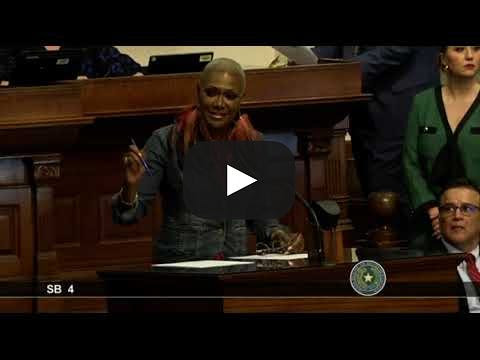
Watch Representative Jolanda Jone (D-Harris County) blast this SB4 as it went through the House:
…Now, under Texas law, any Keystone Cop can decide to drive a person they deem undocumented to the international border and demand they go back into Mexico (even if they are not from Mexico). If the person doesn’t walk across the bridge, they are arrested and imprisoned for up to twenty years.
The Constitution of the United States of America states that the Federal Government’s job is to manage international treaties, our borders, and citizenship issues. SB4 crosses a major line.
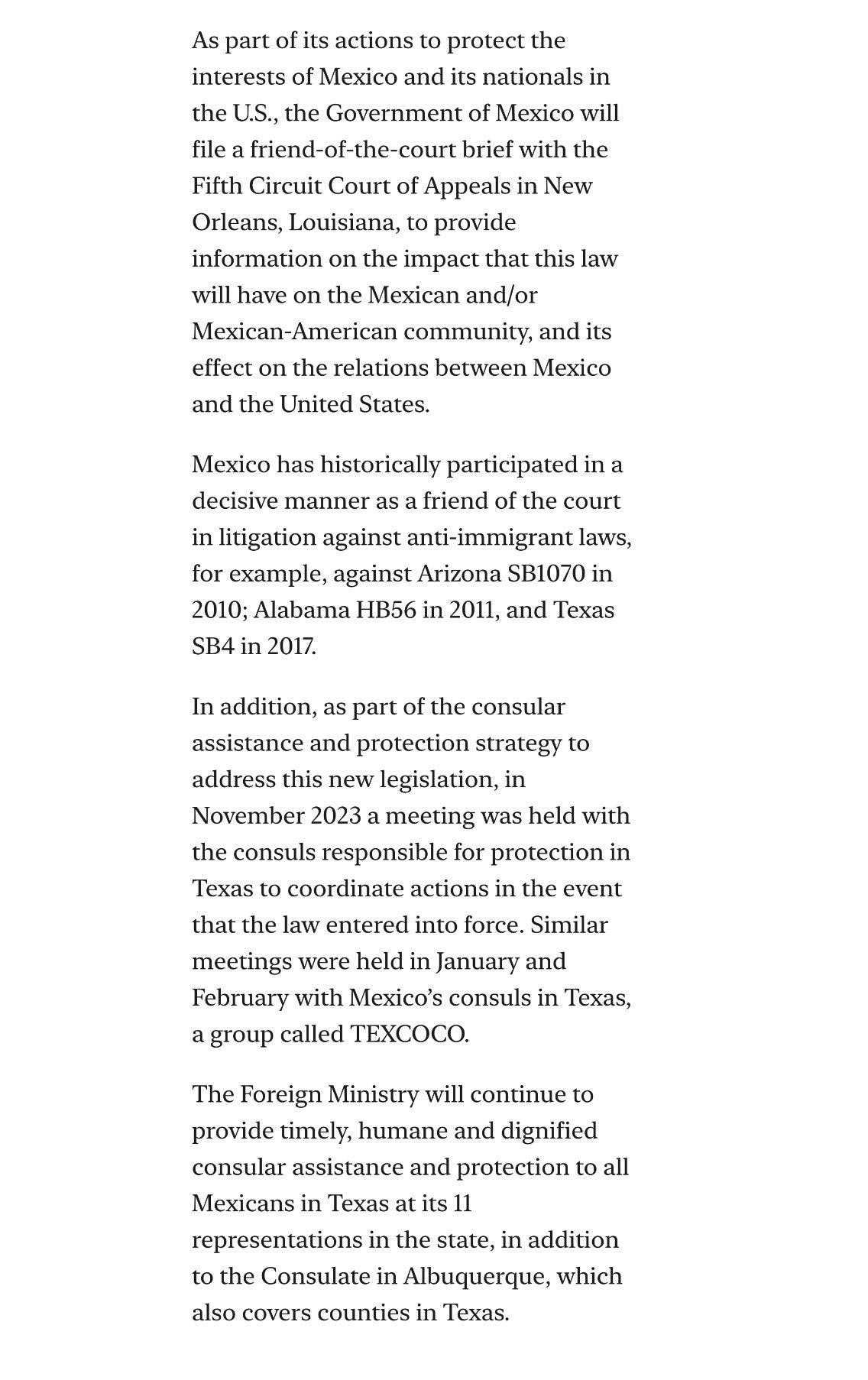
Here is a statement put out today by the Mexican Government:
This bill will even remove people who have been here for decades, living lawfully and paying taxes.
Within SB4, the term “alien” is defined as an individual who is neither a citizen nor a lawful permanent resident. Thus, a person who was once denied a visa but presently holds a valid visa (for example, tourism or marriage) is STILL considered committing an offense, even though they are lawfully present in the country.
Cruelty is the point.
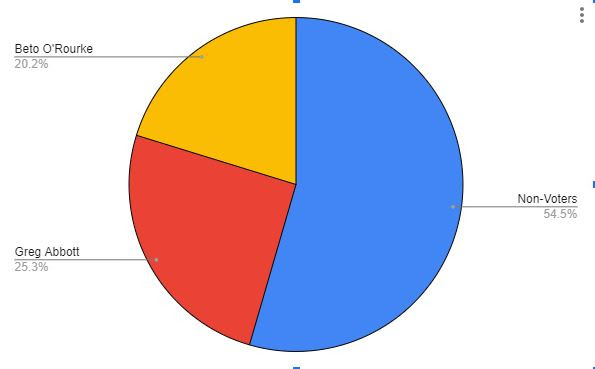
SB4 passed straight down party lines. Every single Republican voted for it, and every single Democrat voted against it. When they tell you who they are, you need to listen. A lot of non-voters need to become voters, the GOP’s authoritarian laws are on our door step…
ALL Latinos should be very concerned right now.
This immigration law will allow any brown person to be rounded up for any possible violation. SB4 will allow any law enforcement agent in Texas (even school resource officers) the ability to demand a brown person prove they are a citizen (“Show Me Your Papers”). If that person can’t prove their citizenship, they risk deportation to Mexico, no matter their origin.
The law’s implementation will lead to racial profiling, separate families, and harm Black and brown communities across the state, regardless of immigration status.
That directly conflicts with the United States Constitution, which states that everyone, regardless of race or immigration status, has the freedom to move and thrive.
Republicans have already committed to opening up shuttered prisons to make room for 80,000 immigration prisoners. Under SB4, police will act as immigration agents and arrest people who “look” like they’re undocumented. Half of Texans are Latino and could “look” undocumented to a racist cop.
If the biggest charter chain in Texas is under investigation for financial finagling, is it the right time to let that charter chain expand? Well, it’s Texas, so of course!
The Network for Public Education thinks that’s a rotten idea. It’s wrong. It’s unethical. so we issued this press release.
Texas Ed Department Approves Scandal-ridden Charter Chain’s Expansion
For immediate release:
Within days of appointing conservators to manage the IDEA charter chain, the Texas Education Agency gives it the green light to expand.
There is a major financial and ethical charter scandal in Texas, and the Network for Public Education is outraged. The same day that the Texas Education Agency (TEA) announced the appointment of a management team for IDEA charter schools following years of inappropriate spending, the charter chain submitted a request for a massive expansion that would add ten new charter campuses in Texas.
On March 6, the TEA announced it appointed two conservators to oversee IDEA charter schools following its investigation into multiple allegations of financial mishandling. Two days later, the TEA approved that expansion without public comment or meaningful notice.
The charter chain obtained nearly $300,000,000 from the U.S. Department of Education to expand to 123 schools. Following an audit, the Department is now demanding that IDEA return $28 million to be paid using Texas taxpayer dollars.
NPE President Diane Ravitch has been following the charter chain’s scandals for years. “The IDEA charter chain has a long-established reputation for spending millions on luxury items for its leaders while paying executives private-sector salaries. The grifting at public expense must stop. When one Houston school received failing grades, TEA took over the entire district. In this case, TEA appointed a conservator from another charter chain and then approved IDEA’s expansion in a shady insider deal.”
According to Network for Public Education Executive Director Carol Burris, “The scandals involving this federal Charter School Program (CSP) recipient are breathtaking. As shocking as seems, it is possible this new expansion of the corrupt IDEA charter chain will be financed through CSP grant money. We all foot the bill.”
The Network for Public Education is a national advocacy group whose mission is to preserve, promote, improve, and strengthen public schools for current and future generations of students.
###
Mailing Address:
Network for Public Education PO Box 227 New York City, NY 10156
Cameron Vickrey is communications and development director for Fellowship Southwest; she previously worked for Pastors for Texas children. She is a pastor, her father was a pastor, her husband is a pastor. She believes in separation of church and state. She believes in the importance of public schools. She does not want to impose her views on others.
Any time you are quoted on Twitter, you have to brace yourself for the subsequent comments. Especially if Pastors for Children is the one quoting you.
Their Twitter account is a favorite of trolls (education reformers, neo-libertarians and Christian nationalists) who believe that God is not in the public schools and the only way forward is to tear it all down.
So, I knew there would be pushback when I said this, and it was referenced in a tweet: “If you can, send your children to public schools … because it’s not just about my kids, it’s about what’s good for all kids.”
The replies were predictable and entertaining, although plenty were also disturbing.
Some comments satirically quoted what Jesus definitely did not ever say, like: “‘Let Romans indoctrinate your children.’ – Jesus.” Or, “‘Send your kids to government schools so they will worship the state.’ – Jesus.”
These don’t bother me. Their absurdity speaks louder than any rebuttal would. But there were two Twitter comments that I do want to address.
This one, although asked in the manner of how the Pharisees questioned Jesus, warrants an honest reply: “What is your spiritual justification for this?”
Without knowing exactly to what this question refers, I’m going to assume it’s the claim that as Christians, we should send our children to public school.
Theologically, I believe that God loves every child equally and abundantly. We have denied some children their share of this abundant life by hoarding privileges like education.
If I really believe, and I do, that God loves other peoples’ children the same way that God loves my children and wants the same abundance for their lives, then I should make sure my desire for my children’s success doesn’t come at the expense of someone else’s children.
Now, how could where I send my kids to school ever affect another child’s success or opportunity?
Unfortunately, at least in Texas, public schools are paid for by property taxes and distributed largely by something called average daily attendance funding. So, if you live in a neighborhood with lower property tax rates and lower cost of housing, that school will receive a smaller share of the public education dollars from the state.
Now, there are work-arounds to this, called recapture (a.k.a Robin Hood). But there are many inequities that haven’t been addressed in our funding system, and it’s simply obvious to anyone driving around that the wealthier the neighborhood is, the nicer the school is.
If that school is lower-income, lower-performing or simply hasn’t had a renovation bond passed on their behalf in a few decades, then it’s likelier that families who are zoned there and can opt out will do so.
Because schools receive a certain number of dollars per child counted present each day (or an average of the days), if your child isn’t counted there, then the school is missing out on that money. And if, instead, your child is attending a different public or charter school, that money goes with them.
It’s especially tough for schools who see a mass exodus of students across a few years, like when a shiny new charter school opens nearby. The neighborhood public school might lose a few students from each of their classrooms, but not enough to consolidate classes or reduce any overhead costs.
Essentially, their income is reduced while their expenses stay the same, and they are financially pinched. When a school is financially pinched, it has to cut enrichment programming, the same programs the new charter schools often advertise — like fine arts, gardening or STEM — thereby lowering the quality of that schools’ education.
So, yes, it really does matter to other children which school you choose.
Let’s say you are now with me in supporting our neighborhood public schools. That brings me to the next tweet I want to address: “Any church that follows God doesn’t hesitate to call out the demonic forces within public education. Public Education seeks to separate children from God at almost every turn. Millstones for thy necks.”
Although it is very tempting to accept this challenge and call out the demonic forces within public education, which I absolutely can do [hint: candidates for school boards who don’t seem to care about education], I am going to try to follow Jesus and resist.
God is in all schools with all children. If you are wondering, here’s where I’ve specifically seen God in neighborhood public schools:
God is in the kindergarten teacher who nurtures the little ones and patiently listens to their endless commentary on life.
God is in the fifth-grade teachers who play guitar, build robots and order class snakes for their students who are otherwise not as engaged.
God is in the elementary school that also serves as the regional school for the deaf and hard of hearing, and in the hearing-kids who learn sign language to talk with their classmates.
God is in the schools when nearby church members participate in mentoring programs and form friendships with kids who don’t have very many adult role models.
God is in the schools when volunteers come to deliver food for the weekend to kids who can’t otherwise depend on food being in their home.
God is in the middle school girl who makes room for a new student at her lunch table.
God is in the discussions that happen in middle and high school English and history classes, where kids learn to listen to one another and respect each others’ opinions.
God is in the moment of silence observed at the beginning of each day after the pledges of allegiance, when many children bow their heads to pray.
If you still believe that God isn’t in the public schools, then maybe that’s exactly where God is calling you to go.
The Houston Chronicle’s editorial board excoriated Texas Governor Greg Abbott for making war on Republican legislators who opposed Abbott’s voucher proposal, and at the same time failing to meet his constitutional obligation to fund public schools.
Our own Captain Ahab, otherwise known as Gov. Greg Abbott, managed to plunge his harpoon into the belly of the great whale last week. After Super Tuesday, our public-school leviathan lists but is not dead yet.
The captain’s uber-wealthy allies — lWest Texas oilmen who are avowed Christian nationalists — must be giving thanks to God for Super Tuesday’s results and preparing for the death blow the next time the Texas Legislature meets. In 2022, they funded Abbott’s primary opponent and now their obsession with school vouchers has become the governor’s.
The aim of these “tycoon evangelicals” — to borrow Bekah McNeel’s label, writing in Texas Monthly — is to get their grappling hooks into our public schools, bleed them out and redirect public resources into private Christian education. So what if our hemorrhaging public school system washes ashore, a blanched skeleton left to the screeching gulls? As long as West Texas billionaires Tim Dunn of Midlandand the Wilks brothers from Cisco are for knocking down the wall — the one between church and state, that is, not the border between Texas and Mexico — how could their agent in the governor’s office be against it?
Abbott is more than halfway there already. Vowing revenge on members of his own party who helped deep-six school vouchers last fall, he relied on a $6 milliondonation from a Philadelphia billionaire, as well as overlapping donations from Dunn and Wilks, to knock off nine mostly rural representatives of his own party who opposed his obsession. Morewere forced into a runoff. Based on votes for the House voucher bill during multiple special sessions last fall, he needed to pick up 11 pro-voucher votes. The captain’s likely to reach his ocean’s 11 in the November general election.
“Republican primary voters have once again sent an unmistakable message that parents deserve the freedom to choose the best education pathway for their child,” Abbott said in a statement Tuesday evening. “We will continue to help true conservative candidates on the ballot who stand with the majority of their constituents in supporting education freedom for every Texas family.”
You’ll forgive dedicated public school teachers and administrators, as well as parents of school-age children, if they forgo standing. While Abbott exults, schools around the state — large and small, urban and rural — are grappling with massive budget deficits, thanks to Abbott’s voucher obsession and a Legislature diverted during four sessions last year from meeting its constitutional obligation to adequately fund public schools.
Remember January of last year? Lawmakers convened in Austin for their regular session almost giddy with the prospect of writing the 2024-25 state budget with an astounding cash balance to work with of $33 billion. They staggered home nearly a year later, having for the most part stiffed the school children of Texas (and by extension, the state as a whole). Rather than using that massive surplus to increase base-level funding, they approved $18 billion in property tax cuts. Meanwhile, school districts were left to grapple with inflation, the loss of federal funding designed to help schools weather the COVID-19 pandemic and no new monies to increase teacher pay, hire additional teachers and make needed investments.
Nearly every school district in Harris County is underfunded and in crisis, a recent Kinder Institute study determined. Cypress-Fairbanks ISD, for example, is facing a budget shortfall of $73.6 million. For Spring ISD, the budget gap is an estimated $25 million. Spring Branch ISD announced recently that it plans to close two schools and charter programs in the face of a $35 million budget deficit.
Meanwhile, lawmakers continued their streak of penury last year: The last time they increased education funding was in 2019.
They had the best of intentions, it seems, setting aside nearly $4 billion for public education, but those dollars were never allocated. The school finance bill passed by the House ended up in the drink when the Senate added Abbott’s (and the tycoon evangelicals’) voucher scheme, a scheme that would benefit a relative handful of students around the state (and practically none in rural and small-town Texas).
To be clear, school choice or vouchers or education savings accounts — whatever the label of choice — is a legitimate policy issue. It deserves vigorous debate. But we’ve had that debate. Abbott lost on the merits. Wide-scale voucher programs in other states, such as Arkansas, have failed to produce strong academic improvements while draining public schools of funding.
What’s disturbing about the governor’s voucher obsession is his naked obeisance to wealthy special interests who manifestly do not have the best interests of the people of Texas at heart. Their ultimate aim, even if it’s not necessarily the governor’s, is to transform Texas into a Christian-dominated, biblically based state. Those 21 House Republicans who joined with 63 Democrats to block last year’s voucher proposal understood who benefited and who didn’t. And on Tuesday, many paid the political price. It’s of little consolation, we realize, but we salute their courage.
There will come a time when Texans have had enough of the mean-spiritedness and ideological narrowness of the current governor and his far-right cohorts, Lt. Gov. Dan Patrick and Attorney Gen. Ken Paxton. There will come a time when they demand more from their elected public servants (emphasis on servants).
Given our long history with Abbott, it’s hard to imagine that other states do have elected governors, Republicans and Democrats, who acknowledge that they represent every citizen of their state, not only those who voted for them, who seek to unite not divide. In the words of New York Times columnist Frank Bruni, “they focus intently on the practical instead of the philosophical, emphasizing issues of broad relevance and not venturing needlessly onto the most divisive terrain.”
Bruni was writing about Democratic governors, among them Andy Beshear of Kentucky, Josh Shapiro of Pennsylvania and Gretchen “fix the damn roads” Whitmer of Michigan, but the inclination toward moderation and practicality describes a handful of Republican governors, as well. Phil Scott of Vermont and Spencer Cox of Utah come to mind.
Of course, that’s not Texas — not today’s Texas, that is. Our obsessive Ahab remains at the helm, steering ever more to the starboard, ignoring the risk to his fellow Texans that he’ll one day run aground. We can do better.
The oil-and-gas Christian nationalists swamped a number of Republican primary races in Texas with millions of dollars. One big issue was vouchers; the other was payback for trying to oust the state’s corrupt Attotney General, Ken Paxton.. They managed to defeat rural Republicans who are conservative but voted against vouchers for religious schools and/or voted to impeach the state’s corrupt Stste Attorney General. And of course, Pennsylvania billionaire Jeff Yass and Michigan billionaire Betsy DeVos tossed in more millions.
Having Trump’s name at the top of the ticket made have made a difference too.
West Texas oil billionaires Tim Dunn and Farris Wilks entered the 2024 primary election cycle wounded.
Their political network was in the middle of a scandal over its ties to white supremacists. Republicans were calling on each other to reject the billionaires’ campaign money. And their enemies believed they were vulnerable — one bad election day from losing their grip on the state.
Instead, Dunn and Wilks emerged from Tuesday perhaps stronger than ever — vanquishing old political foes, positioning their allies for a November takeover of the state Legislature, and leaving little doubt as to who is winning a vicious civil war to control the state party.
In race after race, more moderate conservative incumbents were trounced by candidates backed by Dunn and Wilks. Their political network made good on its vows for vengeance against House Republicans who voted to impeach their key state ally, Attorney General Ken Paxton, advancing more firebrands who campaigned against bipartisanship and backed anti-LGBTQ+ policies. Tuesday’s election also paved the way for the likely passage of legislation that would allow taxpayer money to fund private and religious schools — a key policy goal for a movement that seeks to infuse more Christianity into public life.
All told, 11 of the 28 House candidates supported by the two billionaires won their primaries outright, and another eight are headed to runoffs this May. And, in a sign of how much the state party has moved rightward, five of their candidates beat incumbents in rematches from 2022 or 2020 — with some House districts swinging by double-digits in their favor. Of the candidates they backed, they donated $75,000 or more to 11 of them — six who won, and four who went to runoffs.
Tuesday was a stark contrast from just two years ago, when Dunn and Wilks’ top political fundraising group poured $5.2 million into a host of longshot candidates — much more than what they spent in the current election cycle. They lost badly that year — 18 of the 19 challengers to Texas House members they backed were defeated. Their only successful House candidate that year was Stan Kitzman of Pattison, who toppled former Rep. Phil Stephenson of Wharton in a runoff.
Among the triumphant on Tuesday was Mitch Little, aided by at least $153,000 in Dunn and Wilks cash, who defeated Rep. Kronda Thimesch in a campaign that focused on Little’s defense of Paxton from impeachment charges in the Senate trial last summer. Three days before he won, Little appeared at an eventin Denton County with Paxton and, among others, Steve Bannon, the political operative who helped rally the far right behind then-candidate Donald Trump in 2016.
And another Dunn and Wilks candidate, David Covey, stunned the state by winning more votes than House Speaker Dade Phelan — the No. 1 target of the state’s far-right in part because of his role in the Paxton impeachment and refusal to ban Democrats from House leadership positions. Phelan now faces a runoff from Covey and the prospect of being the first Texas Speaker since 1972 to lose his primary.
Certainly, Tuesday’s dark-red wave can’t be attributed solely to Dunn and Wilks. Texas GOP primaries have historically been decided by small shares of voters, many of them further to the right of even the party’s mainstream. This election cycle, the billionaires’ targets also overlapped with an unlikely ally, Gov. Greg Abbott, who poured more than $6 million into his quest to rid the Texas House of Republicans who defied his calls for school voucher legislation last year. (Dunn and Wilks’ political groups supported Abbott’s opponent in his 2022 gubernatorial primary.)
Meanwhile, Paxton barnstormed the state as he sought retribution against incumbents who supported his impeachment. And, perhaps most importantly, former President Donald Trump was active in many contests — following the lead of Paxton and his other ally, Lt. Gov. Dan Patrick, and offering late endorsements that bolstered right-wing candidates.
Even so, the billionaires’ fingerprints appear all over the outcomes. Since January, they spent more than $3 million to support candidates through a new political action committee, Texans United For a Conservative Majority. That PAC is a rebrand of Defend Texas Liberty PAC, which has been at the center of a political maelstrom since early October…
Subsequent reporting by The Texas Tribune revealed other ties between white supremacists and groups funded by Dunn and Wilks, prompting outcry from some Republicans and calls for the Texas GOP to distance itself from Stickland’s groups.
As votes continued to tally in the far right’s favor this week, Stickland returned from a post-scandal social media sabbatical to gloat.
“We warned them,” Stickland wrote Wednesday on X, one of the handful of posts he’s made since shrinking from the public eye after the Fuentes meeting. “They chose not to listen. Now many are gone.”
Dunn and Wilks both made their fortunes in West Texas oil and, in the last 15 years, have poured more than $100 million into a constellation of political action committees, dark money groups, nonprofits and media websites that they have used to push the state GOP further to the right.
Their strategy has been to incrementally move the party toward their hardline views by painting fellow conservatives as weak and ineffectual — as “RINOs,” or Republicans in name only — and promising well-funded primary challengers to lawmakers who defy their network and its aims. With almost endless wealth, they have poured millions of dollars into inexperienced candidates who often lose but advance the far right’s long-term goals by slowly normalizing once-fringe positions, bruising incumbents, depleting their campaign coffers and making them more vulnerable in the next election cycle.
For years, many Republicans have denounced the strategy, noting that the state Legislature is routinely ranked as the most conservative in the country and warning that Dunn and Wilks’ no-enemies-to-our-right approach to politics would eventually cost the party elections and open the doors to outright extremists.
This year’s elections show just how successful the billionaires have been in pulling the party toward their hardline views.
Open the link to finish the story and read about the extremists installed by the billionaires to promote “Christian values,” like no gun control.
Chris Tomlinson is a regular opinion writer for The Houston Chronicle. I tuned in to a zoom with him yesterday and learned that he is known for his fierce independence. I signed up for his column and discovered his thoughts about “the immigration crisis,” which Americans tell pollsters these days is the most serious problem facing the nation. Tomlinson thinks both parties have failed to tell the truth, so he did. Trump, in particular, has demagogued the issue with his fear-mongering.
Tomlinson writes:
The two-ring presidential circus performed along Texas’ border on Thursday, injecting cash into the local economy but adding little to the national debate over one of the year’s most consequential issues.
President Joe Biden met with local officials in Brownsville and blamed Republicans in Congress for blocking new border security spending for political advantage. He correctly stated the broken asylum system encourages desperate people to gamble their life savings for a chance to live in the United States.
“If they get by the first day, they’ve got another five, seven, eight years before they have to do anything because they know (the immigration courts) cannot handle the caseloads quickly, and they’ll be able to stay in this country,” Biden said.
“With the new policies in this bill and the addition of 4,300 additional asylum officers, we’ll be able to reduce that process to less than six months,” he added.
Former President Donald Trump paraded before U.S. flags and uniformed National Guard troops in Eagle Pass. He renewed themes popularized by the Ku Klux Klan a century ago, sowing fear of foreigners and painting his opponent as a friend of dark-skinned criminals.
“They’re coming from jails, and they’re coming from prisons, and they’re coming from mental institutions and they’re coming from insane asylums. And they’re terrorists. They’re being let into our, our country,” Trump said in a rambling, bigoted speech. “It’s not just South America. It’s all over the world. The Congo, very big population coming in from jails from the Congo.”
Immigration is the most critical problem facing the nation, Americans told a recent Gallup poll. The issue was top of mind for 57% of Republicans, 22% of independents and 10% of Democrats.
“A separate question in the survey finds a record-high 55% of U.S. adults, up eight points from last year, saying that ‘large numbers of immigrants entering the United States illegally’ is a critical threat to U.S. vital interests,” Gallup added.
Most voters believe Trump would do a better job on border security, while only 28% of Americans approve of Biden’s immigration policies. Biden is in deep trouble, with only a 38% approval rating and a base already angry over his Middle East policies.
Anyone who’s spent time along the border will tell you most Americans don’t understand what goes on there. For example, asylum seekers are not invading the country; they turn themselves in as quickly as possible. Most of the $29 billion worth of drugs smuggled into the United States crosses at commercial entry points, which are the arterial roads keeping our economy going.
Migrants, documented or not, are critical for our workforce and society. I know people like to draw distinctions between documented and undocumented migrants, but both contribute more to the United States economy than they take. Most undocumented workers would happily pay a fine to get right with the government.
In Houston, immigrants make up almost a quarter of the population and 31% of the workforce, U.S. census data analyzed by the American Immigration Council, the Texas Association of Business and the Center for Houston’s Future found. Immigrants in the Houston statistical area earned $66.5 billion and paid $11.1 billion in federal taxes.
If Trump rounded these people up and deported them, as he promised, the construction, hospitality and hospital services would collapse.
Houston is home to more than 572,000 undocumented migrants whose households earned $13 billion in 2021. Most have fake documents and paid $794.8 million in federal taxes and $595.6 million in state and local taxes, the U.S. Congressional Budget Office reported.
Meanwhile, Biden must come up with a new approach to processing asylum seekers after Congress made it clear they will not help. But he must overcome opposition from within his party and federal courts.
Federal and international law requires the United States to grant asylum to anyone with a well-founded fear of persecution. However, establishing which claims meet that high standard under current policies can take years.





 Diane Ravitch's blog