Archives for category: Mississippi

Jesse Hagopian, a teacher-author-activist in Seattle, wrote this moving article in The Nation. He, his brother, and his father traveled to Morgantown, Mississippi, to visit the plantation where his ancestors were enslaved. The trip was delayed by the pandemic and illness. But when they arrived at last, they had an unforgettable experience.

Knowing that their trip occurred at the same time that many states were banning the teaching of the truth about slavery made them even more motivated to learn the truth and teach it.

Tom Ultican, retired high school teacher of advanced math and physics, investigates the claims of Nicholas Kristof about a “Mississippi miracle.” In his article in the New York Times, Kristof attributed a rise in Mississippi’s test scores to “the science of reading” plus a policy of holding back third graders who don’t pass a reading test, allegedly proving that spending more money is not necessary, poverty doesn’t matter, and reducing class size is unnecessary.

He begins:

Nicholas Kristof’s opinion piece in the New York Times might not have been blatant lying but it was close. His depiction of the amazing education renaissance in Mississippi as a model for the nation is laughable. Lauding their third grade reading retention policies as enlightened, he claims their secret sauce for success is implementing the science of reading (SoR). This is based on a willful misreading of data while tightly embracing Jeb Bush’s futile education reform ideology.

Ultican then produces a graph showing that Mississippi fourth-graders ranked 20th in the nation in 2022, but its eighth graders ranked 45th.

Misusing data allows Kristof to end the paragraph indicating poverty is not an excuse for education failure. It reminds me of a statement written by education professor Kathryn Strom,

“The “no excuses” rhetoric (i.e, “poverty is not an excuse for failure”) is one that is dearly beloved by the corporate education reformers because it allows them to perpetuate (what many recognize to be) the American myth of meritocracy and continue the privatization movement under the guise of “improving schools” while avoiding addressing deeply entrenched inequities that exist in our society and are perpetuated by school structures.” (Emphasis added)

To add heft to his argument that poverty is no excuse, Kristof quotes Harvard economist David Deming from the Harvard Kennedy School and Harvard Graduate School of Education, saying “Mississippi is a huge success story and very exciting.” He adds, “You cannot use poverty as an excuse.”

It is important to note that Harvard is famous for supporting privatization of public education and promoting failed scholarship. Deming is currently doing research with Raj Chetty and John Friedman. Along with Jonah Rockoff, Chetty and Friedman published the now thoroughly debunked value added measures (VAM) paper. Their faulty research caused many teachers to lose jobs before it was exposed as a fraud. Kristof is using an economist (not an educator) from a group best known for scholastic failure as his expert.

Kristof also indicates that spending is not important. He writes, “Mississippi has achieved its gains despite ranking 46th in spending per pupil in grades K-12.” If we look up at the 8th grade rankings, it seems they are getting what they paid for.

Ultican then goes on to describe the connections between the “Mississippi miracle” and TFA and Jeb Bush and a host of other corporate reform groups.

He concludes:

In this opinion piece, Nicholas Kristof touched on and promoted almost every billionaire inspired agenda item aimed at decreasing money going to public education. He acted as a representative of elites, advancing policies undermining education quality for common people.

This was not about improvement. It was about lowering taxes.

Please open the link and read this interesting article.

Yesterday I reviewed Nicholas Kristof’s enthusiastic endorsement of Mississippi’s reading program, which has raised test scores in fourth grade without reducing class size, spending more on education, or reducing child poverty. Kristof seems to believe that the so-called “science of reading,” allied with third grade retention and pre-school is the no-cost silver bullet to change American education. It should certainly appeal to those who don’t want to raise taxes or reduce economic inequality. The one study cited by Kristof in support of third grade retention was funded by Jeb Bush’s foundation; Florida enacted third grade retention and saw its fourth grade scores rise (but not scores in eighth grade).

Kristoff quoted a study that reached favorable conclusions about the efficacy of third-grade retention. He said that 9% of third-graders in Mississippi had been held back. I said that might be sufficient to explain the impressive fourth grade scores on NAEP: eliminate the lowest-scoring kids and scores go up.

Nancy Bailey, retired teacher, summarizes some of the research on third-grade retention: it’s bad.

She writes:

How can anyone who claims the Science of Reading is real think it’s OK to retain a third-grade child based on one test or for any reason?

If ever evidence or science existed involving education, understanding the rottenness of retention would be it. Yet some of the same people who believe using phonics (and more) is the one-size-fits-all scientific reading miracle seem fine with retention.

This is a crack in the glass for SoR science because it makes it look political. Retaining third graders because of a test may drive parents to leave public schools.

Children are devastated by retention. Once a child is retained, it changes their world. In Student Ratings of Stressful Experiences at Home and School, Anderson, Jimerson, and Whipple (2008) found that it rated high with various stressors.

Across grade levels, those events rated as most stressful by children were: losing a parent, academic retention, going blind, getting caught in theft, wetting in class, a poor report card, having an operation, parental fighting, and being sent to the principal.

When a child is kept back, they are more likely to be more physically developed in middle school than their peers. This certainly causes a child to rethink school and want to drop out.

In 2001, that’s right, 2001, Shane R. Jimerson’s Meta-analysis of Grade Retention Research: Implications for Practice in the 21st Century summarized studies of a previously published literature review about retention between 1990 and 1999, comparing this research with studies about retention done in the 1970s and 1980s.

Jimerson concludes:

In isolation, neither social promotion nor grade retention will solve our nation’s educational ills nor facilitate the academic success of children. Instead attention must be directed toward alternative remedial strategies. Researchers, educators, administrators, and legislators should commit to implement and investigate specific remedial intervention strategies designed to facilitate socioemotional adjustment and educational achievement of our nation’s youth.

Some SoR enthusiasts say if children had been given evidence-based instruction with phonics, no child would need to be retained. But even if this were true, why would they be on board for retention today when science is more confident of the problems with retention, especially third-grade retention based on one test, than the SoR?

It’s hard to believe Floridians ever permitted retention, since its researchers identified its harmfulness years ago. Many students have been retained in third grade throughout the years.

It’s perplexing to see legislators in other states endorsing it, like it’s a good thing, when the research about it is clear. It’s good that Michigan will no longer do it, but many other states continue to practice grade retention.

Furman professor Paul Thomas, who has written extensively about the SoR, describes retention here and presents a map showing the states currently subscribing to holding third graders back.

The same promoters of the SoR seem to love retention and are trying to connect it to Mississippi, where they appear to have higher test results in fourth grade.

The promoters of third-grade retention seem connected to former Governor Jeb Bush, who, for some strange reason, hitched his education star to third-grade retention based on a test. How sad that he didn’t promote lowering class sizes in K-3rd grade instead.

Nicholas Kristof is a columnist who is terrific on many issues but consistently wrong when he writes about education. As far back as 2009, I criticized Kristoff for a column in which he called American education “our greatest national shame,” citing Eric Hanushek’s since-discredited work on teachers (the best get students to produce high test scores, bad teachers don’t). Peter Greene took Kristoff to task in 2015 for being an educational tourist, making quick visits and issuing pronouncements that are wrong. I also chastised him in 2017 for endorsing for-profit schools in Africa.

Now, he has outdone all of his previous gaffes. He has discovered the amazing, miraculous, astonishing transformation of Mississippi.

Based on the impressive rise of 4th grade reading scores on NAEP, Kristof proclaims that Mississippi has lessons for the nation.

With an all-out effort over the past decade to get all children to read by the end of third grade and by extensive reliance on research and metrics, Mississippi has shown that it is possible to raise standards even in a state ranked dead last in the country in child poverty and hunger and second highest in teen births.

In the National Assessment of Educational Progress, a series of nationwide tests better known as NAEP, Mississippi has moved from near the bottom to the middle for most of the exams — and near the top when adjusted for demographics. Among just children in poverty, Mississippi fourth graders now are tied for best performers in the nation in NAEP reading tests and rank second in math.

Its success wasn’t because of smaller classes. That would cost money.

It wasn’t because of increased funding.

It wasn’t because Mississippi reduced child poverty.

It wasn’t because of desegregation.

It was because Mississippi embraced the “science of reading,” strict discipline, relentlessly focusing on test scores, and using behavioral methods that sound akin to a “no excuses” charter school.

In 2000, Mississippi received a gift of $100 million from a Mississippi-born tech entrepreneur to launch a statewide reading initiative. In 2013, the legislature invested in full-day pre-K, where children got a start on letters, numbers, and sounds.

The 2013 legislation also enacted third-grade retention. Any child who didn’t pass the third-grade reading test was retained. Most researchers think retention is a terrible, humiliating policy. But Kristof assures readers that failing students get a second chance to pass. 9% of students in third grade flunked. He considers this policy to be a great success, inspiring third graders to try harder, citing a study funded by Jeb Bush’s foundation (Florida also practices third grade retention, which lifts its fourth grade reading scores on NAEP).

Kristof writes:

“Mississippi is a huge success story and very exciting,” David Deming, a Harvard economist and education expert, told me. What’s so significant, he said, is that while Mississippi hasn’t overcome poverty or racism, it still manages to get kids to read and excel.

“You cannot use poverty as an excuse. That’s the most important lesson,” Deming added. “It’s so important, I want to shout it from the mountaintop.” What Mississippi teaches, he said, is that “we shouldn’t be giving up on children.”

The lessons: it’s okay to forget about poverty; forget about segregation; forget about funding. Rely on “the science of reading” and third-grade retention. It’s cheap to follow Mississippi’s lead, which Kristof considers an advantage.

But!

Kristof minimizes Mississippi’s eighth-grade scores on NAEP. He writes: “One challenge is that while Mississippi has made enormous gains in early grades, the improvement has been more modest in eighth-grade NAEP scores.

That’s an understatement.

Eighth grade reading scores in Mississippi have gone up over the past two decades, but scores went up everywhere. In the latest national assessment (NAEP), 37 states had scores higher than those of Mississippi on the NAEP eighth grade reading test. Only one state (New Mexico) was lower. The other 13 were tied. In Mississippi, 25% of the state’s students in 2019 (pre-pandemic) were at or above proficient, compared to 20% in 2003. Nationally, in 2019, 29% of students were at or above proficient*.

In 2019, 42 states and jurisdictions outperformed Mississippi in percentage of students at or above proficient in eighth grade math, eight were tied, and only two scored below Mississippi. 24% were at or above proficient in 2019, a big increase over 2009 when it was 15%. But Mississippi still lags the national average, because scores were rising in other states.

Has Mississippi made progress in the past decade? Yes. Is it a model for the nation? No. When impressive fourth grade scores are followed by not-so-impressive scores in eighth grade, it suggests that the fourth grade scores were anti Oakley boosted by holding back the 9% who were the least successful readers. A neat trick but not an upfront way to measure progress.

It seems fairly obvious that the big gains in NAEP in fourth grade were fueled by the policy of holding back third graders. Jeb Bush boasted of the “Florida Miracle,” which was based on the same strategy: juice up fourth grade scores by holding back the lowest performing third graders.

In 2019, fourth graders in Florida scored 7th in reading and 5th in math on NAEP, by scale scores. However, Florida’s eighth grade scores, like those of Mississippi, are middling, compared to other states. Florida eighth graders ranked #35 in eighth grade math. In eighth grade reading, 21 states and jurisdictions ranked higher than Florida, 21 are not significantly different, and 10 were below Florida.

Florida’s eighth grade reading scores have been flat since 2009; so have its its eighth grade math scores. Florida is a state that has gamed the system. Mississippi is following its lead.

Mississippi has made progress, to be sure. But it is not a national model. Not yet.

What’s worrisome about this article is that Kristof asserts that poverty doesn’t matter (it does); funding doesn’t matter (it does); class size doesn’t matter (it does). In his account, states that want to improve test scores can do it without raising teachers’ salaries, without upgrading buildings, without spending a nickel to improve the conditions of the schools or the well-being of children. Children who are hungry, lack medical care, and are homeless or ill-housed are not likely to learn as well as those who have advantages.

Does this explain why so many rightwingers love “the science of reading”? Publishers are rolling out new programs. Education can be reformed in the cheap. Can’t expect taxpayers to foot the bill, can you?

Kristof’s fundamental error is his determination to find miracles, silver bullets, solutions that fix everything. He did it again.

The U.S. Department of Education appends this disclaimer to every NAEP publication.

*NAEP achievement levels are performance standards that describe what students should know and be able to do. Results are reported as percentages of students performing at or above three achievement levels (NAEP Basic, NAEP Proficient, andNAEP Advanced). Students performing at or above the NAEP Proficient level on NAEP assessments demonstrate solid academic performance and competency over challenging subject matter. It should be noted that the NAEP Proficient achievement level does not represent grade level proficiency as determined by other assessment standards (e.g., state or district assessments). NAEP achievement levels are to be used on a trial basis and should be interpreted and used with caution. Find out more about the NAEP reading achievement levels.

After a federal judge told a transgender girl that she had to dress as a boy for her graduation ceremony, the senior skipped the event.

L.B., as she was known in court, had been dressing as a girl for the four years of high school. The school told her she would not be allowed to participate unless she dressed as a boy. The ACLU of Mississippi went to court on her behalf. Her request was rejected by the judge, a Trump appointee.

School officials in a Mississippi high school told a graduating senior that she must wear boys’ clothing at her high school graduation; if she didn’t, she would not be permitted to participate in the ceremony. The girl is transgender and has worn girls’ clothing for the four years of high school. The mother sued with the legal help of the Mississippi ACLU. The Trump-appointed federal judge ordered the trans girl to wear boys’ clothing.

The Mississippi Free Press reported:

A federal judge ruled late Friday evening that the Harrison County School District can prohibit a 17-year-old transgender girl from attending her graduation Saturday unless she dresses in attire designated for boys, the Sun Herald’s Margaret Baker reported.

U.S. District Court Judge Taylor McNeel issued the ruling after hours of testimony from the Harrison Central High School senior and school district officials. Former President Donald Trump appointed the conservative judge to the U.S. District Court for the Southern District of Mississippi in 2020.

“The court’s decision to uphold the school district’s explicit discrimination of our client is deeply disappointing and concerning,” the ACLU of Mississippi responded in a Twitter thread this morning. “Our client should be focused on celebrating this life milestone alongside her friends and loved ones. Instead, this ruling casts shame and humiliation on a day that should be focused on joy and pride. All Mississippi students should have the right and autonomy to be who they are—not who judges and school officials think they should be…”

“On May 9, 2023—less than two weeks before graduation day, Defendants informed Plaintiff L.B. that she could not attend or participate in her high school graduation ceremony while wearing a dress and heeled shoes,” says a complaint the American Civil Liberties Union of Mississippi filed in the U.S. District Court for the Southern District of Mississippi on Thursday.

“Defendants based this instruction on the HCHS gender-based dress code policy for graduation, which provides that girls must wear a white dress and dress shoes and that boys must wear a white button-down shirt, black dress pants, black dress shoes, and a tie or bowtie,” the complaint continues.

“Defendants instructed that L.B. must dress in accordance with her sex assigned at birth—in other words, that L.B. must dress in accordance with the stereotypical male standards, even though she entered high school as a girl and has lived every aspect of her high school career as a girl.

L.B. would be humiliated in the company of her classmates if compelled to dress as a boy after living as a girl for four years. Why should it matter to school officials if she chooses to dress as a girl and her parent(s) permits it. Does her mother have no parental rights?

Donna Ladd, a native Mississippian, founded the Mississippi Free Press three years ago to shine a bright light on the state’s politics, history, and culture. The MFP has grown into a journalistic force. I am excited to join its advisory board, because the force of sunlight can be so powerful. I want to share Donna Ladd’s last newsletter, introducing a new reporter—Torsheta Jackson—and describing some of their exciting plans for the future. This team wants to free Mississippi from the dead hand of the past. Read Donna’s letter and I think you will understand why I am so enthusiastic about the Mississippi Free Press.

Read our latest stories from mfp.ms. And please support our work: mfp.ms/donate. Thank you! Meet Torsheta Jackson!

Donna writes:

One of my favorite reporting trips ever was touring around Noxubee County with then-freelance writer Torsheta Jackson in the thick of the COVID-19 pandemic. Because she grew up in the East Mississippi county, over on the Alabama border, Torsheta was the tour guide, driving us around in her big truck I had to lift myself into. First, she pointed out where she grew up in Shuqualak (locally pronounced “Sugar-lock”), the child of educators. Along the way, she pointed out slabs where industry, grocery stores and schools used to stand before her hometown became a shell of its former self over the decades after forced integration in 1970.

We walked around the ruins that now dominate the little downtown and talked about poverty, neglect, white-flight cycles and disinvestment in the county settled by rich white planters—including Mississippi State University founder Stephen D. Lee’s family—and built by enslaved people. The county has always been majority-Black, but usually under white control, from newspapers, to industry, to local education decisions and resources. It was also the site of vicious white terrorism to keep it that way.

Click now to support MFP’s Mapping Mississippi systemic-reporting strategy covering the 82 counties of Mississippi.

In the county seat of Macon, Torsheta showed me the county’s only remaining grocery store—white-owned and too expensive in a region where hunger is far too rampant, she said. She then took me to see the library, which still has its gallows, where they used to hang people in front of crowds on the front lawn, now marketed as a tourist attraction. We looked straight out the front window of the library at the tall Confederate statue standing in front of the courthouse across the street in a town that is 82% Black. The Board of Supervisors voted in July 2020 to remove it; last I checked, it was still there as post-George Floyd anti-racism enthusiasm wanes.

Torsheta showed me the abandoned Central Academy, which the superintendent of the county public schools helped open in the 1960s, supported by state vouchers, becoming the seg academy’s headmaster. She drove me to all the now-boarded-up, or disappeared or repurposed, public schools that used to be in Noxubee (locally pronounced “Nock-shu-bee”) County before most white families fled either to C.A. or to the local Mennonite school, which also opened in 1970.

Torsheta and I spent hours in the “new” Noxubee County public school just north of Macon, talking to the principal and the school psychologist—both women she knew growing up there. We learned about the perpetual state of crisis that faces the district and its one remaining public-school system covering the entire county; district leadership was changing again that day, in fact. And, of course, we learned about the systemic challenges that face Black women and their families, in particular, in Noxubee County, from no broadband, to hunger, to mental health and more. Their honesty with us informed Torsheta’s award-winning installment of our “(In)equity and Resilience: Black Women, Systemic Barriers and COVID-19” cause-solutions journalism project. It is now the prototype of our statewide county-level Mapping Mississippi systemic-reporting strategy that we’re amping up by summer with Torsheta’s help and inspiration.

Not to mention, a new area of research opened up for me when I heard the school psychologist’s story about a mob of local white men killing a Black woman school principal to stop the education and advancement of Black children: white terrorism specifically deployed to keep Black children uneducated and, thus, inequity and white control in place for generations to come. They said what they were doing for white-supremacy perpetuity right in the local newspaper. It wasn’t a secret. They bragged about ugly mob race violence by county leaders.Make a recurring donation now monthly, quarterly or annually to support the systemic journalism of Torsheta Jackson and our other reporters. Become an MFP VIP Club member.

It was an eye-opening and powerful journey for us both. Torsheta would later say on MFP Live that, before that reporting experience, she had not understood fully how intentional barriers and discrimination caused the decline of her home county over the decades. After this journey into the past, she did.

It was also on that tour of Noxubee County that I decided that I wanted Torsheta as a full-time reporter to take her systemic journalism across the state and help me build our Education Equity Solutions Lab. This is a very different kind of education reporting than the partisan griping about schools and funding that we usually see in Mississippi. For me, what I called Project Torsheta started on that trip. With her years of teaching experience (19 as of now), her brilliance, her curiosity, her wit and her stunning work ethic, I knew Torsheta was the kind of reporter Mississippi needs and deserves covering education. She can show us like no one else how education’s use as a political tool hurts families, children and whole communities.

Fast forward a couple of years, and it’s happening. Report for America announced Wednesday that it is supporting Torsheta as our lead education-equity reporter to do this work, paying a chunk of her salary for the next two to three years. After two years of working together to figure out timing and resources, Torsheta and I—and our whole team—are ecstatic that our vision is happening. I cannot wait to develop this work with Torsheta, and it doesn’t hurt that we recently hired fantastic Business Manager Jared Norton to free me up for more journalism. Torsheta and I (and others) will soon be traveling the state together again, doing the systemic journalism we know can help improve this state for all of our people.

I’ll talk more soon about our second new reporter we announced this week. Heather Harrison of Copiah County is the vivacious and dogged outgoing editor of The Reflector at Mississippi State. I knew in our first conversation (and then confirmed in a team solution circle) that she is bringing the energy, passion and curiosity that it takes to succeed and thrive at the Mississippi Free Press. She’ll be our first regional full-time bureau reporter, remaining in Starkville to largely cover that region of the state and help us collaborate with the Starkville Daily News.

Needless to say, you readers are making all of this growth happen. We started with $50,000 and one full-time reporter just three years ago. You have helped create 17 good-paying jobs and pay for myriad freelancers, contractors and interns—most of them brilliant and engaged Mississippi natives staying in their home state to do the work. Our resources are mostly from readers. You get it, and you are intentionally helping us grow our team and our reach to more counties.

Please help keep us growing by giving what you can now at mfp.ms/donate. Remember, your recurring donations are paying for at least one reporter already, so every amount matters.

Donna Ladd, Editor and CEO

A federal judge ruled that Mississippi must allow religious exemptions for vaccines now required for entry to public or private schools. It turns out that most states allow religious exemptions. Public health must take a back seat in this new age of vaccine hysteria.

Ashton Pittman of the Mississippi Free Press reports:

Anti-vaccine activists are celebrating in Mississippi after a federal judge struck down the State’s long-standing childhood vaccine requirements for public or private school attendance, saying the State must allow religious exemptions like most others already do. Mississippi is one of just six states that only permits childhood vaccines for medical reasons, with no religious exemptions.

The Texas-based Informed Consent Action Network funded the lawsuit, filed in September 2022, arguing that the lack of religious exemptions for vaccines violates the First Amendment’s guarantees of the free exercise of religion. On Tuesday, U.S. District Court for the Southern District of Mississippi Judge Sul Ozerden agreed with ICAN’s argument.

The George W. Bush-appointed judge’s order says that starting on July 15, the Mississippi State Department of Health “will be enjoined from enforcing (Mississippi’s compulsory vaccination law) unless they provide an option for individuals to request a religious exemption from the vaccine requirement.” The State could still appeal the ruling, however.

Mississippi’s compulsory childhood immunization requirements include a vaccine for diphtheria, tetanus and pertussis; for polio; for hepatitis B; for measles, mumps and rubella; and for chickenpox. The State does not mandate COVID-19 vaccines. Mississippi has the highest childhood vaccination rate in the nation, a fact that MSDH has attributed to strict vaccine laws. While other states with more permissive vaccine laws have reported measles outbreaks in recent years, Mississippi has not reported a case originating in the state in decades.

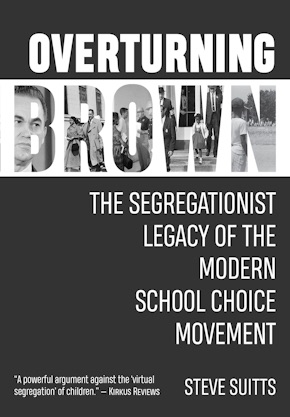
Donna Ladd wrote a compelling story about how white flight in Noxubee County, Mississippi, killed hopes for integration in the 1950s and 1960s. Ladd is the founder and editor of the Mississippi Free Press.

Whites had long controlled the county and its schools. They were determined not to permit any racial integration. Their response to the Brown decision of 1954 was to stall, stall, stall.

When whites realized that the federal courts were determined to integrate the schools, they had two strategies to defy court orders. One was to open “segregation academies,” like today’s charter schools. The other was to create voucher programs so that white children could participate at all-white private academies.

The story is fascinating. It’s not likely to be taught in public schools, because some people might think this honest retelling of what happened might make white students—more likely, their parents—uncomfortable.

The Mississippi Free Press reported recently on a failed effort in Mississippi to restore the public’s right to initiate and vote on statewide referenda.

Mississippi citizens will not be able to organize and vote on issues using ballot initiatives again any time soon after a Mississippi Senate leader allowed legislation that would have revived the option to die on calendar due to multiple concerns—including his fear that voters could use an initiative to repeal the state’s “right-to-work” law, which severely limits labor union organizing in the state.

The Mississippi Supreme Court nullified the ballot initiative process in a 2021 ruling that also killed a voter-approved medical marijuana law. Senate Concurrent Resolution 533, which lawmakers in the upper chamber passed on Feb. 9, would have restored a more limited version of the ballot initiative process.

The House made substantial modifications to the Senate’s bill, though, including removing a provision that said voters would not be able to “amend or repeal the constitutional guarantee that the right of any person to work shall not be denied or abridged on account of membership or nonmembership in any labor union or organization.” They also inserted a prohibition on using ballot initiatives to amend Mississippi’s highly restrictive abortion laws, which polls show most voters oppose.

After the House made its changes, Mississippi Senate Accountability, Efficiency, Transparency Committee Chairman John A. Polk could have sent the bill back to the Senate floor for concurrence or he could have called for a conference between the two chambers to iron out their differences. Instead, the Hattiesburg Republican allowed it to die on deadline Thursday.

Polk told the Mississippi Free Press he did not see a path to an agreement.

“We were so far apart. I don’t think there was any way we would ever get an agreement in conference,” the senator said.

The chairman said it “was disturbing to me” that House lawmakers removed language from the bill that would have prohibited voters from altering Mississippi’s right-to-work law.

“They took that out of the bill we sent, and that was disturbing to me because I’m not sure why they did it,” he said. “Mississippi needs and should be a right-to-work state.”

While supporters of right-to-work laws say they increase worker freedom by banning union membership requirements as a condition of employment, opponents argue that such laws lower wages and weaken worker protections by curtailing the ability of labor unions to organize.

Open the link and read the rest of the story.

Democracy is not alive and well in a state that refuses to acknowledge the will of the people but prefers to limit the voice of the public by gerrymandering control of the legislature.