Archives for category: Massachusetts

Once upon a time, long ago, a man named Jonah Edelman founded a group called Stand for Children. Edelman had instant credibility because he was the son of civil rights leader Marion Wright Edelman.

Somewhere, somehow, around 2009, Stand for Children decided to change its focus. So it became a grantee of the Gates Foundation and the Walton Family Foundation,  and an advocate for charter schools, high-stakes testing and test-based teacher evaluation. Gates and other billionaires gave millions to Stand to act as a pass-through.

Stand was active in Illinois, fighting against the Chicago Teachers Union. It funded pro-charter candidates in local elections such as Nashville. It was active in Massachusetts, trying to pass a referendum in 2016 to lift the state limit on charter school expansion. That referendum failed.

But, reports U Mass professor Maurice Cunningham, the money people in Massachusetts shut off the spigot, and Stand for Children is leaving, perhaps for another assignment.

Cunningham is a specialist in tracking Dark Money and the ways that the elites are undermining democracy.

What we learn from this tale is that there is no “reform movement.” It has no grassroots. It is a phenomenon of wealthy elites trying to buy public policy.


Chris Hendricks, State Representative for the 11th Bristol District in Massachusetts, explains why he opposed a deal to open a second campus for a charter school in New Bedford. 

He writes:

THE PROPOSED charter school expansion plan crafted by New Bedford Mayor Jon Mitchell, Alma del Mar charter school, and state education Commissioner Jeff Riley earlier this year was simply too risky for New Bedford. After reading the memorandum of understanding (MOU), which became public in March of 2019, I saw this as a bad deal.

This plan was a perceived as a compromise, which would have allowed Alma, which already operates a charter school in New Bedford, to open a second school with 450 seats, instead of its sought-after 1,188 seats. New Bedford, in turn, would have to provide Alma with a school building, free of charge. This new charter school, Alma II, would enroll children from the adjacent neighborhood only, as opposed to enrolling through the citywide lottery, which state law currently requires. If this proposal fell apart, the state education commissioner would grant Alma 594 seats through the traditional enrollment system and New Bedford would not be required to give a school building to Alma.

This is one of the strangest deals ever.

Under this agreement, a student living in the proposed neighborhood zone would, by default, be assigned to the charter school. That fact, alone, is jaw-dropping. But it gets worse. According to the MOU, no student would be guaranteed the option of going to a public school. Instead, all requests to attend a public school would require “the approval of the [New Bedford Public Schools] Superintendent.” In what world is it acceptable to tell a child they have to go to a privately-run charter school?

The MOU also mandates that the superintendent consider “Alma’s target enrollment and growth plan” when pondering a student’s request to attend a public school. Call me crazy, but I would prefer that the superintendent consider the interests of the child, not the interests of a privately-run charter school. Sadly, the MOU says nothing about what’s best for the child when considering requests to attend a public school. The superintendent can only consider what’s best for Alma II. Can you imagine the superintendent telling a child they have to go to a charter school because Alma II’s “plan” depends on it? Is this how we want New Bedford managing the education of our public school students?

No “waiting list” at Alma II. Just a promise that it takes the place of the public school.

Charter school giveaway alert!


In my new book, Slaying Goliath, I focus on heroes of the Resistance. One of them is Professor Maurice Cunningham of the University of Massachusetts. He is a professor of politics and a blogger who believes in “follow the money.” His relentless pursuit of Dark Money in the Massachusetts charter referendum of 2016 (where voters overwhelmingly rejected charter expansion) led to the demise of the billionaire-funded front group called “Families for Excellent Schools.” It so happened that the “families” were billionaires who never set foot in a public school and never will.

In this post, Cunningham describes his fruitless effort to get a media outlet to acknowledge that the “parent group” it featured was Walton-funded.

Back on June 10 Masslive.com ran an editorial titled Meet the Newest Education Union: Parents which turned out not to be about education or unions at all but about the WalMart-heir front Massachusetts Parents United of Arkansas.  Helpful as always I sent an op-ed to Masslive setting the record straight but they paid no attention. Oh well. You can read the op-ed below.

It surprises me how little most media care about writing the basic facts about corporate “education reform” groups like MPU of AK, which would be non-existent without the millions of dollars poured in by the Waltons. The editorial board can take any position on issues they wish but it doesn’t excuse them from not informing their readers about who is funding and thus controlling the privatization fronts. Are they just not curious? I can’t imagine the motto “We don’t ask too many questions” would look good on the masthead. Is “follow the money” an elective in journalism school that got axed due to budget cuts?  Is it not news that state education policy is being hijacked by family of billionaires? Is it still not news that the billionaires are from Arkansas?

If you’re from western Massachusetts, ask Masslive yourself, and feel free to pass along my Letter to Massachusetts Education Reporters which has six reasons why reporters should report on who is behind front groups with tantalizing names like Massachusetts Parents United, Educators for Excellence, and Democrats for Education Reform.

Cunningham says “Dark Money never sleeps.”

Any Group funded by the Waltons or other billionaires is by definition “inauthentic.”

Cunningham hates hypocrisy.

So do I.

Citizens for Public Schools needs you now to stand up for public schools in Massachusetts.

mail

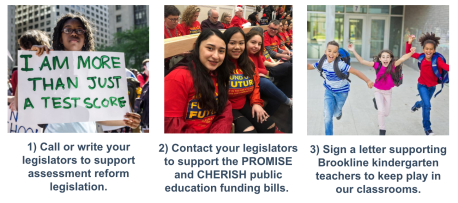
Three ways you can stand up and speak out for public education today!

Screen Shot 2019-06-14 at 6.53.46 AM

Take a few minutes today to raise your voice about these three important issues for our schools.

1) Less Testing, More Learning
Citizens for Public Schools members will testify at a public hearing before the Joint Education Committee Monday in favor of a moratorium on the high-stakes uses of standardized testing and other crucial reforms to improve assessment in the Commonwealth.
You can make a difference by asking your legislators to support five bills to reform and improve state assessment practices. Collectively, they would: stop the high stakes uses of standardized test results, establish a grant program to develop alternatives to high-stakes standardized testing, inform parents about their rights vis a vis state testing, allow local districts to determine graduation requirements, and make other improvements.
Read more about CPS’s priority education legislation here.
ACT TODAY! #StandUpForPublicEducation and ask your legislators to testify in support of these bills at Monday’s Joint Education Committee hearing, 10am, Room A-1. And then, spread the word. Thank you. (Email us if you would like to testify or submit written testimony to the committee.)
2) Fund Our Future
Thanks to all of you, our message about the urgent need to update the state school funding formula is getting through and resonating! A recent poll found 60% of voters believe our schools are not adequately funded, and nearly 60% are willing to pay more in taxes to fix funding disparities.
And today, parents are filing a lawsuit naming four state education officials for “violating the civil rights of low-income, black, and Latino students by failing to provide them with the same quality of education as their mostly white affluent peers.” (CPS is a member of the Council for Fair School Finance, backing the lawsuit.)
Now’s the time to keep up the pressure on legislators to pass urgently needed education funding legislation!
Contact your state senator and representative to support the PROMISE and CHERISH public education funding bills. Click below to find out if your legislators support the bills, then call to thank them or urge them to take a stand. Urge them to contact the appropriate committee chairs and express their support of these two crucial bills!
3) Keep Play in our Kindergarten Classrooms
A courageous group of Brookline kindergarten teachers are speaking out about program and curriculum practices, implemented without meaningful educator input, causing “everlasting negative impact” on their young students’ social-emotional well-being. In their letter, they say kids need play-based learning, not only stressful academic blocks that aren’t developmentally appropriate, create anxiety and hamper the joy of learning. Watch a video of their public comment here. Click the button below to sign a letter from a group of Brookline parents supporting the kindergarten teachers, and don’t forget to mention that you’re a CPS member in the comments! (You don’t have to be from Brookline to sign.)


Parents in New Bedford, Massachusetts, managed to stop an outrageous charter money-grab.

Here is a report from

Local activist Ricardo Rosa writes:

An unprecedented charter school model was introduced in the city of New Bedford, MA. Alma Del Mar charter school sought to expand by 1,188 seats, which would have meant the syphoning of $15 million dollars from the city’s public school system and likely a major hit to city’s budget more broadly. The school’s expansion was legal under the current charter cap. The school sought just about all of the seats undermining the very premise of the charter industry, namely, that competition is a positive value in educational reform. 
 
The state’s commissioner of education, the charter operator, the Mayor and the superintendent crafted a deal behind closed doors and attempted to implement it  very hurriedly to evade public scrutiny. The deal allowed the charter 450 seats, a closed public school and its land at no cost, and the crafting of a new public school zone allowing for a structure that bypasses the lottery system and where students in the zone would be automatically enrolled in the charter school instead of their local public schools as of fall 2019. Families could fill out a change of assignment form so as to stay in they public schools, but there was no guarantee that the superintendent (in consultation with the charter operator) would honor it.
Furthermore, the charter could, in three years time, seek additional seats if they so choose. Worse, the public school system had to agree to pay for a pre-determined enrollment figure regardless of how many of those seats are actually filled. Should the deal not work out, the commissioner structured a “Plan B” (an extortion plan really), which would allow the school to proceed with its lottery and expand to 594 seats. 
The state’s Board of Education applauded the deal as a model that could be implemented in other working class and low income cities in Massachusetts. The model was dangerous in that it could have circumvented the charter cap through a complex “home rule petition” that had to be signed off on my the local school committee, the city council, and then move on to the state legislature for the introduction of a bill.
Massachusetts voters voted, overwhelmingly, in 2016 to not expand the charter cap despite large amounts of corporate money that poured in to support the initiative. This was clearly not a deal that would have affected just the city, but the state. 
The New Bedford Coalition to Save Our Schools (NBCSOS), a grassroots organization of parents and grandparents of New Bedford Public School children, community activists, educators and youths, went to work at every stage of this proposal. The Coalition worked in solidarity with the local teachers union, the Massachusetts Teachers Association, and Citizens for Public Schools. 
Members spoke to residents in a door to door campaign, hosted forums and film screenings to educate the public, spoke to parents at pick up and drop lines in local public schools, wrote Op-Eds, organized rallies, spoke to local and state officials, and wrote a policy analysis report they circulated with state legislators. The Commissioner of Education was forced to pull the deal. There is some indication that legislators are making an attempt to have a hearing of the full body of the legislature, despite the deal being pulled and multiple news reports citing that the deal is dead.
Rosa provides more information in this article he wrote for Commonwealth magazine.
He explained there:
This is an effort to destabilize labor, capitalize on real estate wheeling and dealing in the city, and continue the pursuit of gentrification as an economic strategy. This property handover and automatic enrollment into the charter school is untested and unproven, contrary to the former state education secretary’s claim that it is “effective education policy and innovation.” This deal, however, really amounts to a form of corporate experimentation on New Bedford children that is immoral….
What is being introduced to families is a complex system and paperwork in the hope that parents and guardians will simply go with the flow. This approach is similar to filling out a mail-in rebate. Some will not fill it out due to various reasons. Others will fill it out incorrectly and will never receive the rebate. Even worse, the decision maker here can arbitrarily decide whether to honor the “rebate.”

This is a very dangerous proposal in the sense that it treats people as consumers rather than as citizens deserving all of the rights, information, and privileges of the common good.  Automatically extracting a student from the public school that she or he is entitled to attend is antithetical to the values of the community.

These “third way” approaches are not unique if we look across the United States. It’s very naïve to think that this is a “better way to do charter schools.” The charter industry has come under fire across this country. In our own state we voted against expansion in 2016.

The Alma del Mar proposal is a politically devious and opportunistic way to skirt citizen resistance to charter expansion and to seek a new approach to doing business so as to survive. The mayor, the majority of the school committee and city council, and some of the state legislators who have stated that this proposal is the “lesser of two evils” need to be reminded that “the lesser of two evils” is still evil. This “pragmatic” lesser of two evils tactic may work for the short term, but it will just embolden establishment politics and undermine future chances for real progressive change.



The privatizers got badly beaten in 2016, when they tried to lift the cap on charter schools in Massachusetts. Funded by the Waltons and the usual coven of billionaires, they asked the public to endorse a proposal to launch 12 charter schools every year, wherever they wanted to open. The referendum was overwhelmingly defeated, much to the surprise of its sponsors.

Governor Charlie Baker is a Republican who has appointed a choice-friendly State Board, so the privatizers have not given up hope for undermining democracy.

Now they are back with a proposal for “innovation zones.” 

Jonathan Rodrigues writes:

In a world where we’re more and more accustomed to jargon inherited from corporate start up world like “disruption” and “big data”, “innovation” stands out as one of the most empty vessels in which we project meaning without much thought of it.

In the education world in particular, almost anything can be “innovative”. Even bringing back purposeful segregation and differential treatment under the guise of educational opportunity. Governor Baker’s latest “Innovation Partnership Zones” may be clever, but it’s certainly not very innovative.

If only segregationist Alabama Governor George Wallace had known it would be this easy to fool people, he’d had changed his 1963 speech to “innovation today, innovation tomorrow, innovation forever!”.


So what are “Innovation Partnership Zones” (IPZs), and what would the governor’s bill do? It’s important to note here this idea has prominent Democratic support as well, it was only last year that Education Committee co-chair Alice Peisch (D-Wellesley) and Senator Eric Lesser (D-Longmeadow) sponsored very similar legislation.

The bill allows groups of 2 schools or more (or one school with more than 1,000 students) to create an IPZ which would allow an outside organization to manage these schools and give the “zone” autonomy over things like budget, hiring, curriculum, etc. Essentially third-partying away the public good, but doesn’t “partnership” sounds so much better than “takeover”?

The IPZ can be triggered in two main ways.

  1. Through local initiative of school committee members, a superintendent, a mayor, a teachers group or union, and parents. .
  2. Through the state’s Department of Elementary and Secondary Education (DESE) Commissioner’s choice from schools determined to be “underperforming” by high stakes testing metrics.

The process would then call for proposals jointly with an outside entity that may include nonprofit charter operators and higher ed institutions….

If past is prologue, the results should look familiar. Brown University Annenberg Institute’s 2016 report “Whose Schools?” analyzed the board composition of charter schools in Massachusetts. 60% of charter schools in the Commonwealth had no parent representation at all. 31% of charter board members were from the corporate sector, heavily from finance.

We should all look forward to our IPZs filled with executives from places like TD Bank, who certainly might live in the “region,”, but have no respect for Boston’s biggest neighborhood.

It is especially worrisome that IPZs will be inevitably pushed on communities of color, continuing a nationwide trend of stripping away voice from families of color from Philadelphia to Chicago, Detroit to New Orleans.

A 2015 Alliance to Reclaim Our Schools “Out Of Control” report examined the disenfranchisement of black and brown families through mechanisms such as appointed school boards, and state and district turnovers. In their 2014–15 analysis, there were 113 state takeover districts nationwide. 96 were handed to charter operators. 98% of affected students were Black and/or Latinx. In New Orleans, parents had to navigate 44 different governing authorities; in Detroit, 45.

The most important innovation of all would be the full funding of schools in poor communities.

He concludes:

In no place where black and brown families are the majority in the school district is the innovation of a fully funded quality public school with adequate staffing, special education services, mental health supports, art and music, full-time librarians, and school nurses ever even attempted.


Maurice Cunningham, a dogged investigator of Dark Money, has discovered a shell operation funded by the multibillionaire Walton family. 

It is called the “National Patents Union,” and its goal is to defund public schools and transfer public money to private hands.

Its leader Keri Rodriguez led the effort in Massachusetts to raise the cap on charter schools in 2016. The referendum would have allowed a dozen new charters every year forever, located wherever they chose. The vote went overwhelmingly against the charter proposition.

But wherever there is money, there are people ready to pick up the banner of privatization. And the Waltons, whose fortune exceeds $150 Billion, have plenty to spend in their quest to destroy public schools.

Citizens for Public Schools issued a statement today calling on the state to stop lying about parents’ right to opt out of state testing:


For immediate release, April 3, 2019

Contact: Lisa Guisbond, Executive Director 617-959-2371 (cell)

Citizens for Public Schools Calls on MA DESE to Remove Misleading Information on MCAS Participation Immediately

With MCAS testing season upon us, Citizens for Public Schools calls on the Massachusetts Department of Elementary and Secondary Education (DESE) to immediately delete misinformation on its web site and provide clear, consistent and accurate information to parents who choose to refuse testing for their children and to school officials charged with administering the test.

Specifically, we demand that DESE remove language falsely implying that it is illegal for students and/or their parents to refuse to participate in MCAS testing. On a page titled Participation Requirements for Students in Grades 3-8 and 10, it says: “The 1993 Massachusetts Education Reform Law, state law M. G. L. Chapter 69, section 1I, mandates that all students in the tested grades who are educated with Massachusetts public funds participate in MCAS.”

This is not accurate.

The law requires the state to administer the test. There is no mention of students being mandated to take it. Former Commissioner Mitchell Chester often said there is no provision for opting out in Massachusetts law. But when asked by WBUR whether it was illegal to opt out, Chester answered, “I haven’t used the word ‘illegal.’ There is no provision to opt out. Parents have in the past had their students refuse to take the test… That’s always been part of the landscape.” 

 But the new language on the state website–saying students are “mandated” to take the test, does suggest that refusal is illegal.

For more than 25 years, since the introduction of the high-stakes use of MCAS testing, thousands of parents in Massachusetts (and millions across the country) have chosen to opt out or refuse testing for their children.

 Parents opt their children out of the test for varied reasons. Some do it to protest the harm to children’s education inflicted by the state’s laser focus on test scores. Others do it because, for their children, because of disabilities or for other reasons, taking the test is a trauma. It is cruel and unfair to tell parents that their effort to protect their children from harm violates a legal “mandate” when no such law exists.

In the past, DESE guidance for MCAS administration has promoted participation in state testing, but has also explicitly advised school officials to respect the wishes of parents who refuse. For example, a 2017 memo from former Acting Education Commissioner Jeff Wulfson says, “Students should not be forced to take the test against their will.” A 2016 memo said, “We ask principals and test proctors to handle refusals with sensitivity. Students should not be pressured to take the test, nor should they be punished for not taking the test.” (See http://bit.ly/refusethetest.)

There have been no state or federal laws passed since DESE provided that guidance (and Commissioner Chester made his statement) that make it illegal to refuse MCAS testing.

Therefore, we demand that the record be corrected and accurate information be disseminated ASAP so that no student or parent is pressured or threatened for exercising their right to refuse testing.   

###

CPS’s mission is to promote, preserve and protect public schools and public education. CPS opposes any political or social initiative that seeks to infringe on or endanger such a vital resource as our public schools. For more information on the CPS mission and goals, see www.citizensforpublicschools.org.


Massachusetts’ Civil Rights groups and teachers’ unions are outraged by a racist question in the state ELA Test. 

“In response to accounts about racially troubling questions embedded in this year’s 10th-grade English Language Arts MCAS exam, the Massachusetts Teachers Association, the Boston Teachers Union, the American Federation of Teachers Massachusetts, the Massachusetts Education Justice Alliance and the New England Area Conference of the NAACP are demanding that the test immediately be pulled and that the Department of Elementary and Secondary Education not score any exam that included a question concerning material from Colson Whitehead’s novel “The Underground Railroad.”

“The organizations further insist that the DESE end the gag order imposed on students and educators barring them from discussing the content on the MCAS exams. Educators and students are forced to sign confidentiality agreements saying that they will not reveal the questions — or even discuss the contents. Students could have their test scores tossed out; educators could lose their licenses to teach. Passing the 10th-grade MCAS test is a graduation requirement.

“Educators and students have reported that the MCAS is using the passage from “The Underground Railroad” to have students write a journal entry from the perspective of the character Ethel, who is openly racist and betrays slaves trying to escape.

“For all of the unconscionable aspects of standardized testing, DESE has imposed a new layer of trauma — particularly on students of color — forcing students to read a tiny excerpt of the book, produce a quick answer about race relations embodying a racist perspective, and then stifle the complicated emotions that emerge. To deny students their right to wrestle with the issues with their teachers reveals that the MCAS is not about education at all and only undermines a school curriculum,” said MTA president Merrie Najimy….”

”MTA Vice President Max Page said this was not enough and repeated the call for a moratorium on high-stakes testing.

“Students should definitely read the brutal and brilliant book ‘The Underground Railroad’ and work with experienced educators on exploring the important and complex issues it raises,” Page said. “But in order to do so, our students need fully funded schools with small class sizes and teachers who have the academic freedom to guide this complex and emotional discourse so that students are building empathy and understanding of our troubled history. Our schools also must include libraries stocked with literature and full-time librarians who can guide children in exploring the diverse and multiple perspectives on any subject.”


In 2016, Massachusetts voters decisively rejected a referendum to expand the charter sector. State officials don’t care. They are ignoring local resistance and going full speed ahead, as Citizens for Public Schools reports.

The push for charter school expansion in Massachusetts continues, despite the clear message sent by voters in 2016, when 62% said no to Question 2 and charter school expansion.

It’s time to speak out, this time against charter expansion proposals in New Bedford and Haverhill. Contact the Massachusetts Department of Elementary and Secondary Education (DESE) by December 3 (the deadline for public comment) at charterschools@doe.mass.edu.

New Bedford’s Alma del Mar charter school is asking to expand by 1,188 seats, and Global Learning seeks 100 additional seats. This would cost New Bedford Public schools roughly $15 million a year, beyond the $14 million the district already loses to charter schools.

CPS Board Member and New Bedford School Committee member Joshua Amaral described the stakes for his community in a Commonwealth Magazine article titled “Ignore the charter school think tank crowd.” Amaral writes, “To put it simply, the district cannot afford a single additional charter seat, let alone a doubling of its charter enrollment.”

In Haverhill, the national Wildflower chain has applied to open a 240-seat Montessori charter school. The district already loses more than $3 million a year to a Montessori charter school and, like New Bedford, cannot afford to lose more.

New Bedford and Haverhill students, teachers and families need investments in democratically accountable schools that serve all children, not millions of dollars diverted to charter expansion