Blogger Billy Townsend (Public Enemy #1) here summarizes the latest Florida education scandal.
Archives for category: For-Profit
Arthur Camins, scientist and technologist, warns that public policy in both education and healthcare is deeply flawed and cannot be fixed with patches. No matter how many potholes are fixed, the underlying problems go untouched and unchanged.
Our flawed policy is the result of deeply ingrained flawed thinking.
The United States, he writes, is the victim of a combination of forty years of skepticism of government solutions and acceptance of “let’s be realistic about what we can accomplish” thinking.
For example, for decades scattershot treatments of outcomes have characterized bi-partisan education improvement efforts with little to nothing to show for it except undermined public education and stress. The driving causes of inequitable outcomes, systemic inequity, its enabler, racism, and resultant precarious lives remain rampant and unaddressed.
Instead, the dominant education interventions have been to push or blame individuals. These include rewards and punishments for educators or students based on standardized test scores; rigid discipline regimes; and, more recently, a focus on developing grit to work through, put up with, or overcome rather than eliminate challenging social and economic conditions.
Equally, if not more, insidious is you-can’t-save-everyone solutions, such as escape hatches for some kids through charter schools and vouchers, most of which are no better than local public schools. More broadly, the lack of universal health care and inequitable funding of schools through local real estate yield the same help-a-few result.
Open the link and read the rest.
Perhaps you recall when Betsy DeVos testified at her Senate hearing about her worthiness to be Secretary of Education. Among her most memorable lines was her fulsome praise of virtual charter schools. This was both sad and hilarious, coming as it did more than a year after the Walton-funded CREDO at Stanford released a report finding that a year at a virtual charter school was akin to not going to school at all (students in these schools lost the equivalent of 72 days in reading and a full year in math).
Over the past few years, there have been several major virtual charter school scandals involving the loss of many millions of dollars (the EPIC scandal in Oklahoma, the Pennsylvania CyberCharter School scandal, the A3 scandal in California, the ECOT scandal in Ohio).
Now Steve Hinnefeld writes about a virtual charter school scandal in Ohio.
He writes:
A Hamilton County court hearing this week may determine whether Indiana taxpayers have a chance to recover $154 million from two virtual charter schools and their leaders and business partners.
The hearing, set for 1:30 p.m. Wednesday before Hamilton Superior Court Judge Michael Casati, concerns motions to dismiss a lawsuit to recover charter school funds that were allegedly obtained by fraud or improperly spent.
Attorney General Todd Rokita filed the suit in July 2021 on behalf of the state. Defendants include the schools — Indiana Virtual School and Indiana Virtual Pathways Academy — and several of their officers and employees. Also named are businesses that were affiliated with the schools.
The lawsuit relies on an investigation by the State Board of Accounts, the findings of which were released in early 2020. Auditors found that the online schools inflated their enrollment or failed to ensure students were being taught, resulting in overpayment of more than $68 million by the state. Auditors also identified more than $85 million in improper payments to vendors and businesses.
The schools closed in 2019 after their authorizer, Daleville School Corp. revoked their charter. The previous year, their claimed enrollment peaked at more than 7,000 students.
Problems with the schools came to light in 2017, when Chalkbeat Indiana revealed poor test scores, abysmal graduation rates and hefty payments to businesses connected to the school’s founder. Indiana Virtual School employed only one teacher per 200 students and spent just 10% of its funds on instruction, Chalkbeat found.
But the schools enjoyed political connections. They employed a state legislator as a consultant and had a retired state appeals court judge on the school board. Businesses affiliated with the schools gave $140,000 to Indiana Republican election campaigns. The schools paid a lobbying firm $300,000.
When will state legislators stop pumping money into these money pits?
Carol Burris, executive director of the Network for Public Education, wrote a stunning expose of for-profit charter operators in Ohio. It was published in Valerie Strauss’s blog The Answer Sheet.
Burris writes:
Buckeye Preparatory Academy opened its doors in September 2014, promising “rigorous academic standards” for the 117 students who enrolled. It was started by the for-profit management charter company the Cambridge Education Group, founded by Marcus May. In 2017, three years after Buckeye opened, Cambridge tried to sever all ties with May, who was indicted and later convicted of racketeering and fraud in connection with the charter schools he ran. Buckeye never received a grade from the Ohio Department of Education better than an F during its four-year existence. At the end of 2017, Buckeye Prep was more than $1 million in debt.
That enormous deficit, which equaled nearly all of the tax dollars the school took in, was due, in large part, to the astronomical management costs charged by Cambridge.
According to the 2018 audit, the for-profit took 18 percent of all revenue received by the charter to manage the school. Cambridge also collected $93,398 in overhead fees, pulling a total of $383,505 from the $1.26 million in operating aid that the school received. As debt accrued, Cambridge was charging the school 5 percent interest on money the school owed.
An additional $41,490 went out the door to the authorizing sponsor of the school, Buckeye Community Hope Foundation, whose related for-profit organization, Kent Properties, LLC, was the school’s landlord, receiving $162,000 a year in rental costs.
At the end of the school’s audit, an addendum said that the management of Buckeye Prep was transferred from Cambridge to another for-profit, ACCEL Schools of Ohio, LLC.
On the surface, that transfer might appear to be a lifeline for the students who attended Buckeye Prep. But the small charter school at 1414 Gault St. in Columbus was — and would continue to be — a big moneymaker for for-profit operators and their partners.
The orphanage with no orphans
Some states, such as New Jersey, have only one state entity that authorizes charter schools. In Ohio, there are 20 active authorizers, called sponsors. Sponsors provide oversight, deciding whether a school opens and, later, whether its charter is renewed.
For Buckeye Prep’s sponsor, the Buckeye Community Hope Foundation (BCHF), charter sponsorship is a lucrative business. According to BCHF’s 2017 audit, the foundation, involved with low-income housing, received over $3.1 million for sponsorship and services provided to 50 charter schools that year. Its related for-profit corporation owned the Buckeye Prep building and collected more than $162,000 in building and furniture lease payments during 2017, its final year.
[Biden promised to end federal funding of for-profit charter schools. A new report explains how they operate.]
As the failing school approached the date for charter renewal, its new operator, ACCEL, chose a sponsor that already managed many of its schools — St. Aloysius Orphanage. Despite its name, St. Al’s, as it is called, has not provided a home for orphans since the 1970s. It is a mental health service provider that also sponsors charter schools.
Compared with its other funding streams, charter school sponsorship provides the most income — over $3.6 million in 2019. However, while St. Aloysius collects the fees, it does none of the work. Instead, it hired a for-profit corporation, Charter School Specialists, paying out $2.3 million a year to the for-profit.
The relationship between sponsor and for-profit was so tight that in 2020, the state auditor had to remind schools that their sponsor was St. Aloysius, not Charter Schools Specialists, after several listed the for-profit as their sponsor.
In 2019, the Cleveland Transformation Alliance recommended — to no avail — that St. Al’s no longer sponsor charter schools based on its record of keeping failing schools open. Two years earlier, the same committee raised conflict of interest concerns because some school treasurers were employed by both the charter board and Charter Schools Specialists. That conflict of interest while overseeing the expenditure of millions of dollars in public funds was allowed to continue. In 2021, eight school treasurers were employees of the for-profit overseer and the charter schools’ boards, including Capital Collegiate Preparatory Academy, according to information obtained from the Ohio Education Department.
For-profit operators run more than 62 percent of the schools sponsored by St. Aloysius; many of them are other ACCEL schools.
ACCEL schools
In 2014, the online for-profit charter chain K12 Inc. announced a new, yet-to-be-named company financed by Safanad Limited, a Dubai investment company. Pansophic Learning was launched later that year as the Safanad/K12 joint venture. The name of its American-based charter school company is ACCEL Schools.
The CEO of both Pansophic and ACCEL is Ron Packard, formerly of K12 Inc., now known as Stride. Packard’s background is in finance, and he compounded the revenue of K12 by 80 percent — (a far higher percentage than its 2019-2020 graduation rate of 56.3 percent).
ACCEL’s primary strategy is to pluck schools from established for-profit chains that failed or are folding, including Mosaica, White Hat Management, and I CAN Schools.
With no shortage of failing charter schools to buy, ACCEL’s growth has been fast-paced. It now manages 73 charter schools (brick and mortar or online) in Arizona, California, Colorado, Indiana, Michigan, Ohio, and Washington, and it is attempting to open schools in West Virginia.
[Yes, charter schools can be bought and sold]
Global School Properties, located at the same address as ACCEL and Pansophic in Virginia, is the real estate arm of ACCEL, which allows it to acquire properties and then basically rent their own buildings to themselves — with public funds — through the schools they manage.
ACCEL’s largest portfolio is in Ohio. Forty-six schools list ACCEL as their operator. However, we also found an additional 17 schools run by a superintendent with an ACCEL email address, all but two under the Constellation Schools brand. And in 2018, ACCEL bought out White Hat’s failing online charter school, OHDELA, resulting in a total of 64 schools in that state.
ACCEL and Capital Collegiate Prep
When ACCEL took over Buckeye Prep in 2018, it operated the school as Buckeye for one year — before shutting it down to put another in its place. The for-profit needed to find a board to act as the nonprofit face for the new for-profit-run school. ACCEL’s then vice president, Mark Comaduci, introduced community member Leslie Eaves to Amy Goodson and Carlena Hart, attorneys for Buckeye Prep, via email. Eaves was told to form a board, for which she served as president. She found three educators — Malcolm Cash, Renita Porter and Said Adam — and forensic accountant Rhonda Whitfield.
By January 2019, the new board was formed. In June 2019, Buckeye voluntarily requested contract nonrenewal (see closed community schools). The following day, July 1, Kent School, LLC, sold the school building to Global School Properties for $1,380,635, records show. St. Al’s would be the new sponsor, and the school would now be called Capital Collegiate Preparatory Academy (CCPA).
From the start, the relationship between the charter school’s board and ACCEL was rocky. Unlike many of the boards recruited by for-profit operators, this board included seasoned educators who took their duties of governance seriously. According to emails between Eaves and ACCEL officials, including Ron Packard, the first problems arose with the terms of the management and lease agreements between the school and ACCEL.
Buckeye’s lease agreement was for $12,500 a month or 10.5 percent of state funds received, whichever was greater. ACCEL wanted to increase the lease by $5,500 a month, according to internal emails. In the end, the agreement was for 14 percent of revenue — state funding as well as additional federal entitlements if the grant application was prepared by ACCEL.
In 2020, the school that served only 135 students paid ACCEL’s related real estate company $145,006 in rent, with ACCEL projecting a rent payment of $319,840 for the very same building in 2025. At that rate, ACCEL would recoup what it paid in six years — precisely the length of the school’s charter. If the charter failed and closed, ACCEL would walk away with a million-dollar-plus building largely paid for by the taxpayers of Ohio.
The management contract charges the charter school 15 percent of all revenue received, with a few exceptions. But that is not where payments would end. A read of the management contract clarifies that ACCEL was in charge of, and would be compensated for, all of the school’s day-to-day operations — from the curriculum to student records to all personnel services.
The school was allowed to go into unlimited debt on which it would pay interest to ACCEL, making it nearly impossible for the school to leave the for-profit management company in the future. Financial records from 2020 show the school operating at a loss of over $420,000, with a 2021 projected loss of over $845,000.
Conflicts between the board and ACCEL ignite
The change in school management came with a wave of staff turnover, with just two teachers opting to stick with the new school, where many of the students were behaviorally challenged. ACCEL hired new and inexperienced teachers, and for the first two months, according to former board treasurer Whitfield, the campus didn’t have any pencils or paper in the classrooms. The situation was so dire that an organization that had performed an independent review of the charter school donated paper and pencils.
To get a grasp on student progress, the board authorized the use of I-Ready Assessment. However, ACCEL preferred to use its own assessment product called “Dr. Carr’s Scrimmages” to measure student progress. Carr, who became a vice president of ACCEL, previously worked for the defunct for-profit charter chain Mosaica. Student progress, and lack thereof, was discussed at length during the board meeting of February 2021, which can be found here.
The school’s principal, a former real estate agent, seemed unsure as to why the Scrimmages were being used. I-Ready results showed that most sixth-grade students were performing at two to three years below grade level in reading and math. That led to a discussion as to whether, given the poor progress made by sixth-graders, the school should expand to grade 7 or focus instead on expanding its kindergarten program. Board members expressed worry regarding a seventh-grade addition.
But the principal and the ACCEL superintendent, Ashley Ferguson argued in favor of adding a grade as being in the best interest of students and the school. Ferguson added, “We need to be up by 200 kids to eliminate our deficit. Two kindergartens would not do it.” [ Ferguson, a vice president of ACCEL Schools, attended board meetings as ACCEL’s “superintendent,” even though Shannon Metcalf is listed as superintendent on the state website.]
Board members resign
To get a better understanding of the school’s day-to-day operations, the board hired Tisha Brady in 2020 to serve as a compliance officer. What Brady observed appalled her.
Brady, a former lobbyist for School Choice Ohio and longtime supporter of charter schools, has soured on charter management organizations running schools. During a December 2021 interview with me [ Carol Burris, the author of this post], Brady expressed her concerns regarding where Ohio’s charter schools were going. “[For-profit management] is absolutely not in line with the supposed principles of school choice programs,” she said. “This is simply a cash grab using disadvantaged students as ATMs to launder public funds into the pockets of a private corporation.”
Meanwhile, the concerns of the board grew. It was difficult for the board to get a handle on expenditures and purchases, even with Brady’s assistance. During the June 14, 2021, meeting, the board objected to the $53,000 spent by ACCEL for smartboards for the school. During classroom visits, board members noticed that the smartboards were generic dry erase boards. The meeting minutes noted a prior concern regarding a large expenditure for a curriculum that was missing, as well as a refrigerator that was removed by a vendor. Eaves, the board president, objected to the lack of inventory control of school purchases, according to the minutes.
When Brady and Whitfield entered the school to inventory the items and see how they were being used, they both said, an ACCEL teacher assaulted Whitfield with a cart. Whitfield filed a complaint with the police department and the professional conduct division of the Ohio Department of Education, as well as with ACCEL.
“My concern was for the students in the classroom. I worried about what the kids had witnessed,” Whitfield said. Whitfield resigned from the board a month later. Eaves had previously resigned in October. The school’s website now lists only four board members, still including Whitfield, who is gone — a violation of law that requires five board members, which ironically St. Al’s had used to put the board on probation in the past.
Capital Collegiate Preparatory Academy expands
Despite worry over student performance, a slim majority of the board decided to add the seventh grade. According to Whitfield and Brady, one teacher teaches all subjects on a rotating basis and out of certification. But, those seventh-graders, no matter how poorly prepared, increased the head count, which in turn increased ACCEL’s fees for both rent and management. The school goes further into debt, and ACCEL collects interest.
And so, it will continue until the school’s charter is up in 2025. ACCEL could walk away from the failing school, sell the building to another for-profit, and move on to another failing school.
Right now, nearly half of all charter schools in Ohio are run by for-profits. Most of these charter schools are located in some of the poorest neighborhoods in the United States. The state of Ohio has known about the cycle of for-profits repeatedly preying on failing charter schools for years.
There is more: Capital Collegiate Preparatory Academy, which was no more than the retread of a failing school, received a $250,000 Federal Charter Schools Program (CSP) implementation grant.
Half of all of the grants distributed by Ohio from its 2015 CSP State Entities grant were given to schools run by Ron Packard’s ACCEL.
The article contains many links to sources. To see them all, open the article.
He writes:
Peter Greene reports on real estate transactions in the Florida charter industry, just one transaction that provides an insight into the financial interests getting rich by exploiting public dollars meant for education. Lots of millions changing hands, but nothing about children or education. This is the kind of “news” that makes my blood simmer.
It turned up as an item in the South Florida LBJ Business Journal, and the lead tells you just where we’re headed. The campuses of three charter schools in Broward County were purchased for a combined $49 million by a company in Boise, Idaho that specializes in charter school real estate investments.That just says a lot. Let’s look at some details.

The big deal involves–well, several companies. We’ve got AEP Charter Renaissance. These folks sold a school they bought back in 2017. That charter school was located in a former Target store in Tamarac that had been bought by an investment capital group and a development group for $6.3 million; AEP Charter Renaissance bought it for $22 million. That purchase was part of a two-school deal that merited this kind of language in industry blurbs:
Part of the Colliers team’s successful strategy required educating prospective buyers on each individual Charter Management Organization (CMO) and nuances of each charter school including charter terms, for this asset class considered a special purpose building. “This is a highly-specialized asset class which inherently requires a longer and more thorough phase of due diligence,” noted Colliers Senior Vice President and Education Services Group Member Achikam Yogev. “Because of the complexities, charter schools have traditionally sold individually and rarely as a portfolio, but the continued interest in this asset class has paved the way for more creative strategies and more complex deals being done on behalf of our clients.”
By “industry,” of course I mean real estate and investment, because none of this has to do with education. At any rate, AEP Charter Renaissance just sold that school (which has somehow shrunk to 85,233 square feet) for $26 million. AEP Charter Renaissance is managed by Charter School Capital, whose CEO and co-founder Stuard Ellis is based in Portland. They serve “charter school leaders, back-office/business service providers and brokers & developers” and they make a lot of money doing it. Also, “AEP” stands for “American Education Properties,” of which Ellis is also the CEO. FWIW, his degree from University of California, Berkley (1988), is in Political Economies of Industrial Societies. You can watch Ellis provide a history of charter school capital.
To learn more about the highly profitable news in the charter industry, open the link and read the rest of this post.
At the Washington Post today, we learn that Melania is monetizing bits of her clothing.
Mark Lasswell writes:
Melania Trump apparently didn’t get the memo from that noted artist Hunter Biden: You’re supposed to cash in on your presidential family ties while the guy is still in office. She might be late to the party, but the former first lady is monetizing with a gusto worthy of, oh, brewmaster Billy Carter.
“On Tuesday,” Helaine Olen writes, “Melania Trump announced she would sell to the highest bidder the widely admired hat she wore when French President Emmanuel Macron” — he of the potty-bouche — “visited the White House in 2018.” Trump is also flogging both a watercolor of herself wearing the hat and a non-fungible token by the same artist. (If the watercolorist is one H. Biden, fetch my bidding paddle.)
Here’s the catch … it’s the Trumps, there’s always a catch: Transactions will be “conducted not in dollars but in cryptocurrency — specifically SOL, the currency of the blockchain platform Solana,” Olen writes.
Given that “the blockchain is where no small amount of the get-rich-quick of the past year is residing,” and given that “taking advantage of the rubes has long been a Trump family specialty,” Trump’s post-White House crypto avidity could be interpreted as a cynical SOL-grab. They thought of that. Trump’s announcement included the heartwarming aside that “a portion” of the proceeds — Olen notesthat bidding begins at the crypto equivalent of $250,000 — will go to computer science and technology scholarships for individuals who have been in foster care.
How much is that “portion”? Maybe this is the moment to wonder when Trump is going to put that “I REALLY DON’T CARE, DO U?” jacket up for auction.
Last week, I posted my thoughts on “Who Demoralized the Nation’s Teachers?” I sought to identify the people and organizations that spread the lie that America’s public schools were “broken” and that public school teachers were the cause. The critics slandered teachers repeatedly, claiming that teachers were dragging down student test scores. They said that today’s teachers were not bright enough; they said teachers had low SAT scores; and they were no longer “the best and the brightest.”
The “corporate reform” movement (the disruption movement) was driven in large part by the “reformers'” belief that public schools were obsolete and their teachers were the bottom of the barrel. So the “reformers” promoted school choice, especially charter schools, and Teach for America, to provide the labor supply for charter schools. TFA promised to bring smart college graduates for at least two years to staff public schools and charter schools, replacing the public school teachers whom TFA believed had low expectations. TFA would have high expectations, and these newcomers with their high SAT scores would turn around the nation’s schools. The “reformers” also promoted the spurious, ineffective and harmful idea that teachers could be evaluated by the test scores of their students, although this method repeatedly, consistently showed that those who taught affluent children were excellent, while those who taught children with special needs or limited-English proficiency or high poverty were unsatisfactory. “Value-added” methodology ranked teachers by the income and background of their students’ families, not by the teachers’ effectiveness.
All of these claims were propaganda that was skillfully utilized by people who wanted to privatize the funding of public education, eliminate unions, and crush the teaching profession.
The response to the post was immediate and sizable. Some thought the list of names and groups I posted was dated, others thought it needed additions. The comments of readers were so interesting that I present them here as a supplement to my original post. My list identified No Child Left Behind, Race to the Top, and Common Core as causes of demoralization that tied teachers to a standards-and-testing regime that reduced their autonomy as professionals. One reader said that the real beginning of the war on teachers was the Reagan-era report called “A Nation at Risk,” which asserted that American public schools were mired in mediocrity and needed dramatic changes. I agree that the “Nation at Risk” report launched the era of public-school bashing. But it was NCLB and the other “solutions” that launched teacher-bashing, blaming teachers for low test scores and judging teachers by their test scores. It should be noted that the crest of “reform” was 2010, when “Waiting for Superman” was released, Common Core was put into place, value-added test scores for teachers were published, and “reformers” like Arne Duncan, Bill Gates, Michelle Rhee, Joel Klein, and other became media stars, with their constant teacher-bashing. For what it’s worth, the National Assessment of Educational Progress flatlined from 2010 onwards. Test score gains, which were supposedly the point of all this “reform” activity, were non-existent on the nation’s most consequential test (no stakes attached).
Readers also blamed demoralization on teachers’ loss of autonomy, caused by federal laws and the testing imposed by them, and by the weakness of principals and administrators who did not protect teachers from the anti-education climate caused by NCLB, RTTT, ESSA, and the test-and-punish mindset that gripped the minds of the nation’s legislators and school leaders.
Readers said that my list left off important names of those responsible for demoralizing the nation’s teachers.
Here are readers’ additions, paraphrased by me:
Michelle Rhee, who was pictured on the cover of TIME magazine as the person who knew “How to Fix American Education” and lionized in a story by Amanda Ripley. Rhee was shown holding a broom, preparing to sweep “bad teachers” and “bad principals” out of the schools. During her brief tenure as Chancellor of D.C., she fired scores of teachers and added to her ruthless reputation by firing a principal on national television. For doing so, she was the Queen of “education reform” in the eyes of the national media until USA Today broke a major cheating scandal in the D.C. schools.
Joel Klein, antitrust lawyer who was chosen by Mayor Bloomberg to become the Chancellor of the New York City public schools, where he closed scores of schools because of their low test scores, embraced test-based evaluation of schools and teachers, and opened hundreds of small specialized schools and charter schools. He frequently derided teachers and blamed them for lagging test scores. He frequently reorganized the entire, vast school system, surrounding himself with aides with Business School graduates and Wall Street credentials. Under his leadership, NYC was the epitome of corporate reform, which inherently disrespected career educators.
Michael Bloomberg, former Mayor of New York City, billionaire funder of charter schools and of candidates running for state or local offices who supported privatization of public schools. He claimed that under his leadership, the test-score gap between different racial gaps had been cut in half or even closed, but it wasn’t true. He stated his desire to fire teachers who couldn’t “produce” high test scores, while doubling the size of the classes of teachers who could. His huge public relations staff circulated the story of a “New York City Miracle,” but it didn’t exist and evaporated as soon as he left office.
Reed Hastings, billionaire funder of charter schools and founder of Netflix. He expressed the wish that all school boards would be eliminated. The charter school was his ideal, managed privately without public oversight.
John King, charter school leader who was appointed New York Commissioner of Education. He was a cheerleader for the Common Core and high-stakes testing. He made parents so angry by his policies that he stopped appearing at public events. He was named U.S. Secretary of Education, following Arne Duncan, in the last year of the Obama administration and continued to advocate for the same ill-fated policies as Duncan.
Betsy DeVos, Trump’s Secretary of Education despised public schools, unions, and teachers. She never had a good word to say about public schools. She wanted every student to attend religious schools at public expense.
Eli Broad and the “academy” he created to train superintendents with his ideas about top-down management and the alleged value of closing schools with low test scores
ALEC (the American Legislative Exchange Council), which writes model legislation for privatizing public schools by opening charters and vouchers and lowering standards for teachers and crushing unions. More than 2,000 rightwing state legislators belong to ALEC and get their ideas directly from ALEC about privatization and other ways to crush public schools and their teachers.
Rupert Murdoch, the media, Time, Newsweek, NY Times, Washington Post for their hostility towards public schools and their warm, breathless reporting about charter schools and Teach for America. The Washington Post editorialist is a devotee of charter schools and loved Michelle Rhee’s cut-throat style. TIME ran two cover stories endorsing the “reform” movement; the one featuring Michelle Rhee, and the other referring to one of every four public school teachers as a “rotten apple.” The second cover lauded the idea that teachers were the cause of low test scores, and one of every four should be weeded out. Newsweek also had a Rhee cover, and another that declared in a sentence repeated on a chalkboard, “We Must Fire Bad Teachers,” as though the public schools were overrun with miscreant teachers.
David Coleman, the architect of the Common Core, which undermined the autonomy of teachers and ironically removed teachers’ focus on content and replaced it with empty skills. The Common Core valued “informational text” over literature and urged teachers to reduce time spent teaching literature.
Margaret Raymond, of the Walton-funded CREDO, which evaluates charter schools.
Hanna Skandera, who was Secretary of Education in New Mexico and tried to import the Florida model of testing, accountability, and choice to New Mexico. That state has one of the highest rates of child poverty in the nation, and the Florida model didn’t make any difference.
Governors who bashed teachers and public schools, like Chris Christie of New Jersey, Andrew Cuomo of New York, and Gregg Abbott of Texas
“Researchers” like those from the Fordham Institute, who saw nothing good in public schools or their teaching
Senator Michael Bennet of Colorado, who turned Denver into a model of “reform,” with everything DFER wanted: charter schools and high-stakes testing.
Poorly behaving students and parents who won’t hold kids accountable for bad behavior
Campbell Brown and the 74
The U.S. Department of Education, for foisting terrible ideas on the nation’s schools and teachers, and state education departments and state superintendents for going along with these bad ideas. Not one state chief stood up and said, “We won’t do what is clearly wrong for our students and their teachers.”
The two big national unions, for going along with these bad ideas instead of fighting them tooth and nail.
And now I will quote readers’ comments exactly as they wrote them, without identifying their authors (they know who they are):
*Rightwing organizations like the American Enterprise Institute, (AEI), the Thomas B. Fordham Institute, the Heritage Foundation, even the allegedly Democratic-leaning Center for American Progress (CAP) for publishing white papers masquerading as education research that promotes privatization.
*Wall St moguls who invented Social Impact Bonds (SIBs) to gamble on & profit from preK student test scores.
*Rogues Gallery. One body blow after another. A systematic 💦 water boarding with no respite. And then we add the Broad Foundation who sent Broad-trained “leadership” so drunk on arrogance and ignorance that the term “School Yard Bully” just doesn’t capture it.
Operating with the Imprimatur and thin veneer of venture capital, plutocratic philanthropy, these haughty thugs devastated every good program they laid eyes on. Sinking their claws instinctively into the intelligent, effective and cultured faculty FIRST.A well orchestrated, heavily scripted Saturday Night Massacre.
*Congress and the Presidents set the stage, but the US Department of Education was instrumental in making it all happen. They effectively implemented a coherent program to attack, smear and otherwise demoralize teachers. And make no mistake, it was quite purposeful
*This list is incomplete without members of Democrats for Education Reform. Add in Senator Ted Kennedy, whose role in the passage of No Child Left Behind was critical. Same for then Congressman and future Speaker of the House, John Boehner, who noted (bragged!) in his recent autobiography that he was essential in keeping President George W. Bush on track with NCLB.
*Let’s not forget Senate Chair Patty Murray. She has been an important player in keeping the worse of Ed Reform legislation alive.
*You have presented a rogue’s gallery of failed “reformers” that have worked against the common good. In addition to those mentioned, there has also been an ancillary group of promoters and enablers that have undermined public education including billionaire think tanks, foundations and members of both political parties. These people continue to spread lies and misinformation, and no amount of facts or research is able to diminish the drive to privatize. While so called reformers often hide behind an ideological shield, they are mostly about the greedy pursuit of appropriating the education that belongs to the people and transferring its billions in value into the pockets of the already wealthy. So called education reform is class warfare.
*The Clintons, whose 1994 reauthorization of ESEA set the stage for NCLB
*Don’t forget the so called ‘liberal’ media, publications such as the New York Times and the Boston Globe who have published pro charter piece after pro charter piece, while simultaneously dumping all over public schools
*I’d like to include a cast of editorialists like George Will, Bill Rhoden, and many others, who have parroted the plutocratic-backed Ed Reform line. Armstrong Williams would certainly be part of this.
*Going back even further into the origins of this madness, I would add to Diane’s excellent rogues gallery those unknown bureaucrats in state departments of education who replaced broad, general frameworks/overall strategic objectives with bullet lists of almost entirely content-free “standards” that served as the archetype of the Common [sic] Core [sic] based on the absurd theory that we should “teach skills” independent of content, all of which led, ironically, to trivialization of and aimlessnessness in ELA pedagogy and curricula and to a whole generation of young English teachers who themselves NOW KNOW NEXT TO NOTHING OF THE CONTENT OF THEIR SUBJECT, typified by the English teacher who told one of the parents who regularly contributes comments to this blog, “I’m an English teacher, so I don’t teach content.” So, today, instead of teaching, say, Robert Frost’s “Stopping by Woods on a Snowy Evening” as part of a coherent and cumulative unit on common structures and techniques and genres of poetry, one gets idiotic test-practice exercises on “inferencing” and “finding the main idea,” with any random piece of writing as the “text.”
*It’s driven by how teachers have been treated the past 4-5 years, especially during the pandemic. Teachers are first responders. We should have been on the list of first-to-be-vaccinated. Schools should have strict mask and vaccine mandates. Teachers are professional educators. We should not be told what and how to teach by ignorant, conspiracy-driven MAGA parents. Public education is a cornerstone of democracy, and we teachers are motivated by a sense of civic duty. We are demoralized by attempts to destroy public education, led by anti-education bible-thumping “leaders” like Betsy DeVos and (in my home state) Frank Edelblut. Public education is being dismantled by gleeful right-wingers, while naive, well-intentioned moderates wring their hands and do little to defend it. It’s tiring to be under constant attack on the front lines, with no support. That’s why teachers are leaving today.
*One tiny example of a routine phenomenon. Teachers got the message pretty clearly: They were at the bottom of the pecking order. The absolute bottom. Micromanaged and undercut at every turn.Excellent points. The heavy handed top-down, bureaucratic demands for “data,” basically serve one goal, to justify the existence of administration.Don’t forget the voracious appetite of publishing companies…We had a district administrator prance around in our “professional; development days” tell use could not read novels or other picture books to the students…ONLY USE PEARSON.”And then 7 or so years later, the district made us THROW OUT every book from Pearson, and they bought new crap curriculum…that program was written by testing industry, not educators, I think it was “Benchmark,” real junk.
*I’d like to mention how I often lose my student teachers when they see the edTPA requirement. They switch majors, and the teaching pool gets even smaller.
*After Skamdera in NM came the TFA VAM sweetheart Christopher Ruszkowski. At least he had 3 years in a classroom, Skammy had none, but the Florida model, you know?
*Children’s behavior is in large part in response to the drill and kill curriculum and endless testing and teaching to the test that has been driving public education since NCLB and the back-to-basics movement that ushered it in. No room for creativity, no room for self expression, no room for innovation. Highly scripted Curriculum like Open Court turned children into little automatons, barking their answers like well trained dogs and turned teachers into task masters. It was a drive to dummy down the curriculum for fear of teaching too much free thinking. And a drive to turn teachers into testing machines and teacher technicians, easily replaced by anyone who can walk in a classroom and pick up the manual. Only it doesn’t work. It was and is developmentally inappropriate and the resulting rebellion in the classrooms if proof of that. No wonder teachers are leaving in droves!
*Under threat of closure of the MA school board in the mid 1800s, Horace Mann turned to the cheapest labor he could find, literate northern females, and deployed the Protestant ethic “teacher as a calling” trope to institute state free-riding on teachers (as opposed to the free-riding of which teachers are accused). Everything in this piece is correct except for the “almost” in the final paragraph. There’s no “almost” about it … free-riding on teachers is an operational feature of a system imported from Prussia, designed to produce cheap, obedient labor by underpaying women. As of 2012, teachers would need to make around 1/3 higher salaries to be paid on the same level as their professional peers. Everyone mentioned in the article is simply this generation’s enactment of the long-standing, systemic class war that preys on gender and race to continue and exacerbate inequity. While naming the current situation is very important, we also need to discuss, address, and shift these deep issues.
*It’s the boiled frog effect over the last 50 years that began as a response to mini-courses, sixties curriculum, obsession over college attendance, professors and teachers walking out to protest with their students, Viet Nam… and the Civil Rights Act. Since 1964, Intentional segregation influenced Local, state, and federal decision making on transportation, health care, insurance, zoning, housing, education funding, hiring, and more. When whites fled the cities and insured two sides of the tracks in towns and two systems evolved, quick fixes became that accumulation of bad decisions and leadership – and slowly, slowly, deterioration became acceptable.
*The list is not dated. It’s illustrative of the accumulation of negativity, quick-fix seeking, acronym-filled, snake-oil salesmen, desperate mayors and governors, obsession with rankings, publisher fixation on common core, NCLB votes hidden under the shadow of 9/11, and keep-everyone-happy state and national professional organizations.
*At the end of 2021 it is far right and left of politics and their rhetoric like CRT and homophobic slurs. So much for especially the “Christian Right.” In their god’s (yes lower case since not The Lord Jesus Christ’s New Testament words of love) name they exclude instead of include to share the good news/word.
*Data, data, data. Yesterday, I commented that I feel sympathetic toward the anti-CRT petitioners. I do. They’re not bad people. They’re just afraid of changing social rules. Their actions are demoralizing, but not dehumanizing. Wealthy corporations and individuals on the other hand , through their untaxed foundations, gave carrots to governments the world over to give the stick to education so that greater profits could be made through privatization and data monetizing. I was once called a 2. I was once labeled the color grey. I was numbered, dehumanized by test score data in an attempt to make education like Uber or Yelp. Not just demoralized, dehumanized. It’s not just who but what dehumanized teachers. It was the wrongheaded idea that education can be measured and sold by the unit. That idea was insidious. The marketing ploy to make my students into consumers who consider their efforts junk unless they are labeled with the right number or dashboard color was insidious. I have no sympathy for the investor class. They are not people with whom I disagree about social issues; they are hostile, corporate takeover wolves out to tear the flesh of the formerly middle and deeply impoverished classes for profit. Not one of the investors in education “reform” or any of their revolving door bureaucrats is any friend of mine. The list of who is long. The list of what is short.
*Jonah Edelman (Founder, Stand on Children); brother Josh Edelman (Gates Foundation: Empowering-?!–Effective Teaching; SEED Charter Schools); Charles & David Koch. Pear$on Publishing monopoly&, of course, ALEC (interfering in our business for FIFTY long years!)
Tom Ultican has written extensively about the greed and politics behind privatization. In this post, he reviews an important new book about the dangers of privatization by Donald Cohen and Allen Mikaelian. I urge you to buy the book.
Ultican writes:
Ronald Reagan claimed the nine most terrifying words in the English language are “I’m from the government, and I’m here to help.” The new book, The Privatization of Everything, documents the widespread theft of the commons facilitated by Reagan’s anti-government philosophy. His remark echoed a claim from the “laissez-faire cheerleader” Friedrich Hayek that government has us all on the “road to serfdom” (Privatization 120). Sherrilyn Ifill, the former Director-Council of the NAACP Legal Defense Fund observed,
“What we’re seeing in our country today: the rhetoric, the hate, the ignorance, the coarseness, the vulgarity, the cruelty, the greed, the fear is the result of decades of poor citizenship development. It is a reflection of the fully privatized notion of citizenship, a feral conflict for the scraps left by oligarchs (Privatization 13).”
Libertarian politicians like former speaker of the house Paul Ryan and Senators Ron Johnson and Rand Paul claim Hayek and writer-philosopher Ayn Rand as their guiding lights. In a 2012 article, Politico reported, “…, to bring new staffers up to speed, Ryan gives them copies of Hayek’s classic “Road to Serfdom” and Rand’s “Atlas Shrugged” — books he says inspires his political philosophy.” Politico also stated,
“But Hayek and Rand were violently opposed to each other’s ideas. It is virtually impossible to hold them in the same brain. When the termagant Rand met Hayek, she screamed across the room, ‘Compromiser!’ and reviled him as an ‘abysmal fool,’ an “ass” and a ‘totally, complete, vicious bastard.’” (Termagant: a violent, turbulent, or brawling woman.)
Ayn Rand’s problem with Hayek was that he was not really the “laissez-faire cheerleader” he was purported to be. He certainly opposed many of the ideas emanating from Franklyn Roosevelt’s New Deal believing they would lead to worse problems than the ones being addressed. Fundamentally his thinking was shaped by a fear of communism. However, unlike today’s libertarians, he was not opposed to all government programs or interventions and that is what stirred Ayn Rand’s fury.
Robert Nielsen’s 2012 review of Hayek’s The Road to Serfdom observes,
“He also calls for social insurance in case of sickness and accident, as well as government assistance after a natural disaster. ‘But there is no incompatibility in principle between the state providing greater security in this way and preservation of individual freedom.’ I think most advocates of Hayek have not read this passage and don’t realise he is not an extremist arguing against all forms of government. Let me repeat this, Hayek is arguing there is a good case for the government to get involved in healthcare, either in the form of universal healthcare or government insurance.”
John Maynard Keynes is thought of as the liberal economist whose theories guided President Roosevelt as he grappled with the great depression. Hayek’s and Keynes’s economic theories were in some ways polar opposites. However, Hayek came to London to work at the School of Economics where he and Keynes who was 16-years his senior became friends. They exchanged several letters concerning Hayek’s works in which Keynes found some agreement.
Chet Yarbrough’s audio book review of The Road to Serfdom states,
“Contrary to a wide perception that John Maynard Keynes (a liberal economist in today’s parlance) denigrated ‘The Road to Serfdom’; Keynes, in fact, praised it.”
“Though Keynes praised ‘The Road to Serfdom’, he did not think Hayek’s economic’ liberalism practical; i.e. Keynes infers that Hayek could not practically draw a line between a safety net for the poor, uninsured-sick, and unemployed (which Hayek endorsed) while denying government intervention in a competitive, laissez-faire economy.”
It is disingenuous to cite the theories of Friedrich Hayek as the justification for privatizing government functions and the commons.
The Privatization of Everything

The Privatization of Everything co-author Donald Cohen is the founder and executive director of In The Public Interest. Co-author Allen Mikaelian is the bestselling author of Metal of Honor and a doctoral fellow in history at American University. Besides the authors’ individual work, the team at In The Public Interest contributed significantly to the book with research and documentation.
Of their intention in writing the book, the authors state,
“Our approach is both idealistic and practical. We want readers to see the lofty values and big ideas behind the creation of public goods, and we want readers to feel empowered to question those values and introduce new ones. We want to help change the conversation, so we can stop talking about ‘government monopolies’ and return to talking about public control over public goods (Privatization 19).
They detail several cases showing the downside of the government being forced to give control over to private business. In this era of human-activity-induced climate change, what has been happening at the National Weather Service (NWS) is instructive.
In the 1960s, President John F. Kennedy believed that the US and the Soviet Union could find a field of cooperation in supporting the World Meteorological Organization. As a result, 193 countries and territories all agreed to provide “essential data” on a “free and unrestricted basis.” “Each day, global observations add up to twenty terabytes of data, which is processed by a supercomputer running 77 trillion calculations per second (Privatization 267).”
The book notes, “In the 1990s, at about the same time that forecasting got consistently good, private interests and free-market absolutists started insisting that the NWS and related agencies were ‘competing’ with private enterprise.” Barry Myers, head of AccuWeather was loudly accusing the government of running a “monopoly.” He went to the extreme of calling for the government to get out of the weather predicting business which made no sense since AccuWeather is completely dependent on NWS predictions. (Privatization 268)
After a killer tornado in 2011, NWS employees proposed a smart-phone app to better inform the public. The author’s report, “… this ultimately took a backseat to Myers’s insistence that his AccuWeather apps shouldn’t face ‘unfair’ competition (Privatization 270).” To this day, NWS has no smartphone app.
Weather forecasts are pretty good for up to a week but after that as time passes they become more and more useless. The models for predicting the weather are highly dependent on the preceding day and the farther you get from accurate data for that day the more error invades the predictions. NWS restricts its predictions to a one-week time-frame but AccuWeather and the Weather Channel in order to attract customers provide meaningless 2-week up to 90-days predictions. (Privatization 272)
Extreme weather events are life threatening. The authors state,
“The NWS’s mission includes saving lives. The business model of corporations like AccuWeather includes saving lives of paying customers only (Privatization 273).”
There are many episodes like NWS detailed. In the section on private prisons, we read about such atrocities as the Idaho correctional facility known as the “Gladiator School” (Privatization 140). When detailing the privatization of water we are informed of Nestles CEO, Peter Brabeck stating how extreme it was to believe that “as a human being you should have a right to water (Privatization 54).”
Privatizing Public Education Stabs Democracy in the Heart

The First Public School in America
Boston Latin School was founded April 23, 1635. America’s first public school only accepted boys for their curriculum centered on humanities including the study of Latin and Greek. Its more famous revolutionary-era students were Samuel Adams, John Hancock and Benjamin Franklin. These revolutionary thinkers who gave America democracy were educated in a public school and would latter agree that free public schools were necessary to a functioning democracy.
When Betsy DeVos was calling for vouchers and charter schools, she was implicitly demanding public dollars support religious schools that would not accept transgender students or homosexual teachers. She wanted schools free to teach a doctrine of science denial and religious bigotry. “Freedom of choice in this case meant the freedom to discriminate, with the blessing of public funds (Privatization 210).”
One of the several disturbing stories about the menace of privatizing schools comes from Reynolds Lake Oconee, Georgia. Wealthy real estate developer Mercer Reynolds III made a charter school the center of his community development. The charter school application called for 80% of the children to come from Reynolds properties. The other 12% would go to students in nearby wealthy white communities and the remaining 8% would go to countywide residents. (Privatization 211-212)
With a mix of taxpayer and private funding, Reynolds built an impressive school. It had a piano lab with 25 pianos, a pond and offered 17 AP classes. The school is 73% white. The nearby public school that is 68% black and would never dream of a piano lab has seen the Reynolds school continually siphon off more of their students. They have been forced into laying-off staff and tightening budgets. (Privatization 212)
Cohen and Mikaelian concluded,
“This was a clear-cut case of rich whites diverting money from struggling black families in order to further push them to the margins. And they used the ideas of school choice and free market to justify it.
As the book makes clear, every time a public good is privatized the public loses some of their democratic rights over that lost good. This is a powerful book that everyone should read. In the last chapter the authors call out to us,
“We can’t let private interests sell us public goods as consumers, because the free market can’t avoid creating exclusions. School choice quickly devolves into segregation. Public parks and highways are divided into general versus premium services. In the midst of a notional health crisis, ventilators go to the highest bidder.”
Billy Townsend is outraged that the Florida’s voucher industry has the nerve to name its new super voucher program after one of the nation’s (and Florida’s) greatest civil rights leaders.
He writes that Mary McLeod Bethune:
…would look at Florida’s corrupt, failed, and yet lavishly-funded low income school voucher programs with disgust.
She would marvel and protest the squandered voucher billions in corporate tax shelter money and direct tax money. She would object to Doug Tuthill and Step Up for Students getting rich through massive commissions, while scamming millions of kids and building no meaningful private capacity to provide quality education to low income children — or anyone else. She would ask: how does anyone whose heavily segregated, low income voucher programs have two- and three-year drop out rates of 60 and 75 percent have a job?
Mary McLeod Bethune would look with horror at the voucher betrayal of the descendants of her first students. She would not want thousands of black Florida children chased by useless public school testing into brutally substandard, unaccredited, unsupervised, segregated “schools,” which is what Florida’s voucher programs provide. She would not want her name associated with such failure, grift, and incompetence….
Astonishingly, Step Up for Students and various Florida grifters, the people who created and maintain this colossal racist voucher grift, have made it much worse in the last year. They are now desperately trying to launder their failure and incompetence by putting Mary McLeod Bethune’s name on Florida’s disastrous new super voucher grift pot of money.
They’re trying to Bethune-wash.
But I assure you, in 2021 America, Mary McLeod Bethune would not want her good name attached to “Preparing the Way Academy” in Lakeland …
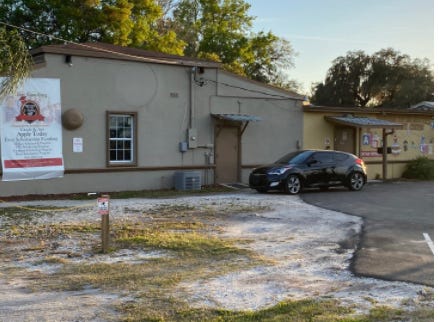
Step Up for Students is the unelected state School Board for vouchers. But it performs no oversight — at all. It just hands out checks and pockets commission.
Last legislative session, Step Up worked closely with Florida legislators like Kelli Stargel and Gov. Ron DeSantis to destroy the well-established Gardiner and McKay voucher programs for children with disabilities. While those programs — particularly Gardiner — had some grifty problems, they also functioned a million times better than the atrocity of unsupervised grift that is Florida’s low income voucher program.
Florida’s GOP-dominated government, in its corrupt wisdom, took these functioning programs, and threw them together with low income vouchers with one giant super-voucher pot of grift.
The effect of this is to funnel tax money and tax-sheltered corporate donations away from children with disabilities and to the operators of segregated scam schools like Preparing the Way, A’kelynn’s Angels, and Endtimes Christian School of Excellence.
On top of that, Step Up has thoroughly botched implementation of the new super-voucher grift pot. Parents of kids with disabilities, who were told they would still get Gardiner and McKay-like vouchers for services, are finding Step Up is too incompetent to deliver…
William Mattox and Doug Tuthill: Critical Race Theorists
Tuthill and company want to name the super voucher pot of grift after Florida’s greatest educator and racial freedom activist. They want to use her honored memory as a shield.
Mired in a systemic meltdown entirely of their own making, reflecting their own greed and incompetence, Tuthill and Step Up are doing what they always do when they get in trouble. They’re retreating to their long-standing, hard core version of “Critical Race Theory.” It goes like this:
If you’re a parent — of any kind — who likes quality public schools or quality state-funded services for disabilities — and you don’t want resources diverted from those services so grifters can scam families of color at scale, you’re the real racist.
This CRT has worked many times for Tuthill before. It’s been the refrain of the entire Jeb Bush era. The shameless appropriation of Mary McLeod Bethune is just the latest incarnation…
The tragedy at the Travis Scott performance in Houston shocked entertainers, fans, and parents. Nine young people died at the arena concert, trampled by a crowd of 50,000 fans who surged to get closer to the stage where Scott was performing.
I confess that I am completely out of touch with the music of Travis Scott and his contemporaries. I love the music of other eras, from about 1600-1975, which seems civilized compared to today’s music (I can’t even make out the words when I try).
This article in the Los Angeles Times explains Travis Scott and his enormous popularity and wealth. The article included a Scott song called “Sicko,” which shows the menace and incipient rage that Scott promotes. After reading this article, I think Scott should face criminal charges in addition to the lawsuits that have been filed against him. The article is titled “For Travis Scott, a history of chaos at concerts, followed by a night of unspeakable tragedy.”
The article was published before the death of the 9th person.
In Travis Scott’s 2019 Netflix documentary “Look Mom I Can Fly,” in the aftermath of a particularly volatile May 2017 show at the Walmart Arkansas Music Pavilion in Rogers, Ark., one fan beamed at a camera crew while leaning on crutches. “I survived, I survived! It’s all good!” they said.
Following the show, Scott faced three misdemeanor charges of inciting a riot, disorderly conduct and endangering the welfare of a minor after he invited fans to overpower security and rush the stage. Scott pleaded guilty to disorderly conduct and had to pay more than $6,000 to two people injured at the show.
“I just hate getting arrested, man. That s— is whack,” Scott said in the documentary, upon his release from jail.
Scott’s talent for stirring up a young fanbase with the fury of an underground punk act has long been a part of his appeal. On his 2018 song “Stargazing,” the rapper reveled in his crowds’ heaving energy: ”it ain’t a mosh pit if ain’t no injuries.” Yet the 30-year-old rapper is also one of the most successful figures in contemporary hip-hop, an endorsement-friendly business mogul in the vein of Jay-Z and Puff Daddy, and one of a handful of rap artists who can headline major festivals. His reputation as an incendiary live performer arguably exceeds his recorded music as the main driver of his current popularity.
But that penchant for inspiring chaos onstage has led to troubling situations, long before Friday’s Astroworld crowd-stampede disaster that killed eight people and left numerous concert-goers injured in Houston.
Scott has twice faced criminal charges related to inciting crowds into over-heated fervors. Before the incident in Arkansas, the rapper pleaded guilty in 2015 to charges of reckless conduct, after cajoling fans at Lollapalooza to climb over barricades and onto the stage with him during his show at the Chicago festival.
“Everyone in a green shirt get the f— back,” Scott said, referencing the festival’s security staff. “Middle finger up to security right now.” He then led the crowd in a chant of “We want rage.” (Scott often refers to his fans as “ragers.”)
Scott’s set lasted barely five minutes, whereupon he fled the scene and was soon apprehended by local police. A judge ordered him under court supervision for a year following his guilty plea.
In April 2017, a man named Kyle Green sued Scott after he attended a show at Terminal 5 in New York City, where Green claims fans pushed him off an upper-deck balcony. A different fan jumped from the same balcony in a widely seen video, after Scott pointed him out and encouraged him to leap off. “I see you, but are you gonna do it?” Scott said from the stage. “They gonna catch you. Don’t be scared. Don’t be scared!”
Green was left partially paralyzed by the incident. Reached by Rolling Stone after the Astroworld incident, an attorney for Green said that he’s ”devastated and heartbroken for the families of those who were killed and for those individuals who were severely injured. He’s even more incensed by the fact that it could have been avoided had Travis learned his lesson in the past and changed his attitude about inciting people to behave in such a reckless manner.”
In 2019, Scott wrote “DA YOUTH DEM CONTROL THE FREQUENCY,” on an Instagram video of fans storming barricades at one of his shows. “EVERYONE HAVE FUN. RAGERS SET TONE WHEN I COME OUT TONIGHT. BE SAFE RAGE HARD. AHHHHHHHHHHH.” Three people were hospitalized following a crowd stampede over security barriers at the 2019 edition of the Astroworld Festival.
The 30-year-old Scott, whose real name is Jaques Webster, was born in Houston, a famed city for outlaw hip-hop that figures prominently in his work (His chart-topping 2018 album “Astroworld” was named after a now-closed local theme park). His father and grandfather were jazz and soul musicians, and he studied musical theater while growing up in the middle-class Houston suburb of Missouri City. In 2012, he signed deals as an artist (with T.I.’s Grand Hustle imprint for Epic) and as a writer/producer (with Kanye West’s G.O.O.D. Music). His music was both visceral and melancholy, produced with the weight and ferocity of trap but glazed over with vocal processing and distended samples.
On two early mixtapes and his 2015 major-label debut “Rodeo,” singles like “Antidote” set a template for how rap would sound in the coming decade — bruising, miserable, sleekly nihilist. The LP’s swarm of guest appearances — Justin Bieber, the Weeknd and Kanye West among them — announced that a new star had arrived.
His 2016 follow-up, “Birds in the Trap Sing McKnight,” had similar firepower, with Andre 3000, Kendrick Lamar and Kid Cudi as guests. That record yielded two of his signature singles — “Goosebumps” and “Pick up the Phone” — and topped the Billboard 200 album charts.
But it was 2018’s “Astroworld” that turned him into a pop force. It not only again topped the album charts, but placed all 17 tracks into the Hot 100 singles chart. “Sicko Mode,” with Drake, topped the Hot 100 and set a template for TikTok-ready rap with its hard edits between beats and tempos.
His arena tour for that album grossed $32 million in three months in 2019, according to Pollstar. That launched Scott into the caliber of acts that could headline the Coachella Valley Music and Arts Festival, for which he was booked in 2020 and, as of now, is still scheduled to headline in 2022. (He is also currently scheduled to headline next weekend’s Day N Vegas festival, alongside Kendrick Lamar and Tyler, the Creator.)
Last year, more than 27 million fans logged in to see him perform a concert in the video game “Fortnite,” where fans bought reams of real and virtual merchandise for characters in the game.
Beyond music, his endorsement deals with Nike, at a reported $10 million per year, and McDonald’s, where fans could order a Scott-themed novelty meal, have made him one of the richest acts in contemporary hip-hop. This year, he launched a hard seltzer brand, Cacti, with Anheuser-Busch. Scott has a daughter, Stormi, with the reality TV and cosmetics mogul Kylie Jenner.
Scott founded the Astroworld Festival in 2018 in partnership with Austin-based ScoreMore Shows and Live Nation, the world’s largest event-promotion company (ScoreMore sold a controlling interest to Live Nation in 2018). This year’s lineup, at NRG Park in Houston, was to feature Tame Impala and Bad Bunny on Saturday, which was canceled following the events of Friday night. SZA, Lil Baby and Roddy Ricch performed before Scott on Friday.
In the run-up to the festival, Scott opened a community school garden initiative in Houston, Cactus Jack Gardens; a new basketball court at the city’s Sunnyside Park; and a design-centric academy partnered with Parsons School of Design. Houston Mayor Sylvester Turner told the New York Times that “I’ve worked with the family, I’ve worked with Travis, I’ve worked with his mom…This is the last thing any of them wanted to see happen.”
The tragedy has left the rap world reeling. Ricch promised to donate his entire performance fee from the festival to the affected families. Scott’s team spent some of Saturday’s post-concert aftermath deleting social media posts that seem to encourage gate-crashing or other illicit behavior, including one May 2021 Twitter post in which he said: “We still sneaking the wild ones in. !!!!”
Judge Lina Hidalgo, the senior elected official in Harris County, where Houston is located, said at a news conference following the festival that “It may well be that this tragedy is the result of unpredictable events, of circumstances coming together that couldn’t possibly have been avoided. But until we determine that, I will ask the tough questions.”
One Astroworld attendee has already sued Scott, his guest performer Drake, Live Nation and the Harris County Sports & Convention Corp., which owns NRG Stadium. Texas attorney Thomas J. Henry filed the lawsuit Sunday on behalf of Kristian Paredes, according to the Daily Mail, accusing the defendants of prioritizing “profits over their attendees.”
“Live musical performances are meant to inspire catharsis, not tragedy,” Henry said in a statement. “Many of these concert-goers were looking forward to this event for months, and they deserved a safe environment in which to have fun and enjoy the evening. Instead, their night was one of fear, injury, and death.”
In a video posted late Saturday, a weary-looking Scott said that while he was onstage, “anytime I could make out anything that’s going on, I stopped the show and helped them get the help they need,” he said, “We’ve been working closely with everyone trying to get to the bottom of this.”


