Archives for category: Florida

Valerie Strauss of the Washington Post recently summarized the efforts by Florida Governor Ron DeSantis to destroy public schools in his state.

Florida Gov. Ron DeSantis (R) has been fighting with the Walt Disney Co. for weeks now since it angered him by criticizing a law he championed that limits discussions of gender issues in public school classrooms. But his attacks on public school districts began just as soon as he took office in 2019.

DeSantis had been governor barely a month when he offered a new definition of public education that eliminated the traditional division between public and private schools. To DeSantis and his allies, “public education” includes any school — including religious ones — that receives public funding through voucher and similar programs. “Look, if it’s public dollars, it’s public education,” he said in February 2019. “In Florida, public education is going to have a meaning that is directed by the parents, where the parents are the drivers because they know what’s best for their kids.”

That was the start of what has evolved into the most aggressive anti-public education battle waged by any governor in the country. In the past year — and especially in recent months — as he has worked to amass more than $100 million for his 2022 reelection campaign, and possibly for a 2024 Republican presidential run, he has quickened the pace of his attacks.

He has, among other things: limited what teachers can say in classrooms about race, gender and other topics and appointed anti-public education figures to his administration, including a QAnon supporter, and, as education commissioner, an employee of a charter school management organization. He has also legally empowered parents to sue school districts as part of his “parental rights” initiative and micromanaged and limited the power of local school districts.

In what his critics say is a revealing move about their educational intentions, DeSantis and Florida legislators routinely exempt charter and private/religious schools from many of the restrictions and actions they take against public school districts. For example, the law that restricts classroom discussions on gender and sex education — known as the Parental Rights in Education law — applies to a state statute dealing with school board powers, according to the Tampa Bay Times. The Florida Department of Education did not respond to a query about this.

DeSantis and his like-minded compatriots make no secret about wanting to privatize public education — arguably the country’s most important civic institution. Their “school choice” movement means expanding alternatives to public school district. They include charter schools — which are publicly funded but privately managed — as well as voucher and similar programs that use taxpayer money to pay for tuition and other costs at private and religious schools. These schools can legally discriminate against LGBTQ and other students and adults.

To these activists, public schools are not the mainstay of America’s democratic system of government that tries to instill civic values to students from different racial, ethnic and religious backgrounds. Rather, as the libertarian Cato Institute says on its website: “Government schooling often forces citizens into political combat. Different families have different priorities on topics ranging from academics and the arts to questions of morality and religion. No single school can possibly reflect the wide range of mutually exclusive views on these fundamental subjects.”
Critics say this mind-set rejects the notion that America is a melting pot that flourishes by the coming together of people from different places, backgrounds, races and religions. They also say that school “choice” efforts to use public funding for private and privately run education take vital resources away from the public districts that enroll the vast majority of the country’s schoolchildren.

They point out that the public has no way to hold private and many charter schools accountable, because their operations are not transparent. There is irony, they say, in the fact that the people pushing the “parental rights” movement seeking transparency in public school districts don’t demand it of nonpublic schools that they want funded with public funds.

Last year, DeSantis visited a Catholic school in Hialeah to sign a bill that greatly expanded voucher programs while reducing public oversight. Originally intended for students from low-income families, DeSantis’s administration now also allows vouchers to go to a family of four earning nearly $100,000.

He has also played a leading role in the right-wing movement to restrict what teachers can and can’t say in the classroom about subjects including race, racism, gender and sex education. On April 22, he signed into law the “Stop WOKE Act,” which limits how race-related topics can be discussed in public school classrooms and workplace training, while essentially accusing public school teachers of trying to indoctrinate students.

About three weeks earlier, on March 28, he signed what critics dubbed the “don’t say gay” bill that limits teachers from discussing sexual orientation or gender identity. While numerous similar bills have been considered in legislatures in years past, it was DeSantis who pushed through the first one to become law.

On April 15, his administration announced that it had rejected publisher-submitted math textbooks books for including passages his administration doesn’t like, including those it says are about critical race theory and social-emotional learning.

DeSantis’s appointments to his administration reveal his attitude about public education. On April 21, he nominated state Sen. Manny Diaz (R) — who works at an affiliate of Academica, a for-profit Miami-based charter school management firm — as the state’s new education commissioner. Diaz will almost certainly be approved by the Florida Board of Education.

Diaz — who is chief operating officer of Doral College, a private college owned by Academica — has been instrumental in the legislature in expanding charter school growth. Florida, where charter schools have virtually no oversight, has seen a raft of financial scandals related to the industry.

Ten days before appointing Diaz, DeSantis’s administration appointed Esther Byrd, an office manager at her husband’s law firm, to the Board of Education. Byrd has on social media expressed sympathy with QAnon beliefs and offered a defense of those “peacefully protesting” the confirmation of the 2020 presidential election on Jan. 6, 2021, when the U.S. Capitol was overrun by a pro-Trump mob. She has alluded to “coming civil wars.” According to the Florida Times-Union, she and her husband, state Rep. Cord Byrd (R), flew a QAnon flag on their boat.

DeSantis also appointed to the Board of Education radiologist Grazie Pozo Christie, a senior fellow for the Catholic Association who wrote an article a few years ago saying the best thing parents can do for their children is to take them out of public schools.


Last October, while discussing “parental rights” in education and touting mask-optional policies at a news conference, DeSantis invited Quisha King, a leader of the right-wing Moms for Liberty group, to join him. King has called for “a mass exodus from the public school system.”

During the pandemic, DeSantis became a leader among governors of the anti-mask movement when he issued a ban on mask mandates in public schools — and then proceeded to penalize districts that required masks in compliance with federal government recommendations. His administration withheld the salaries of some superintendents and school board members that defied him — prompting the Biden administration to promise to make up for the deficit. He has also backed a plan to withhold a total of $200 million in different funding from districts that angered him.

His wrath at local school boards that don’t do his bidding has blown apart the Republican Party’s traditional stance that local education is the business of local issues. In March, one of the bills he signed into law included a provision that limits local school board terms to 12 years — without asking local voters if that’s what they wanted.
He also established a charter school commissioner office inside the Florida Department of Education, which has the power to approve or reject applications for charter schools without local school district input. Even the National Association of Charter School Authorizers thought it was a bad idea, writing on its website:

“Once a school is approved, the Commission would have no other authorizing responsibilities and the local district would be required to do all other authorizing duties. This goes against national best practice. … This is a bad idea since research shows that an authorizer’s commitment and capacity are essential to strong charter schools.

Last June, the DeSantis administration intervened in a local decision by the Hillsborough County School Board, which met to discuss a dozen proposals to open charter schools or extend the operating agreements on others. After it voted to close four existing charters, it received a letter from the Florida Department of Education saying that unless it kept those schools open, it would lose millions of dollars in state funding.

Finally, whatever the governor’s reason, Florida was the last state to tell the U.S. Education Department how it intended to use $2.3 billion in federal American Rescue Plan funds, which had been approved by Congress to help public schools recover from the pandemic. The deadline for states to apply for the money was in June 2021. Months later, on Oct. 4, Ian Rosenblum, then deputy assistant secretary for policy and programs in the U.S. Education Department, sent a letter to the DeSantis administration noting that Florida’s delay in applying for the funding was creating “unnecessary uncertainty” for school districts that needed the cash. Florida filed it a few days later.

DeSantis’s star power in the school “choice” movement is such that one of its longtime leading figures, former education secretary Betsy DeVos — who has called public education a “dead end” — solicited DeSantis’s help to promote a petition in her home state of Michigan to establish a voucherlike program. She and her family have donated hundreds of thousands of dollars to DeSantis.
Chaz Stevens, a 57-year-old tech wizard, noticed that Florida made it easier to challenge books used in schools and housed in school libraries. The law doesn’t take effect until July 1, but Stevens couldn’t wait that long. So he immediately launched a complaint about the Bible and the Oxford English Dictionary and requested that they be banned.

As of Wednesday, he has filed near-identical petitions with 63 Florida school districts asking to ban the Bible. He has also filed a second petition with one district, Broward County Public Schools, requesting the removal of the Oxford English Dictionary.

His three-page petition critiques the Bible for its depictions of bestiality and cannibalism, its “eye-popping passages of babies being smashed against the rocks” in Psalms 137 and its “strong pro-slavery position,” citing Ephesians 6:5-7.

“As the Bible casually references … such topics as murder, adultery, sexual immorality, and fornication — or as I like to think, Date Night Friday Night — do we really want to teach our youth about drunken orgies?” the petition asks.

Stevens’s subsequent complaint against the dictionary calls it “a weighty tome over 1,000 years old, containing more than 600,000 words; all very troubling if we’re trying to keep our youth from learning about race, gender, sex, and such.”

The Washington Post checked with First Amendment scholars, and one said “that the Bible is replete with episodes of violence and sexual abuse, including the rape of Dinah in Genesis, which leads her brothers Levi and Simeon to kill every man in the city of Shechem to avenge her honor; the incestuous rape of King David’s daughter Tamar by her half brother Amnon; and the brutal dismemberment of a concubine in Judges. She said the Bible is at least as sexually explicit as some of the books parents are labeling inappropriate, raising the question: Why can the Bible stay in the library when those books have to go?

Two districts told Stevens that he is not a resident of their district, but he hopes to find residents in every district to file the same complaint.

A third official, Eydie Tricquet, the superintendent of the Jefferson County School District, wrote to say that her district is still under state control; Florida took over managing the district five years ago because of its failing grades, financial problems and staffing woes. But Jefferson is due to revert to local control this summer, and Tricquet promised in her email to Stevens that she will consider his request then, in accordance with school board policies and Florida law.

“At this time, I do not have a school or a library to place or remove a Bible,” Tricquet wrote.
Stevens, whose day job involves managing a website that connects people with mental health issues to supports including clinicians and therapy animals, said he knows many people see his efforts to ban the Bible as just the latest triviality in a long line of political pranks.

His colorful history includes campaigning to open city commission meetings with invocations to Satan, erecting a Festivus pole at the Florida Capitol to protest the Christmas Nativity scene and sending butt plugs to misbehaving public officials.
He pointed out that his antics once led to the arrests of two-fifths of Deerfield Beach city’s ruling body, including the mayor, over allegations they falsified records and violated state conflict of interest and gift disclosure laws.

“I’m sorry you’re stuck with me,” he said. “But I don’t see anybody else rising to the challenge, just a lot of …Twitter commentary.”

He added: “If not me, then who?”

The book-banning and censorship are reaching absurd proportions. A school district in Florida just banned a beloved children’s book, “Everywhere Babies.” Caitlin Gibson wrote about it in the Washington Post. what’s next? “Goodnight Moon”? Some think it’s atheist because the little bunny doesn’t say its prayers. “Harold and the Purple Craton”? Why “purple? Is Harold gay? These censors don’t realize how ridiculous they are. They join the ranks of the ignoramuses who think they can ban ideas and books that are easily available on the internet and television.

The inspiration for the popular children’s picture book “Everywhere Babies” came to author Susan Meyers more than 25 years ago, after the birth of her first grandchild. It was around Christmas, she recalls, and she kept seeing Nativity scenes everywhere — baby Jesus embraced by his doting mother, surrounded by kindly visitors. Meyers, deeply smitten with her 5-month-old grandson, was struck by the everyday, extraordinary miracle of babies in their earliest months of life, how their development touches the lives of everyone around them. So she decided to write about it.

Since its publication in 2001, “Everywhere Babies” — a whimsical, lyrical ode to infancy, illustrated by Caldecott Medal-winning illustrator Marla Frazee — has become a staple of family bookshelves, a common recommendation in new parent groups, and a celebrated title on Best Books lists.

But for the first time in its history, “Everywhere Babies” was featured this week on an entirely different kind of list: The book was among dozens of works recently banned from public school libraries in Walton County, Fla. School district officials confirmed the removal of the books to WJHG-TV in Florida. Walton County School Superintendent Russell Hughes told the outlet that it was “necessary in this moment for me to make that decision and I did it for just a welfare of all involved, including our constituents, our teachers, and our students.”

Hughes did not respond to requests for comment from The Washington Post. A spokesperson for the Florida Department of Education referred questions to Walton County, noting that “individual school districts are responsible for making these decisions,” and did not respond to follow-up questions….

Gibson interviewed the author Susan Meyers and illustrator Marla Frazee. They were shocked that their book was banned but thrilled to be in the company of illustrious writers like Toni Morrison and Judy Blume whose works were also banned.

Peter Parnell and Justin Richardson, the authors of a popular—and frequently challenged—children’s book “And Tango Makes Three,” warn in this article that Florida’s “Don’t Say Gay” law threatens every book that deals with “gender identity.”

They wrote in The Washington Post:

Dear K-3 teachers of Florida,

Thank you for your kind messages! Please don’t feel bad. We totally understand why you have to stop reading our “gay penguins” book in school. You’re doing great and deeply important work at an extraordinarily difficult time to be a teacher. You shouldn’t have to worry about being slapped with a lawsuit for discussing homosexual seafowl.

We’ve been thinking this law leaves some pretty key terms undefined. Take “sexual orientation.” There are lots of them! Answering a question (“classroom instruction”) about any of them could land you in hot water. So just to be safe, you probably ought to pull more than our book from your curriculum. In case it’s helpful, here are a few we thought could run you into trouble.

• “The Story of Ferdinand” by Munro Leaf — for gender identity

We know, we love it too! But a bull that doesn’t roughhouse and prefers to sit in the shade and smell flowers? This is going to lead you right into some verboten gender-identity discussions. “Do some boys like flowers?” “Why don’t cows get invited to bullfights?” “Can ungulates be nonbinary?” You don’t want to go there.

• “Make Way for Ducklings” by Robert McCloskey — for sexual orientation

Such a gem, but sadly, there’s no way around the sexual orientation of this mallard couple. One is male; the other is female. They go island-hopping, hatch eight ducklings and look after their little ones together. Heterosexuality is a sexual orientation, people! Unless you want to be hit with newly illegal questions such as, “Are Mr. and Mrs. Mallard married?” or “Why would a girl duck want to marry a boy duck?” you should probably nix this one, too.


• “The Country Bunny and the Little Gold Shoes”
by DuBose Heyward — for very sexual orientation

“The little girl Cottontail grew up to be a young lady Cottontail. And by and by she had a husband and then one day, much to her surprise there were twenty-one Cottontail babies to take care of.” Tempting at Easter time, but skip it.

• “Mike Mulligan and His Steam Shovel”by Virginia Lee Burton — for gender identity and sexual orientation

A hard-working backhoe named Mary Anne is bound to raise gender-identity questions. “How can you tell if an engine is a boy or a girl?” “Can boys be backhoes?” Steer clear. Ditto for the author’s books about a tractor (“Katy”) and cable car (“Maybelle”), as well as Watty Piper’s titular Little Engine That Could, who uses she/her pronouns. Meanwhile, all these machines appear resolutely single. Could they be asexual? Probably best to give a wide berth to all books featuring gendered heavy machinery, at least until we can figure out what’s what.


• “A Kiss for Little Bear”
by Else Holmelund Minarik — for pansexuality

Grandmother wants to pass along a kiss to Little Bear, and so we watch a female bear kiss a female chicken, who kisses a male frog, who kisses a male cat, who kisses a male skunk, who gets into some serious necking with a female skunk (they marry) before giving the kiss back to the chicken, who kisses Little Bear. It’s like Berlin in the 1920s. Pass!

• “Good Night, Gorilla” by Peggy Rathmann — for that bedroom scene

A male zookeeper shares a bed with a woman who calls him “dear,” only to be joined by a mouse and an ape (who look as though they’ve been there before). You do not want to discuss “polyamory” with your principal.

• “The Very Hungry Caterpillar” by Eric Carle — for fabulousness

A ravenous, and possibly gender-fluid, male caterpillar mysteriously transforms into a “beautiful butterfly.” Trans parable? Don’t risk it.

Now that we think of it, eliminating all books with characters who have a gender identity or a sexual orientation doesn’t leave a lot. You’ll probably want to avoid all books that touch on love or relationships. Also, books with people or animals or things that are male or female or some other gender or non-gender.

Actually, it’s probably best to skip books altogether. Maybe stick with games.

Is duck, duck, goose okay?

Hang in there,

Peter and Justin

Say this for Jeb Bush: he is not dissuaded by failure. No matter how many studies show the failure of vouchers, he doesn’t care. No matter how many studies show that charter schools do not get better results than public schools, he doesn’t care. No matter how many grifters have drained millions through privatization of schools, he doesn’t care. No matter how little evidence he has for any of his proposals, he still pushes them.

His ideas are old and tired and incoherent. But count on him to package them as fresh and innovative, which they are not.

He is the male counterpart to Betsy DeVos.

He just cares about destroying public schools.

He wrote recently in The Miami Herald:

Last month marked two years since the pandemic swept across the country, causing the largest disruption to our nation’s education system in modern history. But at last, this spring brings an academic revival of sorts. Schools are remaining open, mask mandates are disappearing and plexiglass dividers between students in their classrooms are coming down.

In the rush to return to normal, we owe it to our nation’s children to emerge from this pandemic transformed, not by going backwards, but ready to forge a better future for them with all we’ve learned.

Our starting point is challenging. Prior to the pandemic, America’s public schools were struggling to serve the needs of students, and since the pandemic, a study by McKinsey found students have fallen months behind as a result of school closures and disruptions. There were severe impacts on student mental health, too. Pew Charitable Trusts found students are reporting significantly increased levels of grief, anxiety and depression.

It’s also no surprise that there’s a growing distrust in public education. A survey by Ipsos found trust in teachers declined during the pandemic, and there’s been a subsequent decrease in the number of students enrolling in public school.

Those are serious setbacks, but there are reasons for optimism. The pandemic put a spotlight on a myriad of possibilities for the future of education. Notably, it illustrated a desperate need by families for a broadened ecosystem of options for their children, with funding flexibility to create more equity in choice. And it elevated the power of parents to blaze new educational pathways for their children.

The Associated Press recently reported that homeschooling remains a popular choice for parents, despite schools reopening. And, private schools and public charter schools have witnessed increased enrollment. But choice, in and of itself, isn’t enough. Policymakers must continue to seek new ways to unbundle education systems, transforming old approaches into new and better learning options.

In Indiana, lawmakers, led by House Speaker Todd Huston, took the first step toward creating the nation’s first “parent-teacher compact” law. This innovative policy would allow parents to directly hire teachers. Educators would continue to be paid by the state and receive their health and retirement benefits, but this policy would enable parents and educators to enter into a peer-to-peer relationship to benefit individual students, without the hurdle of a district middleman. This individualized approach to education would give educators more freedom, families more flexibility and individual students the personalized experience they may need.

As we unbundle education, we need to reimagine all aspects of how education is delivered to students. One approach is enacting new part-time enrollment policies. Right now, students are defined by the school in which they’re enrolled.

Lawmakers can improve the education experience by allowing students to have more flexibility, whereby a student can enroll in their local public school and easily access a portion of their education funding to also enroll part-time in a private school, with an online provider, or engage in another learning experience that benefits the child’s education.

Another approach that complements unbundling is rethinking education transportation options. Last year, Gov. Doug Ducey awarded $18 million in grants to modernize Arizona’s K-12 transportation system, including direct-to-family grants to help close transportation gaps. In Oklahoma this year, Gov. Kevin Stitt proposed changing Oklahoma’s school transportation funding formula to expand how public school buses can serve students. And Florida’s Legislature recently passed legislation to create a new $15 million transportation grant program that encourages districts to create innovate approaches to school transportation, including carpooling and ride sharing apps, for both school-of-choice families and traditional school students.

Those are just a few examples, and we must continually look for more ways to unbundle and reimagine education. The pandemic saw an explosion of families, in all communities and from all demographics, embrace micro schools, homeschooling and customized learning pods. Rather than trying to limit these families, we should give them access to direct funds to further personalize and benefit their child’s out-of-school learning experience.

That’s what Gov. Brad Little has championed in Idaho. In response to school closures in 2020, Little used federal emergency COVID relief funds to provide direct grants to families to support students who were no longer learning in school. And this year, Little signed the Empowering Parents Grant Program into law, giving qualifying families up to $3,000 to use for tutoring, educational material, digital devices or internet connectivity….

Transforming our nation’s education system and ensuring students receive the individualized experience to unlock potential and lifelong success require continual forward momentum, especially after two years of disruptions. We have to keep moving, keep reimagining, keep transforming. This commitment to excellence is a point of pride for Florida.

Last year, Florida’s Legislature passed some of the most significant improvements and expansions to the state’s school-choice programs. And this year, lawmakers strengthened the charter school law, expanded the Florida Empowerment scholarship program, created a new financial literacy requirement for high school graduates and ensured parents are better informed of their child’s progress through online diagnostic progress monitoring and end-of-year summative tests.

This Pied Piper plays a tune meant to deceive. Ignore him.

The Disney Corporation ended its silence on Governor DeSantis’ decision, with the legislature, to dissolve the special district the state created for the entertainment giant more than 50 years ago. Disney’s lawyers let the Governor know that taxpayers in nearby districts would have to pick up the costs of public services that Disney pays for, but also its bond debt of more than $1 billion.

DeSantis wanted to punish Disney for criticizing his moronic “Don’t Say Gay” bill. But Florida taxpayers will have to pay the price of the governor’s vengeance.

The Miami Herald reports the message from Disney’s lawyers.

As Florida legislators were rushing through passage of a bill to repeal the special district that governs Walt Disney World last week, they failed to notice an obscure provision in state law that says the state could not do what legislators were doing — unless the district’s bond debt was paid off.

Disney, however, noticed and quietly sent a note to its investors to show that it was confident the Legislature’s attempt to dissolve the special taxing district operating the 39-square mile parcel it owned in two counties violated the “pledge” the state made when it enacted the district in 1967, and therefore was not legal.

The result, Disney told its investors, is that it would continue to go about business as usual.

The statement, posted on the website of the Municipal Securities Rulemaking Board on April 21 by the Reedy Creek Improvement District, is the only public statement Disney has supplied since lawmakers unleashed their fury over the company’s vocal opposition to the “Parental Rights in Education” law, also known as the “don’t say gay” bill.

The statement, first reported by WESH 2, quotes the statute which says, in part, that the “State of Florida pledges…it will not limit or alter the rights of the District…until all such bonds together with interest thereon…are fully met and discharged…”

In essence, the state had a contractual obligation not to interfere with the district until the bond debt is paid off, said Jake Schumer, a municipal attorney in the Maitland law firm of Shepard, Smith, Kohlmyer & Hand, in an article for Bloomberg Tax posted on Tuesday and cited in a Law and Crime article.

The law passed by the Republican Legislature on a largely party-line vote, and signed into law by the Republican governor, either violates the contract clause of the Florida Constitution, or is incomplete, Schumer told the Herald/Times on Tuesday. If the Legislature wants to dismantle the Reedy Creek Improvement District, it has more work to do….

Schumer noted that the bill dissolving Reedy Creek doesn’t say what should happen to its debts, but another state law requires that by default the county assumes a district’s debt along with all of its assets when it is dissolved. “This means that theoretically, Orange and Osceola counties will inherit upward of $1 billion in bond debt,’’ he wrote in the Bloomberg Tax article….

When the state established the Reedy Creek Improvement District in 1967 as an independent taxing district controlled by Walt Disney World, it gave it the power to build roads, sewers and utilities as well as the authority to set its zoning laws, establish its police and fire departments, and regulate its construction. The district can borrow money by issuing bonds to pay for services and that infrastructure and, while Disney must also pay property taxes to Orange and Osceola counties, the state also allows the Reedy Creek Improvement District to tax itself. The current tax rate is three times higher than the maximum amount allowed by cities and counties, Schumer said….

The Orange County tax collector said:

“Orange County gets Reedy Creek’s assets, debts and obligations,’’ he said. But the cost of providing its services is $105 million a year and the cost of its debt services is $58 million a year and so if Reedy Creek is dissolved those assets and liabilities would be absorbed by Orange County’s $600 million budget, he said.

Taxpayers in Orange County won’t be thanking DeSantis for their new tax bills.

Read more at: https://www.miamiherald.com/news/politics-government/state-politics/article260783972.html#storylink=cpy

Grumpy Old Teacher explains in his blog the “thinking” behind Ron DeSantis’ decision to censor math textbooks and purge them of content that he and his Department of Education found objectionable.

He begins:

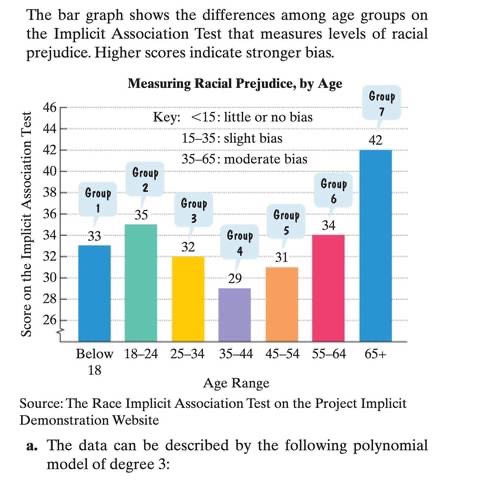
As the uproar over Department of Education (FLDOE) deemed inappropriate mathematics textbooks continued this week, the governor claiming that the curriculum materials were proprietary, the publishers could appeal the decision, and he would respect the process, the FLDOE decided to release four examples of objectionable content. In this post, GOT will examine the first example or as he will dub it, Exhibit A for the court of public opinion. Cue the theme song for the People’s Court.

The exhibit shows two bar graphs with the cited source being Project Implicit, which is a research endeavor by three scientists from the University of Washington, Harvard University, and the University of Virginia. From their page, they describe themselves as “The mission of Project Implicit is to educate the public about bias and to provide a “virtual laboratory” for collecting data on the internet…”

CRT is used like people use acronyms for texting, shorthand for talking about race and the disparate treatment of human beings based upon their perceived category. This is anathema to people like Ron DeSantis and Moms for Liberty, who disguise their preference for white supremacy by claiming to be color-blind and that is the highest ideal. They even quote the Reverend Martin Luther King, Jr. out of context as support.

In response to actions like banning math books over Exhibit A, public education advocates explain that this is not CRT and that CRT is not taught in public schools. They might as well try to explain that LOL means laughing out loud, not lots of love to the uninitiated. They’re not listening. The actual meaning or theory does not matter; what matters is the irrationality and great emotion that the acronym will arouse.

CRT, for them, means any discussion about race other than that America is a great, benevolent nation, Ronald Reagan’s shining white city on the hill, and that is all public schools should teach.

Fun fact: Florida avers that history such as the 1920 Ocoee massacre will be taught. That was when a white mob took revenge on the Black citizens who had had the audacity to vote in the 1920 presidential election. In one November night, a Black population of hundreds was reduced to nearly none.

We will teach the history of Ocoee, but that is not the question. The question is how it will be taught. Will schools present it as a shameful episode of lynching? Or will it be taught as something else? (If you’re following the policies of Ron DeSantis, you’ve already noted that the voting rights of Black citizens is something he does not respect.)

The excerpt does not do the post justice. Open the link and read the rest.

Only one publisher met all of Florida’s requirements for K-5 math textbooks.

The winner was Houston-based Accelerate Learning.

The Carlyle Group, a global investment firm, acquired Accelerate Learning on Dec. 20, 2018, according to the firm’s website.

During that time, Virginia Gov. Glenn Youngkin was the co-CEO of the firm. After 25 years with the company, Youngkin resigned in 2020 to run for office in Virginia.

The first thing Youngkin did as governor of Virginia was sign an executive order to “end the use of inherently divisive concepts, including critical race theory, and restoring excellence in K-12 public education in the commonwealth,” a measure that’s comparable to DeSantis’ “Stop WOKE Act.”

The story reviewed Accelerate’s website and learned the following:

Accelerate Learning’s website includes an undated diversity statement which says the company commits to hold more diversity training, examine current business and recruitment practices and continue to be inclusive in all levels of the company.

“Our nation’s black communities have long faced the repeated, harmful effects of systemic racism within the justice and education systems,” the statement said.

The company also matched all employee donations to the NAACP, Black Lives Matter and Equal Justice organizations.

“Accelerate Learning, Inc. is committed to supporting diversity in all its manifestations, which requires a consequent commitment to equity and inclusivity,” the statement said.

Sounds like the winner of the math textbook competition is woke and espouses critical race theory.

Yesterday, the Florida Legislature passed legislation enacting Governor DeSantis’ personal vendetta against the Disney corporation, dissolving the special district status it enjoys, where it supplies all its own services, such as security and sanitation. Disney is a huge economic boon to the state, drawing millions of tourists to Florida every year. DeSantis wanted to punish Disney for criticizing his anti-gay law. Some pundits think this will backfire because it is likely to raise taxes in the counties that will have to pay for those services.

But Greg Sergeant of the Washington Post says that DeSantis’s retaliation against Disney is very dangerous for democracy. This is the behavior of a banana republic thug. Will he next punish corporations that encourage diversity, inclusion, and equity, another of his obsessions?

He writes that DeSantis’ thuggishness is admired by other Republicans, and that’s ominous:

What’s at issue is the use of such a policy as retaliation against Disney for taking a stand on DeSantis’s law. The measure bars or restricts instruction on sexual orientation and gender orientation in a way that’s plainly designed to chill even the most routine discussion of LGBTQ topics.
Disney opposes the law on the grounds that “it could be used to unfairly target” LGBTQ kids and families. And this is an absolutely understandable fear.

But here again, the law’s specifics are beside the point. You don’t have to back Disney’s stance to agree that the company should not be punished with a change in government policy for expressing its opinion of the law.

So what does this tell us about a possible GOP future? Well, on multiple fronts, the Republican Party is growing much more inclined to use state power to fight the culture wars, well beyond just DeSantis.

In an interview published this week, J.D. Vance told Vanity Fair that he envisions a kind of “de-Baathification” or a “de-woke-ification” of the “institutions of the left.”

Vance, who’s running for Senate in Ohio in the New Right nationalist vein, said that if Donald Trump is elected president, he should “fire every single midlevel bureaucrat” and “every civil servant in the administrative state,” and “replace them with our people.”

It’s worth taking this seriously. Other members of that New Right movement recently told me they envision a ramped-up use of the state to impose a post-liberal moral order, justified by hyperbolic visions of the supposedly hegemonic power of the left over our institutions.

Meanwhile, GOP elected officials seem to be moving this way. Congressional Republicans have vowed retaliation against companies for opposing Georgia’s voter suppression bill and for cooperating with the congressional investigation into Trump’s coup attempt.

And DeSantis is a front-runner for the 2024 GOP presidential nomination. Importantly, he’s flaunting his willingness to use state power this way as a selling point for the presidency.

So let’s run a thought experiment. What might it look like if a President DeSantis took this view of the administrative state and decided to wield his power this way?

Donald Moynihan, an expert on the administrative state at Georgetown, says you can envision various scenarios. Such a president, he said, might use regulatory agencies staffed with right-thinking political employees (which Vance explicitly wants) to harass or investigate companies perceived as “culturally disloyal.”

Another possibility, Moynihan said, might be to change the tax status of liberal-leaning foundations. Those are already another favorite target of right-wing populists.

Faced with a president “who’s fully willing to use the powers of the administrative state,” Moynihan told me, such foundations might refrain from advocating for various causes or fund certain types of research, “because it’s not worth the potential risks.”

What if such a president were backed in this project by congressional leadership? Josh Chafetz, a Georgetown law professor who studies Congress, says you could see legislation targeted at offending companies, and even if it didn’t survive the courts, it could still function in a punitive way.

Those companies would sink large sums of money into litigating against such measures, even as Congress relied on taxpayer-funded lawyers on their side, Chafetz told me, meaning “the onus of the expense would fall on the companies, which would have a chilling effect.”

So a lot is at stake in how DeSantis’s war with Disney turns out. To glimpse the future, just look at what DeSantis is saying and doing right now. And given all the accolades he’s getting from the right, does anyone doubt that this could get a whole lot worse?

Allie Pitchon of The Miami Herald reported that state officials told some publishers of math textbooks why the state would not buy their books. The initial announcement said that some math books were too “woke,” contained “critical race theory,” or included concepts from Common Core, which Governor Ron DeSantis turned against because former President Obama endorsed it. Former Florida Governor Jeb Bush, the conservative education guru, also championed Common Core, but that did not mollify DeSantis’s rejection of it.

Publishers were left in the dark about why their math books offended DeSantis, and yesterday the state provided some details. The state informed publishers what had to make changed to get on the state approved list and gave them two weeks to resubmit.

The state posted a few examples on its website.

One example: A colored bar chart showing how levels of racial bias can vary by age group. It is part of a mathematical brain teaser involving polynomial models and is nestled on the bottom right-hand corner of page 56 in a pre-calculus online textbook consisting of more than 1,000 pages. The book is not identified on the state’s website

Two other examples that originated with public complaints make reference to Social Emotional Learning (SEL), a methodology wherein students try to get in touch with their emotions and demonstrate empathy for others.

Here is the woke bar graph:

Publishers were well aware, the Department of Education said, that their books would be rejected if they had even a trace of “critical race theory” or “social-emotional learning” or Common Core.

The press release provided a withering quote from Gov. Ron DeSantis: “It seems some publishers attempted to slap a coat of paint on an old house built on the foundation of Common Core, and indoctrinating concepts like race essentialism, especially, bizarrely, for elementary school students.”

Education Secretary Richard Corcoran chimed in, stating Florida was “focusing on providing … children with a world-class education without the fear of indoctrination or exposure to dangerous and divisive concepts in our classrooms.”

In a tweet, Christina Pushaw, the governor’s press secretary, went further, while addressing those who take issue with “book banning”: “The state declining to purchase certain textbooks isn’t banning them. If you want to teach your kid Woke Math, where “2+2=4” is white supremacy, you’re free to buy any CRT math textbook you want. You just cannot force Florida taxpayers to subsidize this indoctrination.” She’s right that local school districts can allocate at least part of their book buying budget toward textbooks not on the state’s approved list.

Read more at: https://www.miamiherald.com/news/local/education/article260639257.html#storylink=cpy