The Network for Public Education Action endorses Rebekah Jones, who is running for Congress against Matt Gaetz.
Vote for a woman of integrity: Rebekah Jones, District 1, Florida.
The Network for Public Education Action endorses Rebekah Jones, who is running for Congress against Matt Gaetz.
Vote for a woman of integrity: Rebekah Jones, District 1, Florida.
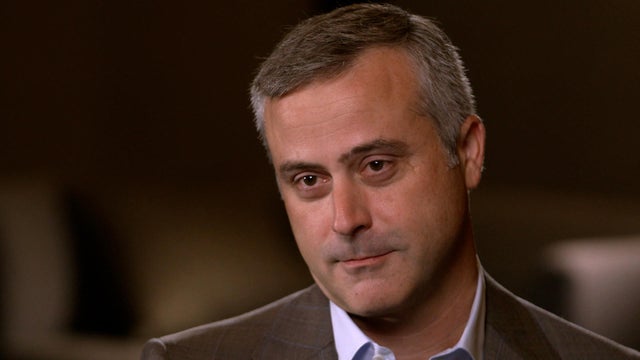
Anderson Cooper interviewed John Poulos, the CEO of Dominion Voting Systems on 60 Minutes about the attacks on the integrity of his company’s voting machines by 2020 election deniers.
Despite a rash of unsubstantiated claims lobbed against his company, the CEO of Dominion Voting Systems, John Poulos, has remained largely silent. That changed Sunday night on 60 Minutes when Poulos sat down with Anderson Cooper, saying irreparable damage has been done to his company and his employees.
“People have been put into danger. Their families have been put into danger. Their lives have been upended and all because of lies,” Poulos said. “It was a very clear calculation that they knew they were lies. And they were repeating them and endorsing them.”
“It’s important to you people admit what they said was wrong?” Cooper asked.
“It’s important to me. It’s important to all the people whose families have been impacted by this. Anderson, my kids still are not allowed to get any package from the front door until we verify that it’s actually from a trusted sender,” Poulos said.
Days after the 2020 presidential election, lawyers supporting then-President Donald Trump, including Sidney Powell and Rudy Giuliani, began spreading unsubstantiated claims that Dominion Voting Systems, an American company, had rigged the election. They said Dominion was backed by Venezuela and that its machines and software switched millions of votes from Donald Trump to Joe Biden.
They never showed any evidence, but that didn’t stop pro-Trump attorneys from making baseless claims, or conservative news networks from giving them plenty of airtime.
Poulos went through a number of their claims with Cooper, dismissing each one…
President Trump first mentioned Dominion in a tweet on November 12, 2020, and recorded a video a few weeks later, posted on Facebook, in which he said: “We have a company that’s very suspect. Its name is Dominion. With the turn of a dial or the change of a chip, you could press a button for Trump and the vote goes to Biden. What kind of a system is this? We have to go to paper. Maybe it takes longer. But the only secure system is paper.”
“We do have paper ballots,” Poulos said. “What the machines do is they count those paper ballots– in a way that makes it very easy for people to verify after the fact through the means of audits and recounts.”
Dominion makes two types of machines. One is called a ballot marker. It’s a touch screen device that a voter can use to mark their choices and then print the ballot. The second machine is a scanner that reads that paper ballot, counts the vote and immediately stores the ballot securely.
Poulos demonstrated on air how the voting machines work. He explained that his company has no relationship to Venezuela. He has sued various lawyers and FOX News for more than $10 billion. Judges have thus far refused to dismiss the lawsuits.
I hope that those who spread these lies and undermined faith in the integrity of our elections are fined for their deceit and unethical behavior, hopefully to the same extent as the other Big-time liar, Alex Jones.
Apparently Trump lawyers are already planning to claim that the 2022 elections were rigged, if their candidates lose.
Two women are competing to be Governor of Arizona. Katie Hobbs, the current Secretary of State, is the Democratic candidate. Kari Lake, a former talk show host, is the Republican candidate, endorsed by Trump.
The differences between them on education are stark. Hobbs would roll back the recently passed universal voucher plan. Lake is an enthusiastic supporter of charters and vouchers.
Both pledged to raise teacher pay, but Lake would tie raises to test scores.
If Lake is elected, she would impose extremist ideas that would undermine education in the state. She promises privatization and censorship. If she is elected, she will destroy public schools.
The Arizona Republic described their views:
In the coming year, Arizona schools face key challenges.
A newly minted school voucher program will steer millions of taxpayer dollars to lightly regulated private schools. A major staff shortage has left schools across the state scrambling for teachers, bus drivers and kitchen staff. Total public school spending is nearing a limit that could force massive budget cuts if the Legislature doesn’t act.
The governor has significant sway in shaping the future of education in Arizona. They can propose priorities for legislative action, choose bills to sign, call special legislative sessions, appoint members to the State Board of Education and issue executive orders.
Arizona’s candidates for governor offer voters a stark choice on education policy.
Democrat Katie Hobbs supports repealing the new universal school voucher program and putting more public dollars into public schools. Republican Kari Lake wants all education funding tied to students, not schools, which could send even more public money to private schools.
Here’s what else we know about where they would try to lead Arizona’s education system if elected.
At the core of Lake’s education plan is a proposal to allow families to decide where state money allocated for their children’s education will go. The funding that would typically go to their local district public school to support their children’s education could be spent at a public district school, a public charter school, a private school, or for “alternative learning arrangements, such as neighborhood pods.”
“Parents and students can mix and match the best educational opportunities available to them,” Lake said on her campaign website. “As parents, you decide where you want your kid to go to school, send them there, and their state funding will follow them. No waitlists, no applications, no hurdles or hoops to jump through, period.”
While district schools usually are expected to welcome any student zoned to the school, some charter schools reach capacity and institute waitlists. Private schools routinely require families to apply for a spot.
That “backpack funding” approach would significantly shift how public school funding works in Arizona. Currently, public schools get a mix of funding from federal, state, and local sources. State funding depends on the number of students in a school and students’ specific needs. High-performing schools can also get additional funding, and many schools qualify for grant funding or other special financial support.
The recently expanded education voucher program shifted the funding dynamic by allowing any family with a school-age child in Arizona — regardless of whether they previously attended a public school — to apply for about $7,000 in public education funding to put toward education-related endeavors, including private schools, tutors and homeschooling.
If elected, Hobbs said she would work to roll back universal vouchers.
On school funding, Hobbs said she wants to direct more of Arizona’s budget surplus, $5 billion in fiscal year 2023, to education. Right now, Arizona ranks near the bottom nationally in per-pupil spending, which educators said accounts for crumbling classrooms, outdated books and low-paid staff.
Hobbs also wants to ensure Arizona schools receive matching federal dollars for early childhood education. “To say that increased funding of schools does not result in better student success is willful ignorance of the needs of Arizona children and families,” said Hobbs’ plan.https://www.usatodaynetworkservice.com/tangstatic/html/pphx/sf-q1a2z37a5af424.min.html
Both Lake and Hobbs said they want to increase the number of new teachers and retain current teachers by boosting pay. But they have different ideas about how to go about it.
Hobbs’ promises to support educators and tackle the teacher shortage are at the forefront of her platform. Among her positions are increasing educator annual salaries by an average of $14,000, expanding a state program that subsidizes tuition for college students studying education, promoting mentorship programs and ensuring teachers can access affordable healthcare.
Much of Hobbs’ plan relies on existing systems for low-cost teacher training, including the Arizona Teacher Residency at Northern Arizona University and the Arizona Teachers Academy, a scholarship program that subsidizes tuition at public, in-state higher education institutions. Hobbs said she would also work to convince the Legislature that more base funding for schools is needed.
Lake challenged the connection between more money for schools and higher student achievement. She said Arizona teachers deserve better pay, but any raises should be performance-based. She blamed stagnating teacher salaries on administrators taking ever-larger earnings. “Government-run school leaders appear to be deliberately keeping teacher pay low so they can be used as sympathetic figureheads in a quest for additional funds,” Lake said.
An Arizona Auditor General analysis of instructional spending in the 2021 fiscal year found that the percentage of money spent on instructional spending had fallen to 55.3% from its peak of 58.6% in 2004. While administrative spending is part of what districts spend their non-classroom dollars on, those costs also include food service and transportation.
Instead, Lake said she would provide bonuses for educators whose students perform well and show improvement. She would fund that through Proposition 301, an education sales tax first approved in 2000 and renewed in 2018. “We cannot trust school districts to direct allocated funds to teachers,” she said, explaining her support for performance-related raises. “I want our best teachers to be recognized and to be the highest paid in the country.”
The aggregate expenditure limit is a constitutional cap put in place in the 1980s on how much all Arizona district-run schools can spend. Last year, schools hit the limit, and the Legislature temporarily lifted the cap. This year, schools are on track to hit it again, and if lawmakers don’t act, school districts will collectively have to cut billions from their budgets.
Hobbs wants to eliminate the constitutional limit. “Each year our school districts are held hostage by political gamesmanship,” she said.
A constitutional fix could take various forms. The Legislature could increase the spending ceiling or exempt from the limit the money that comes in from the Proposition 301 sales tax. An end to the limit altogether would require a public referendum.
Lake did not respond to The Republic’s questions about her education plan, including a question about her position on the spending limit. In a social media statement earlier this year, Lake was critical of efforts to lift the cap. In a February tweet, as lawmakers voted on a bill to temporarily lift the spending cap, Lake encouraged her followers to vote in favor of legislators who did not support raising the aggregate expenditure limit….
Lake wants to prohibit several ideas from being discussed in schools.
She’d like to strengthen Arizona’s ban on a college-level theory that teaches people of different races experience aspects of U.S. society differently, restrict teaching systems that aim to improve interpersonal skills and decision-making, and eliminate diversity, equity and inclusion programs. Lake said on the campaign trail that she would consider putting cameras into classrooms to keep these programs from being taught.
Lake also said she would align state standards to the Hillsdale 1776 curriculum, a history and civics program of study created by a conservative private college in Michigan that has been criticized as taking a too rosy view of the U.S. past.
In response to a question from The Republic, Hobbs’ campaign said she opposed using the Hillsdale 1776 curriculum in Arizona schools because it did not offer a comprehensive understanding of civics and history. It would “ultimately be a disservice to Arizona children,” the campaign statement said.
Hobbs’ education plan doesn’t take an explicit position on the teaching of race and history or other political questions that have riled both the Legislature and some Arizona school boards.
Lake pledged to replace the Arizona state test with the National Assessment of Educational Progress, a federal test that is not available for use by schools or states.
The New York Times reported that Supreme Court Justice Samuel Alito assured Senator Ted Kennedy that he would not overturn Roe v. Wade. He said repeatedly that he respects precedent and considered Roe to be settled law. Seventeen years later, Justice Alito wrote the scathing opinion overturning Roe v. Wade and asserting that it was wrong from the start.
How should Americans react when they learn that at least three of the 6 justices who voted to overturn Roe are liars?
Senator Edward M. Kennedy looked skeptically at the federal judge. It was Nov. 15, 2005, and Samuel A. Alito Jr., who was seeking Senate confirmation for his nomination to the Supreme Court, had just assured Mr. Kennedy in a meeting in his Senate office that he respected the legal precedent of Roe v. Wade, the 1973 court decision that legalized abortion.
“I am a believer in precedents,” Judge Alito said, in a recollection the senator recorded and had transcribed in his diary. “People would find I adhere to that.”
In the same conversation, the judge edged further in his assurances on Roe than he did in public. “I recognize there is a right to privacy,” he said, referring to the constitutional foundation of the decision. “I think it’s settled.”
But Mr. Kennedy, a Massachusetts Democrat and longtime supporter of abortion rights, remained dubious that November day that he could trust the conservative judge not to overturn the ruling. He brought up a memo that Judge Alito had written as a lawyer in the Reagan administration Justice Department in 1985, which boasted of his opposition to Roe.
Judge Alito assured Mr. Kennedy that he should not put much stock in the memo. He had been seeking a promotion and wrote what he thought his bosses wanted to hear. “I was a younger person,” Judge Alito said. “I’ve matured a lot.”
The answer did not assuage Mr. Kennedy, who went on to vote against Judge Alito’s confirmation. If the judge could configure his beliefs to get that 1985 promotion, Mr. Kennedy asked in a notation in his diary, how might he dissemble to clinch a lifetime appointment to the nation’s highest court?
Justice Alito wrote the majority opinion this past June in Dobbs v. Jackson Women’s Health Organization, the momentous Supreme Court decision that put aside 50 years of precedent and overturned Roe. Respect for longstanding precedent “does not compel unending adherence to Roe’s abuse of judicial authority,” he wrote. “Roe was egregiously wrong from the start.”
In Miami, a judge threw out the charge of voter fraud against the first person arrested by Governor DeSantis’ election fraud task force.
A Miami Judge on Friday tossed out a criminal case against one of 19 people accused by Gov. Ron DeSantis’ election fraud force of voting illegally in the 2020 election. In the first legal challenge to DeSantis’ arrests, Miami-Dade Circuit Judge Milton Hirsch rejected the idea that the Office of Statewide Prosecutor could charge Robert Lee Wood, 56, with registering to vote and casting a ballot in the general election. Wood was convicted of second-degree murder in 1991, making him ineligible to vote.
Read more at: https://www.miamiherald.com/news/local/crime/article267659012.html#storylink=cpy
Florida Governor Ron DeSantis is a master of political stunts that target the weak, like flying Venezuelan immigrants from Texas to Martha’s Vinyard. Another stunt is his crackdown on voter fraud. (Florida went for Trump.) voters in the state passed a law allowing ex-felons to vote after they served their time. The law excluded those convicted of murder or sex crimes. Nonetheless, his voting police grabbed some ex-convicts who thought their voting rights had been restored.
The people of Florida can sleep easier now that these 19 dangerous voters have been arrested. DeSantis doesn’t care. He got the publicity he wanted.
Tallahassee — When police went to arrest Tony Patterson outside his Tampa home in August, he couldn’t believe the reason.
“What is wrong with this state, man?” Patterson protested as he was being escorted to a police car in handcuffs. “Voter fraud? Y’all said anybody with a felony could vote, man.”
Body-worn camera footage recorded by local police captured the confusion and outrage of Hillsborough County residents who found themselves in handcuffs for casting a ballot following investigations by Gov. Ron DeSantis’ new Office of Election Crimes and Security.
The Aug. 18 arrests — conducted hours before DeSantis called a news conference to tout his crackdown on alleged voter fraud — were carried out by state police officers accompanied by local law enforcement.
The never-before-seen footage, obtained by the Herald/Times through public records requests, offers a personal glimpse of the effects of DeSantis’ efforts to root out perceived voter fraud.
“They’re going to pay the price,” DeSantis said during the news conference announcing the arrests.
Of the 19 people arrested, 12 were registered as Democrats and at least 13 are Black, the Herald/Times found.
Romona Oliver, 55, was about to leave for work when police walked up her driveway at 6:52 a.m. and told her they had a warrant for her arrest.
“Oh my God,” she said.
An officer told her she was being arrested for fraud, a third-degree felony, for voting illegally in 2020.
“Voter fraud?” she said. “I voted, but I ain’t commit no fraud.”
Oliver and 19 others are facing up to five years in prison after being accused by DeSantis and state police of both registering, and voting, illegally.
They are accused of violating a state law that doesn’t allow people convicted of murder or felony sex offenses to automatically be able to vote after they complete their sentence. A 2018 state constitutional amendment that restored the right to vote to many felons excluded this group.
But, as the videos further support, the amendment and subsequent actions by state lawmakers caused mass confusion about who was eligible, and the state’s voter registration forms offer no clarity. They only require a potential voter to swear, under penalty of perjury, that they’re not a felon, or if they are, that their rights have been restored. The forms do not clarify that those with murder convictions don’t get automatic restoration of their rights.
Oliver, who served 18 years in prison on a second-degree murder charge, registered to vote at the Department of Highway Safety and Motor Vehicles on Feb. 14, 2020. Six months later, she updated her address and completed another registration form.
After brief eligibility checks by the Department of State — which reports to DeSantis and is responsible for cleaning the rolls of ineligible voters — she was given a voter ID card both times.
Oliver wasn’t removed from the rolls until March 30 this year, more than two years later.
The recordings by Tampa police and Hillsborough County sheriff’s deputies reveal officers who were patient, understanding — almost apologetic.
A handcuffed Nathan Hart, 49, found a sympathetic ear when he explained how he ended up registering and voting illegally, according to the sheriff’s office recording.
As he stood handcuffed, he told officers that he signed up to vote at the encouragement of somebody at “the driver’s license place.” Records show it was in March 2020.
“I said, ‘I’m a convicted felon, I’m pretty sure I can’t,’” Hart, a registered sex offender, told officers. “He goes, ‘Well, are you still on probation?’”
Hart’s probation had ended a month earlier, Hart recalled. The person told him to sign up anyway.
“He said, ‘Well, just fill out this form, and if they let you vote, then you can,’” Hart said. “‘If they don’t, then you can’t.’”
“Then there’s your defense,” one of the officers replied. “You know what I’m saying? That sounds like a loophole to me.”
“Well, we can hope,” Hart said.
The officer was correct in one way: State law says that a voter has to “willfully” commit the crime — a hurdle that has forced some prosecutors not to charge ineligible voters.
In Lake County this year, for example, prosecutors declined to bring charges against six convicted sex offenders who voted in 2020.
“In all of the instances where sex offenders voted, each appear to have been encouraged to vote by various mailings and misinformation,” prosecutor Jonathan Olson wrote. “Each were given voter registration cards which would lead one to believe they could legally vote in the election. The evidence fails to show willful actions on a part of these individuals.”
Blogger-teacher Steven Singer lists five big lies about public schools that Republicans are pushing.
Be it noted that he leaves out a sixth big lie about public schools: some GOP nuts claim that public schools are putting litter boxes in classrooms for students who say they are cats. No one has identified a classroom where this has happened, but why should facts get in the way of propaganda?
Singer begins:
Critical race theory, pornographic school books, and other bogeymen haunt their platforms without any evidence that this stuff is a reality.
Doug Mastriano, the GOP nominee for Governor of Pennsylvania, actually promises to ban pole dancing in public schools.
Pole dancing!
“On day one, the sexualization of our kids, pole dancing, and all this other crap that’s going on will be forbidden in our schools,” he says.
Mr. Mastriano, I hate to tell you this, but the only school in the commonwealth where there was anything like what you describe was one of those charter schools you love so much. The Harambee Institute of Science and Technology Charter School in Philadelphia used to run an illegal nightclub in the cafeteria after dark.
But at authentic public schools with things like regulations and school boards – no. That just doesn’t happen here.
Maybe if your plan to waste taxpayer dollars on universal school vouchers goes through you’ll get your wish.
Singer goes on to list the following five lies:
1. Teaching boys to hate themselves.
2. Teaching kids to be gay.
3. Teaching kids to be trans.
Open the link to read about the other two.
They are all smears, lies, and propaganda.
One of the blogs I follow is that of Andrew Tobias, who writes about finance and politics. He recently posted the platform and goals of the 1956 Republican Party, when Dwight D. Eisenhower was running for re-election against Adlai Stevenson.
The Eisenhower Republicans were sane and deeply respectful of today’s Republicans, who are controlled by extremists and religious zealots.
Tobias posted this:
1956 REPUBLICAN PLATFORM
Here is the full GOP platform of 1956.
SHARE IF YOU MISS THE GOOD OLD DAYS!
The blog Fourth Estate 48 reports on news from Arizona. The latest news is that Mark Finchem, the Republican candidate for Secretary of State, wants to abolish voting by mail. He peddles the Big Lie that the 2020 election was stolen, and mail-in voting was a source of fraud.
Well, Dillon Rosenblatt checked Finchem’s voting record and found that he regularly votes by mail.
The Secretary of State in every state is in charge of elections. He or she must be a person of the highest integrity and must be nonpartisan.
Rosenblatt writes:
Up until this year, Mark Finchem, the conspiracy theorist, stop the steal, election denying Republican candidate for Arizona Secretary of State automatically received his ballot via the mail since he was a Libertarian in 2008.
Despite that, Finchem has been a strong advocate of ending no-excuse mail-in voting for all Arizonans which has been in place for decades and used by at least 80% of the electorate. Finchem during his debate against Democratic challenger Adrian Fontes, the former Maricopa County recorder, last month claimed he always votes at the polls. This is a lie.
In another post, Dillon Rosenblatt reported that Republican Candidate for the U.S. Senate, Blake Masters, always votes by mail. But he’s against it, like Finchem.
In last night’s Arizona Senate debate on Arizona PBS between Senator Mark Kelly, the Democrat, Blake Masters, the Republican, and Marc Victor, the Libertarian, Masters went after the state’s vote by mail system –– a system which he utilizes exclusively.
Masters at first said, “I believe in Election Day, not election season,” but his voter file shows he’s never actually voted on Election Day while he was registered to vote in Arizona.
Masters has not lived in Arizona for long, but he has always voted by mail.
ProPublica, the journalistic voice of integrity, suggests that Florida Governor Ron DeSantis may have broken the law when he took personal control of redistricting the state’s Congressional seats. The Miami Herald reported the story.
“May have broken the law” is an understatement.
Florida Gov. Ron DeSantis was incensed. Late last year, the state’s Republican Legislature had drawn congressional maps that largely kept districts intact, leaving the GOP with only a modest electoral advantage. DeSantis threw out the Legislature’s work and redrew Florida’s congressional districts, making them far more favorable to Republicans. The plan was so aggressive that the Republican-controlled Legislature balked and fought DeSantis for months. The governor overruled lawmakers and pushed his map through.
DeSantis’ office has publicly stressed that partisan considerations played no role and that partisan operatives were not involved in the new map. A ProPublica examination of how that map was drawn — and who helped decide its new boundaries — reveals a much different origin story. The new details show that the governor’s office appears to have misled the public and the state Legislature and may also have violated Florida law. DeSantis aides worked behind the scenes with an attorney who serves as the national GOP’s top redistricting lawyer and other consultants tied to the national party apparatus, according to records and interviews.
Florida’s Constitution was amended in 2010 to prohibit partisan-driven redistricting, a landmark effort in the growing movement to end gerrymandering as an inescapable feature of American politics. Barbara Pariente, a former chief justice of the state Supreme Court who retired in 2019, told ProPublica that DeSantis’ collaboration with people connected to the national GOP would constitute “significant evidence of a violation of the constitutional amendment.” “If that evidence was offered in a trial, the fact that DeSantis was getting input from someone working with the Republican Party and who’s also working in other states — that would be very powerful,” said Pariente, who was appointed to the Supreme Court by Democrat Lawton Chiles.
A meeting invite obtained by ProPublica shows that on Jan. 5, top DeSantis aides had a “Florida Redistricting Kick-off Call” with out-of-state operatives. Those outsiders had also been working with states across the country to help the Republican Party create a favorable election map. In the days after the call, the key GOP law firm working for DeSantis logged dozens of hours on the effort, invoices show. The firm has since billed the state more than $450,000 for its work on redistricting. A week and a half after the call, DeSantis unveiled his new map.
No Florida governor had ever pushed their own district lines before. His plan wiped away half of the state’s Black-dominated congressional districts, dramatically curtailing Black voting power in America’s largest swing state.
One of the districts, held by Democrat Al Lawson, had been created by the Florida Supreme Court just seven years before. Stretching along a swath of North Florida once dominated by tobacco and cotton plantations, it had drawn together Black communities largely populated by the descendants of sharecroppers and slaves. DeSantis shattered it, breaking the district into four pieces. He then tucked each fragment away in a majority-white, heavily Republican district….
Analysts predict that DeSantis’ map will give the GOP four more members of Congress from Florida, the largest gain by either party in any state. If the forecasts hold, Republicans will win 20 of Florida’s 28 seats in the upcoming midterms — meaning that Republicans would control more than 70% of the House delegation in a state where Trump won just over half of the vote.
The reverberations of DeSantis’ effort could go beyond Florida in another way. His erasure of Lawson’s seat broke long-held norms and invited racial discrimination lawsuits, experts said. Six political scientists and law professors who study voting rights told ProPublica it’s the first instance they’re aware of where a state so thoroughly dismantled a Black-dominated district.
If the governor prevails against suits challenging his map, he will have forged a path for Republicans all over the country to take aim at Black-held districts. “To the extent that this is successful, it’s going to be replicated in other states. There’s no question,” said Michael Latner, a political science professor at California Polytechnic State University who studies redistricting. “The repercussions are so broad that it’s kind of terrifying.” Al Lawson’s district, now wiped away by DeSantis, had been created in response to an earlier episode of surreptitious gerrymandering in Florida.
Read more at: https://www.miamiherald.com/news/politics-government/article267118181.html#storylink=cpy

 Diane Ravitch's blog