Archives for category: Economics

Jennifer Berkshire sums up the malicious goals that are embedded in Trump’s One Big Ugly Budget Bill. It will widen the distance between those at the bottom and those at the top. It will reduce the number of students who can pay for graduate degrees. All to assure that the very rich get a a tax break.

While the media may have moved on from the big awful bill that is now the law of the land, I continue to mull over its mess and malice. The single best description I’ve come across of the legislation’s logic comes from the ACLU’s Stefan Smith, who reminds us that the endless culture warring is all a big distraction. The real agenda when you add up all of the elements is “creating more friction for those climbing up the economic ladder in order to ease competition for those already there.” In the future that this legislation entrenches, rich kids will have an even greater advantage over their poor peers, of whom there will be now be many more. Smith calls this “reordering pipelines;” moving the rungs on the ladder further apart or kicking the ladder away works too. However you phrase it, our ugly class chasm just got wider by design.

This is why, for instance, the legislation includes seemingly arbitrary caps on how much aspiring lawyers and doctors can borrow in order to pay for school. By lowering that amount, the GOP just narrowed the pipeline of who can, say, go to med school. As Virginia Caine, president of the National Medical Association, bluntly put it: “Only rich students will survive.” Indeed, college just got more expensive and a lot less accessible for anyone who isn’t a rich student. Meanwhile, cuts to federal Medicaid funding will lead to further cuts in spending on higher education—the sitting ducks of state budgets—meaning higher tuition and fewer faculty and programs at the state schools and community colleges that the vast majority of American students attend. All so that the wealthiest among us can enjoy a tax cut.

This is also the story of the federal school voucher program that has now been foisted upon us. While the final version was an improvement over the egregious tax-shelter-for-wealthy-donors that the school choice lobby wanted, the logic remains the same, as Citizen Stewart pointedly points out:

It’s a redistribution of public dollars upward. And it’s happening at the exact moment many of the same politicians championing school choice are cutting food assistance, slashing Medicaid, gutting student loan relief, and questioning whether children deserve meals at school.

In their coverage of the new program, the education reporters at the New York Times, who’ve been pretty awful on this beat of late, cite a highly-questionable study finding that students who avail themselves a voucher are more likely to go to college. In other words, maybe vouchers aren’t so bad! Except that this sunny view misses the fast-darkening bigger picture: as states divest from the schools that the vast majority of students still attend, the odds of many of those students attending college just got steeper. That’s because as voucher programs balloon in cost, states confront a math problem with no easy answer, namely that there isn’t enough money to fund two parallel education systems. (For the latest on where the money is and isn’t going, check out this eye-opening report from FutureEd.)

Add in the Trump Administration’s decision to withhold some $7 billion from school districts and you can see where this is headed. In fact, when the folks at New America crunched the numbers, they turned up the somewhat surprising finding that the schools that stand to lose the most due to the Trump hatchet are concentrated in red states. Take West Virginia, for example, which is home to 15 of the hardest-hit districts in the land. The state’s public schools must 1) reckon with $30 + million in federal cuts even as 2) a universal voucher program is hoovering up a growing portion of state resources while 3) said resources are shrinking dramatically due to repeated rounds of tax cuts for the wealthiest West Virginians. That same dynamic is playing out in other red states too. Florida, which is increasingly straining to pay for vouchers and public schools, just lost $398 million. Texas, where voucher costs are estimated to reach $5 billion by 2030, just lost $738 million. While 28 states are now suing the administration over the funding freeze, no red state has spoken up.

Shrinking chances

On paper, budget cuts can seem bloodless. Part of the Trump Administration’s strategy is to bury the true cost of what’s being lost in acronyms and edu-lingo, trusting that pundits will shrug at the damage. But as states struggle with a rising tide of red ink, what’s lost are the very things that inspire kids to go to school and graduate: extra curriculars, special classes, a favorite teacher, the individualized attention that comes from not being in a class with 35 other kids. That’s why I’ve been heartened to see that even some long-time critics of traditional public schools are now voicing concern over what their destabilization is going to mean for students. Here’s Paul Hill, founder of the Center for Reinventing Public Education, warning that the explosion of vouchers in red states is going to have dire consequences, not just for students in public schools but for the states themselves:

Enrollment loss will likely reduce the quality of schools that will continue to educate most children in the state. States will be left with large numbers of students who are unprepared for college and career success. 

David Osborne, who has been banging the drum for charter schools since the Clinton era, sounds even more worried. 

Over time, as more and more people use vouchers, the education market in Republican states will stratify by income far more than it does today. It will come to resemble any other market: for housing, automobiles or anything else. The affluent will buy schools that are the equivalent of BMWs and Mercedes; the merely comfortable will choose Toyotas and Acuras; the scraping-by middle class will buy Fords and Chevrolets; and the majority, lacking spare cash, will settle for the equivalent of used cars — mostly public schools.

Meanwhile, the billions spent on vouchers will be subtracted from public school budgets, and the political constituency for public education will atrophy, leading to further cuts.

We’ve seen this movie before

Well, maybe not the exact same movie but a similar one. Anybody recall Kansas’ radical experiment in tax cutting? Roughly a decade ago, GOP pols slashed taxes on the wealthiest Kansans and cut the tax rate on some business profits to zero. Alas, the cuts failed to deliver the promised “trickle-down” economic renaissance. What they did bring was savage cuts in spending on public schools. As school funds dried up, programs were cut, teachers were pink slipped, and class sizes soared, all of which led to a dramatic increase in the number of students who dropped out. Meanwhile, the percentage of high schoolers going to college plunged. 

Young people in the state “became cannon fodder in the fight to redistribute wealth upward,” argues Jonathan Metzl, a scholar and medical doctor, who chronicled the impact of Kansas’s tax-cutting experiment in Dying of Whiteness. Just four years of school budget cuts was enough to narrow the possibilities for a generation of young Kansans. 

But by taking a chainsaw to the public schools, the GOP also gave rise to a bipartisan parent uprising. And not only were lawmakers forced to reverse the tax cuts and restore funding for schools, but voters, who could see with their own eyes what the cuts had meant for their own kids and kids in their communities, threw the bums out the next time they had a chance. Today we’re watching as a growing number of states, with the aid of the federal government and the ‘big beautiful bill,’ embark on their own version of the Kansas experiment—slashing spending, destabilizing public schools, and limiting what’s possible for kids. They’re betting that red state voters will fall in line, sacrificing their own schools, and even their own kids, to ‘own the libs.’ That’s what the ideologues in Kansas thought too.

As I’ve been arguing in these pages, Trump’s education ‘action items’ represent the least popular parts of his agenda. Eliminating the Department of Education is a loser with voters, while cutting funds to schools fares even worse. The idea of cutting funds in order to further enrich the already rich has exactly one constituency: the rich. As the MAGA coalition begins to fragment and fall apart, we should keep reminding voters of all colors and stripes of this fact.


Trump has an almost mystical view about tariffs. He thinks that they are a payment that a country makes to the U.S. in return for selling their products here. He thinks that the U.S. will collect so many billions in tariff payments that the government can keep cutting taxes. He doesn’t understand that the cost of tariffs is paid first by American retailers, but ultimately by consumers. Tariffs mean higher prices for everything that is imported.

He apparently never learned in high school about the Smoot-Hawley tariffs of 1930, which led to retaliation and ultimately contributed to the Great Depression.

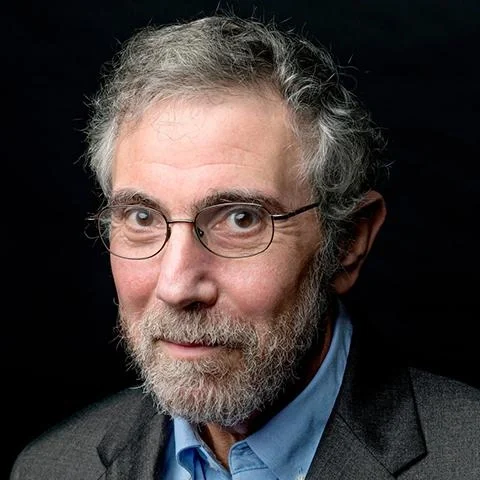
Nobel Prize-winning economist Paul Krugman has some lessons for Trump. Given Trump’s belief in his own great intellect, it’s doubtful that he’s interested in learning anything new.

Krugman writes:

Many investors seem to have deluded themselves into believing that Trump was done disrupting world trade, and some economists, myself included, were hoping that we wouldn’t keep having to write about stupid, feckless trade policy. But here we go again.

By now we were supposed to have scores of trade deals signed. Instead… Trump began posting letters on Truth Social (diplomacy!) telling a variety of countries that they would face high tariffs on Aug. 1. The first two letters were to South Korea and Japan, both told that Trump would put a 25 percent tariff on all their exports. Some countries are facing even higher tariffs. Overall, the tariff rates announced so far look very close to the widely ridiculed Liberation Day tariffs announced on April 2.

Honestly, I’ve written so much about tariffs that it’s hard to find new things to say. But let me offer a few notes on where we seem to be now.

These tariffs are really, really high

One way to look at the newly announced tariffs is in the light of history. The infamous Smoot-Hawley tariff of 1930 pushed the average tariff rate to about 20 percent. So far every country that has received a letter will be facing rates higher than that.

Another way to look at it to ask how much we would expect these tariffs to reduce trade. The key number is the elasticity of substitution in world trade — the percent fall in imports caused by a one percent rise in import prices. The median estimate from many studies is 3.8, which implies that in the long run 25 percent tariffs will reduce trans-Pacific trade by almost 60 percent. That’s a lot.

Side note: If I were a government employee, this post would probably be flagged for DEI because I just used the word “trans.”

There were never going to be genuine trade deals

These tariffs are going to hurt South Korea and Japan, although they’ll hurt U.S. consumers even more. So why didn’t Korean and Japanese negotiators make big enough concessions to satisfy Trump?

Because there was nothing for them to concede. South Korea has had a free trade agreement with the United States since 2012, so most U.S. exports to Korea face zero tariffs. Japan, like other wealthy nations, has very low tariffs on most goods. Neither country, then, was in a position to offer big tariff reductions, because their tariffs were already minimal.

Here’s part of Trump’s letter to South Korea, alleging that the country’s “Tariff, and Non Tariff, Policies and Trade Barriers” are responsible for the bilateral trade imbalance:

Notice that Trump offered no specifics — because there aren’t any. How were the South Koreans supposed to end unfair trade practices that exist only in Trump’s imagination?

Here’s an analogy that occurred to me: Imagine that you have a belligerent neighbor who threatens to take revenge unless you stop dumping trash on his lawn. You reply, truthfully, that you aren’t dumping trash on his lawn. His response is to accuse you of being intransigent and slash your car’s tires.

The only possible out here would be a series of fake deals, in which countries pretend to have offered significant concessions and Trump claims to have won big victories. Some people still think that will happen — the new tariffs aren’t supposed to take effect until Aug. 1. But the tone of those letters and Trump’s clear obsession with tariffs make me doubt that he’ll call the tariffs off, in part because of my last observation: Attempts to mollify Trump always end up emboldening him to demand more.

Why make a deal with a man who will surely break it?

As I already mentioned, South Korea and the United States have had a free trade agreement (KORUS) since 2012. This agreement wasn’t some vague memorandum of understanding. It was the result of years of tough negotiation, followed by intense political debate in both countries before our respective legislatures passed the enabling legislation.

Yet Trump is simply ignoring that hard-won agreement. His letter to the South Koreans doesn’t even mention KORUS, let alone explain why the United States is reneging on its solemn promises.

Japan doesn’t have a free trade agreement with the United States. But it does have Most Favored Nation status, which means that under international trade law it is entitled to face tariffs no higher than those America committed to under the last major global trade agreement, the Uruguay Round that concluded in 1994. Again, these tariff commitments weren’t embodied in some casual memorandum. They were the result of years of negotiation, whose results had to be approved by Congress.

And again Trump isn’t even trying to explain why he’s going back on a longstanding U.S. commitment.

The point is that Trump doesn’t feel bound by trade deals America has made in the past. Why should anyone expect him to honor any new deals he makes, or claims to make, now?

Obviously this behavior isn’t unique to tariffs. Many domestic institutions, from law firms to universities, have discovered that attempting to appease Trump buys you at best a few weeks’ respite before he comes back for more.

It’s possible that the governments receiving Trump’s tariff letters haven’t figured that out yet. But they will. And my bet is that the TACO people — Trump always chickens out — are wrong in this case. I’ll be happy to be proved wrong, but right now it looks as if deeply destructive tariffs are really coming.

The New York Times said bluntly that Trump has plunged the global economy into chaos with his wild and wooly tariffs. He doesn’t know what they are, who pays for them, how they affect trade. He is listening only to Peter Navarro, the tariff evangelist. Trump is not the master of “the art of the deal” (a ghost-written book). He is the master of obfuscation and chaos.

The New York Times reported:

Six months into his new administration, President Trump’s assault on global trade has lost any semblance of organization or structure.

He has changed deadlines suddenly. He has blown up negotiations at the 11th hour, often raising unexpected issues. He has tied his tariffs to complaints that have nothing to do with trade, like Brazil’s treatment of its former president, Jair Bolsonaro, or the flow of fentanyl from Canada.

Talks with the United States were like “going through a labyrinth” and arriving “back to Square 1,” said Airlangga Hartarto, the Indonesian minister for economic affairs, who met with U.S. officials in Washington on Wednesday.

The resulting uncertainty is preventing companies and countries from making plans as the rules of global commerce give way to a state of chaos.

“We’re still far away from making real deals,” said Carsten Brzeski, global head of macroeconomics at the bank ING in Germany. He called the uncertainty “poison” for the global economy.

Gone is the idea that the White House would strike 90 deals in 90 days after a period of rapid-fire negotiation, as Mr. Trump pledged in April. Instead, Washington has signed bare-bone agreements with big trading partners including China, while sending many other countries blunt and mostly standardized letters announcing hefty tariffsto start on Aug. 1.

The Economic Policy Institute issued an open letter to the American people, written and co-signed by six economists who won the Nobel Prize.

They wrote:

As economists who have devoted our careers to researching how economies can grow and how the benefits of this growth can be translated into broadly shared prosperity and security, we have grave concerns about the budget reconciliation bill passed by the U.S. House of Representatives on May 22, 2025.

The most acute and immediate damage stemming from this bill would be felt by the millions of American families losing key safety net protections like Medicaid and Supplemental Nutrition Assistance Program (SNAP) benefits. The Medicaid cuts constitute a sad step backward in the nation’s commitment to providing access to health care for all. Proponents of the House bill often claim that these Medicaid cuts can be achieved simply by imposing work reporting requirements on healthy, working-age adults. But healthy, working-age adults are by definition not heavy consumers of health spending, so achieving the budgeted Medicaid cuts will obviously harm others as well.

Medicaid provides health insurance coverage for low-income Americans, but this includes paying out-of-pocket health costs for low-income retired Medicare recipients and providing nursing home and in-home care services for elderly Americans. Medicaid also covers 41% of all births in the United States, including over 50% of all births in Louisiana, Mississippi, New Mexico, and Oklahoma. Work reporting requirements will obviously yield no savings from these Medicaid functions.

Besides providing affordable health care to families, Medicaid is also crucial to state budgets and hospital systems throughout the country—particularly in rural areas. In 2023, the federal government sent $615 billion to state governments to cover Medicaid spending; this federal contribution accounted for over 75% of total state Medicaid spending in more than 19 states. Rural hospitals in states that accepted the Medicaid expansion that was part of the Affordable Care Act were 62% less likely to close than rural hospitals in non-expansion states.

In addition to Medicaid, the House bill also significantly cuts SNAP. These steep cuts to the social safety net are being undertaken to defray the staggering cost of the tax cuts included in the House bill, including the hidden cost of preserving the large corporate income tax cutpassed in the 2017 tax law. But even these sharp spending cuts will pay for far less than half of the tax cuts (not even including the cost of maintaining the corporate income tax cuts of the 2017 law).

U.S. structural deficits are already too high, with real debt service payments approaching their historic highs in the past year. The House bill layers $3.8 trillion in additional tax cuts ($5.3 trillion if all provisions are made permanent) on top of these existing fiscal gaps—and these tax cuts are overwhelmingly tilted toward the highest-income households. Even with the safety net cuts, the House bill leads to public debt rising by over $3 trillion in coming years (and over $5 trillion over the next decade if provisions are made permanent rather than phasing out). The higher debt and deficits will put noticeable upward pressure on both inflation and interest rates in coming years.

The combination of cuts to key safety net programs like Medicaid and SNAP and tax cuts disproportionately benefiting higher-income households means that the House budget constitutes an extremely large upward redistribution of income. Given how much this bill adds to the U.S. debt, it is shocking that it still imposes absolute losses on the bottom 40% of U.S households(if some of the fiscal cost is absorbed in future bills with extremely high and broad tariffs, the share of households seeing absolute losses will increase rapidly).

The United States has a number of pressing economic challenges to address, many of which require a greater level of state capacity to navigate—capacity that will be eroded by large tax cuts. The House bill addresses none of the nation’s key economic challenges usefully and exacerbates many of them. The Senate should refuse to pass this bill and start over from scratch on the budget.

Daron Acemoglu
MIT Economics

Peter Diamond
MIT Economics

Oliver Hart
Harvard University

Simon Johnson
MIT Sloan School of Management

Paul Krugman
Graduate Center, City University of New York

Joseph Stiglitz
Columbia University

Michael Hiltzik is a Pulitzer-Prize winning columnist for the Los Angeles Times, who write about business and whatever else he wants. In this column, he tries to make sense of Trump’s tariff war. It’s hard to do because it doesn’t make sense. Trump claims to have made great deals with China and the United Kingdom, but on closer inspection, he didn’t. People assume that Trump was a successful businessman, but he wasn’t. He played one on TV. He declared bankruptcy six times, and he had no background in international economic policy.

Hiltzik writes:

Are you confused about Donald Trump’s tariff policy, including why he instigated a global trade war, what its impact will be on the U.S. economy and how hard it will hit your pocketbook?

Join the club. So too are economists, trade experts, political prognosticators and Trump himself. Their bewilderment has only intensified with the White House’s recent announcement of trade “deals” with Britain and China. 

Those quote marks are proper, because it’s unclear how much of a bargain Trump has struck with those countries despite his triumphalist rhetoric. 

Running a trade deficit is nothing new for the United States. Indeed, it has run a persistent trade deficit since the 1970s—but it also did throughout most of the 19th century.

— Brian Reinbold and Yi Wen, Federal Reserve Bank of St. Louis

On Monday, for instance, Trump declared that he had achieved a “total reset” in trade relations with China. That doesn’t appear to be true, given that the thrust of the announcement was a 90-day pause in the recent round of U.S.-imposed tariffs on Chinese goods and retaliatory Chinese levies on goods imported from the U.S.

Indeed, the announcement appears at least superficially to represent another climb-down by Trump of the stern tariff regime he claimed to be imposing. No one is even sure that the purported cease-fire will survive for the full 90 days. Even if it does, it means 90 days of continued uncertainty about the relations between the two largest economies on the planet.

Praise for Trump’s tariff policy has been largely concentrated among his Cabinet members and other courtiers. Commerce Secretary Howard Lutnick, for one, was effusive about the British negotiations, even though they plainly achieved nothing concrete. “We started at 10% [tariffs] and we ended at 10%,” Lutnick told an Oval Office press gathering last week. “We got it done in 45 days, certainly because we work for Donald Trump.”

Stock market investors have shown every sign of hanging on for dear life as the on-again-off-again tariffs have unfolded. 

As of Monday’s market close, the Standard & Poor’s 500 index is down 3.39% since Trump’s inauguration. The tech-oriented Nasdaq index is down by more than 5.3% since the inauguration. Both indices are in the red year-to-date.

Let’s try to clear away some of the confusion.

On Feb. 4, Trump imposed a 10% tariff on all Chinese goods, then raised it to 20% on March 4. That meant that the effective rate on some imports from China rose to 45%, including a 25% levy on imported steel and aluminum. That rose by another 10% on April 5, reflecting global 10% “reciprocal” tariffs that Trump described as countering tariffs placed on U.S. goods by countries around the world. A few days later, Trump raised total China tariffs to at least 145%.

Meanwhile, China was retaliating with its own tariffs on U.S.-made imports, ultimately set at 125%. Trade between the two countries virtually halted. Shipping traffic at West Coast ports, notably the ports of Long Beach and Los Angeles, plummeted amid proliferating predictions of empty shelves in the U.S. by September.

Where are we today? According to the initial announcement, the “reciprocal” tariff on China will remain at 10%; according to Treasury Secretary Scott Bessent, who represented the U.S. at bilateral talks this weekend. Chinese goods will still be subject to an additional 20% levy Trump has described as punishment for China’s role in fentanyl exports to the U.S. 

China, in return, cut its retaliatory tariffs to 10% from 125%, but left in place tariffs on U.S. farm goods — an additional 15% on chicken, wheat, corn and cotton and 10% on sorghum, soybeans, pork, beef, seafood, fruits, vegetables and dairy products. That’s bad news for U.S. farmers, for whom China had been a growing market, reaching a record $36.4 billion in 2022 before shrinking to $24.7 billion last year. 

The deal Trump claimed to have reached last week with Britain was also murky. To begin with, the rationale for imposing “reciprocal” tariffs made no sense. Trump had justified those tariffs as countermoves to trade deficits the U.S. recorded with the target countries — but Britain is among the major trade partners that have consistently run a trade surplus with the U.S., meaning that it bought more from this country than it sold. 

(Britain ranks only eighth among America’s trading partners; Canada, Mexico and China are the top three, respectively.) 

As was the case with China, the agreement announced with Britain amounted to an agreement to keep talking, rather than a concrete deal. For all that Trump and British Prime Minister Keir Starmer congratulated themselves for their commitment to “deliver shared prosperity for American and British citizens alike,” the document they issued explicitly states that it “does not constitute a legally binding agreement” but only anticipates a “reasonable period of negotiation.”

Even so, the terms the White House mentioned stoked concerns among U.S. automakers. That’s because they included cutting tariffs on imported British cars to 10% from the 25% imposed on cars and auto parts imported from other countries, chiefly Canada and Mexico under the United States-Mexico-Canada Agreement, which Trump negotiated in his first term.

“It will now be cheaper to import a U.K. vehicle with very little U.S. content than a USMCA-compliant vehicle from Mexico or Canada that is half American parts,” complained the American Automotive Policy Council, a lobbying group for Ford, General Motors and Stellantis. Which British automakers would be its chief beneficiaries? Land Rover, Jaguar, Bentley, Rolls-Royce, Mini, McLaren and Aston Martin. About 103,000 vehicles from those brands came into the U.S. in 2024, auto market analyst Sam Fiorani told the Detroit Free Press.

That brings us back to Trump’s reliance on tariffs as a weapon in trade negotiations. His core belief appears to be that every bilateral trade deficit suffered by the U.S. is harmful to its economy, or an attack on its national security or even its sovereignty. 

Many economists find this notion bizarre. “Running a trade deficit is nothing new for the United States,” Brian Reinbold and Yi Wen of the Federal Reserve Bank of St. Louis have observed. “Indeed, it has run a persistent trade deficit since the 1970s — but it also did throughout most of the 19th century.”

For the most part, they argue trade deficits have been good for the U.S. economy. They reflected the importation of capital goods that fed into America’s rapid industrialization a century ago. More recently, they’ve reflected America’s wealth, which enabled U.S. consumers to buy more from abroad.

The truth is that the international trade regime in place for the last half-century or so has been a boon for American consumers and businesses. The U.S. outsourced the lowest-skilled work for the manufacture of products including electronics and baby clothes to countries with the lowest prevailing wage rates, while turning a blind eye to the abuses visited on those laborers — adults and children alike. Tariffs were low and, perhaps more importantly, stable.

In return, sellers — such as Apple — of those manufactured goods purchased by American consumers became some of the most valuable public companies in the world. U.S. stock prices and the value of high-tech companies in Silicon Valley soared. A new class of billionaire plutocrats, their wealth based less on manufacturing than on services, emerged.

Inexplicably, it was Trump, who blew this long-lasting arrangement to smithereens. Not because he thought the globalization of manufacturing was morally suspect, but because he saw it as damaging to the U.S. economy.

It’s true that manufacturing employment has seen a precipitous drop from 2000 through the 2008-2009 recession. According to international trade expert Kyle Handley of UC San Diego, some 6 million manufacturing jobs were lost in that period. But international trade was only one of several factors in the decline; automation and “a broad shift toward service sector employment” also played a role, especially in sectors such as healthcare, business and professional services, and communications and transportation.

“Many of the changes are irreversible,” Handley wrote last year. Nevertheless, “nostalgia for the past remains salient in national conversation.” 

Trump’s inability, or disinclination, to look deeper into the roots of U.S. trade deficits, which he sees as invariably the result of illicit trade barriers blocking U.S. exports, may explain the bewildering course of White House tariff policy. 

For the White House to “suggest that the trade deficit is somehow reflective of trade barriers, and the administration’s cherry-picking of the data (which excludes services where the United States has a surplus) further points to the arbitrary nature of its claims,” Inu Malak of the Council on Foreign Relations observes

How Trump’s deal-making will proceed from here is anyone’s guess. One question concerns whether they’re even constitutional, since the Constitution vests trade policy in Congress. A lawsuit making that point filed by five small importers harmed by the tariffs will be heard Wednesday by the federal Court of International Trade. 

Trump has misused the International Emergency Economic Powers Act, or IEEPA, to claim that authority for himself, the lawsuit asserts. “The government’s position,” Ilya Somin, a constitutional law expert at George Mason University who represents the plaintiffs, told me, “is that IEEPA gives the president the power to impose whatever tariffs he wants, against any country, for as long as he wants, so long as he first declares a ‘national emergency’ (which they argue he can do anytime he wants for any reason).” 

But IEEPA doesn’t mention tariffs, the plaintiffs note, and has never been used to impose or increase them. Nor can trade deficits rise to the level of a “national emergency,” as Trump claims, given that the trade imbalances present when he took office had been in place for years, even decades, the plaintiffs say. 

The question remaining is how lasting Trump’s disruption of international trade relations will be. His policies have already had one effect: Trust in the U.S. as a reliable trading partner has been profoundly shaken. 

America profited from that trustworthiness for many decades. It may not be restored for years to come.

Keith Barber posted this point-counterpoint on Medium. Barber is a retired lawyer and lifelong Republican (pre-Trump). He presents the best arguments for tariffs, then explains why none of those claims make sense.

Keith writes:

A friend sent me a pro-tariff missive a MAGA friend of his shared. My friend wanted to know what I thought of it. Here is what he sent me.

“In its most basic form a tariff is a tax placed on imported goods. For instance, China sells widgets in the U.S. A 10% tariff on China would mean that for every widget China sells in the U.S., China must pay the U.S. federal government 10%.

Currently, foreign trade with the U.S. is extremely imbalanced. For example: the U.S. may charge China a 10% tariff BUT, China charges the U.S. a 50% tariff. This means more Chinese goods get sold in the U.S. than U.S. goods sold in China.

These grossly imbalanced tariffs (international tax) have encouraged U.S. manufacturers to move manufacturing OUT of the U.S., eliminating good paying middle class U.S. jobs. By raising tariffs on imported goods, U.S. companies are incentivized to return manufacturing to the U.S. because it will be more profitable to produce in the U.S. than to pay high import tariffs.

In the short term U.S. pricing will increase. HOWEVER, within 1 year those prices will decrease as manufacturers return to U.S. production. Not only will prices return to more affordable pricing but, 100’s of millions U.S. middle class jobs will become available hence, raising the standard of living for the American worker.

Prior to 1850 over 90% of all federal revenue came from international tariffs AND income tax did not exist and was deemed unconstitutional. In 1913, the U.S. federal government implemented the federal income tax scheme upon all U.S. workers. Today only 2% of all federal revenue comes from tariffs. The remaining federal revenue comes from income taxes, state taxes and borrowed money from the Federal Reserve, which weakens the U.S. dollar.

A strong and fair tariff system has the potential to not only reduce federal income taxes but, even eliminate them. Again, providing a higher standard of living for the American worker.”

I responded to my friend pointing out the numerous flaws, and flat out factual misrepresentations, of his friends arguments. What follows is a cleaned up version of that, along with some additional thoughts.

Let’s start with this: For instance, China sells widgets in the U.S. A 10% tariff on China would mean that for every widget China sells in the U.S., China must pay the U.S. federal government 10%.”

Absolutely false. The American importer would pay the 10%, not China. Think about it. How would you, how could you, make China itself pay? This fundamental error of fact alone is sufficient to trash the rest of the arguments above. It also shows that whoever authored it is absolutely clueless regarding how tariffs work.

Nor is the 50–10 characterization of tariffs accurate. To be sure, China uses a variety of arguably unfair regulatory procedures to limit U.S. imports, but Chinese tariffs have generally been imposed as responsive to American tariffs. Cheap labor is why Chinese goods are less expensive compared to American products, not tariffs.

The entire notion of tariffs returning production to America ignores the economic concept of competitive advantage. It also ignores the realities of things as simple as geography and weather. You really think lost avocado imports from Mexico and Central America can be moved to the United States? That Colombian coffee can be grown here? And even if it could, which it can’t, Trump’s taking the cheap employment base out of this country to do it.

Things that used to be produced in America were moved out because they could be made less expensively elsewhere. Government intervention in the market with a tariff/tax to compel production in the United States means the product will be more expensive for the simple reason that it costs more to make it here (more on that in a moment).

Which gets to another ridiculous claim: “100’s of millions U.S. middle class jobs will become available hence, raising the standard of living for the American worker.”

First, in a nation of about 330 million there are not 100s of millions of workers to work in additional middle class jobs. Right now the United States has only about 7 million unemployed.

Further, most of these jobs would not be middle class. Does the idiot who wrote this really think China is paying American middle class wages to the workers doing it now? Made in America will only be as cheap if we pay our workers what China pays its workers. If you think the price of your iPhone is high now, try paying American middle class wages to the workers who make it.

This proposed government market intervention/manipulation operating against the free enterprise model conservatives falsely claim to love. We would understand it be exactly that sort of government powered market manipulation (dare I call it “socialism”?) if, for example, the state of Florida attempted to tax cars made in Michigan in order to use this governmental power to compel the development of a Florida auto industry. And Florida would get to say this state “tariff” is also to raise revenue and reduce the tax burden on Floridians. But the truly nonsensical nature of this can be understood when Michigan retaliates by imposing a tariff/tax on Florida oranges. As if oranges can be grown in Michigan.

I also got a laugh at the “within 1 year” the production will magically shift to the America, which is simply made up. How long does it take to build a steel mill? An auto plant? The highly sophisticated factories where microchips are made? What divorced from reality lunatic thinks that can be done at scale in less than a year? Oh, and when you build those microchip factories, you need the raw materials, coming from . . . well not here.

That tariffs could ever make near enough money to eliminate federal income taxes is just another flat out absurdity. A comparison to 1913 when the federal budget was 2% of GDP (it’s well over ten times that now) reflects the dishonest approach involved. U.S. military spending alone now is nearly double that 2%. Even getting close to the 1913 standard would require eliminating social security, medicare, medicaid and much more. Of course, maybe that is the real objective.

Further, this use of tariffs to substitute for income taxes involves an obvious Catch-22. If tariffs won’t financially harm Americans because of increased domestic production, then tariffs can’t make much money either. It is only by transferring the expense of tariffs on still imported goods to American consumers that tariffs can make any money at all. Whoever wrote this rubbish completely disregarded that the benefit they claim, of tariffs increasing domestic production, totally destroys their argument that tariffs will make so much money we can eliminate income taxes.

To the extent tariffs would substitute for income tax that substitution would be to create what amounts to a regressive sales tax to reduce progressive income taxes. Which means the entire tax substitution argument is shell game trying to sneak a benefit for the wealthy at the expense of the poor and middle class.

I’d like to conclude with a truncated version of the last paragraph: “A strong and fair tariff system has the potential to . . . [provide] a higher standard of living for the American worker.”

If this argument is valid, then it would be valid for every nation. Supposedly the standard of living for everyone in the world would be better if every nation in the world had “a strong and fair tariff system.” The workers of the world would be better off if every nation just hunkered down its entire manufacturing and agricultural and energy bases to make everything it needs so every country imports nothing and exports nothing.

For reasons of competitive advantage, that include everything from geography to labor costs to climate, this notion is simply not true. As but a single extreme example, how is landlocked Mongolia to get fish? How is America to get inexpensive coffee? And so on.

Whoever wrote this simple minded garbage could not pass the most basic course in economics, or for that matter, common sense.

I would add another bonus point. Trump isn’t even trying to justify the tariffs with the bogus economic arguments presented in the “point” piece above. Rather, Trump is trying to claim that it’s all about stopping illegal immigration and fentanyl.

Neither argument legitimately applies to Canada, and the fentanyl argument does not apply to either Canada or Mexico. The vast bulk of fentanyl is smuggled into the United States through legal ports of entry. Further, it is Americans who bring 86% of the fentanyl across the border. As it turns out, the drug lords pushing fentanyl don’t want to trust so valuable a product to some desperate middle aged mother trying to cross the border with her five year old daughter to escape political persecution in Venezuela.

Blaming immigrants for fentanyl tells me you are not serious about that problem. You don’t want to solve it, you just want to blame it on people you already don’t like.

Paul Krugman is a Nobel-Prize winning economist who wrote a regular column for The New York Times for 24 years. Recently he left the Times and now writes at Substack.

On Substack, he wrote about why he left. For many years, he wrote, the Times had edited his work very lightly. Recently, his editors had been heavy-handed.

Krugman wrote::

During my first 24 years at the Times, from 2000 to 2024, I faced very few editorial constraints on how and what I wrote. For most of that period my draft would go straight to a copy editor, who would sometimes suggest that I make some changes — for example, softening an assertion that arguably went beyond provable facts, or redrafting a passage the editor didn’t quite understand, and which readers probably wouldn’t either. But the editing was very light; over the years several copy editors jokingly complained that I wasn’t giving them anything to do, because I came in at length, with clean writing and with back-up for all factual assertions.


This light-touch editing prevailed even when I took positions that made Times leadership very nervous. My early and repeated criticisms of Bush’s push to invade Iraq led to several tense meetings with management. In those meetings, I was urged to tone it down. Yet the columns themselves were published as I wrote them. And in the end, I believe the Times — which eventually apologized for its role in promoting the war — was glad that I had taken an anti-invasion stand. I believe that it was my finest hour.


So I was dismayed to find out this past year, when the current Times editors and I began to discuss our differences, that current management and top editors appear to have been completely unaware of this important bit of the paper’s history and my role in it.


Two, previous Times management and editors had allowed me to engage in the higher-level economic debates of the time. The aftermath of the 2008 financial crisis led to a great flowering of economics blogs. Important, sophisticated debates about the causes of the crisis and the policy response were taking place more or less in real time. I was able to be an active part of those debates, because I had an economics blog of my own, under the Times umbrella but separate from the column. The blog, unedited, was both more technical — sometimes much more technical — and looser than the column.
Then, step by step, all the things that made writing at the Times worthwhile for me were taken away. The Times eliminated the blog at the end of 2017. Here’s my last substantive blog post, which gives a good idea of the kind of thing I was no longer able to do once it was eliminated.
For a while I tried to make up for the loss of the blog with threads on Twitter. But even before Elon Musk Nazified the site, tweet threads were an awkward, inferior substitute for blog posts. So in 2021 I opened a Substack account, as a place to put technical material I couldn’t publish in the Times. Times management became very upset. When I explained to them that I really, really needed an outlet where I could publish more analytical writing with charts etc., they agreed to allow me to have a Times newsletter (twice a week), where I could publish the kind of work I had previously posted on my blog.


In September 2024 my newsletter was suddenly suspended by the Times. The only reason I was given was “a problem of cadence”: according to the Times, I was writing too often. I don’t know why this was considered a problem, since my newsletter was never intended to be published as part of the regular paper. Moreover, it had proved to be popular with a number of readers.

Also in 2024, the editing of my regular columns went from light touch to extremely intrusive. I went from one level of editing to three, with an immediate editor and his superior both weighing in on the column, and sometimes doing substantial rewrites before it went to copy. These rewrites almost invariably involved toning down, introducing unnecessary qualifiers, and, as I saw it, false equivalence. I would rewrite the rewrites to restore the essence of my original argument. But as I told Charles Kaiser, I began to feel that I was putting more effort—especially emotional energy—into fixing editorial damage than I was into writing the original articles. And the end result of the back and forth often felt flat and colorless.


One more thing: I faced attempts from others to dictate what I could (and could not) write about, usually in the form, “You’ve already written about that,” as if it never takes more than one column to effectively cover a subject. If that had been the rule during my earlier tenure, I never would have been able to press the case for Obamacare, or against Social Security privatization, and—most alarmingly—against the Iraq invasion. Moreover, all Times opinion writers were banned from engaging in any kind of media criticism. Hardly the kind of rule that would allow an opinion writer to state, “we are being lied into war.”

The story is told in the Columbia Journalism Review, though not in the same detail, by Charles Kaiser. It is not behind a paywall.

Kaiser wrote (in part):

CJR emailed half a dozen Times columnists to ask if they had noticed any difference in the way their columns were edited last year. The three who responded—Maureen Dowd, Gail Collins, and Tom Friedman—all said they hadn’t noticed any change in editing. Friedman also said, “I have a terrific editor in Patrick Healy and have not experienced any change in the editing of my column since we started working together in 2020.”

Krugman said, “I don’t have a feud here. All I know is that I was in fact being treated very differently from the past.”

Krugman was particularly valuable to progressive readers because he was often a lone voice in the wilderness. That was especially true early in his columnist career when he strayed from his brief—to write about economics—in order to strenuously oppose the American invasion of Iraq in 2003. This was striking at a time when the news department allowed Judith Miller to lead the charge on the unproven allegation that Saddam Hussein had weapons of mass destruction, and most of Krugman’s colleagues—especially Friedman—were strongly in favor of the invasion.

Just six days before America invaded, Krugman wrote, “The original reasons given for making Iraq an immediate priority have collapsed. No evidence has ever surfaced of the supposed link with Al Qaeda, or of an active nuclear program. And the administration’s eagerness to believe that an Iraqi nuclear program does exist has led to a series of embarrassing debacles, capped by the case of the forged Niger papers, which supposedly supported that claim. At this point it is clear that deposing Saddam has become an obsession, detached from any real rationale.”

He served a similar function during the Biden administration, when the media in general and the White House correspondents of the Times in particular exhibited what Krugman called “a real negativity bias. You know, if the price of gas goes up to five dollars, that’s all over the pages. If it comes back down to three dollars, not a peep, right?”

Unlike most of his Times colleagues, Krugman believes Biden “actually was a very, very good president. The fact that Democrats, like every other incumbent party in the democratic world, lost the election should not allow us to overlook the fact that we got the best economic recovery in the world, that we made the first serious efforts to do something about climate change, and we have followed, actually, a quite aggressive foreign economic policy against China that was much more effective than anything Trump did or is likely to do. The Biden administration has basically been trying to cut Chinese advanced technology off at the knees.”

Times watchers are always wary of any sign that the newspaper might be doing anything to bow to its legions of right-wing critics. This is especially true when, as Oliver Darcy put it this week, “Trump has largely bent media and technology companies to his will.”

Kingsbury said it was ridiculous to suggest that the paper made Krugman’s life miserable last year because she wanted to stifle one of the newspaper’s strongest liberal voices on the eve of Trump’s return to the White House. 

“Obviously I do push back on the notion that Paul’s views are now missing from the page,” the opinion editor said. “You can come to our pages today and find either other columnists making the arguments he was making or guest essays, or newsletters, or podcasts,” she continued. “For nine months we pounded away at the idea of Trump coming back into office. We were the only major newspaper that endorsed in the presidential race and endorsed Kamala Harris. There’s no part of my report that didn’t routinely tell readers about the dangers and risks of electing Trump.”

All of that is true. But it is also the case that the greatest change that Kingsbury and Sulzberger have made has been the sharp shrinking of the institutional voice of the Times. The number of unsigned editorials has gone from three a day, when Kingsbury took over, to just one a week—even as she has increased the number of columnists by roughly 50 percent. The paper’s editorial voice should be reserved “for the most important arguments,” she said. “We break through more than we did when we editorialized on a daily basis.”

Many New Yorkers were distressed when the paper announced last fall that it would stop making endorsements in local races. More alarm bells went off last week when Semafor reported that the paper was considering abandoning all endorsements. Kingsbury told Semafor there was no plan to eliminate the editorial board, but she did not flatly deny the no-endorsement scenario. “We’re in the process of considering ways to modernize endorsements,” she said, “and while we’re excited about the ideas we’re discussing, there’s nothing substantive to say about it yet.”

David Dayen, executive editor of The American Prospect, explains how little Trump understands economics or industrial policy. Strange that a graduate of the University of Pennsylvania’s Wharton School of Finance would be economically illiterate. Maybe he was a DEI admit.

Dayen writes:

When Donald Trump is in the room, the truth takes a night off.

Only in this Republican Party can stories about Haitians eating pets leap from 4chan to the presidential debate stage in two days. As Rick Perlstein noted today, when you have religious conviction animating your movement, trivialities like verifying claims are sidelined. As long as something fits into the worldview, it doesn’t need to be true. For all the talk about the damage of young girls being addicted to their cellphones and steps needing to be taken to wean them off, nights like Tuesday remind us that the real damage of internet addiction is occurring among old right-wing men who believe everything put in front of them.

About Kamala Harris’s strategy: The expression du jour is that Harris “baited” Trump into looking insane in front of the public, but I don’t think there was a chance that she would throw out the bait and not reel anything in. This wasn’t a fair fight. This was like the late 19th century, when the servants of some industrialist would stock the lake with hungry fish. The Harris campaign ran an ad on Fox News making fun of Trump about crowd sizes, did everything but fly a giant banner over Trump’s car reading, “We’re going to make fun of you about crowd sizes,” then made fun of him about crowd sizes, and Trump still got angry. Yes, the debate team knew who they’re dealing with, because the subject in question has the emotional self-control of a toddler.

What’s more interesting to me is the cul-de-sac that Trump has stumbled into on tariffs, which now comprise his entire economic policy. It’s indicative of this wall that has been built, not to keep out migrants from Mexico, but to keep out reality.

In 2016, Trump had a rationale for imposing tariffs. He thought cheap Chinese goods entering the country unmolested was hurting the industrial base and causing factories to close. He imposed them to revitalize those left-behind areas, rebuild those factories, lower the trade deficit, and make America great again. And they were not placed across the board outside of China; the tariffs other countries felt were sector-specific.

Somewhere along the way, an aide must have idly read half a page to Trump from Karl Rove’s book about William McKinley, and now tariffs are to him what tax cuts are to every other Republican: a cure for every ailment. (It’s a floor wax and a dessert topping.) Trump’s incoherent-sounding answer at the Economic Club of New York last week about child care was merely Trump seeing tariffs as bringing in enough cash to handle the problem. The way he thinks about this is the way a gangster used to think about protection money: Trump will get rich (oh, and sure, the country will too) by sticking up other countries.

There’s been a lot of dumb talk about tariffs lately, but they aren’t totally outlandish. That’s why, as Trump said in his only somewhat accurate comeback, Biden has kept a lot of the Chinese tariffs on. Lori Wallach and the Rethink Trade crew have a good primer on the purpose of tariffs. They are a trade enforcement tool for critical industries where countries have an economic and national-security imperative to compete. They are attempts to induce that competition fairly. And they are completely justified along those lines.

But that’s only if you combine them with other tools to allow for industrial expansion, like investing in manufacturing sectors or using export controls on certain technologies. The Biden administration has done this, and even added new, targeted tariffs on the same sectors where manufacturing is being encouraged. Because they are using tariffs in the manner in which they should be used, manufacturing construction in critical industries is soaring faster than any time in the last 30 years, private investment has been leveraged manyfold, clean-energy jobs in the U.S. are rising at twice the rate of other jobs, and the expected market share for U.S. semiconductors is now expected to grow after decades in the wilderness.

You’d have to know about this going in, but Harris actually alluded to it a bit when she talked about Trump “selling American chips to China to help them improve and modernize their military.” That was a reversal of Trump’s initial flirtation with export controls. She also highlighted the increase of 800,000 manufacturing jobs, which is frankly a low number, since practically all the factories boosted by the Inflation Reduction Act are still being completed and have yet to bring on production workers.

(I would add that the one area where the Biden administration eased up on including trade enforcement tariffs in its strategy, by delaying for two years solar component penalties, is an area where Chinese dominance is continuing. The suspension of a silicon cell factory in Colorado is the direct result of this failure to use the entire toolbox. The cross-pressure from the solar installation lobby, a trade group that includes the very Chinese companies dominating production, has been very damaging for administration strategy.)

Tariffs are imposed on wholesale prices, becoming part of the input cost. They are not a direct tax added to retail prices, and they are often absorbed into profit margins. But if you’re setting tariffs on everything, from every nation, including goods that have no substitute production in the U.S., then you are likely to get higher prices as a result, because there’s nothing stopping the retailer from passing on that input cost. You can use across-the-board tariffs as a trade enforcement tool to win policy concessions from other countries, but only if you’re willing to take them off if the concessions are won.

None of this is even reckoned with by Trump anymore. If it were, he’d have to admit that his tariffs failed to bring back industrial capacity. So instead, he’s gone deep into his mind and decided that tariffs are just a cheat code that allows you to cut other taxes and fund every need the government has. That means you can’t ever take them off, if they’re your main revenue source.

Thinking about tariffs as revenue is innumerate. Trump had to pay back out almost as much additional tariff revenue that he brought in to help struggling exporters, particularly in agriculture, caught up in his trade war. Tariffs cannot replace the income tax, and fund child care and other priorities, as a mathematical matter. But worse than that, the revenue on across-the-board tariffs, where no industry will rise to pick up the production and higher prices will result, will simply come from working families. Like any sales tax, it’s going to be regressive on those who spend a higher proportion of their income on basic necessities.

By contrast, the Biden strategy shows that industrial expansion and targeted tariffs can coexist with stable inflation, which as of today is down to 2.5 percent over the last year.

The Trump position on tariffs is indicative of the brain-poisoning of an entire party that has left policy construction behind in favor of Reddit rumors. In a fact-free zone, words are mashed together to the point of incoherence, and promises can be big and bold without a thought of whether they’re true and correct.

Do debates matter? They were enough to push one old politician out of the race a couple of months ago. Today, the Republican Party, which once called itself “the party of personal responsibility” is touting internet polls that their minions stormed, and blaming debate moderators for jumping in to say there’s no evidence of Haitians eating cats and dogs in Springfield, Ohio. Republicans have gone beyond any of the rational thoughts that would involve reassessing any of their choices over the last decade.

Whether debates matter for the purposes of collecting votes will not be revealed until November. What I know is that Donald Trump’s success depends entirely on whether he’s convinced enough Americans in swing states to be as ignorant as he is.

Michael Hiltzik is the Pulititzer Prize-winning business columnist for The Los Angeles Times. In this column, he explained that Trump and Vance are wrong to claim that tariffs will produce vast new revenues for the U.S. Treasury. Hiltzik shows that Trump doesn’t know what he’s talking about.

He writes:

Despite strong evidence that the average voter in the presidential election doesn’t care a hoot about international trade policy, Donald Trump and his running mate JD Vance have been promising to step up Trump’s tariff war with China.

As usual, they’re backing their promise with lies and other humbug.

“A tariff is a tax on a foreign country,” Trump asserted at an Aug. 19 rally in Wilkes-Barre, Pa., for example. “That’s the way it is, whether you like it or not. A lot of people like to say it’s a tax on us. No, no, no. It’s a tax on a foreign country.”

Questioned during an appearance on NBC’s “Meet the Press” on Aug. 25 about the effect of Trump’s tariffs on ordinary households — and economists’ conclusion that consumers pay the price — Vance asserted that “economists really disagree about the effects of tariffs.”

They’re wrong on both counts.

In truth, there’s no detectable disagreement among economists. In two polls conducted by the Booth School of Business at the University of Chicago, panels of economists unanimously agreed that American households would pay the price for Trump’s tariffs.

Those opinions held in a March 2018 poll and a May 2019 poll of panels of 43 leading academic economists. (The panels weren’t identical but did overlap; three respondents in the first poll didn’t provide answers and 11 didn’t answer or were “uncertain” in the second.)


The Harris campaign is more forthright about the cost of tariffs to the average consumer, although its specific estimates about the magnitude of the cost of tariffs Trump has proposed for the future — almost $4,000 a year on middle class households — can be questioned.

It’s proper to note, moreover, that although Harris has called the Trump tariffs a “Trump sales tax,” she doesn’t mention that the Biden administration has kept many of Trump’s tariffs in place and has moved to increase some of them.
It’s safe to say that the entire topic of tariffs is fraught with confusion and uncertainty. Here’s what you need to know.


First, the background. Trump launched a trade war, principally with China, in 2018 with a tariff of up to 25% on $50 billion worth of Chinese products. He stepped up the war later in the year with 10% tariffs on $200 billion in goods, and added tariffs of 10% on an additional $112 billion of Chinese imports. Trump also imposed tariffs on aluminum and steel imports from numerous trade partners.


These levies amounted to a tax of some $80 billion a year on American consumers, the nonpartisan Tax Foundation recently calculated. That was tantamount to “one of the largest tax increases in decades,” the foundation said, blaming the tariffs for the loss of the equivalent of 142,000 jobs. The average household paid a price of nearly $300 a year.


Biden kept in place many of the levies on Chinese products and added some of his own, including a 100% tariff on Chinese-manufactured electric vehicles. He replaced the aluminum and steel tariffs on imports from Britain, the European Union and Japan with a tariff quota, meaning that imports up to a certain level are exempt but tariffs remain in place for higher import volumes.

Tariffs are designed to fall on finished exported goods, but those goods often aren’t what consumers buy directly. Aluminum and steel, obviously, are raw materials used by manufacturers in the importing country. Other products subjected to the Trump tariffs are parts that go into American-made cars or other finished products.


The household-level effect of tariffs also depends on what a consumer buys. Consider the effect of tariffs on washing machines imposed by Trump (and allowed to expire by Biden) and the 100% tariff on Chinese-made electric vehicles Biden announced in May.


The EV tariffs will have no effect on American buyers, in the view of economist and economic blogger Noah Smith. That’s because Chinese EVs aren’t a factor in the U.S. market: “If you’re an American, you weren’t buying a Chinese EV yesterday, and now you’re not going to buy one tomorrow either. Nothing will change for you,” Smith observes.

You might, however, be able to buy one at some point in the future. Chinese EV makers including BYD are planning to build factories in Mexico, which would allow them to circumvent the Biden tariff even if the Mexican-made vehicles are bristling with Chinese parts. Some companies may even open factories in the U.S., as BMW, Honda, Toyota and other foreign carmakers have done.

The Trump tariff on washing machines had a measurable effect on the American market, however. Chinese-made machines commanded 80% of the U.S. market in 2018. That January, Trump imposed a 20% tariff on the first 1.2 million imported washing machines per year, and 50% on the excess imports.

Economists at the Federal Reserve and University of Chicago calculated that as a result, the price of washing machines rose by about 11%, or an average of $86.

As it happens, the price of clothes dryers, which weren’t subject to a tariff, also rose, by $92. The reason evidently is that washers and dryers are generally bought as a pair; washer makers taking advantage of the reduction in foreign competition to raise prices on that appliance simply jacked up prices on the package.

Overall, manufacturers passed through more than 100% of the tariff cost to consumers, thanks to the lack of competition and the price increase on dryers. American consumers lost about $1.55 billion because of the washing machine tariffs, the authors found.

The researchers did acknowledge that manufacturing employment in the washing machine sector increased by about 1,200 in the wake of the tariff. But that worked out to a cost of about $815,000 per new job — borne, again, by consumers.

That underscores the fakery purveyed by Trump and Vance about the purported virtues of tariffs. During his “Meet the Press” appearance, Vance claimed that tariff critics overlooked the “dynamic effect when more jobs come into the country. Anything that you lose on the tariff from the perspective of the consumer, you gain in higher wages.”

But there’s scant evidence for Vance’s claim that the tariffs pay for themselves. Certainly the economists polled by the University of Chicago didn’t think so, and the Tax Foundation found that, on balance, the Trump tariffs cost jobs.
The same conclusion was reached by economists at UCLA, UC Berkeley, Yale and Columbia, who found “large consumer losses from the trade war” Trump instigated. They added together the cost of the U.S. tariffs and those of retaliatory tariffs imposed by target countries, especially China.

That leaves the question of the role tariffs should play in overall industrial policy. They’re a tool that can be useful or warranted in specific contexts, but only if they’re carefully calibrated with other measures. Biden accompanied his continuation of Trump’s tariffs on Chinese semiconductor products, for instance, with the 2022 CHIPS and Science Act, which provides for about $280 billion in government funding for semiconductor research and development, including $40 billion in subsidies for chip factories in the U.S.

Viewed in isolation, tariffs are disdained by liberal and conservative economists alike. David Dollar and Zhi Wang of the liberal Brookings Institution warned in 2018 that of the costs of Trump’s trade war, “some … will be borne by American consumers; [and] some by American firms that either produce in China or use intermediate products from China.”

Their conclusions were confirmed by the libertarian Cato Institute, which asserted last month that “Americans bore the brunt” of Trump’s tariffs. Among the drawbacks were “higher tax burdens and prices, loss in wages and employment, reduced consumption, decreased investment, a decline in exports, and overall aggregate welfare.”

History offers its own warnings. During an interview on “Fox News Sunday,” Trump praised the tariffs proposed by William McKinley (R-Ohio) as a member of Congress in 1888. “If you look at McKinley,” Trump told his interviewer, Mark Levin, “he was a great president. He made the country rich.”

During the years following the enactment of the “McKinley Tariff” in 1890, the U.S. suffered four recessions or “panics,” in 1890-91, 1893, 1896 and 1899-1900.

McKinley became president in 1897. By then the McKinley Tariff had been shown to be a political disaster, leading to landslide losses of 83 House seats in the midterm election of 1890 and the loss of the White House in 1892, placing both chambers of Congress and the presidency in Democratic hands.


In other words, if Trump knew history, he would abandon all this tariff talk. But he doesn’t, and he hasn’t.

In this excellent clip from last night, Lawrence O’Donnell of MSNBC shows in detail how the New York Times “sane-washes” Trump’s nonsensical assertions.

In an article yesterday about Trump’s incoherent and rambling response to a question about whether he planned to lower the cost of child care for American families, the Times published his comments in full.

The article attempted to make sense of what he said, commenting that he believed the vast sums of money collected by tariffs would pay for everything, including child care. Trump thinks that tariffs are a tax on foreign nations.

As O’Donnell explains, tariffs raise the price of imported goods. They are not a “tax” on foreign nations.

But the Times does not explain this basic fact. Instead the article says, “In itself that would be a disputable policy assumption.”

Watch Lawrence O’Donnell eviscerate this lame article and the Times‘ failure to acknowledge that Trump’s claims were demonstrably wrong, not “a disputable policy assumption.”