Archives for category: Democrats

There’s an old saying, “Don’t change horses in midstream.” But loud voices in the media are calling on the Democratic Party to oust their President only four months before the election.

Stuart Stevens disagrees.

Stevens worked as a strategist in many Republican state and national campaigns. In 2012, he was the chief strategist for Mitt Romney’s Presidential campaign. In 2016, he joined the Never Trump movement and was a co-founder of the anti-Trump Lincoln Project.

He recently wrote a scathing critique in The Atlantic of the Democrats who want to push President Biden out of the race because of his terrible debate performance on June 27.

He wrote:

Millions vote for a candidate, propelling him to victory. Before the voters’ decision is formally certified, people who don’t like the outcome demand that the election results be thrown out and a different candidate selected in a closed process. That was America on January 6, 2021. And now, some in the Democratic Party want to follow a similar script.

The Democratic Party held 57 primaries and caucuses; voters in all 50 states, the District of Columbia, and five U.S. territories had their say, as did Democrats abroad. Joe Biden won 87 percent of the total vote. He lost one contest, in American Samoa, to the little-known Jason Palmer. Suddenly, there are cries in the Democratic Party that, as goes a single territorial caucus, so should the nation.

I worked in five presidential campaigns for Republicans and helped elect Republican senators and governors in more than half of the country. For decades, I made ads attacking the Democratic Party. But in all those years, I never saw anything as ridiculous as the push, in the aftermath of last week’s debate, to replace Joe Biden as the Democratic nominee. For many in the party, the event raised genuine concerns about the incumbent’s fitness for a new term. But a president’s record makes a better basis for judgment than a 90-minute broadcast does. Biden has a capable vice president, should he truly become unable to serve. The standard for passing over Democratic voters’ preferred nominee should be extraordinarily high—and has not been met.

The fundamental danger of Donald Trump is that he’s an autocrat who refuses to accept the will of the voters. So the proper response is to throw out millions of votes, dump the overwhelming choice, and replace him with someone selected by a handful of insiders? What will the message be: “Our usurper is better than your usurper”?

What is it about the Democratic Party that engenders this kind of self-doubt and fear? At a moment when Democrats’ instinct should mirror what Biden declared in a rally the day after the debate—“When you are knocked down, you get back up”—some in the party are seized by the urge to run, not fight. Think about how this would look: Hey, I guess Donald Trump is right; our guy isn’t fit to be president. We’ll give it another shot. Trust us, we’ll get it right eventually.

Madness.

After decades of losing the image wars as Republicans positioned themselves as the “party of strength,” Democrats are on the verge of a historic self-redefinition. When Biden traveled to Ukraine, he became the first president to visit an allied war zone not controlled by U.S. troops. A Democratic speaker of the House, Nancy Pelosi, defied China and visited Taiwan. A Republican Party that was once defined by Ronald Reagan demanding “Mr. Gorbachev, tear down this wall” is now the beating heart of the pro–Vladimir Putin movement, led by a former president elected with the Russian dictator’s help

Given a huge opportunity to project more self-assurance than Trump’s Republicans, these Dump Biden Democrats would ensure that their party once again slips back into the quicksand of doubt and second-guessing. No major American political party has thrown a presidential nominee overboard, so leave it up to some geniuses in the Democratic Party to hatch a scheme to make history.

What makes them believe that replacing Biden increases the chances of defeating Trump? How many times have candidates with impressive state-level records crashed and burned in a presidential race? The last time a party held on to the White House without the benefits of incumbency was 36 years ago. Recent polls show none of the fantasy replacement Democrats beating Trump. There are polls showing Biden defeating Trump. Say what you will about the Biden campaign’s organization, but four years ago it defeated an incumbent president—no easy thing.

Clearly, something was off inside the Biden campaign that allowed this debate debacle to occur, starting with the choice even to debate Trump. The Biden team easily could have insisted, as a precondition for a debate, that Trump first publicly acknowledge that he is running against a legally elected president who won a fair vote. Also, why did Biden look like an undertaker had done his makeup? But those breakdowns do not negate the substantial evidence that the Biden campaign knows how to defeat Trump. Do Democrats really want to throw that aside and reconstruct a campaign from scratch months before an existential election?

Presidential campaigns are billion-dollar businesses open to customers for a limited time. Right now, Democrats have a huge advantage over a GOP apparatus gutted by Trump in a power play that installed his daughter-in-law as co-chair of the Republican National Committee. What are the Dump Biden Democrats thinking? That Trump’s mob-boss takeover of his party gave them an unfair edge, so it’s only sporting for them to emulate him?

Trump is the candidate of chaos, uncertainty, and erratic behavior. Democrats can win a race against him by offering Americans the opposite: steady, calm, and confident leadership. Joe Biden has provided that. His record is arguably the most impressive of any first-term president since World War II. My advice to Democrats: Run on that record; don’t run from one bad debate. Show a little swagger, not timidity. Forget all this Dump Biden nonsense and seize the day. Now is the worst time to flinch. Your country needs strength. You can crush Donald Trump, but only if you fight.

Michelle Davis writes a blog called Lone Star Left, where she opines on the struggle to reverse the hold of fascists on the state of Texas. She previously reported on the state convention of the Texas GOP, which cherishes the “right to life” for fetuses but wants to impose the death penalty on women who seek or obtain an abortion. Women who want an abortion apparently have NO right to life.

In this post, Davis reports on the Texas Democratic Party platform, which is the polar opposite of the GOP. She loves it!

She writes:

Okay, we’re finally to it. The Texas Democratic Party Platform and the proposed changes went through the Platform Committee. The Texas Democratic Party (TDP) platform is a critical document that outlines the party’s values, principles, and policy goals. It serves as a roadmap for Democratic candidates and elected officials, providing a clear vision for the future of Texas. The platform reflects the collective voice of party members and sets the agenda for the party’s legislative priorities.

The platform also plays a significant role in mobilizing voters. It provides a comprehensive guide to what the Democratic Party stands for, making it easier for voters to understand its positions on critical issues. (Or at least that’s how it’s supposed to work.)

If you missed the previous articles about the TDP’s updated rules and resolutions: 

Personally, I love the Texas Democratic Party Platform and have kept up with its evolution over the years. The previous platform is online, which you can see here: 

Loving a party platform? That’s weird. 

Earlier this week, I was mindlessly scrolling on TikTok, and I came across some dipshit from Los Angeles who has several hundred thousand followers; her video was all about how “both parties are the same,” and she was discouraging people from voting. The privileged position of living in a blue state, right?

People like this piss me off because NO Democrats and Republicans are not the same. 

While the Republican Party of Texas debated giving women who have abortions the death penalty, this week, the Texas Democratic Party added a platform plank that says, “Restore the right of all Texans to make personal and responsible decisions about reproductive health.”

Republicans want unfettered end-stage capitalism with no healthcare, no public education, no Social Security, no Medicaid, and vast wealth inequality. Democrats want universal healthcare, well-funded public education, robust social safety nets, and economic equality.

The Texas Democratic Party platform is a testament to our commitment to creating a fairer, more just society for all Texans. Seeing such misinformation spread online is frustrating, especially when it can lead to voter apathy. However, our platform represents a clear and progressive vision for the future.

It’s a comprehensive document outlining our priorities for a better Texas. We must continue to show these differences between the blue and the red to counteract the cynicism and misinformation that is prevalent today.

What are some of the positive highlights? 

Education:

The platform changes maintained the emphasis on protecting and improving Texas public education. They also retained strong language prohibiting school choice scams, such as using vouchers, including special education vouchers, and opposed these programs. The platform kept the requirement that every class have a teacher certified to teach that subject. It clarified that teachers should not be expected to provide financial support through classroom supplies and other essentials at their own expense.

Some of the planks I thought were good: 

  • Oppose discriminatory policies affecting special education funding. (It’s an ongoing problem in the Republican-led legislature.)
  • Offer dual credit and early college programs that draw at-risk students into vocational, technical, and collegiate careers.
  • Ensure all public school children are provided free school meals.

Higher education:

The TDP platform includes several favorable planks in higher education to make college more accessible and affordable. These include advocating for student loan debt relief, providing free college tuition for low-income qualified students, and offering paid internships and debt-free apprenticeship programs. Additionally, the platform supports eliminating standardized testing requirements like the SAT and ACT for college admissions.

Voting and elections:

The platform supports electronic voting systems that utilize paper backups and an auditable paper trail, ensuring election integrity. This particular plank led to some debate. While some supported it for ensuring election integrity, others were wary of potential vulnerabilities and preferred more traditional voting methods. Ultimately, it passed. 

Another fundamental plank supported the establishment of a limit on campaign donations in Texas elections to ensure fairness and transparency. We badly need campaign finance reform in Texas. Democrats see this need and are taking it seriously. 

They also supported establishing a code of judicial ethics for the Supreme Court of the United States and efforts to recalibrate the court by tying the number of justices to the number of federal circuit courts (13).

The Case For Expanding The Supreme Court

The Case For Expanding The Supreme Court

MICHELLE H. DAVIS

·FEB 14 Read full story

Healthcare:

If you missed my previous article, the Texas Democratic Party Resolution supports universal healthcare. This has also been part of their platform for several years. Unfortunately, we’re still fighting for basic healthcare access in Texas, so it’s a part of the Texas Democratic Party platform that doesn’t get enough attention. 

Here are some (not all) other interesting planks added this year: 

  • Protect doctors and hospitals from politically motivated attacks that hinder them from providing the best care possible.
  • Legalize and expand access to harm reduction supports such as fentanyl testing strips, Narcan, and safe syringe programs.
  • Support policies that reduce pollution and protect clean air and water.
  • Ensure that veterans have access to high-quality mental health services and support for substance use disorders.

Reproductive healthcare:

We all know what the GOP is doing. Besides restoring the right of Texans to make personal and responsible decisions about reproductive health, other new TDP platform planks include: 

  • Protect the right to access in vitro fertilization (IVF) treatment.
  • Uphold the right to travel to another state for legal medical services.
  • Offer comprehensive, age-appropriate sex education.
  • Hold medical providers accountable for withholding information about a pregnancy based on their presumption that the pregnancy would be terminated.
  • Safeguard reproductive health and gender-based care patient privacy, including protection from law enforcement.

The environment and climate. 

Sometimes, I wonder if we spend enough time talking about this issue. It’s terrible right now, and the next several months could bring devastating weather.

Issues regarding the environment and climate change are life-threatening, and with Texas being the number one producer of greenhouse emissions in America, it’s an issue that Texans should take very seriously. 

The new planks, which add to the TDP’s previous commitments to clean energy, address many of these concerns. Including supporting policies that develop clean energy resources, promoting alternative fuel vehicles, promoting more energy-efficient buildings and appliances, streamlining the permitting process for building new electric transmission lines, and adding charging stations for electric cars at all state highway rest stops.

Dawn Buckingham, the Texas Land Commissioner, and oil and gas shill has promised to fight the federal administration from connecting offshore windmills to Texas. However, the TDP platform supports federal legislation to share offshore wind lease and production revenues with Texas and other states, incentivizing state and local governments to facilitate successful siting processes and funding coastal infrastructure and flood resiliency projects.

They also emphasized creating and enforcing stringent state and federal regulations on oil and gas operations, including methane release monitoring and enforcement without exceptions.

All of these planks are fantastic, and maybe by the time the 2026 Convention rolls around, we’ll be ready to add support for legislation that holds fossil fuel companies responsible for climate change

Criminal justice reform.

The TDP platform includes significant changes in the criminal justice reform plank, stressing a more humane approach to law enforcement. The platform proposes raising the minimum age of criminal responsibility from 10 to 13 years, ending the prosecution of juveniles in adult courts, and closing the remaining youth prison facilities while investing in community infrastructure to support children. Additionally, it aims to enforce the constitutional mandate against imprisoning individuals for debt, promote alternatives to incarceration for non-threatening offenses, and eliminate mandatory minimum sentences to allow for judicial discretion—notably, the platform advocates for abolishing the death penalty and instituting a moratorium on executions.

There is more. Open the link to finish her post.

What happens in Texas doesn’t stay in Texas. It spreads to other GOP extremists. Stay informed.

Republican leaders, including Trump and gubernatorial candidate Kari Lake, were appalled when Arizona’s Supreme Court overturned the state’s 15-week abortion and upheld an 1864 abortion ban.

Democrats wanted to introduce a bill to repeal the 1864 law. But today Republicans refused to consider their motion.

CNN reported:

The Republican-controlled Arizona House of Representatives once again failed to advance a repeal of the state’s 160-year-old abortion banWednesday, days after the state Supreme Court roiled state politics by reviving the law.

The vote is a blow to reproductive rights as well as GOP candidates in competitive races, who have been scrambling to distance themselves from the court’s decision. Republicans facing competitive races in the state, including former President Donald Trump and US Senate candidate Kari Lake, called on the GOP-controlled legislature to work with Democratic Gov. Katie Hobbs to take a more moderate path.

On Wednesday, following two attempts to discuss a bill that would repeal Arizona’s 1864 ban on abortions, lawmakers voted not to discuss the measure on the House floor.

The representatives’ votes were evenly split, with the chair making the tie-breaking decision. The bill itself was not brought up for a vote.

“The last thing we should be doing today is rushing a bill through the legislative process to repeal a law that has been enacted and affirmed by the legislature several times,” House Speaker Ben Toma said during debate.

If the 1864 law were repealed, Arizona would revert back to a 15-week abortion restriction signed into law in 2022 by then-Gov. Doug Ducey, a Republican. The state court delayed enforcement of the ban for at least 14 days to allow plaintiffs to challenge it, meaning abortions are still allowed in the state.

The ban prohibits the procedure except to save the life of the pregnant person and threatens providers with prison sentences between two and five years.

If the 1864 law goes into effect, Arizona would join 14 states that have passed near total abortion bans, some with no exceptions for victims of rape or incest…

March Wall Street Journal poll, conducted before the state Supreme Court ruling, found that 59% of registered voters in Arizona believe abortion should be legal in all cases or most cases with some restrictions. Another 27% said they believe abortion should be illegal with exceptions for rape, incest or when the pregnant person’s life is endangered. Nine percent said the procedure should be illegal in all cases.

The Texas Education Agency, under Republican control, took over the entire Houston Independent School district last year because one high school—with disproportionate numbers of at-risk students—had low test scores for several years in a row. Even though that school, Wheatley High School, was showing marked signs of progress, State Commissioner Mike Morath, fired the elected school board and hired Mike Miles as superintendent with expansive powers and selected a hand-picked “board of managers.”

Morath, a software executive, was appointed by Governor Gregg Abbott, who surely enjoys punishing a mostly Black and Hispanic district that did not vote for him. Of course, Morath must know that state takeovers seldom lead to improvement. This is especially the case in a hostile takeover, like this one.

Houston Democrats are waking up and taking action. At last. How can they allow Gregg Abbott to do a hostile takeover of HISD and install a man with a grandiose sense of his own importance, a man who previously failed in Dallas? Given the Republican super-majority in the state and Abbott’s vengeful nature, there’s probably not much that can change his stranglehold over Houston’s public school students and teachers. But it’s always good to protest and make noise.

Several Houston-area Democratic legislators are calling for a formal hearing to address “potential violations of state law” in Houston ISD in the aftermath of the Texas Education Agency stripping elected leaders from the school district.

The lawmakers asked in a letter sent Friday that the House Committee on Public Education host a hearing to address reports of “unqualified, non-degree holding teachers” working in classrooms and a lack of accommodations for students with disabilities. They also requested independent research proving the benefits of state-appointed Superintendent Mike Miles’ New Education System

The request comes after the state takeover of HISD in March 2023 and the Texas Education Agency’s appointment of the Superintendent and nine members of the Board of Managers. Due to the takeover, the nine lawmakers who signed the letter said it is “imperative that the state assume full responsibility for HISD students and hold the board of managers accountable”

“As their duly elected State Representatives, we must hold a hearing to learn more about these concerning reports and efforts to subvert state laws and requirements,” the letter states.

Reps. Christina Morales, Ann Johnson, Jarvis Johnson, Penny Morales Shaw, Mary Ann Perez, Jon Rosentahl, Shawn Thierry, Hubert Vo and Gene Wu all signed the letter, which was addressed to Speaker of the Texas House Dade Phelan and the House education committee. Phelan and TEA did not immediately respond to a request for comment on the letter. 

“Teacher reports and parent concerns are uncovering troubling developments at our schools,” Morales wrote in a statement. “The community can no longer vote on who represents us on the school board, so we as the state representatives must hold the appointed board accountable.”

In a response to the letter, HISD said it was going to stay focused on “the critical work of serving students and families,” and it had already seen positive impacts for kids after implementing reforms.

“HISD has invited dozens of elected and community leaders into our schools to see the work happening first-hand,” the district wrote. “We are pleased to share our progress with any other leaders who want to better understand what’s happening in the schools.”

Miles has implemented the New Education System program, a controversial model that includes standardized curriculum, the conversion of libraries to Team Centers and courses focused on critical thinking and the “Science of Reading,” at 85 schools this year. The campuses also have longer hours, timed lessons, higher pay for educators and additional staff who support teachers.

“Teachers have expressed that some of our most at-risk students are not receiving the services and support that they legally have the right to receive,” lawmakers wrote. “They have also shared with us that their students feel discouraged and constantly berated by the continuous assessments and instructional method prescribed in the New Education System.”

According to the letter, the district has circumvented the law requiring teachers to obtain a bachelor’s degree, a certification and other requirements to work in a classroom by assigning certified teachers as the teacher of record for more than one classroom.

“These efforts are not only detrimental to the continued learning and development of our students, but also a violation of state law,” lawmakers said.

The Democratic lawmakers also said the district has shared plans with teachers and administrators to address a teacher shortage by hiring community college students as teacher apprentices and learning coaches. 

Under the NES model, teacher apprentices work with teachers to plan and implement lesson plans, provide instruction and support classroom management, and they can serve as the teacher when the primary instructor is absent. Learning coaches provide support to teachers by supervising students, making copies, grading papers and completing paperwork.

Alabama has one of the most restrictive abortion laws in the nation, and its highest court recently banned in vitro fertilization. In a special election for the legislation, candidate Marilyn Lands swept to victory by emphasizing reproductive rights.

Politico reported:

An Alabama Democrat who campaigned aggressively on abortion access won a special election in the state Legislature on Tuesday, sending a message that abortion remains a winning issue for Democrats, even in the deep South.

Marilyn Lands won a state House seat in a rare competitive race to represent a district that includes parts of Huntsville. Lands, a mental health professional, centered her bid on reproductive rights and criticized the state’s near-total abortion ban along with a recent state Supreme Court ruling that temporarily banned in vitro fertilization. 

“Today, Alabama women and families sent a clear message that will be heard in Montgomery and across the nation,” Lands said in a statement. “Our legislature must repeal Alabama’s no-exceptions abortion ban, fully restore access to IVF, and protect the right to contraception.”

Her opponent, Madison City Council member Teddy Powell, focused his campaign on economic development and infrastructure.

Lands spoke openly about her own abortion experience, when she had a nonviable pregnancy that ended in abortion two decades ago. Her campaign ran a television ad sharing that story.

“It’s shameful that today women have fewer freedoms than I had two decades ago,” Lands says in the ad.

Open the link to finish the story.

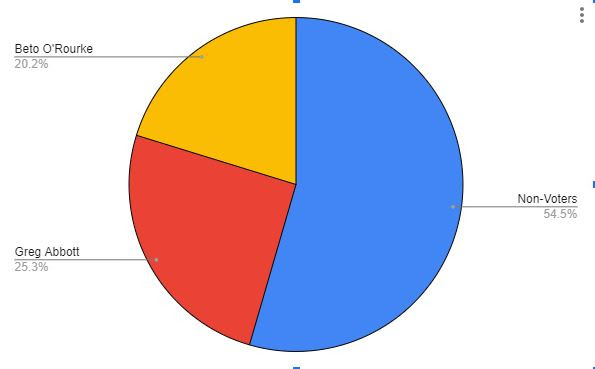
Michelle Davis writes a blog called TurnLeftTexas. Texas used to elect Democrats. Texas used to elect Democrats like Lyndon B. Johnson, Ralph Yarborough, and Ann Richards. Now the state is ruby red. What happened?

Michelle Davis writes:

I’ve often said Texas Democrats are a whole other breed. We have to be, after the decades of abuse we’ve suffered from the opposing party. For those who watch the legislative sessions and follow our lawmakers on social media, we know that Texas Democrats have been David, staring down Goliath. 

They say that Texas is the right-wing sandbox, the place where far-right institutions spend millions to test their fascist-aligned ideas. Radical legislation like the abortion ban, the DEI ban, or the ban on gender-affirming care are all being rolled out in Texas as testing grounds so that right-wing institutions can take these radical policies nationwide.

Texas Democrats never get enough credit for the work they put in while in Austin. Texas Democratic Lawmakers are literally on the front lines of democracy, fighting to block awful GOP policies and keep Texans from harm. Whether calling points of order, filibustering, or breaking quorum, Texans know that we can rely on most Texas Democrats to stand tall with a heart and a spine. 

With so much at stake in this election cycle, you must ask yourself, “Is it enough?”

Of course, it isn’t “all Democrats.” Too often, from too many districts in all corners of the states, people are saying that they live in blue areas, have a Democrat as representation, and are telling people that their elected official isn’t showing up.

Some elected Democrats are doing great; they show up and have a high turnout for elections. Again, this isn’t “all Democrats,” but the occurrences of Democrats not showing up in Texas are widespread. 

It shouldn’t surprise you that people talk. Precinct chairs talk to grassroots organizers, political clubs talk to the city council, and commissioners’ court talks to various political candidates. If you aren’t showing up to your local Democratic events, engaging with your local grassroots organizers, and communicating with your local precinct chairs, you’re not doing enough. 

The political chatter from South Texas to North Texas, from East to West, is that not enough elected Democrats are doing enough to turn out the vote when they are in safe blue districts. And they aren’t doing enough to help other Democrats get elected.

Why is there voter apathy in Texas?

This is an important question that many intelligent people are spending a lot of money on trying to change. I think it’s a complex issue that includes generations of voter oppression, lack of infrastructure, and lack of engagement, among other things. 

One thing Beto O’Rourke always used to say was, “There’s no one coming in to save us.”

He was right. Texas is royally screwed as long as Republicans are leading the charge. No one is going to save us from that other than ourselves. We are the ones we’ve been waiting for. We have the numbers on our side and must convince them of them. 

You know who I mean when I say “them.”

It will take all of us, and if you have already been elected in a safe blue district and you have no opponent, it will take you, too. It will take helping your neighboring districts and getting your own voters to show up.

Of all people, Texas Democrats know how far-right the Republicans have moved in recent years. You know the threats we face. 

Too much is at stake. 

If Democrats in Texas do not make gains this year, the first thing Texans may lose is our right to vote. We already saw several of the ALEC-backed authoritative legislation that came through the 88th Legislature and how Republicans have already tested the waters on stripping Texans of their rights to vote. Banning specific poll locations, like on college campuses, or massive data purges on the voting rolls are all real possibilities if Republicans can’t be stopped. 

What about our rights to freedom of expression and privacy? The GOP has already banned certain forms of art in Texas. Why do you think they’ll stop there?

Republicans passed a bill to give protesters at least 10 years if they are protesting a pipeline. The rights to freedom of assembly are at risk. 

We already have an abortion ban and travel restrictions on women; IVF and birth control are next. 

The civil rights of all marginalized groups are at risk. 

We change this by changing the culture of not voting. 

We need to do many things to change the culture of not voting. Still, as Democrats who have already been elected, you serve as a leader in your community. It would be best to actively work to foster a culture of engagement, participation, and voting within your communities. Your role isn’t just legislating but inspiring, educating, and actively participating in the democratic process. 

Your presence in the community should be a constant, not just during election cycles. Attend local events, hold town halls, and visit schools and community centers to discuss the issues that matter most to your constituents. Your visibility and accessibility can bridge the gap between the electorate and the political process, making democracy feel more tangible and immediate to the people you serve.

Knowledge is power, and too many people feel disconnected from the political process because they don’t understand how it affects their daily lives. Lead educational initiatives that demystify the legislative process, explain the importance of local elections, and highlight the impact of specific policies on the community. Work with schools, universities, and community groups to develop programs that engage young people and first-time voters early.

Grassroots movements and community organizations are the lifeblood of democratic engagement. Support these groups with endorsements by actively participating in their events, sharing their successes, and facilitating connections that can amplify their impact. Empower these organizations with resources and platforms to reach a wider audience.

As an elected Democrat, you have a unique opportunity and responsibility to lead the charge in changing the culture around voting and civic engagement.

By being accessible, engaging in education, and supporting grassroots movements, you can inspire a wave of active, informed participation that strengthens the foundations of our democracy. Remember, leadership is not just about holding a position; it’s about the action you take and the example you set for others to follow.

To change Texas, it’s going to take all of us. We believe in you and need your help.

I watched clips of yesterday’s hearings about the report of Robert Hur, who was selected by Merrick Garland to be Special Counsel to investigate Biden and documents found in his home and offices. The big takeaway from his voluminous report was that he considered Biden’s memory to be weak and that a jury would treat him as a kindly old man with a poor memory.

Republicans wanted to use the hearings to demonstrate that Biden is senile. Democrats wanted to use the hearings to show that Trump has a worse memory than Biden and that—unlike Biden— he willfully retained top-secret documents and refused to return them.

Hur resigned from the Department of Justice the day before the hearing and hired a Trump insider to represent him.

Mary Trump includes in her post the video introduced by Eric Swalwell. It shows Trump in numerous gaffes, memory lapses, and moments of incoherence. Trump later claimed all the clips were generated by AI.

Not included is the question posed by Eric Swalwell that was shown last night on Laurence O’Donnell’s MSNBC show. Swallwell read the transcript of Hur’s interview and quoted it. At one point, the transcript says, Hur observed that Biden had “a photographic memory” of the layout of his home. Not a sign of a poor memory. Apparently the transcript portrayed Biden differently than Hur’s report.

One of the Republicans read the dictionary definition of senile and asked Hur if he believed Biden was senile. Hur did not.

The question I kept wondering was why Merrick Garland thought that it was a good idea to select a trusted Trump appointee to investigate Biden.

You may have noticed that very few bills have been passed by Congress this past year. As of mid-December, only 27 bills made it through to enactment. That’s due to fractured control—a Democratic President, a Senate controlled by Democrats, and a House of Representatives controlled by a slim Republican majority. And in the House, the Republicans are bitterly split between angry members of the so-called Freedom Caucus and traditional Republicans. The Freedom Caucus is prepared to grind everything to a halt unless they get what they want.

Axios offered a chart showing that this is the least productive Congress since at least 1989. In a typical year, Congress passed between 300-400 laws. Open the link and see the stunning chart.

NPR explained:

Congress was in the news a lot this year, but mostly it was not for passing legislation. It left us wondering what they did actually manage to get signed into law. So we’ve called NPR congressional reporter Eric McDaniel, who has tracked it all. Hi, Eric.

ERIC MCDANIEL, BYLINE: Hey there.

SHAPIRO: All right. Underneath all of the fracas about the House Speaker and George Santos and on and on, was there much legislating happening?

MCDANIEL: No, basically not. I mean, there were only 27 bills passed through both chambers in the first year of this Congress, including three crisis bills, I guess I’d call them. These are the big ones, two short-term extensions of funding to keep the government open and one to raise the U.S. government’s borrowing limit – you may have heard it called the debt ceiling – essentially so the government could pay the credit card bills for the money Congress had already directed it to spend. So these are must-do stuff. But other than that, I mean, they named some Veterans Affairs clinics. They commissioned a commemorative coin for the 250th anniversary of the Marine Corps and not much else – way behind even previous years of divided government.

SHAPIRO: So you’re saying not only was the number of laws passed very low, but the laws that were passed were not exactly consequential. Why was this so much less productive than other times government has been divided between the parties?

MCDANIEL: Look. I mean, there are a couple ways to look at that, right? The first is divided government. Like we said, they do less. There’s a Democratic president, a Democratic Senate and a Republican House. That means it’s hard to get all three sets of relevant folks to agree.

But the problem’s a lot deeper than that. I mean, in a lot of ways, the House is working the way that you’d expect it to, given the incentives that are involved. State lawmakers often draw congressional districts, the places that representatives represent, in a way that maximizes their own party’s advantage. I mean, I imagine people have heard that called gerrymandering, and it helps to create a system in which just 30 of the 435 House districts really have a say in who represents them in Congress by the time the general election rolls around. Many of the other 400-whatever seats are decided by party primaries way earlier in the year, often just by the voters from that party. That means these places are set up to elect the most partisan person possible rather than lawmakers who have to win the support of lots of different kinds of people. And as you might imagine, that makes compromise and legislating really, really hard.

SHAPIRO: Well, if the system is designed to disincentivize compromise and make it unlikely that voters will punish people for being unproductive, that suggests Congress, in the years to come, is not likely to be much more productive than it’s been this year.

MCDANIEL: Yeah, I think that’s right. I mean, voters often can’t punish people because of the way these elections are decided. And it means that Congress won’t change without systemic reform. There’s good news, though, right? A lot of places are already trying things that can help. California uses a nonpartisan top-two primary system. That means voters pick between the top two most popular candidates no matter which party they’re from. Alaska uses something called ranked-choice voting, which lets voters rank their preferences rather than just picking one person. And that helps to find consensus picks and really reduces the incentives for candidates during the election season to attack each other. There’s also bigger changes on the table, like proportional representation. And I should say none of these actually require changes to the U.S. Constitution.

SHAPIRO: Well, that’s hopeful that there are some possible changes and improvements in the works. In the meantime, what does 2024 look like for Congress? What is likely to pass even this divided House and Senate?

MCDANIEL: Yeah, that’s all long-term stuff. In the near term, Senators are working on something that we’ve talked about on this show before, a foreign aid/national security deal. So they’re looking at aid to Ukraine, aid to Israel, aid to the Indo-Pacific – think Taiwan – and U.S. immigration reform. So senators have been negotiating over the holiday season, and as soon as they get back, both the House and the Senate have to deal with government funding deadlines to keep the government open. They’re trying to pass 12 budget bills for a full year, actual spending. But we could see more short-term resolutions. Those deadlines are January 19 and February 2.

In a little-noticed maneuver in the 2016 Presidential campaign, the Trump team watered down the Republican Party’s platform on military aid to Ukraine. Trump’s campaign director, Paul Manafort, had previously earned millions of dollars as a political consultant to the pro-Russian president of Ukraine and as an advisor to one of Putin’s oligarchs, Oleg Deripaska.

Let it be noted too that the Obama administration sat on its hands when Russia invaded Crimea in 2014 and seized control of a large chunk of Ukraine.

NPR reported in 2016:

One of the questions raised over the course of this year’s presidential race is about how a President Trump would deal with Russian president Vladimir Putin.

One reason to wonder: the Republican Party platform’s new language on policy towards Ukraine.

When Republican Party leaders drafted the platform prior to their convention in Cleveland last month, they had relatively little input from the campaign of then-presumptive nominee Donald Trump on most issues — except when it came to a future Republican administration’s stance on Ukraine.

It started when platform committee member Diana Denman tried to insert language calling for the U.S. to provide lethal defensive weapons to the Ukrainian government, which is fighting a separatist insurrection backed by Russia. Denman says she had no idea she was “going into a fire fight,” calling it “an interesting exchange, to say the least.”

Denman is a long time GOP activist from Texas. When she presented her proposal during a platform subcommittee meeting last month, “two gentleman,” whom Denman said were part of the Trump campaign, came over, looked at the language, and asked that it be set aside for further review.

Why Would Vladimir Putin Want To Leak The DNC Emails?

She says after further discussion the pair “had to make some calls and clear it.” She says they found the language was still too strong.

Trump Says He Was Being 'Sarcastic' In Asking Russia To 'Find' Clinton's Emails

POLITICS 

Trump Says He Was Being ‘Sarcastic’ In Asking Russia To ‘Find’ Clinton’s Emails

The Trump campaign convinced the platform committee to change Denman’s proposal. It went from calling on the U.S. to provide Ukraine “lethal defensive weapons” to the more benign phrase “appropriate assistance.”

It’s more than semantics. Many Republicans have been demanding the Obama administration provide a more robust response to Russia’s incursions in Ukraine.

Denman “was steam rolled,” said Melinda Haring of the Atlantic Council, a Washington, DC, think tank, who believes the language the Trump campaign approved is weaker. And she says “it’s anyone’s guess” what Trump would do regarding Ukraine and Russia, and that perhaps he might not even back “appropriate assistance.”

Haring was referring to Trumps appearance on ABC’s This Week with George Stephanopoulos last month, when Trump said Vladimir Putin is “not going to go into Ukraine, OK? Just so you understand, he’s not going to go into Ukraine.”

My personal view: I hope Congress passes and the President signs a rational and fair immigration bill. Every one who enters the country should enter legally. Once they are admitted, they should be able to get work permits. If they are seeking asylum, their case should be heard by an immigration judge in a matter of weeks or months, not years. I am not an expert on the subject, just a citizen expressing her views.

Catherine Rampell of the Washington Post asks an interesting question: What if the common wisdom about the costs and benefits of immigration is wrong? We have heard incessantly about the dangers of immigration, about “rapists and murderers,” about all the negatives, but we have also seen a rise in child labor, which may be a replacement for immigrant workers.

Rampell writes:

As the economy has improved and consumers have begun recognizing that improvement, Republicans have pivoted to attacking President Biden on a different policy weakness: immigration. After all, virtually everyone — Democrats included — seems to agree the issue is a serious problem.

But what if that premise is wrong? Voters and political strategists have treated our country’s ability to draw immigrants from around the world as a curse; it could be a blessing, if only we could get out of our own way.

Consider a few numbers: Last week, the nonpartisan Congressional Budget Office released updated 10-year economic and budget forecasts. The numbers look significantly better than they did a year earlier, and immigration is a key reason.

The CBO has now factored in a previously unexpected surge in immigration that began in 2022, which the agency assumes will persist for several years. These immigrants are more likely to work than their native-born counterparts, largely because immigrants skew younger. This infusion of working-age immigrants will more than offset the expected retirement of the aging, native-born population.

This will in turn lead to better economic growth. As CBO Director Phill Swagel wrote in a note accompanying the forecasts: As a result of these immigration-driven revisions to the size of the labor force, “we estimate that, from 2023 to 2034, GDP will be greater by about $7 trillion and revenues will be greater by about $1 trillion than they would have been otherwise.”

Got that? The surprise increase in immigration has led a multitrillion-dollar windfall for both the overall economy and federal tax coffers.

The CBO is hardly the only observer that has highlighted the benefits of the recent influx of foreign-born workers.

As I reported in 2021, “missing” immigrant workers — initially because of pandemic-driven border closures and later because of backlogged immigration agencies — contributed to labor shortages and supply-chain problems. But since then, work-permit approvals and other bureaucratic processes have accelerated. Federal Reserve officialsnoted that this normalization of immigration numbers boosted job growth and helped unwind supply-chain kinks.

Over the long term, Federal Reserve Chair Jerome H. Powell recently said on CBS News’s “60 Minutes,” “the U.S. economy has benefited from immigration. And, frankly, just in the last year a big part of the story of the labor market coming back into better balance is immigration returning to levels that were more typical of the pre-pandemic era.”

A rise in the number of people ready and willing to work is not the only economic benefit. Immigrants are also associated with other positive growth effects, including higher entrepreneurship rates and disproportionate contributions to science, research and innovation.

Consider, too, the national security, humanitarian and religious arguments for providing refuge to persecuted people around the world.

None of this is to diminish the near-term stresses on the U.S. economy that come from poorly managed flows of immigration. These challenges clearly exist, both at the southwest border and in cities such as New York and Chicago, where busloads of asylum seekers are ending up (by choice or otherwise). Absent more resources to manage these inflows and expedite processing either to authorize migrants to work in the United States or to return them to their home countries, this strain will continue.

But there are ways to harness the energies and talents of the “tempest-tost” and patch our tattered immigration system. Some of those tools were built into the bipartisan Senate border bill, which now appears dead.

Instead, GOP lawmakers scaremonger about the foreign-born, characterizing immigration as an invasion. As Rep. Mike Collins (R-Ga.) dog-whistled last week, “Import the 3rd world. Become the 3rd world.”

Alas, the faction working to turn the United States into a developing country is not immigrants but Collins’s own party. It’s Republicans, after all, who have supported the degradation of the rule of law; the return of a would-be dictator; the gutting of public education and health-care systems; the rollback of clean-water standards and other environmental rules; and the relaxation of child labor laws (in lieu of letting immigrants fill open jobs, of course).

America has historically drawn hard-working immigrants from around the world precisely because its people and economy have more often been shielded from such “Third World”-like instability, which Republican politicians now invite in.

Ronald Reagan, the erstwhile leader of the conservative movement, often spoke poignantly of this phenomenon. In one of his last speeches as president, he described the riches that draw immigrants to our shores and how immigrants in turn redouble those riches:

Thanks to each wave of new arrivals to this land of opportunity, we’re a nation forever young, forever bursting with energy and new ideas, and always on the cutting edge, always leading the world to the next frontier. This quality is vital to our future as a nation. If we ever closed the door to new Americans, our leadership in the world would soon be lost.— https://www.reaganlibrary.gov/archives/speech/remarks-presentation-ceremony-presidential-medal-freedom-5

Reagan’s words reflected the poetry of immigration. Since then, the prose — as we’ve seen in the economic numbers, among other metrics — has been pretty compelling, too.

Catherine Rampell is an opinion columnist at The Washington Post. She frequently covers economics, public policy, immigration and politics, with a special emphasis on data-driven journalism. She is also an economic and political commentator for CNN, a special correspondent for the PBS NewsHour and a contributor to Marketplace. She serves on the advisory board for the Journal of Economic Perspectives. Before joining The Post, she wrote about economics and theater for the New York Times. Rampell received the 2021 Online Journalism Award for Commentary and the 2010 Weidenbaum Center Award for Evidence-Based Journalism, and she is a six-time Gerald Loeb Award finalist. She grew up in Florida and graduated Phi Beta Kappa from Princeton University.

Honors and Awards: Weidenbaum Center Award for Evidence-Based Journalism, 2010; Gerald Loeb Award, Finalist, 2011; Gerald Loeb Award, Finalist, 2012; Gerald Loeb Award, Finalist, 2018; Gerald Loeb Award, Finalist, 2019; Gerald Loeb Award, Finalist, 2020; Gerald Loeb Award, Finalist, 2021; Online Journalism Award, 2021