Carol Kocivar is former President of the California State PTA. She has worked as an attorney, journalist, and ombudsperson and is the parent to two children who graduated from the San Francisco public schools
She posts on Substack, where this appeared.
She writes:
Scary as this may seem, it is time to talk with your children about how our democracy is threatened.
I know. I know. Those are strong words. I certainly am not suggesting that we ask first graders whether the president should have more power than the Congress or the Supreme Court.
But I am looking at this through the lens of history– with the knowledge that Hitler and Mussolini strengthened their hold through the indoctrination of youth.
Our children are not born with democracy in their DNA. It is our responsibility to ensure that each generation has the knowledge and skills to support and preserve our democracy.
Political outreach to children is already underway. Below is an example of a Kid’s Guide on the internet.
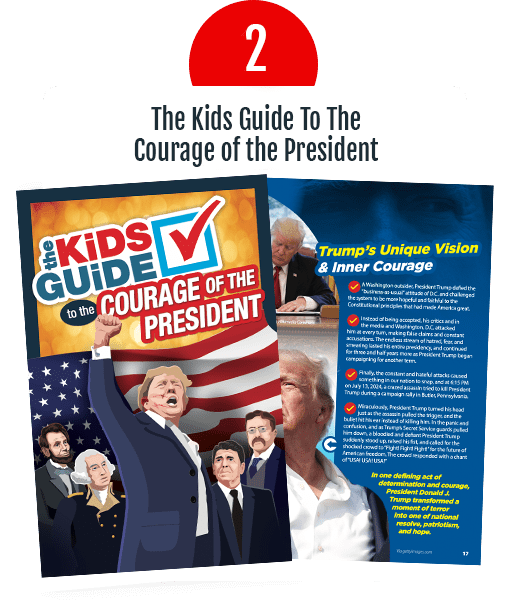
“With the triumphant return of President Trump to the White House, Americans everywhere are celebrating his return and what it means for our nation. And, as our kids are the future of our country, it’s important for them to understand how Trump will make America great again. That’s why we created The Kids Guide to President Trump, and right now we’re giving it away for FREE!”
Kids are taught about the Constitution in school
In elementary school, students should already have some basic knowledge about how our government is supposed to work. By the time they have completed the 8th grade, they should know the basics of our constitutional democracy.
For example, the California History/ Social Science frameworks provides that 8th graders should be taught about separation of powers, checks and balances, the nature and purpose of majority rule, and the ways in which the American idea of constitutionalism preserves individual rights.
- They should know, for example, that the president is not a king.
- They should know that the Congress passes laws, not the president.
- They should know that the President and his staff cannot refuse to follow court orders.
- They should know the president does not have the right to refuse to implement spending decisions of Congress.
- They should know their rights include freedom of speech.
What can parents do?
In age appropriate language, discuss current events with them. I was going to say discuss it at the dinner table but you probably have a better shot at their attention as you drive to and from sports events.
Seek out incidents that challenge the basic principles of our democracy and discuss them.
What do they think? How does that square with what they know about the constitution?
Explain why you think it is important that they understand what is happening in the country.
Discuss money for schools. Does their public school need more or less money? What do they think about cutting funding for their school?
Talk about the importance of voting. Can voting change public policy?
Ask what would help them become more involved in issues that affect their school? Their community? Their country?
It’s up to us to preserve democracy for our children.

 Diane Ravitch's blog
A reminder that Trump sycophant Ryan Walters, who happens to be Superintendent of OK schools, sent out a video of Walters praying for Trump after November’s election. He mandates that it be shown to all students as well as sent home to parents. Many districts refused. I wonder whether fewer would refuse today?
https://okcfox.com/news/local/oklahoma-school-districts-respond-to-prayer-video-sent-by-superintendent-walters-osde-pray-for-president-elect-donald-trump-constitutional-violation-americans-united-for-separation-of-church-and-state-freedom-from-religion-foundation
LikeLike
Audrey Watters is back to blogging, as many here know. This morning her column is devoted to the ASU-GSV summit, which Linda McMahon will address. The acronym stands for Arizona State University-Global Silicon Valley.
Watters’ post is titled The Dangerous Politics of Ed Tech.
https://2ndbreakfast.audreywatters.com/the-dangerous-politics-of-ed-tech/
LikeLike
Christine,
Global Silican Valley is a group that has always looked for ways to monetize education. They are part of the anti-public school crowd. They want to find ways to replace costly teachers with cheap machines.
ASU leads the way in pushing online ed.
McMahon will be well received.
LikeLike
Don’t the Waltons have a connection to ASU as well?
LikeLike
I’m not sure. The Walton Foundation releases a list of its grants annually so it should be easy to check.
LikeLike
It’s scary how many of the college students I teach (at a Catholic university which is a Hispanic Serving Institution with a diverse student population, over 50% first generation college students) do not know the basics of the Constitution (such as the three branches of government) or that the First Amendment applies to them. This is a failure of many jurisdictions of society: education, family, media. And to many, DEI is just a cliche, although I suspect some of my Catholic students read DEI as referring to God. Students at elite colleges may be better informed. I hope so.
LikeLike
In recent years, the emphasis on test scores has pushed out social studies in general and civics education in particular from the curriculum in public schools. Students haven’t had the opportunity to learn about their Constitutional protections or how our laws work, perhaps by design.
On the other hand, if many of your students were educated in parochial schools by non-certified teachers, the emphasis may have been more on religion than civil rights and responsibilities.
LikeLike
They don’t know anything about religion either, except that they have “heard of” Adam and Eve.
A few took AP Government, and those are the ones who are most aware.
LikeLike
Thanks so much for giving this a push! Carol
>
LikeLike
I just received information from a Trump lover who actually believes that Trump cares about teachers. [He doesn’t care about teachers nor about students. WE ALL know that.] Indiana is run by Republicans. Gays, trans, disabled and black or brown students will be neglected. Teachers are forbidden to strike for better working conditions or better salaries.
During a press conference Thursday highlighting a new executive order to dismantle the Department of Education, and in a series of comments largely ignored by the establishment media, Trump spoke with earnestness about the need to support those who educate America’s young people, and he did so without the slightest contradiction.
Indeed, nothing could benefit teachers more than taking a proverbial sledgehammer to the entire education superstructure.
“I want to just make one little personal statement,” Trump said in a clip posted to the social media platform X.
“Teachers, to me, are among the most important people in this country. And we’re gonna take care of our teachers,” he continued.
“But we’re gonna take care of our teachers,” the president said. “And I believe — I believe the states will take actually better care of them than they are taken care of right now. They’ll work all sorts of systems and even merit systems. Those great teachers are gonna be maybe a little bit better rewarded, and maybe that’s the way it should be, but the states are gonna make that decision.”
https://x.com/RapidResponse47/status/1902822619134488730?ref_src=twsrc%5Etfw%7Ctwcamp%5Etweetembed%7Ctwterm%5E1902822619134488730%7Ctwgr%5E042220034e38e88ff3786af2b92c0fade2f6bc99%7Ctwcon%5Es1_c10&ref_url=https%3A%2F%2Fwww.thegatewaypundit.com%2F2025%2F03%2Fwatch-barely-seen-trump-quote-teachers-establishment-media%2F
LikeLike
He’ll protect teachers just like he does women – whether they (we) want him to or not.
LikeLike
“But I am looking at this through the lens of history– with the knowledge that Hitler and Mussolini strengthened their hold through the indoctrination of youth.“
Trump seems more like Mussolini than Hitler, and more like Stalin and Saddam Hussein (especially with how Trump “wins” golf tournaments at his own clubs, the move to name airports after him, and talk of putting him on Mt. Rushmore). Comparing Trump to Hitler seems like a bit of an “insult” to Hitler (Trump is a lot dumber).
Nonetheless, these are excellent suggestions from Carol Kocivar.
By the way, here’s something cool that happened in Nashville: There was a push among our elected leaders to rename the Nashville International Airport after Trump. However, thousands of people have now signed a petition to rename the airport after Dolly Parton, and that has completely overshadowed any serious efforts to rename it after Trump.
LikeLike
Through her initiative to send books to children across the nation – for free! – Dolly has most definitely done more for education than Felon 47.
LikeLike