Archives for the year of: 2024

Kristy Greenberg is a veteran prosecutor in the U. S. Attorney’s office in New York. She is the former deputy chief of the criminal division of the Southern District of New York. She is currently a legal analyst for MSNBC.

She explains why President Biden was right to pardon his son Hunter. I agree with her. Can you imagine how the Trump administration would have demeaned and humiliated Hunter Biden once they got their clutches on him? With Trump zealots in charge of the Justice Department and the FBI, Hunter would not stand a chance. Already, Republicans in Congress are saying they are not finished with Hunter, despite the pardon. House Republicans have a blood lust going for Hunter.

Greenberg writes:

Critics have argued that President Joe Biden’s pardon of his son Hunter was political nepotism—bad for the country, selfish, the height of privilege. But the actual story is the very opposite of nepotism: Hunter Biden was treated worse than an ordinary citizen because of his family connections. It’s good for the country when the president acts against injustice; President Biden rightly condemned the injustice of his son’s prosecution. His pardon was necessary to prevent Donald Trump’s Justice Department from targeting Hunter for years to come.

I worked as a federal criminal prosecutor for the U.S. Attorney’s Office for the Southern District of New York for 12 years, during which time I supervised and prosecuted many gun and tax cases. President Biden argues that the gun and tax charges Hunter was convicted of should never have been brought. I agree. When I served as deputy chief for the Southern District of New York’s Criminal Division, my job was to approve charging and non-prosecution decisions on gun and tax cases. I would not have approved the felony gun and tax charges brought against Hunter Biden; such charges are rarely—if ever—brought in similar circumstances.

Prosecutors charged Hunter with lying about his drug addiction when he purchased a firearm, and with possessing that firearm while he was a drug addict. They were wrong to do so. As a first-time offender with no criminal record or history of violent behavior who possessed a gun for only 11 days and didn’t use it, he did not pose a public-safety risk to warrant federal gun charges. The public interest is served by treating addiction, not weaponizing it. In a gross display of addiction-shaming, prosecutors used Hunter’s own words from his memoir about overcoming drug addiction against him at trial. They forced his former romantic partners to testify and dredge up details of his addiction. The prosecution’s trial presentation was cruel and humiliating.

Nor should prosecutors have charged Hunter with failing to pay $1.4 million in taxes during the period when he suffered from drug addiction. The IRS’s primary goal—to recover unpaid taxes—was satisfied when Hunter fully repaid the taxes he owed with interest and penalty. Felony tax charges are unwarranted here given that the tax amount is not exorbitant, his nonpayment occurred while he was using illegal drugs, and he fully repaid his taxes. A civil resolution or tax-misdemeanor charges would have been appropriate.

Notably, there had been a fair non-felony plea deal between Trump-appointed Delaware U.S. Attorney David Weiss and Hunter, but congressional Republicans worked to crush it. They opened an investigation into the DOJ’s plea negotiations, held hearings with testimony from IRS case agents and prosecutors, and attempted to intervene in the case before the plea. Amid intense political pressure from Republicans, Weiss killed the deal, requested and obtained special-counsel status, and charged Hunter with gun and tax felonies. As President Biden stated in announcing Hunter’s pardon, a number of his opponents in Congress took credit for bringing political pressure on the process. President Biden is correct that Hunter was treated differently; most criminal defendants do not have members of Congress interfering in their cases to lobby for harsher treatment. That is not how our criminal-justice system is supposed to work.

If there were reason to believe that Hunter had committed any of the more serious crimes that reportedly were under investigation—bribery, money laundering, or illegal foreign lobbying, I would be far less sympathetic to the president’s pardon. But Hunter was never charged with these more serious offenses. Weiss investigated Hunter for six years; that’s an unusually long time for a criminal investigation focused on one individual. If after six years Weiss still does not have a real case against Hunter, then it doesn’t exist. (Complicating matters is the fact that this past February, Weiss charged Alexander Smirnov—a former FBI informant and the GOP’s star witness against Hunter—for falsely accusing President Biden and Hunter of receiving bribes from Ukrainian businessmen.)

The absence of a credible case against Hunter does not mean that a Trump DOJ wouldn’t bring bogus charges against him. During his campaign, Trump vowed that, if elected, he would appoint a special prosecutor to “go after” “the Biden crime family.” In nominating Pam Bondi for attorney general and Kash Patel for FBI director, Trump has further signaled how serious he is about using the DOJ as an instrument of personal revenge. At the 2020 Republican convention, Bondi argued that President Biden and his son were corrupt. Recently, Patel proposed using the law “criminally or civilly” against Trump’s political rivals. When he announced the pardon, President Biden stated, “In trying to break Hunter, they’ve tried to break me—and there’s no reason to believe it will stop here. Enough is enough.” He’s right.

Now is not the time to cling to norms that Trump is poised to shatter. Political prosecutions are coming, and I fear that our democratic institutions will not withstand them.

That’s why President Biden’s pardon should not be his last. President Biden should use his pardon power to protect others from political prosecution just as he used it to protect his son. He should condemn Trump’s plan for political prosecutions. He should pardon Trump’s political enemies preemptively to stymie the Trump DOJ’s politically motivated investigations. In particular, public servants who have drawn Trump’s ire for doing their job should not have to spend precious time and money defending themselves against Trump’s lies. Nor should they have to endure the reputational hit, the safety risk, or the emotional toll of political prosecutions. President Biden alone has the power to stop other needless political prosecutions before they begin. He should use it.

For years, the City of New York has tried to force its public service retirees to give up their Medicare and move to a private Medicare Advantage plan. Many retirees understood that MA means privatization. Any serious medical needs required prior approval by the insurance company; it also meant that the insurance company could decline to pay. Retirees were furious, but it seemed hopeless, especially when a few powerful unions, including the United Federation of teachers, supported the city’s plan.

Marianne Pizzitola, who retired as an Emergency Medical Technician for the Fire Department, organized resistance to the plan. She found other retirees who were opposed to giving up Medicare and educated others about the downside of making the change. Marianne created an organization called the NYC Organization of Retired Public Service Workers.

The organization lobbied elected officials, litigated, and kept up the pressure.

Today, they won! They stood up the government of the City of New York, against overwhelming odds. And they won!

Brad Lander, the Comptroller of the City of New York sent out this letter this evening:

Dear New Yorkers,

Massive news for New York City retirees: Today the New York Court of Appeals rejected shifting retirees to a Medicare Advantage plan.

Today’s ruling is the final win for the 250,000 some retirees fighting to keep the health care they worked for and were promised! Seniors will continue to have access to all providers who accept Medicare, a victory for our public sector retirees.

The City’s Medicare Advantage plan would have constrained our retirees to a smaller network with more restrictive requirements on care. Many public servants entered the municipal workforce with the promise of middle-class wages, pensions, and a retirement plan. The shift to anything less than that full promise was a hard pill to swallow.

When the Medicare Advantage contract was submitted to my office last year, we declined to register it, knowing that litigation raised doubts about the City’s authority to enter into the contract. As a matter of public policy, beyond the scope of our office’s specific Charter responsibility for contract registration, I was seriously concerned about the privatization of Medicare plans, overbilling by insurance companies, and barriers to care under Medicare Advantage.

It is vital that all our seniors—and all New Yorkers—get quality health coverage as a basic human right. At the same time, given the growing costs of health care for both retirees and active employees, we cannot ignore that there are real cost questions facing the City when it comes to health care.

Thanks,

Brad 

The Guardian reports that Elon Musk may not get the highest security clearance, due to his drug use and contacts with foreign nationals.

The space entrepreneur Elon Musk is unlikely to receive government security clearances if he so applied, even as his SpaceX launch company blasts military and spy agency payloads into orbit, according to a report on Monday.

The billionaire, a close ally of Donald Trump, who is set to join the incoming administration as an efficiency expert and recently became the first person to exceed $400bn in self-made personal wealth, is reported by the Wall Street Journal to have been advised by SpaceX lawyers not to seek highest-level security clearances owing to personal drug use and contacts with foreign nationals.

Musk currently holds a “top-secret” clearance that took years to obtain after he discussed use of marijuana on a 2018 podcast with Joe Rogan, according to the outlet. But that may not be enough to have access to information about US government payloads in his rockets.

Typically, candidates undergoing federal security screenings by the department of defense may not receive clearance if the agency expresses concerns about drug or alcohol use, criminal conduct, psychological conditions, sexual behavior or allegiance to the US.

According to the Journal, Musk’s lawyers outlined scenarios in which he might inadvertently disclose secrets to foreign officials with whom he regularly speaks, including the Russian president, Vladimir Putin, with whom he is reported to have been in regular contact since 2022.

Musk’s use of another semi-legal drug, ketamine, in pursuit of what friends call “pure creativity”, along with reports of LSD, ecstasy and magic mushrooms, could also be an issue.

Musk lawyers told the Journal there had been “false facts” in a WSJ report about Musk’s drug patterns and he was “regularly and randomly drug tested at SpaceX and has never failed a test”.

SpaceX lawyers and executives reportedly concluded that if the company sought a higher level of clearance than Musk currently holds, he risked being turned down and potentially stripped of the clearances he currently holds.

During the Presidential campaign, Republican fear tactics drowned out the powerful economic record of the Biden administration. Voters heard nonstop lies about crime, immigration, inflation, and bogus claims that Biden and Harris were “socialists,” “communists,” “radicals” who were destroying the country. Biden had a clear economic vision, and he was able to implement most of it despite razor-thin support in both houses of Congress.

In fact, Trump inherits the most successful economy in the world. Trump will take credit for the trillion-plus dollars that Biden persuaded Congress to invest in infrastructure.

President Biden (I.e., his team of writers) published a summary of his accomplishments in The American Prospect.

He wrote:

As America prepares to transition to a new presidential administration, I want to take stock of the progress we have made together in laying the foundations for an economy that creates opportunity for all Americans. Over the last four years, we’ve faced some of the most challenging economic conditions in our history. Not only have we recovered, we’ve come out stronger, and have laid foundations for a promising new chapter in our American comeback story. It will take years to see the full effects in terms of new jobs and new investments all around the country, but we have planted the seeds that are making this happen. If these investments and actions are built upon, U.S. economic leadership will be stronger and the middle class more secure in the years and decades ahead.

When I took office, the economy wasn’t working for most Americans. It was clear that a fundamentally new playbook was essential. My focus was to transform the economy to improve the lives of regular Americans, the kinds of people I grew up with. That’s why I fought to invest in the jobs of the future, lower costs, raise wages, and strengthen workers and small businesses—because I know this will help American families and build the economy from the middle out and bottom up.

At that time, economic policy was in the grip of a failed approach called trickle-down economics. Trickle-down tried to grow the economy from the top down. It slashed taxes for the wealthy and large corporations and tried to get government “out of the way,” instead of delivering for working people, investing in infrastructure, and ensuring America stays at the leading edge of innovation.

But this approach failed. Too many Americans saw an economy that was stacked against them with failing infrastructure, communities that had been hollowed out, manufacturing jobs that were offshored to China, prescription drugs that cost more than in any other developed country, and workers who had been left behind.

I believe that, from America’s earliest days, we have been at our best when we have taken on important challenges and fought to deliver big things on behalf of the American people—from the Erie Canal to the transcontinental railroad, from the Hoover Dam to rural electrification, from the Social Security system to the National Highway System.

As president, I fought to write a new economic playbook that builds the economy from the middle out and bottom up, not the top down. I fought to make smart investments in America’s future that put us in the lead globally. I fought to create good jobs that give working families and the middle class a fair shot and the chance to get ahead. I fought to lower costs for consumers and give smaller businesses a fair chance to compete.

In what follows, I describe why this new approach is so important.

Investing in America’s Future

I have always seen the economy from the perspective of the small city where I grew up—a city with a proud history of making things in America, a city that fell on hard times when politicians turned their backs on communities like mine. Too many corporations moved their supply chains overseas and focused on quarterly profits and share buybacks instead of investing in their workers and communities here at home. Our infrastructure fell further and further behind, and a flood of cheap, subsidized imports from China and other countries hollowed outour factory towns. Economic opportunity and innovation became more and more concentratedin a few major cities, while heartland communities were left behind. Scientific discoveries and inventions developed in America were commercialized in countries abroad, bolstering their manufacturing instead of ours.

I came to office with a different vision. When I said I was president of all America, I meant it. I was determined we would invest in the places that have suffered from neglect and disinvestment: rural areas, manufacturing towns, coal and power plant communities, in red states and blue states. I was determined to create good jobs with family-sustaining wages that don’t require a four-year college degree. I vowed to restore U.S. leadership in the industries of the future—like semiconductors and clean energy—while fortifying our infrastructure and supply chains. I committed to putting the United States back in a position of clean-energy leadership and building a 100 percent clean power grid.

Investing in Infrastructure and Industries of the Future

We succeeded in securing historic investment laws to turn those goals into reality. My Investing in America Agenda—the Bipartisan Infrastructure Law (BIL), the CHIPS and Science Act, and the Inflation Reduction Act (IRA)—together mark the most significant investmentin the United States since the New Deal.

For many years, this country’s infrastructure was underresourced and neglected. Since the passage of the BIL, we have been hard at work expanding high-speed internet, replacing pipes to provide clean drinking water in every community, and rebuilding roads and bridges and ports and airports in every state. These projects are creating millions of good jobs—many of them unionized—so American families across America will share in the benefits of the infrastructure investments. In the years since I took office, we’ve funded over 74,000infrastructure and clean-energy projects in every state and territory in the country.

The construction of new factories has hit record highs. Already, tens of thousands of skilled construction workers are hard at work building the factories of the future. Soon, these factories will be hiring advanced manufacturing workers, and products from semiconductors to batteries to electric vehicles will be rolling off of these new, American production lines.

The Inflation Reduction Act is the largest single investment in clean energy in the history of the world. It is creating good-paying jobs and investing in American manufacturing, while also taking action to reduce emissions. It is spurring investments to build solar panels in Dalton, Georgia; to build wind towers in Pueblo, Colorado; and to manufacture and recycle batteries in Reno, Nevada.

Investing in Communities

Our place-based investment approach is creating economic opportunity in communities across the country that had been left behind. Our investments in high-speed internet and transportation networks are reconnecting these communities to jobs and revitalizing small businesses. We are investing in technology and innovation engines in every region of the country that will sustain economic development for years to come. We are supporting farmers that use climate-smart agriculture practices and ensuring rural small businesses can access historic development resources that will cut energy costs and increase energy efficiency.

Communities across the country are poised for economic comebacks. With the benefit of our special investment incentives, the places hit hardest by closures of coal plants and by unfair trade with China are receiving a disproportionate share of new investment, bringing hope to communities that have been left behind for too long. For instance, the first new American aluminum smelter in 40 years will be built in Kentucky, powered entirely by clean energy.

Targeted Trade Actions

We have taken tough but targeted actions on behalf of American workers, businesses, and factory towns to counter violations of our trade laws. China is using unfair practices to threaten American businesses and workers in sectors like vehicles and solar cells and wafers. That’s why we imposed tariffs on imports from China in key sectors. A 100 percent tariff on Chinese electric vehicles, for instance, is enabling American auto communities to continue powering the global car industry.

But tariffs by themselves are no panacea. To regain and sustain America’s lead in areas from clean energy to semiconductors, it is vital to couple targeted tariffs with strong investments in manufacturing, R&D, and workforce.

Advanced Manufacturing

While semiconductors were invented in America, for too many years politicians in Washington gave up on the semiconductor industry, and leading-edge semiconductor manufacturing moved to Asia. But thanks to the CHIPS and Science Act, some of the most advanced semiconductors in the world will be built in Phoenix, ArizonaSyracuse, New YorkNew Albany, Ohio; and Taylor, Texas.

Before the CHIPS and Science Act, 90 percent of the world’s leading-edge chips were manufactured in Taiwan. Some skeptics said America could never compete. They were wrong. With the benefit of a CHIPS award, not only has global leader TSMC committed to build three leadingedge semiconductor manufacturing plants in Arizona, but in October it was reportedthat early production yields at one of those plants met those at manufacturing plants in Taiwan. And America will be the only economy in the world to have all five of the most advanced semiconductor manufacturers in the world operating on its shores—no other economy has more than two.

My investment agenda is already attracting $1 trillion in commitments of private capital so far, not crowding it out. These investments are helping to strengthen our supply chains, so that we won’t be dependent on a single foreign country for the semiconductors, pharmaceuticals, or critical minerals that we need. And they are starting to create opportunities for workers, businesses, and communities to contribute to the strongest, most productive economy in the world.

This is my vision—a future that is made by American workers across America. It will take years to see the full effects in terms of new jobs and new investments all around the country, but we have laid strong foundations, and now it is important to build on and not reverse the progress we have made.

Supporting Workers, Not the Wealthy, to Grow the Middle Class

I’ve long seen the economy through the eyes of my dad, who used to say, “A job is a lot more than a paycheck. It’s about your dignity. It’s about your place in the community.”

But trickle-down economics ignored this basic truth. Tax cuts for the wealthy didn’t create opportunities for workers and their families. Instead, factory towns were hollowed out, and fewer Americans ended up better off than their parents. My middle-out/bottom-up economic playbook instead puts working families and the middle class at the center of all of my economic policies.

Strong Employment and Income Recovery

When I took office, the economy was in chaos. Thousands of businesses were shut down, and millions of Americans were out of a job. As soon as I came to office, I signed the American Rescue Plan that vaccinated the nation and got our economy going again. As a result, America returned to full employment faster than other advanced economies, and has seen the lowest average unemployment of any administration in 50 years.

The share of working-age Americans who are employed is at a multi-decade high, at over 80 percent. We’ve also seen record lows in unemployment for workers who have often been left behind in previous recoveries. In our full-employment expansion, the real pay of low-wage workers outpaced that of higher-paid workers, the reverse of what we saw under trickle-down.

The pandemic and the inflation it created caused enormous pain and hardship for families across America. That’s true not just for us but for every major economy in the world. But now, inflation has come down in the United States—faster than almost any of the world’s other advanced economies.

Investing in Our Workforce

I know how important it is to provide pathways to middle-class careers for the 60 percent of Americans who choose not to pursue a four-year college degree. The many investments I described above have provided an unprecedented opportunity to create good jobs in construction and manufacturing. We created workforce hubsin areas with new investments to align high schools, community colleges, unions, businesses, and local governments around stackable credentials that enable students to move seamlessly from the classroom to careers, and allow workers to upskill and secure better jobs.

To build the pipeline of skilled and trained workers for the industries of the future, we’ve also invested more in registered apprenticeships and career technical education programs than any previous administration, with one million apprentices hired during my time in office. Many of these apprenticeship programs are sponsored by unions, which means that graduates will earn a good union wage with benefits and retirement.

Supporting Unions

The middle-out/bottom-up playbook supports unions because unions have been vital to building the middle class by providing pathways to family-sustaining careers. When I came to office, union workers and retirees faced cuts of up to 70 percent or more to their earned benefits through no fault of their own. But we fought for and secured the Butch Lewis Act to restore and protect the pension benefits they earned. Because of this law, we have protected the pensions of over 1.2 million union workers and retirees so far.

Expanding unionization is essential to creating a fairer economy. The evidence is clear: Unions are the best way for American workers to get their fair share. I was proud to be the first president to walk a picket line with workers. I appointed strong members to the National Labor Relations Board who have enforced our labor laws rather than undermine them, as happened under the previous administration. It is no accident that union election petitions have doubled since I took office. Support for unions is the highest it’s been in more than half a century, and the labor movement is expanding to new companies and industries.

A Fair Tax System

The middle-out/bottom-up playbook is not just about giving working families a fair shot, it is also about asking the very wealthy and most profitable corporations to pay their fair share. We need to balance our tax system to work in favor of the middle class and working families, not the rich and well-connected. Tax fairness is central to building an economy that works for all Americans—where growth is broadly shared and we keep our commitments to seniors and have the resources to meet key national needs over the long run.

I promised not to raise taxes on middle-class families, and I kept my promise. Instead, I delivered tax cuts to help families raise children and afford health care. I fought hard to expand the Child Tax Credit because it is one of the highest-yielding investments we can make, cutting child poverty nearly in half in 2021. I also secured an expansion of the premium tax credits to make health insurance more affordable for millions of Americans, which helped lift health insurance coverage to record levels and doubled Black and Hispanic enrollment, with over 21 million people enrolled.

I also secured investments to make sure wealthy taxpayers pay what they owe and play by the same rules. After a decade of severe underfunding, I fought hard to secure an investment in modernizing the IRS that is already paying off. The IRS is already collecting over a billion dollars from wealthy tax cheats. It has successfully rolled out Direct File, offering millions of Americans a free and easy way to file their taxes for the first time.

Lowering Costs and Helping Small Businesses Thrive

I’ve also long seen the economy from the perspective of my family’s kitchen table growing up, so I know that the high prices from the pandemic have been hard on American consumers. That’s why I have been laser-focused on lowering costs for hardworking Americans. Our work to help unsnarl supply chains helped bring inflation back down to the levels right before the pandemic. But even with pandemic inflation back down, many consumer prices are too high.

In some sectors of the economy, high prices reflect inadequate competition. And too often, politicians in Washington haven’t had the courage to take on big corporate interests when they use their market power to mark up their prices.

Promoting Competition to Lower Costs

Promoting competition is central to my vision for an American economy that grows from the bottom up and the middle out. I came to office determined to make promoting competition a priority for every agency. Fair competition means better choices, a fair shot for small businesses, a more resilient economy, and lower prices.

This is particularly important in health care. It’s not right that Americans pay two to three timesmore to buy a prescription drug in Chicago than it costs elsewhere in the world. I am proud that I took on the pricing power of Big Pharma and secured major cost savings in the Inflation Reduction Act.

Due to the IRA, people with Medicare pay no more than $35 a month for insulin, down from as much as $400. Out-of-pocket drug costs for people with Medicare will be capped at $2,000 starting next year. But seniors are already saving on lower prescription drug costs thanks to the IRA. In just the first six months of 2024, seniors got $1 billion back in their pockets with additional savings in the years ahead thanks to this historic legislation. Starting in 2026, prices will be reduced by 38 to 79 percent on key drugs for people with Medicare, and taxpayers will save roughly $160 billion over a decade.

We also worked to lower gas prices. After Russia’s war against Ukraine caused gas prices to spike globally, I undertook the biggest release of oil from the Strategic Petroleum Reserve in history. I also encouraged oil and gas companies to take their record profits and invest in more production. Today, American energy production is at record levels—including record oil and gas production—and the price of a gallon of gas is below the level before the time of the invasion. In addition, we have successfully purchased back all of the reserves released while making taxpayers a profit of nearly $3.5 billion. By selling high and buying low, we lowered costs for families while securing a good deal for U.S. taxpayers.

Record Small-Business Creation

Fair competition is especially important for small businesses, which need a level playing field to have a fair shot to compete and win. Our competition and investment policies are unleashing a wave of new business startups on Main Streets in towns and cities across the country. In fact, we have seen 20 million new business applications during this administration—the three strongest years on record.

Black and Hispanic entrepreneurs have been leaders of this small-business boom, with Black business ownership doubling and Hispanic business ownership up by 40 percent since before the pandemic. The share of women business owners is also on the rise.

The Path Ahead

The bottom line is, the past four years have been marked by some of the toughest economic challenges in American history. We took decisive action and it paid off, with the strongest economic comeback in the world. Even while managing that recovery, we made generational investments in our economy and balanced the scales more toward workers and the middle class.

Outside commentators have noted that due to our policies, “President-elect Trump is receiving the strongest economy in modern history which is the envy of the world.”

It is worth reviewing the facts on the U.S. economy that I am handing off to my successor: Unemployment has been at the lowest average rate of any administration in 50 years. We have created over 16 million new jobs, and more than 1.5 million of those are in manufacturing and construction. Inflation has been brought down close to 2 percent, the same level as right before the pandemic. Incomes are up by nearly $4,000 adjusted for inflation, and unions have won wage increases from 25 percent to 60 percent in industries like autos, ports, aerospace, and trucking. We’ve seen 20 million applications to start small businesses. Our economy has grown 3 percent per year on average the last four years—faster than any other advanced economy. Domestic energy production is at a record high, and gas prices are around $3 per gallon.

When I came to office, I believed the only way for a president to lead America was to lead all of America. In fact, the historic investments I made went more to red states than blue states.

I believe that the economy as I leave is stronger for all Americans.

And I believe there is no country on Earth better positioned to lead the world in the years to come than America today.

Now we are at an inflection point. The next four years will determine whether the incoming administration builds on this strength. If it does, then 10 or even 50 years from now, U.S. economic leadership will be even stronger than it is today—proving that when the middle class does well, we all do well.

Tom Ultican is a retired teacher of advanced mathematics and physics. Before joining the teaching profession, he worked in the corporate sector.

He writes here about a shoddy piece of research on charter schools in Denver.

Ultican writes:

Another education study financed by Arnold Ventures and the Walton Family Foundation blurs education reality. Their 2022 model did not pass the laugh test so “researchers” from the University of Colorado Denver tried again. Unfortunately their claims still confuse correlation with causation. This error seems purposeful.

The study of school reform in Denver was conducted by the Center for Education Policy Analysis (CEPA). They state, “For the past three years CEPA has partnered with the Center on Reinventing Public Education to consider a paradigm-shifting approach to family and community engagement efforts in school districts.” It is a study apparently to justify and promote the portfolio model of school management, a system first proposed in 2009 by the founder of the Center for Reinventing Public Education (CRPE), Paul Hill.

In their 2022 study, this same team also used state testing data from years 2004/5 through 2018/19. They explained that the first 4-years of the research employed pre-reform data and the final 10-years were from the portfolio model reform period. The authors reported, “During the study period, the district opened 65 new schools, and closed, replaced, and restarted over 35 others.” (Page 7)

The National Education Policy Center contracted with Robert Shand to review the 2022 Denver study. Dr. Shand is Assistant Professor of Education Policy and Leadership at American University and an affiliated researcher with the Center for Benefit-Cost Studies of Education at Teachers College, Columbia University. Shand also did a review of the new 2024 study.

In his 2022 review, Shand agreed that the test scores for Denver Public Schools had gone up but he noted a few reasons why claiming these gains were because of the portfolio model was unreasonable:

  • Demographics shifting to a larger percentage of white students in Denver coincided with the reforms.
  • Per-student revenues increased in Denver by 22% but only 13% across Colorado.
  • Student-to-teacher ratio in Denver dropped from 17.9 to 14.9.
  • DPS was already showing academic improvement before implementation of the portfolio reforms.
  • Black and Hispanic/Latinx students were growing at approximately 0.06 standard deviations per year pre-reform and 0.03-0.04 standard deviations per year post-reform. (Page 7)

The 2024 Redo

Professor Shand’s summary response to the 2024 report states:

“While the new report does convincingly demonstrate that the gains are not significantly due to changing demographics, it fails to address other critiques of the prior study, including (1) that the portfolio model was undertheorized, with unclear mechanisms of action and insufficient attention to potential drawbacks; and (2) that circumstances, events, and resources besides the portfolio reform and student demographics were changing concurrently with the reform. Additionally, the report’s sweeping conclusion—that Denver’s reform is the most effective in U.S. history—is unsupported. The improved outcomes in Denver during this time period are impressive, but the authors seem overly determined to cite a package of favored reforms as the cause.” (Page 3)

While Shand agrees that demographic changes are not the whole reason for the improved test scores, they are a significant input. The chart above from USAFacts.org shows the typically higher scoring groups Asians and Whites going from 54.2% of the population to 58.9% in the 14 years from 2005 to 2019. During the same period, the Hispanic and Black population shrunk from 42.9% to 38.1% which resulted in a 9.5% shift in the population from a lower scoring to a higher scoring racial mix.

An even bigger impact on the scoring in Denver was the change in economic circumstances. Standardized testing is useless because the results are dependent on one variable, family wealth. Statisticians assign r values between -1 and +1 to results tested. Plus 1 signifies certainty, zero shows no influence and -1 indicates certainty in the opposite direction of expectations. The only input ever found with more than 0.3 r-value is family wealth at 0.9 r-value. The median family income in Denver is up significantly.

Two sources show how strongly Denver’s family income has grown. Neilsberg research shares that between 2010 and 2020 the median income grew from $61,394 to $82,335, a 25% growth. City-Data states:

“The median household income in Denver, CO in 2022 was $88,213, which was about the same as the median annual income of $89,302 across the entire state of Colorado. Compared to the median income of $39,500 in 2000 this represents an increase of 55.2%”

This kind of wealth growth over the 14 years the Denver researchers studied was bound to have a significant impact on testing results, but they ignored it. Add this to the 9% greater revenue for Denver schools and three less students per teacher compared to the rest of the state and of course Denver’s student made comparative testing gains.

Professor Shand mentions the damage caused by school turnaround efforts and closing schools noting the research indicates these are especially harmful events for students in low income or marginalized neighborhoods. (Page 6 and 7)  Shand concluded:

“In sum, this report provides some additional supporting evidence in favor of the tentative conclusion that Denver’s portfolio reform was positive. Importantly, the report also grossly exaggerates both the magnitude of the success and certainty behind the evidence for it. The findings should thus be interpreted with extreme caution. (Page 8)

He is being nice. He should have concluded that this report is school choice propaganda.

About the Report Authors

The lead author, Parker Baxter, is Director of the Center for Education Policy Analysis at the University Of Colorado Denver School Of Public Affairs. He previously was Director of Knowledge at the National Association of Charter School Authorizers. Parker is also a Senior Research Affiliate at the CRPE, where he worked on the District-Charter Collaboration Compact Project and the Portfolio School District Project. He is a former alumnus of Teach for America.

Anna Nicotera is a Senior Researcher at Basis Policy Research specializing in quantitative and qualitative applied research methods. She worked six years as Senior Director, Research and Evaluation for the National Alliance for Public Charter Schools. Nicotera was a Graduate Research Assistant at the National Center on School Choice, Vanderbilt University for four years.

David Stuit holds a Ph.D. in Leadership and Policy Studies from Vanderbilt University. He is a former Emerging Education Policy Scholar at the Thomas B. Fordham Institute, fellow at the Friedman Foundation for Educational Choice (Rebranded EdChoice), and member of the American Enterprise Institute’s K–12 working group. He began his career as a classroom teacher in Denver, Colorado.

Expecting an unbiased piece of research from this group is like learning about the dangers of smoking from Phillip-Morris.

Margaret Sullivan, the last public ombudsman for The New York Times, wrote on her blog that ABC News was wrong to settle with Trump for $15 million for “defaming” him. On television, ABC’s George Stefanopolous said that Trump had been found liable for raping E. Jean Carroll. Trump said that was wrong and malicious because he had been found guilty of “sexual assault,” not rape.

She points out that when she was chief editor of The Buffalo News, the paper had a longstanding policy of fighting every claim of defamation or libel. They did so to discourage future lawsuits and send a message: we will vigorously oppose lawsuits. If you sue, prepare for a long battle.

Trump’s lawyers claimed that Stephanopoulos was wrong to say that Trump was found guilty of rape and that he had defamed Trump. ABC settled before trial and agreed to pay $15 million for the future Trump Presidential Library and $1 million for Trump’s legal fees.

Media experts were stunned. Not only did ABC abandon its First Amendment defense, but it abandoned a viable claim that Stephanopooulos was right to use the language he did.

Judge Lewis Kaplan, who presided over the Carroll defamation case, said:

“The finding Ms. Carroll failed to prove she was ‘raped’ within the meaning of the N.Y. Penal Law does not mean she failed to prove Mr. Trump ‘raped’ her as many people commonly understand the word ‘rape’. Indeed, as the evidence at trial… makes clear, the jury found Mr. Trump in fact did exactly that.”

By settling–and at such a hefty price–ABC has encouraged Trump and other politicians to continue to sue journalists and their employers.

Sullivan believes ABC might well have won if they continued to fight:

ABC News should never have caved. They might well have prevailed if they had hung in there. The legal bar is very high for libeling a public figure, and Trump is the ultimate public figure. Instead, this outcome encourages Trump in his attacks on the press — and he needs no encouragement. 

As one law professor told the Times, what ABC News did was very unusual. News organizations generally don’t settle “because they fear the dangerous pattern of doing so and because they have the full weight of the First Amendment on their side.”

Why did ABC News throw in the towel? It‘s hard to know for sure, but gets easier if you are aware that the news organizations is owned by Disney, a huge corporation with a lot of turf to protect. As the Times reported, the Disney executive who oversees ABC News had dinner with Trump’s top aide, Susan Wiles, just days before the settlement, as “part of a visit by several ABC News executives to Florida to meet with Mr. Trump’s transition team.”

Was this settlement, which includes ABC’s public expressions of regret, a simple case of kissing the ring? It sure looks that way. Trump has sworn to get revenge on his enemies and he values, above all, loyalty and kowtowing. 

But loyalty and kowtowing isn’t the job of the press, which is supposed to represent the public in holding powerful people and institutions accountable.

After his victory, Trump threatened to sue the Des Moines Register for posting a poll before the election that showed Biden beating him in Iowa. He also threatened to sue Bob Woodward, “60 minutes,” and the Pulitzer Prizes. This is the mischief that ABC News unleashed.

Last night Trump’s lawyers sued the Des Moines Register for publishing Ann Seltzer’s poll. The implications are frightening. The media publishes polls frequently during campaigns. They may be right, they may be wrong. If they are wrong, will candidates sue them for “election interference”? How did Trump suffer any damages by publication of that poll? He won Iowa by 13 points.

Win or lose, Trump has a strategy: to strike fear in the hearts of every journalist who dares to write critically about him.

Be sure to read Jeff Tiedrich’s condemnation of ABC’s capitulation. He attributes the deal to Disney’s overriding principle: “Protect the mouse.”

We know that Trump chose RFK Jr. to run the federal public health system as head of the Department of Health and Human Services. we know that Kennedy opposes vaccines. He has said that he would not ban vaccines outright but suggested that he might leave the decision about vaxxing to parents. We also know that senior Republican Mitch McConnell had polio as a child and does not like the idea of making the polio vaccine a matter of personal choice.

But we didn’t know much about what Trump believes or wants when it comes to vaccines.

Politico reports that he wants to keep vaccines, at least for adults. But he is doubtful about vaccine mandates for attending school. Public schools in every state require students to be vaccinated. If these mandates are reversed, we can expect to see a spread of the highly infectious diseases that were nearly eradicated.

Your child or grandchild might get measles or mumps or rubella or tetanus. These are deadly diseases.

This is a Politico report on a Trump press conference today:

Politico: •Vaccines: Trump said he’s a “big believer” in the polio vaccine, but he doesn’t like school mandates of vaccines (most states require vaccination from measles, mumps and rubella to attend public schools).

Here is the later, longer version.

If Kennedy, with Trump’s blessings, wipes out vaccination mandates for school attendance, deadly diseases will surge and children will die.

A study of the crime rates of immigrants–both the documented and the undocumented–was released in September 2024. It found that undocumented immigrants had the lowest crime rates, compared to native-born citizens and documented immigrants.

This is directly counter to the current claim by Republicans that undocumented immigrants are responsible for vicious crimes.

The study was funded by the National Institute of Justice, which is part of the U.S. Department of Justice.

September 12, 2024

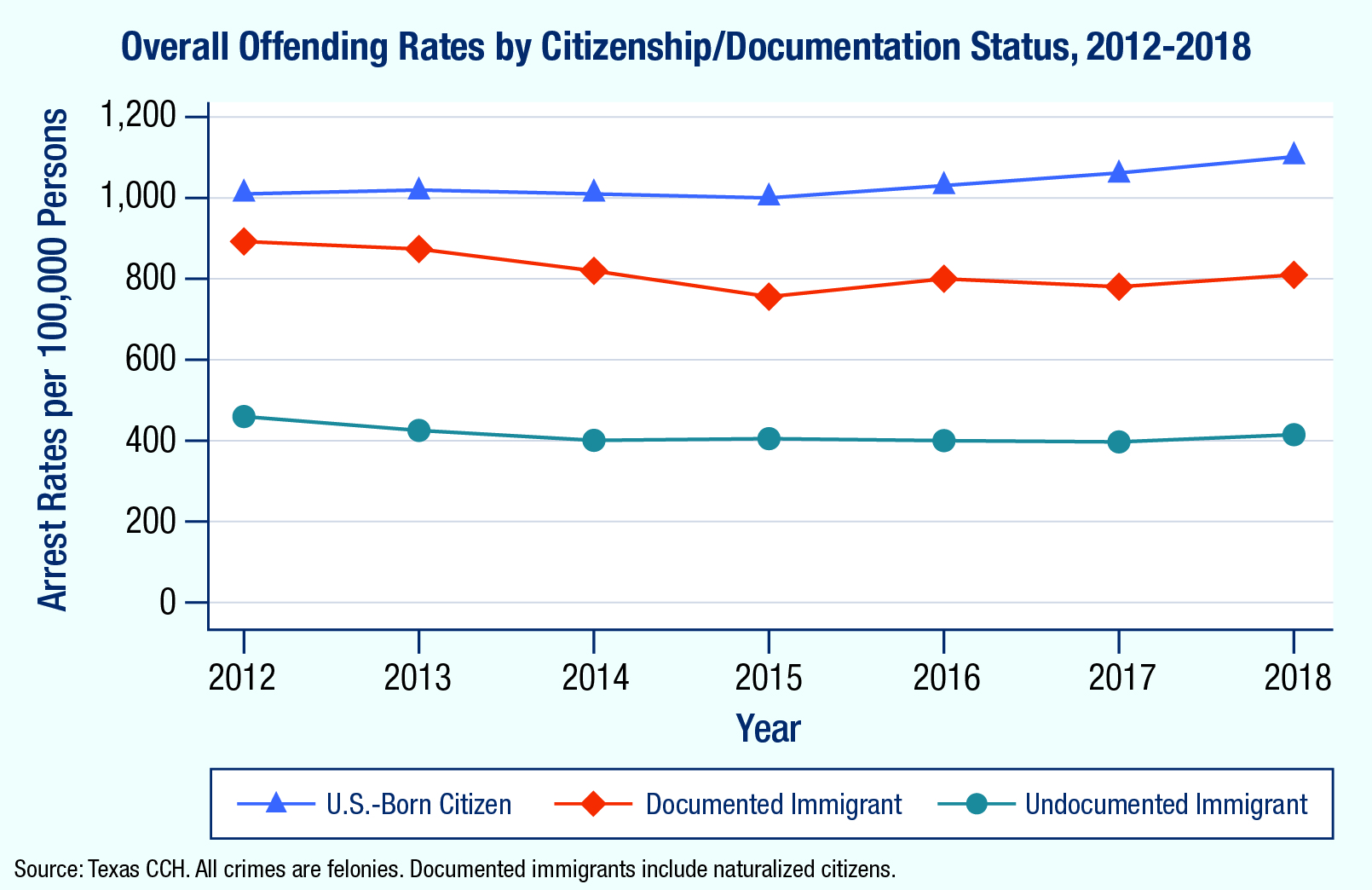
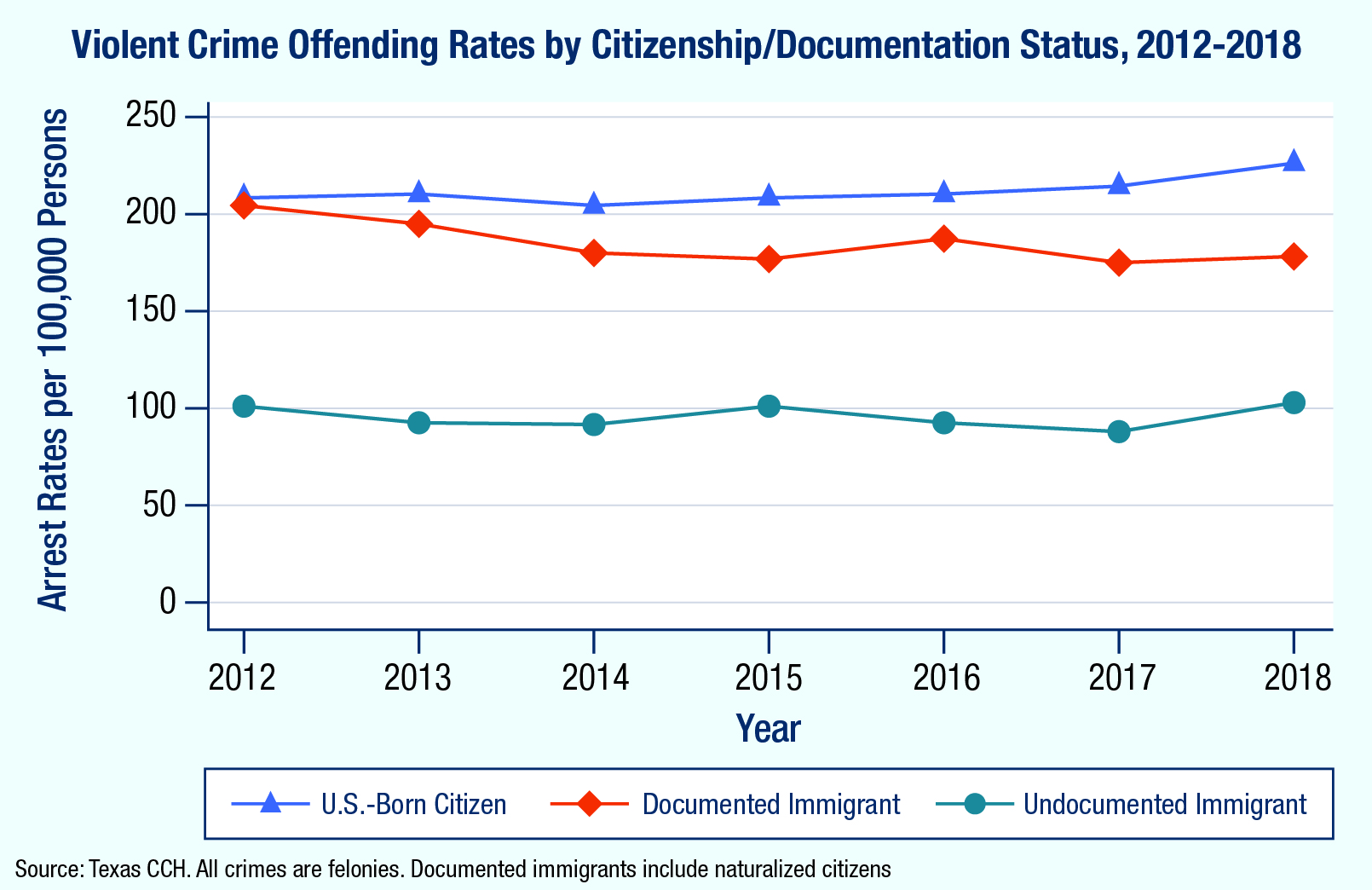
An NIJ-funded study examining data from the Texas Department of Public Safety estimated the rate at which undocumented immigrants are arrested for committing crimes. The study found that undocumented immigrants are arrested at less than half the rate of native-born U.S. citizens for violent and drug crimes and a quarter the rate of native-born citizens for property crimes.[1]

The question of how often undocumented immigrants commit crimes is not easy to answer. Most previous research on crime commission by immigrant populations has been unable to differentiate undocumented immigrants from documented immigrants. As a result, most studies treat all immigrants as a uniform group, regardless of whether they are in the country legally.

The estimates in this study come from Texas criminal records that include the immigration status of everyone arrested in the state from 2012 to 2018. These data enabled researchers to separate arrests for crimes committed by undocumented immigrants from those committed by documented immigrants and native-born U.S. citizens. (For more detail on the study’s data sources and methodology, see the sidebar “What Makes the Texas Data Unique?”)

The researchers tracked these three groups’ arrest rates across seven years (2012-2018) and examined specific types of crime, including homicides and other violent crimes.[2] They used these arrest rates as proxies for the rates of crime commission for the three groups. It should be noted that arrest is a commonly used, but imperfect measure of crime that in part reflects law enforcement activity rather than actual offending rates.

During this time, undocumented immigrants had the lowest offending rates overall for both total felony crime (see exhibit 1) and violent felony crime (see exhibit 2) compared to other groups. U.S.-born citizens had the highest offending rates overall for most crime types, with documented immigrants generally falling between the other two groups.

Exhibit 1.Total felony crime offending rates in Texas for U.S.-born citizens, documented immigrants, and undocumented immigrants

Total felony crime offending rates in Texas for U.S.-born citizens, documented immigrants, and undocumented immigrants

(View larger image.)

Exhibit 2.Violent felony crime offending rates in Texas for U.S.-born citizens, documented immigrants, and undocumented immigrants

Exhibit 2. Violent felony crime offending rates in Texas for U.S.-born citizens, documented immigrants, and undocumented immigrants

(View larger image.)

Researchers also looked specifically at homicide arrest trends. These rates tend to fluctuate more than the overall violent crime arrest rates because murders are relatively rare compared to other crimes. In addition, a large share of homicides go unsolved. Still, undocumented immigrants had the lowest homicide arrest rates throughout the entire study period, averaging less than half the rate at which U.S.-born citizens were arrested for homicide.[3] (The homicide rate for documented immigrants fluctuated. Sometimes it was higher than the rate for U.S.-born citizens and sometimes it was lower.)

Every other violent and property crime type the researchers examined followed the same general pattern. The offending rates of undocumented immigrants were consistently lower than both U.S.-born citizens and documented immigrants for assault, sexual assault, robbery, burglary, theft, and arson.

For drug offenses, too, undocumented immigrants were less than half as likely to be arrested as native-born U.S. citizens.[4] Moreover, the drug crime arrest rate for the undocumented population held steady throughout the seven years of data, while the rate for native-born citizens increased almost 30% during that time. As a result, undocumented immigrants had a smaller share of arrests for drug crimes in 2018 than they had in 2012.

Finally, the researchers conducted statistical tests to determine whether the share of crimes committed by undocumented immigrants had increased for any offense types between 2012 and 2018. They concluded, “There is no evidence that the prevalence of undocumented immigrant crime has grown for any category.”[5] As with drug offenses, evidence suggests the share of property and traffic crimes committed by undocumented immigrants decreased or remained close to constant throughout the period.

About This Article

The work described in this article was supported by NIJ award number 2019-R2-CX-0058, awarded to the University of Wisconsin.

This article is based on the grantee report, “Unauthorized Immigration, Crime, and Recidivism: Evidence From Texas” (pdf, 78 pages), by Michael T. Light.

Jan Resseger lives in Ohio. Before retiring, Jan staffed advocacy and programming to support public education justice in the national setting of the United Church of Christ—working to improve the public schools that serve 50 million of our children; reduce standardized testing; ensure attention to vast opportunity gaps; advocate for schools that welcome all children; and speak for the public role of public education.  Jan chaired the National Council of Churches Committee on Public Education for a dozen of those years.

Jan recently wrote this post for the National Center on Education Policy at the University of Colorado.

She writes:

I suppose many of us think about the classes we wish we had signed up for in college.  Right now, as somebody who believes public schools are among our nation’s most important and most threatened public institutions, I wish that in addition to enrolling in The Philosophy of Education, I had also taken a class in political philosophy—or at least Political Science 101. How have groups like the Heritage Foundation, the Lynde and Harry Bradley Foundation, Betsy DeVos’s American Federation of Children and their proxies like Moms for Liberty managed to discredit public schooling and at the same time spawn an explosion of vouchers, which, according to the editors of last year’s excellent analysis, The School Voucher Illusion: Exposing the Pretense of Equity, are failing to serve our society’s poorest children even as they are destroying the institution of public schooling?

Here are that book’s conclusions: “As currently structured, voucher policies in the United States are unlikely to help the students they claim to support. Instead, these policies have often served as a facade for the far less popular reality of funding relatively advantaged (and largely White) families, many of whom already attended—or would attend—private schools without subsidies. Although vouchers are presented as helping parents choose schools, often the arrangements permit the private schools to do the choosing… Advocacy that began with a focus on equity must not become a justification for increasing inequity. Today’s voucher policies have, by design, created growing financial commitments of taxpayer money to serve a constituency of the relatively advantaged that is redefining their subsidies as rights—often in jurisdictions where neighborhood public schools do not have the resources they need.” (The School Voucher Illusion: Exposing the Pretense of Equity, p. 290)

As I watch the wave of school privatization washing across conservative states and read about universal school choice as one of the priorities of presidential candidate Donald Trump as well as a goal of the Heritage Foundation’s Project 2025, I find myself wishing I had a better grasp of how our society has gone off the rails.  I wonder what I would have learned about the difference between democracy and extreme individualism in that political theory class I missed, and I find myself trying to catch up by reading—for example—on the difference between a society defined by individualist consumerism and a society defined by citizenship.

Back in 1984, the late political theorist Benjamin Barber published Strong Democracy, a book defining the principles our federal and state constitutions and laws are presumed to protect:  “Strong democracy … rests on the idea of a self-governing community of citizens who are united less by homogeneous interests than by civic education and who are made capable of common purpose and mutual action by virtue of their civic attitudes and participatory institutions rather than their altruism or their good nature. Strong democracy is consonant with—indeed depends upon—the politics of conflict, the sociology of pluralism, and the separation of private and public realms of action… The theory of strong democracy… envisions… politics as… the way that human beings with variable but malleable natures and with competing but overlapping interests can contrive to live together communally not only to their mutual advantage but also to the advantage of their mutuality…  It seeks to create a public language that will help reformulate private interests in terms susceptible to public accommodation… and it aims at understanding individuals not as abstract persons but as citizens, so that commonality and equality rather than separateness are the defining traits of human society.” (Strong Democracy, pp 117-119)

In that same book, Barber describes the consumer as a representative of extreme individualism—the opposite of the public citizen: “The modern consumer is the… last in a long train of models that depict man as a greedy, self-interested, acquisitive survivor who is capable nonetheless of the most self-denying deferrals of gratification for the sake of ultimate material satisfaction. The consumer is a creature of great reason devoted to small ends… He uses the gift of choice to multiply his options in and to transform the material conditions of the world, but never to transform himself or to create a world of mutuality with his fellow humans.” (Strong Democracy, p. 22)

Two decades later, Barber published Consumed, in which he explores in far more detail the danger of a society defined by consumerism rather than strong democracy. As his case study he contrasts parent-consumers who prioritize personal choice to shape their children’s education and parent-citizens: “Through vouchers we are able as individuals, through private choosing, to shape institutions and policies that are useful to our own interests but corrupting to the public goods that give private choosing its meaning.  I want a school system where my kid gets the very best; you want a school system where your kid is not slowed down by those less gifted or less adequately prepared; she wants a school system where children whose ‘disadvantaged backgrounds’ (often kids of color) won’t stand in the way of her daughter’s learning; he (a person of color) wants a school system where he has the maximum choice to move his kid out of ‘failing schools’ and into successful ones. What do we get?  The incomplete satisfaction of those private wants through a fragmented system in which individuals secede from the public realm, undermining the public system to which we can subscribe in common. Of course no one really wants a country defined by deep educational injustice and the surrender of a public and civic pedagogy whose absence will ultimately impact even our own private choices… Yet aggregating our private choices as educational consumers in fact yields an inegalitarian and highly segmented society in which the least advantaged are further disadvantaged as the wealthy retreat ever further from the public sector.  As citizens, we would never consciously select such an outcome, but in practice what is good for ‘me,’ the educational consumer, turns out to be a disaster for ‘us’ as citizens and civic educators—and thus for me the denizen of an American commons (or what’s left of it).” (Consumed, p. 132)

Barber concludes: “It is the peculiar toxicity of privatization ideology that it rationalizes corrosive private choosing as a surrogate for the public good.  It enthuses about consumers as the new citizens who can do more with their dollars… than they ever did with their votes. It associates the privileged market sector with liberty as private choice while it condemns democratic government as coercive.” (Consumed, p. 143)  “The consumer’s republic is quite simply an oxymoron… Public liberty demands public institutions that permit citizens to address the public consequences of private market choices… Asking what “I want’ and asking what ‘we as a community to which I belong need’ are two different questions, though neither is altruistic and both involve ‘my’ interests: the first is ideally answered by the market; the second must be answered by democratic politics.” “Citizens cannot be understood as mere consumers because individual desire is not the same thing as common ground and public goods are always something more than an aggregation of private wants…. (W)hat is public cannot be determined by consulting or aggregating private desires.” (Consumed, p. 126)

So that is today’s lesson from the political philosophy class I was never able to fit into my schedule in college: “Freedom is not just about standing alone and saying no. As a usable ideal, it turns out to be a public rather than a private notion… (N)owadays, the idea that only private persons are free, and that only personal choices of the kind consumers make count as autonomous, turns out to be an assault not on tyranny but on democracy. It challenges not the illegitimate power by which tyrants once ruled us but the legitimate power by which we try to rule ourselves in common. Where once this notion of liberty challenged corrupt power, today it undermines legitimate power… It forgets the very meaning of the social contract, a covenant in which individuals agree to give up unsecured private liberty in exchange for the blessings of public liberty and common security.” (Consumed, pp.119-123)

Houston’s public schools were taken over in 2023 by the state because one (1) high school was persistently getting low scores. One! That school happened to have a disproportionate number of students with disabilities, students who were English learners, students who were impoverished, as compared to other high schools in the district .

The Texas Education Agency engaged in a hostile takeover. Governor Abbott may have wanted to teach the blue district of Houston a lesson, and he did. His hand-picked State Commissioner imposed a new superintendent, Mike Miles, and replaced the elected school board. Houston lost democratic control of its schools.

Miles was a military man and a graduate of the Broad Superintendents Academy, whose graduates were steeped in top-down methods and taught to ignore constituents. Miles was superintendent in Dallas, where he had a rocky three-year tenure. He then led a charter chain in Colorado.

Miles proceeded to impose a new lockstep curriculum and to fire administrators and principals who did not please him.

Members of the public complained bitterly about being disregarded, ignored, belittled. Miles plowed ahead.

New test scores came out, and the scores went up. Miles felt triumphant. See, he said, I was right! The Houston schools needed a leader who didn’t listen to the public.

But when Miles and the state’s puppet board put a $4.4 billion bond issue on the ballot last month, parents urged others not to vote for it. In the only place where parents had a say, they organized against the bond issue. It went down to a defeat.

On November 5, Houston voters rejected a proposed $4.4 billion bond that would pay for critical school construction, renovation and infrastructure projects, as well as safety and security improvements, by a wide margin, 58% to 42%. It appears most of those voting against the measure did so not in opposition to the bond itself, but out of deep distrust for Miles and the district’s leaders. For weeks the rallying cry repeated publicly by opponents, including the Texas Federation of Teachers, was simply “no trust, no bond.” 

Miles said it had nothing to do with him. But he was wrong. It was a referendum on his leadership. He lost.

Public education requires community engagement. It requires parent involvement. Committed parents will fight for their schools. They want to know who’s leading their schools, they want to be heard. Miles still doesn’t understand the importance of listening. He thinks that the goal of schooling is higher scores, regardless of how many people are alienated. He doesn’t understand the importance of building community. And without it, he failed.

It’s time to consign the Broad Academy philosophy of leadership to the dust bin of history. Districts don’t need military command and control. They need educators who have a clear vision of what education should be, who care about ALL students, and who understand how to build community.