The Dedham, Massachusetts, teachers strike ended after three days.
Classes resume Monday.
The Dedham, Massachusetts, teachers strike ended after three days.
Classes resume Monday.
Darrell M. West of the Brookings Institution explains the history of the electoral college and why this antique process for choosing the president should be abolished.
He begins:
The framers of the Constitution set up the Electoral College for a number of different reasons. According to Alexander Hamilton in Federalist Paper Number 68, the body was a compromise at the Constitutional Convention in Philadelphia between large and small states. Many of the latter worried that states such
as Massachusetts, New York, Pennsylvania, and Virginia would dominate the presidency so they devised an institution where each state had Electoral College votes in proportion to the number of its senators and House members. The former advantaged small states since each state had two senators regardless of its size, while the latter aided large states because the number of House members was based on the state’s population.
In addition, there was considerable discussion regarding whether Congress or state legislatures should choose the chief executive. Those wanting a stronger national government tended
to favor Congress, while states’ rights adherents preferred state legislatures. In the end, there was a compromise establishing an independent group chosen by the states with the power to choose the president.
But delegates also had an anti-majoritarian concern in mind. At a time when many people were not well-educated, they wanted a body of wise men (women lacked the franchise) who would deliberate over leading contenders and choose the best man for the presidency. They explicitly rejected a popular vote for president because they did not trust voters to make a wise choice.
In most elections, the Electoral College has operated smoothly. State voters have cast their ballots and the presidential candidate with the most votes in a particular state has received all the Electoral College votes of that state, except for Maine and Nebraska which allocate votes at the congressional district level within their states.
But there have been several contested elections. The 1800 election deadlocked because presidential candidate Thomas Jefferson received the same number of Electoral College votes as
his vice presidential candidate Aaron Burr. At that time, the ballot did not distinguish between Electoral College votes for president and vice president. On the 36th ballot, the House chose Jefferson as the new president. Congress later amended the Constitution to prevent that ballot confusion from happening again.
You will find this to be an interesting account.
There have been a few elections where the popular vote and the electoral vote differed. In recent years, there were two. Al Gore beat George W. Bush by half a million votes while losing the election. Hillary Clinton won nearly three million votes more than Trump, who won the electoral college.
What kind of democracy elects the loser of the popular vote as its leader?
I read the following commentary by Bill Phillis of Ohio Coalition for Adequacy and Equity, and it gave me an idea:
The HB 70-triggered chaos continues in Lorain City School District
While state officials fiddle with the potential of repeal of HB 70, Lorain City School District continues to burn.
The HB 70 CEO claimed and then retracted that school employees would not be paid; the Board of Education filed a lawsuit; Representative Joe Miller asked for public records regarding contracts and expenditures; HB 70 CEO makes a request for mediation to the Ohio Supreme Court’s Government Conflict Resolution Services; etc. The chaos is ever present.
State takeover of school districts do not resolve the problem of low grades on the state report card. Poverty is the problem. The delivery of public education programming and services is a function of local communities via elected boards of education. State takeover of school districts would be akin to a federally-appointed commission replacing the functions of state government. That would not sit well with elected state officials or Ohioans.
State officials should repeal HB 70. JUST DO IT!
What if the federal government announced a Race to the Top for all 50 states and territories?
Suppose the feds established certain goals that every state had to meet (percent of population that votes, that has a budget surplus, that is healthy, that pays its taxes on time, that has a postsecondary degree, etc.).
The states with the highest scores win a bonus. The states with the lowest scores are subject to takeover by the federal government and will be run by a federally appointed czar, with all the powers of a dictator.
This may sound far-fetched, but Michigan has done something along these lines when it created state takeovers of financially strapped districts and appointed an emergency manager to supersede all elected officials.
Why not states?
Take it from there.
Journalist Valerie Strauss interviewed historian Jack Schneider. Is Betsy DeVos right to say that American public schools have not changed for a century, she asks. He answers: Not true. Betsy DeVos doesn’t know what she is talking about.
Schneider says:
If we could transport ourselves to a typical school of the early 20th century, the basic structural elements — desks, chalkboards, textbooks, etc. — would be recognizable. And we might see some similar kinds of power dynamics between adults and children. But almost everything else would be different. The subjects that students studied, the way the day was organized, the size of classes, the kinds of supports young people received — these essential aspects of education were all different. Teachers were largely untrained. Access to education was entirely shaped by demographic factors like race and income; special education didn’t exist. Latin was still king. It was just a completely different world. To say that schools haven’t changed is just an extraordinarily uninformed position.
DeVos says these ridiculous things because she wants to disrupt public schools. The reality is that they are constantly evolving.
Teachers and principals are too busy working every day to “reinvent” their schools.
Strauss quotes Professor Adam Laats of Binghamton University (SUNY) who wrote that DeVos’ idea of education anywhere everywhere is actually an early 19th century idea. It didn’t work, it left many children behind, and forward-thinking educators realized the need for free, universal public education.
The surveillance state is bearing down on us, our children, our grandchildren, all of us.
There is money in this business.
The Providence Journal reports on the state’s slow motion takeover of the Providence schools.
No superintendent has been appointed. Meanwhile the state has placed Frances Gallo in charge of Providence as Interim Superintendent. Previously Gallo was superintendent of the state’s lowest performing district, Central Falls.
Some candidates have already turned down the job.
One of our readers asserted that it was unfair to raise taxes on billionaires and alluded to the famous saying by Lutheran pastor Martin Niemöller. Only he put it this way:
First they came for the billionaires. Then they came for the millionaires. Then they came for those with $100,000 a year. Then they came for you. And private property was no longer permitted. That’s what socialists want. No private property for anyone. That used to be called slavery, to the state this time.
Thus, we must object to taxing the billionaires, because taxation inevitably leads to socialism! Never mind that taxation pays for the military, the police, highways, bridges, tunnels, parks, schools, medical and scientific research, and other public functions.
So…
This is what Pastor Niemöller actually wrote:
First they came for the socialists, and I did not speak out—because I was not a socialist.
Then they came for the trade unionists, and I did not speak out— because I was not a trade unionist.
Then they came for the Jews, and I did not speak out—because I was not a Jew.
Then they came for me—and there was no one left to speak for me.
The reader, a contrarian, is neither a socialist, nor a trade unionist, nor a Jew. He typically defends Trump and all his actions.
Our blog poet, SomeDAM Poet, responded with this poem:
First they came for Gates
First they came for Gates
And I did not speak out
About the taxing rates
Cuz Gates was just a lout
Then they came for those
Who have a hundred mill
And I did not oppose
Cuz they were simply swill
Then they came for those
Who have 100k
And I did not impose
No chance, no how, no way
Then they came for me
Who hasn’t got a cent
And I was glad, you see
Cuz jail means food and rent
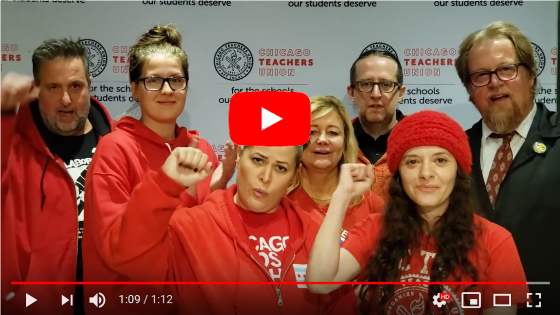
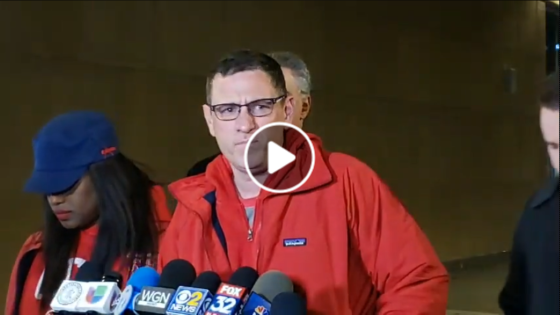
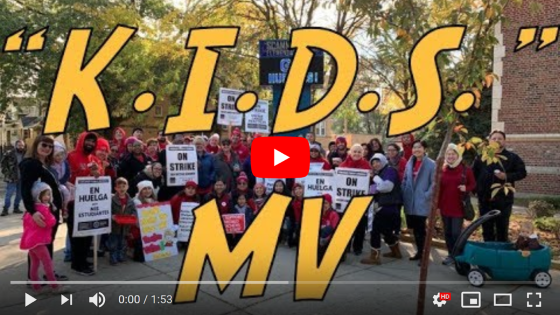
The teachers at Passages Charter School, who belong to the Chicago Teachers Union, won their demands.
|

Anthony Cody read the post about the collaboration between the Thomas B. Fordham Institute and the Center for American Progress, which are sponsoring a low-budget “moon shot for kids.”
Not many (or any) of those who work at TBF or CAP have been career teachers.
Anthony Cody offers his advice:
I worked in the public schools of Oakland, CA, for 24 years, 18 of them as a middle school teacher of science and Math. I have witnessed firsthand the destructive effect of previous philanthropic efforts in education. There must be a radical change in approach.
The key to successful investment in this arena is leveraging a relatively small amount of money to create a ripple effect that delivers further deeper investment — and not just of funds, but of public trust and engagement.
A coalition of philanthropists would heed the convincing evidence from Anand Giridharadas that their prior efforts have had the effect of suppressing investment and engagement in common public schools. They would reverse course, and instead of seeking to undermine public schools under control of democratically elected school boards, create a campaign to support such schools. They would create a process to empower a democratically elected leadership team composed of students, teachers and parents.
The project would work to:
1. Support efforts to reduce income inequality, since there is a direct connection between educational and economic well-being.
2. Overturn Citizen’s United, since this absurd notion has allowed for legalized bribery.
3. Recognize the destructive effects of high stakes tests and work to end them at all levels.
4. Reaffirm the value of racial and economic desegregation, so all children have equal access to high quality schools, and the chance to learn together.
5. Significantly reduce class sizes across the nation, setting a cap of 20 on grades k to 3, and 25 on grades 4 to 12. This would allow for genuine personalization of education.
6. Make “virtual schools” ineligible for public funds.
7. Minimize screen time and eliminate farcical descriptions of this as “personalization.”
8. Create democratically elected teams of teachers, parents and students to participate in decision-making at every level of the education system.
This is a significant departure from previous philanthropic efforts in education. But given that prior work has been so devastating to our schools, it is time for such a correction.
THIS SHOULD BE THE PLATFORM OF THE DEMOCRATIC CANDIDATE FOR PRESIDENT.
Mercedes Schneider loves Elizabeth Warren’s plans for K-12 education.
Note that in Warren’s plan, the term, “public school” means traditional public school– the neighborhood school, sufficiently supported and defended against much of the corporate ed reform attack against it.
Warren’s education plan is refreshing to read, and extensive. I encourage readers to view Warren’s entire ed plan firsthand.
Below are some of my favorite parts. But my favorites-of-favorites is the ending of federal funding for charter schools and Warren’s pledge to fight against charter schools’ outsourcing operations to for-profit companies.
She proceeds to describe what she likes best in the Warren plan.
Schneider is a tough critic with a keen nose for fraud. When she likes something, pay attention.



 Diane Ravitch's blog