Archives for the month of: June, 2019


In my new book, Slaying Goliath, I focus on heroes of the Resistance. One of them is Professor Maurice Cunningham of the University of Massachusetts. He is a professor of politics and a blogger who believes in “follow the money.” His relentless pursuit of Dark Money in the Massachusetts charter referendum of 2016 (where voters overwhelmingly rejected charter expansion) led to the demise of the billionaire-funded front group called “Families for Excellent Schools.” It so happened that the “families” were billionaires who never set foot in a public school and never will.

In this post, Cunningham describes his fruitless effort to get a media outlet to acknowledge that the “parent group” it featured was Walton-funded.

Back on June 10 Masslive.com ran an editorial titled Meet the Newest Education Union: Parents which turned out not to be about education or unions at all but about the WalMart-heir front Massachusetts Parents United of Arkansas.  Helpful as always I sent an op-ed to Masslive setting the record straight but they paid no attention. Oh well. You can read the op-ed below.

It surprises me how little most media care about writing the basic facts about corporate “education reform” groups like MPU of AK, which would be non-existent without the millions of dollars poured in by the Waltons. The editorial board can take any position on issues they wish but it doesn’t excuse them from not informing their readers about who is funding and thus controlling the privatization fronts. Are they just not curious? I can’t imagine the motto “We don’t ask too many questions” would look good on the masthead. Is “follow the money” an elective in journalism school that got axed due to budget cuts?  Is it not news that state education policy is being hijacked by family of billionaires? Is it still not news that the billionaires are from Arkansas?

If you’re from western Massachusetts, ask Masslive yourself, and feel free to pass along my Letter to Massachusetts Education Reporters which has six reasons why reporters should report on who is behind front groups with tantalizing names like Massachusetts Parents United, Educators for Excellence, and Democrats for Education Reform.

Cunningham says “Dark Money never sleeps.”

Any Group funded by the Waltons or other billionaires is by definition “inauthentic.”

Cunningham hates hypocrisy.

So do I.

 

Alfie Kohn has written many books critical of competition and ranking in schools. This article appeared in the New York Times.


For a generation now, school reform has meant top-down mandates for what students must be taught, enforced by high-stakes standardized tests and justified by macho rhetoric — “rigor,” “raising the bar,” “tougher standards.”

Here’s a thought experiment. Suppose that next year virtually every student passed the tests. What would the reaction be from politicians, businesspeople, the media? Would these people shake their heads in admiration and say, “Damn, those teachers must be good!”?

Of course not. Such remarkable success would be cited as evidence that the tests were too easy. In the real world, when scores have improved sharply, this has indeed been the reaction. For example, when results on New York’s math exam rose in 2009, the chancellor of the state’s Board of Regents said, “What today’s scores tell me is not that we should be celebrating,” but instead “that New York State needs to raise its standards.”

The inescapable, and deeply disturbing, implication is that “high standards” really means “standards that all students will never be able to meet.” If everyone did meet them, the standards would just be ratcheted up again — as high as necessary to ensure that some students failed.

The standards-and-accountability movement is not about leaving no child behind. To the contrary, it is an elaborate sorting device, intended to separate wheat from chaff. The fact that students of color, students from low-income families and students whose first language isn’t English are disproportionately defined as chaff makes the whole enterprise even more insidious.

But my little thought experiment uncovers a truth that extends well beyond what has been done to our schools in the name of “raising the bar.” We have been taught to respond with suspicion whenever all members of any group are successful. That’s true even when we have no reason to believe that corners have been cut. In America, excellence is regarded as a scarce commodity. Success doesn’t count unless it is attained by only a few.

One way to ensure this outcome is to evaluate people (or schools, or companies, or countries) relative to one another. That way, even if everyone has done quite well, or improved over time, half will always fall below the median — and look like failures.

Kohn quite rightly concludes that the nature of the standards-and-accountability regime of federal policy (No Child Left Behind, Race to the Top, Every Student Succeeds Act) requires that most children are left behind, most children will never reach the top, and most children will not succeed. The reliance on standardized testing, normed on a bell curve, guarantees that outcome.


Checker Finn and I used to be best buddies back in the days when I was on the other side (the wrong side) of big education issues. We became friends in the early 1980s. We created something called the Educational Excellence Network, which circulated a monthly newsletter on events and issues back in the pre-Internet days. I was a member of the board of the Thomas B. Fordham Foundation, which was created and chaired by his father and led by Checker. Checker had worked for Lamar Alexander when Lamar was Governor of Tennessee, and he recommended me to Lamar when Lamar became George H.W. Bush’s Secretary of Education. I accepted the job of Assistant Secretary of Education for Research and Counselor to the Secretary, the same job Checker had held during the Reagan administration, when Bill Bennett was Secretary of Education. We both served as members of the Koret Task Force at the Hoover Institution. As a member of Checker’s board, I opposed accepting funding from the Gates Foundation, since I thought that as a think tank, we should protect our independence and we had plenty of money. I opposed TBF becoming an authorizer of charters in Ohio, where TBF was theoretically based even though its main office was in DC. I was outvoted on both issues. As a member of the Koret Task Force, I was in regular conversation and discussion with the best conservative thinkers. Over time, however, I lost the conservative faith. I changed my mind, as I described in my book, The Death and Life of the Great American School System: How Testing and Choice Are Undermining Education. 

I became and remain a deeply skeptical critic of all the grand plans to reinvent American education, especially those that emanate from billionaires and from people who are hostile to the very concept of public education.

To my surprise, I read an article recently by Checker that captured my skepticism about the Big Ideas imposed on schools and teachers. This one was called the New American Schools Development Corporation. It was spun off during the brief time that Lamar Alexander was Secretary. It was David Kearns’ pet project. David was a former CEO of Xerox who agreed to serve as Lamar’s Deputy Secretary. He was a wonderful man and I enjoyed getting to know him. He thought like a CEO and he thought that the best way to spur innovation was to hold a contest with a big prize. (Race to the Top did the same thing and flopped.)

Checker relies on the work of a wonderful scholar named Jeff Mirel of the University of Michigan. Jeff, a dear friend of mine, died earlier this year, far too young. He was a strong supporter of public schools and a first-rate historian. I miss him.

As Checker show, the NewAmerican Schools project failed. But the $50 Million that Kearns raised from private sources was eagerly snapped up.

My reaction to Checker’s article was this: Twenty or thirty years from now, someone will write a similar article about charter schools and ask, “How could people have been so dumb as to believe that you could ‘reform’ American education by letting anyone get public money to open any kind of school? Why did they think it was a good idea to let entrepreneurs and for-profit entities open schools? Why did they allow corporate chains to take over community public schools? Why did they allow religious zealots to get public money intended for public schools? They must have lost all common sense or any sense of history!”


Back in March 2019, Carol Burris and Jeff Bryant released a study of the federal Charter Schools Program on behalf of the Network for Public Education.. That study, “Asleep at the Wheel,” found that about a third of the charters that received federal grants in the $440 million program either never opened or closed soon after opening. The amount of money wasted was about $1 billion over several years. The Department of Education failed to monitor wherevthe Money was going and how it was spent.

Burris has been analyzing states that received federal charter money and has concluded that the initial estimates were understated. In the states she has reviewed, 40% of the charters were failures. Some had no name. Some were not even charters.

The extent of waste, fraud, and abuse in the federal CSP is appalling, as is the ED department’s failure to pay attention to where the money goes.

The initial impulse for the CSP, created during the Clinton administration, was to jumpstart innovation. Now, it is a slush fund for Friends of Betsy and a ready supplier of millions to big corporate charter chains like KIPP (which recently got a federal check for $86 million) and IDEA (which has collected $225 million in two years). Neither of these corporate behemoths are start-ups. Neither is needy.

Congress should eliminate the federal Charter Schools Program. It feels no need, other than greed.

Next time you meet a candidate at a town hall, ask him or her if they will pledge to eliminate this wasteful slush fund.

School Bus
Jan Resseger’s digest of the Senator Lehner HB 70-on-steroids plan
The Lehner Plan is really a district’s worst nightmare. It would have scores of cooks in the kitchen with no one to be held accountable. It would also be a cash cow for “consulting school improvement organizations.”
William L. Phillis | Ohio Coalition for Equity & Adequacy of School Funding | 614.228.6540ohioeanda@sbcglobal.net| www.ohiocoalition.org
STAY CONNECTED:
School Bus

Beto O’Rourke has beefed up his campaign staff with the addition of Carmel Martin, who was Assistant Secretary for Budget and Policy in the Department of Education during the Obama administration.

Martin is a supporter of high-stakes testing and charter schools.

When my book, The Death and Life of the Great American School System, was published, she joined me on a panel at the Economic Policy Institute, where she defended Race to the Top.

It will be interesting to hear what Beto’s education policy is, if he moves above 5% in the polls.


Veteran journalist Peg Tyre is on a study mission to understand education in certain Asian nations. She has written several reports, some of which were posted here. She has written to tell me that she has enjoyed the feedback from readers of this blog, so keep those emails and reactions to her coming.

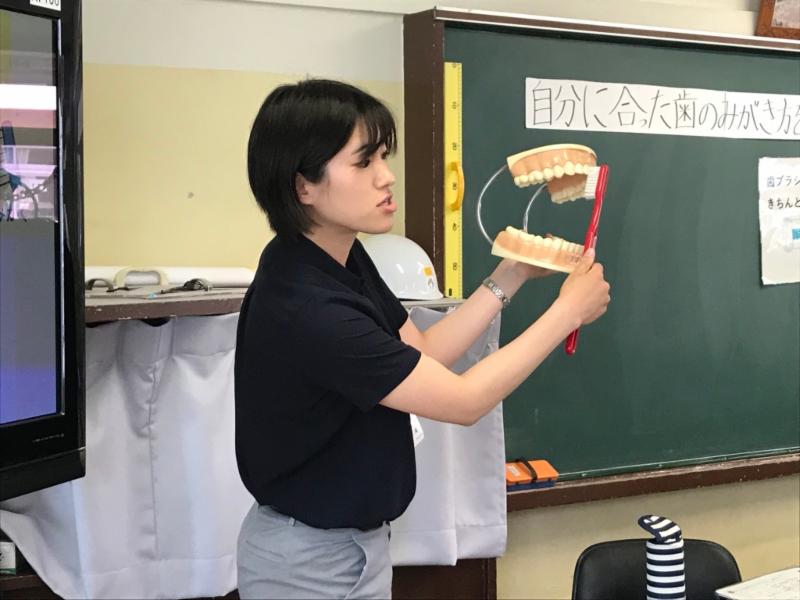
A teacher in a primary school giving a healthy-living lesson
Japanese Teachers Put In Longer Hours Than Any Other Teachers on the Planet
“Being a teacher is like being a 7-11. Open 24 hours.”
Here’s the project: The Japanese government, like many Asian countries with high performing schools, wants to educate students to become more innovative and creative in order to compete with AI and participate more fully in a global economy. They are promoting English language instruction (with an emphasis on speaking), creativity, self-expression, meta-cognition, critical thinking and problem-solving. I’m on a research trip in Japan to find out more.
Thanks to all the folks (and especially teachers!) emailing me questions and sharing reflections. Very inspiring. Keep those emails coming.
You Asked: What’s It Like To Be a Public School Teacher in Japan?
So I Looked Into It!
Answer: They Get a Ton of Respect But the Hours Are Crippling.
And lots of teachers fear the push to change schools is going to make those hours even worse.
The Good Part: It takes time and determination to teach in a public school in Japan. You need a college degree with an emphasis on education, a supervised practicum and you need to get a license and renew it every few years. The job application process is highly selective and only the best candidates land jobs. Once you get a job, you are encouraged to collaborate with your fellow teachers, and do a great deal of observation of other classrooms. Professional development is considered necessary for everyone.
Being a public school teacher in Japan is a prestigious job. You are entrusted to look after the academic, social and emotional lives of students as individuals and also foster group harmony, so people consider you a moral beacon. You teach kids life skills (like brushing teeth), help them navigate socially, help direct their careers and even do a little ad hoc family counseling.
Unlike in the US, where reformers often suggest that kids in low-performing schools would learn more if teachers were smarter, better educated or more dedicated, Japanese people regard the teachers in their local public school as something akin to a pastor or a doctor in a local clinic. The government appreciates you. Parents don’t criticize you. And school administrators are pretty supportive as well. The pay is pretty decent, definitely enough to live a middle class life.
The Bad Part: The hours are shockingly long.
In 2006, primary school teacher worked 53.16 hours a week.
In 2016, primary school teachers worked a whopping 57.29 hours per week.
Senior teachers and vice principals have even it worse.
In 2006, they reported working 59.05 hours a week.
In 2016, they logged 63.8 hours per week.
That includes teaching time, supervising clubs and activities after school, counseling, lesson planning, grading and preparing materials. Teachers also take their students on class trips on Saturdays.
In the Japanese context, working long hours is considered a virtue. But karoshi, literally working yourself to death, has become a big social problem in many sectors of the economy in Japan. And teachers are not immune.
Makamura Kunihiko is a veteran teacher and now principal at Sapporo Fushimi junior high school. (His photo is below) In an interview a few days ago, he told me that among his staff, about 20% of his teachers, usually parents of young kids, leave at 5 pm. About 20% of the teachers in his school stay until midnight– working.
Good Lord! What Does the Union Say? The responsibilities of the job, they point out, are unsustainable. And in the last few years, the number of people who say they want to be teachers is dropping. “Teachers are worn out. To keep ourselves healthy and to make sure we have enough [bandwidth] to communicate with students, we need to address the issue of overwork,” says Tamaki Terazawa, head of international affairs for the Japan Teachers’ Union.
The government has responded by asking schools to get community members to run after school programs and supervise class trips to shorten a teacher’s work day. And that is starting to happen. The government also capped the hours teachers can work but that’s a pretty toothless initiative since unpaid overtime falls into that gray area made up of what you are required to do and what you think should do. And teachers in Japan (and workers in Japan in general) don’t have many models for work-life balance.
A Day in the Life of as Japanese Public School Teacher:
8:15 am….. start work.
4:45 pm…. formal school day ends.
5:00 pm….supervise clubs or activities.
6:00 pm……teacher team meetings.
8:00 pm…… grading and lesson planning.
Weekend….. teachers often supervise class trips.
NEXT UP: Readers prompt me to think more deeply about who gets to be creative. How? And Why?
Interested in reading what I’ve discovered so far?
Newsletter 1: In The Beginning
You can take an active role in shaping this project. Please send me questions, observations, research, history and personal reflections about your own teaching and learning, thoughts about rote learning and your ideas about what makes an innovator. Tell me what you want to know from my reporting. Twitter: @pegtyre or email: pegtyre1@gmail.com
Also, if you know of someone who might be interested in being part of this project, kindly send me their email and I’ll add them to the mailing list.
My trip is made possible by a generous Abe Fellowship for Journalists (administered by the Social Science Research Council.) I retain full editorial control. I also appreciate the moral support of my colleagues at the EGF Accelerator, an incubator for education-related nonprofits.


Jeff Bryant, a prolific writer about the Resistance to Faux Reform, will moderate a panel at Netroots Nation about how Philadelphia activists fought back and regained democracy.fought back and regained democracy.

The session is called “What Philly Taught Us: How Philadelphia Activists Brat SchoolPrivatization to Restore Local Control.”


Starts: Thursday, Jul. 11 2:30 PM

Ends: Thursday, Jul. 11 3:30 PM

Room: 119A

State control of Philadelphia’s schools came to an end in November 2017. This was an historic event, long in the making by a resistance campaign led by Philadelphians. State control had essentially stripped the city’s majority-black and brown residents of their democratic rights. The state agency emphasized cutting expenses and staff, closed neighborhood schools, and imposed various forms of “school choice.” Philly saw its core institutions ripped out and replaced with schools operated by private interests with no knowledge of community values and culture. But years of intense public opposition successfully pressured the mayor and governor to transfer state control to a People’s School Board representative of Philadelphians.

For more than a decade, Netroots Nation has hosted the largest annual conference for progressives, drawing nearly 3,000 attendees from around the country and beyond. Netroots Nation 2019 is set for July 11-13 in Philadelphia.

Our attendees are online organizers, grassroots activists and independent media makers. Some are professionals who work at advocacy organizations, progressive companies or labor unions, while others do activism in their spare time. Attendees can choose from 80+ panels, 60+ training sessions, inspiring keynotes, caucuses, film screenings and lots of networking and social events.


Peter Greene writes here about Sara Holbrook, a poet whose poems have been used on standardized tests.

Back in 2017, Holbrook wrote an essay for Huffington Post entitled, “I Can’t Answer These Texas Standardized Test Questions About My Own Poems.” The writer had discovered that two of her poems were part of the Texas STAAR state assessment tests, and she was a bit startled to discover that she was unable to answer some of the questions….

To approach any poem with the notion that each word has one and only one correct reading when language at its most rich involves shades and layers or meaning–what my old college writing professor called “the ambiguity that enriches”–is one way to stifle thinking in students. In many states, we are doing it in grades K through 12.
There are so many layers to Holbrook’s situation. The test manufacturers could have contacted her and talked to her about her poem (though Common Core architect David Coleman would argue that doing so was both unnecessary and undesirable), but they didn’t. So here we sit, in a bizarre universe where the test writer knows the “correct” answer for a question about a poem, but the person who wrote the poem does not. And at least Holbrook has the option of publicly saying, “Hey, wait a minute,” which is more than the deceased authors used for testing can do. But she was only able to do so because somebody risked punishment by sharing test materials with her. Particularly ironic is Mentoring Minds’ promise to build critical thinking skills in students, even as Holbrook, by taking reading, writing and speaking out to students in living, breathing, dynamic workshops, is doing far more to promote critical thinking than can be accomplished by challenging students to guess which one of four available answers an unseen test writer has deemed “correct.”


Louis Freedberg of EdSource explains here why California charter schools are largely unsupervised, leading to a drumbeat of scandals like the recent indictment of 11 people charged with a theft of $80 million.

He writes:

As charter school conflicts intensify in California, increasing attention is being focused not only on the schools themselves but on the school boards and other entities that grant them permission to operate in the first place.

They’re called charter authorizers, and unlike many states, California has hundreds of them: 294 local school districts, 41 county offices of education, along with the State Board of Education.

In fact, California, with over 1300 charters schools, has more authorizers than any other state. That’s not only because of California’s size but also because it has an extremely decentralized approach to charter school authorization.

Someone wishing to start a charter school, or to renew a charter, must apply to a local school district to get the green light to do so. If a petition is turned down by the district, applicants can appeal to county boards of education, and if they are denied there, they can go to the State Board of Education as a last resort.

An emerging question is whether California’s authorizers have the skills, capacity and guidance to adequately oversee the charter schools under their jurisdiction.

Under the state’s extremely lax law, a tiny rural district may authorize a charter to open for business in an urban district hundreds of miles away. The rural district collects a commission, the charter has no supervision.

A win-win for the charter and the authorizer, a lose-lose for taxpayers and students.

The California problem is not that authorizers need training, but that any district can authorize charters in other districts.

The law should be changed so that districts control whether charters open inside their boundaries. The current law encourages scavengers to prey on other districts. This must stop. Give districts control and responsibility for the schools inside their geographic area. Stop the charter vandals whose only goal is profiteering without oversight.