Archives for the month of: May, 2019


Valerie Strauss investigated the strange case of the charter school that was approved to open in rural Alabama, over the objections of the local mayor and despite the rejection of its proposal by the National Association of Charter School Authorizers. The deed for the building is held by a Utah holding company. The principal is described as “Amy O,” with no last name. The school will be operated by a charter chain based in Sugarland, Texas, whose CEO was co-founder and CEO of the Harmony charter chain. Harmony is widely believed to be a Gulen school, but like all Gulen schools, it claims not to be affiliated with Imam Fethullah Gulen. As a general rule of thumb, schools that have Turkish leaders and a significant number of Turkish teachers working on Hb1 visas are almost certainly Gulen schools.

A charter school in a rural county of 17,000 people in Alabama, built and owned by a Utah holding company, operated by a Turkish CEO from Sugarland, Texas. The locals are scratching their heads. So am I.

This bears watching.


Carl Cohn is one of the most respected figures in American education. He is a problem solver who has been superintendent in several districts in California. He won many plaudits for his leadership in Long Beach. I met him when he was superintendent in San Diego, which was probably the first urban district to be subjected to a heavy, concentrated dose of what was called “reform,” in the late 1990s, early 2000s. Cohn was called in, to clean up the demoralization left behind by top-down leaders who arrived with a script. In my 2010 book The Death and Life of the Great American School System: How Testing and Choice Are Undermining Education, I devoted a chapter to the colossal failure of “reform” in SD. I interviewed Cohn and was pleasantly surprised by his candor and insight. Talking to him reassured me that my reactions were on target.

In this post, he urges the reform of California’s charter law.

He does not lay out a menu of what is needed, but he points to some genuine problems.

Note that one of the members of Tony Thurmond’s Task Force rejected Cohn’s request for some relief from the law.  That would be Margaret Fortune, Chair of the Board of the California Charter School Association, which lobbies to protect the status quo.


Mercedes Schneider reports that teachers at three charter schools in Chicago are on strike. 

How terrifying for the Waltons, the Koch brothers, and Betsy DeVos!

These are not the first charters to go on strike. But it must be a huge annoyance for their funders.

She writes:

According to idealized market-based ed reform, the CEO is supposed to be the one with the power, and collective bargaining should not exist. The charter school CEO calls the shots, and if the teachers don’t like it, they can either suck it up or leave.

Ahh, but that dastardly unionizing– it threatens the concetration of power with a CEO. If those teachers each take their bits of power and combine those bits, then the poor CEOs will have to do what market-based ed reform promises powerful CEOs what they should never have to do:

Negotiate.

The ingrates!


Florida is controlled by Swamp creatures who want to divert money from public schools and send it to charter schools and religious schools. Jeb Bush is the puppet master who has demanded strict accountability for public schools, minimal oversight of charter schools, and no accountability at all for religious schools.

In this article, Carol Burris—the executive director of the Network for Public Education—examines the charter school mess. Florida has about three million students. About 300,000 attend charter schools. Some members of the Legislature have direct conflicts of interest but nonetheless vote to shower favors and money on the state’s charters.

Burris reports that nearly half of the state’s charters operate for profit. Entrepreneurs have flocked to Florida to get the easy money.

Burris begins:

Schoolsforsale.com claims to be “the largest school brokers in the United States that you will need to call.” Its owner, Realtor David Mope, is a broker for private schools, online schools and preschools. He will also help you start your own virtual school by providing certified teachers, marketing expertise, and assistance in securing accreditation.

Mope is not a newcomer to the for-profit school world. He was the owner and CEO of Acclaim Academy, a military-style charter chain. Acclaim’s “cadets,” who were predominantly minority students from low-income homes, wore army fatigues and engaged in drills. The schools’ education director, Bill Orris, had previously led a charter school that was shut down after its management company abandoned it.

Warning signs of failure were there from the beginning. The chain aggressively attempted to open new schools in multiple districts before establishing a track record in its two existing schools. Most districts saw red flags, but two did not. In the fall of 2013, two more Acclaim schools were approved, bringing the total schools in the chain to four.

As school grades came in, unsurprisingly, the Acclaim Academy charter schools were rated “F.” In 2015, three closed their doors, leaving families in the lurch in a manner that parents described as chaos. Although Florida’s State Board of Education had allowed the schools to stay open to finish the school year, Mope filed for bankruptcy, sending students out on the street scrambling to enroll in another school with only a few weeks left in the school year. Vendors would never be paid. Parents helped teachers pack up. Nevertheless, Mope pretended the schools were solvent and continued to broker a deal to purchase hundreds of thousands of dollars of equipment.

How could Acclaim Academy ever open in the first place? Who would give this risky charter chain the seed money to get started? The American taxpayers did. A U.S. Department of Education Charter Schools Program (CSP) grant for $744,198 helped get the Acclaim Academies off the ground.

Acclaim Academy charter schools were among 502 Florida charter schools that received grants from the Department of Education between 2006 and 2014. All but two came from federal money given to the state for distribution. According to the CSP database, these Florida charter schools were awarded a total of nearly $92 million in federal funds between 2006 and 2014.

At least 184 (36.6 percent) of those schools are now closed, or never opened at all. These defunct charter schools received $34,781,736 in federal “seed” money alone.

[intro]

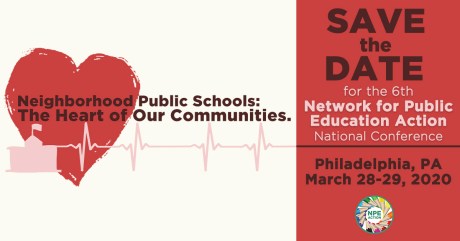
Save the Date V3


Christine Langhoff, retired teacher and education activist, welcomes Brenda Cassellius, Boston’s new Superintendent of Schools. She is not a Broadie, and she is not a Walton stooge. She’s experienced and she arrives ready to lead, untethered to the disruption agenda. That’s good news.

Langhoff writes:

The screening process was secretive and deeply flawed. Three candidates were selected for presentation to the school community. None met all the requirements laid out for the position.

https://www.bosedequity.org/blog/boston-coalition-for-education-equity-weighs-in-on-bps-superintendent-search

One, Oscar Santos, was the hometown boy, with limited experience, having run a small town school system in a nearby suburb. Randolph has about 2600 students, to Boston’s 55,000. He was the protégé of Michael Contompasis, former Assistant Superintendent and Superintendent, as well as longtime Headmaster of Boston Latin School. Santos, president of a Catholic high school, was also a member of the Gates-inspired Boston Compact, featuring a unified enrollment system and cooperation among charter, Catholic and private schools – a favored initiative of the mayor. He received no votes.

The second, Marie Izquierdo from Miami-Dade, was a Broadie supernintendo and a Jeb! Chief for Change alumna. The school committee’s two Latina members voted for her, citing a need for an experienced bilingual leader in a city where 46% of the population is Latinx. In the few days after the announcement of finalists and before the vote by the mayorally-appointed school committee, the Boston Globe published two stories in her support. In the first: “Supporters say ‘next logical move’ for Marie Izquierdo is BPS” … Amanda Fernández, MA BESE member endorsed her. Fernández’, organization, Latinos for Education, is funded by the the Waltons.

https://www.bostonglobe.com/metro/2019/04/27/marie-izquierdo-rose-through-ranks-miami/VbyzWCSXFKwmpMuhiWdVGN/story.html

The second, by the senior editorial writer, published just before the vote, scolded Mayor Walsh for playing it safe and choosing Cassellius. That Izquierdo did not get the Boston position is also a rebuke to the state board’s other two Walton connected members, Margaret McKenna and Martin F. West and to Governor Charlie Baker as well. The Pioneer Institute, where Baker was Executive Director, and which is funded by the Walton and the Kochs, has so desperately wanted a Walton takeover of the state’s largest school system.

https://www2.bostonglobe.com/opinion/2019/05/01/playing-safe-with-new-bps-superintendent/Y5UT8pUd2JEFngiYkGg6PK/story.html

Brenda Cassellius quickly became the consensus candidate of the many parent and community activists. She spoke of being a Head Start student herself, of her failed attempt to slash required SPED paperwork in Minnesota, said she will begin her term with a listening tour of parents, teachers and community advocates. She’s not a big fan of standardized testing and called for the scrapping of Massachusetts’ required exit exam, the MCAS. That last has many folks’ panties in a bunch, as if the MCAS were a sacred right of passage.

https://commonwealthmagazine.org/education/with-cassellius-boston-taps-high-stakes-testing-opponent/

“’I believe in a standards-based education; I just don’t believe in test-based accountability. We have had test-based accountability since No Child Left Behind, and it has not worked,’” said former Minnesota Education Commissioner Brenda Cassellius, in the first of her four public interviews today. Standardized tests can help guide large-scale policy, she said, but ‘I don’t think that tests ought to be used for individual high-stakes decisions ever.’ ”

https://schoolyardnews.com/brenda-cassellius-of-minnesota-second-superintendent-finalist-would-limit-standardized-testing-f28f4de74130

Might there have been a better candidate for superintendent of Boston’s schools? We’ll never know (unless Bob Mueller is looking for a job). But for the first time in more than 15 years, I’m not worried that the person running our schools is incompetent, a privatizer or a saboteur. I don’t think parents and advocates will be strewing rose petals along Brenda Cassellius’ path to her new office, but this one is a win for now, and we’ll take it.
 

Michael Mulgrew, president of the New York City United Federation of Teachers, urges the Legislature not to raise the cap on charters but to enact legislation to make charter schools transparent and accountable.

There is a national pushback against untrammeled growth of charters, and New York State is unlikely to give the charter industry carte blanche since Democrats won control of the State Senate last fall. Until now, the charters were protected by the Governor Cuomo, whose campaign was funded by charter-loving financiers, and by the Republican-controlled State Senate, which was happy to expand the number of charters but not in their own suburban districts.

Mulgrew points out that under existing law, charters have room to add as many as 50,000 students. One charter gives the operator the authority to expand to K-12, or three schools. The city currently has 235 charters, which are actually 377 schools, enrolling 123,000 students. These schools divert $2.1 billion from public schools, but do not accept a proportionate share of the neediest students. Success Academy alone has room to add another 10,000 students without lifting the cap.

He writes:

Charters should be forced to demonstrate that tax dollars are spent in the classroom rather than on inflated salaries of charter executives and overpriced services of charter management companies. The transparency legislation would make wealthy charters — those with $1 million or more in assets — ineligible to receive co-located space in public building, or to get a public rental subsidy for private classroom space. It would also cap compensation packages for the majority of charter executives at $199,000 a year.

“Real transparency would also reveal why charters had only 9% of the school population but 46% of the suspensions; 10% percent of the homeless students, less than the public school average of 15%; and only 7% of the English language learners population, less than half the public school average.”


He concludes:

It is time for state government to freeze their growth, and to put in place measures to ensure that charters take, keep and educate all kinds of students, while they open up their operations to real public scrutiny.

There are two bitter pills in Mulgrew’s proposal:

One is the cap on salaries, which would be anathema to charters, where teacher salaries are artificially low, due to hiring of young teachers and constant turnover as they burn out, and lavish executive compensation, which is sometimes far above that of the School Chancellor, who oversees 1.1 million students.

The other is the idea that rich charters should not get free public space. This will outage the charter industry but please the existing public schools that have been forced to give up computer rooms, resource rooms, rooms for the arts, and other spaces that are not considered classrooms.


In a statement posted last month, the Southern Poverty Legal Center clearly described the high price paid by students and citizens for vouchers.

Public schools serve all students, no matter their backgrounds. Private schools do not – they can cherry-pick which children they serve.

What’s more, when families take a private school voucher, they lose known academic standards, certified teachers, civil rights protections, services and accessibility for disabled students, free and reduced lunch options, building code regulations, and free transportation.

The Legislature passed the bill to create a fifth voucher plan, despite the fact that the state already spends $1 Billion a year to send children to voucher schools where they abandon their civil rights protections, have no guarantee of services if they are disabled, are likely to have uncertified teachers, and are likely to learn science from the Bible. Eighty percent of voucher schools are religious. Their students are not prepared to live in the modern world.

Why is the Florida GOP determined to miseducate the rising generation? Is it religious fervor? Greed? Stupidity?

When they say that “parents always know best,” are they aware of the near daily stories of parents who abused, tortured, murdered their children? Did A.J.’s parents “know best,” the parents in Illinois who abused and murdered their five-year-old? Did the parents of 13 children in California who abused them over many years also “know best?”

The voters of Florida elected these fools. They will have to take responsibility and replace them with people who care about the children and the future of their state.


The Tampa Bay Times published a powerful editorial about the Legislature’s enactment of yet another voucher program for private and religious schools. Needless to say, the Legislature does nothing for public schools other than to divert funding to nonpublic schools, enact mandates, and harass teachers.

The schools that get vouchers will not be subject to the school letter grades foisted on public schools. They will be free to take the students they want and throwout those they don’t want. They don’t have to follow the state curriculum standards or take state tests. Their teachers don’t have to be certified. They are relieved of  any accountability, while public schools are submerged in it.

The editorial begins:

They approved the death sentence for public education in Florida at 1:20 p.m. Tuesday. Then they cheered and hugged each other. The legislation approved by the Florida House and sent to the governor will steal $130 million in tax money that could be spent improving public schools next year and spend it on tuition vouchers at private schools. Never mind the Florida Constitution. Never mind the 2.8 million students left in under-funded, overwhelmed public schools.

The outcome of this year’s voucher debate in the decades-long dismantlement of traditional public education was never in doubt. It was sealed when Republican Gov. Ron DeSantis was narrowly elected governor in November and quickly appointed three conservatives to the Florida Supreme Court. The overhaul of the court emboldened the Republican-led Legislature to approve the creation of vouchers that clearly are unconstitutional, confident that an expected legal challenge will be rejected. Elections have consequences, and this is a devastating one.

Don’t be fooled. This legislation is not just about helping children from the state’s poorest families attend private schools. It does more than take care of 13,000 kids who are on a waiting list for the existing voucher program that is paid for with tax credits. It raises the annual income limit for eligibility from $66,950 for a family of four for the current voucher program to $77,250 for the “Family Empowerment Scholarship Program.’’ That income limit will rise in future years, and so will the state’s investment in vouchers. Welcome to a new middle class entitlement.

Florida cannot afford this free market fantasy. The state ranks near the bottom in spending per student and in average pay for teachers. Hillsborough County has hundreds of teacher vacancies, broken air conditioning systems in dozens of schools will take years to repair and voters just approved a half-cent sales tax to help make ends meet. Pinellas County would need $1,200 more per student in state funding just to cover inflation over the last decade. Yet Florida will send $130 million to private schools next year for tuition for 18,000 students.

Legislators who voted for SB 7070 talked about empowering families and school choice. Parents in most communities already have plenty of choices. Nearly 300,000 students attend more than 600 publicly funded charter schools, and more than 225,000 students attend choice or magnet schools in their districts.

State Education Commissioner Richard Corcoran was in the House chamber for the vote. He previously served as chair of the Senate Appropriations Committee. His wife operates a charter school. He doesn’t like public schools or unions.

Jeb Bush was also present, happy to see another big step towards the vouchers he believes in. Ironically, he is the father of both the school choice movement and Florida’s harsh accountability regime (for public schools). I wonder if any journalist ever asks him why his beloved voucher schools are exempt from all accountability.

Despite the hostility of the elected officials to public schools, I’m not yet ready to call them dead. There are nearly three million students in Florida. Ten percent go to charters (at least half of which are operated by for-profit entrepreneurs), and another five percent choose to go to religious schools, most of which are inferior by any measure to the public schools.

More Than 80% of families choose public schools. When will the public wake up and start voting for elected officials who support the public schools to which they send their children?


The Republican-dominated legislature passed a voucher bill that makes private school vouchers available only to students in Metro Nashville and Shelby County (Memphis), whose Democratic representatives opposed it. 

It was a victory for Betsy DeVos, who came to Tennessee to urge psssage of a voucher bill.

Tennessee’s General Assembly passed a compromise education voucher bill on Wednesday targeting only students and districts in Tennessee’s two largest cities and potentially costing $40 million more than was originally announced.

The votes came in the final week of the legislative session and just hours after a conference committee approved the compromise, which also removed homeschoolers from being able to participate in the program.

The passage delivers a major victory to Republican Gov. Bill Lee, who wants Tennessee to start giving taxpayer money to eligible families to pay for private school tuition or related education services. It’s also a win for President Donald Trump and his education secretary, Betsy DeVos, who tweeted their support of Lee’s initiative last week and have urged other states to follow suit….

The program would start in 2021 with up to 5,000 students from Shelby County Schools, Metropolitan Nashville Public Schools, and the state-run Achievement School District. It would cap eventually with 15,000 students and could cost taxpayers $165 million by 2024, according to a new fiscal analysis released on Wednesday. The initial price tag was $125 million over three years.

Now, students in these districts will have the opportunity to attend schools where teachers are uncertified and where the Bible is the science textbook. As Trump said during the 2016 campaign, he loves the uneducated. In Tennessee, he will have more of them.