Erwin Chemerinsky is a leading Constitutional scholar and dean of the law school at Berkeley. He wrote the following analysis for CAFE, a publication of legal scholars

He writes:

The attack on Iran shows how far this country has gone in abandoning checks and balances and creating a president with virtually limitless power. President Trump could have and should have sought congressional approval for this military action, as President George W. Bush did after 9/11 in having Congress adopt the Authorization for the Use of Military Force. But instead, President Trump acted unilaterally, again rendering Congress meaningless.

The Constitution created an elegant structure that was meant to require two branches of government to be involved for any major action of the federal government. Enacting a law required the involvement of Congress and the President. Enforcing a law necessitated a prosecution by the executive branch and a conviction by the courts. Appointing ambassadors or Supreme Court justices required nomination by the President and confirmation by the Senate. A treaty is negotiated by the President, but effective only if ratified by the Senate. 

War powers, too, were divided between Congress and the President. Under Article I of the Constitution, Congress has the power to declare war, while Article II says that the President is the Commander-in-Chief. Although there has long been debate over the power of the President to use troops without congressional approval, the Constitution was meant to have both branches of government involved before the United States goes to war. Most simply, the framework of the Constitution intended that Congress would decide whether the United States would be involved in a war, and if so, then it would be for the President to decide how to wage it.

Of course, there can be emergencies where it is impossible for Congress to be consulted or involved before troops are used. But no one realistically can say there was an emergency that required military action in Iran. That country’s development of nuclear weapons and its human rights violations are not new. In fact, this is the second military action against Iran in the last year. President Trump has been threatening new military action against Iran for weeks.

Moreover, the War Powers Resolution, a federal statute adopted in 1973, requires congressional approval for the United States to be involved in a war. Under that statute, the president must notify Congress within 48 hours of the military action, and must seek congressional approval for troops to remain for more than 60 days. Congress adopted this in an attempt to reassert its powers after the disastrous war in Vietnam. The War Powers Resolution reinforces the basic constitutional principle of checks and balances and the Constitution’s rejection of unconstrained presidential power.

There is no doubt that we are at war in Iran. President Trump has described this as a “massive” military effort and has warned that there likely will be the loss of lives, in Iran and Israel, across the Middle East, and of American soldiers.

No one person should be able to make this choice under a Constitution based on the separation of powers. President Trump should have sought congressional approval, like the Authorization for the Use of Military Force passed in 2001. This would have allowed scrutiny of President Trump’s claims about the need for this military action.

President Trump has asserted that the military action was needed because Iran had enough available nuclear material to build a bomb within days and was developing long-range missiles that would soon be capable of hitting the United States. President Trump’s long history of lying to serve his purposes certainly should warrant scrutiny of his claims. Congress should have had the opportunity to do this before the United States went to war in Iran.

There is strong reason to believe that President Trump’s claims of a need for this military action are simply false. There are serious doubts that Iran has sufficient nuclear material to construct an atomic bomb. In fact, President Trump declared not long ago, after the first military action against Iran, that we had successfully destroyed Iran’s nuclear capacity. Experts also disagree that Iran has long-range missiles.

None of this is to deny that Iran has engaged in brutal repression. Nor is it to deny the concern over the dangers of Iran having nuclear weapons. But whether these fears justified military action should have been scrutinized, debated, and decided in Congress.

President Trump likely feared that if he had gone to Congress for authority to launch military actions against Iran, even the Republican controlled House and Senate would have said no. But that is exactly why the Constitution intended two branches of government to be involved in war-making decisions. 

President Trump certainly also believes that he did not need congressional approval and that, as Commander in Chief, he can use the military however he wants. Unfortunately, there have been many instances in which both Republican and Democratic Presidents have used troops without congressional authorization. 

But under a Constitution committed to checks and balances, there must be some limit on what the President can do unilaterally, especially in a matter so grave as involving the United States in war. It is now imperative that Congress exercise its constitutional powers. It should immediately hold oversight hearings to learn the objectives of the military action in Iran.  Congress must be part of deciding what comes next. 

More fundamentally, we need to recognize a serious flaw in how the Constitution has come to be implemented. There is no separation of powers and no checks and balances when it comes to war powers. We have come to empower the President to do whatever he wants. We should recoil at this and be very frightened by it, regardless of who is in the White House.  

It is impossible to know the outcome of the military action in Iran. Will it lead to a regime change, an end to Iran’s nuclear program, and a humane, even democratic, government? Or will it create a power vacuum and lead to a disaster like the one that occurred in Iraq after the military action there? Will the loss of life from this military action be minimal, or will a desperate regime in Iran cause catastrophic harm?

But it is precisely the uncertainty over grave consequences whenever there is a war that justifies why no single person should be able to have so much power. We must find a way to ensure checks and balances in the exercise of the war-making power.

Stay Informed, 
Erwin 

CAFE Contributor Erwin Chemerinsky is the Dean of Berkeley Law, where he also serves as the Jesse H. Choper Distinguished Professor of Law. He is the author of over 200 law review articles and nineteen books, including leading casebooks and treatises about constitutional law, criminal procedure, and federal jurisdiction. He is a contributing writer for the Los Angeles Times Opinion section, and writes regularly for the Sacramento Bee, the ABA Journal and the Daily Journal, and frequent op-eds in newspapers across the country. He also argues appellate cases, including before the United States Supreme Court.

South Dakota is one of the few states that has not allowed charter schools, the schools that are paid for with public funds but managed by private boards.

Democrats oppose charter schools because they take money away from real public schools, which are usually underfunded.

Republicans love charter schools because they own the door to the next step: vouchers. Charters tell the public that schools are a consumer choice, not a civic duty.

The South Dakota legislature just defeated charters in a tie vote, and the Republican Governor refused to break the tie.

No charter schools in South Dakota!

A very interesting blog called Status covers the media. It usually has the inside scoop on what’s going on behind the scenes, which journalists are seeing or leaving, what’s happening inside the major corporations.

In this post, Status explains how difficult it is to cover the war in Iran. The regime does not admit journalists. CNN is trying to provide coverage, as is The New York Times, but its reporters are not in Iran. The Washington Post is suffering from self/-influcted wounds because just a few weeks ago, Jeff Bezos eliminated his foreign correspondents in a cost-cutting move. Really smart for a guy with a net worth of $250 billion.

Natalie Korach wrote for Status:

As U.S. and Israeli forces launch deadly strikes on Iran, the inherent challenges of covering the country are exacerbated by recent newsroom cuts, social media distortion, and a White House prone to telling lies. When the U.S. invaded Iraq in 2003, Americans watched the war unfold through footage captured by journalists embedded with troops across the region. Two decades later, when Russia invaded Ukraine, foreign correspondents from U.S.-based networks raced to Kyiv and other areas of conflict, broadcasting live as missiles struck Ukrainian territory. But when the United States and Israellaunched strikes on Iran over the weekend, there were few, if any, Western journalists in the country to document the damage firsthand. 

In a nation largely closed to Western media and with broadly limited internet access, the conflict is unfolding as something of an information black box, forcing news organizations to cover one of the most consequential military escalations in years largely from the outside. Adding to the challenge: Whether they can trust pronouncements coming from a Trump administration that has exhibited few compunctions about lying, from the president on down; and the degradation of social media, especially X, which is no longer a reliable source of information in breaking news situations. 

Major television news networks and newspapers tasked with covering the war are having to piece together events from government statements, grainy videos circulating online, and reports from Iranian state media. In an era where many news organizations have been forced to scale back foreign bureaus and reporting resources—most notably the recent and devastating cuts at The Washington Post—the conflict is quickly becoming a test for media, exacerbated by the fact that Iran remains one of the most difficult places on earth for journalists to operate safely. 

The geographic spread of the reporting team at CNN, the U.S. network with arguably the most foreign reporting resources, illustrates the challenge. The network has reporters fanned out across the region—Erin BurnettNick Paton Walsh, and Jeremy Diamond in Tel AvivNic Robertson in RiyadhBecky Anderson in Abu DhabiPaula Hancocks in Dubai, and Clarissa Ward reporting from Erbil in northern Iraq. Elsewhere across cable news, Fox News had Trey Yingst reporting live from Tel Aviv, Nate Foy on the ground in Cyprus, and Lucas Tomlinson in Istanbul. But none appeared to be inside Iran as of Sunday afternoon. 

The New York Times is similarly mobilizing its global newsroom to cover the unfolding conflict. A spokesperson for the paper told Status that “hundreds of journalists from across The Times’ global newsroom–in New YorkWashingtonLondonSeoul and a large and growing reporting team on the ground in the region–have been coming together to produce comprehensive coverage of every aspect of this military action.” 

But few news organizations still possess the global infrastructure to support half a dozen or more reporters monitoring the situation on the ground in neighboring countries. Years of budget cuts have thinned the ranks of foreign correspondents in the region across the industry. At The Post, recent layoffs hit international coverage particularly hard, with the paper’s entire Middle East desk laid off. In January, Post reporter Yeganeh Torbati, who had been covering Iran, publicly appealed to owner Jeff Bezos on social media alongside colleagues, noting that she had spent months covering developments inside the country and wanted to continue the work. The appeals to Bezos to save the foreign reporting staff went unheeded. 

“If I were The Washington Post right now, I’d still want international journalists,” Ian Bremmer wrote on social media, where many experts called attention to the terrible timing of The Post’s retrenchment during this moment of crisis abroad. Spokespersons for The Post did not respond to requests for comment, but the paper’s rolling coverage of the conflict dominated its homepage all weekend.

Anne Applebaum, brilliant writer on foreign affairs, wrote the article that I wish I could have written. It appears online in The Atlantic. This is a gift article. From the moment I heard about the bombing, I realized that Trump had no plan, none, to help the Iranian people.

When the bombing ends, the mullah’s troops have the guns, the people have none.

Khomeini is dead. There are dozens of mullahs hoping to replace him.

Trump could have intervened when Khomeini was slaughtering the protestors like cattle. He said he would. He raised their hopes. But he didn’t. Thousands of Iran’s bravest were killed.

Now he says it’s up to the people to take over their institutions. How?

He says the Revolutionary Guards should surrender their weapons. To whom?

This bombing campaign will leave the status quo in place.

Applebaum wrote:

The American bombardment of Iran has been launched without explanation, without Congress, without even an attempt to build public support. Above all, it has been launched without a coherent strategy for the Iranian people, and without a plan to let them decide how to build a legitimate Iranian state.

This lack of coherence has plagued the Trump administration’s policy for many weeks. On at least eight occasions during Iran’s nationwide uprising in early January, President Trump encouraged Iranians to “take over their institutions” and promised that American help was “on its way.” But just last month, days after the Iranian regime massacred thousands of its own citizens, Trump’s special envoy, Steve Witkoff, sent out the opposite message. He described Iran as “a deal that ought to happen” and said that the country could be welcomed into “the league of nations.” Vice President Vance has also said that America’s interests in Iran are limited. “If the Iranian people want to overthrow the regime, that’s up to the Iranian people,” Vance recently told reporters. “What we’re focused on right now is the fact that Iran can’t have a nuclear weapon.”

The absence of a broader strategy fits a pattern. For decades, American presidents from both parties have oscillated between coercion and engagement with Iran, sometimes offering diplomacy, sometimes sanctions. Doves and hawks both sought to manage the tactics of the Islamic Republic—its nuclear ambitions, its ballistic missiles, its network of proxy militias throughout the Middle East—without ever coming up with a meaningful strategy to combat the root problem: the ideology of the regime itself.

The Islamic Republic is a theocracy founded explicitly to oppose the deepest principles of liberal democracy and the rule of law. During its 47-year reign, this theocratic state underwent no meaningful political reform, made no improvement to its human-rights record, and never stopped trying to export its radicalism abroad. To maintain control, the regime has used mass violence, intimidation, and surveillance. In recent years, the regime has also sought, successfully, to use online smear campaigns to divide and denigrate the Iranian opposition. Nevertheless, as the scholar and activist Ladan Boroumand has written, Western liberal democracies have long preferred to engage the Islamic Republic “almost solely through the paradigm of Realpolitik,” to engage in negotiations that never seem to work.

There were plenty of opportunities to try something different. In 2009, at the time of mass protests in Iran, the Obama administration could have put a human-rights campaign at the heart of its Iran policy, promoting the people, ideas, education, and media that might have helped change Iran from within. In 2019, after the cancellation of Barack Obama’s nuclear deal with Iran, the first Trump administration could have done the same. But it did not.

The second Trump administration has gone much further in the opposite direction, actually dismantling tools that could have helped promote civic engagement and build a united opposition in Iran. The administration has taken money away from Iranian-human-rights-monitoring groups and defunded media projects. Under the leadership of the former Arizona political candidate Kari Lake, the U.S. Agency for Global Media has prevented Radio Farda, the Farsi-language channel of the U.S. broadcaster Radio Free Europe/Radio Liberty, from using American transmission equipment.

Voice of America, the U.S. government’s other Persian-language channel, cut back coverage and lost credibility by producing partisan broadcasts. The channel’s leadership has actually banned any mention of Crown Prince Reza Pahlavi, the son of the late shah of Iran, who commands a substantial following both inside and outside the country. As a result, VOA lost ground to the Saudi-funded channel Iran International. Lake also cut funding for another agency, the Open Technology Fund, dedicated to providing virtual private networks and satellite access to Iranians, among others. That decision might also help keep Iranians inside the country isolated from the large dissident movement in the diaspora.

The administration’s apparent lack of interest in the Iranian opposition adds a layer of surreality to the video that Trump posted early this morning. He called on the Islamic Revolutionary Guards Corps, the Iranian Armed Forces, and the police to “lay down your weapons.” But to whom should they surrender? He almost taunted the Iranian people to take charge. “Let’s see how you respond,” he said. “America is backing you with overwhelming strength and devastating force.”

But who is “you”? The civil-society and women’s-rights activists who want to build a rule-of-law society, with transparency, accountability, and independent courts? The ethnic minorities—Kurdish, Baluchi, Azerbaijani, and others—who want a decentralized state and more autonomy? The sometimes-fanatical supporters of a new monarchy, who have tried in recent months to push others to the sidelines? Breakaway groups inside the IRGC who might be interested in creating a military dictatorship?

The answer matters. As one opposition insider told me at the time of the previous American attack, the mere act of bombing Iran will not by itself create a stable regime. “If there was ever a fantasy that a leader would fly in under the wings of foreign aviators,” he told me, “that is definitely not going to happen.” Another Iranian activist texted me this morning: “This is one of the best days of my life, Anne; also I am very worried about what comes next.” (Both the opposition insider and the activist requested anonymity for fear of retaliation.)

The point is not that the U.S. should promote democracy for its own sake. The goal, rather, must be to help Iranians achieve normalcy. For the region to be at peace, Tehran must transform itself from the headquarters of an insurgency back into the capital of a country seeking to build peace and prosperity for its own citizens. A stable, law-abiding Iran will help build a stable, law-abiding Middle East. But in order to achieve that, Iran needs not a new dictatorship but self-determination and a pluralist government that respects basic rights. Right now, the Trump administration is not trying to build one.

Whatever westerners think about the bombing of Iran and the death of its leader, people in Teheran were dancing in the streets, according to The New York Times. Please open the link to see video of joyous crowds.

The Times reported:

Large crowds of Iranians poured into the streets of Tehran and other cities across Iran overnight, celebrating the news that Iran’s supreme leader, Ayatollah Ali Khamenei, had been killed during a day of coordinated U.S. and Israeli attacks.

The ayatollah’s death, after nearly 40 years of authoritarian rule, represented a historic shift for Iran’s theocratic regime. Many Iranians, inside and outside the country, rejoiced, even as the threat of more attacks by U.S. and Israeli forces cast a pall over some celebrations.

Landlines and cellphone service were down across Iran, making it difficult to gauge public sentiment in the nation of more than 90 million people as U.S. and Israeli forces struck targets for a second day. Early reports of the death toll in Iran suggested that more than 100 people had been killed in the first wave of strikes.

But in neighborhoods across Tehran, the capital, pockets of exuberance emerged. In video calls with The New York Times, three residents of Tehran showed the scenes unfolding in their neighborhoods: Large crowds of men and women dancing and cheering, shouting, “Woohoo, hurrah.” Drivers passing by honked their car horns. Fireworks lit up the sky and loud Persian dance music filled the streets. Many residents, from their windows and balconies, joined in a chant of “freedom, freedom.”

Sara, a 53-year-old resident of Tehran, who like others interviewed asked that her last name not be used for fear of retaliation, said in a phone call that when she heard on the news that Ayatollah Khamenei had been killed, she let out a scream and jumped up and down. Her husband started pacing and they hugged, she said.

“Then we bolted outside and shouted from the top of our lungs and laughed and danced with our neighbors,” Sara said. Just a month ago, she, her husband and daughter were among protesters who took to the streets in an uprising against the government. Security forces beat her and her husband with batons and sprayed tear gas in their eyes, she said.

For Iranian supporters of Ayatollah Khamenei who considered him a revered religious figure, watching the celebrations was difficult, they said on social media. But they were noticeably absent from the streets.

Ayatollah Khamenei, who had the final say in all government decisions in Iran, personally ordered security forces to use lethal force against protesters in January, leading to a massacre that rights groups say killed at least 7,000 people, with numbers expected to rise.

“Khamenei went to hell,” one man shouted from his rooftop on Saturday, according to a video posted on BBC Persian.

For families whose loved ones were killed or jailed under Ayatollah Khamenei, the news felt cathartic, many said. Dr. Mohsen Assadi Lari, a former senior official in the Iranian Ministry of Health, lost his son and daughter, both in their early 20s, when Iran’s Islamic Revolutionary Guards Corps shot down a Ukrainian Airlines passenger plane in 2020. On Saturday, he posted photographs of his children on his social media page with a message about freedom: “We will endure the winter, spring is near.”

In Abdanan, a Kurdish city in western Iran where the crackdown on protests was intense, young men and women cruised the streets after the announcement of the supreme leader’s death. They hung out of their car windows, showing victory signs and cheering.

“Tonight, Feb. 28, congratulations for our freedom,” said a voice narrating a video of the celebrations, which was verified by The Times. Parts of the video were already blurred.

“Am I dreaming?” screamed a man in another video, also verified by The Times. “Ah! Hello to the new world. Ah!” The footage shows people tearing down a monument bearing a man’s silhouette, possibly Ayatollah Khamenei’s, at a roundabout in Galleh Dar, in Fars Province, as fires burned around them.

People in Shiraz, a major Iranian city, were abandoning their cars for an impromptu dance party, whistling, cheering, clapping and screaming with joy. In many videos, celebrants joined together in a cheer that is typically reserved for weddings, symbolizing pure joy.

video from Isfahan, another major city, in the south of Iran, shows at least a hundred people celebrating, many with their arms raised and waving white cloths. Cars can be heard honking their horns amid loud, jubilant cheering.

Iranians living abroad joined their families back home through video calls. Many sobbed from relief and happiness. Homayoun, an Iranian living in Paris, popped a bottle of champagne. Shadi, in Los Angeles, did shots with friends. Shirin, in Maryland, danced wildly at home to loud music.

“I am so happy,” Shirin said. “I don’t know what to do with myself. Is this real? Thank God I am alive to see this day.”

It remained unclear what would come next after Ayatollah Khamenei’s nearly four decades in power, whether a new system of government would take over or power would be transferred to successors as he had instructed before his death.

Timothy Snyder spoke briefly on Instagram. In sum, he said the war has no purpose.

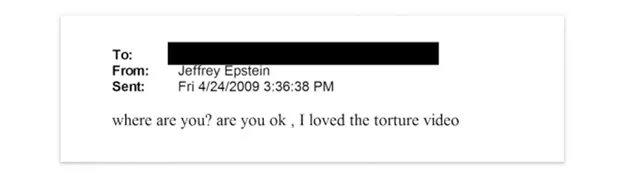
It does distract attention from the Epstein Files.

Trump said on Twitter in 2012 that Obama would start a war to divert attention from his sagging poll numbers.

Will this war help Trump’s numbers?

I would be thrilled to see regime change in Tehran. I have vivid memories of the 1979 Revolution. People on the left in the West cheered the fall of the Shah, who had modernized Iran but who was widely understood to be brutal towards critics.

Since 1979, we have seen the calcification of a religious regime that never holds elections, rules by force, permits no dissent, murders its critics, grants no rights to women, and subsidizes terrorism.

When Iranian students and dissidents rose up against the regime a few weeks ago, their resistance was crushed, and at least 30,000 people were murdered by the regime.

I should be cheering Trump’s decision to attack Iran, but I have a deep sense of foreboding.

Trump says “the people” should take control, but how exactly will that work? The military has weapons, not the people.

It appears that there is no plan for what happens next.

If the regime has the weapons and the Iranian people do not, the outcome will be preservation of the status quo.

It also matters that Trump went to war without Congressional authorization. Either the law is the law, or it is not. Of course, the military would lose the element of surprise, but the law is the law. If the law hampers military action, change it.

Republicans on the House Iversifgt Conmittee called former Secretary of State Hillary Clinton to testify. She asked for an open public hearing, but they refused.

She roasted them for failing to call for the testimony of those who are named in the Epstein Files and in widely circulated photographs. They have not invited testimony from Donald Trump, Melania Trump, Howard Lutnick, or Elon Musk.

Here is her statement:

Mr. Chairman, Ranking Member, Members of the Committee… as a former Senator, I have respect for legislative oversight and I expect its exercise, as do the American people, to be principled and fearless in pursuit of truth and accountability.

As we all know, however, too often Congressional investigations are partisan political theater, which is an abdication of duty and an insult to the American people.

The Committee justified its subpoena to me based on its assumption that I have information regarding the investigations into the criminal activities of Jeffrey Epstein and Ghislaine Maxwell. Let me be as clear as I can. I do not.

As I stated in my sworn declaration on January 13, I had no idea about their criminal activities. I do not recall ever encountering Mr. Epstein. I never flew on his plane or visited his island, homes or offices. I have nothing to add to that.

Like every decent person, I have been horrified by what we have learned about their crimes. It’s unfathomable that Mr. Epstein initially got a slap on the wrist in 2008, which allowed him to continue his predatory practices for another decade.

Mr. Chairman, your investigation is supposed to be assessing the federal government’s handling of the investigations and prosecutions of Epstein and his crimes. You subpoenaed eight law enforcement officials, all of whom ran the Department of Justice or directed the FBI when Epstein’s crimes were investigated and prosecuted. Of those eight, only one appeared before the Committee. Five of the six former attorneys general were allowed to submit brief statements stating they had no information to provide.

You have held zero public hearings, refused to allow the media to attend them, including today, despite espousing the need for transparency on dozens of occasions.

You have made little effort to call the people who show up most prominently in the Epstein files. And when you did, not a single Republican Member showed up for Les Wexner’s deposition.

This institutional failure is designed to protect one political party and one public official, rather than to seek truth and justice for the victims and survivors, as well as the public who also want to get to the bottom of this matter. My heart breaks for the survivors. And I am furious on their behalf.

I have spent my life advocating for women and girls. I have worked hard to stop the terrible abuses so many women and girls face here and around the world, including human trafficking, forced labor, and sexual slavery. For too long, these have been largely invisible crimes or not treated as crimes at all. But the survivors are real and they are entitled to better.

In Southeast Asia, I met girls as young as twelve years old who were forced into prostitution and raped repeatedly. Some were dying of AIDS. In Eastern Europe, I met mothers who told me how they lost daughters to trafficking and did not know where to turn. In settings around the world, I met survivors trying to rebuild their lives and help rescue others – with little support from people in power, who too often turned a blind eye and a cold shoulder.

If you are new to this issue, let me tell you: Jeffrey Epstein was a heinous individual, but he’s far from alone. This is not a one-off tabloid sensation or a political scandal. It’s a global scourge with an unimaginable human toll.

My work combatting sex trafficking goes back to my days as First Lady. I worked to pass the first federal legislation against trafficking and was proud that my husband signed the Trafficking Victims Protection Act, which increased support for survivors and gave prosecutors better tools for going after traffickers.

As Secretary of State, I appointed a former federal prosecutor, Lou CdeBaca, to ramp up our global antitrafficking efforts. I oversaw nearly 170 anti-trafficking programs in 70 nations and directly pressed foreign leaders to crack down on trafficking networks in their countries. Every year we published a global report to shine a light on abuses. The findings of those reports triggered sanctions on countries failing to make progress, so they became a powerful diplomatic tool to drive concrete action.

I insisted that the United States be included in the report for the first time ever in 2011. Because we must hold ourselves not just to the same standard as the rest of the world but to an even higher one. Sex trafficking and modern slavery should have no place in America. None.

Infuriatingly, the Trump Administration gutted the Trafficking in Persons Office at the State Department, cutting more than 70 percent of the career civil and foreign service experts who worked so hard to prevent trafficking crimes. The annual trafficking report, required by law, was delayed for months. The message from the Trump Administration to the American people and the world could not be clearer: combatting human trafficking is no longer an American priority under the Trump White House.

That is a tragedy. It’s a scandal. It deserves vigorous investigation and oversight.

A committee endeavoring to stopping human trafficking would seek to understand what specific steps are needed to fix a system that allowed Epstein to get away with his crimes in 2008.

A committee run by elected officials with a commitment to transparency would ensure the full release of all the files.

It would ensure that the lawful redactions of those files protected the victims and survivors, not powerful men and political allies.

It would get to the bottom of reports that DOJ withheld FBI interviews in which a survivor accuses President Trump of heinous crimes.

It would subpoena anyone who asked on which night there would be the “wildest party” on Epstein’s island.

It would demand testimony from prosecutors in Florida and New York about why they gave Epstein a sweetheart deal and chose not to pursue others who may have been implicated.

It would demand that Secretary Rubio and Attorney General Bondi testify about why this administration is abandoning survivors and playing into the hands of traffickers.

It would seek out officers on the front lines of this fight and ask them what support they need.

It would put forth legislation to provide more resources and force this administration to act.

But that’s not happening.

Instead, you have compelled me to testify, fully aware that I have no knowledge that would assist your investigation, in order to distract attention from President Trump’s actions and to cover them up despite legitimate calls for answers.

If this Committee is serious about learning the truth about Epstein’s trafficking crimes, it would not rely on press gaggles to get answers from our current president on his involvement; it would ask him directly under oath about the tens of thousands of times he shows up in the Epstein files.

If the majority was serious, it would not waste time on fishing expeditions.

There is too much that needs to be done.

What is being held back? Who is being protected? And why the cover-up?

My challenge to you, Mr. Chairman, Members of the Committee, is the same challenge I put to myself throughout my long service to this nation. How to be worthy of the trust the American people have given you.

They expect statesmanship, not gamesmanship. Leading, not grandstanding. They expect you to use your power to get to the truth and to do more to help survivors of Epstein’s crimes as well as the millions more who are victims of sex trafficking.

The White House posted a video of Trump skating in the hockey finals at the Olympics. Trump is wearing a suit and red tie. He skates furiously and scores a goal for the American team against Canada. Then he gets into a squabble with a Canadian player, and Trump hits him in the face.

Totally unbecoming for the President of the United States. Every bit of it. Embarrassing. Repulsive.

But then someone posted a response, showing an obese Trump in uniform, floundering on the ice, then falling flat on his face and sliding.

Equally unbecoming, but he asked for it.

Greg Olear is an author who has one of the best blogs on the Internet.

In this post, he illustrates what one million mentions of Donald Trump’s name actually looks like.

Olear writes:

Replace every word in Anna Karenina, The Decameron, Ulysses, and Moby-Dick with the words “Donald Trump,” and you have some idea of what being mentioned over a million times looks like.