Archives for category: Trump

When Trump allowed his buddy Elon Musk to run a so-called Department of Governmental Efficiency, Musk sent his mentees into every department with a license to terrorize civil servants and destroy their work. Agencies were literally ransacked, employees with deep experience were peremptorily fired by young men in their late teens and early 20s. Foreign aid programs were shuttered, and their employees given orders to return home.

The only certain result of the DOGE incursion was that the kids vacuumed up the personal data of every person, purpose unknown.

One casualty of DOGE in those early days was the Institute of Peace. The Institute was established by Congress and signed into law by President Reagan in 1984. Its goal was to train peacemakers and be the equivalent of military academies. It had a bipartisan board. It trained thousands of professionals in conflict resolution.

In February 2025, Trump signed an executive order to begin dissolving the IP. He fired most of its Board of Directors. The brazen DOGE pests forced their way into the building and took it over. The IP went to court to fight for survival.

The issue is still in court but Trump realized he had a use for the attractive building that previously housed the IP. He invited representatives of Rwanda and the Congo to come to Washington to accept a peace agreement for their decades-long war. This was intended to add luster to Trump’s ongoing campaign for a Nobel Peace Prize. President Obama got one, and that really bothers Trump, who is obsessively jealous of both Obama and Biden.

Days before the big meeting, workmen attached Trump’s name to two sides of the building. It is now officially the Donald J. Trump Institute of Peace. The words “Institute of Peace” are chiselled into the stone. The Trump name was attached in large silver letters. When he’s gone, they can easily be removed.

Foreign leaders now understand well that the key to Trump’s heart is his ego. So they compete to give him a gold crown, a solid bar of gold, and whatever extravagant symbols of royalty they can dream up.

FIFA, the governing body of world soccer, awarded its first gold “peace prize” to Trump to compensate for his loss of the Nobel peace prize. Trump said, “This is truly one of the great honors of my life.” The event was held at the Kennedy Center for the Performing Arts, where Trump fired the entire board, packed the board with his lackeys, and named himself president of the board. He has been thinking of naming the concert hall of the Kennedy Center for Melania. Don’t be surprised if sometime in the next four years, the facility is renamed the Trump Center for the Performing Arts.

And why shouldn’t the Washington Monument be retitled the Trump Monument?

Nothing is too small to be overlooked. Until now, visitors to national parks got free entry on Martin Luther King Jr. Day and Juneteenth, both of which are national holidays. However, the Trump administration has removed those two days. The only free day will be the birthday of Donald J. Trump. Will it soon be declared a national holiday?

Republicans have discussed placing his name and face on a coin–nickel, dime, or quarter–but they better act quickly before the 2026 midterm elections.

Governor Gavin Newsom was quick to respond:

Shortly after Trump won the first FIFA Peace Prize (FIFA is the world soccer federation), retail giant Kohl’s bestowed its first Kohl’s Peace Prize on Governor Gavin Newsom! Governor Newsom said he was honored.

Yesterday was a bad news, good news day.

On the bad side, the U.S. Supreme Court overruled a lower court, which had paused Texas’s disgusting gerrymander of the state’s Congressional districts. The party that wins the Presidency usually loses seats in the midterm election. To avoid that happening, Trump asked red state governors to redraw their districts, something that usually happens every ten years, after the latest census.

Texas Governor Greg Abbott was quick to respond to Trump’s request. The MAGA legislature drew a racially gerrymandered map intended to produce five new Republican seats by sacrificing districts that are currently represented by Black or Hispanic members of Congress.

A lawsuit to block the gerrymander lost in the District Court, won in the Appeals Court, which saw the ploy for what it was: a racial gerrymander. Yesterday the U.S. Supreme Court overruled the Appeals Court, finding nothing wrong with a racially gerrymandered redistricting, produced only five years after the last census.

The high court proved once again that it is an extension of Trump-MAGA, lacking in any principles or in fidelity to the Constitution or prior decisions.

We wait to see what they do to California’s gerrymander–not racially motivated–but produced to nullify Texas’ gerrymander.

There is also good news.

As is well known, Trump directed his Attorney General Pam Bondi to prosecute his political enemies–starting with James Comey, Letitia James (Attorney General of New York), and Senator Adam Schiff.

The first indictment of Comey and James was thrown out because the U.S. Attorney, Lindsey Halligan, was unqualified.

Charges were promptly refiled against James, claiming that she committed mortgage fraud, by saying that a home she purchased in Virginia was her first home, when it was really a second home, enabling her to pocket $18,000 because of a lower borrowing rate. Coming from an administration whose leaders have pocketed billions, this is funny.

The first prosecutor thought the case was so flimsy that he refused to bring charges. Trump installed Lindsey Halligan, one of his many personal attorneys, as U.S. Attorney. Galligan got a grand jury to indict James, but a judge threw out the indictment because Halligan was unqualified and made many errors.

When the charges against Tish James were brought to another grand jury, they refused yesterday to indict James.

Trump will no doubt continue to harass his enemies, but he’s running low on personal attorneys.

The mainstream media typically ignores charter school scandals, but CBS picked up on this one. Erika Donalds is building a for-profit charter school chain. She is the wife of Byron Donalds, who is running for Governor of Florida with Donald Trump’s blessing.

Byron Donalds has been a staunch supporter of Trump. Donalds is African American. Frankly, I don’t understand how he can be part of a political movement that seeks to eliminate Black history, dismantle studies of race and gender, and disparage any efforts to rectify historic racial injustices. I hope reporters ask him about these questions on the campaign trail.

Peter Greene saw the segment on CBS and posted the video. In his piece, he refers to Erika Donalds as “Florida’s leading school choice grifter.”

CBS reporters wrote:

Kathleen Cetola believed she had found the perfect fit for her 9-year-old grandson Landon when Optima Classical Academy broke ground in 2023 near her home in Fort Myers, Florida. As the primary caregiver for Landon, Cetola was drawn to the smaller class sizes and more traditional curriculum, which she felt would be “less woke” than the public school he was currently attending.

“Regarding gender and race, I want him to be able to make up his own mind,” Cetola told CBS News. “They were selling the fact that they were focused on the education and the classical type of teaching. I thought that was going to be a great opportunity for Landon.”

The Optima school in Fort Myers was founded by Erika Donalds, a leading voice in the school choice movement and the wife of Congressman Byron Donalds, the Republican frontrunner in next year’s Florida governor’s race. It was poised to be Erika Donalds’ fifth classical charter school and part of a flourishing trend.

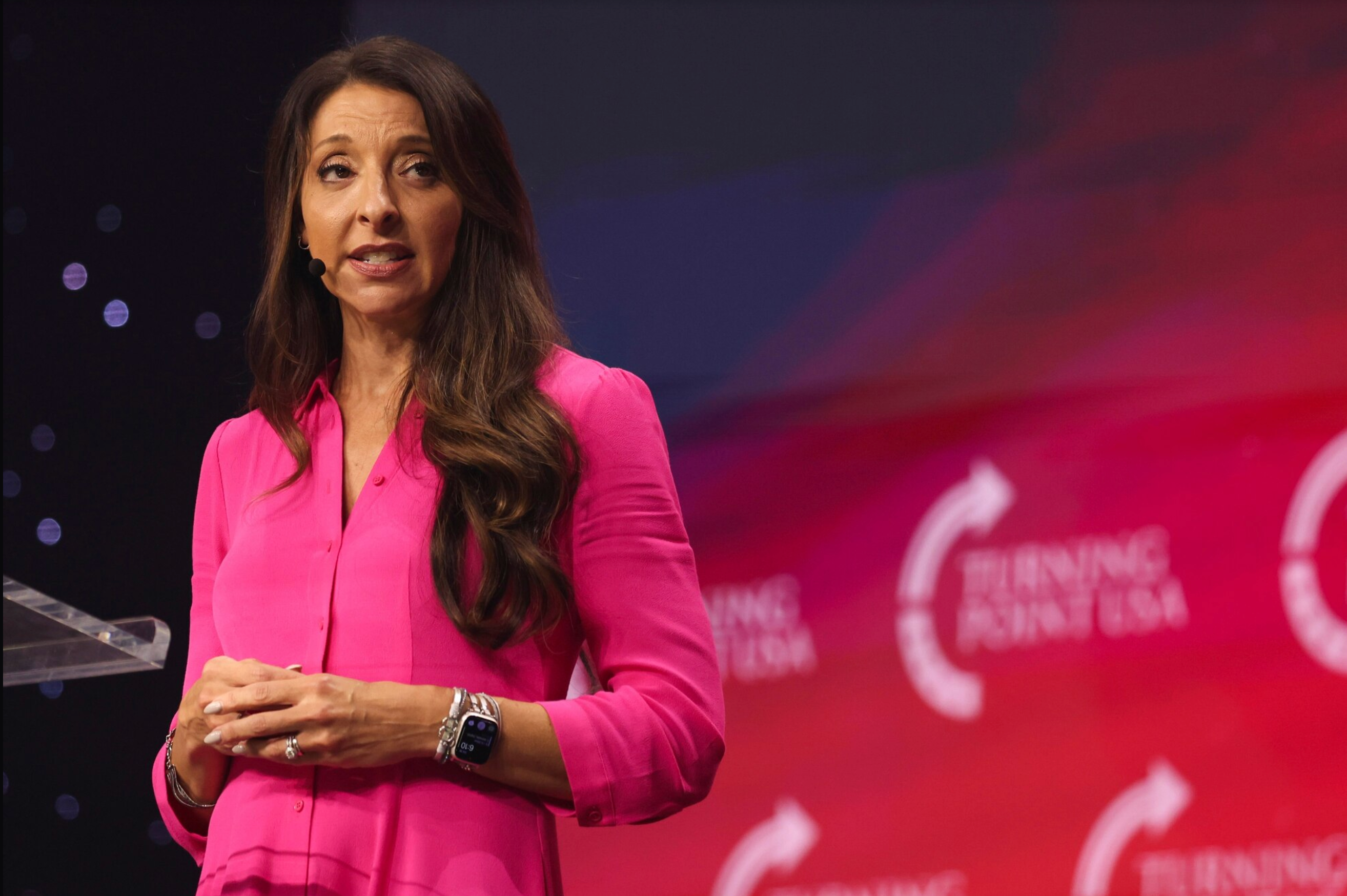
Photo of Erika Donalds.
Erika Donalds speaks on stage during day one of the Turning Point USA Student Action Summit on Friday, July 11, 2025, in Tampa. Luis Santana / Tampa Bay Times via AP

Classical charter schools offer a curriculum with a Eurocentric focus that stresses traditional values and introduces primary source documents like the U.S. Constitution at an early age. In the last five years, more than 250 classical schools have opened across the country. Many conservative politicians argue these schools are needed to reject what they see as a pervasive woke agenda in American public education.

Donalds has been a face of the classical charter movement, touring the country to tout their value. In an October speech to a group of conservative college women, she spoke about her decision to start her own schools. She said it was born out of her own experience trying to educate her children.

“I knew there were so many families out there that were desperate for this option,” she said.

Yet, after enrolling hundreds of students and hiring teachers, the Fort Myers school failed to open, leaving parents scrambling to find a school for their children.

“I feel cheated,” said Cetola, who was one of a half dozen parents who told CBS News they had signed up their kids to attend. “These kids were cheated, and it’s heartbreaking….”

The confusion the parents faced, according to experts, is not unique within a charter school industry that often operates with less transparency than traditional public schools.

Donalds declined to be interviewed for this story. In a statement, her spokesperson said she is “an accomplished businesswoman with a strong record of starting successful charter schools and providing thousands of students with an excellent education.”

Taxpayer-funded charter schools paid outside firms

Classical schools are one slice of a charter industry that GOP leaders have tapped to remake America’s public education system. Recent moves by both the federal government and local officials in Florida have freed up hundreds of millions of dollars in new funding. In September, the Trump administration announced it was investing half a billion dollars in grant programs that support charter schools.

The announcement came as Florida passed a law — at the urging of hedge fund manager and Republican megadonor Ken Griffin — to allow charter schools to operate inside traditional public school buildings.

CBS News reviewed state education data, financial documents, independent audits and faculty comments at four schools Donalds had helped launch. State data shows when it came to academic performance, one of the schools quickly excelled. But the records also raise questions about how public money was being spent by the schools.

Tax filings reviewed by CBS News show, between 2020 and 2023, the schools spent roughly 30% of the government funding they received — totaling about $35 million — on outside firms with ties to Erika Donalds. A source familiar with these arrangements said they landed the schools a good price on payroll expenses, IT and other back-office services.

In August, Byron Donalds filed an amended House financial disclosure for 2023, reporting that Erika Donalds held a stake in two of those firms each worth between $1 million and $5 million. His most recent disclosure, for 2024, again listed her stakes in those companies.

The amended disclosure was first reported by the Florida Bulldog

Of course, parents in Fort Meyers who signed up for Donalds’ school were disappointed when it didn’t open as promised.

They had been promised that the school would open in the fall of 2024. Erika Donalds told them that financial challenges and the lingering effects of Hurricane Ian required her to delay the opening. Parents eagerly anticipated the opening in the fall of 2025, but it was again announced that the opening would be delayed, this time to 2026.

Prior to the school in Fort Myers, Donalds helped launch four other classical charter schools operated by Optima across Florida: two in Jacksonville, one in Stuart and one in Naples.https://datawrapper.dwcdn.net/y9D5j/

Baker, the charter school expert at the University of Miami, said the practice reflected in Optima’s tax filings — of non-profit schools paying money to for-profit companies with overlapping stakeholders — occurs across the charter school industry. He said in the absence of meaningful governmental regulation, accountability comes from “how well they do for students.”

On that measure, students at those four Optima schools performed below average, according to Baker, who looked at math and reading test scores.

“Florida’s charter sector is not strong, and Optima schools, at least the four schools that seem to be in that affiliated mix, perform even less well,” Baker said.

The learning curve when it comes to implementing the classical curriculum can be steep, according to Janine Swearingin, who served as Treasure Coast Classical’s first principal from 2019 to 2022 and would later go on to work directly with Donalds at Optima. She praised Donalds and the company’s role in launching the school, which she said consistently earned top marks from the state when it came to academic performance when she was there.

In January 2023, after Swearingin left the school, the board of Treasure Coast Classical Academy commissioned an independent “performance audit” which was intended to draw attention to areas of concern. The resulting report said that while there were “commendable” aspects of the school’s performance, it also raised questions. Class sizes were so large, it said, that they appeared to violate state law and it noted a lack of structure in the classroom, all findings that Optima disputed.

The auditor praised Treasure Coast Classical’s “outstanding” financial health. But, some faculty complained Optima operated more like a “franchising corporation” and was “dedicated to profit sometimes to the detriment of the school itself.”

“It’s quite an undertaking since teachers don’t generally receive an education in teaching a classical curriculum,” said Swearingin, who noted that in a classical curriculum, first graders are studying the American Revolution at a time when their public school counterparts are learning about community helpers and basic geography. “The training is vastly different.”

As part of its response, Optima said it was working with the auditor “to build trust, address remaining concerns, and correct misinformation or misunderstandings.” A month later, the school’s board moved to terminate its contract with Optima. Treasure Coast Classical later sued Optima, alleging numerous instances of breach of its contract with the school. A county judge dismissed the lawsuit ruling because it had been filed in the wrong venue, and Treasure Coast Classical has appealed.

According to meeting minutes of the schools’ boards as well as county officials and school administrators contacted by CBS News, all four schools that had opened have since cut ties with Optima. The schools still offer a classical curriculum, but under different management. A source close to Donalds told CBS News that Optima’s plan all along was to assist with the start-up and then move on, once the schools reached “full stability.”

Donalds’ spokesperson noted that the schools’ academic performance eventually improved. “These schools show how a supportive environment, committed teachers, and high expectations can help children thrive,” she said.

The school in Fort Myers that had planned to open as Optima Academy is no longer associated with Donalds or her company. According to county records obtained by CBS News, Donalds in August sought to transfer ownership of the building to another charter operator. In October, the county school board approved the transfer and the new operator plans to open the school next fall.

“They just dropped the ball and ran,” Cetola said. “How can you do something like this and sell this to parents who really want to stay involved with their children and then just walk away?”

This story has been updated.

Credits

Reporting by Michael KaplanMark Strassman and Emma Nicholson. Production by Michael KaplanEmma Nicholson and Alyssa Spady. Photos and videography by Ryan Jackson. Video editing by Greg Hotsenpiller. Graphics, design and development by Taylor Johnston. Editing by Ellen Uchimiya and Matthew Mosk.

Republicans opposed the creation of the U.S. Department of Education. In 1979, President Jimmy Carter promised the NEA that he would push it through. Republicans fought it but he had the votes, and it was created. While NEA wanted the Department, Albert Shanker of the AFT was against it. He feared that the federal government would exert too much control over schools and that education might be politicized, with each party pushing its agenda. He preferred a department of education, labor, and social services.

Now, the Trump administration is dismantling the U.S. Department of Education. They have not sought Congressional approval, which is necessary to eliminate an authorized Department. Instead, they are eliminating it by layoffs and shifting programs to other departments. There may be a “Departnent of Education,” but the building will be empty. No one will be enforcing laws protecting the rights of children with disabilities. The Office of Civil Rights will likely go to the Justice Departnent, where it will not enforce the civil rights of women and racial minorities, but will make sure that schools stamp out DEI and deny any protections to transgender students.

Peter Greene writes:

The continued dismantling of the federal Department of Education is both a con and a lie, one more piece of a quilt of patchwork policies all built around a simple idea– some people are better than others, and the uppity lessers really ought to learn their place. And the rhetoric being used to sell the dismantling is a lie.

The over-simplified version of the department’s origin comes in two parts. First, Congress created some major funding streams meant to level the playing field for students and families, and with those funding streams, some civil rights laws to make sure states leveled their own playing fields for schooling and education. Second, Jimmy Carter, who had promised a cabinet-level ed department (and who wanted to be re-elected) proposed the department as a way to collect, organize, and administer the various policies.

The department’s job was never supposed to be to determine what an excellent education should be. It was supposed to make sure that whatever a good education was presumed to be in your state, everybody got one. So even if a child was presumed to be a poor Lesser, a future meat widget, a child whose special needs made them harder to educate– no matter what, the district and state were supposed to have the resources to meet the challenge. The quality of a child’s education was not supposed to depend on their zip code. 

This does not fit well with the current regime’s conception of civil rights, a conception rooted in the notion that the only oppressed group in this country is white guys, or their conception of democracy, a conception rooted in the notion that some people really are better than others and therefor deserve more power and privilege. (Nor does the regime love the idea of loaning people money for college and not collecting it).

So they’ve undone the second step of the department’s creation, and parceled out a bunch of programs to other departments, a move that philosophically advances the idea that education has no point or purpose in and of itself, but exists only to serve other interests.

For example, as Jennifer Berkshire points out, now that the Department of Labor exists to serve the interests of bosses, its interest in education centers on producing more compliant meat widgets to serve boss’s interests. Meanwhile, the ed programs now farmed over to the Department of Health and Human Services can be reorganized around RFK Jr.’s interest in eugenics and identifying those lessers whose proper place in society is, apparently, on a slab. 

That unbundling of education programs from the department only undoes the second phase of the department’s origin. But Secretary Linda McMahon’s assertion that these interagency agreement will “cut through layers of red tape” or “return education to the states” is thinly sliced baloney. It’s a lie.

“Instead of dealing with this government department, you will deal with this other government department” does not even remotely equal “You will now have less red tape.” In fact, given that you may have to track down the correct department and then deal with people who don’t have actual expertise and knowledge in education may spell even more red tape.

“We moved this from one government department to another government department” is definitely not the same as “we sent this back to the states.” 

Some programs may be sent back to the states in the sense that the feds would like to zero out the budget entirely which means the states that want to continue those programs will have to create and fund the programns on their own. If you tell your kids, “I’m not making you supper tonight,” I guess that’s kind of like saying “I’m sending the supper program to you.”

But the big ticket items, like IDEA and Title I will still be operating out of DC until such day as Congress decides to rewrite them. And given Dear Leader’s shrinking political capitol, I’m not sure that gutting IDEA is high on his To Do list right now. 

Matt Barnum suggests that gutting the department is largely symbolic and that actual schools won’t feel that much of a difference. On the one hand, that’s true-ish. “What is less clear,” Barnum writes, “is the Trump administration’s longer-term ambitions.” I’m not sure that’s all that mysterious. The far right’s goal, often in tandem with the modernn ed reform movement, is to get government entirely out of the education business while turning education into a get-it-yourself commodity. If government is involved in education at all, it would be 1) to provide a school-shaped holding tank for the difficult students that private schools don’t want and 2) to provide taxpayer funding for schools that deliver the “correct” ideological indoctrination. 

The parcelling-out of the department may only be a small step in that direction, but its long-seething right wing critics can see it as a means of shushing those annoying voices that keep bringing up rules and civil rights and stuff.

The best hope at this point is for a chance to build a new version of the department under a new administration (in an imaginary world in which the Democrats don’t face plant in 2028). But one of the worst things about the department has been the irresistable urge to use those massive grants to force DC-based education ideas on states, and this attack on the department doesn’t really address that problem at all. 

What this latest move clearly does not do is send education back to the states, which is, after all, where education responsibility already rested. The regime may be trying to hamstring and privatize education, but they aren’t sending it anywhere. It’s an unserious lie from unserious people. Stay tuned. 

When Harry S Truman was President, he had a sign on his desk: “The buck stops here.” It meant that he took responsibility for all decisions and their consequences. With Trump, he accepts “bucks” (money) from many directions, but never takes responsibility when anything goes wrong. His desk plaque should read: “The buck stops somewhere else.”

Jennifer Rubin, the journalist who quit The Washington Post and started a blog called The Contrarian, asserts that Trump bears ultimate responsibility for the vicious attack on two members of the National Guard in DC. They never should have been sent to patrol the city’s streets, a mission for which they were not trained. Now they are patrolling alongside DC police, who are pulled away from their jobs to protect the National Guard.

She writes:

The killing of one national guardsman and severe wounding of another in D.C. was a tragedy and an outrage. The killer, of course, should be punished to the full extent of the law. But to ignore Trump’s egregious decision-making that brought us to this point of reckless political violence is to invite further tragedies and condone grievous incompetence.

No matter how furiously Trump and his minions try to spin the narrative, Biden cannot be blamed for this one. Trump’s crew granted asylum to the suspected killer this April. Most importantly, Trump and MAGA governors who comply with the president’s whims and who send national guardsmen around the country willy-nilly for tasks they are not trained to perform are responsible for their safety. The guardsmen who were attacked should never have been there….

After the shooting, Trump and Hegseth added 500 guardsmen to the D.C. deployment, thereby increasing the risk to them. Trump predictably scapegoated all Afghan refugees.

As the New York Times reported, guardsmen had warned about just such a calamity months ago. “According to internal directives distributed to National Guard troops in Washington, D.C., in August, commanders warned that troops were in a ‘heightened threat environment’ and that ‘nefarious threat actors engaging in grievance based violence, and those inspired by foreign terrorist organizations’ might view the mission ‘as a target of opportunity.’”

In belated recognition that the national guard are sitting ducks, the Trump regime now has D.C. police patrolling with guardsmenSo, who is getting protection?

Surely, Americans would be safer if guardsmen stayed home to perform normal duties and D.C. police were assigned to do their crime-fighting jobs. “Diverting local police to accompany Guard members would … [mean] siphoning them from other tasks in D.C. neighborhoods,” The Washington Post reports.

Trump (again in the name of immigration enforcement), has pulled federal personnel away from critical tasks including anti-terrorism. In September, the Cato Institute, a libertarian think tank, found over 28,000 federal law enforcement officials had been diverted from critical tasks. “This diversion has significantly curtailed the government’s capacity to address criminal activity in the United States,” the report found. The personnel (mis)directed to immigration included 1 in 5 U.S. marshals, 1 in 5 FBI agents, half of all Drug Enforcement Agency agents, and two thirds of the Bureau of Alcohol, Tobacco, Firearms, and Explosives workforce. How many crimes could have been prevented and how many dangerous characters could have been arrested had this horde of federal agents not been dragooned for counterproductive, violent, and (in many instances) illegal invasions of cities?

In November, the New York Times reported on this phenomenon:

Homeland security agents investigating sexual crimes against children, for instance, have been redeployed to the immigrant crackdown for weeks at a time, hampering their pursuit of child predators.

A national security probe into the black market for Iranian oil sold to finance terrorism has been slowed down for months because of the shift to immigration work, allowing tanker ships and money to disappear.

And federal efforts to combat human smuggling and sex trafficking have languished with investigators reassigned to help staff deportation efforts.

The vast majority of those seized during immigration raids are not criminals, let alone violent. Only about 8 percent of those alleged undocumented immigrants seized had a conviction for a violent crime; 60 percent had no criminal record at all.

Trump insists he is responsible for…none of the consequences of his own decisions. But the misuse of national guard, as we found out in D.C. last week, can have disastrous results. Beyond this tragedy, Trump’s actions have killed or put at risk hundreds of thousands more.  The elimination of USAID has resulted in over 600,000 deaths; his $1 trillion cut in Medicare is likely to lead to an avoidable 51,000 deaths per year; and his idiotic cuts in NIH grants will result in untold number of deaths from discontinuing potentially life-saving medical trials.

Forget “buck stopping” in Trump’s regime. It’s an outmoded concept for a president who will not shoulder responsibility for his own directives. (Perhaps he could direct us to the person who is in charge.)

Americans surely know that Trump and his inert lackeys in Congress are responsible for innumerable errors and colossal misdeeds over the last 11 months. If they won’t take blame, then we need people in the executive and legislative branches willing to say the buck stops with them. That, after all, is the essence of democracy—and of adult leadership.

Can you tell the difference between truth and lies? How do you know what is true and what is false? Politicians have always boasted about their successes, but how can you tell whether they are exaggerating? That’s the job of fact-checkers, and not many newspapers have them on staff.

Glenn Kessler is a professional fact-checker. That was his job at The Washington Post for many years, where he applied the same rigorous standards to all politicians and elected officials, regardless of party.

He was recently invited to delivered the keynote address at the 2025 #SweFactCheck conference in Stockholm, hosted by the FOJO Media Institute at Linnaeus University.

Kessler posted his speech on his Substack blog. I think it’s a very important piece about our age of disinformation.

Good morning. For nearly fifteen years, I ran The Fact Checker column at The Washington Post. That gave me a front-row seat to the extraordinary rise — and more recently, the uneasy retreat — of fact-checking around the world.

When I began in 2011, political fact-checking felt like a growth industry. At first, there were only a handful of dedicated organizations; a few years later, there were more than four hundred, spanning over a hundred countries — across Europe, Latin America, Africa, and Asia. Many operate where press freedom is fragile. As a member of the advisory board of the International Fact-Checking Network, I helped draft the IFCN’s code of principles — a commitment to check all sides fairly and remain transparent about funding and methodology.

Many of you might have observed the expansion of that movement. You know the energy that drove it: the belief that shining light on falsehoods could raise the cost of lying and strengthen the public square.

During the pandemic, for instance, IFCN members created the Coronavirus Facts Alliance, pooling more than 12,000 fact checks in 40 languages. It allowed researchers to trace how identical myths — from miracle cures to lab conspiracies — jumped continents within days.

I should note that fact-checking is not about scoring points or humiliating politicians. It’s about equipping citizens to make informed choices — to look under the hood before buying what a politician is selling.

But growth in fact-checking has not meant victory over lies. The more fact-checking expanded, the more sophisticated the falsehoods became. It is an arms race between truth and lies, and so far, truth is losing ground.

When several hundred people gathered in Rio de Janeiro earlier this year for the annual IFCN conference, the atmosphere was tense. After a decade of expansion, fact-checking was under fire. Funding was drying up. The political headwinds were stronger. And even as we grew in numbers, so did the wave of misinformation swamping the world.

Consider what has happened in just the past year.

Meta, which after 2016 invested more than $100 million to fund a hundred fact-checking organizations, ended its partnership with U.S. outlets, though it appears Meta will still support non-U.S. fact-checkers through 2026. Google announced it would phase out its ClaimReview program — a system I helped foster — that gave verified fact checks prominence in search results.

The Trump administration dismantled the U.S. Agency for International Development, eliminating grants that supported emerging fact-checkers in Eastern Europe, Africa, Latin America, and Asia.

In the United States, there is no federal government regulation of social platforms. But even nascent regulatory efforts in Europe may falter. The European Union’s Digital Services Act was designed to hold platforms accountable for misinformation. Yet European fact-checkers worry that enforcement could be weakened during trade talks with the current U.S. administration, which opposes such regulation.

Fact checking has even become a dirty word, an epithet scorned by opponents. There have been efforts to rebrand it, though I’m not sure a name change will mean much. The purveyors of falsehoods will still attack anyone who tries to correct the record.

There are many reasons for this global shift, but two stand out.

First, social media allows falsehoods to travel faster than truth can catch up. By the time a claim is debunked, millions may have seen the original post — and few will ever see the correction. We witnessed this during the war between Israel and Hamas, fought both on the ground and across digital networks, where competing narratives raced ahead of verification.

Second, more politicians now feel emboldened to lie with impunity. Autocrats always did, but now elected leaders in democracies deploy the same tactics to energize supporters and delegitimize opponents.

When I started to helm “The Fact Checker,” I focused on statements by politicians and interest groups — claims about jobs, health care, or taxes. But over time I found myself tracing a meme that originated on a fringe website and was recycled into mainstream discourse.

Take the false story that athletes were “dropping dead” from COVID vaccines. It began on obscure Austrian sites linked to a far-right party, written by anonymous authors who did not exist. Those posts were amplified by U.S. outlets, until an American senator repeated the claim on national television. As is typical, there was a kernel of truth — rare cases of heart inflammation — that purveyors of disinformation exaggerated into a global myth.

That example captures our new reality: online falsehoods can leap borders, mutate, and re-emerge in parliaments and news conferences.

My column used a simple device — the Pinocchio scale — to signal degrees of falsehood. One Pinocchio for selective truth-telling, up to four Pinocchios for outright whoppers. It became a kind of reverse restaurant review.

In the early years, the ratings were evenly distributed. Barack Obama, Hillary Clinton, Mitt Romney, Jeb Bush — they all earned Four Pinocchios about fifteen percent of the time.

Politicians might exaggerate, but they generally stayed tethered to facts. When confronted with a bad rating, most dropped the talking point. Campaigns even used fact-checks internally to keep themselves honest.

There were occasional outliers. Representative Michele Bachmann of Minnesota was a frequent visitor to the Four-Pinocchio club, and Joe Biden had his share of numerical stumbles. But these were exceptions. Even in the 2012 campaign, both Obama and Romney took fact-checking seriously. Obama’s team once protested that our Pinocchios were undermining their message — but they changed statistics that caused problems. Romney’s campaign often did the same.

That was the culture of truth a decade ago: politicians disliked being caught in a falsehood and wanted to avoid the embarrassment of being publicly corrected. Fact-checking mattered because credibility mattered.

Back then, the energy was palpable. Fact-checkers were springing up in Argentina, South Africa, India, and South Korea. Chequeado in Buenos Aires inspired others across Latin America. Full Fact in London held news outlets to account. StopFake in Ukraine battled Russian propaganda. It felt like a new frontier for journalism — a global “factcheckathon.”

Then came Donald Trump.

I had never encountered a politician so unconcerned with factual accuracy. During his first campaign in 2016 he earned Four Pinocchios roughly sixty-five percent of the time. In his first term, the pace only accelerated. He claimed that millions of undocumented immigrants voted, that Barack Obama wiretapped him, that he had passed the biggest tax cut in U.S. history. None of it was true.

He repeated falsehoods relentlessly — hundreds of times. At The Washington Post, we tracked them all. By the end of his first term we had catalogued 30,573 false or misleading claims — an average of 21 a day. By his final year, he was averaging 39 a day.

What was most striking was how the nation adjusted to it. Repetition dulled the shock. Lies became expected, even normalized. By his second term, there was little point in counting; people had stopped caring.

Trump rose at the same time social media reached critical mass. The Fact Checker launched in 2007, when Facebook had 50 million users. By 2015, it had 1.6 billion. Twitter gave Trump a direct channel to millions, bypassing traditional gatekeepers. His proposed Muslim ban was the most-shared campaign moment on Facebook that year.

Social media amplified falsehoods faster than fact-checkers could respond. Russian operatives exploited that dynamic in 2016, flooding feeds with fabricated stories. Tech companies eventually enlisted fact-checkers to label misinformation — but the political backlash was fierce. Leaders who benefited from the chaos framed it as censorship.

And now, many of those same platforms are retreating from the fight, often because of pressure from the current American administration.

Trump’s rhetoric that mainstream news organizations are “enemy of the people” and his constant attacks on “fake news” echoed far beyond the United States. Leaders in Hungary, Turkey, the Philippines, and Brazil — under former president Bolsonaro — borrowed that language to delegitimize journalists and sow distrust.

The January 6, 2021 attack on the U.S. Capitol was live-streamed and dissected worldwide. One year later, a near-carbon copy unfolded in Brasília. False claims about Brazil’s election, amplified by some of the same American figures who questioned Trump’s loss, spread through WhatsApp and Telegram groups and inspired the violence that day.

Bolsonaro was recently convicted for his role in the attempted coup. The current Brazilian government insists it will not bow to pressure from Trump to soften oversight of social-media platforms such as X. One Brazilian justice put it succinctly: “Your freedom does not mean being free to go the wrong way and crash into another car.” Self-regulation, she said, has proven a failure.

In Europe, debates about regulating platforms are entangled with trans-Atlantic politics. Officials fear being accused of censorship if they act too forcefully — and of negligence if they don’t. Meanwhile, conspiracy movements that began in one country migrate effortlessly to another, translated overnight into new languages and contexts.

Some European officials have acknowledged the potential danger posed by social media networks controlled by non-Europeans. French President Macron said last month: “We have been incredibly naive in entrusting our democratic space to social networks that are controlled either by large American entrepreneurs or large Chinese companies, whose interests are not at all the survival or proper functioning of our democracies.”

Another threat is the rise of generative AI. Google AI Overview and information chat bots are killing traffic to established news websites like The Washington Post, eroding an economic foundation that was built on search clicks. Few people click to read the sources on which AI builds its summary answers.

The statistics are astonishing. Ten years ago, every two Google searches would result in one click on a website; by the start of this year, it took six Google searches to get one click. With Google’s AI Overview, it now takes 18 searches for one click. It’s even worse with ChatGPT, where it takes almost 400 queries to result in one click.

As a result, organic traffic has plummeted from more than 2.3 billion visits in mid-2024 to fewer than 1.7 billion in mid-2025, with some news organizations suffering double-digit declines in traffic in just a few months. That has led to layoffs and buyouts at many news organizations.
I saw the internal numbers when I still worked at The Post. The so-called Trump bump that the newspaper received in his first term had become a slump in his second term, even though his administration was generating more news than ever.

The danger is that AI based on large language models relies on accurate information to produce its answers — and if it can’t find anything, it hallucinates answers because it must always provide an answer. There’s a possibility of a vicious circle — if news organizations wither, the quality of AI will degenerate too.

Foreign actors also exploit AI. Russia has created an effort called the Pravda Network — a collection of 150 websites that targets 49 countries in dozens of languages. A NewsGuard report this year found the ten largest AI tools on average spread Russian false claims one-third of the time when prompted by the network. That’s because the Russian program infects the AI models with so many false stories that the AI models then rely on and repeat as true.

A few weeks ago, for instance, a Republican member of Congress repeated Russian disinformation claiming Ukrainian president Zelensky was stashing $20 million month in a Middle East bank account. She’d read it in a Bing AI summary. And then of course Russian newspapers were able to report that an American lawmaker had stated this so-called fact.

Since I left The Post, I have been working with an organization called Sourcebase.ai which only relies on verified sources, such as official documents, news organization archives or fact checks produced by verified fact-checking organizations. So there are no hallucinations. The hope is that we can offer an alternative to LLMs — and possibly a way to monetize that information.

The disinformation ecosystem is global. But so, thankfully, is the resistance to it.

All this makes the core mission of fact-checking — establishing an agreed set of facts — far harder. Human psychology compounds the problem.

Studies show that people are receptive to information that confirms their pre-existing views. One experiment gave participants identical sets of numbers — one about a skin-cream study, another about gun control, the third about climate change. When the topic was neutral, both liberals and conservatives interpreted the math correctly. When it was political, accuracy collapsed; people simply made the numbers fit their side of the argument.

Another study found that two-thirds of Americans were uninterested in hearing opposing views, even when offered money to do so. A 2018 experiment discovered that exposure to tweets from political opponents for just a month made participants more polarized, not less.

In fact, in the United States, party identification has become a basic, essential sign of character. In 1960, a survey found that only 4 percent of Democrats or Republicans said they would be disappointed if their child married someone from the opposite political party. Six decades later, a survey found 45 percent of Democrats and 35 percent of Republicans said they would be unhappy if their son or daughter married someone from the other party. Strikingly, a child’s decision to marry someone from a different race, ethnicity or religion raised far less concern.

I’ve seen this firsthand. Criticize Bernie Sanders’s facts and the left attacks. Fact check a Republican and the right piles on. Increasingly, those attacks are personal — aimed not at the argument but at the journalist.

We also see a shift in public values. A decade ago, large majorities of Americans — Republicans, Democrats, and independents — said honesty was essential in a president. By 2018, that share among Republicans had fallen more than twenty points. Many decided dishonesty was acceptable if it served a higher purpose.

When truth becomes optional, democracy becomes negotiable.

In recent years, governments have turned their fire on fact-checkers themselves. In the Philippines, Rappler fought costly legal battles to survive. In Mexico, the government created its own “fact-checking” unit — not to correct falsehoods but to attack reporters.

Even once-respected institutions have joined the fray. The U.S. State Department recently claimed that “thousands” of Europeans had been convicted merely for criticizing their governments — a statement unsupported by evidence. The Homeland Security Department now routinely releases viral — and misleading — videos on immigration, with dramatic footage of alleged failures and violence that happened under Biden. But some of the film was recorded during Trump’s first term — or shows events from other cities. The errors were identified by reporters — but the administration did not remove or correct the videos.

As official bodies repeat distortions once confined to the fringe, the ground beneath us shifts.

At the start of my career forty years ago, reporters could still assume a shared factual baseline. Now every claim — no matter how well-sourced — is instantly questioned by someone quoting a meme.

I’ve seen the growth and contraction of funding for fact-checking. I’ve helped build international standards only to watch them dismissed as “politically biased.” I’ve tracked 30,000 falsehoods from one U.S. president and seen millions celebrate him for it.

And yet I’ve also seen the bravery of colleagues around the world who keep checking facts under threats far greater than a Twitter pile-on. They remind me that truth is not an abstraction; it’s a public service, sometimes even an act of courage.

One reason misinformation spreads so easily is that its authors have no standards. Fact-checkers do. We document sources, explain reasoning, and publish corrections. The other side can fabricate freely. And when we make a rare mistake, that single lapse is weaponized to discredit the entire field.

Not long ago, a partisan website falsely claimed fact-checkers had made political donations — a violation of our ethics code. The allegation was baseless but was retweeted by Elon Musk to millions of followers. It’s a perfect illustration of the asymmetry: accountability for one side, none for the other.

Still, our transparency is our strength. The antidote to cynicism is openness. Explain what you checked, how you checked it, and what you found — again and again, even when you’re tired of repeating it.

Technology has brought enormous benefits. Information is democratized as never before. But it has also shattered the shared public square. Newspapers and evening newscasts once gave citizens a common set of facts. Now we curate our own realities — our own feeds, our own algorithms, our own truths.

We seem richer in information, but poorer in understanding. Sometimes it feels as if the more data we have, the less we agree on what any of it means.

I always urge people to diversify what you read and follow. If you’re a liberal, read some conservatives. If you’re a conservative, read liberals. Seek out voices that challenge your assumptions. It’s the only antidote to the intellectual isolation that algorithms create.

In my nearly three decades at The Washington Post, I wrote or edited some 3,000 fact-checks. I’ve seen the best and worst of public discourse. I’ve seen how a single fact check can change a debate — and how a dozen fact checks can still be drowned out by a lie that confirms what people want to believe.

The fight for truth has never been easy, and it will not get easier. Our goal should not to try to eliminate falsehoods — that’s impossible — but to make truth visible, persistent, and credible enough to matter.

Fact-checking may feel like pushing a rock up a hill, but every verified claim, every contextual note, every correction is a brick in the foundation of civic trust. We are not just checking facts; we are defending the conditions that make democracy possible.

This is the war on truth. It’s not a war we chose, but it’s one we cannot afford to lose.
Stories have circulated for years about a young woman who claimed that Trump raped her when she was 13. After the case was filed, the young woman–who used the pseudonym “Katie Johnson”–withdrew the charges and was never heard from again.

There are two possibilities:

  1. The story was withdrawn because it was fraudulent.
  2. The complainant was offered money to shut up or was threatened with violence if she didn’t shut up.

Now Andy Borowitz revives the story in a podcast with a philosophy professor at Cornell University who was determined to find out what happened. He interviewed her on a podcast.

Andy Borowitz wrote:

Davidoff Studios/Getty Images

(Warning: This post contains upsetting content.)

Last week on my podcast, I interviewed the writer Kate Manne about the disturbing case of Katie Johnson.

Although Johnson’s accusations have never been adjudicated, her account is extremely detailed and, in my opinion, credible.

I interviewed Manne about this case because she has spent a significant amount of time researching it. She also created a transcript of Johnson’s testimony, something that corporate media, which have largely ignored the story, have never done.

After the podcast episode went live, I received many requests from paid subscribers asking me to remove its paywall so that the story of Katie Johnson could reach a larger audience. I have done so, and you can now access it for free here

In video testimony recorded in 2016, the pseudonymous Johnson alleged that she was trafficked by Jeffrey Epstein and raped by Donald Trump when she was thirteen. 

It is, as I’ve warned, an extremely upsetting story, but I think it’s important that people know about it. Please consider watching it and sharing it. And thanks, as always, for your support.

What do you think?

Secretary of Health and Human Services Robert F. Kennedy Jr. quietly installed an anti-vax extremist as #2 at the Centers for Disease Control and Prevention.

Dr. Ralph Lee Abraham is both a doctor and veterinarian. He served in Congress. In 2024, he was appointed Surgeon General of Louisiana. During the pandemic, he advocated hydroxychloroquine and Ivermectin as cures for COVID, echoing Trump. Mainstream scientists found both to be ineffective. He opposed mass vaccinations.

Another blow against intelligence, science, medical knowledge and good health. Another strike against the nation’s premier public health institution. Look elsewhere for sound advice on medical issues.

Make no mistake. Trump is Putin’s ally. Putting Trump in charge of negotiations to end the war in Ukraine is akin to putting the fox in charge of guarding the henhouse. On more than one occasion, Trump has sent his emissaries to devise a “peace plan” without asking Ukraine or the representatives of Europe to participate in the discussions.

Trump campaigned by claiming that he could end the war in a single day. All that was required would be a phone call to his good friend Putin.

That hasn’t happened, but Trump continues to threaten to cut off all aid to Ukraine unless Zelensky capitulates to Putin’s demands. These demands would give Putin everything he wants.

Max Boot spelled out the situation in The Washington Post:

Russia’s barbaric assault on Ukraine continues: A single Russian drone and missile strike on an apartment block in western Ukraine last week killed at least 31 civilians. Meanwhile, Russia is ramping up its campaign of sabotage in Europe: Polish authorities blamed the Kremlin for a Nov. 15 explosion on a rail line used to transport supplies to Ukraine. As German Chancellor Friedrich Merz said recently, Europe “is not at war” but it is also “no longer at peace” with Russia.

The growing threat from Vladimir Putin’s despotic, expansionist regime calls for Churchillian resolution, unity and strength on the part of the transatlantic alliance. Instead, Neville Chamberlain-style irresolution and confusion reigns on both sides of the Atlantic. The situation is far more concerning in the United States than in Europe, with the Trump administration having seemingly endorsed, at least for now, a “peace plan” that would give Russia a victory at the negotiating table that it hasn’t earned on the battlefield.

The Europeans have stepped up, providing weapons and funding to Ukraine as U.S. support has dried up. The European Union has a plan to do even more by sending Kyiv some $200 billionin frozen Russian assets as a “loan” that would likely never be repaid. Obviously, given the current corruption scandal in Kyiv, safeguards on the disbursement of the money would be needed. But this is a vital — indeed, irreplaceable — source of funding that can keep Ukraine afloat for years. Yet tiny Belgium, where most of the funds are frozen, is wringing its hands and holding up the plan. There is no Plan B: Europe has to send the Russian funds or else Ukraine will run out of money. So why dither and delay?

As for the peace plan floated by the White House last week: The 28-point plan amounts to a holiday wish list from the Kremlin. It would require Ukraine to cede the entire Donbas region — even the parts that Russian troops have been unable to conquer — and to cut the size of its armed forces by roughly a third. Ukraine would not be allowed to join NATO, and NATO would not be allowed to dispatch peacekeeping troops to Ukraine. Ukraine would hold elections within 100 days and “all Nazi ideology” would be “prohibited”; this is Kremlin code for toppling the Zelensky government. Russia isn’t being asked to limit the size of its armed forces or to hold elections; all the demands are on Ukraine.

What does Ukraine get in return? A separate draft agreement specifies that in the event of renewed Russian aggression, the United States could respond with “armed force, intelligence and logistical assistance, economic and diplomatic actions.” But the U.S. wouldn’t be compelled to do anything. Ukraine would be left to rely on a worthless Russian pledge of “nonaggression” — something it already promised in the 1994 Budapest Memorandum.

This isn’t a peace plan. It’s a blueprint for Ukraine’s capitulation. If implemented, it would turn this pro-Western, democratic nation, which has been courageously resisting Russian aggression since 2014, into a Kremlin colony….

In the New York Times, Thomas Friedman was scathing in his view of the Trump-Putin “peace plan.”

He predicted that Trump would not get the Nobel Peace Prize, which he covets, but would certainly win the ““Neville Chamberlain Peace Prize” — awarded by history to the leader of the country that most flagrantly sells out its allies and its values to an aggressive dictator.”

He wrote:

This prize richly deserves to be shared by Trump’s many “secretaries of state” — Steve Witkoff, Marco Rubio and Dan Driscoll — who together negotiated the surrender of Ukraine to Vladimir Putin’s demands without consulting Ukraine or our European allies in advance — and then told Ukraine it had to accept the plan by Thanksgiving…

If Ukraine is, indeed, forced to surrender to the specific terms of this “deal” by then, Thanksgiving will no longer be an American holiday. It will become a Russian holiday. It will become a day of thanks that victory in Putin’s savage and misbegotten war against Ukraine’s people, which has been an utter failure — morally, militarily, diplomatically and economically — was delivered to Russia not by the superiority of its arms or the virtue of its claims, but by an American administration…

He was the British prime minister who advocated the policy of appeasement, which aimed to avoid war with Adolf Hitler’s Germany by giving in to his demands. This was concretized in the 1938 Munich Agreement, in which Chamberlain, along with others in Europe, allowed Germany to annex parts of Czechoslovakia. Chamberlain boasted it would secure “peace for our time.” A year later, Poland was invaded, starting World War II and leading to Chamberlain’s resignation — and his everlasting shame.

To all the gentlemen who delivered this turkey to Moscow, I can offer only one piece of advice: Be under no illusions. Neither Fox News nor the White House spokeswoman Karoline Leavitt will be writing the history of this deal. If you force it upon Ukraine as it is, every one of your names will live in infamy alongside that of Chamberlain, who is remembered today for only one thing:

This Trump plan, if implemented, will do the modern equivalent. By rewarding Putin’s unprovoked invasion of Ukraine based on his obsession with making it part of Mother Russia, the U.S. will be putting the whole European Union under Putin’s thumb. Trump’s message to our allies will be clear: Don’t provoke Putin, because as long as I am commander in chief, the United States will pay no price and we will bear no burden in the defense of your freedom.

Which is why, if this plan is forced on Ukraine as is, we will need to add a new verb to the diplomatic lexicon: “Trumped” — to be sold out by an American president, for reasons none of his citizens understand (but surely there are reasons). And history will never forget the men who did it — Donald Trump, Steve Witkoff, Marco Rubio, Dan Driscoll — for their shame will be everlasting.

As a Wall Street Journal editorial on Friday put it: “Mr. Trump may figure he can finally wash his hands of Ukraine if Europe and Ukraine reject his offer. He’s clearly sick of dealing with the war. But appeasing Mr. Putin would haunt the rest of his presidency. If Mr. Trump thinks American voters hate war, wait until he learns how much they hate dishonor. … A bad deal in Ukraine would broadcast to U.S. enemies that they can seize what they want with force or nuclear blackmail or by pressing on until America loses interest.”

Mind you, I am not at all against a negotiated solution. Indeed, from the beginning of this war I have made the point that it will end only with a “dirty deal.” But it cannot be a filthy deal, and the Trump plan is what history will call a filthy deal.

Even before you get to the key details, think of how absurd it is for Trump to strike a deal with Putin and not even include Ukraine and our European allies in the negotiations until they were virtually done. Trump then declared it must be accepted by Thursday, as if Ukraine’s president, Volodymyr Zelensky, who has a parliament that he needs to win acceptance from, could possibly do so by then, even if he wanted to.

As my Times colleague David Sanger observed in his analysis of the plan’s content: “Many of the 28 points in the proposed Russia-Ukraine peace plan offered by the White House read like they had been drafted in the Kremlin. They reflect almost all Mr. Putin’s maximalist demands.”

Ukraine would have to formally give Russia all the territory it has declared for itself in eastern Ukraine’s Donetsk and Luhansk regions. The United States would recognize that as Russian territory. No NATO forces could be based inside Ukraine to ensure that Russia could never invade again. The Ukrainian military would be capped at 600,000 troops, a 25 percent cut from current levels, and it would be barred from possessing long-range weapons that could reach Russia. Kyiv would receive vague security guarantees from the U.S. against a Russian re-invasion (but who in Ukraine, or Moscow, would trust them coming from Trump?).

Under the Trump plan, $100 billion in frozen Russian assets would be put toward U.S.-led efforts to rebuild and invest in Ukraine, and the U.S. would then receive 50 percent of the profits from that investment. (Yes, we are demanding half of the profits generated by a fund to rebuild a ravaged nation.)

Trump, facing blowback from allies, Congress and Ukraine, said Saturday that this was not his “final offer” but added, if Zelensky refuses to accept the terms, “then he can continue to fight his little heart out.” As always with Trump, he is all over the place — and as always, ready to stick it to Zelensky, the guy fighting for his country’s freedom, and never to Putin, the guy trying to take Ukraine’s freedom away.

What would an acceptable dirty deal look like?

It would freeze the forces in place, but never formally cede any seized Ukrainian territory. It would insist that European security forces, backed by U.S. logistics, be stationed along the cease-fire line as a symbolic tripwire against any Russian re-invasion. It would require Russia to pay a significant amount of money to cover all the carnage it has inflicted on Ukraine — and keep Moscow isolated and under sanctions until it does — and include a commitment by the European Union to admit Ukraine as a member as soon as it is ready, without Russian interference.

This last point is vital. It is so the Russian people would have to forever look at their Ukrainian Slavic brothers and sisters in the thriving European Union, while they are stuck in Putin’s kleptocracy. That contrast is Putin’s best punishment for this war and the thing that would cause him the most trouble after it is over.

This would be a dirty deal that history would praise Trump for — getting the best out of a less than perfect hand, by using U.S. leverage on both sides, as he did in Gaza.

But just using U.S. leverage on Ukraine is a filthy deal — folding our imperfect hand to a Russian leader who is playing a terrible one.

There is a term for that in poker: sucker.

James Traub wrote anoter excellent analysis of Trump’s “peace plan.” It would be worth your while to open the link and read in full.

He concludes:

My first reaction on reading the Trump Administration’s 28-point peace plan for Ukraine was shame. That’s a different emotion from the anger I feel when Trump does something deplorable at home, like use the Justice Department to terrorize his enemies. When he abandons people elsewhere I feel ashamed of my country before the world.

This latest exercise in coercive diplomacy does not merely give the Russians what they want and deprive the Ukrainians of what they need. What is extra specially Trumpian, and thus shameful, about the proposal is that its second beneficiary is the United States. Point 10 guarantees the United States “compensation” for the completely unspecified security guarantees alluded to in Point 5. From whom? The plan doesn’t say, but presumably the answer is Ukraine, from which Trump demanded a preposterous $500 billion earlier this year in exchange for ongoing support. So we will profiteer off Ukraine’s subjection….

If the United States walks away, we will have vindicated Putin’s belief that in the end nothing matters except force. We will leave Europe to live in fear of an emboldened Russia. We will have washed our hands of a democratic and patriotic nation.

Jonathan Larsen reported the details of the press conference held by Mayor-Elect Zohran Mamdani and President Trump after their private meeting. Everyone was expecting fireworks since the two had traded insults. But their friendly, even warm, exchange surprised everyone.

Maybe I’m fascinated in this meeting because I live in NYC, but mostly I’m fascinated for what this meeting shows about Mamdani and Trump.

Jonathan Larsen wrote on his Substack blog (whose name is unprintable on this blog):

It was built up as the next Rumble in the Jungle. The Ado on Pennsylvania Avenue, or something.
But CNN ended up calling it “bizarrely chummy.” Or, in British speak, “surprisingly cordial,” as the BBC put it.

It actually wasn’t bizarre. Professional journalists shouldn’t have been surprised and should be embarrassed to admit they were. After all, New York City Mayor-elect Zohran Mamdani asked for Friday’s meeting with Pres. Donald Trump.

Trump, obviously, agreed. Setting the meeting without being open to cordiality and chumminess is what would be bizarre and surprising. But even with that in mind, the extent of Trump’s cordial chumminess was, admittedly, remarkable.

Trump ended up beaming in pictures with Mamdani on the same day he gave Rep. Marjorie Taylor Greene (R-GA) a kick in the ass as she headed out the door.

“It was a great honor meeting Zohran Mamdani, the new Mayor New York City!” Trump posted afterward, erasing still Mayor Eric Adams.

On point after point — communism, Israel, crime — Trump without a second thought brushed off right-wing and centrist-Democratic priorities and fear-mongering and even his past bellicosity.

Along the way, Trump explicitly tossed a Republican ally under the bus, essentially saying she’s lying about Mamdani because, hey, campaigning, amirite?

The meeting itself was peppered with more Trump positivity than any one media account conveyed, so I broke down all the Trump love for Mamdani into categories1:

Defending Mamdani

On Mamdani calling him a despot: “I’ve been called much worse than a despot, so it’s not, it’s not that insulting, but maybe — I think he’ll change his mind after we get to working together.” The whole exchange is worth watching:

[it appears on TikTok.]

https://www.tiktok.com/t/ZP8Uj92YT/

•“That’s another thing I think we have in common, we want to see peace in the Middle East.”

•Trump: “You said a lot of my voters actually voted for him and—:
Mamdani: “One in ten.”
Trump: “—and I’m OK with that.”

•“He may have different views, but in many ways, you know, we were discussing when [Sen.] Bernie Sanders [I-VT] was out of the race. I picked up a lot of his votes and people had no idea because he was strong on not getting ripped off in trade. And lots of the things that I’ve practiced and been very successful on — tariffs, a lot of things — Bernie Sanders and I agreed on … But no, I feel very comfortable, I would be, I would feel very, very comfortable being in New York [under Mayor Mamdani] and I think much more so after the meeting.”

•“I think you’re going to have hopefully a really great mayor. The better he does, the happier I am.”

•“We had some interesting conversation and some of his ideas really are the same ideas that I have.”

•Q: “Would you feel comfortable living in New York City under a Mamdani administration?”

Trump: “Yeah, I would. I really would, especially after the meeting, absolutely. …We agree on a lot more than I would have thought.”

•“I think he’s different, all right? I think he’s different and that can be a very positive way. But I think he’s different than — you know, your typical guy; runs, wins, becomes mayor maybe and nothing exciting — because he [Mamdani] has a chance to really do something great for New York. New York is at a very critical point and he does need the help of the federal government to really succeed and we’re going to be helping him. But he’s different than, you know, your average candidate. He came out of nowhere. I said — he has a great campaign manager standing over there — he came out of, he came out of nowhere. What did you start off at, one or two? And then — I watched, I said, who is this guy? — he was at one, then he was at three, then he was at five, then he was at nine. Then he went up to 17. I said, that’s getting a little bit interesting, right? And then all of a sudden he wins the primary that nobody expected he was going to win. It’s a great, a great tribute. I mean, it’s an amazing thing that he did.”

That last one is where you can really see one of the pillars on which Trump’s obvious affection for Mamdani lies. He won. He beat the insiders, the ones who care about norms and tribal alliances.

It’s hard not to suspect that Trump’s affection for Mamdani was heightened by the fact that Mamdani beat disgraced former Gov. Andrew Cuomo (D-NY) even after Cuomo’s last-minute endorsement from Trump himself.
Rejecting Media Bullshit

While Mamdani frequently ignored or instantly pivoted from questions premised on Let’s You and Him Fight, Trump, too, swatted away questions to avoid areas of conflict.
Look at the previous exchange about being a despot. Trump rescued Mamdani by stipulating that the media don’t get it.

Q: “Are you affirming that you think President Trump is a fascist?”
Mamdani: “I’ve spoken about—”
Trump: “That’s OK. You could just say yes.”
Mamdani: “OK.”
Trump: “It’s easier — it’s easier than explaining it. I don’t mind.”

Later, again, Trump refused to take the bait and handed off to Mamdani, who immediately ran with it, where he wanted to go. Amazingly, this question was about Trump’s opinion on Mamdani vowing to arrest Israeli Prime Minister Benjamin Netanyahu to face the international charges against him, something of huge importance to much of Trump’s base.

Since I’m tired of copying what Larsen wrote, I urge you to open the link.

The best part is that Larsen points out that Trump stabbed Elise Stefanik in the back. Stefanik is running for Governor against Kathy Hochul. Hochul endorsed Mamdani. Neither Chuck Schumer nor Hakeem Jeffries did, to avoid offending orthodox Jewish voters or the Wall Street crowd and powerful corporate interests.

Stefanik has been running TV ads based on terrifying voters about Mamdani, portraying him as a Muslim who will impose Sharia law and do all the horrible things to Jews and women that terrorists do.

But Trump really liked him! They have a bromance going.

Stefanik should join the Marjorie Taylor Greene club. Another MAGA woman tossed aside like a squeezed lemon.