Archives for category: Rural Schools

The Idaho state legislature passed a $50 million plan to subsidize vouchers. The usual arguments for vouchers–choice and competition–don’t apply in a largely rural state. The primary beneficiaries will be wealthy families whose children are already enrolled in private schools. The biggest losers will be rural schools, which desperately need upgrades.

Parents in Idaho are taking their challenge to the state courts, based on the explicit language of the State Constitution. The editorial board of the Idaho Statesman agrees with the parents.

Here is its editorial on the subject:

“(I)t shall be the duty of the legislature of Idaho, to establish and maintain a general, uniform and thorough system of public, free common schools.” — Article IX, Section 1, Idaho Constitution

A coalition of public school advocates announced Wednesday that it is asking the Idaho Supreme Court to rule that a refundable tax credit for families who send their kids to private schools is a violation of the Idaho constitution’s education clause.

We say it’s about time.

And just in time, since House Bill 93, which was passed last legislative session, allows families to start applying for the credits in January.

The law set aside up to $50 million for the tax credits.

We would much rather see that $50 million go toward the public education system, hiring more teachers, more counselors, repairing derelict school buildings and properly funding special education, which has an $80 million shortfall, according to the Office of Performance Evaluations.null

We have enumerated many times before the reasons vouchers for private schools is a terrible idea.

Most voucher schemes in other states started out like Idaho’s — small, limited and targeted. But state after state, the vouchers grew and are blowing holes in state budgets everywhere.

Many of these vouchers go to wealthy families who already have the means to pay for private school, and the vouchers merely subsidize part of the cost of a private school tuition.

The vouchers are open to fraud, waste and abuse.

There’s no accountability built into Idaho’s voucher system.

The Idaho Supreme Court won’t be interested in such policy discussions, but justices will be interested in hearing what we think is a valid constitutional argument.

One word, in particular, provides their best legal challenge: “uniform.”

In essence, by providing a refundable tax credit to families to send their children to a private school, the Legislature is establishing a second school system that isn’t the same as the public education system. It’s not uniform.https://f0fd809050f339b050a5948ada000ea9.safeframe.googlesyndication.com/safeframe/1-0-45/html/container.html?n=0

We are compelled by the testimony Wednesday of one mother who said her children were denied entry to a public school based on their religion. A public school can’t do that.

The argument is not without precedent.

A district court judge in Salt Lake City halted Utah’s education savings account programearlier this year, according to Idaho Education News. The state’s teachers’ union argued that the Utah Constitution bars state dollars from funding an education system that’s not free or open to all students.

The same could be said for Idaho’s voucher scheme.https://f0fd809050f339b050a5948ada000ea9.safeframe.googlesyndication.com/safeframe/1-0-45/html/container.html?n=0

In June, an Ohio state judge struck down that state’s voucher program, ruling that the program created a separate, unfunded, nonpublic system and funneled public money to private religious institutions. That, the judge ruled, violated constitutional mandates to fund a single public school system.

In 2024, the South Carolina Supreme Court struck down a 2023 law that created a private school voucher system. The court said the law illegally funneled state public funds to private schools, which is prohibited by the state constitution. The decision said vouchers undermine the state’s mandate to support public schools for all students.

We find it particularly appropriate that Idaho’s organizers announced this legal challenge on Constitution Day. Yes, it’s referring to the U.S. Constitution, but Idaho legislators should hold Idaho’s Constitution in equally high regard.

How we wish Idaho legislators would honor it all the time, not just when it’s convenient or when they want to change the constitution’s clear meaning to fit their agenda.https://f0fd809050f339b050a5948ada000ea9.safeframe.googlesyndication.com/safeframe/1-0-45/html/container.html?n=0

Where are all of Idaho’s “original meaning,” “not a living document” conservatives in this state when it comes to the state constitution’s education clause?

Because, if you read the Idaho Constitution plainly, vouchers just don’t pass muster.

Let’s hope the Idaho Supreme Court sees it the same way.

Statesman editorials are the opinion of the Idaho Statesman’s editorial board. Board members are opinion editor Scott McIntosh, opinion writer Bryan Clark, editor Chadd Cripe, newsroom editors Dana Oland and Jim Keyser and community members John Hess, Debbie McCormick and Julie Yamamoto

Arnold and Carol Hillman spent their careers as educators in Pennsylvania. When they retired, they decided to live in a retirement community in South Carolina. But while other retirees were playing golf or relaxing at the pool, they decided to get involved in rural schools. They wanted to be helpful. After nine years in South Carolina, they decided to move closer to their children, so they moved to Massachusetts. I invited them to write about their experiences in South Carolina. And Arnold wrote this account, edited by Carol.

We have always been compulsive people. On a cold winter’s day in February of 2015, we decided to move to a senior community (Sun City) in Bluffton, South Carolina. We did have some friends there who encouraged us to join them. So, on July 31st of that year, we moved there— lock, stock and barrel.

It wasn’t more than a week or two, after disposing of our many boxes, that we decided to go to a local school board meeting. We lived in an especially wealthy area of SC. The reason for its wealth were the many grey heads that retired to SC because of the meager taxes that one had to pay. 

We were very surprised at the board meeting. There were issues that were foreign to us. Although much of the meeting revolved around educational issues, the tone of the meeting was not to our liking. For one thing, they never mentioned the students or education. The superintendent acted as if he was the school district attorney. He was later fired because of ethics violations. An elderly member of the board spoke about books that he did not like and made no sense. The meeting seemed disorganized from our perspective. We came away from the meeting with the idea of finding out more about education in South Carolina.

Since we were familiar with the superintendent’s organization in Pennsylvania, we discovered that the then Superintendent of Education in South Carolina was the former executive director of the SC organization of superintendents. We called her, Molly Spearman, and invoked our PA connection and got to speak with her. 

We said that we had been advocates for rural schools and communities for many years and would like to see if we could be of some assistance to them here in South Carolina. She told us of five rural school districts around the area in which we lived and suggested that we give them a call.

We called all five and only one returned our call. Dr. Vashti Washington, Superintendent of the Jasper County School District, one of the poorest districts in the state, said that she would be happy to see us and work out some things that we could do in the district.

We eventually began a program called “Roso” – Reach one Save one. It was already in the works at the Ridgeland Hardeeville High School. The assistant principal, L.R. Dinkins, had been looking for someone to help him get it started, and we were the ones.

The program involved mentoring 10 young men and 10 young women and having them mentor fifth graders who were having trouble in school. The program lasted from 2015-2021. It ended when Covid began. However, the students that we worked with are still in touch with us and many have been successful in their lives. Others have not had that kind of success.

During the time we were working at Ridgeland Hardeeville, we decided that we would try to visit as many rural school districts as we could. We wound up visiting 21 districts out of about 35 (consolidation has made that 30 rural districts).

We were astonished at what we saw in each of those districts. What we saw was the equivalent of shoveling against the tide. Administrators and teachers do their best without the proper resources. 

In some districts the buildings were dilapidated. One in particular startled us when we saw sewage seeping into the hallways. Fortunately, that school was closed and replaced by a new building.

Many school districts lacked teachers of science, math, and special education. Many rural districts recruited foreign teachers to fill vacancies, but these teachers often had difficulty communicating in English. Those who stayed for more than a year became more fluent in English and more successful as teachers. Nonetheless, rural districts often lacked the courses available in economically advantaged districts.

Most rural districts lacked student services. Guidance counselors and psychologists were in short supply, as were career counselors and STEM counselors.

Like many other rural areas across the country, Internet connections are not readily available in rural South Carolina. Thus many schools were unable to produce online coursework for their students during the pandemic.

Some of the outcomes were spectacular, but in the end the children did not get all that they needed for success in life.

As we have learned during our time in South Carolina, and over the past year, the children in the rural areas of South Carolina must climb mountains to gain the same kind of success that their brothers and sisters have in the well-resourced school districts.

Some statistics will show the differences. At the beginning of the 2024-25 school year there were 1,043 open positions for educators in South Carolina. Most of these vacancies were in rural school districts. From January 2020 till now, of the 75 school districts in SC, only 21 school districts have retained their school superintendents. Of those 72% that have left, many of them are from rural school districts.

South Carolina’s legislature and administration have succeeded in raising teachers’ salaries. However, their priorities have not addressed the problems with resources for rural schools. The new Superintendent of education is a right-wing conservative, with a former Heritage Foundation background and a less than stellar resume in education. She has instigated a program in cooperation with Prager University that will provide school districts with videos that rewrite American history to minimize the underside of the past..

The legislature and the administration have viewed budget surpluses as a means of getting votes from their constituents. Although state taxes are low, they have consistently rebated taxes to taxpayers. In the 2022 legislative session they rebated almost one billion dollars. This was done when school districts and other parts of the state could have used those funds to improve the number of children and other needy folks.

South Carolina does not fare well in comparison with other states in the nation when it comes to education. Looking at 4 differing rating agencies, SC ranks 44th, 43rd, 41st and 41st. You may not agree that these are the most accurate numbers, but a number of agencies use many variables to come to these conclusions.

And how is South Carolina doing in comparison to other states and the nation on national tests such as the ACTs? According to the South Carolina Department of Education and their statistics, the average of all states using an ACT composite is 19.4. South Carolina’s composite score is 18.4. The ACT is widely used in Southern and Mid-Western states. There are 24 states that use it primarily and of the 24, two states switched to the SATs, but still use the ACTs. Many of the rural school districts are far below the 18.4 mean.

To counter some of these negative things about South Carolina education, Carol and I, along with several rural school superintendents, created an organization called SCORS (South Carolina Organization of Rural Schools). Its purpose was to alert South Carolinians to the plight of rural schools and communities. We did research, wrotearticles, and even interviewed gubernatorial candidates. Most of what we did may have helped a small bit, but not enough to move either the legislature or the administration.

It will take many years and the rise of a new generation before anything changes in South Carolina. We still are in contact with many of the young people whom we mentored. 

Most of the students that we mentored came from very economically depressed backgrounds. Their parents sometimes worked two or three jobs. The students also worked to supplement family incomes. They were wonderful youngsters who would have had many more opportunities if they lived in different states.

We called the groups that we mentored Jasper Gentlemen (they all lived in Jasper County). The young ladies were named Diamonds and Pearls. As you suspect, I worked with the young men and Carol the young ladies. There were about 25 students in all. We took them to colleges in South Carolina and even sent some of them up to Howard University in Washington on bus trips set up by a friend who was the head of the Howard alumni association of South Carolina. Of all the students we mentored, none of them dropped out of high school. They all graduated.

I believe only about 30% of them went on to college. Many of the parents wanted the youngsters to stay home and did not want them to leave the area. Money was the biggest problem. The cost of college, even the state schools, was too much for the family to fund. Even with Pell grants and other scholarships it was just too much.

We did offer them some scholarships that we funded personally. Some of the students dropped out after their freshman year. We even had some athletes who got partial scholarships that did not last. Some of the South Carolina colleges, both public and private, had terrible 4-year graduation rates. One of them, a state school, had a 4-year graduation rate of 14.5%.

The “Corridor of Shame” refers to the rural school districts in South Carolina along route 95. It was part of a short documentary about education in South Carolina by Pat Conroy, whose book is about his teaching in Daufuskie Island. Most of the school districts in that area were predominantly African American.

It is difficult to describe the pervasive racism in South Carolina. It is not hidden. It is all on the surface. As members of the NAACP, Carol and I saw it everywhere–from gerrymandering of voting districts to the daily treatment of the African-American community. The neglect of human capital in South Carolina is astounding. Those in charge do not see education as an important economic development tool. Nor do they consider the tragic waste of human potential that is the result of neglecting education.

Here is an example of the blatant racism we saw. A good friend of ours–a person with a doctorate who teaches at a university—would always ask us to call to make restaurant reservations. She also asked that we call stores to get information about products. The rude treatment she received at car dealerships and local stores was beyond our comprehension. Of course, she is Black.

The children had to climb huge barriers compared to most students in the United States to get to college. It is a wonder to Carol and me that any of them were able to do it. We are so proud of some of them who not only got through school but went on to get master’s degrees. We are still not sure if we made a difference, but we tried. 

We are proud of our mentees. Some have climbed over the barriers to achieve success. Jeremiah comes from a wonderful family with few resources. He is the first of his siblings to go to college. He is a phenomenal football player and an even better student. He hopes to play in the NFL in a few years. He graduated from Hampton University and is studying for his master’s degree in logistics at Alabama State. He has one year of football eligibility. To complete his college degree, he took 21 credits in his final semester and was saddened when he got one B+ instead of all As.

Irvin was the valedictorian in his senior year at Ridgeland Hardeeville High School. He was also the drum major in the band, among many extracurricular activities. He went to Embry-Riddle Aeronautical University in Daytona, Florida. He applied for a job at Boeing. It took a year and some to get his security clearance. While he was waiting, he worked in construction. He now works at Boeing in Virginia on things he cannot tell me about.

Rashamel is closer to us than any of the other students. We have known him for 10 years. He is not only a fine student but a wonderful basketballl player. When he was in high school, he wrote for the local newspaper. They seem to have been written by a professional. His post-high school years were confounded by advice he got from his coaches to go to a community college in Rochester, New York. The school was set up for basketball. Since Rashamel was not an inner-city African American, his coach had no clue about how to approach him. He was placed in remedial courses. He got As and A+s. However, since these courses were non-credited, he was behind 15 credits when he left. He spent two years at South Carolina State, an HBCU, and did well academically. He did not enjoy playing there. He finally left and had a great year at Pfeiffer University in North Carolina. He is now taking his master’s degree in sports psychology and working two jobs in Augusta, Georgia.

Lakiasa entered the service because she did not know what she wanted to do in college. She enlisted in the Army where she was trained to help military personnel deal with financial problems. In the Army, she realized that she had grown up very poor. Her Army experience taught her how to handle money. In the three years that she has been in the Army, she has purchased her first car and is the only one in her family who has bought a house. Because she likes to help people, she has made plans to study and become a radiology technician.

Lataye went to a leadership camp between her sophomore and junior year in high school, sponsored by Clemson University. It was the first time she had seen a waterfall, went swimming in a lake, and sat around a campfire singing songs. As a result of that experience, she was determined to go to college. She was studying to be a teacher when she was invited to be a volunteer in the college’s lab school, where she taught math to fifth graders and followed them through their eighth grade year. She made the honor society’s

Geovana was her family’s interpreter. She was expected to go to college. She thought seriously about becoming an attorney. She now wants to be a peduatrician. She is working in a dermatologist’s office for the summer. She will spend a post-college year working while studying for the MCATS.

In the Fall of 2023, I was afflicted with chronic kidney disease. It came to a point where I was about to have dialysis. The only good hospital in the state was in Charleston. They invented a procedure that allowed me to get back to normal.

However, our children insisted that we move closer to them. We went up to Massachusetts to look around for a place that was close to our daughter. We found a continuous care community and moved in on October 23, 2024. We have been there ever since.

As I said, we are still in contact with many of the students we mentored and try and help out any way that we can. We are also in contact with a number of families. Many of them are still not doing well. We hope that the future holds more positive results for them. We miss them all.


It was no secret that Governor Abbott was intent on passing voucher legislation by any means necessary. In 2024, he called four special sessions to demand a voucher law, offering a big increase in public school funding as a sweetener. A coalition of rural Republicans and Democrats voted them down again and again. Rural Republicans know that their schools are the most important institution in their community. They know the teachers and the principal. They and everyone else in the community support the school and its activities. In rural areas, the public school is not only the hub of community life, but the largest contributor to the economy.

With the help of out-of-state billionaires and home-grown evangelical billionaires, Abbott succeeded in defeating most of the Republicans who opposed vouchers. He blatantly lied about them, claiming they opposed his tough tactics at the border (they didn’t), he claimed they didn’t support increased funding for their local schools because they voted against his bribe. He blanketed their districts with lies.

The Houston Chronicle tells a straightforward account of how the voucher vote went down, based on Abbott’s strong arm tactics. Fear won.

Benjamin Wermund and Edward McKinley of The Houston Chronicle wrote the back story:

Pearland Republican Jeff Barry has long been skeptical of school vouchers, but on Thursday morning he voted to create what could become the largest voucher program in the nation. 

Barry, a freshman House lawmaker, said it felt like he had no choice. 

“If I voted against it I would have had every statewide and national political…figure against me – not to mention all of my bills vetoed,” Barry wrote in a post responding to one user who called his support for the measure a “betrayal.”

He added: “The consequences were dire with no upside at all.” 

Barry wasn’t the only Republican House member who felt cornered after an unprecedented, years-long pressure campaign by Gov. Greg Abbott to bend the chamber to his will. 

Only two GOP members joined Democrats in opposing the measure on Thursday, a remarkable turnaround from their widespread opposition to vouchers just a few years ago. It was a major vindication of Abbott’s governing approach of strong-arming lawmakers into submission. 

Where his predecessors, including Gov. Rick Perry, often cozied up to members of the Legislature, Abbott has looked to exploit their weaknesses. His success on what was once seen as an impossible issue marks a potentially major power shift in state leadership, where lieutenant governors have long been seen to hold as much or more power than the governor, because of their control over the Senate. 

“What Perry got by finesse, Abbott gets by force — and that definitely matters for the power structure,” said Brandon Rottinghaus, a political scientist at the University of Houston. “He, through expending a tremendous amount of political capital and money, was able to reshape the Republican party in his image. That’s something very few governors have been able to do.”

Abbott spent months on the road advocating for vouchers and poured nearly $12 million into unseating fellow Republicans who opposed the same legislation in 2023. Ahead of the vote this month, he met privately with GOP lawmakers on the fence, and on Wednesday morning he gathered the caucus for a call from President Donald Trump, who not-so-subtly reminded them of his success rate in Texas GOP primaries. 

Just four years ago, before Abbott began seriously campaigning for vouchers, four out of five House members publicly opposed the thought of using taxpayer dollars for private education. That included House Speaker Dustin Burrows and state Rep. Brad Buckley, the education committee chairman who carried the bill this year in the House. 

Just one of the remaining Republican holdouts voted the same way early Thursday morningas they did in 2021: state Rep. Gary VanDeaver of New Boston, who narrowly survived a primary runoff election last year against an Abbott-backed challenger.

State Rep. Drew Darby, R-San Angelo, also defeated one of Abbott’s primary challengers last year. He voted for vouchers this time, calling it a pragmatic move to retain at least some modicum of leverage.

“We made this decision with a clear understanding: the bill would pass with or without our support,” Darby wrote on social media shortly after the vote. “Rather than stand by, we chose to stay in the fight, negotiating critical amendments to reduce the impact on our communities.”

Those concessions included annual public audits of the voucher program and its contractors, clarified residency requirements for participants, a requirement that private schools be accredited for at least two years before participating and a permanent one-fifth cap of slots going to students from families that make more than 500% of the federal poverty line — or $160,750 for a family of four. 

One of the aims, Darby and others said, was to block unproven private schools from popping up in areas with few other options, just to access the new state dollars. And critics hoped to prevent existing private school students with wealthy families from taking up a bulk of the voucher slots, as has happened in other states.

Darby’s wife, Clarisa Darby, also posted online that not backing vouchers would have jeopardized billions of dollars in new public school funding for teacher raises and special education.

“School funding would be cut by the Senate in retribution and bills affecting our west Texas economy had a high chance of being vetoed if they voted against the bill,”  she wrote. “Bills affecting school funding, oil, gas, water, jobs, ASU, Howard College, are too important to be vetoed.”

Ahead of the vote Wednesday night, state Rep. James Talarico, an Austin Democrat, accused Abbott of intimidating Republican colleagues with the threat of a primary “bloodbath.” 

“No one including the governor should ever threaten a lawmaker,” Talarico said. “We do not serve the governor, we serve our constituents.” 

Abbott’s office denied the claim. But whether threats were real or implied, House Republicans were clearly feeling the heat after Abbott’s all-out offensive in last year’s primaries. 

“He’s working behind the scenes to make sure he’s got the vote. There’s no question about that,” state Rep. Sam Harless, a Spring Republican, said Wednesday as the voucher debate was beginning. 

Trump’s call Wednesday morning helped quash any lingering doubts among Republicans.

“Many of you I’ve endorsed, and I’ll be endorsing,” Trump told the members. “I won Texas in a landslide. Everybody who was with me got carried.” 

State Rep. Wes Virdell, who campaigned on supporting school vouchers, said earlier this week it was “no secret that the governor is pressuring a lot of people” to support the proposal. 

Steve Allison, a former Republican state lawmaker from San Antonio who lost his seat to an Abbott-backed challenger after opposing vouchers last session, said he liked the changes fought for by Darby and others but would have still voted against the bill.

“I think that members need to prioritize their districts… and I think that was interfered with here, not just in (my) district but elsewhere,” he said, adding that he’d spoken with several current lawmakers who’d been threatened by Abbott. He declined to say who. “It’s just unfortunate what the governor did,” Allison said.

The House GOP shift on vouchers stretched all the way to its top leadership. Even as he has helped block voucher legislation in the past, newly-elected Speaker Dustin Burrows was a vocal champion of the bill this year, appearing at multiple events with Abbott. 

“Speaker Burrows was the real X factor in the debate,” said John Colyandro, a former Abbott adviser who lobbied for the legislation. 

Burrows took the gavel from state Rep. Dade Phelan, one of only two Republicans to vote against the bill. 

As speaker, Phelan had not openly opposed the legislation. And heading into the speaker’s race he said he would prioritize it. 

But before the vote, he explained he was planning to vote against it because he felt voters in his Beaumont district did not support vouchers. He wanted to put it on the ballot in November, a failed proposal offered by Talarico. 

Phelan, who narrowly fended off a Trump-backed primary challenger last year, shrugged off the fear of political threats — real or implied. He brought up the Trump call in an interview ahead of the vote, saying he wasn’t in the room but heard audio of it. 

Trump noted only one of his endorsed candidates lost, apparently referencing David Covey’s failed bid to unseat Phelan, though the president did not name either candidate. 

“He said he went 42 and 0,” Phelan said. “And then he remembers he lost one.”

Pastors for Texas Children has been working hard to defeat vouchers, which would not only eliminate separation of church and state but destroy the state’s rural schools.

Pastors for Texas Children said the following:

FOR IMMEDIATE RELEASE

Contact: Jay Pritchard, 214.558.6656, jay@upwardpa.com

April 14, 2025

Faith Leaders Condemn Voucher Vote During Holy Week as an Affront to Religious Liberty

Austin, TX — Pastors for Texas Children (PTC) strongly condemns the Texas House’s decision to schedule a vote on HB3—the Governor’s private school voucher bill—for this Wednesday, squarely in the middle of Jewish Passover and ChrisHan Holy Week.

“This is an outrageous assault on religious liberty,” said Rev. Charles Johnson, ExecuHve Director of Pastors for Texas Children. “Governor AbboP is exploiting sacred days of worship and family observance to silence faith leaders who have led the opposiHon to his dangerous voucher scheme.”

For months, clergy and faith communiHes across Texas have spoken out against diverHng public funds to private and religious schools. By scheduling this vote during the holiest days of the year, Governor Abbott and House Public Education Chair Brad Buckley are showing calculated disrespect for those religious tradiHons.

“By forcing this vote during ChrisHan Holy Week and Jewish Passover, Greg Abbott and Brad Buckley aredefiling our sacred Hme and silencing prophetic voices,” said Rev. Johnson. “It’s a cynical and cowardly political tacHc.”

Let the People Decide

PTC calls on Governor Abbott and Chair Buckley to reschedule the vote or, better yet, put the issue on the November 2025 ballot and let Texans decide whether public tax dollars should fund private and religious schools.

Momentum is growing to place a school voucher referendum before the voters. Texas law allows for ballot initiatives with a simple majority vote in the Legislature—a far more democratic path than ramming this bill through during a religious holiday week.

“God is God is God—not Greg Abbott,” said Rev. Johnson. “We have a divine and constitutional mandate to protect free, public education. To schedule this vote when clergy are in the pulpit and families are at the Seder table is a disgrace. If the Governor believes in his plan, he should put it before the people—not hide behind a holiday.”

Pastors for Texas Children urges lawmakers of all faiths and parties to stand up against this manipulaHon and vote NO on HB3. Let Texans decide the future of their schools—not politicians exploiting the calendar for poliHcal gain.

About Pastors for Texas Children

Pastors for Texas Children is a statewide network of nearly 1,000 churches, synagogues, and other houses of worship working to protect and support public educaHon. We equip faith leaders to advocate for fully funded public schools and oppose efforts to divert public dollars to private and religious institutions.

Learn more at pastorsfortexaschildren.org

Trump wants to wipe out any program associated with Biden, no matter who is hurt. He wants to fire every employee hired during the previous four years. The State Department just announced revocation of security clearances for everyone who worked in the State Department during the Biden administration.

Never have we seen a President so driven by spite.

One of Trump’s latest cuts eliminates a $1 billion + program that enabled schools to buy fresh food from local farmers. The schools could offer healthy fresh foods, and the farmers supplemented their income. Win-win.

Trump killed it.

The Agriculture Department has axed two programs that gave schools and food banks money to buy food from local farms and ranchers, halting more than $1 billion in federal spending.

Roughly $660 million that schools and child care facilities were counting on to purchase food from nearby farms through the Local Food for Schools Cooperative Agreement Program in 2025 has been canceled, according to the School Nutrition Association.

State officials were notified Friday of USDA’s decision to end the LFS program for this year. More than 40 states had signed agreements to participate in previous years, according to SNA and several state agencies.

The Local Food Purchase Assistance Cooperative Agreement Program, which supports food banks and other feeding organizations, has also been cut. USDA notified states that it was unfreezing funds for existing LFPA agreements but did not plan to carry out a second round of funding for fiscal year 2025.

In a statement, a USDA spokesperson confirmed that funding, previously announced last October, “is no longer available and those agreements will be terminated following 60-day notification.

The spokesperson added: “These programs, created under the former Administration via Executive authority, no longer effectuate the goals of the agency. LFPA and LFPA Plus agreements that were in place prior to LFPA 25, which still have substantial financial resources remaining, will continue to be in effect for the remainder of the period of performance.” 

The Biden administration expanded the spending for both programs to build a more resilient food supply chain that didn’t just rely on major food companies. Last year, USDA announced more than $1 billion in additional funding for the programs through theCommodity Credit Corporation, a New Deal-era USDA fund for buying agricultural commodities.

The Trump administration’s move to halt the programs comes as school nutrition officials are becoming increasingly anxious about affording healthy food with the current federal reimbursement rate for meals. As food costs have risen in the last few years, more people are turning to food banks and other feeding organizations to supplement their increased grocery bills.

Now, what he have against Canada?

Dr. Glenn Rogers, a staunch conservative from a rural district in Texas, opposed vouchers because the people who elected him didn’t want vouchers. Governor Greg Abbott promised his deep-pocketed donors that he would get vouchers. So Republican legislators like Glenn Rogers had to go.

Dr. Rogers is now a contributing columnist for The Dallas Morning News. He is a rancher and a veterinarian in Palo Pinto County. He served in the Texas House of Representatives from 2021-2025.

He explains here that Governor Abbott has no mandate for vouchers.

The 2024 Texas Republican primary was brutal and unprecedented in the volume of unwarranted character assassination, misdirection and, of course, money spent from both “dark” and “illuminated” sources.

Despite Gov. Greg Abbott’s persistent opposition to rural Republican House members and a fourth special legislative session, a bipartisan majority defeated school vouchers (called education savings accounts) by stripping off an amendment in Rep. Brad Buckley’s ominous omnibus education bill that tied critical school funding to vouchers.

The governor then proceeded to launch his scorched-earth attack on rural Republicans. Of the 21 that voted for their districts instead of Abbott’s pet project, five did not seek re-election, four were unopposed, nine lost their seats and three were victorious. Only one third remain in the House.

Reducing Republican opposition to vouchers was a resounding success for the governor and he has been crowing ever since that the 2024 slaughter proves Texans across the state desire vouchers (“school choice” in governor speak). But does it?

During the primary campaign, polling data clearly demonstrated vouchers were not a priority for Texas voters, including those in my district. The border, followed by property taxes and inflation were top of mind, with vouchers barely making the top 10.

With four special sessions, Christmas and a week with a major freezing-weather event, block-walking time before the early March primary was limited to about six good weeks. I hit the pavement hard and, true to the polling data and my consultant’s advice, the border and property taxes were on everyone’s mind. In fact, after knocking on thousands of doors throughout the district, I had only a handful of questions about vouchers and usually from current or retired educators who were anti-voucher.

Abbott frequently referred to Republican ballot Proposition 9 as proof of massive voucher support. “Texas parents and guardians should have the right to select schools, whether public or private, for their children, and the funding should follow the student,” the ballot measure read.

With only around 20% primary voter turnout and questions designed by the State Republican Executive Committee to confirm their often-radical views, the results are hardly a reputable referendum for anything. The wording and structure of the voucher proposition were flawed. Professional surveyors suggest that to receive the most genuine responses, questions should be asked one at a time. The proposition fails to follow this fundamental rule by asking two questions at once and only allowing for a single “Yes” or “No” response.

Of course, everyone wants choice and thankfully we already have a choice of public, charter, private and home school opportunities

The proposition also failed to ask whether voters supported taking tax dollars away from public education to fund a voucher program. That question certainly would have told a different story.

The goal was vouchers, but the tactic was misinformation about completely different issues that captured voters’ attention. The governor repeatedly stated that my fellow rural Republicans and I were weak on the border or that we couldn’t be trusted on border issues. He referred to my F rating from Tim Dunn-financed scorecards.

Ironically, the governor was fully supported by me on every one of his legislative priorities, especially the border, but with one major exception: school vouchers.

I served on the House Republican Caucus Policy Committee the last two sessions and voted 97.5% with caucus recommendations. I voted 96% of the time with the Republican majority. Yet Abbott stated in his rallies in my district that I consistently voted with Democrats. These are disingenuous tactics straight out of the Texas Scorecard playbook.

The governor may have an out-of-state mandate for vouchers, funded by Pennsylvanian TikTok billionaire and voucher profiteer Jeff Yass, who poured over $10 million into Abbott’s crusade to purge Republican House members.

But here in Texas, the mandate simply does not exist.

If Texans truly supported diverting public-school funds to private interests, there would have been no need for fearmongering and smear campaigns to achieve it. The fact that the governor resorted to such underhanded methods is not a show of strength or conviction. It is a tacit admission that Texans are not buying what he is trying to sell.

A team of reporters at The Hechinger Report describe the damages of budget cuts at rural universities. The universities respond to declining enrollments and declining revenues by eliminating majors; students who want those majors are left in the lurch. Chemistry, science, math, foreign languages, philosophy, physics—Almost everything is on the chopping block somewhere.

The Hechinger Report team limns in the details:

Even some flagship universities that serve rural places are making big cuts. The most widely reported were at West Virginia University, which is eliminating 28 undergraduate and graduate majors and programs, including most foreign languages and graduate programs in math and public administration. The University of Montana is phasing out or has frozen more than 30 certificate, undergraduate and graduate degree programs and concentrations. A similar review is under way at branch campuses of Pennsylvania State University.

But most of the cuts have occurred at regional public universities, which get considerably less money from their states — about $1,100 less, per student, than flagships — even as they educate 70 percent of undergraduateswho go to public four-year schools. These kinds of schools are also more likely than other kinds of institutions to enroll students from lower-income families and who are the first in their families to go to college.

St. Cloud State University in Minnesota is cutting 42 degree programs, for example, including criminal justice, gerontology, history, electrical and environmental engineering, economics and physics. The University of Alaska System scaled back more than 40, including earth sciences, geography and environmental resources and hospitality administration. Henderson State University in Arkansas dropped 25. Emporia State University in Kansas cut, merged or downgraded around 40 undergraduate and graduate majors, minors and concentrations.

The State University of New York at Fredonia is dropping 13 majors. SUNY Potsdam is cutting chemistry, physics, philosophy, French, Spanish and four other programs. The University of North Carolina Asheville is discontinuing religious studies, drama, philosophy and concentrations in French and German.

The states could intervene but so far they have not. The federal government could help, but under Trump, it won’t.

.

In her latest post on her blog “Dirt Road Democrat,” Jess Piper expresses her joy at Kamala Harris’s choice of Tim Walz to be her Vice-Presidential nominee. She opens by describing her return from a vacation in Maine, where she ate her first lobster roll and checked off her bucket list. Maine was everything she imagined it would be.

When she woke up this morning, like the rest of us, she was thrilled with the news. She wrote:

I woke up to some of the most hopeful and exciting news…Kamala Harris picked Tim Walz as her VP. From the day I saw his name on the short list, I was rooting for Governor Walz.

He is a former Social Studies teacher and he understands the assignment.

Walz is so perfect for the job of VP. He’s a rural progressive. He’s my people. A dirt road Democrat. He’s a liberal guy who lives among conservative folks. He’s a veteran, a teacher, a lawmaker, and a dad. Walz can speak to Republicans and can likely help pull in Independent votes. 

He can show up to an event in a tee and a hat and a Carhart jacket and not look like he’s trying to be something he isn’t. 

Walz is the guy who could install your gutters and snake your drain and patch a hole in your drywall. He can also sign a bill into law to feed every kid in your state breakfast and lunch for free. How can you not love the guy?

Here are just a few of his education and child-centered accomplishments:

As governor, Walz took advantage of a Democratic trifecta in state government to push through a progressive policy agenda that included free breakfast and lunch for all schoolchildren. Minnesota was the fourth state to offer school lunch to all students, an early adopter of a policy that has become a growing national trend.

The budget he signed in 2023 included a major funding boost for Minnesota schools and a $1,750 per-child annual tax credit that aimed to reduce childhood poverty. Congress has failed to reinstate the pandemic-era federal child tax credit that dramatically cut childhood hunger and poverty.

Walz also signed a free college tuition program for Minnesota families earning less than $80,000 a year. The program provides last-dollar scholarships that close gaps between students’ financial aid packages and the actual cost of attendance.

Tim Walz was my pick from the short list because of what he has done for kids in his state. I can’t tell you how heartwarming it is to see a person who actually cares for kids enact policies. In a time in which I am overwhelmed with mailers for political candidates who claim to be “pro-life” or “pro-child” but who are really just about abortion bans and anti-LGBTQ rhetoric, Governor Walz is a breath of fresh air. He’s the real deal. 

His Midwestern dad vibes are true. 

Here’s the fun part though: Gov Walz is speaking on a call tonight — Rural Americans for Harris. I started talking with a few rural organizers two weeks ago about setting up a call to mimic many of the others supporting our next President, Kamala Harris. We worked to get several rural folks and lawmakers on the call and Gov Walz agreed to speak last week. I’m crossing my fingers that he can still make it since he’s had some big news today.

Here is the invitation below and here is the link. I will be on the call as well. I would love to see you there.

I feel so hopeful, friend. I feel so excited for our country. 

Seriously, I have not been this pumped for national candidates in such a long time. You know I try to stay Missouri-centered because that is where the nasty policies for my state originate, but I am going to bask in the warmth of a woman Presidential nominee and her Social Studies teacher VP for a few minutes. 

LFG.

~Jess

P.S. Missouri has the chance to elect our first woman Governor, Crystal Quade, and I am on my way to vote for her in the primary as soon as I hit send!

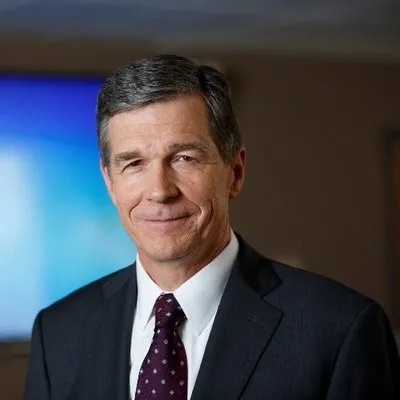
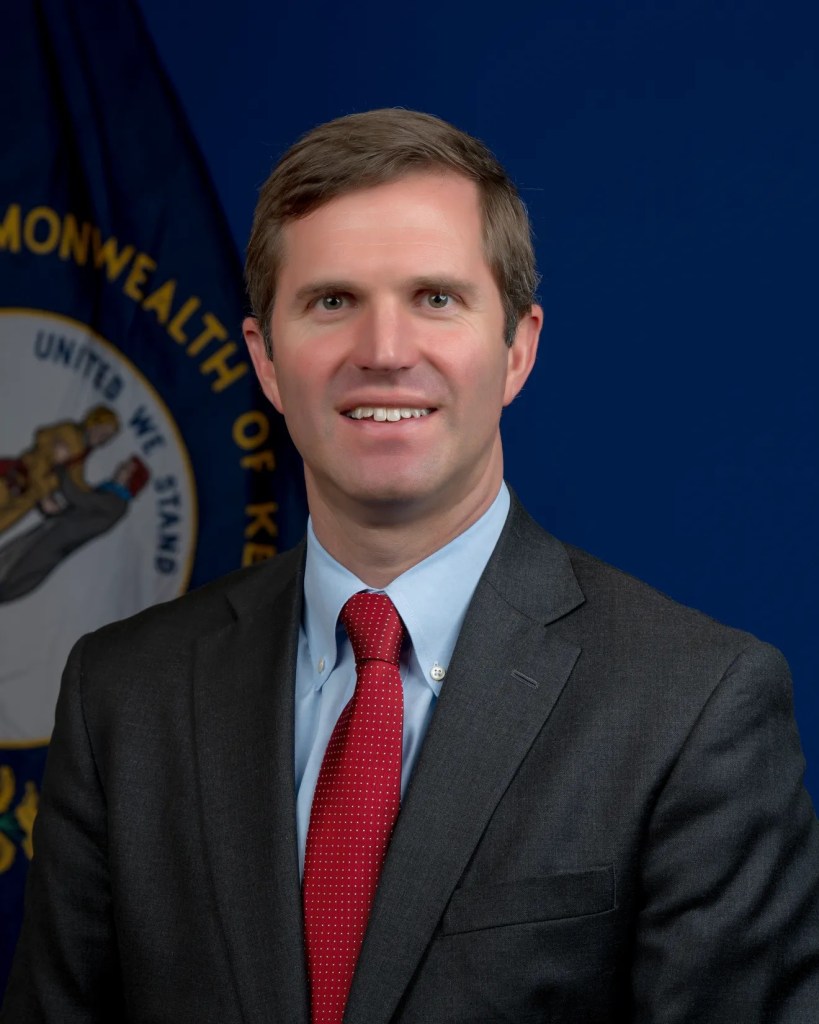
Back in February, long before President Biden stepped back and Vice-President Kamala Harris became the Democratic nominee for President, two red-state Governors spoke out against vouchers. Both are Democrats who understand the importance of public schools for their communities. They are Governor Roy Cooper of North Carolina, whose gerrymandered legislature has a Republican supermajority, and Governor Andy Beshear of Kentucky, whose legislature is controlled by Republicans. When Beshear ran, he picked a teacher as Lieutenant Governor.

The two Governers wrote this article in USA Today:

In North Carolina and Kentucky, public schools are the center of our communities. We’re proud public school graduates ourselves – and we know the critical role our schools play in teaching our students, strengthening our workforces and growing our economies.

We’ve seen record-high graduation rates of almost 90% in our public schools. North Carolina and Kentucky rank in the top 10 for National Board-certified teachers, one of the highest recognition teachers can earn.

In Kentucky, we’ve seen significant improvement in elementary school reading, even with setbacks from the pandemic like many states experienced. In North Carolina last year, public school students completed a record 325,000 workforce credentials in areas like information technology and construction. The bottom line? Our public schools are critical to our success and an overwhelming number of parents are choosing them for their children.

That’s why we’re so alarmed that legislators want to loot our public schools to fund their private school voucher scheme. These vouchers, instituted in the 1950s and 1960s by Southern governors to thwart mandatory school desegregation, are rising again thanks to a coordinated plan by lobbyists, private schools and right-wing legislators.

Voucher programs chip away at the public education our kids deserve

This is their strategy: Start the programs modestly, offering vouchers only to low-income families or children with disabilities. But then expand the giveaway by taking money from public schools and allowing the wealthiest among us who already have children in private schools to pick up a government check.

In North Carolina, the Republican legislature passed a voucher program with no income limit, no accountability and no requirement that children can’t already go to a private school. This radical plan will cost the state $4 billion over the next 10 years, money that could be going to fully fund our public schools. In Kentucky, legislators are trying to amend our constitution to enshrine their efforts to take taxpayer money from public schools and use it for private schools.

Both of our constitutions guarantee our children a right to public education. But both legislatures are trying to chip away at that right, leaving North Carolina and Kentucky ranked near the bottom in per-pupil spending and teacher pay.

Public schools are crucial to our local economies. In North Carolina, public schools are a top-five employer in all 100 counties. In many rural counties, there are no private schools for kids to go to – meaning that those taxpayer dollars are torn out of the county and put right into the pockets of wealthier people in more populated areas.

Governor Roy Cooper, North Carolina

In fact, in Kentucky, 60% of counties don’t even have a certified private school. This has caused rural Republicans in red states like Texas and Georgia to vote against voucher schemes that would starve their rural schools.

Governor Andy Beshear, Kentucky

Private schools get taxpayer dollars with no real accountability

As governors, we’ve proposed fully funding our public schools, teacher pay raises to treat our educators like the professionals they are and expanded early childhood education. We know that strong public schools mean strong communities. Families in Kentucky and North Carolina know that too. In North Carolina, nearly 8 in 10 children go to public schools.

Our public schools serve all children. They provide transportation and meals and educate students with disabilities. And they’re accountable to taxpayers with public assessments showing how students and schools are doing and where they need to improve.

But private schools that get this taxpayer money have little to no accountability. They aren’t even required to hire licensed teachers, provide meals, transportation or services for disabled students. They don’t even have to tell the taxpayers what they teach or how their students perform. North Carolina’s voucher system has been described as “the least regulated private school voucher program in the country.”

Studies of student performance under school voucher programs not only showed that they don’t help them, but that they could actually have harmful effects. Results from a 2016 study of Louisiana’s voucher program found “strong and consistent evidence that students using an LSP scholarship performed significantly worse in math after using their scholarship to attend private schools.” In Indiana, results also showed “significant losses” in math. A third study of a voucher program in Ohio reported that “students who use vouchers to attend private schools have fared worse academically compared to their closely matched peers attending public schools.”

We aren’t against private schools. But we are against taxpayer money going to private schools at the expense of public schools.

The future of our nation goes to class in public schools, and all Americans must be on guard for lobbyists and extremist politicians bringing similar plans to their states. Our segregationist predecessors were on the wrong side of history, and we don’t need to go back.

We are going to keep standing up for our public school students to ensure that they have the funding they need, and that teachers are paid like the professionals they are. It’s what’s best for our children, our economy and our future.

Roy Cooper is the governor of North Carolina. Andy Beshear is the governor of Kentucky.

Glenn Rogers is a veterinarian and a rancher who lives in Graford, Texas. In addition to his duties as a vet and a rancher, he served on the school board of the Graham Independent School District. He was elected to represent District 60 in the Texas Legislature in 2021. He is a conservative, and he tries to represent his rural constituents faithfully. They don’t want vouchers. They want more funding for their local public schools and higher salaries for their teachers. People know their teachers. The teachers know their students and their families. The public schools are important for the local economy. The tradition of Friday night high school football games unifies the community; it’s known as “Friday night lights.”

When Representative Rogers voted against vouchers along with other rural Republicans, Governor Abbott unleashed an advertising blitz against them. The ads accused them of being “weak on security,” which was a lie. Money from billionaires poured into the district to smear Rep. Rogers. He lost.

Rep. Rogers released this statement, which was published in The Weatherford Democrat:

“I’ll Wear No Man’s Collar”

-Davy Crockett

First, I want to thank my supporters, those who voted for me and those who supported me prayerfully, financially, and in so many other ways. It has been the greatest honor to serve this district.

The corruption that exists at the highest level of Texas state government would have made Governor “Pa” Ferguson blush.

Governor Greg Abbott has defiled the Office of Governor by creating and repeating blatant lies about me and my House colleagues, those who took a stand for our public schools. I stood by the Governor on all his legislative priorities but just one, school vouchers. For just one disagreement, and for a $6 million check from Jeff Yass, a Pennsylvanian TikTok investor, and voucher vendor, Abbott went scorched earth against rural Texas and the Representatives who did their jobs-representing their districts.

My tenure in the Texas House included two general sessions, seven special sessions, redistricting, Covid, winter storm Uri, a Democrat quorum break, expulsion of a House member and the impeachment of Ken Paxton. It also includes a litany of conservative victories that made Texas safer, reigned in out-of-control government bureaucracy, lessened what had become a crushing tax burden on our families and businesses, and fostered economic growth.

I am not a good politician. I am just a Texas rancher who wanted to make a difference in my community. Who knew this simple mission would have resulted in three brutal campaigns?

Throughout my three campaigns, because of my unwillingness to be compliant with the two billionaire, “Christian” Nationalist, power brokers that run this state, I have been unmercifully slandered through the politics of unwarranted personal destruction on social media, radio, post mail, streaming sites, and cable television.

In my first race the opposition was the Wilks, Tim Dunn, Empower Texans, and the entire enterprise of dozens of PACs and “non-profits” they financed. The race ended in a hard fought Covid-delayed runoff victory against Farris Wilks’ son-in-law.

In my second race, my opposition was Wilks and Dunn, Empower Texans (rebranded to Defend Texas Liberty), and the Voucher Lobby, including the American Federation for Children and the School Freedom Fund (based in Virginia). In that race, we dealt with a runoff and an expensive, unnecessary recount.

In my third race the opposition was all the above, but now included a rebranded Defend Texas Liberty (Texans United for a Conservative Majority), vastly greater money from the Voucher Lobby, and Governor Greg Abbott.

This time the millions of dollars spent spreading lies about my record and the non-stop false impugning of my integrity were just too much to overcome. The real losers in this race are:

1) Texas public schools;

2) Rural Texas; and

3) Representative Government.

This morning, I have no regrets. I believe in the words of Sam Houston, “Do right and risk the consequences.”

History will prove Ken Paxton is a corrupt, sophisticated criminal. History will prove vouchers are simply an expensive entitlement program for the wealthy and a get rich scheme for voucher vendors. History will prove Governor Greg Abbott is a liar.

History will prove that our current state government is the most corrupt ever and is “bought” by a few radical dominionist billionaires seeking to destroy public education, privatize our public schools and create a Theocracy that is both un-American and un-Texan.

May God save Texas!

[Editors Note: the Wilks brothers and Tim Dunn are oil-and-gas billionaires who are evangelical Christians; they want vouchers, and they use their money to control state government. Ken Paxton is the State Attorney General who was impeached by the Texas House of Teprrsentatibes on multiple charges of corruption, based on whistleblower reports from his own staff. After Paxton’s billionaire friends came to the rescue, giving a campaign contribution of $2 million to Lt. Gov. Dan Patrick, who conducted the trial in the Srnate, Paxton was acquitted. In this week’s election, Attorney General Paxton and his wealthy friends ousted legislators and judges who tried to hold him accountable.]