Archives for category: Health

The American Federation of Teachers released a statement by its President Randi Weingarten:

Contact:
Andrew Crook
607-280-6603
acrook@aft.org

AFT’s Weingarten on Senate’s Big, Ugly Betrayal of America’s Working Families

As we prepare to celebrate our independence, the promise of the American dream, of freedom and prosperity for all, is now further out of reach.’

WASHINGTON—AFT President Randi Weingarten issued the following statement after the Senate passed President Trump’s billionaire tax scam:

“This is a big, ugly, obscene betrayal of American working families that was rammed through the Senate in the dead of night to satisfy a president determined to hand tax cuts to his billionaire friends.

“These are tax cuts paid for by ravaging the future: kicking millions off healthcare, closing rural hospitals, taking food from children, stunting job growth, hurting the climate, defunding schools and ballooning the debt. It will siphon money away from public schools through vouchers—which harm student achievement and go mostly to well-off families with kids already in private schools. It’s the biggest redistribution of wealth from the poor to the rich in decades—far worse, to the tune of hundreds of billions of dollars, than the version passed by the House.

“But if you only listened to those who voted yes, you wouldn’t have heard anything like that. You would’ve heard bad faith attempts to rewrite basic laws of accounting so they could assert that the bill won’t grow the deficit. You would’ve heard false claims about what it will do to healthcare and public schools and public services, which are the backbone of our nation.

“The reality is that the American people have rejected, in poll after poll, this bill’s brazen deception. As it travels back to the House and presumably to the president’s desk, we will continue to sound the alarm and let those who voted for it know they have wounded the very people who voted them into office. But it is also incumbent on us to fight forward for an alternative: for working-class tax cuts and for full funding of K-12 and higher education as engines of opportunity and democracy.

“Sadly, as we prepare to celebrate our independence, the promise of the American dream, of freedom and prosperity for all, is now further out of reach.”

 ###


The AFT represents 1.8 million pre-K through 12th-grade teachers; paraprofessionals and other school-related personnel; higher education faculty and professional staff; federal, state and local government employees; nurses and healthcare workers; and early childhood educators.

Dr. Leana S. Wen is a regular contributor to The Washington Post. She is an emergency physician and former health director for the city of Baltimore. In this column, she provides a list of reliable sources for vaccine information.

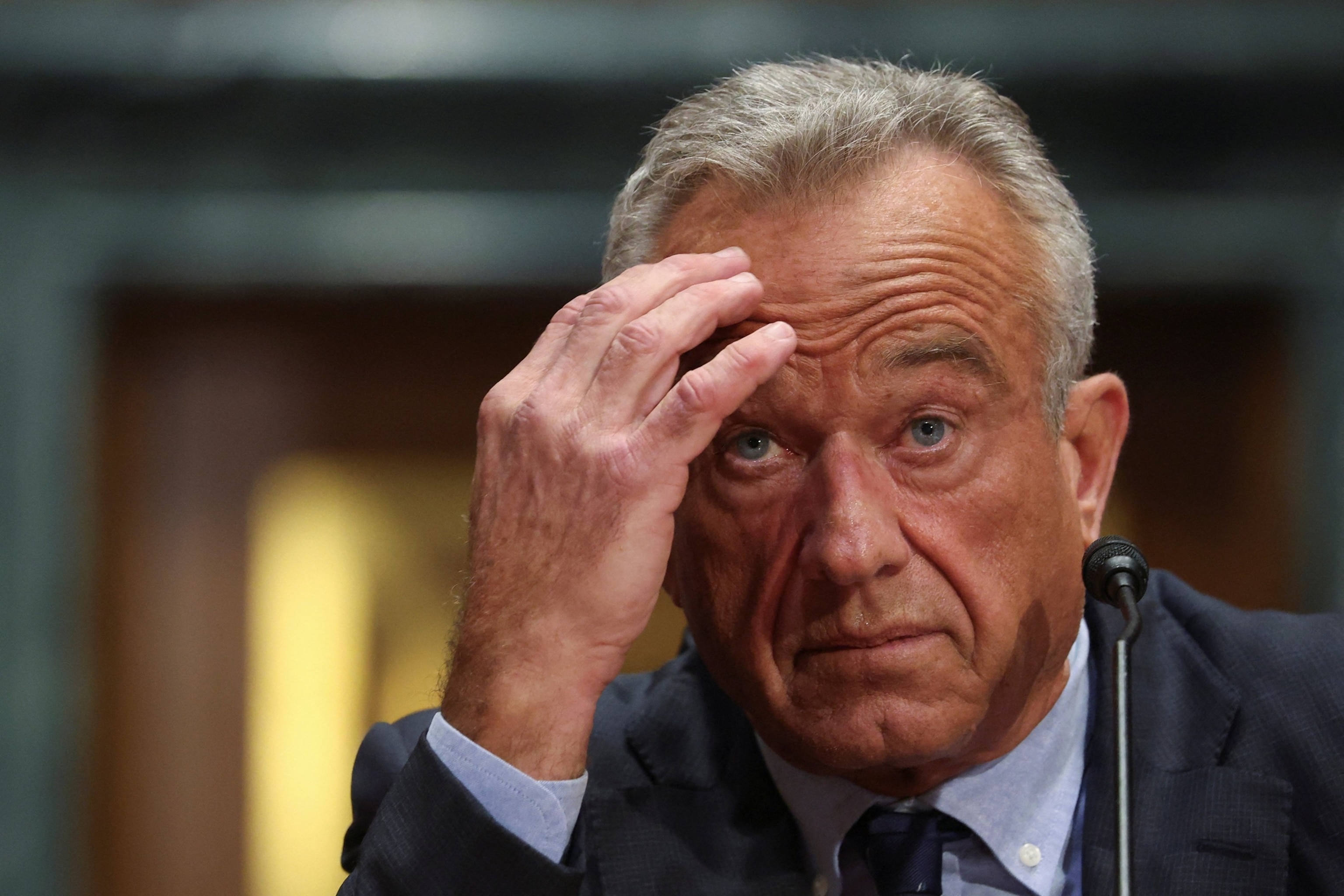
Robert F. Kennedy Jr. has been a critic of vaccines for many years. Yet Trump put him in charge of the Department of Health and Human Services, despite his lack of experience in science or medicine. At his confirmation hearings, Kennedy insisted that he would not attack vaccines or question their validity. Once confirmed, he reneged on that promise. Just a few days ago, he fired every member of the independent board of vaccine experts and replaced them with people he knew and liked.

Dr. Wen writes:

Robert F. Kennedy Jr.’s decision this week to fire 17 independent experts on the Centers for Disease Control and Prevention’s vaccine advisory panel — and replace them with people with limited expertise and questionable views — was not unexpected. In November, I warned that such a takeover and the subsequent replacement of experts with vaccine skeptics could be part of the now-Health and Human Services secretary’s playbook to undermine vaccine confidence.

Meanwhile, the CDC’s website has been changing. For instance, a new section on measles treatment includes vitamin A, one of Kennedy’s preferred “alternatives” to vaccines. And instead of recommending the coronavirus vaccine to everyone 6 months and older, the agency now says certain groups such as children and pregnant women “may” receive them.

Many readers say they no longer trust guidance from federal health agencies and have asked where else they can go for vaccine information now. I think they should still continue to consult government sites including the CDC, Food and Drug Administration and National Institutes of Health, as most information featured there appears unaltered. This could change, especially if anti-vaccine voices gain additional influence.

Here are some additional resources I use to cross-reference information found on federal health websites:


• American Academy of Pediatrics: Pediatricians play a crucial role in guiding families to make science-based health decisions. The AAP has excellent information on its website, including entire sections on how scientists determined that vaccines are safe and effective. I especially love its infographics that help parents understand the seriousness of disease and the benefits of vaccination. The organization’s discussion guides for clinicians might also help laypeople who want to be better-equipped to speak with vaccine skeptics in their lives.


• American Medical Association: The AMA has recently been building up its vaccine reference materials for clinicians. Its resource site, while not the easiest to navigate, has accurate and practical information applicable to both health professionals and patients. I find their measles information especially useful.


• American College of Obstetricians and Gynecologists: ACOG offers superb guidance about vaccines in pregnancy. This includes a thorough analysis of the evidence behind the safety and efficacy of coronavirus shots. Other specialty societies offer similarly tailored tool kits for people with specific medical conditions. The American Society of Clinical Oncology, for instance, has immunization recommendations for cancer patients.


• National Foundation for Infectious Diseases: This organization hosts expert webinars and podcast episodes that I often consult for up-to-date information on treatment and prevention of infectious diseases. Its vaccine resources include well-researched and accessible articles from guest experts, such as this one on what the science says about autism and vaccines.


• The Children’s Hospital of Philadelphia Vaccine Education Center: Paul Offit of the University of Pennsylvania, one of my go-to trusted experts, oversees this website, which offers not only helpful vaccine information for the public but also real-time analysis of the federal government’s changes to vaccine recommendations. Several other academic institutions that I consult often include the Mayo Clinic and Johns Hopkins University & Medicine.


• The University of Minnesota’s Vaccine Integrity Project: This is a new initiative started by Michael Osterholm, director of the university’s Center for Infectious Disease Research and Policy, with an all-star steering committee that is intended to strengthen vaccine confidence through cross-sector collaborations. CIDRAP itself is a terrific news aggregator that I rely on for summaries of the latest research.


• The Straight Shot by the Center for Science in the Public Interest: This is another new project that specifically focuses on changes to federal vaccine policy. Contributors include former top FDA and HHS officials who discuss implications of recent decisions. The analyses are very detailed and cover broader changes at the health agencies, such as how clinical trials will be affected by budget cuts and what is involved in Kennedy’s “Make America Healthy Again” initiative.


These are just some of the independent resources that patients and clinicians can continue to rely on. It’s a relief that they exist and that dedicated scientists and health professionals have stepped up their efforts to provide clear, credible guidance. But the fact that they have to do so points to the erosion of trust in the CDC and federal scientific leadership that was once considered the gold standard for health information. That trust will not be easily rebuilt.

Trump’s tax cuts for the wealthiest will be funded in large part by draconian cuts to Medicare, which provides insurance to poor people. The massive cuts to Medicaid will lead to closure of many rural hospitals, which rely on Medicaid payments. The Senate knows this, and so-called “moderates” are working on adding a fund for rural hospitals. The bill, which Trump insists must pass by July 4, will add trillions to the nation’s debt.

So for all the cuts and firings imposed by Elon Musk and his DOGS, the federal deficit will grow under Trump.

David Dayen of The American Prospect reports:

As we at the Prospect have reported, while the Senate’s version of the Republican budget reconciliation bill was widely expected to be more moderate than the House one, when it comes to health care it is more extreme. This came as a surprise to many Republicans, some of whom now want changes. And they all are highlighting the same area of concern. It would be “potentially really bad for rural hospitals,” Sen. Josh Hawley (R-MO) told The Wall Street Journal. It’s “going to hurt our rural hospitals and hurt them in a big way,” said Sen. Jim Justice (R-WV). Sen. Susan Collins (R-ME) expressed “concerns about the effect on rural hospitals in her state.”

This is all certainly true. Senate cuts to the provider tax, a way for states to get more federal funding for their Medicaid programs, along with the House cuts that have been analyzed as leading to at least 11 million fewer people on the Medicaid rolls, will deeply harm the 700-plus rural hospitals already at risk of closure.

But that’s too narrow a frame. The entire health care provider network would come under heavy strain, and possibly collapse.

That’s because each node of the system is interdependent. If the 190 rural hospitals estimated in a recent Center for American Progress report as collateral damage of the Republican cuts close, all of their patients must find treatment at the remaining health care providers. Many of these new-arrival patients are likely to be uninsured (many thrown off Medicaid or Obamacare by Republicans), crushing hospital finances and potentially adding more closures on top.

This means overcrowded hospitals and overburdened staff, in addition to the serious hardships for patients traveling long distances for care. “The Republican Senate budget accelerates the rural hospital collapse that is under way, like jet fuel on a fire,” said Alex Lawson of Social Security Works, who works directly on health care issues in Washington. “Hospitals that don’t close will be the ones people drive four hours to access. The quality of everybody’s health care in this country will plummet.”

HOSPITALS HAVE LURCHED FROM ONE CRISIS to the next for years. Between the 2020 COVID pandemic and 2024, 36 rural hospitals closed, on the heels of 136 closures in the previous decade. Another 16 have closed this year, suggesting an acceleration of the trend, and hundreds more are at risk.

If the entire hospital doesn’t close, unprofitable business lines are often shuttered first. “I’ve talked to a lot of hospitals worried about having to close maternity wards,” said Chiquita Brooks-LaSure, who ran the Centers for Medicare & Medicaid Services (CMS) in the Biden administration. In California alone, 56 hospitals have ended maternity care since 2012, and the crisis of maternity deserts is acute.

The situation is worse, Brooks-LaSure said, in states that haven’t expanded Medicaid, suggesting that the program is a lifeline for hospitals, supplying a steady stream of paid claims for insured patients. Indeed, Medicaid is often the biggest line item in the accounts receivable budgets for nursing homes, rural hospitals, and maternity wards, as Families USA’s Anthony Wright pointed out to The Bulwark. A letter to the Republican leadership citing data from the Sheps Center for Health Services Research at the University of North Carolina notes that 213 rural hospitals serve a disproportionately high share of Medicaid patients.

While hospitals sometimes complain about low Medicaid reimbursement rates, the government has in the past compensated for that with “state-directed payment” arrangements that boost levels to what commercial insurance pays. That is being attacked in the Senate Finance Committee version of the bill, cutting those reimbursement top-ups to Medicare levels.

Hospitals are legally required to take care of patients in an emergency, regardless of their ability to pay. And more emergencies occur when more people are uninsured and put off care until they absolutely need it, which are made worse still if patients have to travel for hours to get care. Uncompensated care builds up in states with larger proportions of their populations who are uninsured, severely damaging hospital budgets.

Taking nearly $1 trillion out of the health system will magnify that problem across the country. And Medicaid cuts that create more uninsured patients, along with the creation of potentially millions of uninsured through Affordable Care Act changes, are terrible for hospitals. According to the Robert Wood Johnson Foundation, uncompensated care would increase by $204 billion over the next decade if the House version of the bill passed; remember, the Senate bill is even worse. Much of that burden would be thrown onto already shaky hospitals.

To those who argue that the cuts are really to state Medicaid programs and not hospitals, the ways states will deal with those cuts is not likely to be through simply providing more money that they don’t have. They will either change enrollment rules, so fewer people stay on the program, or cut reimbursement payments to hospitals and other providers. Both of these options would directly harm hospital finances.

“These cuts will strain emergency departments as they become the family doctor to millions of newly uninsured people,” said Rick Pollack, president and CEO of the American Hospital Association, in a statement, adding that “the proposal will force hospitals to reconsider services or potentially close, particularly in rural areas.”

Please open the link to see the full scope of the threat this Big Ugly Bill poses to rural Americans, most of whom voted for Trump.

ProPublica published a searing critique of the medical research that has been cancelled by the Trump administration. The fact that this research has been canceled is not at question; at least some of the cancellations have been reversed (for now) by federal courts.

What’s truly puzzling is why the Trump administration wants to eliminate so much vital research. The U.S. has led the world in biomedical research that has saved countless lives. Why does Trump wants to abandon this vital and beneficent role. Other nations are wooing our top scientists. Why are we terminating their projects?

Some grants were canceled because they dealt explicitly with health and health disparities of nonwhites and LGBT people. A Reagan-appointed federal judge reversed those terminations and said that their purpose was clearly discriminatory.

But what about the search for causes and cures of diseases that affect many populations?

ProPublica posted:

The National Institutes of Health is responsible for more than 80% of the world’s grant investment in biomedical research. Its funding has sparked countless medical breakthroughs — on cancer, diabetes, strokes — and plays a fundamental role in the development of pharmaceutical drugs.

Scientists compete vigorously for a slice of the more than $30 billion that the agency doles out annually; they can spend years assembling grant applications that stretch thousands of pages in hopes of convincing peer reviewers of the promise of their projects. Only 1 in 5 gets chosen.

The NIH has rarely revoked funding once it has been awarded. Out of the tens of thousands of grants overseen by the institution since 2012, it terminated fewer than five for violations of the agency’s terms and conditions.

Then Donald Trump was reelected.

Since his January inauguration, his administration has terminated more than 1,450 grants, withholding more than $750 million in funds; officials have said they are curbing wasteful spending and “unscientific” research. The Department of Government Efficiency gave the agency direction on what to cut and why, ProPublica has previously found, bypassing the NIH’s established review process.

“The decision to terminate certain grants is part of a deliberate effort to ensure taxpayer dollars prioritize high-impact, urgent science,” said Andrew G. Nixon, the director of communications for the Department of Health and Human Services. He did not respond to questions about the terminated grants or how patients may be impacted, but he said, “Many discontinued projects were duplicative or misaligned with NIH’s core mission. NIH remains focused on supporting rigorous biomedical research that delivers real results — not radical ideology.”

Targeted projects, however, were seeking cures for future pandemics, examining the causes of dementia and trying to prevent HIV transmission.

The mass cancellation of grants in response to political policy shifts has no precedent, former and current NIH officials told ProPublica. It threatens the stability of the institution and the scientific enterprise of the nation at large. Hundreds of current and former NIH staffers published a declaration this week — cosigned by thousands of scientists across the world, including more than 20 Nobel laureates — decrying the politicization of science at the agency and urging its director to reinstate the canceled grants. Many researchers have appealed the terminations, and several lawsuits are underway challenging the cuts.

It has been difficult for scientists and journalists to convey the enormity of what has happened these past few months and what it portends for the years and decades to come. News organizations have chronicled cuts to individual projects and sought to quantify the effects of lost spending on broad fields of study. To gain a deeper understanding of the toll, ProPublica reached out to more than 500 researchers, scientists and investigators whose grants were terminated.

More than 150 responded to share their experiences, which reveal consequences that experts say run counter to scientific logic and even common sense.

They spoke of the tremendous waste generated by an effort intended to save money — years of government-funded research that may never be published, blood samples in danger of spoiling before they can be analyzed.

Work to address disparities in health, once considered so critical to medical advancement that it was mandated by Congress, is now being cut if the administration determines it has any connection to “diversity,” “equity” or “gender ideology.” Caught in this culling were projects to curb stillbirths, child suicides and infant brain damage.

Researchers catalogued many fears — about the questions they won’t get to answer, the cures they will fail to find and the colleagues they will lose to more supportive countries. But most of all, they said they worried about the people who, because of these cuts, will die.

Please open the link to finish reading the article.

Jennifer Rubin was a star columnist at The Washington Post, but resigned after Jeff Bezos tried to exert control over the opinion pages to makts writers less antagonistic to Trump. Ironically, Rubin was originally hired by The Post to be its conservative columnist. But the extremism of the MAGA movement repelled her. After she resigned from The Post, she started a blog called The Contrarian, where she has gathered a stellar lineup of other journalists.

She writes about Trump’s One Big Ugly Bill:

The horrifying assassination of Minnesota state legislator Mellisa Hortman and her husband Mark, and the attempted assassination of state senator John Hoffman and his wife on Saturday followed a week in which the full magnitude of Donald Trump’s violence, cruelty, chaos, and insatiable quest to destroy American democracy as we knew it were on full view. At a time when the country is in dire need of empathy, unity, and healing, MAGA Republicans will return to D.C. this week to pick up where they left off in their reconciliation debate wrangling: seeking to pass a bill that includes the most monstrous transfer of wealth from the poor and middle class to the uber-rich in recent history.

The Congressional Budget Office determined that if the House bill gets enacted, the bottom decile of Americans by income would lose about $1600 while the top 10 decile would gain more than $12,000. Meanwhile, the debt would balloon to 134% of GDP by 2034.

The MAGA reverse-Robin-Hood scheme would, among other things, remove 11 Million people from Medicaid, 5 Million from the Affordable Care Act exchanges, slash SNAP by more than $700M, “strip 4.5 million children who are U.S. citizens or lawful permanent residents of eligibility for the Child Tax Credit,” and eliminate or reduce energy credits and subsidies, sending energy costs soaring, particularly in red states.

The bill targets certain categories of legal immigrants (e.g., TPS holders or asylum seekers) by removing them from access to ACA exchanges and stripping them of Medicare benefits (after they have paid into the system).

The party that once stood for federalism would bludgeon states to eliminate Medicaid benefits for these people, provoking the Center on Budget and Policy Priorities’ assessment that:

“This policy is a direct affront to state sovereignty, placing enormous pressure on states to reduce or terminate coverage programs that their lawmakers have adopted and that they have a legal right to provide or face devastating cuts to Medicaid expansion funding…It goes beyond coercion by imposing a direct, virtually unavoidable penalty on some states.”

Consider the monstrous tradeoffs the bill entails. Former car czar Steven Rattner found that “just the tax cuts for people earning over $500,000 a year would cost $1.1 trillion, very close to the $715 billion that would be saved by cutting Medicaid and SNAP.”

Especially hard-hit would be rural residents in Red states who disproportionately rely on Medicaid. Moreover, their hospitals, which are dependent on Medicaid reimbursement, would go under in dozens of communities. Shuttering hospitals not only deprives residents of access to health services, but in many cases it would mean eliminating the area’s main employer.

Voters have gleaned how this is going to work. The latest Kaiser Family Foundation poll shows “seven in ten adults (72%) are worried that a significant reduction in federal funding for Medicaid would lead to an increase in the share of uninsured children and adults in the U.S., including nearly half (46%) who are ‘very worried’ and one in four (25%) who are ‘somewhat worried.’” In addition, 71% think the bill will negatively impact hospitals, nursing homes, and other health care providers in their communities (71%).

The most heinous aspect of all: Due to the massive cuts in healthcare coverage, Yale and the University of Pennsylvania estimate an additional 51,000 Americans would die each year.

Former president Joe Biden used to say, “Don’t tell me what you value, show me your budget, and I’ll tell you what you value.” Apparently, MAGA Republicans value savaging the poor to stuff more money in their (and their donors’) pockets, turn America into an anti-legal immigration country, and rob people of healthcare and other vital programs. 

The bill’s damage does not stop there. With the huge increase in debt, borrowing costs for individuals and businesses would go up. “A spike in the national debt can be enough to boost inflation on its own,” the Washington Post reports. The government’s rising borrowing costs would yield painful results for families. “A 1 percent increase in the ratio would amount to extra annual interest costs of $60 for car loans, $600 on the typical mortgage and $1,000 for small business loans after five years, the Budget Lab found. After 30 years, the premium is even higher — adding $2,300 per year to the typical mortgage, for example.

All of that comes on top of the Trump tariffs, another regressive tax that falls disproportionately on lower-income Americans.

No wonder the MAGA bill is so unpopular. The latest Quinnipiac poll found voters oppose the plan by a margin of 53% (including 57% of independents). MAGA Republicans who rubber stamp this bill would therefore be inflicting monstrous pain on Americans, growing the debt, and taking perhaps the worst political vote of their careers.

Trump came to office promising to reduce inflation, lower costs, clamp down on energy prices, and even balance the budget. Instead, if MAGA Republicans allow him, he will continue to increase inflation, raise costs, ignite higher energy prices, and bust the budget. When voters go to the polls in 2026 and beyond, they are not likely to forget who betrayed them.

Secretary of Health and Human Services Robert F. Kennedy Jr. fired the Center for Disease Control’s expert advisory panel on vaccines. This clears the way for him to appoint people who share his wacko views about vaccines. When asked why he fired them, he lied and said they had conflicts of interest. This was not true.

Apoorva Mandavilli of The New York Times reported:

The health secretary, Robert F. Kennedy Jr., on Monday retired all 17 members of an advisory committee on immunization to the Centers for Disease Control and Prevention, arguing that the move would restore the public’s trust in vaccines.

He made the announcement on Monday in an opinion column for The Wall Street Journal.

The C.D.C.’s vaccine advisers wield enormous influence. They carefully review data on vaccines, debate the evidence and vote on who should get the shots and when. Insurance companies are required to cover the vaccines recommended by the panel.

This is the latest in a series of moves Mr. Kennedy, a vaccine skeptic, has made to drastically reshape policy on immunizations. A vaccine panel more closely aligned with Mr. Kennedy’s views has the potential to significantly alter the immunizations recommended to Americans, including childhood vaccinations.

Mr. Kennedy said the panel, called the Advisory Committee on Immunization Practices, “has been plagued with persistent conflicts of interest….”

In fact, ACIP members are carefully screened for major conflicts of interest, and they cannot hold stocks or serve on advisory boards or speaker bureaus affiliated with vaccine manufacturers.

On the rare occasion that members have indirect conflicts of interest — for example, if an institution at which they work receives money from a drug manufacturer — they disclose the conflict and recuse themselves from related votes.

Paul Offit, director of the Vaccine Education Center at Children’s Hospital of Philadelphia and former member of the panel, expressed concern that Kennedy wants to replace members of the panel with people who share his antagonism towards vaccines.

How many Americans will die because of this extremist who has strong opinions but limited knowledge of science or medicine?

Heather Cox Richardson warns about the Republicans’ “One Big, Beautiful Bill,” which cuts Medicaid and other vital services while increasing the deficit. Republicans cover up the cruel cuts to vital services by lying about them.

She writes:

The Republicans’ giant budget reconciliation bill has focused attention on the drastic cuts the Trump administration is making to the American government. On Friday, when a constituent at a town hall shouted that the Republicans’ proposed cuts to Medicaid, the federal healthcare program for low-income Americans, meant that “people will die,” Senator Joni Ernst (R-IA) replied, “Well, we are all going to die.”

The next day, Ernst released a video purporting to be an apology. It made things worse. “I made an incorrect assumption that everyone in the auditorium understood that, yes, we are all going to perish from this Earth. So, I apologize. And I’m really, really glad that I did not have to bring up the subject of the tooth fairy as well. But for those that would like to see eternal and everlasting life, I encourage you to embrace my lord and savior, Jesus Christ,” she said.

Ernst blamed the “hysteria that’s out there coming from the left” for the outcry over her comments. Like other Republicans, she claims that the proposed cuts of more than $700 billion in Medicaid funding over the next ten years is designed only to get rid of the waste and fraud in the program. Thus, they say, they are actually strengthening Medicaid for those who need it.

But, as Linda Qiu noted in the New York Timestoday, most of the bill’s provisions have little to do with the “waste, fraud, and abuse” Republicans talk about. They target Medicaid expansion, cut the ability of states to finance Medicaid, force states to drop coverage, and limit access to care. And the nonpartisan Congressional Budget Office (CBO) says the cuts mean more than 10.3 million Americans will lose health care coverage.

House speaker Mike Johnson has claimed that those losing coverage will be 1.4 million unauthorized immigrants, but this is false. As Qiu notes, although 14 states use their own funds to provide health insurance for undocumented immigrant children, and seven of those states provide some coverage for undocumented pregnant women, in fact, “unauthorized immigrants are not eligible for federally funded Medicaid, except in emergency situations.” Instead, the bill pressures those fourteen states to drop undocumented coverage by reducing their federal Medicaid funding.

MAGA Republicans claim their “One Big, Beautiful Bill”—that’s its official name—dramatically reduces the deficit, but that, too, is a lie.

On Thursday, May 29, White House press secretary Karoline Leavitt claimed the measure would carry out “the largest deficit reduction in nearly 30 years with $1.6 trillion in mandatory savings.” She echoed forty years of Republican claims that the economic growth unleashed by the measure would lead to higher tax revenues, a claim that hasn’t been true since Ronald Reagan made it in the 1980s.

In fact, the CBO estimates that the tax cuts and additional spending in the measure mean “[a]n increase in the federal deficit of $3.8 trillion.” As G. Elliott Morris of Strength in Numbers notes, the CBO has been historically very reliable, but Leavitt and House speaker Mike Johnson (R-LA) tried to discount its scoring by claiming, as Johnson said: “They are historically totally unreliable. It’s run by Democrats.”

The director of the CBO, economist Philip Swagel, worked as chief of staff and senior economist at the Council of Economic Advisors during the George W. Bush administration. He was appointed in 2019 with the support of Senate Budget Committee chair Michael Enzi (R-WY) and House Budget Committee chair John Yarmuth (D-KY). He was reappointed in 2023 with bipartisan support.

Republican cuts to government programs are a dramatic reworking of America’s traditional evidence-based government that works to improve the lives of a majority of Americans. They are replacing that government with an ideologically driven system that concentrates wealth and power in a few hands and denies that the government has a role to play in protecting Americans.

And yet, those who get their news by watching the Fox News Channel are likely unaware of the Republicans’ planned changes to Medicaid. As Aaron Rupar noted, on this morning’s Fox and Friends, the hosts mentioned Medicaid just once. They mentioned former president Joe Biden 39 times.

That change shows dramatically in cuts to the National Oceanic and Atmospheric Administration (NOAA). NOAA is an agency in the Commerce Department, established under Republican president Richard Nixon in 1970, that monitors weather conditions, storms, and ocean currents. The National Weather Service (NWS), which provides weather, wind, and ocean forecasts, is part of NOAA.

NWS forecasts annually provide the U.S. with an estimated $31.5 billion in benefits as they enable farmers, fishermen, businesspeople, schools, and individuals to plan around weather events.

As soon as he took office, Trump imposed an across-the-board hiring freeze, and billionaire Elon Musk’s “Department of Government Efficiency” fired probationary employees and impounded funds Congress had appropriated. Now, as hurricane season begins, experts in storms and disasters are worried that the NOAA will be unable to function adequately.

Cuts to the NWS have already meant fewer weather balloons and thus less data, leaving gaps in information for a March ice storm in Northern Michigan and for storms and floods in Oklahoma in April. Oliver Milman of The Guardianreported today that 15 NWS offices on the Gulf of Mexico, a region vulnerable to hurricanes, are understaffed after losing more than 600 employees. Miami’s National Hurricane Center is short five specialists. Thirty of the 122 NWS stations no longer have a meteorologist in charge, and as of June 1, seven of those 122 stations will not have enough staff to operate around the clock.

On May 5, the five living former NWS leaders, who served under both Democratic and Republican presidents, wrote a letter to the American people warning that the cuts threaten to bring “needless loss of life.” They urged Americans to “raise your voice” against the cuts.

Trump’s proposed 2026 budget calls for “terminating a variety of climate-dominated research, data, and grant programs” and cutting about 25% more out of NOAA’s funding.

The Federal Emergency Management Agency (FEMA) has also suffered dramatic cuts as Trump has said he intends to push disaster recovery to the states. The lack of expertise is taking a toll there, too. Today staff members there said they were baffled after David Richardson, the head of the agency, said he did not know the United States has a hurricane season. (It does, and it stretches from June 1 to the end of November.) Richardson had no experience with disaster response before taking charge of FEMA.

Trump’s proposed cuts to the National Institutes of Health (NIH) are even more draconian. On Friday, in a more detailed budget than the administration published in early May, the administration called for cuts of 43% to the NIH, about $20 billion a year. That includes cuts of nearly 40% to the National Cancer Institute. At the same time, the administration is threatening to end virtually all biomedical research at universities.

On Friday, May 23, the White House issued an executive order called “Restoring Gold Standard Science.” The order cites the COVID-19 guidance about school reopenings from the Centers for Disease Control and Prevention to claim that the federal government under President Joe Biden “used or promoted scientific information in a highly misleading manner.” (Schools closed in March 2020 under Trump.) The document orders that “[e]mployees shall not engage in scientific misconduct” and, scientists Colette Delawalla, Victor Ambros, Carl Bergstrom, Carol Greider, Michael Mann, and Brian Nosek explain in The Guardian, gives political appointees the power to silence any research they oppose “based on their own ‘judgment.’” They also have the power to punish those scientists whose work they find objectionable.

The Guardian authors note that science is “the most important long-term investment for humanity.” They recall the story of Soviet biologist Trofim Lysenko, who is a prime example of the terrible danger of replacing fact-based reality with ideology.

As Sam Kean of The Atlantic noted in 2017, Lysenko opposed science-based agriculture in the mid-20th century in favor of the pseudo-scientific idea that the environment alone shapes plants and animals. This idea reflected communist political thought, and Lysenko gained the favor of Soviet leader Joseph Stalin. Lysenko claimed that his own agricultural techniques, which included transforming one species into another, would dramatically increase crop yields. Government leaders declared that Lysenko’s ideas were the only correct ones, and anyone who disagreed with him was denounced. About 3,000 biologists whose work contradicted his were fired or sent to jail. Some were executed. Scientific research was effectively banned.

In the 1930s, Soviet leaders set out to “modernize” Soviet agriculture, and when their new state-run farming collectives failed, they turned to Lysenko to fix the problem with his new techniques. Almost everything planted according to his demands died or rotted. In the USSR and in China, which adopted his methods in the 1950s, at least 30 million people died of starvation.

“[W]hen the doctrines of science and the doctrines of communism clashed, he always chose the latter—confident that biology would conform to ideology in the end,” Kean said of Lysenko. He concludes: “It never did.”

It’s hard to say what is the very worst thing Trump has done in the first few months of his second term.

Here’s my candidate: the cancellation of vast numbers of grants for medical research. There is simply no rationale for the way he has laid waste to scientific research–to those seeking the causes and cures for deadly diseases that afflict the lives of millions of people.

The New York Times provided a public service by creating a database of the medical research that has been terminated.

This link is a gift article, so you should be able to open it.

It contains interactive features that I cannot duplicate.

Thousands of grants have been canceled or put in indefinite hold. They include research about effective vaccines. The search for cures for different types of cancer.

In his first months in office, President Trump has slashed funding for medical research, threatening a longstanding alliance between the federal government and universities that helped make the United States the world leader in medical science.

Some changes have been starkly visible, but the country’s medical grant-making machinery has also radically transformed outside the public eye, a New York Times analysis found. To understand the cuts, The Times trawled through detailed grant data from the National Institutes of Health, interviewed dozens of affected researchers and spoke to agency insiders who said that their government jobs have become unrecognizable.

In all, the N.I.H., the world’s premier public funder of medical research, has ended 1,389 awards and delayed sending funding to more than 1,000 additional projects, The Times found. From the day Mr. Trump was inaugurated through April, the agency awarded $1.6 billion less compared with the same period last year, a reduction of one-fifth. (N.I.H. records for May are not yet comparable.)

The impacts extend far beyond studies on politically disfavored topics and Ivy League universities like Columbia or Harvard. The disruptions are affecting research on Alzheimer’s, cancer and substance use, to name just a few, and studies at public institutions across the country, including in red states that backed Mr. Trump.

Why? What is the rationale? Whose interest does this serve?

Did the voters give Trump a mandate to destroy medical research?

Several days ago, I posted this horrible story about a young woman in Georgia who is on life support. She is brain dead. Because she was nine weeks pregnant when her brain died, Georgia law requires that she be kept in a vegetative state until the fetus can be delivered at 36 weeks.

The political cartoonist Ann Telnaes posted this visual commentary on her Substack blog:

“The decision should have been left to us- not the state”, says her family

Telnaes quit her job at The Washington Post when her editor refused to publish a cartoon showing the tech billionaires bowing to Trump. Jeff Bezos, the owner of the newspaper, was one of them. Telnaes won a Pulitzer Prize for that cartoon.

Jocelyn Kaiser wrote in Science magazine about the chaos inflicted on the National Institutes of Health by Trump appointees and Elon Musk’s DOGS (not a misspelling) wrecking crew. Large numbers of scientists were fired, some were rehired, then fired again. What was the goal? Was it to sow demoralization and fear? If so, it succeeded.

Since World War II, the U.S. has led the world in science, medicine, and technology, which are important components of our economy. It’s by no means clear why Trump selected people who were determined to disrupt and destabilize the core of the federal science program. Kaiser interviewed many insiders to compile this overview of a machine of destruction, unleashed for unknown reasons on some of our most important science agencies.

Kaiser wrote

On a cool, sunny, mid-April day, the cheerful redbuds and other flowering trees amid the sprawling labs on the National Institutes of Health (NIH) main campus belied the pervasive gloom. Nearly 3 months into President Donald Trump’s administration, NIH in-house scientists and other workers were reeling from mass layoffs of colleagues; the removal of leaders; and limits on travel, communication, and purchasing that have shut the agency off from the outside world, hamstrung experiments, and crushed the community’s spirits.

On that spring day in Bethesda, Maryland, one senior scientist lamented that two star colleagues in his institute were heading back to their native China from NIH, abandoning a destination that had always drawn talent from around the world. “I want to cry,” he said. Another pointed to the abrupt retirement the previous day of a noted NIH nutrition scientist who said the agency had censored his publications and interactions with the media.

The Department of Government Efficiency (DOGE), billionaire Elon Musk’s quasi-official White House enforcer, “pops in and out” of online meetings of senior leaders, the scientists said. Another researcher, who is not a U.S. citizen, mentioned that he has prepared a “deportation plan,” including a company lined up to ship belongings back to his native country, in case he’s fired and loses his work visa.

The atmosphere is one of “chaos and fear and frustration and anger,” said a senior scientist with NIH’s intramural research program who, like others, spoke on condition of anonymity to protect themselves and others from retribution. This scientist added: “It’s this feeling of utter powerlessness and repeated insults.”

A former top NIH official who was forced out believes that’s the intent. “I think the plan is to sow as much chaos as possible. … I think they want a dispirited workforce at NIH so people will just say ‘to hell with it’ and leave.”

It’s working. Hundreds of NIH employees took voluntary buyouts offered by the Trump administration. And at least 25 of the roughly 320 physician-researchers who lead trials of drugs, cell therapies, and vaccines at NIH’s massive Clinical Center are leaving, as are consulting physicians, a researcher there told Science.

In NIH entryways, recently installed portraits of Trump, Vice President JD Vance, Department of Health and Human Services (HHS) Secretary Robert F. Kennedy Jr., and new NIH Director Jayanta “Jay” Bhattacharya have become a forum for silent protests. A photo of tanks rolling through Tiananmen Square during China’s 1989 student uprising was briefly plastered below one set of visages. On a different wall on another day, flyers appeared for a nationwide protest of Trump’s science cuts along with a Post-it note with the word “Shame.” A staff memo sent out the day a Science reporter visited warned of penalties for “damage or destruction of federal property” including “defacement of portraits.”

A researcher who has spent more than 2 decades with NIH’s intramural research program believes the world’s largest biomedical agency will never be the same. “However bad everyone on the outside thinks it is, it is a million times worse. They’re dismantling and destroying everything.”

Along with firing about 2500 of the agency’s 20,000-strong federal workforce and pushing others to retire, Trump officials have used what some call “bureaucratic sabotage” in ways that likely explain why NIH has disbursed at least $1.8 billion less in funding to outside researchers in this administration’s first 3 months than it did in the same time period in 2024. They have canceled more than 800 grants on topics such as HIV research, transgender health, and vaccine hesitancy. NIH, at HHS’s behest, also tried to impose a crippling cut in the overhead payments made to universities that carry out grant-funded research.

More disruption looms, including HHS-demanded cuts to billions of dollars in contracts that fund key support staff and research centers and a White House proposal due any day now that will likely aim to slash up to 44% from NIH’s $47.4 billion budget and overhaul its structure. An agency that once had strong bipartisan support and was seen as the crown jewel of U.S. science, and the envy of the world, now faces a diminished, uncertain future.

I think the plan is to sow as much chaos as possible. … I think they want a dispirited workforce at NIH so people will just say ‘to hell with it’ and leave.

Some on the NIH campus that April day held out hope for Bhattacharya, who has said he wants to “undo some of the disruptions” and get NIH research back on track. Bhattacharya told Science this week, “It’s been a tough period” at NIH, but “I think things have turned around significantly.”

But others see him as firmly aligned with the Trump administration. In recent remarks to the research community, Bhattacharya said he wants to pivot NIH toward Kennedy’s Make America Healthy Again (MAHA) agenda, which focuses on chronic diseases, a shift that could come at the expense of the basic research and infectious disease studies that the agency now funds. “His presentation was distressing on multiple fronts,” says longtime NIH observer Keith Yamamoto, a cell biologist at the University of California (UC) San Francisco. 

Others outside the agency share a pessimistic assessment of NIH. “I don’t think there’s any way to sugarcoat the last 100 days. The state of the enterprise is chaotic and it’s in jeopardy,” says Mary Woolley, president of Research!America, a biomedical research advocacy group. “I am terribly worried,” says molecular biologist Shirley Tilghman, former president of Princeton University. “It will take years to undo the damage that is being inflicted right now.”

THE TRUMP ADMINISTRATION’S interference with NIH began the day after he took office, when HHS political appointees imposed a “pause” on communications from its 27 institutes and centers. Past administrations had sometimes briefly halted press releases and other communications, but this time, NIH extended the pause to public meeting attendance by scientists who handle grant programs and reviews. That meant meetings were abruptly halted, sometimes minutes before the start time or even midway through. In-house scientists and grants staff were also told to freeze hiring, purchasing, and travel. Days later, on 27 January, the White House froze grant payments from all federal agencies.

That first week, Trump appointed an acting director to replace Monica Bertagnolli, who had stepped down as NIH director days before the presidential transition. But instead of veteran Principal Deputy Director Lawrence Tabak, who had previously held the acting role, he chose Matthew Memoli, a longtime influenza researcher with NIH’s intramural program. Memoli had questioned the need for widespread COVID-19 vaccinations during the pandemic. That put him at odds with Anthony Fauci, then director of the National Institute of Allergy and Infectious Diseases (NIAID) and a frequent target of conservatives, and may have elevated Memoli in the administration’s eyes.

On Friday of the second week, the director’s office, known as Building 1, received an order to post a notice imposing an immediate 15% cap on indirect costs, the overhead payments the agency includes with each grant, to save $4 billion. Former NIH officials say they were alarmed by the sudden memo, which had multiple errors and directly conflicted with congressional restrictions on the agency’s indirect costs rates. By Monday, universities had won a court order halting the cap, arguing it was illegal.

That same week, the first signs of a widely expected purge of NIH leadership emerged. Tabak was called to a meeting at HHS headquarters in downtown Washington, D.C., and told he was reassigned to a job there and would lose his NIH lab. The 25-year NIH veteran announced his retirement later that day. Deputy Director for Extramural Research Michael Lauer, who oversaw NIH grant policies, abruptly retired later that week amid rumors he, too, would be reassigned. Before he left, Lauer ordered staff to lift the NIH grant freeze after a court ruled it was illegal.

Next came what many dubbed the “Valentine’s Day massacre”—the dismissal of nearly 1200 NIH employees who, along with thousands of other federal workers, had a “probationary” status because they were new to the agency or, in many cases, were veterans but had recently changed positions. Among them were crucial Clinical Center staff along with more than a dozen tenure-track investigators. Illustrating the haphazard nature of the firings, the clinical staff and animal care workers were quickly rehired when it became clear they were essential, and the firings of the tenure-track scientists were also eventually reversed. HHS also abruptly halted routine renewals of the many intramural scientists on term-limited appointments—a policy reversed after an appeal from Memoli but that NIH researchers say has recently resurfaced.

AS FEBRUARY ROLLED into March, a new threat crystallized for the university scientists and other extramural researchers who receive the bulk of NIH funds: HHS ordered NIH to cancel hundreds of grants that allegedly violated Trump executive orders barring funding for topics that touched on diversity, equity, and inclusion and LGBTQ health. The cuts included HIV trials in South Africa, training grants, health equity and environmental studies, as well as work on vaccine hesitancy and COVID-19.

“It was soul sucking every time to see those lists of grants that were vulnerable,” says Emily Erbelding, an NIAID division director who was put on leave this month. NIH letters terminating the grants stated that the work “no longer effectuates agency priorities”—language meant to satisfy recently revised grant policy requirements.

The cuts have made a huge dent in some research fields, such as transgender health, which has lost at least $157 million in unspent NIH funding. Although researchers can appeal terminations, and a few cancellations have been reversedwithout explanation, some scientists have already shut down their programs. After losing $5 million in research and training grants studying ways to improve health care for Alzheimer’s disease in sexual and gender minorities, social scientist Jason Flatt of the University of Nevada, Las Vegas laid off his two full-time staff and is scrambling to find other support for five graduate students. “This has been my life’s work,” says Flatt, who now expects to pivot to less politically fraught Alzheimer’s studies.

It will take years to undo the damage that is being inflicted right now.

At some top research universities all NIH funding, regardless of its focus, has become leverage as the Trump administration pressures the institutions on matters unrelated to science. First the White House killed NIH grants, and other federal funds, to Columbia University in March saying it had not properly combated antisemitism in the wake of campus protests against Israel’s bombing of Gaza. Columbia has been negotiating policy changes, so far without winning back its funding, more of which was frozen. At dozens of other universities NIH funding is threatened. Harvard University, facing the loss of at least $2.2 billion in multiyear grants from NIH and other agencies, has called the demands an attack on academic freedom and on 21 April, filed a lawsuit challenging the cancellations. Bhattacharya told Science he supports the freezes because “these institutions ought to obey the civil rights laws.” 

Much of the money flowing from NIH to universities supports early-career researchers. Other changes at the agency also threaten the U.S. pipeline for scientists. Virtually all NIH-funded training programs aimed at attracting underrepresented groups to science are now gone. “I’m concerned that these events are very likely to affect who decides to stay in science and we will lose important and necessary scientific talent,” says cell biologist Needhi Bhalla of UC Santa Cruz, who has mentored several trainees supported by these awards.

THE FIRST DAY OF APRIL, Bhattacharya’s start date, brought another wave of about 1300 job cuts at NIH as part of Kennedy’s plans to downsize and centralize operations at all HHS agencies. The Food and Drug Administration (FDA) and the Centers for Disease Control and Prevention (CDC) faced similarly huge reductions in force. That same week, four institute directors and one acting director at NIAID and other NIH institutes were told they had been put on leaveand in most cases offered reassignments to sites with the Indian Health Service far from their current homes. (None has publicly resigned or accepted the reassignment so far.) Other NIH leaders, including the chief of the agency’s well-regarded international center and some close to Fauci, were removed as well.

The HHS-imposed staff cuts, which ignored a plan developed by NIH leadership and submitted by Memoli, wiped out many communications, acquisitions, human resources, and policy offices. They swept up intramural scientists who many thought would be protected, including 10 tenured neuroscientists who Kennedy later said were fired by mistake—one of many acknowledged errors at NIH, CDC, and FDA. (As this story went to press, these scientists were back in the lab but had still not been officially reinstated.)

Even NIH’s biggest supporters acknowledge that some parts of the massive agency could be improved or made more efficient through centralization of necessities such as information technology. But as one senior scientist put it, “There was no planning.” Institute leaders are now scrambling to get functions handled by the disbanded offices operating again.

However bad everyone on the outside thinks it is, it is a million times worse. They’re dismantling and destroying everything.

Some of the internal restrictions have recently been eased. Peer-review meetings to consider grant proposals have resumed, as well as institute council meetings, which do the second level of funding review. Bhattacharya quickly lifted the freeze on travel and purchasing.

Yet the staff shortages are still taking a toll. One intramural scientist had to cancel a talk at a local university because his slides, submitted 30 days earlier, had not yet been approved. The few senior scientists who have rare agency credit cards are swamped with requests to buy lab supplies. “The backlogs are crazy,” a postdoc says—6 months for mice or a microscope part that would normally take 2 weeks. Researchers are getting by with workarounds such as sharing antibodies.

With continuing losses of key technicians, physicians, and administrative staff, the Clinical Center now lags in lab testing and faces difficulty bringing in patients from outside the United States, who are needed for studies of rare diseases. Its patient population has dropped by at least 30% since Trump took over, to below 70 in April compared with more than 100 during the same month in past years, a senior clinical investigator there tells Science. The Clinical Center’s Steven Rosenberg, a pioneer in using a person’s own immune cells to fight their advanced cancer, says the staff cuts and purchasing delays mean up to 2-month delays in treatment for his seriously ill patients and fewer treated overall. “We’re working at a much slower pace,” he says.

WHETHER THINGS WILL get better at NIH now that it has a permanent director is anyone’s guess. Although he has said he backs research on health disparities, which his own work has examined, Bhattacharya supports the Trump administration cuts to diversity programs, which he calls “a political ideology.” And he has brushed off killing HIV grants in South Africa as part of a shift of resources to support Kennedy’s focus on Americans’ health. “I’m concerned that he has little autonomy,” Yamamoto says.

Rosenberg, who has met with the new director, is more optimistic: “He seemed very reasonable and eager to improve things,” he says.

More reshaping of NIH could be coming. Career staffers in Building 1 have been replaced with political appointees with no experience with research agencies. DOGE and HHS are expected to approve new grant solicitations, and the agency this week began to absorb an HHS-mandated $2.6 billion cut in contracts that fund vaccine scientists, equipment maintenance, long-running heart disease studies, and much more.

Kennedy’s influence is a particular worry. The HHS director ordered NIH to launch a study of the causes of autism, which Kennedy has falsely blamed on vaccines, although he says other “environmental” causes could have a role. Another study the White House and Kennedy have told NIH to instigate will explore “regret” among transgender people who undergo hormone treatments. “The conclusions seem predetermined,” says biochemist Jeremy Berg of the University of Pittsburgh, former director of NIH’s basic science institute and former editor-in-chief of Science. “It undermines the credibility of NIH particularly because it seems designed to drive a particular political agenda.”

The Republicans in control of Congress so far have taken no action to protect NIH, although Senator Susan Collins (R–ME) said today at a hearing on the state of the biomedical research enterprise that the cuts to NIH scientists and grants “must be reversed.” Collins chairs the committee that oversees NIH’s budget and held the hearing in partnership with the panel’s senior Democrat, Senator Patty Murray (WA). Murray has protested the many NIH cuts, most recently to NIH’s landmark Women’s Health Initiative, which HHS said it had reversed after an outcry. Congress will also decide whether to go along with Trump’s proposed, radically smaller NIH budget and reorganization plan. Indirect cost payments will almost certainly be revisited and trimmed. “We are undoubtedly at an extremely challenging time for the biomedical research community,” says Jennifer Zeitzer, deputy executive director of the Federation of American Societies for Experimental Biology.

For now, the biomedical research community and NIH staff are hoping the resumption of council meetings will allow grants to flow out again—although staff shortages will be an impediment. Disbursing NIH’s full budget before the end of the fiscal year on 30 September “is going to be a near impossible feat for the number of people left,” says a former cancer institute official. If so, hundreds of millions of dollars in congressionally approved funding meant to identify new medical treatments and test them in patients across the U.S. and world will go back to the Department of the Treasury.

Like those on the NIH campus who spoke with Science, many of the agency’s former leaders are also not optimistic about the next 100 days, or the rest of Trump’s term. Geneticist Francis Collins, NIH director from 2009 to 2021 who abruptly retired in late February and closed his NIH lab, is one. “Reckless decisions will disrupt a noble institution with a stunningly positive track record, drive young scientists to leave the country, and damage the future health of the nation.”

With reporting by Sara Reardon.

Update, 2 May, 11:55 a.m.: Additional comments from NIH Director Jayanta “Jay” Bhattacharya, from an interview after this story was posted, have been added.