Jennifer is co-author of the important new book (with Jack Schneider) called A Wolf at the Schoolhouse Door.
As you will learn in the interview, Charles was brought up in a conservative environment. He studied at George Mason University in the Koch-funded economics department (you can read about it in Nancy MacLean’s excellent book Democracy in Chains, which I reviewed in The New York Review of Books). He worked for the Goldwater Institute and lobbied for ALEC and other billionaire-funded privatization groups.
At some point, he realized he was on the wrong side, promoting ideas that would do harm, not good. He wanted to do good.
He said unequivocally that the goal of the privatizers is to destroy public education. They promote charter schools and vouchers to destroy public education.
He explains that school privatization is only one part of a much broader assault on the public sector. The end game is to privatize everything: police, firefighters, roads, parks, whatever is now public, and turn it into a for-profit enterprise. He predicted that as vouchers become universal, the funding of them will not increase. It might even diminish. Parents will have to dig into their pockets to pay for what used to be a public service, free of charge.
Charles is currently helping Save Our Schools Arizona.
Since today is New Hampshire Day on the blog, I am reposting this article.
Since the 2020 election, Republicans have controlled both houses of the New Hampshire. The governor is Chris Sununu, a very conservative Republican and son of John Sununu, who was chief of staff to George H.W. Bush. In other words, New Hampshire is controlled by very conservative Republicans, even though the state has two Democratic Senators.
Sununu appointed a home schooler, Frank Edelblut, as his Commissioner of Education. His chief credential seems to be his contempt for public schooling.
Edelblut just made a new hire. He chose one of Betsy DeVos’s team to be New Hampshire’s Director of Learner Support. Her name is McKenzie Snow, and she is a voucher advocate like her old boss and her new boss. She was in charge of pushing vouchers while at the U.S. Department of Education. She was a consultant to Trump’s controversial “1776 Commission,” which attempted to promote a conservative version of history, minimizing racism and other shameful episodes in our history.
Although she will be in charge of “learner support,” she apparently was never a teacher.
If confirmed, McKenzie Snow will direct the Division of Learner Support, overseeing student assessments, technical assistance for schools, student wellness, student support, adult education, and career and technical education.
Prior to working at the U.S. Department of Education for two and a half years, Snow analyzed and advocated for school choice reform as a policy director at ExcelinEd, a non-profit founded by former Florida Gov. Jeb Bush and directed by former House Majority Leader Rep. Eric Cantor.
She also worked on educational issues at the conservative Charles Koch Foundation and Charles Koch Foundation Institutes, according to her LinkedIn account.
During her tenure at the U.S. Department of Education and ExcelinEd, Snow championed Education Savings Accounts (ESA’s), which give taxpayer dollars to parents to spend on approved educational programs of their choice, including private school and home school.
Snow’s confirmation is expected at the Executive Council meeting this Wednesday.
Governor Greg Abbott of Texas and a bevy of rightwing commentators blamed wind turbines, which supply 10% of the state’s energy, and “the Green New Deal, which doesn’t exist, for the failure of the state’s power supply. He learned “the Big Lie” from his hero Trump.
As millions of people across Texas struggled to stay warm Tuesday amid massive cold-weather power outages, Gov. Greg Abbott (R) directed his ire at one particular failure in the state’s independent energy grid: frozen wind turbines.
“This shows how the Green New Deal would be a deadly deal for the United States of America,” Abbott said to host Sean Hannity on Tuesday. “Our wind and our solar got shut down, and they were collectively more than 10 percent of our power grid, and that thrust Texas into a situation where it was lacking power on a statewide basis. … It just shows that fossil fuel is necessary.”
The governor’s arguments were contradicted by his own energy department, which outlined how most of Texas’s energy losses came from failures to winterize the power-generating systems, including fossil fuel pipelines, The Washington Post’s Will Englund reported. But Abbott’s debunked claims were echoed by other conservatives this week who have repeatedly blamed clean energy sources for the outages crippling the southern U.S. [The Texas grid got crushed because its operators didn’t see the need to prepare for cold weather]
In fact, typically mild winters and a lack of state regulations in Texas combined to leave electricity providers unprepared for the extreme cold that has suddenly hit the state, The Post reported. Nearly every source of energy — from wind turbines to natural gas to nuclear power — have failed to some degree following a harsh storm that covered the region with thick layers of snow and ice. Although renewable energy sources did partially fail, they only contributed to 13 percent of the power outages, while providing about a quarter of the state’s energy in winter. Thermal sources, including coal, gas and nuclear, lost almost twice as many gigawatts of power because of the cold, according to the Electric Reliability Council of Texas (ERCOT), the state’s electric grid operator.
Critics have also noted that wind turbines can operate in climates as cold as Greenland if they’re properly prepared for the weather.
Despite the much larger dip in energy from fossil fuels, Republican politicians have seized on the outages to attack the Green New Deal and Democrats’ push to address climate change by reducing the consumption of fossil fuels.
In his Fox News interview, Abbott did not address the fact that most of the state’s power comes from fossil fuels and that ERCOT had planned to produce far more power from natural gas than became available as the cold set in, contributing a stunning deficit amid the freezing weather. On Tuesday, Abbott called for a state investigation into ERCOT’s failings, saying the agency had been “anything but reliable” following the winter storm.
Abbott’s office did not immediately respond to a request for comment late Tuesday. The governor was not the only prominent Texas Republican to blame clean energy for the historic power outages. After Fox News host Tucker Carlson inaccurately told viewers that the state’s power grid had become “totally reliant on windmills,” former Texas Gov. Rick Perry, who served as energy secretary under President Donald Trump, joined Carlson in railing against the Green New Deal, which has not been enacted in Texas or nationally.
“If this Green New Deal goes forward the way that the Biden administration appears to want it to, then we’ll have more events like we’ve had in Texas all across the country,” Perry said in another Fox News segment.
Rep. Dan Crenshaw (R-Tex.) shared a detailed accounting on Twitter of how the state’s power grid failed, noted the roles that natural gas and nuclear power played — but also used the moment to attack wind turbines on Tuesday.
“Bottom line: Thank God for baseload energy made up of fossil fuels,” Crenshaw tweeted. “Had our grid been more reliant on the wind turbines that froze, the outages would have been much worse.”
Rep. Alexandria Ocasio-Cortez (D-N.Y.), who has been a strong proponent of the Green New Deal proposal, slammed Texas Republicans early Wednesday. “The infrastructure failures in Texas are quite literally what happens when you don’t pursue a Green New Deal,” she said in a tweet.
Texas Democrats also criticized Abbott in a statement Monday, calling out Republican leaders for allowing the power to go out in the state that produces the most energy in the nation. “If we had a governor open to alternative sources of energy, Texas might be in a situation in which we have energy reserves to efficiently power our state, instead of the reckless leadership we have witnessed time and time again from Greg Abbott,” the Texas Democrats said.
Wind turbines are working very well in far colder climates. Abbott probably outsourced the state’s energy needs to profit-seeking entrepreneurs who cut corners to make more money.
In another article in the Washington Post, the blame is placed where it belongs: on short-sighted politicians who didn’t plan for a worst-case scenarios.
When it gets really cold, it can be hard to produce electricity, as customers in Texas and neighboring states are finding out. But it’s not impossible. Operators in Alaska, Canada, Maine, Norway and Siberia do it all the time.
What has sent Texas reeling is not an engineering problem, nor is it the frozen wind turbines blamed by prominent Republicans. It is a financial structure for power generation that offers no incentives to power plant operators to prepare for winter. In the name of deregulation and free markets, critics say, Texas has created an electric grid that puts an emphasis on cheap prices over reliable service.
It’s a “Wild West market design based only on short-run prices,” said Matt Breidert, a portfolio manager at a firm called Ecofin.
And yet the temporary train wreck of that market Monday and Tuesday has seen the wholesale price of electricity in Houston go from $22 a megawatt-hour to about $9,000. Meanwhile, 4 million Texas households have been without power.
One utility company, Griddy, which sells power at wholesale rates to retail customers without locking in a price in advance, told its patrons Tuesday to find another provider before they get socked with tremendous bills.
The widespread failure in Texas and, to a lesser extent, Oklahoma and Louisiana in the face of a winter cold snap shines a light on what some see as the derelict state of America’s power infrastructure, a mirror reflection of the chaos that struck California last summer.
Edward Hirs, an energy fellow at the University of Houston, said the disinvestment in electricity production reminds him of the last years of the Soviet Union, or of the oil sector today in Venezuela. “They hate it when I say that,” he said.
How did this happen? Public schools in many districts and states are underfunded, unable to meet the mandates imposed by state and federal government, yet business is booming for the edupreneurs!
SB 48 Will Be Heard at 3:30 p.m. on 2/17/21 in the Senate Appropriations Subcommittee on Education Your Voice is Needed! What you can do . . . 1) Make calls and/or send emails – We are urging all those connected to Pastors for Florida Children to contact the members of the Senate Appropriations Subcommittee on Education and encourage them to vote “NO” on this bill! We are hoping to flood their offices with calls/emails up until the committee discussion on SB 48 at 3:30 p.m. on 2/17. If you live within the districts of any of the Senators on the subcommittee, be sure to indicate that in your call/email. Ask your family members, friends and colleagues to contact them as well. Below is some more information as well as talking points about the bill: SB 48 is moving through the legislative process and will divert more tax dollars away from public schools and further remove public oversight, transparency and accountability. If passed, SB 48 would expand eligibility for school-voucher programs, consolidate existing choice programs and allow parents to use taxpayer-backed education savings accounts for private schools and other costs. Private schools that take state scholarships also do not have to meet state standards for teacher qualifications, facilities, curriculum or finances. Also, within the last calendar year, evidence has been presented that private schools that accept state money are currently able to discriminate against some of the state’s students without any repercussions. SB 48 will outsource the oversight of Florida’s $1 billion voucher program to private organizations that will profit from the program expansion. There is no local oversight from elected officials and private organization audits are also reduced from annually to every three years. The almost 3 million schoolchildren in Florida deserve better! Every child in Florida deserves to have access to a high quality education as is mandated by the Florida Constitution. Senate Appropriations Subcommittee on Education Members and Contact Information:Chair Doug Broxson (R)broxson.doug@flsenate.gov850-487-5001@DougBroxson Vice Chair Manny Diaz (R) — *Bill Sponsordiaz.manny@flsenate.gov850-487-5036@SenMannyDiazJr Sen. Janet Cruz (D)cruz.janet@flsenate.gov850-487-5018@SenJanetCruz Sen. Audrey Gibson (D)gibson.audrey@flsenate.gov850-487-5006@SenAudrey2eet Sen. Joe Gruters (R)gruters.joe@flsenate.gov850-487-5023@JoeGruters Sen. Travis Hutson (R)hutson.travis.web@flsenate.gov850-487-5007@TravisJHutson Sen. Kathleen Passidomo (R)passidomo.kathleen@flsenate.gov850-487-5028@Kathleen4SWFL Sen. Tina Polsky (D)polsky.tina@flsenate.gov850-487-5029@TinaPolsky Sen. Tom Wright (R)wright.tom.web@flsenate.gov850-487-5014@SenTomWright 2) Get Educated – The League of Women Voters of Florida hosted a Lunch & Learn program dedicated solely to the detriments that this legislation will cause, featuring Rev. Rachel Gunter Shapard, one of the co-founders of Pastors for Florida Children. If you would like to view it to learn more about SB 48 click here. If you were not able to attend the webinar hosted by Public Funds Public Schools entitled “Fighting Voucher Legislation in 2021: An Update on State Voucher Bills and Tools to Oppose Them,” you can view the recording here. The webinar featured representatives of Public Funds Public Schools (PFPS), the Network for Public Education (NPE), and the National Coalition for Public Education (NCPE). It is worth your time! 3) Write an Op-Ed – if you are a writer, we need you! It is imperative that we tell the other side of the story. Privatizers are bringing in parents and students who have benefited from vouchers to testify before legislative committees, but the problem is that private school students only represent 10% of the school-age population in Florida. We need to help amplify the stories of students who attended voucher schools and due to a negative experience had to return to public schools, or of public schools that are in underfunded that are doing incredible work, but need more resources to make a truly transformative impact. Contact us if you would like to write an Op-Ed. 4) Make a connection – If you know of students who have utilized a voucher “scholarship” who had a negative experience and had to return to a public school, please connect us to them! Now more than ever it is imperative to share the other side of the story. Sincerely, Rev. James T. GoldenChair, Social Action Committee,Florida African Methodist Episcopal Church Rev. Joyce Lieberman Executive/Stated Clerk,Synod of South Atlantic – Presbyterian Church (USA) Rev. Rachel Gunter ShapardRegional Vice President, Together for Hope – Black BeltContact us:pastorsforflchildren@gmail.com
I have been writing for many years about the low quality “education” that virtual charter schools provide their students. They make fabulous promises in their marketing materials, but the results for their schools are awful. Their students have low test scores, low graduation rates, and high attrition rates. Their teachers often have huge classes. Study after study has demonstrated that those who attend these virtual charters get a very poor quality education. One CREDO study found that it was equivalent to not going to school at all. K12 Inc. is fabulously profitable, but not for its students.
A teacher responded to this post by writing the following comment on this blog:
Indeed, “It IS worth pondering why and how the Democratic Party abandoned its longstanding belief in equitable, well-resourced public schools as a common good.” As a newly credentialed secondary school teacher in California, my first (and, to date, last) full-time “public school” employment occurred at CA Virtual Academies, a subsidiary of K12, inc. (now a.k.a. Stride).
Little did I know when I began that the challenges of public school teaching would extend far beyond meeting with students and striving to my utmost ability to connect them with subject matter discipline in authentic and invigorating ways, especially via remote learning in the “virtual” world of computer technology. Most challenging and ultimately most responsible for my having to leave teaching (hopefully temporarily) was the for-profit, private publicly traded corporation’s administrators’ demands not only that I perform an inhuman amount of work but that I do it without thought for the quality of education my students received and for less money than my brick-and-mortar school teacher counterparts.
When my human system (body, heart, and mental health) broke under the strain of their inhuman work schedule, CAVA’s corporate policy to prohibit supervisors from writing professional letters of recommendation for their former teachers sounded the death knell for my up-until-then promising teaching career.
Now, heart-broken and soul-sick from losing a job I loved while I WAS able to perform it and a career I relied upon for survival, I am struggling to muster the strength and humility necessary to begin substitute or part-time teaching again, essentially starting my career all over again as no school will hire me without professional letters of recommendation written within the past one to three years.
I am incredulous, especially in light of COVID-19’s inevitable effect on public education, that the federal government allowed for-profit corporations K12, inc. and Pearson Education to develop and mass distribute their Virtual Academies and Connections Academies across the nation over the past decade or so primarily at the tax-payers’ expense without at least also developing a state-sponsored and US Education Department “owned” Virtual School program as well.
Though it seems nauseatingly naive in retrospect, I had hoped and at one time believed that “free and fair education for all” could and logically should include our nation’s public schools having efficient access to the technologies and mass deployment systems for online education which our tax dollars have paid for.
Instead, I now realize that an otherwise logical process of voting tax payers receiving the public education they deserve has been perhaps irrevocably hijacked and perverted by the “double-speak” of “school choice” proponents and the contemporary scourge of insatiably greedy corporations.
You have my profoundest albeit bitter-sweet Gratitude, Ms. Ravitch, for your having the courage, tenacity, and strong stomach to share the truth about public education in this nation: If I did not have you and a few others like you to read and learn from, I would be hopelessly lost in despair and disbelief. Thank you and please keep searching out the truth behind lies.
Mannerheim expresses her outrage at the corruption and inequity that have flowed from the Swedish policy of privatization. Her articles are a warning to those of us in the United States, as many states are now considering legislation to copy the Swedish free-market model, allowing anyone–including for-profit enterprises–to supply educational services to student.
Politicians let schools sink into a swamp of corruption
Published 8 Feb 2021
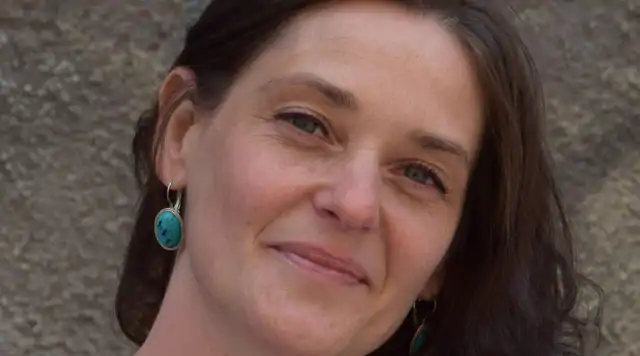
High school teacher Filippa Mannerheim.
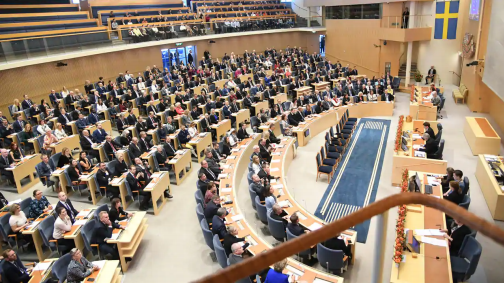
The Swedish Parliament.
Photo: OLLE SPORRONG
Teacher Filippa Mannerheim sparked a great debate with her indictment against Swedish parliamentary politicians about the market school.
All parties – except M and KD have responded – and Mannerheim is now writing her closing remarks.
This is a cultural article, where writers can express personal opinions and make assessments of works of art.
DEBT DEBATE.
There was once a farmer who was terribly hard of hearing, something he was ashamed of. One day, while standing carving on an ax handle, he saw the surveyor coming walking on the road. “First he probably asks what I do and then I answer ‘Ax handle'”, the old man thought. Then he asks if he can borrow my mare and then I say: “The riders have ridden her back off”. And when he asks about my old echo, I answer “She is completely ruined and holds neither weather nor water.”
– Good day! said the surveyor.
“Ax shaft,” replied the old man.
This story my father read to me when I was a child and I remember that we laughed a lot at the old man’s determined but damned answers. That the saga is now revived within me again, after 40 years, is no coincidence.
After reading the six (non) answers from our parliamentary parties after my article “I accuse…!”, I am saddened by school policy. What is positive is that our Riksdag politicians have answers to all my questions. What is negative is that their answers rarely have to do with the questions.
The Center Party proudly claims (after three months of reflection, while their formulations have gone back and forth between communicators and party leadership), that they at least want to increase freedom of choice and transparency in Swedish schools, but then make proposals that lead to the exact opposite – slippery as eels in their struggle to defend the corporations’ dividends. The Liberals write an answer so full of empty phrases that I have already forgotten what the message was. I think there was something about teachers being very important.
The Social Democrats and the Green Party agree with me in substance but unfortunately can do nothing, “very boring, really.” The Western Party is outraged, the Sweden Democrats, as usual, blame the immigrants and the
Moderates and Christian Democrats don’t bother to even put together an answer. Probably they have none.
– Swedish schools are in deep crisis! Politicians, you must act!
– Good day, ax handle, little friend.
What exactly is politics for our politicians? I ask myself. Is it a polished, trembling index finger in the air, or is it a sincere description of the problem and a long-term and well-thought-out vision of what Sweden can become, based on knowledge, a sense of responsibility and an honest will to improve our society?
Who knows? Not me anyway.
In another fairy tale I recently read with my
students, HC Andersen lets the little child
shout the obvious: “The emperor is naked!”
Many of us are shouting now, but without our
rulers hearing us.
Photo: CSABA BENE PERLENBERG /
But this is not a fairytale. This is 2021 in a small but extreme country in the north, where the majority of our parliamentary parties have made it clear to us voters that the Swedish school market, with its destructive consequences, will remain. The limited companies’ expansion at the expense of the municipal school, the unfair school choice system, the extreme and skewed construction of school fees that are running Swedish schools at the bottom, grade inflation, a rejected principle of openness and an increasingly segregated school system – all this we must continue to live with.
This was not what we thought of the free school reform!
Nevertheless, the majority of our political parties are determined to continue on the path that has led Swedish, tax-financed schools deeper and deeper into the dunes of corruption. The partners’ profits are too important to be legislated away. At the same time, meaningless messages are drummed out to voters as pale, Orwellian mantras: “All schools must be good!” “Free schools are good!”
– Good day, ax handle.
The fact remains: We are the only country in the world with this school model. No party, neither right-wing nor left-wing parties in the rest of the world, pushes the idea of free establishment for commercial companies, an almost unlimited profit, lack of democratic transparency about how tax money is used and free for profit companies to choose and reject which children to teach. The Swedish school system is rigged.
Several bourgeois opinion leaders and leading writers have happily begun to raise their voices against the market school. Even the Liberals have very recently expressed concern about venture capitalists as school owners. It gives a certain hope. But the fact that an overwhelming majority of our parliamentary parties cannot unanimously express that they are prepared to take responsibility and do something about the problems is nothing but outrageous. They simply do not want to stop being the only country in the world that prioritizes foreign venture capitalists over the country’s children.
But Swedish schools are not the private property of politicians or limited companies to milk money and power out of. The schools belongs to us. The Swedish people. We pay for the party.
In the 2022 election, we voters have the opportunity to use our votes wisely with the socially important school issue in focus. If we vote for a party that does not want to change the school system but only pretends to poke at it for the sake of visibility, the system will remain. And it will leave huge traces in our Swedish society.
Parliamentary politician: I have nothing more to add in the matter.
My accusation remains.
By Filippa Mannerheim
Filippa Mannerheim is a high school teacher of Swedish and history, as well as a writer and school debater.
The following article was written by Swedish high school teacher Filippa Mannherheim and translated by retired Swedish educator Sara Hjelm. It appeared in the Swedish publication Expressen. Sweden adopted a free-market system of schooling in the early 1990s, and the results have increased segregation without improving the quality of education or access to good schools. The free-market model, she writes, began with extravagant promises but has turned into a bonanza for entrepreneurs and profiteers.
Swedish education is a shame – you politicians have failed
Published 17 Nov 2020 at 06.15, updated 18 Nov at 10.05
Teacher and school debater Filippa Mannerheim.Photo: Press
Teacher and school debater Filippa Mannerheim today publishes an open letter on Expressen’s culture page to Sweden’s Riksdag politicians. “It is time to merge across party lines and stop the expansion of limited companies,” she writes.
This is a cultural article, where writers can express personal opinions and make assessments of works of art.
Parliamentary politicians!
I am a Swedish citizen. I am a teacher. I’m a parent. And I am deeply concerned about the future of Swedish schools.
The Swedish school has been subjected to a world-unique experiment. In the rest of the world, it is unreasonable for limited companies to make unregulated profits on tax money. Despite this, we in Sweden donate hundreds of millions of kronor to shareholders in company groups year after year – money that was intended for our children’s education.
With the deregulation of the 1990s, the ambition was to create thriving, independent schools, foundations, parent cooperatives and small limited company schools with educational alternatives. Today, this vision has turned into an uncontrollable market where venture capital companies are expanding and devouring tax money at breakneck speed.
The business model is simple: you buy smaller independent schools and incorporate them into the growing groups and then make a profit by targeting marketing to easy-to-teach, independent students, through special dress codes, requirements for high tempo and great drive or through English as a study language. With a sold-out, simpler student base, the corporation schools can reduce salaries, teacher density, resource staff and – to attract even more lucrative student customers – sprinkle with joy-ratings to show the school’s “high results”.
When the profitable students have been absorbed by the independent school, the municipal school is left with a more difficult student base and with the overall responsibility for all the municipality’s students. And when the municipal school’s student allowance must be increased due to the task becoming more demanding, the independent schools ‘student allowance is also increased and the groups’ profits can increase even more. A bomb-proof business model for venture capital companies but a devastating tax waste for the Swedish citizens.
You, politicians, have made our common school a wet dream for venture capital companies.
Because while the school giant Academedia, now listed on the stock exchange, makes a profit of SEK 556 million before tax, the size of the children’s groups in the preschool increases and greatly exceeds the National Agency for Education’s benchmarks. While the International English School (IES) presents a profit of 254 million, many children are in classrooms without teaching materials and are taught by foreign teachers without Swedish qualification or by qualified teachers who earn SEK 3,000 less a month than their municipal colleagues. While schools and colleges are sounding the alarm about declining knowledge results, joy grades are rising, as grades have become a competitive tool on the market. While the independent school giants receive a rent discount for establishing themselves in the municipalities, children with diagnoses or a mother tongue other than Swedish are rejected, as they are more expensive to teach.
Before the National Agency for Education made all statistics about individual schools secret – because it became a “trade secret” – all this information was available to us. Today it does not do that anymore, which threatens our democracy.
I accuse you of that.
Swedish schools bleed at the same time as resources are available. But the tax money that was intended to go to student support, small groups, more teachers, more resource staff, teaching materials and smaller classes ends up in tax havens instead.
You, politicians, have made our common school a wet dream for venture capital companies. It’s shameful. It’s sad. It is unworthy of a knowledge nation.
After Chile abolished profit-driven independent schools four years ago, we are left alone in the world with our school system. Denmark, Norway, Germany, the Netherlands, England all have independent schools but profits are prohibited or strictly regulated. If the rest of the world can have well-functioning independent schools for parents to choose from, without the owners being allowed to pick out millions in profits – why can’t we?
The company magnates have the money. Nine politicians have the power. I have, apart from my furious despair over the state of affairs, only my pen and my conviction that the truth about Sweden’s school system must emerge.
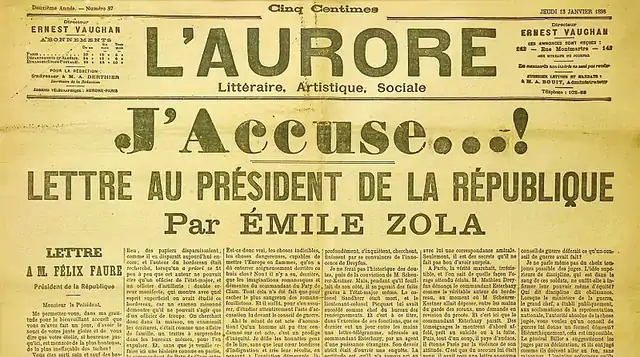
I’m accusing …! was written by Émile Zola and published January 13, 1898. Zola turned in the letter to the President of France and took a stand for the Jewish officer Alfred Dreyfus who had been convicted of high treason.
Parliamentary politicians. This letter has become long and it is time to summarize:
• I accuse you, the Social Democrats! Your party name is a pathetic remnant from the time when you defended an equal school – for all children from all walks of life. Today you have voluntarily put your gag on one of Sweden’s most important issues – the marketing school. It is not democracy but its exact opposite: it is political pity.
• I accuse you, the Moderates! You are talking about more controls, even though it obviously does not help against the corruption-like elements that the market school has produced, where joy grades, instead of education, have become a competitive tool in the fight for the most easily taught students. You have with your nonchalance betrayed our nation and its youngest citizens.
• I accuse you, Liberals. You call yourself a “school party” and claim that teachers should be authorities in the classrooms. At the same time, you have turned children and parents into school customers and “grade shoppers” and teachers into servile sellers of grades, with the task of keeping customers happy for their own school’s survival. The system is morally corrupt and you are partly responsible.
• I accuse you, the Christian Democrats. Your reluctance to see how the interest in profit hits the school is depressing. You earn money when you should serve our children. To you, I have only one thing to say: Drive the traders out of the temple!
• I accuse you, the Green Party. In 2013, your congress voted no to welfare gains. After that, your school policy has consisted of hand hearts on Youtube, despite the fact that you held the post of Minister of Education. Your contribution on the school grounds has been an unfunded “Read-write-count-guarantee” and a struggle for more sex and cohabitation education, while the school falls.
• I accuse you, the Sweden Democrats. You talk about assimilation, community and security. Yet you support a school system that increases segregation and allows jihadist schools run by people with links to Islamism and violent extremism and schools with religious indoctrination of children. And after a special lunch at Riche, you turned to the issue of banning profiteering and sat yourself on lap in the independent school lobby.
• I accuse you, the Left Party. You have been passive and have not even indicated that you would like to overthrow the government on this issue. The school groups’ profit-taking and expansion is a matter of destiny for our country and no matter how outrageous alone you are here in Sweden, you have the rest of the world on your side. Overthrow the government! This issue is not negotiable.
• I accuse you, Center Party! You put venture capital companies’ right to millions in profits ahead of future generations and call Sweden’s principle of openness – the foundation of our democracy – a “hot pursuit of free enterprise”. You let your friends in business management legally steal our taxes – millions that were meant for education. You pose shamelessly with the groups great in photo, without being ashamed. You have let Sweden down.
Knowledge, education and upbringing should be at the center of this socially important activity – not money.
My questions to you politicians are the following: What will happen to Sweden when more and more children do not get the education they need? When foreign venture capital companies gain more and more influence over the school and we citizens lose both transparency and the principle of openness? When tax money, through independent school groups, ends up in the pockets of fundamentalists and shareholders in Kuwait, Saudi Arabia and Malta? What opportunities will we have to govern the school in a democratic way when the power of foreign owners over our education system increases through the expansion of the school groups?
One last reflection. Whatever it may now be worth to you: Schools are not just buildings with children and teachers inside. Schools are not just childcare while parents work. The school is a common community building, where we adults prepare future generations for the future. Knowledge, education and upbringing should be at the center of this socially important activity – not money.
If we demolish this common building, which you, politicians, are well on your way to doing, society will also fall to pieces, slowly but surely. Your society, just like mine. Your children’s society, just like my children’s society.
Parliamentary politicians. The time has come. It is time to merge across party lines and stop the expansion of venture companies and take back the tax millions and education to the Swedish people.
While we still can.
By Filippa Mannerheim
Filippa Mannerheim is a high school teacher of Swedish and history, and a school debater.
Jake Jacobs, an art teacher in New York City, a leader of New York BadAss Teachers, and a writer for The Progressive, read and reviewed Hillary Clinton’s policy briefing book in 2017 and reviewed the education section for Alternet. I missed his article, but it’s worth reading now to understand how advocates of privatization have inserted themselves into both political parties and use their vast wealth to control public policy and undermine public schools.
Jacobs points out that Laurene Powell Jobs “has been close with the Clintons since the late ’90s, also sat with Betsy DeVos on the board of Jeb Bush’s Foundation for Excellence in Education. She set up billionaire “roundtables” with Clinton’s campaign advisors through 2015 while donating millions to Priorities USA, Clinton’s main PAC.”
Jacobs notes:
Notes taken by Clinton aide Ann O’Leary were made in interviews with Powell Jobs and Bruce Reed, President of The Broad Foundation (and former chief of staff to Joe Biden). According to the notes, the “experts” were calling for new federal controls, more for-profit companies and more technology in public schools — but first on the menu was a bold remake of the teaching “profession…”
Powell Jobs suggests letting principals “pick their teams,” making teachers individually negotiate salary (every teacher—really?), expanding online education offerings like Khan Academy and making teaching universities “truly selective like TFA and Finland.” This comment is perplexing because while Finland has demanding teacher vetting and training, Teach for America places inexperienced teachers in classrooms after a seven-week summer crash course...
Tying campaign donations to a singular issue like expanding charter schools might in days past been seen as a prohibited quid-pro-quo. But in this cycle, Podesta, O’Leary and [Neera] Tanden [director of the Center for American Progress and President Biden’s nominee to lead the crucial Office of Management and Budget, which sets priorities for federal funding] all busily raised campaign money from the same billionaire education reformers with whom they were also talking policy specifics.
But they did more than talk. On June 20, 2015, O’Leary sent Podesta an email revealing the campaign adopted two of Powell Jobs’ suggestions, including “infusing best ideas from charter schools into our traditional public schools.” When Clinton announced this policy in a speech to teachers, however, it was the one line that drew boos.
“Donors want to hear where she stands” John Petry, a founder of both Democrats for Education Reform (DFER) and Success Academy, New York’s largest network of charter schools, told the New York Times. Petry was explicit, declaring that he and his billionaire associates would instead put money into congressional, state and local races, behind candidates who favored a “more businesslike approach” to education, and tying teacher tenure to standardized test scores...
Not mentioning education would become important in the general election. This policy book shows a snapshot in time when wealthy donors were pushing Clinton’s and Jeb’s positions together, seeking more of the federal privatization begun under George W. Bush and continued by Obama...
This was predicted by John Podesta, who bragged just after the 2012 election about nullifying education policy differences between President Obama and Mitt Romney. Sitting next to Jeb Bush, Podesta proclaimed “ed reform” a bipartisan affair, telling donors “the Obama administration has made its key priorities clear. The Republicans are pretty much in the same place…this area is ripe for cooperation between the center-right and center-left”...
The 2014 policy book reveals some essential lessons about how education policy is crafted: in secret, with the input and influence of billionaire donors seeking more school privatization and testing—regardless of what party is in power. Even as the backlash against testing and the Common Core grew, Clinton’s advisors pushed her to embrace them. Clinton vacillated, then fell silent on K-12 policy, and as a result, education issues were largely left out of the election debate. Today, under Trump, privatization marches on worse than ever.
“A Wolf at the Schoolhouse Door” focuses on a fundamental debate on the nature of schools. Education, the authors argue, is best treated as a public good that belongs to everyone.
“Like clean air, a well-educated populace is something with wide-reaching benefits,” Berkshire and Schneider write. “That’s why we treat public education more like a park than a country club. We tax ourselves to pay for it, and we open it to everyone.”
The alternative: education as a private good that benefits and belongs to those who consume it. In that increasingly influential view, families should choose schools – or other education products and services — the same way they choose restaurants or where to buy their shoes, with little concern for anyone else.
The threats they describe are not a wolf but a veritable wolfpack: conservative ideologues who want to reduce taxes and shrink government, anti-union zealots, marketers bent on “selling” schools, self-dealers making money from ineffective virtual-school schemes and technology enthusiasts who envision a future in which algorithms replace teachers.
That may make the book sound like a polemic; it’s not, at least in my reading. The authors offer a fair and accurate reading of opposing views and acknowledge that public schools aren’t perfect. All too often, they admit, public schools have excluded or failed students of color, immigrants, religious minorities, students with disabilities and others…
I remember, in the late 1990s, being surprised when the Indiana Chamber of Commerce said it planned to push for vouchers. Democrats controlled the governor’s office and the Indiana House. Just a few years earlier, a well-organized voucher push led by prominent business officials fizzled out.
But, as Schneider and Berkshire document, voucher supporters have played a long game, carried forward by groups like Indianapolis-based EdChoice and the American Legislative Exchange Council. In 2011, with a GOP supermajority in the legislature and Mitch Daniels in the governor’s office, Indiana approved vouchers. The program started small but grew to include over 300 private schools, nearly all of them religious, and over 36,000 students. Now there’s talk of expanding it further – or possibly of adopting education savings accounts, one of the “neo-voucher” programs that Schneider and Berkshire describe.
There is reason to hope, he writes, but also reason to be alarmed and vigilant.

 Contact us:
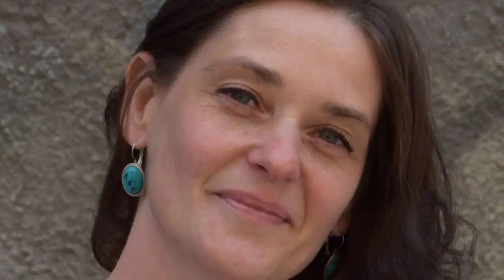 High school teacher Filippa Mannerheim.
  The Swedish Parliament.