Archives for category: Education Industry

Andre Perry led a charter chain in New Orleans. He became disillusioned. As a black scholar, he questions the Walton-funded effort to portray black support for charters as monolithic, which it is not. 

Perry wrote in response to the controversy that occurred when pro-charter demonstrators disrupted a speech by Elizabeth Warren in Atlanta. He is aware of the white Republican money behind the demand for more charters.

He wrote:

Warren needs to learn from black voices — but the charter school movement is not ours to defend.

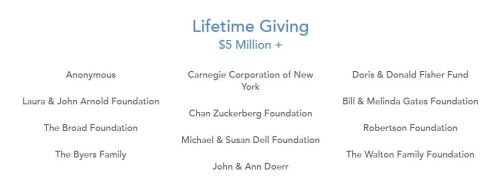
Organizations such as the charter school advocacy group Families for Excellent Schools have orchestrated statewide campaigns using dark money to influence state ballots to increase the number of charter schools, hiding who’s actually behind the movement. The Associated Press reported in December 2018 that an advocacy group that received $1.5 million from the Walton Family Foundation, one of the biggest funders of education reform, paid for 150, mostly black parents from Memphis to travel to Cincinnati two years prior to protest at a meeting of the NAACP. The parents sought to lobby against an NAACP proposal — which the organization passed despite the protests — to call for a moratorium on charter schools. They denied that the Walton Family Foundation asked them to carry out the protest.

This political season, black people cannot afford to be human shields for white leaders who don’t have the legitimacy to enter black communities on their own.

Perry notes that most Democratic candidates, notably Sanders and Warren, have abandoned charters.

He writes:

This reversal of position by Democrats is a sign that members of the party are listening to black communities….

Over the course of more than two decades, charter school expansion resulted in a significant loss in black-held jobs and a reduction in black political power in several black-majority cities. Black teachers were fired en masse in New Orleans, Washington D.C., and Newark, N.J., decimating the black middle class there.

Hundreds of millions of dollars directed towards electing pro-charter candidates ultimately empowered Republicans in many states. The pro-charter group Students First realized that its funding of Republican candidates had backfired. The association of the charter cause with the Republic party lead to the defeat of pro-charter proposals. Democratic voters showed they will not support movements that bolster the Republican Party — the same party that refuses to check Trump’s blatant racism. Democrats who support the idea of charter schools should make it clear to Republicansthat they will not tolerate a charter system that offers improved academic performance for some black students only by harming the communities in which those students live.

However, Democrat reformers developed a bad habit of accepting this Faustian bargain, and staying silent in red states on issues like jail expansion, cuts to higher education and attacks on organized labor because dissent ran the risk of slowing the proliferation of charters. Yes, black families want and need choice, but the current charter school movement is too tightly braided with Republican causes; a defense of one is a defense of the other.

To embrace charter schools in 2020 is to embrace Betsy DeVos, Donald Trump and other Republicans who stand to gain more politically from charter support than black communities have gained in jobs and educational benefits. Black kids lose when Democratic educational reformers act like Republicans.

Perry quotes the EdNext poll, noting that the publication is “pro-reform.” It is more accurate to acknowledge that EdNext (on whose board I once served) is a very conservative, pro-charter, pro-voucher publication funded by rightwing foundations. Frankly, polls about charters are worthless because most people admit when asked that they aren’t sure what a “charter school” is. If they don’t know what a charter school is, how can their view—positive or negative—signify anything?

Perry is right to point out that the Dark Money behind charters has a different agenda than most black parents. The Waltons and DeVos and their allies in ALEC want to bust teachers’ unions and privatize public schools. Perry is right to peer behind the curtain and see whose interest is served by the well-funded attacks on public schools.

He writes:

The funders of charter schools continuously put black parents and teachers in the position of fighting against their own interests. White-led philanthropy and education groups will eventually abandon public policy experiments when it is no longer popular, politically expedient or, in some cases, lucrative. For-profit charters are in education ostensibly for the money.

Some black charter leaders feel they must defend the schools because black children attend them. But we don’t need to fall into that trap. We can defend black children and workers without defending charter schools. Black people need systemic change. We can’t allow the cry for charters to drown out the demands for school financing reform, better work conditions, higher teacher pay, universal pre-K, free college, teachers’ training and recruitment programs, stronger labor protections and workforce housing initiatives.


Jennifer Berkshire and Jack Schneider reveal the secret ingredient to the success of the Resistance to privatization/portfolio district strategy in Denver in this podcast.

For years, Denver had been a feather in the cap of DFER and other advocates of privatization. Betsy DeVos lauded Denver for its commitment to school choice, although she was disappointed that it had not yet adopted vouchers. the Brookings Institution praised Denver for its deep commitment to choice.

Michael Bennett rose from Denver superintendent to the U.S. Senate and still touts his success as a school reformer.

But in the last school board election, the critics of school closings, portfolio strategies, and charter schools won the seats to control the board, to the amazement of everyone.

How did it happen?

Jennifer Berkshire wrote: It’s a fascinating and inspiring story. The movement to “flip the board” started in Denver’s Black community and was then taken up by teachers. But the most amazing part of the story may be how young people – the products of the Denver reform experiment – have risen up to demand change. I don’t think that’s what DFER envisioned! 

Listen to the podcast.

Alan Singer calls out Common Core for the poor showing of US students on PISA. 

Remember all the promises about how Common Core would raise all test scores and close gaps? Nada.

Of course, the deeper issue is that decades of test-and-punish reforms failed, not just Common Core.

it those who pushed these failed policies will not abandon them. They will say—they are saying—that we must double down on failure.

The consensus among governors and policy elites that followed “A Nation at Risk” in 1983 was that common standards, tests, and accountability would lead to high levels of performance (ie, test scores).

They didn’t. They haven’t. They won’t.

Almost four decades later, we can safely say that this theory of reform has failed. Billions of dollars wasted!


In case you didn’t know, a murmuration is the sound of lots of birds flapping their little wings.

Mercedes Schneider defines it here:

The name, “murmuration,” refers to “hundreds, sometimes thousands, of starlings fly in swooping, intricately coordinated patterns through the sky.”

Why does it matter?

Because Emma Bloomberg, daughter of multibillionaire Michael Bloomberg, has created a new “ed reform” organization that uses that term as its name.

Schneider has scoured the websites and also the tax forms of this new group.

What they do is not obvious, but they do have millions of dollars, probably from Pappa Bloomberg.

They apparently spend it on data technology, technology integration, and, of course, it is all about the children.

As Schneider writes:

Our focus is on driving change and accelerating progress toward a future where every child in America has the opportunity to benefit from a high-quality public education.

And how do the unnamed, Murmuration change-drivers propose to drive said change?

We provide sophisticated data and analytics, proprietary technology, strategic guidance, and programmatic support to help our partners build political power and marshal support so necessary changes are made to improve our public schools.

Our precise, predictive intelligence and easy-to-use tools are used by practitioners and funders, on their own and working together, to make informed decisions about who they need to reach, what they need to say, and how to achieve and sustain impact.

Of course, in typical ed-reform fashion, its *for the kids*:

We envision a public school system that ensures every child across our nation – regardless of race, income, background, or the zip code where they live – receives an education that prepares them to lead productive, fulfilling, and happy lives.

We believe public servants must recognize that providing a great education to every child is necessary to our prosperity, and be willing to invest in real, systemic and sustainable change which may come at a political cost.

We want our political systems to function and benefit from a rich discussion of the important role of public schools.  We want everyone who is impacted by public education to participate (or be represented) in the discussion and decision-making process.  And, we want the voices of those most reliant on our public education system to be heard.

What all this adds up to is hard to say, other than providing another honey tree for practitioners of disruption to shake.

I am trying to imagine how “those most reliant on our public education system to be heard” when the loudest voices are those with the most money.

Billionaires usually don’t send their own children to public schools and do not have a habit of listening to those who do, but they have plenty of dough to spread around to those who agree with their agenda to privatize the schools, monetize the data, and make technology our master.

The one thing that is clear from Schneider’s post is that Murmuration has plenty of money to spend. What it intends to to is not yet clear. Maybe they plan to visit public schools and listen to parents. Ya’ think?

The Philadelphia Inquirer reported on a federal audit that had surprising findings.

A national audit of charter school management companies by the U.S. Department of Education has spotlighted an unnamed Chester City school where, auditors say, the CEO wrote checks to himself totaling $11 million without board approval.

The report by the Office of Inspector General did not accuse the CEO of wrongdoing, but offered its finding as an example of a conflict of interest and lack of financial controls that could make the schools vulnerable to fraud. The report cited similar issues at four unnamed Philadelphia charter schools…In the instance of the Chester school, federal auditors reported that the CEO of the management organization wrote checks to himself in 2008-09.

While the audit did not name the school, there is only one charter in Chester City – Chester Community Charter School…

The school, which has more than 3,000 K-8 students, is the largest brick-and-mortar charter in the state. The most recent annual report from the state Department of Education shows that the school had total revenue of $45.1 million in the fiscal year 2013.

Vahan H. Gureghian, a lawyer and entrepreneur who has been active in Republican politics, is the founder and CEO of CSMI Education Management, which manages Chester Community Charter School.

Auditor General Eugene De Pasquale repeatedly has criticized the ties between Chester Community and Gureghian’s firm….

In addition to Pennsylvania, the states where charter schools were reviewed were California, New York, Florida, Michigan, and Texas.Investigators found internal control weaknesses with charter management organizations at 22 of the 33 schools reviewed. They spotted 24 cases of conflicts of interest and transactions with related parties at 17 of the charter schools.

John Thompson, historian and retired teacher in Oklahoma, writes here about the use and misuse of NAEP scores to advance disruption in the schools.


A new wave of “misnaepery” is heading towards Oklahoma and other states. After most or all of the corporate reform agenda became law in about 90 percent of states, reading scores dropped so much that even a reform true believer dubbed NAEP as “National Assessment of Educational Stagnation and/or Decline.”

https://www.edweek.org/ew/articles/2013/07/24/37naep.h32.html
https://podcasts.google.com/?feed=aHR0cDovL2VkdWNhdGlvbmdhZGZseXNob3cubGlic3luLmNvbS9yc3M%3D&episode=NzEzNTA2MzJjMDI0NDA0YmJmMjM4NjVhNzAwODE4NzE%3D&hl=en

After test-driven, market-driven reform was implemented, from 2013 to 2019, the nation’s 8th grade math scores for African-Americans dropped by five points. But I would argue that 8th grade NAEP reading scores are the most important and reliable metric, and they dropped seven points in six years for African-American 8th graders.

Today, Oklahoma’s 4th grade NAEP reading scores have dropped to four points below the 1990s pre-HB1017 tax increase level. And since accountability-driven, competition-driven reforms were supposed to improve outcomes for our poorest children of color, it is shocking that from 2013 to 2019 black student 8th grade scores dropped 15 points!

https://www.educationnext.org/make-2019-results-nations-report-card/

https://fordhaminstitute.org/national/commentary/worst-news-naep?utm_source=Fordham+Institute+Newsletters+%26+Announcements&utm_campaign=f22e67acec-20160918_LateLateBell9_16_2016_COPY_01&utm_medium=email&utm_term=0_5fa2df08a3-f22e67acec-71894457&mc_cid=f22e67acec&mc_eid=3095764e3b

Rather than admit their mistakes, reformers have retained their original meme that was used to justify hurried and risky reforms to blow up the education “status quo,” so that “disruptive innovation” can spark “transformative change.”

Two contradictory misnaepery themes are being rushed into the breach by the Fordham Institute. The smiley-faced meme is that teachers and students will naturally rise to meet far more “rigorous” standards. On the other hand, the conservative Fordham Institute has been blaming states like Oklahoma for supposedly hurting student performance by ending high school graduation exams. It is also arguing that we should return to the punitive policies of the former Chief for Change State Superintendent Janet Baressi and retain even more 3rd graders based on reading tests. 

First, ignoring the damage done by their experiments, accountability-driven, competition-driven reformers argue that radically higher testing standards will produce transformative improvements. State Superintendent Joy Hofmeister was a leader in the reaction against Baressi’s privatization agenda, so I can’t be too critical when she has to adopt some policies pushed by Education Next and other “astroturf” think tanks. Rightly or wrongly, she revised the state’s standards and assessments. There are no stakes attached to these metrics, and they allow the State Department of Education to say, “Oklahoma’s new standards [are] one of only 17 ‘A’ grades in the nation, up from the previous rank of 47th and a grade of ‘D.’”

So, for instance, Oklahoma’s 2017 8th grade math tests set a proficiency level which is at the NAEP proficiency level, basically comparable to around a 300 on that rigorous standard. The only groups in the United States were average scores reach that level are white and economically advantaged students in Massachusetts, a state where per capita income is nearly 50 percent greater. Oklahoma’s NAEP scores currently correlate with a level just above Kazakhstan.  Advantaged students in Massachusetts perform at the level of the counterparts on PISA and TMMS in the top performing states and nations, except for South Korea.

https://nces.ed.gov/nationsreportcard/studies/naep_timss/profiles.aspx
https://www.oecd.org/pisa/PISA-2015-United-States-MA.pdf
https://www.epi.org/publication/bringing-it-back-home-why-state-comparisons-are-more-useful-than-international-comparisons-for-improving-u-s-education-policy/#_note11

Of course, now that we listened to conservative reformers at the Fordham Institute and raised our expectations, Oklahoma students will soon join students at the top of the world’s education systems …

Fordham and other national reformers are also launching a second round misnaepery memes.  The 2015 NAEP was its first test of 4th graders after Oklahoma’s Reading Sufficiency Act required the retention of 3rd graders who don’t pass a reading test. Once Chief for Change Baressi was defeated by a pragmatic Republican, Hofmeister, educators were allowed more judgment in deciding whether to retain students. Until last year, however, little funding was available for interventions to assist struggling readers, much less adequate training and supports for inexperienced and emergency teachers in early elementary grades. (Oklahoma has hired more than 3,000 emergency certified teachers in a year.)

The 2015, 4th grade test scores increased by 2-1/2 percent. A conservative Republican reformer claimed they “were attributed to the 2014 implementation of a law that barred students from being promoted to the fourth grade if they read at lower than a second-grade level.” Those gains disappeared during the next two NAEPs. So, it is argued that more teeth needs to be restored to the retention policy.

But we also need to ask what really prompted the one-year jump in test scores. As in other states, the retention of low-performing readers can provide a temporary boost in NAEP scores. If you add up the 1st, 2nd, and 3rd graders who would have been in 4th grade during 2015, but who were retained, the total comes to about 9,000. Before the RSA, the more typical number of retentions was about 4,000. That means that about 5,000 more of the lowest performing students were missing from the 2015 4th grade class of about 47,000. The retention of more than 10 percent of the tested class could explain the one-time test score boost. As those students subsequently entered 4th grade, test scores dropped back to normative levels.

https://ocrdata.ed.gov/DistrictSchoolSearch#
https://oklahomawatch.org/2018/12/14/oklahoma-nearly-tops-nation-in-holding-back-early-grade-students/
https://journalrecord.com/2019/11/07/free-market-friday-student-results-continue-to-decline/

And what happened to that year’s economically disadvantaged students when they took 8th grade tests in 2019? Their scores were down by 2-½ percent in comparison to their 2015 8th grade peers.

Who knows what will be Fordham’s next misnaepery-driven attack on public education. After all, they were one of the think tanks who argued that the No Child Left Behind Act, which was enacted in 2002 deserved credit for the NAEP gains of the late-1990s! And now it is proclaiming an “Agincourt-level disaster” is the result of weakening NCLB accountability. The thing we know is that the Fordham spin will be picked up, amplified, and used by rightwing lobbyists throughout the nation to slander public schools.

Many school districts have had unfortunate experiences with “Broadies,” the graduates of Eli Broad’s management program for future school leaders. The Broad Leadership Academy has sent forth hundreds of would-be superintendents to impose Broad’s top-down management style, his faith in data, and his belief that the best way to reform a public school is to close it and replace it with a privately managed charter school. Broad is one of the major funders of charter schools in the nation. Although he graduated from the public schools of Detroit, he has zero interest in public schools other than as objects for privatization. In my 2010 book, The Death and Life of the Great American School System: How Testing and Choice Are Undermining Education, I referred to the Broad Foundation, the Gates Foundation, and the Walton Foundation as the Billionaire Boys Club. Since then, I have discovered that the club has dozens of billionaire members, and a few (think Alice Walton) are Girls, not Boys. All, however, share an animus toward public schools and a passion for privatization of what belongs to the public.

The big news is that Eli Broad has given $100 million to Yale University to administer his efforts to train future leaders of schools. It is not clear where the faculty will come from, since the Broad training program is unaccredited and is led by Broad allies, not academicians or scholars.

Now the graduates will be accredited, but their degree won’t mean much unless the philosophy of the program  changes from its current emphasis on DPE (“Destroy Public Education”) to SPE (“Support Public Education”). That change is hard to imagine. If you want to see the fruits of Broad’s distorted thinking, look no farther than Detroit and Oakland, where Broad-trained leaders encouraged (or imposed in the case of Oakland) massive charter expansion, a goal shared with Betsy DeVos. Michigan’s Education Achievement Authority, whose leadership he selected, collapsed in failure.  Oakland continues to suffer from the disruptive actions of Broadie leaders. His efforts to hand half of the students in Los Angeles over to charter schools have thus far been foiled.

Read Mercedes Schneider’s account of the multiple failures associated with Eli Broad’s agenda. 

Eli Broad is aggressive in using his money and policy agenda to destabilize and disrupt public education.

Here is the press release from the Broad Foundation/Broad Center, with the usual puffery and zero admission of the failed policies (privatization, school closings, high-stakes testing, VAM) that Broad and the graduates of his program have inflicted on American schools over most of the past two decades.


The Broad Center Will Become Part of Yale University to Train Future Generations of Public School Leaders

$100 Million Donation from The Eli and Edythe Broad Foundation will Fund The Broad Center at the Yale School of Management to Offer Tuition-Free Master’s Degree to Emerging Education Leaders and Advanced Management Training to Superintendents and Senior Leaders in Public School Systems


Los Angeles, CA – With a gift of $100 million to Yale University, The Broad Foundation today reaffirms its commitment to public K-12 education and makes possible the launch of a major new initiative of the Yale School of Management focused on strengthening leadership in public education. Building on transformative work by The Broad Center in Los Angeles, the initiative will ensure in perpetuity high-impact programs to advance excellence and equity in education.


The Broad Center at Yale SOM will develop research, teaching, and policy initiatives devoted to improving the effectiveness of top leaders in America’s public school systems. The ambitious initiative will leverage Yale SOM’s expertise in delivering rigorous management education to talented professionals in fields that have broad societal impact, while furthering and amplifying the previously independent Broad Center’s mission of ensuring high-quality leadership in public education.


“I’m very proud of what we’ve accomplished in the last 20 years and I can think of no better future for The Broad Center than Yale University,” said Eli Broad.


The gift is the largest ever received by the Yale School of Management and will enable the creation of a master’s degree program for emerging public education leaders and advanced leadership training for top school system executives—successors to The Broad Residency in Urban Education and The Broad Academy, respectively. The Broad Center at Yale SOM will also develop extensive research endeavors aimed at assembling the premier collection of data on public education leadership.


“With its mission to educate leaders for business and society, Yale SOM is a natural home for The Broad Center,” said Yale SOM Dean Kerwin Charles. “We have long recognized public education as critical to the health of our communities, and we believe that our distinctive approach to management education and research can have tremendous impact. Our efforts will build on the extraordinary work of The Broad Center team over the past two decades. Indeed, we are impressed by and grateful for what they have done to advance excellence and equity in public education.”


The Broad Foundation has learned through its 20 years of investing in public education that schools alone can’t solve for the inequities, indignities, and challenges facing students from underserved communities: Having The Broad Center housed at Yale SOM means all of its programs can be enhanced with input from Yale University’s leading thinkers in management, public health, law, child development, policy, criminal justice and economic development. The center will draw on the experiences and insights of practitioners, including Broad Center alumni and Yale SOM graduates, to help guide and inform its efforts in both teaching and research.


“I am honored that The Broad Foundation is entrusting Yale to carry out this important part of Eli and Edye’s philanthropic legacy. Educating leaders who will serve all sectors of society is part of Yale’s mission, so it is fitting that the Yale School of Management is creating a master’s degree program tailored to delivering management and leadership training that meets the unique needs of public education,” said Yale President Peter Salovey. “The school’s dedication to leadership education and cultivation is unmatched. Its track record of producing transformational leaders across a range of fields speaks to the tremendous promise of the new Broad Center at Yale SOM.”


The two programs of The Broad Center, The Broad Academy (founded in 2002) and The Broad Residency in Urban Education (founded in 2003), have trained more than 850 education leaders working in over 150 urban school districts, public charter school networks and state education agencies nationwide. More than 150 Broad Center leaders have served as superintendents or chief executives of local and state systems, and over 70 are currently in these roles. Each program has made great strides in building a diverse network of leaders that better represent the students and families they serve.


“The Broad Center has been committed to evaluating and evolving its work since it was founded – continuous improvement is in our DNA,” said Becca Bracy Knight, Executive Director of The Broad Center. “Organizational leadership has a direct effect on school quality, which is why The Broad Center has worked for two decades to elevate the field of public education management. We look forward to new opportunities to increase our impact by combining each organization’s unique and complementary strengths in service of our shared mission to improve public education.”


The current cohorts of fellows and residents will finish their programs through The Broad Center as currently structured; successor programs run by SOM will begin in 2020.


In its 20 years of investing in public education, The Broad Foundation has made grants to transform school governance, improve district operations, grow high-quality charter management organizations, engage in education policy and advocacy, and develop talented leaders, managers and teachers for public school systems.


###


Politico reports that Betsy DeVos thanked her ideological bedfellow, ALEC, for its help in framing proposals to defund public schools (aka vouchers, opportunity scholarships, tax credits, education savings accounts, a rose by any other name, etc.).

ALEC is the far-right extremist libertarian organization that hates public schools, gun control, unions, environmental regulations, and anything else that infringes on the right of corporations to pursue profits without regard to consequences. ALEC is also a strong supporter of charter schools.


DEVOS IS SCHEDULED TO THANK ALEC FOR EDUCATION FREEDOM SCHOLARSHIP SUPPORT in a speech to the council’s conference in Arizona today, the Education Department said. The proposal, which has found little traction in Congress, would create a new $5 billion federal tax credit for donations to scholarship-granting organizations to pay for students to attend private schools or expand their public education options.

DeVos is a longtime friend to ALEC’s group of conservative state legislators. The secretary’s addressed the group’s conferences before, and drawn protests with a push for local control of education issues.

Arizona unionists have planned extended protests at ALEC’s conference, and have been aware that DeVos would be visiting.

NBCT high school teacher and blogger Justin Parmenter discovered a shocking fact: a company in the state called SAS pays to send state legislators to the annual conference of the American Legislative Exchange Council (ALEC), a far-right anti-public school organization that writes model legislation. SAS sells software to districts and states to evaluate teacher effectiveness.  The SAS software is very controversial because it’s algorithms are secret and proprietary. Teachers in Houston sued and won a court judgement against SAS, when the judge ruled that its secret processes were arbitrary and denied due process to teachers, who had no way to know how they were judged or if the calculations were accurate.

Parmenter writes:

The American Legislative Exchange Council (ALEC) is an infamous legislation factory which is notoriously hostile toward traditional public schools.  Its model bills are passed into law–often word for word–by state legislatures around the country.

ALEC’s education platform claims the nation’s K-12 education system is “failing our students, leaving them unprepared for college, careers, or life,” and the policies the organization writes for lawmakers offer a smorgasbord of legislative pathways for defunding public schools, especially those that serve high-poverty students.

That’s why it’s so disappointing to learn that one of North Carolina K-12 public education’s most high-profile partners, SAS Institute, is paying for members of North Carolina’s General Assembly to travel to ALEC’s annual meetings, where viewing and discussing the group’s suggested anti-public school policies is one of the primary activities.

SAS Institute is a privately held analytics software company based in Cary, NC.  Its founder and CEO James Goodnight’s net worth is estimated at more than $13 billion, making him the richest person in North Carolina by a wide margin.

SAS has an extremely cozy relationship with the NC Department of Public Instruction (DPI).  Just last month, for example, SAS hosted an event where company software specialists and professional educators including DPI Deputy Superintendent of District Support Dr. Beverly Emory presented on how to use SAS data in public schools.

Millions of North Carolina taxpayer dollars go to SAS every year for a variety of software-related education contracts.  The company provides K-12 teachers with EVAAS ratings, which employ a secret algorithm to measure individual teachers’ effectiveness using DPI’s standardized test data.  It also produces the North Carolina School Report Cards.

North Carolina’s School Report Cards assign each school a single A-F letter grade representing its overall performance. The report cards have been controversial since state legislators introduced them in 2013 as the grades are highly correlated with levels of poverty and sometimes have the effect of pushing families away from traditional public schools.

Probably not by coincidence, ALEC has been peddling its “A-Plus Literacy Act” to lawmakers since early 2011.  The model bill recommends a statewide A-F school report card system with a special focus on reporting results for students who score in the lowest 25th percentile, and it refers to the grading system as a “lynchpin for reforms.”  One such reform is also included in the bill, as ALEC recommends students who attend F schools be given an opportunity to enroll in private schools instead.

A cozy arrangement indeed!

Thomas Ultican writes here about the Walton-funded effort to control the public schools of Little Rock. Given the Walton love of charter schools, we can safely assume that they hope to eliminate democratic control of the citizenry and impose charter schools. Ultican follows the money, where it comes from, where it goes.

He writes:

In an apparent reaction to the 2014 school board election, new Republican Governor Asa Hutchinson and the state of Arkansas assumed stewardship of Little Rock School District (LRSD). A law passed January 28, 2015 authorizing the takeover requires the state to give control back to Little Rock voters by January, 2020. New racially motivated proposals hearkening back to the days of openly racist governor, Orville Faubus, ensure minority residents lose their democratic rights. Big money from the Waltons – The world’s wealthiest family – is driving privatization and segregation within LRSD.

A leading Little Rock community activist, Reverend Anika Whitfield, said in an interview, “The Governor, the Attorney General and the state legislature are all controlled by the Walton family.” In 2016 when new Superintendent Mike Poore came to Little Rock from Bentonville, Arkansas (headquarter of the Walton family), Whitfield was suspicious and asked him about his relationship with Walmart’s owners. He replied, “I know you all are apprehensive; I don’t even know Jim Walton.”

Driving Corporate Education Reform in Little Rock

Littls Sis Map Attacking Little Rock Schools

Little Sis Map Showing Leaders of the Attack on LRSD

Bear in mind that the point of corporate reform (as practiced by the Waltons, Bill Gates, Eli Broad, and other of their ilk) is disruption, not school improvement. Their efforts seldom lead to better schools, but always produce disruption.