Archives for category: Charter Schools

Dr. John Thompson, historian and teacher in Oklahoma City, anticipates the collapse of corporate reform in this outstanding post. He gives much of the credit to the opt out movement, which stood up to political and corporate power to protect their children. Who ever thought it was a great idea to subject 9-year-old children to 8 hours of testing? Who thought it would be a good idea to fire teachers if test scores didn’t go up every year? Who thought it was a good idea to drain resources from public schools and give them to privately managed charter schools?


Parents certainly didn’t. They refused to be bullied by school officials and politicians.


Thompson writes:


“Three cheers for the Opt Out movement! When the history of the collapse of data-driven, competition-driven school improvement is written, the parents and students of the grassroots Opt Out uprising will get much – or most – of the credit for driving a stake through the heart of the testing vampire.”


Thompson thanks Tom Loveless for pointing out that all of these alleged reforms have not produced the promised miracles. But he faults all those who continue to believe that testing, punishments, rewards, and competition improves education.


But he gives Loveless a demerit for continuing to accept the premises of corporate reform.


“One cheer for the Brookings Institute’s Tom Loveless, and his discussion of Common Core State Standards (CCSS) and for noting the failure of CCSS to raise student performance. Okay, maybe he deserves 1-1/2 or 1-3/4ths cheers for his resisting changes to the reliable NAEP tests in order to please Common Core advocates, and for concluding, “Watch the Opt Out movement.”


Loveless notes that “states that adopted CCSS and have been implementing the standards have registered about the same gains and losses on NAEP as states that either adopted and rescinded CCSS or never adopted CCSS in the first place.” He then gets to the key point, “The big story is that NAEP scores have been flat for six years, an unprecedented stagnation in national achievement that states have experienced regardless of their stance on CCSS.“ Now, Loveless says, “CCSS is paying a political price for those disappointing NAEP scores.”


“The big story, however, is the failure of the entire standards-driven, test-driven, competition-driven model of school improvement. Loveless is free to adopt his own methodology for his latest research paper on education reform but he deserves a “boo” for continuing to reduce complex and inter-related processes to a bunch of single, simple, distinct, quantifiable categories….


“Loveless, Brookings, and other reformers deserve a loud round of boos for pretending that the failure of Common Core standards is unfair and/or regrettable. On the contrary, the political and educational battle over national standards is a part of the inter-connected debacle produced by a simplistic faith in standards and curriculum; bubble-in accountability; and the federal government’s funding of teacher-bashing, mass charterization, and the top-down reforms of the last 1-1/2 decades.


“While I appreciate Loveless’s candor in acknowledging that the stagnation of NAEP scores in the last six years is unprecedented, his focus on standards misses the other big points. These realities have not been lost on the grassroots Opt Out movement….


“Perhaps we’re seeing the last days of the education blame game. Maybe Loveless and other pro-reform analysts will give up on trying to pin the rejection of their policies on parents and teachers. As parents refuse to allow their children to take the tests, it will become even more impossible to set cut scores, meaning that it will become even more impossible to claim that systems can identify the children and adults who supposedly should be punished for their scores. Once the punitive parts of school reform are repudiated, little or nothing will be left of this unfortunate period of education history. And, the Opt Out movement will deserve the credit it is granted in closing that chapter.”


A reader from Ohio sent a list of the 50 districts in Ohio that have sent a bill to the state for the revenue diverted from their schools’ budgets to support charter schools, many of which perform far worse than the public schools.  Public school boards typically oppose privatization. Bill Phillis, a retired educator, leads the Ohio Coalition for Equity and Adequacy and encourages local districts to stand up against the charter school raids on their budgets. He reports each time a school board sends an invoice to the state for funds lost to charters.


CONGRATULATIONS to Bill Phillis and the 50 public school districts that have adopted resolutions to bill the state for charter school deductions!


1. Woodridge (Summit County)
2. Logan-Hocking (Hocking County)
3. Troy (Miami County)
4. Elyria (Lorain County)
5. Parma (Cuyahoga County)
6. West Clermont (Clermont County)
7. Cardinal (Geauga County)
8. Keystone (Lorain County)
9. Northmont (Montgomery County)
10. Jackson (Stark County)
11. Streetsboro (Portage County)
12. Firelands (Lorain County)
13. Lake Local (Wood County)
14. Bowling Green (Wood County)
15. Belpre (Washington County)
16. LaBrae (Trumbull County)
17. Southington (Trumbull County)
18. Beaver Local (Columbiana County)
19. Northridge (Montgomery County)
20. Claymont (Tuscarawas County)
21. Southern Local (Perry County)
22. Indian Creek (Jefferson County)
23. Green Local (Summit County)
24. Garaway Local (Tuscarawas County)
25. Xenia (Greene County)
26. Noble Local Schools (Noble County)
27. Adena Local Schools (Ross County)
28. Gallipolis (Gallia County)
29. Oak Hills (Jackson County)
30. Monroe Local (Butler County)
31. Liberty Union -Thurston Local Schools (Fairfield County)
32. Tuscarawas Valley Schools (Tuscarawas County)
33. Amherst Schools (Lorain County)
34. Huron City Schools (Erie County)
35. Fairborn City Schools (Greene County)
36. Champion Local Schools (Trumbull County)
37. Washington Local Schools (Lucas County)
38. Euclid City Schools (Cuyahoga County)
39. Sheffield-Sheffield Lake City Schools (Lorain County)
40. Dayton City Schools (Montgomery County)
41. Bristol Local Schools (Trumbull County)
42. North Ridgeville Local Schools (Lorain County)
43. Brecksville-Broadview Heights City Schools (Cuyahoga County)
44. Fairbanks Local Schools (Union County)
45. Plain Local Schools (Stark County)
46. Wellston City Schools (Jackson County)
47. Vandalia Butler City Schools (Montgomery County)
48. Twinsburg City Schools (Summit County)
49. Morgan Local Schools (Morgan County)

50. Vinton County School District


Bill Phillis posted just a few days ago about Vinton County joining the list.


He writes:


Vinton County Local School District added to the list of districts that have invoiced the state for charter school deductions.

Ohio charters began to operate, with tax money in tow, in 1999 amid great fanfare and the promise of setting the pace for educational excellence. Promoters promised that via innovation, creativity and competition, charters would spur improvements in the traditional public school system.

The stark contrast between promise and product has smudged the charter brand beyond repair. This $7 billion boondoggle of broken promises, low performance, nepotism, fiscal fraud and corruption is being propped up by deceptive marketing, clever lobbyists and lucrative campaign contributions; but the industry cannot survive because the reality of it is being exposed.

Boards of education, school administrators and teacher leaders are drawing a line in the sand. The public common school community from the Lake to the River, from Dayton City to Vinton County Local is pushing back. The tactic of invoicing the state for charter deductions is just one example of the growing resistance to the failed charter experiment.
William Phillis
Ohio E & A


Join Our Mailing List!
Ohio E & A
100 S. 3rd Street
Columbus OH 43215


or email Bill here:


ohioeanda@sbcglobal.net


The California Charter Association has put its heft and money behind a bill to limit the authority of the Los Angeles Inspector General for charter schools. The CCSA knows that neither the state nor the district have the resources to audit hundreds of charter schools. The bill is intended to remove accountability and transparency from charters, leaving them free to cherry pick students, exclude children with disabilities, inflate their enrollment numbers, and–well–steal public money. Charter school nirvana: No checks, no balances, no monitoring.


Robert Skeels commented on this article.


“It is in the public interest that charter schools be subject to a modicum of oversight. One would think that it would be public policy that any organization that takes public money should be subject to public scrutiny. AB 2806 would severely hamper the OIG’s already minimal ability to investigate an industry that essentially runs with no other public oversight or control. The charter industry’s attempts to eliminate this one mechanism for holding them accountable is unconscionable, but not unexpected.


“The irony of well-heeled charter school executives like Caprice Young decrying the OIG should not go unnoticed. In defense of her beleaguered Magnolia charter chain, Young has written several Op-Eds. In them she discusses a 2015 audit of the schools claiming it was “financially solvent”, but omits that scores of previous audits found the chain insolvent. For instance, the 2014 audit revealed them “operating on a $1.7 million deficit” and that there multiple instances of “missing, misused funds” (SPRC, 2014). This misrepresentation by omission alone impeaches Young’s credibility beyond any reasonable standard. Moreover, it demonstrates why public agencies like the OIG and OIG are so critical. AB 2806 is further evidence of the lucrative charter school industry’s revenue-first agenda, and their ongoing efforts to avoid any oversight is another example of how they harm both their own students, and the students in our public schools.”


Please consider making a donation to Amy Frogge, a great friend of public schools, who is running for re-election to the Metro Nashville school board. Amy is a lawyer whose children attend public schools in Nashville. She ran for school because are as a mom and a citizen, knowing nothing of corporate reform. Her opponent was well-funded and had a 5-1 advantage over Amy. Amy went door to door, and she won!


As a board member, she has fought for public schools. She has opposed privatization and high-stakes testing. She is on the honor roll of this blog for her courageoussupportfor the children of Nashville.


Amy needs our help. The “reformers” want her gone. Please donate whatever you can.


Kenya Downs interviews Professor Christopher Emdin of Teachers College, Columbia University, about his new book, called “For White Folks Who Teach in the Hood … and the Rest of Y’all Too.” 


Downs writes:


“There’s a teacher right now in urban America who’s going to teach for exactly two years and he’s going to leave believing that these young people can’t be saved,” says Dr. Chris Emdin, associate professor at Columbia University’s Teachers College. “So he’s going to find another career as a lawyer, get a job in the Department of Education or start a charter school network, all based on a notion about these urban youth that is flawed. And we’re going to end up in the same cycle of dysfunction that we have right now. Something’s got to give.”


Emdin, who is also the university’s associate director of the Institute for Urban and Minority Education, has had enough of what he calls a pervasive narrative in urban education: a savior complex that gives mostly white teachers in minority and urban communities a false sense of saving kids.


“The narrative itself, it exotic-izes youth and positions them as automatically broken,” he says. “It falsely positions the teacher, oftentimes a white teacher, as hero.”


He criticizes the “white hero teacher” concept as an archaic approach that sets up teachers to fail and further marginalizes poor and minority children in urban centers. In “For White Folks Who Teach in the Hood … and the Rest of Y’all Too,” his new book released this month, Emdin draws parallels between current urban educational models and Native American schools of the past that measured success by how well students adapted to forced assimilation. Instead, he calls for a new approach to urban education that trains teachers to value the unique realities of minority children, incorporating their culture into classroom instruction. I talked with him about the book and why he says the stakes are too high to continue with the status quo.


Emdin says:


I think framing this hero teacher narrative, particularly for folks who are not from these communities, is problematic. The model of a hero going to save this savage other is a piece of a narrative that we can trace back to colonialism; it isn’t just relegated to teaching and learning. It’s a historical narrative and that’s why it still exists because, in many ways, it is part of the bones of America. It is part of the structure of this country. And unless we come to grips with the fact that even in our collective American history that’s problematic, we’re going to keep reinforcing it. Not only are we setting the kids up to fail and the educators up to fail, but most importantly, we are creating a societal model that positions young people as unable to be saved.


I always ask my teachers why do they want to teach and I can tell by their responses how closely the white savior narrative is imbued in who they are or who they want to be. I always say, if you’re coming into a place to save somebody then you’ve already lost because young people don’t need saving. They have brilliance, it’s just on their own terms. Once we get the narrative shifted then every teacher can be effective, including white folks who teach in the hood.


Downs asks “What are the risks of continuing urban education as is?”


Emdin replies:


The repercussions are around us every day from criminal justice to engagement with the political process, to higher incarceration rates and low graduation rates. The outcomes are right in our faces today. I’m not absolving communities from blame or parents from blame. But we know that schools that have more zero tolerance policies, youth are more likely to get involved with the criminal justice system. We know that schools that have these hyper rigorous approaches to pedagogy, youth are less likely to take advanced placement classes. So the place where the magic should happen is inside the classroom.


It’s not a tale of doom and gloom. I’m simply saying this is why it’s bad but there’s a way forward. And the way forward doesn’t cost a million dollars! It doesn’t require you to give an iPad to every kid in the school district or a $3 million grant. It’s free! Teaching differently is free. Going into the communities and finding out how to do things better is free, man! It’s not an issue of finance or an issue of wealth. It’s an issue of identifying that what we’ve been doing before just ain’t working.


Sean Combs, the famous rapper, is sponsoring a new charter school in Harlem that will open this fall. It will be dedicated to the theme of social justice, a worthy goal that is missing from many lives today.


If making money and becoming a celebrity is your definition of success, then Sean Combs is a huge success.


But he apparently has a serious anger management problem.


Last June, he exploded at a UCLA coach of his son’s football team, swung a weight at him, and was arrested on a felony charge. Being rich and famous, he got a super lawyer, the charge was reduced from a felony to a misdemeanor, Combs was released on $160,000 bail and the charges were eventually dropped.


Diddy said the coach had yelled at his son during practice and was riding him. Apparently the coach didn’t know who the young man is or how important his father is.


The New York Daily News reported:


“Hot-headed rap mogul P. Diddy was arrested Monday after being accused of attacking his son’s college football coach in Los Angeles with a kettlebell weight.


“The 45-year-old Diddy came unhinged after he angrily confronted the UCLA assistant coach for screaming at his son, Justin, who plays defensive back from the Bruins team, according to TMZ.com.


“Diddy, whose real name is Sean Combs, was arrested about 12:30 p.m. by UCLA campus cops after the violent encounter at the school’s Acosta Athletic Training Complex.
“He was charged with felony assault with a deadly weapon, the kettlebell weight.


“Combs exploded at assistant coach Sal Alosi after he confronted him about riding his son during an on-field strength and conditioning session, sources told the gossip website.”


What can be learned from this encounter? What are the social justice lessons?


A father must always stand up for his son?


If you are rich enough, you can escape the consequences of your actions?


There is one law for the rich, another for the poor, so get rich?


What is the teachable lesson here?


The charter wars in Washington State continue. You don’t think Bill Gates would permit his home state to go without charter schools.


The Supreme Court of Washington State ruled that charter schools are not public schools, but charter advocates were undeterred. After all, they have millions of dollars to throw around, but not to pay for the handful of charters they opened.


Allies of the charter industry introduced legislation to fund charters with lottery proceeds. Some Democratic legislators bowed to the Will of the Great Gates. It was left to Democratic Governor Jay Inslee to decide. He displayed a Profile of No-Courage by deciding not to sign the bill. Without his veto, the bill became law.


The legislature showed more concern for the 1,000 students in privately managed charters than for the one million children in public schools. The state’s highest court has ordered the legislature to fund the public schools and is fining that body $100,000 a day for its failure to do so.


Back to the courts.

Mercedes Schneider learned that rapper Sean (Puff Daddy) Combs is sponsoring a charter school in Harlem. Its theme, he says, is social justice.


Mercedes reviews the lyrics of some of Puff Daddy’s songs, in search of the theme of social justice. She didn’t find it. She found misogyny, profanity, and celebration of law-breaking. She advises students to do what he says, not what he sings.


Combs is not the only rapper to sponsor a charter school. The rapper Pitbull launched a charter school in Florida as part of the for-profit Academica charter chain. He is a member of the Zulueta family that owns the chain.

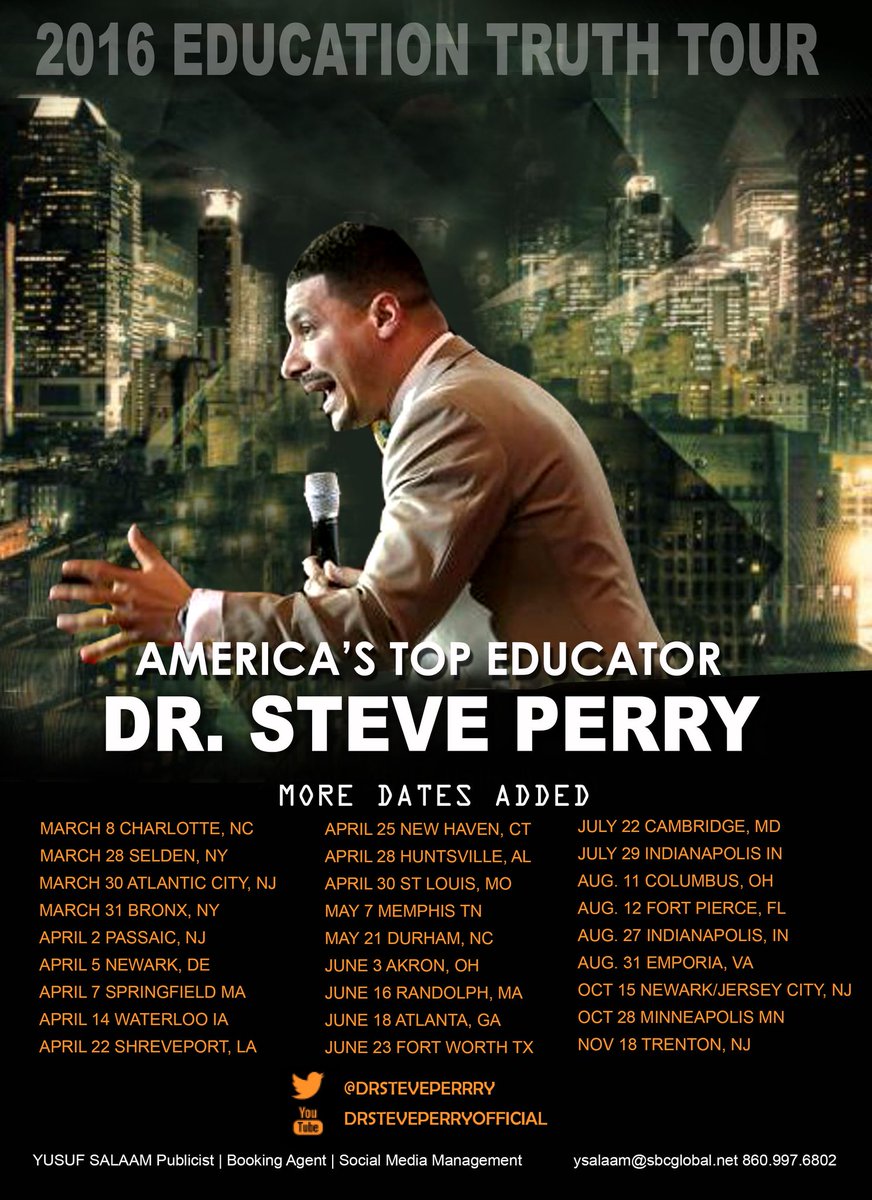
The Los Angeles Times reported here on Sean (Puff Daddy) Combs’ charter school in Harlem that will be run by Steve Perry, who describes himself as “America’s Most Trusted Educator.”
Teachers in the school will not be called “teachers,” but Illuminators. 
The theme of the school is social justice. 
“Students are expected not only to complete college, but to understand the importance of helping their communities. One student in Hartford created a program that provides students with a backpack filled with food for the weekend if they didn’t have enough at home, Jones said. Students must identify a problem in middle school, and work on a “social justice project” throughout high school.
“I want to impact the lives of young people in my community, and build future leaders. The first step is offering access to a quality education,” Combs said in a statement. “All our children should be able to pursue their dreams.”

This should be an April Fools’ Day joke, but it is not.


Rapper Sean (Puff Daddy) Combs is sponsoring a charter school in Harlem that will be run by the notorious Dr. Steve Perry of Hartford, Connecticut.


Perry bills himself as “America’s Most Trusted Educator.” His magnet school in Hartford was known for its harsh discipline. Perry became known for his contempt for teachers and unions. He once publicly referred to union teachers as “roaches.”


Perry has an intense lecturing schedule, including a few dates next fall after his charter school opens.


As Jonathan Pelto writes, Perry had quite a reputation in Hartford and beyond:


“Perry gained national notoriety for his school’s harsh disciplinary policies that included the use of the “Table of Shame” to punish children who received demerits and for his ugly public comments about unions, teachers and anyone who opposed his empire building efforts.


“As a 2013 Wait, What? post entitled, Hey Steve Perry – Tell us about Capital Prep’s “Table of Shame,” explained:


“Located in the cafeteria of the Capital Preparatory Magnet School at 1304 Main Street in Hartford, Connecticut is the “Table of Shame.”


“As part of Capital Prep Principal Steve Perry’s “zero-tolerance” policies even the slightest “violations,” such as wearing the wrong colored belt, will result in punishments designed to humiliate and demean students.


“For example, it is not uncommon for Capital Prep students to be forced to stand in the cafeteria to eat as punishment for violating the school uniform policy or some equally unimportant “violation.”


“And now, more than a half a dozen former and present parents, students and teachers report that Perry and his fellow Capital Prep administrators regularly require children, even the youngest students in the building, to sit at the cafeteria’s “Table of Shame.”


And yes… it is actually referred to as the “Table of Shame.”


Along with the charges of abusive disciplinary practices and questionable financial activities – According to federal and state documents, Steve Perry registered his private charter school management company at the address of the Hartford public school at which he worked – Perry’s unwillingness to provide federally required educational services to children with special needs led to a sweeping investigation and follow-up action.


As a Hartford school administrator, Perry was also unwilling or unable to recruit and retain students who were English Language Learners despite more than 50 percent of Hartford’s students being Latino.


Where Perry goes, controversy follows.