This is one of Randi Weingarten’s best speeches. She delivered it at the 2026 Convention of the American federation of Teachers on July 26 in Washington, D.C.
Not only does she identify income inequality as a dire threat to our democracy, she speaks one of the greatest lines I have ever read:
Mr. President, you don’t own July Fourth. You own Jan. 6.
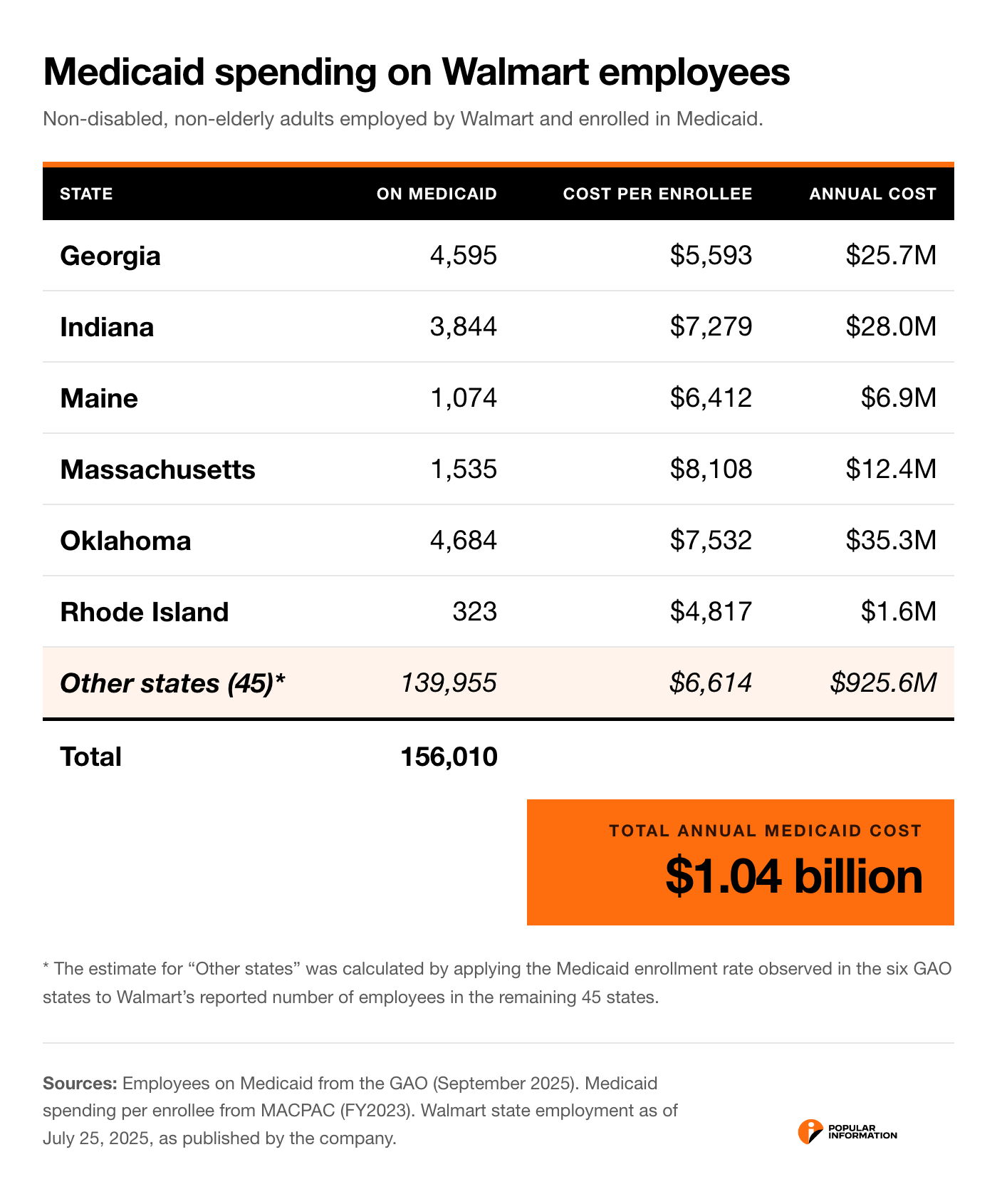
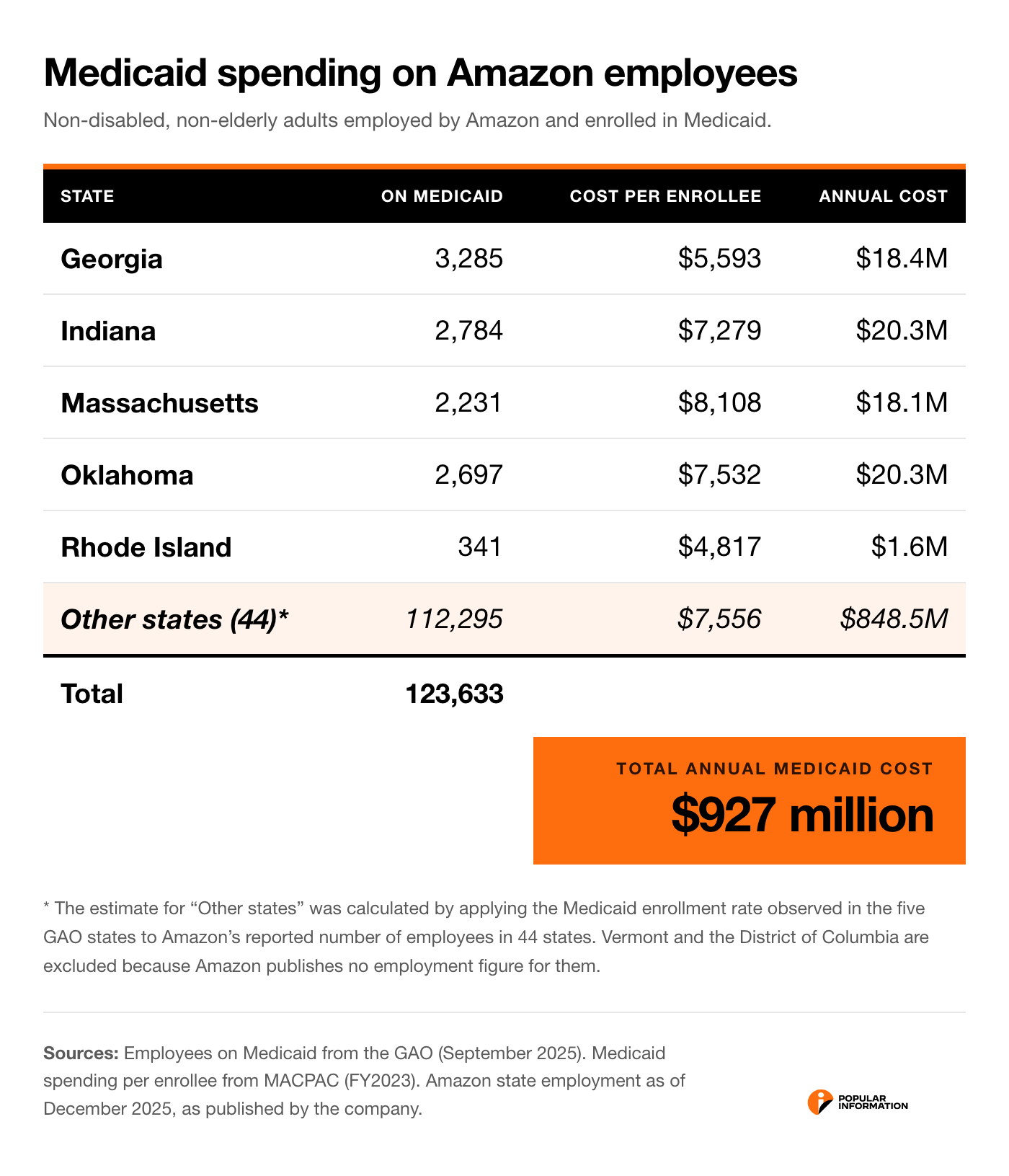
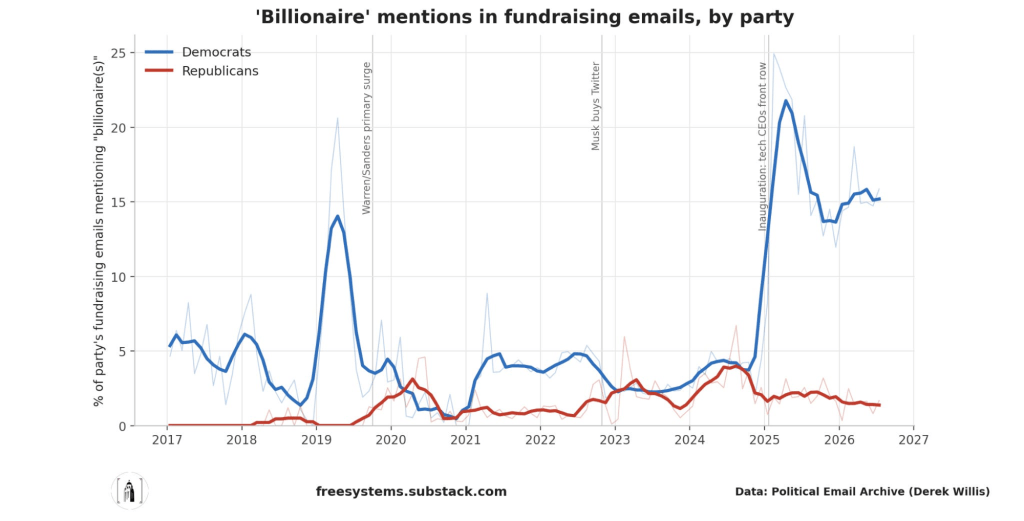
Randi points out that the dramatic income inequality of our times is destroying the middle class. Unions build a strong middle class. The large increase in the number of billionaires is it a sign of a healthy society; it is a sign of gross inequality.
As more people slip out of the middle class or hang on by their fingertips, our social problems get worse.
How do we restore a thriving middle class? Encourage the growth of strong unions.
She reminds us that today only 1 of every 10 workers belongs to a union. Union workers are paid more, significantly more, than non-union workers. In mid-century America, when 1 in 3 American workers were in a union, we had the largest middle class and the lowest income inequality. And she says, “That’s why, in the long term, growing the union movement is key to solving America’s affordability crisis.”
Rightwingers have done their best to eviscerate unions. And they have won significant victories in the courts.
But, despite the obstacles, the AFT is growing. It now has the largest number of members in its history: 1.875 million members. Al Shanker and Sandy Feldman would be proud of that accomplishment.
Unions are key to a better life.
Randi said in her address:
We plan our conventions years in advance. When we decided to hold this convention in our nation’s capital, to coincide with the celebration of America’s founding 250 years ago, who would have thought that the grievances that led to the American Revolution would be so relevant and relatable today? Or that America would have a new kind of aristocracy based on mind-blowing wealth?
In the United States, there are now 1,000 billionaires—and the world’s first trillionaire—at a time when nearly half of American households—46 percent—don’t earn enough to make ends meet.
This wealth imbalance—the top 1 percent having as much wealth as the entire bottom 90 percent of Americans combined—has led to a power imbalance that affects the lives of everyone in our country. These oligarchs influence policy. They have the power to undo social progress. To sway financial markets, monopolize the media, buy elections and undermine democracy.
In an earlier period of extreme wealth inequality, the country elected Franklin D. Roosevelt, and his New Deal programs lifted millions of Americans out of poverty.
This time, the country elected Donald Trump, and well …
Remember that warning—about the barbarians at the gate? Well, the barbarians aren’t at the gate, they are inside, including at the highest levels of government.
The president and his cronies are abusing government powers to punish political opponents. Every day they find new ways to attack voting, presumably to entrench themselves. Their war on working-class Americans includes stripping collective bargaining rights from 1 million federal workers, including members of our union, in the biggest act of union-busting in U.S. history. All while engaging in the most blatant corruption in modern American history to enrich themselves.
The attacks—on unions, on working people, on public education, on higher education, on the public good, on democracy—didn’t start with Trump. They’ve been decades in the making, going back to the 1971 memo by future Supreme Court Justice Lewis Powell that successfully plotted corporate dominance in American politics. And the Supreme Court’s 2010 Citizens United decision that fueled the massive surge of “dark money” in elections—which has now been supercharged by the court’s ruling last month that blew up whatever campaign finance limits were left. And its 2018 Janus decision that anti-union forces hoped would drive a stake through the heart of public sector unions. Project 2025 became the playbook to enact this extremist agenda. This year’s Callais decision not only gutted what remained of the 1965 Voting Rights Act but did so in time to affect the 2026 elections. Then there’s the bare-knuckled crusade to destroy public education and higher education. Just look at Christopher Rufo’s tweets, or his unabashed declaration years ago that “To get to universal school choice, you really need to operate from a premise of universal public school distrust.”
And I haven’t even gotten to Big Tech and artificial intelligence.
Yes, the other side has enormous power. But this is what they don’t have: the power of the people.
That’s not a mere slogan; it’s the potential to work together, to bargain together, to protest together, to vote together, to act together to bring about change—real, lasting, life-improving change. That is the power and potential of our movement and of the AFT.
Our union stands at the intersection of the ways that regular people gain and exercise power in our democracy—through public education, unions and voting.
The skills and knowledge people secure through public and higher education expand opportunity—that’s power. Union contracts improve economic well-being—that’s power. Elections—voting for people who answer to their constituents, not wealthy donors—that’s power.
It’s power not just for ourselves, but for our students, our patients and our communities. Power to build what Martin Luther King Jr. called the “beloved community”—an America where hate has no home. Where the trans nurse, the Palestinian teacher, the Jewish student, and every person regardless of race, religion, ethnicity, gender or place of origin, feels welcome, safe and valued.
We use our power for good—against chaos, cruelty and corruption. We care, we fight and we show up—for a better life for all. Oh, and one more thing: We get shit done!
We are a fighting union. To quote the president of Texas AFT, Zeph Capo, “Our members will forgive us if we fight and lose, but they’ll never forgive us if we don’t even fight.”
Look at what we have fought for, and won, in these last two years—despite constant challenges.
Through the AFT’s student debt clinics and our other activism, we have helped more than 1 million borrowers, many of them our members, get $78 billion in student debt forgiven! That is life-changing; people can start a family, buy a home, save for retirement.
The AFT has filed more than 25 lawsuits against the illegal actions of the Trump administration. If I talked about all of them, I would blow everyone’s bets on the length of the speech. So here are just a few: The Trump administration tried to stop any school—pre-K through college—from doing anything that could be construed as advancing diversity, equity and inclusion, essentially erasing 60 years of civil rights law. And it sought to condition all federal funding for schools on compliance with its dictates. We sued, and we won. We challenged the administration’s policies to detain and deport noncitizen students and faculty for participating in protected political speech. Again, we won. We sued to stop the administration from stripping federal funding from universities and to stop its efforts to control curriculum, hiring and speech. You guessed it—we won.
And then there’s the collective bargaining victories. Like for better wages—from Boston to Kansas City, from Chicago to Los Angeles and so many more. That’s the union difference: Union workers’ wages are 11 percent higher than nonunion workers. Unionized teachers earn 24 percent more in states with collective bargaining, and education support professionals earn 13 percent more.
And as we speak, the city council in New York City is voting to provide every United Federation of Teachers-represented paraprofessional a $10,000 “Respect Check” that the union has relentlessly fought for.
Life is better with a union.
It goes beyond wages. Take the United Educators of San Francisco, whose successful strike this year led to winning premium-free healthcare not only for members but for their families.
And paid parental leave. Kudos to our affiliates in Boston, Chicago, Cleveland, Fairfax County (Va.), New York City and Oregon for making great strides to help families thrive.
And safe staffing. The UFT has had some incredible wins through arbitration. And in New Jersey, our healthcare union, Health Professionals and Allied Employees, has negotiated 14 contracts in a row with enforceable safe-staffing provisions. And now one of our newest affiliates, Hawaii Nurses and Healthcare Professionals, has created a broad coalition to do the same.
And we have a sacrosanct commitment to retirement security. After a generation-long battle, we won passage of the Social Security Fairness Act that gave millions of public workers the full benefits they had earned but been denied. Our New York unions made great progress this year to fix Tier 6; now younger workers who had inferior pensions can retire in their late 50s. And AFT Massachusetts, AFT Pennsylvania and our Alaska affiliates are making progress on retirement security as well.
There’s also what we have fended off. The Philadelphia Federation of Teachers reached an agreement to stop the cuts of 340 school-based positions for the coming school year. In Utah, a labor coalition including AFT Utah gathered more than 250,000 signatures and got the Legislature to repeal a ban on public sector bargaining. AFT New Hampshire has a mean game of whack-a-mole—defeating right-to-work, school vouchers and campus carry legislation, and successfully challenging a law that restricted teachers’ rights to teach and students’ access to honest history. In New York, our unions—United University Professions and the Public Employees Federation—and a broad community coalition successfully fought to keep SUNY Downstate hospital open after years of threatened closure, and they secured $1.1 billion to upgrade and expand facilities and services.
These are fights we’ll have to keep waging. The Republicans’ Big Ugly Bill cuts $1 trillion in Medicaid, makes the largest cuts to nutrition assistance in history, triples the cost of student debt for tens of millions of Americans, and threatens hundreds of rural hospitals with closure—all to give $1 trillion in new tax cuts to the richest 1 percent. State and local budgets are seeing the strain. We’ll keep fighting, school district by school district and hospital by hospital.
Then there is artificial intelligence—the most seismic industrial revolution of our time. From UUP in New York to the University Professionals of Illinois, we’ve won strong contract language so AI won’t be used to take our jobs, replace our professional judgment, or evaluate or discipline us.
And density matters: Like New York State United Teachers in education, Oregon’s density in healthcare is making a difference. The Oregon Federation of Nurses and Health Professionals secured the largest raises in its history—nearly 35 percent over four years for registered nurses. And OFNHP and HNHP in Hawaii have aligned all their contract expiration dates for the next Kaiser battle.
And then there is the protection of our students, our patients and our neighbors from brutal immigration tactics, like the recent fatal shootings by ICE agents in Texas and Maine of two men who should be alive today. Healthcare locals in Oregon won legislation to protect healthcare facilities from immigration enforcement. Educators across the country have fought for their students’ release from U.S. Immigration and Customs Enforcement detention centers. Our Twin Cities union family peacefully and courageously stood up to the occupation and harsh immigration enforcement that led to the killing of Renee Good and Alex Pretti and terrified thousands of immigrant families. We were there with mutual aid—food, diapers, rent money, books, toys and safe passage for children to and from school.
The AFT is always at the ready to help—like with our program for states and locals in crisis. Right now, we are helping our members in Florida, who are in the bull’s-eye of anti-union attacks intended to wipe them out. Let me be clear: We are with you every step of the way. And we’re investing in our affiliates through our MOVE grants, which affiliates are using as fuel to engage members, connect with community and strengthen their power.
This is what the power of the people looks like: caring, fighting, showing up and getting shit done.
This administration is waging a war on knowledge, from school voucher schemes, to erasing rather than facing history, to selling the Department of Education off for parts, to its all-out assault on higher education. Here, too, we’re not just fighting back; we’re putting forward big ideas.
The AFT and the American Association of University Professors have launched a national higher education campaign. We’re fighting to keep vital research funded and against attacks on academic freedom. We won collective bargaining rights for higher education employees in Maryland and made strides toward free college in Connecticut and Pennsylvania. In April, the AFT and AAUP released “A Blueprint for Strengthening and Transforming Higher Education”—and we launched it in Texas, because that is ground zero in the attacks on critical thinking.
Through AFT Healthcare’s Code Red campaign, we’re working to secure safe staffing limits, enforceable workplace-violence standards, and contracts that help recruit and retain frontline caregivers. That’s good for patients and for healthcare workers.
And on AI, we have a multifaceted plan: from limiting screens and child-facing AI for young students, to a tech tax to hold tech companies accountable for the massive disruptions their products are creating, to contract language, to our National Academy for AI Instruction to help educators master AI so AI doesn’t master us. AI is not going away, so we’re going to fight for the protections that matter to our members, our families and our communities.
And of course, we give out books, 11 million and counting, to children and families through our Reading Opens the World program.
All this is why the AFT is bigger, badder and more big-hearted than ever.
The AFT is the fastest-growing union in the AFL-CIO. Since our last convention, we have organized 173 more units, with close to 60,000 new members in these new locals. New affiliations have deepened our work in states like Hawaii, Michigan, North Carolina and Pennsylvania. And many existing locals have grown as well.
I am thrilled to announce that, despite everything that’s been thrown at us, we have hit a historic milestone: We proudly represent more members than ever before. Today the AFT is 1.875 million members strong!
People see the value of belonging. They see that we’re a fighting union—and that we get shit done! It’s amazing. You are amazing. And we are not going to let up. Too few people have the benefit of a union.
Half of all nonunion workers want to join a union, but only 1 in 10 workers in the U.S. belongs to a union. Americans are 14 times more likely to have an Amazon Prime membership than to be a member of a labor union.
In the mid-20th century, when 1 in 3 American workers were in a union, we had the largest middle class and the lowest income inequality. That’s why, in the long term, growing the union movement is key to solving America’s affordability crisis.
But what do we do now? We’ve got to win elections. And here’s why.
As I said, 46 percent of households—55 percent of households of color—did not earn enough to make ends meet in 2024. And inflation has soared since then. That means there’s not enough to put food on the table, gas in the tank and still cover rent. It means constant stress and struggle.
Our members see it every day in the people they teach, heal and protect.
And our members feel it.
This winter we surveyed AFT members about the financial issues that keep them up at night, and 7,500 responded. Nearly three-quarters report living paycheck to paycheck, and more than a third say they are unable to cover all of their monthly bills.
There are few things worse than the fear of not being able to provide for your family. Reading our members’ responses took me back to my teenage years when my father was laid off. I remember my parents whispering about which bills they had to pay now and which they could hold off on until he found work. They tried to protect my sister and me from knowing, but there’s no hiding anxiety that deep.
Millions of Americans believed Trump’s promises to end inflation and make America affordable again on “day one.” It’s “day 542” since he took office. Is anybody paying under $2 a gallon for gas like he promised? What happened to the “DOGE dividend checks”? Or your tariff rebate check? After they got rid of the Obamacare tax credits, have they fixed healthcare?
Trump isn’t worried about being able to afford healthcare, housing or anything else. Since returning to the White House, he has raked in more than $2.2 billion, through what government watchdogs call unprecedented corruption and self-dealing.
The president has called the affordability crisis “bullshit.” And he has said, “I don’t think about Americans’ financial situation.” But he has made it worse.
Trump’s tariffs sent the strong economy he inherited into a slump, even with an AI bubble. His trade wars are costing American families $1,000 more every year. He started a costly war against Iran that has left us worse off than when it started. Trump said taxpayers wouldn’t pay “one dime” for his ballroom, but it turns out we’re on the hook for hundreds of millions of dollars.
We’re not holding our breath for the president to deliver on his promises to lower costs. We’re fighting for economic security and to put more money in our members’ pockets—like the 1 million borrowers we’ve helped get Public Service Loan Forgiveness relief. Our Fight for Affordability builds on that work, with resources to help navigate medical and credit card debt and on other support people are legally entitled to but may not know about.
And we are working with allies in Congress on bold solutions, like increasing the minimum wage to $25 and passing the Working Americans’ Tax Cut Act, which would exempt 104 million lower-income adults from federal taxes—paid for by millionaires paying a fairer share. We’re pushing for increased funding for public schools and colleges. We’re fighting back against the draconian cuts to Medicaid and to rural hospitals. Millions of children risk going hungry because of the heartless changes to the Supplemental Nutrition Assistance Program in the Big Ugly Bill; we are fighting for every single one of them.
But we need majorities in statehouses and in Congress this year, and ultimately the White House, to secure the foundational changes we seek.
Threats to Democracy
We face another grave danger: dire threats to democracy. I know, some of you are thinking, here she goes. But really, when is the erosion so much that we can’t get our freedoms back?
I remember the scoffing when terms like “authoritarian” were first used. And I have been asked repeatedly about why I used the term “fascist” in the book I wrote, Why Fascists Fear Teachers.
Unfortunately, the answer is clearer every day.
I don’t actually care what you call it, but I care very much about what Trump is doing. He is weaponizing the justice system to target political opponents, journalists and dissenters. He is sending armed forces trained for war to police American cities, especially to Democrat- and Black-led cities. He is using the presidency for his own benefit and to enrich himself and his family. He is trying to obstruct free and fair elections to maintain power.
Donald Trump keeps trying to overturn the results of the 2020 election. He urged on the Jan. 6 rioters and pardoned even those who brutally attacked officers bravely protecting the Capitol.
He is aggressively testing the legal and constitutional limits of presidential power.
Then there are the lies. It started with crowd size but now he lies about everything—about election results, the economy, his critics, the war in Iran. Even the botched paint job on the Reflecting Pool.
And sadly, instead of uniting the country to celebrate the great American experiment of democracy, what did Trump do for the 250th? He held what he described as “the most spectacular TRUMP RALLY of them all.”
Mr. President, you don’t own July Fourth. You own Jan. 6.
I speak and write about democracy a lot because education is vital to understanding, and understanding is vital to acting. If we don’t heed the warnings from the generals who worked for Trump in his first term; if we don’t recognize the hallmarks of authoritarianism—fear, division, isolation and apathy; if we don’t learn the lessons of tyrants, how do we the people have the shared understanding and the urgency to organize and mobilize for democracy to work for working people.
As I wrote last year, fascists fear teachers because they fear a well-educated citizenry. They fear what educators do—the teaching of critical thinking, of honest history, of pluralism—because their brand of greed, power and privilege cannot survive in a democracy of diverse, educated citizens. We see it in the book bans. In the attacks on DEI. In the efforts to control what schools and universities can and cannot teach. And in the attempts to rewrite and whitewash history.
To be clear: Fascists don’t just fear teachers—they fear, loath and try to silence all of us who stand up for democracy, dignity, fairness and opportunity for all.
And stand up we must.
Americans are losing faith in democracy. Seven in 10 U.S. adults say they are dissatisfied with the way democracy is working in the country. Young Americans in particular feel the country is on the wrong track.
I understand the disappointment. But we cannot give up on democracy. Winston Churchill was right when he said in 1947, “Democracy is the worst form of government except for all those other forms that have been tried.”
But we must improve it. As John Dewey said, “Democracy has to be born anew every generation, and education is its midwife.”
Look at where democracy is being born anew: In Hungary, where this spring 80 percent of voters turned out to reject Viktor Orbán’s far-right agenda, ending his 16-year grip on power. In South Korea, where labor unions spearheaded mass protests and nationwide “strikes to defend democracy” after the president declared martial law. And here at home, at May Day and “No Kings” protests in small towns, suburbs and cities across America, where millions of people turned out to say we will not stand by while democracy is dismantled.
We are not helpless to change what is wrong. We can build a better future and a stronger democracy. But that requires winning in November.
Elections
As big and bad and big-hearted as we are, neither bargaining nor bullhorns alone will get us out of these treacherous times.
To get a working-class tax cut, to pass living-wage legislation, to get limitless money out of politics, to fix the healthcare system, to strengthen education, and to restore vital safety net and climate programs, we have to win majorities in 2026 and the White House in 2028. We have to elect people who support working people, leaders with real plans to make life better.
Strengthening public schools and stopping the reckless runaway train that private school vouchers are becoming should not be a partisan issue. Ensuring everyone who works can earn a living wage should not be a political issue. Fighting so everyone has access to high-quality, affordable healthcare should be a human priority, not one party’s priority. Shoring up Social Security to keep seniors out of destitution should have universal support. Addressing the climate crisis that threatens all humanity should unify all humanity.
Perhaps one day these issues will be bipartisan.
But sadly, the reality is that since Trump’s first term, Republican officeholders’ support for our priority issues averaged just 8 percent, while Democrats averaged 95 percent. Do I wish that was different? Of course. And do I wish Democrats were bolder? I do. But Republican leaders don’t even seem to want to try.
This election will decide whether we are a country governed by the people or ruled by the powerful. A country of opportunity or oligarchy. A country whose people live in freedom or in fear.
Do we want a future where billionaires and a trillionaire continue to grow their wealth at the expense of working people? Or one where working people earn a decent wage, support their families and take a vacation once in a while?
Do we want a future in which classrooms lack resources and life-changing research is abandoned? Or one in which we can nurture the potential of every student and continue to lead the world in bold discoveries?
Do we want a future where big healthcare corporations put profits over people? Or one in which every person—every person—has access to healthcare, and healthcare professionals have the resources, staffing and power to help their patients?
Do we want a future ruled by tech bros and robots? Or a future grounded in dignity and humanity?
Do we want a future in which elections are rigged to maintain one-party control and government is for sale to the highest bidder? Or one in which every person’s vote matters and government serves the people?
That’s what’s at stake in November 2026. And the future we want is within reach. We can win majorities in the House and in the Senate and in state capitals. Majorities who will act on our priorities.
But only if we vote, get others out to vote, and protect the vote. That’s why we are committing to our most ambitious election program ever.
Here’s the math: 1.3 million AFT members and their families live in a place where there is a competitive race in November. 600,000 of us are in battleground gubernatorial states. 464,000 live in the states with the seven top U.S. Senate battleground races. We need to flip four seats to win a Senate majority that works for working folks. And we have more than 1,000 members and voting family members in 86 critical, competitive congressional districts. We only need a net gain of three seats to win a working folks’ majority in the U.S. House. Can we do it?
With the AFL-CIO, we have a goal of reaching 2 million new voters. That means the AFT has to turn out about 200,000 more householders than in the last election. That means we need 28,000 volunteers to make calls, knock on doors and get out the vote—28,000 out of 1.875 million. Can we do it?
And it’s not just about getting out the vote in this election but also about protecting the vote. That’s why we are launching a new Democracy Defenders election protection program. We are recruiting 5,000 members to make sure that people can exercise their right to vote free from intimidation. Our Democracy Defenders will be part of the 50,000 people the AFL-CIO is recruiting for this critical work. Can we do it?
People power can win, but we need to be all in, and that means we need you to be all in. No one can do everything, but each of us can do something to win in November and achieve the better future we fight for.
So are we going to vote? Are we going to get out the vote? Are we going to protect the vote?
Conclusion
That’s the energy and commitment we need to achieve the America we dream of: An America where everyone has opportunity and economic security. An America where everyone’s dignity and freedoms are respected. An America whose democracy not only endures but finally lives up to its noble ideals.
I’ve spoken often this year about Martin Luther King Jr.’s final book, Where Do We Go from Here: Chaos or Community? Since January 2025, we have experienced a lot of chaos, fear and division.
Lately, I find myself drawn to another piece of King’s wisdom—that the “arc of the moral universe is long, but it bends toward justice.” I still believe that, and I hope you do too.
But the arc doesn’t bend on its own. It bends toward freedom and opportunity through the work you do every day making a difference in people’s lives—in classrooms, at the bedside, in our communities. You bend the arc. Unions bend the arc. Voting bends the arc. The power of the people bends the arc toward justice.
On this 250th anniversary of our nation, that is our responsibility. That is what I am asking you to do, what I am asking us to do—this bigger, badder, big-hearted union and our 1.875 million members.
And when we do, when we bend that arc, we will change the trajectory of our nation and secure a better future for all, from sea to shining sea. Thank you.
Watch the full speech
https://www.aft.org/media/oembed?url=https%3A//youtu.be/oIASmJ3ZO70&max_width=0&max_height=0&hash=Sadl1eN7tbOr37C7SenWNH-Hx34YmVOAuIc7CHYyQyQ