The Biden administration selected San Diego Superintendent of Schools Cindy Marten to become Deputy Secretary of Education, the #2 job in the Department of Education.
She has a long career as a teacher, as principal of a high-poverty school in San Diego, and as Superintendent of the state’s second largest district since 2013.
Marten has been superintendent of San Diego Unified since 2013. But before that she had been a teacher for 17 years, as well as principal of San Diego’s Central Elementary School, a school in the diverse City Heights neighborhood where 96% of students qualify for free and reduced-priced meals.
It was after several years at Central Elementary that she made the virtually unheard of jump from an elementary school principal to being superintendent of her district — not just any district, but the second-largest district in California and the 20th-largest in the nation.
Derrick Johnson, President of the national NAACP, tweeted his support for her candidacy.
The San Diego chapter of the NAACP, strong supporters of charter schools, has criticized Cindy Marten for the high suspension rates of black students (black students are 4% of the SD enrollment but 12% of suspensions). The critics do not note that the San Diego school board passed a resolution to replace suspensions with programs of restorative justice, which will drive down suspension rates.
No such voices complained about John King, when he was nominated to be Secretary of Education by the Obama administration, after Arne Duncan stepped down. King’s no-excuses charter school in Massachusetts had the highest suspension rate in the nation (nearly 60%), but no one mentioned it. He was “the king of suspensions,” but no one cared.
Marten is committed to child-centered education, with a heaping dose of the arts and play. She is a worthy choice to serve as Deputy Secretary of Education.
The Rhode Island State Senate overwhelmingly passed a three-year moratorium on the opening of new charter schools. The vote was 30-6, with only one Democrat in opposition. Under the leadership of Governor Gina Raimondo, who is about to become President Biden’s Commerce Secretary, the state has welcomed charter operators (Raimondo was a hedge fund executive before she became Governor).
This delay offers state officials time to stabilize public schools in Providence and elsewhere, where charters have flocked and removed students and funding.
Linda Borg of the Providence Journal reports:
Sen. Ryan Pearson has seen Cumberland, one of his districts, lose a significant number of traditional public school students to charter schools.
He argued that the latest charter expansion would have a devastating financial impact on the sending districts, as much as $92 million in lost tuition. The funding or per pupil expenditure “follows” the student from his or her original district to the charter school.
“Two weeks ago,” Ryan said, “I asked Providence for a plan” to explain how the district would make up for an estimated $80-plus million in lost tuition. “Fourteen days later, that plan has not arrived.”
After the U.S. Senate failed to convict Donald J. Trump for inciting an insurrection, Trump issued a triumphant and frankly absurd statement, projecting his own behavior on the Democrats.
After his Senate acquittal, a defiant Trump called his second impeachment by the House “another phase of the greatest witch hunt in the history of our Country” and hinted at a return to national politics.
“This has been yet another phase of the greatest witch hunt in the history of our Country. No president has ever gone through anything like it,” Trump said in a statement, which did not include a condemnation of the mob of his supporters that breached the Capitol on Jan. 6.
“Our historic, patriotic and beautiful movement to make America Great Again has only just begun,” Trump said. “In the months ahead, I have much to share with you, and I look forward to continuing our incredible journey together to achieve American greatness for all our people.” He provided no further elaboration about his plans. Trump thanked his lawyers and lashed out at Democrats.
“It is a sad commentary on our times that one political party in America is given a free pass to denigrate the rule of law, defame law enforcement, cheer mobs, excuse rioters, and transform justice into a tool of political vengeance, and persecute, blacklist, cancel and suppress all people and viewpoints with whom or which they disagree,” he said in the statement.
The Republicans voted not to convict because Trump was no longer in office. Mitch MConnell refused to start the impeachment trial while Trump was still in office. McConnell spoke after the decision, admitting that Trump was indeed responsible for the riot.
John Thompson writes below about the ongoing confusion about whether it is safe to reopen schools. Trump and DeVos demanded that schools reopen without the resources to reopen safely. Now, the debate continues, with a mixture of science, hope, and fear. I am not a public health expert, and I offer no advice. But common sense suggests that teachers should be vaccinated first, along with other essential workers. Teaching in a room with a large group of students all day long, it seems to me, is materially different than shopping in a store where one enters and leaves within 15-20 minutes. If we expect teachers to be frontline workers, they should get the vaccinations and PPE equipment they need.
He writes:
Today we’re in a situation in regard to reopening schools that is similar and different to that of the first six months of the Covid pandemic. Then, it seemed likely that schools could reopen by the fall semester as long as we respected public health evidence, and set smart priorities, such as reopening schools not bars. But Trump and his acolytes politicized the pandemic, even leading the way to super-spreadings by holding crowded political and motorcycle rallies, as well as pushing the premature reopenings of indoor dining and partying.
I’m afraid, however, that we’re also in a situation similar to last November when it should have been obvious that the holidays were coming, bringing super-spreads. Rarely do we face school reopening issues that lead to obvious conclusions. However, it would have been crazy to reopen schools as Thanksgiving approached, prompting the surge which would feed the super-surges of Christmas and New Years. Even so, true believers in the claim that educators were being too cautious often continued to ramp up the blame game. In “When Trump Was Right and Many Democrats Wrong” (Nov 18), Nick Kristof criticized Democrats for failing to learn from Europeans who had safely kept their schools open.
Ironically, Kristof’s editorial was published 6 days after Spiegel International’s “Reevaluating Children’s Role in the Pandemic.” It explained in great detail that “a large study from Austria shows that SARS-CoV-2 infects just as many schoolchildren as it does teachers. Other surveys indicate that while young children may show no symptoms, they are quite efficient at spreading the virus.”
Spiegel explained, “‘Schools are not islands of serenity,’ says study leader Michael Wagner, a professor of microbiology at the University of Vienna. Leaving them open is ‘a significant risk.’” Moreover, “‘Children reflect the infection levels they are surrounded by,’ says microbiologist Wagner. But because they are so often asymptomatic, they are ‘severely undertested,’ leading him to believe that there are a rather significant number of unreported cases.”
In fairness, even if Kristof had read about and contemplated the new situation in Europe, he could not have known that it would foreshadow the most important pandemic challenge we face today. But he no longer has an excuse for sticking with his simplistic attacks on teachers.
As the super-spread that took off in November subsides, and given the fact that President Biden has replaced Trump, it could be argued that we should be able to safely reopen schools over the next 100 days. As was true in the summer and the fall, new scientific research keeps producing evidence that schools can operate safely in person, especially in places where masking, social distancing, and public health guidelines are respected when dealing with community transmissions. Recent studies documented successes in North Carolina, Wisconsin, and European schools. Research keeps confirming that schools for the youngest children are the least likely to spread the virus. And a recent JAMA study concludes “there has been little evidence that schools have contributed meaningfully to increased community transmission.”
On the other hand, the path JAMA describes toward “return primarily or fully to in-person instructional delivery” also requires “steps to reduce community transmission and limiting school-related activities such as indoor sports practice or competition that could increase transmission risk.” For instance, it cites a recent wrestling tournament where, “Among the 130 tournament participants, 38 (30%) had laboratory-confirmed SARS-CoV-2 infection diagnosed, but less than half the participants were tested. At least 446 contacts of these cases have been identified.” These and secondary transmissions are still being studied.
Sadly, we’re also seeing a repeat of the politicization of public health which contributed so much to the super-spreads that made it impossible for so many urban districts to reopen in the fall. One of the worst examples is Derek Thompson’s article published online with the title, “Open Schools, Already.” Thompson began with an oversimplified characterization of the Center for Disease Control’s call to reopen schools “as soon as possible,” and asserted, “the CDC seems to be shouting: Enough! To which, I would add: What took you so long”?
I always follow the links in these reports, and almost always I find a story more complicated than anticipated. But, these reports tend to start with the conclusion about whether schools can reopen safely, followed by a number of disclaimers and warnings. Thompson turned out to be one of the most extreme examples of a respected reporter misrepresenting the complexities documented in the sources he cited.
Rather than get into the weeds of methodology, before addressing Thompson’s misleading arguments, I’ll just mention a few more differences between today’s questions and those of the summer and fall. New research estimates that 59 percent of transmissions, not 35 percent as previously estimated, are by asymptomatic persons. Moreover, we now have evidence that teens are more likely to spread the virus than originally thought. And a new study of infections in Florida and China shows that children may be more likely to be asymptomatic, and they may be 60% more likely than adults over 60 to spread the infection.
These findings, combined with the lack of testing and contact tracing in many places, call into question the previously understandable conclusions by some that schools aren’t major contributors to community transmission.
Also, there are new reasons to worry about the unknown, but potentially serious, harm done by Covid to asymptomatic persons.
Getting back to Thompson’s article as a case study in misrepresenting complex science, North Carolina and Wisconsin offer just two of many examples of studies of small samples of committed school systems that are not representative of many other districts. In “Incidence and Secondary Transmission of SARS-CoV-2 Infections in Schools,” Duke University researchers found that infections were rare in “35 North Carolina schools that offered in-person teaching for at least some of the 9 weeks, with only 17 staying open to students for the entire quarter.”
The researchers acknowledged that the sample of schools “may select for school districts that enforce adherence to preventative measures, emphasize transparency, and cooperate with peers.” These characteristics “are likely associated with greater adherence to masking, reduced secondary transmission, and lower risks.” And, when two districts faced reduced compliance with masking and distancing, a nonprofit stepped in to reinforce those policies.
In response to my questions on methodology, co-author Daniel Benjamin volunteered that the key to success:
Is that there is 99% mask compliance for every person in the mainstream curriculum that steps on school property. It’s the mitigation strategies—distancing, masking, hand hygiene that are crucially important. If a school district does not do these things, they will likely make the pandemic worse by being open. This is why we don’t advise “you should open” or “you should go remote”…. It’s all about the public health measures.
And while we’re reading more optimistic reports by reliable researchers like JAMA and the CDC, let’s not forget their qualifying statements, such as the CDC’s summary of Wisconsin infections from Sept 3 to Nov16. Schools were the 4th largest source of infections, following long term care and corrections facilities, and colleges; an estimated 14% of infections were linked to schools.
These are just a few of the new pieces of evidence that schools may not be super-spreaders, but they are spreaders. But, how fast do we want to reopen those spreaders as the virus variant comes to the United States? The New York Times cites the CDC and other institutions that predict the more contagious U.K. variant will be predominant by March. If so, will it make sense to not reclose the schools that contribute to spread, even if they don’t drive the increase in infections?
The reopening of schools in 100 days is a reasonable goal, but decisions on the pace of reopenings and when it is necessary to reclose schools, should not be politicized. My sense, however, is that more of the press, and public health and education advocates are now discussing politics more, and complicated science relatively less. For instance, there has been a steady increase in charter school advocates implicitly or explicitly blaming shutdowns on unions. Robert Pondiscio’s “How Anger Over Covid Closures Can Fuel the School Choice Movement” is just one recent example.
At the same time, more journalists are focusing on the differences between statements by some of Biden’s public health experts, and his apparently more balanced approach, as well that of teachers and unions, than the nuances of medical science conclusions. Moreover,, the Washington Post explains, “CDC researchers looked to Europe’s experience in the fall to inform their conclusion that ‘there has been (emphasis mine) little evidence that schools have contributed meaningfully to increased community transmission.’”
But new research from Europe leads towards a new conclusion, articulated by Celso Cunha, director of the medical microbiology unit at Nova University of Lisbon’s Institute of Hygiene and Tropical Medicine, “By themselves, schools are not the main problem, but it makes sense to close them when the numbers are so high that anything can have an impact on the health system as a whole,”
A consensus is emerging in Europe that children are a considerable factor in the spread of Covid-19—and more countries are shutting schools for the first time since the spring.
Closures have been announced recently in the U.K., Germany, Ireland, Austria, Denmark and the Netherlands on concerns about a more infectious variant of the virus first detected in the U.K. and rising case counts despite lockdowns. …
The Journal quoted the director of the University of Geneva’s Institute of Global Health, “In the second wave we acquired much more evidence that schoolchildren are almost equally, if not more infected by SARS-CoV-2 than others.”
And as Spiegel reported in November, Europeans have had to ask, “Might children, in fact, be mini-superspreaders running around without so much as a sore throat as they pass the virus on to classmates, parents and siblings?”
I sure can’t anticipate the answer to that question, but unless we can discuss it in a non-ideological manner, we might fail at both the reopening of schools within 100 days, and contribute to a resurgence of Covid.
Jenny Offill wrote a new introduction to a new edition of Virginia Woolf’s “Mrs. Dalloway,” which will by published this month by Penguin Classics. It was excerpted in the New Yorker. Her beginning reminded of something that Fred Hechinger, longtime education editor of The New York Times, wrote long long ago. He said that the definition of a classic, to him, was that it changes in meaning as the reader gets older. You read the classic, and the classic reads you.
It begins:
In 1916, Virginia Woolf wrote about a peculiarity that runs through all real works of art. The books of certain writers (she was speaking of Charlotte Brontë at the time) seem to shape-shift with each reading. The plot might become comfortingly familiar, but the emotional revelations within it change. Scenes once passed over as unimportant begin to prickle with new meaning, as if time itself had been the missing ingredient for understanding them. Woolf went on to describe the works she returned to again and again:
“At each fresh reading one notices some change in them, as if the sap of life ran in their leaves, and with skies and plants they had the power to alter their shape and colour from season to season. To write down one’s impressions of Hamlet as one reads it year after year, would be virtually to record one’s own autobiography, for as we know more of life, so Shakespeare comments upon what we know.“
For me, “Mrs. Dalloway” is such a book, one to which I have mapped the twists and turns of my own autobiography over the years. Each time, I have found shocks of recognition on the page, but they are always new ones, never the ones I was remembering. Instead, some forgotten facet of the story comes to light, and the feeling is always that of having blurred past something that was right in front of me.
I am getting dizzy from the whipsawing of information and advice about whether, when, and how schools should reopen. They were open in Europe, and we envied Europe; then they were closed in Europe. Schools open, then close, then open again. I am not a scientist so I offer no advice. The scientists agree that schools can open safely if they observe the medical protocols. If I were a teacher, I would want to be vaccinated first, but that is not what the scientists say here. Teachers are in an enclosed space with students most of the day; they are essential workers. Why not prioritize them for vaccination?
Many of the common preconditions to opening schools — including vaccines for teachers or students, and low rates of infection in the community — are not necessary to safely teach children in person, a consensus of pediatric infectious disease experts said in a new survey.
Instead, the 175 experts — mostly pediatricians focused on public health — largely agreed that it was safe enough for schools to be open to elementary students for full-time and in-person instruction now. Some said that was true even in communities where Covid-19 infections were widespread, as long as basic safety measures were taken. Most important, they said, were universal masking, physical distancing, adequate ventilation and avoidance of large group activities.
The experts were surveyed by The New York Times in the last week. Depending on various metrics, between 48 percent and 72 percent say the extent of virus spread in a community is not an important indicator of whether schools should be open, even though many districts still rely on those metrics. Schools should close only when there are Covid-19 cases in the school itself, most said.
“There is no situation in which schools can’t be open unless they have evidence of in-school transmission,” said Dr. David Rosen, an assistant professor of pediatric infectious diseases at Washington University in St. Louis.
The risks of being out of school were far greater, many of the experts said. “The mental health crisis caused by school closing will be a worse pandemic than Covid,” said Dr. Uzma Hasan, division chief of pediatric infectious diseases at RWJBarnabas Health in New Jersey.
For the most part, these responses match current federal guidance, which does not mention vaccines, and reflect significant scientific evidence that schools are not a major source of spread for children or adults. The Centers for Disease Control and Prevention is expected to release new recommendations Friday on how schools can safely operate, and the Biden administration has prioritized opening schools.
But the expert consensus in the survey is at odds with the position of certain policymakers, school administrators, parent groups and teachers’ unions. Some in these groups have indicated that they do not want to return to school buildings even next fall, when it’s likely that teachers will be able to be vaccinated, though not most students. Some districts have faced fierce resistance to reopening, particularly in large cities, where teachers have threatened to strike if they are called back to school buildings.
A return to in-person school this week in Chicago, where disagreement between elected officials and the teachers’ union over reopening has been particularly intense.Credit…Taylor Glascock for The New York Times
And some experts concurred that open schools pose risks, particularly to the adults working there, and said that many parts of the country had not yet controlled the virus enough to safely open.
“Just because school opening isn’t causing higher levels of community transmission doesn’t mean that there isn’t individual risk to teachers and staff,” said Dr. Leana Wen, an emergency physician and a visiting professor of health policy at George Washington University. “If we had wanted schools to safely reopen, we should have worked hard as a society to keep transmission rates down and to invest resources in schools.”
About half of the nation’s students are still learning from home, and while a majority of districts are offering at least some in-person learning and more are trying to reopen this spring, many are offering students just a few hours a day or a few days a week.
The mismatch between the experts’ preferred policies and the rules governing school opening in many districts reflects political considerations and union demands, but also changes in scientists’ understanding of the virus. Many school policies were developed months ago, before growing evidence that Covid-19 does not spread easily in schools that adopt basic safety precautions. The guidance could change again, they cautioned: Nearly all expressed some concern that new coronavirus variants could disrupt schools’ plans to be open this spring or fall.
More than two-thirds of the respondents said they had school-aged children, and half had children in school at least some of the time. Over all, they were more likely than not to support their own schools being open. About 85 percent of those in communities where schools were open full time said their district had made the right call, while just one-third of those in places where schools were still closed said that had been the right choice.
The point of most agreement was requiring masks for everyone. All the respondents said it was important, and many said it was a simple solution that made the need for other preconditions to opening less essential.
“What works in health care, masks, will work in schools,” said Dr. Danielle Zerr, a professor and the division chief of pediatric infectious diseases at the University of Washington. “Kids are good at wearing masks!”
Half the panel said a complete return to school with no precautions — no masks, full classrooms and all activities restored — would require that all adults and children in the community have access to vaccination. (Vaccines haven’t been tested yet in children and most likely won’t be available until 2022.)
But not everyone agreed that younger children needed to be vaccinated to return to pre-pandemic school life. One-fifth said a full reopening without precautions could happen once adults in the community and high school students were vaccinated, and 12 percent said it could happen once vaccines were available to all adults in the community.
The experts also questioned another strategy used by many districts that are open or plan to open this spring: opening part time, for small and fixed cohorts of students who attend on alternating schedules to decrease class size and maximize distance between people. Only one-third said it was very important for schools to do this, though three-quarters said students should be six feet from one another some or all of the time. Three-quarters said schools should avoid crowds, like in hallways or cafeterias.
Limiting time in school increased other risks, some said, like impeding children’s social development, disrupting family routines and increasing the chance of children’s exposure to a bigger group of people out of school.
The experts expressed deep concern about other risks to students of staying home, including depression, hunger, anxiety, isolation and learning loss.
“Children’s learning and emotional and, in some cases, physical health is being severely impacted by being out of school,” said Dr. Lisa Abuogi, a pediatric emergency medicine physician at the University of Colorado, expressing her personal view. “I spend part of my clinical time in the E.R., and the amount of mental distress we are seeing in children related to schools is off the charts.”
The survey respondents came from the membership lists of three groups: the Pediatric Infectious Diseases Society, the Decision Sciences for Child Health Collaborative and the American Academy of Pediatrics subspecialty group on epidemiology, public health and evidence. Some individual scientists also responded. Nearly all were physicians, and more than a quarter of them had degrees in epidemiology or public health as well. Most worked in academia and about a quarter in clinical settings, and most said their daily work was closely related to the pandemic.
Though their expertise is in children’s health, they cited evidence that with masks and other precautions, in-school transmission was very low, including from children to adults.
“I completely understand teachers’ and other school employees’ fear about returning to school, but there are now many well-conducted scientific studies showing that it is safe for schools to reopen with appropriate precautions, even without vaccination,” said Dr. Rebecca Same, an assistant professor in pediatric infectious disease at Washington University in St. Louis. “They are much more likely to get infected from the outside community and from family members than from school contacts.”
The survey asked experts about various strategies that schools are using to keep students and staff safe. The experts said many such measures would have some merit, but identified two as most important: mask wearing and distancing.
Other widely adopted measures — like frequent disinfection of buildings and surfaces, temperature checks or the use of plexiglass dividers — were viewed as less important. One-quarter said routine surveillance testing of students and staff was very important for schools to open.
“Masks are key,” Dr. Noble said. “Other interventions create a false sense of assurance.”
Many states have tied openings to measures of community spread in the school’s county, like test positivity rates, the rate of new infections or the rate of hospitalizations. But 80 percent of the experts said school districts should not base reopening decisions on infection data in the county at large; they should focus on virus cases inside the school.
Many districts have opened or are considering opening for younger students before older ones. Research has found that for children around adolescence, infection and spread become more similar to that of adults. The Biden administration has shaped its reopening plans around students in kindergarten through eighth grade.
Just over half of pediatric infectious disease experts said fifth grade should be the cutoff, if schools are partly opened. Just 17 percent said eighth grade should be. But despite high school students’ greater risk, many lamented the long-term effects of a year of extreme isolation on teenagers.
Although these experts specialized in children’s physical health, many concluded that the risks to mental health, social skills and education outweighed the risks of the virus. Students’ future opportunities, said Dr. Susan Lipton, chief of pediatric infectious diseases at Sinai Hospital of Baltimore, are “torpedoed without the best academics, interaction with inspiring teachers who become mentors, clubs, sports and other ways to shine.”
Claire Cain Miller writes about gender, families and the future of work for The Upshot. She joined The Times in 2008 and was part of a team that won a Pulitzer Prize in 2018 for public service for reporting on workplace sexual harassment issues. @clairecm • Facebook
Margot Sanger-Katz is a domestic correspondent and writes about health care for The Upshot. She was previously a reporter at National Journal and The Concord Monitor and an editor at Legal Affairs and the Yale Alumni Magazine. @sangerkatz • Facebook
Kevin Quealy is a graphics editor and reporter. He writes and makes charts for The Upshot about a range of topics, including sports, politics, health care and income inequality. @KevinQ
Mannerheim expresses her outrage at the corruption and inequity that have flowed from the Swedish policy of privatization. Her articles are a warning to those of us in the United States, as many states are now considering legislation to copy the Swedish free-market model, allowing anyone–including for-profit enterprises–to supply educational services to student.
Politicians let schools sink into a swamp of corruption
Published 8 Feb 2021
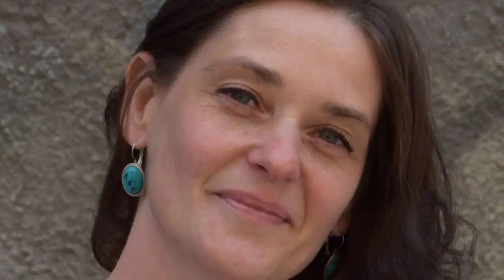
High school teacher Filippa Mannerheim.
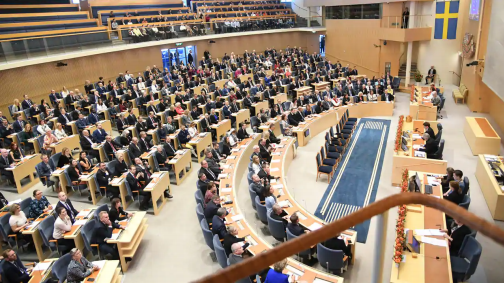
The Swedish Parliament.
Photo: OLLE SPORRONG
Teacher Filippa Mannerheim sparked a great debate with her indictment against Swedish parliamentary politicians about the market school.
All parties – except M and KD have responded – and Mannerheim is now writing her closing remarks.
This is a cultural article, where writers can express personal opinions and make assessments of works of art.
DEBT DEBATE.
There was once a farmer who was terribly hard of hearing, something he was ashamed of. One day, while standing carving on an ax handle, he saw the surveyor coming walking on the road. “First he probably asks what I do and then I answer ‘Ax handle'”, the old man thought. Then he asks if he can borrow my mare and then I say: “The riders have ridden her back off”. And when he asks about my old echo, I answer “She is completely ruined and holds neither weather nor water.”
– Good day! said the surveyor.
“Ax shaft,” replied the old man.
This story my father read to me when I was a child and I remember that we laughed a lot at the old man’s determined but damned answers. That the saga is now revived within me again, after 40 years, is no coincidence.
After reading the six (non) answers from our parliamentary parties after my article “I accuse…!”, I am saddened by school policy. What is positive is that our Riksdag politicians have answers to all my questions. What is negative is that their answers rarely have to do with the questions.
The Center Party proudly claims (after three months of reflection, while their formulations have gone back and forth between communicators and party leadership), that they at least want to increase freedom of choice and transparency in Swedish schools, but then make proposals that lead to the exact opposite – slippery as eels in their struggle to defend the corporations’ dividends. The Liberals write an answer so full of empty phrases that I have already forgotten what the message was. I think there was something about teachers being very important.
The Social Democrats and the Green Party agree with me in substance but unfortunately can do nothing, “very boring, really.” The Western Party is outraged, the Sweden Democrats, as usual, blame the immigrants and the
Moderates and Christian Democrats don’t bother to even put together an answer. Probably they have none.
– Swedish schools are in deep crisis! Politicians, you must act!
– Good day, ax handle, little friend.
What exactly is politics for our politicians? I ask myself. Is it a polished, trembling index finger in the air, or is it a sincere description of the problem and a long-term and well-thought-out vision of what Sweden can become, based on knowledge, a sense of responsibility and an honest will to improve our society?
Who knows? Not me anyway.
In another fairy tale I recently read with my
students, HC Andersen lets the little child
shout the obvious: “The emperor is naked!”
Many of us are shouting now, but without our
rulers hearing us.
Photo: CSABA BENE PERLENBERG /
But this is not a fairytale. This is 2021 in a small but extreme country in the north, where the majority of our parliamentary parties have made it clear to us voters that the Swedish school market, with its destructive consequences, will remain. The limited companies’ expansion at the expense of the municipal school, the unfair school choice system, the extreme and skewed construction of school fees that are running Swedish schools at the bottom, grade inflation, a rejected principle of openness and an increasingly segregated school system – all this we must continue to live with.
This was not what we thought of the free school reform!
Nevertheless, the majority of our political parties are determined to continue on the path that has led Swedish, tax-financed schools deeper and deeper into the dunes of corruption. The partners’ profits are too important to be legislated away. At the same time, meaningless messages are drummed out to voters as pale, Orwellian mantras: “All schools must be good!” “Free schools are good!”
– Good day, ax handle.
The fact remains: We are the only country in the world with this school model. No party, neither right-wing nor left-wing parties in the rest of the world, pushes the idea of free establishment for commercial companies, an almost unlimited profit, lack of democratic transparency about how tax money is used and free for profit companies to choose and reject which children to teach. The Swedish school system is rigged.
Several bourgeois opinion leaders and leading writers have happily begun to raise their voices against the market school. Even the Liberals have very recently expressed concern about venture capitalists as school owners. It gives a certain hope. But the fact that an overwhelming majority of our parliamentary parties cannot unanimously express that they are prepared to take responsibility and do something about the problems is nothing but outrageous. They simply do not want to stop being the only country in the world that prioritizes foreign venture capitalists over the country’s children.
But Swedish schools are not the private property of politicians or limited companies to milk money and power out of. The schools belongs to us. The Swedish people. We pay for the party.
In the 2022 election, we voters have the opportunity to use our votes wisely with the socially important school issue in focus. If we vote for a party that does not want to change the school system but only pretends to poke at it for the sake of visibility, the system will remain. And it will leave huge traces in our Swedish society.
Parliamentary politician: I have nothing more to add in the matter.
My accusation remains.
By Filippa Mannerheim
Filippa Mannerheim is a high school teacher of Swedish and history, as well as a writer and school debater.
The following article was written by Swedish high school teacher Filippa Mannherheim and translated by retired Swedish educator Sara Hjelm. It appeared in the Swedish publication Expressen. Sweden adopted a free-market system of schooling in the early 1990s, and the results have increased segregation without improving the quality of education or access to good schools. The free-market model, she writes, began with extravagant promises but has turned into a bonanza for entrepreneurs and profiteers.
Swedish education is a shame – you politicians have failed
Published 17 Nov 2020 at 06.15, updated 18 Nov at 10.05
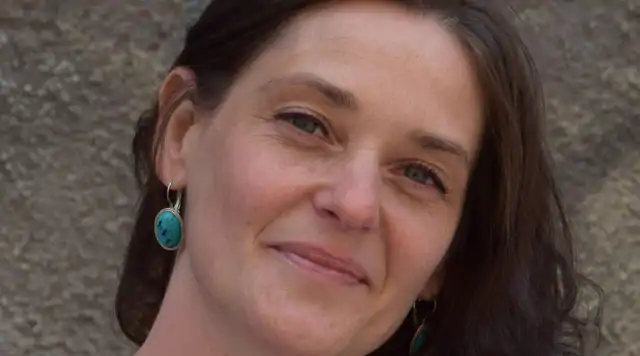
Teacher and school debater Filippa Mannerheim.Photo: Press
Teacher and school debater Filippa Mannerheim today publishes an open letter on Expressen’s culture page to Sweden’s Riksdag politicians. “It is time to merge across party lines and stop the expansion of limited companies,” she writes.
This is a cultural article, where writers can express personal opinions and make assessments of works of art.
Parliamentary politicians!
I am a Swedish citizen. I am a teacher. I’m a parent. And I am deeply concerned about the future of Swedish schools.
The Swedish school has been subjected to a world-unique experiment. In the rest of the world, it is unreasonable for limited companies to make unregulated profits on tax money. Despite this, we in Sweden donate hundreds of millions of kronor to shareholders in company groups year after year – money that was intended for our children’s education.
With the deregulation of the 1990s, the ambition was to create thriving, independent schools, foundations, parent cooperatives and small limited company schools with educational alternatives. Today, this vision has turned into an uncontrollable market where venture capital companies are expanding and devouring tax money at breakneck speed.
The business model is simple: you buy smaller independent schools and incorporate them into the growing groups and then make a profit by targeting marketing to easy-to-teach, independent students, through special dress codes, requirements for high tempo and great drive or through English as a study language. With a sold-out, simpler student base, the corporation schools can reduce salaries, teacher density, resource staff and – to attract even more lucrative student customers – sprinkle with joy-ratings to show the school’s “high results”.
When the profitable students have been absorbed by the independent school, the municipal school is left with a more difficult student base and with the overall responsibility for all the municipality’s students. And when the municipal school’s student allowance must be increased due to the task becoming more demanding, the independent schools ‘student allowance is also increased and the groups’ profits can increase even more. A bomb-proof business model for venture capital companies but a devastating tax waste for the Swedish citizens.
You, politicians, have made our common school a wet dream for venture capital companies.
Because while the school giant Academedia, now listed on the stock exchange, makes a profit of SEK 556 million before tax, the size of the children’s groups in the preschool increases and greatly exceeds the National Agency for Education’s benchmarks. While the International English School (IES) presents a profit of 254 million, many children are in classrooms without teaching materials and are taught by foreign teachers without Swedish qualification or by qualified teachers who earn SEK 3,000 less a month than their municipal colleagues. While schools and colleges are sounding the alarm about declining knowledge results, joy grades are rising, as grades have become a competitive tool on the market. While the independent school giants receive a rent discount for establishing themselves in the municipalities, children with diagnoses or a mother tongue other than Swedish are rejected, as they are more expensive to teach.
Before the National Agency for Education made all statistics about individual schools secret – because it became a “trade secret” – all this information was available to us. Today it does not do that anymore, which threatens our democracy.
I accuse you of that.
Swedish schools bleed at the same time as resources are available. But the tax money that was intended to go to student support, small groups, more teachers, more resource staff, teaching materials and smaller classes ends up in tax havens instead.
You, politicians, have made our common school a wet dream for venture capital companies. It’s shameful. It’s sad. It is unworthy of a knowledge nation.
After Chile abolished profit-driven independent schools four years ago, we are left alone in the world with our school system. Denmark, Norway, Germany, the Netherlands, England all have independent schools but profits are prohibited or strictly regulated. If the rest of the world can have well-functioning independent schools for parents to choose from, without the owners being allowed to pick out millions in profits – why can’t we?
The company magnates have the money. Nine politicians have the power. I have, apart from my furious despair over the state of affairs, only my pen and my conviction that the truth about Sweden’s school system must emerge.
I’m accusing …! was written by Émile Zola and published January 13, 1898. Zola turned in the letter to the President of France and took a stand for the Jewish officer Alfred Dreyfus who had been convicted of high treason.
Parliamentary politicians. This letter has become long and it is time to summarize:
• I accuse you, the Social Democrats! Your party name is a pathetic remnant from the time when you defended an equal school – for all children from all walks of life. Today you have voluntarily put your gag on one of Sweden’s most important issues – the marketing school. It is not democracy but its exact opposite: it is political pity.
• I accuse you, the Moderates! You are talking about more controls, even though it obviously does not help against the corruption-like elements that the market school has produced, where joy grades, instead of education, have become a competitive tool in the fight for the most easily taught students. You have with your nonchalance betrayed our nation and its youngest citizens.
• I accuse you, Liberals. You call yourself a “school party” and claim that teachers should be authorities in the classrooms. At the same time, you have turned children and parents into school customers and “grade shoppers” and teachers into servile sellers of grades, with the task of keeping customers happy for their own school’s survival. The system is morally corrupt and you are partly responsible.
• I accuse you, the Christian Democrats. Your reluctance to see how the interest in profit hits the school is depressing. You earn money when you should serve our children. To you, I have only one thing to say: Drive the traders out of the temple!
• I accuse you, the Green Party. In 2013, your congress voted no to welfare gains. After that, your school policy has consisted of hand hearts on Youtube, despite the fact that you held the post of Minister of Education. Your contribution on the school grounds has been an unfunded “Read-write-count-guarantee” and a struggle for more sex and cohabitation education, while the school falls.
• I accuse you, the Sweden Democrats. You talk about assimilation, community and security. Yet you support a school system that increases segregation and allows jihadist schools run by people with links to Islamism and violent extremism and schools with religious indoctrination of children. And after a special lunch at Riche, you turned to the issue of banning profiteering and sat yourself on lap in the independent school lobby.
• I accuse you, the Left Party. You have been passive and have not even indicated that you would like to overthrow the government on this issue. The school groups’ profit-taking and expansion is a matter of destiny for our country and no matter how outrageous alone you are here in Sweden, you have the rest of the world on your side. Overthrow the government! This issue is not negotiable.
• I accuse you, Center Party! You put venture capital companies’ right to millions in profits ahead of future generations and call Sweden’s principle of openness – the foundation of our democracy – a “hot pursuit of free enterprise”. You let your friends in business management legally steal our taxes – millions that were meant for education. You pose shamelessly with the groups great in photo, without being ashamed. You have let Sweden down.
Knowledge, education and upbringing should be at the center of this socially important activity – not money.
My questions to you politicians are the following: What will happen to Sweden when more and more children do not get the education they need? When foreign venture capital companies gain more and more influence over the school and we citizens lose both transparency and the principle of openness? When tax money, through independent school groups, ends up in the pockets of fundamentalists and shareholders in Kuwait, Saudi Arabia and Malta? What opportunities will we have to govern the school in a democratic way when the power of foreign owners over our education system increases through the expansion of the school groups?
One last reflection. Whatever it may now be worth to you: Schools are not just buildings with children and teachers inside. Schools are not just childcare while parents work. The school is a common community building, where we adults prepare future generations for the future. Knowledge, education and upbringing should be at the center of this socially important activity – not money.
If we demolish this common building, which you, politicians, are well on your way to doing, society will also fall to pieces, slowly but surely. Your society, just like mine. Your children’s society, just like my children’s society.
Parliamentary politicians. The time has come. It is time to merge across party lines and stop the expansion of venture companies and take back the tax millions and education to the Swedish people.
While we still can.
By Filippa Mannerheim
Filippa Mannerheim is a high school teacher of Swedish and history, and a school debater.
WASHINGTON—American Federation of Teachers President Randi Weingarten issued the following statement after the Centers for Disease Control and Prevention issued new guidelines for reopening schools:
“Today, the CDC met fear of the pandemic with facts and evidence. For the first time since the start of this pandemic, we have a rigorous road map, based on science, that our members can use to fight for a safe reopening.
“The CDC has produced an informed, tactile plan that has the potential to help school communities around the country stay safe by defining the mitigation and accommodation measures, and other tools educators and kids need, so classrooms can once again be vibrant places of learning and engagement.
“Of course, this set of safeguards should have been done 10 months ago—and the AFT released its plan recommending a suite of similar reopening measures in April. Instead, the previous administration meddled with the facts and stoked mass chaos and confusion. Now we have the chance for a rapid reset.
“We note the CDC has identified the importance of layered mitigation, including compulsory masking, 6 feet of physical distancing, handwashing, cleaning and ventilation, diagnostic testing and contact tracing. It reinforces vaccine priority for teachers and school staff. Crucially, it emphasizes accommodations for educators with pre-existing conditions and those taking care of others at risk.
“We remain supportive of widespread testing—especially as mutant strains multiply in areas of uncontrolled community spread—and we urge the CDC to remain flexible as more data comes to light. The guidance is instructive for this moment in time, but this disease is not static.
“The stage is now set for Congress and the Education Department to make this guidance real—and that means securing the funding to get this done in the nation’s school districts and meet the social, emotional and academic needs of kids. To that end, we are encouraged that the department is citing examples of successful reopening strategies in New York City, Boston and Washington, D.C.
“There’s a lot of work ahead to get this done. But the good news is the Biden administration is committed to realizing these recommendations through its $1.9 trillion American Rescue Plan, and to creating a culture of trust and collaboration with educators and parents to get us there.”
Edutopia reports on new research by Professor C. Kirabo Jackson of Northwestern University, who finds that a “good school” does much more than raise test scores.
In a new study released by the National Bureau of Economic Research, C. Kirabo Jackson, a professor of education and social policy at Northwestern University, and his colleagues found that schools with robust impacts on student well-being may be helping students in ways that aren’t picked up by standardized tests. These schools may not have the highest test scores, but they’re the most likely to motivate students to graduate and attend college, especially those students who are less likely to do so in the first place.
“Test scores aren’t everything, and schools that promote socio-emotional development actually have a really big positive impact on kids,” Jackson told me. “And these impacts are particularly large for vulnerable student populations who don’t tend to do very well in the education system.”
This is the latest in a series of studies examining the broad impact that teachers and schools have on students. Jackson’s previous research looked at the impact that teachers had on noncognitive skills such as self-regulation, and found that teachers who improved these skills improved their students’ long-term outcomes, boosting not only grades, but also attendance and high school graduation rates. The skills that are valuable for future success aren’t usually measured on tests, Jackson points out. So while teachers and schools are often evaluated by their ability to improve students’ test scores, broader measures should be used.
In the current study, Jackson and his colleagues looked at over 150,000 ninth-grade students who attended Chicago public schools between 2011 and 2017, analyzing test scores and administrative records. They also examined responses on an annual survey students completed on social and emotional development and school climate. The survey covered a range of topics, including peer relationships, students’ sense of belonging, how hard they studied for tests, and how interested they were in the topics they were studying. The data were then combined into a three-part index: one that included test scores and other academic outcomes, a “social well-being” index, and a “work habits” index.
Jackson’s team found that schools that scored high on the latter two indices—those that promoted social and emotional development—were also the most effective at supporting long-term student success. In these schools, there were fewer absences, and more students graduated and went on to college. And perhaps more importantly, the benefits were greatest for student populations who struggled the most in school.

 High school teacher Filippa Mannerheim.
  The Swedish Parliament.


 Diane Ravitch's blog