Jan Resseger shares her reactions to the Public Education Forum. She was heartened by what she saw and heard, as candidates recognized the need to increase investment in education.
She invites you to watch the video if you missed the event.
Jan Resseger shares her reactions to the Public Education Forum. She was heartened by what she saw and heard, as candidates recognized the need to increase investment in education.
She invites you to watch the video if you missed the event.
Numerous community members prepared to attend today’s Summit Public Schools board meeting to discuss the closure of Summit Rainier but faced a surprise. Upon entering Home Office, where the board was meeting, they found out they had limited access to speaking to the board in-person.
CEO Diane Tavenner informed the crowd a total of six people could enter the board meeting and the rest would have to watch from an overflow room at Summit Prep, a school building adjacent to the SPS Home Office.
IT WON’T BE OFFICIALLY PUBLISHED UNTIL JANUARY 21, BUT YOU CAN PRE-ORDER YOUR COPY FROM YOUR BOOKSELLER OR AN ONLINE BOOK DEALER (PLEASE PATRONIZE INDEPENDENT BOOKSTORES, IF YOU STILL HAVE ONE NEAR YOU!).
I PROMISE YOU WON’T BE DISAPPOINTED!
IF YOU COME TO THE ANNUAL MEETING OF THE NETWORK FOR PUBLIC EDUCATION IN PHILADELPHIA MARCH 28-29, I WILL PERSONALLY INSCRIBE YOUR COPY OF THE BOOK!
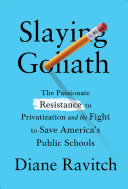
 In this incisive, meticulously researched book, Ravitch (education, New York Univ.; The Death and Life of the Great American School) argues persuasively that the U.S. school privatization movement has resulted in poor test scores, the closure of public schools, and attacks on the teaching profession. Ravitch blames the so-called school reformers, whom she renames the disruptors, such as Bill Gates, Alice Walton, Michelle Rhee, Mark Zuckerberg, and Eli Broad, who spend millions to replace public schools with charter schools and private institutions that are run like businesses. Though disruptors view themselves as opposing the status quo, Ravitch contends that they are doing everything they can to maintain it. She devotes most of her book to the resisters, or the teachers, parents, and union leaders who have taken on the disruptors and are working to keep their local public schools open. Through this lens, Ravitch discusses the Common Core teaching standards, standardized testing, the Obama administration’s Race to the Top grant program, and Teach for America.
John Thompson, historian and retired teacher in Oklahoma, shares his thoughts about what matters most. What matters most for the future is not test scores, yet we have spent an entire generation–now almost two generations of young people who have passed through our schools since 2000–focusing only on test scores. Will we pay a price? Will they?
As I left the computer to walk the dog, a thought provoking title jumped off the screen, “2019 NAEP Results Show There’s Something Wrong Going On.” Our neighborhood is gentrifying too much, but the park still offers a wonderful place for cross-generational, cross-cultural conversations about what is going right and wrong. Only our spoiled dogs complain when daily discussions last a long time when recounting the latest Trump assaults on our constitutional democracy.
In contrast to corporate school reformers, who claimed that schools could be the answer to inequities, when a dog walker shared a link about another path to progress, we knew there is no single, silver bullet. We loved the New York Times’ “Dogs Will Fix Our Broken Democracy,” but we knew that the doggies, on their own, can’t teach us “to step outside of our narrowest selves.”
https://www.the74million.org/article/petrilli-2019-naep-results-show-theres-something-wrong-going-on-3-theories-about-what-might-be-happening-in-our-schools-and-beyond/
https://www.nytimes.com/2019/08/31/opinion/dogs-democracy.html
The NAEP title also provoked contemplation on the school reform blinders which blocked out conversations about issues outside the school building. For two decades, as test-driven, competition-driven reform treated schools as a sped-up Model T assembly line, school segregation was increased and the curriculum was narrowed. The Billionaires Boys Club undermined instruction about issues outside of the classroom, such as deindustrialization, globalization, the increase of economic inequality, mass migration, climate change, and the decline in a sense of community.
Most inexplicably, schools ignored the moral dilemmas prompted by the digital revolution and we mostly failed to help our kids face its challenges, ranging from the gig economy to social media.
During the entire 21st century, both sides of the school wars have fought off their opponents with their metaphorical right hands, barely able to use our left hands for tackling the problems of poverty and segregation. Sure, the privatizers started this unnecessary battle, but why can’t they accept a truce? Why can’t we focus on the big picture issues that could explain the NAEP decline?
Shouldn’t we also wrestle with the biggest tragedies that are going on, threatening our democracy and our planet, and that contribute to NAEP scores declines?
Imagine my initial rejoicing when I returned from the dog walk to the NAEP story. The author of this appropriately-titled essay focused on what was going on outside the classroom, (as well as the minds of reformers, I would add.) He hypothesized that the Great Recession hurt student performance in two ways, “first, via its devastating impact on fragile families and their young children; and second, through its negative impact on school spending, as many state coffers ran dry.”
The author also noted that “the roaring ’90s led to a huge decrease in ‘supplemental’ child poverty rate … And that could explain much of the NAEP gains we saw in the 2000s, gains that were most dramatic for low-performing children and kids of color.” He then followed the cohorts of students who endured the years from 2009 to 2012 when the unemployment rate was 8 percent. He noted the correlation between the rise and fall of 4th grade scores and the stagnation and decline of 8th grade scores for low-income kids to the unemployment rate and education spending cuts. More affluent students, who didn’t have to face those challenges, continued to show steady gains.
A similar pattern was described in terms of screen time, and the anxiety and isolation it can cause. He notes, “Children from lower-income families spend an average of three and a half hours each day on screen media, … That amount is 40 percent longer than middle-income children (two hours and 25 minutes) and almost double the screen time spent by affluent children (one hour and 50 minutes).” As “screen time for low-income kids has absolutely skyrocketed in recent years,” their reading scores declined.
So, it seems logical that we should help teach children to use, but not be used by the cell phones. Given the massive and rapid economic transformations, that are unnerving adults, we should be preparing children not for worksheets and drill and kill, but for a healthy, productive, meaningful life in the 21st century. Contrary to corporate school reformers’ theory, which fought the legacies of segregation with segregation by choice, and the stress of poverty with the stress of high stakes testing, the logical conclusion would be that poor children need holistic and culturally relevant instruction.
But then the author, called for a “recalibration” including “much more demanding academic standards that were aligned to readiness for college and career.” He would do this by …?
For some reason that I still can’t understand, this author – who often acknowledges the failures of school reform – dug in his heals and called for a return to “the form of the Common Core; much higher-quality and more rigorous assessments, in the form of Smarter Balanced and PARCC and their successors.”
Readers, you probably guessed that the author who twisted himself into a pretzel when so contradicting himself, was the Fordham Institutes’ Mike Petrilli. And he then called for “tougher tests and accountability systems.”
In other words, corporate reformers like Petrilli do provide at least one valuable feature. They are a great case study in how to present “alt facts.” Fordham et. al start with something we can agree on, something unifying, for instance like our shared, heart-warming desire to cuddle a kitty. But they always end on a note of survival of the fittest, demanding the defeat of the educational institution that kitty-hating educators defend. Their spin could be featured in a great lesson of how political propaganda is spread on the web!
Seriously, “2019 NAEP Results Show There’s Something Wrong Going On” illustrates the huge opportunity costs of having to fight off reformers when we should have been concentrating on the existential dangers that that our youth face. And a New York Times Magazine special edition that was published the same week offers a horrifying glance at the battle we should have been engaging in.
The Magazine’s “The Internet Didn’t Turn Out the Way We Hoped” is so direct in its warning that its cover features the meanest-looking, ugliest kitty they could photograph. Kevin Roose’s “A Cleaner Internet” is illustrated with a cat embodying the beauty we hoped for, along with three stained kittens. He cites Marc Andreesen who said, “in the future there will be two types of people: ‘people who tell computers what to do, and people who are told by computers what to do.’”
Below are just a few of the special issue’s examples of today’s and tomorrow’s virtual realities that we haven’t educated our kids about. Jamie Lauren Keiles describes the “cursed dynamics on online fandom,” and explains, “Today’s fandom is more like a stateless nation, formed around a shared viewing heritage, but perpetuated through the imaginations and interrelations of those who enjoy and defend it” (It sounds to me that “fandom” also describes corporate reform.)
Yiren Lieu describes the “much more powerful apps” that are “flowering in China,” and concludes, “Whatever it is that takes place when Chinese –style super-app-dom meets the American teenager, it sounds like the future of the internet.”
The article that made me feel sickest was Elizabeth Weil’s “All My Selves Are My Favorite.” It begins with 15-year-old’s “Ninth Grade Makeup Transformation” YouTube video. She used “dozens” of brushes and powders, “bouncing between one shell of identity and the next.” And, “45 minutes later, tender, glittering and shellacked with cosmetics, she was ready for school.”
The teen’s commentary was full of expressions like, “I need to not be annoying, and I’m not doing a good job of that. … I also look ugly, and I’m really depressed!”
Fortunately, at the end, she at least listened to, even if she didn’t hear, a 23-year old’s wisdom, “I’m like, Oh, this is what happens when someone is raised on the internet.”
https://www.nytimes.com/interactive/2019/11/14/magazine/internet-future-dream.html
Yes, behind the NAEP decline, there is “something wrong.” As John Merrow recently noted, “we have managed to teach our children how NOT to think, and today not even 14% of American 15-year-olds are able to distinguish facts and opinion.”
So, it’s a terrible shame that we educators have been distracted from one of our biggest tasks – helping kids learn how to control their own destinies. A generation of students has attended schools where they have been treated as test scores. Worse, venture philanthropists’ market-driven reforms are just one part of venture capitalists who see humans – inside and outside of schools – as data points.
https://themerrowreport.com/2019/12/05/the-national-assessment-of-educational-paralysis-naep/
Bill Phillis in Ohio sent out this message.
Cyber charters have a very poor record, both academically and financially.
The former head of the now-closed virtual charter school Akron Digital Academy misused $167,753 of school money through a shell vendor, according to a state audit released Tuesday.
“This is a very serious abuse of taxpayer dollars and we will seek to recover every penny,” Ohio Auditor Keith Faber said in a news release. “Abuse of public trust has a rippling effect on communities and will not be tolerated by my office.”
The school, burdened with financial problems relating to improperly tracking enrollment, quietly closed in June 2018. At the time, it was housed at 133 Merriman Road, the former home of Temple Israel owned by the Akron Hebrew Congregation, which moved to Bath in 2011.
From December 18, 2009 to February 8, 2013, the school issued payments totaling $167,753 to a vendor known as Individual Development and Education Achievement Services (IDEAS), supposedly for professional development services, according to the news release issued by the state auditor’s office. IDEAS would send invoices directly to Lashawn Terrell who signed them, signifying receipt of services.
On July 1, 2013, the state auditor’s Special Investigations Unit received a complaint alleging embezzlement. Auditors examined the bank activity of Terrell and the owner of IDEAS, Danielle Lumpkin, the news release said.
They identified 78 withdrawals totaling $137,575 issued from the IDEAS checking accounts that corresponded to deposits totaling $65,735 and $71,840 in Lumpkin and Terrell’s personal bank accounts.
Additionally, auditors found $30,160 in expenditures issued from the IDEAS checking accounts comprised of checks issued to Lumpkin for cash and debit card activity in merchant stores for personal purchases, the news release said.
Auditor Faber issued a finding for recovery for $167,753 against Lumpkin and Terrell.
The school closed last year after repayments to the state involving not properly tracking enrollment became too much of a burden on the virtual charter school’s budget, the school said at the time. .
The school’s monthly payments on the $2.8 million the state said it owed created a negative financial outlook through the next school year, said Linda Daugherty, the schoool’s former executive director said at the time. .
Akron Digital Academy was founded in 2002 by former Akron Education Association President Neil Quirk. The new school was meant to provide an alternative for Akron Public Schoolsstudents who were leaving for other charter schools and wanted more digital learning. It served students in grades 6-12.
Akron Public Schools was the sponsor until 2013, when Superintendent David James proposed closing the school for a range of issues. The school continually posted low academic scores. And enrollment had dipped to about 600 students as competition crept in from other charter schools, which were springing up in Akron.
James served on Akron Digital Academy’s board of directors at the time. The other board members blocked his attempt to close the school. And the district severed ties with the academy a month later by dropping its sponsorship agreement.
Mitchell Robinson, professor of music education at Michigan State University, attended the Public Education Forum in Pittsburgh. He graded the candidates, using the Danielson rubric.
Read what he thought about the candidates.
He writes:
In the spirit of our country’s current rather draconian approach to “accountability” in public education, I thought I’d describe the candidates’ performances on Saturday by rating them on the Danielson teacher evaluation rubric, a common teacher evaluation system used by many school districts across the nation. That means that each candidate will be graded on a simplistic, reductionist, atomistic, 4-point scale of the sort loved by corporate education reformers, as though it makes sense to distill the entirety of an individual’s performance on a complicated set of tasks to a single number between 1 and 4.
Peter Greene, as usual, is sharp and on target in reviewing the Public Education Forum in Pittsburgh.
He fact checks the candidates. He was pleasantly surprised by Amy Klobuchar, which seems to be a common reaction.
Ignore a few spelling errors and enjoy.
Carol Burris led the delegation from the Network for Public Education at the Public Education Forum in Pittsburgh. Here are her reflections on the candidates;
There were roughly 1000 attendees at yesterday’s Public Education Forum 2020. The group was diverse in both race and age. Students accompanied by parents sat side by side with senior citizens. It was a captivated audience, the vast majority of whom stayed until the end at around 4:00 pm.
Outside the forum there was a small protest. When I entered the building in the morning, I counted 35 people. One news report said that the protest grew to 100. Michael Bennet was the only candidate who engaged with the protestors—that encounter can be viewed here.
Support was voiced by the candidates for community schools, increased school funding for Title I schools, increased pay for teachers, support for unions, fully-funded pre-schools, increasing the number of teachers of color, student loan forgiveness, and other equity issues which have commonly appeared in candidates’ platforms. In short, it was a positive agenda that acknowledged that resources do matter and recognized the complex difficulties that our schools and our teachers face.
It is not my intent to influence anyone’s vote with this account. What follows is my review of the candidates’ performance by giving each the award I believe they most deserve based on what I heard during the forum as well as with speaking with others afterwards.
My award for Best Performance is shared by Elizabeth Warren and Amy Klobuchar. I thought their answers were the sharpest, but I am willing to acknowledge I may see the world through my gender lens.
Upon entering the stage, Elizabeth Warren received cheers. Many stood and applauded. Warren stood her ground when the interviewer claimed she wanted to defund charter schools (she does not). She logically argued her platform on charter schools and ended by saying, “Public school money needs to stay in public schools,” which earned loud applause. She argued throughout for increased funding for public education, funded by her proposed wealth tax.
Klobuchar won hearts with the story of her mom who taught elementary school until she was 70 years old. Her mom would dress up as a Monarch butterfly every year when teaching a unit on butterflies. Klobuchar recounted how a former student with a disability came to her mother’s funeral due to the kindness mom had extended to him long after he left her class. She was warm and encouraging when a nervous student came to the microphone to ask a question. Many in the audience who were not familiar with the candidate were impressed.
The You Still Don’t Get it Award goes to Michael Bennet.
The first audience question came from a New Orleans student, Maria Harmon, who expressed concerns about charter schools, which she said are “targeting black and brown children without delivering on their promise of equity.” Maria referred to the Washington Post’s story on our Network for Public Education report, Still Asleep at the Wheel. Her question on charter school accountability received loud applause.
Bennet claimed that in Denver only the Denver School Board can authorize a charter school. What he did not mention is that the Denver Board’s decision to not authorize a charter school can be overturned by the state board. From the Colorado State Board of Education website—
“The State Board may also, upon its own motion, decide to review any charter decision of a local board of education. Under the act, the State Board has the authority to direct the local board to grant, deny, or revoke the charter.”
So much for local control. Like other pro-charter Democrats, Bennet tried to create a false distinction between “private” and “public” charter schools, saying there are only public charter schools in Denver. “We don’t have private charters,” he said. Denver’s charters are managed by private boards. In addition, Denver allows charter schools to be managed by for-profit CMOs. For example, Life Skills Denver Charter School, was operated by the notorious for-profit White Hat Management Corporation. It was open throughout Bennet’s term as superintendent and was finally shut down by his successor, Tom Boasberg. I have no idea how Bennet’s defines a “private” charter school.
During the interview he defended his merit pay program, which has been largely abandoned, as well as the evaluation of schools by growth scores.
Bennet’s suggestion that the school year be longer and that students attend school six days a week was not well received by students and teachers in the audience.
Bennet told us he was “against privatization” and then left to meet with the charter school parents who were protesting the event.
The Most Loved Award goes to Bernie Sanders
When Bernie came on the stage, nearly everyone was on their feet applauding. He made a vigorous case against high-stakes testing (it was noted by the moderators that he had voted against NCLB) as well for increased funding for public schools. Bernie was Bernie, and the crowd loved it. His refusal to sit down resulted in the moderators getting up from their chairs to ask their questions.
The award for Best DFER in Disguise goes to Pete Buttigieg
Mayor Pete’s melodious even-toned voice was soothing, but no one I spoke with seemed impressed. He received polite applause. When he told the audience that a guy on his policy team (I assume Raj Chetty with whom he attended college) had done a study that showed the positive impact of “great teachers” on students’ economic futures, eyebrows went up. That study was often used by Arne Duncan to justify the evaluation of teachers by test scores. His teacher training plan sounded an awful lot like Teach for America to me. Rachel Cohen recently reported that prominent charter schools supporters have been doing fundraisers for Mayor Pete. With Booker and Bennet tanking, it is likely DFERs are looking to Buttigieg as their candidate.
The James Joyce Award goes to Joe Biden
Biden was animated and immersed in his usual stream of consciousness style. Listening to Biden is rather like reading Joyce’s Ulysses. You are just not quite sure where his inner Molly Bloom is going next.
While he did not distance himself from Race to the Top, which I believe was not mentioned at all throughout the forum, I think he said he was against high-stakes testing (sometimes it is hard to tell with Joe). He got a smile from me with his line, “If I’m president, Betsy DeVos’ whole thing from charter schools to ignoring sexual harassment is done.” He was warmly received and frequently applauded. Afterwards many I spoke with said that although he is not their first choice, they would support him if he were the candidate or seemed to have the best chance of beating Trump.
The Nice Guys Finish Last Award goes to Tom Steyer
Those I spoke with characterized the billionaire activist as a well-meaning guy whose funds would be better spent supporting a candidate with progressive ideas. My assessment is that he cares and wants to make a difference. He demonstrates none of the know-it-all arrogance of Bill Gates or Michael Bloomberg. I hope he will remain on the side of public schools when the campaign is over.
All in all, the forum was a day well spent.
Charter enrollment declined in Utah for the first time in at least a decade, and no new charters opened.
Enrollment at Utah’s charter schools — which have seen explosive growth in the past as they’ve attempted to be “education’s disruptors” — declined this year for the first time in at least a decade.
The dip is largely unexpected but follows a particularly chaotic year for charters in the state. One was forced to close with millions in debts owed to overseas investors. Another filed for bankruptcy. A third was ordered to shut down after less than two years in operation…
In addition to some schools closing, no new charters opened this fall — which is also a first in the state for at least a decade, Peterson added, and likely contributed to the enrollment decline. Two or three were slated to enroll students in August but pushed back their starting dates over lease, land and building issues.
Royce Van Tassell, executive director of the Utah Association of Public Charter Schools, said the price of land has gone up in Utah and has put new charters in a challenging spot…
Van Tassell also pointed to the closure of the American International School of Utah, or AISU, for the dip. The Murray charter shut its doors in August in the face of mounting debts. The school owed the state and federal government nearly half a million dollars in misspent funds, according to an audit of its books.It also still faces potentially millions of dollars in other unspecified debt, according to its former spokesman, most of which was spent overseas. It’s likely that will never be repaid.
I was glad to see the reporter refer to charters as”disrupters,” which they are, and not as “reform,” which they are not.
Arthur Camins salutes teachers as the front line warriors in the battle to restore truth, facts, and evidence against the onslaught of the Trump war on reality.
Yes, Virginia, there is objective reality in the world. No, Virginia, there are no alternative facts. 2+2 really is 4. It is 4, today, tomorrow, and into the future.
We count on teachers to teach students to care about reality and evidence.
Politicians and their corporate sponsors who unabashedly lie with impunity are ubiquitous. Citizens who believe or cynically dismiss the lies are alarmingly common. As a result, truth telling is now the essential citizen attitude and ability without which democracy, justice, and any semblance of equity are doomed. The nation desperately needs teachers to be leaders in a truth offensive.
Every day in every classroom, students offer explanations and claims. Some are true, while some are not. Teachers’ critical follow-up response is, “How do you know that?” That applies whether it’s a mathematics solution, an analysis of a historical event, a scientific explanation about how the natural world works, or an interpretation of a piece of literature. The essential expectation is that students’ reply to, “How do you know that?” should feature relevant and sufficient evidence. Most important is helping students develop the disposition that truth matters.
“I just know it,” “It’s what I think,” “It’s my opinion?” “It’s what I read somewhere,” “You/He/She/They told me,” and “I saw it on Facebook, TV News, etc.” are all insufficient. Students can and should develop the habit of mind to search for reliable data, learn how to interpret that data to establish evidence to justify, reject, and revise conclusions. They need to develop the inclination and skills to do so across multiple disciplines. Unless that happens, we cannot hope to reverse the alarming dismissal of evidence in the public arena. This is job one for every teacher.
More than ever, citizens must be armed with the tools to combat lies, propaganda, fake news, and hoaxes.