H. Hurley, a reader of the blog, left the following comment, which places NAEP hysteria into context:

The cherry on the journalistic cup cake related to recent NAEP reporting was an interview by Stephanie Ruhle on her 11:00 pm MSNBC program where she rushed in, of all people, ARNE DUNCAN, to discuss the CRISIS OF THE DROPPING NAEP SCORES. Her URGENCY in her set-up and interview was almost reported as a 3 alarm fire. Poor Arne. He actually tried to calm her reactions. But her hysteria is typical related to student test scores.


Nuts!


It’s obvious to real educators that a pandemic, million COVID deaths, ZOOM schooling, kids alone at home, banning books, masking, vaccing…anti vaccing, limited computer/Internet access, Jan6, school shootings, politics, chaos everywhere….shall we go on?


On top of this craziness, when children are finally returning to school, we TEST. We test & react in horror that children didn’t know the grade level content or skills. Scores dropped….who knew? Who could have predicted that?


ACTUALLY…….Anybody with some sense!
Children living in war, migration, fleeing, homeless, famine, rising fascism, massive crime, poverty, lead poisoning, hunger, job losses, craziness, etc…..are then tested under the WORST CONDITIONS.
Meanwhile, journalists hold up those results as if our children were living under heat lamps in incubators to be educated under the best conditions.


Stop the testing madness, end poverty, stop the political madness, allow families to raise their children with proper wages, fund schools, stop destroying public schools & use the election spending zillion$ on real people for a healthy nation.


My 2¢ worth!

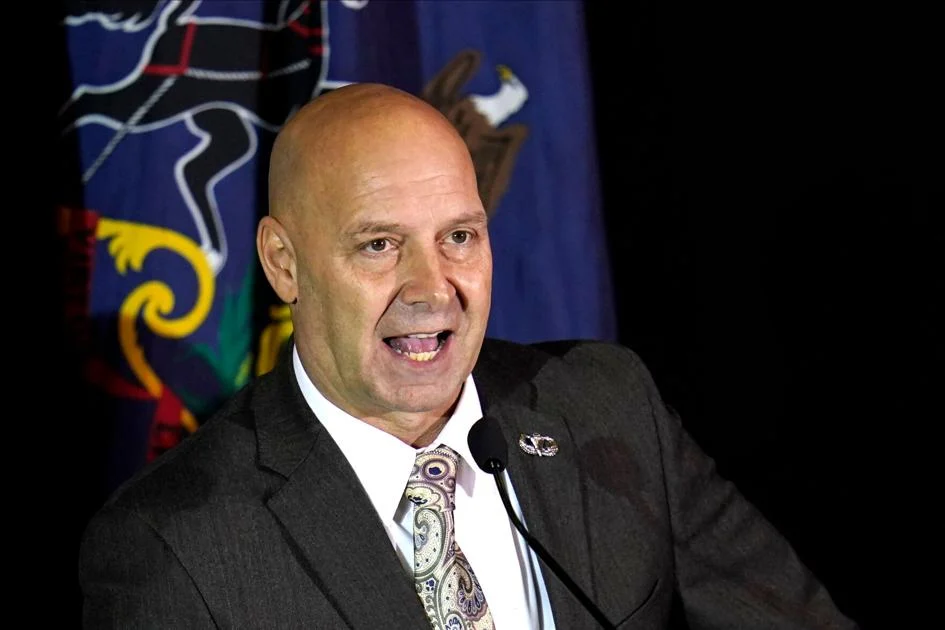
Peter Greene was a teacher in Pennsylvania for 39 years. In this post, he covers Republican gubernatorial candidate Doug Mastriano’s empty proposal for “parental rights.”

Greene writes:

Last week Doug Mastriano held a campaign event masquerading as a hearing for a parental rights bill so empty and vague that its only possible use could be as a campaign prop.

Mastriano signaled a whole year ago that he was going to wade into the whole “parental rights” thing with his own version of a “legislate the gay away” bill. Soon thereafter, he proposed SB 996, which was turned over to the State Government committee on January 4, 2022.

And yet, the time to hold a hearing on the bill is just before time to vote for Mastriano or his opponent for Pennsylvania’s governor’s seat.

The bill itself is a brief nothingburger. The Parental Rights Protection Act is 41 lines long. 6 lines give its name. 16 lines define the terms “commonwealth agency” and “non-commonwealth agency.” Section 3 in its entirety says:

I

(b) Infringement.–Neither a Commonwealth agency nor a non-Commonwealth agency may infringe upon the right under subsection (a) without demonstrating that the law or ordinance is narrowly tailored to meet a compelling governmental interest by the least restrictive means.

In 8 lines, we get the applicability of the law, and two lines to tell us that the law would take effect in 60 days.

The Mastriano campaign has maintained its unwillingness to speak to the press, and so has offered no clarification of the bill’s intent or function. But the parade of witnesses at the hearing brought the usual list of grievances–mask mandates, trans student using rest rooms, “pornographic” books in the school library, and “pronoun games.” The bill, absent any specifics, allows all of these folks to imagine that it would provide them some relief, without including any language that opponents could point to as objectionable….

More specific parental rights legislation has been proposed in Pennsylvania, such as HB 2813, which follows more closely the national template of other Don’t Say Gay bills forbidding discussion of “gender orientation and sexual identity.”

What would the bill actually do? Nobody really knows. Does this mean I can get satisfaction when my kid’s teacher shows a Disney movie when I don’t allow them in my home? Or when my kid has to use Chromebook and we are an Apple household? Will I be able to do something if the teacher mentions Jesus or God and we don’t do religion at our house? What would qualify as an infringement, and what could a parent who felt the law had been broken do? Call the police? File a lawsuit? Should they report the agency to the proper part of the state government–and if so, which department would that be? What penalty would be imposed?

I wonder if there are limits to parental rights? May they beat their children? May they chain them to their beds? May they force them to live in unsanitary conditions??

The conservative news site “The74 Miliion” revealed a dubious expenditure by the far-right group that calls itself “Moms for Liberty.” The group is known for its advocacy against “critical race theory,” teaching about gender, and masking.

Moms for Liberty, one of the fastest-growing and most recognized conservative parent advocacy groups in the nation, paid $21,357 to a company owned by the husband of one of its founding members, campaign finance records show.

The group doled out the money to Microtargeted Media, founded by Christian Ziegler, a current Sarasota County commissioner and vice chairman of the Florida GOP, in late August.

Moms for Liberty was founded by three people, Tina Descovich, Tiffany Justice and Bridget Ziegler, Christian’s wife, who served as its director through February 2021. Bridget Ziegler joined the Sarasota County School Board in 2014 and was re-elected this summer.

Bridget Ziegler (Twitter)

She was not named by the two other founders in numerous early press interviews, an omission some critics charged was meant to distance the group from Florida’s GOP power structure. Descovich said Ziegler stepped away to pursue other interests. Moms for Liberty contributed $250 to her school board campaign in mid-July, records show. Related:Moms for Liberty Co-Founder on Parent ‘Warriors’ Who Challenge School Boards

Bridget Ziegler could not be reached for comment. Her husband, who responded to The 74 through Twitter Thursday evening, would not discuss his company’s work for Moms for Liberty.

“I don’t share information about my clients as I do not speak for them,” Christian Ziegler wrote. “You can contact Tina directly for any additional insight.”

Microtargeted Media, which specializes in targeted text messaging and digital advertising,has made hundreds of thousands of dollars from right-wing political campaigns. Its recent clients also include Florida state Sen. Joe Gruters, chairman of the Florida GOP and an ardent Trump supporter. His campaign paid the company nearly $28,000 for its services.

Florida Conservatives United, a PAC, has paid Microtargeted Media more than $15,000.

Thanks to Christine Langhoff for sharing this horrifying video.

It shows parents at Grant Middle School in Grant, Michigan, demanding the removal of a mural painted by a high school student. The mural was meant to make all students feel welcome.

But parents saw frightening symbols in it, such as a T-shirt that was a trans symbol, another that was a gay symbol, others graphics that were allegedly demonic or Satanic.

This country needs mental health services for adults who think that their children’s lives will be changed by seeing anything that offends parents. Do they object to textbooks showing the swastika? Really, there are many symbols to at could be interpreted in many ways.

Don’t they understand that children are shaped above all by their home environment?

Arthur Camins—teacher, scientist, technologist— argues in The Daily Kos that it’s time for Democrats to abandon their support for charter schools. Are you listening, Senator Corey Booker of New Jersey, Senator Michael Bennett of Colorado, Governor Jared Polis of Colorado, Rep. Hakeem Jeffries and other charter allies?

Camins writes:

It is time for Democrats–voters and the politicians who represent them–to abandon charter schools as a strategy for education improvement or to advance equity. Charter schools, whether for- or non-profit, drain funds from public schools that serve all students, increase segregation, and by design only serve the few. Continuation of tax generated funds for charter schools, all of which are privately governed, support the current broader assault on democracy. That should not be the way forward for democracy loving Democrats. In addition, public support for private alternatives to public education suborns the lie that government cannot be the agency for solving problems.

The United States is tilting sharply toward, if not rushing headlong into, a less equitable, less democratic, more authoritarian, more racially divided, and meaner way of governing and living together. Out-for-youselfism is alarmingly rampant. Sadly, continued bipartisan state and federal support for charter schools that pit parents against one another for limited student slots reflects those tendencies.

We have been heading in that direction for decades, led by pro-wealth, anti-regulation billionaires and corporations allied with Christian religious extremists and ideological libertarians. Exacerbating extant racist, xenophobic, and misogynistic resentment is their core strategy. It is represented by a Republican Party whose only moral compass is power and for whom democracy is an expendable inconvenience.

Republican opposition to equity advances for all people, such as the National Labor Relations Act, Unemployment Insurance, Social Security, and Medicare, is nothing new. However, until the emergence of the Republican-light Democratic Leadership Council, there was a strong pro-government, pro-worker, if frequently inconsistent, opposition political party. In the absence of an explicit effort by Democrats to articulate a rationale for a multi-racial, working-class coalition, resentment flourished. Instead, many Democrats embraced deregulation and campaign cash, including contributions from the charter school industry.

This Republican-light Democratic shift could not have come at a worse time, as globalization and automation threatened the livelihood of many Americans, shaking the foundations of post-WWII perception of security, especially for many white working- and middle-class Americans. As scarcity and inequity came to be accepted as the unalterable norm, advances for some–left-out people of color, recent immigrants, and women–came to seen as coming at the expense of others. In that context, charter schools appealed social and economic insecurity.

Nonetheless, Democratic politicians from Bill Clinton to Barrack Obama embraced charter schools. The essential notion was that take-all-comers schools governed by locally elected school boards for the common good were an old-school failure. The supposed evidence was the failure to close the achievement gaps between kids from poor and well-off households. The fact that family socio-economic status explains most of the achievement gaps was ignored in favor of a blame-the-teacher and their unions ethos and test-driven blame. In supporting charter schools Democrats implicitly endorsed a competitive watch–out-for-my-own kid ethos. It is time for a new direction.

Even with substantial evidence of rampant corruption and increased segregation, national Democratic leadership has yet to fully abandon the belief in charter schools as an improvement strategy. In doing so, they abet the ongoing Republican claim that government and democracy are incapable of effective problem solving. Opposition to for-profit charter school and vouchers is insufficient. Increased oversight and rejection of for-profit charter schools is, of course, a positive step. However, the notion of schools as primarily a personal rather than a social benefit and that market-competition as an improvement driver remains intact.

Step away from charter schools, Democrats. Instead, embrace full equitable funding for all schools. Embrace professional salaries, respect, and working conditions for teachers. Embrace union protection. Embrace community schools to meet the needs of children and their families. Embrace small class size so every child can get the academic, social, and emotional supportthey need. Embrace schools to develop socially responsible citizens for a democratic equitable society.

That is the way forward for Democrats and Democracy!

The endorsement of the Miami Herald matters in Florida. I hope it matters enough to elect Val Demings. Its editorial board gave a resounding endorsement to Congresswoman Val Demings, a former chief of police. Her story is inspiring. She was born to parents who worked as a maid and a janitor. Her first job was as a dishwasher. She is articulate, accomplished, and deeply committed to the ideals this country professes.

The race for Florida’s U.S. Senate seat is the most consequential on the Nov. 8 ballot. Its outcome will determine not only the direction of the state, but could impact which party controls the Senate. Republican incumbent Marco Rubio, 51, Miami’s homegrown son, has been in the Senate since 2011 and has been a politician for 24 years. Despite all the experience under his belt, his intelligence and innate political talent, he hasn’t lived up to the expectations that this son of Cuban immigrants would usher the GOP into a new era. In 2013, Time declared him “The Republican Savior,” calling him the new voice of the GOP.

But today, he appears more comfortable playing the role of apologist for Donald Trump — the newer, dangerously bombastic voice of the GOP — despite being ridiculed by the former president during his 2016 presidential run and more preoccupied with his own political future than representing his constituents.

In 2020, for example, Rubio went so far as to praise Trump supporters in Texas who used their vehicles to try to run a busload of Joe Biden backers off the road. Someone could have been killed. Floridians have a better alternative. The Herald Editorial Board recommends Democrat Val Demings, a Central Florida congresswoman who previously served as the first female police chief of Orlando.

Her voice is grounded in the real world, bringing toughness, yes, but also an empathy for struggling Americans that we have not heard from the more-removed, more-political Rubio. Although Republicans have tried to cast any Democrat as a “socialist,” she’s a moderate with a practical approach to the issues and a rich life and professional experience.

Born in Jacksonville to a maid and a janitor, Demings started working at 14 as a dishwasher, later became a social worker and changed careers to become a police officer. She rose through the ranks of the Orlando Police Department to become, in 2007, a ”police chief with a social worker’s heart” — without losing her “tough on crime” responsibilities, she told the Editorial Board.

Demings, 65, can connect the dots between Capitol Hill’s ivory tower and the real world. She was first elected to the U.S. House in 2016 and, in 2020, was picked to be one of the House managers who argued for Trump’s impeachment in the Senate.

Her policing background should appeal to voters concerned about public safety. Her social-worker roots should resonate with voters looking for someone who understands the plight of Floridians working hard to make ends meet in this economy.

“The best indicator of future performance is to look at past performance,” Demings told the Editorial Board. “My dedication, my commitment to the oath of office as a police officer, a police chief, member of Congress, and certainly as a senator, I take it extremely serious. And I will show up for Florida.”

Demings already has landed some solid wins as a U.S. representative. Rubio speaks dismissively of her bill to name a post office in honor of a police officer in her district who was shot and killed in the line of duty, something she pushed through with bipartisan support and of which she is rightly proud.

But Demings has sponsored and pushed through other, substantive legislation. “The first piece of legislation that I passed — and was signed into law by President Trump — was legislation that would help fund mental-health programs for law-enforcement officers,” she told the Editorial Board. “They see the worst of the worst every day and have to deal with it and then go home to their own families.” Blue lives obviously matter to her.

In 2019, Demings also sponsored, with Republican U.S. Rep Elise Stefanik, of New York, the Vladimir Putin Transparency Act, directing U.S. intelligence agencies to give reports to Congress about the Russian president’s financial assets and hidden networks. It passed in the House. It did not have a Senate counterpart, but was included in Defending American Security from Kremlin Aggression Act sponsored by U.S. Sens. Lindsey Graham, R-South Carolina, and Bob Menendez, D-New Jersey.

Demings told the Editorial Board the top issue in this race is inflation. She touted her vote on the Inflation Reduction Act this year, which capped the cost of insulin for Medicare beneficiaries and made investments in clean energy. Rubio voted against the legislation. His campaign ignored requests for an interview with the Editorial Board.

Protecting the environment and combating climate change, which is making hurricanes stronger and wetter, are two other priorities for Demings. That requires “not being global-warming deniers, or climate-change deniers, but really taking that seriously and investing,” she said. Rubio has been a staunch supporter of Everglades-restoration efforts. But for years he questioned the scientific consensus that human activity is causing global temperatures to climb. He somehow recognized the issue in a 2019 column for USA Today, writing that Floridians “are right to be concerned about the changing climate” but said that humans can better mitigate sea-level rise and flooding, rather than addressing the source of the problem: our reliance on fossil fuels.

Demings’ other priorities are public safety and protecting “constitutional rights.” This is where you see the sharpest contrast between Demings and Rubio. Rubio called a bill to codify same-sex marriage into federal law a “stupid waste of time,” part of the agenda of “a bunch of Marxist misfits.” The legislation seeks to protect that right should a 2015 landmark U.S. Supreme Court ruling be reversed, as Roe v. Wade was in June. The U.S. House passed the legislation with historic GOP support, but needs enough votes to overcome a filibuster in the Senate. Senators like Rubio stand in the way. Gay marriage isn’t a “Marxist” concoction, it’s a human right that the majority of Americans support.

Demings supports abortions up to the point of viability and wants to codify reproductive rights into federal law. Rubio has pitched himself as “100% pro-life,” but also has said he would support legislation with exceptions for rape and incest, like the 15-week federal ban he’s co-sponsored — if that’s what it takes to get a bill passed.

In other words, such compassionate exceptions are, to Rubio, merely a concession. He told CBS4 host Jim DeFede, “I am in favor of laws that protect human life. I do not believe that the dignity and the worth of human life is tied to the circumstances of their conception, but I recognize that’s not a majority position.”

That is one of the reasons this Senate race is important. It’s about numbers. Whoever controls Congress can either advance or take away reproductive rights if they have enough votes. M

MA longstanding and generally justified criticism of Rubio is that he misses a lot of Senate votes. Demings has said he has one of the worst attendance records in the Senate. By mid-summer this year, Rubio had missed 9.2% of 3,744 roll-call votes since 2011. According to the fact-checking site PolitiFact, that is well above the average of 2.3%, though his attendance improved in recent years. Most of his absences happened during his 2016 presidential run.

Back then, he vowed not to run for reelection to the Senate, then went back on his word. He was reelected with 52% of the vote. Since then, Rubio’s career has been defined by walking the fine line between doing what’s right for the United States and what’s right for his career — most notably, staying on the good side of the mercurial Trump and his base. He hasn’t struck the right balance.

Sometimes we still see in Rubio a glimpse of the smart, eloquent statesman who began his career as a West Miami councilman. In 1999, the Herald Editorial Board recommended him for a Florida House seat, saying he displayed a “thoughtful and idealistic sense of politics.” He won that race and went on to become the speaker of the Florida House. In 2010, we recommended him again for his U.S. Senate seat. We remember him leading the Gang of Eight on a historic bipartisan immigration reform package in 2013 that would have offered a pathway to citizenship for immigrants in the country illegally. But when it failed, Rubio couldn’t run away fast enough from the legislation that had pushed him onto the nation stage.

There was the Rubio who warned Americans six years ago about the “reckless and dangerous” Trump, but soon emerged as the Trump sycophant who’s all too eager to rationalize the former president’s attacks on decency and democracy.

He differentiated himself from some of his Republican colleagues when he voted to certify the results of the 2020 election in Arizona and Pennsylvania. When the U.S. Capitol attack was happening on Jan. 6, he tweeted: “There is nothing patriotic about what is occurring on Capitol Hill. This is 3rd world style anti-American anarchy.”

But he returned to the GOP fold when, in a video posted on Twitter two days later, he blamed the “liberal” press, social-media platforms and state election officials — everyone but the former president and his lies — for millions of Americans not trusting the election results.

He has called the Jan. 6 commission to investigate the attacks a “partisan sham.” And he offered an insultingly silly defense of Trump’s removal of classified documents after he lost the election, calling the FBI search of Mar-a-Lago a partisan witch hunt over a “storage” issue.

Rubio was one of the architects of the Paycheck Protection Program that provided loans for small businesses during the COVID-19 pandemic. as part of the 2020 CARES Act. He said in Tuesday’s debate that the program kept the country out of economic disaster despite significant issues with the backlog of unforgiven loans and the disproportionate impact of the backlog on minority and low-income communities.

He also pushed to double the maximum child tax credit from $1,000 to $2,000 in the 2017 Tax Cuts and Jobs Act.

With the Pulse nightclub slaughter in 2016 in Orlando and the recent life sentence given Nikolas Cruz after pleading guilty to the Parkland school massacre in 2018, gun control is an ever-present issue in Florida. Rubio even said that the Pulse shooting spurred him to run for reelection in 2016 and that he would support raising the age limit to buy a rifle. Though he has filed legislation to support the expansion of red-flag laws that allow a judge to take away guns from people deemed dangerous, he voted against a common-sense — and timid — bipartisan gun-control law President Biden signed after the Uvalde school shooting in May. Among other things, it funded mental-health services in schools, another issue brought up by the Cruz case. Rubio has scoffed at even popular, moderate gun-control measures like enhanced background checks. He then offered an insulting excuse for it during he Tuesday debate: “Every one of these shooters would have passed the background check that [Demings] keeps insisting on,” he said.

Foreign policy has been Rubio’s strongest suit. He’s the vice chair of the Senate Select Committee on Intelligence. He has made his opposition to China and the Cuban and Venezuelan regimes a trademark. But Demings still holds her own here. In her interview with the Board, she was well-versed on how events in Latin America are local issues in South Florida. On Cuba, Demings denounced the current island government and said she supports the U.S. embargo. She’s against reestablishing diplomatic ties with the regime. On Haiti, Demings was emphatic that the United States should not intervene militarily, despite the chaos currently engulfing that country. Instead, the United States should name an envoy to Haiti to help stabilize its teetering government. On the issue of the Biden administration turning away Venezuelan refugees escaping their country at the U.S.-Mexico border under Title 42, a Trump-era policy, Demings said that it is “a beneficial tool until we can get some other things in place.” The United States needs to speed up the processing of asylum claims, hire more border-security officers and invest in technology, she said.

We repeat, the race for Florida’s U.S. Senate seat is the most consequential on the Nov. 8 ballot. It is not an overstatement to caution that the winner will either push back hard against those who have our democracy under assault or push our democracy closer to the brink of irreparable damage. Rubio too often shirked his responsibility to push back. We think Demings will stand up for our democratic values.

The Miami Herald Editorial Board recommends VAL DEMINGS for the U.S. Senate.

Read more at: https://www.miamiherald.com/opinion/editorials/article267542102.html#storylink=cpy
We decided to take a trip to Saratoga Springs in upstate New York. It was a chance to see the beautiful fall foliage, the leaves turning vivid yellow, orange, and red. The real goal was to visit a small kayak manufacturer that makes a kayak of Kevlar that weighs only 15 pounds. We’re going to see if it’s just right for my next birthday.

As we were driving along the Taconic State Parkway, where traffic was almost non-existent, we drove past a sign that said DONALD J. TRUMP STATE PARK. I’ve never heard of a state park named for a living person. Curious, I googled and discovered that the “state park” was a tax dodge. Trump bought over 400 acres for $2.5 million with the intent of turning it into a golf course. when he couldn’t get permits to build his golf course, he gave the land to the state for a “state park” named for himself and took a $100 million tax write off! He paid $2.5 million, found the property had no profit potential, and claimed the property was worth $100 million. How’s that for chutzpah?

From Wikipedia:

The park consists of property that was donated to New York State in 2006 by developer Donald Trump. Maintenance of the park was halted in 2010 due to budget constraints, and the park remains largely undeveloped. Most of the buildings have been demolished; only a few foundations and the existing tennis court remain. There have been several calls to rename the park.

History

Trump purchased the property in 1998 with plans to build a $10 million private golf course. Totalling $2.5 million, it was purchased in two sections: Indian Hill for $1.75 million and French Hill for $750,000. The land contained significant wetlands and development faced strict environmental restrictions and permitting requirements. He donated it in 2006 after he was unable to gain town approvals to develop the property. At that time Trump claimed the parcel was worth $100 million. He used the donation as a tax write-off. The donation was praised by governor George Pataki. Trump said, “I hope that these 436 acres of property will turn into one of the most beautiful parks anywhere in the world.”

New York State announced the park’s closure due to budget cuts in February 2010. It was questioned whether the closure was necessary since the operating budget for the park was only $2,500 a year and it was maintained by workers from the nearby Franklin D. Roosevelt State Park. Although Trump threatened to take the parkland back after the closure was announced,[2] the land remains in the control of the New York State Office of Parks, Recreation and Historic Preservation.

An attempt to convert a portion of the park’s French Hill section for use as a dog park in 2010 revealed that at least one of the park’s abandoned buildings contained asbestos. By 2012, the planned dog park remained on hold due to difficulties raising funds for fences and asbestos abatement.

The park is not listed at the New York State Office of Parks, Recreation and Historic Preservation park locator, although signs along the nearby Taconic State Parkway direct visitors to Donald J. Trump State Park. During a 2015 visit by The Rachel Maddow Show, there were no signs of any recent upkeep; instead, the publicly accessible land was found to contain crumbling graffiti-covered buildings, empty map kiosks, and weed-choked parking lots.

In 2017, an article on website The A.V. Club framed the park as an “abandoned wasteland”, with “muddy fields, overgrown tennis courts, and dilapidated buildings” and a swimming pool in disrepair.

Park access improvements including an asphalt driveway, gravel parking lot, entrance gates, wood fencing, and native tree and shrub plantings were noticed in 2020.

The Republicans have made a big campaign issue of crime. They claim that Democrats are “soft on crime,” while they are “tough on crime.”

Don’t believe it. It’s a bald-faced lie!

Republicans oppose any legislation to limit access to guns. They vote against “red flag” laws, that seek to keep guns away from people who pose a danger to others. They oppose background checks. They oppose raising the minimum age for buying a gun from 18 to 21. They oppose laws that are commonplace in civilized nations.

The United States has the highest murder rate in the world. Could it be because we have so many guns and so few limits on guns?

Texas, for example, now allows anyone to carry a gun without a permit. Let that sink in: anyone can carry a gun without a permit.

Consider this recent story:

Texas Goes Permitless on Guns, and Police Face an Armed Public

A new law allowing people to carry handguns without a license has led to more spontaneous shootings, many in law enforcement say.

HOUSTON — Tony Earls hung his head before a row of television cameras, staring down, his life upended. Days before, Mr. Earls had pulled out his handgun and opened fire, hoping to strike a man who had just robbed him and his wife at an A.T.M. in Houston.

Instead, he struck Arlene Alvarez, a 9-year-old girl seated in a passing pickup, killing her.

“Is Mr. Earls licensed to carry?” a reporter asked during the February news conference, in which his lawyer spoke for him.

He didn’t need one, the lawyer replied. “Everything about that situation, we believe and contend, was justified under Texas law.” A grand jury later agreed, declining to indict Mr. Earls for any crime.

The shooting was part of what many sheriffs, police leaders and district attorneys in urban areas of Texas say has been an increase in people carrying weapons and in spur-of-the-moment gunfire in the year since the state began allowing most adults 21 or over to carry a handgun without a license.

Far from an outlier, Texas, with its new law, joined what has been an expanding effort to remove nearly all restrictions on carrying handguns. When Alabama’s “permitless carry” law goes into effect in January, half of the states in the nation, from Maine to Arizona, will not require a license to carry a handgun.

The state-by-state legislative push has coincided with a federal judiciary that has increasingly ruled in favor of carrying guns and against state efforts to regulate them.

But Texas is the most populous state to do away with handgun permit requirements. Five of the nation’s 15 biggest cities are in Texas, making the permitless approach to handguns a new fact of life in urban areas to an extent not seen in other states.

In the border town of Eagle Pass, drunken arguments have flared into shootings. In El Paso, revelers who legally bring their guns to parties have opened fire to stop fights. In and around Houston, prosecutors have received a growing stream of cases involving guns brandished or fired over parking spots, bad driving, loud music and love triangles.

“Tough on crime?” Hardly.

The faculty senate of the University of Florida voted to reject Nebraska Senator Ben Sasse as the new president. Sasse was the sole finalist. The decision will be made by the university’s board of trusteees.

The University of Florida’s Faculty Senate on Thursday voted to support a no-confidence resolution against Nebraska GOP Sen. Ben Sasse, who was the sole finalist to be the next UF president.

“The Senate held an emergency meeting on the resolution, which questioned Sasse’s qualifications and a search committee’s decision to name him as the only finalist for the job. Senators voted 67-15 to pass the measure, after some criticized the search process and past statements made by Sasse on issues such as LGBTQ rights,” The Gainsville Sun reported.

Students have also protested the highly controversial search process which resulted in Sasse being the only finalist.

“The UF board of trustees is scheduled to consider Sasse for the position Tuesday,” the newspaper reported. “The Nebraska Republican is currently serving his second term in the Senate and was previously president of Midland University, a 1,400-student Lutheran school in Nebraska.”

The University of Florida has over 50,000 students.

“Sasse was announced Oct. 6 as the sole finalist for the UF presidency, after a search process that was conducted largely in secret,” the newspaper reported. “UF stated that its search committee reached out to more than 700 people and focused on a dozen candidates, including nine sitting presidents at major research universities.”

The Network for Public Education Action endorses Rebekah Jones, who is running for Congress against Matt Gaetz.

Vote for a woman of integrity: Rebekah Jones, District 1, Florida.