Archives for category: Personal

I spent this past weekend at my sixty-fifth reunion at Wellesley College. Since I graduated in 1960, I have never missed one. Part of my faithfulness is grounded in nostalgia, in a chance to relive a wonderful part of my life. The four years at Wellesley were transformative, and today my closest friends are classmates.

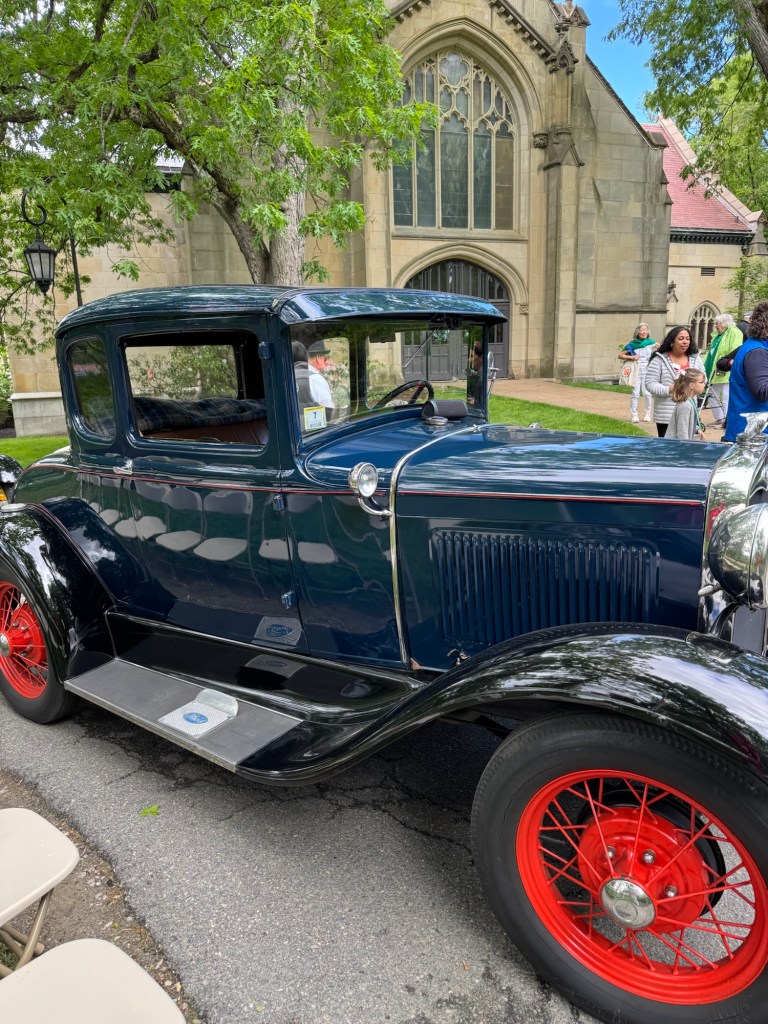
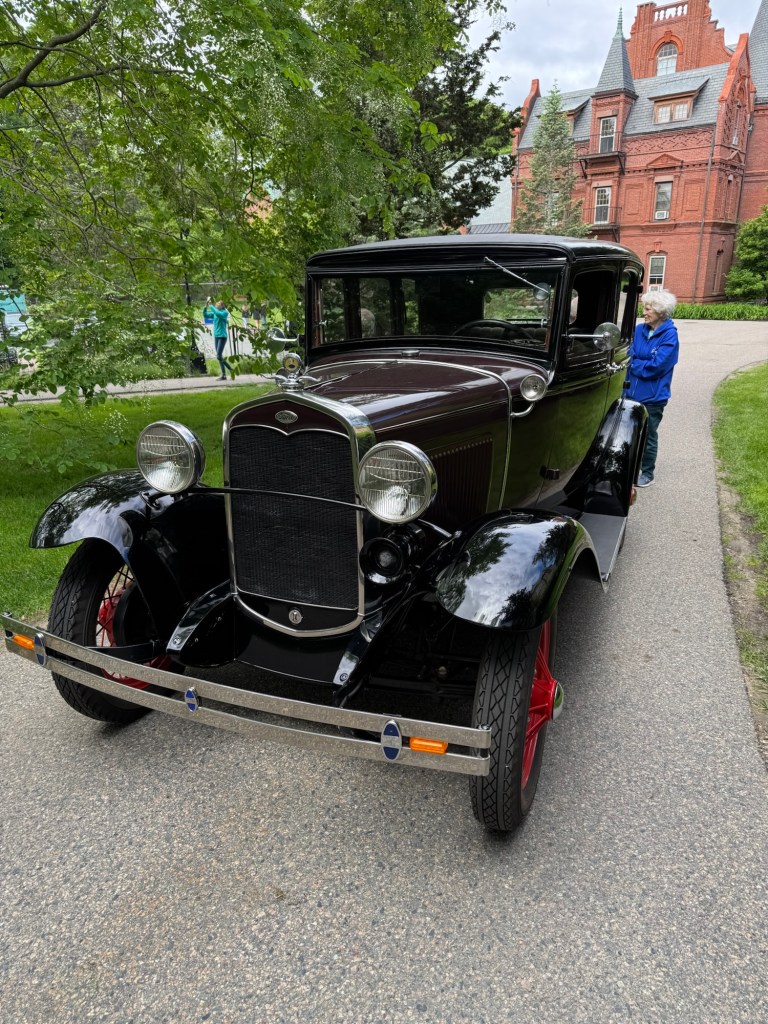
The high point of the weekend is the parade of alumnae on the last day. The youngest cohort goes first, marching about 3/4 of a mile from one end of the campus to the center, called Alumnae Hall. As each group reaches its destination, it stops and lines the road. Then along comes the next group of graduates, five years older. Eventually the road is lined with alumnae from different cohorts, with the oldest ones marching last. That was my group, about 50 women in their mid-80s. The group behind us was the class of 1955, mostly 92 years old, riding in antique Fords, Model A.

1931 Model A Ford
1931 Model A Ford
1931 Model A Ford
1931 Model A Ford

Since we were the last grads standing, we marched past all the younger groups, and they cheered us vigorously, while we applauded them.

What was striking was to see the demographic changes over time. Our class was all white, though we did have a few Asian students. We did have one Puerto Rican in our class; her father was the governor of the island.

The classes of 1965 and 1970 had a few nonwhite faces.

Starting with the graduates of 1975, the numbers of African American, Hispanic, and Asian students noticeably increased. Every class from that point was markedly diverse.

I have to say it filled me with pride to see how my Alma Mater had changed.

An example: when I arrived at our lodgings, there were students to help us settle in. A beautiful and vibrant young woman brought my luggage to the room. I asked her where she was from. “Rwanda,” she said. “Do you like Wellesley?” She replied, “I love it!” She is majoring in biochemistry and plans to be a medical doctor and to return to Rwanda. Again, I was proud of how my college was changing the world for the better.

But there is another personal note that I wanted to share with you.

In late February, I went for my annual mammogram. The test spotted an anomaly. Several mammograms and a sonogram later, the doctor told me I had breast cancer. In April, I had surgery and the cancer was removed. But the surgeon reported that she didn’t get it all, so I had a second surgery. The pathologist decided that it was all out. None of it was painful.

But that’s not the end of the story. I start radiation on June 2, which will be five treatments in five days. Then a daily pill, all for the purpose of ensuring that the cancer doesn’t return.

I am not worried or frightened. I’m taking it all a day at a time, knowing that my case was caught early and that I have excellent doctors.

Frankly, I am truly worried about my beloved dog Mitzi. She was diagnosed with cancer in 2023, we took her to an oncologist, he put her on a drug that worked, and in June 2024, he declared her cancer-free. But a few weeks ago, we noticed that something bad was happening to her skull. The oncologist said she apparently has a trigeminal nerve sheath tumor. Her head, on the right side, is noticeably recessed. That is, it’s caved in above her eye.

I am much more worried about Mitzi than about myself. I will be fine. She won’t be. There is no treatment for her medical problem. So we intend to love her, spoil her, make every day a good day for her.

I love this sweet dog
When Mitzi met Martha Stewart in Greenport. Mitzi was unimpressed.
A beauty

Starting today, with the sole exception of the 9 a.m. post about censorship, there will be no more posts on Saturday or Sunday. I meant to write and say, NONE! But I could not resist the story about cartoonist Art Spiegelman.

If there is breaking news, I will post it.

Otherwise, enjoy your weekend.

It won’t actually be available until October 10, but it’s now ready for pre-ordering on Amazon, possibly other sites as well, including your local bookstore. Support independent bookstores!

It is my memoirs, the story of my life. Growing up in Houston as third of eight children. College. Marriage. Career. Developing my views and values. Discovering that many of my convictions were wrong. Saying so. Intimate details of my personal life.

Stuff like that.

The publisher is Columbia University Press.

Published by Columbia University Press..

I wish everyone who reads this blog a happy, healthy New Year.

May 2025 be a year in which we feel strong resolve to stand up for our democracy, our values, our families, our communities, ourselves.

Don’t let anyone push you around.

Stand up for what is right.

Be kind to others, especially strangers.

Seek common ground to solve common problems.

Take long walks.

Hug those you love.

Read books.

Visit a museum.

Take care of yourself and others.

Take care of your mind, body, and spirit.

Be good to yourself.

Diane

Wherever you are, I wish you a very Merry Christmas. I wish you happiness, joy, and many reasons to smile in the year ahead.

I don’t know about you, but I find Christmas to be both a time of joy and a time of sadness. It brings back childhood memories–memories of family that have grown more sentimental as I grow older. I remember the laughs, the minor mishaps, the anticipation, and the presence of loved ones who are no longer with us.

Although I am Jewish, my family always had a Christmas tree, which we decorated; I loved hanging the long strands of tinsel. I had seven brothers and sisters. We all waited in great excitement for the stroke of midnight so we could hurry downstairs to open our presents.

My parents are long gone. Three of my siblings have died. Christmas will never be the same.

Enjoy your family, whatever their ages. Have a lovely Christmas and turn the day into a celebration of love, peace, kindness, and compassion.

The Steward Corporation, which owns 31 hospitals, declared bankruptcy a few weeks ago. In addition to the hospitals it owns in Texas, it also has eight hospitals in Massachusetts.

I have a personal interest in these events because one of the Steward holdings is St. Joseph’s, where I was born. It is the oldest hospital in Houston. At the time of my birth, St. Joseph’s was a Catholic hospital, staffed in large part by nuns wearing habits.

In recent years, the hospital has been owned by a series of private equity firms, who envisioned ways of making a profit while delivering high-quality healthcare.

In Massachusetts, state leaders were outraged by Steward’s bankruptcy and lambasted the private equity firms:

Steward’s troubles in Massachusetts have drawn the ire of political figures including U.S. Sens. Elizabeth Warren and Edward Markey, who have said the company’s previous private equity owners “sold (Steward) for parts” and “walked away with hundreds of millions of dollars.” 

Massachusetts Gov. Maura Healey said Monday that the state had been preparing for a possible bankruptcy filing. Despite the filing, she said, Steward hospitals will remain open and patients should keep their appointments.

“This situation stems from and is rooted in greed, mismanagement and lack of transparency on the part of Steward leadership in Dallas, Texas,” Healey said Monday. “It’s a situation that should never have happened and we’ll be working together to take steps to make sure this never happens again.”

No such outrage in Texas, where state leaders worship at the shrine of the market.

Julian Gill of The Houston Chronicle wrote about the failure of Steward.

St. Joseph Medical Center is poised to be sold after its Dallas-based owner, Steward Health Care, this week filed for Chapter 11 bankruptcy, according to court documents. 

On Tuesday, the day after filing for Chapter 11 protections, Steward said in court documents that it plans to sell all of its hospital properties, which include St. Joseph and 30 other hospitals throughout the U.S. According to court documents, the company is “exploring a reorganization around a smaller footprint of hospitals.” 

Representatives for St. Joseph and Steward could not immediately be reached for comment.

Upon announcing the bankruptcy Monday, Steward said day-to-day operations are expected to continue without interruption during the bankruptcy proceedings…

St. Joseph is Houston’s only downtown hospital and the oldest general hospital in the city. The hospital has more than 700 beds, officials previously told the Chronicle, and many of its patients are covered by Medicaid and Medicare. In addition to St. Joseph, the bankruptcy affects hospitals in Odessa, Big Spring, Port Arthur, and Texarkana

St. Joseph has changed hands multiple times over the last two decades. In 2006, the hospital was sold to North Carolina-based Hospital Partners of America, Inc., after the previous owners, Christus Health, said it couldn’t afford to modernize the hospital’s aging buildings, according to earlier reports in the Chronicle. Hospital Partners initially invested heavily in the hospital but declared bankruptcy about two years later.

In 2011, a Tennessee-based company, Iasis Healthcare, acquired a majority interest in the hospital as part of the bankruptcy process. Iasis merged with Steward in 2017. 

About a year ago, the veterinarian operated on our dog Mitzi and told us (my wife Mary and me) that she has cancer.

Mitzi had three surgeries in one year. The first one was to remove a tumor on her leg that had grown to the size of an avocado. Three different vets said to leave it alone; do nothing. But then it burst and it had to be removed. It was benign. A few months later, she had a growth on her eyelid. We took her to a canine opthamologist, who cut it out and stitched her eyelid. It was benign.

Then another large tumor on a different leg; the vet operated and it was malignant. It was a “soft-tissue sarcoma.” It was “grade 3,” the worst. He said he tried to get it all out, but was not hopeful. Prognosis: maybe seven months, at best a year.

We began taking Mitzi to a canine oncologist. We told him no heroic treatments, because we believed we had hurt our last dog by subjecting her to too much treatment in a hopeless effort to save her. This time: No radiation, no heavy-duty chemicals. The vet understood. He prescribed a once-a-day pill plus supplements for arthritis. We saw him monthly.

Through all of this, Mitzi continued to be a happy, playful, loving dog. She loves people and other dogs. She weighs nearly 100 pounds and has a big smile. Her coat is a dark, dark brown that looks black. She has white paws that look like mittens (that’s why we named her Mitzi). Her DNA showed that she is 30% German Shepherd, plus 11% Siberian Husky, some Alaskan Malamute, and a little bit of other breeds. A friend found her in a shelter in Hayward, California, in 2012 and brought her to Brooklyn for us. when we asked what breed she is, the friend said, “Think of it this way: Her mother was a mutt, her father was a mutt. They met once.”

Over the past year, I walked her 3-5 times a day. I gave her the cancer pill, probiotics, arthritis meds, whatever she needed, every day. She went through bouts of diarrhea and uncontrollable urinating. For the past few weeks, she’s been wearing a diaper. I am the Dog Guardian, so these are my responsibilities.

On June 25, a week ago, we went to the oncologist. He said we should discontinue the cancer pill because Mitzi has been cancer-free for a year. Was she cured? No, it could return in the future. But for now, she is officially cancer-free.

That’s the best birthday present ever!

Mitzi, Survivor!

I had another terrific birthday present: I learned late last night that Columbia University Press is going to publish my memoirs! Why late last night? Because I missed the email informing me on Thursday.

What a great day!

I’m five years older than Joe Biden and still fighting.

Friday night birthday dinner at the River Cafe in Brooklyn, a gift from my wife Mary, a wonderful partner and friend.

And at the Commencement ceremonies of Wellesley College, my alma mater, President Paula Johnson announced that my family had funded a professorship in my name in the Education Department: The Diane Silvers Ravitch 1960 Chair for Public Education and the Common Good. The first holder of the Chair is Professor Soo Hong.

I am loving this day!

One of the joys of living in New York City is the vibrant cultural life. This winter, we have seen several plays and gone twice to the Metropolitan Opera.

In December, we saw Puccini’s La Boheme at the Met, which is a wonderful opera.

Last week, we got cheap (but excellent) seats for Puccini’s Turandot. The music and singing were outstanding, as were the gorgeous sets.

And I noticed that the seat in front of me had a name plaque on it, honoring someone who had made a generous donation. The plaque said “Judge and Mrs. Samuel I. Rosenman.” The name was familiar but I couldn’t place it. I couldn’t google during intermission because there was no guest internet service.

I googled when I got home and learned that Judge Rosenman was one of FDR’s closest associates. Wikipedia said that he wrote almost every speech that FDR gave, and he assembled FDR’s brain trust of advisors. Reading more, I learned that the granddaughter of Judge and Mrs. Rosenman is married to Merrick Garland.

What’s the point? Small world. History is all around us. Can you believe it?

Los Angeles has an important school board election coming up on March 5.

The esteemed school board President, Jackie Goldberg, is retiring, leaving her seat open in District 5.

Five candidates are running for the seat, and one stands out: Fidencio Gallardo.

Gallardo is an experienced educator who has worked in LAUSD for 35 years as a middle school English teacher (18 years), a high school English teacher (9 years), an assistant principal (3 years), an adult school teacher (3 years), and as a deputy to board member Jackie Goldberg for the past four years.

He is also the Mayor of Bell, California. And an Adjunct Professor of Curriculum and Instruction at Cal State, LA. Whew!

As you might surmise, he is a highly accomplished professional who has devoted his life to educating young people.

Gallardo has been endorsed by Jackie Goldberg, who is one of my personal heroes. I met Fidencio on a Zoom fundraiser where I offered my personal endorsement based on his stellar record.

And he was also endorsed by the Los Angeles Times, which interviewed all the candidates.

Here are a few excerpts:

Of the four candidates running, Gallardo articulates the clearest vision for improving student achievement and well-being in the wake of the pandemic. And his breadth of experience puts him the best position to actually get things done.

Gallardo said he plans to prioritize student literacy and achievement, which along with attendance, has suffered tremendously since the pandemic. He would continue the important work of greening school campuses that are asphalt-laden hot spots and detrimental to children’s health and learning.

His most recent teaching experience as an 11th-grade English Language Arts instructor at South Gate High School gives him insight into the best ways that the school board can allocate resources to help students struggling with reading.

Gallardo is appropriately critical of some decisions by district leaders in recent years. That includes Carvalho’s move to replace the successful Primary Promise program that helps elementary school students struggling with reading and math with a new program that includes middle school students, and the board’s 2021 decision to remove school police from campuses without a clear plan to keep students safe.

Gallardo said he will push for more unarmed school safety officers so that every campus has someone consistently responsible for keeping students safe, and for giving individual schools greater discretion over what type of safety personnel are on their campuses. It’s middle-ground positions like these, that seem reasonable but are at odds with UTLA, that could be a good indication of what to expect from Gallardo on the board.

He also wants to see more educational support for kids during their critical middle school years, including more one-on-one instruction.

Please vote for Fidencio Gallardo in District 5!

I discovered this post by a young Jewish woman about her reaction to the conflict in the Middle East. This was the post that helped me formulate my own views because I resonated with hers.

Rose Win is a blogger and digital nomad. She recently settled in Boulder, Colorado after two years of writing and traveling solo around the country. She grew up in Seattle and lived in Israel as a child and young adult. She shares here her reflections on the state of the war in Gaza.

She writes:

I wrote in my last post that I have been plagued by writer’s block. That is true, to an extent. There have been a lot of stories in the past couple of months I’ve wanted to write about. My parents came for Thanksgiving. Karina visited. I went back to San Marcos to see Kasey and Evie. I joined a rock climbing gym. I got deathly ill. One subject, however, has stood in my way like a giant, impenetrable barrier. War.

I can’t get past it. Everything else seems ridiculous, and trivial, and out of touch in comparison.

Specifically, I’m talking about the war in Gaza. I don’t know how many drafts I’ve written trying to cohere my thoughts, distill my feelings. My head swims and my heart aches, but I can’t find ethical, or intellectual, or emotional clarity. I keep getting stuck in a labyrinth of contradiction, locked between layers of devastation. So this post is a mishmash, a dumping, a meandering reflection of the competing and overlapping circles in my head.

The foundational layer of devastation, as I wrote before, is the sadistic slaughter of Jewish lives. The maiming, the raping, the abducting, the wholesale massacring. From there emerge the layers wrought by the world’s response. The mindboggling, Orwellian universe where murder becomes a “justified act of resistance,” where killers are “victims of oppression,” and rapists are “freedom fighters.” Or maybe they’re not rapists at all, because for some reason, violence against Jewish women isn’t believable. For some reason, Jewish women need to make their own pathetic hashtag to be heard: #MeTooUnlessYoureAJew.

There’s a new layer of consciousness: the sickening realization that the antisemitism of the 20th century never went away. It just lay dormant, hidden under the surface – waiting for the right opportunity to shapeshift and rear its ugly head. “The Jews are parasites living on other people’s lands. They deserve to die,” said the antisemites of the 20th century. “The Jews are occupiers of other people’s lands. They deserve to die,” say the antisemites of the 21st century.

There’s the hubris of the left which, using the lens of intersectionality, casts the war in racialized terms, white people oppressing brown people. Never mind that more than half of Israel’s Jews are “brown,” hailing from Arab counties that expelled, or, “ethnically cleansed” their Jewish populations in the late 1940s and 1950s following Israel’s creation.

Today’s liberal college campuses preach “language is violence.” Students police speech to minimize “harm.” Except speech against Jews. Because for some reason saying “genocide to Jews” is not violent, or hateful, or harmful. For some reason, chanting genocide to Jews is okay “depending on the context.”

I watch people condemn Israel for committing genocide against Palestinians. I’d like to know why Hamas’ charter, which, in no uncertain terms calls for the annihilation of the Jews and the establishment of an Islamist state in Israel, is not also condemned as genocidal? Why are the Palestinians seen as the rightful, indigenous inhabitants of the land when the Jews, whose presence predates the Palestinians, are not? Why is it that, in the aftermath of the Holocaust, the Jews were the world’s refugees, but following the creation of the state of Israel, they are the world’s most reviled colonizers? Why is a Jewish state with a Palestinian minority deemed racist, but a Palestinian state with a Jewish minority deemed righteous?

The questions seem simple. The answers are anything but. I want to defend Israel. I want to rage at the hypocrisy and blatant double standards. But I’m stopped. I can’t. Because look at Gaza. Neighborhoods razed to the ground. Wholesale cities decimated. Thousands and upon thousands of women and children dead. Eighty percent of the population displaced – facing polluted water, starvation, overcrowding, flooding, freezing, and rampant disease.

Israel told over a million people in northern Gaza to flee to the south. Then they bombed the south. “Gaza becomes a graveyard for children” reads one headline. “Nowhere is safe” says the next. Here’s another: “We have the right to live.”

I want to demand “ceasefire now!” because this level of humanitarian catastrophe is so breathtakingly horrific it’s hard to even fathom. Because this level of collective punishment cannot be justified. Because this destruction, this sheer loss of civilian life, cannot go on.

I want to demand “ceasefire now” because I despise Benjamin Netanyahu and the thugs and zealots that rule his repulsive right-wing government. Netanyahu is cut from the same cloth as Putin. He knows Israel holds him responsible for the attacks on Oct 7. The end of the war spells his demise. So, the war will wage on. Because narcissistic demagogues never willingly cede power.

I want to demand “ceasefire now.” But I haven’t.

Does a ceasefire mean Hamas will remilitarize – rearm and resume its genocidal charter to wipe out the Jews? Does a ceasefire leave Hamas’ sprawling tunnel system – built underneath hospitals, grocery stores, schools, universities, private homes, and graveyards – intact so they can infiltrate Israel and terrorize its citizens again? Does a ceasefire condemn the remaining 115 Israeli hostages to death? Does a ceasefire send a message to other Arab countries, waiting in the wings, that Israel is weak, and the Jewish state can be destroyed?

Are any of these questions justifiable? I don’t know. I don’t know.


When the world accuses Israel of being an apartheid state, I want to push back. Apartheid refers to the brutal system of institutionalized racial segregation in South Africa. Israel, albeit flawed, is a multi-ethnic, multi-racial, muti-cultural democratic state, where a fifth of the population isn’t Jewish yet has the same civil and legal rights as every other citizen.

But. That only rings true for those living within Israel’s green line – the 1949 armistice border. Following the war of 1967, Israel gained the Golan Heights from Syria, Gaza from Egypt, and the West Bank from Jordan. With the exception of Gaza, where Israel pulled out in 2005, those territories have been occupied ever since (though Israel, along with Egypt, maintained control over Gaza’s borders).

Israel’s occupation of the West Bank is illegal under international law. It never annexed the West Bank, because giving Palestinians Israeli citizenship would mean the end of Israel as a Jewish state. So one Israeli government after the next left Palestinians in stateless limbo, while sanctioning illegal Jewish settlement construction that zig-zagged through contiguous territory and punctured holes through the dream of Palestinian statehood. All the while Israel offered Jewish settlers – often messianic, often self-righteous, often violent – full rights of Israeli citizenship and subjected Palestinians to military rule.

So, yes, Israel can claim it’s the only pluralistic democracy in the Middle East. But also, no, it cannot.


In his book documenting bereaved families of the Palestinian-Israeli conflict, author Colum McCann talked about his decision to title his book Apeirogon:

“Apeirogon is a weird word, I know. An apeirogon can’t really be drawn, it can only be suggested… But I loved it from the moment I heard about it. The idea that it had an infinite number of sides was attractive to me because I knew it wasn’t a two-sided situation, that it wasn’t balanced.”

This is how I feel when I write and think about Israel. Sides upon sides upon sides upon sides. Overlapping truths. Overlapping contradictions. Questions without answers. Problems without solutions.

There’s a reason why I’ve written draft after draft after draft. Everywhere I turn I’m stuck. I want to take a stand, but every stand I take conflicts with another. That’s why I haven’t written. That’s why I must write.