Archives for category: Parents

Now that many thousands of schools have closed, millions of parents have suddenly become responsible for home schooling their child or children.

Sam Chaltain offers some sound suggestions.

He calls it “A Parent Guide to Home-Schooling During the Apocalypse.”

The Florida House passed a bill to protect “parents’ rights” against decisions by the school system.

The House advanced sweeping, if aspirational, legislation codifying a parent’s “bill of rights” on Monday. The vote in favor was 77-41.

The House version (CS/HB 1059), sponsored by Rep. Erin Grall, now includes a technical amendment that reaffirmed parental rights to any type of school (public, private, and even home schooling).

Another Grall amendment vouchsafed parental rights to spike objectionable instructional material “based on beliefs regarding morality, sex, and religion or the belief that such materials are harmful.”

The amendments offered reassured some Democratic critics of the bill, but not enough to earn their votes.

Parents already have the right to home school or send their children to private schools.

This bill would give parents the right to “protect” their children from topics that are objectionable to their religious beliefs in class, such as sex education.

The bill’s gist: that state or other governments would not be allowed to limit a parent’s right to direct the moral and religious upbringing, education, health care, and mental health of his or her child.

The bill permits opt-outs for students on issues ranging from sex education to vaccination. As well, explicit consent for medical care and data collection for students in a school setting is included in the bill.

Some Democrats thought that the emphasis should be on children’s rights.

Although it is not mentioned in the article, many states expect teachers to report signs of physical abuse, but if parents believe they have the right to beat their children, the parents’ right would be paramount. Why should the teachers have the “right” to report such abuse to authorities?

If parents don’t want their child to be taught by a teacher whose religion is different from their parents, can they switch teachers nor be excused from those lessons as well as any test questions based on those lessons? If parents object to evolution on religious grounds, may they be excused from biology classes that might include any reference to evolution?

If parents object to their child learning about certain episodes in history (suppose the parent is a Holocaust denier or objects to teaching about slavery or genocide), may their child be excused from those classes, as well as any tests about those objectionable subjects? If they are Turkish and oppose any teaching of the “Armenian genocide,” may their children be shielded from those lessons?

You can think of many topics that might be offensive to parents. Do parents have the right to censor the curriculum to protect their child and exercise “parental rights”? This is not a hypothetical question. There have been numerous instances where parental objections have led to certain books being taken out of the curriculum and even removed from school libraries. (With the increasing disappearance of school libraries, this is less of an issue than it used to be.)

Some of the nation’s leading civil rights legal teams are supporting parents in Memphis and Metro Nashville who have sued to block the enactment of a voucher bill that applies only to their cash-strapped districts. The bill passed by one vote, after that legislator was promised that his own district would not get vouchers.

CONTACTS:
Ashley Levett, SPLC, ashley.levett@splcenter.org / 334-296-0084
Sharon Krengel, ELC, skrengel@edlawcenter.org / 973-624-1815, x 24
Lindsay Kee, ACLU-TN, communications@aclu-tn.org / 615-320-7142
Christopher Wood, Robbins Geller, cwood@rgrdlaw.com / 615- 244-2203
Nashville, Tenn., March 2 – Public school parents and community members in Nashville and Memphis today filed suit in the Chancery Court for Davidson County challenging the Tennessee Education Savings Account (ESA) voucher law as an unconstitutional diversion of public education funding to private schools.

In the lawsuit, McEwen v. Lee, the plaintiffs contend that diverting millions of dollars intended for Memphis and Nashville public schools to private schools violates public school students’ rights to the adequate and equitable educational opportunities guaranteed under the Tennessee Constitution. The lawsuit also charges that the voucher law violates the constitution’s “Home Rule” provision, which prohibits the state legislature from passing laws that apply only to certain counties.

The Tennessee voucher program would siphon off over $7,500 per student – or over $375 million in the first five years – from funds appropriated by the General Assembly to maintain and support the Metro Nashville Public Schools (MNPS) and Shelby County (Memphis) Schools, according to the lawsuit. The controversial state law could go into effect as early as the 2020-21 school year.

The voucher law passed by a single vote in May 2019, over the objections of legislators from Shelby and Davidson Counties, as well as others.

If the voucher program is implemented, Metro Nashville Public Schools and Shelby County Schools will lose substantial sums from their already underfunded budgets, resulting in further cuts to educators, support staff, and other essential resources, the lawsuit states.

“We love my daughter’s school, but it is already underfunded,” said Roxanne McEwen, whose child is an MNPS student. “There isn’t enough money for textbooks, technology, to pay teachers, or to keep class sizes down. Taking more money away from our schools is only going to make it worse. I joined this lawsuit because I want to be a voice for my child and for kids who don’t have a voice.”

“I believe that Shelby County Schools do not have enough funding to provide all children with the resources they need to learn. At one of my son’s middle school, they do not offer geometry, and one of my other sons did not have a science teacher for two years in a row,” said Tracy O’Connor, whose four children attend Shelby County Schools. “If the district loses more funds due to the voucher program, I worry that we will lose more guidance counselors, reading specialists and librarians, and there will be more cuts to the foreign language and STEM programs.”

The complaint highlights numerous ways in which private schools receiving public funds are not held to the same standards as Tennessee public schools, in violation of the state constitution’s requirement of a single system of public education. Private schools do not have to adhere to the numerous academic, accountability, and governance standards that public schools must meet. They can discriminate against students on the basis of religion, LGBTQ status, disability, income level, and other characteristics. And they are not required to provide special education services to students with disabilities.

“Public schools are open to all children, while private schools receiving voucher funds are not held to the same standards,” said Nashville mother Terry Jo Bichell. “My son is non-verbal and receives extensive special education and related services in his MNPS school, including being assigned a one-on-one paraprofessional. I do not know of a single private school in the state that would be willing or able to enroll a student like my son. Even if a private school was willing to enroll my son, we would have to waive his right to receive special education.”

The voucher law also violates the Tennessee Constitution’s requirement that the General Assembly appropriate first-year funding for each law it passes. No money was appropriated for the voucher law, and recent hearings have revealed that the Tennessee Department of Education used funds from an unrelated program to pay over $1 million to a private company for administration of the voucher program.

The plaintiffs are represented by Education Law Center and the Southern Poverty Law Center, which collaborate on the Public Funds Public Schools (PFPS) campaign. PFPS opposes all forms of private school vouchers and works to ensure that public funds are used exclusively to maintain, support and strengthen our nation’s public schools. The plaintiffs are also represented by the ACLU of Tennessee and pro bono by the law firm Robbins Geller Rudman & Dowd LLP

# # #

The Southern Poverty Law Center, based in Alabama with offices in Florida, Georgia, Louisiana, Mississippi, and Washington, D.C., is a nonprofit civil rights organization dedicated to fighting hate and bigotry, and to seeking justice for the most vulnerable members of society. For more information, visit http://www.splcenter.org.

Founded in 1973, Education Law Center is a national leader in advancing the rights of public school students to equal educational opportunity under state and federal law through litigation, policy, advocacy and research. For more information, visit http://www.edlawcenter.org.

The ACLU of Tennessee, the state affiliate of the national American Civil Liberties Union, is a private, non-profit, non-partisan public interest organization dedicated to defending and advancing civil liberties and civil rights through advocacy, coalition-building, litigation, legislative lobbying, community mobilization and public education. For more information, visit http://www.aclu-tn.org.

Robbins Geller Rudman & Dowd LLP is one of the world’s leading complex litigation firms representing plaintiffs in securities fraud, antitrust, corporate mergers and acquisitions, consumer and insurance fraud, multi-district litigation, and whistleblower protection cases. With 200 lawyers in 9 offices, Robbins Geller has obtained many of the largest securities, antitrust, and consumer class action recoveries in history, recovering tens of billions of dollars for victims of fraud and corporate wrongdoing. Robbins Geller attorneys are consistently recognized by courts, professional organizations and the media as leading lawyers in their fields of practice. Visit http://www.rgrdlaw.com/.
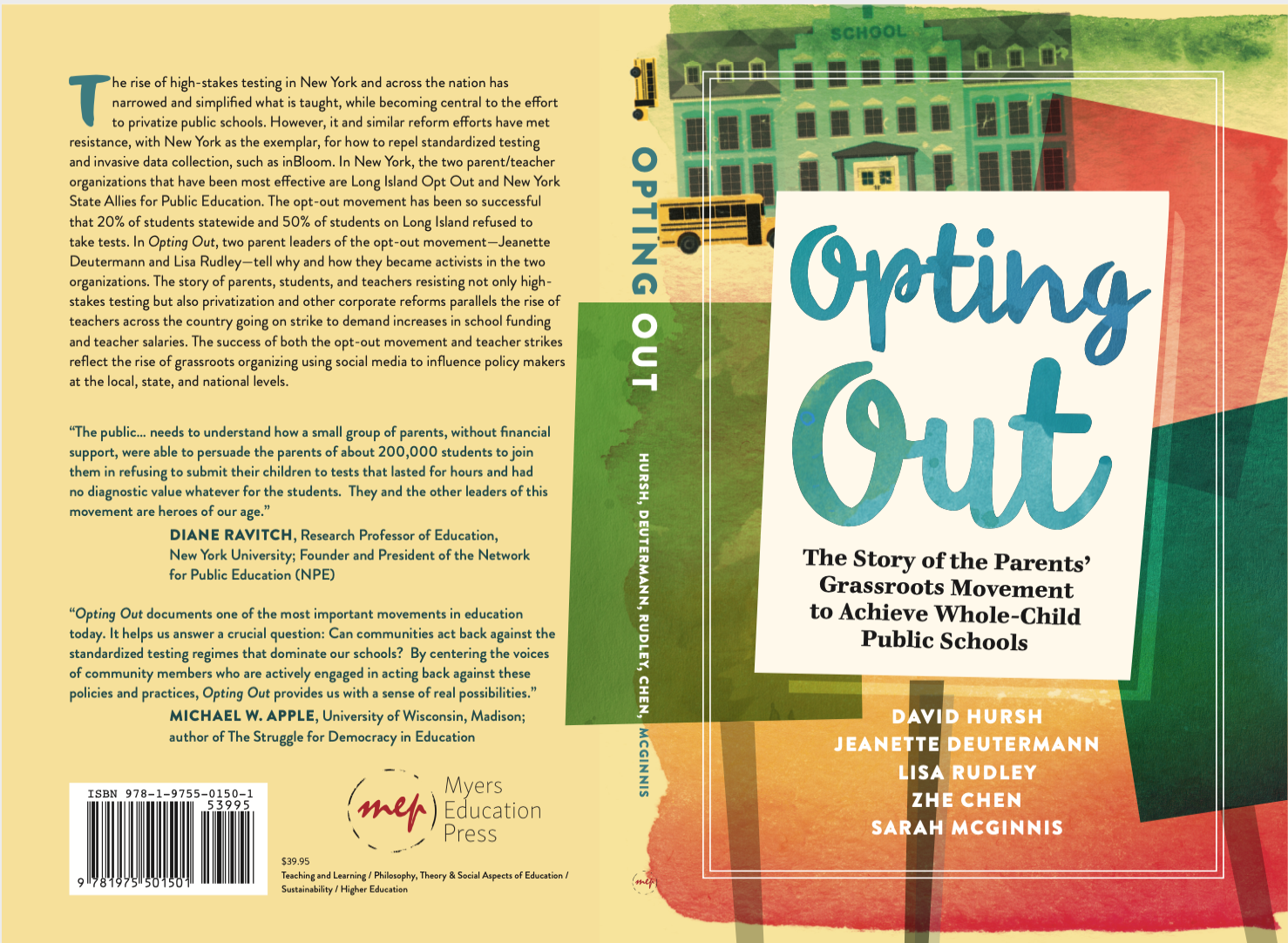
This is a book you will want to read if you are a parent, a teacher, a teacher educator.

Opting Out: The Story of the Parents’ Grassroots Movement to Achieve Whole-Child Schools is an essential addition to your bookshelf.

It was written by Professor David Hursh of the University of Rochester and parents leaders of the New York Opt Out movement Jeanette Deutermann, Lisa Rudley, and Hursh’s graduate students, Zhe Chen and Sarah McGinnis.

Together they explain the origins and development of the one of the most significant parent-led reactions against high-stakes testing and in favor of education that is devoted to the full development of children as healthy and happy human beings. The media liked to present the Opt Out movement as a “union-led” action, but that was always a false narrative. It was created and led by parent activists who volunteered their time and energy to save their children from test centric classrooms and wanted a “whole-child” education that helped their children become eager and engaged learners.

David Hursh has written and lectured about the assault on public education and the dangers of high-stakes testing.

https://www.waikato.ac.nz/wmier/news-events/prof-david-hursh-on-the-takeover-of-public-education

University of Rochester Meliora Address (2013): High-stakes testing and the decline of teaching. https://www.youtube.com/watch?v=GIQu2Hh_YkI

Keynote address: New York State as a cautionary tale (2014). New Zealand union of primary teachers and administrators. https://www.youtube.com/watch?v=hW4vZGsLiL4

The parent co-authors are leaders of the New York State Opt Out movement, primarily through their role in New York State Allies for Public Education, which has organized hundreds of thousands of parents to say no to excessive and pointless testing, whose only beneficiaries are the big testing corporations.

The parents of the Opt Out movement are a stellar example of the Resistance that is bringing an end to this current era of child abuse and test-driven miseducation.

I was happy to endorse the book and am pleased now to recommend it to you.


Liat Olenick was a charter school teacher. Fatima Geidi was a parent of a charter student.

They write in a joint article that proposals by Bernie Sanders and Elizabeth Warren should not be controversial. Charter advocates have reacted fiercely against any effort to regulate the privately-run schools. But, say the authors, charters will improve if they are both accountable and transparent, as Sanders and Warren propose.

They write:


As a former charter school parent and a former charter school teacher, we support these proposals – and we believe, that if implemented both at the federal level and with a similar approach at the state level, this agenda would actually improve charter schools while also limiting some of the harm they have done to district public schools.

First, a little about our experiences, which are, sadly, far from unique. 

I, Liat, spent my first year teaching at a Brooklyn charter school that was started by non-educators and suffered from extreme turnover in administrators and staff. We had six principals over the course of the first year, and ten teachers either quit or were fired. We also lost special education students because our school wouldn’t or couldn’t provide the services they needed. Instead, they were sent to nearby public schools. Now that I work in a public school in District 14, we experience the reverse process — my school has no choice but to accept the many students pushed out by charter schools when they don’t conform to their rigid academic or behavioral expectations.

I, Fatima, am a single mother whose son was suspended over 30 times by his charter school, Upper West Success Academy, starting in first grade, including for very minor issues, such as walking up the stairs too slowly. He was also denied his mandated special education services, which worsened the situation. The school demanded that I pick him up so frequently in the middle of the day that I was forced to drop out of college myself. When I finally pulled him out of the school, his therapist told me he suffered from symptoms of post-traumatic stress. 

Then when my son and I were subsequently interviewed on the PBS Newshour about how he had been treated at the school, Success Academy officials at the network sent copies of his disciplinary files, full of trumped-up charges, to every education reporter they could find and posted it online. Eva Moskowitz, the Success Academy CEO, also recounted false stories about his behaviorin her published memoirs. 

Although the US Department of Education eventually found her and the school guilty of violating the federal student privacy law called FERPA more than three years after I filed my initial complaint, Success officials have refused to comply with the law and continue to retaliate in the same way against other parents who dare to speak out against the unfair treatment of their children by releasing their confidential files to reporters. Meanwhile, the New York State Education Department has confirmed that Success Academy has systematically failed to provide students with their mandated special education services, even after having been ordered to do so by hearing officers.

Since my son left Success Academy, he is slowly recovering, and is now doing better in high school, but it took him years to undo the damage he experienced. I have met many other parents whose children suffered similar or worse fates. Success Academy charters are currently facing five different federal education lawsuits for violating student rights, and yet are the fastest growing charter chain in the state of New York, having received more than $60 million in grants from the federal government since 2006 to aid in their expansion and replication.

The Mind Trust is funded by billionaires to advocate for privatization of public funds and public schools.

Now it is going after parents.

Of course, the best person to make the case to parents is an education entrepreneur.

Dear Friends,

I deeply believe that those most impacted by systemic injustice are also the people who are best positioned to lead the fight to create a more just and equitable society. This is one of the many reasons why we are so excited about the work our Education Entrepreneur Fellow Ashley Virden is leading to empower Indianapolis parents to create the changes they deem necessary to dramatically improve our education system.

Read on for more about a recent event that Ashley hosted and how you can support her. You will also find information on our most recent Education Tour and a call for applications for our fourth cohort of Relay National Principals Academy Fellowships.

With gratitude,

Brandon Brown

CEO

Education Entrepreneur Fellow Ashley Virden leads parent organizing meeting

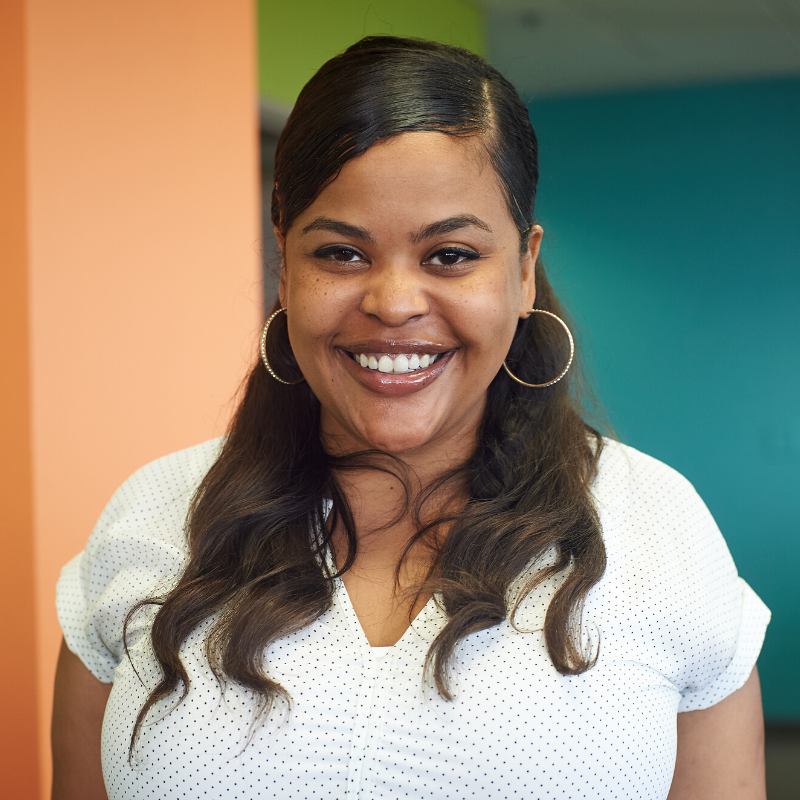
On November 7, our Education Entrepreneur Fellow Ashley Virden led a community meeting for parents looking to become more involved in their children’s education. She is developing an independent parent advocacy nonprofit that will empower parents to create necessary change for children and communities across Indianapolis.

Virden is specifically searching for a group of parents who are interested in receiving training in leadership, community organizing, and advocacy. If you or someone you know might be interested in supporting the work she is doing to uplift the voices of Indianapolis parents, please reach out to her at avirden@themindtrust.org.

“Parents deserve to have a voice in our city’s education system and in the schools our kids attend. I am excited to start building a community of empowered parents who want to be advocates for all students in Indianapolis.”

Ashley Virden, Education Entrepreneur Fellow

Education Tour series visits IPS Newcomer Program

On October 22, The Mind Trust hosted an Education Tour, formerly called Education Bus Tours, featuring IPS’ Newcomer Program. The Newcomer Program serves nearly 400 students in grades 3-9 who are new to the United States within the last year. Their students learn English alongside receiving core content instruction to prepare them for a successful transition to the school of their choice. In 2018-2019, the school served students from 33 countries, who spoke 22 different languages.

Now accepting applications for Relay’s National Principals Academy Fellowship

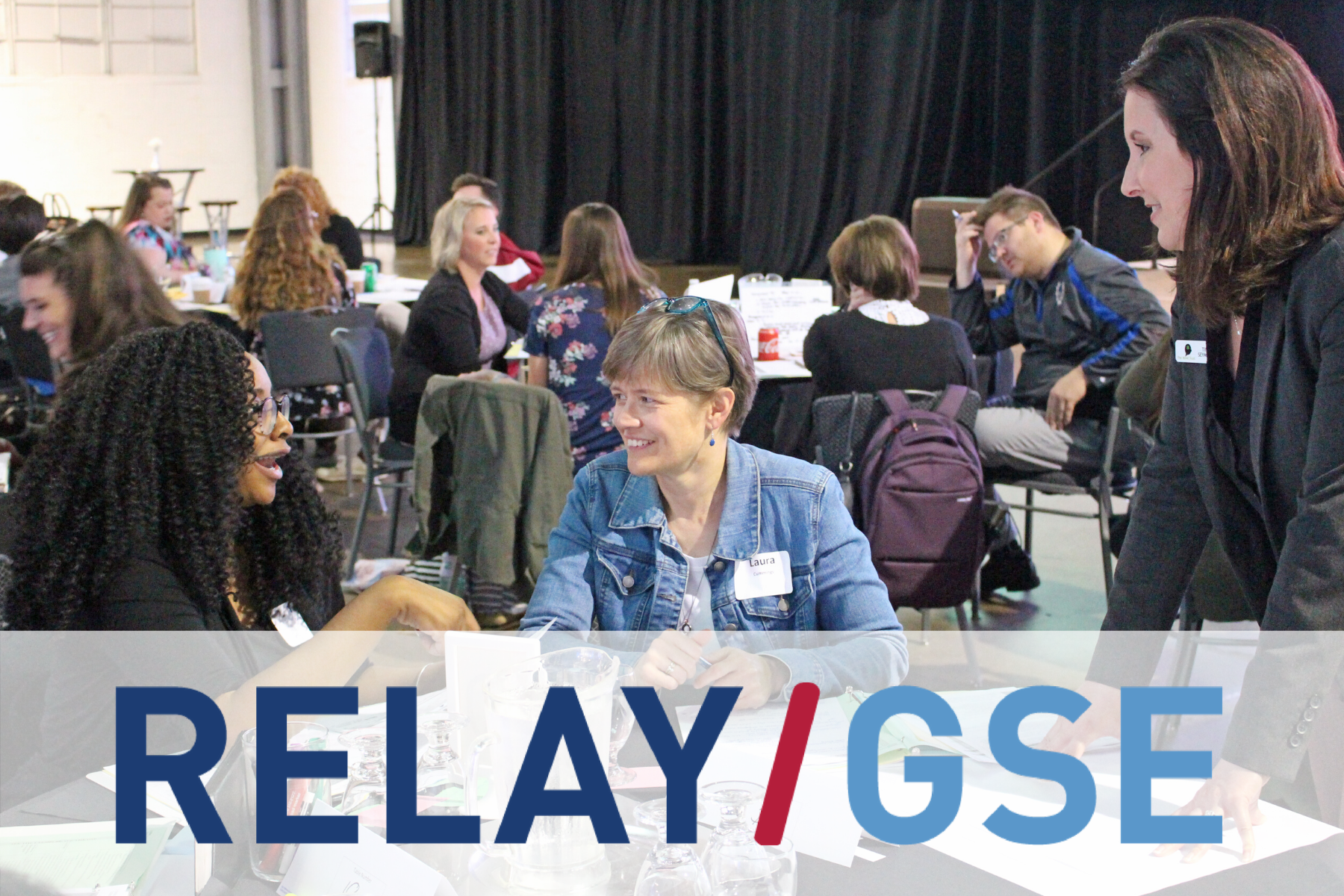
The Mind Trust is accepting applications for the fourth cohort of Indianapolis school leaders to participate in Relay Graduate School of Education’s National Principals Academy Fellowship, a nationally-recognized fellowship that provides school and school systems leaders with powerful instructional and cultural professional development. We are grateful to the Richard M. Fairbanks Foundation for a grant of $990,000 to help sponsor the next three cohorts fellows.

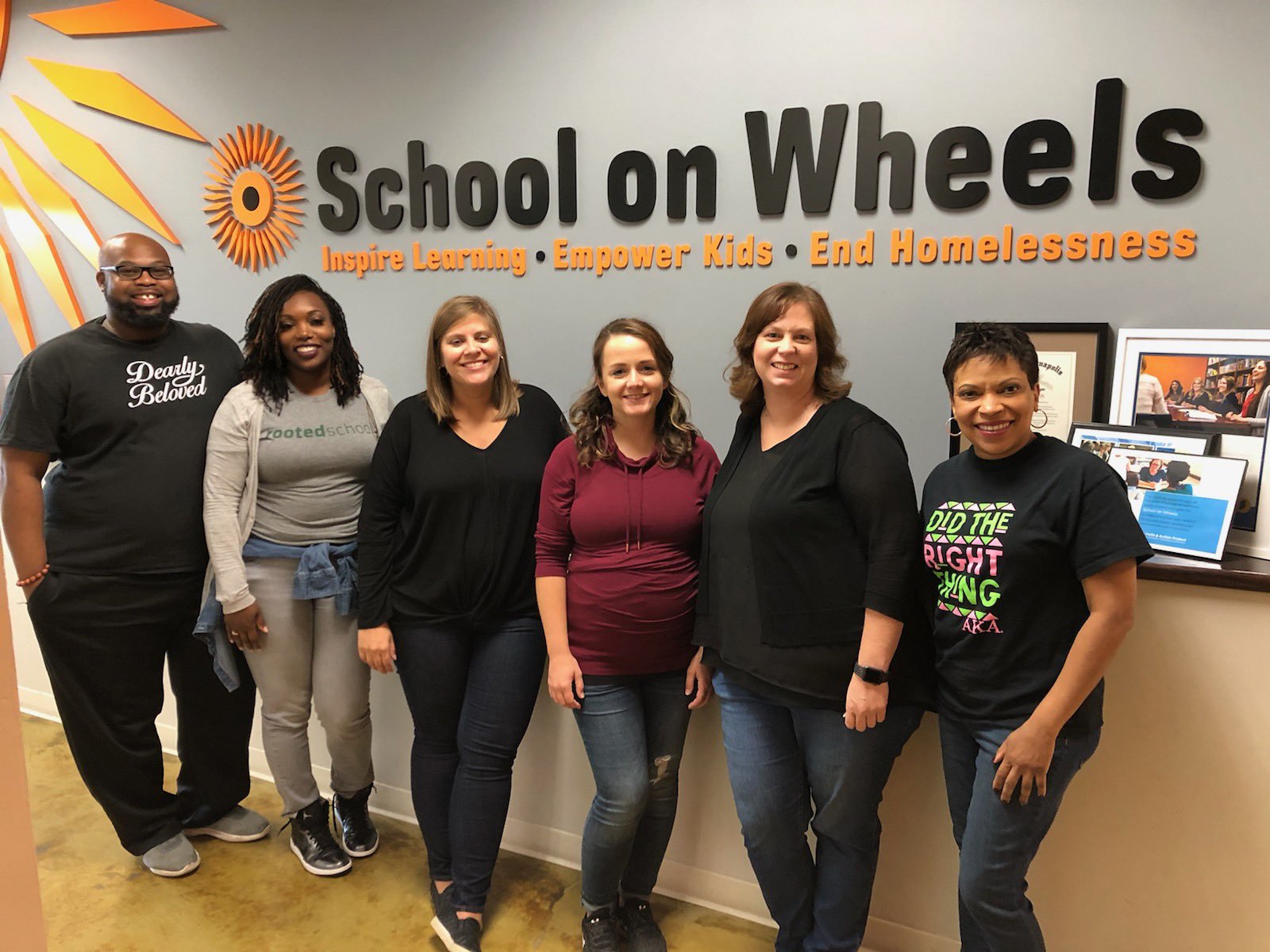
A few of our staff and Fellows volunteered at School on Wheels, filling backpacks with school supplies for students who utilize their programming. School on Wheels provides tutoring and wraparound academic support for hundreds of Indy children and families impacted by homelessness.
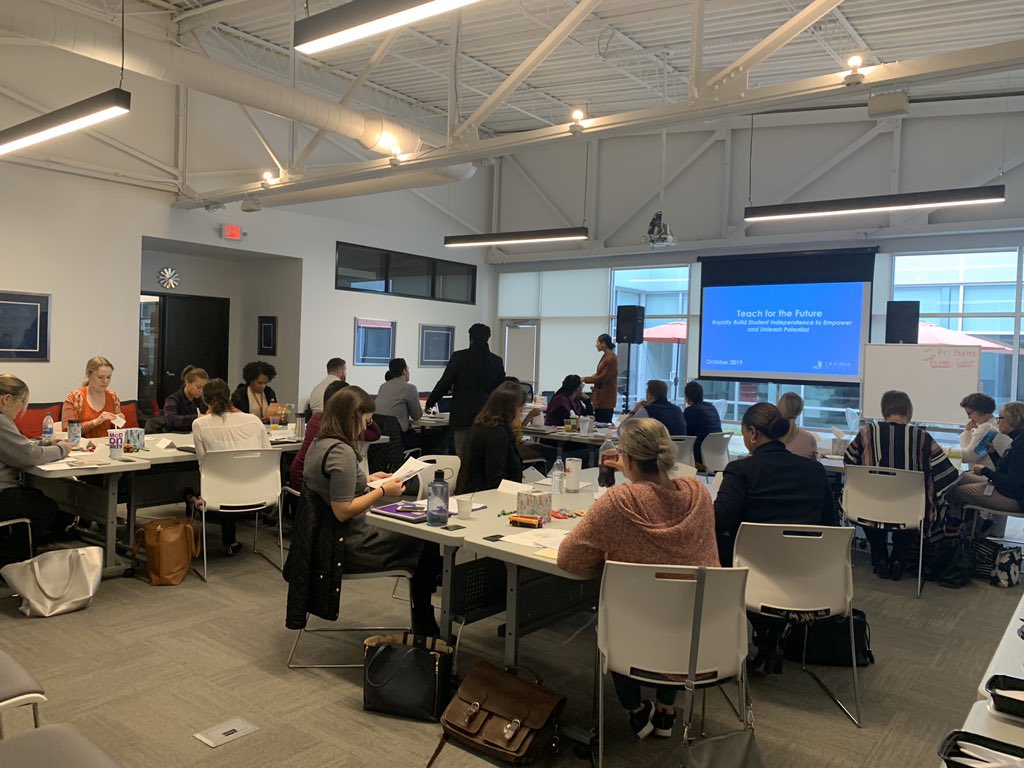
Our School Supports team partnered with the Lavinia Group to bring a literacy focused professional development to our Fellows and other Indianapolis school leaders. The training focused on building independence in reading to unleash student potential.

The Mind Trust In the News

10 new schools are seeking innovation partnership with IPS via Chalkbeat

Mind Trust Adds Lewis to Board via Inside Indiana Business

IPS Study Abroad Program To Relaunch As High School At Arlington via WFYI

New teacher residency program launches in Indy: ‘It will lead to a better retention’ via Fox 59

Church’s money management lessons lead to transformation in impoverished neighborhoodvia Faith & Leadership, Duke University

Schools were quick to downplay ILEARN results, but experts stand by the test. Here’s why.via Chalkbeat

The Mind Trust
1630 N. Meridian St., Suite 450  | Indianapolis, Indiana 46202
(317) 822-8102 | info@themindtrust.org

Follow Us on Social Media

Audrey Watters is one of the leading voices among those who are concerned about student privacy.

In this post, she notes the growing attention to surveillance of children but observes that some parents are purchasing devices that facilitate surveillance.

Do you want your child to be surveilled by unknown persons and corporations?

Morgan Ames is a techie. She majored in computer science at Berkeley and now works at the Center for Science, Technology, Medicine, and Society. She wants to convince you that techies know computer science, but we should not look to them for advice about child-rearing, education, or other social issues. Their range of expertise is narrow. It may make them very rich. But it does not make them wise in every field of endeavor.

in particular, she is critical of the media narrative that techies shield their children from early use of technology.

She writes:

“These articles assume that techies have access to secret wisdom about the harmful effects of technology on children. Based on two decades of living among, working with, and researching Silicon Valley technology employees, I can confidently assert that this secret knowledge does not exist.

”To be sure, techies may know more than most people do about the technical details of the systems they build, but that’s a far cry from having expertise in child development or the broader social implications of technologies. Indeed, most are beholden to the same myths and media narratives about the supposed evils of screen time as the rest of us, just as they can be susceptible to the same myths about, say, vaccines or fad diets. Nothing in their training, in other words, makes them uniquely able to understand arenas of knowledge or practice far from their own.”

Whoa. I disagree with Ames. Monitoring children’s screen time and allowing them time to read and play is one of the most important jobs of parents today.

I think Ames would have been on safer grounds had she criticized techies’ entrance into politics or other realms about which they are clueless, where they think their financial success makes them superior to everyone else and encourages them to scoff at democracy. Or where they think that their financial success gives them the right to “reinvent” education and scoff at democracy. Think Zuckerberg, Gates, and Mrs. Jobs.

Parents and supporters of public schools in Little Rock are outraged that Governor Asa Hutchinson refuses to meet with them. The state took control of the Little Rock district, and parents want democratic decision making restored. Remember when Republicans used to support local control? Not anymore.

Rev/Dr. Anika Whitfield write to the Governor on behalf of a large coalition of parents.

Gov. Hutchinson, 

 
As you may have heard at our rally on September 25, 2019, to fulfill the legacy of the Little Rock Nine to obtain a world class equitable education for students currently being denied by discrimination and state laws, and to #ReclaimLRSD in total with a locally elected school board, we demanded a meeting with you.
 
The organizers of the Support OUR LRSD coalition, a coalition of parents/guardians, students, alumni, community activists and supporters, faith leaders, volunteers in the LRSD, teachers, educators, retired teachers, and LRSD business leaders and faith leaders and communities need to speak with you about the fate of our beloved LRSD. 
 
You have been talking at us, and not with us. You and your appointed board and commissioner of education have been making decisions that work against our will, decisions and requests. 
 
As our elected Governor, you vowed to serve the entire state. You have not been serving our best interest, because you have not given us the opportunity to meet.  You have not provided us with an opportunity to not only state our case with you face to face, but you have denied us the dignity of being heard by you and your staff on multiple occasions.
 
We are insisting that you meet us on Monday, October 7th or Tuesday, October 8th prior to the Thursday, October 10th State Board of Education meeting.
 
There will be two representatives from each of our coalition groups ready to meet with you.
 
Please have your staff provide me with the date and time you will make yourself available to meet with The People of the LRSD, members of the Support Our LRSD coalition, who are requesting to meet with you.
 
Rev./Dr. Anika T.  Whitfield 
Grassroots Arkansas, co-chair
Support Our LRSD coalition 
By the way, Rev/Dr. Anika Whitfield is featured as a hero of the Resistance in my new book SLAYING GOLIATH, which will be published January 21, 2020.


Gary Rubenstein enjoyed reading Robert Pondiscio’s book about Eva Moskowitz’s Success Academy. He recommends it. What Pondiscio reveals is that SA does not cherrypick students, as critics charge: It cherrypicks parents.

One premise of the book is that the fundamental secret to Success Academy’s amazing standardized test scores, mentioned throughout the work is the filtering of the right families.  On page 266 he writes “The common criticism leveled at Moskowitz and her schools is that they cherry pick students, attracting bright children and shedding the poorly behaved and hardest to teach  This misses the mark entirely. Success Academy is cherry-picking parents.” Parents must go through a series of tests and hoops to jump through for their children to get into and to stay in a Success Academy school.  First there is, of course, the lottery. But winning the lottery is just the first step. Described in great — and frightening — detail in chapter 20 “The Lottery”, lottery winners have to attend a mandatory informational session where they are told how much work it is to be a parent of a child at the school — how lateness is not tolerated and there is a 7:30 AM start time.  How there is no transportation provided. How every Wednesday is a half day and there is no after school program. How absences require a doctor’s note. Many prospective lottery winners give up after that meeting. Then there are several other steps like extensive paperwork and uniform fittings and a dress rehearsal. Even Pondiscio is shocked to watch how a student who is deep on the waitlist eventually get admitted to the school.  But having families who are this willing and able to comply with the demands made by Success Academy leads, predictably, to high standardized test scores. He doesn’t say this so bluntly, but let’s face it — this is a kind of cheating.

But if you look at the back of the book, you see that it was well reviewed by various reformers including former NYC schools Chancellor Joel Klein.  How can this be? Well even though Pondiscio says the test scores need to be seen in the context of the family selection process, he also argues, several times throughout the book, that it is OK that they do this.  The argument is that wealthy families use their resources to get their child into a school that is a good fit for them so why shouldn’t poor families who have the resource of being highly functional use that to get their child into a school that is a good fit for them too?…

My first response to this would be that only 16 out of the inaugural 73 students even endured to graduate Success Academy.  If a higher percentage were actually served by Success Academy, then this argument of ‘shouldn’t they also get to choose a school that is good for them?’ would be more compelling.  Since for the vast majority, they did not choose a school that was good for them, even after going through all those steps, and they did ultimately choose to leave, so what kind of choice did they really get?  For the small number of families and children that turn out to be a good fit after all, there are at least double that number who regretted that choice and surely feel duped by the false promise that Success Academy actually cares about their children.

Maybe an analogy will make this more clear:  On airplanes, only wealthy people have the choice of flying first class while people who can’t afford that must fly in coach.  So now Success Airlines comes along and they have something they give people the choice of flying in something like first class except the seats are outside the plane on the wings and you have to get to the seats on your own and there’s a 2/3 chance that you’re going to be jettisoned from that seat before the flight is over anyway.  Should we say that having a choice like that is something that poor people deserve to have?

If Pondiscio is making the case here that Success Academy should have the right to exist, I’ve never said that they shouldn’t exist.  But their existence should not be to just benefit the few that are a good fit at the expense of not only the students at the neighboring schools but also the students who left Success Academy before graduating.  To do this, I think that they need more oversight and regulations and transparency about what goes on inside their schools.  And I’m glad that this book does a nice job about showing the sorts of abuse that occur in the school which I’ll get to next.