Archives for category: Health

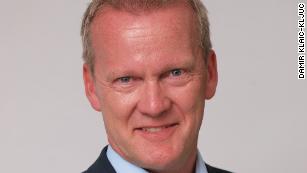
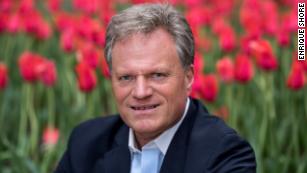
William Doyle and Pasi Sahlberg have a proposal for what children should do after the pandemic: Play.

They write at CNN.com:

When the novel coronavirus is no longer as great a threat and schools finally reopen, we should give children the one thing they will need most after enduring months of isolation, stress, physical restraint and woefully inadequate, screen-based remote learning. We should give them playtime — and lots of it.William Doyle William Doyle Pasi SahlbergPasi SahlbergAs in-person classes begin, education administrators will presumably follow the safety guidelines of health authorities for smaller classes, staggered schedules, closing or regularly cleaning communal spaces with shared equipment, regular health checks and other precautions. But despite the limitations this may place on the students’ physical environment, schools should look for safe ways to supercharge children’s learning and well-being.We propose that schools adopt a 90-day “golden age of play,” our term for a transitional period when traditional academic education.
Play gives children a wide range of critical cognitive, physical, emotional and social benefits. The American Academy of Pediatrics, representing the nation’s 67,000 children’s doctors, stated in a 2012 clinical report that “play, in all its forms, needs to be considered as the ideal educational and developmental milieu for children,” including for children in poverty, and noted that “the lifelong success of children is based on their ability to be creative and to apply the lessons learned from playing.

“The Centers for Disease Control and Prevention (CDC) has also reported “substantial evidence that physical activity can help improve academic achievement,” and “can have an impact on cognitive skills and attitudes and academic behavior,” including concentration and attention. Regular physical activity like recess and physical education, the CDC researchers noted, also “improves self-esteem, and reduces stress and anxiety.”

This is especially relevant for a student population that may face a tidal wave of mental health challenges in the wake of the pandemic. Data from the CDC’s Morbidity and Mortality Weekly Report detailed that, as of 2016, 1 in 6 children ages 2 to 8 years of age had a diagnosed mental, behavioral or developmental disorder. And a study in the Journal of Abnormal Psychology revealed that from 2009 to 2017, depression surged 69% among 16- to 17-year-olds.

A 90-day “golden age of play” school re-entry period would help ease children back into the school setting, while providing physical and creative outlets to allow them to calm their stress and thrive with their peers and teachers. But what exactly would this program look like?It should look like a child’s dreams. A time of joy, movement, discovery and experimentation without fear of failure; a time when every student should enjoy comfort, safety, and socialization with peers and warm, caring adults.

Open the link and read the rest.

Phyllis W. Jordan of Future-Ed, a D.C. think tank, explains here what the latest Congressional agreement on COVID aid means for education and compares it to last spring’s CARES Act as well as to the HEROES Act passed in May by the House of Representatives. The agreement does not include any aid for cities or states. President-Elect Joe Biden has pledged another relief package after he takes office.

She writes:


The $900 billion package builds on a $908 billion stimulus bill introduced Dec. 14 and would include stimulus checks, small business relief, unemployment benefits, and support for vaccine distribution, among other things. The measure includes $82 billion for education, with $2.7 billion specifically for private and parochial schools. A detailed proposal has not been publicly released yet, but the Dec. 14 bill included the $82 billion figure and broke it down like this:

  • $54 billion of that for K-12 schools, largely delivered through Title I funding. That’s about four times what schools received in the CARES Act approved in March.
  • $20 billion for higher education with dollars set aside for minority-serving institutions
  • $7.5 billion for governors to spend at their discretion, including on private schools.

School meal programs and child care. and expand the Pell Grant program to support 500,000 new low-income college students. Separately, lawmakers have agreed to lift a ban on Pell Grants for prison education programs, an agreement that will be part of a broader bill to fund the government through the fiscal year.

The Covid relief deal that House and Senate leaders stuck is far below the $2.2 trillion Democratic leaders had been seeking for much of the Fall but higher than the $500 billion that Senate Republicans favored.

The Washington Post summary said:

School funding


• Colleges and schools will have $82 billion to help cover HVAC repair and replacement to reduce the risk of coronavirus infections and reopen classrooms. The Republican summary specified $2.75 billion in designated funds for private K-12 education.

• Lawmakers also struck a deal on $10 billion for child-care assistance.


In Los Angeles, the UTLA reached an agreement with the LAUSD and superintendent to extend remote learning as COVID surges and every ICU bed is filled in the city. The billionaire-funded “Parent Revolution” complained (billionaires are parents although they have no children in LA public schools).

https://www.latimes.com/california/story/2020-12-18/la-teachers-increase-live-online-classes-students

With children mired in distance learning and many struggling academically, Los Angeles teachers will take on more live online interaction with students next semester, under an agreement announced Friday. Also under the deal, school nurses will conduct campus-based coronavirus tests.

The pact between the teachers union and the Los Angeles Unified School District was essential for the nation’s second-largest school system; the agreement’s predecessor would have expired Dec. 31. And, based on current infection rates, a return to campus in January is almost impossible under state health guidelines. 

“This progress in online instruction reflects the shared learning of all who work in schools about the need to maximize the interaction between teachers and students and their families,” Los Angeles schools Supt. Austin Beutner said in a statement.

“We are gratified to reach an agreement to extend the distance learning agreement, which is what our students need right now,” said Cecily Myart-Cruz, president of United Teachers Los Angeles. “In the face of the upheaval we are all dealing with, educators, students and families need stability most of all.”

The new side letter to the teachers’ contract goes at least part way to addressing complaints from critics — including many parents and some community groups who have called for increased daily live interaction between students and teachers. 

“This agreement still leaves Los Angeles Unified with less learning time, less support for teachers, less partnership with families and less focus on racial equity than other large California school districts,” said Seth Litt, executive director of Parent Revolution, a local advocacy group that has provided support for a lawsuit filed on behalf of families who contendthat the district is violating their legal right to an education.

There also are parents who would settle for nothing less than a return to full-time in-person instruction. Others support remaining in distance learning, while some worry that current practices force students to remain online for too long, especially younger ones. No strategy has emerged that offers full academic support and an elimination of risk for school employees and the families they serve. Making strides in that direction has become more complicated as an alarming COVID-19 surge stretches local healthcare resources past their capacity.

The pandemic closed campuses in March, but schools in counties adjacent to L.A. were able to open in the fall, when local infection rates were lower. Campuses that opened during that period can remain open, but not every school system did so. And some districts that reopened have closed their campuses once more.

A recent district survey of employees represented by the teachers union indicated that 24% are prepared to return to schools; 55% said they are able to go back but prefer to remain in distance learning; 18% said an underlying health condition would make it potentially unsafe for them to return; 2% said they are 65 or older and would explore continuing to work remotely; and 1% said they intend to apply for unpaid leave.

The survey was conducted Nov. 30 through Dec. 6, with 26,305 responses, well over two-thirds of union members. The union represents teachers, librarians, counselors and nurses.

Under the new pact, nurses have to help carry out the district’s testing program. They will receive an extra $3.50 an hour for such work completed in person on a campus and additional pay when the work extends beyond normal hours.


This article by the superintendents of New York City (Richard Carranza), Chicago (Janice Jackson), and Los Angeles (Austin Beutner) appeared in the Washington Post. For those too young to know, the Marshall Plan was a massive American investment in foreign aid package to rebuild Europe after World War II. It was proposed by General George Marshall.

President-elect Joe Biden has described the crisis in public schools caused by the pandemic as a “national emergency.” As the superintendents of the nation’s three largest public school districts — New York, Los Angeles and Chicago — every day we grapple with the challenges that worry not just the president-elect but also the students and families we serve. Our schools, like thousands more across the nation, need help from the federal government, and we need it now.

The challenges school communities face aren’t for lack of effort by principals, teachers, staff, parents and students. Among our three districts, more than 2 million students and hundreds of thousands of educators have worked to transform teaching and learning from the inside out. We’ve seen teachers tackle long division from their kitchens and students debate the Constitution in Spanish from their living rooms.

But the fact is that for many — if not most — children, online and even hybrid education pales in comparison to what’s possible in a classroom led by a great teacher. Too many children are falling behind, threatening not just their individual futures but also America’s global competitiveness.

In Los Angeles Unified, where almost 80 percent of students live in poverty and 82 percent are Latino and African American, Ds and Fs by high school students have increased about 15 percent compared with last year. Meanwhile, reading proficiency in elementary grades has fallen 10 percent. In Illinois, students have lost more than a year of math progress. In New York City, 82 percent of students are children of color, largely from communities that have been disproportionately impacted by the virus, suffering tremendous loss and trauma that accompanies kids into the classroom. Across the country, math performance on standardized tests lags the prior year by 5 to 10 percentile points.

It’s time to treat the dire situation facing public school students with the same federal mobilization we have come to expect for other national emergencies, such as floods, wildfires and hurricanes. A major, coordinated nationwide effort — imagine a Marshall Plan for schools — is needed to return children to public schools quickly in the safest way possible.

Schools have shown that they can stay open safely despite community spread of the virus, but that demands the right set of actions, and adequate financial support, to bring students back safely and address the impact of this crisis head on.

Part of the problem is that the Cares Act and subsequent relief packages did not designate public school districts as recipients. Direct federal support for schools must be specific and targeted.

A federal relief package for schools should cover the basic building blocks of a safe, healthy and welcoming school environment so that educators and students can focus exclusively on their mission: high-quality teaching and learning. Funds should be provided directly to public school districts for four essential programs: cleaning and sanitizing of facilities and providing protective equipment; school-based coronavirus testing and contact tracing to help reduce the risk for all in the school community; mental health support for students to address the significant trauma they are facing; and funding for in-person instruction next summer to help students recover from learning losses because of the pandemic. Many local districts have poured resources into these efforts, and places such as New York City have seen success. But it’s simply not sustainable without federal support, and as covid-19 infection rates surge across the country, the pandemic shows no sign of slowing.

The cost of this lifeline for schools — an estimated $125 billion — is less than 20 percent of the total earmarked for the Paycheck Protection Program and about twice the amount provided to airlines. That’s a relatively small price to safely reopen the public schools that give millions of children a shot at the American Dream and their families the chance to get back to work.

Getting children back in the classroom and helping them recover must be addressed by the federal government with the same urgency and commitment as other disasters. Failure to do so will allow a “national emergency” to become a national disgrace that will haunt millions of children for the rest of their lives.

The Pfizer vaccine was developed not by Pfizer but by a German company called BioNTech. There is an amazing story behind BioNTech, which was founded by a married couple, both of whom are children of Turkish immigrants to Germany. Thanks to the success of their vaccine, they are now billionaires but they don’t own a car. They are the kind of people that Trump’s strict bans on immigration would keep out of our country. The Washington Post profiled the couple.

BERLIN — At 8 p.m. Sunday ­evening, the phone rang with the call Ugur Sahin, chief executive of the German medical start-up ­BioNTech, had been anxiously awaiting.
“Are you sitting down?” Pfizer chief Albert Bourla asked him.


The news that followed was better than Sahin had hoped: Preliminary analysis from Phase 3 trials of his company’s coronavirus vaccine showed 90 percent protection.


“I was more than excited,” said Sahin, speaking to The Washington Post on a video call from his home in the western German city of Mainz.


The interim results put the 55-year-old and his co-founder wife, Ozlem Tureci, in the front of the pack racing for a safe and effective vaccine. Global markets rallied, and stock soared for ­BioNTech — a small-by-pharma-industry-standards company that has yet to see a vaccine using its technology brought to market. For the corona-weary masses, it was a much-needed glimpse of a potential end in sight...

The husband-and-wife team behind one of the world’s top coronavirus vaccine candidates are the sort of people who don’t own a car and who took the morning off for their wedding day in 2002 before returning to the lab. Half a day was “sufficient,” Tureci explained.

Sahin and Tureci, both children of Turkish immigrants to Germany, met while working on an oncology ward in the southwestern city of Homburg. They found they shared an interest in getting the body’s immune system to fight cancer.
Sahin was born in the Mediterranean city of Iskenderun and moved to Germany when he was 4. His father was a “Gastarbeiter,” or guest worker, at a Ford factory in Cologne.


Tureci’s family moved to Germany from Turkey before she was born, after her father finished medical school. “He schlepped me everywhere when I was young,” she said, “to the hospital and to see patients and such.”
In her studies, Tureci was surprised by the gap between advances in medical technology and what was available to doctors and patients. She and Sahin decided the best way to close that gap was to launch their own company.

Founded in 2008, BioNTech’s work focused primarily on cancer vaccines using what is known as messenger RNA technology. While traditional vaccines require labor-intensive production of ­viral proteins, mRNA vaccines deploy a piece of genetic code that instructs a person’s immune system to produce the proteins itself.


Sahin said he hadn’t closely followed the science of the novel coronavirus spreading in China, but on Jan. 24 he received a scientific paper that rang alarm bells. It described both serious cases and an asymptomatic carrier. He Googled “Wuhan” and saw it was a well-connected megacity with an international airport.


“That’s the full pattern you need for a pandemic virus,” he said.
It took a few days to talk others at the company into putting their resources behind a coronavirus vaccine, he said, as some experts were still dismissing the potential for a pandemic as hype. “In a company, it’s a matter of convincing people that they need to install a lot of energy,” he said. Energy is something Sahin exudes as he talks excitedly about the vaccine’s prospects.


It was a “snowball effect,” Tureci said. “He was very convincing that this kind of pandemic could develop.”


Within four weeks, the first wave of the epidemic in Europe was in full swing, and BioNTech had 20 vaccine candidates as part of what it dubbed project “Lightspeed” (no connection to the U.S. government’s “Operation Warp Speed”). With a team of more than 1,000 people in Mainz working “24-7,” Sahin said, the company narrowed its most promising candidates down to four. But it didn’t have the resources to conduct large-scale clinical trials or the production and distribution that would be necessary.


BioNTech approached Pfizer, with whom they had an existing relationship, working on influenza vaccines.
“The answer came immediately and was a yes,” said Tureci. In April, Pfizer invested an initial $185 million toward the vaccine development and said it would release up to $563 million more based on milestones in the development.
When the interim Phase 3 results came in, Tureci said, they took her by surprise. “As a scientist, I’m very cautious and tend to be a bit pessimistic,” she said.


Sahin said the news was “extremely relieving.”
The United States had already ordered 100 million doses, with an option for 500 million more. The European Union on Wednesday agreed on an order for an initial 200 million.
Amid the whirlwind of publicity, tweets from President Trump have brought some bemusement. “Complete nonsense” is how Sahin describes the accusation that the companies sat on the results until after the election.
And as for Trump’s claims of credit: “I’m not sure where the U.S. government would have had input in this,” Tureci said...

Sahin and Tureci are now a billionaire couple, numbering among the 100 richest Germans, according to the German paper Welt am Sonntag. Sahin said he can’t avoid watching the stock price go up — “but it doesn’t really matter that much.” He’s more concerned about getting his first product to the market.
“I don’t have a car. I’m not going to buy a plane,” said Sahin, who cycles to work every day. “What’s life-changing is to be able to impact something in the medical field.”


Teresa Thayer Snyder was superintendent of the Voorheesville district in upstate New York. She wrote this wise and insightful essay on her Facebook page. A friend sent it to me.

Dear Friends and Colleagues:

I am writing today about the children of this pandemic. After a lifetime of working among the young, I feel compelled to address the concerns that are being expressed by so many of my peers about the deficits the children will demonstrate when they finally return to school. My goodness, what a disconcerting thing to be concerned about in the face of a pandemic which is affecting millions of people around the country and the world. It speaks to one of my biggest fears for the children when they return. In our determination to “catch them up,” I fear that we will lose who they are and what they have learned during this unprecedented era. What on earth are we trying to catch them up on? The models no longer apply, the benchmarks are no longer valid, the trend analyses have been interrupted. We must not forget that those arbitrary measures were established by people, not ordained by God. We can make those invalid measures as obsolete as a crank up telephone! They simply do not apply. 

When the children return to school, they will have returned with a new history that we will need to help them identify and make sense of. When the children return to school, we will need to listen to them. Let their stories be told. They have endured a year that has no parallel in modern times. There is no assessment that applies to who they are or what they have learned. Remember, their brains did not go into hibernation during this year. Their brains may not have been focused on traditional school material, but they did not stop either. Their brains may have been focused on where their next meal is coming from, or how to care for a younger sibling, or how to deal with missing grandma, or how it feels to have to surrender a beloved pet, or how to deal with death. Our job is to welcome them back and help them write that history.

I sincerely plead with my colleagues, to surrender the artificial constructs that measure achievement and greet the children where they are, not where we think they “should be.” Greet them with art supplies and writing materials, and music and dance and so many other avenues to help them express what has happened to them in their lives during this horrific year. Greet them with stories and books that will help them make sense of an upside-down world. They missed you. They did not miss the test prep. They did not miss the worksheets. They did not miss the reading groups. They did not miss the homework. They missed you.

Resist the pressure from whatever ‘powers that be’ who are in a hurry to “fix” kids and make up for the “lost” time. The time was not lost, it was invested in surviving an historic period of time in their lives—in our lives. The children do not need to be fixed. They are not broken. They need to be heard. They need be given as many tools as we can provide to nurture resilience and help them adjust to a post pandemic world.

Being a teacher is an essential connection between what is and what can be. Please, let what can be demonstrate that our children have so much to share about the world they live in and in helping them make sense of what, for all of us has been unimaginable. This will help them– and us– achieve a lot more than can be measured by any assessment tool ever devised. Peace to all who work with the children!

James Hohmann reports that Guiliani received the same special treatment as Trump and was released from the hospital. Since he recovered so easily, he still opposes mask mandates.

Wednesday was one of the deadliest days in American history, as the coronavirus killed 3,140 people. This is 673 more Americans than the Japanese massacred in their sneak attack on Pearl Harbor. It is more than twice the number of souls as perished aboard the Titanic.

In another record, 106,000 Americans are currently hospitalized with covid-19. President Trump’s personal lawyer, Rudy Giuliani, is no longer among them. He flashed reporters a thumbs-up as he was driven away from MedStar Georgetown University Hospital at around 5 p.m. on Wednesday.

“Back 100% and lost little time,” Giuliani tweeted this morning.

The former New York mayor said he received remdesivir, dexamethasone and “exactly the same” treatment that Trump got in October when he was hospitalized, which the president has often credited for his speedy recovery.

“The minute I took the cocktail yesterday, I felt 100 percent better,” Giuliani said in a Tuesday afternoon interview with WABC, a New York talk radio station. “It works very quickly. Wow! … By the next morning, I felt like I was 10 years younger.”

As beds fill up, patients who need hospital care — for the virus or for something else — cannot get it. Many intensive care units are overwhelmed. More and more places face looming, life-and-death decisions about rationing care.

Giuliani himself acknowledged that he got “celebrity” treatment. He said the president’s doctor, apparently referring to White House physician Sean Conley, talked him into being admitted. “I didn’t really want to go to the hospital, and he said, ‘Don’t be stupid,’” Giuliani recounted. “We can get it over with in three days if we send you to the hospital.”

But the VIP treatment for Trump and his crew, including access to the best cocktails of experimental drugs, seems like an important part of the explanation for why the president and his inner-circle continue to speak so flippantly about the dangers of the virus that has now killed at least 288,000 Americans.

Just like Trump after he got out of Walter Reed in October, Giuliani emphasized during his talk-radio appearance that his four-day stay in the hospital has not changed his perspective about the virus or lessened his opposition to mask mandates. He expressed no contrition for his pattern of reckless behavior that forced the Arizona legislature to close for this week and public health officials in Michigan to encourage people who attended a state legislative hearing at which Giuliani spoke to self-quarantine. Giuliani even claimed that covid-19 is “a curable disease at this point.”

“I have exactly the same view,” he said. “I have also been through cancer. … Things happen in life. You have to go with them. You can’t overreact to them. Otherwise you let the fear of illness drive your entire life. … I’d rather face risk than live in a basement all my life.”

The organization Fairness & Accuracy in Reporting writes that the New York Times has become a “cheerleader” for reopening the schools as the COVID surges to new heights.

it is strange indeed because there is evidence to support reopening and equally impressive evidence against reopening schools. Yet the New York Times consistently lands on one side: reopen the schools.

Ari Paul of FAIR writes:

We’re still dealing with a pandemic of biblical proportions, and the scientific community is still conflicted about how schools reopening fits into the crisis. Anthony Fauci, one of the nation’s top infectious disease experts, favors school reopening (Business Insider11/29/20)—as does the American Academy of Pediatrics, though it notes that “the current widespread circulation of the virus will not permit in-person learning to be safely accomplished in many jurisdictions.”

But the idea that children are not vectors, or are merely low-risk vectors, for spread of the coronavirus is in dispute (Healthline9/24/20AP9/22/20). The Journal of the American Medical Association (7/29/20) reported “a temporal association between statewide school closure and lower Covid-19 incidence and mortality,” saying that school closures between March 9 and May 7 were associated with a 62% relative decline in Covid incidence per week and a 58% decline in deaths per week.

Nature (11/16/20) cited JAMA’s finding to bolster its comprehensive statistical review of governmental “non-pharmaceutical interventions” against Covid, which found that school closures were one of “the most effective NPIs” in curbing the spread of the disease. A report in US News and World Report (12/2/20) based on data compiled by the Covid Monitorproject on the coronavirus in K–12 schools  concluded that “the data suggests schools are NOT safe and DO contribute to the spread of the virus—both within schools and within their surrounding communities.”

And that’s partially why parents and teachers are so worried about de Blasio’s plan. Individual schools in the city have to deal with budget shortfallsdeteriorating buildings and lack of supplies in the best of times, and now they suddenly must rapidly and safely implement in-person teaching. And as many New York schools advocates, like one-time gubernatorial candidate Cynthia Nixon, have argued, reopening schools tends to benefit whiter communities, as whiter, more affluent schools tend to have more resources to adapt to the current environment.

Paul identifies Times’ reporter Eliza Shapiro as purveyor of a consistent anti-union, anti-teacher perspective, who consistently supports reopening and ignores the voices of teachers who complain about the lack of funding for protective measures for both students and teachers.

Paul concludes that the New York Times, the newspaper of record, “should be playing a much more balanced and compassionate role.”

Tim Schwab has written several articles about the Gates Foundation and its negative effect on freedom of the press, education, and every other arena where it exercises an outsize influence because of its disproportionate power. When Melinda and Bill Gates make mistakes, they seldom apologize or make amends. They usually blame someone else or simply double down. In education, we have certainly seen this as Gates doubled down on using test scores to judge teacher quality, invested in charter schools, and funded the single biggest effort to standardize education: the Common Core.

In Schwab’s latest report on Gates’ follies, he reports that Gates has distorted knowledge about the pandemic by pouring hundreds of millions of dollars into one data-gathering project.

Schwab begins:

A perennial feature of the Covid-19 pandemic has been the guessing game of whether things are getting better or worse—and how policy approaches (masks, shutdowns) and changes in the weather will affect the coronavirus. Dozens of research institutes have published educated guesses about what’s coming next, but none have had the impact or reach of the University of Washington’s Institute for Health Metrics and Evaluation.

In the early days of the pandemic, the IHME projected a far less severe outbreak than other models, which drew the attention of Donald Trump, who was eager to downplay the danger. At a March 31 press briefing, the White House’s coronavirus response coordinator, Debbie Birx, with the president at her side, used IHME charts to show that the pandemic was rapidly winding down.

“Throughout April, millions of Americans were falsely led to believe that the epidemic would be over by June because of IHME’s projections,” the data scientist Youyang Gu noted in his review of the institute’s work. “I think that a lot of states reopened based on their modeling.”

The IHME brushed aside the widespread criticism that emerged—“Many people do not understand how modeling works,” its director, Chris Murray, explained in a Los Angeles Times op-ed—and continued to push headline-grabbing projections that drew alarm from its peers. For example, while many researchers limit their projections to a few weeks into the future, Murray used his regular appearances on CNN to chart the course of the pandemic many months in advance, putting the IHME’s highly contested estimates in a position to guide policy-making ahead of other models.

“It seems to be a version of the playbook Trump follows,” says Sam Clark, a demographer at Ohio State University. “Absolutely nothing negative sticks, and the more exposure you get, the better, no matter what. It’s really stunning, and I don’t know any other scientific personality or organization that is able to pull it off quite like IHME.”

The institute’s uncanny resilience, unconventional methods, and media savvy have long made it controversial in the global health community, where scholars have watched its meteoric rise over the past decade with a mix of awe and concern. Years before Covid, the IHME gained outsize influence by tracking hundreds of diseases across the planet and producing some of the most cited studies in all of science.

But it has also spawned a legion of detractors who call the IHME a monopoly and a juggernaut and charge the group has surrounded itself with a constellation of high-profile allies that have made it too big to peer review, the traditional method of self-regulation in science. Fueled by more than $600 million in funding from the Bill & Melinda Gates Foundation—a virtually unheard-of sum for an academic research institute—the IHME has outgrown and overwhelmed its peers, most notably the World Health Organization (WHO), which previously acted as the global authority for health estimates.

With Gates’ funding, IHME has become the go-to source for public health data. Schwab explains the unfortunate consequences of this global hegemony.


Oklahoma Governor Kevin Stitt accepted the resignation of Melissa Crabtree, whom he appointed four days earlier. Crabtree is a home-schooling parent who has vociferously opposed any mask mandate. She was selected to replace Kurt Bollenbach, also appointed by Stitt, who wanted to claw back millions from a for-profit virtual charter and who believed that students should wear masks in school. Bollenbach was too sane and reasonable for Governor Stitt.

Gov. Kevin Stitt’s new appointee to the state Board of Education spent months sharing debunked COVID-19 medical advice, conspiracy theories and anti-vaccine content before hiding the posts from public view shortly after news of her new position became public Friday.

According to The Oklahoman:

Enid resident Melissa Crabtree was named to the education board after Stitt abruptly removed board member Kurt Bollenbach, who the governor appointed in 2019.

Crabtree is a vocal anti-mask advocate who earlier this year founded a group called Enid Freedom Fighters, which had helped for months to block a mask mandate in the city and is now leading an effort to recall elected officials who supported the move. Enid’s mask mandate passed Tuesday on a third attempt, according to an Enid News & Eagle story.

Stitt’s pick was condemned Friday by Democrats in the Legislature who criticized Crabtree’s views on masks and her lack of public education experience.

Information reviewed by Oklahoma Watch also shows that Crabtree frequently took to Facebook to share other controversial opinions, unsubstantiated medical advice and misinformation surrounding the COVID-19 pandemic that has killed at least 1,860 Oklahomans.

The posts were either deleted or hidden from public view just before noon Friday, but Oklahoma Watch was able to review and capture screenshots of several postings before that occurred.

This includes a post from last month where Crabtree, who frequently posts on the supposed benefits of essential oils, claimed to her more than 400 followers that zinc could “stop Covid from duplicating” and “will help a body not freak out at an illness…”

In another post from July, Crabtree told her followers to seek out a viral video where a doctor falsely touted hydroxychloroquine as a COVID cure. Multiple claims in that video have been debunked by fact-checkers.

Crabtree went on to write that Dr. Anthony Fauci, the nation’s top infectious disease expert, has “known that hydroxychloroquine worked for 15 years” and, without providing any evidence to back up her claims, that “they are purposely distorting the studies and letting people die.”

Crabtree also posted multiple times endorsing the controversial strategy of achieving herd immunity without the use of widespread vaccinations. This includes a post from last week where she wrote that “once viruses are here, the way we get herd immunity is by people building immunity to the virus” and that she’d “rather have (the virus) than get the vaccine.

Apparently even Governor Stitt was embarrassed by his selection. And now he is looking for a new member of the State Board. Hopefully it will be someone who cares about the health and safety of students and teachers, and someone willing to call out grifters and frauds.