Gary Rubinstein revisits the past decade of failed reforms and notes how frequently the “reformers” made promises and then failed to keep them. Michelle Rhee came on the national scene, appearing on the cover of TIME, then disappeared after helping to sink the mayor of D.C. who hired her. Michael Bloomberg and Joel Klein claimed that under their leadership, there was a “miracle” in New York City, but the miracle disappeared when they and their public relations team left office. Jeb Bush touted a Florida “miracle,” but Florida remains mired in the depths of mediocrity when assessed by NAEP. Laurene Powell Jobs promised to “reinvent” the high school and handed out $100 millions to the schools she chose; many failed soon after. We await the “miracle.” Even Betsy DeVos claimed to be “rethinking” school, wondering why we needed public schools at all; now she is busy spreading millions to charter and voucher advocates in the red states.
Gary concluded his review of all the rethinking, reinventing, and rebranding by taking a close look at a school hyped by TFA. He looked at the numbers, and lo and behold, no miracle there.
In this “model” school, the kids are faring poorly:
OK, “So what,” you say, “only 1.1% of their 10th graders passed the science test and 2.7% of their 10th graders passed the math test. What matters is ‘growth.” Well in that department they didn’t fare so well either.
He concludes:
Usually it’s a lot harder than this. They often pick a school that has artificially inflated test scores due to attrition. Keep in mind, this is the school Villanueva Beard chose to highlight. One of the lowest performing schools in test scores and growth in the state of Indiana.
Whether they are ‘rethinkers,’ ‘reinventers,’ or ‘reimaginers’, a reformer by any other name still doesn’t know anything about schools.
The burning question is: When will the billionaires who fund “reform” and “reinvention” decide to stop funding failure?
Tom Loveless is an experienced education researcher who taught sixth grade in California. He has long been skeptical of top-down solutions to classroom-level problems. In this post, he explains why Common Core failed.
The theory of standards-based reform is that if everyone has the same curriculum and the same instruction, no one will fall behind. Thirty years ago, I wrongly believed that, and I supported the idea of national standards written by those in the field. But it is perfectly obvious that students in the same school with the same teachers using the same curriculum and having the same instruction do indeed have different outcomes. Having the same standards, curriculum, and instruction does not assure equal outcomes for all students. David Coleman, the architect of the Common Core, and Bill Gates, who funded the standards, did not know that.
He writes:
More than a decade after the 2010 release of Common Core State Standards in English language arts and mathematics, no convincing evidence exists that the standards had a significant, positive impact on student achievement. My forthcoming book next month—“Between the State and the Schoolhouse: Understanding the Failure of Common Core”—explores Common Core from the initiative’s promising beginnings to its disappointing outcomes.
While the book is specifically about Common Core, the failure of that bold initiative can only be understood in the context of standards-based reform, of which Common Core is the latest and most famous example. For three decades, standards-based reform has ruled as the policy of choice for education reformers.
The theory of standards-based reform rests on the belief that ambitious standards in academic subjects should be written first, guiding the later development of other key components of education—curriculum, instruction, assessment, and accountability. By promoting a common set of outcomes, standards-based reformers argue, the fragmentation and incoherence plaguing previous reform efforts could be avoided.
The approach is inherently top-down and regulatory, with standards developed by policy elites and content experts at the top of the system. The other components, all of which are bolted to the academic standards, grow in importance downstream and are often under the control of practitioners. The book focuses on curriculum and instruction, the what and the how of learning. They are key to the production of learning in classrooms.
Despite the theory’s intuitive appeal, standards-based reform does not work very well in reality. One key reason is that coordinating key aspects of education at the top of the system hamstrings discretion at the bottom. The illusion of a coherent, well-coordinated system is gained at the expense of teachers’ flexibility in tailoring instruction to serve their students. Classrooms are teeming with variation. An assumption of Common Core advocates is that variation in learning occurs primarily because of schools and classrooms possessing disparate, and all too often, indefensibly low standards—that if schools were brought under a common regime of high expectations, children who are falling behind would catch up or never fall behind in the first place.
Please open the link and read the rest of the article.
Darcie Cimarusti, communications director for the Network for Public Education, reports on the assault on public school funding in Iowa. K12 Inc., the for-profit virtual charter chain, listed on the New York Stock Exchange, is noted for high attrition rates, low graduation rates, low test scores, and high profits. Its top executives are each paid millions of dollars.
In multiple states across the country omnibus schools choice bills with sweeping charter and voucher provisions have been introduced. NPE Action has been following these bills here. Just such a bill was introduced in Iowa, SSB 1065 which would modify the state’s existing charter school law, which requires the approval of a local school board, to allow charter applicants to apply directly to the state board for a charter with no local approval required. Lobbying disclosures show that K12 Inc., which recently rebranded as Stride, Inc., has lobbied in favor of the bill.
Should the Iowa legislature send this bill to Governor Kim Reynolds’ desk, no doubt K12’s lobbying efforts will intensify. Currently K12 operates 51 online charter schools in 20 states.
The Orlando Sentinel has been covering scandal after scandal in the voucher schools of Florida, but the Legislature doesn’t care about their scandals and is planning to take even more money from public schools to fund more private voucher schools. The Sentinel published a story about one troubled voucher school that has received over $5 million from the state since 2015 despite the fact that it hires teachers without college degrees.
The job applicant hoped to teach fourth grade at Winners Primary School, a small private school in west Orange County. She didn’t have a college degree and her last job was at a child care center, which fired her.
“Terminated would not rehire,” read the reference check form from the daycare.
Since 2018, the school, dependent on state scholarships for most of its income, has hired at least three other teachers with red flags in their employment backgrounds and at least 10 other instructors who lacked college degrees, an Orlando Sentinel investigation found.
One Winners teacher — whose only academic credential was his high school diploma — was arrested in November, accused of soliciting sexually explicit videos from a boy in his class. Others have criminal backgrounds or histories of being fired for incompetence in other jobs, the records show.Despite that, the Florida Department of Education recently opened and closed an investigation into the school without taking any action.
The school is constantly hiring because many teachers work there only briefly. With about a dozen teachers on staff, Winners had a teacher turnover rate of 83% between 2019 and 2020. The turnover and the questionable teaching credentials raise doubts about the quality of education offered to the school’s 250 students in pre-K through eighth grade.
“The kids should’ve been in public schools,” said Evan McKelvey, who taught math at Winners for six months, leaving in January after getting hired at Bishop Moore Catholic High School. “All of the public schools around here are leagues better than that place.”
Almost all the students attend because Florida’s scholarships, often called school vouchers, cover their tuition. Since 2015, Winners, a for-profit school run by a married couple with a history of financial problems, has received more than $5.1 million in state scholarship money.
The school’s students use the state scholarships — Family Empowerment and Florida Tax Credit — that aim to help children from low-income families attend private schools...
Typically, the nearly 2,000 private schools that take state scholarships do not need to make public information on their operations or their employees. Despite state support, taxpayers have no right to see who is hired or what is taught at these schools.
Because of the teacher’s arrest at Winners, however, the department opened an investigation, telling the principal it was worried the school could be in violation of state scholarship laws because “proper vetting during the hiring process is not occurring,” according to a letter sent to the school Nov. 19.
“When we’re made aware of situations like this, our team thoroughly investigates,” said Eric Hall, senior chancellor at the education department, when asked about Winners at a January meeting of the Florida Senate’s education committee. ”We take these things very seriously. We would make sure that we hold those institutions or those individuals accountable.”
Less than two months later, however, the department closed its investigation without taking any action against the school, despite a file depicting a shoddy employee vetting process and a history of questionable teacher hires. The school faced similar state inquiries in 2017, 2018 and 2019 and was cleared to remain a scholarship school then, too.
That is because the Republican-led Legislature has written the scholarship program laws to give the state only limited power to oversee participating private schools. As the Sentinel reported in its 2017 “Schools Without Rules” series, some of the schools have hired teachers with criminal backgrounds, been evicted, set up in rundown facilities and falsified fire and health reports but still remained in the voucher programs.
This year, the Florida Senate is considering a bill to expand the scholarship programs that already serve more than 181,000 students and cost nearly $1 billion, so that more children could use them and more state money would be spent.
The Legislature also has turned down requests to stiffen the rules that govern participating private schools. In 2018, for example, a proposal to require private schools’ teachers to have bachelor’s degrees — as the state demands of its public school teachers — was rejected. Advocates say the scholarships, some of which go to children with disabilities, give parents options outside public schools, and if parents aren’t happy with the private school they pick, they can move their child to another campus...
The education department investigated the school previously after a complaint from a parent who wrote the state to say the campus was dirty and “children of all ages are running out of the classroom screaming and hitting each other,” as well as after a report from the Florida Department of Children and Families that a teacher had hurt a student and the Sentinel’s report in 2018 that the school had hired a felon as a teacher.
A custodian at the school served time in prison for a firearms violation.
The story goes on with more details about the checkered past and present of a “school without rules” and a legislature that happily hands out millions to anyone who asks for them, all in the name of “school choice.” Even bad choices are fine in Florida.
Subscribe to the Orlando Sentinel to read the full story.
After thirty years of devotion to “reform” (aka, deform or disruption), reform leaders in Minnesota are proposing a state constitutional amendment that will install more mischief into the state’s public schools. Rob Levine, an ardent critic of privatization, has written this account of their multiple failures and their plans to try yet again to impose their ideas on the state’s schools. He wrote this post at my request, after I saw his tweets about the travesty that “reformers” are promoting. Rob is a “follow the money” kind of person, which unsurprisingly removes the veil from bold promises that never come true. Minnesota is allowing big money to dictate the fate of its schools. Is there any accountability in the state for thirty years of failure? Why do “reformers” never learn from their failures?
He writes:
In the Fall of 2022 Minnesotans may be voting on a constitutional amendment that will fundamentally change state law around public education. How will this change public education? Surprisingly, even the authors profess not to know the answer to this question. The only thing certain about the proposed amendment is that it will empower courts and throw districts, parents and others into constant legal battles.
That’s because the amendment upends state law and tradition both in the language it removes and the language it adds. It doesn’t really say anything about how children should be educated, only that they will have a right to a ‘quality’ education as measured by standardized tests and as determined by the courts, with nothing in the amendment to guide them as to permissible remedies.
A lot of ink has been spilled in Minnesota over the proposed ‘Page’ amendment, but almost no one has investigatedeither the organizations and people behind the amendment, nor the subtext of it. The education discourse is same as it ever was, but in this case the education reformers – who have failed for 30 years to improve educational outcomes – want to open Pandora’s box.
The amendment is a half-baked, dangerous idea, as a number of scholars and experts recently wrote to Minnesota legislators. It would weaken protections against segregation while simultaneously enshrining invalid standardized test scores in the state constitution.
Who’s really behind this proposed amendment? The powerful philanthropies who for decades have meddled in Minnesota education, almost always to failure. They have been trying to privatize public education for decades. They favor a system where the public pays for things but public employees don’t provide the services.
For 30 years the Minneapolis Foundation has been meddling in the affairs of the Minneapolis Public School District, often actually telling it what to do while at the same time driving the privatization of public schools through ‘school choice.’ Since about 2008 the vehicle for the destruction is charter schools, a movement it both created and sustained in myriad ways. The result has been stagnant learning across the state for 20 years, increased segregation, and public school districts on the brink.
The Federal Reserve Bank in Minneapolis is also playing a role in advocating for the amendment: a creature of the federal government applying substantial resources and trying to influence and change Minnesota constitutional law.
The bad faith of these foundations and advocates started decades ago when the state considered the nation’s first charter school legislation. History shows that the prime mover behind this legislation was the Minneapolis Foundation, and its ideological guru Ted Kolderie, the charter whisperer. Most people have probably never heard of him, but there are more than a hundred references to him in former DFL legislator and author of the charter school legislation Ember Reichgott Junge’s book, Zero Chance of Passage: The Pioneering Charter School Story, that chronicled how that first charter school legislation came to be.
In a 1990 monograph titled “The states will have to withdraw the exclusive” that argued for competition in the education space, Kolderie told a bunch of whoppers, including that charter schools would increase teacher pay, allow them to control schools, and characterized students as “customers.” None of those predictions have come true. Minnesota now has about 170 charter schools. TWO of them are unionized, so, no, charter schools have not empowered teachers.
Then there’s the organization actually leading this constitutional amendment campaign, Our Children MN, an opaque non-profit incorporated just a year ago whose sole purpose seems to be passing the amendment. Our Children has not disclosed one penny of its funding.
The organizing leading the charge is Our Children, an opaque non-profit that has not disclosed one penny of its funding.
According to Our Children’s website, Michael Ciresi, Minnesota philanthropist and former DFL senate candidate sits on its board of directors. Ciresi hates the Minneapolis Public School District so much that he bought billboards across the street from district headquarters to spread racial disinformation.
Ciresi himself is no slouch when it comes to failing at education reform. His foundation has funded a number of now closed charter school entities, including Charter School Partners, MinnCAN, Harvest Prep charter school, and last but not least, Minnesota Comeback.
Ciresi’s foundation gave Comeback about a half million dollars over five years. Comeback was a project of the Minneapolis Foundation, which incubated it internally as the Education Transformation Initiative. Lots of other local foundations, including the Bush, John & Denise Graves, General Mills, and others contributed to the nascent effort.
When it opened in 2016 Comeback announced $30 million in commitments from funders and promised to create “30,000 rigorous and relevant charter school seats in Minneapolis.” Whatever that meant educationally it was really a death threat to the Minneapolis Public School District, which had about 35,000 students at the time.
Three years later Comeback disappeared into the night with no announcement or media reports after reporting less than $4 million in philanthropic contributions. But don’t fear for them – Comeback was merged into Great MN Schools, an organization it formerly owned, and which is now a “Page Partner.”
This kind of abject failure of philanthropic avatars in the field of education in Minnesota is more the rule than the exception. In 2009 the Bush Foundation, a philanthropy born of 3M money, started the largest project in its history – the 10 year, $50 million Teacher Effectiveness Initiative (TEI) (not to be confused with the Minneapolis Foundation’s failed Education Transformation Initiative).
The TEI postulated that the problem with education is teachers, and by the foundation’s strategic application of its largess so-called ‘achievement gaps’ would be ELIMINATED in three states and 50% more kids would be going to college. The foundation was also so confident of its success that it predicted the changes it would help implement would spread like wildfire nationwide. They also announced that not only would it perform this educational miracle, it would prove it with metrics!
This feat would be done by extending the so-called Value Added Model (VAM) to gauge the ‘effectiveness’ of teachers by analyzing the test scores of their students. The job, and a promise of millions of dollars in revenue, was awarded to a place called the Value Added Research Center at the University of Wisconsin.
Their task was to extend this discredited model originally invented to increase production of farm animals to apply to places where teachers are taught. The idea was to judge schools of education based on the standardized test scores of students taught by their graduates! One doesn’t need a PhD in social science or statistics to know that this is an insane, impossible and worthless goal.
Sure enough halfway through the project the Bush Foundation abandoned its quixotic VAM method and VARC had to be satisfied with only $2 million for its efforts. By the end of the 10 year project ‘achievement gaps’ were the same or worse, and in Minnesota instead of there being 50% more students in college, enrollment actually was down six percent. By any measure – including their own! – this project was a spectacular failure. Turns out teachers aren’t the problem! But that’s not how they saw it.
In an in-house magazine article titled “Goals for a decade revisited,” Jen Ford Reedy, president of the foundation, offered up a bold summary of the project: “We [the Bush Foundation] are proud of what we helped to make happen!”
Failure can also take different forms for the philanthropies. In 2013 the Minneapolis Foundation launched yet another huge education project called RESET Education. They even created a website for it and brought in John Legend to sing at the kickoff. Along with blaming teachers for poor test scores among some demographic groups, RESET was essentially a formula to turn Minnesota schools into testing factories. Sandra Vargas, the head of the foundation at the time, got an op-ed in the Star Tribune to tout the project, just as Our Children got one there a few weeks ago to tout the Page Amendment.
And of course the Minneapolis Foundation turned to MinnPost for coverage, as it often had, as it has been funding the organization to the tune of over $1 million since its inception. For the year of 2013 – the year of RESET – the Bush Foundation also gave MinnPost $82,000 for “Coverage and writings on K-12 education issues, best practices and overall reform efforts.”
At MinnPost reporter Beth Hawkins put the best possible face on the RESET program with gushing words about meeting celebrities and flogging the factually wrong assertions of the Minneapolis Foundation about education. That same year RESET faded into the ether just as Comeback, Charter School Partners, MinnCan and others have.
And as usual when Beth Hawkins wrote at MinnPost it was left to commenters to correct the record. It fell to Jim Barnhill, a former union leader and former Board of Teaching Member who currently works in high school administration, to get to the heart of the matter:
“How about exploring the real agenda of the Minneapolis Foundation? Why not ask the obvious question, ‘How does a business foundation posit themselves as experts in education?’”
The same question could be posed to the Federal Reserve Bank. And just what gives these foundations that have failed at education reform time and time again the right to continue intervening? A prescient person once said that “Insanity is doing the same thing, over and over again, but expecting different results.” A corollary might apply to self-appointed ‘experts’ with deep pockets who repeatedly fail and hurt society. It’s time for Alan Page, Mike Ciresi and the Minneapolis Foundation to grab some bench.
Jennifer is co-author of the important new book (with Jack Schneider) called A Wolf at the Schoolhouse Door.
As you will learn in the interview, Charles was brought up in a conservative environment. He studied at George Mason University in the Koch-funded economics department (you can read about it in Nancy MacLean’s excellent book Democracy in Chains, which I reviewed in The New York Review of Books). He worked for the Goldwater Institute and lobbied for ALEC and other billionaire-funded privatization groups.
At some point, he realized he was on the wrong side, promoting ideas that would do harm, not good. He wanted to do good.
He said unequivocally that the goal of the privatizers is to destroy public education. They promote charter schools and vouchers to destroy public education.
He explains that school privatization is only one part of a much broader assault on the public sector. The end game is to privatize everything: police, firefighters, roads, parks, whatever is now public, and turn it into a for-profit enterprise. He predicted that as vouchers become universal, the funding of them will not increase. It might even diminish. Parents will have to dig into their pockets to pay for what used to be a public service, free of charge.
Charles is currently helping Save Our Schools Arizona.
Parents and educators overwhelmingly oppose the New Hampshire voucher proposal, which would be the most expansive in the country. In terms of turnout, voucher opponents outnumber proponents by 6-1. Proponents claim that it is only educators who oppose vouchers, but many parents turned out to testify against the legislation.
Yet the Republican sponsors of the bill are forging ahead, claiming that so few children want a voucher that it would have no impact on the budget. In fact, the bill would have the state pick up the cost of tuition for children currently attending religious and private schools, and would fund homeschoolers as well. Critics estimate the cost at $100 million per year.
As background to the discussion, take a look at the research on vouchers. This report from the Center for American Progress finds that using a voucher is equivalent to missing about one-third of a year in school. Yet 23 states, including New Hampshire, are going full speed ahead to enact a harmful and demonstrably ineffective waste of public dollars.
The Senate’s school voucher bill drew a crowd debating the merits and liabilities of the program that would allow parents to receive state money to find the best educational fit for their child.
But opponents called Senate Bill 130 the latest attempt to privatize education and alleged it would set up a parallel education system with one tier for the well-to-do and the other for those who cannot afford an alternative for their children.
They said the proposal would be the most expansive educational choice program in the country and the most lax, with little accountability or transparency.
Supporters said the pandemic has heightened awareness that every child learns differently and needs options and choices to reach their full potential.They said the program would not only help students, it would save state taxpayers hundreds of millions of dollars, although opponents claimed it would cost the state that much money.
The House had a nearly identical bill, but the House Education Committee decided to hold the bill for a year to try to improve some of the flaws.The ranking Democrat on the House Education Committee, Rep. Mel Myler, D-Hopkinton, urged his Senate counterparts to either do that or recommend killing the bill...
One of the bill’s sponsors, Rep. Glenn Cordelli, R-Tuftonboro, said the House hearing on House Bill 20 drew 1,100 parents in support showing grassroots support. And he said a recent poll indicates 70 percent of New Hampshire adults approve of vouchers.
He did not say that nearly 7,000 people signed in opposition to the House bill.“On one side you have lobbyists and advocates and on the other side are parents,” Cordelli said. “It is the school units versus the kids.”
Carl Ladd, executive director of the NH School Administrators Association took issue with Cordelli’s statement.“This school system versus student argument implies that advocates for public education are anti-student, that is a real disservice to educators,” Ladd said. “I really take umbrage at that particular characterization…”
The student’s parents would receive the basic state adequacy grant of about $3,700 as well as additional money if the student qualified for free or reduced lunches, special education services, English as a Second Language instruction, or failed to reach English proficiency.
The average grant is estimated to be $4,600.
Will $4,600 be enough to gain admission to an elite private school? No. It will be enough to pay for a low-quality private or religious school that hires uncertified teachers and cannot match the offerings or facilities of the public schools. Or you might think of it as a transfer of public funds to students already in private/religious schools and home-schooled.
The Commissioner claimed that between 0.01 to 2.43 percent of eligible students would use the voucher. So, choose your rationale: either vouchers are wildly popular or hardly anyone will want one.
Commissioner Edelblut’s goal is to wipe out public schools. The people of New Hampshire will have to stop him. He is not a conservative. He is an anarchist.
Dear Friends–I hope you’re well. I wanted to be sure that you’re aware of three initiatives in which hundreds of educational scholars and leaders are pushing back on high-stakes standardized testing of students and teachers:
1) Last week, the California Alliance of Researchers for Equity in Education (CARE-ED) sent a letter, endorsed by over 200 educational scholars in CA, and provided oral testimony to the CA Commission on Teacher Credentialing (at its 2/11 meeting) calling for an end — not merely a continuance of last year’s temporary suspension — of high-stakes standardized testing in teacher education. Attached and available here: https://www.care-ed.org/
2) This week, the national network, Education Deans for Justice and Equity (EDJE) sent a letter (dated 2/15), endorsed by over 200 deans and leaders across the country, to Secretary-Designate Miguel Cardona to urge waiving federal mandates for 2021 student testing. Attached and available here: https://bit.ly/37oxIsC
3) Next week, CARE-ED will present a letter, endorsed by over 400 educators across CA, to the CA State Board of Education (which meets on 2/24) to urge requesting a waiver of federal mandates for 2021 student testing as well as waiving additional state mandates and any consequences attached to such testing. Attached and available here: https://www.care-ed.org/
Governor Greg Abbott of Texas and a bevy of rightwing commentators blamed wind turbines, which supply 10% of the state’s energy, and “the Green New Deal, which doesn’t exist, for the failure of the state’s power supply. He learned “the Big Lie” from his hero Trump.
As millions of people across Texas struggled to stay warm Tuesday amid massive cold-weather power outages, Gov. Greg Abbott (R) directed his ire at one particular failure in the state’s independent energy grid: frozen wind turbines.
“This shows how the Green New Deal would be a deadly deal for the United States of America,” Abbott said to host Sean Hannity on Tuesday. “Our wind and our solar got shut down, and they were collectively more than 10 percent of our power grid, and that thrust Texas into a situation where it was lacking power on a statewide basis. … It just shows that fossil fuel is necessary.”
The governor’s arguments were contradicted by his own energy department, which outlined how most of Texas’s energy losses came from failures to winterize the power-generating systems, including fossil fuel pipelines, The Washington Post’s Will Englund reported. But Abbott’s debunked claims were echoed by other conservatives this week who have repeatedly blamed clean energy sources for the outages crippling the southern U.S. [The Texas grid got crushed because its operators didn’t see the need to prepare for cold weather]
In fact, typically mild winters and a lack of state regulations in Texas combined to leave electricity providers unprepared for the extreme cold that has suddenly hit the state, The Post reported. Nearly every source of energy — from wind turbines to natural gas to nuclear power — have failed to some degree following a harsh storm that covered the region with thick layers of snow and ice. Although renewable energy sources did partially fail, they only contributed to 13 percent of the power outages, while providing about a quarter of the state’s energy in winter. Thermal sources, including coal, gas and nuclear, lost almost twice as many gigawatts of power because of the cold, according to the Electric Reliability Council of Texas (ERCOT), the state’s electric grid operator.
Critics have also noted that wind turbines can operate in climates as cold as Greenland if they’re properly prepared for the weather.
Despite the much larger dip in energy from fossil fuels, Republican politicians have seized on the outages to attack the Green New Deal and Democrats’ push to address climate change by reducing the consumption of fossil fuels.
In his Fox News interview, Abbott did not address the fact that most of the state’s power comes from fossil fuels and that ERCOT had planned to produce far more power from natural gas than became available as the cold set in, contributing a stunning deficit amid the freezing weather. On Tuesday, Abbott called for a state investigation into ERCOT’s failings, saying the agency had been “anything but reliable” following the winter storm.
Abbott’s office did not immediately respond to a request for comment late Tuesday. The governor was not the only prominent Texas Republican to blame clean energy for the historic power outages. After Fox News host Tucker Carlson inaccurately told viewers that the state’s power grid had become “totally reliant on windmills,” former Texas Gov. Rick Perry, who served as energy secretary under President Donald Trump, joined Carlson in railing against the Green New Deal, which has not been enacted in Texas or nationally.
“If this Green New Deal goes forward the way that the Biden administration appears to want it to, then we’ll have more events like we’ve had in Texas all across the country,” Perry said in another Fox News segment.
Rep. Dan Crenshaw (R-Tex.) shared a detailed accounting on Twitter of how the state’s power grid failed, noted the roles that natural gas and nuclear power played — but also used the moment to attack wind turbines on Tuesday.
“Bottom line: Thank God for baseload energy made up of fossil fuels,” Crenshaw tweeted. “Had our grid been more reliant on the wind turbines that froze, the outages would have been much worse.”
Rep. Alexandria Ocasio-Cortez (D-N.Y.), who has been a strong proponent of the Green New Deal proposal, slammed Texas Republicans early Wednesday. “The infrastructure failures in Texas are quite literally what happens when you don’t pursue a Green New Deal,” she said in a tweet.
Texas Democrats also criticized Abbott in a statement Monday, calling out Republican leaders for allowing the power to go out in the state that produces the most energy in the nation. “If we had a governor open to alternative sources of energy, Texas might be in a situation in which we have energy reserves to efficiently power our state, instead of the reckless leadership we have witnessed time and time again from Greg Abbott,” the Texas Democrats said.
Wind turbines are working very well in far colder climates. Abbott probably outsourced the state’s energy needs to profit-seeking entrepreneurs who cut corners to make more money.
In another article in the Washington Post, the blame is placed where it belongs: on short-sighted politicians who didn’t plan for a worst-case scenarios.
When it gets really cold, it can be hard to produce electricity, as customers in Texas and neighboring states are finding out. But it’s not impossible. Operators in Alaska, Canada, Maine, Norway and Siberia do it all the time.
What has sent Texas reeling is not an engineering problem, nor is it the frozen wind turbines blamed by prominent Republicans. It is a financial structure for power generation that offers no incentives to power plant operators to prepare for winter. In the name of deregulation and free markets, critics say, Texas has created an electric grid that puts an emphasis on cheap prices over reliable service.
It’s a “Wild West market design based only on short-run prices,” said Matt Breidert, a portfolio manager at a firm called Ecofin.
And yet the temporary train wreck of that market Monday and Tuesday has seen the wholesale price of electricity in Houston go from $22 a megawatt-hour to about $9,000. Meanwhile, 4 million Texas households have been without power.
One utility company, Griddy, which sells power at wholesale rates to retail customers without locking in a price in advance, told its patrons Tuesday to find another provider before they get socked with tremendous bills.
The widespread failure in Texas and, to a lesser extent, Oklahoma and Louisiana in the face of a winter cold snap shines a light on what some see as the derelict state of America’s power infrastructure, a mirror reflection of the chaos that struck California last summer.
Edward Hirs, an energy fellow at the University of Houston, said the disinvestment in electricity production reminds him of the last years of the Soviet Union, or of the oil sector today in Venezuela. “They hate it when I say that,” he said.
Mannerheim expresses her outrage at the corruption and inequity that have flowed from the Swedish policy of privatization. Her articles are a warning to those of us in the United States, as many states are now considering legislation to copy the Swedish free-market model, allowing anyone–including for-profit enterprises–to supply educational services to student.
Politicians let schools sink into a swamp of corruption
Published 8 Feb 2021
High school teacher Filippa Mannerheim.
The Swedish Parliament.
Photo: OLLE SPORRONG
Teacher Filippa Mannerheim sparked a great debate with her indictment against Swedish parliamentary politicians about the market school.
All parties – except M and KD have responded – and Mannerheim is now writing her closing remarks.
This is a cultural article, where writers can express personal opinions and make assessments of works of art.
DEBT DEBATE.
There was once a farmer who was terribly hard of hearing, something he was ashamed of. One day, while standing carving on an ax handle, he saw the surveyor coming walking on the road. “First he probably asks what I do and then I answer ‘Ax handle'”, the old man thought. Then he asks if he can borrow my mare and then I say: “The riders have ridden her back off”. And when he asks about my old echo, I answer “She is completely ruined and holds neither weather nor water.”
– Good day! said the surveyor.
“Ax shaft,” replied the old man.
This story my father read to me when I was a child and I remember that we laughed a lot at the old man’s determined but damned answers. That the saga is now revived within me again, after 40 years, is no coincidence.
After reading the six (non) answers from our parliamentary parties after my article “I accuse…!”, I am saddened by school policy. What is positive is that our Riksdag politicians have answers to all my questions. What is negative is that their answers rarely have to do with the questions.
The Center Party proudly claims (after three months of reflection, while their formulations have gone back and forth between communicators and party leadership), that they at least want to increase freedom of choice and transparency in Swedish schools, but then make proposals that lead to the exact opposite – slippery as eels in their struggle to defend the corporations’ dividends. The Liberals write an answer so full of empty phrases that I have already forgotten what the message was. I think there was something about teachers being very important.
The Social Democrats and the Green Party agree with me in substance but unfortunately can do nothing, “very boring, really.” The Western Party is outraged, the Sweden Democrats, as usual, blame the immigrants and the
Moderates and Christian Democrats don’t bother to even put together an answer. Probably they have none.
– Swedish schools are in deep crisis! Politicians, you must act!
– Good day, ax handle, little friend.
What exactly is politics for our politicians? I ask myself. Is it a polished, trembling index finger in the air, or is it a sincere description of the problem and a long-term and well-thought-out vision of what Sweden can become, based on knowledge, a sense of responsibility and an honest will to improve our society?
Who knows? Not me anyway.
In another fairy tale I recently read with my
students, HC Andersen lets the little child
shout the obvious: “The emperor is naked!”
Many of us are shouting now, but without our
rulers hearing us.
Photo: CSABA BENE PERLENBERG /
But this is not a fairytale. This is 2021 in a small but extreme country in the north, where the majority of our parliamentary parties have made it clear to us voters that the Swedish school market, with its destructive consequences, will remain. The limited companies’ expansion at the expense of the municipal school, the unfair school choice system, the extreme and skewed construction of school fees that are running Swedish schools at the bottom, grade inflation, a rejected principle of openness and an increasingly segregated school system – all this we must continue to live with.
This was not what we thought of the free school reform!
Nevertheless, the majority of our political parties are determined to continue on the path that has led Swedish, tax-financed schools deeper and deeper into the dunes of corruption. The partners’ profits are too important to be legislated away. At the same time, meaningless messages are drummed out to voters as pale, Orwellian mantras: “All schools must be good!” “Free schools are good!”
– Good day, ax handle.
The fact remains: We are the only country in the world with this school model. No party, neither right-wing nor left-wing parties in the rest of the world, pushes the idea of free establishment for commercial companies, an almost unlimited profit, lack of democratic transparency about how tax money is used and free for profit companies to choose and reject which children to teach. The Swedish school system is rigged.
Several bourgeois opinion leaders and leading writers have happily begun to raise their voices against the market school. Even the Liberals have very recently expressed concern about venture capitalists as school owners. It gives a certain hope. But the fact that an overwhelming majority of our parliamentary parties cannot unanimously express that they are prepared to take responsibility and do something about the problems is nothing but outrageous. They simply do not want to stop being the only country in the world that prioritizes foreign venture capitalists over the country’s children.
But Swedish schools are not the private property of politicians or limited companies to milk money and power out of. The schools belongs to us. The Swedish people. We pay for the party.
In the 2022 election, we voters have the opportunity to use our votes wisely with the socially important school issue in focus. If we vote for a party that does not want to change the school system but only pretends to poke at it for the sake of visibility, the system will remain. And it will leave huge traces in our Swedish society.
Parliamentary politician: I have nothing more to add in the matter.
My accusation remains.
By Filippa Mannerheim
Filippa Mannerheim is a high school teacher of Swedish and history, as well as a writer and school debater.
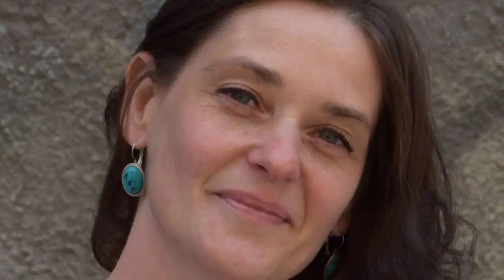 High school teacher Filippa Mannerheim.
 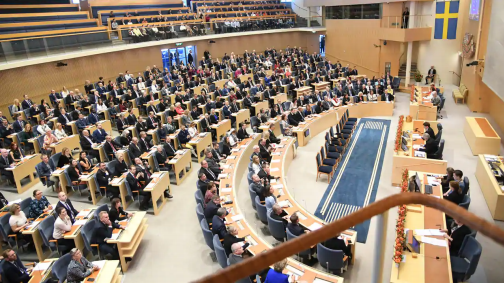 The Swedish Parliament.

 Diane Ravitch's blog