Archives for category: Elections

The Los Angeles Times meticulously debunked the conspiracy theories circulated by MAGA-nuts about the attack on Paul Pelosi in the family home in San Francisco.

Extremists spun a tale in which Paul Pelosi met his attacker in a gay bar, came home drunk, and quarreled with a male prostitute. The perpetrator was not a rightwing extremist, they said, but a follower of Antifa and Black Lives Matter.

The L.A. Times patiently explains that none of these claims are factual.

The Break-in:

DePape told officers in a recorded interview last week that he broke through a glass door in the home using a hammer, according to the criminal complaint. He said Paul Pelosi was in bed at the time and “appeared surprised” by him. DePape allegedly told Paul Pelosi to wake up and that he was “looking for Nancy,” to which Paul Pelosi responded that she wasn’t there.

Police body cameras showed that a glass door in the back of the house was broken.

Paul Pelosi called 911 and said there was an intruder in the house, and the man was waiting for Nancy Pelosi.

DePape told police in a separate interview that once he was inside the home, he wanted to tie up Paul Pelosi so he could sleep because he was “tired from having had to carry a backpack.” DePape allegedly took out zip ties from his pocket so he could restrain Paul Pelosi, but Pelosi moved to another part of the house. DePape allegedly stopped him and they went back into the bedroom.

Paul Pelosi went into the bathroom while they were talking and called 911 on his phone, DePape told police. DePape said he “felt like Pelosi’s actions compelled him to respond” and that there was “no way the police were going to forget about the call.” DePape said he stayed after the 911 call because “like the American founding fathers with the British, he was fighting against tyranny without the option of surrender.”

When police arrived within minutes, they encountered the two men struggling over a hammer.

DePape allegedly pulled the hammer from Paul Pelosi and swung it, hitting him in the head, authorities said. Police restrained DePape; Paul Pelosi appeared to be unconscious.

What was the attacker’s motivations?

DePape allegedly revealed in an interview with police that he “was going to hold Nancy hostage and talk to her,” according to complaint. He would “let her go” if she told the “truth” but if she “lied,” he would break “her kneecaps.” DePape told authorities that he saw Nancy as the “leader of the pack of lies told by the Democratic Party” and that by breaking her kneecaps, she would have to be wheeled into Congress.

Conspiracy theorists assert that Pelosi and his attacker knew one another, and that when the police arrived, the attacker was wearing only his undershorts.

On Sunday night, former President Donald Trump’s son, Donald Trump Jr., retweeted an image of men’s underwear and a hammer, a nod to the unfounded conspiracy.

In their investigation, however, police interviewed a witness who was working as a private security guard at a nearby address, and said that they saw someone in “all black, carrying a large black bag on his back” walking towards the Pelosis’ home. The witness also said they heard banging on the door or the car and then sirens a minute or two later.

On Monday morning, U.S. Rep. Marjorie Taylor Greene suggested in a tweet the attacker knew Pelosi, calling him, “Paul Pelosi’s friend.”

But the indictment directly contradicts several portions of this conspiracy theory.

Paul Pelosi told police while he was being transported to the San Francisco General Hospital that he had never seen DePape before that night and he was asleep when DePape broke into his bedroom, according to the complaint. He also told the dispatcher during the 911 call that he didn’t know the identity of the man who broke into his home, but that the man said his name is David.

DePape also confirmed Pelosi’s account, telling them he broke through a glass door to get access to the house.

Right wingers claim that DePape was actually tied to left wing groups like Black Lives Matter and Antifa, but the reality is that he has posted racist, anti-Semitic, QAnon rants.

DePape is unhinged, like the guy who brought an assault weapon to a pizza parlor in Washington, D.C., believing that Hillary Clinton was a pedophile and had hidden children in the basement. Pure QAnon. Loony Tunes.

But most Republicans believe that Trump won the election in 2020, ignoring the fact that Biden decisively won the electoral college and had seven million votes more than Trump. They believe this even though Trump’s Attorney General told him he lost, as did his White House Counsel.

Where did all these people come from who trash democracy and scoff at free and fair elections?

Our reader Jersey Joe added this postscript from The Guardian about the Republican candidate for governor of Pennsylvania:

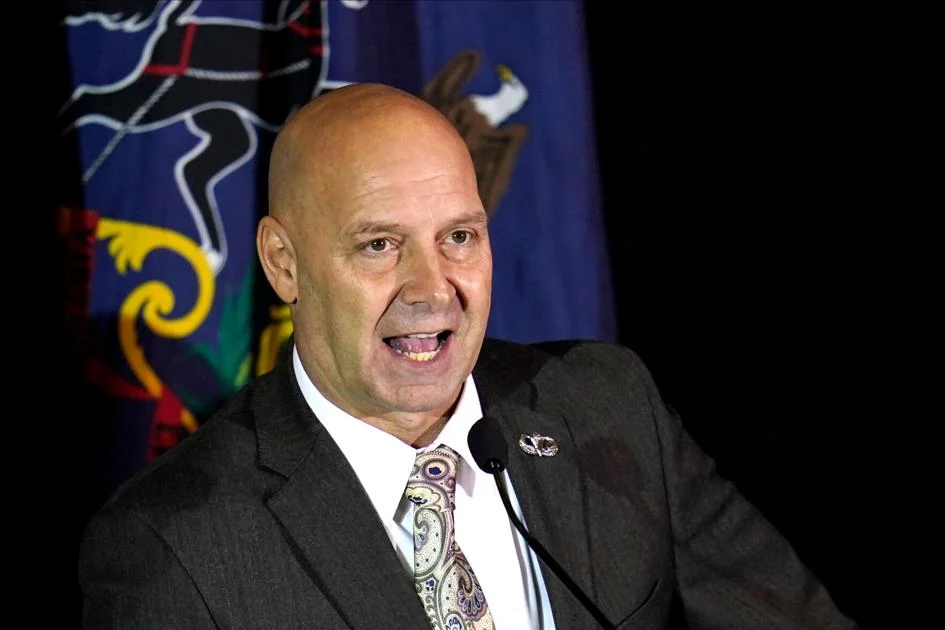
From the guardian, 10-24-22: quote – Doug Mastriano, a retired army colonel who has enthusiastically indulged Donald Trump’s fantasy that the 2020 presidential election was stolen, is the Republican candidate. If he wins, he plans to deregister every single one of Pennsylvania’s 8.7 million voters. In future elections, Mastriano would choose who certifies – or doesn’t – the state’s election results. [snip] As a state senator in Pennsylvania, he said women who violated a proposed six-week abortion ban should be charged with murder. Mastriano frequently attacks trans people, and has said gay marriage should be illegal, and that same-sex couples should not be allowed to adopt children. end quoteThe man is a far right wing nightmare determined to end democracy in this country. According to these maniacs, elections are fair and valid only if the GOP wins.

Peter Greene was a teacher in Pennsylvania for 39 years. In this post, he covers Republican gubernatorial candidate Doug Mastriano’s empty proposal for “parental rights.”

Greene writes:

Last week Doug Mastriano held a campaign event masquerading as a hearing for a parental rights bill so empty and vague that its only possible use could be as a campaign prop.

Mastriano signaled a whole year ago that he was going to wade into the whole “parental rights” thing with his own version of a “legislate the gay away” bill. Soon thereafter, he proposed SB 996, which was turned over to the State Government committee on January 4, 2022.

And yet, the time to hold a hearing on the bill is just before time to vote for Mastriano or his opponent for Pennsylvania’s governor’s seat.

The bill itself is a brief nothingburger. The Parental Rights Protection Act is 41 lines long. 6 lines give its name. 16 lines define the terms “commonwealth agency” and “non-commonwealth agency.” Section 3 in its entirety says:

I

(b) Infringement.–Neither a Commonwealth agency nor a non-Commonwealth agency may infringe upon the right under subsection (a) without demonstrating that the law or ordinance is narrowly tailored to meet a compelling governmental interest by the least restrictive means.

In 8 lines, we get the applicability of the law, and two lines to tell us that the law would take effect in 60 days.

The Mastriano campaign has maintained its unwillingness to speak to the press, and so has offered no clarification of the bill’s intent or function. But the parade of witnesses at the hearing brought the usual list of grievances–mask mandates, trans student using rest rooms, “pornographic” books in the school library, and “pronoun games.” The bill, absent any specifics, allows all of these folks to imagine that it would provide them some relief, without including any language that opponents could point to as objectionable….

More specific parental rights legislation has been proposed in Pennsylvania, such as HB 2813, which follows more closely the national template of other Don’t Say Gay bills forbidding discussion of “gender orientation and sexual identity.”

What would the bill actually do? Nobody really knows. Does this mean I can get satisfaction when my kid’s teacher shows a Disney movie when I don’t allow them in my home? Or when my kid has to use Chromebook and we are an Apple household? Will I be able to do something if the teacher mentions Jesus or God and we don’t do religion at our house? What would qualify as an infringement, and what could a parent who felt the law had been broken do? Call the police? File a lawsuit? Should they report the agency to the proper part of the state government–and if so, which department would that be? What penalty would be imposed?

I wonder if there are limits to parental rights? May they beat their children? May they chain them to their beds? May they force them to live in unsanitary conditions??

The endorsement of the Miami Herald matters in Florida. I hope it matters enough to elect Val Demings. Its editorial board gave a resounding endorsement to Congresswoman Val Demings, a former chief of police. Her story is inspiring. She was born to parents who worked as a maid and a janitor. Her first job was as a dishwasher. She is articulate, accomplished, and deeply committed to the ideals this country professes.

The race for Florida’s U.S. Senate seat is the most consequential on the Nov. 8 ballot. Its outcome will determine not only the direction of the state, but could impact which party controls the Senate. Republican incumbent Marco Rubio, 51, Miami’s homegrown son, has been in the Senate since 2011 and has been a politician for 24 years. Despite all the experience under his belt, his intelligence and innate political talent, he hasn’t lived up to the expectations that this son of Cuban immigrants would usher the GOP into a new era. In 2013, Time declared him “The Republican Savior,” calling him the new voice of the GOP.

But today, he appears more comfortable playing the role of apologist for Donald Trump — the newer, dangerously bombastic voice of the GOP — despite being ridiculed by the former president during his 2016 presidential run and more preoccupied with his own political future than representing his constituents.

In 2020, for example, Rubio went so far as to praise Trump supporters in Texas who used their vehicles to try to run a busload of Joe Biden backers off the road. Someone could have been killed. Floridians have a better alternative. The Herald Editorial Board recommends Democrat Val Demings, a Central Florida congresswoman who previously served as the first female police chief of Orlando.

Her voice is grounded in the real world, bringing toughness, yes, but also an empathy for struggling Americans that we have not heard from the more-removed, more-political Rubio. Although Republicans have tried to cast any Democrat as a “socialist,” she’s a moderate with a practical approach to the issues and a rich life and professional experience.

Born in Jacksonville to a maid and a janitor, Demings started working at 14 as a dishwasher, later became a social worker and changed careers to become a police officer. She rose through the ranks of the Orlando Police Department to become, in 2007, a ”police chief with a social worker’s heart” — without losing her “tough on crime” responsibilities, she told the Editorial Board.

Demings, 65, can connect the dots between Capitol Hill’s ivory tower and the real world. She was first elected to the U.S. House in 2016 and, in 2020, was picked to be one of the House managers who argued for Trump’s impeachment in the Senate.

Her policing background should appeal to voters concerned about public safety. Her social-worker roots should resonate with voters looking for someone who understands the plight of Floridians working hard to make ends meet in this economy.

“The best indicator of future performance is to look at past performance,” Demings told the Editorial Board. “My dedication, my commitment to the oath of office as a police officer, a police chief, member of Congress, and certainly as a senator, I take it extremely serious. And I will show up for Florida.”

Demings already has landed some solid wins as a U.S. representative. Rubio speaks dismissively of her bill to name a post office in honor of a police officer in her district who was shot and killed in the line of duty, something she pushed through with bipartisan support and of which she is rightly proud.

But Demings has sponsored and pushed through other, substantive legislation. “The first piece of legislation that I passed — and was signed into law by President Trump — was legislation that would help fund mental-health programs for law-enforcement officers,” she told the Editorial Board. “They see the worst of the worst every day and have to deal with it and then go home to their own families.” Blue lives obviously matter to her.

In 2019, Demings also sponsored, with Republican U.S. Rep Elise Stefanik, of New York, the Vladimir Putin Transparency Act, directing U.S. intelligence agencies to give reports to Congress about the Russian president’s financial assets and hidden networks. It passed in the House. It did not have a Senate counterpart, but was included in Defending American Security from Kremlin Aggression Act sponsored by U.S. Sens. Lindsey Graham, R-South Carolina, and Bob Menendez, D-New Jersey.

Demings told the Editorial Board the top issue in this race is inflation. She touted her vote on the Inflation Reduction Act this year, which capped the cost of insulin for Medicare beneficiaries and made investments in clean energy. Rubio voted against the legislation. His campaign ignored requests for an interview with the Editorial Board.

Protecting the environment and combating climate change, which is making hurricanes stronger and wetter, are two other priorities for Demings. That requires “not being global-warming deniers, or climate-change deniers, but really taking that seriously and investing,” she said. Rubio has been a staunch supporter of Everglades-restoration efforts. But for years he questioned the scientific consensus that human activity is causing global temperatures to climb. He somehow recognized the issue in a 2019 column for USA Today, writing that Floridians “are right to be concerned about the changing climate” but said that humans can better mitigate sea-level rise and flooding, rather than addressing the source of the problem: our reliance on fossil fuels.

Demings’ other priorities are public safety and protecting “constitutional rights.” This is where you see the sharpest contrast between Demings and Rubio. Rubio called a bill to codify same-sex marriage into federal law a “stupid waste of time,” part of the agenda of “a bunch of Marxist misfits.” The legislation seeks to protect that right should a 2015 landmark U.S. Supreme Court ruling be reversed, as Roe v. Wade was in June. The U.S. House passed the legislation with historic GOP support, but needs enough votes to overcome a filibuster in the Senate. Senators like Rubio stand in the way. Gay marriage isn’t a “Marxist” concoction, it’s a human right that the majority of Americans support.

Demings supports abortions up to the point of viability and wants to codify reproductive rights into federal law. Rubio has pitched himself as “100% pro-life,” but also has said he would support legislation with exceptions for rape and incest, like the 15-week federal ban he’s co-sponsored — if that’s what it takes to get a bill passed.

In other words, such compassionate exceptions are, to Rubio, merely a concession. He told CBS4 host Jim DeFede, “I am in favor of laws that protect human life. I do not believe that the dignity and the worth of human life is tied to the circumstances of their conception, but I recognize that’s not a majority position.”

That is one of the reasons this Senate race is important. It’s about numbers. Whoever controls Congress can either advance or take away reproductive rights if they have enough votes. M

MA longstanding and generally justified criticism of Rubio is that he misses a lot of Senate votes. Demings has said he has one of the worst attendance records in the Senate. By mid-summer this year, Rubio had missed 9.2% of 3,744 roll-call votes since 2011. According to the fact-checking site PolitiFact, that is well above the average of 2.3%, though his attendance improved in recent years. Most of his absences happened during his 2016 presidential run.

Back then, he vowed not to run for reelection to the Senate, then went back on his word. He was reelected with 52% of the vote. Since then, Rubio’s career has been defined by walking the fine line between doing what’s right for the United States and what’s right for his career — most notably, staying on the good side of the mercurial Trump and his base. He hasn’t struck the right balance.

Sometimes we still see in Rubio a glimpse of the smart, eloquent statesman who began his career as a West Miami councilman. In 1999, the Herald Editorial Board recommended him for a Florida House seat, saying he displayed a “thoughtful and idealistic sense of politics.” He won that race and went on to become the speaker of the Florida House. In 2010, we recommended him again for his U.S. Senate seat. We remember him leading the Gang of Eight on a historic bipartisan immigration reform package in 2013 that would have offered a pathway to citizenship for immigrants in the country illegally. But when it failed, Rubio couldn’t run away fast enough from the legislation that had pushed him onto the nation stage.

There was the Rubio who warned Americans six years ago about the “reckless and dangerous” Trump, but soon emerged as the Trump sycophant who’s all too eager to rationalize the former president’s attacks on decency and democracy.

He differentiated himself from some of his Republican colleagues when he voted to certify the results of the 2020 election in Arizona and Pennsylvania. When the U.S. Capitol attack was happening on Jan. 6, he tweeted: “There is nothing patriotic about what is occurring on Capitol Hill. This is 3rd world style anti-American anarchy.”

But he returned to the GOP fold when, in a video posted on Twitter two days later, he blamed the “liberal” press, social-media platforms and state election officials — everyone but the former president and his lies — for millions of Americans not trusting the election results.

He has called the Jan. 6 commission to investigate the attacks a “partisan sham.” And he offered an insultingly silly defense of Trump’s removal of classified documents after he lost the election, calling the FBI search of Mar-a-Lago a partisan witch hunt over a “storage” issue.

Rubio was one of the architects of the Paycheck Protection Program that provided loans for small businesses during the COVID-19 pandemic. as part of the 2020 CARES Act. He said in Tuesday’s debate that the program kept the country out of economic disaster despite significant issues with the backlog of unforgiven loans and the disproportionate impact of the backlog on minority and low-income communities.

He also pushed to double the maximum child tax credit from $1,000 to $2,000 in the 2017 Tax Cuts and Jobs Act.

With the Pulse nightclub slaughter in 2016 in Orlando and the recent life sentence given Nikolas Cruz after pleading guilty to the Parkland school massacre in 2018, gun control is an ever-present issue in Florida. Rubio even said that the Pulse shooting spurred him to run for reelection in 2016 and that he would support raising the age limit to buy a rifle. Though he has filed legislation to support the expansion of red-flag laws that allow a judge to take away guns from people deemed dangerous, he voted against a common-sense — and timid — bipartisan gun-control law President Biden signed after the Uvalde school shooting in May. Among other things, it funded mental-health services in schools, another issue brought up by the Cruz case. Rubio has scoffed at even popular, moderate gun-control measures like enhanced background checks. He then offered an insulting excuse for it during he Tuesday debate: “Every one of these shooters would have passed the background check that [Demings] keeps insisting on,” he said.

Foreign policy has been Rubio’s strongest suit. He’s the vice chair of the Senate Select Committee on Intelligence. He has made his opposition to China and the Cuban and Venezuelan regimes a trademark. But Demings still holds her own here. In her interview with the Board, she was well-versed on how events in Latin America are local issues in South Florida. On Cuba, Demings denounced the current island government and said she supports the U.S. embargo. She’s against reestablishing diplomatic ties with the regime. On Haiti, Demings was emphatic that the United States should not intervene militarily, despite the chaos currently engulfing that country. Instead, the United States should name an envoy to Haiti to help stabilize its teetering government. On the issue of the Biden administration turning away Venezuelan refugees escaping their country at the U.S.-Mexico border under Title 42, a Trump-era policy, Demings said that it is “a beneficial tool until we can get some other things in place.” The United States needs to speed up the processing of asylum claims, hire more border-security officers and invest in technology, she said.

We repeat, the race for Florida’s U.S. Senate seat is the most consequential on the Nov. 8 ballot. It is not an overstatement to caution that the winner will either push back hard against those who have our democracy under assault or push our democracy closer to the brink of irreparable damage. Rubio too often shirked his responsibility to push back. We think Demings will stand up for our democratic values.

The Miami Herald Editorial Board recommends VAL DEMINGS for the U.S. Senate.

Read more at: https://www.miamiherald.com/opinion/editorials/article267542102.html#storylink=cpy
The Network for Public Education Action endorses Rebekah Jones, who is running for Congress against Matt Gaetz.

Vote for a woman of integrity: Rebekah Jones, District 1, Florida.

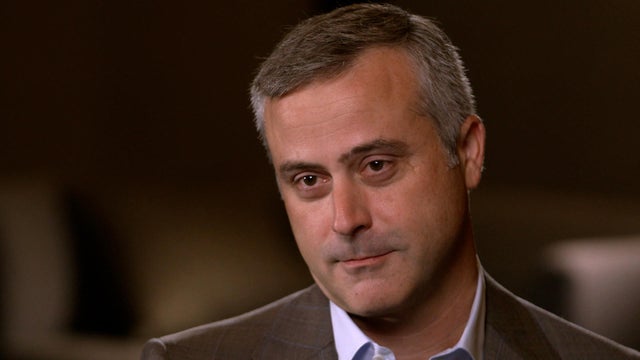
Anderson Cooper interviewed John Poulos, the CEO of Dominion Voting Systems on 60 Minutes about the attacks on the integrity of his company’s voting machines by 2020 election deniers.

Despite a rash of unsubstantiated claims lobbed against his company, the CEO of Dominion Voting Systems, John Poulos, has remained largely silent. That changed Sunday night on 60 Minutes when Poulos sat down with Anderson Cooper, saying irreparable damage has been done to his company and his employees.

“People have been put into danger. Their families have been put into danger. Their lives have been upended and all because of lies,” Poulos said. “It was a very clear calculation that they knew they were lies. And they were repeating them and endorsing them.”

“It’s important to you people admit what they said was wrong?” Cooper asked.

“It’s important to me. It’s important to all the people whose families have been impacted by this. Anderson, my kids still are not allowed to get any package from the front door until we verify that it’s actually from a trusted sender,” Poulos said.

Days after the 2020 presidential election, lawyers supporting then-President Donald Trump, including Sidney Powell and Rudy Giuliani, began spreading unsubstantiated claims that Dominion Voting Systems, an American company, had rigged the election. They said Dominion was backed by Venezuela and that its machines and software switched millions of votes from Donald Trump to Joe Biden.

They never showed any evidence, but that didn’t stop pro-Trump attorneys from making baseless claims, or conservative news networks from giving them plenty of airtime.

Poulos went through a number of their claims with Cooper, dismissing each one…

President Trump first mentioned Dominion in a tweet on November 12, 2020, and recorded a video a few weeks later, posted on Facebook, in which he said: “We have a company that’s very suspect. Its name is Dominion. With the turn of a dial or the change of a chip, you could press a button for Trump and the vote goes to Biden. What kind of a system is this? We have to go to paper. Maybe it takes longer. But the only secure system is paper.”

“We do have paper ballots,” Poulos said. “What the machines do is they count those paper ballots– in a way that makes it very easy for people to verify after the fact through the means of audits and recounts.”

dominionscreengrabs02.jpg
  John Poulos

Dominion makes two types of machines. One is called a ballot marker. It’s a touch screen device that a voter can use to mark their choices and then print the ballot. The second machine is a scanner that reads that paper ballot, counts the vote and immediately stores the ballot securely.

Poulos demonstrated on air how the voting machines work. He explained that his company has no relationship to Venezuela. He has sued various lawyers and FOX News for more than $10 billion. Judges have thus far refused to dismiss the lawsuits.

I hope that those who spread these lies and undermined faith in the integrity of our elections are fined for their deceit and unethical behavior, hopefully to the same extent as the other Big-time liar, Alex Jones.

Apparently Trump lawyers are already planning to claim that the 2022 elections were rigged, if their candidates lose.

Two women are competing to be Governor of Arizona. Katie Hobbs, the current Secretary of State, is the Democratic candidate. Kari Lake, a former talk show host, is the Republican candidate, endorsed by Trump.

The differences between them on education are stark. Hobbs would roll back the recently passed universal voucher plan. Lake is an enthusiastic supporter of charters and vouchers.

Both pledged to raise teacher pay, but Lake would tie raises to test scores.

If Lake is elected, she would impose extremist ideas that would undermine education in the state. She promises privatization and censorship. If she is elected, she will destroy public schools.

The Arizona Republic described their views:

In the coming year, Arizona schools face key challenges.

A newly minted school voucher program will steer millions of taxpayer dollars to lightly regulated private schools. A major staff shortage has left schools across the state scrambling for teachers, bus drivers and kitchen staff. Total public school spending is nearing a limit that could force massive budget cuts if the Legislature doesn’t act.

The governor has significant sway in shaping the future of education in Arizona. They can propose priorities for legislative action, choose bills to sign, call special legislative sessions, appoint members to the State Board of Education and issue executive orders.

Arizona’s candidates for governor offer voters a stark choice on education policy.

Democrat Katie Hobbs supports repealing the new universal school voucher program and putting more public dollars into public schools. Republican Kari Lake wants all education funding tied to students, not schools, which could send even more public money to private schools.

Here’s what else we know about where they would try to lead Arizona’s education system if elected.

Funding schools, public and private

At the core of Lake’s education plan is a proposal to allow families to decide where state money allocated for their children’s education will go. The funding that would typically go to their local district public school to support their children’s education could be spent at a public district school, a public charter school, a private school, or for “alternative learning arrangements, such as neighborhood pods.”

“Parents and students can mix and match the best educational opportunities available to them,” Lake said on her campaign website. “As parents, you decide where you want your kid to go to school, send them there, and their state funding will follow them. No waitlists, no applications, no hurdles or hoops to jump through, period.”

While district schools usually are expected to welcome any student zoned to the school, some charter schools reach capacity and institute waitlists. Private schools routinely require families to apply for a spot.

That “backpack funding” approach would significantly shift how public school funding works in Arizona. Currently, public schools get a mix of funding from federal, state, and local sources. State funding depends on the number of students in a school and students’ specific needs. High-performing schools can also get additional funding, and many schools qualify for grant funding or other special financial support.

The recently expanded education voucher program shifted the funding dynamic by allowing any family with a school-age child in Arizona — regardless of whether they previously attended a public school — to apply for about $7,000 in public education funding to put toward education-related endeavors, including private schools, tutors and homeschooling.

If elected, Hobbs said she would work to roll back universal vouchers.

On school funding, Hobbs said she wants to direct more of Arizona’s budget surplus, $5 billion in fiscal year 2023, to education. Right now, Arizona ranks near the bottom nationally in per-pupil spending, which educators said accounts for crumbling classrooms, outdated books and low-paid staff.

Hobbs also wants to ensure Arizona schools receive matching federal dollars for early childhood education. “To say that increased funding of schools does not result in better student success is willful ignorance of the needs of Arizona children and families,” said Hobbs’ plan.https://www.usatodaynetworkservice.com/tangstatic/html/pphx/sf-q1a2z37a5af424.min.html

Both would increase teacher pay

Both Lake and Hobbs said they want to increase the number of new teachers and retain current teachers by boosting pay. But they have different ideas about how to go about it.

Hobbs’ promises to support educators and tackle the teacher shortage are at the forefront of her platform. Among her positions are increasing educator annual salaries by an average of $14,000, expanding a state program that subsidizes tuition for college students studying education, promoting mentorship programs and ensuring teachers can access affordable healthcare.

Much of Hobbs’ plan relies on existing systems for low-cost teacher training, including the Arizona Teacher Residency at Northern Arizona University and the Arizona Teachers Academy, a scholarship program that subsidizes tuition at public, in-state higher education institutions. Hobbs said she would also work to convince the Legislature that more base funding for schools is needed.

Lake challenged the connection between more money for schools and higher student achievement. She said Arizona teachers deserve better pay, but any raises should be performance-based. She blamed stagnating teacher salaries on administrators taking ever-larger earnings. “Government-run school leaders appear to be deliberately keeping teacher pay low so they can be used as sympathetic figureheads in a quest for additional funds,” Lake said.

An Arizona Auditor General analysis of instructional spending in the 2021 fiscal year found that the percentage of money spent on instructional spending had fallen to 55.3% from its peak of 58.6% in 2004. While administrative spending is part of what districts spend their non-classroom dollars on, those costs also include food service and transportation.

Instead, Lake said she would provide bonuses for educators whose students perform well and show improvement. She would fund that through Proposition 301, an education sales tax first approved in 2000 and renewed in 2018. “We cannot trust school districts to direct allocated funds to teachers,” she said, explaining her support for performance-related raises. “I want our best teachers to be recognized and to be the highest paid in the country.”

Differences on school spending cap

The aggregate expenditure limit is a constitutional cap put in place in the 1980s on how much all Arizona district-run schools can spend. Last year, schools hit the limit, and the Legislature temporarily lifted the cap. This year, schools are on track to hit it again, and if lawmakers don’t act, school districts will collectively have to cut billions from their budgets.

Hobbs wants to eliminate the constitutional limit. “Each year our school districts are held hostage by political gamesmanship,” she said.

A constitutional fix could take various forms. The Legislature could increase the spending ceiling or exempt from the limit the money that comes in from the Proposition 301 sales tax. An end to the limit altogether would require a public referendum.

Lake did not respond to The Republic’s questions about her education plan, including a question about her position on the spending limit. In a social media statement earlier this year, Lake was critical of efforts to lift the cap. In a February tweet, as lawmakers voted on a bill to temporarily lift the spending cap, Lake encouraged her followers to vote in favor of legislators who did not support raising the aggregate expenditure limit….

Banning ideas, how to teach U.S. history

Lake wants to prohibit several ideas from being discussed in schools.

She’d like to strengthen Arizona’s ban on a college-level theory that teaches people of different races experience aspects of U.S. society differently, restrict teaching systems that aim to improve interpersonal skills and decision-making, and eliminate diversity, equity and inclusion programs. Lake said on the campaign trail that she would consider putting cameras into classrooms to keep these programs from being taught.

Lake also said she would align state standards to the Hillsdale 1776 curriculum, a history and civics program of study created by a conservative private college in Michigan that has been criticized as taking a too rosy view of the U.S. past.

In response to a question from The Republic, Hobbs’ campaign said she opposed using the Hillsdale 1776 curriculum in Arizona schools because it did not offer a comprehensive understanding of civics and history. It would “ultimately be a disservice to Arizona children,” the campaign statement said.

Hobbs’ education plan doesn’t take an explicit position on the teaching of race and history or other political questions that have riled both the Legislature and some Arizona school boards.

Lake pledged to replace the Arizona state test with the National Assessment of Educational Progress, a federal test that is not available for use by schools or states.

The New York Times reported that Supreme Court Justice Samuel Alito assured Senator Ted Kennedy that he would not overturn Roe v. Wade. He said repeatedly that he respects precedent and considered Roe to be settled law. Seventeen years later, Justice Alito wrote the scathing opinion overturning Roe v. Wade and asserting that it was wrong from the start.

How should Americans react when they learn that at least three of the 6 justices who voted to overturn Roe are liars?

Senator Edward M. Kennedy looked skeptically at the federal judge. It was Nov. 15, 2005, and Samuel A. Alito Jr., who was seeking Senate confirmation for his nomination to the Supreme Court, had just assured Mr. Kennedy in a meeting in his Senate office that he respected the legal precedent of Roe v. Wade, the 1973 court decision that legalized abortion.

“I am a believer in precedents,” Judge Alito said, in a recollection the senator recorded and had transcribed in his diary. “People would find I adhere to that.”

In the same conversation, the judge edged further in his assurances on Roe than he did in public. “I recognize there is a right to privacy,” he said, referring to the constitutional foundation of the decision. “I think it’s settled.”

But Mr. Kennedy, a Massachusetts Democrat and longtime supporter of abortion rights, remained dubious that November day that he could trust the conservative judge not to overturn the ruling. He brought up a memo that Judge Alito had written as a lawyer in the Reagan administration Justice Department in 1985, which boasted of his opposition to Roe.

Judge Alito assured Mr. Kennedy that he should not put much stock in the memo. He had been seeking a promotion and wrote what he thought his bosses wanted to hear. “I was a younger person,” Judge Alito said. “I’ve matured a lot.”

The answer did not assuage Mr. Kennedy, who went on to vote against Judge Alito’s confirmation. If the judge could configure his beliefs to get that 1985 promotion, Mr. Kennedy asked in a notation in his diary, how might he dissemble to clinch a lifetime appointment to the nation’s highest court?

Justice Alito wrote the majority opinion this past June in Dobbs v. Jackson Women’s Health Organization, the momentous Supreme Court decision that put aside 50 years of precedent and overturned Roe. Respect for longstanding precedent “does not compel unending adherence to Roe’s abuse of judicial authority,” he wrote. “Roe was egregiously wrong from the start.”

In Miami, a judge threw out the charge of voter fraud against the first person arrested by Governor DeSantis’ election fraud task force.

A Miami Judge on Friday tossed out a criminal case against one of 19 people accused by Gov. Ron DeSantis’ election fraud force of voting illegally in the 2020 election. In the first legal challenge to DeSantis’ arrests, Miami-Dade Circuit Judge Milton Hirsch rejected the idea that the Office of Statewide Prosecutor could charge Robert Lee Wood, 56, with registering to vote and casting a ballot in the general election. Wood was convicted of second-degree murder in 1991, making him ineligible to vote.

Read more at: https://www.miamiherald.com/news/local/crime/article267659012.html#storylink=cpy

Florida Governor Ron DeSantis is a master of political stunts that target the weak, like flying Venezuelan immigrants from Texas to Martha’s Vinyard. Another stunt is his crackdown on voter fraud. (Florida went for Trump.) voters in the state passed a law allowing ex-felons to vote after they served their time. The law excluded those convicted of murder or sex crimes. Nonetheless, his voting police grabbed some ex-convicts who thought their voting rights had been restored.

The people of Florida can sleep easier now that these 19 dangerous voters have been arrested. DeSantis doesn’t care. He got the publicity he wanted.

The Miami Herald reported:

Tallahassee — When police went to arrest Tony Patterson outside his Tampa home in August, he couldn’t believe the reason.

“What is wrong with this state, man?” Patterson protested as he was being escorted to a police car in handcuffs. “Voter fraud? Y’all said anybody with a felony could vote, man.”

Body-worn camera footage recorded by local police captured the confusion and outrage of Hillsborough County residents who found themselves in handcuffs for casting a ballot following investigations by Gov. Ron DeSantis’ new Office of Election Crimes and Security.

The Aug. 18 arrests — conducted hours before DeSantis called a news conference to tout his crackdown on alleged voter fraud — were carried out by state police officers accompanied by local law enforcement.

The never-before-seen footage, obtained by the Herald/Times through public records requests, offers a personal glimpse of the effects of DeSantis’ efforts to root out perceived voter fraud.

“They’re going to pay the price,” DeSantis said during the news conference announcing the arrests.

Of the 19 people arrested, 12 were registered as Democrats and at least 13 are Black, the Herald/Times found.

Romona Oliver, 55, was about to leave for work when police walked up her driveway at 6:52 a.m. and told her they had a warrant for her arrest.

“Oh my God,” she said.

An officer told her she was being arrested for fraud, a third-degree felony, for voting illegally in 2020.

“Voter fraud?” she said. “I voted, but I ain’t commit no fraud.”

Oliver and 19 others are facing up to five years in prison after being accused by DeSantis and state police of both registering, and voting, illegally.

They are accused of violating a state law that doesn’t allow people convicted of murder or felony sex offenses to automatically be able to vote after they complete their sentence. A 2018 state constitutional amendment that restored the right to vote to many felons excluded this group.

But, as the videos further support, the amendment and subsequent actions by state lawmakers caused mass confusion about who was eligible, and the state’s voter registration forms offer no clarity. They only require a potential voter to swear, under penalty of perjury, that they’re not a felon, or if they are, that their rights have been restored. The forms do not clarify that those with murder convictions don’t get automatic restoration of their rights.

Oliver, who served 18 years in prison on a second-degree murder charge, registered to vote at the Department of Highway Safety and Motor Vehicles on Feb. 14, 2020. Six months later, she updated her address and completed another registration form.

After brief eligibility checks by the Department of State — which reports to DeSantis and is responsible for cleaning the rolls of ineligible voters — she was given a voter ID card both times.

Oliver wasn’t removed from the rolls until March 30 this year, more than two years later.

The recordings by Tampa police and Hillsborough County sheriff’s deputies reveal officers who were patient, understanding — almost apologetic.

A handcuffed Nathan Hart, 49, found a sympathetic ear when he explained how he ended up registering and voting illegally, according to the sheriff’s office recording.

As he stood handcuffed, he told officers that he signed up to vote at the encouragement of somebody at “the driver’s license place.” Records show it was in March 2020.

“I said, ‘I’m a convicted felon, I’m pretty sure I can’t,’” Hart, a registered sex offender, told officers. “He goes, ‘Well, are you still on probation?’”

Hart’s probation had ended a month earlier, Hart recalled. The person told him to sign up anyway.

“He said, ‘Well, just fill out this form, and if they let you vote, then you can,’” Hart said. “‘If they don’t, then you can’t.’”

“Then there’s your defense,” one of the officers replied. “You know what I’m saying? That sounds like a loophole to me.”

“Well, we can hope,” Hart said.

The officer was correct in one way: State law says that a voter has to “willfully” commit the crime — a hurdle that has forced some prosecutors not to charge ineligible voters.

In Lake County this year, for example, prosecutors declined to bring charges against six convicted sex offenders who voted in 2020.

“In all of the instances where sex offenders voted, each appear to have been encouraged to vote by various mailings and misinformation,” prosecutor Jonathan Olson wrote. “Each were given voter registration cards which would lead one to believe they could legally vote in the election. The evidence fails to show willful actions on a part of these individuals.”