Archives for category: Education Industry

All it took to make American education “great again” was two-and-a-half years of Donald Trump and Betsy DeVos.

So saith Betsy DeVos to the Mackinac Republican Leadership Conference in Michigan. 

DeVos vigorously defended charter schools, especially in Detroit, even though most Detroit charters underperform Detroit public schools and are run as profit-making businesses.

DeVos opened Saturday’s program at the Mackinac Republican Leadership Conference by celebrating her mission to spread education freedom across the country. The Michigan native slammed teacher unions and Democratic primary candidates for offering a vision for the education system that will produce worse outcomes for students and cost taxpayers trillions of dollars.

DeVos said she is solely focused on doing what’s best for students, though she has been a frequent target of Democrats running to oppose President Donald Trump in 2020. She said Democrats who criticize the proliferation of charter schools ignores their results and falsely claim they are the “enemy of the people.”

“You’ll hear repeatedly that public charter schools are bad,” DeVos told Republicans Saturday. “The truth is they are the best thing to ever happen to Detroit students.”


This article is a reason to subscribe to The New Republic. 

If you have been sick of watching the takeover of American education by entrepreneurs, professional managers, management consultants, and Wall Street, you will see parallels between the managerial culture at Boeing and the management culture that has permeated large sectors of American educators. At Boeing, crucial decisions were made by managers, not engineers; in education, crucial decisions are made by managers from the business world, not educators. The results in both cases are disastrous, but especially so in aviation where people were killed by bad decisions.

In this stunning, gripping, frightening article, Maureen Tkacik explains how Boeing was ruined by financial decision makers, which ultimately led to two crashes of its new 737 MAX jets.

She begins:

Nearly two decades before Boeing’s MCAS system crashed two of the plane-maker’s brand-new 737 MAX jets, Stan Sorscher knew his company’s increasingly toxic mode of operating would create a disaster of some kind. A long and proud “safety culture” was rapidly being replaced, he argued, with “a culture of financial bullshit, a culture of groupthink.”


Sorscher, a physicist who’d worked at Boeing more than two decades and had led negotiations there for the engineers’ union, had become obsessed with management culture. He said he didn’t previously imagine Boeing’s brave new managerial caste creating a problem as dumb and glaringly obvious as MCAS (or the Maneuvering Characteristics Augmentation System, as a handful of software wizards had dubbed it). Mostly he worried about shriveling market share driving sales and head count into the ground, the things that keep post-industrial American labor leaders up at night. On some level, though, he saw it all coming; he even demonstrated how the costs of a grounded plane would dwarf the short-term savings achieved from the latest outsourcing binge in one of his reports that no one read back in 2002.* 

Sorscher had spent the early aughts campaigning to preserve the company’s estimable engineering legacy. He had mountains of evidence to support his position, mostly acquired via Boeing’s 1997 acquisition of McDonnell Douglas, a dysfunctional firm with a dilapidated aircraft plant in Long Beach and a CEO who liked to use what he called the “Hollywood model” for dealing with engineers: Hire them for a few months when project deadlines are nigh, fire them when you need to make numbers. In 2000, Boeing’s engineers staged a 40-day strike over the McDonnell deal’s fallout; while they won major material concessions from management, they lost the culture war. They also inherited a notoriously dysfunctional product line from the corner-cutting market gurus at McDonnell.


And while Boeing’s engineers toiled to get McDonnell’s lemon planes into the sky, their own hopes of designing a new plane to compete with Airbus, Boeing’s only global market rival, were shriveling. Under the sway of all the naysayers who had called out the folly of the McDonnell deal, the board had adopted a hard-line “never again” posture toward ambitious new planes. Boeing’s leaders began crying “crocodile tears,” Sorscher claimed, about the development costs of 1995’s 777, even though some industry insiders estimate that it became the most profitable plane of all time. The premise behind this complaining was silly, Sorscher contended in PowerPoint presentations and a Harvard Business School-style case study on the topic. A return to the “problem-solving” culture and managerial structure of yore, he explained over and over again to anyone who would listen, was the only sensible way to generate shareholder value. But when he brought that message on the road, he rarely elicited much more than an eye roll. “I’m not buying it,” was a common response. Occasionally, though, someone in the audience was outright mean, like the Wall Street analyst who cut him off mid-sentence:


“Look, I get it. What you’re telling me is that your business is different. That you’re special. Well, listen: Everybody thinks his business is different, because everybody is the same. Nobody. Is. Different.”

And indeed, that would appear to be the real moral of this story: Airplane manufacturing is no different from mortgage lending or insulin distribution or make-believe blood analyzing software—another cash cow for the one percent, bound inexorably for the slaughterhouse. In the now infamous debacle of the Boeing 737 MAX, the company produced a plane outfitted with a half-assed bit of software programmed to override all pilot input and nosedive when a little vane on the side of the fuselage told it the nose was pitching up. The vane was also not terribly reliable, possibly due to assembly line lapses reported by a whistle-blower, and when the plane processed the bad data it received, it promptly dove into the sea.


Boeing’s defenders blamed the pilots for the crashes. They said that the pilots needed more training. But the engineers knew otherwise.

The article ends like this:

No one who knew anything about anything thought it was a good idea to slash research and development spending, lay off half the engineers, or subcontract whole chunks of a plane without designing it first. It hardly mattered. “It was two camps of managers, the Boeing Boy Scouts and the ‘hunter killer assassins,’” remembered Cynthia Cole, a former Boeing engineer who led the Society of Professional Engineering Employees in Aerospace (SPEEA) during the 787 saga. “How do you merge those two management philosophies? The hunter killer assassins will destroy the Boy Scouts. That’s what happens.” 


That’s what happened on an exponentially more ruinous scale in mortgage lending and pharmaceutical sales and at General Electric, which over the past decade has spent more than $50 billion buying back its own stock even as its staggering insurance business losses threaten to bankrupt the company. (And none of this has diminished GE’s zeal for deindustrialization, which has disemboweled places like Fort Wayne and Erie and Schenectady and put tens of thousands of people out of work, both permanently and on furlough.) It’s what happens to every well-intentioned half-measure to mitigate the catastrophic effects of climate change. 


None of these things had to be ideological wars, said Cole, a lifelong conservative who now chairs the King County Republican Party in Washington state and first joined the union—membership in SPEEA had been voluntary when she joined—because not a few months into her first engineering job she had watched a space shuttle land in a control room full of engineers who had built the shuttle. The shuttle bounced, there was a massive collective intake of air, and one of her colleagues let it slip that the landing gear wasn’t strong enough to withstand certain weather conditions, and that if she wanted to keep her job she’d keep her mouth shut about it; she was laid off a few months later. “I thought to myself, oh my gosh! This happens in the movies.”


She had no idea then how sick she would get of watching the same movie.


But a month later, back in the same room on a biblically hot day, a son of Kenyan farmers restored a bit of moral clarity to proceedings: “As an investment professional, allow me to inform Congress as to how Boeing has viewed this whole crisis.” Noting that the stock had surged from $140 four years earlier to $446 right before the crash that had killed his wife, and his son, four-year-old daughter, nine-month-old daughter, and mother-in-law, Paul Njoroge laid out the sequence of 737 MAX orders, ten-figure stock buybacks, and dividend hikes that had dealt out this horrible fate to his family.


“Could that be the reason Boeing did not feel obliged to ground the MAX even after the second crash of the Boeing 737 MAX?” he asked. “Back to my very essential question, why wasn’t the MAX 8 grounded in November after the first crash in the Java Sea? One hundred and eighty-nine lives were lost, and executives at Boeing cared more about its stock price than preventing such a tragedy from occurring again,” and so had begun “a pattern of behavior blaming innocent pilots.”


“I am empty,” he told the committee. “My life has no meaning.” He had met his wife studying finance at the University of Nairobi. The family had been spread across Bermuda, where Paul worked as an investment manager at Butterfield Bank, and Ontario, where his wife and children were settling down. Paul was expected to join them later. The distance had been hell, and he had never even had a girlfriend before her; his family was literally everything, he explained, and every single one of them was gone. “I have nightmares about how they must have clung to their mother, crying, seeing the fright in their eyes as they sat there helplessly. It is difficult for me to think of anything but the horror they must have felt.”


After his testimony, a dead-eyed Njoroge stood in the hallway for nearly three hours, granting interviews to the dozens of journalists who needed exclusive footage to anchor their packages. He told me he wasn’t surprised that Boeing’s stock hadn’t suffered more since the company had killed his family. He would never buy it himself, of course, but even now it would be hard to justify leaving it out of a client’s portfolio.  

If you read one article today or this week, read this one. It is fascinating, horrifying, and an indictment of the managerial culture that treats all problems as the same–whether it is building an airplane, educating children, or developing new medicines. A management problem, where professionals don’t matter.


Steven Miller of the Texas Monitor reports on the perks for charter executives in Texas.

https://texasmonitor.org/charter-schools-fly-below-the-radar-on-spending-and-transparency-rules/

If you are a charter bigwig or spouse, you can fly first class, a privilege not available to public school employees.

Charter executives are exempt from the rules that apply to public schools. Yet they deign to call themselves “public schools” without surrendering their perks.

Miller writes:

“It’s a treat to fly at the front of the plane, where seats are bigger and fares are roughly double the cost of a coach seat. But for the state’s most prolific charter school operator, first-class air travel is allowed. In addition, the company will pay for the travel of employee spouses, family members and “companions” of executives as well.

“That’s just one of many illustrations of the different rules that apply to charter schools in Texas compared to public schools, where funding for even the most basic needs always seems in short supply.

“IDEA Public Schools, based in Weslaco, has allowed the first-class travel perk for six years. That includes footing the bill for the commute of chief financial officer Wyatt Truscheit, who moved from Mission, Texas, to the Los Angeles area in 2013 and comes to Texas every other week, according to tax records. IDEA also pays for Truscheit’s housing while he works in South Texas.

“IDEA received $319 million in state funding and $71 million in federal money in 2018 to operate its 61 campuses around the state. With its schools in Louisiana, IDEA runs 96 locations in all.

“As a 501c3 nonprofit corporation, IDEA is also allowed to make loans to employees and board members and to do business with relatives of employees.

“In 2015, IDEA bought property from board member and developer Mike Rhodes for $1.7 million. Board member David Earl also received money for serving as counsel for Rhodes in the land deal.”

The charters can engage in business with board members and their families. They do not have to hold open meetings. They are private schools that get public money but operate like private enterprises. Some gig.

Once again, we are reminded that charter schools are a Republican cause, and their champion is Betsy DeVos.

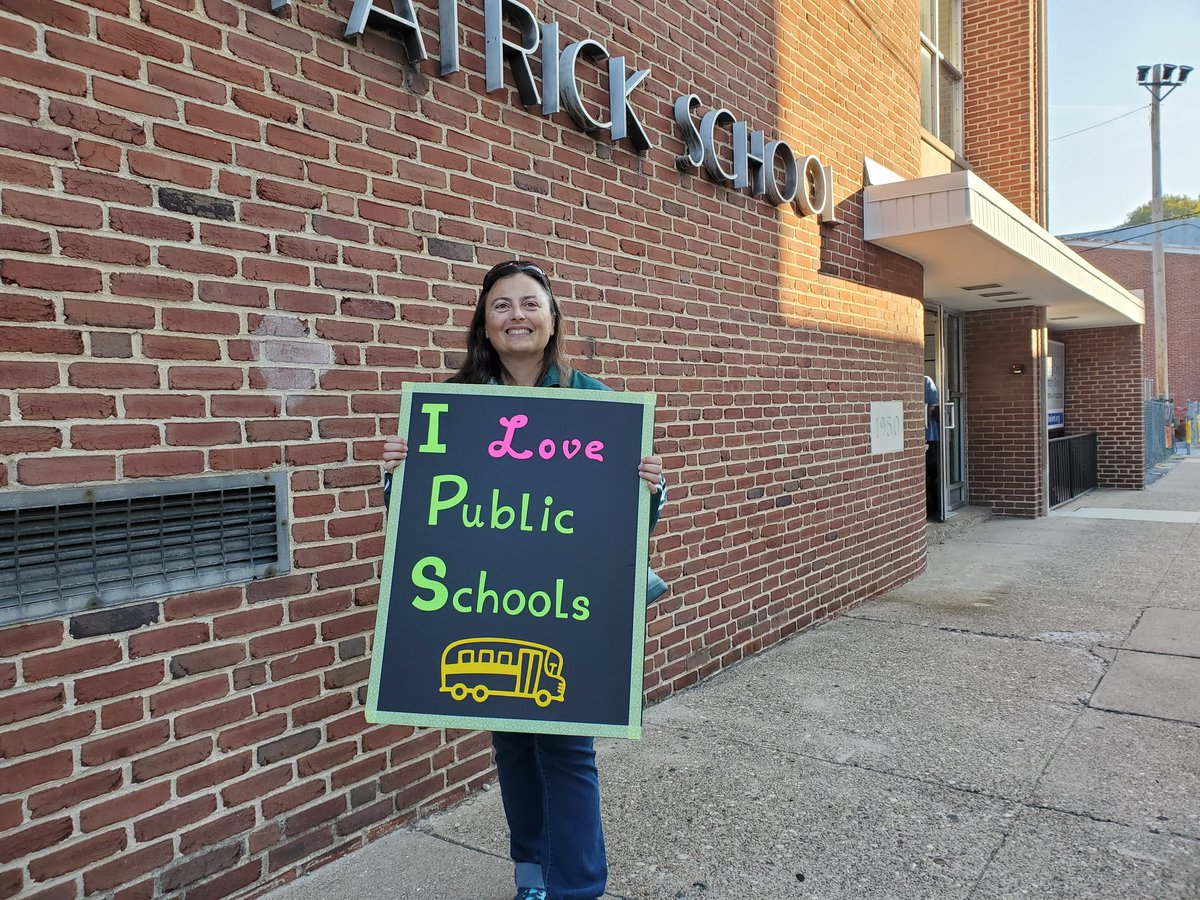
Mike Turzai, Republican Speaker of the House in Pennsylvania, was on his way to a meeting with Betsy DeVos when he encountered some public school teachers, who were picketing with signs saying they loved their public schools.

Turzai found this deeply offensive, and he proceeded to lambaste the teachers as a “special interest group” defending a “monopoly.”

In the video, Turzai praised charter schools, which receive government funding but operate independently of the public school system, saying that in charter schools. “you have to care about each child, not about the monopoly.” He then claimed that the public school advocates were part of a monopoly 

What you care about is a monopoly and special interests,” said Turzai, whose district encompasses the North Hills municipalities of McCandless, Pine, Marshall, Bradford Woods, and Franklin Park. 

One of the advocates then said, “I am little offended from that,” to which Turzai responded, pointing to the posters they were holding, “Oh, I am offended by your posters.”

One poster read “I love public schools.” The other read “Public Money for Public Schools.”

We ♥ our teachers.

Sincerely,
All of Pennsylvania

View image on Twitter

Steven Singer has written recently about the origins of charter schools. He insists that Albert Shanker, president of the AFT, was not their father.

The real fathers of this first big step towards privatization, he writes, were Ted Kolderie and Joe Nathan of Minnesota, who wrote the nation’s first charter school law and opened the door wide for entrepreneurs, grifters, and attacks on unions.

Singer is a flame-thrower in this post, because he has come to see that behind the “progressive” facade of charters lurks Betsy DeVos, the Walton Family, the Koch brothers, ALEC, and a galaxy of public school haters.

He begins:

If bad ideas can be said to have fathers, then charter schools have two.

And I’m not talking about greed and racism.

No, I mean two flesh and blood men who did more than any others to give this terrible idea life – Minnesota ideologues Ted Kolderie, 89, and Joe Nathan, 71.

In my article “Charter Schools Were Never a Good Idea. They Were a Corporate Plot All Along,” I wrote about Kolderie’s role but neglected to mention Nathan’s.

And of the two men, Nathan has actually commented on this blog.

He flamed on your humble narrator when I dared to say that charter schools and voucher schools are virtually identical.

I guess he didn’t like me connecting “liberal” charters with “conservative” vouchers. And in the years since, with Trump’s universally hated Billionaire Education Secretary Betsy Devos assuming the face of both regressive policies, he was right to fear the public relations nightmare for his brainchild, the charter school.

It’s kind of amazing that these two white men tried to convince scores of minorities that giving up self-governance of their children’s schools is in their own best interests, that children of color don’t need the same services white kids routinely get at their neighborhood public schools and that letting appointed bureaucrats decide whether your child actually gets to enroll in their school is somehow school choice!

But now that Nathan and Kolderie’s progeny policy initiative is waning in popularity, the NAACP and Black Lives Matter are calling for moratoriums on new charters and even progressive politicians are calling for legislative oversight, it’s important that people know exactly who is responsible for this monster.

And more than anyone else, that’s Kolderie and Nathan.

Over the last three decades, Nathan has made a career of sabotaging authentic public schools while pushing for school privatization.

He is director of the Center for School Change, a Minneapolis charter school cheerleading organization, that’s received at least $1,317,813 in grants to undermine neighborhood schools and replace them with fly-by-night privatized monstrosities.

He’s written extensively in newspapers around the country and nationwide magazines and Websites like the Huffington Post.

Read it all. Joe Nathan has frequently commented on this blog, defending charters as just a different kind of public school. I disagree vigorously because it is obvious by now that charters have become vehicles for busting unions (more than 90% are non-union), charters are more segregated than public schools (especially in Minnesota, where there are charters specifically for children of different ethnic and racial groups), and they remove democratic control in communities of color. The proliferation of corporate charter chains adds to their reputation as destroyers of democracy.

Bottom line is that Walton money, Koch money, DeVos money is not meant to advance public education but to eliminate it.

There is a reason that the Democratic candidates for president are distancing themselves from the charter idea. They understand that they can’t support the DeVos agenda. Betsy did us all a favor by removing the mask.

William J. Gumbert has posted a series of analyses of charter school performance and demographics in Texas, based on public data compiled by the state. This is a summary of earlier posts. You may recall from an earlier post about Houston that the state commissioner of education is threatening to take control of the Houston Independent School District because of the persistently low rest scores of one school, Wheatley High School. Please check out its demographics in the chart below.


By:  William J. Gumbert


Ever since the “A Nation at Risk: The Imperative for Educational Reform” report was released in 1983, corporate education reformers and privately funded, “public policy” organizations have promoted the “privatization of public schools”.  In 1995, the Texas Legislature gave in to the political rhetoric and authorized privately-operated charters (“charters”) to open and independently operate public schools with taxpayer funding.  As a result, taxpayers are funding a “dual education system” that consists of locally governed, community-based school districts and State approved charters.

Charters promised to improve student results by transferring the control of public schools to private organizations that had more autonomy to expend taxpayer funding without community oversight.  However, charters have not fulfilled their promise.  Despite the State funneling over $22.5 billion of taxpayer funding to privately-operated charters over the last 24 years, charters have not to produced better student outcomes than community-based school districts.   Most recently, 86.2% of community-based school districts received an “A” or “B” rating pursuant to the State’s 2019 Academic Accountability Ratings.  In comparison, only 58.6% of charters received an “A” or “B” rating. In addition, almost 1 of every 5 charters received a “D” or “F” rating from the State.

Despite the Perception – Charters Serve a Different Student Population:   Charter advocates have consistently promoted that charters serve a higher percentage of “economically-disadvantaged” and “minority” students from underserved communities.  But charters have also routinely stated that their student populations closely correlate with the school districts they choose to operate within. In this regard, Houston ISD and Dallas ISD collectively have over 75,000 students enrolled in State approved charters and both districts serve student populations that are at least 80% “economically-disadvantaged” and “minority”.   Thus, it is fair to say that both charters and school districts serve a high percentage of “economically-disadvantaged” and “minority” students.  However, the similarities in the types of students served by charters and school districts stop here.

The reality is that charters “underserve” many of the student subgroups that the “No Child Left Behind Act” identified as having potential achievement, opportunity or learning gaps in comparison to their peers.  The Texas Education Agency (“TEA”) tracks the performance of student subgroups in Texas public schools and while “economically-disadvantaged” and “minority” students are identified as subgroups, so are “at risk”, “special education”, “disciplinary” and “mobile” students.

With the needs of each student being unique, it is important to emphasize that a student can be included in more than one subgroup.   For example, a student can be identified solely as “economically-disadvantaged” or a student can be “economically-disadvantaged”, “at risk” and “mobile”.  The more subgroups that are applicable to a student, the more challenging it becomes to ensure that student is successful.   I highlight that “challenging” is not referenced as an excuse for schools to have low student performance, but rather to recognize the additional time, effort, care and resources that are required to help certain students overcome adverse circumstances and obtain a quality education.

A review of the student subgroups reported by TEA shows that privately-operated charters enroll a significantly lower percentage of “at risk”, “disciplinary placement” and “special education’ students than community-based school districts.  TEA data also demonstrates that charters enroll students with significantly lower “student mobility”.   Why?  It is hard to definitively say. But these types of students have proven to be more costly to serve, require the most effort to achieve good “test scores” and are the least likely to continue on the “road to college”.  It may also be that charters do not actively recruit students in these subgroups.  Either way, here are the facts.

 “At Risk” Students:  Students identified as “at risk” of dropping out are performing below academic standards and/or are confronting other challenges.  TEA’s definition of “at risk” includes a student that:

  • Did not perform satisfactorily on a readiness or assessment instrument;
  • Has a grade below 70 in 2 or more subjects in the foundation curriculum for the preceding or current school year;
  • Is of limited English proficiency;
  • Was not advanced from one grade level to the next for one or more school years; and
  • Has been placed in an alternative education program in the preceding or current school year.

As shown below, despite having a large presence in each of the 5 urban school districts listed below, some of the largest charters enroll 19.3% fewer “at risk” students.   In other words, for every 1,000- seat school campus, the school districts serve 193 more students that have been identified as “at risk” of dropping out.   While it may be surprising to some, the listed charters also serve a lower percentage of “at risk” students than the statewide average.


Privately-Operated Charter “At Risk”

Students

School District “At Risk”

Students

IDEA Public Schools 45.9% Houston ISD 71.7%
Harmony School of Excellence – Houston 43.5% Dallas ISD 63.2%
KIPP, Inc. – Houston 46.7% Austin ISD 51.3%
Uplift Education 54.8% San Antonio ISD 73.5%
YES Prep. 50.2% Fort Worth ISD 77.8%
Average – 5 Charters 48.2% Average – 5 School Districts 67.5%
5 Charters: Avg. Per 1,000 Seat Campus 482 Students 5 Districts:  Avg. Per 1,000 Seat Campus 675 Students
                                                                   State Average:   50.8% or 508 Students  


Disciplinary Placements:  TEA data shows that 73,713 students have been identified as “Disciplinary Placements” in public schools.  These are students that have previously had behavioral issues or been placed in a District Alternative Education Program (“DAEP”).  By law, privately-operated charters can exclude enrollment to this student subgroup and most charters do. In fact, charter proponents have previously stated that many charters are not prepared and could not afford to serve these students.  As such, the responsibility to deploy the educational services and resources needed to serve “disciplinary” students resides mostly with school districts.  Once again, despite having a large presence in the same 5 school districts, the same charters served only 11 “disciplinary” students and the school districts welcomed 6,532 “disciplinary” students.

Privately-Operated Charter Discipline

Students

School District Discipline

Students

IDEA Public Schools 0 Houston ISD 1,996
Harmony School of Excellence – Houston 0 Dallas ISD 1,843
KIPP, Inc. – Houston 0 Austin ISD 1,140
Uplift Education 0 San Antonio ISD 879
YES Prep. 11 Fort Worth ISD 674
  Total – 5 Charters 11   Total – 5 School Districts 6,532


 Special Education:  Students identified with physical or learning disabilities comprise an average of 9.1% of all students in Texas public schools.  But at the same charters listed below, only 6.2% of students are identified by TEA as “students with disabilities”.   The enrollment gap for “student with disabilities” among certain charters and school districts can be alarming, especially since it is permitted to occur with the State’s blessing.  For example, IDEA Public Schools is rapidly expanding in Austin ISD, but Austin ISD welcomes more than double the percentage of “students with disabilities”.   For every campus with 1,000 students, IDEA only serves 52 students with “special needs” and Austin ISD serves 109 students with “special needs”.  If Austin ISD served the same percentage of “students with disabilities” as IDEA, it would serve an estimated 4,500 fewer students with “special needs”.

Privately-Operated Charter Special Education Students School District Special Education Students
IDEA Public Schools 5.2% Houston ISD 7.1%
Harmony School of Excellence – Houston 6.3% Dallas ISD 8.2%
KIPP, Inc. – Houston 6.3% Austin ISD 10.9%
Uplift Education 7.0% San Antonio ISD 10.3%
YES Prep. 6.1% Fort Worth ISD 8.3%
Average – 5 Charters 6.2% Average – 5 School Districts 9.0%
  State Average: 9.1%  


Student Mobility:  TEA defines “student mobility” as the percentage of students that were enrolled at a campus for less than 83% of the school year.  In other words, the “student mobility” rate refers to the volume of students that were not consistently enrolled in a charter/school district throughout a school year.  With an inconsistent learning environment, students that regularly change schools are faced with unique social and educational challenges in comparison to other students.  For example, Education Week has reported that: “various studies have found student mobility – and particularly multiple moves – associated with lower school engagement, poorer grades in reading (particularly in math), and a higher risk of dropping out of high school”.

As summarized below, the “student mobility” rate of the listed school districts is a challenging 20.3%, while the “student mobility” rate of the charters is only 6.3%.   As such, for every 1,000-seat campus, the school districts must meet the unique challenges of educating 203 “mobile” students during a school year.  In comparison, the charter campus has a much more stable population with only 63 “mobile” students.


Privately-Operated Charter Student

Mobility Rate

School District Student

Mobility Rate

IDEA Public Schools 7.0% Houston ISD 19.2%
Harmony School of Excellence – Houston 10.0% Dallas ISD 19.9%
KIPP, Inc. – Houston 4.5% Austin ISD 17.9%
Uplift Education 5.5% San Antonio ISD 23.6%
YES Prep. 4.4% Fort Worth ISD 21.1%
Average – 5 Charters 6.3% Average – 5 School Districts 20.3%
5 Charters:  Avg. Per 1,000 Seat Campus 63 Students 5 Districts:  Avg. Per 1,000 Seat Campus 203 Students
                                                                   State Average: 16.0% or 160 Students  

Comparison of Campuses Located Within 3 Miles of Each Other:  While each student subgroup presents unique challenges, schools that are primarily comprised of students in multiple subgroups have the most challenges to consistently achieve high student performance. In this regard, it is not a coincidence that many school district campuses labeled as “low performing” by the State are comprised of students included in multiple subgroups.

The table below further illustrates the disparities of the student populations enrolled at State approved charters and school districts by comparing the student populations of 7 charter campuses that are located within 3 miles of a school district campus.   In each comparison, the charter campus competing for students with a nearby school district campus served fewer “at risk”, “disciplinary”, “special education” and “mobile” students.  It most cases, the differences were substantial.  On average, for each 1,000-seat campus, the comparisons revealed that the charter campuses served:

  • 325 fewer “at risk” students;
  • 65 fewer “special education” students;
  • 199 fewer “mobile” students; and
  • No charter campus enrolled a student with a “discipline placement”.
Campus “At Risk” Discipline

Placement

Special Education Student Mobility
Wheatley H.S.     (Houston ISD) 88.1% 36 19.0% 31.2%
YES Prep. – 5th Ward 51.1% None 7.6% 4.4%
Travis H.S.         (Austin ISD) 77.1% 46 14.2% 30.3%
IDEA Allan College Prep. 53.7% None 10.4% 8.6%
Morningside M.S.   (Fort Worth ISD) 88.0% 2 14.1% 25.9%
Uplift Mighty M.S. 67.8% None 10.7% 2.9%
Sharpstown H.S.    (Houston ISD) 90.2% 39 9.7% 30.9%
KIPP Sharpstown College Prep. 52.2% None 5.4% 4.4%
Douglass Elem.      (SAISD) 78.5% 6 9.6% 28.7%
IDEA Carver Academy 17.4% None 5.1% 9.5%
Andress H.S.         (El Paso ISD) 66.3% 51 21.1% 18.0%
Harmony School of Excel. – El Paso 49.4% 0 8.5% 12.1%
Carter H.S.          (Dallas ISD) 70.7% 20 11.8% 24.0%
Uplift Hampton Prep.  H.S. 39.5% None 6.4% 7.6%
Average –  7 School District Campuses 79.8% 26 14.2% 27.0%
Average –  7 Charter Campuses 47.3% None 7.7% 7.1%
Average Charter Difference Per 1,000 Seat Campus 325 Fewer Students 65 Fewer Students 199 Fewer Students


Conclusion:  The “A Nation at Risk” report started the false narrative that our public schools were failing and the attack on school districts has continued ever since.  These strategic attacks have served to fuel the “privatization of public education agenda” of corporate reformers and society-controlling billionaires that persuaded the Legislature to provide privately-operated charters with the freedom to expand in local communities with taxpayer funding.

The State has provided privately-operated charters with many educational advantages to produce better student outcomes than community-based school districts.  These advantages include less taxpayer oversight; greater instructional, staffing and enrollment flexibility; and the ability to stop serving students by closing campuses.  Privately-operated charters are also permitted to underserve certain student subgroups that have been identified as having potential achievement, opportunity or learning gaps, such as “at risk”, “disciplinary”, “special education” and “mobile” students.

With all the educational advantages afforded to State approved charters, common sense tells us that charters should be outperforming school districts by a wide margin.  But despite these advantages and 24 years of experimentation, the State’s 2019 Academic Accountability Ratings document that privately-operated charters continue to produce lower student outcomes than locally governed school districts!

It is time for the State to apologize to school district teachers, support staffs, administrators and Boards of Trustees across the State and admit that “privatization” was a misguided experiment.   It is time for the Legislature to apologize to taxpayers for increasing the costs of public education by diverting over $22.5 billion of taxpayer funding to privately-operated charters that have failed to consistently improve student outcomes in local communities.  It is time to implement education policies that are based upon the facts, not political charades or charter advertisements.  The future of young Texans is counting on it!


DISCLOSURES:  The author is a voluntary advocate for public education and this material solely reflects the opinions of the author.  The author has not been compensated in any manner for the preparation of this material.  The material is based upon information provided by the Texas Education Agency, TXSchools.gov and other publicly available information.  While the author believes these sources to be reliable, the author has not independently verified the information.  All readers are encouraged to complete their own review and make their own independent conclusions.

Rob Levine, a Resistance-to-Privatization blogger in Minneapolis, reports here on the failure of the Bush Foundation’s bold “teacher effectiveness” initiative, which cost $45 million. All wasted.

The foundation set bold goals. It did not meet any of them.

Levine writes:

Ten years ago the St Paul-based Bush Foundation embarked on what was at the time its most expensive and ambitious project ever: a 10-year, $45 million effort called the Teacher Effectiveness Initiative (TEI). The advent of the TEI coincided with the implementation of a new operating model at the foundation. Beginning in 2009 it would mostly would run its own programs, focusing on three main areas: .

  • “developing courageous leaders and engaging communities in solving problems”
  • “…supporting the self-determination of Native nations”
  • “…increasing the educational achievement of all students”

Bush foundation president Peter Hutchinson told a news conference that the initiative would “increase by 50 percent the number of students in Minnesota, North Dakota and South Dakota who go to college.”

The Teacher Effectiveness Initiative was the foundation’s real-world application of its broad educational philosophy. Peter Hutchinson, the foundation’s president at the time, told a news conference announcing the plan that the initiative would “increase by 50 percent the number of students in Minnesota, North Dakota and South Dakota who go to college.” How was this miraculous achievement to be done? By “[enabling] the redesign of teacher-preparation programs” at a range of higher educational institutions where teachers are educated in the three-state area.

The foundation also said that, through “Consistent, effective teaching” it would “close the achievement gap.” It would achieve these goals by “producing 25,000 new, effective teachers by 2018.”

Not only was the Bush Foundation going to do all these things, but they would prove it with metrics. It contracted with an organization called the Value Added Research Center (VARC) to expand its Value Added Model (VAM) to track test scores of students who were taught by teachers graduated from one of its programs. The foundation, which paid VARC more than $2 million for its work, would use those test scores to rate the teachers ‘produced’ – even giving $1,000 bonuses to the programs for each ‘effective’ teacher.

10 years later: Fewer students in college, ‘achievement gap’ unchanged

By just about any measure the Teacher Effectiveness Initiative was a failure. Some of the top-line goals were missed by wide margins. The promise of 50% more college students in the tri-state area over the 10 years of the project? In reality, in Minnesota alone the number of post-secondary students enrolled actually dropped from almost 450,000 in 2009 to 421,000 in 2017 – a decline of about six percent.

Just one more example of the complete and utter failure of the hoax of “reform,” which was always about privatization and union-busting, not improving schools or helping students.


The federal Charter Schools Program handed out $440 Million this year. Betsy DeVos uses this money as her personal slush fund to reward corporate charter chains like KIPP ($89 million), IDEA (over $200 million in two years), and Success Academy ($10 million). Originally, it was meant to launch start-up charters, but DeVos has turned it into a free-flowing spigot for some of the nation’s richest charter chains.

Last March, the Network for Public Education published its study of the ineptness of the Charter Schools Program, revealing that at least one-third of the charters it funded had either never opened or had closed soon after opening. About one billion dollars was wasted by this federal program.

Despite the program’s manifest incompetence and failure, Betsy DeVos asked Congressional appropriators to increase its funding to $500 million a year, so she could more efficiently undermine public schools across the nation.

House Democrats responded by cutting the Charter Schools Program to $400 Million ($400 million too much), but $100 million less than DeVos asked for.

Senate Republicans want to increase the funding for the destructive Charter Schools Program to $460 million, giving DeVos a boost of $20 million. The Senate Republicans added a special appropriation of $7.5 million for charter schools in rural districts. Is there a need for charter schools in rural districts that may have only one elementary school and one high school?

The best remedy for the federal Charter Schools Program would be to eliminate it altogether.

Charter schools are amply funded by the Walton Family Foundation, the Gates Foundation, Reed Hastings, Eli Broad, Michael Bloomberg, the Koch foundation’s, hedge fund managers, and a bevy of other billionaires on Wall Street and in Silicon Valley.


Did Los Angeles board member Nick Melvoin share privileged information with the representatives of the charter school industry?

Please sign this petition to call for an investigation. 


The New York Times Magazine published a heart-breaking photo essay about the abandonment of schools in Puerto Rico, first because of its debt crisis, then because of federal privatization policy after hurricanes in 2017.

The Island has been strangled by financiers, then raped by DeVos-style policies, and the public schools were the victims.

The writer was Jonathan M. Katz.

It begins:

During the blazing summer of 2019, Puerto Rico was in tumult. Thousands of the islands’ residents marched shoulder to shoulderthrough cities. They sang, danced and demanded the ouster of the commonwealth’s negligent governor, Ricardo Rosselló — and, with him, the federal control board that holds economic power over the United States’ oldest remaining colony in the Americas.

The crowd’s ire was fueled in part by a sense of absence. Away from the echoing drums, down forgotten streets and across green mountains, the islands are emptying. Decades of abuse, austerity, corruption and now the ravages of climate change have triggered an exodus of people and money. As the summer wet season gives way to the wary hurricane watch of an ever-warmer fall, no evidence of this decline is more powerful than the islands’ hundreds of abandoned schools.

The photographer Diana Zeyneb Alhindawi and I spent weeks touring these monuments to neglect. Books and blackboards rotted in the humidity. Stray dogs made their beds beneath teachers’ desks. Some of the buildings had been left to addicts and thieves. In others, neighbors had refashioned empty classrooms into stables for horses, rabbits and pigs. Even in schools that remain in use, mold creeps, roofs are torn and gymnasiums sag like wet shoe boxes. Landslide-prone slopes loom, unrestrained, behind buildings filled with students….

Carlos Conde Marín School

Location: Carolina

Carlos Conde Marín was closed at the end of the 2016-17 school year despite protests from the community. As with many schools closed during the tenure of the former education secretary of Puerto Rico, Julia Keleher, the shuttering was sudden and swift. School materials were left to the elements, stray animals or anyone passing by. The school is seen here in May 2019, after the building was vandalized and also heavily damaged in Hurricane Maria. Gym buildings (directly above) were hit particularly hard because of their lightweight walls and roofs.

The hurricanes weren’t the beginning of the story, though. The disasters compounded a social and economic calamity that has been brewing for over a century. It arguably began in 1898, when United States forces invaded Puerto Rico, then a colony of Spain, during the Spanish-American War. Before the war, Spain had grudgingly granted Puerto Rico limited home rule, an attempt to forestall an independence movement. But with the advent of American rule, Puerto Rico fell deeper into colonial status. The islands’ people could not elect their own governor until 1947. They still cannot vote for president and have no voting representation in Congress.

Puerto Rico’s economy grew for decades, thanks to a series of tax breaks for companies from the mainland. Washington allowed the territorial government to borrow money by issuing tax-exempt municipal bonds and repay them with the rising revenues. When the last of those tax breaks ended in 2006, the economy stalled, leaving its government overleveraged and with few options. The commonwealth’s leaders began issuing riskier bonds that may have circumvented constitutional protections. Major lenders including UBS, Citigroup, Goldman Sachs, JP Morgan and Santander have since been sued multiple times — some have settled — for underwriting them. In 2015, with $120 billion in bond obligations and unfunded pensions, the governor was forced to declare that Puerto Rico would stop making many debt payments.

Under an agreement signed by President Obama, Puerto Rico gained protection from lawsuits. In exchange, its economy fell under the control of a seven-member Financial Oversight and Management Board with offices in New York and San Juan. Instead of forgiving Puerto Rico’s debt, the board implemented a strict austerity regime, which has grown steadily more draconian.

Ramón Valle Seda Elementary School

Location: Mayagüez

After Ramón Valle Seda Elementary School, near downtown Mayagüez, was closed in 2016, neighbors began using it as a stable and an animal sanctuary. Police and education-department officials have tried repeatedly to kick out the animals. But the parents and children using the building want official permission, saying that will keep it from turning into a drug haven like the closed school across the street. This horse was taking a break from the sun in May 2019. Its name means ‘‘hurricane’’ in Spanish.

Theodore Roosevelt School

Location: Mayagüez

The Theodore Roosevelt School opened in 1900, two years after Puerto Rico was occupied by the United States, as the first U.S.-style high school in the western city Mayagüez. The school was renamed on the occasion of a visit by Roosevelt, who played a leading role in annexing the islands during the 1898 war with Spain. It later became an elementary school. It was ordered closed in 2018 and converted into a depot for books and equipment from other shuttered schools in the area.

Don Ignacio Dicupe González Elementary School

Location: Lares

Nature is reclaiming the classrooms at Ignacio Dicupe González Elementary School in Lares, in the mountains of western Puerto Rico, seen here in April 2019. Lares is known as the cradle of Puerto Rican independence for its role in an 1868 uprising against Spain and still proudly flies the revolutionary flag. But it has lost nearly a quarter of its population in the last decade, one of the highest percentages of any municipality. The school, which closed right before the hurricanes, sits in an almost monastic silence; the only sounds the songs of birds in a red flamboyant tree in the courtyard and the occasional blast of reggaeton from a passing car.

As conditions worsened, the trickle of people leaving for the mainland turned into a flood. Between 2009 and 2017, the population declined 12 percent, from 3.9 million to 3.4 million, according to the Center for Puerto Rican Studies at Hunter College. The “Great Depression of Puerto Rico” had begun, José Caraballo-Cueto, an economist and associate professor at the University of Puerto Rico-Cayey, told me. “We have to acknowledge that the stock of human capital is decreasing,” he said.

The appointment of Julia Keleher as the Island’s Secretary of Education was a disaster. She fully agreed with the Trump administration’s determination to implement privatization with charters and vouchers. She was Betsy DeVos Without the billions.

Soon after taking office in 2017, Rosselló brought Julia Keleher, the founder of a small Washington education consultancy, to take over the fragile school system. Keleher, who is from the Philadelphia area, had a reputation as an expert at winning government grants. Indeed, her firm had recently obtained a $231,000 contract with the department she was about to head.

Keleher quickly embarked on a two-pronged mission to overhaul the school system. She pushed for the creation of semi-privatized charter schools and private-school vouchers. At the same time, she shut down hundreds of still-functioning public schools. Defending her actions, she later said: “Somebody had to be the responsible adult in the room.” Keleher, who is white, also likened the fury she received from Puerto Rican parents and the islands’ well-organized teachers’ union to the experience of being a racial minority…

At the end of the 2016-17 school year, Keleher ordered 183 schools shuttered, according to the Asociación de Maestros de Puerto Rico, the territory’s teachers’ union and Keleher’s most implacable foe…An estimated 160,000 more Puerto Ricans — another 5 percent of the population — have left since the storm. Keleher took the opportunity to further shrink the school system: Of the roughly 1,100 public schools left in Puerto Rico at the time of the storms, more than 250 simply didn’t open again. Most of those abandoned were elementary or middle schools. Some children who remained have since been forced to travel longer distances to attend classes, sometimes on dangerous mountain roads…

The territorial education department was promised $589 million in federal aid to reopen damaged schools, but as of March had received only 4 percent of the money; the rest expires at the end of April 2020. A United States Department of Education inspector general found that Keleher’s department lacked effective controls to prevent “fraud, waste and abuse.” Backlash from parents and the teachers’ union finally forced Keleher to resign in April. Three months later, she was arrested by the F.B.I. in Washington and charged with conspiring to steer contracts to associates at another consulting firm. She pleaded not guilty; the case is proceeding.

During her time in office, Keleher was paid $250,000 a year, while most Puerto Rican’s were living in dire conditions. She will stand trial for steering contracts to favored firms.

The tragedy documented in the Times’ photo essay is the abandonment and destruction of the Island’s schools at the same time that the chief education official was intent on privatizing the schools in service to austerity.

The parents and teachers cared about the children. The U.S. government and the now-deposed government of Puerto Rico did not.