Archives for category: Education Industry

A few days ago, I posted Nancy Bailey’s critique of McKinsey & Company’s report claiming that it’s time for schools to get tough on students. As Bailey points out, when I worked in the Department of Education, the White House was crawling with McKinsey consultants, smart young things who knew everything about education but were seldom old enough to have been in the classroom for long.

Our faithful reader and meticulous researcher Laura Chapman (a retired arts educator) responded to Nancy’s post as follows, describing the mastermind of the McKinsey report:

Nancy Bailey probably knows that the author of the McKinsey report, Jimmy Sarakatsannis jumped straight to McKinsey as an expert in everything about K-12 and teacher education from his job as a science teacher for three years at Sousa Middle School, a charter school with “scholars” in DC.

Sarakatsannis has held exactly one job in education and there is every reason to believe that he left Sousa Middle School in 2008, in the midst of a major meltdown at that charter school. A tyrannical principal created chaos there. http://thewashingtonteacher.blogspot.com/2010/07/tyranny-of-dcs-sousa-middle-school.html

ABOUT JIMMY FROM THE REPORT’S WEBSITE: “Jimmy is a partner in McKinsey’s Washington, DC office and a leader in our Education and Private Equity Practices.
Jimmy’s work in education straddles the public, private, and non-profit sectors, and spans every stage from pre-K-12 education to higher education and workforce development. He serves school systems, educational services providers, technology companies, and educational non-profits, as well as private-equity firms and philanthropic foundations that invest in education.

Much of Jimmy’s work focuses on how technology can be used to transform teaching and learning both within and beyond formal education. He also has deep expertise in the improvement of human capital within education systems, investment in education, and the development of successful organizational and business models for companies working across the public and private sectors.
Among his recent client projects, Jimmy has:
• advised an online learning company on developing a strategy to raise its student success rates
• supported professional development for teachers in some 20 US school districts
• helped a major technology company define a strategy to enter education, including product development, team building, and a go-to-market strategy for the new business
• led our support of a new non-profit in K-12 education, helping to design and set up the organization with an independent sales force and operations team
• worked with a national system of technical and vocational colleges to create online and hybrid programs to expand access and provide better educational experiences, reaching more than 50,000 students to date

Before joining McKinsey, Jimmy taught middle school science in the District of Columbia Public Schools. He is the author of a number of papers on educational topics and a regular contributor to our knowledge building in this field.”

That is a perfect example of corporate gibberish too easily sold to school districts.

I looked up Jimmy’s publications in Google Scholar. In those five entries he is never a solo author. All publications are from McKinsey, including COVID-19 and Student Learning in the United States – The hurt could last a lifetime.

Do not believe hype about the wisdom of McKinsey, least of all in education. Arne Duncan was a friend of McKinsey and by 2008 had engaged USDE with an “uplift” education campaign conjured by McKinsey. The project, was called R.E.S.P.E.C.T. an the acronym for “Recognizing Educational Success, Professional Excellence and Collaborative Teaching.”

The project was nothing more than another scheme to make pay-for-performance the norm, get rid of collective bargaining, set up tiers of qualifications for teachers. Each teaching tier was offered an initial contract. In order to get a continuing contract you had produce more than a year’s worth of gains in test scores year-to-year for multiple years.

There are still records about this scheme. It was reportedly inspired by a 2010 McKinsey report: Closing the Talent Gap: Attracting and Retaining Top-Third Graduates to Careers in Teaching: An International and Market Research-Based Perspective. That report called for recruiting the “best and brightest talent” into teaching because they could produce the highest test scores and those high tests scores could predict economic outcomes (with Chetty and others treated as experts). I wrote about some of these schemes on Diane’s blog back, in May of 2016. Diane has also devoted some blogs to the McKinsey’s corporate follies.

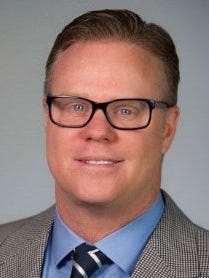
Jake Jacobs is a middle school art teacher in New York. He is the co-administrator of the New York BadAss Teachers Association, an organization of militant activist teachers.

He writes:

Joe Biden’s recent nomination of Miguel Cardona as a relatively lesser-known, less controversial selection for Secretary of Education was telling. It shows the incoming administration’s reticence to take a side in the ongoing battle over school choice and standardized testing, just like most members of Congress and the major U.S. media.

On the campaign trail, Biden drew cheers from teachers for his promise to end standardized testing, but he noticeably never added any such policy to his website. As was well known by teachers in those audiences, federally mandated tests provide no educational benefit but are the fuel in the engine driving charter school expansion.


President-Elect Biden did vow to cut federal funding to for-profit charter schools, however this affects only about 12% of charters (who could easily change their model while still enriching their for-profit management arms). Biden has acknowledged charter schools siphon money away from public schools, agreeing to new language in the (non-binding) DNC platform to discourage charters from discriminating against high-need students but as we know well, Democrats for many years have bent to pressure from deep-pocketed industrialists seeking ever more charter schools


Not much has changed since the same billionaires threatened to fund other candidates if Hillary Clinton didn’t continue to signal support for charters. Remember Eli Broad’s explicit ultimatum to withhold campaign cash if Hillary sided with teachers against charter schools? We do. 


But Broad also donated money to then-senator Kamala Harris, and like many ultra-wealthy education reformers, Broad made good use of the “revolving door”, hiring Biden’s former chief of staff Bruce Reed (2011-2013) to run his foundation. 


AS THE DOOR REVOLVES: The same day he revealed Cardona as his education nominee, it was announcedBiden rehired Reed as deputy chief of staff, despite pre-emptive protest from progressives like Alexandria Ocasio-Cortez and the Squad who objected to Reed’s past hostility to safety net programs like Social Security. A former top advisor to President Bill Clinton, Reed’s own bio touts his oversight of the 1996 welfare reform law, the 1994 crime bill, and the Clinton education agenda.


Starting in 2015, Reed was a senior advisor for Emerson Collective, the “social change” LLC founded by billionaire Laurene Powell Jobs who is also close to Vice President-Elect Harris. Though it’s not clear how Reed might influence Biden’s decision-making on K-12 education, he is expected to have a “major role” as Biden’s Deputy Chief of Staff particularly shaping technology and data privacy policy. And echoing Trump, Reed calls for the elimination of Section 230 which protects internet companies from lawsuits over user postings.
In 2014, while serving as CEO of the Broad Foundation, Reed made worrisome comments to Hillary’s education advisors, suggesting in private that whole cities could be mass-charterized in the wake of natural disasters, calling New Orleans an “amazing story”. Reed also voiced support for personalized digital learning using the Summit Charters model.


TAX BREAKS LINKED TO CHARTERS: It’s great to see watchdog groups expose significant waste and fraud in the charter school industry, but because U.S. media is so silent about the political influence of pro-charter billionaires, hardly any attention is paid to the generous federal tax credits enriching investors through “nonprofit” charter school construction and financing as public schools struggle for resources. One such program, the New Markets Tax Credit (NMTC), did make it onto Biden’s web page, showing he wants to expand the credit to $5 billion per year and make it permanent.


It might not be controversial to use a seven year, 39% tax refund to incentivize wealthy investors to start caring about economically disadvantaged neighborhoods in dire need of manufacturing plants and low-income housing, but why does the NMTC favor charter schools over traditional public schools which are literally crumbling on our heads? 


I tried to find whose idea it was to include charter school construction, financing and leasing deals in the NMTC. 
The program itself traces back to 1998 when a “membership organization” called NMTC Coalitioncomprised mostly of banks, investment funds, developers, LLPs and LLCs came together under the management of Rapoza Associates, a large DC lobbying and government relations firm who supplies policy briefs and “comprehensive legislative and support services to community development organizations, associations and public agencies”. Sound a lot like ALEC?


Legislation was championed by then-Speaker Denny Hastert and Texas Rep. William Archer, both Republicans. The program was signed into law by President Clinton and went live as past of the Community Renewal Tax Relief Act of 2000, but it appears charter schools weren’t included until 2004. The California charter nonprofit ExEd claims to have “pioneered” NMTC charter financing deals, boasting of dozens under their belt. By 2017, more than $2.2 billion in NMTC allocations were deployed to expand charter schools nationally.


The contention was that although charter schools receive operational funding for enrolled students, they must procure and finance their own space, thus they needed a helping hand from Uncle Sam. Today however, 27 states have enacted legislation granting some level of access to district facilities, suggesting some re-examination is in order.


Operators also contended that their charter renewal terms, usually five years, are shorter than typical mortgage terms which range from 10 to 30 years. Thus the need for charters to quickly show results introduced a perverse incentive, driving all-out obsession for good scores on standardized tests so the school can not only guarantee their charter renewal, but demonstrate to lenders they are a safe bet (or attract even more expansion capital). 
STAKES RAISED FOR TEST SCORES: Because the NMTC tax credit and a host of other federal programs give charters significant fundraising advantages over public schools, it provides financial impetus to target nearby public schools for closure. Anything that can be done to raise scores – or lower the competition’s scores – will help their chances. This not only gives rise to round-the-clock test prep, but the notorious practice of cherrypicking students. 


The shiny new facilities help attract the best test-takers, while rigid “zero tolerance” discipline policies are employed to dump “troublesome” kids back on the public schools. Even though the deck is stacked, superior test scores create the “secret sauce” narrative used to sell politicians on charters and drum up support for more tax breaks.


Over the decades, poverty-stricken areas have been repeatedly carved up and designated as “Enterprise Communities”, “Empowerment Zones”, “Renewal Communities” or “Promise Neighborhoods”. In 2004, President Bush announced the “Opportunity Zones” program which Donald Trump renewed in his 2017 tax reform law, with support from Democrats like Cory Booker. This program could potentially dwarf the NMTC because it allows tax credits and deferments for trillions in untapped capital gains income. 


Although Opportunity Zone deals are available to public schools, they would need to first sign over their property to investors. But it’s not clear these programs even work. Besides being rife with cases of abuse like the Steven Mnuchin or Rick Scott front-page patronage scandals, a University of Iowa study of 75 enterprise zones in 13 states found little to no economic benefit and noted other harmful impacts such as displacement, gentrification, or giveaways for development in up-and-coming areas that would have happened anyway. 


As chronicled by Network for Public Education and noted by Congress, the array of creative charter school flim-flams has been incalculable – from exorbitant CEO salaries, predatory leases and consulting fees to management firms charging taxpayers to buy out a school’s name and logo. Even school districts got into the act, authorizing charters schools so as to generate oversight fees that help plug budget gaps. But there’s a marked difference between sketchy charter operators and multi-billion dollar programs designed to help charters replace existing schools.


SWEETENING THE POT: The tax credits, designed by the rich for the rich, are only the first layer of the subsidy onion for charter schools though. Linked to the tax breaks are tax-exempt charter school financing bonds traded in investment markets, and then even more inducement via a secondary tranche of bonds leveraged by government subsidies to backstop the first set of bonds against default. One such program, administered through the infamous No Child Left Behind Act is the Credit Enhancement for Charter School Facilities Program, which not only assumes downside risk, it artificially buoys bond ratings and lowers interest rates for the borrower. 
These credit enhancements can be backed by federal or state funds, banks or private investors but again, the guarantees may be tied to academic performance benchmarks which precipitate discrimination against high-need students. 


To lure developers into distressed neighborhoods, enormous bond guarantee and credit enhancement funds (starting at $100 million) were created under the Community Development Financial Institutions (CDFI) program, enacted as part of the 2010 Small Business Jobs Act. Charter school developers were among those offered access to long-term credit at below-market rates. In 2012, twelve of these CDFI fund management groups came together to form the Charter School Lenders Coalition, underwritten by usual suspects the Gates and Walton Foundations. The collaborative melded together ALL of the aforementioned programs with a stated goal of lobbying congressional reps to support more charters. 


Earlier this year, high-profile Democrats including Senators Sanders, Warren and Van Hollen co-sponsored legislation that would automatically deploy CDFIs in areas impacted by natural disasters or economic crises. 
If all these financial instruments are starting to sound complicated, it’s no accident – I’ve spared readers most of the dizzying acronyms like CDEs, CMOs, UDAGs and QALICBs, but the less everyday people understand, the greater the chance this all flies under the radar. Even the developers – be they charter operators or wealthy financial backers – require a lot of hand-holding by intermediaries to guide them through the maze of policy intricacies and applications. 


This is where yet another funding stream comes in, namely the federal Charter Schools Program, or CSP, which since 1994 has grown to into a $440 million annual slush fund for discretionary grants found to be so wasteful a third of 2006-2014 grantees never opened or quickly folded. Other recipients were found to be buying skyboxes or private jets, or unscrupulously charging themselves rent in cities and towns where local authorities are ill-equipped for oversight.


PULLING OUT THE STOPS: By the time Betsy DeVos took the helm, the U.S. Dept. of Education wasn’t just awarding start-up money to school-level charter developers but to all manner of other financial intermediaries including charter associations, nonprofits, state educational agencies, charter authorizers, and credit enhancement funds. The DeVoses know well that raining money on these entities will enrich real estate and banking interests, trickling down onto pro-charter candidates, local PACs and friendly media outlets. A week before the 2020 election, DeVos shamelessly announced the Trump Administration will start ignoring the crystal-clear prohibition on federal funds for charters affiliated with religious organizations, rupturing the separation of church and state. 


The NMTC technically expires on Dec. 31, 2020 but proposals for renewal have been very popular – the 2019 bill in the Senate had 37 bipartisan co-sponsors including Minority Leader Schumer, Amy Klobuchar and center-left Senators Jeff Merkeley and Sherrod Brown. The House version had 130 co-sponsors including Karen Bass and 22 other members of the Progressive Caucus. 


If there was an amendment to remove the exclusive carve-out for charter schools from the NMTC, it would allow the community investment to continue (for better or worse) but take the finger off the scale in the competition for educational resources. 


Such an amendment may not deter anti-union oligarchs like the Koch family bent on undermining public education. It may not deter data-mining tech billionaires seeking lucrative contracts or access to captive student audiences. It may not deter neoliberal social engineers who think their wealth ordains them to rejigger education as they see fit. It may not deter Betsy DeVos and her ilk from crusading for taxpayer-funding of religious schools.


But it could deter the garden-variety investor just looking to turn a buck, and it could bring attention to the little-understood giveaways to charter school investors. Also, it will flush out members of Congress afraid to go on record either for-or-against charters. As the battles over public education funding rage on, we hope incoming House members will infuse new energy into the fight, showing Biden, Harris and other policymakers the real-world harms and inequity built into charter school tax credits.

The New York Times published an editorial correctly blasting Betsy DeVos as the worst Secretary of Education in the 40-year history of the Department of Education. Unfortunately, the balance of the editorial was a plea to administer tests to find out how far the nation’s children had fallen behind because of the pandemic.

This is a misguided proposal, as I have explained many times on this blog. See here.

The Times wrote in this editorial:

Given a shortage of testing data for Black, Hispanic and poor children, it could well be that these groups have fared worse in the pandemic than their white or more affluent peers. The country needs specific information on how these subgroups are doing so that it can allocate educational resources strategically.

Beyond that, parents need to know where their children stand after such a sustained period without much face-to-face instruction. Given these realities, the new education secretary — whoever he or she turns out to be — should resist calls to put off annual student testing.

The annual federally mandated testing will not answer these questions, at a cost of $1 billion or more.

The information the Times wants could have been efficiently collected by the National Assessment of Educational Progress, which tests scientific samples of students in reading and mathematics every other year. The cost would have been substantially less than testing every single student in grades 3-8.

But DeVos canceled the 2021 administration of NAEP. NAEP would have provided voluminous amounts of data about student progress, disaggregated by race, gender, English learner status, and disability status. Everything the Times’ editorial board wants to know would have been reported by NAEP, with no stakes for students, teachers, and schools. No student takes the entire test. The sampling is designed to establish an accurate snapshot of every defined group, and there is a timeline stretching back over decades.

So now, as the editorial demonstrates, the pressure is on to give the annual tests to every single student. The results will be useless. The teachers are usually not allowed to see the questions, never allowed to discuss them, and never allowed to learn how individual students performed on specific questions. The results will be reported 4-6 months after students take the test. The students will have a new teacher. The students will get a score, but no one will get any information about what students do or don’t know.

The tests will show that students in affluent districts have higher scores than students who live in poor districts. Students who are English language learners and students with disabilities, on a average, will have lower scores than students who are fluent in English and those without disabilities. This is not a surprise. This is what the tests show every year.

If Secretary-designate Cardona needs to know how to allocate resources, he doesn’t need the annual tests for direction. He already knows what the tests will tell him. Federal funds should go where the needs are greatest, where low-income students are concentrated, where the numbers of English learners and students with disabilities are concentrated. The nation doesn’t need to spend $1 billion, more or less, to confirm the obvious.

Anyone who thinks that it is necessary or fair to give standardized tests this spring is out of touch with the realities of schooling. More important than test scores right now is the health and safety of students, teachers, and staff.

Advice to the New York Times editorial board: Talk to teachers.


If you have a few minutes to do some research, you might wonder about the connections among these three links:

First is from the extreme rightwing group called the American Legislative Exchange Council (ALEC), funded by DeVos, Charles Koch, and major corporations. ALEC has 2,000 members who are state legislators. They get a free trip every year to a posh resort, where ALEC gives them model legislation to introduce in their state to promote the libertarian, anti-regulation, anti-government agenda.

Second is an article in the conservative journal Education Next about “reimagining civic education for the digital age.” It promotes the organization iCivics, a digital platform to teach civics.

Third, read about the award by the Trump Administration’s National Endowment for the Humanities and Betsy DeVos’s U.S. Department of Education of $650,000 to the curriculum and advocacy group iCivics and several university partners, to design a “roadmap” to guide teachers, publishers, and state officials on how to create integrated history and civics content.

The Trump administration, we know, is very concerned about instilling patriotism. Here is their ALEC-approved program for teaching civics. Frankly, I had forgotten that the NEH still existed.

You know the old line, “Failure is not an option.” Well, we have federal education policy built on the idea that failure doesn’t matter. Failure is not only an option, it is the only option. No Child Left Behind failed; the same children who were behind were left behind. Race to the Top was a failure; no one reached “the top” because of its demands. Common Core was a failure: It promised to close achievement gaps and raise up fourth grade test scores; it did not. Every Student Succeeds did not lead to “every students succeeding.” At some point, we have to begin to wonder about the intelligence or sanity of people who love failure and impose it on other people’s children. Testing, charter schools, merit pay, teacher evaluation, grading schools A-F, state takeovers, etc., fail again and again yet still remain popular with the people who control the federal government, whether they be Democrats or Republicans.

Peter Greene sums up the problem with his usual wit and insight: Democrats need a new vision. They need to toss aside everything they have endorsed for at least the past 20-30 years. The problem in education is not just Betsy DeVos. The problem is the bad ideas endorsed by Ronald Reagan, George H.W. Bush, Bill Clinton, George W. Bush, Barack Obama, and Donald Trump. Will Biden and Cardona have the wisdom and the vision to understand that?

For four years, Democrats have had a fairly simple theory of action when it came to education. Something along the lines of “Good lord, a crazy lady just came into our china shop riding a bull, waving around a flamethrower, and dragging a shark with a head-mounted laser beam; we have to stop her from destroying the place (while pretending that we have a bull and a shark in the back just like hers).” 

Now, of course, that will, thank heavens, no longer fit the circumstances. The Democrats will need a new plan.

Trouble is, the old plan, the one spanning both the Clinton and Obama years, is not a winner. It went, roughly, like this:

The way to fix poverty, racism, injustice, inequity and economic strife is to get a bunch of children to make higher scores on a single narrow standardized test; the best shot at getting this done is to give education amateurs the opportunity to make money doing it.

This was never, ever a good plan. Ever. Let me count the ways.

For one thing, education’s ability to fix social injustice is limited. Having a better education will not raise the minimum wage. It will not eradicate poverty. And as we’ve just spent four years having hammered into us, it will not even be sure to make people better thinkers or cleanse them of racism. It will help some people escape the tar pit, but it will not cleanse the pit itself.

And that, of course, is simply talking about education, and that’s not what the Dems theory was about anyway–it was about a mediocre computer-scorable once-a-year test of math and reading. And that was never going to fix a thing. Nobody was going to get a better job because she got a high score on the PARCC. Nobody was ever going to achieve a happier, healthier life just because they’d raised their Big Standardized Test scores by fifty points. Any such score bump was always going to be the result of test prep and test-taker training, and that sort of preparation was always going to come at the expense of real education. Now, a couple of decades on, all the evidence says that test-centric education didn’t improve society, schools, or the lives of the young humans who passed through the system.

Democrats must also wrestle with the fact that many of the ideas attached to this theory of action were always conservative ideas, always ideas that didn’t belong to traditional Democratic Party stuff at all. Jack Schneider and Jennifer Berkshire talk about a “treaty” between Dems and the GOP, and that’s a way to look at how the ed reform movement brought people into each side who weren’t natural fits. The conservative market reform side teamed up with folks who believed choice was a matter of social justice, and that truce held until about four years ago, actually before Trump was elected. Meanwhile, in Schneider and Berkshire’s telling, Democrats gave up supporting teachers (or at least their unions) while embracing the Thought Leadership of groups like Democrats for Education Reform, a group launched by hedge fund guys who adopted “Democrat” because it seemed like a good wayto get the support they needed. Plus (and this seems like it was a thousand years ago) embracing “heroes” like Michelle Rhee, nominally listed as a Democrat, but certainly not acting like one. 

All of this made a perfect soup for feeding neo-liberals. It had the additional effect of seriously muddying the water about what, exactly, Democrats stand for when it comes to public education. The laundry list of ideas now has two problems. One is that they have all been given a long, hard trial, and they’ve failed. The other, which is perhaps worse from a political gamesmanship standpoint, is that they have Trump/DeVos stink all over them. 

But while Dems and the GOP share the problems with the first half of that statement, it’s the Democrats who have to own the second part. The amateur part.

I often complain that the roots of almost all our education woes for the modern reform period come from the empowerment of clueless amateurs, and while it may appear at first glance that both parties are responsible, on closer examination, I’m not so sure.

The GOP position hasn’t been that we need more amateurs and fewer professionals–their stance is that education is being run by the wrong profession. Eli Broad has built his whole edu-brand on the assertion that education doesn’t have education problems, it has business management problems, and that they will best be solved by management professionals. In some regions, education has been reinterpreted by conservatives as a real estate problem, best solved by real estate professionals. The conservative model calls for education to be properly understood as a business, and as such, run not by elected bozos on a board or by a bunch of teachers, but by visionary CEOs with the power to hire and fire and set the rules and not be tied down by regulations and unions. 

Democrats of the neo-liberal persuasion kind of agree with that last part. And they have taken it a step further by embracing the notion that all it takes to run a school is a vision, with no professional expertise of any sort at all. I blame Democrats for the whole business of putting un-trained Best and Brightest Ivy Leaguers in classrooms, and the letting them turn around and use their brief classroom visit to establish themselves as “experts” capable of running entire district or even state systems. It takes Democrats to decide that a clueless amateur like David Coleman should be given a chance to impose his vision on the entire nation (and it takes right-tilted folks to see that this is a perfect chance to cash in big time). 

Am I over-simplifying? Sure. But you get the idea. Democrats turned their backs on public education and the teaching profession. They decided that virtually every ill in society is caused by teachers with low expectations and lousy standards, and then they jumped on the bandwagon that insisted that somehow all of that could be fixed by making students take a Big Standardized Test and generating a pile of data that could be massaged for any and all purposes (never forget–No Child Left Behind was hailed as a great bi-partisan achievement). 

I would be far more excited about Biden if at any point in the campaign he had said something along the lines of, “Boy, did we get education policy wrong.” And I suppose that’s a lot to ask. But if Democrats are going to launch a new day in education, they have a lot to turn their backs on, along with a pressing need for a new theory of action.

They need to reject the concept of an entire system built on the flawed foundation of a single standardized test. Operating with flawed data is, in fact, worse than no data at all, and for decades ed policy has been driven by folks looking for their car keys under a lamppost hundreds of feet away from where the keys were dropped because “the light’s better over here.”

They need to embrace the notion that teachers are, in fact, the pre-eminent experts in the field of education.

They need to accept that while education can be a powerful engine for pulling against the forces of inequity and injustice, but those forces also shape the environment within which schools must work. 

They need to stop listening to amateurs. Success in other fields does not qualify someone to set education policy. Cruising through a classroom for two years does not make someone an education expert. Everyone who ever went to the doctor is not a medical expert, everyone who ever had their car worked on is not a mechanic, and everyone who ever went to school is not an education expert. Doesn’t mean they can’t add something to the conversation, but they shouldn’t be leading it.

They need to grasp that schools are not businesses. And not only are schools not businesses, but their primary function is not to supply businesses with useful worker bees. 

If they want to run multiple parallel education systems with charters and vouchers and all the rest, they need to face up to properly funding it. If they won’t do that, then they need to shut up about choicey policies. “We can run three or four school systems for the cost of one” was always a lie, and it’s time to stop pretending otherwise. Otherwise school choice is just one more unfunded mandate.

They need to accept that privatized school systems have not come up with anything new, revolutionary, or previously undiscovered about education. But they have come up with some clever new ways to waste and make off with taxpayer money.

Listen to teachers. Listen to parents in the community served by the school. Commit to a search for long term solutions instead of quick fixy silver bullets. And maybe become a force for public education slightly more useful than simply fending off a crazy lady with a flamethrower. 

Manu Raju, senior Congressional correspondent, for CNN, reported on Twitter that the parties are now battling over how much money to send to private schools.

@mkraju

Two sides are still going back-and-forth over a handful of issues, including how private schools should be treated in the more than $80B in aid for education. GOP had been pushing for $5B for private schools — but Dems had tried to cut that to be about $2.5 billion, per sources

This is both absurd and unfair.

In the CARES Act, nearly 100,000 public schools (and charter schools) received $13.2 billion, while thousands of charters and private and religious schools collected more than $6 billion. Charter schools were allowed to double-dip from both funds. Some of the wealthiest private schools in the nation collected hundreds of thousands or more, while the average public school got only $134,500. More than 85% of students are enrolled in public schools.

This is outrageous. A win for DeVos.

The federal CARES Act included the Paycheck Protection Program to help struggling small businesses and nonprofits survive the pandemic. Lobbyists for the charter industry slipped in a provision enabling charter schools to apply for PPP funding, even though they experienced no financial losses. Charter schools got a share of the $13.2 billion allotted to the nation’s early 100,000 public schools. The average public school received about $135,000 to meet the expenses of the pandemic. On the advice of their lobbyists, some 1200 charters also sought and won PPP funding. Thus charters drew funding from two sources; public schools were not eligible for PPP funding. Charters that applied for PPP funding won six times as much federal money as public schools.

The Arizona Republic reported that the Primavera online charter school in Arizona won a sizable “loan” (1% interest, forgivable), at the same time that its owner took a $10 million bonus.

Primavera online charter school, like many businesses this spring, sought help from the federal Paycheck Protection Program to weather the economic disruption of the COVID-19 pandemic.

The Chandler-based school received a PPP loan of nearly $2.2 million, the largest forgivable loan among the 132 Arizona charter schools that obtained them.

But Primavera’s loan appears to have been more of a bonus than a lifeline. 

The school, which like all Arizona public schools didn’t lose state funding because of the pandemic, ended its fiscal year on June 30 with $8.8 million in the bank — almost double the annual payroll costs for its 85 teachers, records show.

The school also shipped $10 million to its lone shareholder: StrongMind, an affiliated company owned by Primavera’s founder and former CEO Damian Creamer.

The school’s annual audit indicates Creamer controls both Primavera and StrongMind, noting he has “the ability to influence the school’s operations for the benefit of StrongMind.” Primavera paid StrongMind nearly $23 million this past fiscal year for software and curriculum services, records show.

Creamer declined to comment.

An Arizona Republic review of more than 100 charter school financial records, audits and federal Small Business Administration documents found the overwhelming majority of the Arizona charter schools that obtained PPP loans didn’t need the money.

John Todd, a longtime auditor of Arizona charter schools, said there are numerous problems with fully funded charter schools getting PPP loans intended to help struggling businesses.

“The PPP loans are taxpayer dollars intended to help the needy, not the greedy,” Todd said.

A few charters, including Legacy Traditional Schools, repaid several million dollars worth of PPP loans after The Republic reported in August that Legacy and other operators had millions of dollars in the bank when they received loans.

Most charters that got loans didn’t need them

The Republic found that most of the charter schools getting PPP funds padded their cash balances (savings accounts), and a few for-profit charter operations, like Primavera, gave money away to shareholders that matched or exceeded their PPP loan amounts.

Meanwhile, tens of thousands of small businesses have permanently closed because of COVID-19.

Further, The Republic found that PPP loans didn’t significantly enhance teacher pay at schools that received them. The 132 Arizona charter school loan recipients, on average, paid their teachers several thousands dollars less than the statewide average.The 132 charter schools receiving PPP loans increased teacher pay by an average of 5% — an amount similar to all 555 charter operations and 263 school districts.

Arizona public schools saw no major job losses or layoffs this year because the state Legislature fully funded schools and gave them additional money to raise teacher pay.

A 2018 Republic investigation found the state’s charter school industry, which gets more than $1 billion annually from the state general fund, has produced several multi-millionaires through self-dealing and lax oversight.

Creamer is among the prominent figures who’ve made millions of dollars operating Arizona charter schools. His online alternative school boasts more than 20,000 full- and part-time students. Primavera paid Creamer $10.1 million in 2017 and 2018. 

A spokesman for StrongMind declined to say how much the company paid Creamer. 

Ian Kidd, superintendent of Pima Prevention Partnership, said financially strong charter schools that took PPP loans open themselves to criticism and scrutiny. 

“I don’t subscribe to making money off of students. It’s not appropriate,” Kidd said.

Kidd said he obtained PPP loans for his three charter schools, but the money was used to cover social and behavioral services for low-income, at-risk kids. His three charters had a combined negative $7,031 in cash balances, even after getting PPP loans.

The SBA, under pressure from news outlets, recently released specific figures for all PPP loan recipients. Previously, it released only the names of the borrowers and loan ranges above $150,000.

The earlier SBA records had indicated about 100 Arizona charter schools had received up to $100 million in PPP loans. The new data shows about 30 more charter schools got loans.

Several watchdog groups, including Accountable.Us, have panned the loan program for enriching companies that didn’t need the money while shutting out many minority- and women-owned businesses.

Kyle Herrig, president of Accountable.Us, which compiled a database of all PPP recipients, said there has been widespread fraud and abuse of the program, including celebrities and wealthy companies getting loans. 

“The Trump administration’s faulty design and mismanagement of the Paycheck Protection Program let thousands of mom-and-pop businesses slip through the cracks without adequate aid while charter schools cashed in,” Herrig said…

Arizona Schools Superintendent Kathy Hoffman, who also is a member of the Charter Board, said she was astonished by The Republic’s findings.

“It saddens me those dollars are not going to students,” she said. “It’s very excessive. These dollars should be going where they are needed most, and that’s the students and instructional needs.”

Hoffman, a Democrat, said Republican Gov. Doug Ducey and the GOP-controlled Legislature should consider reducing state funding for full-time virtual charter schools like Primavera, which receives nearly the same per-student funding as brick-and-mortar schools that have more costs.

Ducey, at a news conference Wednesday, declined to answer questions regarding Hoffman’s proposal. He also declined to answer whether charter schools that received the PPP loans should return the money or have their state funding reduced by an amount equal to the loans.

Primavera's founder and former CEO Damian Creamer has been a major political donor to Gov. Doug Ducey, records show.

Ducey said the PPP loans were a federal issue, but added: “I want to make sure all public schools have available funding.”

Creamer has been a major political donor to Ducey, records show. 

Creamer spent at least $137,650 during the past two elections to mostly help conservative Republicans retain control of the Legislature. Among his political giving was $50,000 in December 2019 to the Republican Legislative Victory Fund, state campaign finance records show.

There has been no significant effort by Republicans in the Legislature to change the funding formula for online charter schools. A few of those lawmakers have financial interests in charter schools…

Paying shareholders, boosting reserves

In addition to Primavera, at least three other charter school operators that received PPP loans paid distributions to shareholders. Most of the rest put large sums in savings. 

The Republic found:

• The average Arizona charter school PPP loan was $393,055. Nationally, at least 5.2 million loans for small businesses were approved totaling $525 billion, with the average loan being $100,729, according to the SBA.

• The year-end cash balance for the 132 Arizona charter schools that received $51.8 million in PPP loans in April and May, increased by $62.6 million. Individually, cash balances increased for 87% of the loan recipients.

• Twenty-one charter schools that received PPP loans increased their cash reserves by at least $1 million, with Primavera seeing a $3.3 million increase.

Educational Options Foundation of Peoria, which got a $278,292 loan, saw its cash balance increase by $2 million to $13.7 million. The school has enough money to operate for four years without additional money. The state Charter Board only requires  schools to have one month of cash liquidity. A call to the school was not returned.

• For-profit charters Humanities and Sciences Academy in Tempe and Accelerated Learning Center in Phoenix made shareholder distributions of $388,770 and $230,000 this past fiscal year, respectively. Both amounts exceed the charters’ PPP loans.

The Montessori Schoolhouse of Tucson gave a shareholder distribution of $92,372, equal to about 72% of its PPP loan.

Calls to the three schools were not returned.

Jim Hall, a former public school administrator who runs Arizonans for Charter School Accountability, compiled financial records from charter schools that received PPP loans and said he concluded that they didn’t need the money. 

Hall said those loans should have gone to small businesses that have struggled to make payroll or mortgage payments. He said several of the charter operators engaged in “unmitigated greed.”

Up until now, the only districts with charters in Missouri were St. Louis and Kansas City, the state’s two biggest districts. But the state board just granted a charter for a new school in the Normandy district, one of the state’s poorest and lowest performing.

The state board of education approved the charter with six votes in favor, one against, and one abstention.

Normandy lost its state accreditation in 2012, triggering a student transfer law that bled it of funding and students. The state school board bumped the district up to provisional accreditation in 2017. Academics have improved in recent years but the district still struggles. Less than half of third-graders passed state math and reading assessments in 2019. Its high school graduation rate in May was 69%.

Because of the district’s obstacles, state board member Pamela Westbrooks-Hodge, who previously served on Normandy’s governing board, voted against the charter.

“You can’t morally advance options and choice for one group by taking away the rights and choice of another,” she said...

Some elected leaders who represent the towns that make up the Normandy school district oppose this new charter, arguing all available resources should be poured into improving the district’s struggling schools.

Normandy’s school board is also skeptical of the encroaching school. Townsend went before the board Monday to offer partnership opportunities, but board member Ronald Roberts said the school’s track record doesn’t give him confidence for the future.

“It sounds like the community engagement process was disjointed, for lack of a better term, and there were missed opportunities for collaboration,” he said.

Other members called Townsend an outsider because she grew up in Chicago. She’s lived and taught in the St. Louis area for 18 years, including some in Normandy. She met with area parents and held virtual sessions this year to promote the new school.

Normandy educates children from 24 municipalities in near-north St. Louis County. Its enrollment has been dwindling for the past two decades, down to about 3,000 students from nearly 5,900 in 1991.

The Leadership School will start with 125 children in kindergarten through second grade with plans to grow a grade each year until hitting 450 students through eighth grade. The location of the school has not been determined. The Special School District will provide special education services, as it does for all public schools in St. Louis County.

No one suggests that the charter will somehow improve the education available for the 3,000 students in the district. The logic is that providing a charter for 450 students while abandoning the other 2,550 students is a good deal.

This is a fascinating article written by Paul Peterson of Harvard University about the origin of the charter school idea.

Many people credit the idea to Al Shanker and Ray Budde of the University of Massachusetts, but Peterson sets them straight.

Peterson is the foremost proponent of school choice, charters and vouchers, in the academic world. He has trained many of the other prominent academics who support school choice, such as Jay Greene and Patrick Wolf, both at the University of Arkansas’ Department of Educational Reform (sic).

Peterson writes about the original proposals by Budde and Shanker but then notes that their ideas were fundamentally transformed by Minnesota reformers Ted Kolderie and Joe Nathan. Budde and Shanker wanted the charters to be district-controlled and friendly to unions.

Peterson writes:

Even though it is fashionable enough to credit Shanker for jump-starting the charter movement that even the Wall Street Journal is joining in, there is only a glimmer of truth to that urban legend. In actuality, Shanker did more to block charters than to advance the idea.

When putting together an account of the origins of charter schools for my book, Saving Schools From Horace Mann to Virtual Learning, I had the opportunity to sort out what Shanker did and did not do for charters.  It’s true that Shanker, when first teaching in East Harlem, came to despise administrators who he felt were crushing the spirits of young teachers. So when he first encountered the charter idea advanced by Roy Budde, an unknown professor of education from upstate New York, Shanker, recalling life in East Harlem, gave charters his endorsement: “One of the things that discourages people from bringing about change in schools is the experience of having that effort stopped for no good reason,” he opined. So the Wall Street Journal story is not technically in error.

But charters only took off because others radicalized the charter concept Budde had devised. Reading Shanker’s column, Joe Nathan and Ted Kolderie, at work on educational reform in Minnesota, saw potential in the charter idea. Delighted that the powerful Al Shanker had given it his blessing, they invited him to the Twin Cities to help peddle it to Governor Rudy Perpich and the state’s legislature.

But as they worked on the legislation that was eventually passed in 1991, Nathan and Kolderie fundamentally altered the charter concept.  According to the Budde model, charters were to be authorized by school districts and run by teachers. Central office administrators were to be pushed aside, but charter schools would still operate within collective bargaining arrangements negotiated between districts and unions.

Nathan and Kolderie instead proposed that schools be authorized by statewide agencies that were separate and apart from local district control. That opened charter doors not only to teachers but also to outside entrepreneurs. Competition between charters and districts was to be encouraged.  All of a sudden, charter schools were free of the constraints imposed by collective bargaining contracts districts negotiated with unions.

At this point, Shanker signed off, calling charters a “gimmick,” and teacher unions ever since have done their best to slow the movement down, insisting that charters be authorized only if local districts agree, as well as burdening charters with numerous regulations, including a requirement that they be subject to collective bargaining.  For Shanker and his heirs, the collective bargaining agreement always came first.

Thanks to Kolderie and Nathan, the charter idea was immediately embraced by rightwing foundations who really wanted vouchers, but realized that charters were an easier sell.

Thanks to them, more than 90% of charters today are non-union, are under-regulated, and have virtually no oversight.

Thanks to them, charters have drawn the support of not only right-wingers like Betsy DeVos and Charles Koch as a battering ram to use against public schools, but are a magnet for entrepreneurs, real estate speculators, corporate charter chains, and grifters.

Of course, they are some mom-and-pop or teacher-led charters trying to revive the original idea. But the industry far outweighs their efforts.

Journalist Florina Rodov taught for several years in a New York City public schools, but she was turned off by the testing craze and the paperwork. Then she heard about these remarkable new schools called “charter schools.” She heard they were academically superior, safe, free of the bureaucracy of public schools, and she applied to work in a charter school in Los Angeles. The principal told her that the school was like a family. It sounded wonderful.

But then her eyes were opened.

I soon realized there was a gulf between charter school hype and reality. Every day brought shocking and disturbing revelations: high attrition rates of students and teachers, dangerous working conditions, widespread suspensions, harassment of teachers, violations against students with disabilities, nepotism, and fraud. By the end of the school year, I vowed never to step foot in a charter school again, and to fight for the protection of public schools like never before.

On August 15, my first day of work, I dashed into the school’s newest home, a crumbling building on the campus of a public middle school in South Los Angeles. Greeting my colleagues, who were coughing due to the dust in the air, I realized most of us were new. It wasn’t just several people who had quit over the summer, but more than half the faculty — 8 out of 15 teachers. Among the highly qualified new hires were a seasoned calculus teacher; an experienced sixth grade humanities teacher; a physics instructor who’d previously taught college; an actor turned biology teacher; and a young and exuberant special education teacher.

When the old-timers trickled in, they told us there’d been attrition among the students, too: 202 of 270 hadn’t returned, and not all their seats had been filled. Because funding was tied to enrollment, the school was struggling financially.

Her first-person tell-all pulls the curtain away from the charter myth. On Twitter, Rodov describes herself as a “fierce advocate for public schools.” Read this article and you will understand why.