Last Friday, Mary and I took our oldest grandson, who is now 32, to The Morgan Library and Museum in Manhattan. The Morgan is a small but breath-taking collection of books and manuscripts that belonged to the personal collection of J.P. Morgan. The building is breathtaking, as are the books, which include an original Gutenberg Bible.
We began by seeing an exhibition of illustrated Bibles and other religious books that were over 1,000 years old. I kept thinking of the Hebrew scribes and Christian monks who spent years writing and illustrating these gorgeous volumes. Every letter, every line was perfect. How did they do it?
Then we visited the main library, a magnificent room with three layers of leather-bound books.


The room included a jewel-encrusted Bible, made in France and Austria in the 9th century

All of this splendor reminded me of the poverty in the streets outside his library and home, but I doubt that he thought much about the people outside.
In an exhibition case, there were several unusual printed documents. One was about a woman named Mary Toth or Toths, an English woman who pulled off an elaborate hoax in 1726, when she was 23 years old. She told doctors that she had given birth to bunnies. The illustration showed her, a few doctors, and many bunnies. The story spread rapidly, and many people believed that she had in fact given birth to bunnies. She was eventually discredited, briefly jailed, and eventually the charges against her were dismissed.
I said to my grandson, if that happened today, it would spread like wildfire on the internet and many people would swear it was true. My grandson said, “Some people will believe anything because they are ignorant.”
The stranger standing next to us interjected, “Some things never change.”
On the same day that we visited The Morgan Library, our frequent commenter Bob Shepherd left the following observation about why people are so gullible:
Three of the most powerful and important experiments ever performed were Stanley Milgram’s electric shock experiment, Solomon Asche’s line length determination experiment, and Philip Zimbardo’s prison experiment. I won’t go into the details of these here. You can look them up in a quick Google search if you are fuzzy on their details. What these experiments, which have been repeatedly replicated, show conclusively is that about two thirds of people are so driven by desire to be accepted by the group that they will conform to and actively participate in the most egregious behavior toward others in order to be themselves accepted by a perceived “authority.” Next time you are in a public place–at a game, in a restaurant, in a club–look around you. Two thirds of the people you see are potential collaborators–people capable of extreme evil, which, as Hannah Arendt pointed out, is TYPICALLY characterized by mediocrity.
Years ago, when I was a baby editor, I went to work for McDougal, Littell. Ms. Littell–the co-founder’s wife–was the editor of their literature program at the time, and she had chosen for the 12th-grade book an essay by the English historian Hugh Trevor-Roper about what an “evil genius” Hitler was. Well, I risked my job by objecting to this piece because Hitler was not a genius. He was a common thug and a psychopath, and people are sheep, easily led, easily bullied into submission and acquiescence. Or consider John Gotti–the psychopathic criminal Mafia thug. The press created an image of the brilliant “Dapper Don,” who could constantly evade punishment. But after he was finally imprisoned, tapes of wire taps on Gotti were released, and these showed that he was the lowest sort of ignorant thug, incapable of clear reasoning or speech, driven by the basest motivations, and unable to say anything without accompanying it with a string of curses that stood in for the words lacking in his fourth-grade vocabulary.
People want to belong. They want to get along. They want Daddy to tell everyone what to do. And they will idolize absolute monsters if they get that from them.
Bob is a polymath—an author, editor, guitarist, teacher, and humorist–who seems to have read deeply in every field.
Oh, we stopped in the gift shop, and I bought a couple of delightful books. One was titled Rejected Books: The Most Unpublishable Books of All Time.
Some of those unpublishable books:
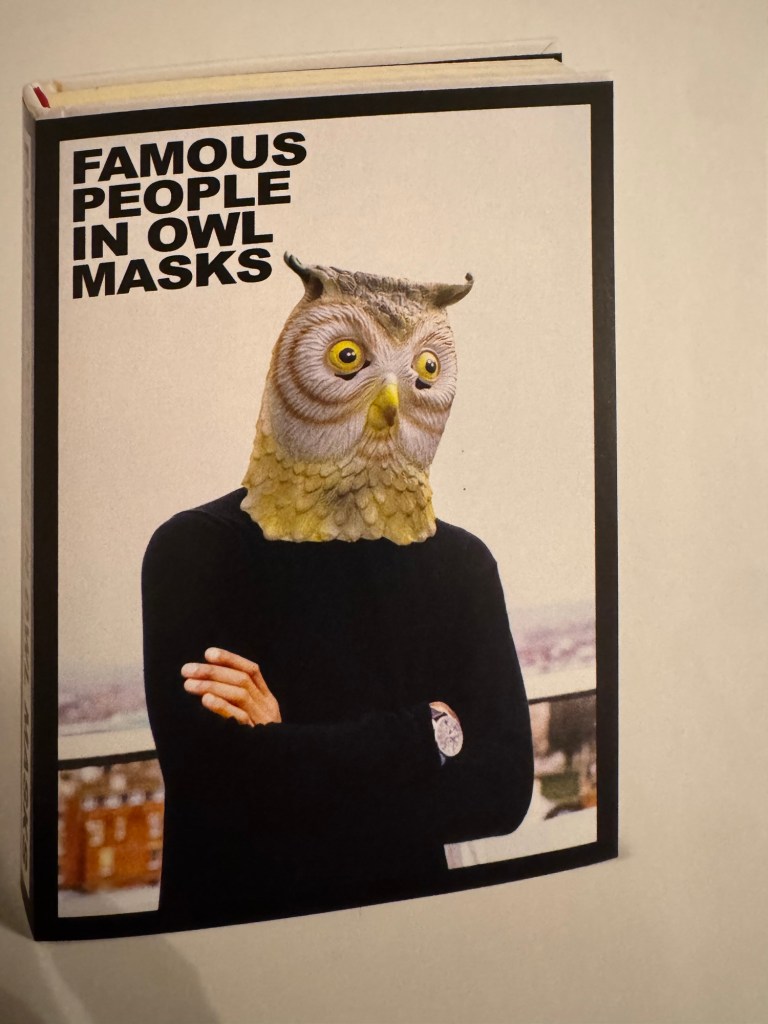

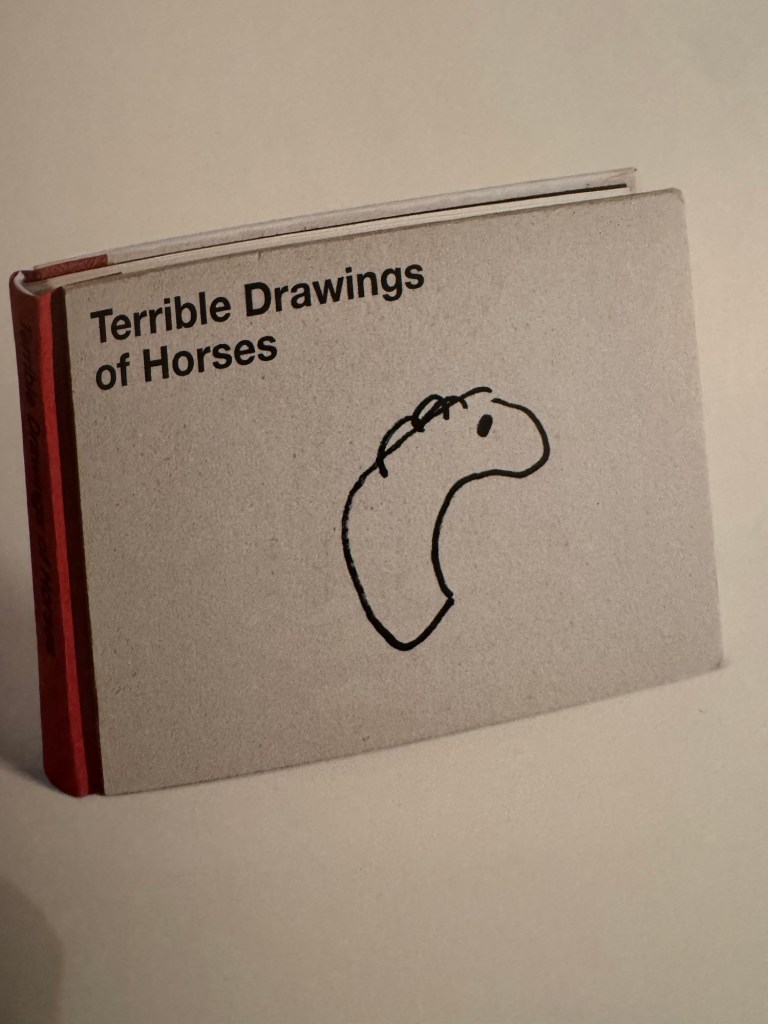
And I loved this cover and title.

People who write books should be fearless.

 Diane Ravitch's blog
I think your grandson left out a word. When he used the word “ignorant,” he should have modified it with another word: militantly ignorant. The fact is that we are all ignorant of something. I do not know about particle physics, and I cannot tell you the price per bushel of soybeans on a given morning. Militant ignorance, however, leads to people hearing my friend the physics guy explaining the wave nature of a particle only to be dismissed as an egghead. It leads to hearing a commodity broker saying that there has been a decline in soybean prices, prompting someone to suggest he has a political agenda for stating that fact.
LikeLike
Roy, yep!
LikeLike
Re “All of this splendor reminded me of the poverty in the streets outside his library and home, but I doubt that he thought much about the people outside.”
Imagine the poverty outside the workshop when this monstrosity was being created. Presumably created by Christians, cannot such a gaudy wrapper contradict the teachings in the NT?
LikeLike
In Finland starting in preschool children through secondary school are taught to identify fake news by classifying statements as a mistake, a lie or gossip. As a result there a fewer people in Finland that are being misled. Maybe sharing a large border with Russia has something to do with it, but it has made the Finns better critical thinkers and less gullible than others in the EU as a result.
LikeLike
does this perhaps result from fewer tests?
LikeLiked by 1 person
From 2002. Michael Shermer’s “Why People Believe Wierd Things”
LikeLike
When I moved to Rippy Ridge, I became a part of a community that bordered on some woods. One night, I was working a ballgame gate and a guy stopped to talk to me. After a bit of small talk, he came to the point: he wondered if I had seen Bigfoot. He was dead serious.
He was disappointed that I had only seen Danny Ray.
LikeLiked by 1 person
people are gullible, because they have a tendency to go with what the rest of everybody else believes, despite how absurd those ideas, are, because nobody points out the obvious truth, because these false ideas, spread, way faster than, what is, true, because the politiicians can easily, manipulate the voters, basically, because we are, too dumb to tell the, difference between what’s real and what’s, not, that’s what had, caused us as a species, to get dumber with the, generations.
LikeLike