Billionaire Michael Bloomberg has devoted a significant part of his wealth to medical research and public health. So it should not be surprising that he denounced CDC red
as the selection of Robert F. Kennedy Jr. as Secretary of the Department of Health and Human Services. HHS oversees all of the federal agencies concerned with medical research and public health.
Michael R. Bloomberg, the former New York City mayor, launched a lengthy broadside on Tuesday against Robert F. Kennedy Jr., using his opening remarks at a public health conference to warn that installing Mr. Kennedy as health secretary would be “beyond dangerous,” and tantamount to “medical malpractice on a mass scale.”
Mr. Bloomberg, speaking at the two-day Bloomberg American Health Summit in Washington, called on Senate Republicans to persuade President-elect Donald J. Trump to “rethink” his choice of Mr. Kennedy for health secretary. If Mr. Trump cannot be persuaded, he said, the Senate has “a duty to our whole country, but especially to our children,” to vote against confirming him.
Mr. Bloomberg also assailed Mr. Kennedy for discouraging measles vaccination during an outbreak in the island nation of Samoa, where 83 people died.
“Parents who have been swayed by vaccine skepticism love their children and want to protect them, and we need leaders who will help them do that,” he said, “not conspiracy theorists who will scare them into decisions that will put their children at risk of disease….”
Among other things, Mr. Bloomberg chided Mr. Kennedy for “nutty conspiracy theories,” including making the “outrageous false claim” that the Covid-19 shot was the “deadliest vaccine ever made.” He said Mr. Trump deserved credit for Operation Warp Speed, the fast-track initiative that produced coronavirus vaccines in record time, noting that studies have shown that the vaccines have saved an estimated 20 million lives around the world.
This is a first, to my knowledge. Parents in Massachusetts filed a class action lawsuit seeking damages from Lucy Calkins and others who installed the “Whole Language” reading curriculum in their public schools. The parents claim that Calkins and others purposely sold a defective product that ignored “the science of reading” and caused their children to need tutors and other assistance in learning to read.
For the record, I don’t approve of this lawsuit. As far as I’m concerned, it’s far too early to reach a definitive judgment about the efficacy of either Whole Language or the “science of reading.” The phonics-based approach was tried more than two decades ago in a federal program called Reading First. RF was created by No Child Left Behind and cost $6 billion. The program was tainted with scandal, and the evaluations were unimpressive.
I was never a fan of Whole Language but I do not believe that its adherents intended to deceive. I knew many of its advocates, and they sincerely believed that Whole Language was the best way to learn to read.
Furthermore, I do not think that this issue should be resolved in a court of law. Nor do I think that the issue of access to medical care by a pregnant woman or the parents of transgender youth should be decided by courts. But my opinion doesn’t count. We will see if this lawsuit goes anywhere.
In what appears to be a first-of-its-kind consumer protection lawsuit, two Massachusetts families are suing famed literacy specialists Lucy Calkins, Irene Fountas, and Gay Su Pinnell, their companies, and their publishers, alleging the former teachers used “deceptive and fraudulent” marketing practices to sell curriculums that ignored the scientific consensus about the importance of phonics to early reading.
The lawsuit, filed Wednesday in Suffolk Superior Court, alleges three minors, identified in the complaint by their initials, suffered developmental and emotional injuries, while their parents, identified as Karrie Conley of Boxborough and Michele Hudak of Ashland, suffered financial losses, having paid for tutoring and private school tuition to compensate for the flawed reading curriculums used by their children’s public schools.
“I trusted that when I was sending my children off to school, they were getting instruction that had been tested and proven effective,” Conley said during a virtual press conference Wednesday morning. “… This isn’t some luxury we’re asking for. This is reading.”
The lawsuit, shared with the Globe in advance, alleges the defendants ignored a plethora of research demonstrating the importance of phonics, or the relationship between letters and sounds, in creating, marketing, and selling their early literacy products and services. The omission of phonics from their curriculums was intentional, despite widely known evidence of its importance, the complaint alleges.
“Defendants denigrated phonics at worst and paid mere lip service to phonics at best,” the lawsuit reads.
A 2023 Globe investigation found more than one-third of all Massachusetts districts, including Amherst, Brookline, and Cambridge, were using the defendants’ curriculums in their elementary schools.
A lawsuit represents only one side of a complaint. Representatives for the defendants did not return an immediate request for comment, though Calkins, Fountas, and Pinnell have in the past denied any wrongdoing.
The Massachusetts lawsuit represents a new step in the early literacy advocacy movement and could spur new complaints like it nationwide. It follows several years of heightened debate surrounding the “science of reading,” a broad body of research demonstrating how the brain learns to read and which shows a firm grasp on phonics to be key to early reading success.
At issue in the complaint is whether the literacy authors knowingly ignored scientific research and purposely sold “defective and deficient” curriculums to school districts across Massachusetts. The lawsuit argues the authors and their publishers did and in doing so broke a state consumer protection law.
“Defendants knew or should have known they were committing unfair and deceptive acts,” the complaint reads.
Rather than emphasizing phonics, or the sounding out of words, Fountas and Pinnell, longtime publishing partners, and Calkins have come under increasing scrutiny for their curriculums’ cueing directions, which instruct children to, for example, look at a picture for context in helping determine an unknown word. In Calkins’s curriculum, Units of Study, this skill has been called “picture power.”
The Massachusetts Department of Elementary and Secondary Education, which considers the defendants’ curriculums to be low quality, has doled out millions of dollars in grant money to help local school districts purchase new materials grounded in reading science. A 2023 Globe investigation found nearly half of all school districts in the state were using a low-quality curriculum in their elementary schools, and, of those, nearly 3 in 4 were using either Calkins’s or Fountas and Pinnell’s materials.
In addition to the authors, the lawsuit, which seeks class action status, names as defendants Calkins‘s company, The Reading & Writing Project at Mossflower; the board of trustees of Teachers College at Columbia University, which used to house Calkins‘s curriculum work; Fountas and Pinnell LLC; New Hampshire-based Heinemann Publishing; and HMH Education Co., a Boston-based publisher.
Some content on this page was disabled on January 15, 2025 as a result of a DMCA takedown notice from The Economist Newspaper Limited. You can learn more about the DMCA here:
Trump is continuing to ignore the fact that some appointees serve for a set term, to insulate them from politics. Trump does not want his appointees to be insulated from his control. The current IRS commissioner’s term expires in 2027 but Trump announced his replacement today.
The same thing happened with the FBI. The incumbent, Christopher Wray, was appointed by Trump in 2017 to replace James Comey, who was fired by Trump. Wray is supposed to serve ten years but Trump has announced his choice, which suggests that he intends to fire Wray.
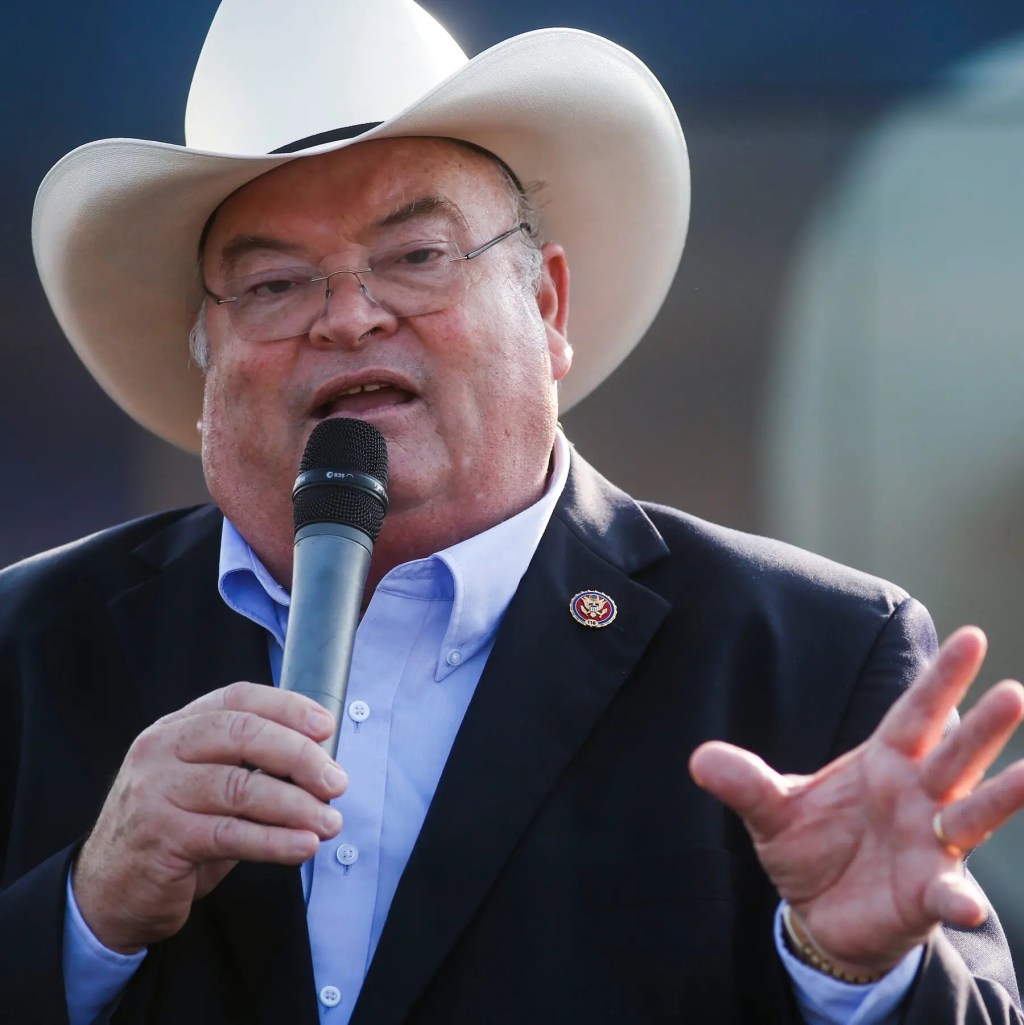
Trump’s choice for IRS Commissioner is Billy Long, a former Congressman from Missouri who never served on the tax-writing committee.
President-elect Donald J. Trump said on Wednesday that he would nominate Billy Long, formerly a Republican congressman representing Missouri, to lead the Internal Revenue Service, effectively pledging to fire the tax collector’s current leader, a Biden appointee.
Mr. Trump’s choice, announced on his social media website, would shake up the I.R.S. at a pivotal moment. The Biden administration has poured billions of dollars into modernizing the agency and beefing up its tax collection efforts in an effort to improve customer service and crack down on tax cheats.
In 2022, President Biden chose Daniel Werfel, a former management consultant and civil servant who had worked in both Democratic and Republican administrations, to lead the overhaul of the I.R.S. His term was set to last until 2027.
Republicans have deeply opposed the Biden administration’s vision for the tax agency, which included providing roughly $80 billion in supplemental funding to the I.R.S. over a decade. G.O.P. lawmakers successfully pushed to cancel $20 billion of that money, and are eyeing further cuts. The I.R.S. is unpopular with the public, and Republicans have long attacked it as invasive and inept.
Additional funding for the I.R.S. helps raise the money for the government by more effectively enforcing tax laws and requiring Americans to pay the taxes they owe, according to budget experts.
Mr. Long, a former auctioneer, did not serve on the House tax-writing committee during his time in Congress. But he did put his auctioneering skills to use while in Washington….
Presidents do not typically select new I.R.S. commissioners when they come into office, and the Senate will have to confirm Mr. Long. President Biden waited for the term of Mr. Trump’s first choice to lead the tax agency, Charles P. Rettig, to end before selecting Mr. Werfel.
NPR reports on the latest vote tally in the Presidential race. It undermines Trump’s repeated claims that the voters gave him a “mandate” to impose his campaign pledges.
The margin for the popular vote in this year’s presidential election is the second-closest since 1968, and it’s still tightening. With 96% of the vote in, Trump has 49.97% and Vice President Harris has 48.36%, according to the Associated Press. These results show that Trump doesn’t exactly have the “unprecedented and powerful mandate” he claimed on election night. The margin shows how closely divided the country is politically and that any shift to the right is marginal. Here’s what these results mean, plus a graphic that breaks down the popular vote throughout the years.
Houston Chronicle reporter Jeremy Wallace wrote that state officials have decided not to release information about pregnancy-related deaths in the years following the state’s harsh ban on abortion. Under Governor Gregg Abbott’s lead, the less the public knows, the better off he is.
Bypassing data
Texas officials will not investigate pregnancy-related deaths for 2022 and 2023, skipping over the years immediately following the state’s controversial abortion ban, which critics say has led to more dangerous and sometimes fatal pregnancies.
The state’s Maternal Mortality and Morbidity Review Committee, which announced the decision this fall after years of trying to catch up on its count, said it was jumping ahead to provide “more contemporary” data for state lawmakers.
Dr. Carla Ortique, who chairs the committee, said the Texas Department of State Health Services will still release some mortality data from 2022 and 2023, even though the committee is not providing an in-depth analysis of causes and trends. Reached for comment this week, Ortique said the committee had been planning to skip forward since earlier this year.
The move comes after the committee delayed the release of its last major review, in 2022, which showed a higher rate of life-threatening hemorrhaging among Black women during childbirth in Texas through 2020. Critics at the time accused Gov. Greg Abbott, who appoints the committee members, of pushing it off until after his reelection bid.
The committee now says its 2024 review, which would be the first glimpse into impacts from the period after the fall of Roe v. Wade, will be ready sometime in 2026, the same year Abbott has already said he will run for a record-setting fourth term.
Robert F. Kennedy Jr. is a nonconformist. Also an oddball and a crackpot. He has fought against vaccines for years. Donald Trump chose him to oversee the federal department of Health and Human Services. There he will have the power to stop research on vaccines, to ban vaccines–to use his power to kills hundreds of thousands of people, mainly children and the elderly.
He was a heroin addict for many years. Watch the video from a few months ago where he explained how heroin improved his academic performance.
The Senate should not put this man in charge of the nation’s health.
I was interviewed by Josephine Lee of The Texas Observer. She asked about growing up in Houston and my thoughts about Trump’s education agenda. It’s a conversation, not an article. I will write more on this subject in the future.
Heather Cox Richardson writes here about President Biden’s pardon of his son Hunter, which was condemned widely in the media, even in liberal publications like The Atlantic and The New Yorker. in her post, she wrote first about Jane Mayer’s expose of Pete Hegseth’s drunken sprees, then turned to the pardon.
She writes:
Also last night, President Joe Biden pardoned his son Hunter Biden after repeatedly saying that he would not.
Trump-appointed Special Counsel David Weiss charged Hunter Biden on firearms and tax charges, but as former U.S. Attorney Joyce White Vance made clear in her Civil Discourse, Hunter Biden would not have been charged if he had been anyone other than the president’s son. He was charged with possession of a firearm by someone who is addicted to illegal drugs, a charge that prosecutors do not usually bring. Biden owned a gun for eleven days and apparently lied on the paperwork for it by saying he was not a drug addict when he was, in fact, in the throes of addiction.
The other charges stem from Hunter Biden’s failure, while dealing with addiction, to pay about $1.4 million in federal income taxes, which he has since paid in full plus interest and penalties. Vance explains that the government usually handles cases like his with administrative or civil penalties rather than criminal prosecution, as it did in the case of Trump henchman Roger Stone, with whom the government reached a settlement in 2022 for more than $2 million in unpaid income taxes, interest, and penalties without criminal charges.
But President Biden’s pardon covers not just those charges, but also “those offenses against the United States which he has committed or may have committed or taken part in during the period from January 1, 2014 through December 1, 2024.” The pardon’s sweeping scope offers an explanation for why Biden issued it after saying he would not.
Ron Filipkowski of MeidasTouch notes that Biden’s pardon came after Trump’s announcement that he wants to place conspiracy theorist Kash Patel at the head of the Federal Bureau of Investigation (FBI). Filipkowski studies right-wing media and points out that Patel’s many appearances there suggest he is obsessed with Hunter Biden, especially the story of his laptop, which Patel insists shows that Hunter and Joe Biden engaged in crimes with Ukraine and China.
House Oversight Committee chair James Comer (R-KY) spent two years investigating these allegations and turned up nothing—although Republican representative Marjorie Taylor Greene of Georgia used the opportunity to display pictures of Hunter Biden naked on national media—yet Patel insists that the Department of Justice should focus on Hunter Biden as soon as a Trump loyalist is back in charge.
Notably, Trump’s people, including former lawyer Rudy Giuliani and his ally Lev Parnas, spent more than a year trying to promote false testimony against Hunter Biden by their Ukrainian allies. Earlier this year, in the documentary From Russia with Lev, produced by Rachel Maddow, Parnas publicly apologized to Hunter Biden for his role in the scheme.
As legal commentator Asha Rangappa noted: “People criticizing the Hunter Biden pardon need to recognize: For the 1st time, the FBI and Justice Department could literally fabricate evidence, or collaborate with a foreign government to ‘find’ evidence of a ‘crime,’ with zero accountability. That’s why the pardon goes back to 2014.”
And yet, much of American media today has been consumed not with the story that Trump has appointed a deeply problematic candidate to run what could be considered the nation’s most important department, overseeing about 3 million personnel and managing a budget of more than $800 billion, or with the reality that Biden’s distrust of our legal system under Trump is a profound warning for all of us.
Instead, they have focused on President Biden’s pardon of his son, many of them condemning what they say is Biden’s rejection of the rule of law.
Some have suggested that Biden’s pardoning his son will now give Trump license to pardon anyone he wants, apparently forgetting that in his first term, Trump pardoned his daughter Ivanka’s father-in-law, Charles Kushner, who pleaded guilty to federal charges of tax evasion, campaign finance offenses, and witness tampering and whom Trump has now tapped to become the U.S. ambassador to France.
Trump also pardoned for various crimes men who were associated with the ties between the 2016 Trump campaign and the Russian operatives working to elect Trump. Those included his former national security advisor Michael Flynn, former campaign manager Paul Manafort, and former allies Roger Stone and Steve Bannon. Those pardons, which suggested Trump was rewarding henchmen, received a fraction of the attention lavished on Biden’s pardon of his son.
In today’s news coverage, the exercise of the presidential pardon—which traditionally gets very little attention—has entirely outweighed the dangerous nominations of an incoming president, which will have profound influence on the American people. This imbalance reflects a longstanding and classic power dynamic in which Republicans set the terms of public debate, excusing their own objectionable behavior while constantly attacking Democrats in a fiery display that attracts media attention but distorts reality.
The degree to which the media endorsed that abusive power dynamic today does not bode well for its accurate reporting during Trump’s upcoming term. It also leaves the public badly informed about matters that are important for understanding modern politics
Margaret Sullivan is a veteran journalist who served as the last ombudsman for the New York Times. Her blog American Crisis is valuable for its support of a free press and for its criticism of newspapers that sanewash and normalize Trump.
Many of Donald Trump’s choices for Cabinet posts and other positions in his new administration have appalled me. To hit some lowlights: RFK Jr. with his dangerous ideas about vaccines and his history of wildly inappropriate behavior; Tulsi Gabbard, whom Russian state TV is referring to as “girlfriend”; Brendan Carr, one of the authors of the authoritarian playbook known as Project 2025; pure loyalist Pam Bondi, as attorney general, replacing the even more inappropriate Matt Gaetz.
But none have shaken me as much quite as much as Kash Patel, whom Trump wants to name the director of the FBI. Before the election, I wrote in the Guardian about the high stakes for press rights. After reviewing what a foe of the press Trump was the first time around, I sounded the alarm, with a particular focus on Patel:
There is nothing to suggest that Trump would soften his approach in a second term. If anything, we can expect even more aggression. Consider what one of Trump’s most loyal lieutenants, Kash Patel, has said.
“We’re going to come after the people in the media who lied about American citizens, who helped Joe Biden rig presidential elections,” Patel threatened during a podcast with Steve Bannon. “Whether it’s criminally or civilly, we’ll figure that out.”
If named FBI chief, Patel is sure to help bring Project 2025 into action. Again from the Guardian column:
Under Project 2025, seizing journalists’ emails and phone records would get easier. The editorial independence of Voice of America would be sharply curtailed; in fact, the global organization might be shut down altogether. Former officials who talk to reporters would be punished. Funding for NPR, PBS and public broadcasting would dry up.
“A pretty grim picture,” was the conclusion of Joshua Benton of Harvard University after analyzing Project 2025 from the perspective of press rights. “The first time around, there was at least a modicum of uncertainty about what a Trump administration would actually do,” Benton wrote in Nieman Lab. “The second time, voters knew better, and they rejected it. The third time? Well, no one can say it’ll come as a surprise.”
Kash Patel at a rally for Donald Trump in Arizona on Oct. 13, 2024. Patel, Trump’s pick for the FBI, has expressed an alarming intent to go after the press / Getty Images
Remember, in his first term, Trump wanted then-FBI director James Comey to bring him a “head on a pike” when government insiders leaked to journalists — often providing information that was important for the American public to know. Patel, no doubt, will be eager to do this. And if raids and imprisonment of journalists follow, it’ll be exactly what the boss has wanted all along.
As many have pointed out, when would-be authoritarians take power, one of the first things they want to do is stamp out independent journalism. We can’t let that happen.
So, how can our most important journalism institutions react? With big doses of courage, a refusal to obey in advance and insistence on standing their ground. I hope that top newsroom leaders — the decision-makers at the New York Times, the Washington Post, CNN, Wall Street Journal, the broadcast networks and others — are clearly communicating to their staffs that they’re not going to knuckle under.
American Crisis is a community-supported project where I explore how journalism can help save democracy. Please consider joining us!
For inspiration, they ought to read a post by journalist Paul Horvitz (he worked at the late, great International Herald Tribune, among other papers), who wrote to me last week to share his manifesto. Here’s a section, and you can read the rest on his Substack:
In the United States of Donald Trump, American journalism faces a defining test.
Will it be the sleepwalking servant of a propaganda machine? Or will it reclaim its role as public servant, tenacious watchdog, and guardian of democracy?
Because we are not in normal times, these are not rhetorical questions. The coming year may well see the Department of Homeland Security offer journalists stage-managed tours of migrant jails to create a facade of humane treatment. Should the press participate?
The Trump regime will surely sanitize the language it uses to describe these camps, whose legal basis is questionable. Will a compliant press blindly repeat the euphemism “detention centers?” In 1930s Germany, millions of “asocials” were taken into “protective custody” or “preventive custody.” Words matter.
When an angry U.S. President phones the executive editor of The Washington Post or its billionaire owner to complain about “negative” coverage, will the attempt to intimidate be revealed only years later in a book or immediately placed on the front page?
Our alarming situation — we are on a path to American fascism — demands a far more assertive, scrappy, and resolute press. Some news organizations aren’t ready to be aggressive because they don’t accept their broader responsibility in a free society.They have been fact purveyors, always mindful of their own commercial viability. These news companies will continue to be enablers, justifying their behavior by championing strict impartiality, rigorous objectivity, and fast facts.
Horvitz nails it.
Meanwhile, I’m collecting examples of sanewashing, false equivalence and pussyfooting around the harsh reality of another Trump administration. Here’s a headline that even the satirical social media account New York Times Pitchbot said he couldn’t compete with; it appeared over a prominent Times staff columnist’s offering last week: “Thomas Friedman: Trump’s Path to a Nobel Peace Prize?”
Also in the Times, this euphemistic headline: “Trump’s Choices for Health Agencies Suggest a Shake-up Is Coming.” The sub-headline mentioned “ideas that are outside the medical mainstream.” Y’think? Author and scholar Ruth Ben-Ghiat expressed her objection: “Shake-up is hardly appropriate for the engineering of mass sickness by withholding vaccines and reducing insurance coverage so few can get medical help.” Language needs to be much stronger and more direct, especially in headlines and news alerts since that’s as far as many people ever get.
At the same time, I’ve noticed a lot of strong, important reporting in the Times, which remains essential. Here’s a gift link to one such story.
Thanks so much to all subscribers to American Crisis. I truly appreciate your interest and support. The paywall remains down so all may read these posts in full and may participate in the comments. The discussion has been robust and I’m grateful for the thoughtful contributions.
One last item: Greg Sargent of The New Republic invited me on his podcast last week to talk about Trump and the press. We covered everything from why The Times got rid of its public editor role (and why I predict it’s never coming back) to whether the mass cancellations at the Washington Post may motivate decision-makers to recommit to their mission. We also talked about the risk that news organizations may self-censor, given Trump’s threats of retribution against the press — and what to do about it.


 Diane Ravitch's blog