John Thompson, historian and retired teacher in Oklahoma, shares his thoughts about what matters most. What matters most for the future is not test scores, yet we have spent an entire generation–now almost two generations of young people who have passed through our schools since 2000–focusing only on test scores. Will we pay a price? Will they?
As I left the computer to walk the dog, a thought provoking title jumped off the screen, “2019 NAEP Results Show There’s Something Wrong Going On.” Our neighborhood is gentrifying too much, but the park still offers a wonderful place for cross-generational, cross-cultural conversations about what is going right and wrong. Only our spoiled dogs complain when daily discussions last a long time when recounting the latest Trump assaults on our constitutional democracy.
In contrast to corporate school reformers, who claimed that schools could be the answer to inequities, when a dog walker shared a link about another path to progress, we knew there is no single, silver bullet. We loved the New York Times’ “Dogs Will Fix Our Broken Democracy,” but we knew that the doggies, on their own, can’t teach us “to step outside of our narrowest selves.”
https://www.the74million.org/article/petrilli-2019-naep-results-show-theres-something-wrong-going-on-3-theories-about-what-might-be-happening-in-our-schools-and-beyond/
https://www.nytimes.com/2019/08/31/opinion/dogs-democracy.html
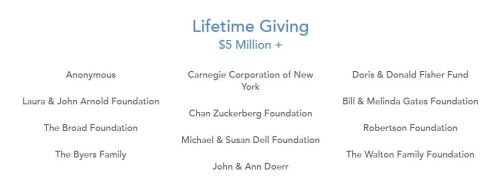
The NAEP title also provoked contemplation on the school reform blinders which blocked out conversations about issues outside the school building. For two decades, as test-driven, competition-driven reform treated schools as a sped-up Model T assembly line, school segregation was increased and the curriculum was narrowed. The Billionaires Boys Club undermined instruction about issues outside of the classroom, such as deindustrialization, globalization, the increase of economic inequality, mass migration, climate change, and the decline in a sense of community.
Most inexplicably, schools ignored the moral dilemmas prompted by the digital revolution and we mostly failed to help our kids face its challenges, ranging from the gig economy to social media.
During the entire 21st century, both sides of the school wars have fought off their opponents with their metaphorical right hands, barely able to use our left hands for tackling the problems of poverty and segregation. Sure, the privatizers started this unnecessary battle, but why can’t they accept a truce? Why can’t we focus on the big picture issues that could explain the NAEP decline?
Shouldn’t we also wrestle with the biggest tragedies that are going on, threatening our democracy and our planet, and that contribute to NAEP scores declines?
Imagine my initial rejoicing when I returned from the dog walk to the NAEP story. The author of this appropriately-titled essay focused on what was going on outside the classroom, (as well as the minds of reformers, I would add.) He hypothesized that the Great Recession hurt student performance in two ways, “first, via its devastating impact on fragile families and their young children; and second, through its negative impact on school spending, as many state coffers ran dry.”
The author also noted that “the roaring ’90s led to a huge decrease in ‘supplemental’ child poverty rate … And that could explain much of the NAEP gains we saw in the 2000s, gains that were most dramatic for low-performing children and kids of color.” He then followed the cohorts of students who endured the years from 2009 to 2012 when the unemployment rate was 8 percent. He noted the correlation between the rise and fall of 4th grade scores and the stagnation and decline of 8th grade scores for low-income kids to the unemployment rate and education spending cuts. More affluent students, who didn’t have to face those challenges, continued to show steady gains.
A similar pattern was described in terms of screen time, and the anxiety and isolation it can cause. He notes, “Children from lower-income families spend an average of three and a half hours each day on screen media, … That amount is 40 percent longer than middle-income children (two hours and 25 minutes) and almost double the screen time spent by affluent children (one hour and 50 minutes).” As “screen time for low-income kids has absolutely skyrocketed in recent years,” their reading scores declined.
So, it seems logical that we should help teach children to use, but not be used by the cell phones. Given the massive and rapid economic transformations, that are unnerving adults, we should be preparing children not for worksheets and drill and kill, but for a healthy, productive, meaningful life in the 21st century. Contrary to corporate school reformers’ theory, which fought the legacies of segregation with segregation by choice, and the stress of poverty with the stress of high stakes testing, the logical conclusion would be that poor children need holistic and culturally relevant instruction.
But then the author, called for a “recalibration” including “much more demanding academic standards that were aligned to readiness for college and career.” He would do this by …?
For some reason that I still can’t understand, this author – who often acknowledges the failures of school reform – dug in his heals and called for a return to “the form of the Common Core; much higher-quality and more rigorous assessments, in the form of Smarter Balanced and PARCC and their successors.”
Readers, you probably guessed that the author who twisted himself into a pretzel when so contradicting himself, was the Fordham Institutes’ Mike Petrilli. And he then called for “tougher tests and accountability systems.”
In other words, corporate reformers like Petrilli do provide at least one valuable feature. They are a great case study in how to present “alt facts.” Fordham et. al start with something we can agree on, something unifying, for instance like our shared, heart-warming desire to cuddle a kitty. But they always end on a note of survival of the fittest, demanding the defeat of the educational institution that kitty-hating educators defend. Their spin could be featured in a great lesson of how political propaganda is spread on the web!
Seriously, “2019 NAEP Results Show There’s Something Wrong Going On” illustrates the huge opportunity costs of having to fight off reformers when we should have been concentrating on the existential dangers that that our youth face. And a New York Times Magazine special edition that was published the same week offers a horrifying glance at the battle we should have been engaging in.
The Magazine’s “The Internet Didn’t Turn Out the Way We Hoped” is so direct in its warning that its cover features the meanest-looking, ugliest kitty they could photograph. Kevin Roose’s “A Cleaner Internet” is illustrated with a cat embodying the beauty we hoped for, along with three stained kittens. He cites Marc Andreesen who said, “in the future there will be two types of people: ‘people who tell computers what to do, and people who are told by computers what to do.’”
Below are just a few of the special issue’s examples of today’s and tomorrow’s virtual realities that we haven’t educated our kids about. Jamie Lauren Keiles describes the “cursed dynamics on online fandom,” and explains, “Today’s fandom is more like a stateless nation, formed around a shared viewing heritage, but perpetuated through the imaginations and interrelations of those who enjoy and defend it” (It sounds to me that “fandom” also describes corporate reform.)
Yiren Lieu describes the “much more powerful apps” that are “flowering in China,” and concludes, “Whatever it is that takes place when Chinese –style super-app-dom meets the American teenager, it sounds like the future of the internet.”
The article that made me feel sickest was Elizabeth Weil’s “All My Selves Are My Favorite.” It begins with 15-year-old’s “Ninth Grade Makeup Transformation” YouTube video. She used “dozens” of brushes and powders, “bouncing between one shell of identity and the next.” And, “45 minutes later, tender, glittering and shellacked with cosmetics, she was ready for school.”
The teen’s commentary was full of expressions like, “I need to not be annoying, and I’m not doing a good job of that. … I also look ugly, and I’m really depressed!”
Fortunately, at the end, she at least listened to, even if she didn’t hear, a 23-year old’s wisdom, “I’m like, Oh, this is what happens when someone is raised on the internet.”
https://www.nytimes.com/interactive/2019/11/14/magazine/internet-future-dream.html
Yes, behind the NAEP decline, there is “something wrong.” As John Merrow recently noted, “we have managed to teach our children how NOT to think, and today not even 14% of American 15-year-olds are able to distinguish facts and opinion.”
So, it’s a terrible shame that we educators have been distracted from one of our biggest tasks – helping kids learn how to control their own destinies. A generation of students has attended schools where they have been treated as test scores. Worse, venture philanthropists’ market-driven reforms are just one part of venture capitalists who see humans – inside and outside of schools – as data points.
https://themerrowreport.com/2019/12/05/the-national-assessment-of-educational-paralysis-naep/